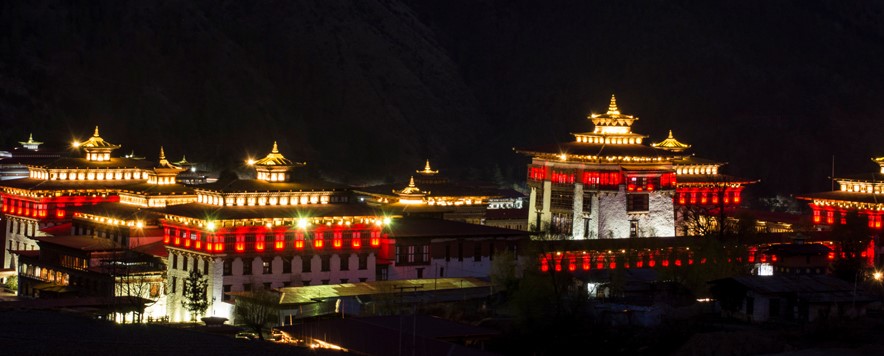
When we talk about Bhutan, the first picture that comes to our mind is the strong association with Buddhist culture. Structures that have unique architecture and are associated with Buddhist culture are the Dzongs that we see here.
Dzongs
“Dzong” in Bhutanese means a fortress. So all of them are fortresses that serve multiple purposes. The two main functions are Administrative and Religious. Though the dzongs were present in Bhutan since the 12th century, they belonged to different schools of Buddhism established by various Tibetan monks. It was Zhabdrung Rinpoche who used these Dzongs as a unifying force to bring various schools together thus unifying Bhutan.
Zhabdrung Rinpoche (Bearded Lama)
Zhabdrung Rinpoche (Popularly called the Unifier of Bhutan) was born Ngawang Namgyal and was a Tibetan monk. Bhutanese consider him as the most important personality in the history of Bhutan. He formed the Dzongs which helped in bringing neighbouring rulers together and this helped in unifying them into a consolidated Bhutan. He introduced the dual system of administration which is followed even today with the Je Kenpo controlling the religious activities and Desi (elected leader) controlling political activities.
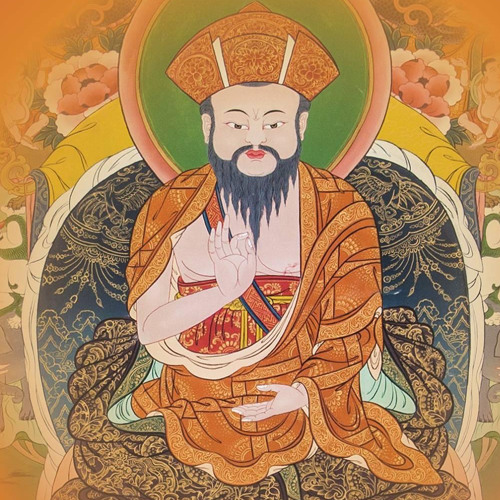
A mural painting of Zhabdrung Rinpoche
Dzong Architecture
As a general rule, dzongs have rectangular buildings around a stone paved courtyard. At the centre of the courtyard is a prominent tower or UTSE which houses the shrines of guardian deities and Buddhist masters . Most such temples have statues of Gautham Buddha, Avalokiteshwara and Zhabdrung Rinpoche .Administrative offices and monk’s accommodation also form part of the Dzong complex.
They usually have huge exterior walls which are painted white with red ochre stripes near the top of the walls dotted by gold circles. Windows are usually absent in the lower part of the walls.
Flared roofs atop the interior temples which are mostly painted with red and have a gold lining is another unique feature. There are massive doors for entry and exit and are usually made of wood.
Brightly coloured typical Bhutanese motifs decorate the inner temple and courtyard walls. Paintings depicting Bhutanese beliefs and folklore adorn the walls of the Dzongs.
Location
It is believed that the locations were chosen based on the prophecies of ancient saints and auspicious events that took place.
Strategic location of the Dzongs is one of the main factors that led to the unification of the country. Most are located on hilltops or ridges giving a panoramic view that helped prevent attacks from enemies. Many of them are located close to rivers or surrounded by them again giving strategic advantage against the enemies.
Purpose
Dzongs serve as religious, military, administrative and social centres for the respective district and are the venue for the annual religious festival.
A large number of national treasures including the remains of Zhabdrung Rinpoche are inherited and housed in these Dzongs.
Continuous changes in structure and adaptation to modern requirements have made these Dzongs the centre of religious and administrative activities. They have adapted to the change in the government system from monarchy to constitutional democracy and as such occupy a significant status in the country.
Most Dzongs today house the offices of the respective district authority and a number of temples and residences of monks.
My Experiences
We visited two main Dzongs ….one each in Thimpu and Punakha…the summer and winter capitals of Bhutan. We also saw the Dzong in Paro.
Some pictures from these two Dzongs and special experiences there….
Tashichho Dzong (Thimpu Dzong)
The seat of Bhutan’s government since 1968, this Dzong was built by the third King of Bhutan. A series of fires and an earthquake destroyed the original Dzong which has been in existence since 1216.
The name Tashichho Dzong means “Fortress of the Glorious Religion“. It houses the throne room and offices of the king, the cabinet secretariat, and other ministries besides the thirty odd temples and shrines.

A panoramic view of the Thimpu Dzong
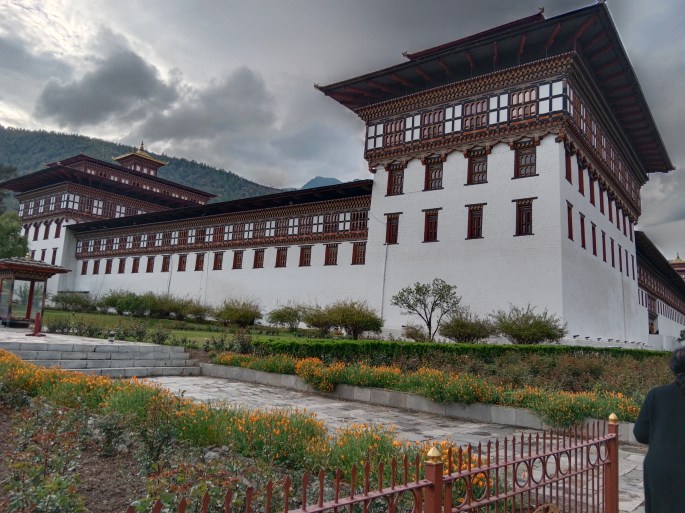
A closeup view of the Thimpu Dzong


The gate leading to the King’s Palace and a flagstaff in the Dzong complex
Ceremonial flag lowering
Every evening, there is a flag lowering ceremony held at Thimpu Dzong. Fortunately we were witness to it. A group of smartly dressed soldiers accompanied by a monk take part in the ritual again emphasising the dual system of governance.
After the flag is lowered , it is carried by the soldiers inside the Dzong.
Watch a short video of this ritual below…
A video of the ceremonial flag lowering at Thimpu Dzong
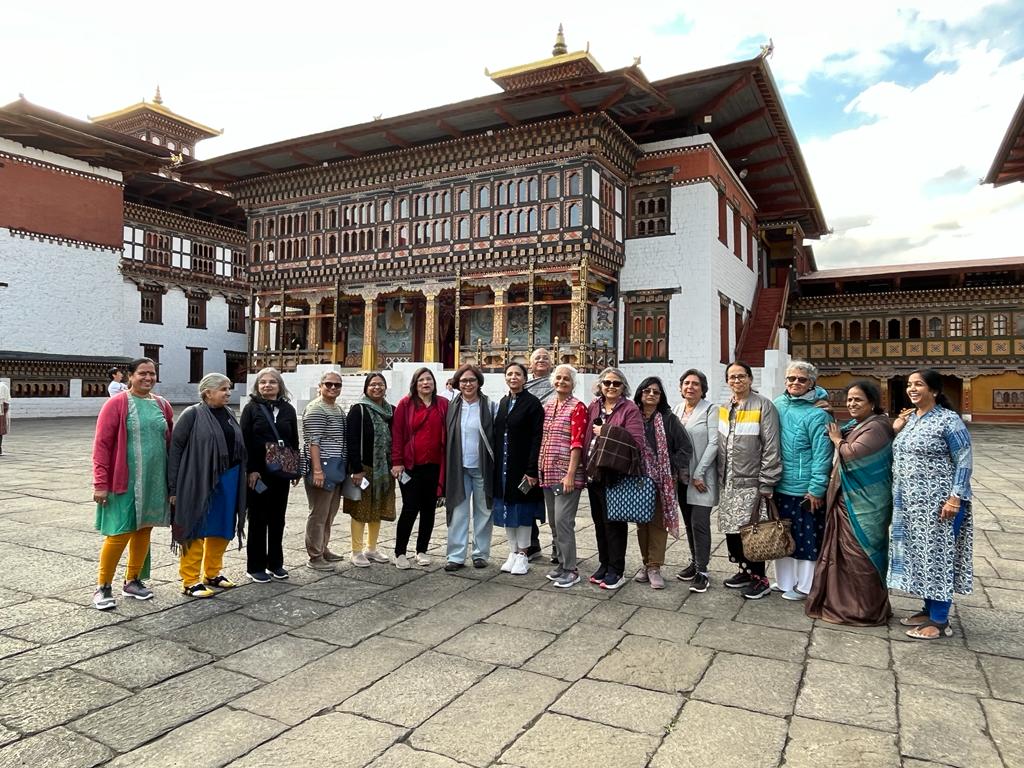
Our group at the spacious central courtyard of the Dzong


The prayer wheels and the central tower
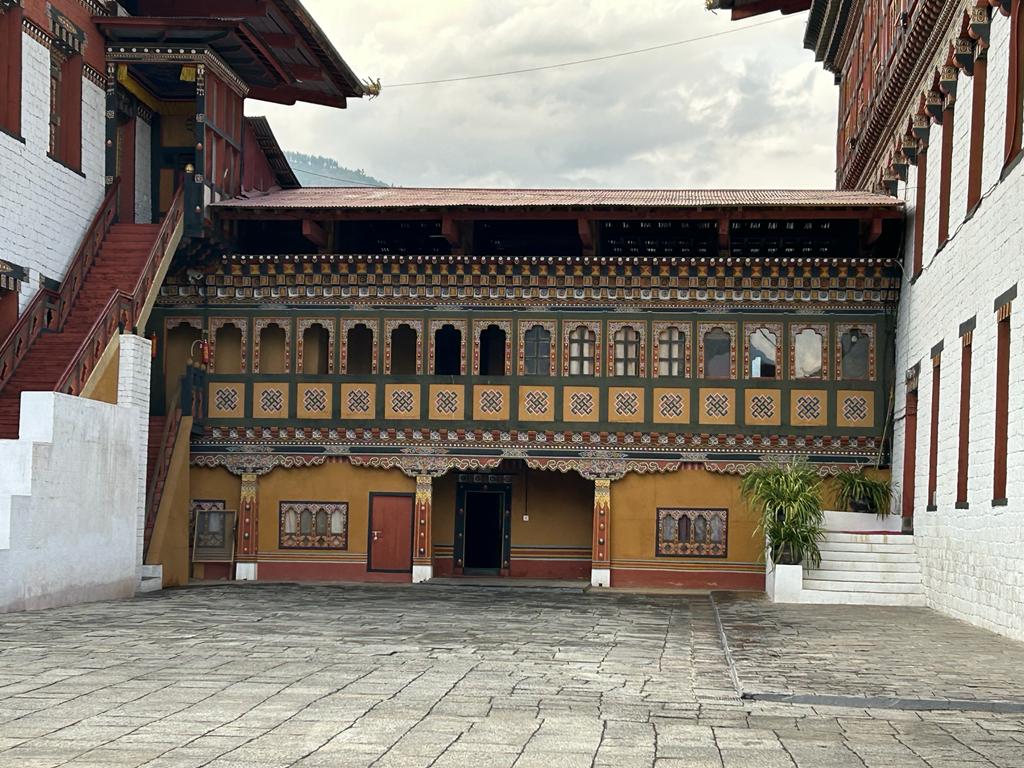

Typical Bhutanese designs adorn the walls
Thimpu Dzong was one of our first destination at Thimpu. After the scenic drive from Phuentsholing, we visited this dzong. This was our first visit to a Dzong.
The other Dzong which we visited was in Punakha.
Punakha Dzong
Known in Bhutanese as “Palace of great happiness or bliss”, this dzong is the second largest dzong in Bhutan and has one of the most majestic interiors. It houses the remains of Zhabdrung Rinpoche.It was the administrative centre of the Bhutan Government till 1955 when the capital was moved to Thimpu, though Punakha still is the winter capital.
This Dzong was the site of coronation of the first King of Bhutan.
It is located between the Po Chu and Mo Chu rivers which join to form the Puna Tsang Chu which ultimately joins the Brahmaputra river. Due to the presence of the two rivers, this dzong is vulnerable to flash flooding.

The Punakha Dzong with wooden bridge across the Mo chu river
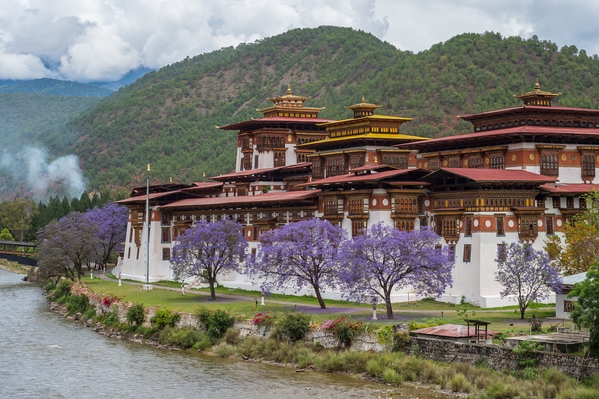
The beautiful jacaranda trees adding to the beauty of the Punakha Dzong
A wooden covered bridge across the river Mo Chu was built in the 17th century and connects the dzong to the main road.
Crossing the Mo Chu river on the wooden bridge, we were on the side of the Dzong

On the bridge leading to the Dzong ( in the backdrop)
Soon we were in front of a flight of stairs…

You will notice in the picture that towards the top of the stairway there are three divisions in the stairs. The extreme left is for visitors, the extreme right is for monks and the central part for the monarchy.
Once we climbed the stairs we entered a small passage that led to the central courtyard.
This passage had traditional Bhutanese folklore paintings, the Zodiac signs and the name of Zhabdrung Rinpoche painted on the walls.
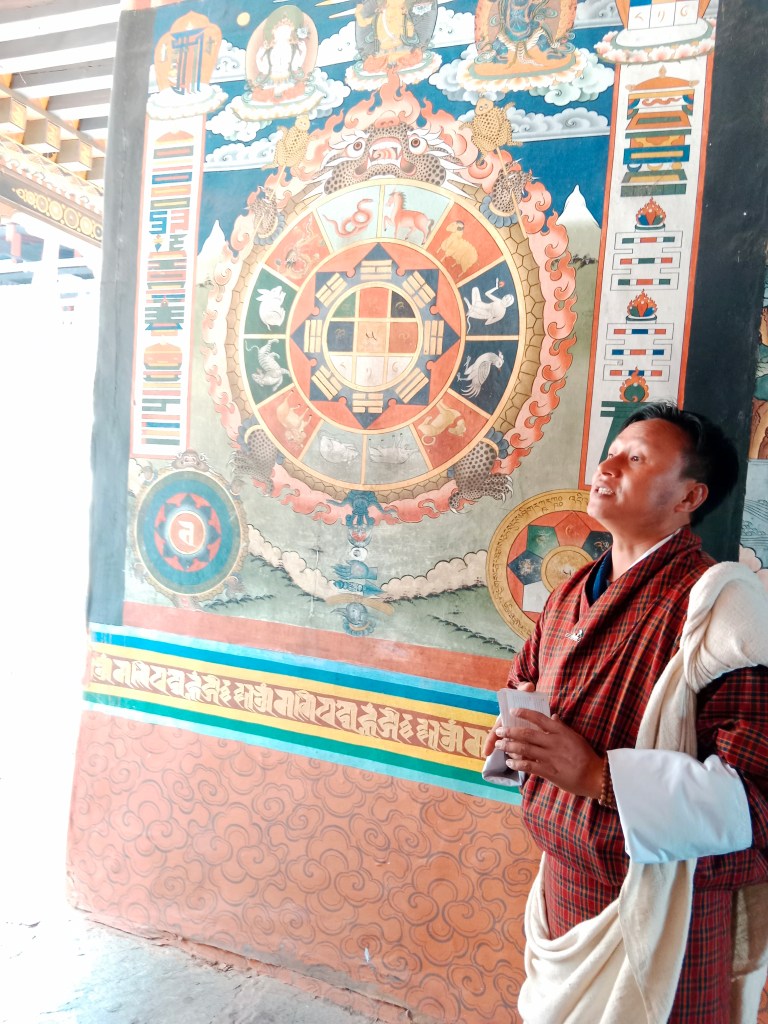

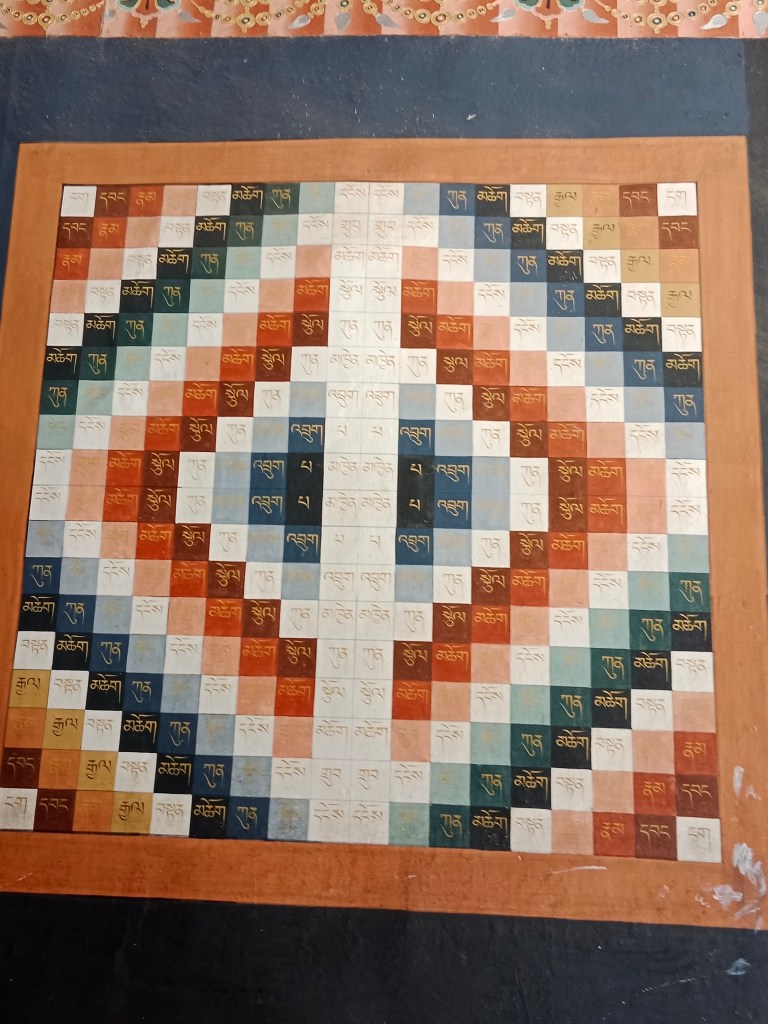
The paintings of zodiac signs, folklore and name of Zhabdrung Rinpoche and Sanchay explaining

The huge central courtyard with the sacred banyan tree
Our guide led us from the first courtyard further into another courtyard where there were two very beautifully decorated temples. Tourists can enter only one of these temples.

The inner courtyard with the two decorated temples


The decorations at the temple entrances and a golden gate within the courtyard
Our guide took us around the Dzong and explained the significance of many of the sights.
One peculiar thing we found in all the temples and shrines was that there were seven bowls of water offered to the deities. Traditional Bhutanese legend has it the when Buddha was born, he was no ordinary child and he took seven steps as soon as he was born and lotuses bloomed on those steps. Hence the importance of the number seven and the water bowl offerings
Since temples and shrines do not allow photography, these cannot be shown…
A third Dzong which we saw was the Paro Dzong.
Paro Dzong
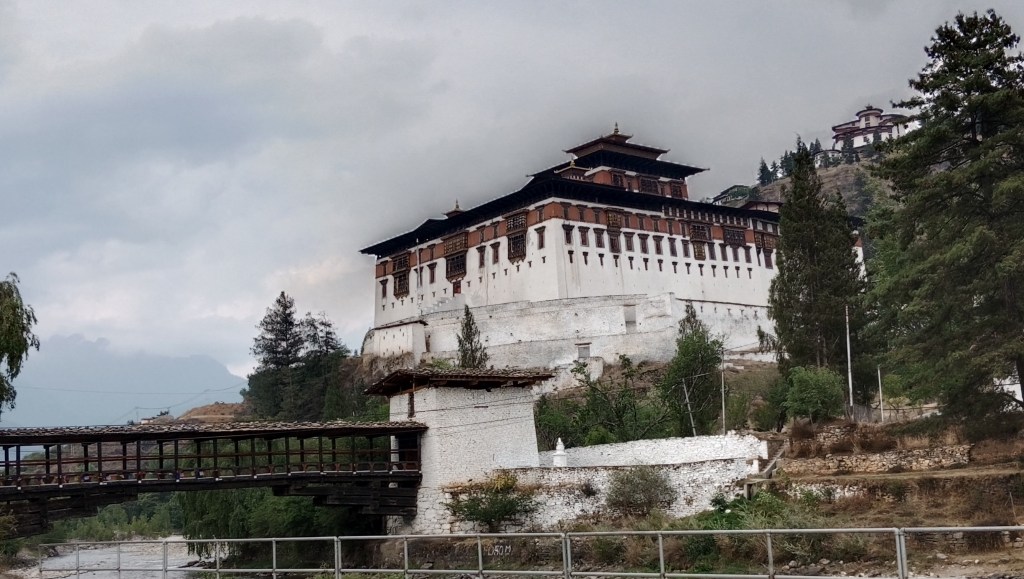
Known locally as Ringpung Dzong meaning “Fortress on a Heap of Jewels” is located on a steep hillside overlooking the Paro Valley .It has an impressive collection of heritage buildings inside and hence got it’s name. It has a complex of courtyards with temples, shrines and towers with intricate Bhutanese carvings. Unlike other dzongs, this one has huge windows with delicate art work and decor.
Its courtyards serve as the venue for Cultural performances too…
A wooden bridge across the Paro Chhu leads to the Dzong.
The National Museum of Bhutan sits further up on the hillside. The Dzong and Museum are illuminated at night providing spectacular views.
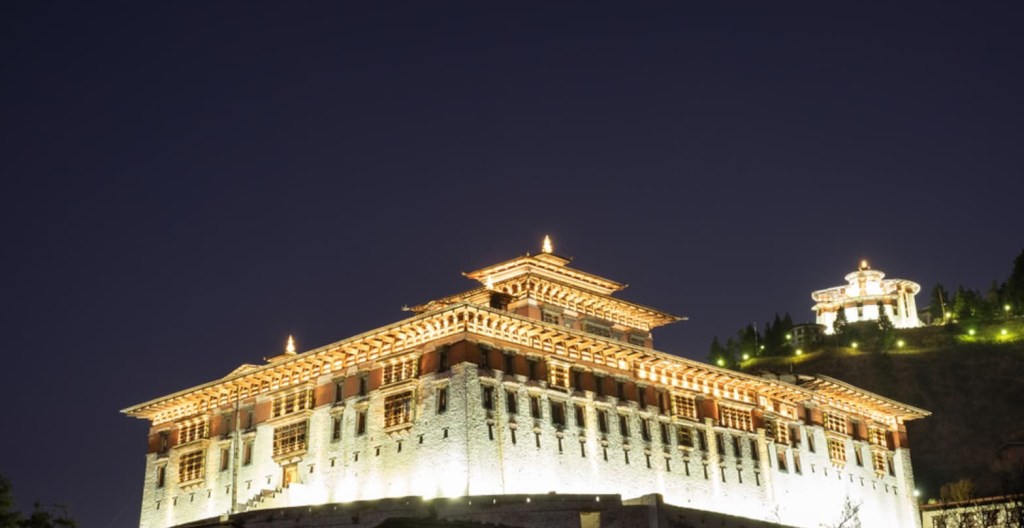
The illuminated Paro Dzong and the National Museum behind it
Well, this is just a round up of the Dzongs I visited in Bhutan and all I learnt about these fortresses. There is a lot more to these including the history and various changes that have taken place in modern times. That will get too exhaustive and hence, I stop with this brief overview.
Next week we do a city tour of Thimpu. Till then, keep your comments and feedback coming in.
Discover more from Travel-along.in
Subscribe to get the latest posts sent to your email.
 Travel-along.in
What gorgeous buildings. I’m jealous!
LikeLiked by 3 people
The Paro Dzong looks strumming!!
LikeLiked by 1 person
Fantastic architecture, especially Punakha, and the jacarandas are a bonus – one of my favourite trees!
LikeLiked by 1 person
😀😀
LikeLiked by 1 person
Yes it’s awesome when lit up
LikeLiked by 1 person
Glad you enjoyed it…😄
LikeLiked by 1 person
Wonderful architecture and paintings !!!
LikeLiked by 2 people
Thankyou Beena
LikeLike
Good.
LikeLiked by 2 people
Wow, I’ve never even heard of Bhutan before but it looks absolutely breath-taking. I love the buildings and architecture of them. The colours are amazing too. Thank you for opening my eyes to this amazing corner of the earth!
LikeLiked by 1 person
Glad you enjoyed it ☺️
LikeLiked by 1 person
Read through with memories
Coming live of our visit leelse.Wow write up n visuals 👏👏
LikeLiked by 1 person
Thankyou Pushkala…glad you liked it
LikeLike
Such a beautiful scenic place this is. Wish to travel there one day
LikeLiked by 1 person
Thankyou Shanti…you must do it..😊
LikeLike