
Poetry in stone dedicated to the Sun God; that’s a simplistic definition of the Sun Temple at Konark. Writing such a definition is so simple !! but building such a monument is definitely not !!! A visit to Konark will authenticate what I just said. So, come along with me on this virtual tour of this masterpiece in stone.
A brief history
The Sun temple at Konark was built by King Narasimhadeva of the Ganga dynasty in the 13th century in typical Kalinga architectural style. Located 35 kms. from Puri city in Odisha , along the shores of the Bay of Bengal, the temple was built as a giant chariot of the Sun. Many parts of this masterpiece is in ruins and the cause of destruction of the temple remains a mystery with natural disasters at one end of the spectrum and deliberate destruction by Muslim invaders in the 15th to 17th centuries at the other end.
The Architecture
Known originally as Surya Devalaya ,the main temple is in the form of a huge chariot with 24 wheels drawn by seven horses. In Hindu mythology the Sun God is seen riding across the sky from east to west on a chariot . That is what is depicted here in Kalinga architecture . Surya (Sun God) is seen flanked by Goddesses Usha and Prathyusha shooting arrows to dispel the darkness . If you felt this is the depth of the symbolism ; hold your breath….the 12 pairs of wheels represent the 12 months of the Hindu calendar. The conceptualisation and realisation of this symbolism will find very few parallels !
When viewed from front, during sunrise, the Chariot appears to emerge from the sea carrying the Sun….. more symbolism for you!
The intricate art work on the walls of the temple consist of various themes including scenes from contemporary life and erotic Kama scenes from the Kamashastra.
Any amount of description will not match the beauty of this stone marvel and so, let me just put up some pictures for you to decipher it….
Walking through the temple complex…
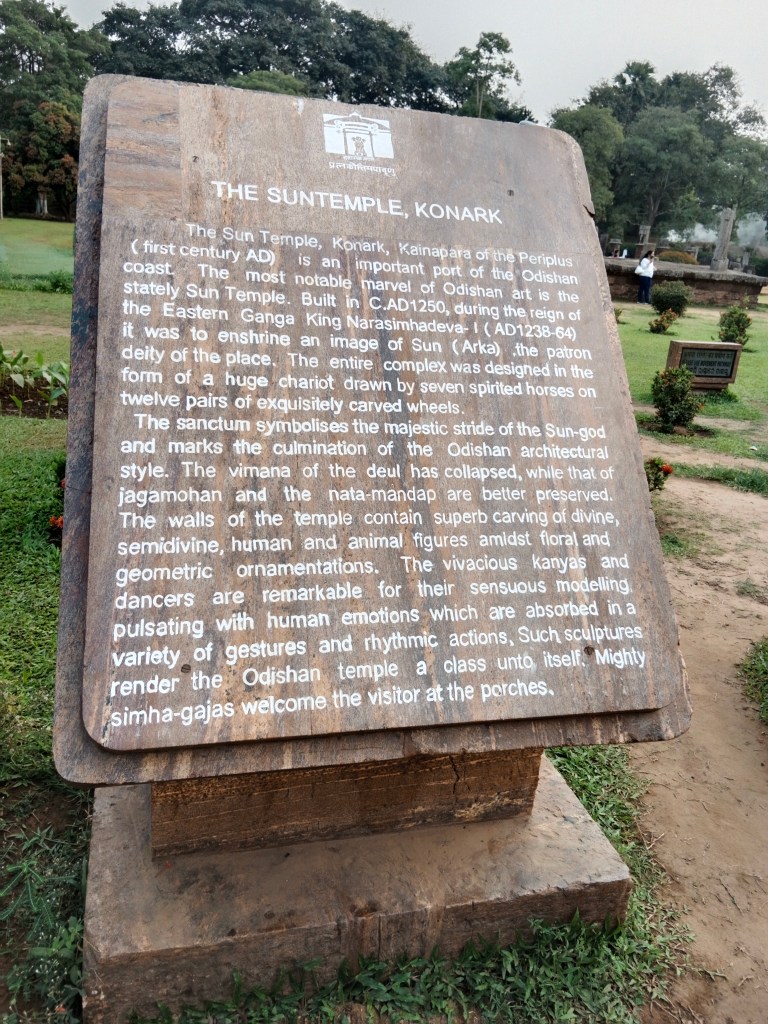
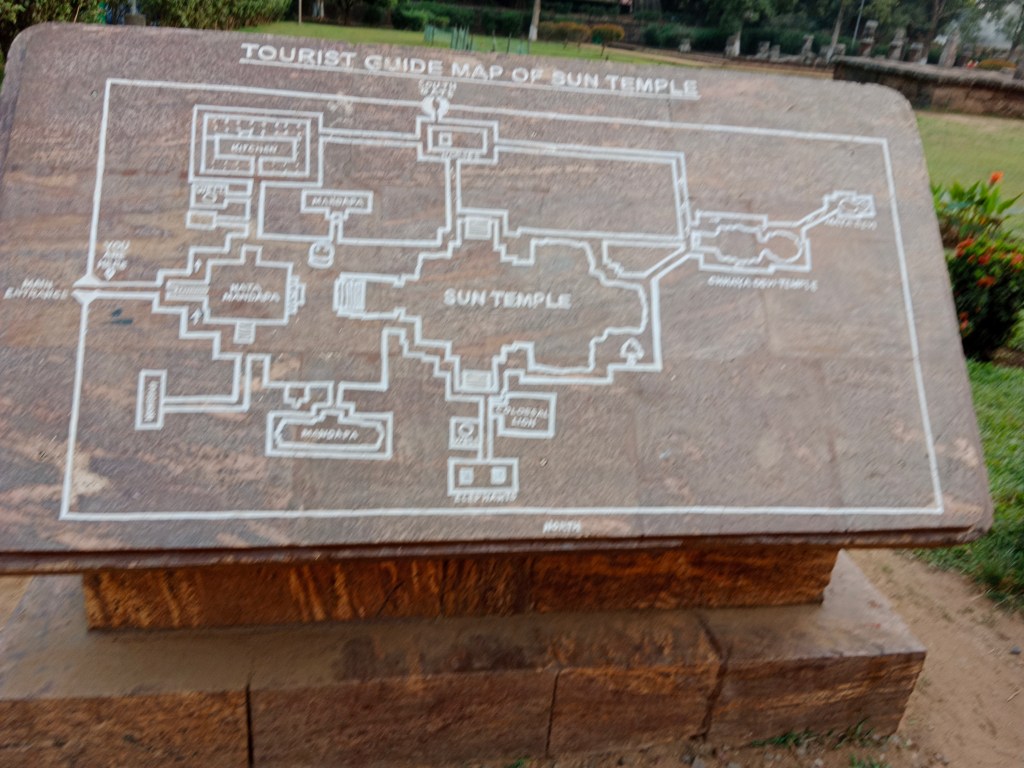
A stone plaque with the map of the temple complex guides the visitors at the entrance
A long neatly paved passage with well manicured lawns on either side leads one to the main temples. What one encounters first is the ruins of the Natya Mantap ( hall of dances ) with the main chariot behind it.

Standing in front of the Natya Mantap ruins with our guide

Right in front of the Natya Mandap is a unique sculpture. A lion on top of an elephant and a man below that. It signifies wealth, ego and pride crushing humanity.
The Natya Mantap stands on an intricately carved platform and the pillars forming the walls of the Mantap have delicately carved figurines similar to those found elsewhere in the complex. One can enter the Natya Mantap by climbing a flight of stairs.

View of the chariot standing on the Natya Mantap
Walking around the Natya Mantap we reach the Chariot .

In front of the Chariot
There was a pillar between the Natya Mantap and the Chariot which was known as the Aruna Stamba (Aruna Pillar) which has now been relocated to the Jagannath Temple at Puri. Aruna is considered the charioteer of Surya.
As we walk around the Chariot, the intricate patterns on the walls become clear. Some pictures…
A major part of the figurines depict musicians with various musical instruments and dancers in various poses…


The walls with reliefs depicting musicians and dancers
Apart from that, contemporary daily life is also depicted at many places….
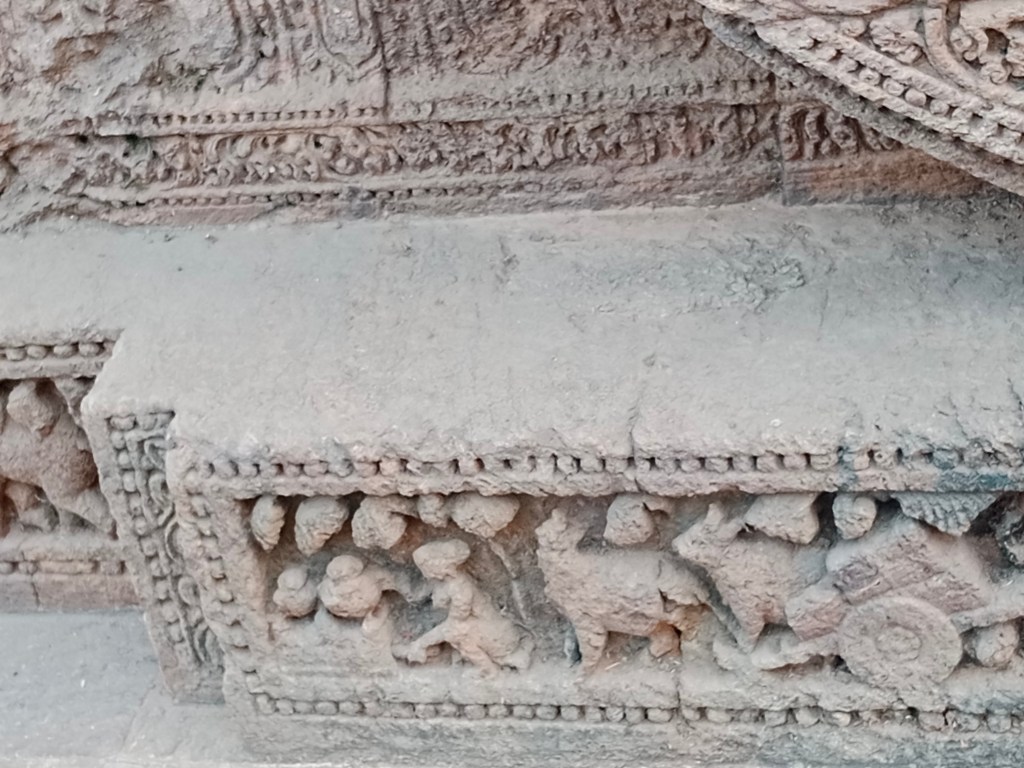

Cooking on a choolah and pulling a chariot
There is a lot of emphasis on sexual life and the Kamashastra is also depicted by figurines on the walls including that of unnatural sex. This highlights the openness with which these were an accepted part of life in those times….
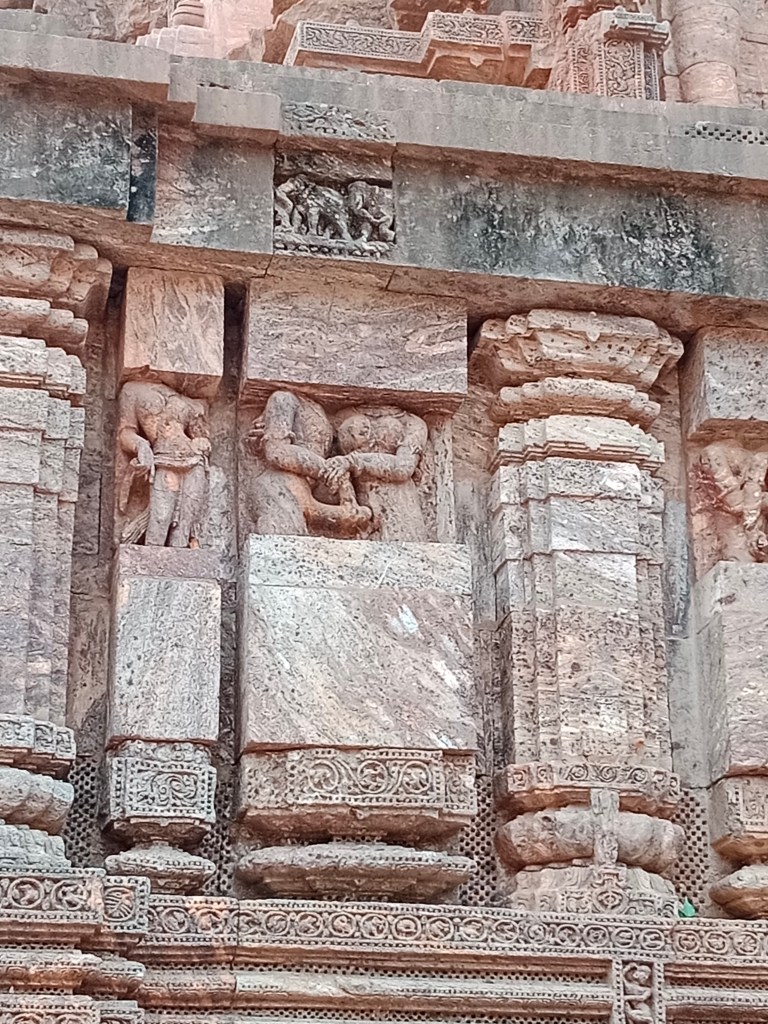

Kamashastra


Unnatural sex and punishment for infidelity
Wheels
The chariot wheel is one of the iconic images of this temple. The 24 wheels of the chariot are so intricately designed with emphasis on time that it seems like they were used as sundials at one point of time and also for knowing the seasons and months.

One of the iconic wheels
The 24 wheels are 12 feet in diameter and intricately carved. Many of the wheels are in different stages of ruin.
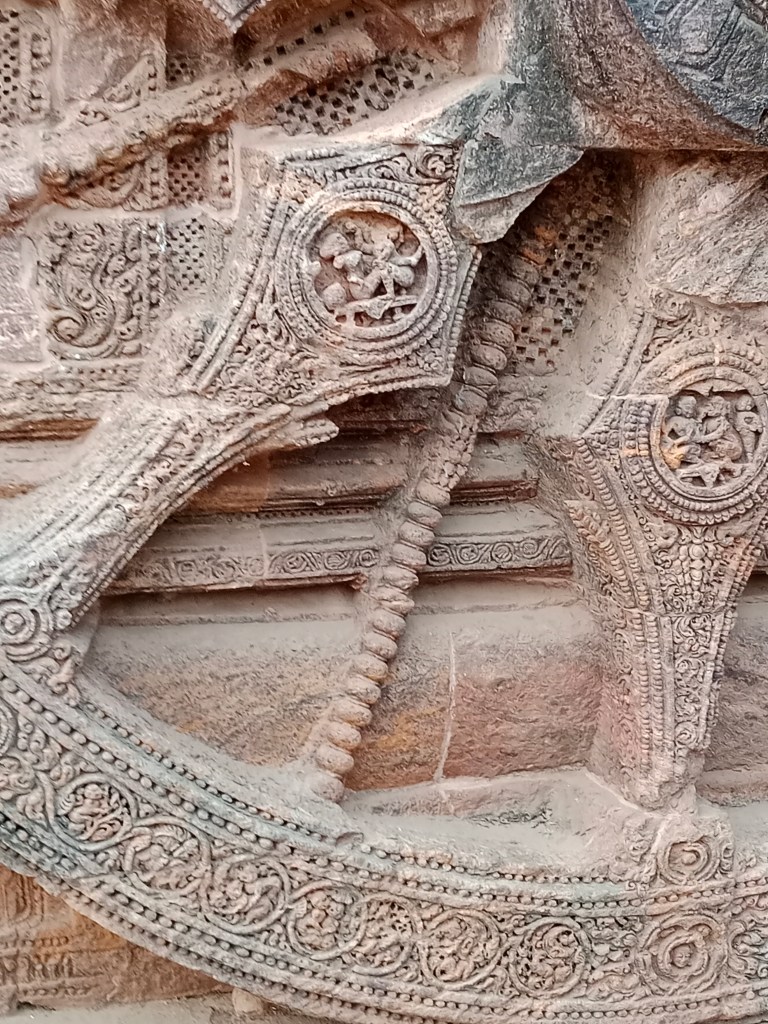

Designs on the wheels and the small beads representing different units of time
The Chariot was shown as drawn by seven horses and many of the horses have been destroyed. One survivor….

One of the surviving horses literally on a walker!!
Metal strips
Another very interesting aspect of the temple is that many of the parts are held together by metal clips. A closer look at the junctions shows this …..

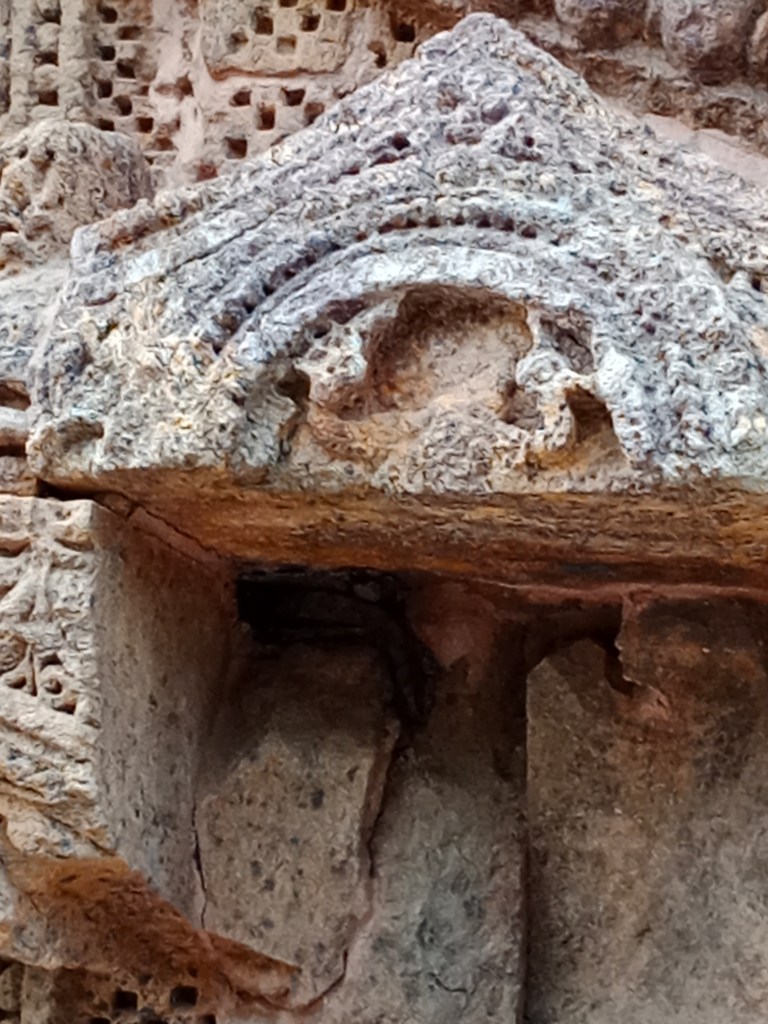
A metal block holds the top stone and metal clips between the stones
Now, one of the reasons attributed to the temple destruction is this particular element in its construction. The ships passing by with their powerful magnets may have disturbed these metal clamps and clips leading to the ruin.
Depiction of the different phases of the day
As one circumambulates the temple, the image of the Sun God changes corresponding to the different times of the day. Take a look….


Sun God in the morning in blue granite and in the afternoon shaded with a crown


Sun God in the evening, appearing tired and riding a horse. Beheaded Sun God.
As one walks along, one realises the amount of destruction (natural or otherwise )that has taken place and the various restoration activities that are on.

The restoration work in progress.
Chhayadevi temple
At the back is the Chhayadevi temple which is roofless and in ruins


Chhayadevi Temple
The Monolithic lion
A monolithic Lion sculpture adorns the side of the chariot.

Monolithic Lion
In the evening, after sunset, the monuments get lit up and it presents another amazing sight…

The lit up Natyamantap entrance
A unique light and sound performance takes place here in the evenings after sunset.
It takes one through the history of the temple and also depicts various other historical events.
Glimpses from the show…..


UNESCO World Heritage Site
The Konark Sun Temple is a proclaimed UNESCO World Heritage site and is being maintained so. Restoration work is on all over the temple and surrounding premises. The lawns and the environs are kept neat and clean and we find lot of evidence of restoration work going on…
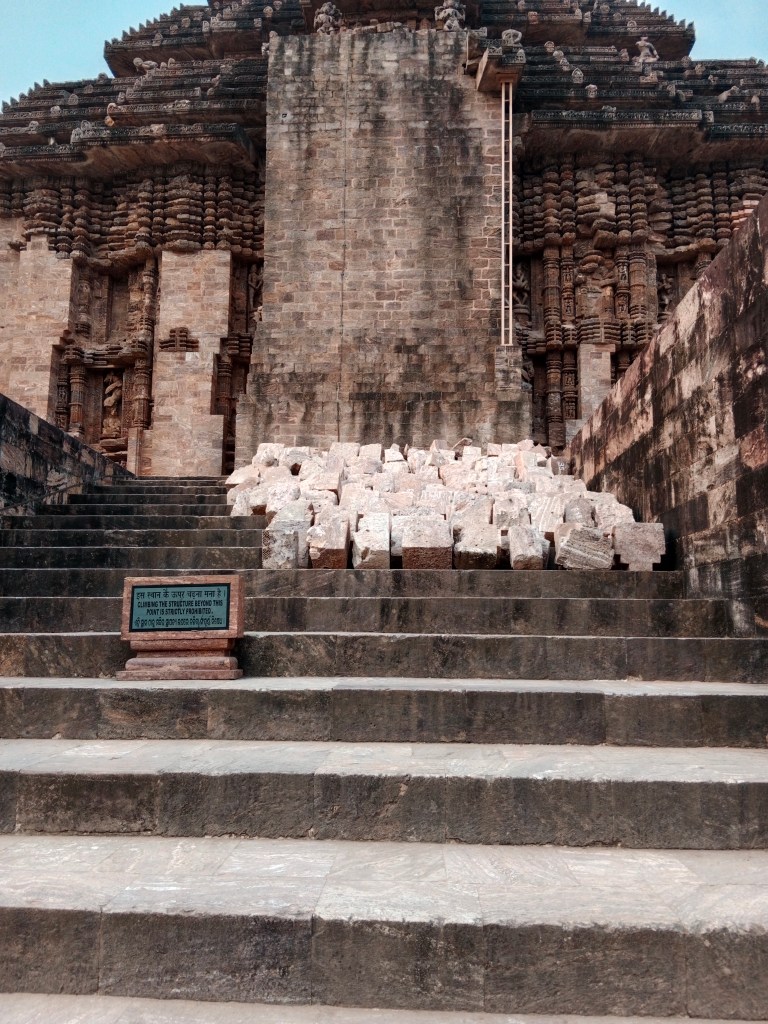

Evidence of restoration work
Bisu Moharana
When we admire any artistic creation, we must always give credit to the creator. Well, the architect of this stone masterpiece is Bisu Moharana and in the later years, his son. So let me end this episode on The Sun Temple with reverence to the spirit of this man whose vision and conceptualisation has given us this marvel.
See you next week with more from Odisha. Till then do give your feedback and comments.
Discover more from Travel-along.in
Subscribe to get the latest posts sent to your email.
 Travel-along.in
👌👌
LikeLiked by 1 person
Very nice description of the Sun Temple dear Leela . I visited this place in 2018 January and it was a very good recapture of my visit .Thank you for your detail and beautiful presentation what more than a Guide there tells us .Waiting for your next episode on Oddisa .
LikeLiked by 1 person
Thankyou
LikeLike
Well described. Revived the memories of this temple that I visited last December.
LikeLiked by 1 person
Thankyou
LikeLike
Great sculptures
Beautiful description
LikeLiked by 1 person
Thankyou sir
LikeLike