
Who would not fancy a hot cup of freshly brewed coffee?
Whether you like it black , with milk or with cream ; a cup of coffee makes every morning special.
Well, today let us visit Kodagu/Coorg , nicknamed the coffee cup of India.
Kodagu lies on the eastern slopes of the Western ghats and enjoys salubrious climate almost all round the year. Kodagu is actually the name of the district and when we talk loosely about going to Coorg what we mean is go to Madikeri and the surrounding areas.
A brief on Coorg and the local inhabitants before we indulge in more coffee talk….
The original inhabitants of Kodagu were the Kodavas who were a warrior community. The British annexed Coorg and deposed the local Kodava rulers. They did help improve the infrastructure, introduced scientific initiatives in coffee farming and contibuted to the overall development but there was a lot of exploitation of the resources and man power from here. It subsequently became part of Mysore state ( now Karnataka).
The Kodavas, the original inhabitants have largely retained their cultural identity and this can be seen in their attire and customs. The sari, the traditional dress of Indian women is worn in a different style here. The men wear a knee lenth black wrap around coat called Kupya, a silk sash around the waist and typical head gear. A dagger tucked into the sash completes the attire.


The traditional attire of the Kodavas
Since most Coorgi households are coffee planters, the house is inside or adjacent to a coffee estate and the harvesting and processing of coffee beans is an integral part of their lives.
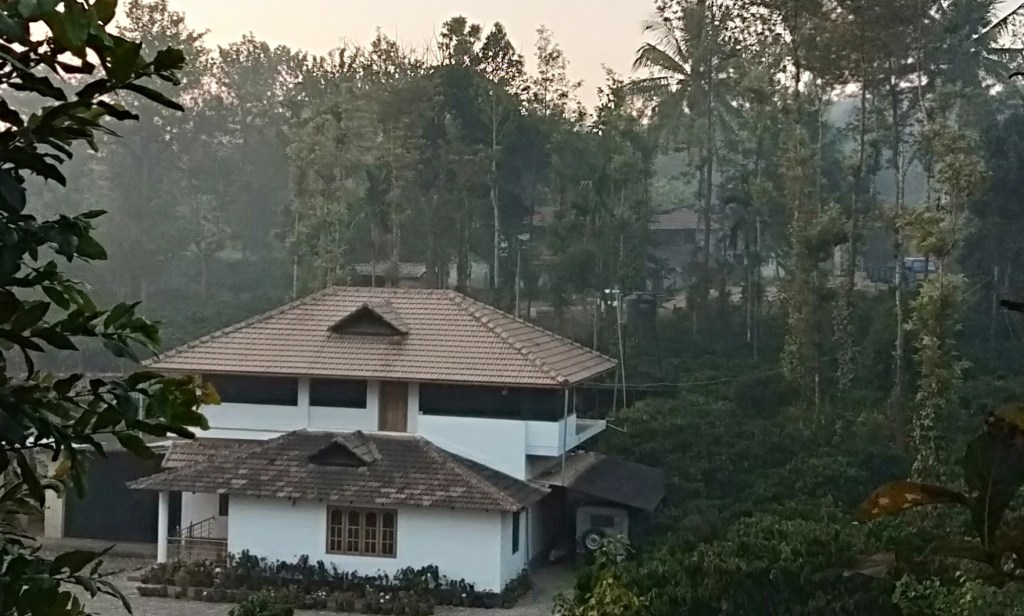
A kodava house in a coffee estate
Kodavas are fond of non vegetarian food and meat ; particularly pork (pandi curry) and alcohol are served at weddings and even religious ceremonies and pujas. Traditional Coorgi food is Kadambottu or steamed rice balls served with spicy meat gravies.


Traditional Coorgi food
Coffee Talk…
Coffee was first introduced in India in the 17 th century by a saint Baba Budan who smuggled a few coffee beans during his Mecca trip and planted them at Chikmagalur in Karnataka. Both Chikmagalur and Kodagu produce most of Indian coffee today. Let us talk about Kodagu coffee…
Largely an agricultural district, Kodagu is the largest producer of coffee and pepper in India today . Cardamom, rubber, and oranges are the other important produce.
As one drives in Coorg, coffee plantations on either side of the road welcome you. Misty mornings in a breathtaking landscape of lush green hills ; Kodagu has climatic conditions ideal for coffee cultivation and that explains the vast coffee estates here. Mainly two varieties of coffee are cultivated here, Robusta and Arabica.

The coffee estates
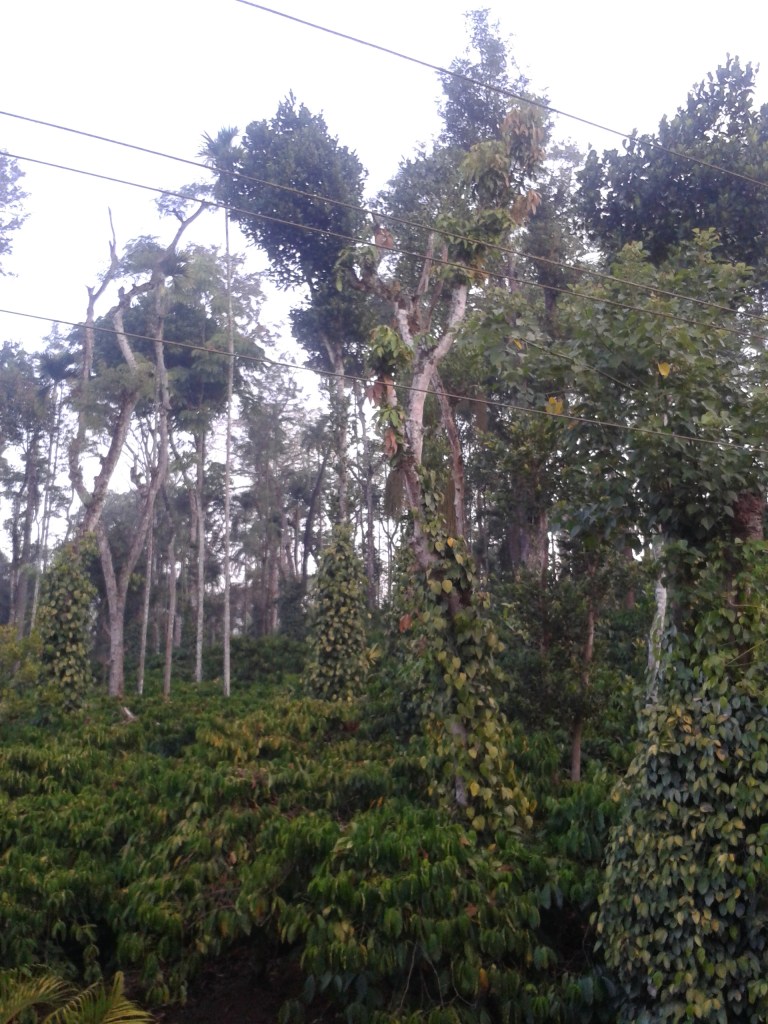
Coffee shrubs and pepper vines
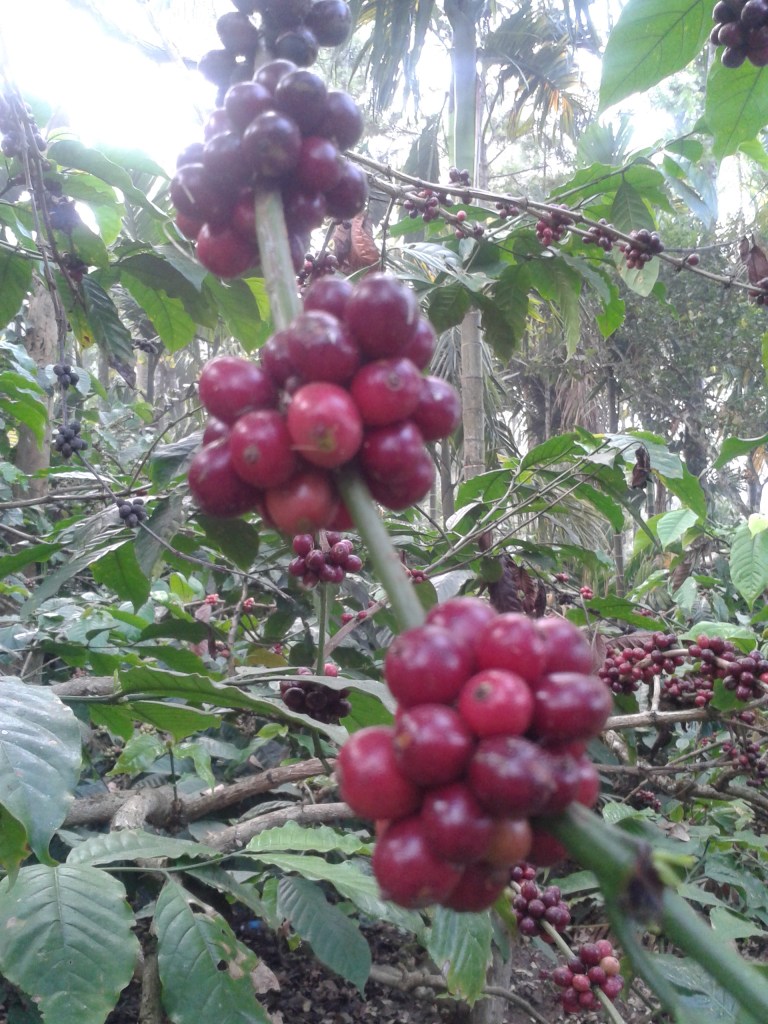

Coffee and Pepper ready to harvest

Spice shops line the road at every few metres…
Most of the homestays and hotels in Kodagu arrange for a plantation visit. That can be a different experience for the urban bred.

A coffee estate walk
Coffee berries are handpicked as they have to be at the right stage; neither too ripe nor raw. These berries are then dried out in the sun for a couple of weeks. Then the seeds of the berries are separated by removing the skin and dried pulp.
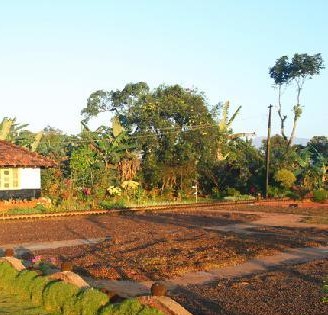

Drying of Coffee berries and extracted beans
The seeds are then stored after grading. Before use, the seeds are roasted and powdered to get you the filter coffee powder available in the market.
Many of these stages are automated by the large coffee cultivators while the smaller farmers use traditional methods. Fermenting the coffee bean and roasting are the two stages which can alter the aroma and flavour of your next cup. So these are carefully monitored.
Cuppers….
Coffee tasters also called cuppers play a role in determining the taste and flavour of your next cup. The cupper assesses the quality of beans, then “noses” the brew for the aroma. The actual step of tasting begins with the cupper slurping a spoonful of coffee spraying it all over his tastebuds before spitting it out. Difficult to accept , but expert cuppers taste hundreds of coffee varieties a day and still tell the subtle differences!! After all this, I really wonder if the cupper can enjoy his actual cuppa like you and me??
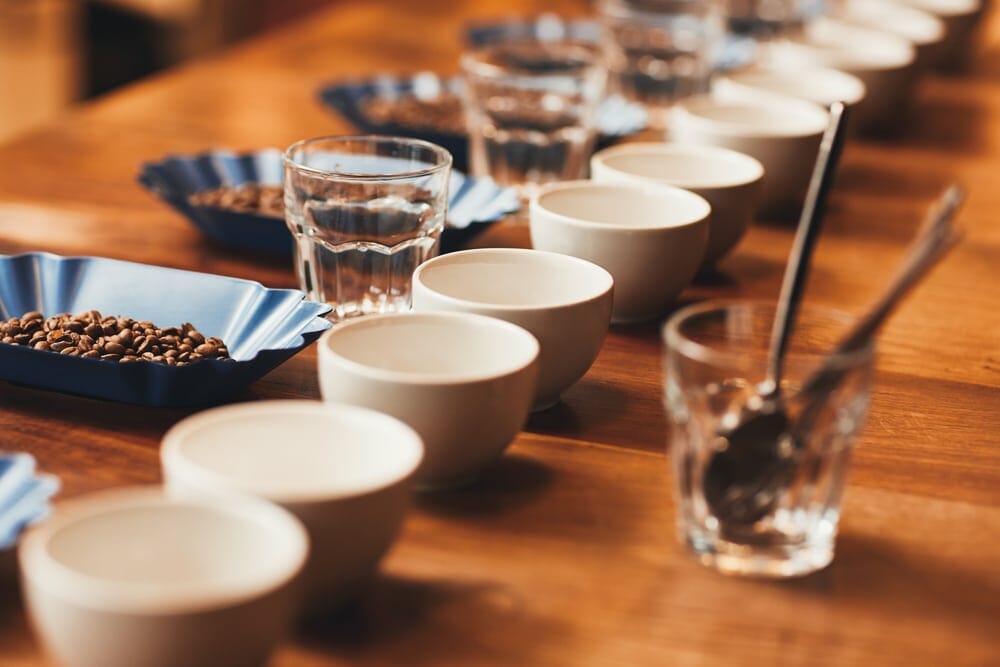
A cupper’s work table
To brew the coffee we buy from the market, in traditional south Indian style, we use a coffee filter. The coffee powder is placed in the filter and hot water is passed through it to extract the flavour. The decoction is then had diluted as black coffee or added to boiled milk to get a cup of freshly brewed filter coffee . Automatic coffee brewing machines are now available of course!
Instant coffee powders are made industrially using various steps.


A traditional coffee filter used at home and an automated filter
And that explains the journey of the coffee bean from birth till it comes to you in a cup as coffee…

Well, I hope you enjoyed the journey of the coffee bean just as you do your morning cuppa!!!
Delving more deep into Kodagu, next week we visit some of the interesting sights around Madikeri. Till then, enjoy your coffee… but don’t forget to give your comments and feedback…
Discover more from Travel-along.in
Subscribe to get the latest posts sent to your email.
 Travel-along.in
I love my coffee and it’s always good to be reminded how much work goes into growing and producing it :)
LikeLiked by 1 person
Thanks Dr Leela, feel like a cup of coffee now after reading this 😄
LikeLiked by 1 person
Good you enjoyed
LikeLike
Awesomest post Leela!!❣️ This brings back plethora of memories of our stay in Coorg for seven beautiful years.
Having lived with a Tea n Coffee Taster, a cupper enjoys his cup only when the taste he blends is perfect, which is really an Art. 😄
Looking forward for your more posts on other beautiful tourist spots in Coorg. 🌳🌴🦣🐘
LikeLiked by 2 people
Glad I rekindled memories
LikeLike