
Vatikas or pleasure gardens were an ancient concept in Kashmir during the pre Mughal period when Kashmir was a predominantly Hindu region. These gardens were simply orchards or had flowers and medicinal herbs. So, most of these gardens were already established when the Mughals arrived in the 16th century.
Islam came to Kashmir in the 14th century with the Shahmiri sultans with predominant Persian influence. Persian gardens are usually terraced with water channels, cascades and fountains in addition to the flowering plants and trees.
The Mughals were so taken aback by the sheer beauty of Kashmir and they started extending and modifying the gardens. That is the origin of the Mughal gardens of Kashmir and that explains the presence of water channels, fountains and pavilions in these gardens.The site of the Mughal gardens is also unique. They are all located at the foot of the hills and have a spring feeding the water channels.
Shalimar Bagh
Considered one of the high points of Mughal architecture, Shalimar Bagh was built by Emperor Jahangir in 1620 following the Persian architectural style. The garden was modified and extended by successive rulers who called it by different names. It was used as the imperial summer residence and court by Jahangir and Noorjahan and is located on the banks of the Dal lake.
The Shalimar bagh is the more ostentatious of the Moghul gardens and is divided into the upper and lower parts. The upper part had 2 terraces exclusively for the emperor and his courtiers and called Diwan-i-Khas. The lower has 3 terraces and is called the Diwan-i-Aam and was used to hold public audiences by the Emperor.
The central axis has water flowing along with fountains and chinar trees lining it. Although the Shalimar Bagh also has terraces, fountains and cascades, what sets it out are the two pavilions. The Pink Pavilion in the Diwan-i-Aam and the Black Pavilion in the Diwan-i-Khas.
These gardens were celebrated since many years as jewels in Kashmir but now many of these features appear tad dated though restoration and upkeep is going on. Some pictures…

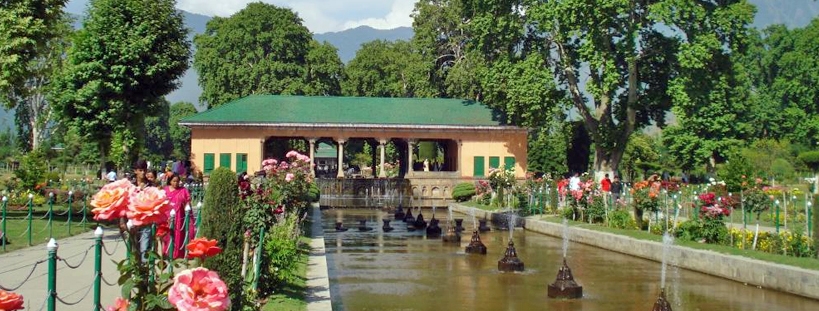

The central water axis, fountains and pavilions of Shalimar Bagh


Beautiful flower beds
Nishat Bagh
Nishat Bagh meaning “Garden of Delight” is a terraced Mughal garden on the banks of the Dal lake. Built in 1633 by Asif Khan, the father of Nurjahan, it is the second biggest of the Mughal gardens. The landscaped garden and it’s fountains against the backdrop of the PirPanjal ranges and the Dal lake is a feast to the eyes.
It was originally planned in the model of a Persian garden but had to be re modelled to suit the topography of the region. It has a broad cascade of terraces lined by chinar and cypress trees and the lowest part is connected to the Dal lake. It has 12 terraces corresponding to the 12 zodiac signs.
There is a central axis that runs through the garden with water flowing in a cascade from the upper terrace to the lowest one. Fountains and pools are present in all the terraces and along the central axis canal . Benches for visitors to relax and enjoy the scenery are also provided.
Some pictures…

The central canal with fountains
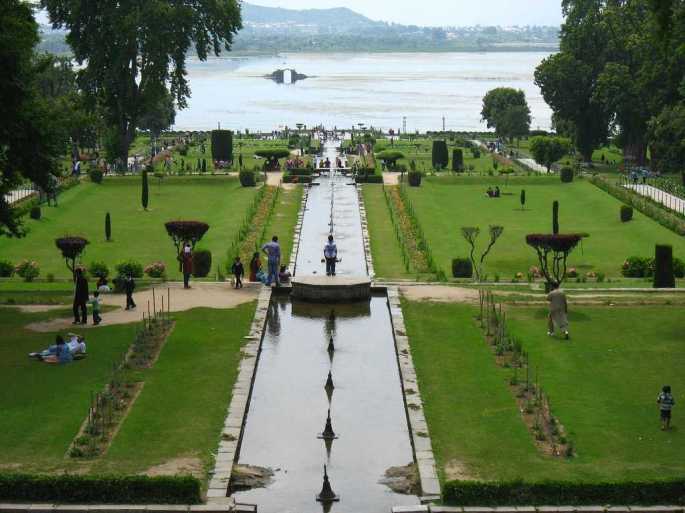
The central canal almost blending into the Dal lake

Water cascades from the upper to the lower terraces


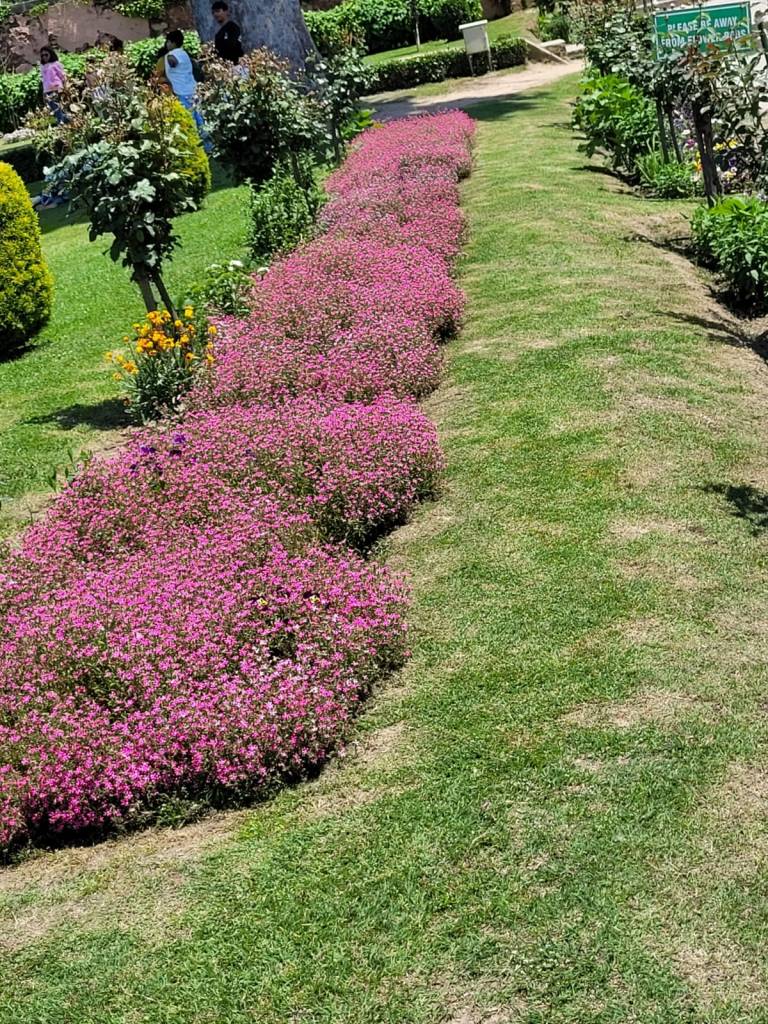
A riot of colours
Chashme Shahi
Famous for it’s natural spring, Chashme shahi is another of the Moghul gardens of Srinagar. The waters of this spring are known for their cool and rejuvenating qualities . This garden also has Persian architectural influence and the central water axis through which the spring water flows.
The spring is sheltered under a pavilion and the water flows through the central axis from one terrace to another in the form of cascades. The terraces here are much higher than in the other gardens and provides views of the Dal lake.

The pavilion guarding the spring
Verinag
This pavilion garden built around the spring that is the source of the river Jhelum was also built during the time of Jahangir but subsequently extended by Shah Jahan.
Located at Anantnag, this garden was just a spring around which an octagonal tank was constructed . This tank is 50 ft deep and has lot of fish. Cascades and fountains were built lined by chinar trees . Hot and cold baths were also built but went into ruins.
It was a pleasure retreat of the Emperor and arched recesses were built around the tank. Verinag is also a sacred place of the Kashmiri Hindus.


Verinag
Achabal Bagh
A Hindu sacred site with a spring called Achabal Nag is the origin of the present day Achabal Bagh. Situated near Anantnag, it is remotely located and has been sheltered from urbanisation and tourist influx. Empress NurJahan is believed to have enhanced and modified the existing garden.
Pari Mahal
Located close to Chashme Shahi in Srinagar, this garden was built at the site of the ruins of a Buddhist monastery as a residential school of Sufiism.
Though at one point in time, these gardens were much appreciated and celebrated, the Tulip garden has overshone these. After visiting the Tulip gardens, the charm of Mughal gardens seem to have faded.
Well, with this I conclude this episode on the (Moghul) gardens of Kashmir. Leaving you with the thought that though they are attributed to the Moghuls, they actually belong to the pre Moghul era….
I am on a holiday and so there will be no episodes published in the next two weeks. Will see you after that at Gulmarg, the ski world of India.
Till then, do subscribe, comment and give your feedback.
Discover more from Travel-along.in
Subscribe to get the latest posts sent to your email.
 Travel-along.in
Lovely gardens, made all the lovelier by the mountain backdrop.
LikeLike
beautiful pics. Very good write up
LikeLike