Aswan; in southern Egypt is a slow paced, historic and picturesque city on the banks of the Nile . The unique island temples like Philae and the ancient villages of the Nubians around have led to its popularity as a tourist destination.
The Aswan High dam was built to control flooding in the Nile, provide irrigation and hydroelectric power and it has changed the economy of this city. The dam helps provide year round irrigation developing agriculture with cotton, sugarcane and lentils forming the major agricultural produce.
However, when the dam was built, large areas of the old Nile valley was flooded and thus was born the Lake Nasser. It inundated many of the temples and archaeological sites along the Nile; Abu Simbel and Philae temples being the more significant ones. Extensive and special engineering techniques have helped relocate many of these sites to higher locations .
The stone quarries of ancient Egypt located at Aswan was the source of granite used to build most of the colossal statues and obelisks and monolithic shrines found all over Egypt including the pyramids. The techniques used by ancient Egyptians to quarry and transport these massive blocks to different locations is still a mystery to the modern world.
We flew in to Aswan from Cairo and were put up at a hotel overlooking the Nile. The elephantine island across and the graceful felucca boats provided splendid views from our room.

The Elephantine island across the Nile and a felucca gracefully sailing along
Philae temple was our first destination at Aswan and we spent the morning at this famous temple dedicated to God Isis. Philae temple was exclusively covered in the last episode. After visiting Philae, we drove past the Aswan High dam which is one of Aswan’s land marks.
Aswan High Dam
Built between 1960 and 1970, across the Nile river, this dam is one of the largest embankment dams in the world. There is an old Aswan dam built much earlier and inspite of that, flooding was a regular hazard along the banks of the Nile causing lot of damage. The new dam helped control that besides providing irrigation support and electricity.
Driving towards the dam we saw a monument to the Soviet Egyptian Cooperation in building this dam.

The monument of Soviet Egyptian partnership

The Aswan High Dam and attached power station
Feluccas
Feluccas are traditional wooden sail boats with single sails seen in many Mediterranean countries and in Egypt. It can typically accommodate around 10 passengers and is used as a mode of transport here. Sailing on a felucca is a unique experience offered to tourists at Aswan and we enjoyed this ride with the boatmen singing traditional songs.
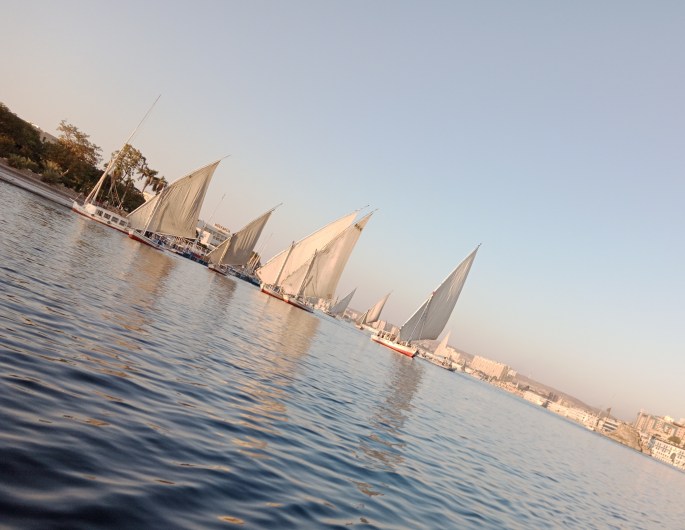
Felucca boats on the Nile
Enjoy an Egyptian song by clicking on this video above.
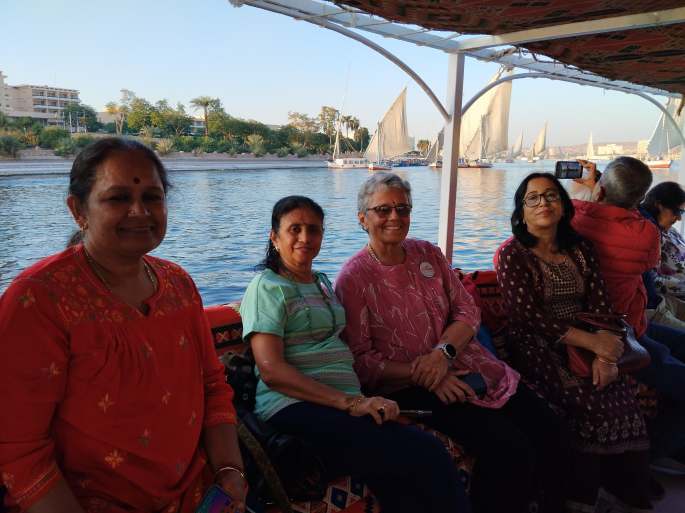
On a felucca
Enjoying these local performances, we spent about an hour on the felucca sailing on the Nile.
After the felucca ride, we had another interesting plan and that was a visit to a Nubian village as suggested by our local guide
Nubians
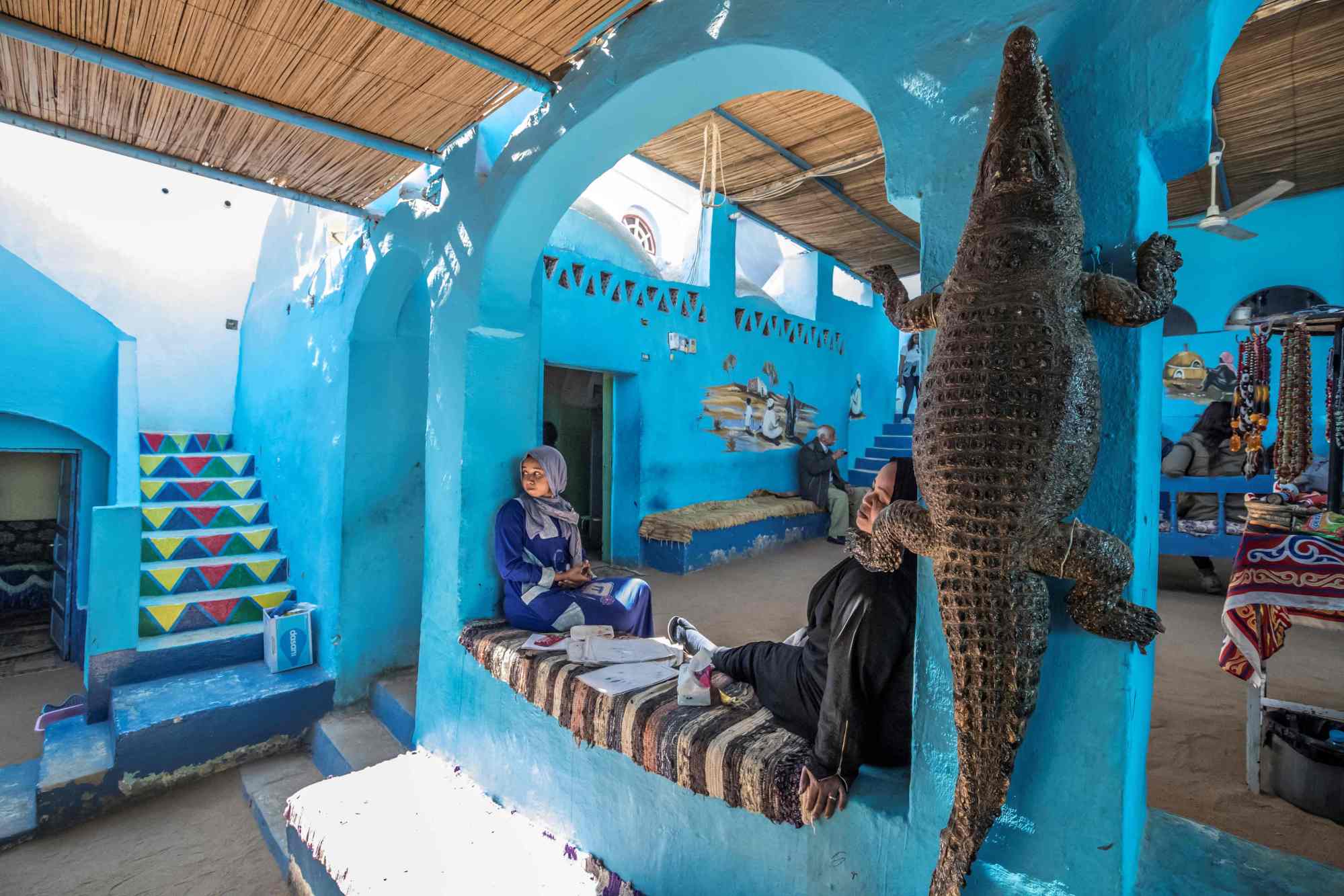
Nubians are indigenous people of northern Sudan and southern Egypt. They differ ethnically and culturally from other Egyptians. The Nile has several islands and many of these islands in southern Egypt are inhabited by Nubians. Most Nubians practice Islam.
Their houses have unique architectural features with large ornately decorated gates facing the Nile. Geometric patterns, motifs and symbols connected to the family adorn the walls of their houses.
Crocodiles form a significant part of their culture and are often kept as pets in Nubian homes. They are believed to bring good luck
We visited a Nubian village by a motor boat. Some pictures from this visit…
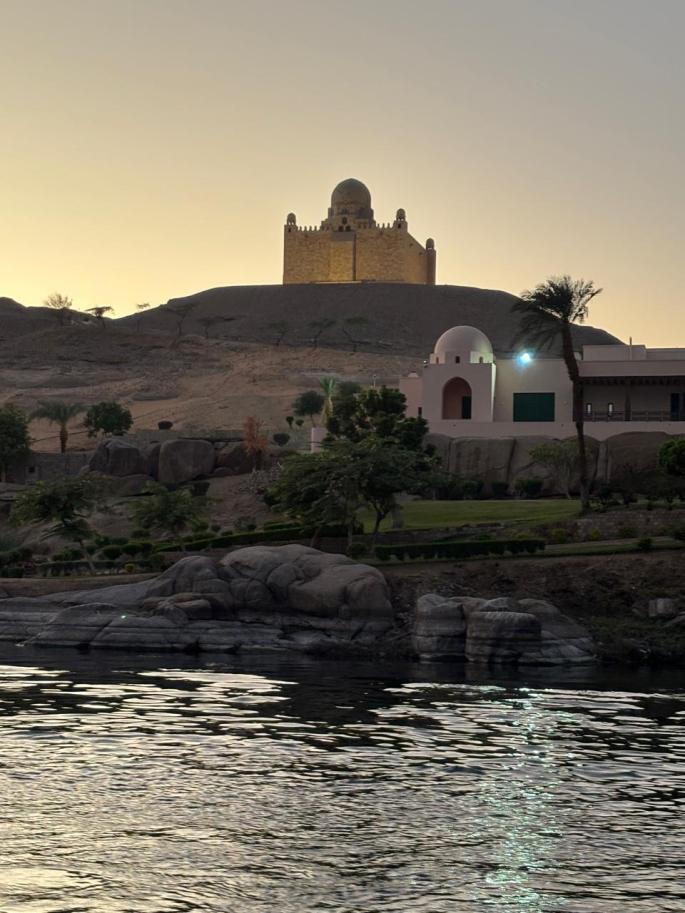
The Aga Khan Mausoleum on one of the islands on the Nile

The Nubian village as we approached it
After we alighted from the boat, our guide helped us clear the steps in partial darkness and we soon stepped into the village. It was live and active with many shops selling local merchandise and villagers going about their daily routines. The most peculiar feature was the brightly painted houses and shops. It was a riot of color everywhere.

The streets of the Nubian village
Soon we were at the entrance to a home.

The colorful entrance
We were welcomed to their home and we reached a central hall where again the walls were painted. We sat down comfortably and soon realized that there was a central shallow tank that housed a live crocodile. It looked very cruel to put an animal in such a small enclosure. But that is supposed to be a part of their custom and is now used to attract tourists and bring in the money.

The hall with painted walls and the shallow tank with the crocodile

The pet crocodile in the tank (looked pathetic)
A young boy then came up with a baby crocodile whose mouth had been tied up. The guests who wanted to hold the baby or have a picture with it were allowed to do so. It felt rather cruel to me and I did not venture in to that.

One of the baby crocodiles
We were served some tea and local snacks and then taken around the house.


Other areas of the house
After the visit to the Nubian village we walked back to our boat and sailed back to our ship with mixed feelings. Though the houses were very colorful and we liked the customs of the locals, the crocodile part felt bizarre. The cruelty meted out to the baby crocodile also was upsetting.
That brings us to the end of this episode. Next week we meet at the Abu Simbel temple.
Do subscribe, like and comment.
Discover more from Travel-along.in
Subscribe to get the latest posts sent to your email.
 Travel-along.in
Oh I only knew about the dam. Thanks for educating me. I too am not a fan of crocodiles. Thanks again
LikeLiked by 1 person
Ha ha…they were a little creepy…the crocodiles😞
LikeLike
Interesting. I certainly wouldn’t feel like a crocodile would bring me luck, and those crocs appear to be having very poor luck. Thanks for sharing.
LikeLiked by 1 person
True😞
LikeLiked by 1 person