
Located in the town of the same name, the Luxor temple complex is located on the banks of the Nile and built around 1400 BC. Major part of the temple were built by Amenotep III and Ramesses II. During the Roman period, parts of the temple were converted into a church.
Unlike all other temples we visited, this temple is not dedicated to any cult God or any defied Pharaoh making it unique. Instead, it is dedicated to rejuvenation of kingship and most probably was the location of coronation of many pharaohs. It was also the location of the Opet festival , the most important festival in ancient Egypt when the Gods from Karnak temple would come in a procession to Luxor and stay here for a few days. The processional route used is an important part of this temple complex.
Our Trip
From Karnak temple we proceeded to the Luxor temple and it was dark and so the temple was lit up adding to the beauty of the structures. The avenue of sphinxes lead us to the entrance of the temple.
Avenue of Sphinxes
This is a 2.7 km passage between the Luxor temple and Karnak temple lined on either side by sphinxes. There are more than 700 sphinxes with the body of the lion and the head of a pharaoh signifying the strength of the lion and wisdom of the king. At the Karnak end, the head of these statues is of a ram while on the Luxor side, its a human head.
It follows the processional route used by pharaoh Amenhotep III in the 14th century BC . This was also the route used when Amun Ra would leave Karnak and go to Luxor during the festival.

The Avenue of Sphinxes

One of the sphinxes
The Main Temple
We entered the temple through a pylon consisting of two towers on either side of a doorway with niches that originally held flag staffs .Built by Ramesses II in the 13th century BC, the size of the pylon and the adorning statues makes one feel little!!
In front of this pylon are six statues of Ramesses II ; four in standing and two sitting posture ; some of them partly damaged. The standing statues have the left foot forward depicting a very traditional pose. The statues wear the double crown representing union of upper and lower Egypt which he reigned. Built of sandstone blocks, the temple design shows all features of Egyptian architecture.
The pylon itself has inscriptions of the war with the Hittites.

The front pylon of the Luxor temple with the six statues and an obelisk
The Obelisk
An obelisk is a long monolith stone with a pyramid shaped top and decorated with reliefs celebrating the achievements of the pharaoh.
There is an obelisk towards left side of the entrance which is attributed to Ramesses II, weighing over 200 tonnes and is 26 meters high. At the base of the obelisk are statues of baboons . Baboons are symbol of wisdom in ancient Egypt as the baboons were believed to dance before the sunrise welcoming the Sun. The body of the Obelisk has several hieroglyphic depictions mainly of the pharaoh and various deities.
Originally there were two obelisks. The obelisk on the right side was gifted to Louis IX by one of the Ottoman kings Muhammed Ali and now adorns the Concorde square in Paris ! .

The Obelisk with hieroglyphics and the pyramidal top

Baboon statues at the base of the obelisk
Crossing the first pylon, we entered the Court of Ramesses II which is an open courtyard with double row of columns having papyrus capitals on three sides. Many of these columns have colossal Ramesses II statues between them, some wearing the crown and some partially damaged.
Some of the statues in the hall were those of his predecessor Amenotep III which were rechristened as himself by Ramesses II.
The 74 columns in this hall have inscriptions depicting the pharaoh and his family receiving the blessings of the Gods.

Ramesses II statues in the hall with some damaged columns on the right

Ramesses II statues in between columns, some with crown and some damaged.
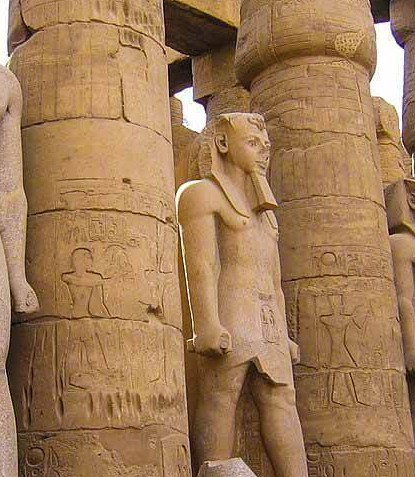
Inscriptions on the columns
One of the important depictions on the reliefs here is that of the unification of Upper and Lower Egypt about which Ramesses II would pride himself.

The inscription showing the unification of upper and lower Egypt.
Abu Haggag Mosque
One corner of this court is taken up by a mosque; the Abu Haggag Mosque. This is a functioning mosque. The peculiarity of this mosque is that it lies on top of a church. The church was built in the Roman period but subsequently got buried in the sand and mud. Subsequently a mosque was built here and the remains of the church were discovered during excavations.

The Abu Haggag Mosque. The black arrow indicates the ground level when the mosque was built. The lower part was discovered to be a church during excavations.
Walking further ahead, we reach the temple built by Amenotep III . The pylon has disappeared but there are two rows of seven columns which originally had a ceiling but does not exist now. The damages are due to both natural causes and deliberate destruction for religious reasons.

The Colonnade
In front of the colonnade are the statues of Amon and Mut who along with their son Khonsu was the triad of Gods worshiped at Thebes.

Amon and Mut at the entrance to the colonnade.
Once we crossed the colonnade, we were at the second courtyard called the Sun court. This is another impressive courtyard lined by 64 papyriform columns with fluted shafts. the blocks have detailed hieroglyphics but some have been deliberately defaced.

The Sun Court

Note the ornate pillars with fluted shafts in the Sun Court
The sacred boats were kept at this square during the festival of Opet when Amun Ra, Mut and Khonsu would come in a ceremonial procession from Karnak to Luxor and spend eleven days here. The Pharaoh would receive them at the sanctuary.
From here we enter an area that was converted into a church during the Roman period. Here as well as in many other parts of the complex, there are visible evidences of defacement. At many places the hieroglyphics have been chiseled out, re-plastered and paintings done on top.

The part converted into a church…note the Roman style tops of the columns
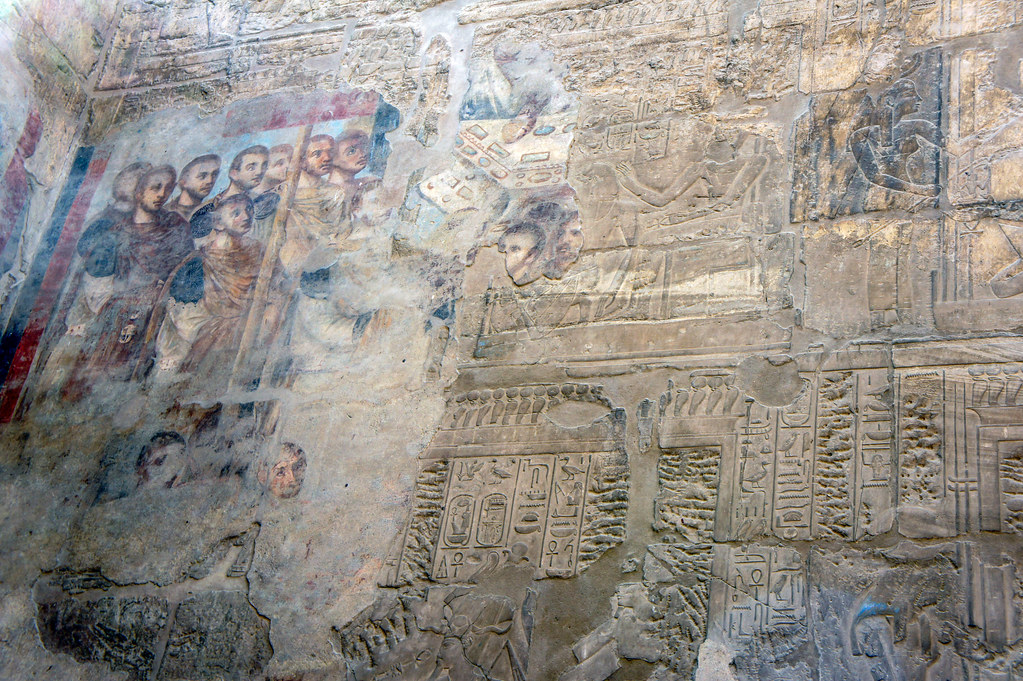
Deliberate removal of hieroglyphics with plastering and Roman painting
From here we enter the sanctuary which represents the original sanctum of the temple. This was where the king received the Gods during the Opet festival. The walls of the sanctuary have reliefs depicting the offerings to the Gods by the pharaoh.

The Sanctuary

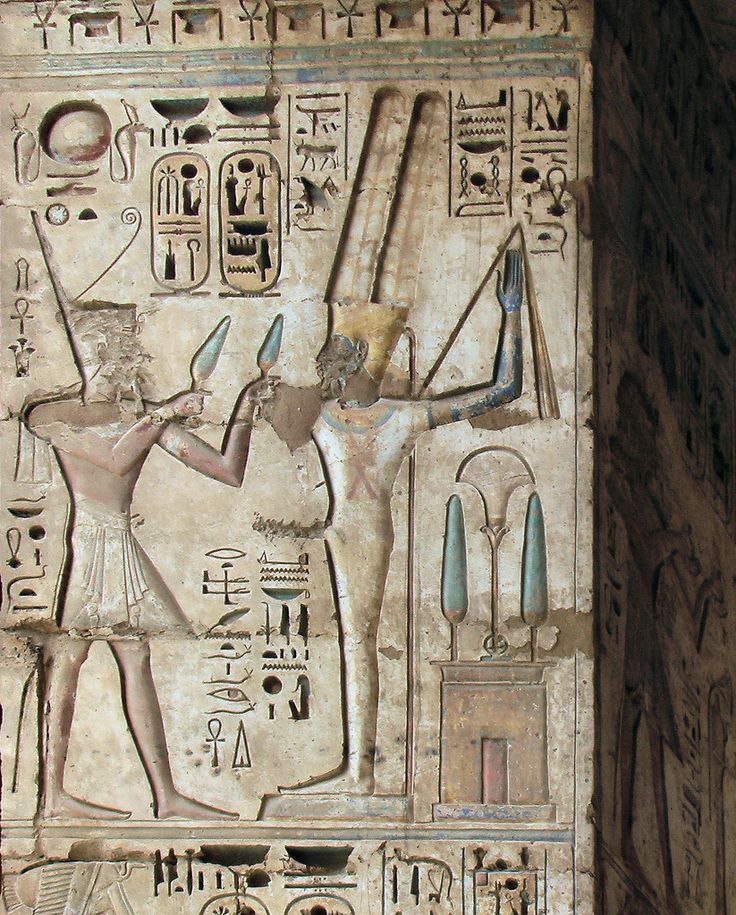
Some of the reliefs on the walls
Alexander the Great is closely connected with Luxor temple. He is seen as a pharaoh giving offerings to the Gods in many reliefs in this temple.
From the sanctuary, we walked out along the central passage and proceeded to our cruise ship after an exhausting but amazing trip to two of the most popular temples of ancient Egypt.
Next week we are at The Valley of the Kings, a vast area where multiple tombs and burial chambers have been discovered. Till then, do subscribe, like and comment.
Discover more from Travel-along.in
Subscribe to get the latest posts sent to your email.
 Travel-along.in
Great photos. The ancient structures all lit up at night are spectacular.
LikeLiked by 1 person
U made Egypt sound so beautiful that now we have planned to go there in November
LikeLiked by 1 person
Happy to hear that Indra. Hope you have a great trip…
LikeLike
Thankyou
LikeLiked by 1 person