
On the west bank of the Nile ; among the Theban hills (Thebes was the ancient city where modern day Luxor city lies) lies a cluster of tombs of the rulers of Egypt’s New Kingdom which is a part of the Theban Necropolis and an UNESCO World Heritage site. This is essentially what we call The Valley of Kings today. It was the principal burial ground of the royals and nobles of the New Kingdom where rock cut tombs were excavated for nearly 500 years ranging from the eighteenth to the twentieth dynasty. The world’s attention was drawn to this place after the discovery of the tomb of Prince Tutankhamen the baby pharaoh in 1922 .
This site was chosen as it was close to the temples of the ancient Thebans, it is a valley protected by cliffs, and has a good limestone bedrock .The valley is situated over 1000 ft of limestone and and other sedimentary rock ranging in consistency from finely granular to coarse stone. The ancient Egyptians took advantage of the geological features while constructing the tombs. Some tombs were quarried out of limestone cliffs, others behind clefts, and some were at the edge of rock projections created during the floods.
Towering above it is the Qurn (the horn in Arabic) , the pyramidal apex of the hills which probably inspired the shape of the pyramids and was long associated with burials . Almost all of the tombs have been robbed and are empty now but they still contain relics that point to the opulence and power of the Egyptian pharaohs.

Our group at the Valley of Kings with Al Qurn or “The Horn” in the backdrop
The valley of Kings houses 64 mapped burial sites, notable among them being that of Ramesses III, Tutankhamun and Thutmoses III. Today, the tombs are numbered with the prefix KV meaning King’s Valley .These tombs range in size from small pit tombs (KV 54) to extensive labyrinths with over 120 chambers (KV5) where all the sons of Ramesses II are buried.
The tombs are decorated with scenes from Egyptian mythology revealing many of the funerary practices of that time and their belief in after life. From the grandeur of the tomb paintings to the intricate hieroglyphics, a journey through these tombs unveils the remarkable achievements of the pharaohs and their beliefs. Come along….
Our visit.
We drove down to the Valley of the kings from Luxor city . Buggies helped to take us close to the tomb site which need some walking . As we entered the main gate through metal detectors, we encountered a model of the excavation site where the location of the tombs are shown with small numbered flags and another model explaining the location of the tombs underground.


Two models show the location on the ground and the underground paths to the tombs.
Not all tombs are open to tourists as considerable excavation work is on. Some of the tombs are deep inside and considerable climbing and walking is involved. We visited some of the more easily accessible tombs.
The tombs consist of iron gate through which you enter into a long rock cut passage leading to one or more halls and finally to the burial chamber. The passages are decorated with various scenes of daily life and culture, their Gods, the pharaohs themselves and hieroglyphics.
Pictures of some of the tomb chambers…..
The Tomb of Ramesses IV (KV 2)
This is one of the tombs with the highest number of graffiti and was probably used as dwellings by Coptic priests .

Entering the tomb

Coptic Graffiti on the walls
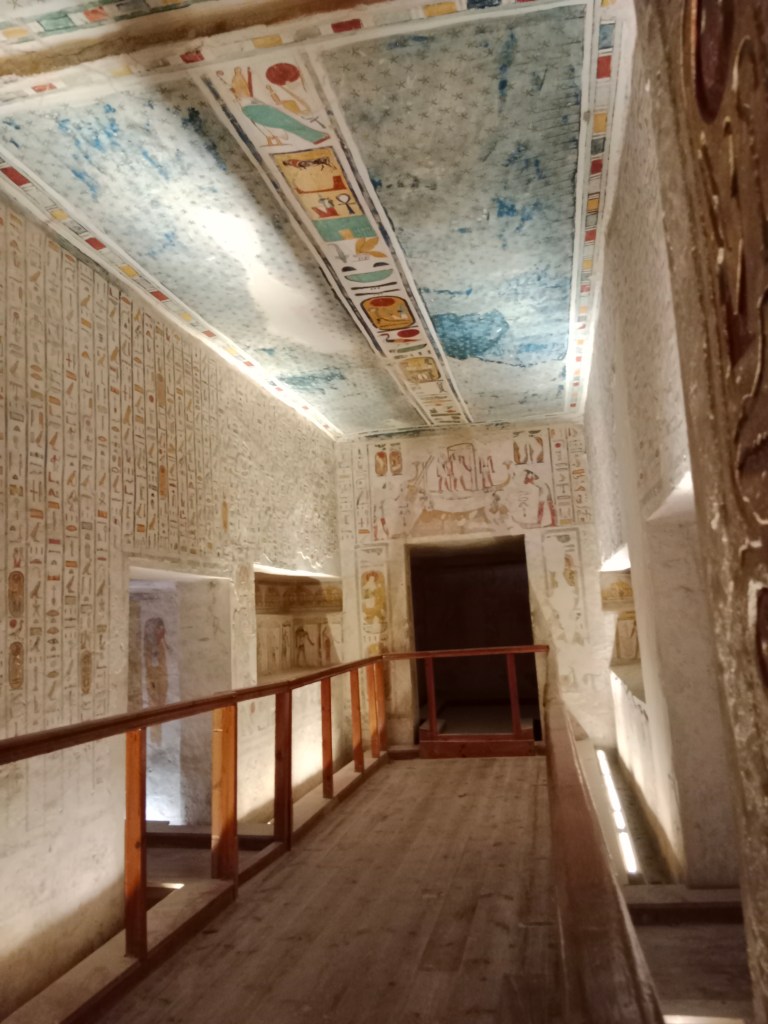
The passage to the tomb chamber with inscriptions on walls and ceiling
One remarkable belief is that Goddess Nut swallowed the Sun as it set and delivered it the next morning. This is graphically represented in the ceiling of this tomb.

The ceiling depicting the passage of the Sun during the day. (The Sun being swallowed at night and delivered next morning by Nut)
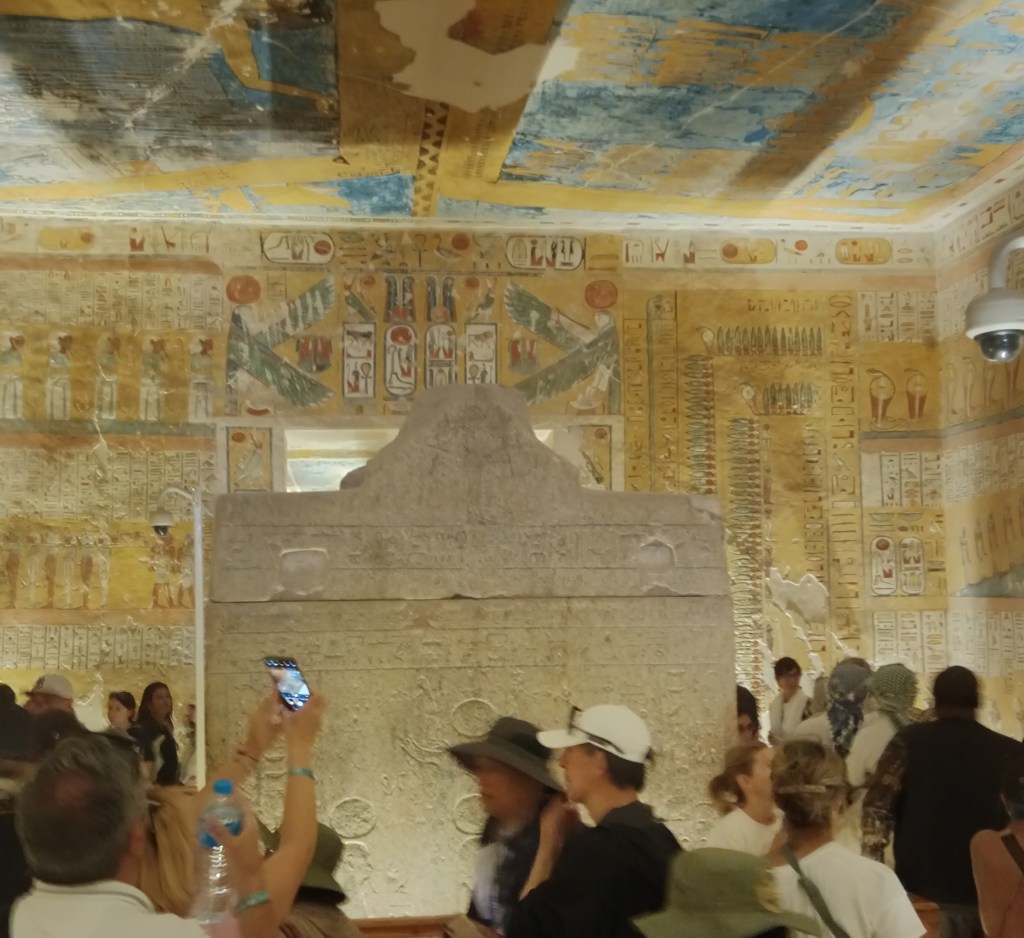
The tomb chamber with the huge tomb of Ramesses IV
Tomb of Ramesses III (KV 11)
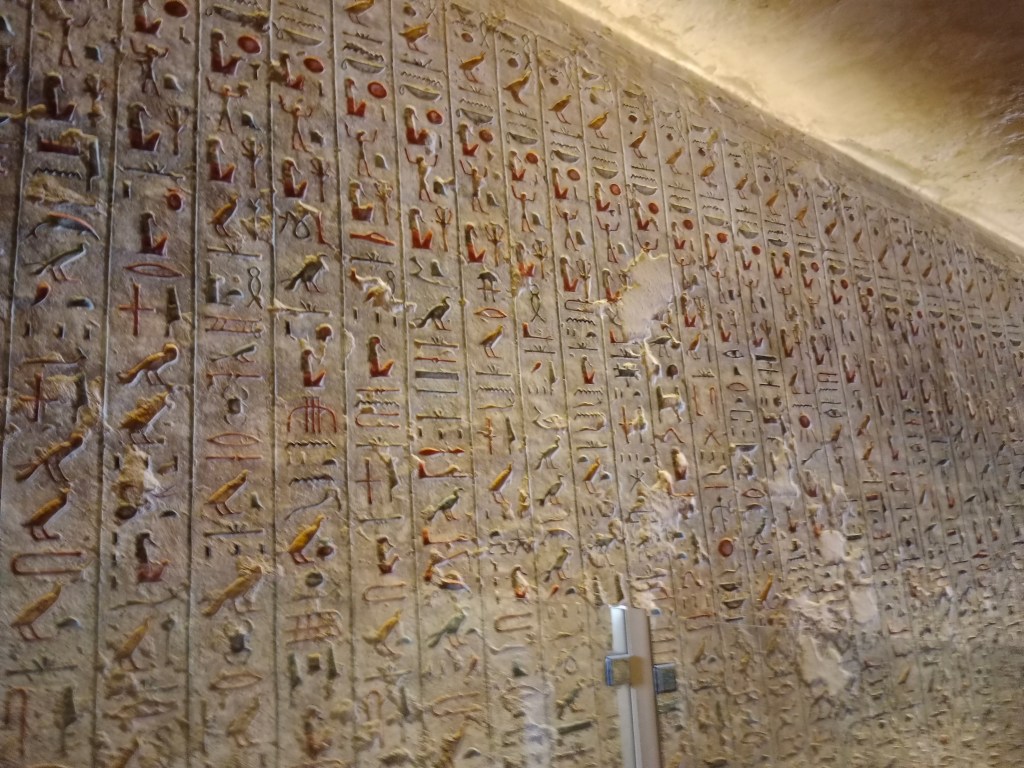
Hieroglyphics on the walls

Depiction of block transportation during construction

The pharaohs and their daily routines in pictures
The burial chamber is empty as the sarcophagus of Ramesses III is now at the Louvre Museum in Paris.
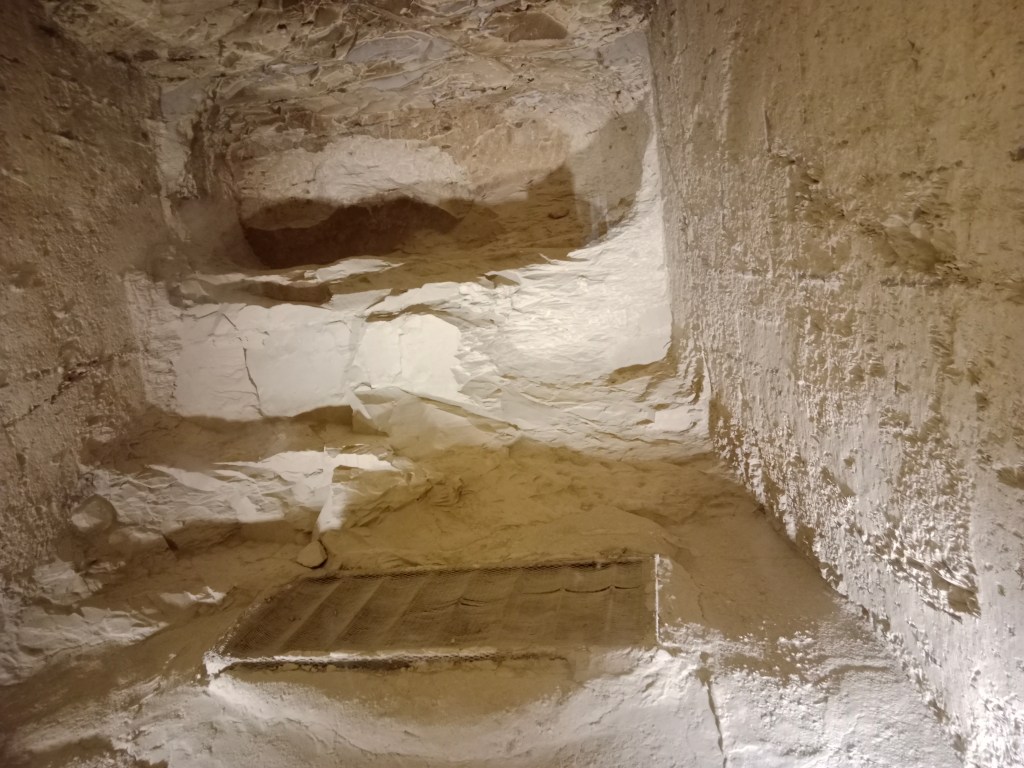
The empty tomb chamber of Ramesses III
Ramesses IX (KV 6)
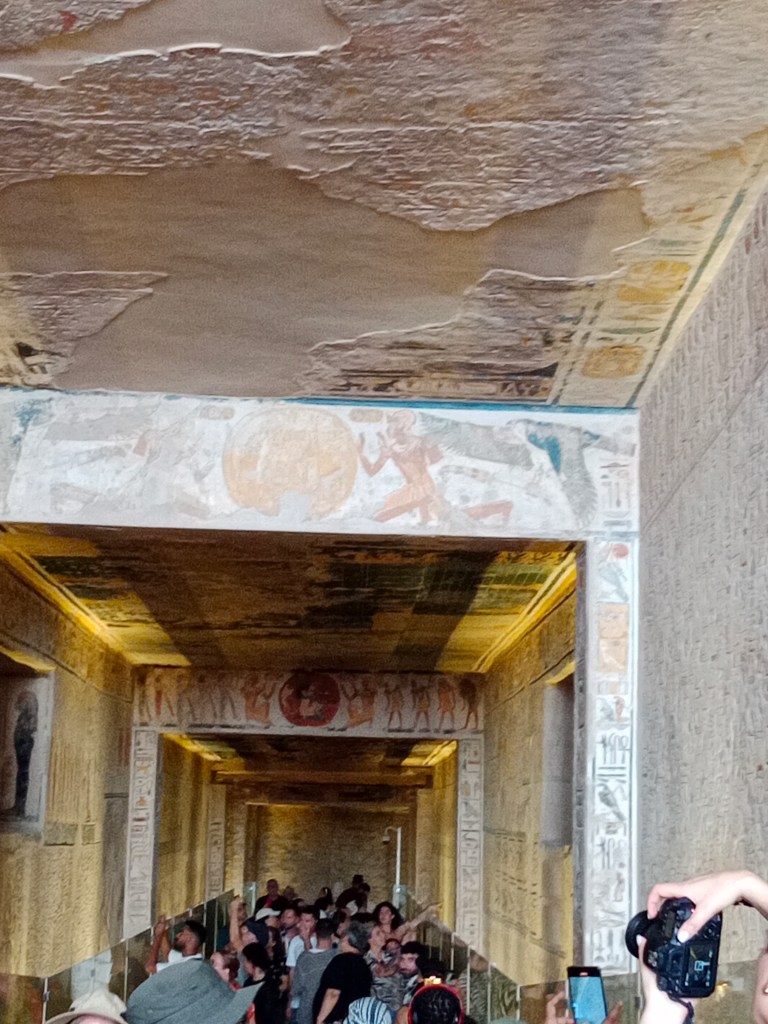
Walking towards the tomb chamber

Pictures depicting various ceremonies
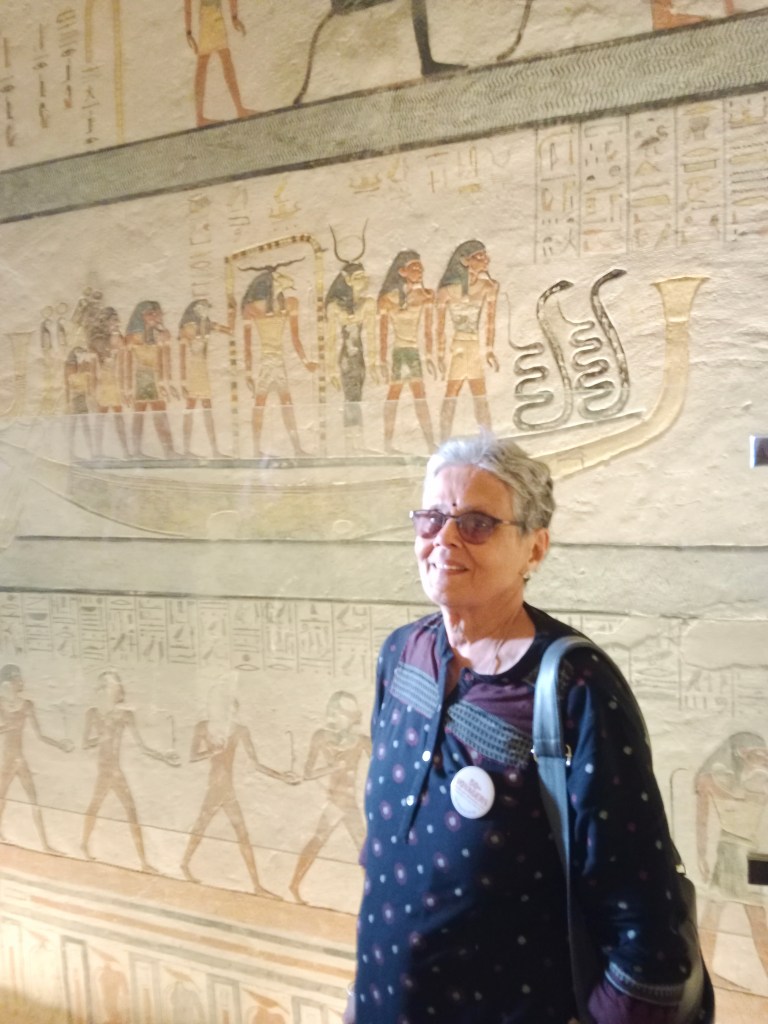
Inside the tomb with the picture of the holy barque in the backdrop

Pictographic representation of the one legged God of Fertility
The pictures above tell you about the richness of the Egyptian civilization and how lot of it has got wiped out by causes natural and otherwise.
Exploration, excavation and conservation continue there even today with new discoveries springing up off and on and is one of the most popular places of interest for Egyptologists .
Modern radar scanning techniques have revealed natural shelves below the surface we see today.
Next week we visit the Temple of Hatsheput, the female pharaoh . So be prepared for some ancient Woman Power…
Till then, do subscribe, like and comment.
Discover more from Travel-along.in
Subscribe to get the latest posts sent to your email.
 Travel-along.in
beautifully described can’t wait to see it all.
LikeLiked by 1 person
Thankyou Indra
LikeLike
How amazing to be able to see that.
LikeLiked by 1 person
Yes…it was amazing to see their civilization. I wish it had not been damaged…we are still probably missing a lot.
LikeLiked by 1 person