About

Exploring Maasai Mara: Wildlife Encounters and Natural Wonders

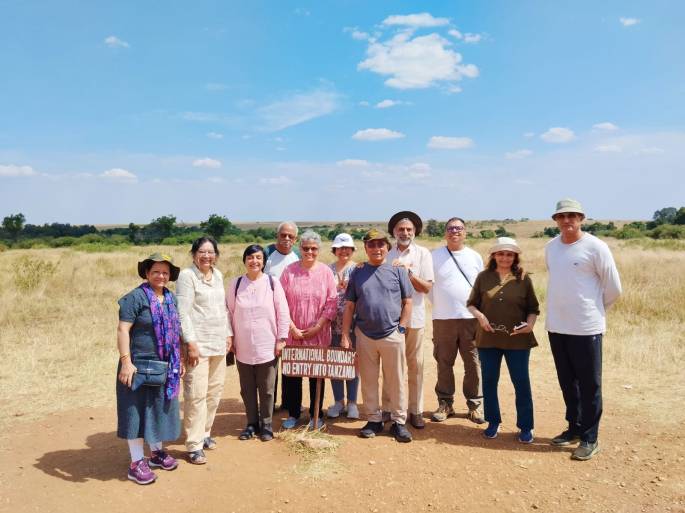
Maasai Mara or The Mara as it is popularly known is a land of breathtaking vistas, exotic wildlife and endless grasslands extending to the horizon with lone acacia trees that stand tall and add beauty. A game reserve in Kenya contiguous with Serengeti National Park in Tanzania, it is named in honour of the Maasai people who migrated from the Nile basin and settled in here.

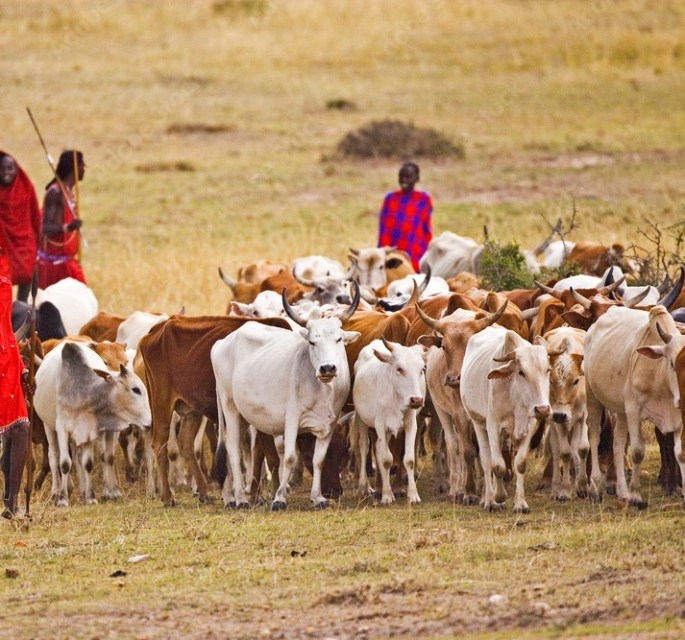
The Mara plays host to The Great Migration which is one of the ten Wonders of the World. Originally established as a wildlife sanctuary in 1961, its area was extended and converted into a Game Reserve . Parts of the area were later returned to local communities explaining why we see local community setups very close to the park boundaries and locals herding their cattle close to park environs.

The Mara river and its tributaries, the Sand and the Talek drain the region where the vegetation is primarily open grassland with acacia trees in some areas.

All members of the “Big Five”…lion, leopard, African elephant, African buffalo and rhinos are found all year round here.

But what is so special about Mara is The Great Migration where some estimated 13 lakh Wildebeest, 5 lakh Thomson’s Gazelles ,97000 Topis and over 2 lakh Zebras migrate north from Serengeti plains in search of pastures in July and return in October. This is one of the most impressive natural events worldwide. The Great Migration is such an event that I will be dedicating the next episode to it. For now, let us look at the other wonders of Mara.

Our Mara encounters

From Lake Naivasha, we were headed to Maasai Mara but the riots in Kenya put a spoke in the wheel for our trip. But our local travel partners efficiently overcame this with an early morning departure from Lake Naivasha. Though we all would have loved to spend more time at the resort at Naivasha, we left early to avoid any disruption in our itinerary.

Starting the drive early morning and after a couple of convenience halts we reached Masai Mara around noon. Enroute we passed the town of Narok which is the main town next to Mara and we did see evidence of potential riots.

Narok getting ready for some trouble!

Reaching Masai Mara ,the resort checked us in earlier and so we managed to get some rest before our first Mara safari.

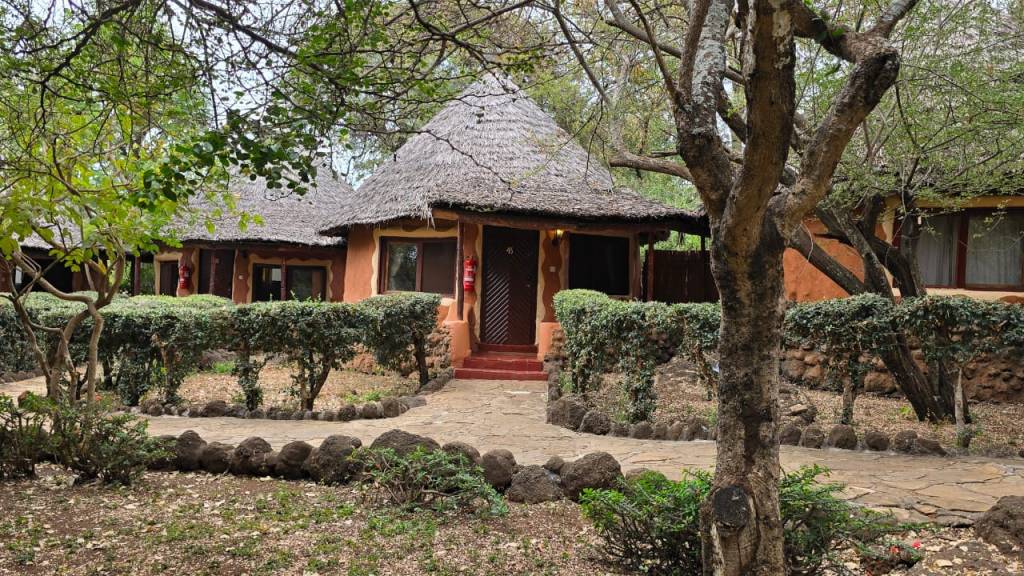
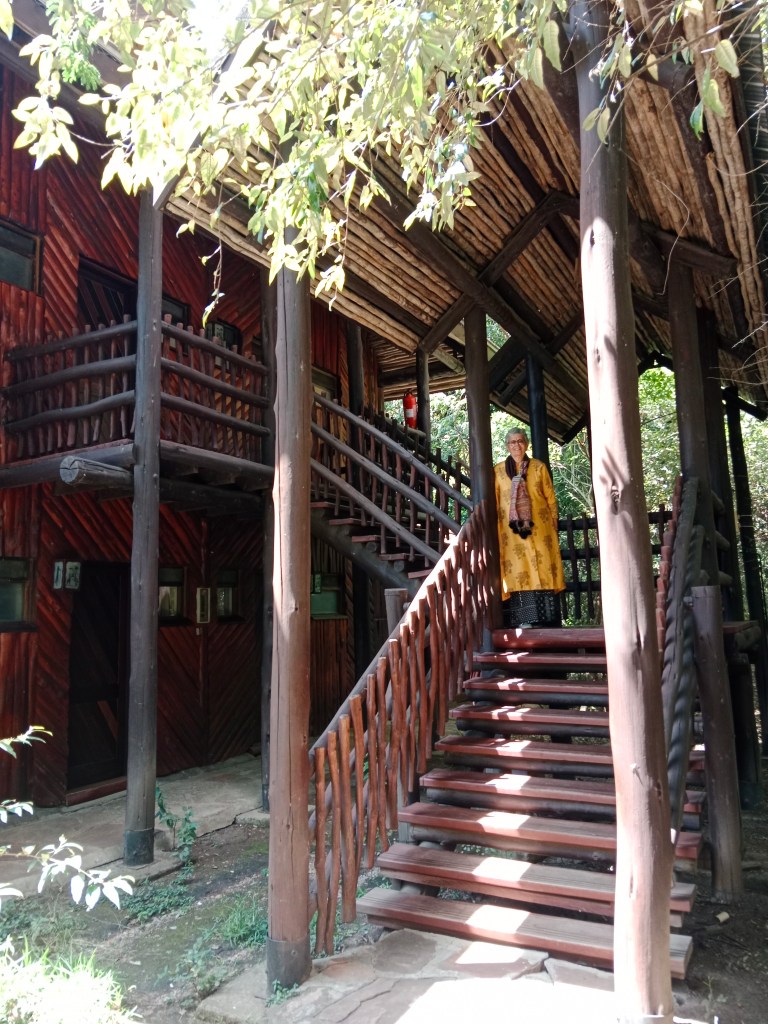
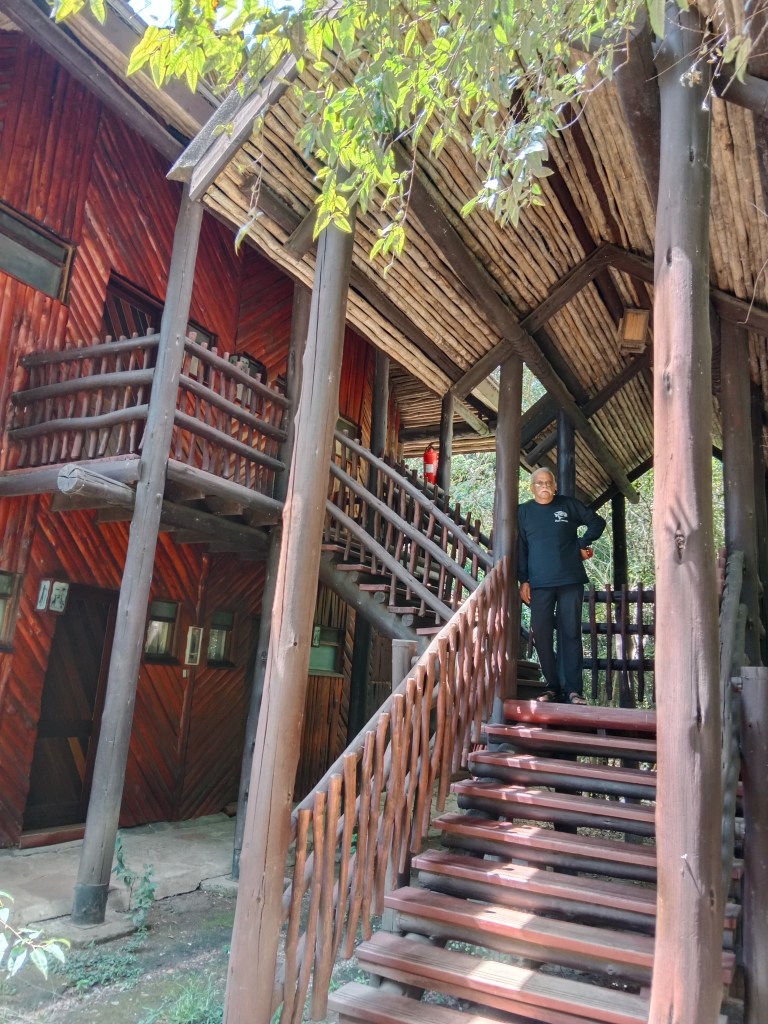
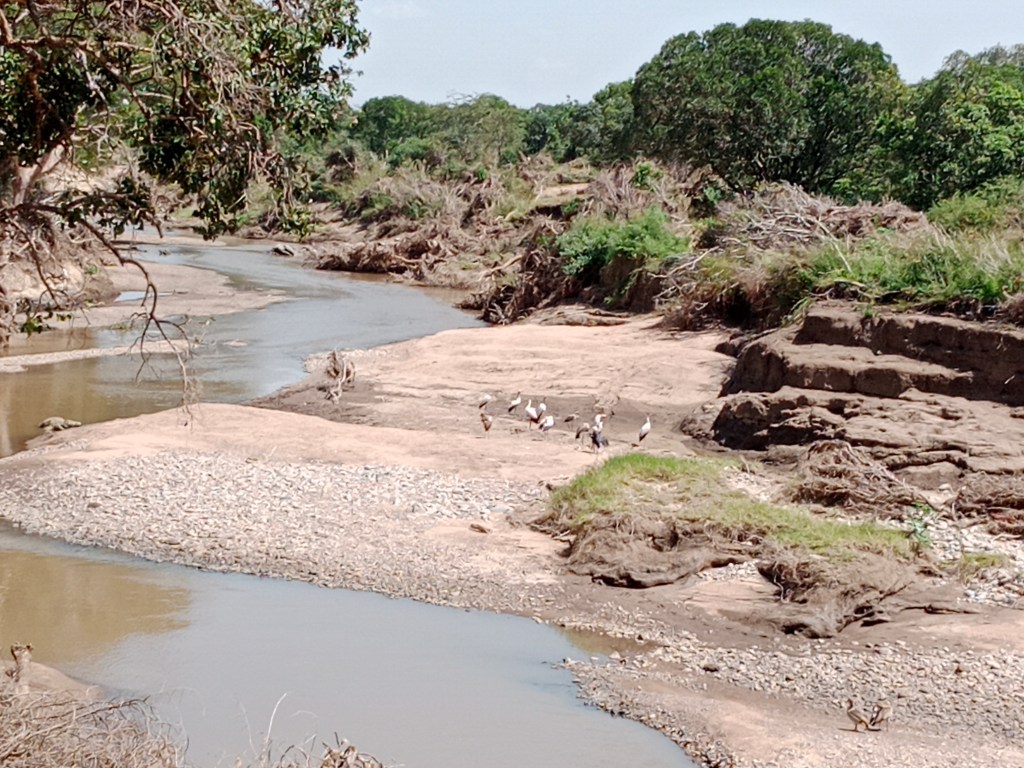
Here again the resort was beautiful with views of the Talek river from our rooms.

Our cottage and the view of Talek river from our balcony

After some rest, we again got into our safari vehicles and headed to the heart of Mara. We did three safaris over the two days we were there. The sum total of our experiences follows…

Enjoy the virtual safari…..

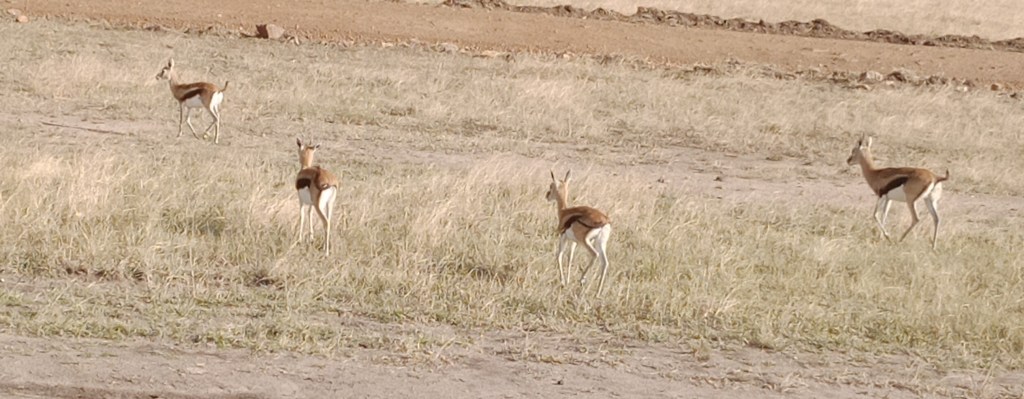
Thomson’s Gazelles

Gazelles are nimble antelopes, with a variety of stripes and markings that accentuate their tan buff coats and white rumps. They also boast impressive, ringed horns. These attributes make many gazelles attractive as game animals.

Gazelles shying away from us

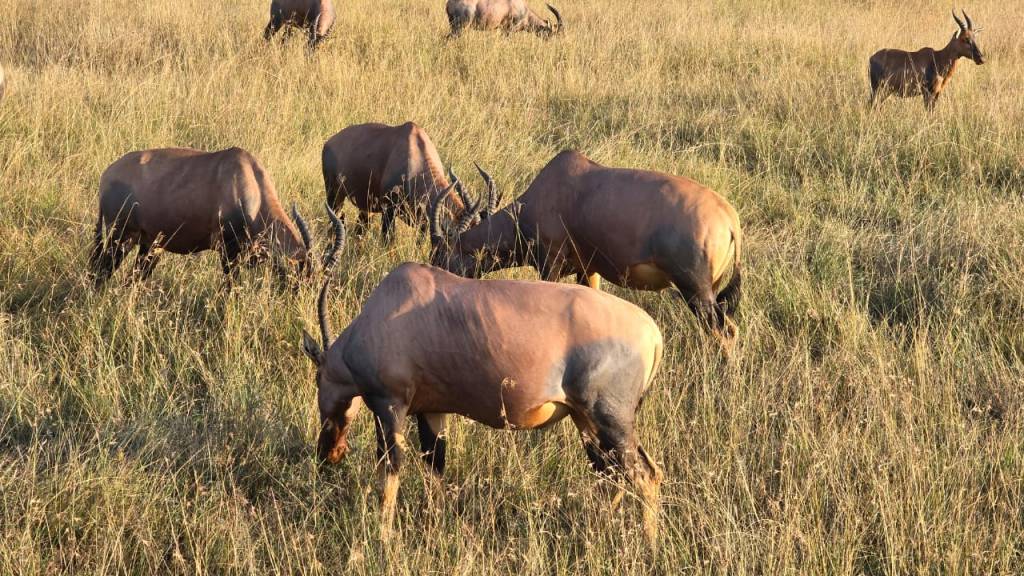
Topis

Much larger and less nimble antelopes are the Topis who also were in herds scattered all over Mara.

Topis (a variety of antelope)

African Elephants

Elephants crisscrossed our path multiple times. African elephants differ from the Asian elephants in that they are larger and have long tusks and large fan like ears.

Elephants are social creatures and they sometimes show affection by wrapping their trunks together .

An elephant herd with two baby elephants

Whispering sweet nothings?

A herd of elephants trudges along

Giraffes

It is the tallest living terrestrial animal and the largest ruminant on Earth. Found chewing all the time, we saw quite a few of them.

A male and a female giraffe stood still as we passed by

Lions

Getting a tip off from another vehicle about lion sightings Elvis , our driver took us to the designated spot. And we found them…

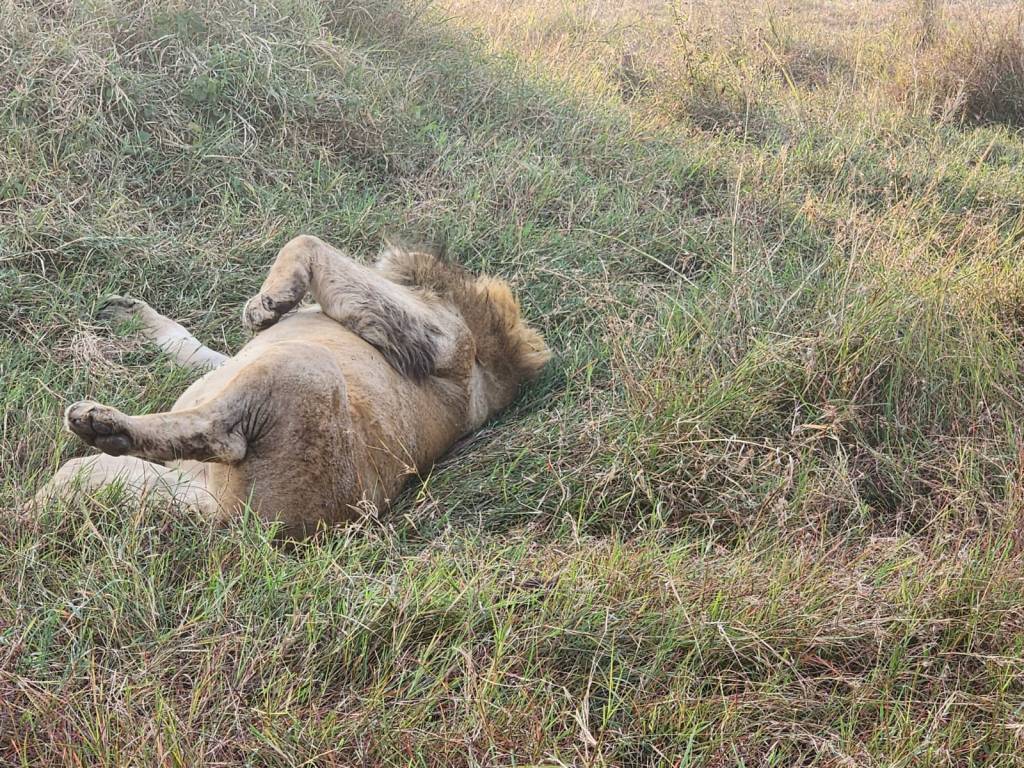
The king was resting after a meal when we disturbed him and….

He decided to get up and walk away…

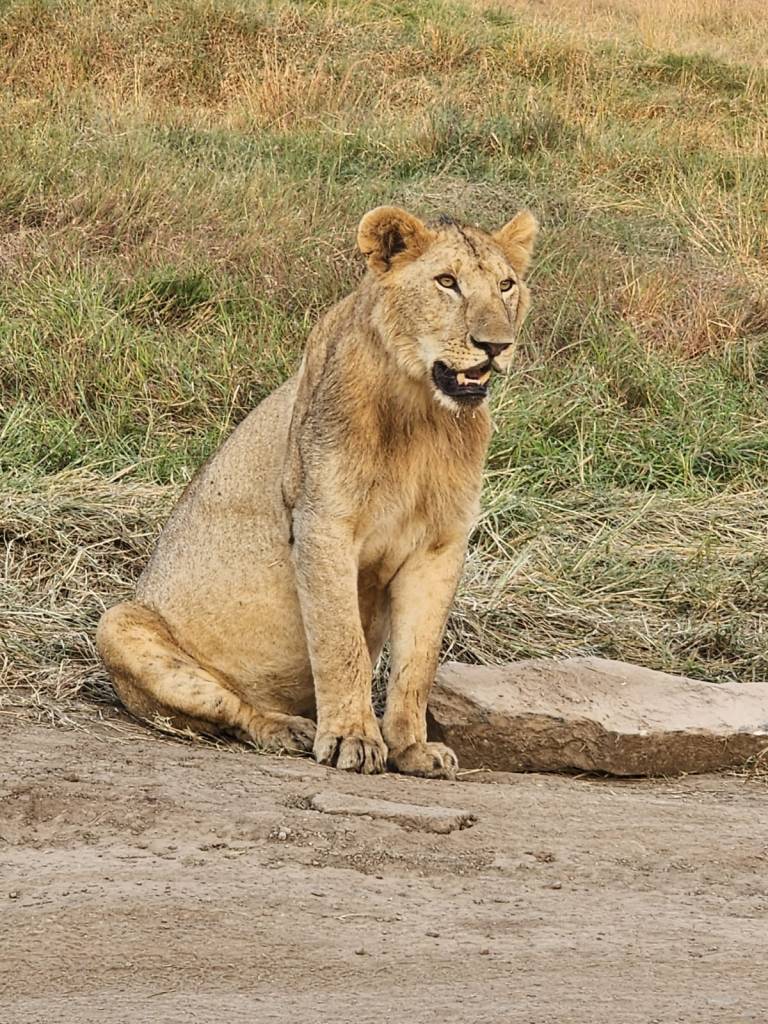
And his consort continued to sit by the roadside…

Warthogs or wild boars

A lone warthog was scampering away ….probably running away from a predator…

A lone warthog

Wildebeest

Wildebeest, also called gnu, are antelopes native to Eastern and Southern Africa. Wildebeests are herd animals and move from place to place, in search of food and water. They feed on grass and due to their large numbers can empty out the grass in vast grasslands very quickly.

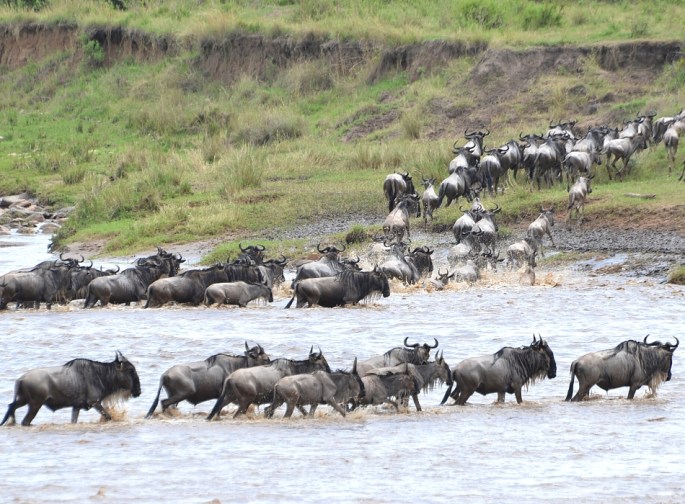
They are the heroes of the Great Migration and we saw herds of Wildebeest everywhere , some feeding calmly while others were running and jumping around in panic as our vehicle approached them.

Herds of wildebeest crossing the road

Millions of Wildebeest scattered all over…part of the Great Migration

After a tip off on a leopard sighting, we rushed to the designated location to find a large number of safari vehicles lined up to watch it. A warden was seen regulating the vehicles and finally we got our turn after considerable wait…

Leopard

A leopard rests after a kill

And the carcass of his prey hangs from a tree nearby

A group of hippos were having their siesta by the Mara river

Hippos resting by the Mara river

Cheetahs

And last but not the least, there was a group of Cheetahs feasting on their kill….

Cheetahs with their kill

Cheetahs feasting…(click on video) (PC Mr Arun Nathan)

And you soon come to realise how the cycle of life and death goes on endlessly in nature as you see scavengers feasting on carcasses…

Vultures feast on a carcass as wildebeest graze in the backdrop

I hope you all had a great virtual safari.

See you all next week with one of the wonders of nature…The Great Migration.

Till then, do subscribe, comment and give your feedback…

{P.S Some of these spectacular pictures and videos are courtesy Mr Arun Nathan, my co traveller on the Kenya trip.}

Walk with Wildlife: Unveiling the Secrets of Crescent Island

When we undertook the Kenyan safari, we were anticipating animal encounters but were in for a real surprise at this unique island where we walked with the wildlife. Now, that sounds pretty exciting…isn’t it?

Come along …let me take you on the Walk with Wildlife experience.

Taking a boat safari on Lake Naivasha, we reached Crescent island.

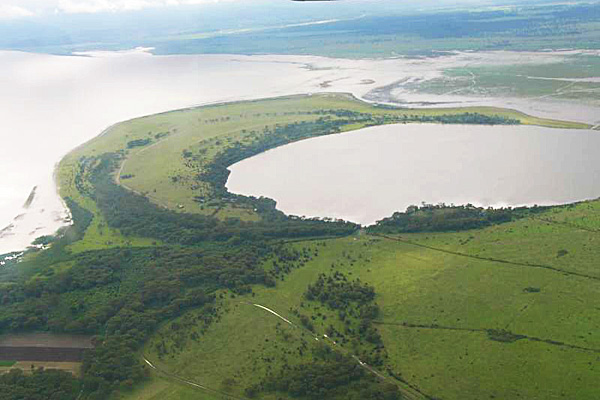
Aerial view of Crescent island (file photo)

Crescent island…an overview

Crescent island is one of Lake Naivasha’s best kept secrets. It is an ancient volcano which has been partially submerged giving it a crescent shape. The unique feature of the island is that it oscillates from an island to a peninsula depending on the water levels of Lake Naivasha.

Originally used by Masai people to graze cattle, this peninsula was under private ownership for some time when the owners developed it into a sanctuary farm and thereafter, it was taken over by a consortium in 1969. Film companies were attracted to the natural beauty and films like “Living Free” were shot here. How ever, it came into the limelight after the movie “Out Of Africa” was shot here in 1985. Animals like zebras, giraffes, wildebeest, waterbucks, impalas and lions were taken to the peninsula for the film. About three years after this, the peninsula was cut off from the mainland and became an island where these animals were trapped.

Crescent island is an important tourist destination today where tourists can walk up close to these animals by taking a boat safari on Lake Naivasha.

That experience forms the core of this episode. Come on and get ready to walk with wildlife….

Once we were at crescent island we alighted from our safari boat on to a swampy area that was reinforced with sand bags. It was a little bit of a precarious walk on the sand bags and we finally reached the island. Local guides instructed us on the guidelines to be followed when we got up close to the animals and also about the unique flora and fauna of the island.

Walking on the sandbag reinforced swamp passage to the island

Soon, we reached the main island and we were walking through thick ground foliage and our guide instructed us to avoid certain dangerous plants like the stingy nettle below…

Walking through thick ground foliage and the dangerous Stingy Nettle

Another thing we had to be careful was about the bees. Some peculiar looking wooden beehives were seen on the trees.


The peculiar looking bee hives made of wood

Some interesting inputs on plant behaviour.

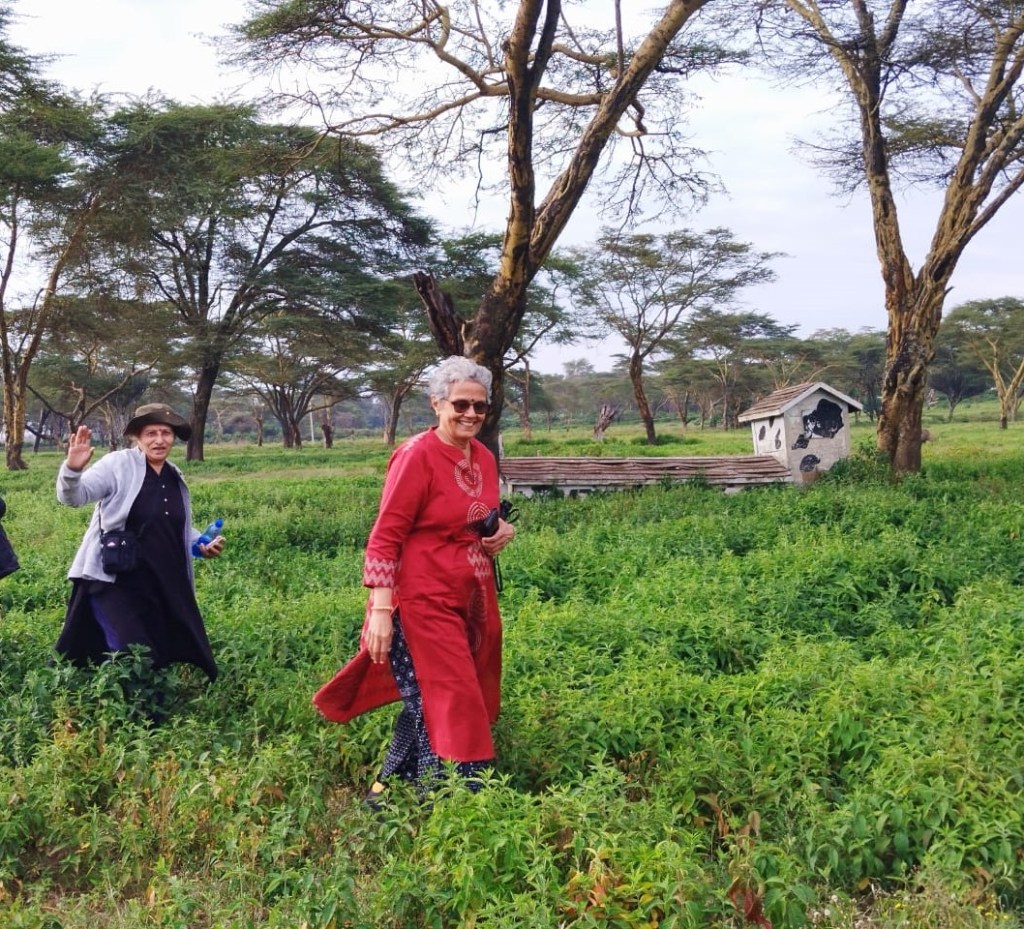
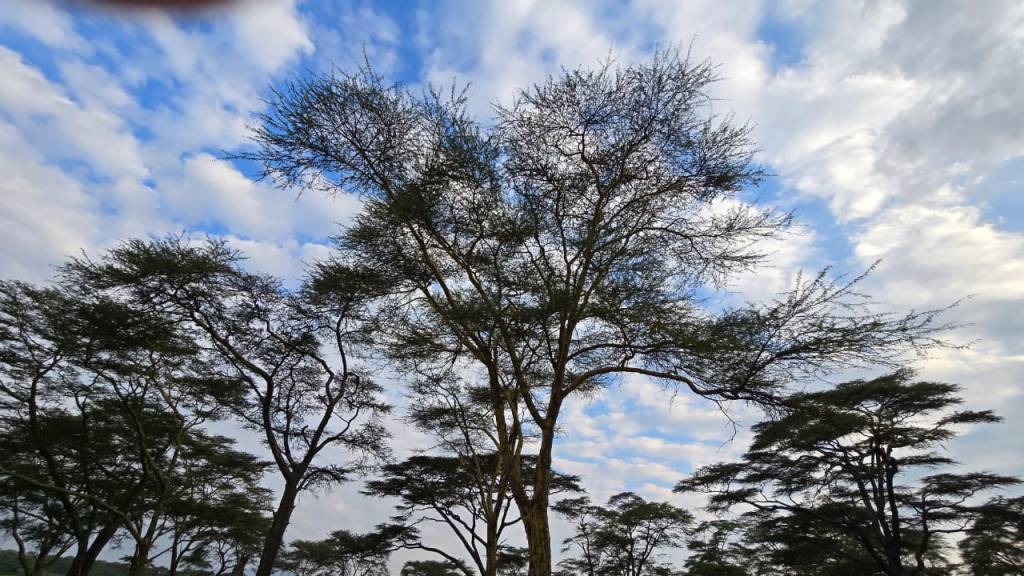
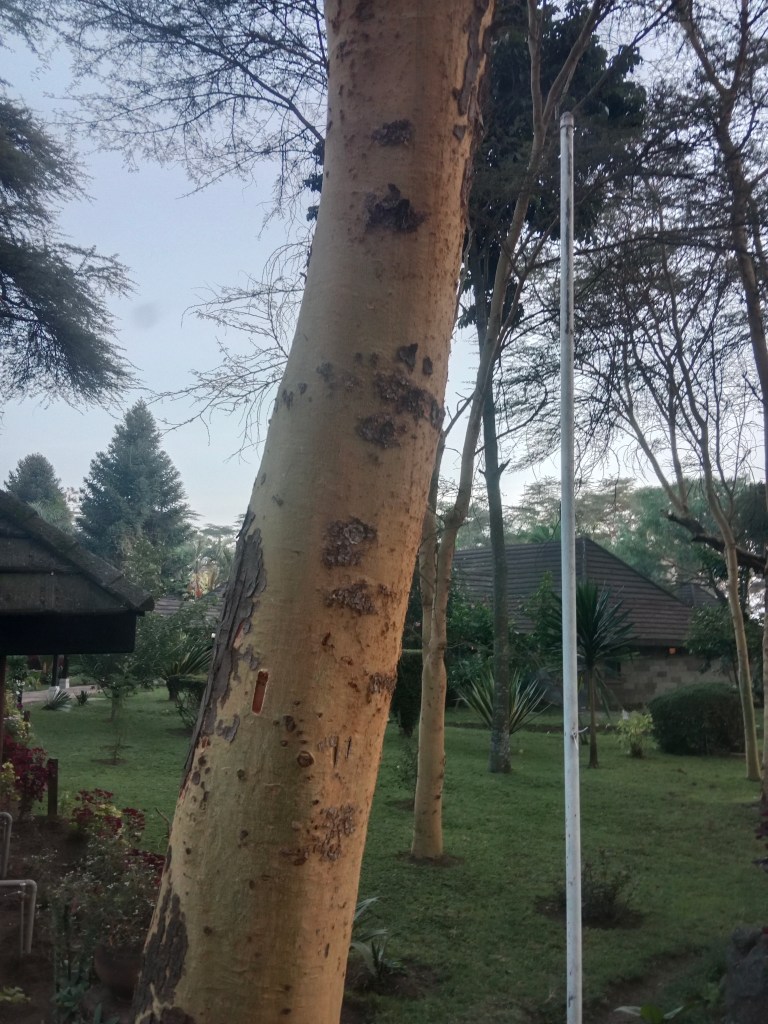
The island vegetation consisted mainly of acacia trees with yellow bark. Now, this is the main food of the giraffes and when the giraffe chews on the acacia, it communicates to the surrounding acacia and they produce tannins which the giraffes find repulsive. An effective way of self preservation indeed!

The acacia trees and their yellow bark

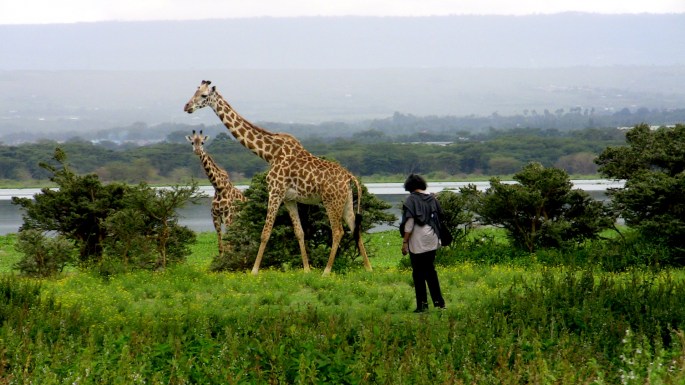
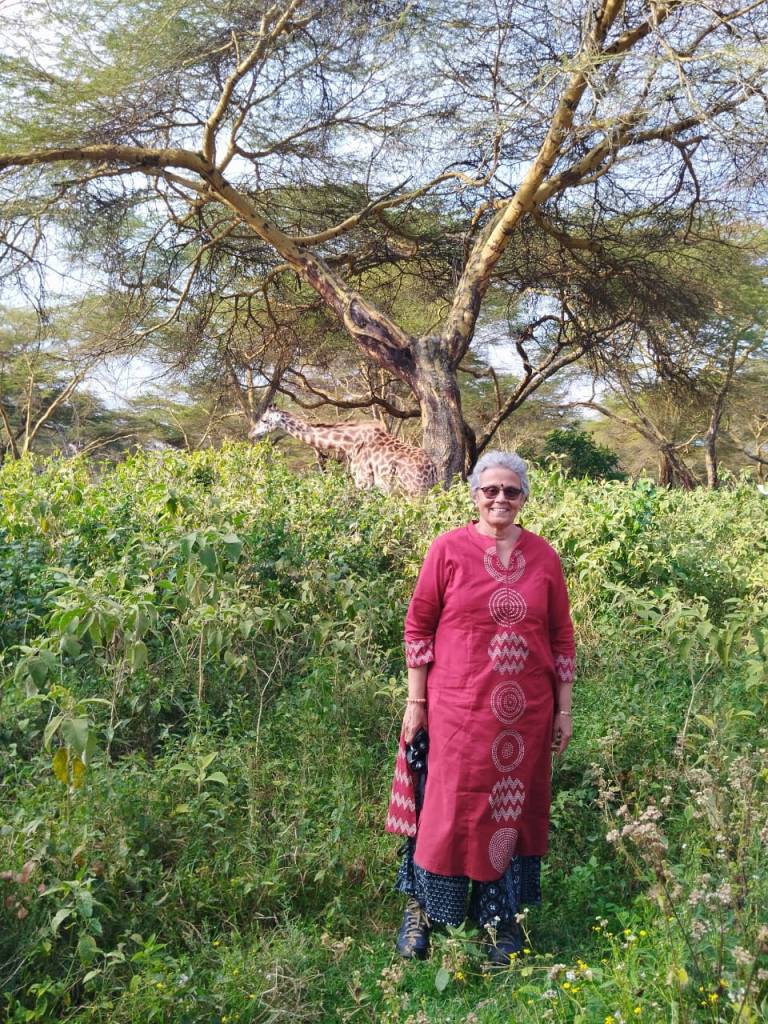
As we walked further inland, we were close to some giraffes who were grazing peacefully. The giraffes were shy and moved away but were not alarmed by our presence as they were used to human proximity.

Click on video to walk with the giraffes

He shied away …but not before I got a picture!!!

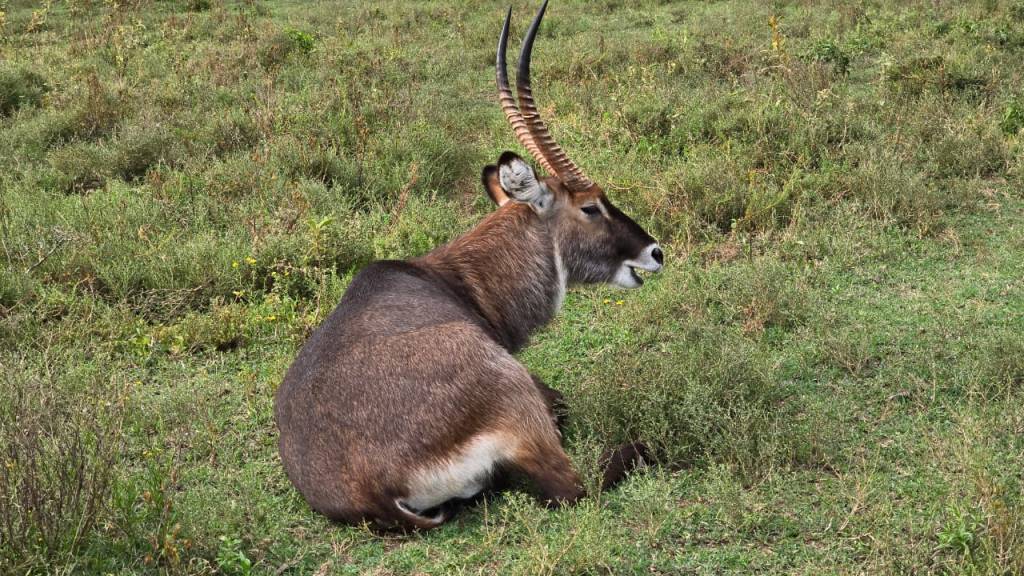
Soon we spotted a lone waterbuck resting and decided not to disturb him….

The resting Waterbuck

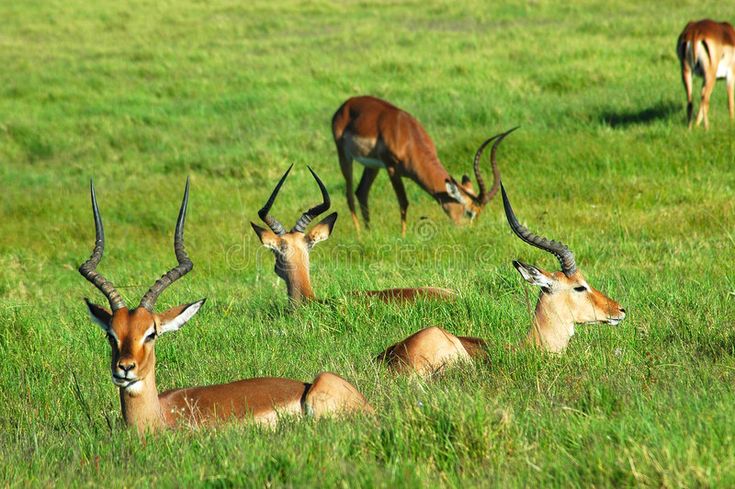
A herd of impalas attracted our attention soon….

Impalas were looking at us!!!

Our guide noticed a herd of zebras at a distance and we soon headed there…

Zebras

Up close, they were not bothered about us and continued grazing…

The beautiful zebra lines!!!

And he posed with us…

By now, the sun was going down and we had to walk back to our boat. So reluctantly we walked back and boarded our boats for the return ride to the resort when the sun gave us another treat….

A beautiful sunset on Lake Naivasha

We alighted from the boat and took our vehicle back to the resort with wonderful memories of a day spent with animals..

Hope you enjoyed this episode. Next week we are in Masai Mara, the wildlife hub. So you can look forward to more exciting encounters.

Till then, do subscribe ,comment and give your feedback.

Lake Naivasha: Wildlife Safari and Scenic Beauty in East Africa

Lake Naivasha is a large freshwater lake just off the town of Naivasha in Kenya and is easily accessible from Nairobi . Once described as the Jewel of East Africa, it has been subjected to devastating effects of fishing and a flourishing floriculture industry thriving along its borders with increasing human habitation in it’s environs.

We started our trip to Naivasha from Amboseli and after passing by Nairobi, we were crossing the Great Rift Valley. To understand lake Naivasha and it’s environs, some understanding of the Rift valley is essential.

Great Rift Valley

Africa’s Great Rift Valley covers many African countries including Kenya and Tanzania. It extends over 3,700 miles from Jordan in the Middle East and ends in Mozambique in Africa. This valley and the adjacent volcanic activity has resulted from fractures in the Earth’s crust due to the continuous pulling apart of the African and Arabian tectonic plates .

Eventually, the plates are expected to pull far enough to split East Africa off from the rest of the continent. 

A map explaining the Rift Valley.

Rift Valley as we crossed it

Passing the rift valley, we reached Naivasha and checked in to Lake Naivasha Simba Lodge. This is a beautiful resort on the banks of Lake Naivasha with a large garden and lawn leading to the banks of the lake itself. The views from the resort were awesome.

Some pictures from the resort…

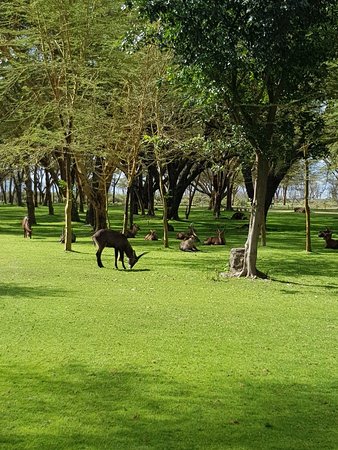
The rooms overlooking the lawn and lake with Waterbucks grazing in the lawn

A beautiful morning on the banks of Lake Naivasha

Lake Naivasha

Beautiful Lake Naivasha

There are several lakes in this area and more than 10000 years ago, Lakes Naivasha, Elementeita and Nakuru were a single lake that eventually dried up splitting them into three distinct lakes. Lake Naivasha is the highest at an elevation of 1884 mts .

The name is derived from the Masai word “Nai posha” meaning “rough water” due to the sudden storms known to occur here.

Lake Naivasha is ringed by dormant and extinct volcanoes and surrounded by swamps and Acacia woodlands . These swamps and woodlands are home to a variety of water birds and hippos .

The swamps and acacia woodlands that surround Lake Naivasha

The surface area of the lake is approximately 139 sq kms but it can change with the seasons due to flooding. Many of the trees in the surrounding areas were submerged during flooding leaving stumps of these trees sticking out of the water surface.

Tree stumps on Lake Naivasha

The lake is home to a variety of wild life including over 400 different species of birds and a sizeable hippo population estimated to be over 1500 in numbers. A boat safari on the lake sees one encountering eagles, egrets , kingfishers, cormorants and pelicans . Giraffes, impalas, zebras and waterbucks can be sighted around the lake and the adjoining Crescent Island.

We were in for a boat safari on the lake and for this, we took our safari vehicles to another beautiful resort on the banks of the lake called Lake Naivasha Resort. The boat safari started from this resort.

Some pictures of Lake Naivasha Resort….

Lake Naivasha Resort from where the boat safari started

Soon we were at the boat jetty and were witness to a herd of hippos having their afternoon siesta…

Hippos near the lake

Awaiting our turn on the banks of the lake

Soon we were on our way….

And here are some pictures from this boat safari….

An African fish eagle perched on a tree stump looking out for it’s prey

A Grey Heron waits patiently for it’s prey

A Pied Kingfisher sits pretty with its prey safe in his beak

And a pelican swims along

As we were sailing towards Crescent island, we passed by our resort too…

Views of our resort as we sailed by…

As we were nearing the crescent island, we did see a group of hippos basking in the water…

Hippo Encounters on Lake Naivasha

Approaching Crescent Island

After about 30 mins of the ride, we were close to the crescent island where we alighted to go on a “Walk with Wildlife experience”.

That was totally an enlightening experience with the local guides giving us lot of valuable insights on the plant and animal life there. That will be the topic of the next episode.

Hope you enjoyed this safari on Lake Naivasha. Till I see you next week do give your comments and feedback

Discover the Enchanting Amboseli National Park in Kenya

Amboseli National park is one of the most scenic parks in Kenya with Mt. Kilimanjaro , the highest free standing mountain overlooking it. Spreading across the Kenya Tanzania border is a 8000 sq km core area eco system including Tsavo and other national parks. Amboseli occupies a 392 sq km area within this eco system.

A map showing the location of Amboseli in the African continent.

The uniqueness of this park are its views of the snow capped Mt. Kilimanjaro, also called Africa’s watchtower.

Mt Kilimanjaro with animals grazing below

At the foothills of Mt Kilimanjaro amid the dusty landscape lies an ecological masterpiece at a height of 1150 metres above sea level which the Maasai called “Embosel” meaning salty dusty plain. This is what we refer to now as Amboseli National Park.

And true to its name, Amboseli is very dusty due to the loose volcanic soil that gets kicked up with the march of the animals and the safari vehicles that follow them. Very often you find a vortex of dust spinning around in the horizon like a small local tornado.

The dust swirls like a localised tornado

The Amboseli ecosystem is home to the Maasai people and their cattle whose cultural heritage and pastoral practices have shaped their co existence with wildlife leading to Amboseli being recognised as a “UNESCO Man and Biosphere reserve” . Locals are involved in conservation and the idea is sustainable development with conservation.

Amboseli…Man and Biosphere Reserve

The Maasai with their cattle, a common sight as you drive through Kenya

Uninhibited visibility till the horizon

This is what struck me here. Both in Amboseli and Masai Mara, there is uninhibited visibility all around till the horizon. I have never seen such vast expanses of land with no manmade structure extending for miles on end. This makes it so easy to spot wildlife that even in the horizon if a giraffe raises it’s head, you can see it miles away.

This picture will help illustrate my point.

Unfettered visibilityThe landscape is so open that you can spot an elephant and three giraffes miles away with a few gazelles close by.

The dry season at Amboseli

It offers one of the best wildlife viewing opportunities in the world with sparse vegetation due to the long dry months between June and October . During this period the grasses are short and scotched making wildlife viewing easy. Besides, the dry season results in drying up of waterbodies resulting in the animals moving in herds over long distances in search of water .

This is the most fascinating time to visit Amboseli which is home to over 80 species including the African elephant, impalas, gazelles, lions, cheetahs, hyenas, giraffes, zebras , wildebeest and over 400 species of birds including the massive ostriches, bustards and various water birds.

The dry season, also results in low insect population particularly mosquitoes making one’s stay more comfortable.

Amboseli is recognised more for its elephant sightings as it has more than 1800 of them ,the largest population of African elephants .You can get close to free ranging elephant herds and enjoy their group interactions at close quarters. In fact , it is referred to as the “Land of Giants” due to it’s huge elephant herds, most of them with large impressive tusks.

An elephant herd at Amboseli

Our Amboseli experience

Landing at Nairobi one evening, and staying overnight we left for Amboseli early morning by a Toyota Land cruiser vehicle used for these safaris. The roof of the vehicle can be opened for free viewing and photography. There were six of us in a vehicle. The drive was comfortable and we reached Amboseli around noon. After lunch and check in at the jungle lodge, we were off on the safari. The next day too, we did a day long drive through Amboseli National park. What follows from now on are those memories relived. This trip will have more pictures and videos for obvious reasons .

Join me on this incredible journey through the heart of Africa….

The safari vehicle

We entered Amboseli at the Kimana gate . After a short halt and some formalities, we were in to the park…

Amboseli Kimana gate entrance

The drive through the park was on mud paths between the savannah grasslands. At many places, the road was bad and a good driver …our Elvis and his well maintained vehicle helped us a lot.

The most common species we found were the gazelles. Herds of them grazing along…

A pair of Thomson’s Gazelle

Amboseli is Elephant land and so, we were treated to views of multiple elephant herds engaged in various daily activities like feeding, mud bathing , protecting the young, romancing, fighting and many of them crossed the road in front of our vehicle.

A loner…

A herd of elephants

The wide outstretched ears….

A mild altercation

Elephants cross the road in front of our vehicle

Soon we came across some giraffes walking along with graceful strides…

The majestic walk of the giraffe (click on video) PC… Mr Arun Nathan

As we drove along, our driver Elvis was in radio contact with other safari vehicles. Every now and then, he would be alerted on some sightings and we would head there. Lions were our next alert and off we went. A pride of lionesses lay in wait…

Lionesses on prowl

Some interesting bird sightings….

Grey crested Crane

It is found in nearly all of Africa, especially in eastern and southern Africa, and it is the national bird of Uganda.

Grey Crested Crane

Kori Bustard

The Kori Bustard is the heaviest flying bird native to Africa.

Great Bustard

Ostrich

The common Ostrich , is a species of flightless bird native to certain large areas of Africa.

An Ostrich trudges along…

As one drives through this national park , what strikes us is the distinctly different vegetation at various places within. What is predominantly savannah grasslands and open plains suddenly gives way to swamps and wetlands and includes a dried Pleistocene lake.

Palm tree clusters

Swamps and a lake

Lake Amboseli , a lake located within the National park is dry in most parts during the dry season but floods up with the rains. Driving close to the lake gives great opportunities to view waterbirds and hippos.

As we drove close to the lake we were pleasantly surprised by a pink haze in the horizon. Little did we know that a flock of flamingoes had decided to give us a surprise. Flamingoes are not normally seen here very commonly. But we were lucky!!

Flamingoes for you….

More Waterbirds….

Pelicans

A herd of zebras were seen grazing by the swamp…

Zebras grazing peacefully

An observation hill located close to the lake gives a bird’s eye view of the National park and its environs.

As we arrived there, we were greeted by flocks of Superb starlings with their vibrant blue coloured backs. Making a real cacophony, they hopped around near our vehicle.

Superb starlings

The observation point on the hillock

View of Amboseli lake from observation point with some resting hippos

Apart from this we did see wildebeest grazing around. But the number of wildebeest we saw in Masai Mara was something extraordinary and so I will cover wildebeest under Masai Mara.

This sums up our Amboseli experience. This is how it looks in the dry season.

The wet season between April and June sees the parks roads becoming a challenge to move on. But with new vegetation springing up, the views are totally different with gazelles and zebras trying to hide behind the tall grass to elude predators, the migratory birds moving in from Europe and fresh little wildlife appearing as the old ones give birth.

Hence, a visit in the two seasons can leave one with entirely different perspectives of this natural wonder.

Hope you enjoyed your safari through Amboseli.

Next week, we are at Lake Naivasha where an opportunity to walk with the zebras and giraffes awaited us. So wait for that, but do not forget to subscribe, comment and give your feedback.

Mudumalai…. where the Elephants Whisper

One of the main attributes of the Nilgiri Biosphere Reserve, Mudumalai National Park and it’s buffer zone form a dedicated Tiger Reserve too. Spread over an area of more than 320 sq kms and spanning an elevation of 850 to 1300 metres, Mudumalai has amazing biodiversity and harbours tropical and subtropical forests, and a vast treasure of wildlife . Mudumalai Tiger Reserve is one of the five elephant reserves in Tamil Nadu and apart from being home to elephants, also houses the Bengal tiger, the Indian leopard, the sloth bear and many species of birds.

Welcome to Nilgiri Biosphere Reserve

The entrance to the Mudumalai National Park

Contiguous with The Wayanad Wildlife sanctuary, The Bandipur National Park and the Sigur and Singara Reserve forests, this National Park forms an important wildlife corridor within the Biosphere Reserve. It provides landscape connectivity for the Asian elephant population in the area contributing to the elephant protection and conservation in a huge way. All these areas are also part of the majestic Western Ghats that border the southern Indian peninsula. The Moyar river is the lifeline of this sanctuary.

There are various visitor attractions at Mudumalai park. Good wildlife viewing opportunities are the Elephant safari and the Van safari conducted by the forest department. Elephant feeding camp at Theppakadu gives an opportunity to see the elephants being bathed and fed. Bokkapuram, Masinagudi, Mavanhalla and Singara are villages here where small homestay accomodations are available.

Staying at one of these destinations gives visitors an opportunity to take safaris in forest vehicles through tracks inside the forest .

Driving to Masinagudi

A forest lodge at Masinagudi and a watch tower to observe wildlife

The landscape at Masinagudi

The Moyyar river near Masinagudi

A drive through the Mudumalai National park can be very exciting. Some pictures to prove this…

An Elephant family goes about their daily life…

Deer decide to display their road crossing skills…

The bisons decide to test our vehicle brakes….

And the little birdie displayed her home…

Where the Elephants Whisper….

The movie “The Elephant Whisperers” which went on to win the Oscar in 2023 chronicled the life of Bomman and Bellie who tended to Raghu ,an orphaned elephant calf. And it all happened right here at the Theppakadu elephant camp where Bomman worked as a mahout. The movie shot this couple to fame.

Theppakadu Elephant camp where this film was shot also shot to fame and public attention was drawn to this camp.

In 2024, The Tamil Nadu forest department released a calender with beautiful pictures of the inhabitants of Theppakadu and their caretakers. The calender outlines the life stories of these elephants.

Bomman and Bellie, the real life heros of “The Elephant Whisperers”

Theppakadu Elephant Camp

This is the oldest elephant camp in Asia ; established more than a century ago and lies in the Mudumalai National Park. Originally the elephants were used for timber transportation . Over time ,it has grown into a conservation, rescue and rehabilitation centre for the gentle giants.

The camp rehabilitates elephant calves who have been abandoned or orphaned and trains them as “Kumkis”. These are trained elephants who are used to mitigate human animal conflict by assisting forest officials in driving wild elephants back into the forest and capturing wild elephants who enter human habitations and cause damage. Thus the abandoned calves are not only cared for but are put to effective use.

Most of the mahouts at Theppakadu are tribals belonging to the Kattunayakar tribe. This is a good example of local tribal participation in conservation.

This camp is also a tourist destination where elephant feeding can be observed besides elephant rides through the sanctuary.

Lodging facilities are available close to the camp .

At Theppakadu

Accomodation at Theppakadu

Feeding centre at Theppakkadu

Food being mixed at the camp

Sigur Plateau

An important wildlife corridor within the Nilgiri Biosphere Reserve, this area supports more than 6300 elephants being the largest single elephant population in India. It is home to several critical elephant migration corridors and was added to Mudumalai as a buffer zone for tiger conservation.

However several threats exist to this critical zone.The growth of resorts and consequent expansion of human activities, the growth of invasives weed species leading to destruction of natural foliage are some of the threats which are being addressed.

Travelling to Mudumalai

Ooty (68kms) and Mysore(100kms) are the nearest railheads while Coimbatore(160kms), Calicut(124kms) and Bangalore(240kms) are the nearest airports.

Reasonably good roads connect all these destinations with Mudumalai. A stay of a couple of days and a few safari rides are good opportunities for wildlife viewing.

With all these attractive wildlife viewing opportunities available at reasonable cost, Mudumalai sure should find a place in your travel bucket list.

Do visit this camp and have a look at the lives of these elephants….

Till then give your feedback and comments…..

Nilgiri Mountain Railway : A vintage train journey

A ride on the Heritage Train that meanders the twists and turns along the slopes of the Nilgiri mountain ranges offering stunning views of the hills and valleys is a different experience altogether.

Running on steam locomotives, the UNESCO has added it as a World Heritage site and along with the Darjeeling Himalayan Railway and The Kalka Simla Railway, forms a part of The Mountain Railways of India.

Let us take a look at this vintage train and its origins.

The Nilgiri Mountain Railway

The idea of this railway line was concieved in 1854 but it fructified only in June 1899. It is a meter gauge track running over a distance of almost 46 kms between Mettupalayam and Ooty. It was initially running only upto Coonoor but was later extended to Ooty .The railway line is special as it ascends from 300 mts to 2200 mts elevation over a distance of 46 kms.

Crossing more than 250 bridges and 16 tunnels, this is an engineering marvel of that time built by the British but several additions and repairs have been undertaken later.

One of the several bridges

And one tunnel

The steam engine

The NMR or toy train as it is popularly known belongs to the Government of India and is operated by the Southern Railway. It is the only rack railway in India and runs on rack and pinion to climb the steep gradient.
The rack and pinion track

The Journey

The uphill journey from Mettupalayam takes more than 4 1/2 hours while the downhill takes around 3 1/2 hours. A daily service up and down with more services between Coonoor and Ooty is the usual schedule with extra services during the summer peak season.

Some of the stations enroute are, Kallar, Runneymede, Coonoor, Wellington, Aravankadu, Ketti and Lovedale . Besides stopping at these stations, the train stops multiple times along the route and passengers get off and enjoy the coolness and the views. The speed is also very slow and one can easily get off and get on the train.

Passengers enjoy the scenery at one of the stops

The outside…

And the Inside…..

Most of the stations along the route have retained their colonial style buildings adding to the vintage look…

The colonial look at Coonoor station

One problem that I noticed was that sometimes the steam let out fills the coach specially inside a tunnel and then it can get a little uncomfortable. Apart from that, the ride is enjoyable.

At many places, the train runs parallel to the road but there are some really remote parts of the track and for those unique views , one has to travel by the train.

Some pictures from one such journey…

A road parallel to the track

Road above the tracks

A beautiful valley

Beautifully maintained tea estate


A winding road

A mountain stream

And waterfalls…..

After seeing these pictures, you must be convinced that a ride on the Nilgiri Mountain railway is indeed a great way to explore the Nilgiris.

Why wait then? Just pack your bags and set off…

Don’t forget to comment and give your feedback before you leave….

Discovering the Nilgiris: Hidden Treasures Unveiled

Starting my series on the Nilgiris with a round up….

When you read the title, what was the picture that flashed in your mind?

For most of you, it must have been of misty mountains full of greenery . Well that’s what describes the Nilgiris in a nutshell. But let me tell you, the Nilgiris is much more than that. Let us delve into the surprises that lie hidden in those green valleys.

The word Nilgiris literally means blue mountains and those of you who have observed these mountains particularly at dawn and dusk would agree with this name. The Nilgiri mountains get covered periodically by the violet blossoms of the Neelakurinji (strobilanthus) which has led the locals to give this name. But even during other times, there is a bluish hue related to plenty of eucalyptus trees here similar to the Blue Mountains near Sydney.

The bluish hue…

These mountains are part of the Western Ghats, the long mountain chain that runs parallel to the west coast of the Indian peninsula. They range in height from 900 to 2650 mts approximately and this altitude leads to the cool climate that this place is blessed with. The Nilgiris form a part of the Nilgiri Biosphere Reserve , which is home to multiple sanctuaries and National Parks about which we shall delve in detail later.

Today, there is a separate district called Nilgiris in TamilNadu which encompasses these mountains and is bordered by Karnataka and Kerala. Ooty, Coonoor, Kotagiri, Kundah, Gudalur and Pandalur are the main areas comprising the Nilgiris district. It also includes Wellington and Aravankadu which are largely cantonment areas under defence control. Ooty, the famous hill station in south India is the headquarters of this district.
A little bit of history….

Peculiarly, unlike most parts of India, The Nilgiris was never part of any empire or kingdom. It was always tribal land. Pockets of tribal hamlets separated by vast areas of verdant forests untouched by humans was what the Nilgiris was , once upon a time. Even today, in most of the Nilgiris you will find clusters of houses forming a hamlet separated from other hamlets by forests and tea gardens. The only difference is that today ; most of these hamlets are self contained and have modern amenities including internet connectivity.

Typical Nilgiri landscape with clusters of houses separated by tea gardens

The Todas, Kurumbas, Irulas and Kotas formed the tribal population here. The Todas are traditionally cattle grazers, Kurumbas are honey hunters, Irulas are hunters and agriculturists and the Kotas are the artisans .

Toda women are also known to do beautiful embroidery using black, white and red coloured threads.

Beautiful Toda embroidery

A traditional Toda hut

The Badagas were also the indigenous people here but are not considered a tribal community. In fact, today, the Badagas form the majority of the local population of the Nilgiris.

The Badagas are an ethno linguistic community whose ancestors migrated here from Mysore. They live in settlements called hattis and speak the Badaga language which is essentially a mix of Kannada and Malayalam. Much of the tradition and culture is retained even today and you can find it all over the Nilgiris.

Badagas dance in traditional attire

In the early 1800s, the British developed these areas for tea and coffee plantations and summer retreats. It was John Sullivan, the collector of adjoining Coimbatore who undertook detailed surveys of the place and in a way ” discovered” the place. Several colonial style bunglows and churches were built and they form an indelible part of the local ambience. By the late 1800s, the hills were completely accessible with ghat roads and the railway line. So, in a way the British have contributed a lot to the infrastructure development in the Nilgiris.

Tea Gardens

Tea is grown in elevations between 1000 and 2500 mts above sea level and Nilgiris with its location and its rainfall attributes is ideal tea cultivation area. The British introduced tea to the Nilgiris from China marking the beginning of tea cultivation here.

Nilgiris is tea garden zone and these green neatly cut gardens dominate the Nilgiri landscape. In fact, at no point of time when you are in the Nilgiris are you not surrounded by them. Acres and acres of tea gardens as far as the eyes can see….that’s what describes Nilgiri landscape in a nutshell. And saying that it looks beautiful is an understatement!!!!

A tea garden is a treat to the eyes….(click on video)

Naturally, it follows that the predominant occupation of the locals is connected to tea. Starting from tending to the tea gardens to plucking the tea, transporting it to the factories, working in the tea factories and handling the logistics is the main source of revenue for the locals. Ranging from the small farmers to big corporate estates and even the government , everyone here has a stake in TEA !!

The larger estates have their factories processing their own tea , the middle level acquires tea from the small local farmers and processes them.

The elevation of the place, the soil conditions , the climatic conditions and such others change the flavour and colour of the ultimate cup of tea on your table. A lot of science goes into all this and the value of the tea from a particular place in a particular season is determined by the Tea Board. Tea auctions also regularly take place at Coonoor and Coimbatore.

There is a Tea Museum and Tea Factory visit organised from Ooty where visitors are introduced to the various stages of tea processing. The Nilgiris predominantly produces CTC tea which refers to cutting, twisting and curling. The leaves are subjected to drying, withering and rolling using machines before it is neatly packed and marketed. Black tea, Green tea, Herbal tea, and White tea are common varieties of tea produced here. Each of these use leaves of different maturity and the process used also varies.

Tea plucking in progress

A tea factory in the midst of tea gardens

A tea factory

Leaf sheds are another common sight here. They are used to store the leaves after plucking till transport is arranged.

A leaf shed with collected leaves in bags

Inside the tea factory ( click on the video)

Another familiar sight are the factory outlets of tea where it is cheaper and freshly processed tea is available..

Tea factory outlets

The Nilgiris also grows spices, coffee, carrots, potatoes and cabbage. Roadside vendors selling freshly plucked carrots along with the leaves is another unique sight.

Freshly harvested carrots for sale!

Eucalyptus and SilverOak trees predominate the landscape. Oil extracted from the eucalyptus trees is also sold widely here.

Eucalyptus trees

Wildlife

As with forests, wildlife also varies depending on the elevation. Elephants are found at the lower elevations which are warmer while the colder elevations have bison, bear, leopards and tigers. A separate episode on Nilgiri wildlife will cover these.

Home to various National parks, the Nilgiris has an exclusive Nilgiri Biosphere Reserve zone which includes the Mudumalai and Mukurthi National parks besides other areas.

Lakes

The Nilgiris has some awesome lakes ; some natural and some artificial. Naming a few of the; Ooty lake, Emerald Lake, Avalanche Lake and Pykara Lake are the more popular ones.

Emerald Lake

20 kms from Ooty is this unfrequented and pristine lake with emerald waters. A bird watcher’s paradise, the surrounding areas are an escape to tranquility. Some pictures…

Emerald Lake

Landslides….

Being a hilly area with copious rainfall, Nilgiris has had it’s share of landslides. Usually after incessant rain, these landslides do cause destruction and dislocations to the lives of the common people here. The aftermath….

Telltale signs of a landslide…

Living in the Nilgiris

Most of the population in the Nilgiris are engaged in the tea plantations and connected industries. They are friendly people who live simple lives. When I spend my summers here, I have had interactions with locals and found them to be very welcoming of outsiders although they are not very happy with noisy tourists. Many of them smile and wish you and during my evening walks I was particularly drawn by the innocence and simplicity of a brother and sister. They would be waiting for me and as I pass their home they would run up to wish me! Their eagerness to race with each other to reach first and wish just speaks of the innocence of these lovely children…..Dhanalakshmi and Adhiswaran

Picture of Innocence…..

Posh colonies and elegant bungalows are usually seen close to Coonoor, Wellington, Ooty and such pockets. Coonoor and Wellington particularly has an upmarket crowd due mainly to the defence establishments around.

A typical Nilgiri village with houses of the common man

And a posh bungalow

Summer in the Nilgiris

Summer time is Jacaranda time in the Nilgiris. The beautiful purple flowers add beauty to the green hill slopes and many a time the roads are lined by these trees with a purple carpet of flowers on the road…

Jacarandas….

Bird songs…

Summer marks the mating season of various birds here. Notable one is the Magpie Robin which sings melodiously at dawn. Living in the Nilgiris, you often wake up to their songs…

The Magpie Robin

Summer time is also tourist time in the Nilgiris. Business is brisk for the innumerable homestays and hotels.

Hotels and Homestays

Tourism provides livelihood to many families in the Nilgiris but it has it’s own drawbacks due to irresponsible tourism. Speeding vehicles belching fumes from their exhausts to blaring music played late into the night from resorts to widespread littering causes heartburn among the locals. Some where, they feel their peaceful life is disturbed and justifiably so!!!

Well, I leave you on this note worth pondering about ……

We now delve deeper into various specialities of these mountains in forthcoming episodes.

Till then do subscribe, comment and give your feedback.. Do give your star rating below…

Rating: 1 out of 5.

Gulmarg: Ski Slopes to wildflowers

Welcome to the “Heartland of Wintersports in India”…..Gulmarg.

Winter converts Gulmarg into a sheet of ice and this is the time it becomes a skiers paradise…

Sheets of ice in winter

In contrast , summer brings out the blooms in the meadows justifying the name Gulmarg which means “meadow of flowers” in Persian . In spring and summer, the meadows of Gulmarg are covered with wild flowers.

A beautiful Gulmarg summer

Gulmarg….India’s Skimarg

Gulmarg is about 60 kms from Srinagar and easily accessible by road from there.

Located in the Pir Panjal ranges of the Himalayas, its popularity as a ski destination is on the rise. The Institute of Skiing and mountaineering located here provides training to amateurs and professional skiers.

Gulmarg ski resort has world class facilities including forecasting, avalanche mitigation, rescue and first aid services.

The Skiing Institute

Skiing

Gulmarg….A golfer’s dream

The British started using Gulmarg as a summer retreat. Golf was one of their favourite hobbies and three golf courses were established in Gulmarg ; one of them at 8690 ft is the highest golf course in the world. The first Golf Championship was played at Gulmarg in 1922 and since then it has hosted amateur and professional golf tournaments.

The green golf course

Gulmarg Gondola….highest in Asia

The highlight of Gulmarg is the Gulmarg gondola ,the highest cable car in Asia. There are different phases of travel in this Gondola. The first phase takes tourists to Kongdoori station at a height of 8530 ft and second phase to 12293 ft.

The Gulmarg Gondola

Horse riding is another activity that one can indulge in. Strawberry valley and Leopard valley are great riding destinations.

Our snow encounter at Gulmarg

Driving down from Srinagar, we were treated to some great views of the mountains and valleys. As we started the ascent, Srinagar town could be seen below.

Views of Srinagar as we ascended

Just before we started the final ascent, we hired the snow gear for our snow encounter from one of the innumerable shops.

All ready with snow gear

All ready to greet the snow, we continued our ride up to Gulmarg where some awesome mountain views greeted us….

Beautiful mountain views while reaching Gulmarg

View from the parking lot

Soon we were at the parking lot where we got dropped off by our driver. We wanted to ride the gondola and so we decided to walk up to the gondola station.

We could have also taken a sledge but we opted to walk up to the gondola station. Sledges are pulled by men and that was something sad ; the struggle for survival!!

Sledges to the gondola station.

Gondola starting point

After we purchased the tickets we joined the queue to board the gondola. Once we boarded, it was an awesome sight as we started ascending . The cable car kept passing in between pine trees which seemed to have sprung up from a sheet of snow. A short video for you….

The cable car moves along….(click on the video)

Some pictures from the gondola…

Views from the gondola

Soon we were at the phase one gondola station where we alighted. There is a small cafe here but the main activity is playing in the snow. We also enjoyed ourselves sitting on snow and aiming snow balls. The gondolas proceeding to phase two were also visible from here. Some tourists were trying their hand at skiing too.

At phase one.

The gondola pillars and skiers can be seen in the background.

Playing with ice balls

After thoroughly enjoying ourselves in the snow, we wanted some warmth and rushed to the cafeteria where we had some hot tea and snacks.

Returning to the gondola, we boarded it for our trip down hill. Walking up from the gondola station, we met our driver and returned to Srinagar.

Book Gondola tickets online

Visitors to Gulmarg should book their gondola tickets online before starting the trip as it is almost impossible to get tickets across the counters now. Bookings are now online unlike a couple of years back when we visited the place. Tickets get full months in advance specially if you are traveling for the tulip festival.

Well, that sums up our Gulmarg trip and marks an end to the series on Kashmir which I hope all of you enjoyed.

Next week I start a series on The Nilgiris, the famous blue mountains of south India.

See you there…

Till then, do comment and give your feedback. I have also added a star rating below…please give your ratings…

From this week, I am adding a Viewer’s Corner

Viewer’s Corner

Can you share your experiences at Gulmarg? That would be great…You can put it in the comments section.

Rating: 0.5 out of 5.

Mughal Gardens of Kashmir

Vatikas or pleasure gardens were an ancient concept in Kashmir during the pre Mughal period when Kashmir was a predominantly Hindu region. These gardens were simply orchards or had flowers and medicinal herbs. So, most of these gardens were already established when the Mughals arrived in the 16th century.

Islam came to Kashmir in the 14th century with the Shahmiri sultans with predominant Persian influence. Persian gardens are usually terraced with water channels, cascades and fountains in addition to the flowering plants and trees.

The Mughals were so taken aback by the sheer beauty of Kashmir and they started extending and modifying the gardens. That is the origin of the Mughal gardens of Kashmir and that explains the presence of water channels, fountains and pavilions in these gardens.The site of the Mughal gardens is also unique. They are all located at the foot of the hills and have a spring feeding the water channels.

Shalimar Bagh

Considered one of the high points of Mughal architecture, Shalimar Bagh was built by Emperor Jahangir in 1620 following the Persian architectural style. The garden was modified and extended by successive rulers who called it by different names. It was used as the imperial summer residence and court by Jahangir and Noorjahan and is located on the banks of the Dal lake.

The Shalimar bagh is the more ostentatious of the Moghul gardens and is divided into the upper and lower parts. The upper part had 2 terraces exclusively for the emperor and his courtiers and called Diwan-i-Khas. The lower has 3 terraces and is called the Diwan-i-Aam and was used to hold public audiences by the Emperor.

The central axis has water flowing along with fountains and chinar trees lining it. Although the Shalimar Bagh also has terraces, fountains and cascades, what sets it out are the two pavilions. The Pink Pavilion in the Diwan-i-Aam and the Black Pavilion in the Diwan-i-Khas.

These gardens were celebrated since many years as jewels in Kashmir but now many of these features appear tad dated though restoration and upkeep is going on. Some pictures…

The central water axis, fountains and pavilions of Shalimar Bagh

Beautiful flower beds

Nishat Bagh

Nishat Bagh meaning “Garden of Delight” is a terraced Mughal garden on the banks of the Dal lake. Built in 1633 by Asif Khan, the father of Nurjahan, it is the second biggest of the Mughal gardens. The landscaped garden and it’s fountains against the backdrop of the PirPanjal ranges and the Dal lake is a feast to the eyes.

It was originally planned in the model of a Persian garden but had to be re modelled to suit the topography of the region. It has a broad cascade of terraces lined by chinar and cypress trees and the lowest part is connected to the Dal lake. It has 12 terraces corresponding to the 12 zodiac signs.

There is a central axis that runs through the garden with water flowing in a cascade from the upper terrace to the lowest one. Fountains and pools are present in all the terraces and along the central axis canal . Benches for visitors to relax and enjoy the scenery are also provided.

Some pictures…

The central canal with fountains

The central canal almost blending into the Dal lake

Water cascades from the upper to the lower terraces

A riot of colours

Chashme Shahi

Famous for it’s natural spring, Chashme shahi is another of the Moghul gardens of Srinagar. The waters of this spring are known for their cool and rejuvenating qualities . This garden also has Persian architectural influence and the central water axis through which the spring water flows.

The spring is sheltered under a pavilion and the water flows through the central axis from one terrace to another in the form of cascades. The terraces here are much higher than in the other gardens and provides views of the Dal lake.

The pavilion guarding the spring

Verinag

This pavilion garden built around the spring that is the source of the river Jhelum was also built during the time of Jahangir but subsequently extended by Shah Jahan.

Located at Anantnag, this garden was just a spring around which an octagonal tank was constructed . This tank is 50 ft deep and has lot of fish. Cascades and fountains were built lined by chinar trees . Hot and cold baths were also built but went into ruins.

It was a pleasure retreat of the Emperor and arched recesses were built around the tank. Verinag is also a sacred place of the Kashmiri Hindus.

Verinag

Achabal Bagh

A Hindu sacred site with a spring called Achabal Nag is the origin of the present day Achabal Bagh. Situated near Anantnag, it is remotely located and has been sheltered from urbanisation and tourist influx. Empress NurJahan is believed to have enhanced and modified the existing garden.

Pari Mahal

Located close to Chashme Shahi in Srinagar, this garden was built at the site of the ruins of a Buddhist monastery as a residential school of Sufiism.

Though at one point in time, these gardens were much appreciated and celebrated, the Tulip garden has overshone these. After visiting the Tulip gardens, the charm of Mughal gardens seem to have faded.

Well, with this I conclude this episode on the (Moghul) gardens of Kashmir. Leaving you with the thought that though they are attributed to the Moghuls, they actually belong to the pre Moghul era….

I am on a holiday and so there will be no episodes published in the next two weeks. Will see you after that at Gulmarg, the ski world of India.

Till then, do subscribe, comment and give your feedback.

Asia’s largest Tulip Garden

“Dekha ek khwab toh ye silsile huey’….this famous Hindi song from the movie Silsila would have had most of you fantasize yourself as Amitabh and Rekha in the tulip garden . Remember those stunning visuals at Keukenhof tulip gardens, the largest in the world?

Flash back to “Silsila”….

Today, let us visit the Indira Gandhi Memorial Tulip Garden in Srinagar; the largest tulip garden in Asia. This was originally a model floriculture center called Siraj Bagh.

A little bit on tulips….

Tulips have their origin in Persia and were brought to Europe in the 17th century. Today, Holland is the largest tulip producer in the world. Amsterdam in Holland boasts of flower auctions that attracts buyers from all over the world.

The tulip garden at Srinagar is a more affordable option for most tourists and it is equally stunning.

The beauties…

Visiting the Tulip Garden

This garden is open only for a short period of time in summer and so, be sure to time your visit to Kashmir when it’s open. It is open to the public roughly from early April for about 20 days marking the Tulip Festival. After that, the tulips lose their color and stance and the garden is closed. This period sees the maximum tourist inflows in to Kashmir making it necessary to book well in advance.

Spread over 30 acres of land at the foothills of the Zabarwan range in a sloping fashion with seven terraces, it is a sight to behold! Opened in 2007 to boost floriculture tourism, it is a relatively new addition to Srinagar’s attractions.

A short video of the layout of the tulip garden

At the tulip garden

Well, 1.7 million tulip bulbs for our very own garden were brought from Keukenhof. There are around 73 varieties of tulips here apart from daffodils, hyacinths and many other varieties of flowers .

Some daffodils among the tulips

The tulips are planted in rows with each row having a different color. This interspersed color pattern literally makes it a rainbow on land!!

The rainbow has descended on earth!!!

There are also a number of walkways and fountains making it a nice place for photo shoots.

Any amount of description by a mere mortal like me is not going to match nature’s visual treat. So, let me just leave you with the pictures and videos. Enjoy the colorful treat…

Some stunning pictures from the tulip garden

Last but not the least, let me leave you with one of our best memories of Kashmir….

Among the tulips…

Like all good things, this episode too, comes to an end. Next week, I meet you at The Moghul Gardens of Srinagar.

Meanwhile, do subscribe, like and comment.