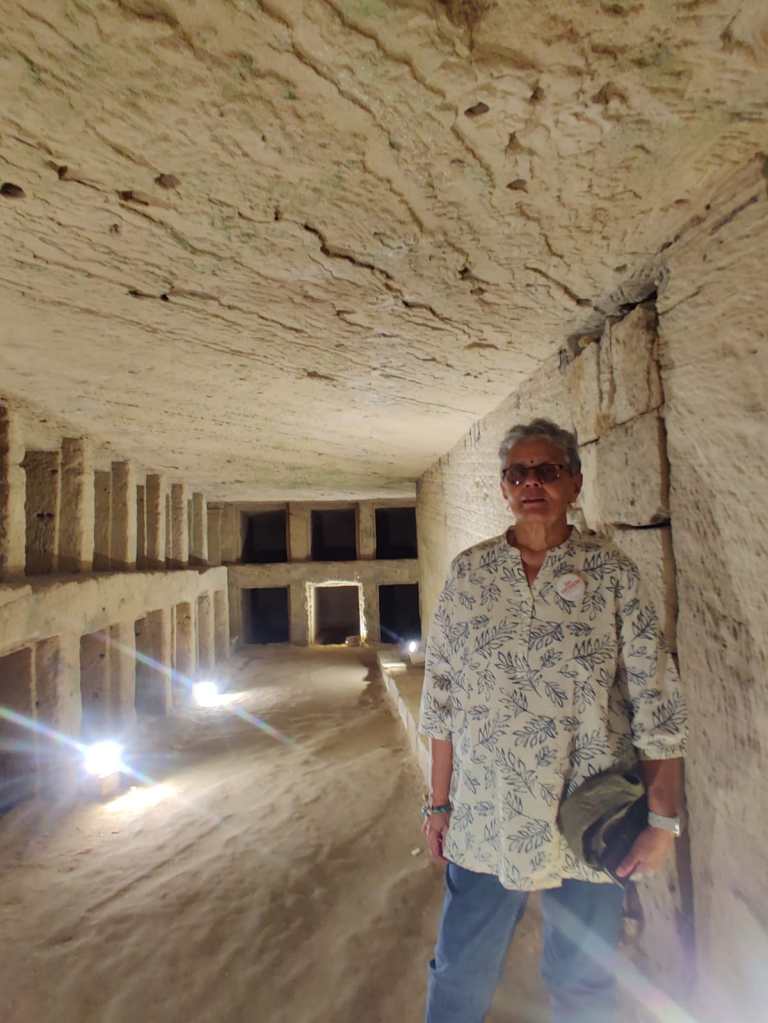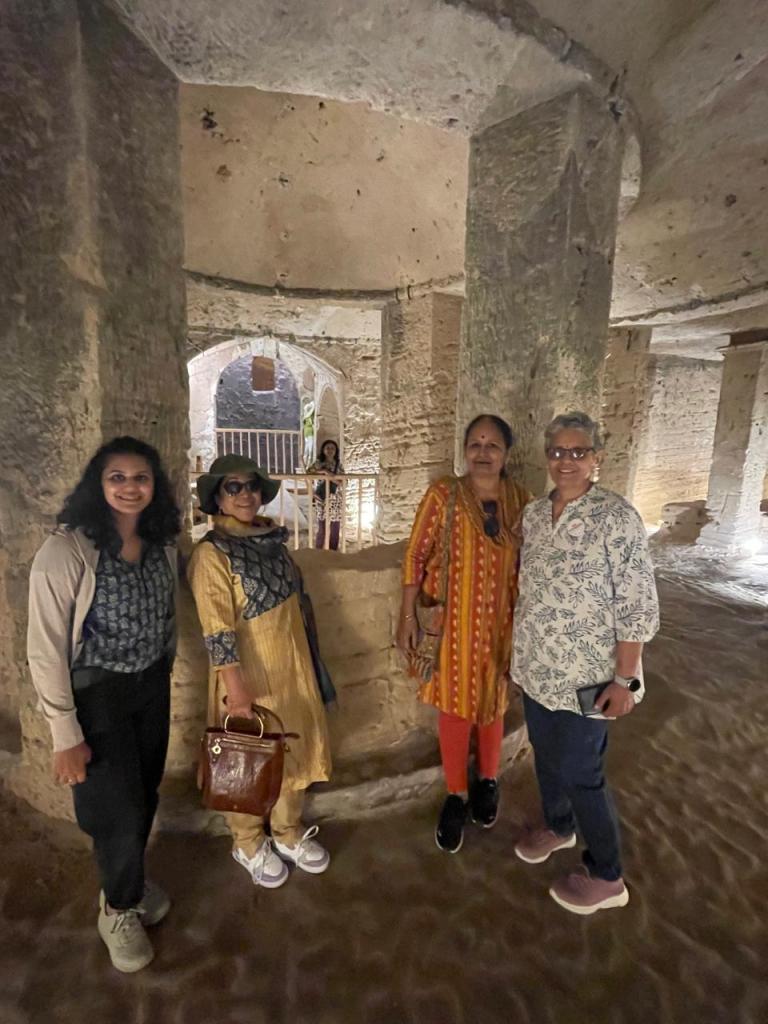
Cruising the Nile: A Memorable Experience

The Nile

The mighty Nile flows through eleven countries in Africa and is the primary source of water for Egypt playing a major part in its economy. Most cities in Egypt lie along the banks of this river for obvious reasons. Most of the ancient Egyptian cultural and historical sites also lie along the banks of the Nile and it was a major source of transportation from time immemorial.

While visiting many of the temples and archaeological sites in Egypt, we find a canal leading to the Nile from the temple and this was used for the sacred journeys that the Gods undertook during their festivals. The barque or sacred boat is an essential part of these festivals and is preserved at the temple sanctuary there highlighting the importance that the Nile played during that period.

The location of many of the tourist spots along the Nile makes a cruise on the Nile an interesting way of exploring these sites. It was precisely for this that we undertook a three day cruise on the Nile during our Egypt trip. Boarding the cruise from Aswan, we cruised up to Luxor halting at various locations on the way to visit the temples there. A summary of that cruise forms the subject of this episode. Come along and join me on an incredible cruise on this mighty river…

Our Cruise

We boarded the cruise at Aswan. There were three decks on the ship and we had comfortable cabins with large windows making the cruise a wonderful experience. The ship had all modern recreational facilities including a swimming pool , a bar, a restaurant and a shop. Some pictures from the ship…

Boarding the cruise at Aswan

On boarding, we reached a lobby where our guide allotted our rooms and we proceeded to our rooms.

The lobby with a bar

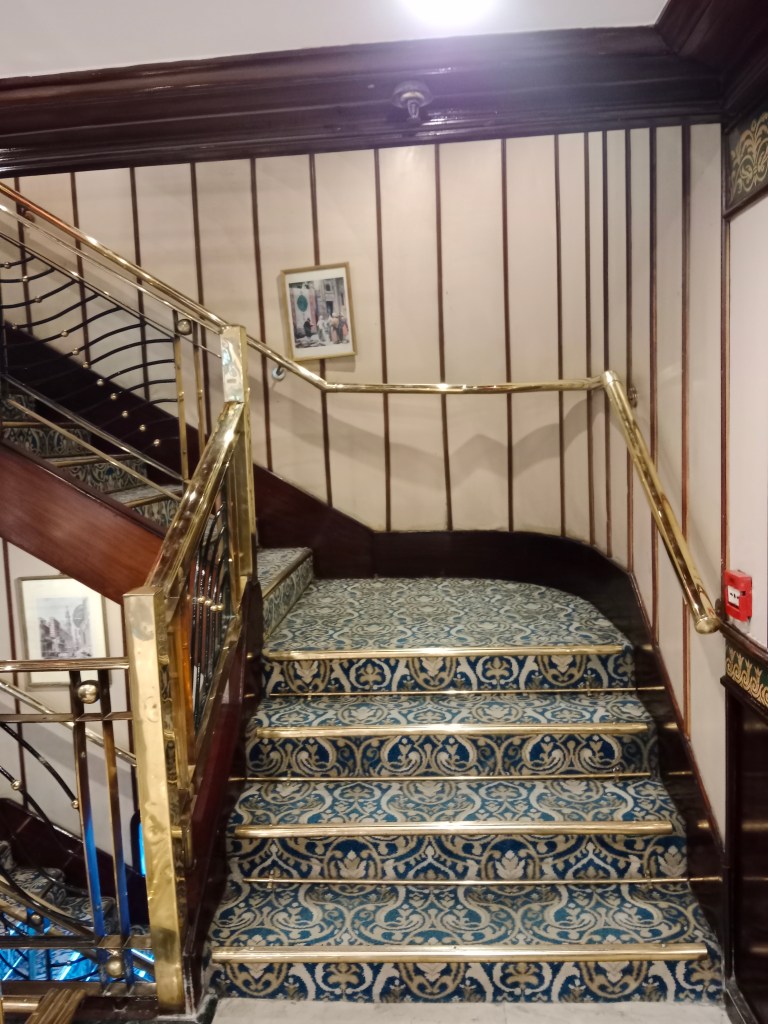
From the main lobby, there was a narrow passage with rooms on either side and a stairway leading to the upper rooms.

The stairway and the passage with rooms on either side

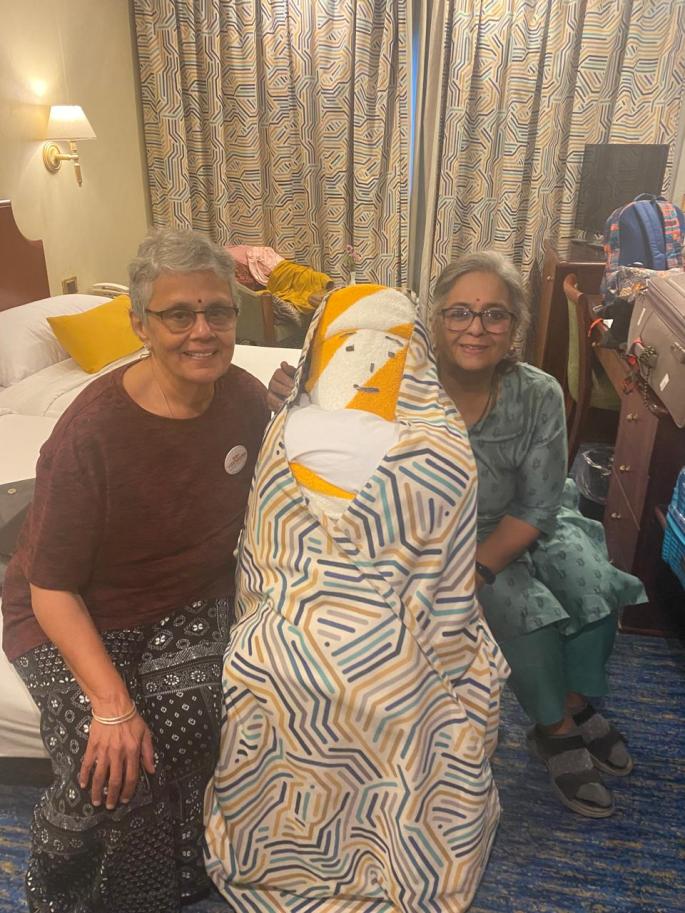
My room mate and me in our room with a creation by the room boy!!

There was a huge dining area and every meal was a buffet with a variety of Egyptian and continental dishes. The upper deck also had a gift shop.

The dining area

The upper most deck was open with a swimming pool and nice relaxing chairs for the guests to enjoy the views.


The swimming pool and the open deck on top for relaxing

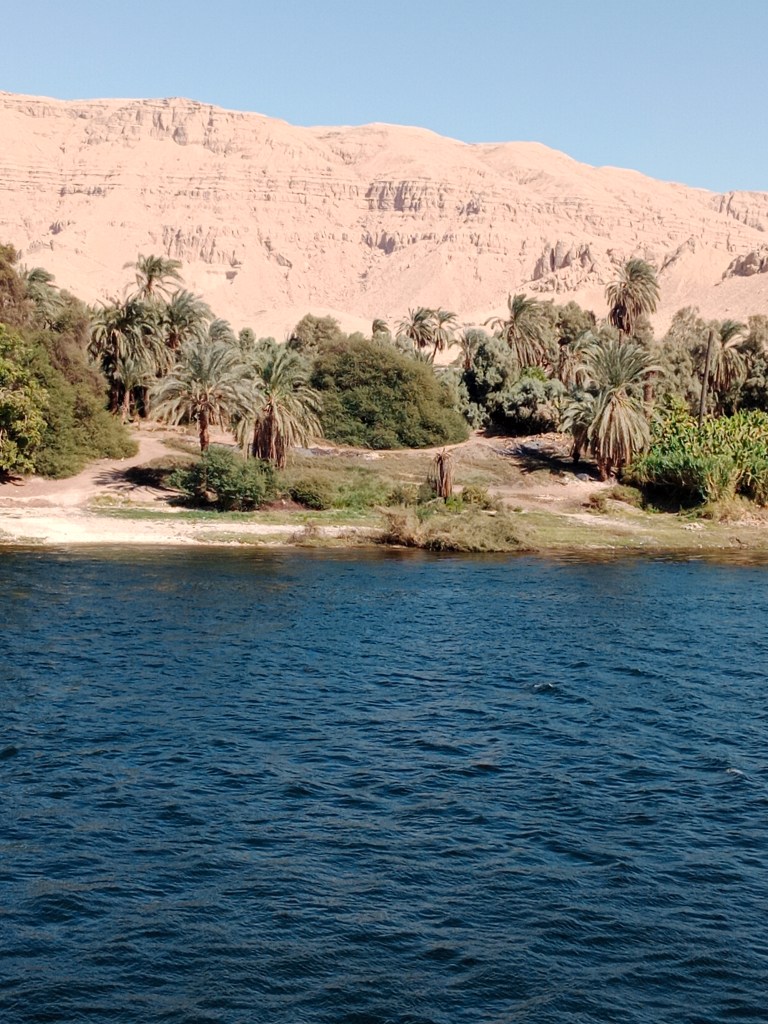
As we sailed on the Nile, the landscape on either side was predominantly desert like with few green areas with vegetation. At places we passed small towns and cities.

The views from our window as we sailed along.

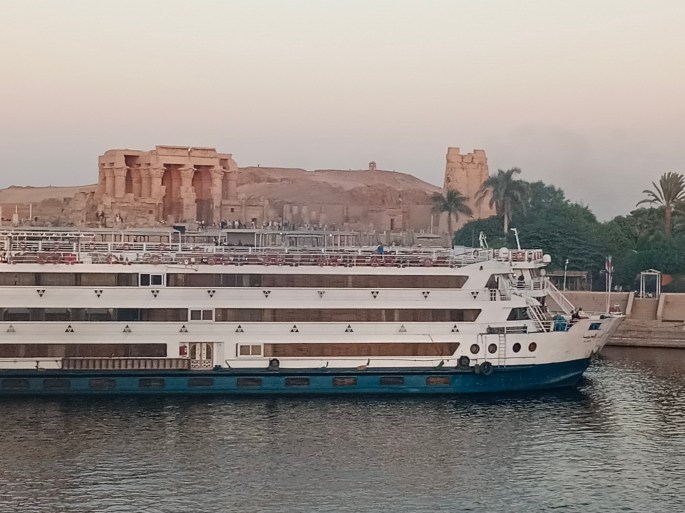
When we docked at Kom Ombo we could see the temple from the ship…

Kom Ombo temple from the ship

The locks…

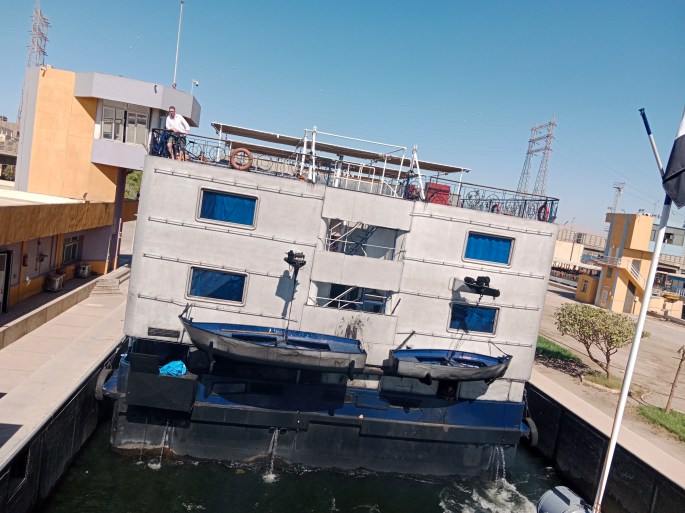
We had one very interesting and unique experience during the cruise. We crossed the Esna locks. Here the ship enters an enclosed space where the water level is maintained by using mechanical devices and then when the locks are opened, the ship safely sails to the other side . This becomes necessary when water levels are different and the ship has to be safely brought to the corresponding water level.

Acrobatic business!!!

As we approached the locks, locals in small boats came alongside and started selling their wares. The cool thing about it was they would throw the materials in a plastic cover on to the ship and we could put the money back in the cover and throw it back to them. Some acrobatic business deals!!!!

Approaching the locks and a small boat comes along selling local goods

There were lot of other ships and they were all in a queue formation and awaiting their turn to cross the locks.

Two other ships crossing the locks

We could see the lock mechanism opening and letting the ship sail through.


The lock mechanism that controls the water level

Our ship, clears the locks

This whole process took around half an hour and all of us were on the top deck enjoying this unique experience.

In the evenings after our sightseeing trips and dinner, belly dance and other cultural shows were organized for our entertainment. The staff on the cruise encouraged us to dance to local music which was fun… take a look.

Dancing to Egyptian music

Our final destination on the cruise was Luxor and after the local sight seeing trips we left the ship to the airport for our flight back to Cairo but not before a picture to save our memories of this unique experience…

Our group bids farewell to Radamis II, our ship that was our home for three days.

Hope you all enjoyed this cruise. Next week we meet at a different destination. Till then, do subscribe, like and comment.

Crocodile Mummies and History at Kom Ombo Temple

Standing on the banks of the Nile, is this unique TWIN temple in the town of Kom Ombo ,near Aswan in Egypt. One temple is dedicated to Sobek, ( crocodile headed God with a human body) and other to Horus,( falcon-headed God). Dating back to the Ptolemaic and Roman periods ,the temple is perfectly symmetrical along the main axis, has two entrances, two halls with carvings of the two gods on either side and twin sanctuaries. Much of the temple has been destroyed by the Nile, earthquakes and invaders.

The Nile was at one point of time infested with crocodiles who would attack the locals and it was believed that if they made it an object of worship, they would not be attacked. Kom Ombo temple was at one point of time teeming with crocodiles. Captive crocodiles were kept in the temple and even today, mummified crocodiles are seen here.

The temple has a crocodile museum where crocodile mummies have been displayed.

Sobek ( The crocodile headed God)

Sobek or the Crocodile God is depicted as a crocodile headed man wearing a crown with two ram horns and a sun disk and two plumes. The ancient Egyptians prayed to Sobek for protection, strength and fertility. Though initially he was believed to be a protector from crocodiles, later he was known as the “Lord of the Waters” as they believed that the Nile was created with his sweat. Since crocodiles bask in the sun and return to the dark waters at night, Sobek was also regarded as the protector of Ra or the Sun God. This illustrates the importance attached to crocodiles in ancient Egyptian culture.

Sobek…the crocodile headed God

Our trip

We were on a Nile cruise and after sailing from Aswan at noon, we reached Kom Ombo by evening. The temple was visible from the cruise itself as we docked at Kom Ombo.

View of the temple as we docked at Kom Ombo

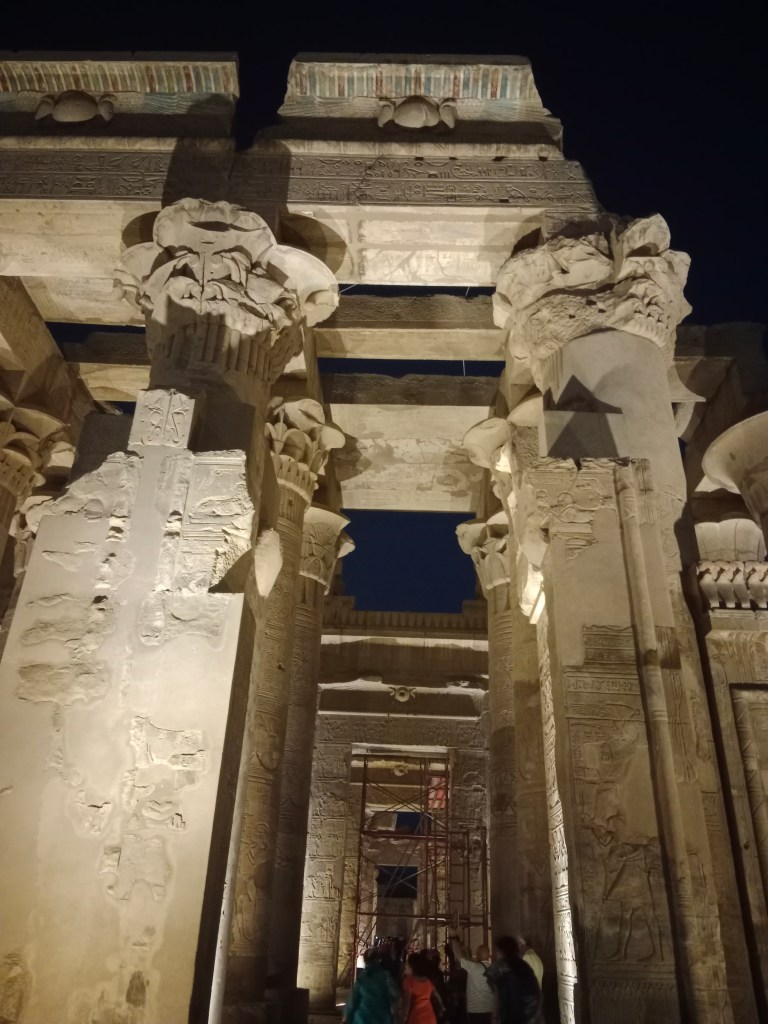
Soon we alighted from the cruise and walked up to the temple. It was getting dark and the lit up temple entrance looked awesome.

The illuminated entrance to the Kom Ombo temple

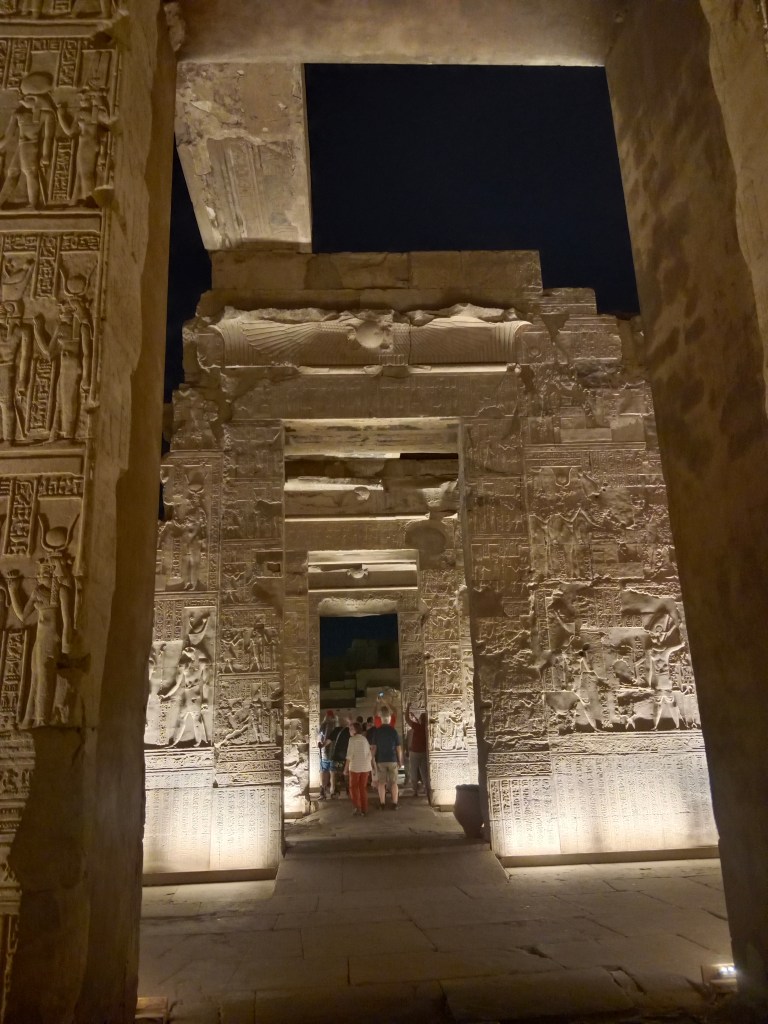
The main feature of the temple was the hall with multiple pillars with reliefs depicting the Gods and the kings.

Entering the hall

The hall with massive columns with reliefs.

Many of the pillars have symbolic representation of upper and lower Egypt by the lotus and lily flowers.

The symbolic floral representation on top of the columns

Images of some of the important reliefs seen on the columns…

The coronation of the King

The other interesting feature is the large number of hieroglyphic displays. Here are two such displays…

Hieroglyphic numbers

Hieroglyphic representation of seasons

The pillared halls lead to a central courtyard and from there on to the inner chambers. Many of the chambers were used to store valuables and papyrus documents but lie in ruins now . However, secret underground passages are seen. It is believed that these chambers were used by priests to answer the petitions of pilgrims as if it is spoken by God adding authenticity and belief among the devout.

The secret underground chambers

As we walk along the outer passage we come across a stone block where pictures of ancient Egyptian medical instruments were depicted.

The display of ancient Egyptian surgical instruments

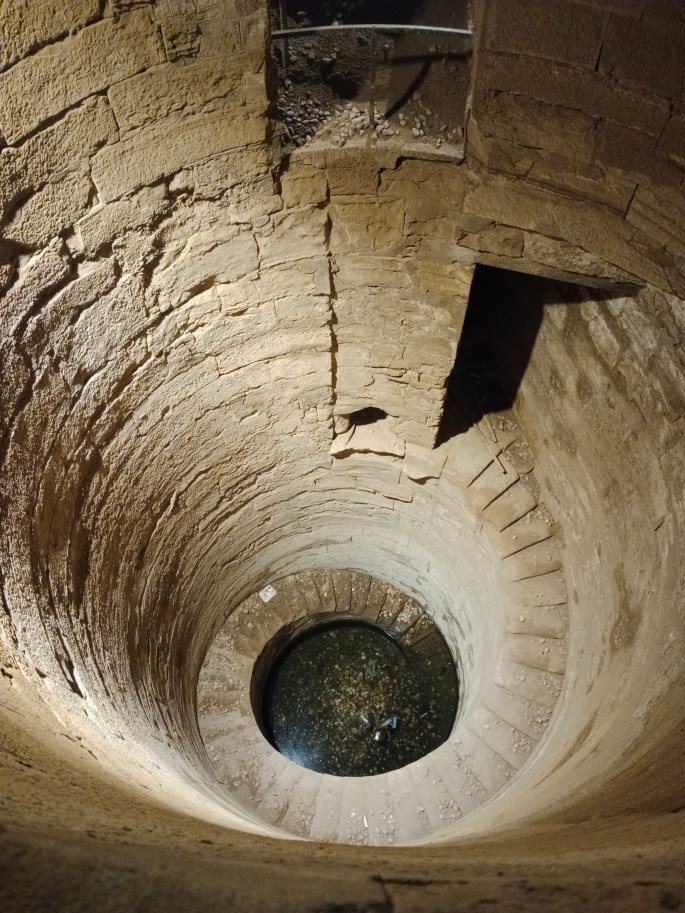
Nilograph

A deep well with height measurements clearly marked on the sides surprised us. Zak, our guide pitched in to explain that this was a Nilograph. This was used in ancient Egypt to measure the water level in the Nile as it was connected to the river lower down. Taxes for the locals were calculated as per the water level in the Nile as drought years were low tax years!! Can you even imagine that the Nile controlled so many aspects of ancient Egyptian life?

Nilograph

The Crocodile Museum

As we move outside the temple, we reach the crocodile museum. This museum has various exhibits connected to the relationship between ancient Egyptians and crocodiles. Mummified crocodiles and sarcophagus of crocodiles can be seen here.

Some pictures from the Crocodile museum

A crocodile sculpture

Mummified crocodiles

Crocodiles wrapped in linen saturated with oils and resins after desiccation with salts. Palm leaves helped in supporting the mummies and preservation.

Crocodile Mummies wrapped in linen soaked in oils and resins

Crocodile mummies in ceramic coffins with pots and other burial goods

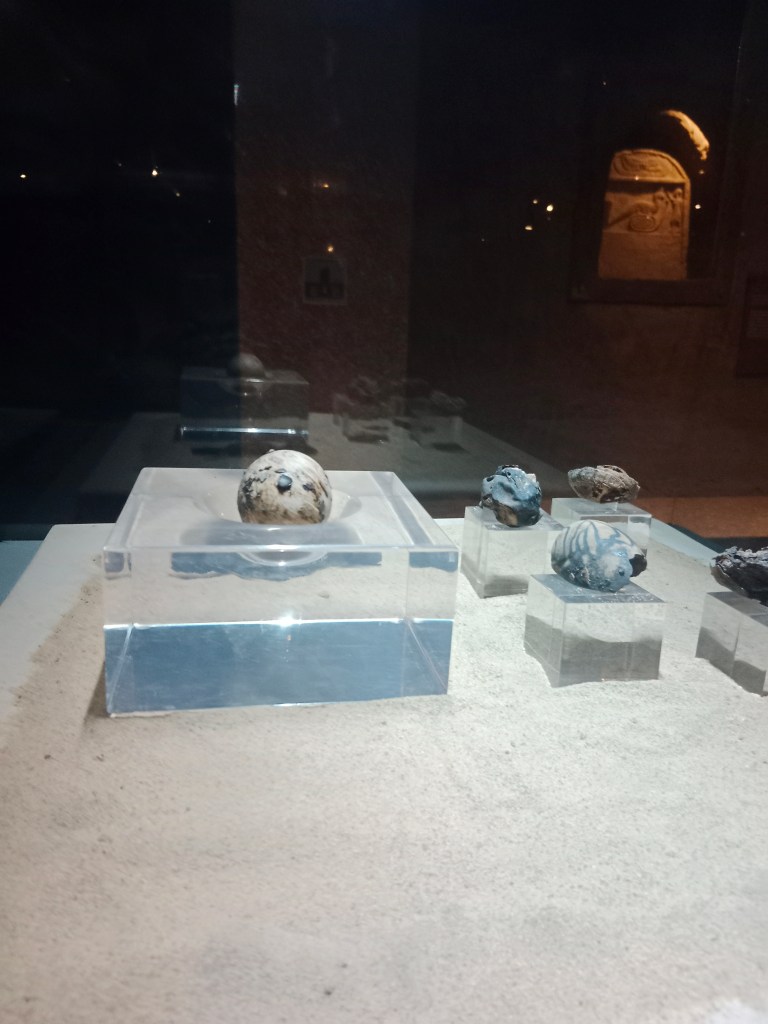
Crocodile Eggs

After finishing the visit to the Kom Ombo temple , I must admit I was left with a strange feeling. I was shaken up with all the crocodile mummies and the strange customs of the ancient people.

I left with the feeling that the world never leaves us with a dearth of things to ponder on!!!

Next week we shall enjoy the cruise on the Nile that actually took us to these destinations and more to come….

Till then, do subscribe, like and comment.

Discovering Abu Simbel: A Journey Through History

Abu Simbel is a historic site on the banks of Lake Nasser some 230 kms. from Aswan in Egypt which houses two massive rock cut temples. Egyptian kings often deified themselves and this is one such example where the great temple is dedicated to Ramesses II, the king and the Gods Amon-Ra, Ra-Horakhty and Ptah. The smaller temple at the complex is dedicated to the queen Nefertari and the Goddess Hathor, the cow headed God of love, music and fertility.

History

Built between 1264 -1244 BC, by Ramesses II to commemorate his victory against the Hittites, it is one of the most impressive structures built by him. Nubia was an important region controlled by Egypt and it was very rich in gold and other precious metals. The building of this temple by Ramesses II is also attributed to his wanting to impress the Nubians about his prowess. By 6th century BC, the temples fell into disuse and was covered by sand. It was in 1813 that a Swiss researcher Burckhardt discovered the partly buried temple.

Relocation

When Egypt embarked on a project to build the Aswan High Dam, the temple was in danger of submersion. It was the UNESCO and other partner nations who together embarked on an ambitious project to relocate this temple between 1964 and 1968. Relocation of this temple was one of the greatest challenges of engineering undertaken by a multinational team of archaeologists, engineers and heavy equipment operators. The entire complex was dismantled, lifted and relocated to a higher and farther location from the river bank.

The relocation process and a model of the old (red) and new(green) locations of the temple (archives)

Our Trip

We had checked into our cruise liner at Aswan the previous afternoon and indulged in some activities like a felucca (sail boat) ride and a visit to a Nubian village. From the cruise liner, we started early morning with packed breakfast for a 3 hour drive to Abu Simbel .The drive was through the desert and offered us nice views of the desert …. particularly the sunrise .

The sun rises on the Sahara

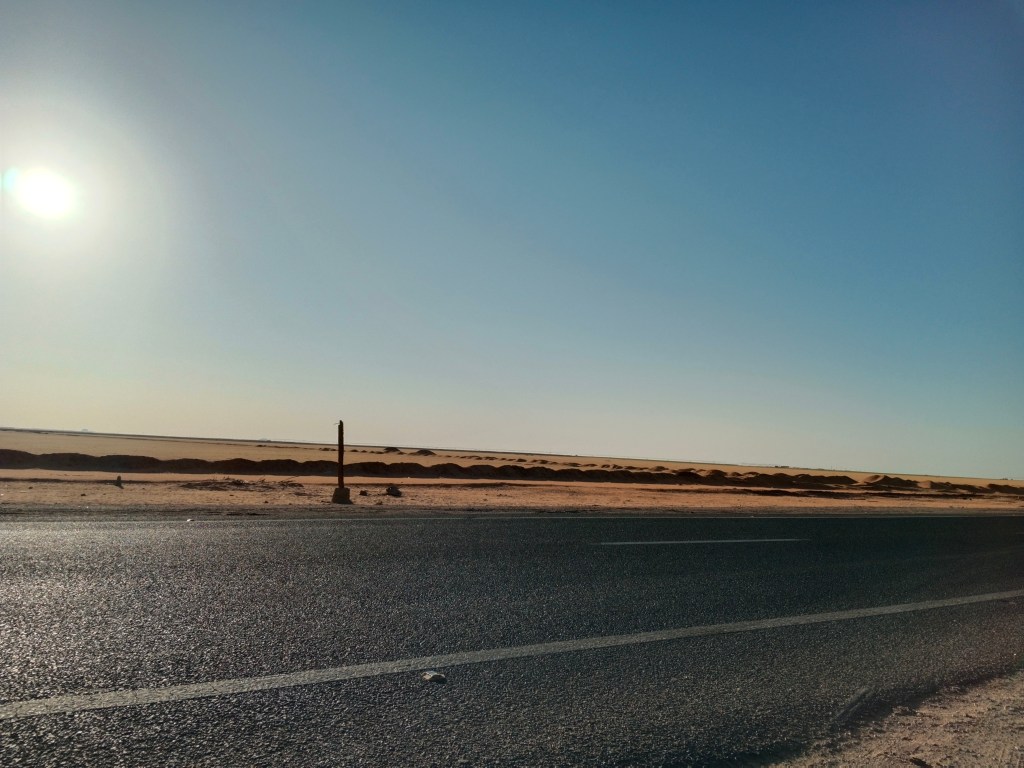
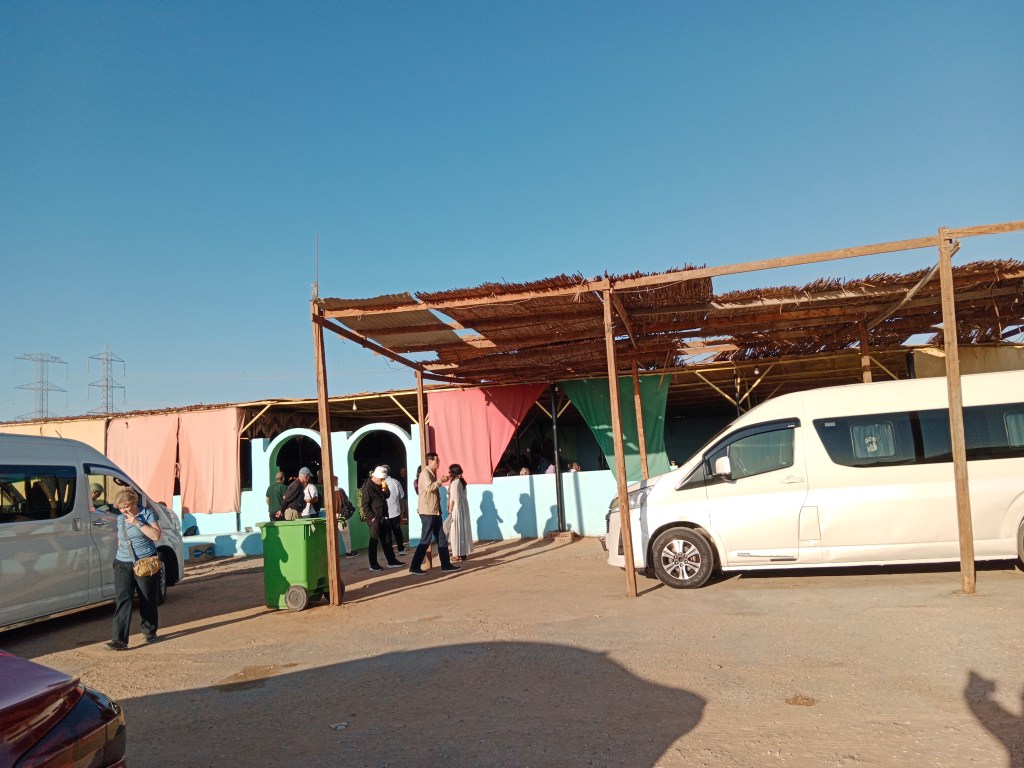
The desert road and a pit stop on the way

As we drove along, we were very close to the Sudan border as this temple is very close to Sudan. Finally, we arrived at our destination and a short walk along the banks of Lake Nasser took us to the temple threshold.

The Pathway to the temple by lake Nasser and the board showing old and new location.

As mentioned earlier there are two temples in the Abu Simbel complex, The Great Temple and The Small Temple.

The Great Temple

This is the first temple that we come across as we approach the complex. The Great temple at Abu Simbel is dedicated to the Gods Amun-Ra, Ra-Horakhty and Ptah.

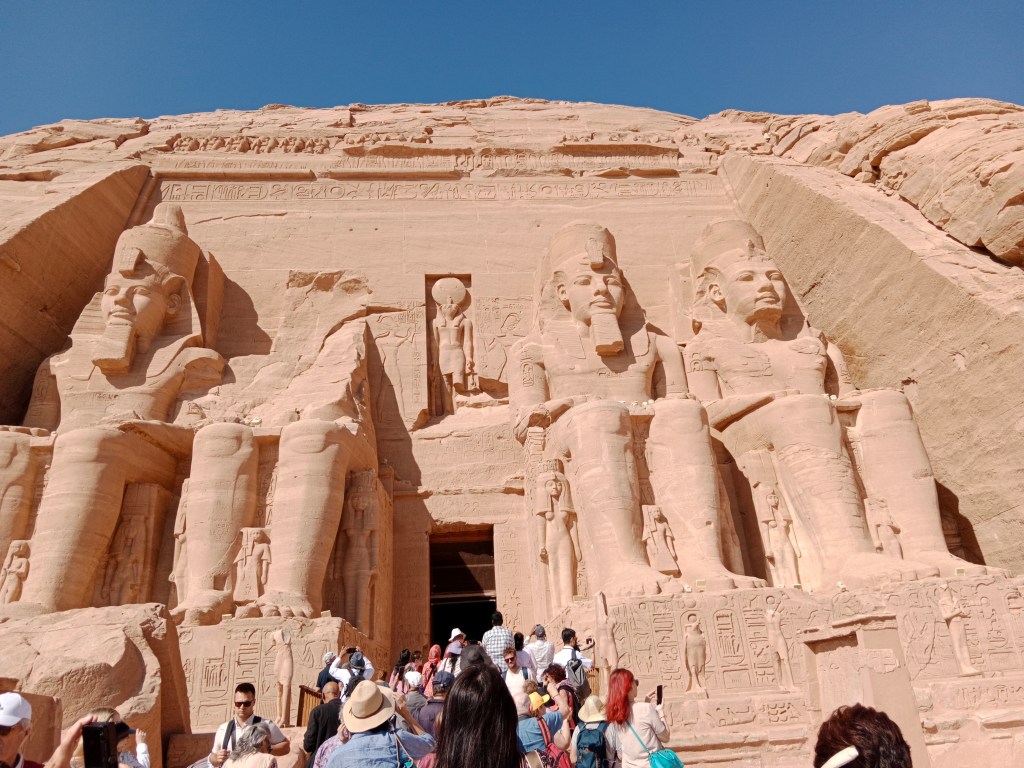
The entrance to the temple is incredible to behold. There are four colossal statues of Ramesses II in a sitting position and wearing the crown of upper and lower Egypt; two on either side of the doorway to the inside. The statue to the immediate left of the entrance was damaged during an earthquake and was not restored but placed at the feet of the statues where they were found. Next to Ramesses’s legs are smaller statues of his wife Nefertari, his mother and his children.

Just above the doorway is a bas-relief of the king worshiping the falcon headed God Ra-Horakhty

Entrance to the Great temple with the four statues and smaller statues near the legs.

Bas-relief above the doorway showing Ramesses II worshiping Ra-Horakhty (falcon headed God)

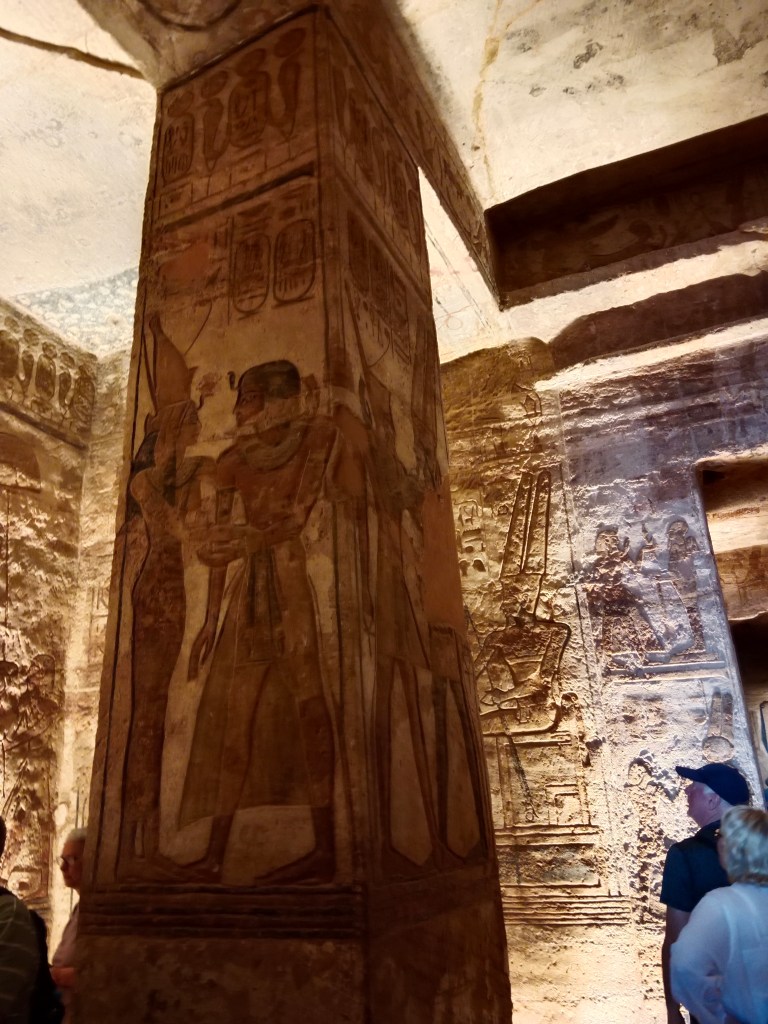
The inner part of the temple has the same layout that most Egyptian temples follow. The hall has 8 huge columns depicting the deified king Ramesses II .

The inner hall with huge carved columns resembling Ramesses II

The interior of this hall is adorned from floor to ceiling with reliefs of Ramesses II making offerings and engaging in war with the Hittites and various hieroglyphic inscriptions.

Ramesses II making offerings to Horus

War scenes where Ramesses II is seen attacking the Hittites

The reliefs on the ceiling

As we enter the second hall, there are gigantic pillars with reliefs and hieroglyphic inscriptions.

The second hall of the Ramesses II temple with pillars having reliefs

Bas-relief showing Ramesses II and Queen Nefertari

From this hall we are led into the sanctuary of the temple which is similar to the sanctum sanctorum.

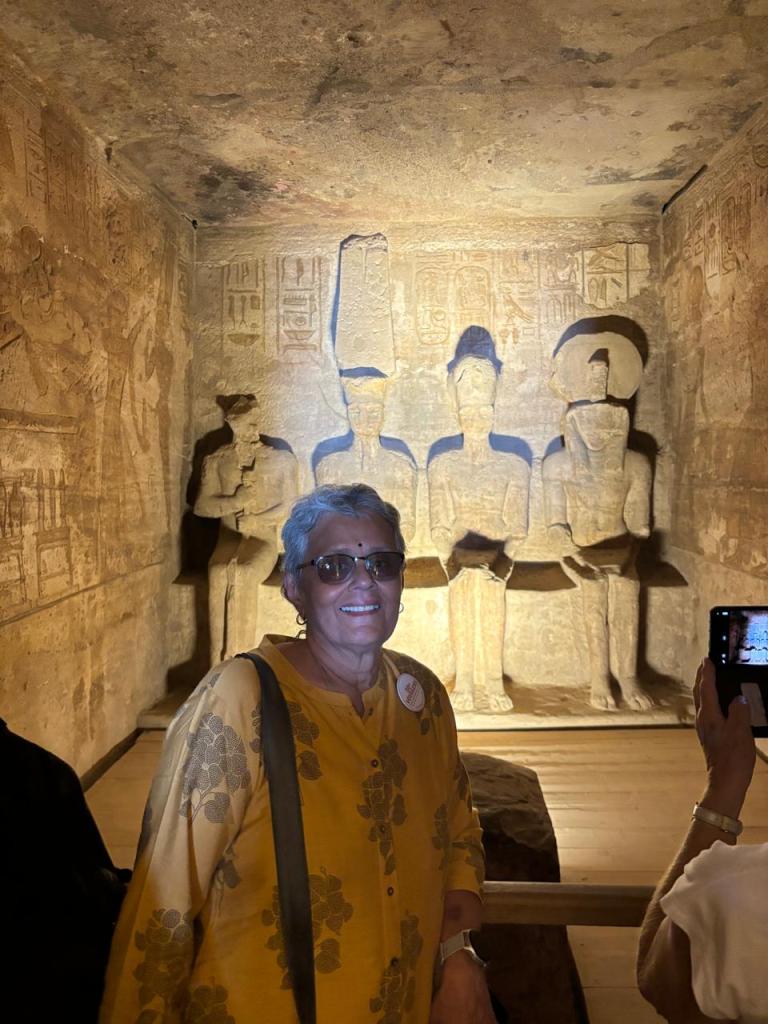
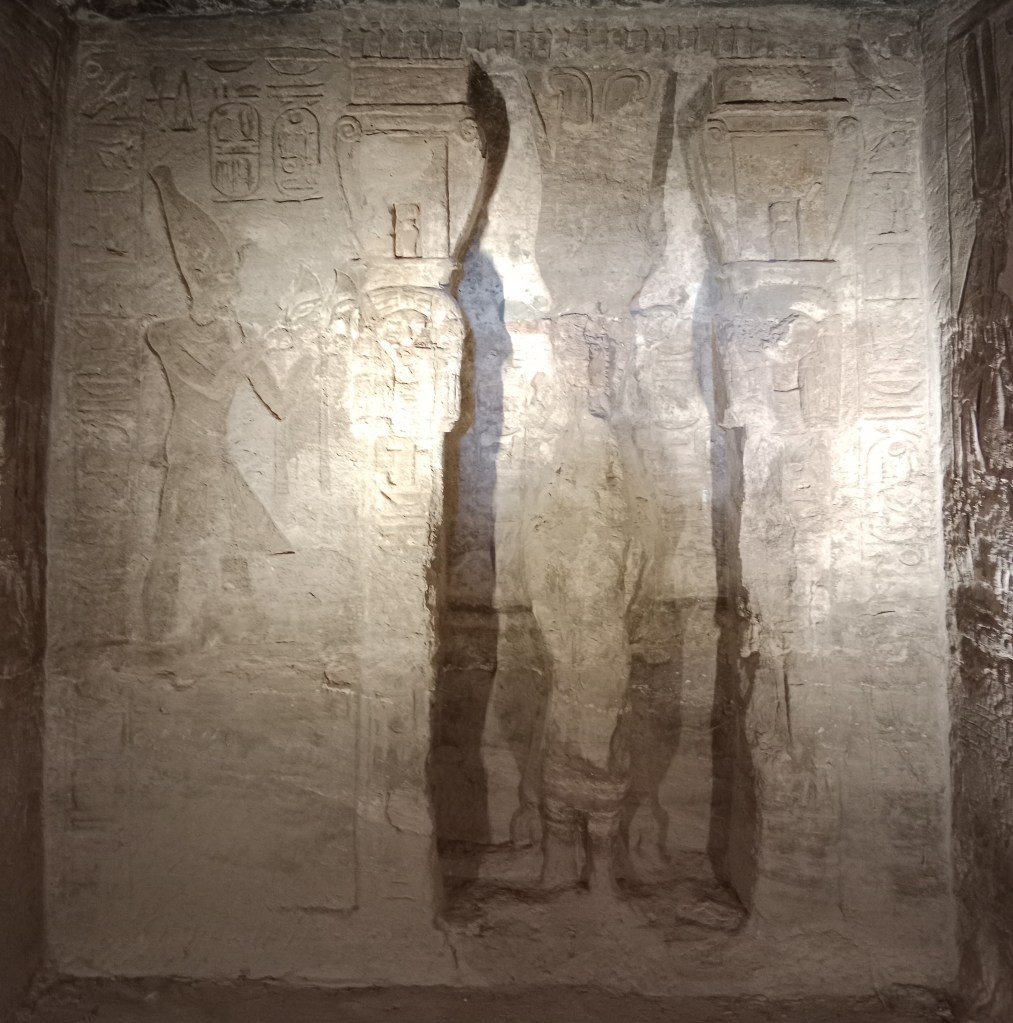
Here on a black wall are four rock cut statues ; Ra Horakhty, Ramesses II, Amun Ra and Ptah. It is believed that the axis of the ancient temple was so designed that on October 22 and February 22, the rays of the Sun would illuminate the three statues except Ptah who is the God of the dead who always remains in dark.

At the sanctuary with four sculptures

After we exited the Great temple, a walk of about hundred meters ahead, lead us to the Small Temple

The Small Temple

The Small Temple is dedicated to Goddess Hathor and Queen Nefertari.

The entrance facade of the Small Temple

The rock cut facade is decorated with six statues of the king and queen ; three on either side of the doorway. This is the second temple in Egyptian history to be dedicated to a queen; the first one being the one dedicated to Queen Nefertiti. Remarkably, this is one of the very few places where the queen’s statue is of the same size as the king! Usually, they are all depicted below the knees of the king.

Entering through the doorway, we reached a hall with pillars but here the focus is on the Queen Nefertari and Goddess Hathor.

First pillar hall of Nefertari temple

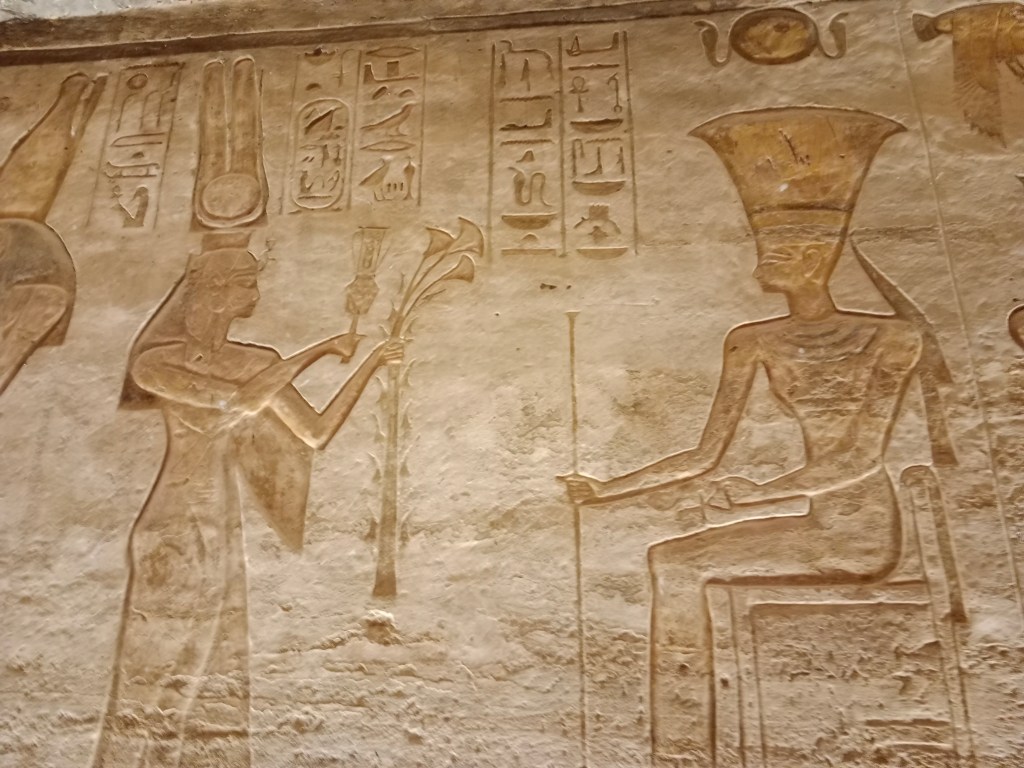
One of the most illustrative reliefs here is of Queen Nefertari making offerings of Papyrus to Hathor, the cow headed Goddess on a boat in a papyrus grove.

Nefertari making papyrus offerings to Hathor

Another bas relief showing the queen making offerings

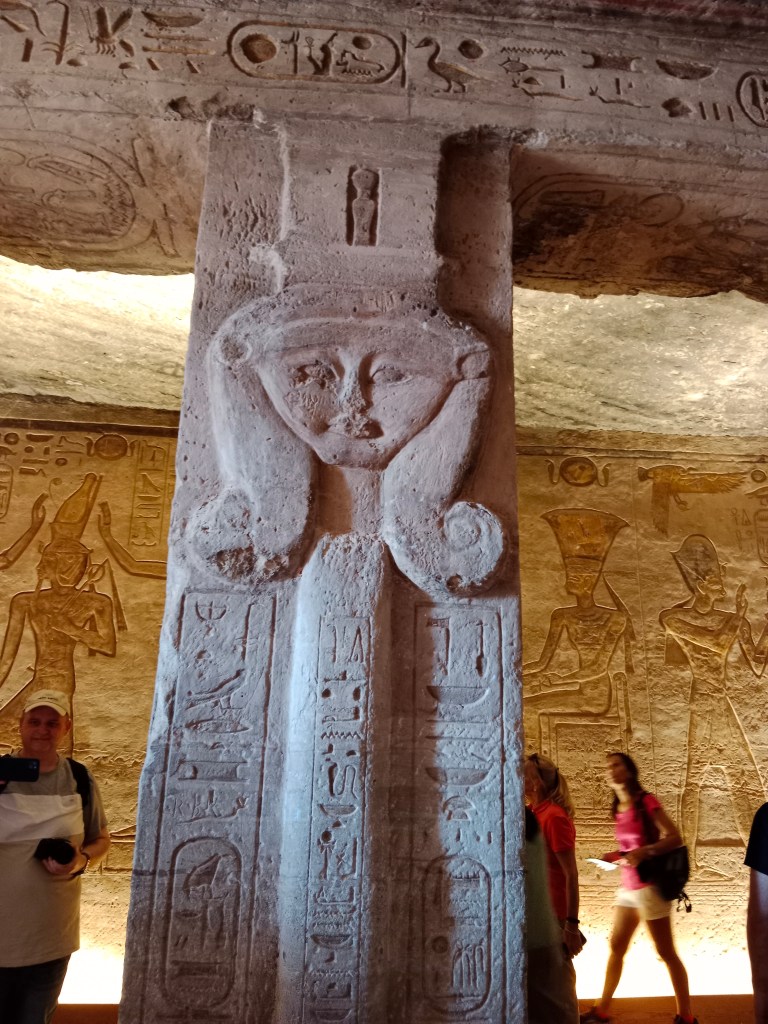
Many of the pillars here have Goddess Hathor with the cow head depicted on the top.

A Hathoric pillar

The interior is entirely done up with coloured reliefs

The interior walls with coloured reliefs

Moving into the sanctuary, the main sanctum has a niche in the wall with the cow goddess Hathor coming out of a mountain with the queen making offerings to her.

The main sanctum of the small temple.

As we move out of the temple complex there are beautiful views of Lake Nasser.

Lake Nasser as we see it from the Abu Simbel Temple.

Soon, we all assembled at the appointed location and proceeded to the bus . We had to reach the cruise ship by noon to sail to Kom Ombo . The Kom Ombo temple dedicated to crocodiles was our destination that evening.

See you next week at the crocodile temple. Till then, do subscribe, like and comment.

Aswan: From pet crocodiles to scenic felucca rides

Aswan; in southern Egypt is a slow paced, historic and picturesque city on the banks of the Nile . The unique island temples like Philae and the ancient villages of the Nubians around have led to its popularity as a tourist destination.

The Aswan High dam was built to control flooding in the Nile, provide irrigation and hydroelectric power and it has changed the economy of this city. The dam helps provide year round irrigation developing agriculture with cotton, sugarcane and lentils forming the major agricultural produce.

However, when the dam was built, large areas of the old Nile valley was flooded and thus was born the Lake Nasser. It inundated many of the temples and archaeological sites along the Nile; Abu Simbel and Philae temples being the more significant ones. Extensive and special engineering techniques have helped relocate many of these sites to higher locations .

The stone quarries of ancient Egypt located at Aswan was the source of granite used to build most of the colossal statues and obelisks and monolithic shrines found all over Egypt including the pyramids. The techniques used by ancient Egyptians to quarry and transport these massive blocks to different locations is still a mystery to the modern world.

We flew in to Aswan from Cairo and were put up at a hotel overlooking the Nile. The elephantine island across and the graceful felucca boats provided splendid views from our room.

The Elephantine island across the Nile and a felucca gracefully sailing along

Philae temple was our first destination at Aswan and we spent the morning at this famous temple dedicated to God Isis. Philae temple was exclusively covered in the last episode. After visiting Philae, we drove past the Aswan High dam which is one of Aswan’s land marks.

Aswan High Dam

Built between 1960 and 1970, across the Nile river, this dam is one of the largest embankment dams in the world. There is an old Aswan dam built much earlier and inspite of that, flooding was a regular hazard along the banks of the Nile causing lot of damage. The new dam helped control that besides providing irrigation support and electricity.

Driving towards the dam we saw a monument to the Soviet Egyptian Cooperation in building this dam.

The monument of Soviet Egyptian partnership

The Aswan High Dam and attached power station

Feluccas

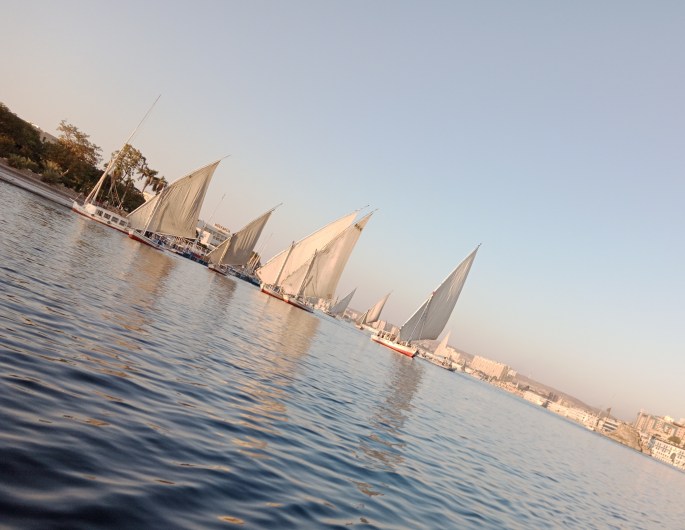
Feluccas are traditional wooden sail boats with single sails seen in many Mediterranean countries and in Egypt. It can typically accommodate around 10 passengers and is used as a mode of transport here. Sailing on a felucca is a unique experience offered to tourists at Aswan and we enjoyed this ride with the boatmen singing traditional songs.

Felucca boats on the Nile

Enjoy an Egyptian song by clicking on this video above.

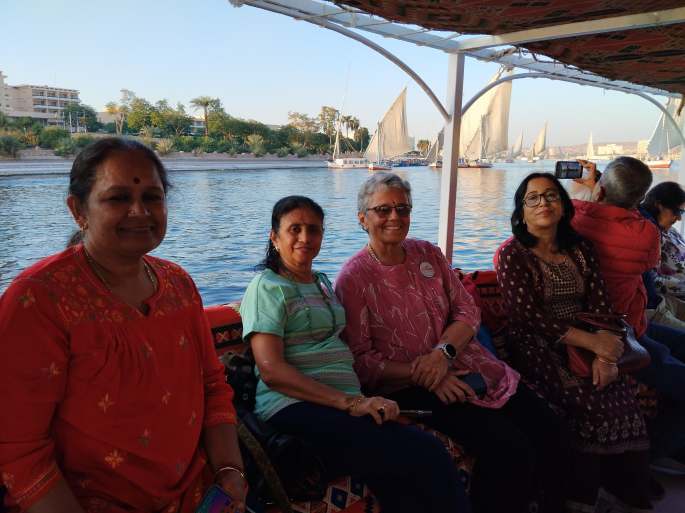
On a felucca

Enjoying these local performances, we spent about an hour on the felucca sailing on the Nile.

After the felucca ride, we had another interesting plan and that was a visit to a Nubian village as suggested by our local guide

Nubians

Nubians are indigenous people of northern Sudan and southern Egypt. They differ ethnically and culturally from other Egyptians. The Nile has several islands and many of these islands in southern Egypt are inhabited by Nubians. Most Nubians practice Islam.

Their houses have unique architectural features with large ornately decorated gates facing the Nile. Geometric patterns, motifs and symbols connected to the family adorn the walls of their houses.

Crocodiles form a significant part of their culture and are often kept as pets in Nubian homes. They are believed to bring good luck

We visited a Nubian village by a motor boat. Some pictures from this visit…

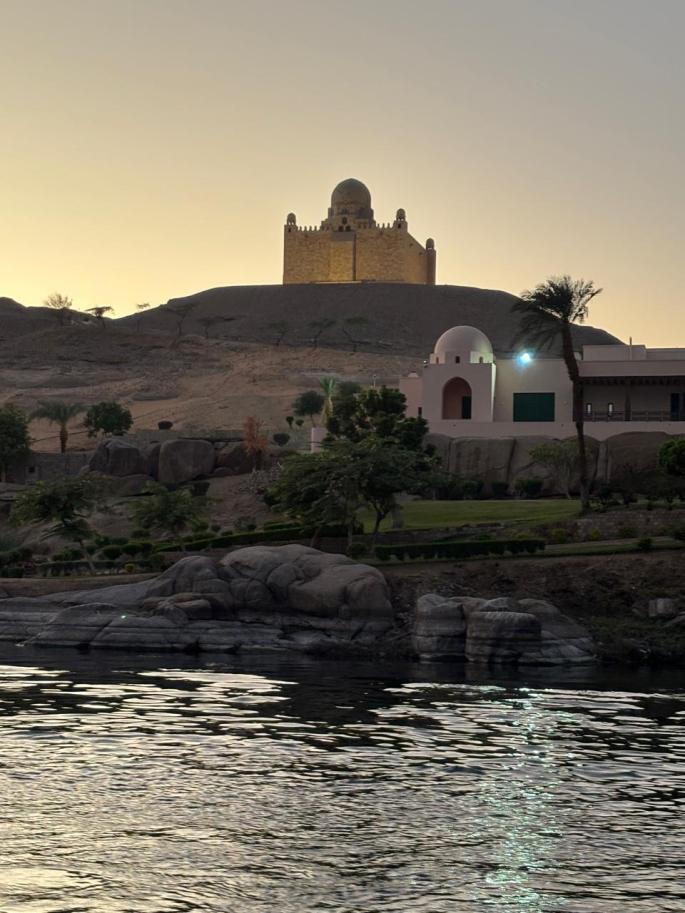
The Aga Khan Mausoleum on one of the islands on the Nile

The Nubian village as we approached it

After we alighted from the boat, our guide helped us clear the steps in partial darkness and we soon stepped into the village. It was live and active with many shops selling local merchandise and villagers going about their daily routines. The most peculiar feature was the brightly painted houses and shops. It was a riot of color everywhere.

The streets of the Nubian village

Soon we were at the entrance to a home.

The colorful entrance

We were welcomed to their home and we reached a central hall where again the walls were painted. We sat down comfortably and soon realized that there was a central shallow tank that housed a live crocodile. It looked very cruel to put an animal in such a small enclosure. But that is supposed to be a part of their custom and is now used to attract tourists and bring in the money.

The hall with painted walls and the shallow tank with the crocodile

The pet crocodile in the tank (looked pathetic)

A young boy then came up with a baby crocodile whose mouth had been tied up. The guests who wanted to hold the baby or have a picture with it were allowed to do so. It felt rather cruel to me and I did not venture in to that.

One of the baby crocodiles

We were served some tea and local snacks and then taken around the house.

Other areas of the house

After the visit to the Nubian village we walked back to our boat and sailed back to our ship with mixed feelings. Though the houses were very colorful and we liked the customs of the locals, the crocodile part felt bizarre. The cruelty meted out to the baby crocodile also was upsetting.

That brings us to the end of this episode. Next week we meet at the Abu Simbel temple.

Do subscribe, like and comment.

Philae Temple: An Engineering Marvel of Ancient Egypt

After our sightseeing at Cairo, we took a domestic flight to Aswan, an Egyptian city on the banks of the Nile. It was from here that we visited many of the temples of ancient Egypt that will be chronicled in forthcoming episodes. We start this , with an episode on the Philae temple dedicated to the Goddess Isis.

Legend of Isis

The legend associated with this temple has all the elements of a crime thriller. Isis, the Mother Goddess, her consort Osiris and their son Horus form the characters of this story . Isis was believed to posses magical powers and knowledge of secretive formulae. Osiris was killed by his brother Seth. His body parts were strewn at many places so that they could not be retrieved. His wife Isis used all her magical powers and managed to get them and put them back together and miraculously brought Osiris back to life. Then, they had a son Horus. He too had a snake bite and Isis used her wisdom to save him. The Isis cult found its way to the Mediterranean too; thus explaining the Greek and Roman connections of this temple.

A painting depicting Osiris (left) and Isis (right) with the sun disk and horns.

History of Philae Temple

Philae is actually a small island in the Nile situated south of Aswan. It was the epicenter of the cult of Isis popularly known as Mother of God. She was worshiped by the Egyptians and Nubians ( Ethiopians ) alike. The Ptolemies built temples to the most beloved Gods and Goddesses of the Egyptians. Ptolemy II (285 – 246 BC) started the construction of the temple and from there starts the history of the Isis temple at Philae. This also explains the Greek and Roman architectural features here in contrast to the other temples. Christianity came to Egypt under Theodosius around 379 AD and after that, there was a systematic attempt at destruction of the temple and conversion to a church . The Philae temple thus stands as the last outpost of ancient Egyptian traditions.

When the old Aswan dam was built , the temple came under threat of inundation and when the height of the dam was increased in 1912, the temple lay inundated for part of the year. Subsequently with raising the dam height further, the temple was inundated for most of the time with only the high pylon being visible above water level.

A monumental Engineering feat

When the new Aswan High Dam was built ; leading to the formation of Lake Nasser , it was clear that the temple would be lost forever and then with the help of UNESCO, the temple was dismantled and relocated to the Agilkai Island where it is today.

A coffer dam was built and water was pumped out exposing the limestone blocks. There were 47000 stones and they were dissected, stone by stone, cleaned, treated, numbered and stored. While this was on, granite from the Agilkai island had to be blasted to maintain the original look of the temple. The stones were then transported to their new home and reassembled exactly like the original. Following this, the temple was thrown open to visitors.

This was indeed a monumental feat of engineering. Even now the numbers on the blocks are visible. The meticulous and precise work that has gone into this gigantic project is awe inspiring indeed!!!

Our Visit

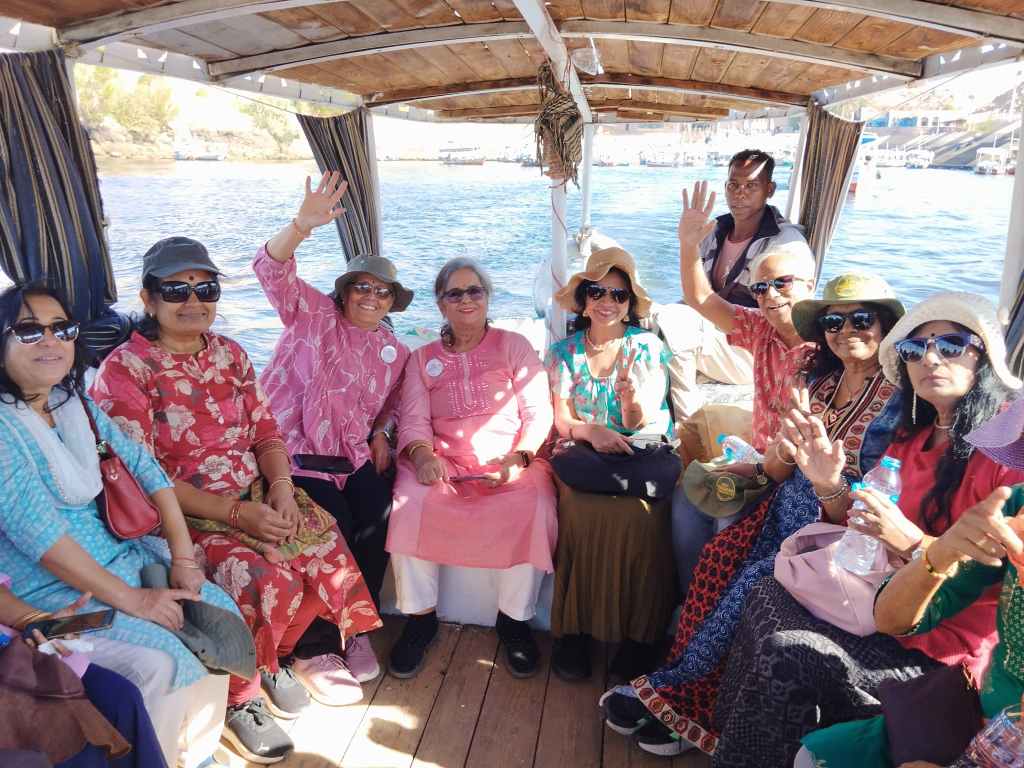
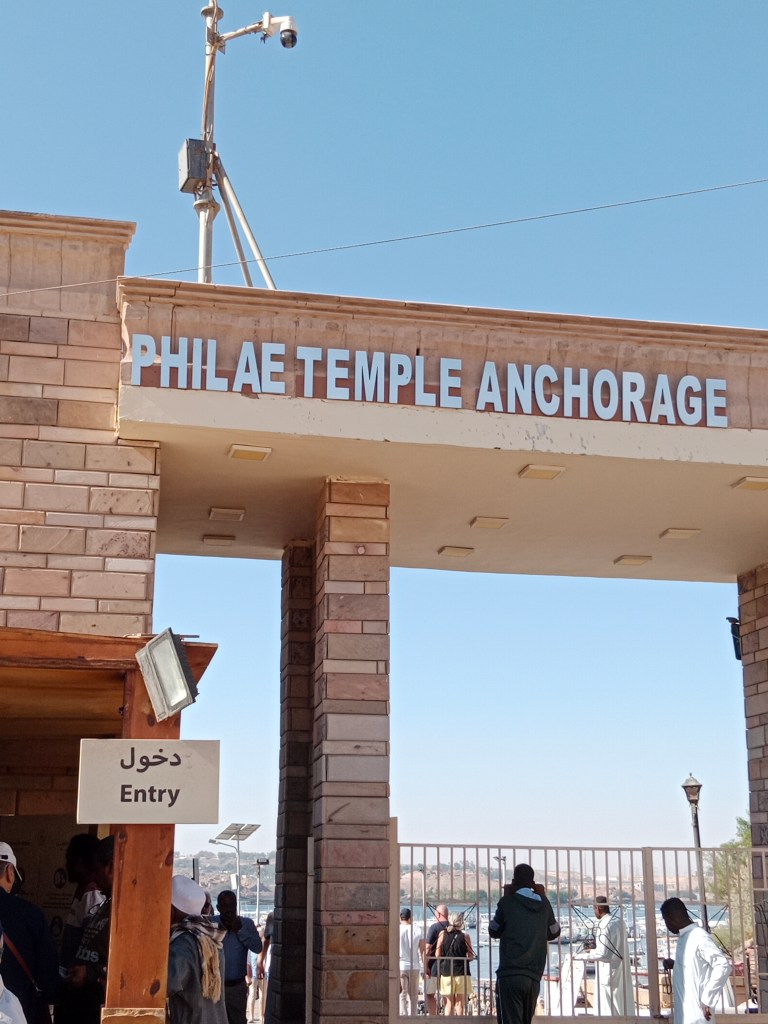
We were dropped off by our bus near a boat jetty from where we boarded a motor boat to the Agilkai island on the Nile.

On the boat to the Philae temple

After alighting from the boat, a short walk took us to the courtyard in front of the main gate. This courtyard was lined by shops selling everything a tourist wants…from trinkets to clothes to souvenirs.

Courtyard with shops on either side and the items on sale

Soon we were at the main gate of the temple.

The main entrance to the temple with Lake Nasser behind.

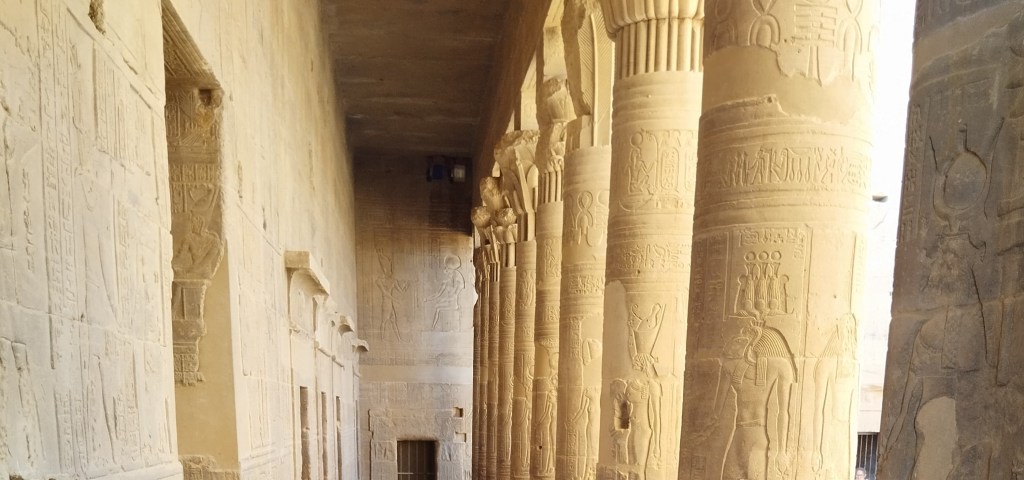
Walking along the sides of Lake Nasser, we reached the threshold of the main temple. There is an open courtyard with decorated pillars on either side leading to the entrance pylon.

An open courtyard with pillars on either side .

The entrance pylon lies ahead with two towers ,one on either side of the doorway. These towers are decorated with figures of a pharaoh wearing the crown of upper and lower Egypt lifting his club and holding his enemy by the hair and punishing him in the presence of Isis. Thus the Pharaoh takes credit for suppressing the enemies and keeps up the tradition of the land.

Two granite lions( partly mutilated) guard the main doorway.

Entrance pylon with the Pharaoh wearing the crown of upper and lower Egypt and punishing enemies in front of Isis

The other half of the entrance pylon with the damaged lion guarding the entrance.

Passing through the doorway we reach a central courtyard again with columns on either side. The other end of the central courtyard lies the second pylon with entry into the actual temple of Isis

The doorway leading to the central courtyard

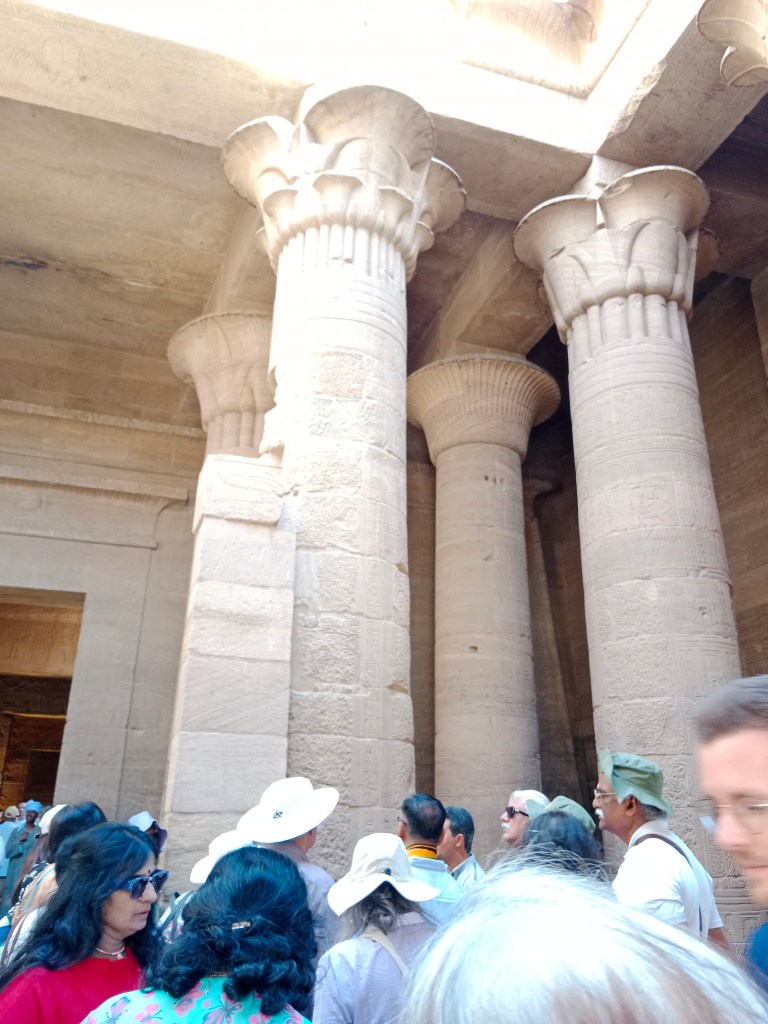
The row of columns surrounding the central courtyard. The Corinthian (Petals on top) pillars are typically Greek and Roman styles.

Corinthian pillars typical of Greek and Roman architecture

The Reliefs on the columns depicting ancient Egyptian kings and Gods

In front of second pylon where the main temple entry is located.

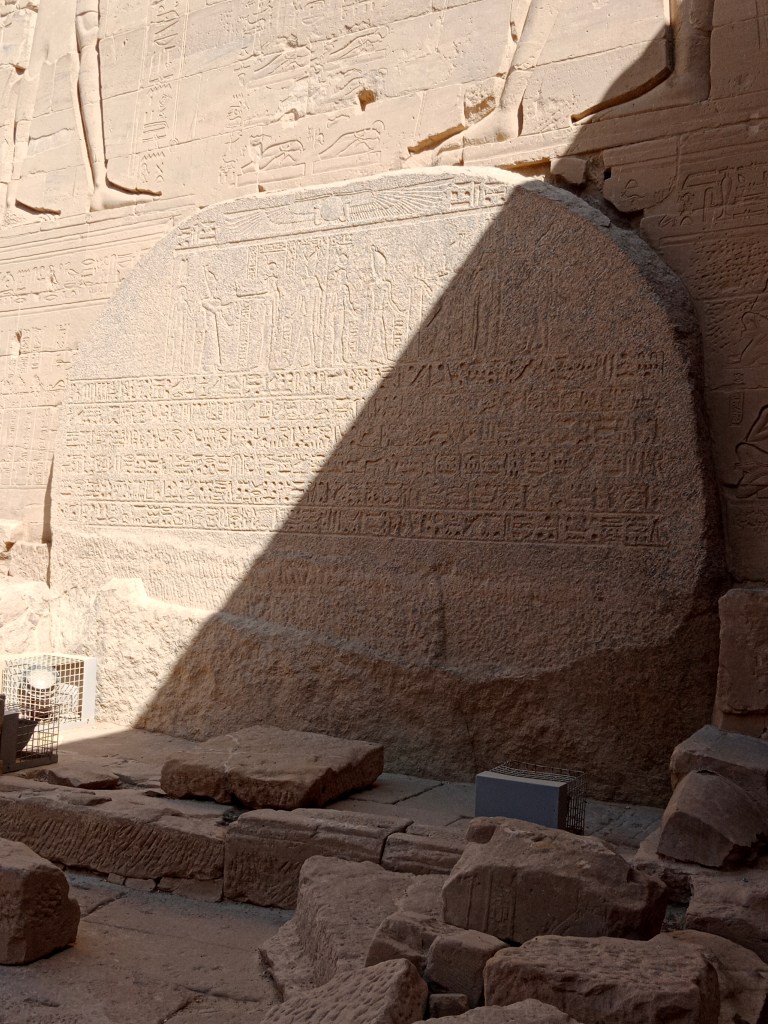
A Stael in front of the second pylon with hieroglyphic inscriptions

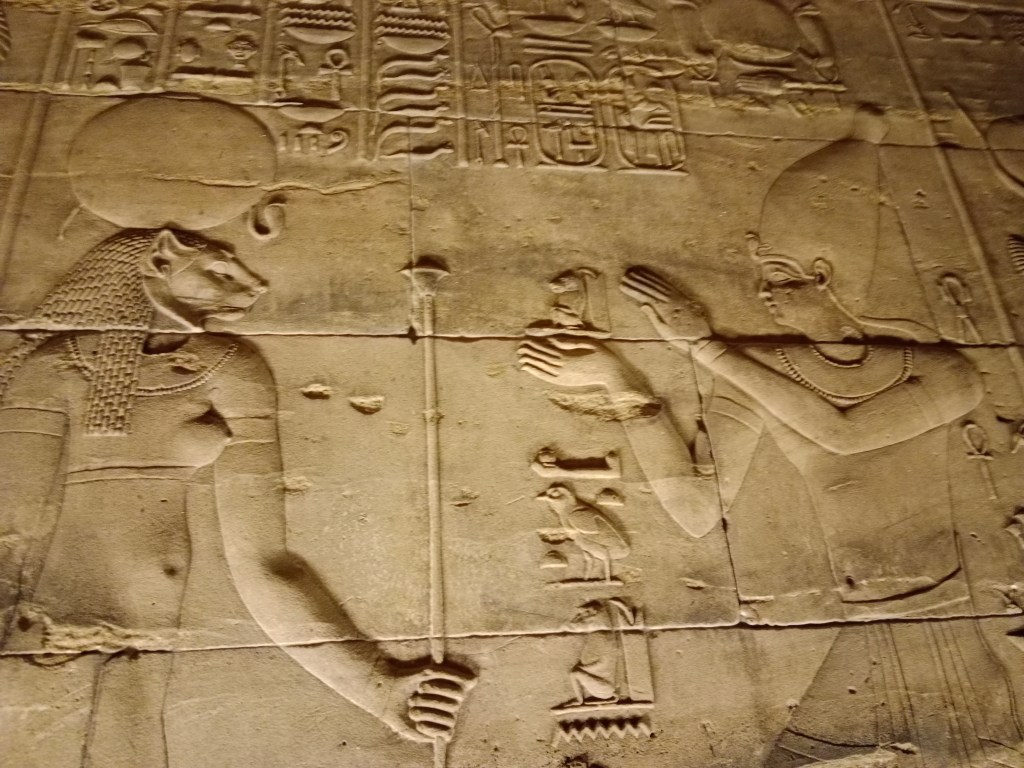
After crossing the second pylon, we enter the main temple. Here, the walls are decorated with fine reliefs of the Ptolemaic kings making offerings to Egyptian Gods. At many places there is evidence of deliberate attempts to damage the reliefs.

Some pictures inside the temple of Isis.

The offering of eyes to the God. Note the deliberate chiseling to damage the relief.

There is also a hall where the walls show reliefs connected to perfumery which had been famous in ancient Egypt. Hieroglyphic inscriptions on perfume preparation are also found here.

The King offers a baboon. Note the hieroglyphic depictions below the king’s hand

Walking further inside, we reach the main sanctuary of the temple. Here there is evidence of it being converted into a church. The main altar has the sign of the cross etched on it.

The altar at the sanctuary with etched crosses

Once we exited from the sanctuary, we reached the beautiful views of Lake Nasser. From here, the original position of the temple is visible as some projecting pillars in the lake.

The pillars in Lake Nasser where the original temple was located.

The Kiosk of Trajan

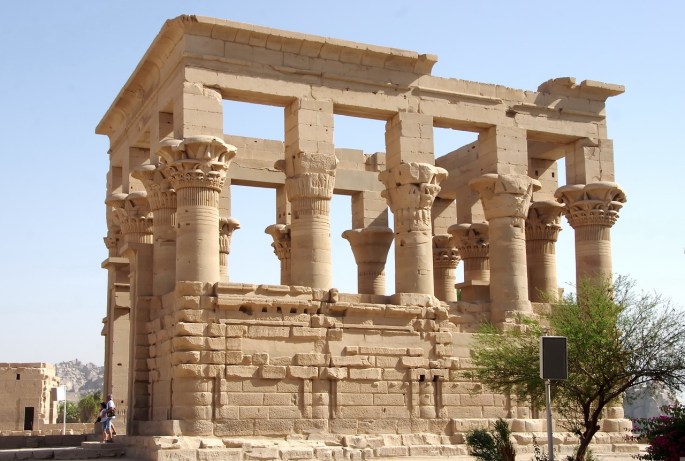
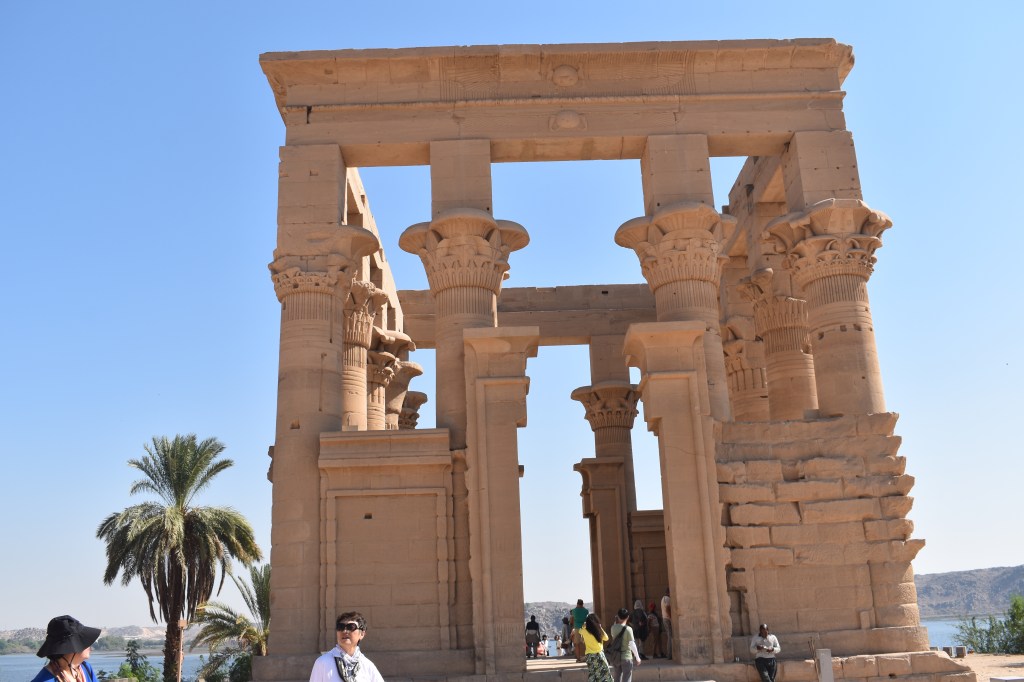
Adjacent to the lake front is another structure, the Kiosk of Trajan which is perhaps the most publicized picture of the Philae temple. A rectangular building with 14 columns with floral capitals, where the Emperor Trajan is shown burning incense as an offering to Isis.

The Kiosk of Trajan

By now we had exhausted our designated time at the temple and we made our way to the bus and on to our lunch halt.

To sum it up, this temple built by Ptolemy II was initially dedicated to Goddess Isis and her family but with the advent of Christianity, gradually it was converted into a church. It shows features of Egyptian, Greek and Roman architectural features. Almost submerged in Lake Nasser after the building of the Aswan High dam, it was miraculously relocated by a marvelous engineering feat.

Hope you enjoyed this visit . Next week we visit Abu Simbel , another great temple of ancient Egypt.

Till then, do subscribe, like and comment.

Exploring the Pyramids of Giza: A Timeless Adventure

Waking up to a pleasant morning at our hotel in Giza, we knew that it would turn out to be an iconic day for us. We were scheduled to visit the Pyramids which are synonymous with Egypt and undoubtedly the highlight of our Egypt trip. Before I get into the details of our visit to the Pyramids, let me take you through their history and highlights .

Some facts about the Pyramids…

The Pyramids of Egypt are monumental tombs built around 4500 years ago and were expected to last an eternity. These pyramids housed the bodies of the kings and kept it safe and was a demonstration of the social status. Egypt’s Pharaohs expected to become Gods in afterlife and built these temples and tombs filled with things they would need in the next world. That explains the enormous amount of treasures recovered during excavations here.

The fourth dynastic King Sneferu ( 2686 – 2667 BC) was the first to build the pyramid structure that we associate Egypt with today. He built three pyramids ; out of which the first two were failures due to structural instability and they were abandoned. The third one, called the Red Pyramid built of red limestone blocks became the world’s first successful true pyramid.

With the red pyramid, Sneferu set the outlines for future pyramids including burial chambers, mortuary temples and a causeway leading to the valley temple. This formed the basis of the largest pyramid ….. The Great Pyramid in Giza built by Sneferu’s son Khufu.

There are over 100 recorded pyramids in Egypt, most of them belonging to minor royalty or have no known owners. They stood out conspicuously in the landscape as potential troves of wealth attracting robbers. Soon the Pharaohs realized this and stopped building pyramids.

In common parlance, when we talk of the pyramids ; what we refer to is the pyramid complex at Giza.

Map of the various locations where pyramids were built

The Giza Pyramid complex

The complex which is part of the UNESCO World Heritage site Memphis and its Necropolis” consists of three main pyramids , many small pyramids, The Great Sphinx and several archaeological monuments

The three main pyramids in the Giza complex are The Great Pyramid (Pyramid of Cheops or Khufu), The Pyramid of Khafre and The Pyramid of Menkaure built on a rocky plateau on the west bank of the Nile .

The Great Pyramid is the oldest of the pyramids and remains largely intact. It is an engineering marvel built over a twenty year period by the Pharaoh Khufu (2575 – 2566 BC) with approximately 23,00,000 limestone blocks each weighing 2.5 tonnes. It was entirely cased in white limestone creating a uniform surface. Destructive forces have ensured that none of this remains and the exterior appears irregular.

How the external surface was originally

The four corners of the Great Pyramid face four cardinal directions, the sides form an angle of 51 degrees and the original height was 481 feet. The pyramid was encased with smooth limestone paste for several centuries which was later destroyed. There are three known chambers inside the pyramid and visitors are allowed to the King’s chamber which has a granite sarcophagus which lies empty now.

The next Pyramid in the complex is The Pyramid of Khafre (or Chephren ) built by Khafre ( 2558 – 2532 BC); the son of Khufu. This pyramid lies near the Great Pyramid and deceptively appears taller due to its location at a higher ground level. It is actually only 447 ft. tall. The peculiarity is that the apex still retains some of the limestone casing.

Khafre also built the Great Sphinx; a mysterious limestone monument with the body of a lion and head of a pharaoh . The face of the sphinx is believed to be that of Khafre himself. Before the 1800s this was buried in sand with only the head visible. It has unfortunately been partly mutilated and reconstructed multiple times.

The smallest of the three pyramids is the Pyramid of Menkaure built by Menkaure (2532 -2503 BC) ;the son of Khafre. Its height is only 228 ft.

The Pyramids were looted and plundered internally and externally. Various accounts of mummies, and treasures having been found are available. In fact one report claims the presence of three shrouded bodies, a sarcophagus filled with gold, a corpse in golden armour and a ruby as big as an egg!!!!Most of the treasures are now missing and the limestone casing outside is destroyed except for the apex of the pyramid of Khafre.

The Pyramids of Menkaura (front), Khafre(middle) and Khufu(last) at Giza Pyramid complex. Multiple smaller partially damaged pyramids lie in front.

How were the pyramids built?

Ancient Egyptian engineering was so impressive that even today, modern scientists and engineers are not sure of what techniques they used. The Nile and its network of waterways were probably used to transport granite and other materials from Aswan, Sinai peninsula and even Lebanon. Giant ramps are believed to have been used to move the blocks to the top. Imaging technology will in future probably provide the blueprint for how they built these timeless monuments.

Our Trip

Driving down from our hotel at Giza, we were at the entrance to the Pyramid complex. There was a long queue for the tickets but as our local guide had already arranged for the tickets, we had a quick entry .

The crowd and the modern entry plaque

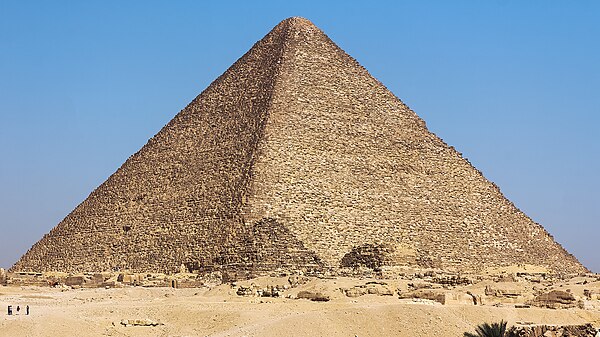
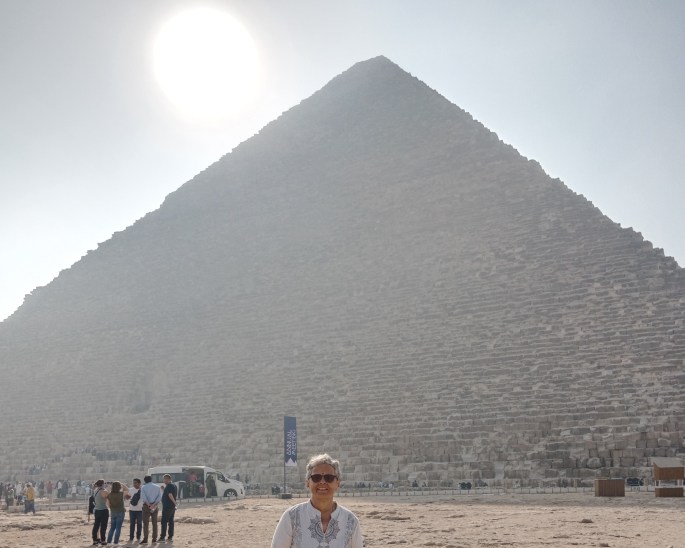
Walking in , the Great Pyramid of Khufu was right in front of us and the sheer size of the structure was bewildering. In fact it was difficult to get the entire pyramid in one frame…

The Great Pyramid

At The Great Pyramid

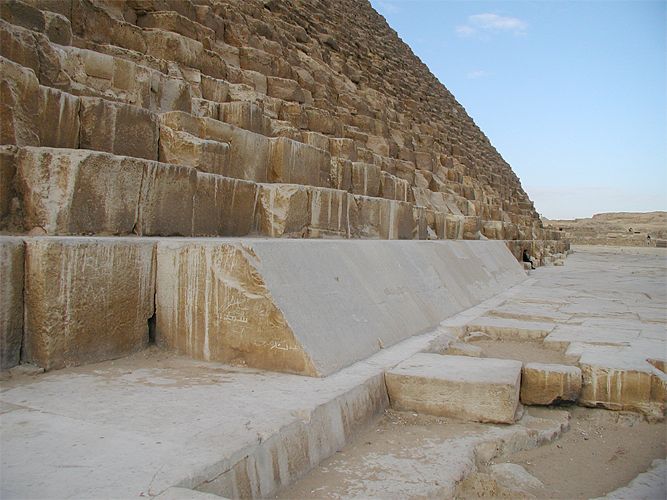
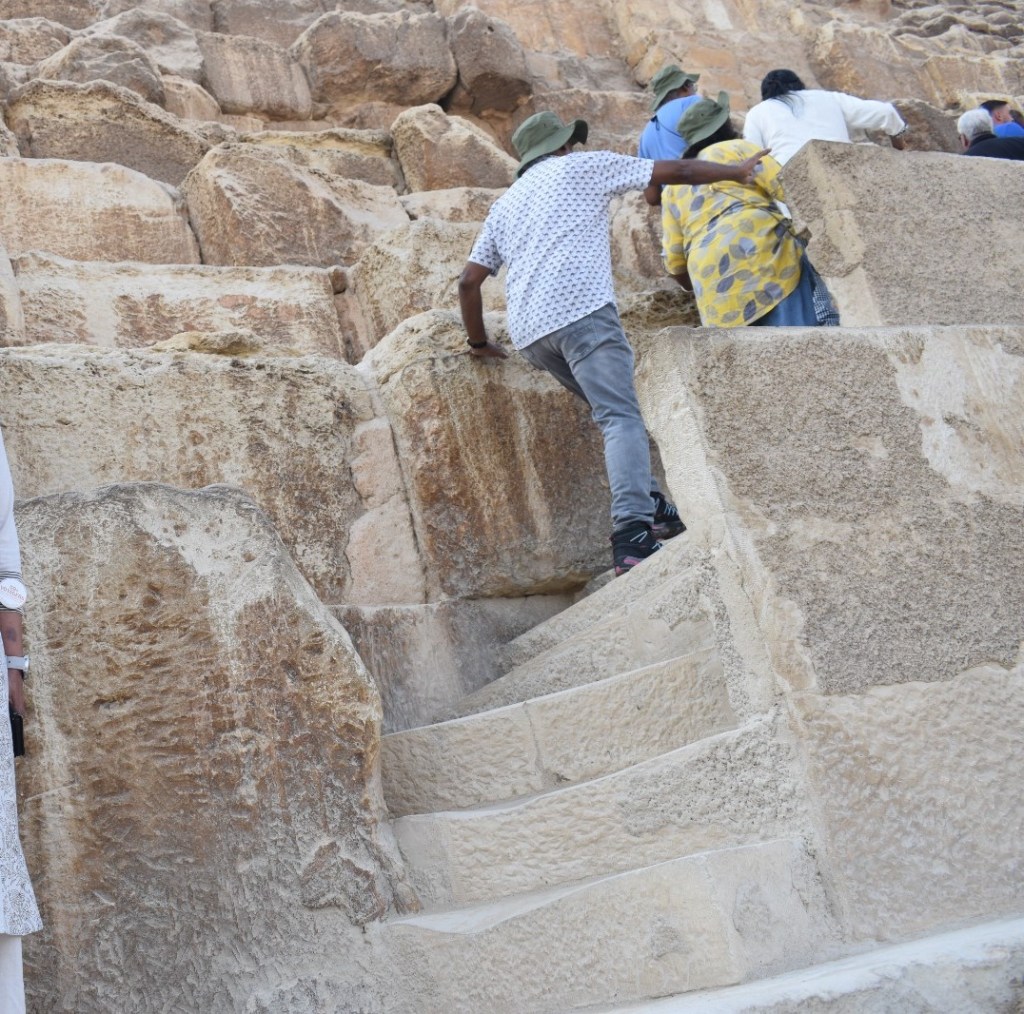
The walls are made up of irregular stones, many of them showing signs of wear and tear.

The blocks that make the walls of the pyramid and the steps leading inside

There are two openings on the pyramid from where one can enter to reach the final burial chamber. The lower one which was created later is the one through which tourists are allowed to enter. It is called Robbers Tunnel.

The two entrances

Climbing the steps to reach the entrance is itself quite difficult with the height of the stones. After we entered the pyramid, it was a narrow passage with steps and people going up and down; it was like a traffic jam. The closed passage gives one a claustrophobic feeling apart from the humidity and sweating which can be uncomfortable. After the steps, there is a ramp and climbing that was also challenging. After the ramp is a very narrow passage where one has to literally crawl for a few meters before we enter the King’s Chamber. This is the burial chamber where the empty sarcophagus is seen.

Just entering the pyramid

The steps and narrow passages inside the pyramid

Inside the King’s chamber with the sarcophagus behind

The empty sarcophagus

After viewing the sarcophagus we made our exit from the pyramid through the same passage and were very happy to be finally outside with fresh air!!

After all of us had returned, we visited the Panorama Point. That’s the place where all the pyramids can be seen together and offers good photo options. (The pyramids are so huge that its difficult to get them all in a frame from close up)

Panorama point from where all three pyramids can be simultaneously visualized

Here there were plenty of camels available for taking camel rides.

Camels ready for rides

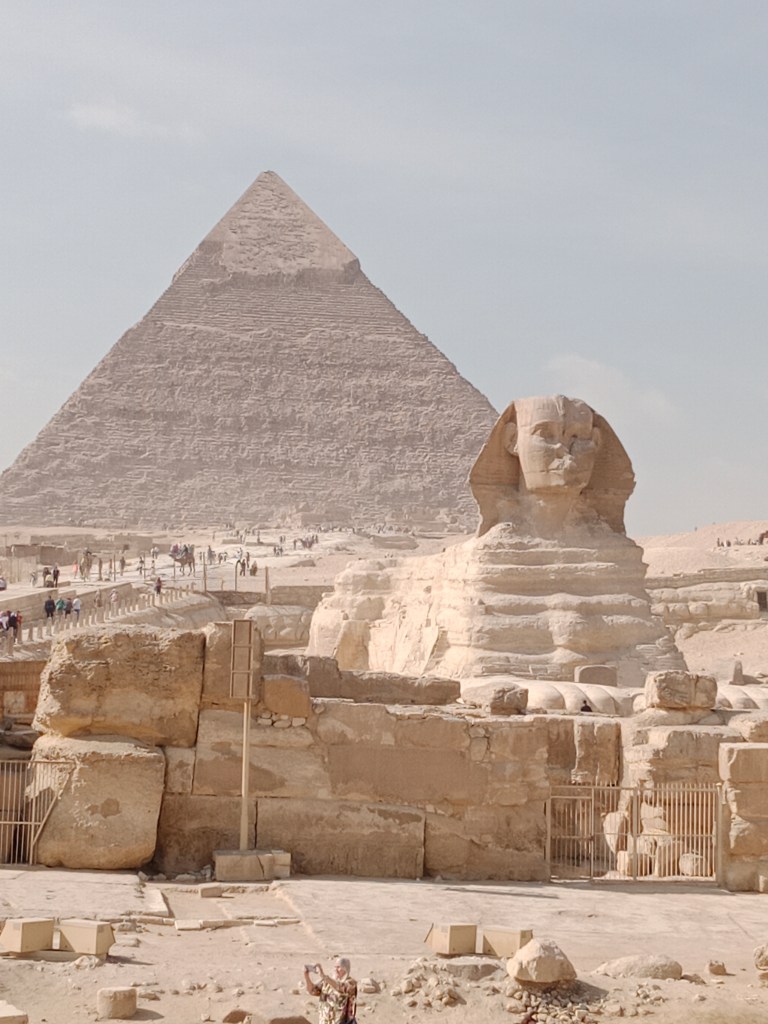
After some pictures at panorama point, we visited the Sphinx which is actually associated with the pyramid of Khafre.

The Great Sphinx front view with the Pyramid of Khafre behind (note the intact apex)

The side view highlighting body of lion and face of man

In the sphinx complex there was another peculiar feature. There were extensive fields of flat topped funerary structures. These are the Mastabas, which are arranged in a grid fashion and were used for burial of the relatives of the kings or officials. These smaller tombs symbolized the social inequalities between them and the kings .

The Mastabassmaller tombs for the lower ones on the social ladder

After an exhaustive trip to the pyramids, we boarded our bus and continued our journey to other interesting Egyptian destinations.

The Sound and Light Show

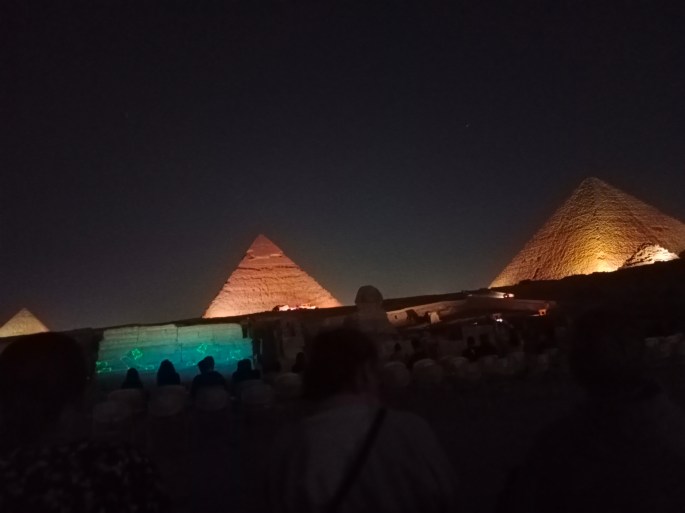
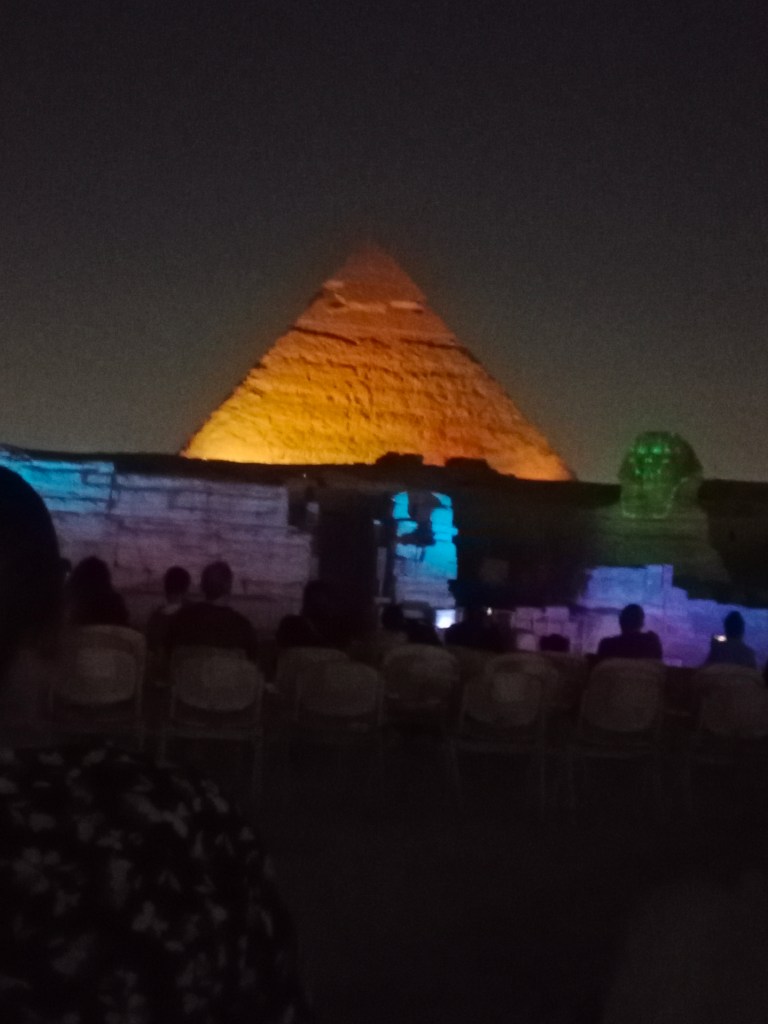
Late in the evening we revisited the pyramids for a spectacular sound and light show which took us through the various important events in the history of these massive creations

Enjoy the pictures and video below

Video of the sound and light show

It was a once in a lifetime experience visiting this ancient wonder. I hope you enjoyed the visit to the Pyramids.

From Giza we moved on to Aswan. See you next week with more from Aswan.

Till then, do subscribe, like and comment.

Uncovering Alexandria’s Hidden Catacombs

Our first destination in Egypt was Alexandria and the last episode covered most of the sites we visited. However, the catacombs or underground tombs in the outskirts of Alexandria is where we are going today. Join me…

An insight into the catacombs of Kom El Shoqafa

These catacombs are essentially underground tombs widely believed to have been used between the 2nd and 4th centuries . It was initially intended as the burial facility for one family but it is still not clear how it went on to house numerous other tombs.

An accidental discovery; these ancient tombs are one of the most important archaeological sites here. A donkey wandering along, accidentally fell into the shaft of these tombs and they were discovered while rescuing the donkey. It stands as an excellent example of a combination of Greek , Roman and Egyptian architecture

Soon after this discovery, archaeologists started excavations and found the spiral staircase going around the shaft. At the bottom was a domed circular room known as rotunda.

The term Kom El Shoqafa in Arabic means “Mounds of Shards”. When discovered , the area was strewn with broken clay pots and containers and hence the name. It is believed that the relatives of the dead who visited the tombs carried food and wine for their kin and after offering it to them, broke the pots there leading to the accumulation of such debris.

Our Visit

Reaching the excavation site, we were quite intrigued by the presence of apartment dwellings adjacent to the site. In fact, the whole area is like a courtyard surrounded by buildings; most of them dilapidated .

The central courtyard around which the tombs are located with dwellings surrounding it.

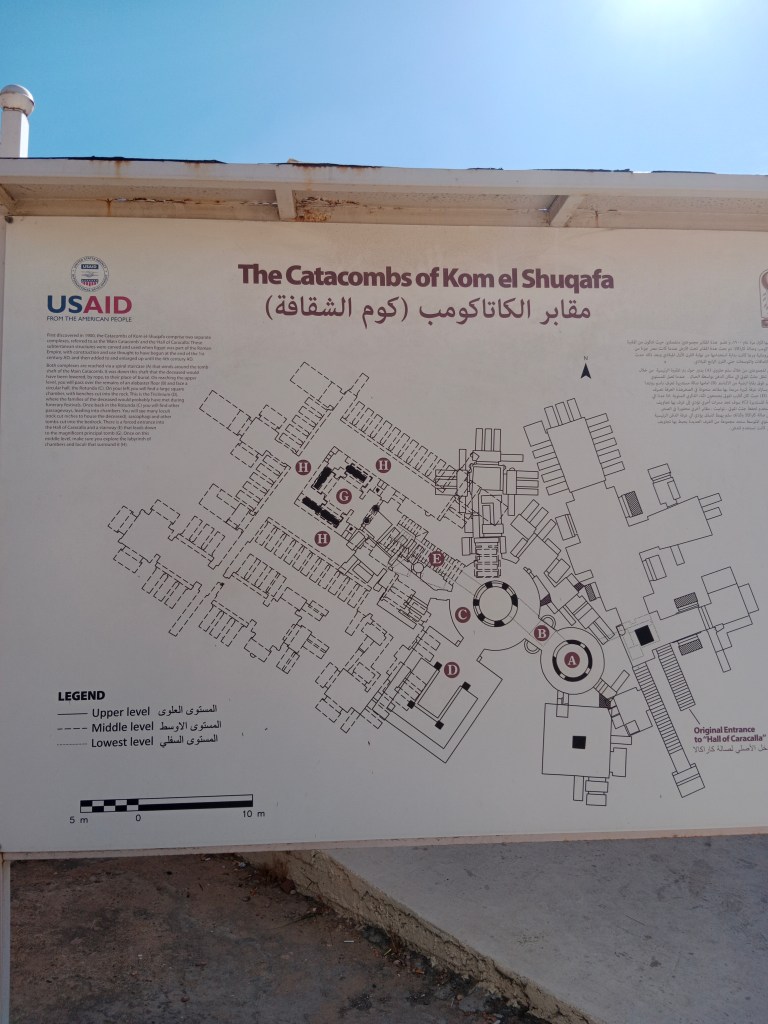
A board outside explains the layout of the tombs

The catacombs consist of three levels cut into solid rock and can be approached via a circular stairway going around the central shaft.

The winding stairway going around the central shaft

Standing at the bottom of the central shaft

There is a domed circular room called the rotunda with several portrait statues having multicultural elements.

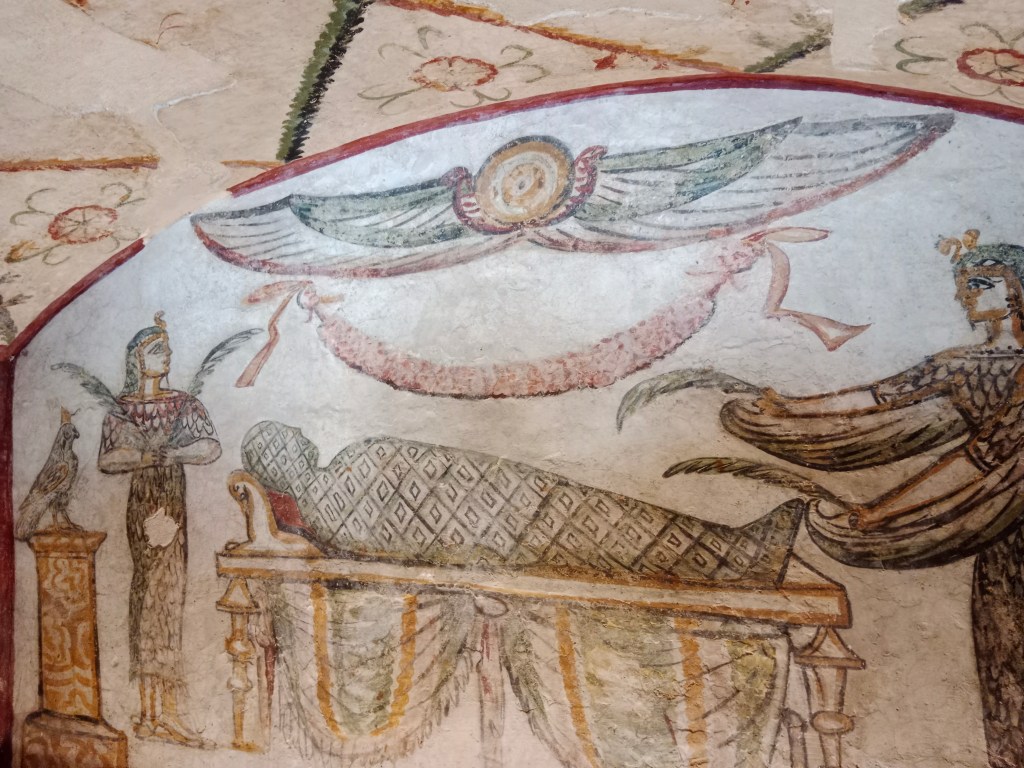
A mummification painting showing multicultural features

The Medusa head on the ceiling appearing to guard the chamber

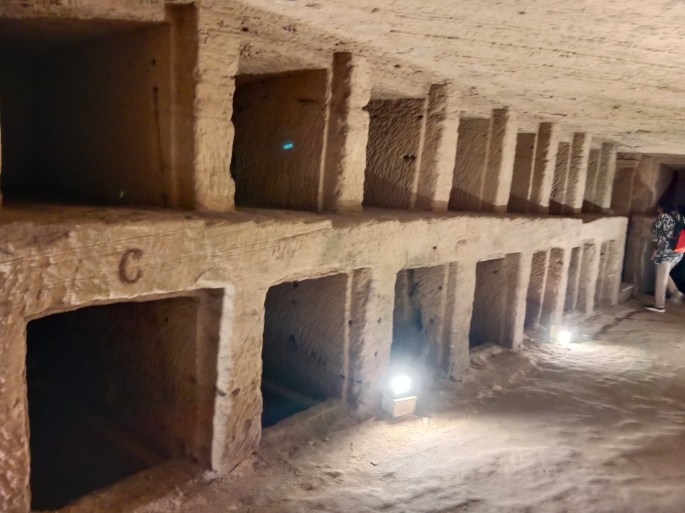
There are multiple burial recesses at various levels.

The hall and the tomb chambers

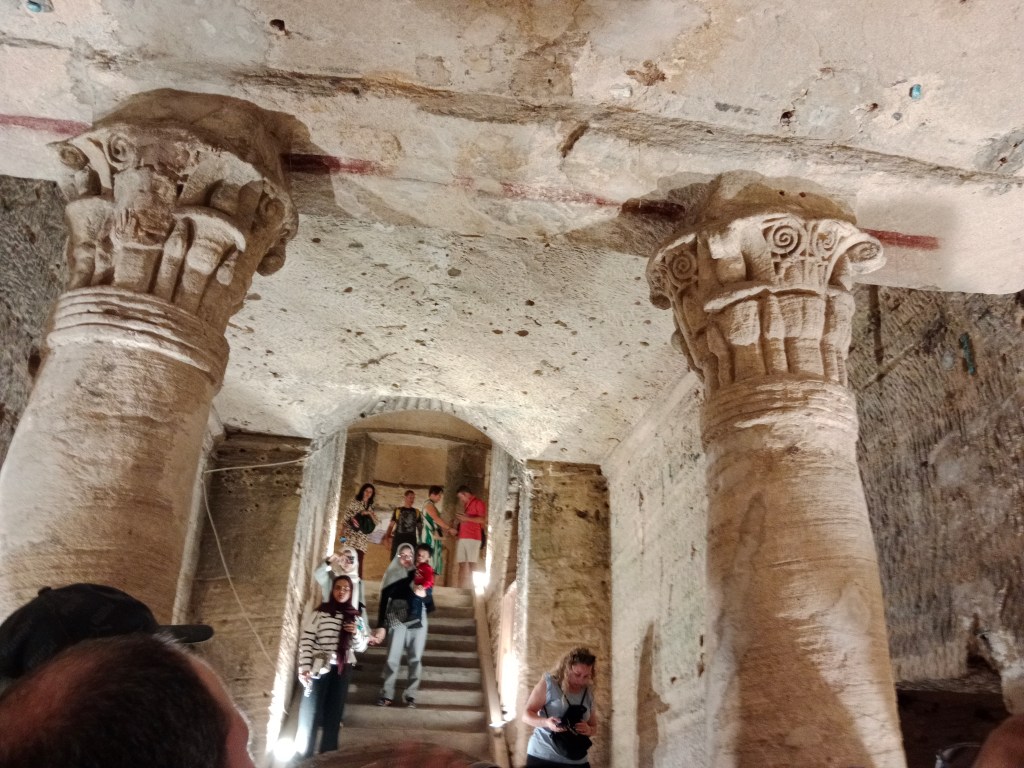
A hall with multiple pillars with a flight of stairs leads to the principal tomb chamber

The hall with pillars leading to the stairway towards the principal tomb chamber

The Principal Tomb chamber

There is a temple like facade in front of the principal tomb chamber with the winged sun disc decorating the top .

Two columns flanking the entrance have a snake sculpture showing features of Greek ,Roman and Egyptian architecture and topped by a shield decorated with the Medusa. The imagery is believed to be to ward off grave robbers.

The entrance with the winged sun disc on top and snake and Medussa at the side.

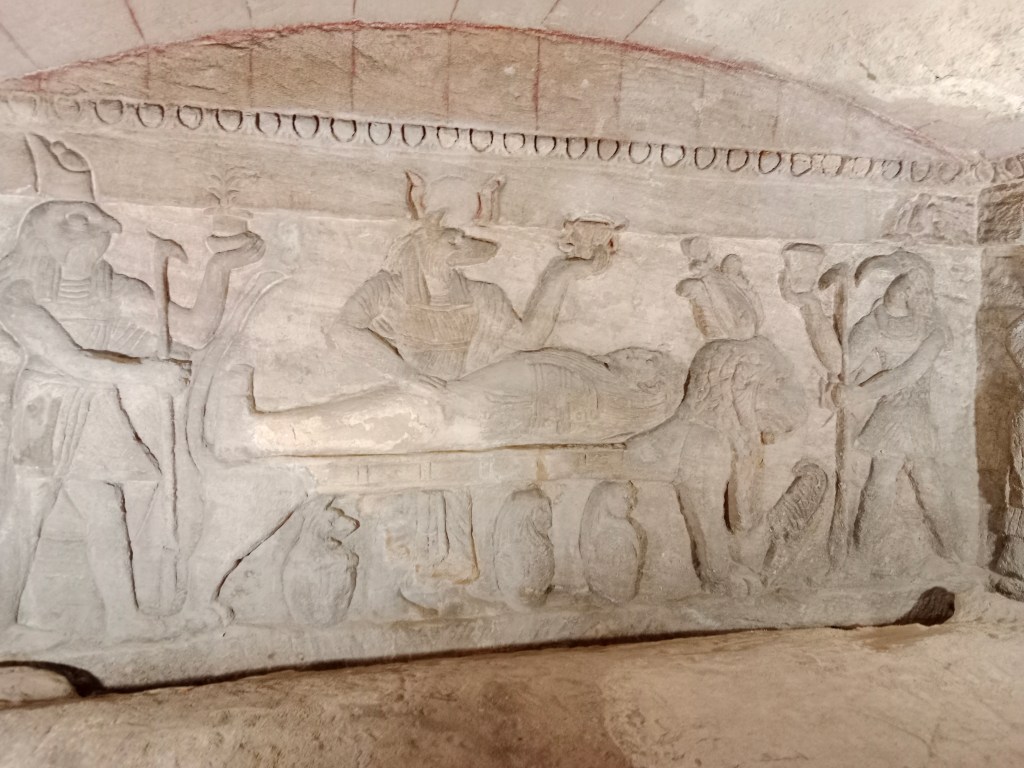
The tomb chamber is decorated with the sculpture of the jackal headed God Anubis (God of mummification) performing a mummification of a body on a lion headed bed. Vulture headed Gods supervise the process. The organs of the body are believed to have been removed from the body and preserved in jars called canopic jars.

The central panel of the tomb chamber showing the jackal headed Anubis engaged in mummification process. Below the bed are three canopic jars used for organ preservation.

On either side are statues of a man and woman carved into the wall again showing mixed architecture. Greek and Roman characteristics with Egyptian decorations are typical of these statues conveying evidence of a multicultural society.

The statue of the lady on one side showing multicultural features

Along the sides of the chamber are three huge stone coffins with unremovable lids. Bodies are believed to have been inserted here through an outer passage way.

On going further down, there are chambers with multiple burial recesses presumably for the commoners.

The hall with multiple burial recesses for commoners

I must admit that the place generates an eerie feeling as one goes from one burial chamber to the other. But the as yet preserved paintings and inscriptions are indeed a wonder.

With mixed feelings we exited the tomb chambers but not before a picture…

Time for a picture before we exited the tomb complex

We moved on to explore the other sights at Alexandria, which have already been covered in the last episode.

The contents of this episode call for an end on a somber note….so let me leave you with that.

See you at the Pyramids next week…

Till then, do subscribe, comment and give your feedback…

Exploring Alexandria: A Rich Tapestry of History

Our first destination at Egypt was Alexandria, the second largest city of Egypt lying on the Mediterranean coast. The city was founded by Alexander the Great around 330 BC and was the capital under Ptolemy and the other successors of Alexander including the period of Romans till the Muslim conquest of Egypt in 641 AD. It must be mentioned here that the city was also a major center of Christianity.

From the 18th century, it grew to be a major industrial center and shipping hub due to the proximity to the Suez Canal.

Multiple invasions and wars had ensured that most of the ancient city has been destroyed and what we see today is whatever little was left and what has been rebuilt in modern times. Many of the historical and architectural monuments we visit today at Alexandria are the result of excavations and attempts at conservation.

The most important sight is the underground tomb complex dating back to the 2nd and 4th centuries known as the Catacombs which we visited. That requires more detailed description and will be covered in the next episode. In this episode, I will cover the other interesting details of Alexandria.

Our Visit

Driving down from Cairo, Alexandria is 220 kms away and it took us around 3 hours to cover the distance. Most of the drive was through open desert land and the landscape looked daunting.

The vast desert….

The road through the desert

Enroute, we had a small refreshment halt ….

The stop enroute….like an oasis!!

We came across small towns all along.

A typical street scene in an Egyptian town

As we reached the outskirts of Alexandria, the streets looked more like that of any modern city.

Approaching Alexandria.

Once we left the main part of the city, the appearance was generally like that of an under developed country with narrow crowded streets, unfinished and unclean exteriors of buildings .

Typical street scenes in Alexandria

Driving through the narrow streets, we reached Pompey’s pillar.

Pompey’s Pillar

A reminder of the Roman past of this area, it is a triumphal pillar in honor of the Roman emperor Diocletian built between 298 and 302 AD consisting of a monolithic Corinthian column . This column once had the statue of the emperor atop it. There are two sphinxes , one on either side of this column.

This monolithic column is 26 mts tall and held a 7 mts tall statue of the emperor on top and is made of pink granite. There are some Greek inscriptions at the lower part of the column.

The connection of this pillar to the Roman politician Pompey is not yet clear though it was believed in the Middle Ages that the his ashes were in a pot on the column.

The Pompey’s pillar and the Sphinxes (under renovation)

The entire area surrounding this column consists of the ruins of the Serapeum, an ancient Greek temple dedicated to the God Serapis. The God Serapis has a mix of characters of the Egyptian Gods, Osiris and Apes and Greek Gods Zeus and Dionysus.

The temple is believed to have been looted and what remains today are only the ruins….some broken pillars and stones. There are underground tombs too.

The ruins of the Serapeum

Heiroglyphic inscriptions

After visiting Pompey’s Pillar, we proceeded for lunch at a local restaurant with views of the Mediterranean sea.

Lunch with a Mediterranean view….

Our next halt at Alexandria was at the Library.

Bibliotheca Alexandrina

This is actually a library and cultural center overlooking the Mediterranean Sea at Alexandria. There was an ancient library in Alexandria which was one of the largest in the world. The revived library inaugurated in 2002 contains space for eight million books and a reading area of 20000 sq mts on eleven cascading levels. It also houses a conference center, specialized libraries for the blind, museums, art exhibitions and a manuscript restoration library and a planetarium.

The outer wall is made of grey granite with inscriptions in 120 languages.

The exterior of the main building with inscriptions in 120 languages

Once inside, there is a model describing the unique shape of the building.

The model depicting the unique shape of the building

The planetarium at the complex

The main reading room stands below a glass roof shaped like a sundial illuminating the room equally throughout the day.

The spacious reading room

Sharing some pictures of the exhibits in the museums

Bust of President Sadat and some of his personal items in the Sadat Museum

Bedouin jewellery and a papyrus painting

One other unique display was of the covering of the Kaaba (holy shrine) of Mecca.

The covering of the holy shrine in Mecca

Driving from the library towards the Citadel of Alexandria, the views of an Alexandrian evening by the sea were beautiful…

An Alexandrian evening by the Mediterranean

Qaitbay Citadel

The Qaitbay Citadel or the Citadel Of Alexandria is a defensive fortress on the Mediterranean coast. It lies at the site of The Lighthouse of Alexandria which was one of the wonders of the Ancient World.

The lighthouse of Alexandria called the Pharos of Alexandria was built during the reign of Ptolemy II (280-247 BC). It was one of the tallest man made structures of that time .The lighthouse was damaged during multiple earthquakes that rocked the area between the 11th and 14th centuries.

The citadel was built at that site by the Mamluke Sultan Qaitbay in the 15th century as part of his coastal defense against the Turks. It functioned under the Ottomans but gradually fell into neglect. In the 20th century, the Egyptian Antiquities council restored it. An Egyptian Maritime Museum also functions here now.

The Citadel as seen across the bay

The entrance leads to a central courtyard, with the main fort towards the sea.

As one enters

The central courtyard

The main structure is a square building with towers on the four corners giving it the typical look of a fort. There are three levels and windows at different levels for shooting in case of attack.

The Citadel located on the seaward side of the central courtyard

Inside the main building are a series of halls and corridors with distinctive architectural style.

As one goes up the ramp built along the side, one reaches the seaward side offering great views of the Mediterranean sea.

The ladies pose for a picture with the Mediterranean sea behind.

By then, the sun was setting on Alexandria and we had a long drive back to Cairo. So we all got back into the bus and reached Cairo looking forward to another exciting day of the tour…. to the catacombs of Alexandria

See you next week at the catacombs. Till the, do give your comments and feedback.

Discovering Egypt’s cultural ethos on a dinner cruise

Egypt and it’s history had always fascinated me and it was in November 2024 that I had the opportunity to visit Egypt . It was a journey that led me through a lot of history, taking me to some gigantic monuments and temples that were waiting to tell me the story of lost civilizations. The sheer vastness and expanse of some of these monuments held me in awe and at times kept me thinking of human nature; of how entire civilizations were erased from the face of this earth. The ruins led me to stories of human greed and at the same time, the excavations and restorations told me a story of man’s resolve and determination. As I start this series on Egypt, I hope to unfold many of these facets in front of you.

From my introductory remarks, it should be clear that the episodes that follow will be loaded with information on the gigantic monuments built by the pharaohs over many centuries. Most of them considered themselves as intermediaries between God and the commoners. Some considered themselves as God and that explains temples with colossal statues of kings. The belief in life after death had led most of them to bury the dead with all materials needed for an after life. That explains the vast amount of treasures unearthed during excavations. The richness of their civilization will leave one astounded. So gear up for some exciting episodes to follow. Let me start on a lighter note focusing on their music and dance. Let’s go….

Flying in to Cairo, I was fortunate to have a window seat and that gave me the opportunity to witness the infinite expanse of sand and sand dunes as we cruised over the Sahara. A patch of blue caught my attention and as we neared it, I could see it was a water body with ships . This was the Suez canal, an economic lifeline of Egypt.

The Suez Canal (the white spots are ships)

Landing at Cairo, I almost felt I was landing in a desert…even the runway was sandy and seemed to merge with the desert landscape…

The desert landing….

I started this journey with a group of 24 senior citizens and a young and charismatic tour manager.

Starting our journey through history….at Cairo airport

After the formalities at the airport, we boarded the bus to our hotel at Giza close to the pyramids. The Pyramids slowly came into our view as we approached Giza.

The first views of the Pyramids

We checked in to our rooms and settled down for sometime .

At the hotel entrance with my roommate

Soon we were on our way for a dinner on board a cruise boat. The wharf from where the cruise started was all lit up and decorated. The decor there highlighted some of the architectural features of the monuments we were to visit in the next few days.

Our group near the wharf entrance

The decorated wharf side. A model obelisk and a sphinx can be seen.

We walked on to the illuminated cruise boat

Entering the cruise boat

Taking our seats we proceeded to the buffet table to collect our food. The spread was good with a variety of Egyptian food including the famous Koshari , Falafel and Hummus. Koshari is rice with some lentils, falafel is similar to our dal vada and hummus is more like a dip. The rice we had throughout our trip was a little sticky and had a different flavor.

The dinner spread with falafel, hummus and pita bread

Enjoying the dinner on board the cruise boat

Once we had settled down, the boat started cruising on the Nile letting us savor the night views of Cairo. The boat had two decks and we could go up and enjoy the views too…

Night views of Cairo from the cruise boat

Meanwhile, the entertainment on the boat started off with an Egyptian song and very soon, the guests also joined in for a dance.

The singing and dancing added to the fun of the cruise

The ace drummer

A graceful belly dancer glided on to the stage setting many a heart on fire!!….Belly dance is a very famous dance form of the middle east and some parts of Africa and she danced gracefully and enthralled us with her movements…

The twist of the belly!!!

A Sufi whirling dervish performance was the last of the cultural treats of the evening. He whirled around with such perfection and grace that made me wonder how me manages to not lose his balance…

The dervish dance

Having immersed ourselves in the cultural and culinary feast we had not realized that the boat had reached back at the starting point. We soon alighted from the boat and took our bus to the hotel.

With instructions on the next days plans, given by our tour manager, we all rested for the night looking forward to an exciting stay in Egypt..
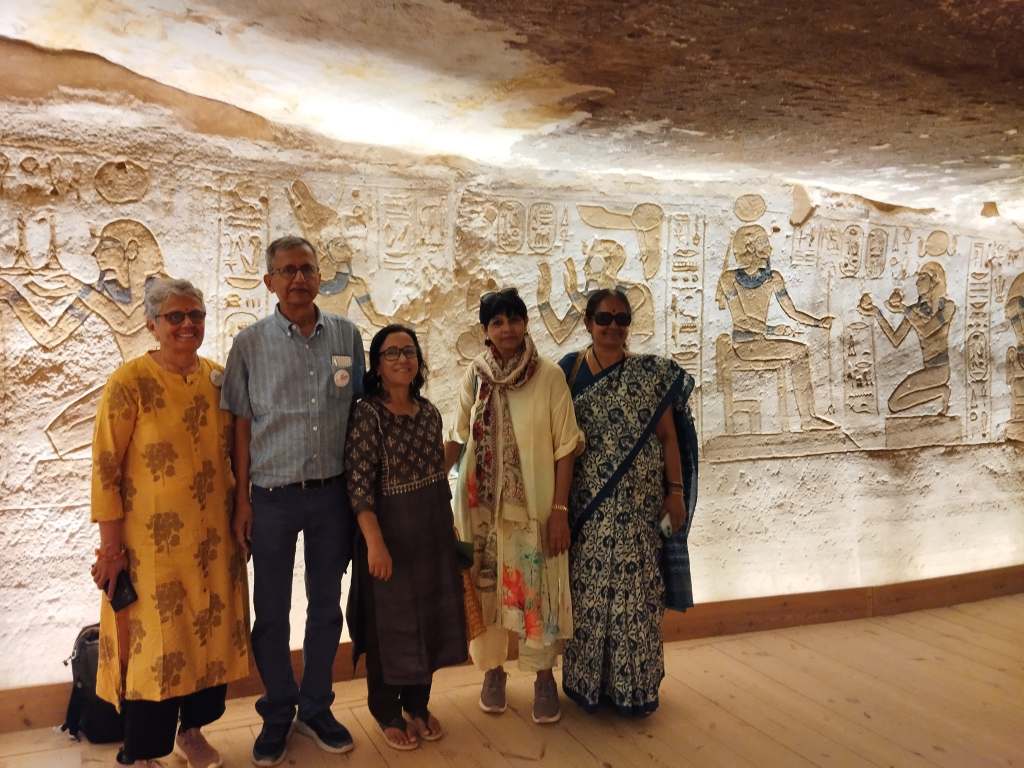
Our next day tour was to Alexandria….so see you next week at Alexandria. Till then, do subscribe, like and give your comments.

The Panacea Book Club: Adventures Beyond Reading

A slight detour from my usual blogs, where the focus is on destinations and the views along the way; this post is on a bonding trip. A trip to the outskirts of Bangalore by members of our book club we lovingly call The Panacea.

The Panacea

The dream child of our founder member Dr. Minati, the Panacea is a book club in our housing community. We are around fifteen avid readers who meet up once a week and discuss the book we have read over the week. This opens up many discussions and over the weeks, we have developed a healthy reading relationship. This not only fosters our interest in reading but gives us insights into the books read by others enticing us to read more and more. We also write reviews of the book in the book club archives making it a ready reference for others.

Our weekly meets

Nourishing young minds

Social media has really stolen the place of books from the hearts of children and we try to get it back by having a silent reading session once a week with focus on the children of our community. After the session, the children are encouraged to talk about their reads giving them a platform to develop their public speaking skills. Most of us find this very fulfilling and look forward to these sessions which are really therapeutic.

One of our silent reading session with the kids

In addition to this we visit Literature festivals, book fairs and pick up books of our choice. Literature festivals facilitate our meeting up with favorite authors. Let me share some pictures of the activities of The Panacea..

Bangalore Literature Festival

With popular authors

A Bonding Trip

With our camaraderie really building up, we decided to take an overnight trip to a farm house in the outskirts of Bangalore over a weekend. This provided us an opportunity to connect more with each other and enjoyed our reading session in serene surroundings.

Setting off from our community in a mini van, we reached the resort by noon. One of our members had brought her little one along and she added color to the group.

All set to go

On the way….

We reached the resort around noon and were treated to tea before we checked in to our rooms.

At the resort

After a sumptuous lunch, we took to our favorite hobby….reading. Reading is in our blood and so we enjoyed the afternoon quietness with a book .

Post lunch we took a walk in the farm. It was cool and pleasant and the fresh air of the countryside added to the feel.

The cool walk in the countryside

After the walk, we enjoyed the peace of the sunset…

The sun sets on a beautiful day….

As darkness set in, we were back at the resort with a cake cutting session to mark the success of the club…

Celebrating our success

A reading session followed and each of us were drowned in our books till it was time for dinner. Post dinner, we had an interesting Pictionary session which had all of us in splits…

Pictionary session

She seems to have had enough of us!!!..(or was it just sleep )?

Slowly, the yawns started getting louder and we knew it was time to hit the bed. The sounds of silence from the countryside lulled us to sleep.

Next morning, we got up on time for the sunrise but the cloudy skies cheated us. However we had a long reading session with tea and biscuits.

Morning peace…nature and books

Post breakfast, we packed our bags and started back home .

Ready to leave..

We enjoyed the return drive with a session of Book charades….our own version of dumb charades….

Book charades in progress…

The smiles say it all!!!

After a fulfilling retreat with nature, friends and our books, we returned home with promises to do it again…

This was an unusual blog for my regular readers. Hope you like the spirit of the episode…fun, friends and books.

My series on Egypt starts next week…. see you all there.

Till then, do subscribe, comment and give your feedback.