Unique experiences in Kenya

The last of the series on African adventures; this episode is a sum total of some of the unique experiences we had during this trip.

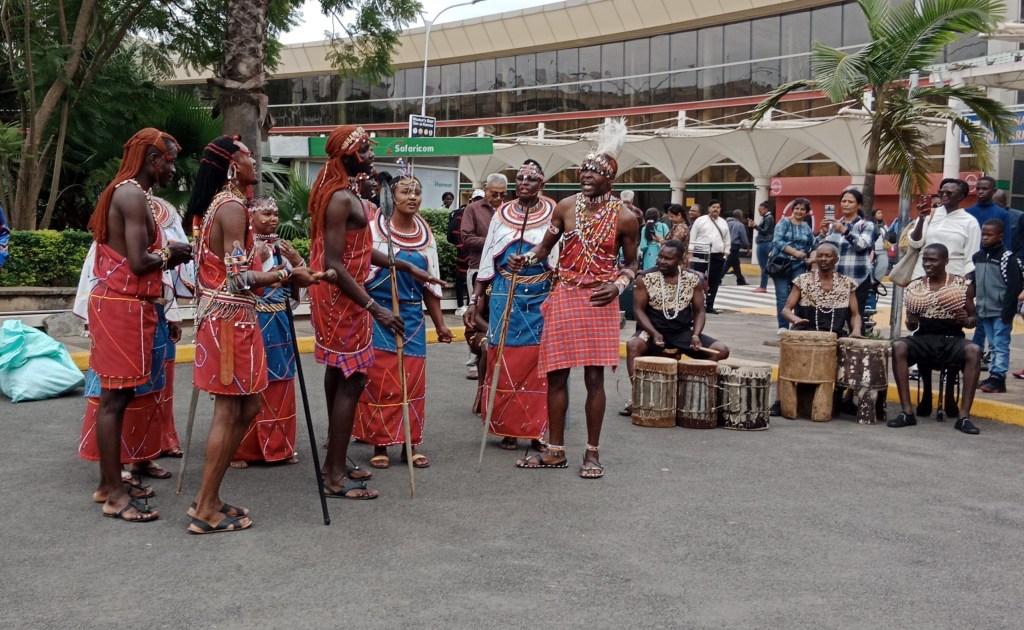
Landing at Nairobi airport in late July at noon, we had a glimpse of African culture right at the airport. After the landing formalities, we exited the airport where we saw a group of locals giving a song and dance performance. The typical dresses and the music attracted us and we spent a few minutes enjoying the performance.
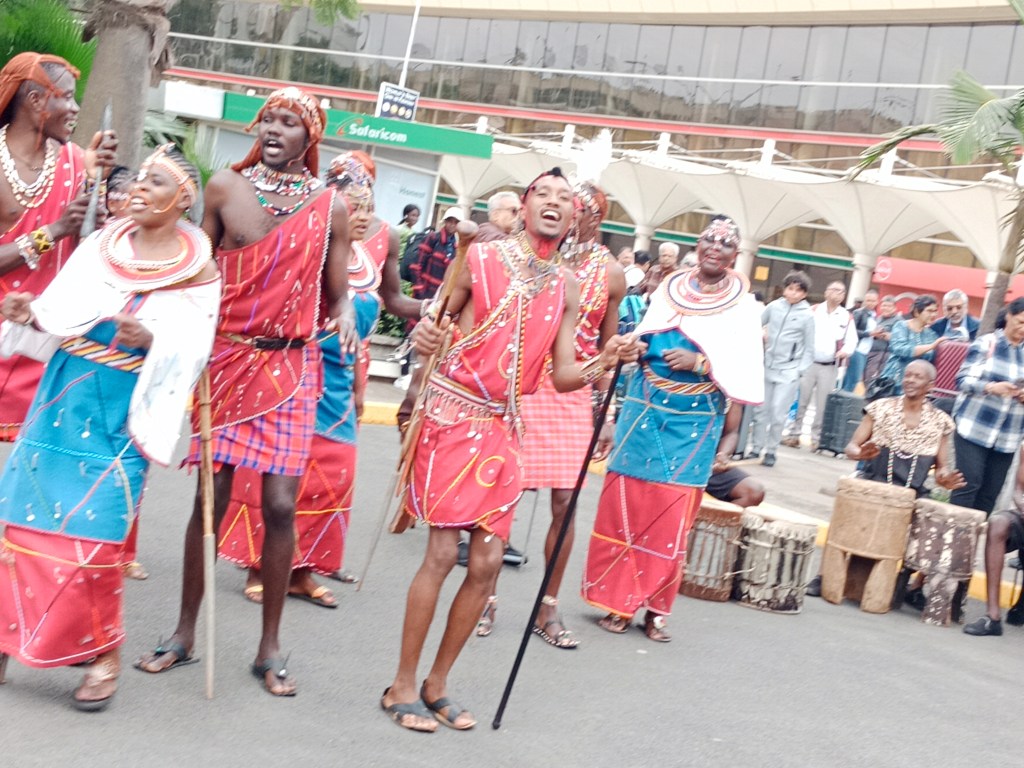
The African dancers at the airport

Click on the video to enjoy the African music and dance

Soon we were met by our local guide and boarded our buses to the hotel. Enroute, there were some toll booths which were heavily guarded with gun trotting security staff, a reminder of safety issues at Nairobi.

We had a fairly comfortable stay at the Hotel in Nairobi and in the evening, a visit to the museum was organised.

The National Museum entrance

The next day we proceeded to Amboseli National Park. Enroute, we passed a couple of small towns and markets.

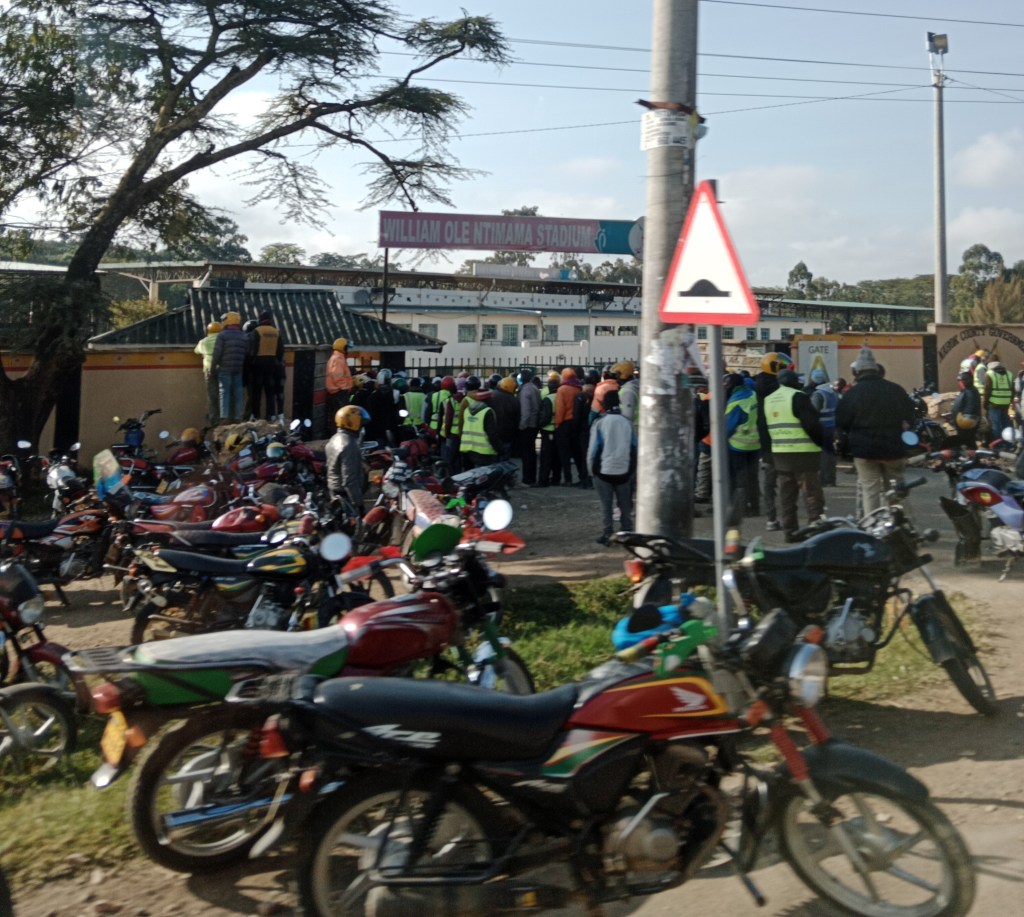
A typical small town in Kenya
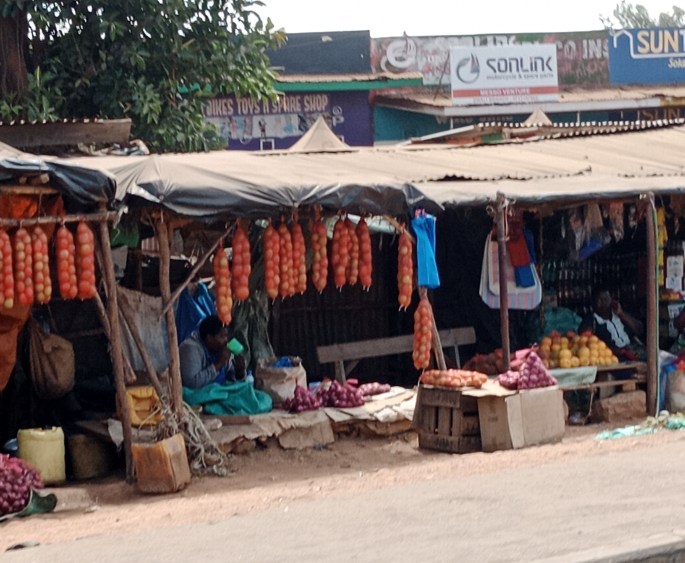
A typical market on the way with colourfully displayed fruits

Locals with their cattle was a common sight along the highways.

Locals herding cattle along the roadside

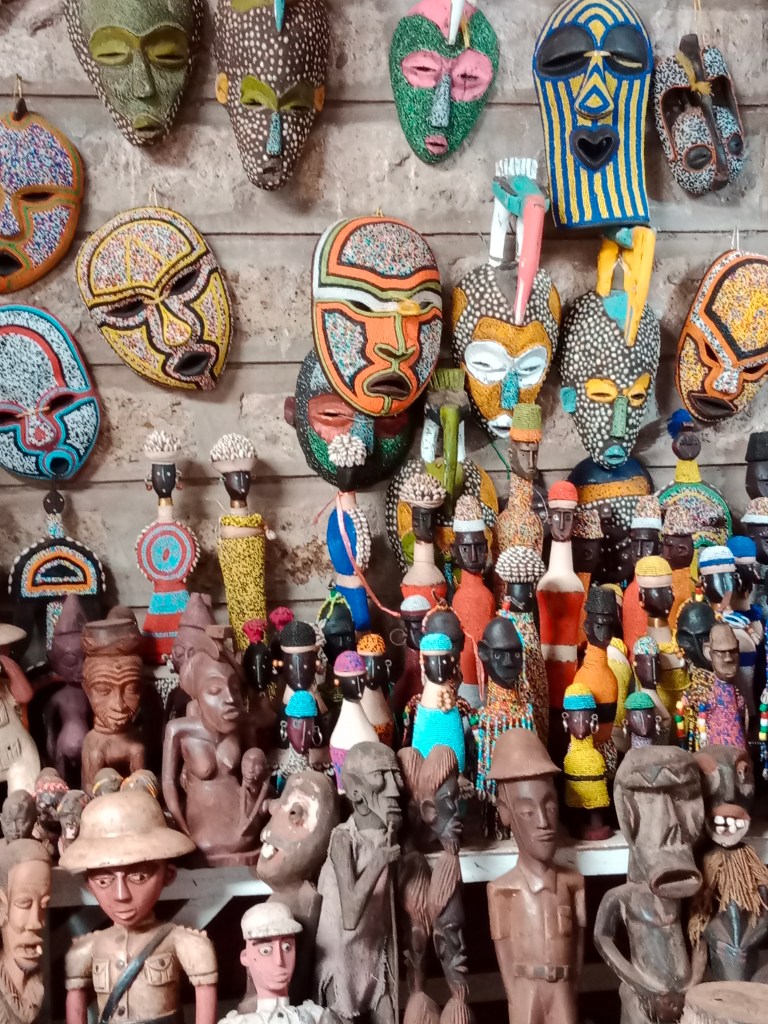
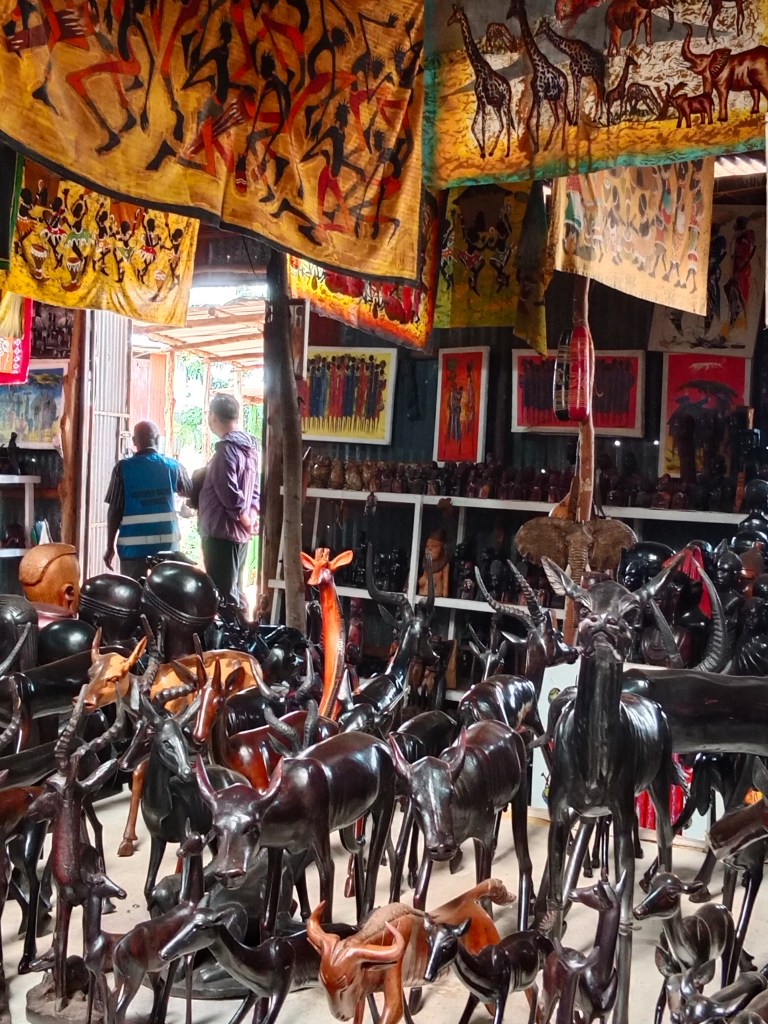
We halted at a souvenir shop for a break….some pictures

Typical African artifacts and drums at the souvenir shop

Wilderness lodges

Reaching Amboseli, we checked into our hotel, The Amboseli Sopa Lodge. Contrary to what you imagine a jungle lodge in the wilderness to be ; all the lodges we stayed in were very aesthetically designed and had all modern facilities while tastefully retaining the wilderness feeling. The other resorts we stayed in were The Naivasha Simba Lodge and Mara Simba lodge. What follows is a round up of the luxury and facilities that we enjoyed in all three wilderness lodges.

Let us have a look at them…

Amboseli Sopa Lodge

Located at the foot of Mt. Kilmanjaro spread over 190 acres of wooded Maasai territory, with squirrels, monkeys and exotic birds as visitors, it was an awesome resort. The overall ambience is typically Maasai with the reception built in Maasai style and featuring Maasai handicrafts. The cottages have also been given a feel of a mud house and lie along thickly wooded passages giving a real wild feel. Some pictures…

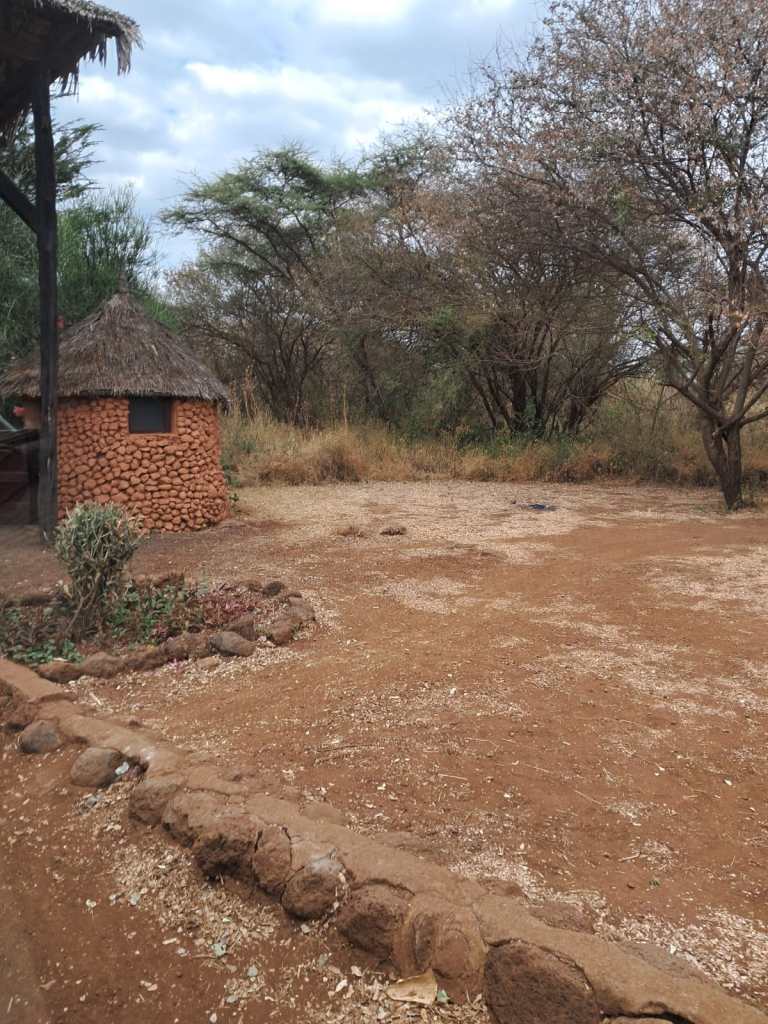
The entrance with a mud hut
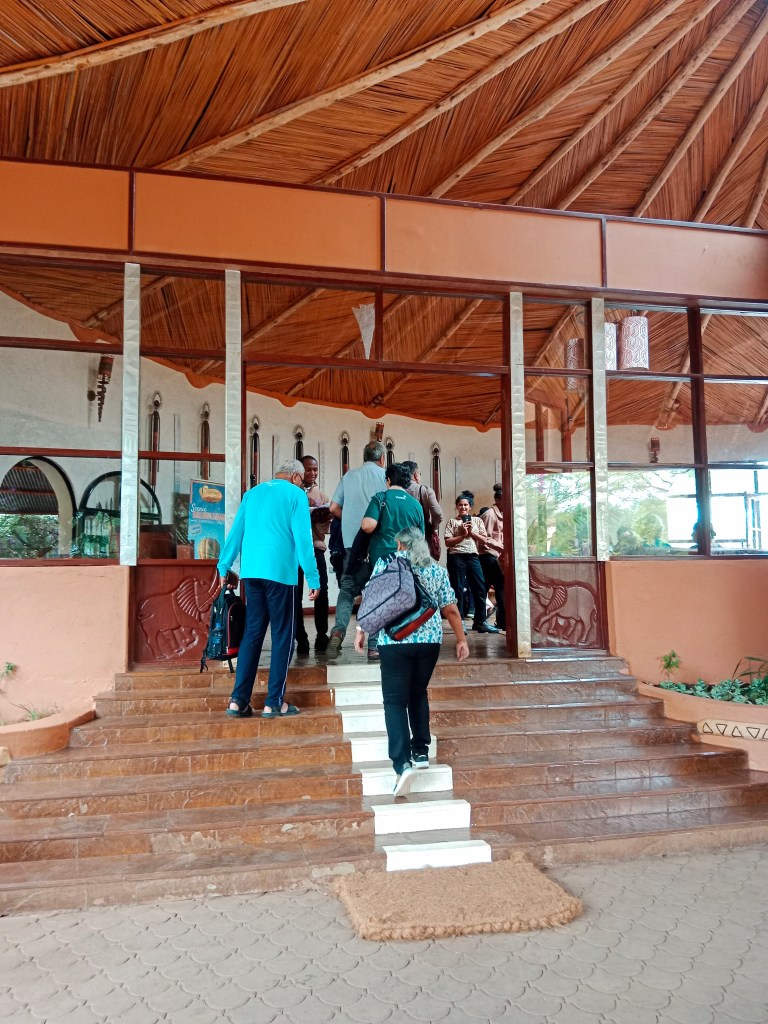
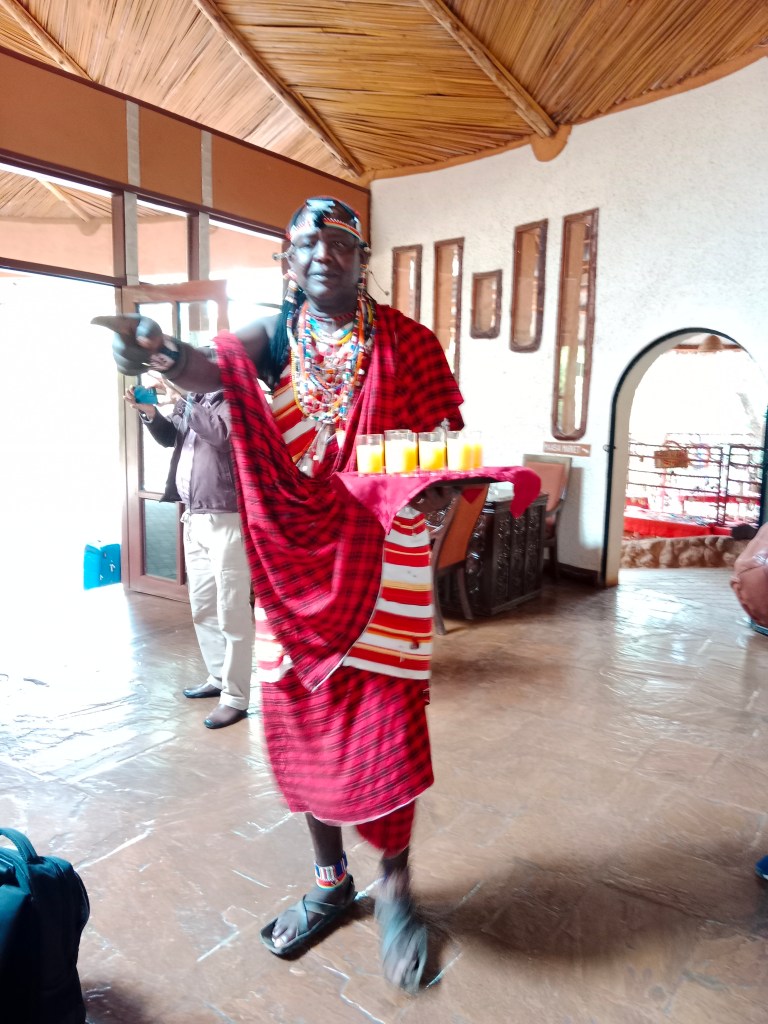
The reception and a Maasai welcome
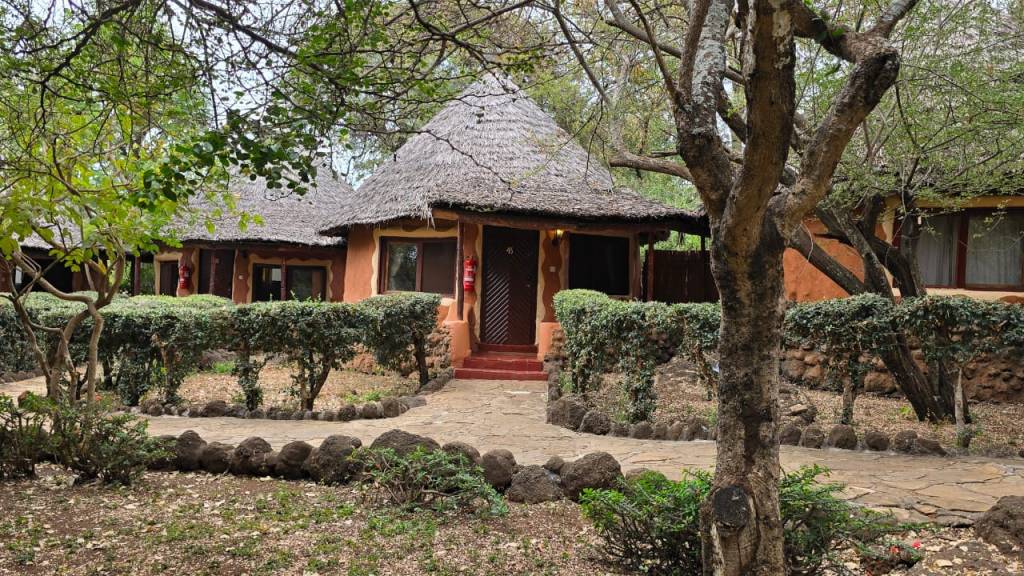
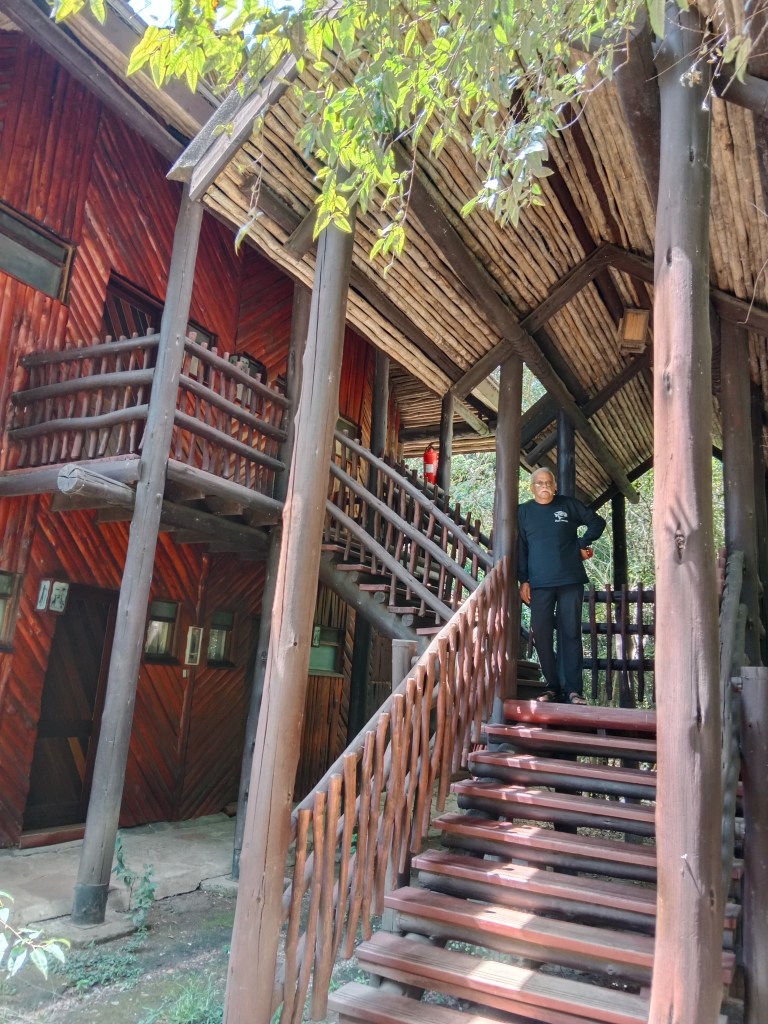
Exterior and interior of the cottages

Inside the cottage a large mosquito net was neatly hung and by bedtime, the net would be promptly opened up for us.

We were advised to take mosquito repellants handy but I must admit we did not see a single mosquito….amazing considering the terrain we were in….

The mosquito net arrangement!!!

Even in the midst of the wilderness, the restaurant, bar and swimming pool had all modern facilities and there was a great outdoor viewing point where we all met up one evening for an introduction session….Truly tradition meeting modernity ….

Swimming pool and the intro session

Earnest Hemmingway, the celebrated novelist had spent a few years in Kenya exploring wildlife and he had built a house which is now used as a bar at this lodge.

“The Snows of Kilimanjaro”, is one of his works based on his African sojourn.

Hemmingway’s Bar

From Amboseli, we proceeded to Naivasha and there again the resort was beautiful. Naivasha Simba lodge, on the banks of Lake Naivasha also offered excellent facilities and ambience.

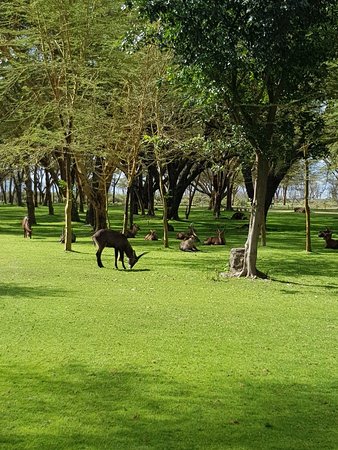
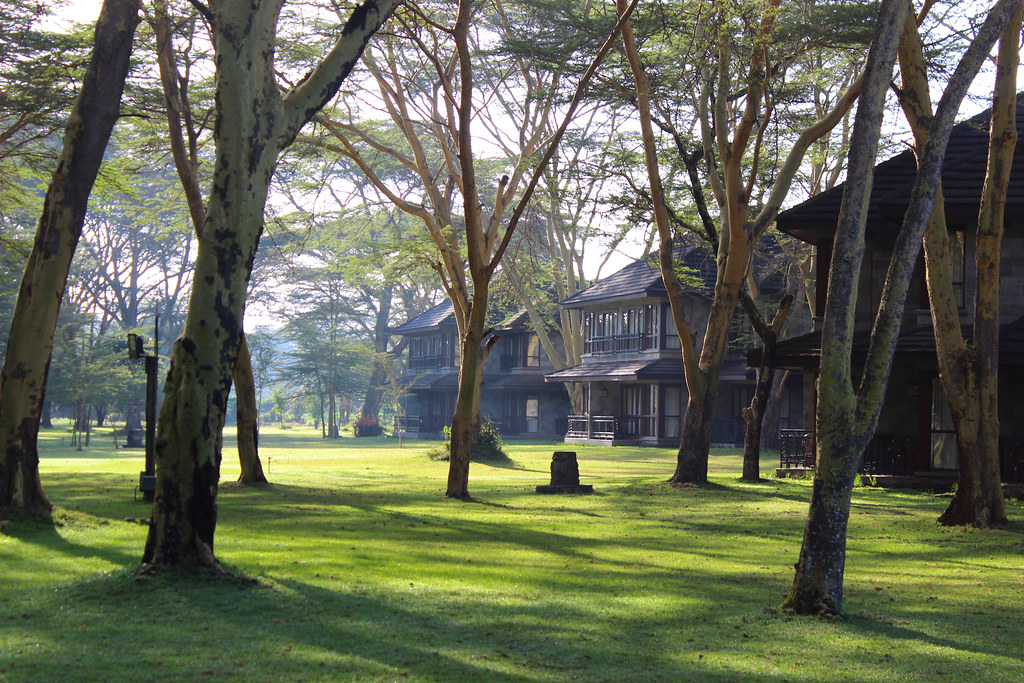
The beautiful exteriors and the lawn overlooking lake Naivasha

The restaurant

At Masai Mara too, the lodges offered world class facilities. The Mara Simba Lodge was aesthetically designed with cottages overlooking the Talek River.
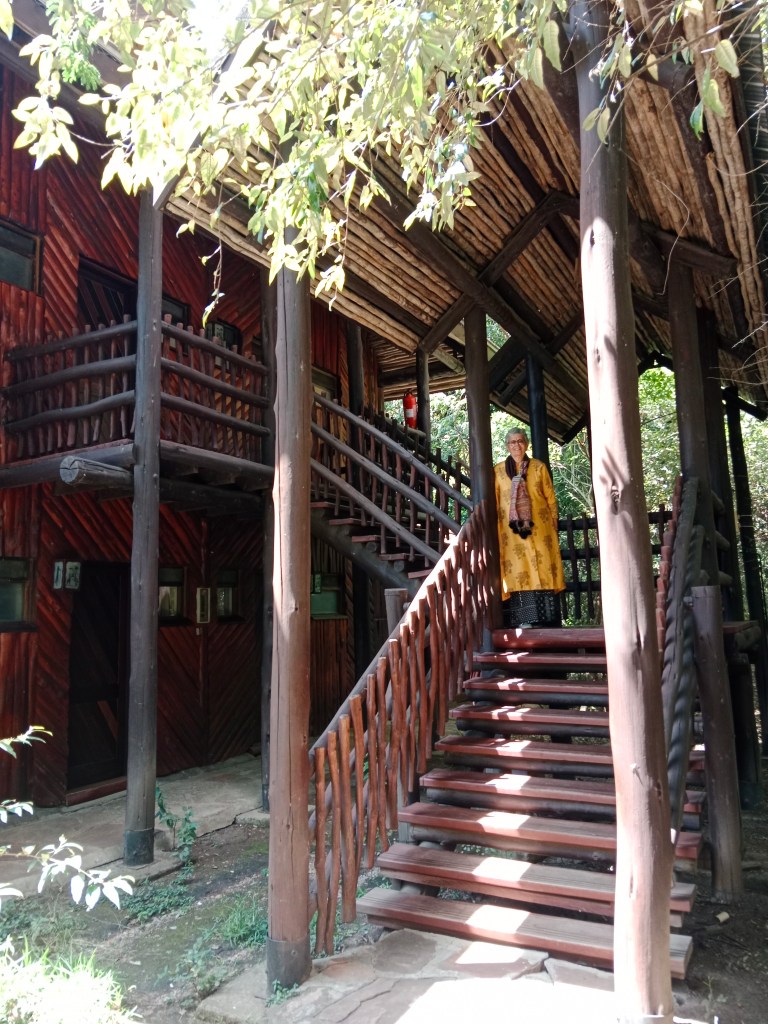
The cottage and Talek river from the balcony

Now let me tell you about some unique experiences we had as part of our safaris in Kenya.

Unique outings

A picnic in the wilderness

During our safari at Maasai Mara we had a full day itinerary with a picnic lunch by a lone acacia tree. That was also a nice experience..

A picnic lunch at Maasai Mara

Tanzania Border

At one point during our safari through Mara, we were at the Tanzania border. That was special, and we posed with Serengeti behind us….
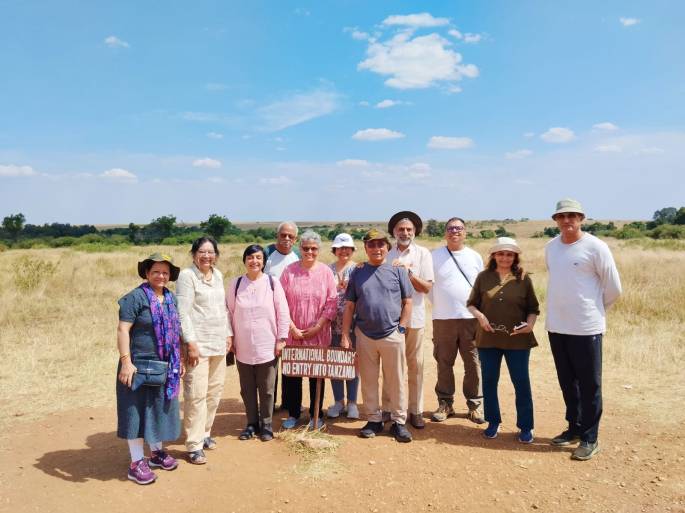
Serengeti was just across….

Maasai Village visit

Visiting a Maasai Village helped understand the local customs better….Some pictures

Our group members pose with a local

Lighting a flame….without a matchstick!!! (Click on video)

Balloon Safari

A balloon safari over Mara gave us aerial views of the wildlife and a beautiful sunrise…

Wildebeest as seen from the balloon safari

Sunrise over Mara (PC: Mr Arun Nathan)

Sundowner

A sundowner get together was organised at Maasai Mara one evening at sunset. Sitting in the open grassland with the vast expanse in front of us, we enjoyed the drinks and snacks as the sun went down.

At the Sundowner

A surprise birthday celebration of one of our co travellers was another experience!
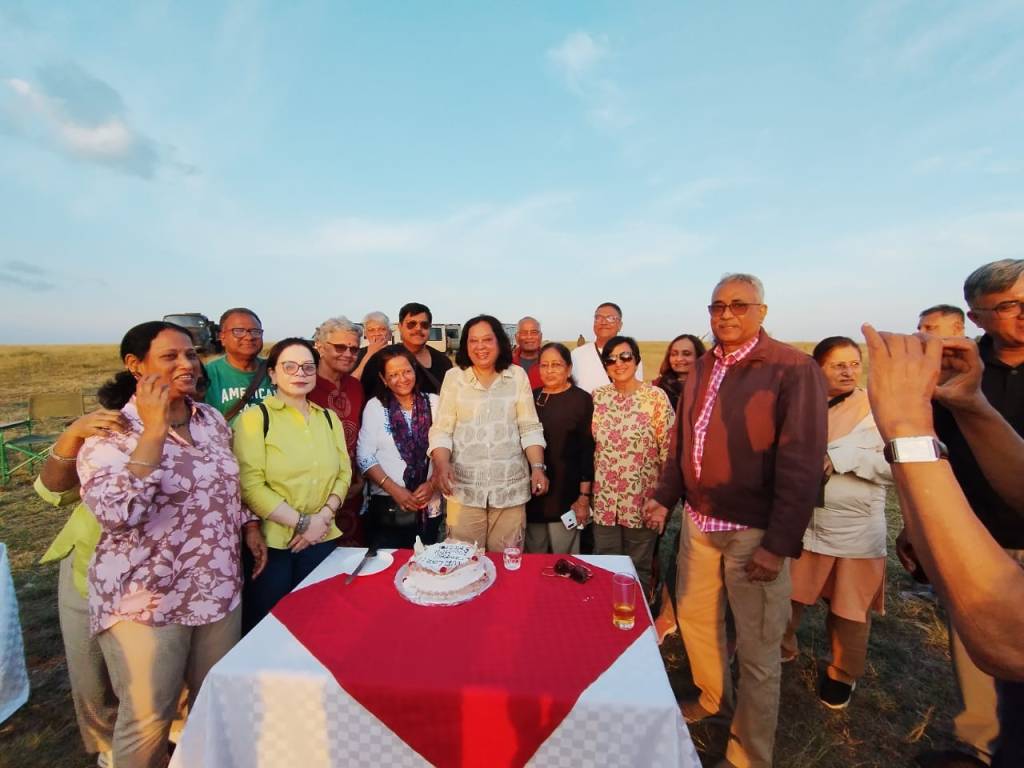
A surprise birthday celebration during the sundowner

The locals came dancing with a cake adding to the charm. Click on video above…

Raising a toast to the setting sun and the wonderful holiday we had….

And last but not the least, let me leave you with an image of a beautiful sunset over Maasai Mara, as I finish the episodes on Africa.

Sunset at Maasai Mara

That brings the curtains down on our African Safari.

Hope you all enjoyed the series. Do give your comments and feedback. Do subscribe if you like….

Insight into Maasai Tribe: Culture, Homes, and Lifestyle

One of the famous tribes of Africa, the Maasai are a Nilotic ethnic group inhabiting parts of Kenya and Tanzania. They are the better known of the African tribes as they live close to Maasai Mara and Amboseli reserves.

Known for their strikingly colourful dress, unique customs and long standing connection to land and wildlife, they are a source of interest and intrigue for people worldwide.

Let us delve into some fascinating details of these people.

They are named after the language they speak….Maa. Maasai literally means one who speaks Maa.

Nomadic Tribe

They are a nomadic tribe and they constantly move across the vast plains of East Africa in search of pastures for their livestock. As such, their homes are always temporary and can be assembled and dismantled easily. This can be challenging but they have learned to live and survive under the harshest circumstances and this is deeply ingrained in their culture and passed down the generations.

Homes

Since they are basically nomadic, their homes are made of easily available materials . They live in Kraals which are circular enclosures with multiple houses. The houses are circular with low roofs and made of mud with cow dung smeared on the outside for waterproofing . The roof is made from twigs and leaves .The biggest house is where the man lives and all his wives live in different houses in the Kraal. The fencing around the Kraal is made of acacia thorns to ward off predators of their livestock.

Women take on the responsibility of building the house. The fencing around is built by the men.

A Kraal with homes inside

A typical Maasai home

Maasai Culture

Maasai society is patriarchal with the elder men taking major decisions and women being considered property. The measure of a man’s wealth is in the number of cattle, wives and children. Owning a large herd of cattle is a matter of pride for the Maasai .

Women are responsible for making the houses and for supplying water, collecting firewood, milking cattle and cooking for the family . Men are in charge of security and the boys in charge of herding cattle.

Newborn children and their mothers are isolated for three months and after this period, they are named after shaving off their hair indicating a fresh start of life in the community.

Circumcision of boys and girls is practised and is an important ceremony among the Maasai. It is considered a passage from childhood to adulthood.

Lion hunting was a vital part of Maasai culture and an indicator of bravery and courage as protectors of the community. But that practice was banned and the Maasai have abandoned this practice and instead turned to conservation of these animals.

They do not have a formal burial and the dead are left outside for scavengers as they believe that burial is harmful to the soil. But this tradition is slowly fading out with many of them resorting to burial practices.

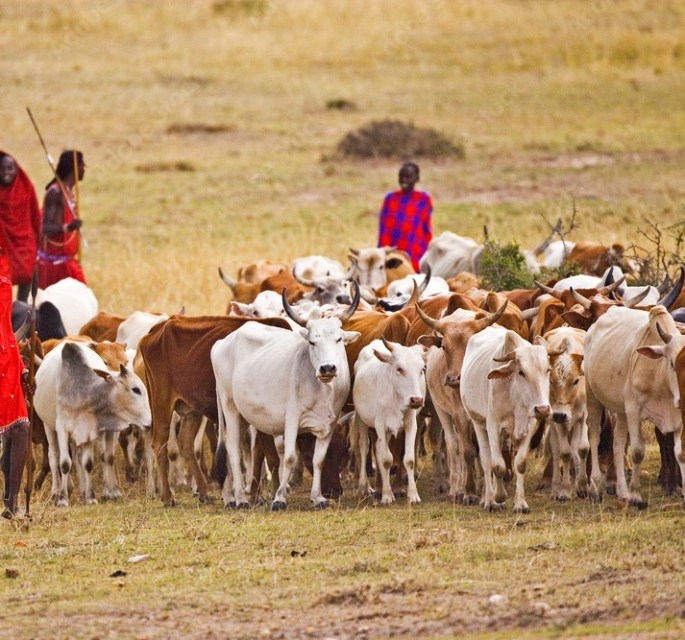
The Maasai and their cattle.

Traditionally they have been pastoral people and even today we find Maasai in traditional dress herding cattle along the highways. The number of cattle that a Maasai owns is a measure of his prosperity and around 50 cattle is considered respectable . Livestock is also a social utility and is traded for other products . Animal skin is used as bedding and cow dung is smeared on the walls of the houses. Their entire way of life revolves around their cattle.

Lack of available grasslands for grazing, disease among cattle , competition among the tribes and delimitation of park boundaries have forced the Maasai to look for other avenues of livelihood. This has led to cultivation of maize, rice and vegetables.

Maasai with their cattle

Religion

The traditional Maasai God is Enkai, a benevolent God who manifests in different colours according to the feelings he is experiencing. Black and dark blue mean that the God is benevolent and red that He is vengeful . Today most of the Maasai follow Christianity and churches are seen in all towns as we drive by.

Diet

Traditionally they consume raw meat, milk, honey and blood from cattle. Fermented milk like buttermilk is also consumed. Milk is a very important element of their diet and milk mixed with blood from the cattle is used as a drink during rituals .The blood is obtained by nicking the jugular vein of the cattle. Bulls, goats and lamb are slaughtered for meat on special occasions. Fruits form a large part of the diet of the pastorals.

Drawing blood from a cow

Of late, they have supplemented their diet with farm crops like maize, rice, wheat, cabbage and potatoes.

Maize and rice fields enroute indicating change in food habits

Dress

Originally, sheep skin and hides were used to cover their bodies but it has now been replaced by cloth. The cloth used to wrap around the body is called Shuka in Maa language. Most common material seen has blue, black and red stripes and is very colourful and striking. Young men wear black for a long time after their circumcision ceremony.

Maasai men in their bright coloured attire

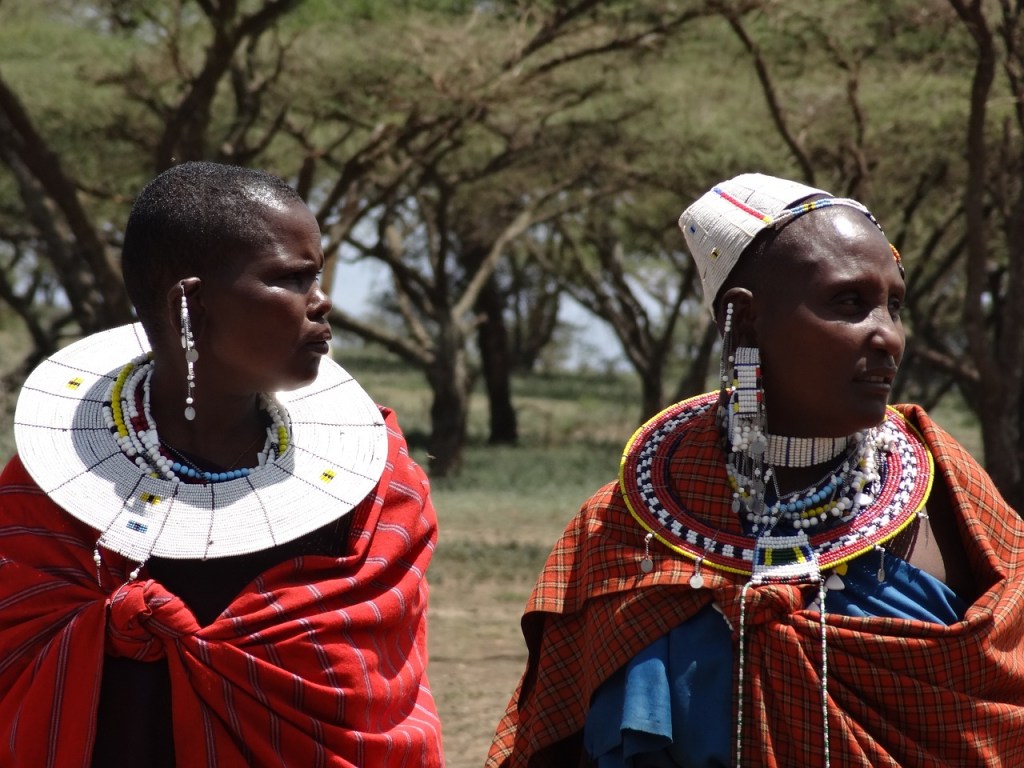
Beaded jewellery is an essential part of the women’s attire. They regularly weave them and wear heavy beaded chains around the neck. Ears are pierced and the ear lobes are stretched with metal hoops on them.

Maasai women wearing traditional jewellery

Hair styling

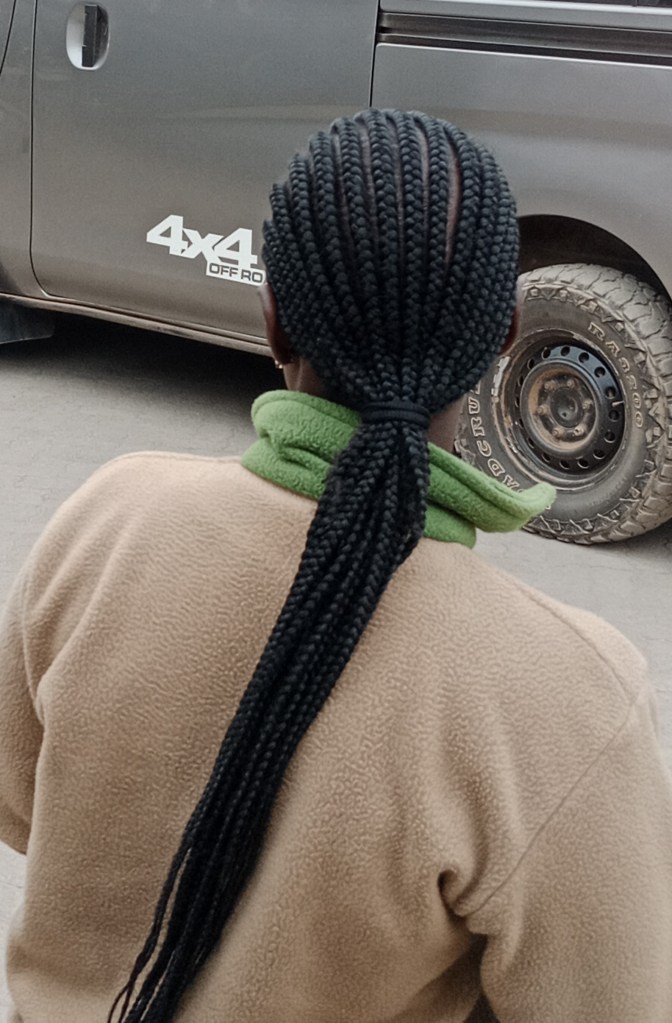
The Maasai hair style is unique and both men and women shave their heads to celebrate circumcision and marriage representing a fresh start to a new phase of life. The braided hair that we see is almost a permanent design done with help of needles and if they plan to change the design, it has to be shaved off.

Braided hair

Music and Dance

Music and dance are an important part of their culture and they always break into a song and dance at every occasion. Their music is very rhythmic and primarily vocal with the leader singing and the others following through. Special drums made of animal hides are also used.

A dance performance just outside Nairobi airport

The Maasai dance is known as “Udumu” or jumping dance which is performed by young men to flaunt their abilities to attract a wife.

Udumu or jumping dance

A song and dance performance

Kudu Horn

A Kudu Horn is a trumpet like instrument made from the horn of the Kudu, a type of antelope. It is a peculiar instrument used here.

Blowing the kudu horn

Weapons

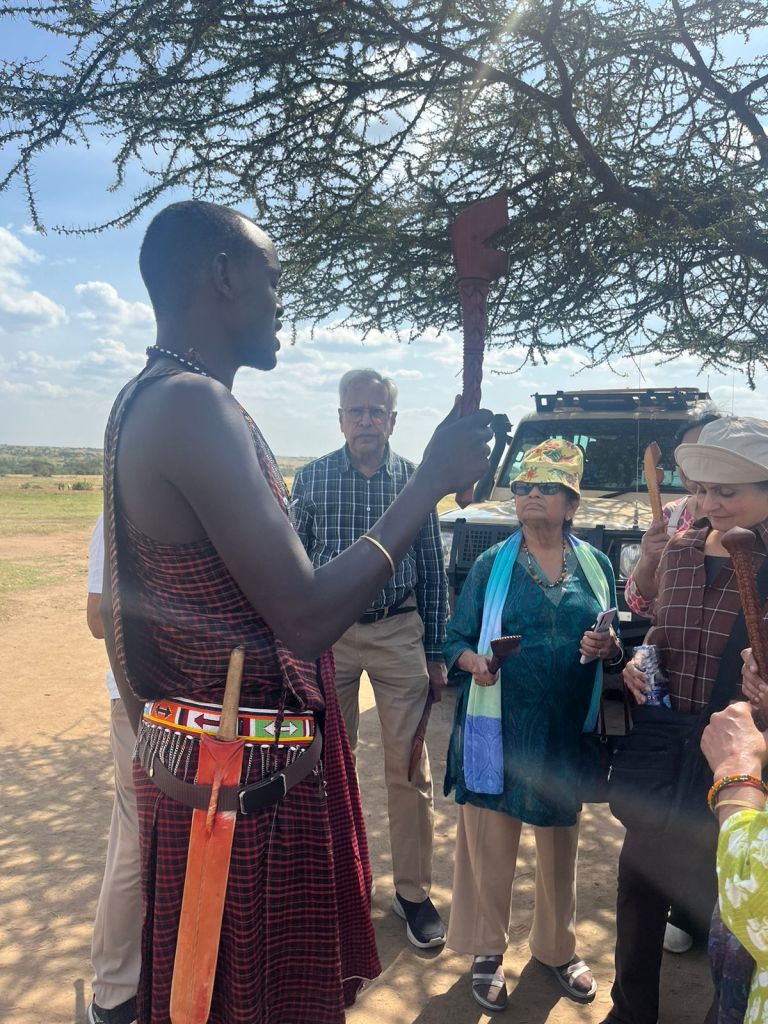
The Maasai youngsters are trained to be warriors and they often carry spears , shields , bows and arrows with them. But common Maasai carry a wooden stick , and a wooden club called the Rungu.

A Maasai explains use of common weapons

Art and craft

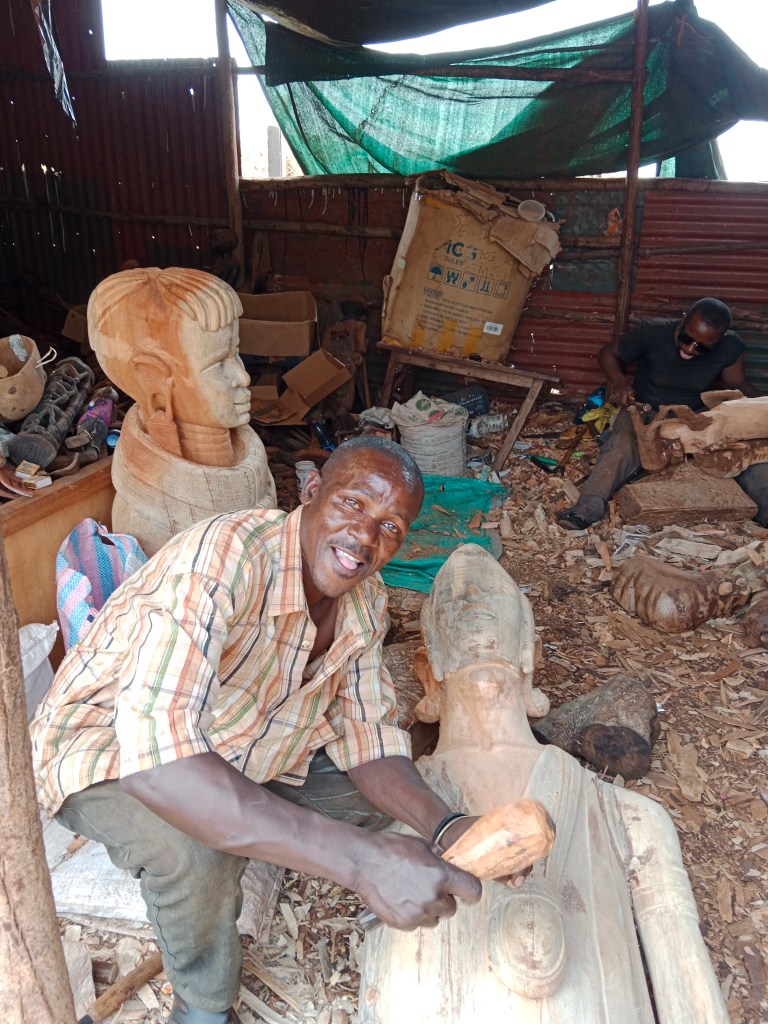
All over the region, lot of shops selling art and wood carving done by the local artisans can be seen. Mostly depicting local life and animals, they quote an exorbitant price though!!

A local artisan at work

Masks and other artistic souvenirs for sale

I have attempted to bring the Maasai people and their unique traditions to you. Hope you had an insight into their lives.

See you next week. Till then, do subscribe, like and comment…

The Great Migration: A Thrilling Natural Spectacle

The Great Wildebeest Migration in the plains of East Africa is one of the most thrilling, intriguing and spectacular displays of animal behavior. The annual iconic journey of millions of wildebeest joined by a host of zebras, antelope, gazelles and topis across the Serengeti (Tanzania) Maasai Mara(Kenya) ecosystem is something every nature lover should witness once in a lifetime and something that will be etched in one’s memory forever.

After calving at Serengeti the animals move towards Maasai Mara before returning once again to Serengeti. Along the way, there is high risk as thousands of animals specially the calves and the weaklings are taken by predators . Thousands are again born , replenishing their numbers and sustaining the circle of life. This whole event is considered one of the Wonders of the World.

Millions of animals migrating

How many of them migrate?

An estimated two million wildebeest , thousands of zebras , gazelles and antelope are part of this migration chain .This is the largest herd movement on the planet and is claimed to be visible even from space. The herd splits into multiple groups with thousands of animals in each group.

Why do these animals migrate?

It is believed that it is in search of greener pastures and water bodies. When supplies of vital resources dwindles in one area, they migrate to other areas . But how they know where to find food and water still remains a mystery. Largely connected to rainfall and weather, the unpredictability of these ; make it difficult to predict where the animals will be at any point of time.

Guided by their survival instinct, these animals cover almost 1000 kms along an age old route. Predators like hyenas, lions, cheetahs, leopards , wild dogs and crocodiles find their food and ensure the survival of the fittest in this natural event.

Where does it start?

As it is a circular mass movement, across the Serengeti Maasai Mara eco system, one cannot pinpoint a start or end point. Triggered by rains, the animals follow an age old route across Serengeti and Masai Mara and even reach the Ngorongoro crater before circling up again.

Where does the action lie?

The Mara river banks in Kenya are the coveted spots to view migration because during their movement from Serengeti to Maasai Mara, millions of these animals cross the Mara river where predators lie in wait for them. The river itself is not too big but the crocodiles there pose a challenge to these animals .The chaotic crossing of these animals making it a fight for survival and the unlucky ones falling prey to the predators is almost a bittersweet live action drama.

The risky Mara crossing

Can the migration be predicted?

The answer is NO. Not even the wildebeest know when they are going to cross. They come in large herds and simply keep running along towards the river. It is almost a stampede situation. Suddenly all of them just stop and wait ; or a few just turn around and start running in the opposite direction. Hence seeing the river crossing is most unpredictable and one must have sufficient time to patiently wait for the event to occur. Few of the wildebeest hang around for days by the river without taking the plunge.

The sight of the chaotic thundering of millions of wildebeest and other animals across the plains can be very exciting. But the sheer unpredictable behavior of the wildebeest can leave you waiting in anticipation.

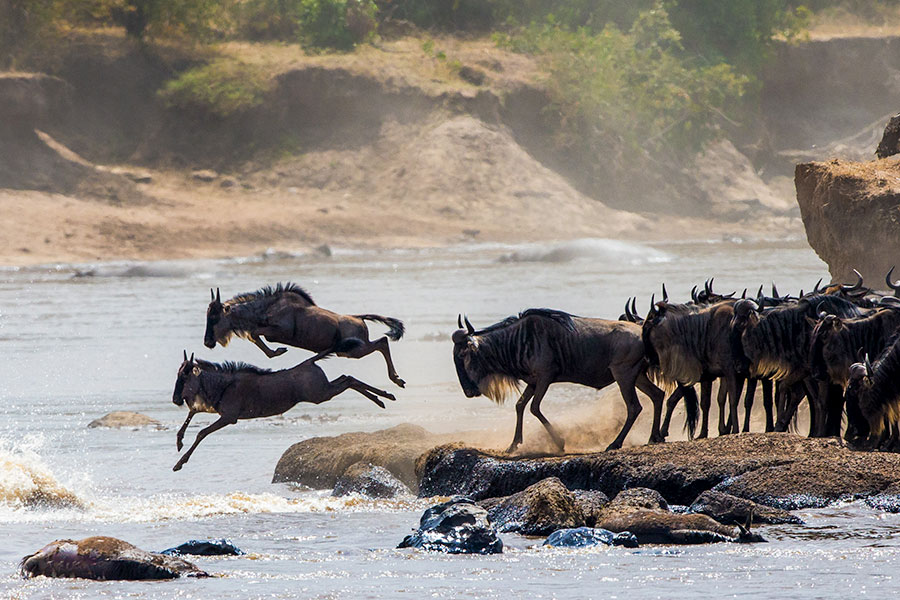
The decisive plunge…

Misunderstandings on migration

The popular perception is that it occurs from July to October but migration happens throughout the year. It is actually an ever moving circular migration with different events at different times of the year. But most tourists visit Kenya and Tanzania between July and October to witness the event.

Our Experience

We had planned our Kenya trip to coincide with the usual migration window in July. After successful extensive wildlife viewing at Amboseli and Naivasha, we were at Maasai Mara for our final lap of the trip.

We were all excited and with anticipation, we headed to the banks of the Mara river hoping to see the crossing. Our guide and driver had warned us about the unpredictability of the event. Our driver was constantly in radio contact with other safari vehicles in the reserve. On receiving positive clues, we proceeded to a vantage position on the banks of the Mara.

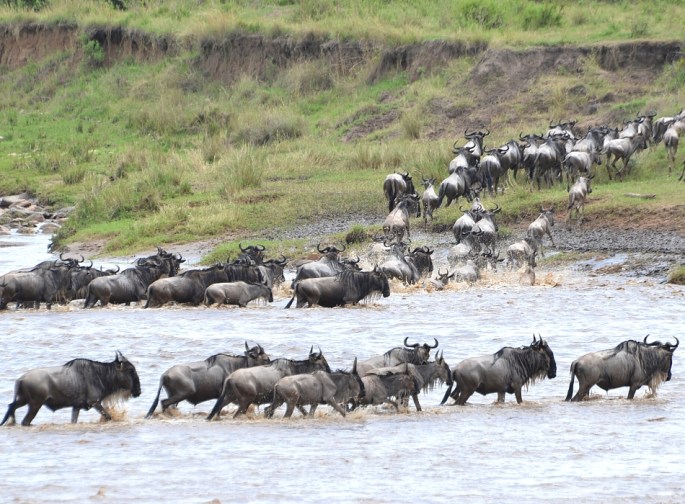
Thousands of Wildebeest gather at Maasai Mara awaiting the crossing

We saw the cloud of dust kicked up by the thundering animals from afar.

The wildebeest kicking up the dust

Getting closer, we were enthralled by the sight of the running wildebeest. A video for you…

The wildebeest running towards the river.(click on the video)

Once they reached the river, they abruptly halted and some of them actually started running away. That was when we all sighed…..after all, we may not see the river crossing we thought. But we waited at the river banks for some more time and suddenly it happened. After the initial hesitation, some of them decided to take the plunge and what a sight that was!!!!

See the video below….

The wildebeest cross the Mara

After swimming across, most of them climbed on the rocky ledges on the other side and climbed up.

Lo and behold…We had seen the migration!!! That was a once in a lifetime experience indeed!!!

Suddenly we noticed that they stopped crossing and everyone on our side of the ledge abruptly halted. Looking down we noticed that one unfortunate wildebeest had been caught by a crocodile and was being dragged along. This probably alerted the herd and they halted the crossing.

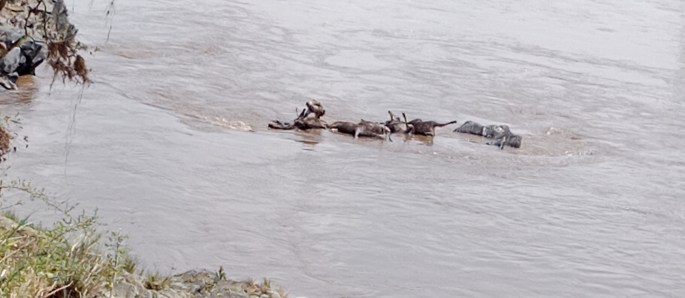
A little away from the actual site of crossing we saw dead carcasses floating away and vultures and other scavengers waiting by the riverside. There were a lot of hippos too.

Carcasses floating on the Mara river

Vultures await their feast by the Mara (click on video)

Seeing the Great Migration was definitely the highlight of our Kenya trip and the memories of those visuals will take a long time to fade away.

I have tried to get the Great Migration to you in the comfort of your homes. I am sure you all will enjoy it. But if you can, you must see it yourself sometime.

Nature never fails to leave us in awe….

Till we meet next week, do subscribe, comment and give your feedback.

Exploring Maasai Mara: Wildlife Encounters and Natural Wonders

Maasai Mara or The Mara as it is popularly known is a land of breathtaking vistas, exotic wildlife and endless grasslands extending to the horizon with lone acacia trees that stand tall and add beauty. A game reserve in Kenya contiguous with Serengeti National Park in Tanzania, it is named in honour of the Maasai people who migrated from the Nile basin and settled in here.

The Mara plays host to The Great Migration which is one of the ten Wonders of the World. Originally established as a wildlife sanctuary in 1961, its area was extended and converted into a Game Reserve . Parts of the area were later returned to local communities explaining why we see local community setups very close to the park boundaries and locals herding their cattle close to park environs.

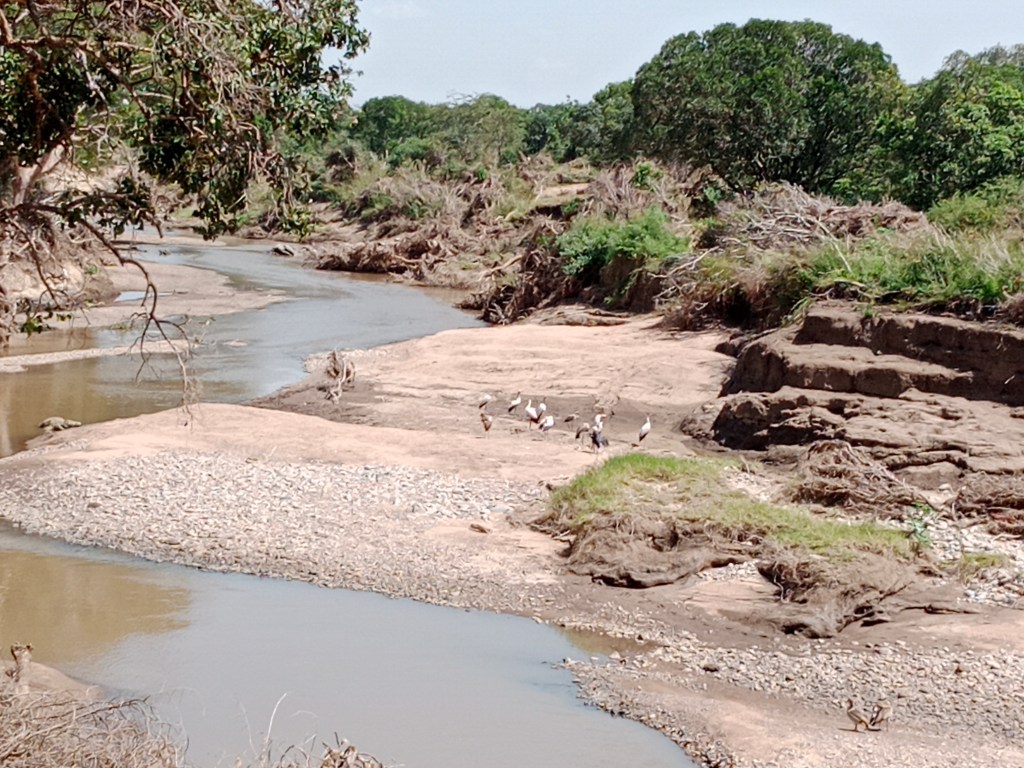
The Mara river and its tributaries, the Sand and the Talek drain the region where the vegetation is primarily open grassland with acacia trees in some areas.

All members of the “Big Five”…lion, leopard, African elephant, African buffalo and rhinos are found all year round here.

But what is so special about Mara is The Great Migration where some estimated 13 lakh Wildebeest, 5 lakh Thomson’s Gazelles ,97000 Topis and over 2 lakh Zebras migrate north from Serengeti plains in search of pastures in July and return in October. This is one of the most impressive natural events worldwide. The Great Migration is such an event that I will be dedicating the next episode to it. For now, let us look at the other wonders of Mara.

Our Mara encounters

From Lake Naivasha, we were headed to Maasai Mara but the riots in Kenya put a spoke in the wheel for our trip. But our local travel partners efficiently overcame this with an early morning departure from Lake Naivasha. Though we all would have loved to spend more time at the resort at Naivasha, we left early to avoid any disruption in our itinerary.

Starting the drive early morning and after a couple of convenience halts we reached Masai Mara around noon. Enroute we passed the town of Narok which is the main town next to Mara and we did see evidence of potential riots.

Narok getting ready for some trouble!

Reaching Masai Mara ,the resort checked us in earlier and so we managed to get some rest before our first Mara safari.

Here again the resort was beautiful with views of the Talek river from our rooms.

Our cottage and the view of Talek river from our balcony

After some rest, we again got into our safari vehicles and headed to the heart of Mara. We did three safaris over the two days we were there. The sum total of our experiences follows…

Enjoy the virtual safari…..

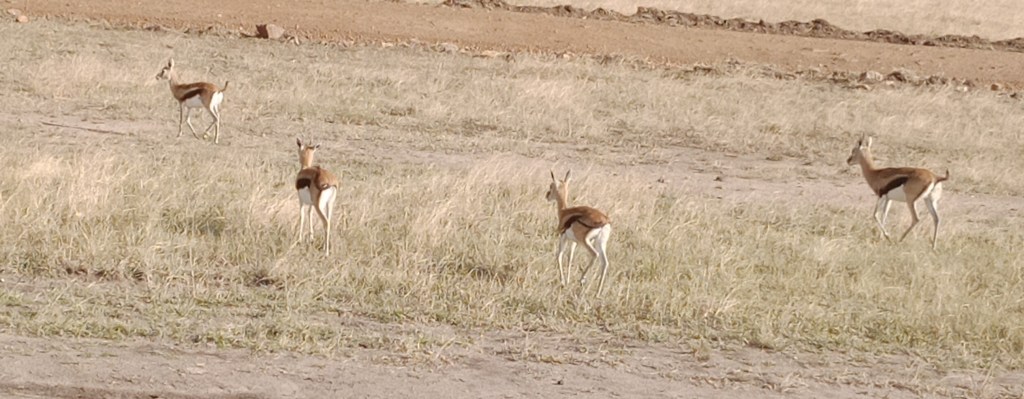
Thomson’s Gazelles

Gazelles are nimble antelopes, with a variety of stripes and markings that accentuate their tan buff coats and white rumps. They also boast impressive, ringed horns. These attributes make many gazelles attractive as game animals.

Gazelles shying away from us

Topis

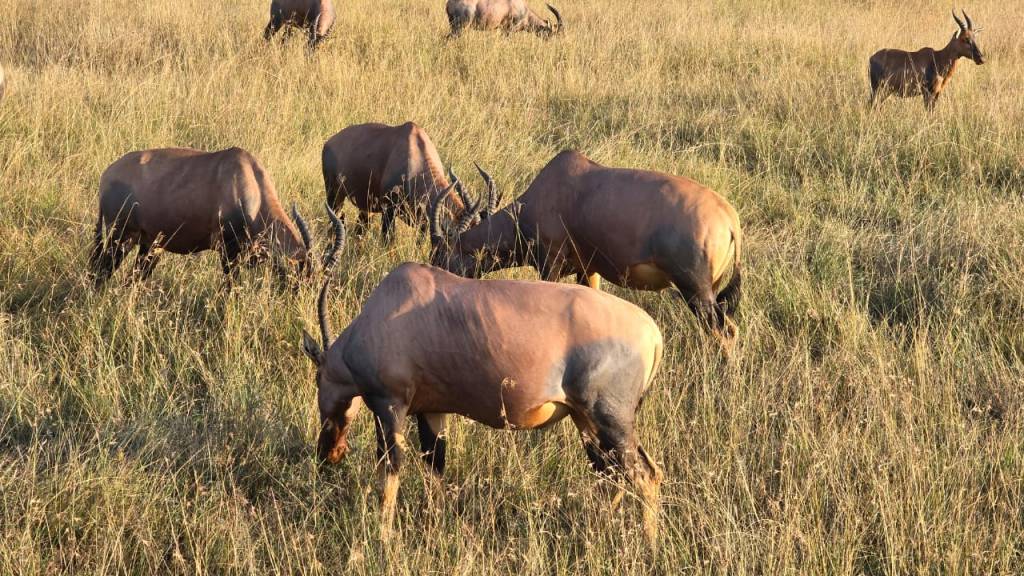
Much larger and less nimble antelopes are the Topis who also were in herds scattered all over Mara.

Topis (a variety of antelope)

African Elephants

Elephants crisscrossed our path multiple times. African elephants differ from the Asian elephants in that they are larger and have long tusks and large fan like ears.

Elephants are social creatures and they sometimes show affection by wrapping their trunks together .

An elephant herd with two baby elephants

Whispering sweet nothings?

A herd of elephants trudges along

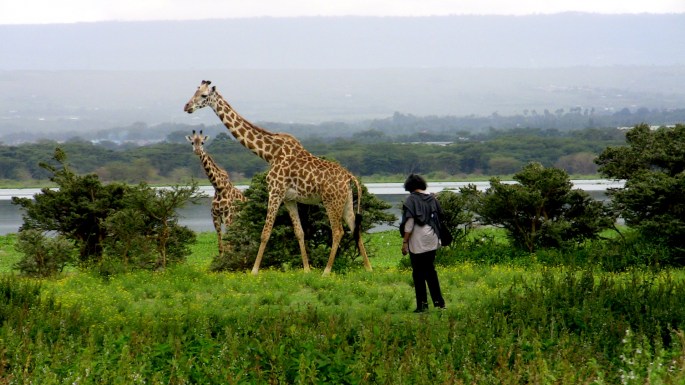
Giraffes

It is the tallest living terrestrial animal and the largest ruminant on Earth. Found chewing all the time, we saw quite a few of them.

A male and a female giraffe stood still as we passed by

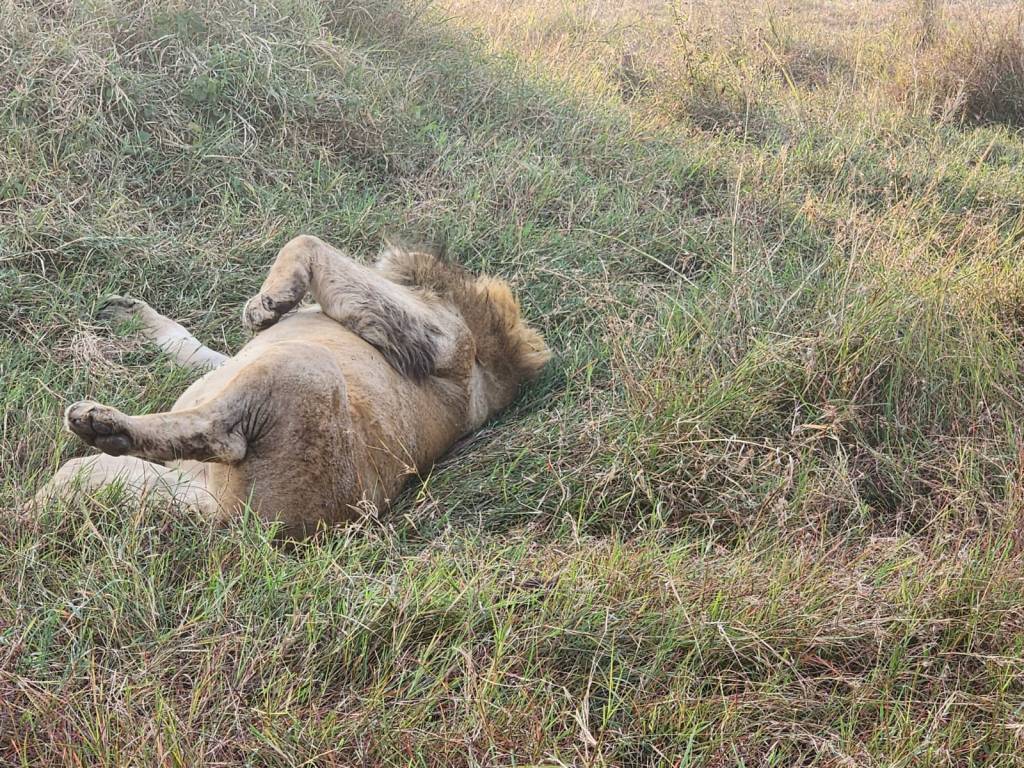
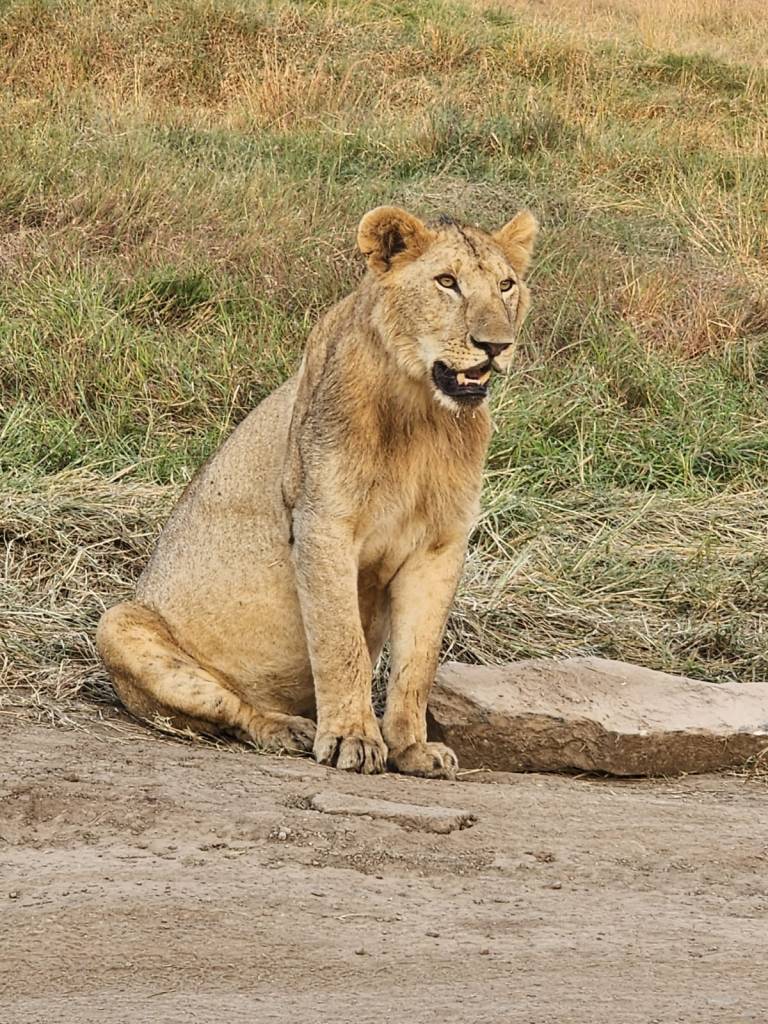
Lions

Getting a tip off from another vehicle about lion sightings Elvis , our driver took us to the designated spot. And we found them…

The king was resting after a meal when we disturbed him and….

He decided to get up and walk away…

And his consort continued to sit by the roadside…

Warthogs or wild boars

A lone warthog was scampering away ….probably running away from a predator…

A lone warthog

Wildebeest

Wildebeest, also called gnu, are antelopes native to Eastern and Southern Africa. Wildebeests are herd animals and move from place to place, in search of food and water. They feed on grass and due to their large numbers can empty out the grass in vast grasslands very quickly.

They are the heroes of the Great Migration and we saw herds of Wildebeest everywhere , some feeding calmly while others were running and jumping around in panic as our vehicle approached them.

Herds of wildebeest crossing the road

Millions of Wildebeest scattered all over…part of the Great Migration

After a tip off on a leopard sighting, we rushed to the designated location to find a large number of safari vehicles lined up to watch it. A warden was seen regulating the vehicles and finally we got our turn after considerable wait…

Leopard

A leopard rests after a kill

And the carcass of his prey hangs from a tree nearby

A group of hippos were having their siesta by the Mara river

Hippos resting by the Mara river

Cheetahs

And last but not the least, there was a group of Cheetahs feasting on their kill….

Cheetahs with their kill

Cheetahs feasting…(click on video) (PC Mr Arun Nathan)

And you soon come to realise how the cycle of life and death goes on endlessly in nature as you see scavengers feasting on carcasses…

Vultures feast on a carcass as wildebeest graze in the backdrop

I hope you all had a great virtual safari.

See you all next week with one of the wonders of nature…The Great Migration.

Till then, do subscribe, comment and give your feedback…

{P.S Some of these spectacular pictures and videos are courtesy Mr Arun Nathan, my co traveller on the Kenya trip.}

Walk with Wildlife: Unveiling the Secrets of Crescent Island

When we undertook the Kenyan safari, we were anticipating animal encounters but were in for a real surprise at this unique island where we walked with the wildlife. Now, that sounds pretty exciting…isn’t it?

Come along …let me take you on the Walk with Wildlife experience.

Taking a boat safari on Lake Naivasha, we reached Crescent island.

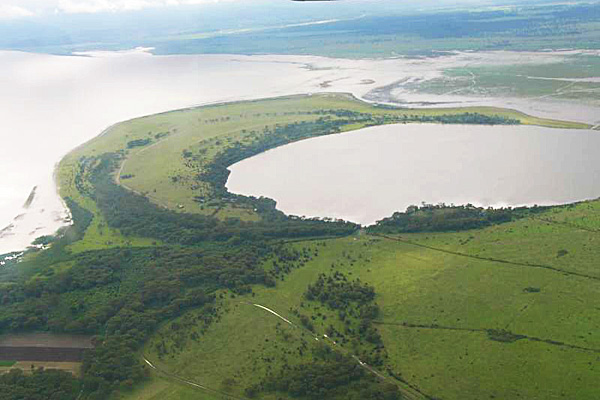
Aerial view of Crescent island (file photo)

Crescent island…an overview

Crescent island is one of Lake Naivasha’s best kept secrets. It is an ancient volcano which has been partially submerged giving it a crescent shape. The unique feature of the island is that it oscillates from an island to a peninsula depending on the water levels of Lake Naivasha.

Originally used by Masai people to graze cattle, this peninsula was under private ownership for some time when the owners developed it into a sanctuary farm and thereafter, it was taken over by a consortium in 1969. Film companies were attracted to the natural beauty and films like “Living Free” were shot here. How ever, it came into the limelight after the movie “Out Of Africa” was shot here in 1985. Animals like zebras, giraffes, wildebeest, waterbucks, impalas and lions were taken to the peninsula for the film. About three years after this, the peninsula was cut off from the mainland and became an island where these animals were trapped.

Crescent island is an important tourist destination today where tourists can walk up close to these animals by taking a boat safari on Lake Naivasha.

That experience forms the core of this episode. Come on and get ready to walk with wildlife….
Once we were at crescent island we alighted from our safari boat on to a swampy area that was reinforced with sand bags. It was a little bit of a precarious walk on the sand bags and we finally reached the island. Local guides instructed us on the guidelines to be followed when we got up close to the animals and also about the unique flora and fauna of the island.

Walking on the sandbag reinforced swamp passage to the island

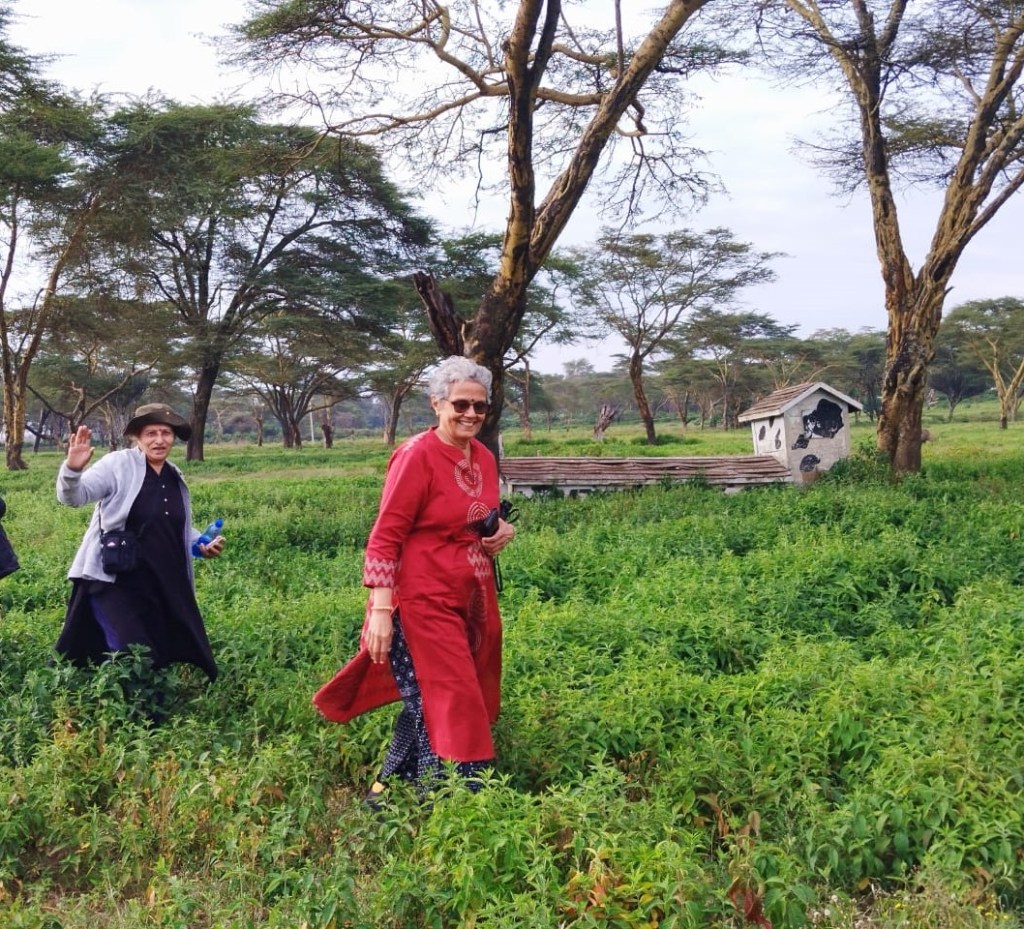
Soon, we reached the main island and we were walking through thick ground foliage and our guide instructed us to avoid certain dangerous plants like the stingy nettle below…

Walking through thick ground foliage and the dangerous Stingy Nettle

Another thing we had to be careful was about the bees. Some peculiar looking wooden beehives were seen on the trees.


The peculiar looking bee hives made of wood

Some interesting inputs on plant behaviour.

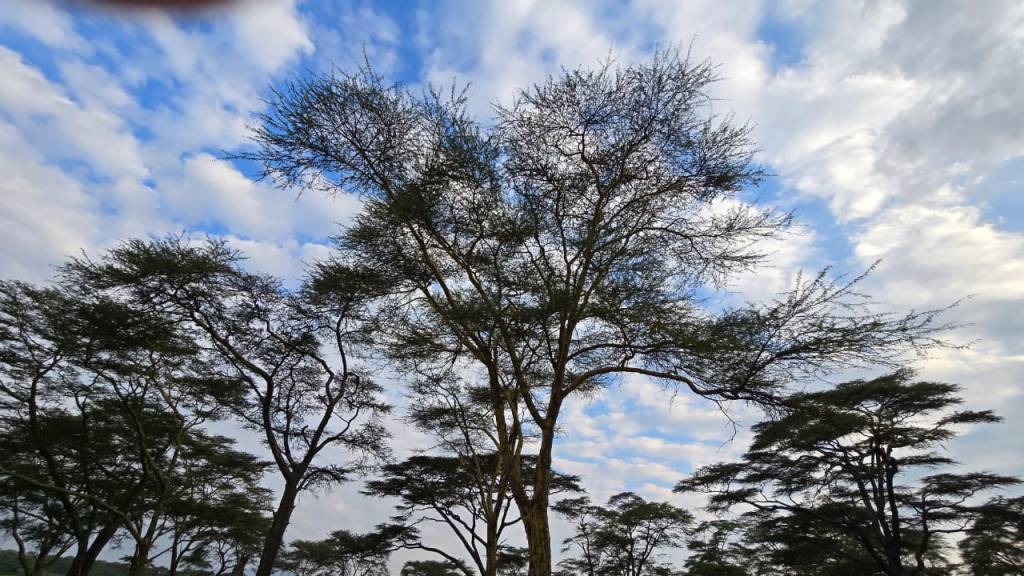
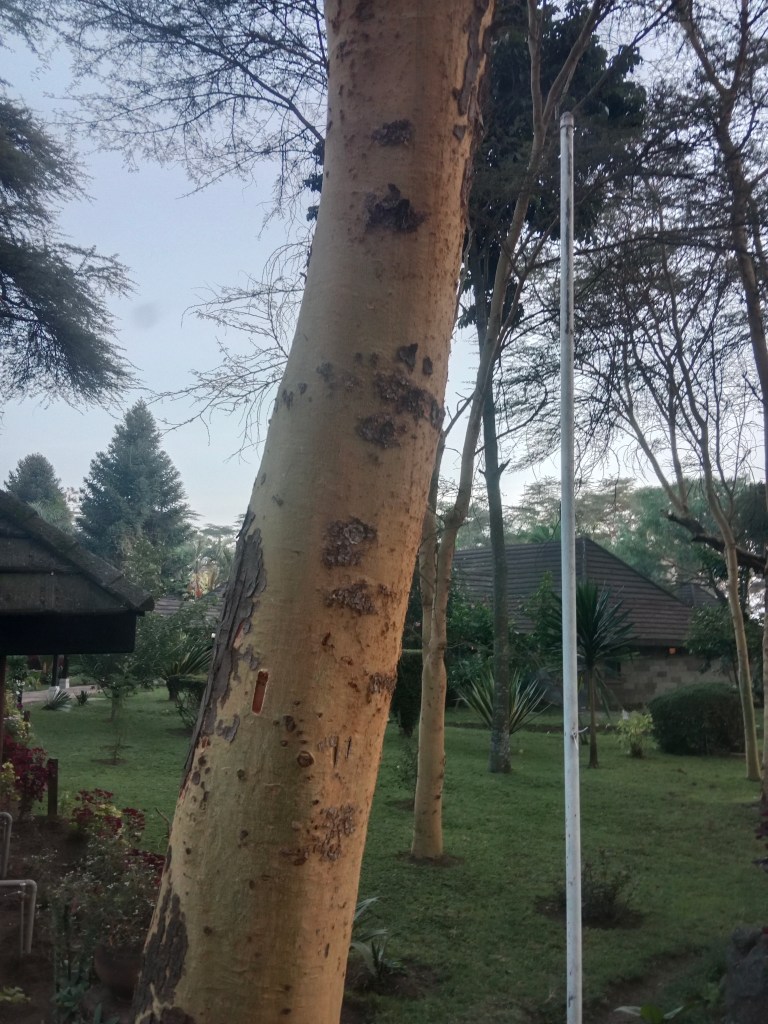
The island vegetation consisted mainly of acacia trees with yellow bark. Now, this is the main food of the giraffes and when the giraffe chews on the acacia, it communicates to the surrounding acacia and they produce tannins which the giraffes find repulsive. An effective way of self preservation indeed!

The acacia trees and their yellow bark

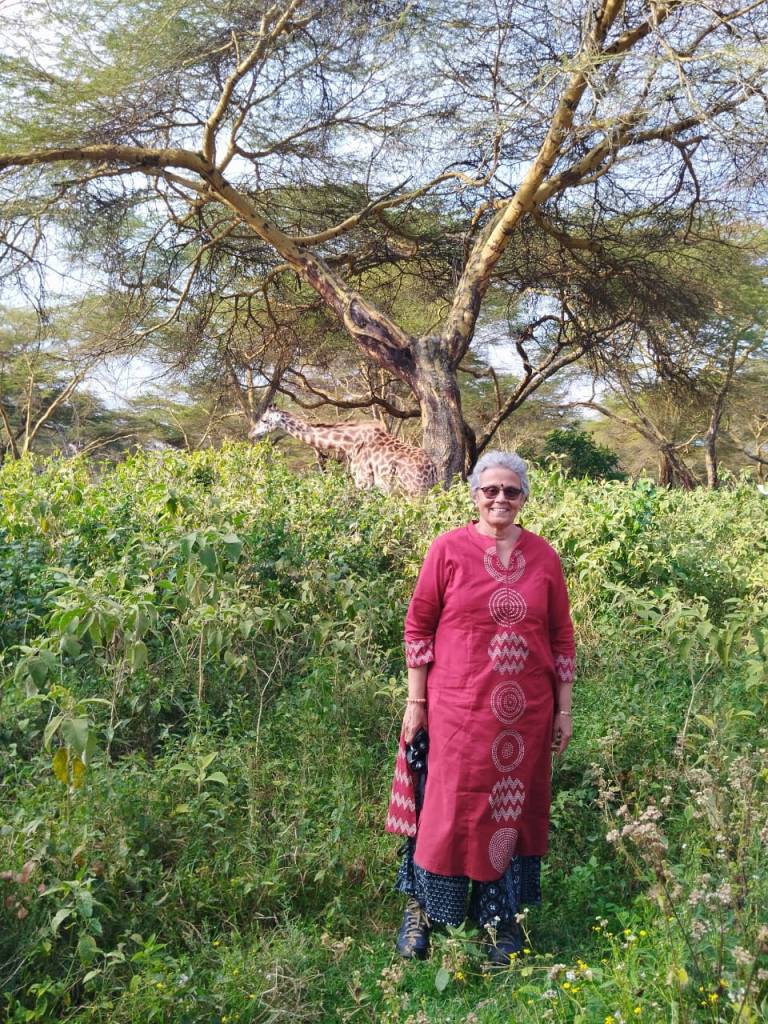
As we walked further inland, we were close to some giraffes who were grazing peacefully. The giraffes were shy and moved away but were not alarmed by our presence as they were used to human proximity.

Click on video to walk with the giraffes

He shied away …but not before I got a picture!!!

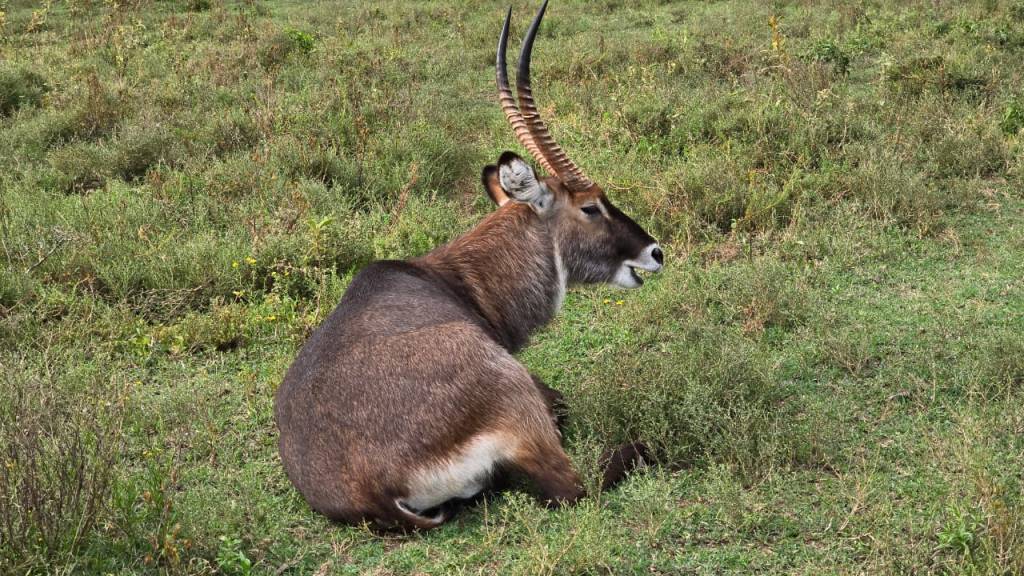
Soon we spotted a lone waterbuck resting and decided not to disturb him….

The resting Waterbuck

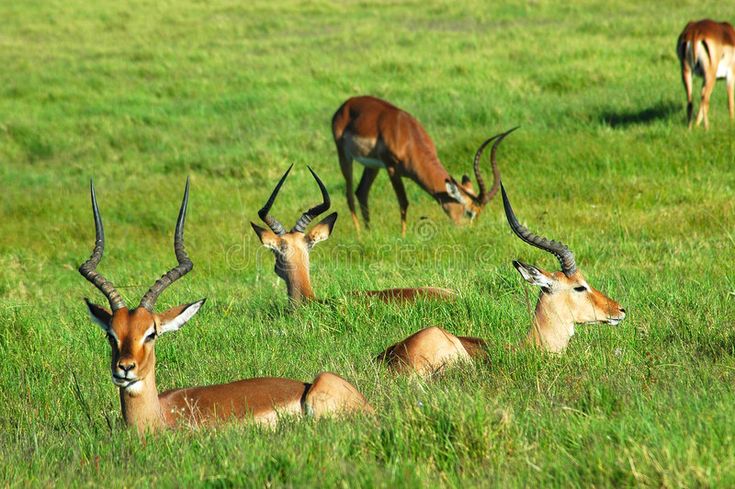
A herd of impalas attracted our attention soon….

Impalas were looking at us!!!

Our guide noticed a herd of zebras at a distance and we soon headed there…

Zebras

Up close, they were not bothered about us and continued grazing…

The beautiful zebra lines!!!

And he posed with us…

By now, the sun was going down and we had to walk back to our boat. So reluctantly we walked back and boarded our boats for the return ride to the resort when the sun gave us another treat….

A beautiful sunset on Lake Naivasha

We alighted from the boat and took our vehicle back to the resort with wonderful memories of a day spent with animals..

Hope you enjoyed this episode. Next week we are in Masai Mara, the wildlife hub. So you can look forward to more exciting encounters.

Till then, do subscribe ,comment and give your feedback.

Lake Naivasha: Wildlife Safari and Scenic Beauty in East Africa

Lake Naivasha is a large freshwater lake just off the town of Naivasha in Kenya and is easily accessible from Nairobi . Once described as the Jewel of East Africa, it has been subjected to devastating effects of fishing and a flourishing floriculture industry thriving along its borders with increasing human habitation in it’s environs.

We started our trip to Naivasha from Amboseli and after passing by Nairobi, we were crossing the Great Rift Valley. To understand lake Naivasha and it’s environs, some understanding of the Rift valley is essential.

Great Rift Valley

Africa’s Great Rift Valley covers many African countries including Kenya and Tanzania. It extends over 3,700 miles from Jordan in the Middle East and ends in Mozambique in Africa. This valley and the adjacent volcanic activity has resulted from fractures in the Earth’s crust due to the continuous pulling apart of the African and Arabian tectonic plates .

Eventually, the plates are expected to pull far enough to split East Africa off from the rest of the continent. 

A map explaining the Rift Valley.

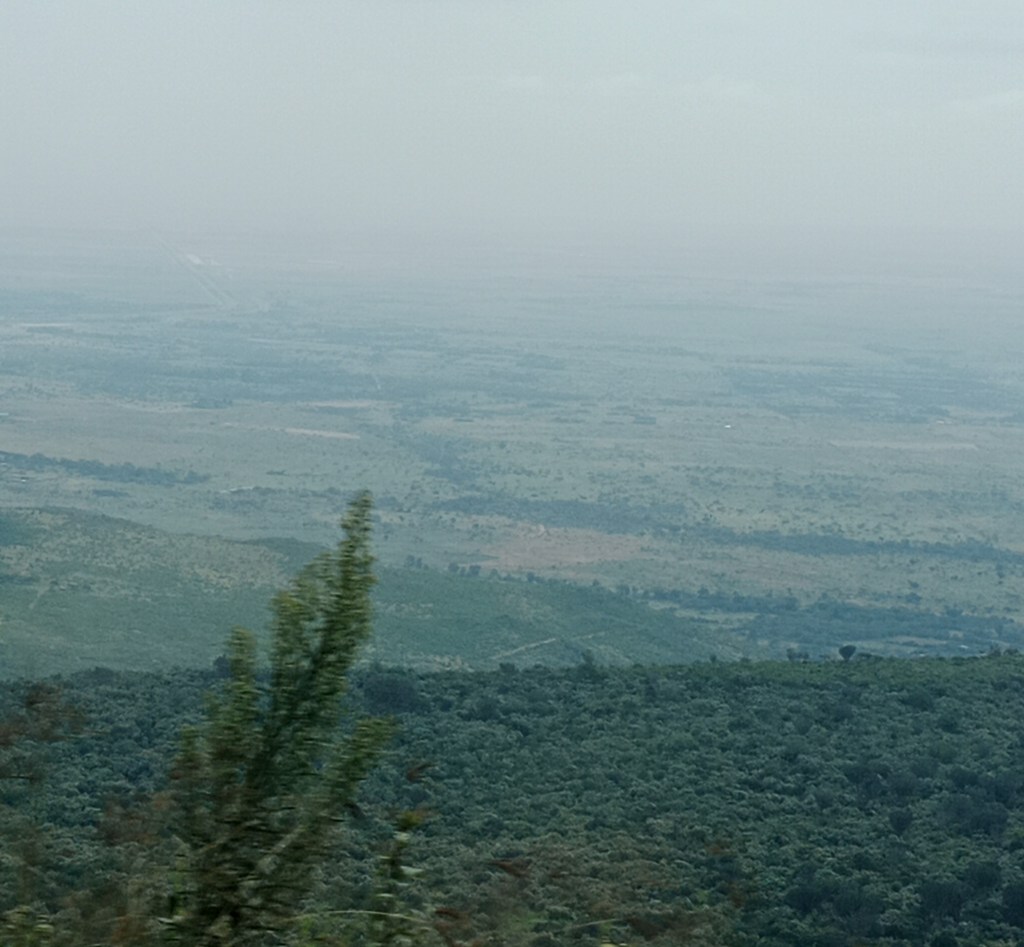
Rift Valley as we crossed it

Passing the rift valley, we reached Naivasha and checked in to Lake Naivasha Simba Lodge. This is a beautiful resort on the banks of Lake Naivasha with a large garden and lawn leading to the banks of the lake itself. The views from the resort were awesome.

Some pictures from the resort…

The rooms overlooking the lawn and lake with Waterbucks grazing in the lawn

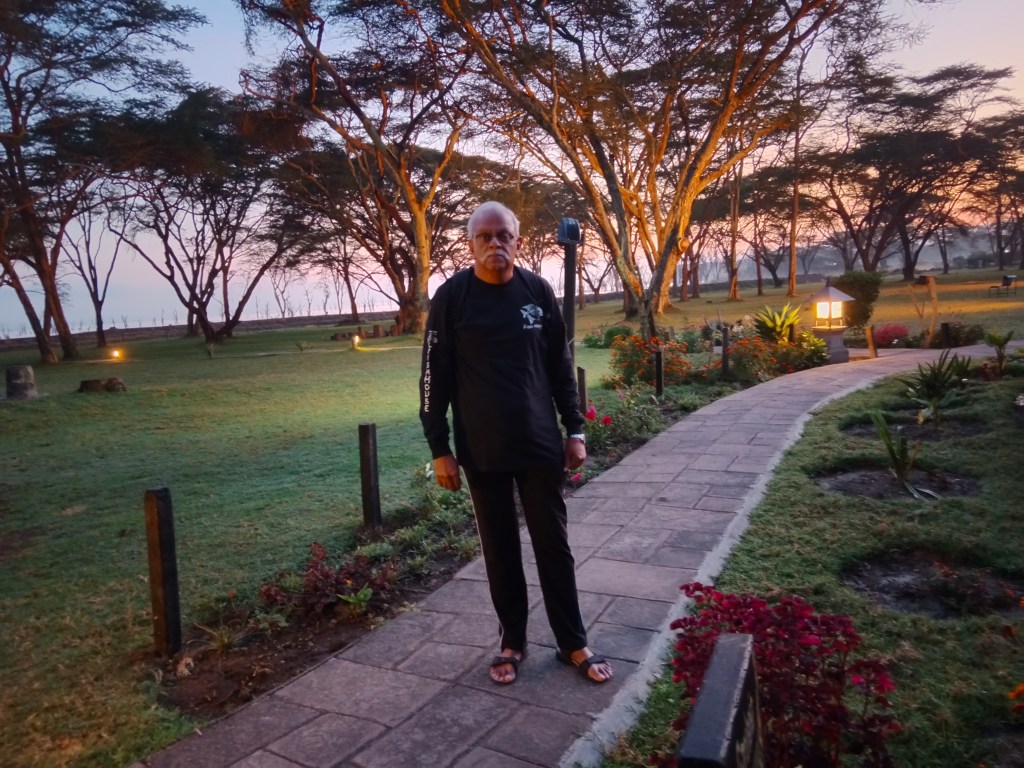
A beautiful morning on the banks of Lake Naivasha

Lake Naivasha

Beautiful Lake Naivasha

There are several lakes in this area and more than 10000 years ago, Lakes Naivasha, Elementeita and Nakuru were a single lake that eventually dried up splitting them into three distinct lakes. Lake Naivasha is the highest at an elevation of 1884 mts .

The name is derived from the Masai word “Nai posha” meaning “rough water” due to the sudden storms known to occur here.

Lake Naivasha is ringed by dormant and extinct volcanoes and surrounded by swamps and Acacia woodlands . These swamps and woodlands are home to a variety of water birds and hippos .

The swamps and acacia woodlands that surround Lake Naivasha

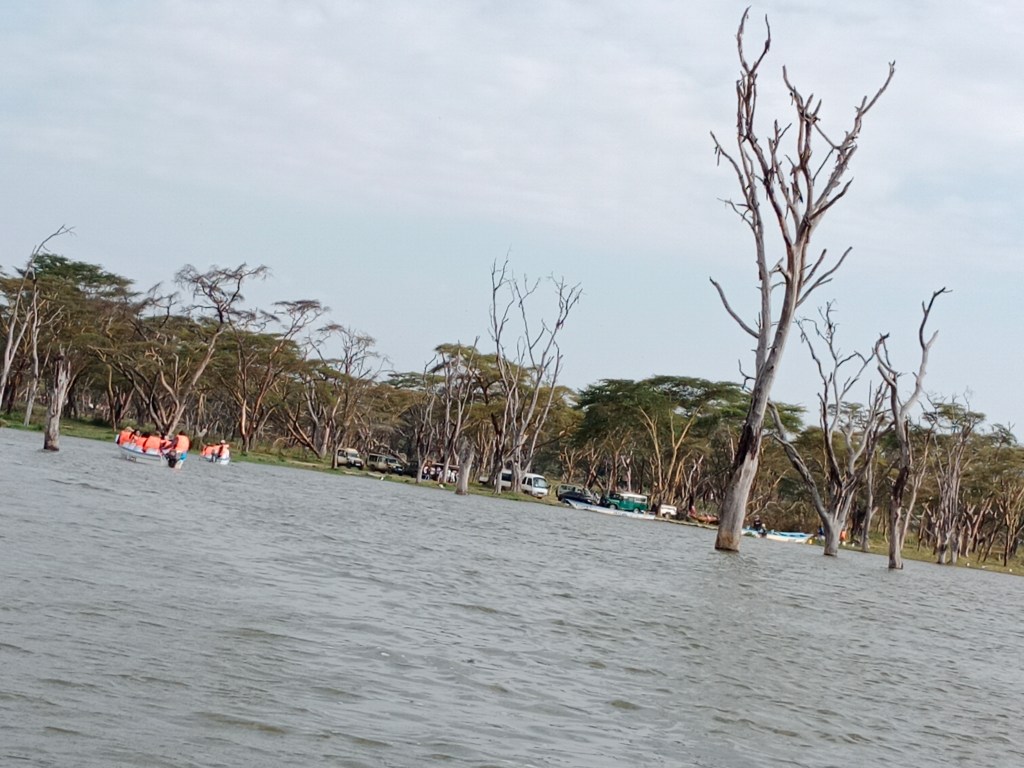
The surface area of the lake is approximately 139 sq kms but it can change with the seasons due to flooding. Many of the trees in the surrounding areas were submerged during flooding leaving stumps of these trees sticking out of the water surface.

Tree stumps on Lake Naivasha

The lake is home to a variety of wild life including over 400 different species of birds and a sizeable hippo population estimated to be over 1500 in numbers. A boat safari on the lake sees one encountering eagles, egrets , kingfishers, cormorants and pelicans . Giraffes, impalas, zebras and waterbucks can be sighted around the lake and the adjoining Crescent Island.

We were in for a boat safari on the lake and for this, we took our safari vehicles to another beautiful resort on the banks of the lake called Lake Naivasha Resort. The boat safari started from this resort.

Some pictures of Lake Naivasha Resort….

Lake Naivasha Resort from where the boat safari started

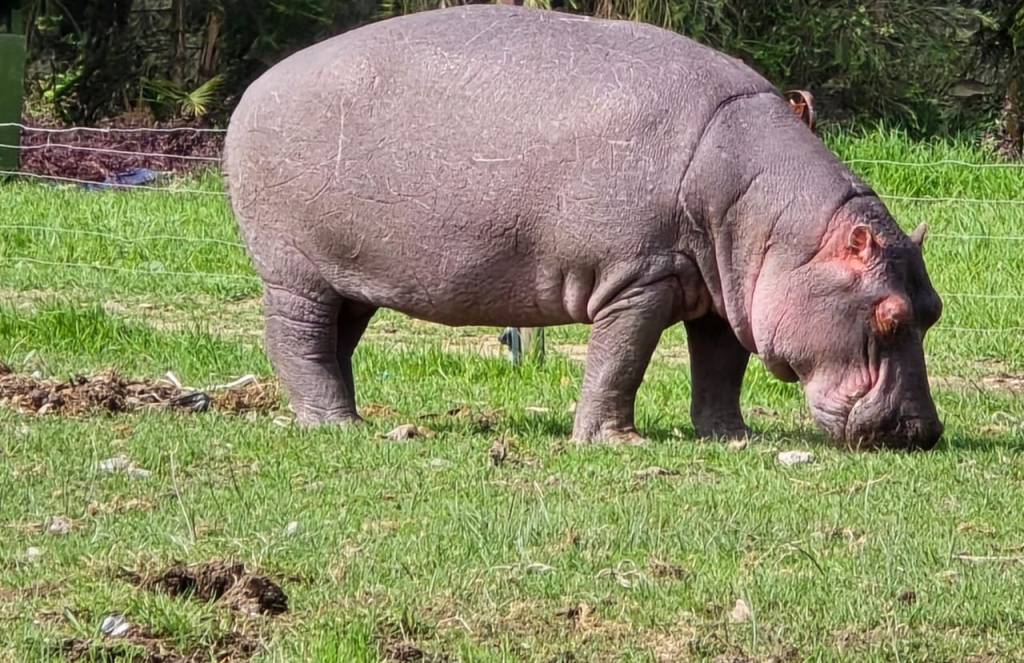
Soon we were at the boat jetty and were witness to a herd of hippos having their afternoon siesta…

Hippos near the lake

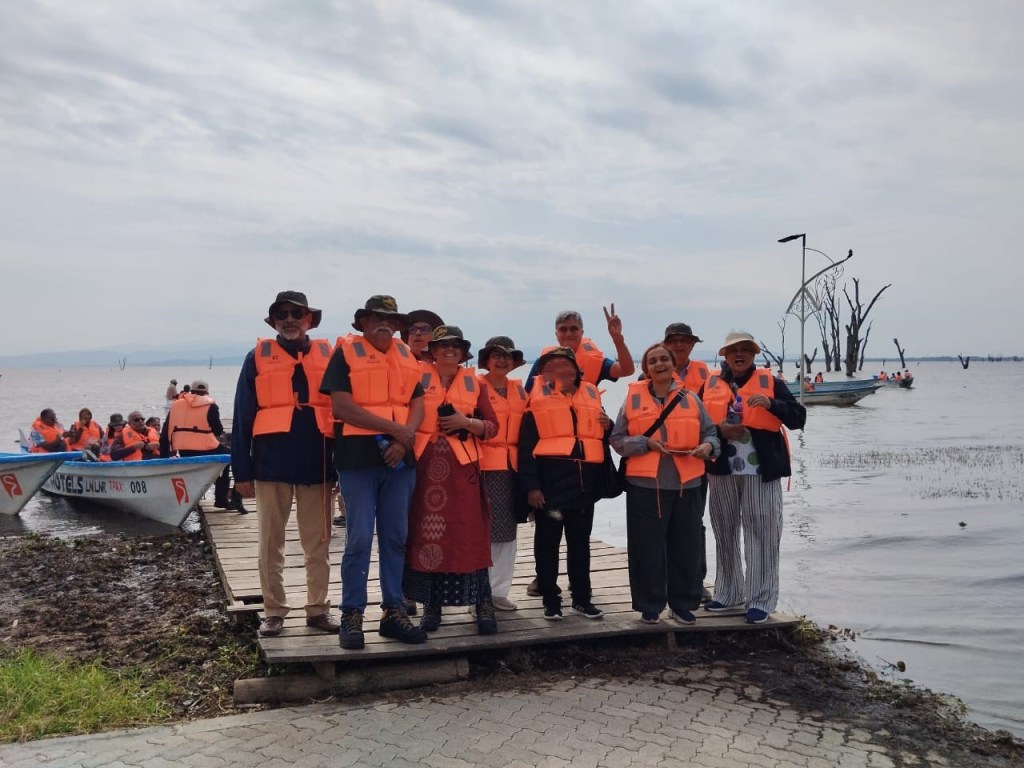
Awaiting our turn on the banks of the lake

Soon we were on our way….

And here are some pictures from this boat safari….

An African fish eagle perched on a tree stump looking out for it’s prey

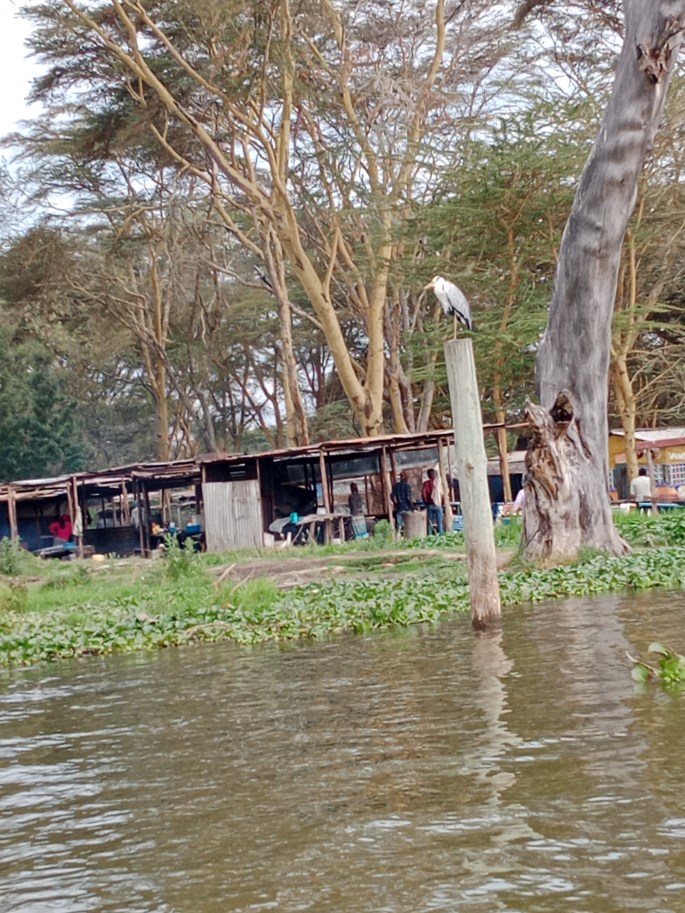
A Grey Heron waits patiently for it’s prey

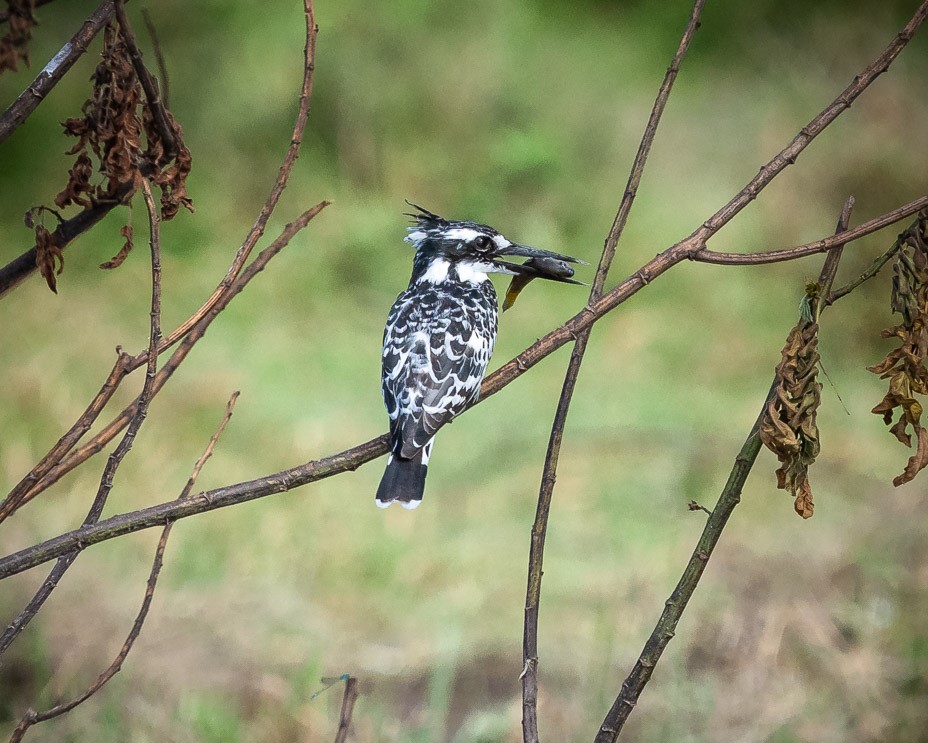
A Pied Kingfisher sits pretty with its prey safe in his beak

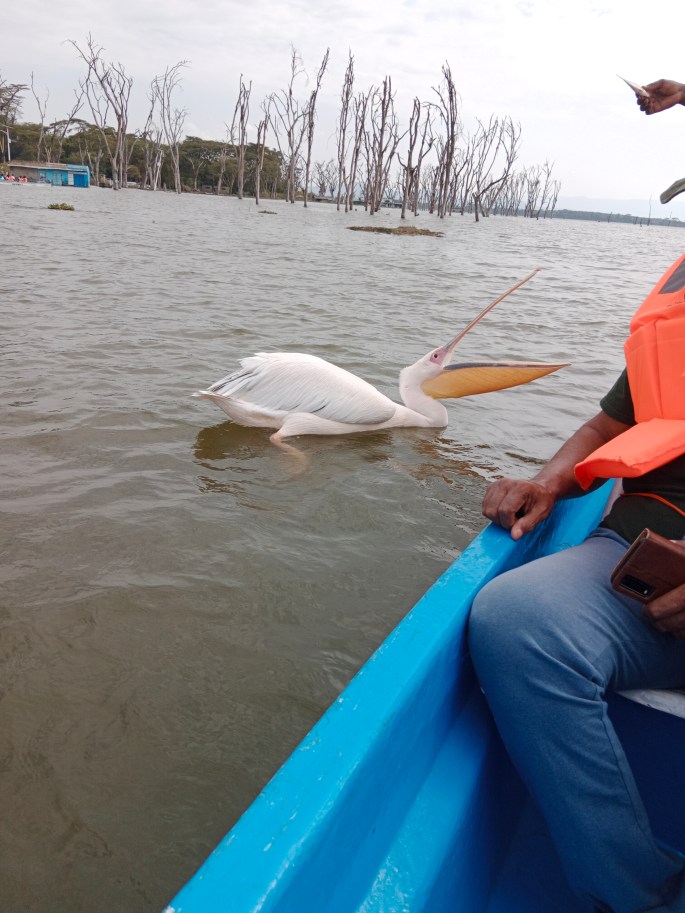
And a pelican swims along

As we were sailing towards Crescent island, we passed by our resort too…

Views of our resort as we sailed by…

As we were nearing the crescent island, we did see a group of hippos basking in the water…

Hippo Encounters on Lake Naivasha

Approaching Crescent Island

After about 30 mins of the ride, we were close to the crescent island where we alighted to go on a “Walk with Wildlife experience”.

That was totally an enlightening experience with the local guides giving us lot of valuable insights on the plant and animal life there. That will be the topic of the next episode.

Hope you enjoyed this safari on Lake Naivasha. Till I see you next week do give your comments and feedback

Discover the Enchanting Amboseli National Park in Kenya

Amboseli National park is one of the most scenic parks in Kenya with Mt. Kilimanjaro , the highest free standing mountain overlooking it. Spreading across the Kenya Tanzania border is a 8000 sq km core area eco system including Tsavo and other national parks. Amboseli occupies a 392 sq km area within this eco system.

A map showing the location of Amboseli in the African continent.

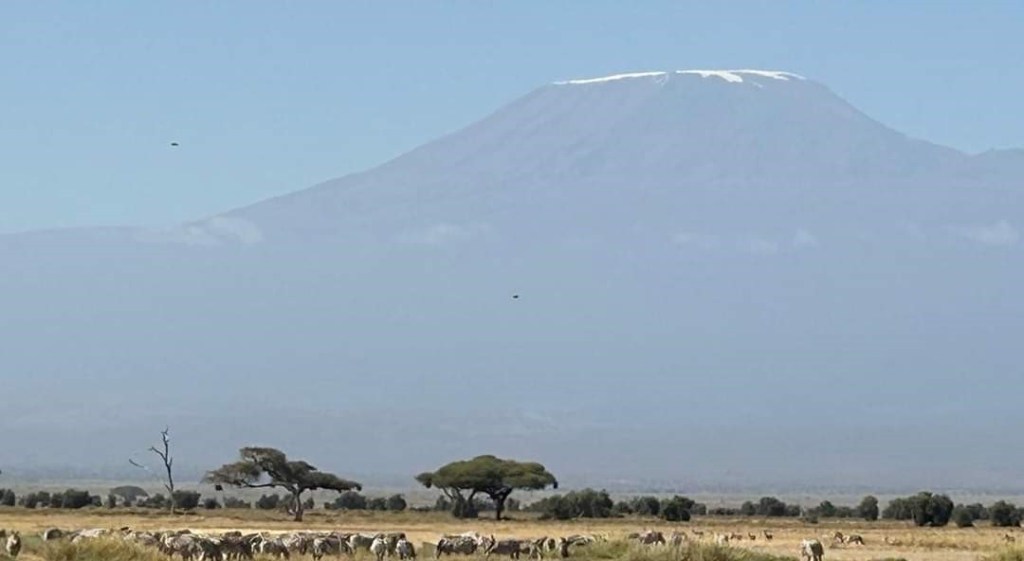
The uniqueness of this park are its views of the snow capped Mt. Kilimanjaro, also called Africa’s watchtower.

Mt Kilimanjaro with animals grazing below

At the foothills of Mt Kilimanjaro amid the dusty landscape lies an ecological masterpiece at a height of 1150 metres above sea level which the Maasai called “Embosel” meaning salty dusty plain. This is what we refer to now as Amboseli National Park.

And true to its name, Amboseli is very dusty due to the loose volcanic soil that gets kicked up with the march of the animals and the safari vehicles that follow them. Very often you find a vortex of dust spinning around in the horizon like a small local tornado.

The dust swirls like a localised tornado

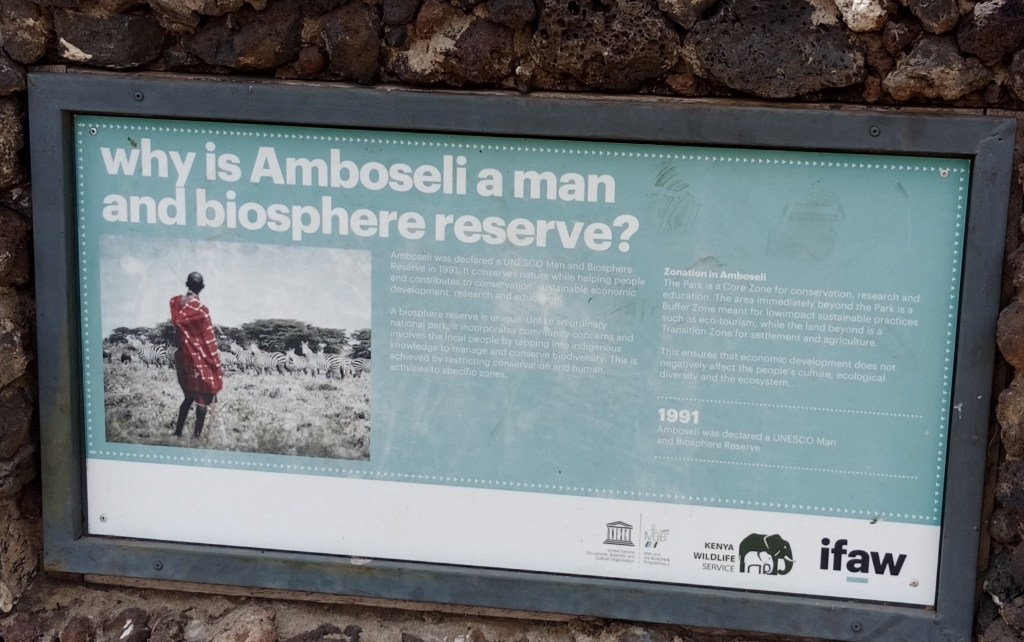
The Amboseli ecosystem is home to the Maasai people and their cattle whose cultural heritage and pastoral practices have shaped their co existence with wildlife leading to Amboseli being recognised as a “UNESCO Man and Biosphere reserve” . Locals are involved in conservation and the idea is sustainable development with conservation.

Amboseli…Man and Biosphere Reserve

The Maasai with their cattle, a common sight as you drive through Kenya

Uninhibited visibility till the horizon

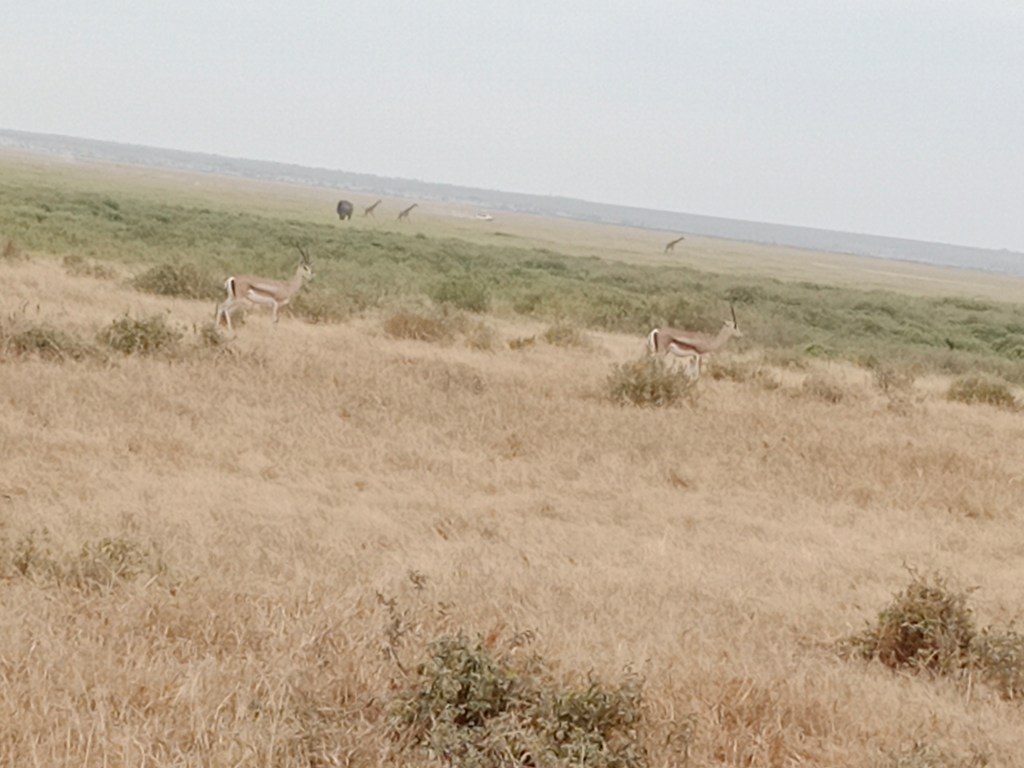
This is what struck me here. Both in Amboseli and Masai Mara, there is uninhibited visibility all around till the horizon. I have never seen such vast expanses of land with no manmade structure extending for miles on end. This makes it so easy to spot wildlife that even in the horizon if a giraffe raises it’s head, you can see it miles away.

This picture will help illustrate my point.

Unfettered visibilityThe landscape is so open that you can spot an elephant and three giraffes miles away with a few gazelles close by.

The dry season at Amboseli

It offers one of the best wildlife viewing opportunities in the world with sparse vegetation due to the long dry months between June and October . During this period the grasses are short and scotched making wildlife viewing easy. Besides, the dry season results in drying up of waterbodies resulting in the animals moving in herds over long distances in search of water .

This is the most fascinating time to visit Amboseli which is home to over 80 species including the African elephant, impalas, gazelles, lions, cheetahs, hyenas, giraffes, zebras , wildebeest and over 400 species of birds including the massive ostriches, bustards and various water birds.

The dry season, also results in low insect population particularly mosquitoes making one’s stay more comfortable.

Amboseli is recognised more for its elephant sightings as it has more than 1800 of them ,the largest population of African elephants .You can get close to free ranging elephant herds and enjoy their group interactions at close quarters. In fact , it is referred to as the “Land of Giants” due to it’s huge elephant herds, most of them with large impressive tusks.

An elephant herd at Amboseli

Our Amboseli experience

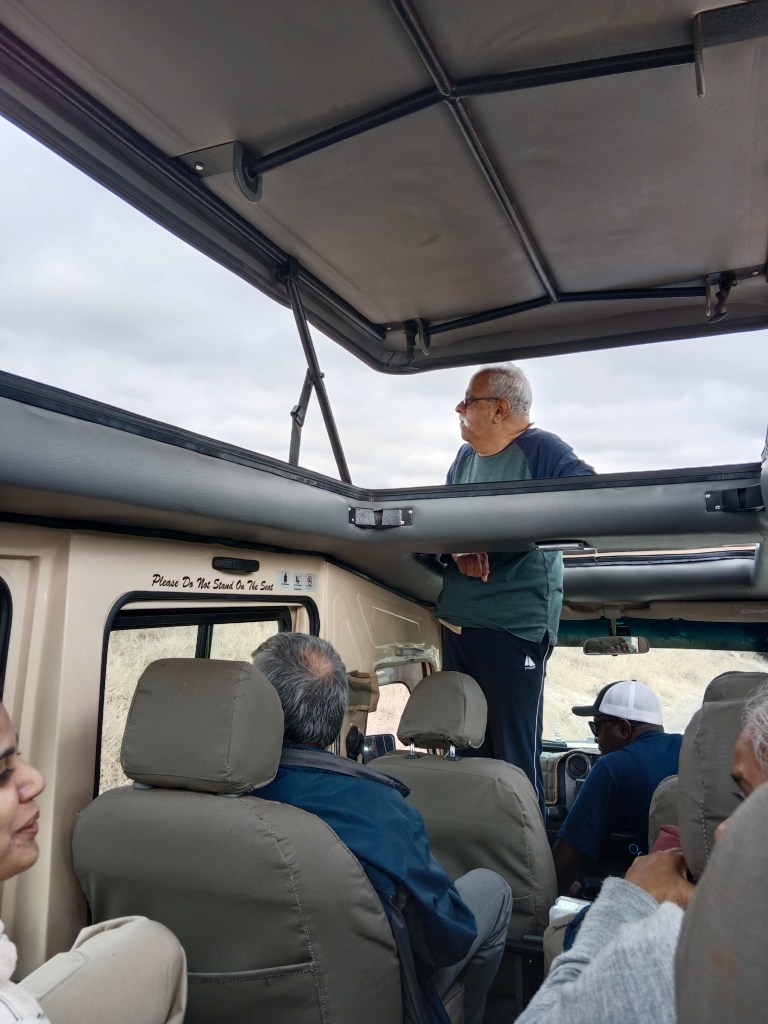
Landing at Nairobi one evening, and staying overnight we left for Amboseli early morning by a Toyota Land cruiser vehicle used for these safaris. The roof of the vehicle can be opened for free viewing and photography. There were six of us in a vehicle. The drive was comfortable and we reached Amboseli around noon. After lunch and check in at the jungle lodge, we were off on the safari. The next day too, we did a day long drive through Amboseli National park. What follows from now on are those memories relived. This trip will have more pictures and videos for obvious reasons .

Join me on this incredible journey through the heart of Africa….

The safari vehicle

We entered Amboseli at the Kimana gate . After a short halt and some formalities, we were in to the park…

Amboseli Kimana gate entrance

The drive through the park was on mud paths between the savannah grasslands. At many places, the road was bad and a good driver …our Elvis and his well maintained vehicle helped us a lot.

The most common species we found were the gazelles. Herds of them grazing along…

A pair of Thomson’s Gazelle

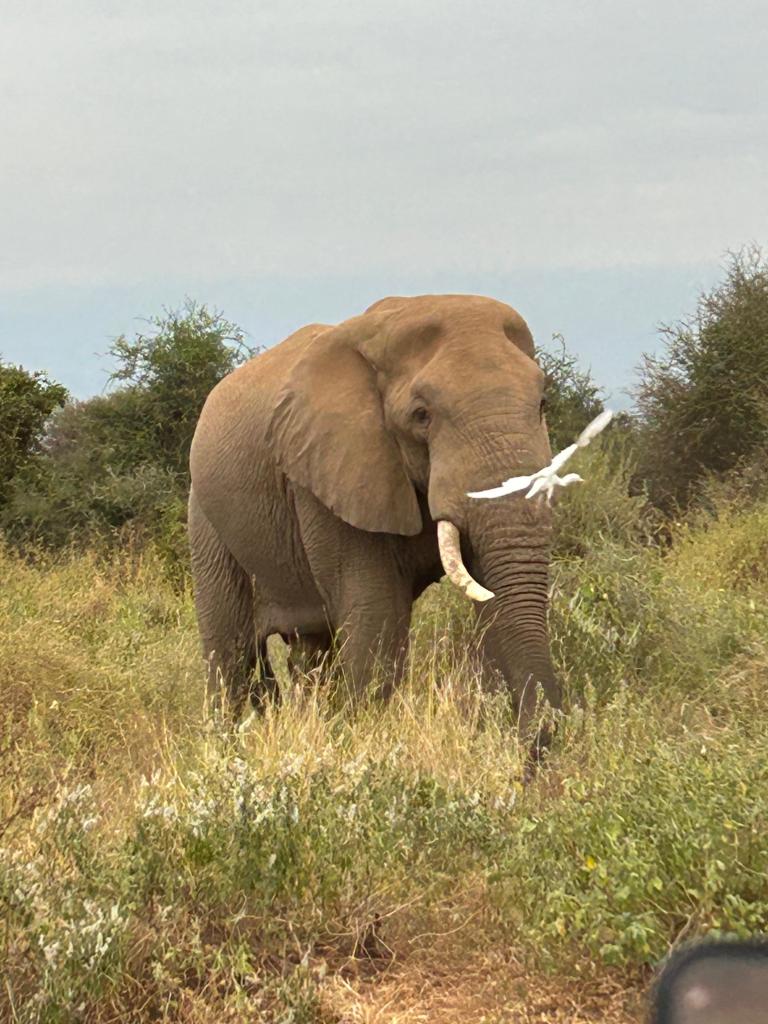
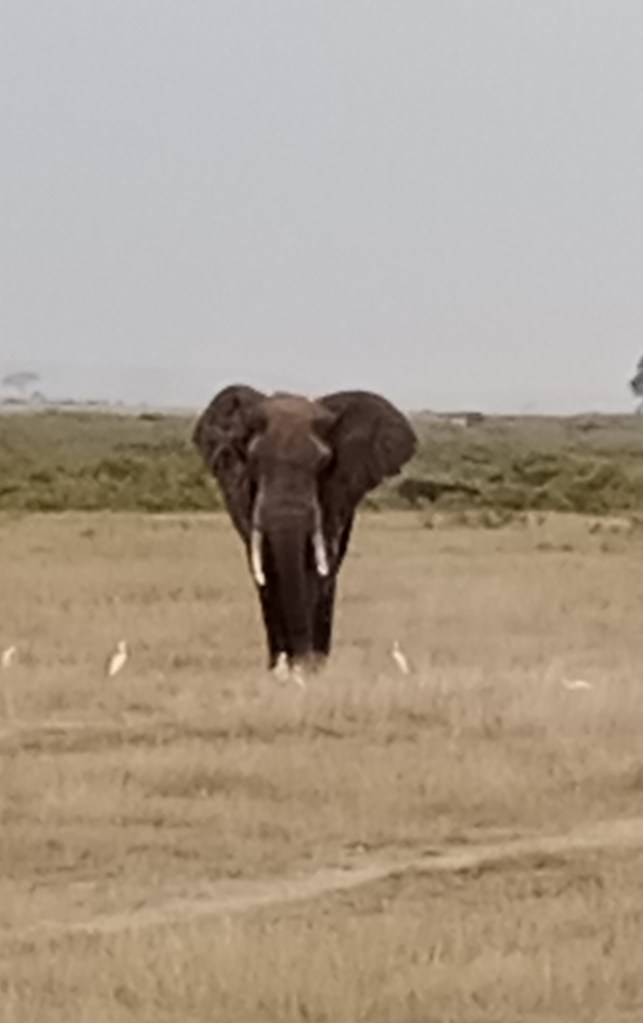
Amboseli is Elephant land and so, we were treated to views of multiple elephant herds engaged in various daily activities like feeding, mud bathing , protecting the young, romancing, fighting and many of them crossed the road in front of our vehicle.

A loner…

A herd of elephants

The wide outstretched ears….

A mild altercation

Elephants cross the road in front of our vehicle

Soon we came across some giraffes walking along with graceful strides…

The majestic walk of the giraffe (click on video) PC… Mr Arun Nathan

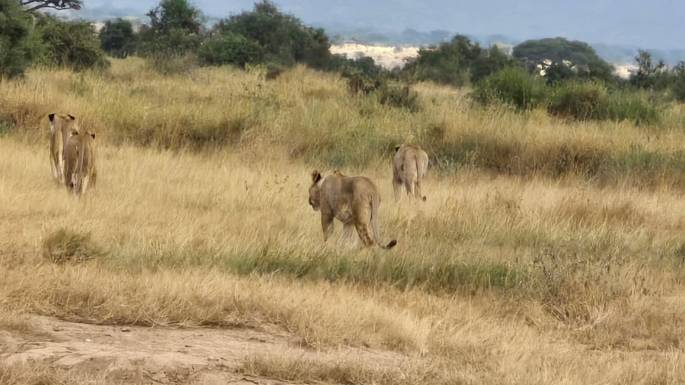
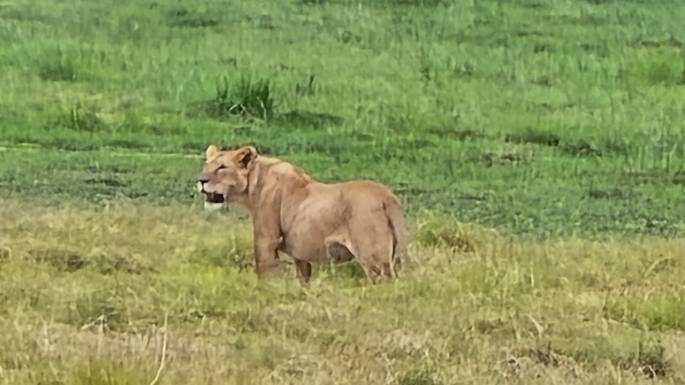
As we drove along, our driver Elvis was in radio contact with other safari vehicles. Every now and then, he would be alerted on some sightings and we would head there. Lions were our next alert and off we went. A pride of lionesses lay in wait…

Lionesses on prowl

Some interesting bird sightings….

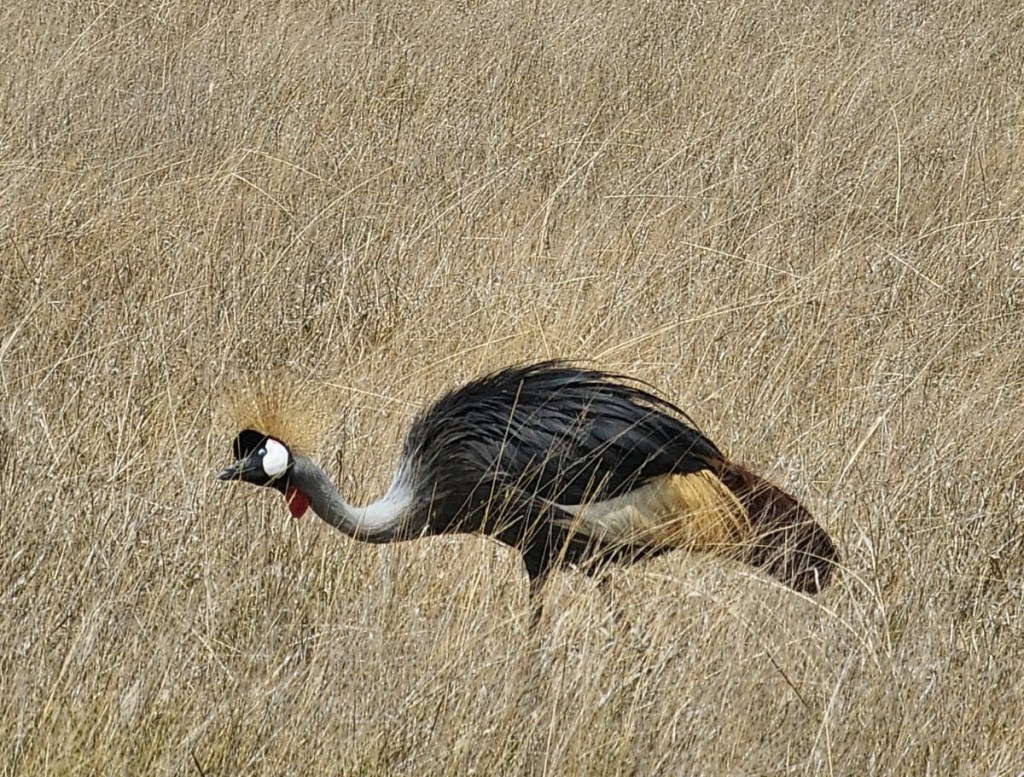
Grey crested Crane

It is found in nearly all of Africa, especially in eastern and southern Africa, and it is the national bird of Uganda.

Grey Crested Crane

Kori Bustard

The Kori Bustard is the heaviest flying bird native to Africa.

Great Bustard

Ostrich

The common Ostrich , is a species of flightless bird native to certain large areas of Africa.

An Ostrich trudges along…

As one drives through this national park , what strikes us is the distinctly different vegetation at various places within. What is predominantly savannah grasslands and open plains suddenly gives way to swamps and wetlands and includes a dried Pleistocene lake.

Palm tree clusters

Swamps and a lake

Lake Amboseli , a lake located within the National park is dry in most parts during the dry season but floods up with the rains. Driving close to the lake gives great opportunities to view waterbirds and hippos.

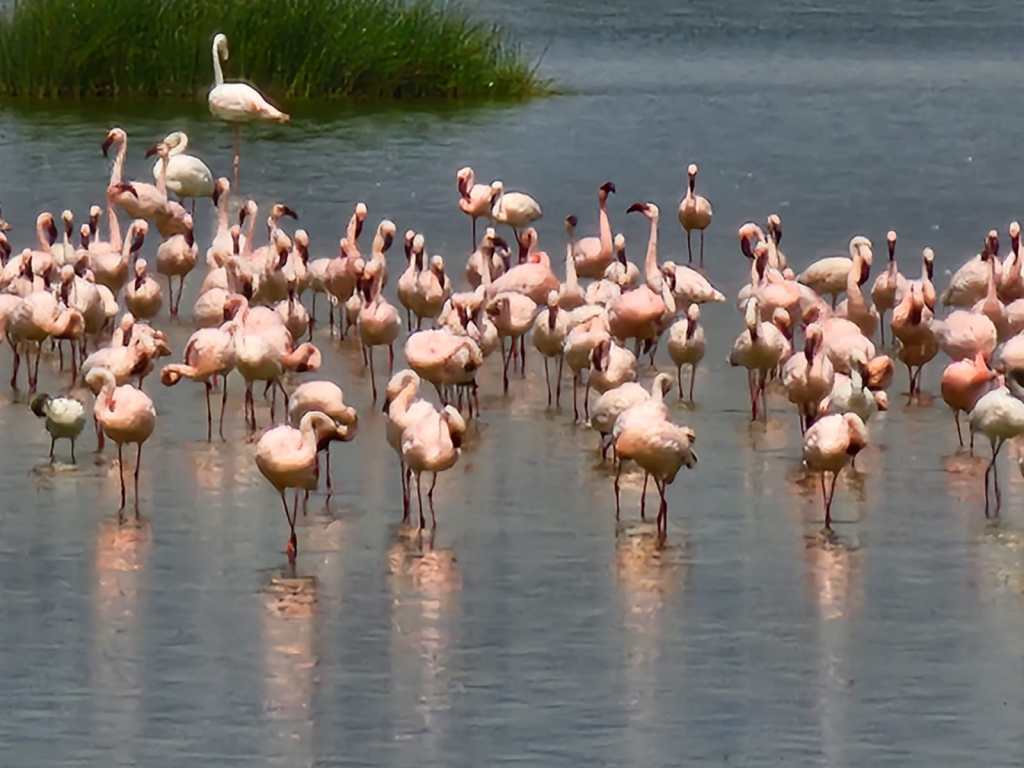
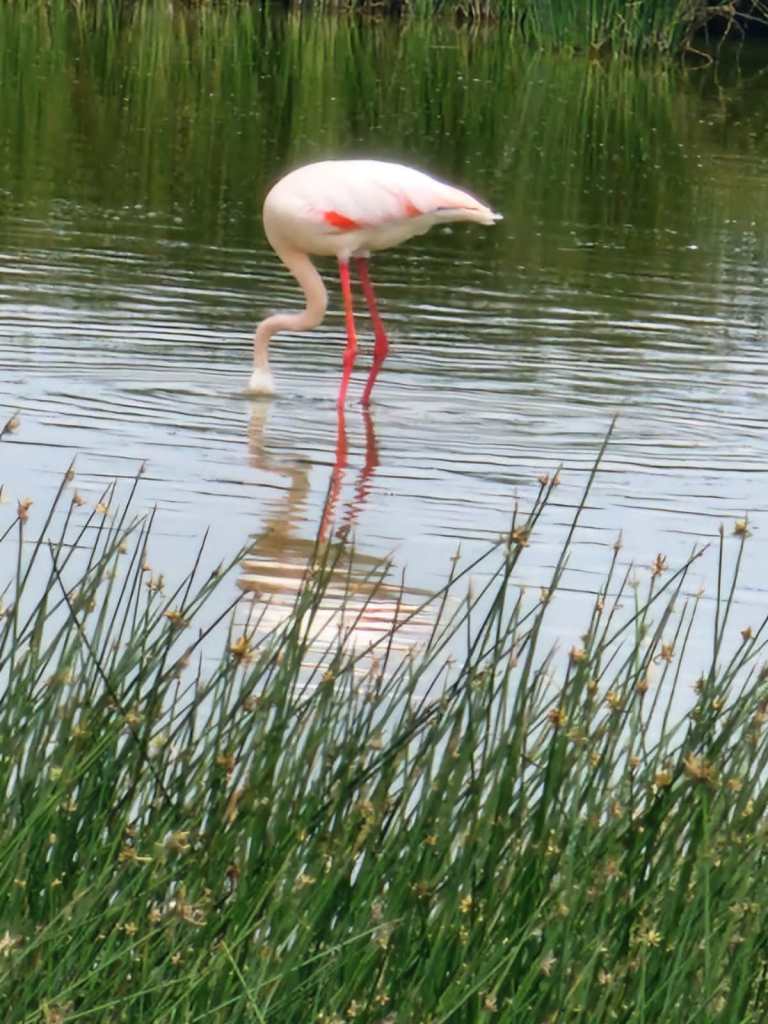
As we drove close to the lake we were pleasantly surprised by a pink haze in the horizon. Little did we know that a flock of flamingoes had decided to give us a surprise. Flamingoes are not normally seen here very commonly. But we were lucky!!

Flamingoes for you….

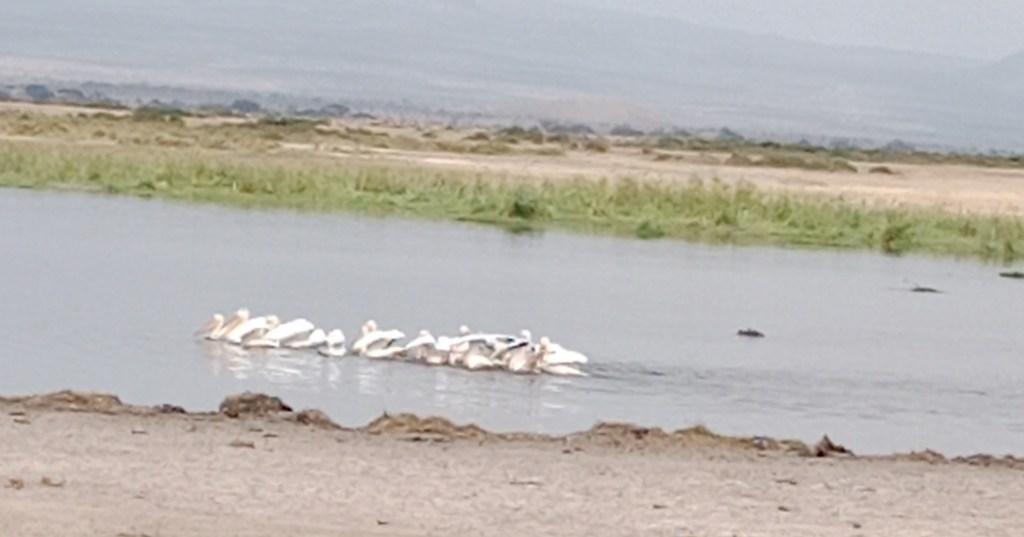
More Waterbirds….

Pelicans

A herd of zebras were seen grazing by the swamp…

Zebras grazing peacefully

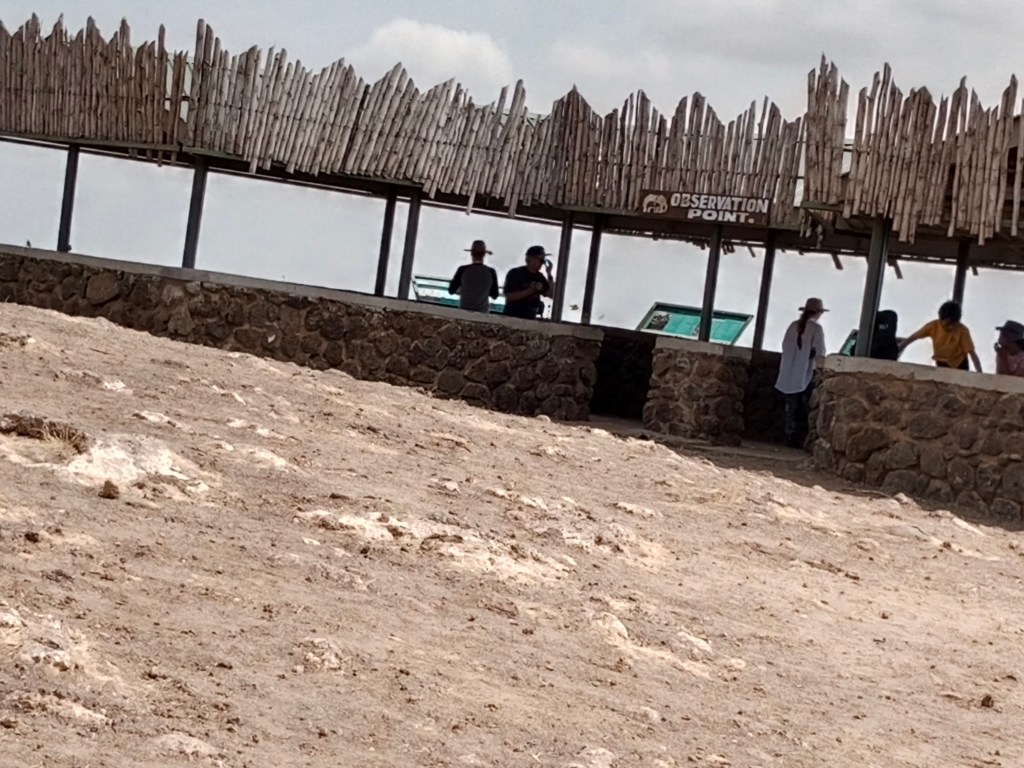
An observation hill located close to the lake gives a bird’s eye view of the National park and its environs.

As we arrived there, we were greeted by flocks of Superb starlings with their vibrant blue coloured backs. Making a real cacophony, they hopped around near our vehicle.

Superb starlings

The observation point on the hillock

View of Amboseli lake from observation point with some resting hippos

Apart from this we did see wildebeest grazing around. But the number of wildebeest we saw in Masai Mara was something extraordinary and so I will cover wildebeest under Masai Mara.

This sums up our Amboseli experience. This is how it looks in the dry season.

The wet season between April and June sees the parks roads becoming a challenge to move on. But with new vegetation springing up, the views are totally different with gazelles and zebras trying to hide behind the tall grass to elude predators, the migratory birds moving in from Europe and fresh little wildlife appearing as the old ones give birth.

Hence, a visit in the two seasons can leave one with entirely different perspectives of this natural wonder.

Hope you enjoyed your safari through Amboseli.

Next week, we are at Lake Naivasha where an opportunity to walk with the zebras and giraffes awaited us. So wait for that, but do not forget to subscribe, comment and give your feedback.