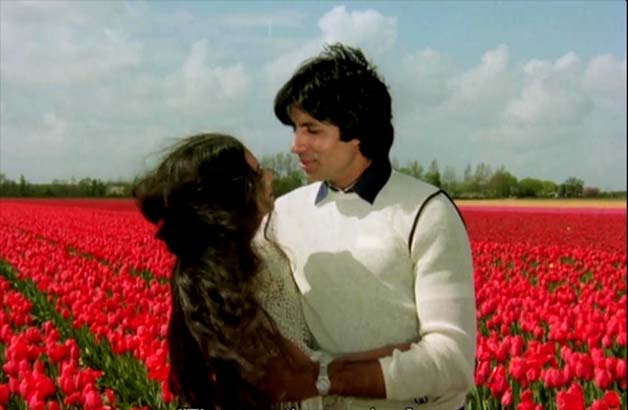
“Dekha ek khwab toh ye silsile huey’….this famous Hindi song from the movie Silsila would have had most of you fantasize yourself as Amitabh and Rekha in the tulip garden . Remember those stunning visuals at Keukenhof tulip gardens, the largest in the world?
Flash back to “Silsila”….
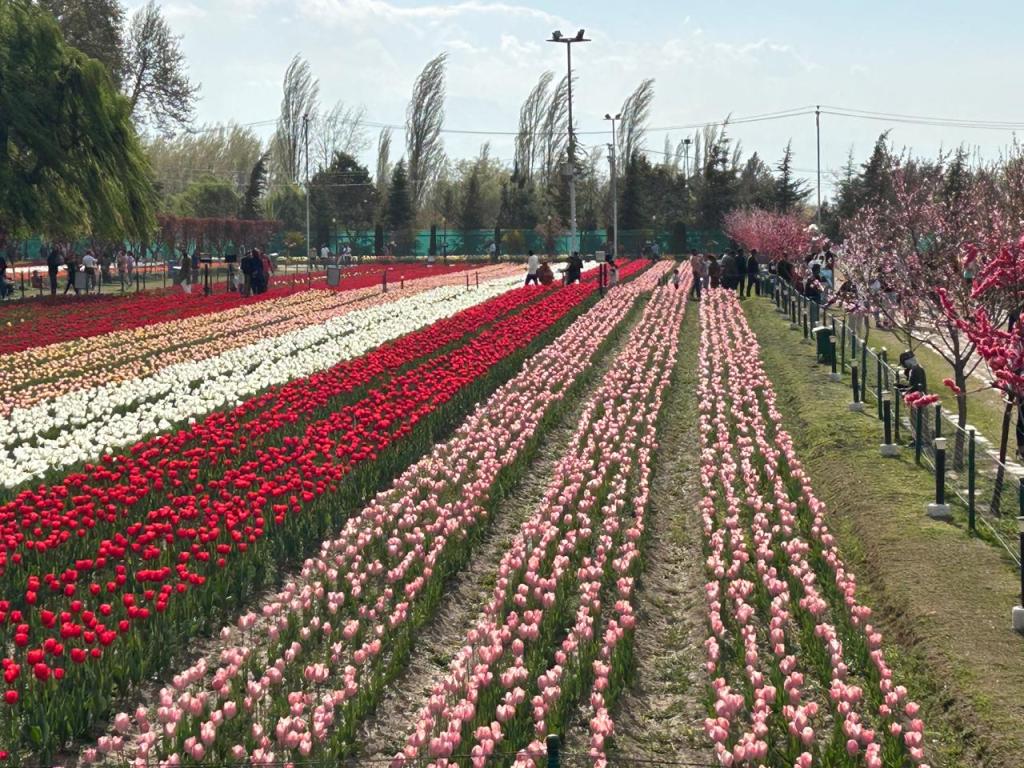
Today, let us visit the Indira Gandhi Memorial Tulip Garden in Srinagar; the largest tulip garden in Asia. This was originally a model floriculture center called Siraj Bagh.
A little bit on tulips….
Tulips have their origin in Persia and were brought to Europe in the 17th century. Today, Holland is the largest tulip producer in the world. Amsterdam in Holland boasts of flower auctions that attracts buyers from all over the world.
The tulip garden at Srinagar is a more affordable option for most tourists and it is equally stunning.
The beauties…
Visiting the Tulip Garden
This garden is open only for a short period of time in summer and so, be sure to time your visit to Kashmir when it’s open. It is open to the public roughly from early April for about 20 days marking the Tulip Festival. After that, the tulips lose their color and stance and the garden is closed. This period sees the maximum tourist inflows in to Kashmir making it necessary to book well in advance.
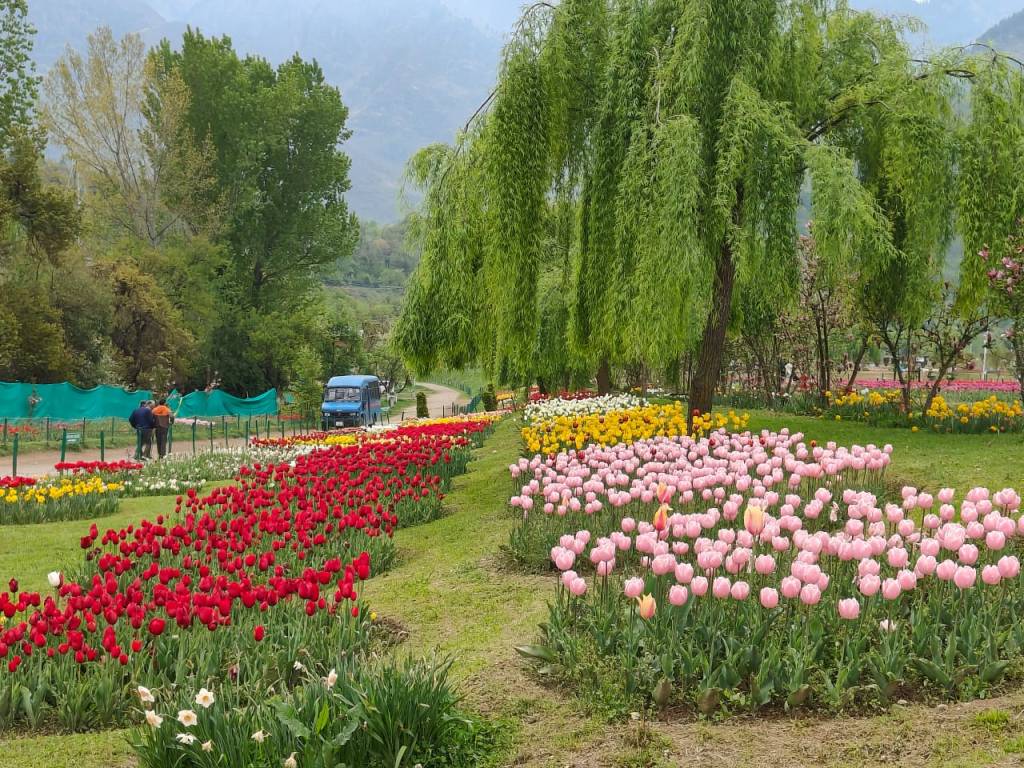
Spread over 30 acres of land at the foothills of the Zabarwan range in a sloping fashion with seven terraces, it is a sight to behold! Opened in 2007 to boost floriculture tourism, it is a relatively new addition to Srinagar’s attractions.
A short video of the layout of the tulip garden
At the tulip garden
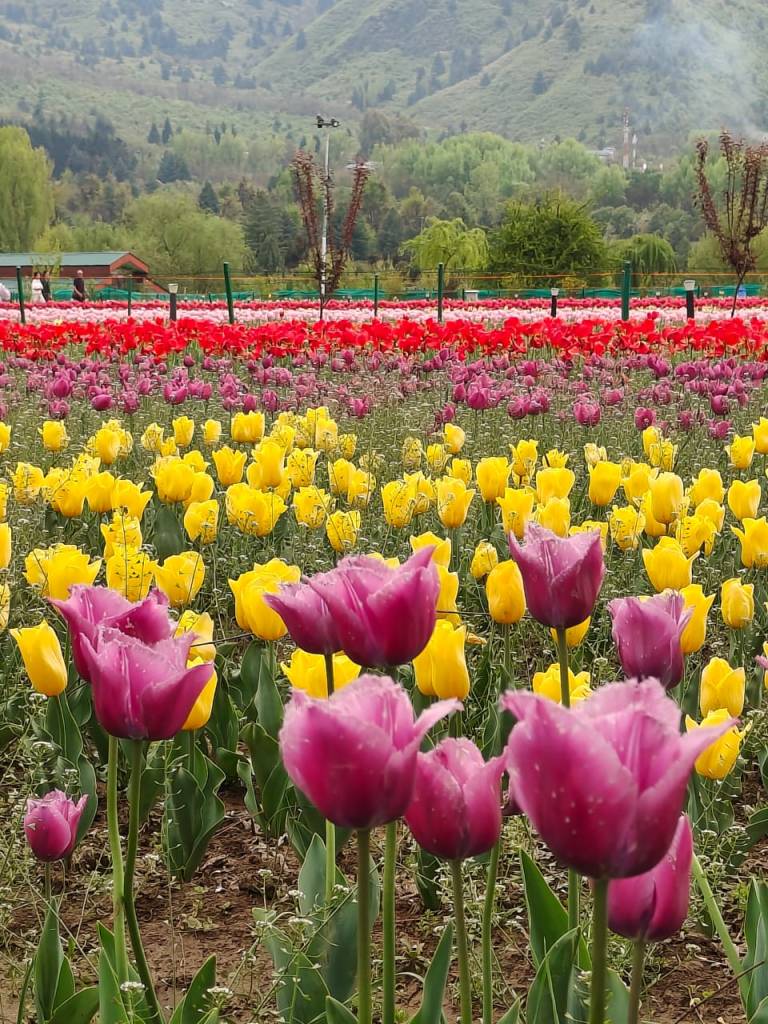
Well, 1.7 million tulip bulbs for our very own garden were brought from Keukenhof. There are around 73 varieties of tulips here apart from daffodils, hyacinths and many other varieties of flowers .
Some daffodilsamong the tulips
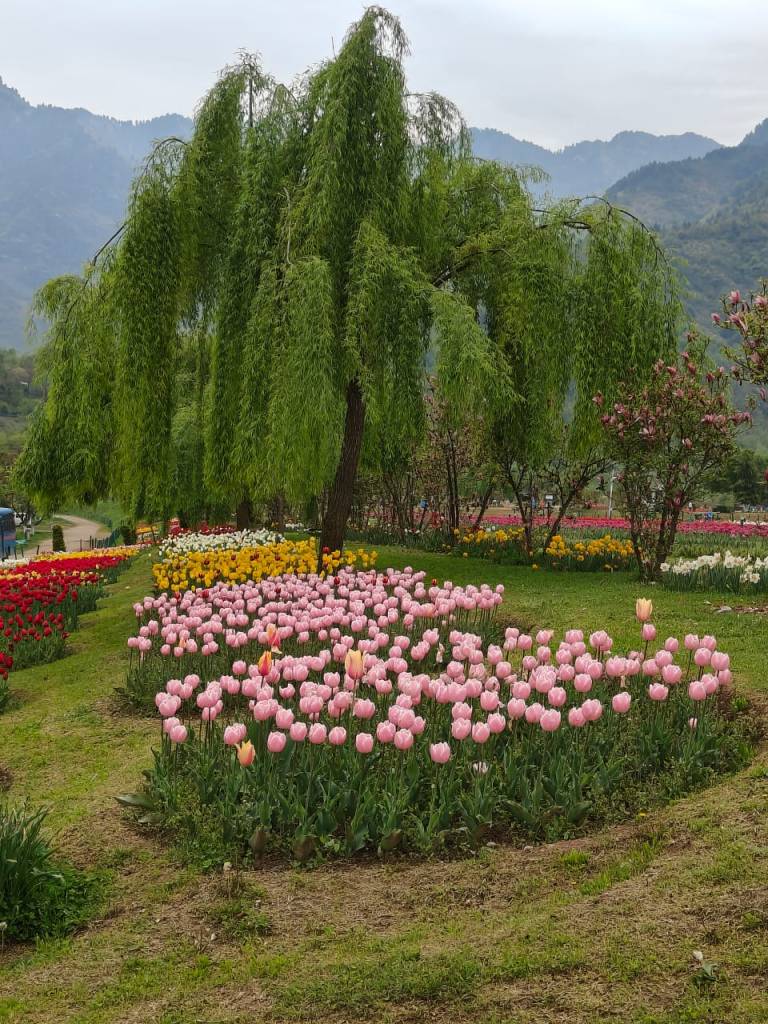
The tulips are planted in rows with each row having a different color. This interspersed color pattern literally makes it a rainbow on land!!
The rainbow has descended on earth!!!
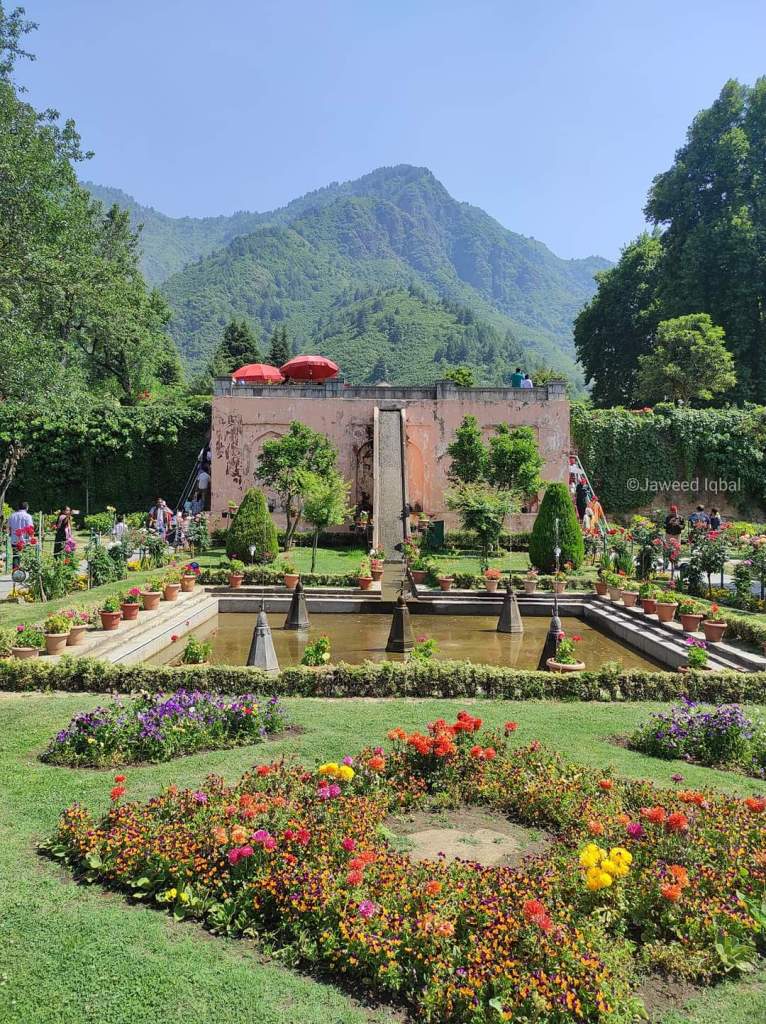
There are also a number of walkways and fountains making it a nice place for photo shoots.
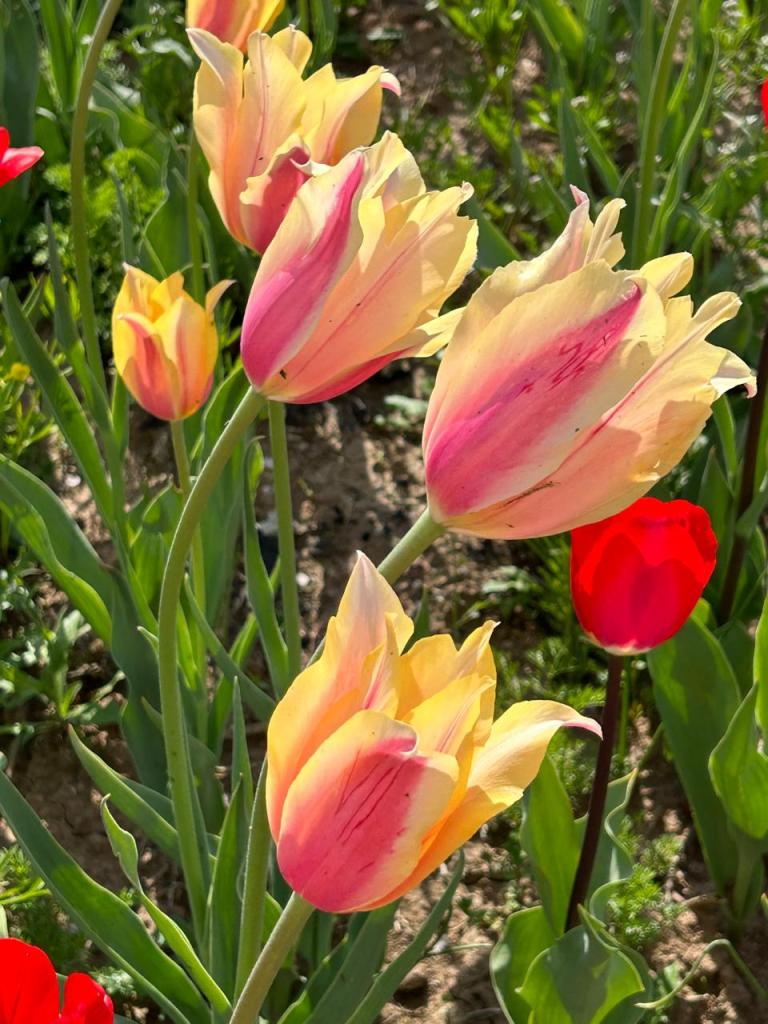
Any amount of description by a mere mortal like me is not going to match nature’s visual treat. So, let me just leave you with the pictures and videos. Enjoy the colorful treat…
Some stunning pictures from the tulip garden
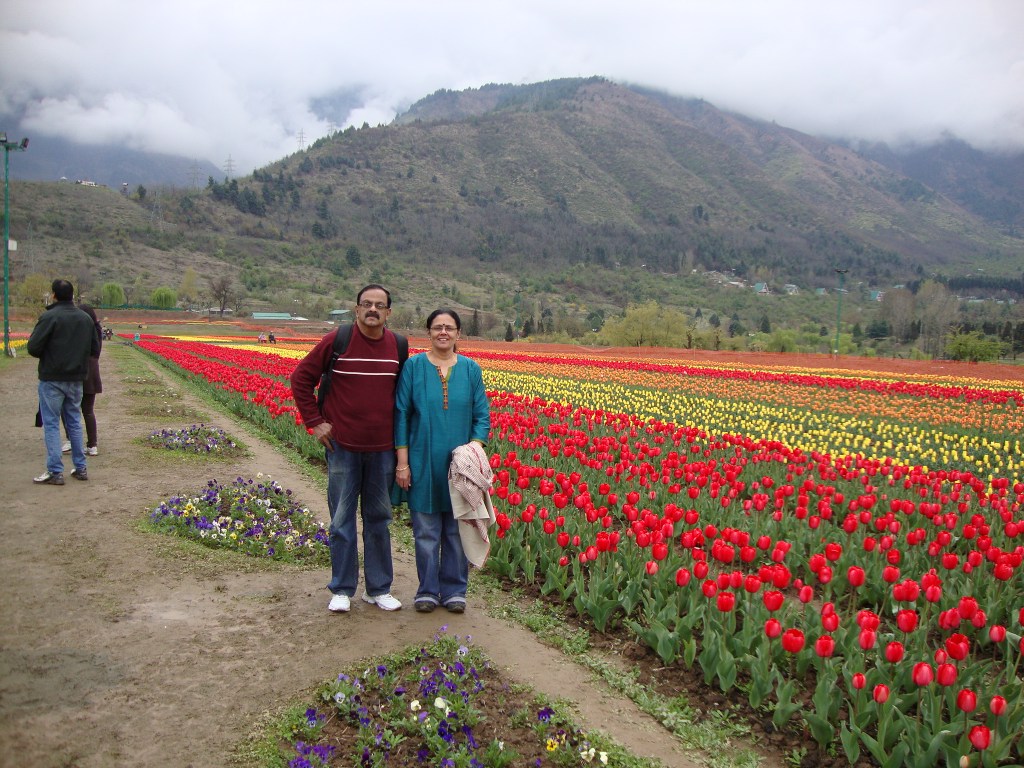
Last but not the least, let me leave you with one of our best memories of Kashmir….
Among the tulips…
Like all good things, this episode too, comes to an end. Next week, I meet you at The Moghul Gardens of Srinagar.
Many of us have been to Kashmir and stayed in a houseboat on Dal Lake. But how many of us have given it a second thought? We often go there as a tourist , enjoy the scenic beauty , click some nice pictures as memories and leave. Known as “floating houses”, these houseboats are iconic of Dal Lake.
The beginning of houseboats…
As we saw in the history of Srinagari or Srinagar, the region was under several regimes at various points in time. These included Emperor Ashoka, The Mughals, The Afghans, the Sikhs and the Dogras. Most of the rulers used the place as a summer resort due to its salubrious climate. The Europeans particularly the British were also interested in having their summer resorts here .But a law prevented outsiders from buying land in Kashmir.The Europeans cleverly circumvented this by building house boats. And that saw the birth of the houseboats on Dal Lake.
After independence, the Kashmiri Hanjis built, and maintained these houseboats, started cultivation on the lake ,created floating markets and thus it slowly became the centre of their livelihoods. Today, houseboat tourism is big business in Kashmir with a stay on a houseboat becoming an essential part of a Kashmir itinerary of the tourist.
Where are they?
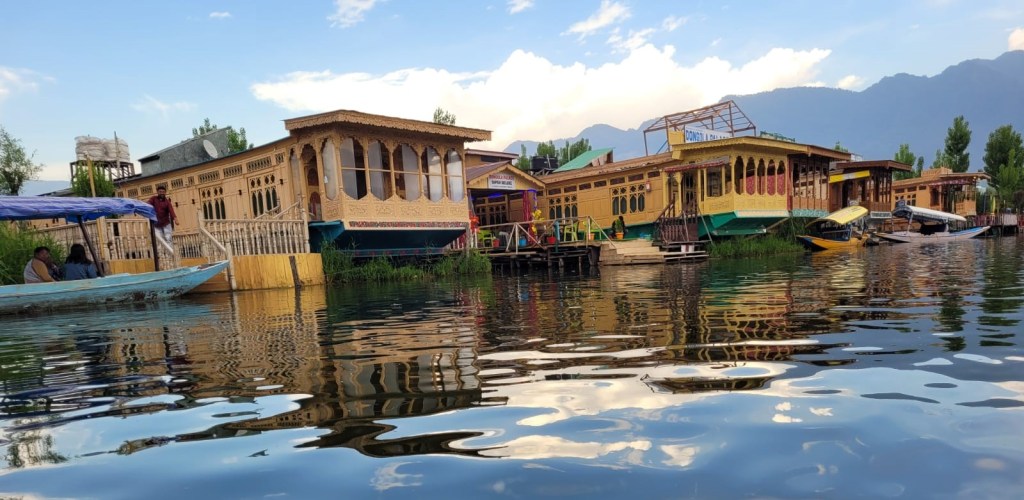
The houseboats on Dal lake are stationary unlike their namesakes in the backwaters of Kerala. They are moored to the western edge of Dal lake and most houseboats have their own utility boats for ferrying guests to and from ashore. They typically have either European names or Indian names. There are wooden passages built to go from one houseboat to another.
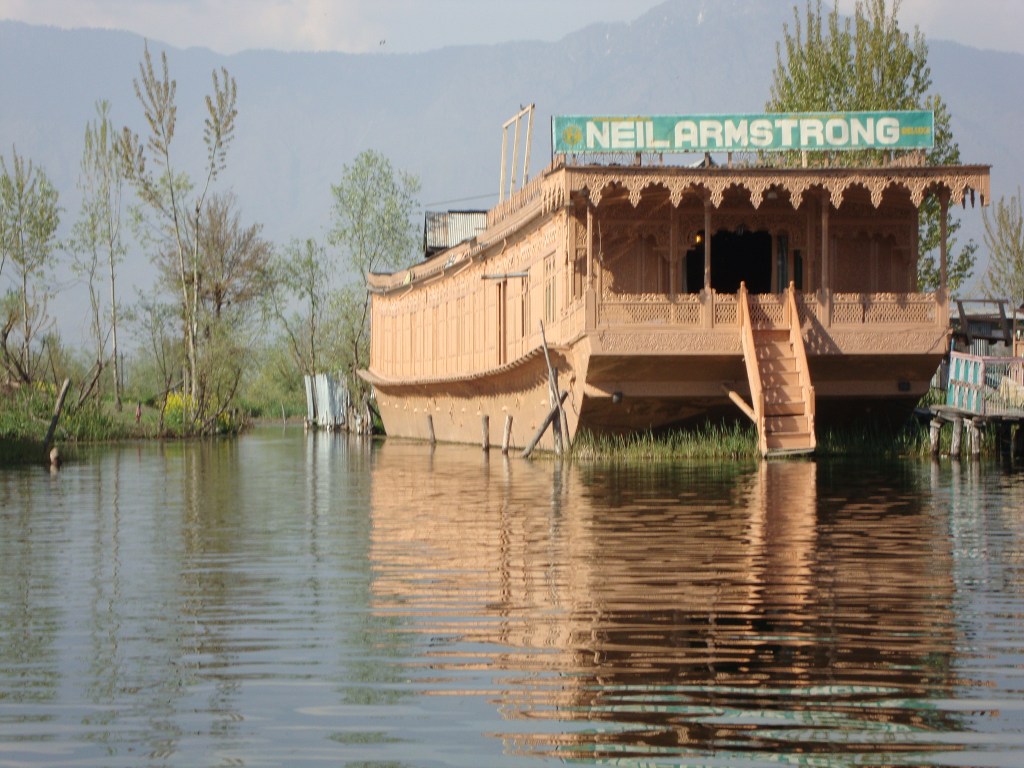
A typical Kashmiri houseboat
Rubbing shoulders here are one European named and one Indian name houseboat
The wooden passages between houseboats
Features of a houseboat
The houseboats are vibrant examples of Kashmiri artistry and woodcrafting. Cedar wood which remains healthy even after prolonged stay in water is used to build these houseboats . Intricately carved wood paneling with a porch for guests to relax and enjoy the views of Dal lake are some of it’s salient features. Most of them however appear a bit dated and in need of repair and restoration.
The porch with intricate carvings on the wooden walls
They are like proper houses with a deck, porch, living room, dining room and then the indivudual guest rooms behind . A typical one would have around 4 to 6 rooms each with a double bed, attached bath and toilet. The porch and dining area is common. The caretakers also typically live beside the houseboat and food is cooked by the caretakers.
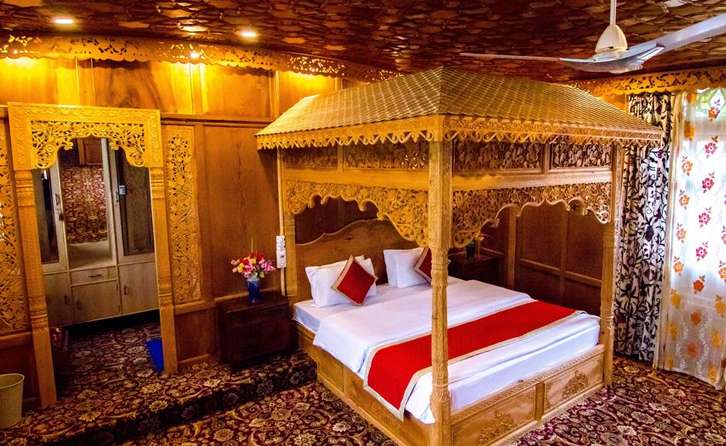
Furniture in the houseboat is made of walnut wood and that also is intricately carved. Wall to wall carpets with typical Kashmiri designs adds to the interior beauty.
The intricately carved furniture and typical Kashmiri carpets.
There are houseboats of varied capacities. This arrangement works well for all types of guests, be it families, honeymooners, friends groups or even senior citizens. There are very expensive luxury houseboats, mid range ones and even budget boats to suit every pocket.
A typical room in a houseboat.
The corridor on the houseboat from where you enter the rooms
Sitting in the porch and observing the shikaras go by can be very soothing.
Enjoying the views of Dal lake from the houseboat
As you sit on the houseboats, shikaras and ferry boats approach the houseboats with wares to sell.
Fruits for sale!!!
Shikaras
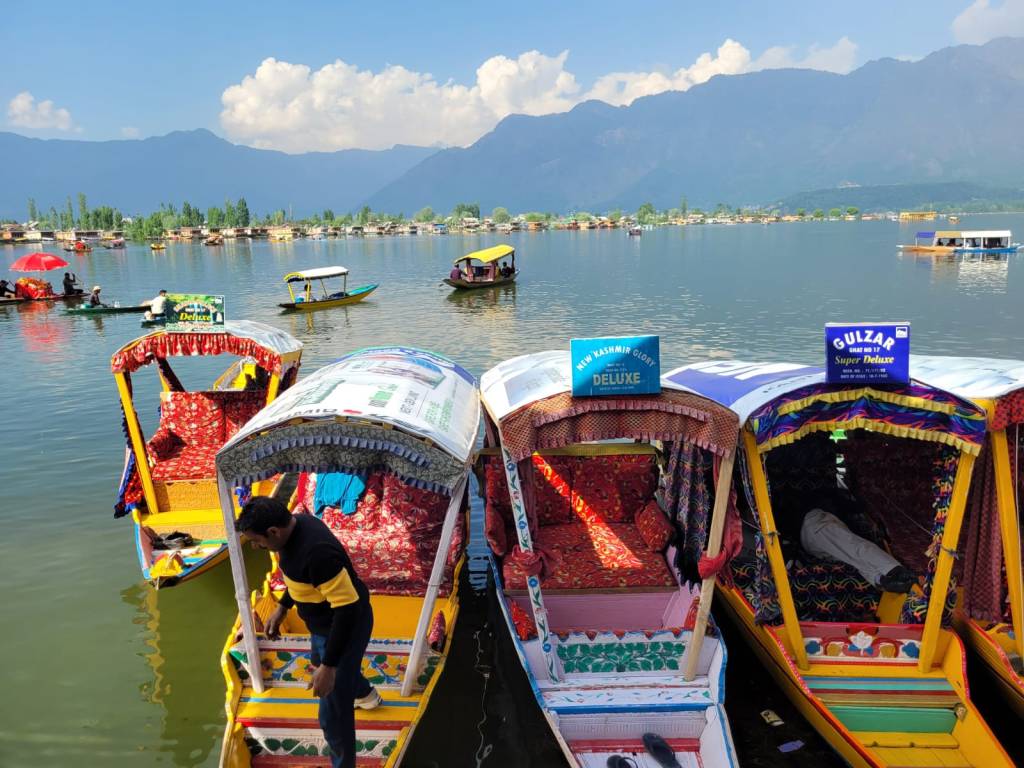
Shikaras are another iconic feature of Dal Lake. They are slender, shallow boats with a roof that is often very ornate and colourful. The interiors of the shikara are cushioned and decorated in typical Kashmiri colours and designs. These are reminiscent of the gondolas in Venice but are more decorated, colourful and having roofs.
Shikaras await tourists on a placid Dal lake
Shikara ride
A shikara ride is “must do” on a houseboat holiday.These are rowed by a boatman with oars and they literally glide on the waters of the Dal Lake making the shikara ride a surreal experience!! Shikaras have a romantic charm about them
Steps to board the Shikaras from the houseboat
On a shikara ride
The shikara sails on Dal lake (click on video)
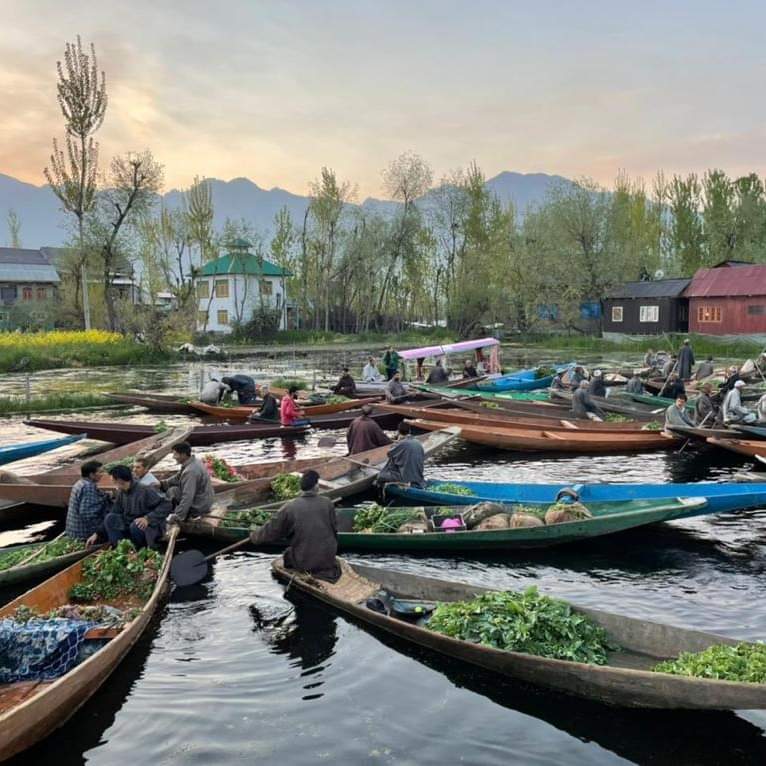
The Shikaras take you through the narrow channels of Dal lake where the floating markets are located . Traditional kashmiri arts and crafts, shawls and snacks are available here and one can indulge oneself as one floats along…
Sailing along the floating markets on a shikara
As one sails along on the shikara, various other sights can also be seen like the Sankaracharya temple on the hillock,the moghul gardensetc.
You have now virtually stayed on a houseboat and taken a shikara ride on Dal lake. I hope you enjoyed this trip. See you next week in the gardens of Srinagar….another amazing experience indeed. Till then, do give your feedback and comments..
The term Dal Lake is a misnomer as the term Dal in Kashmiri means lake! Covering an area of 18 sq kms and with a shoreline of more than 15 kms, this lake is known as the jewel of Srinagar.
This iconic lake of Kashmir is infact made up of three lakes and does not fit the conventional picture of a lake. It is a maze of waterways and channels , well linked with each other . It has open areas which look like a typical lake and there arehouses which seem to have been built on water. The houseboats which are anchored along its edges look like boats on an island and it has islands that look as if they are floating on the lake . The multicoloured ornate shikaras remind you of the gondolas of Venice and to top it all, there are areas of cultivation where farming seems to be happening on the surface of a lake !! All this against the backdrop of the snowcapped Himalayas and beautiful willow and chinar trees lining the boulevard that skirts the lake.
Come, have a look at some beautiful pictures of Dal lake….
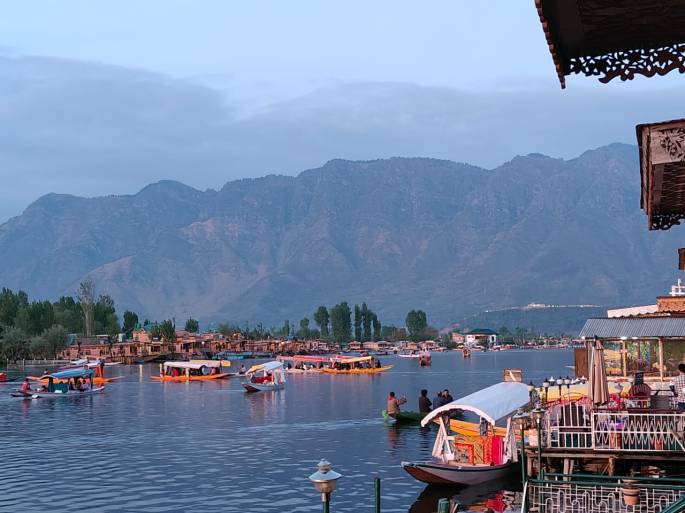
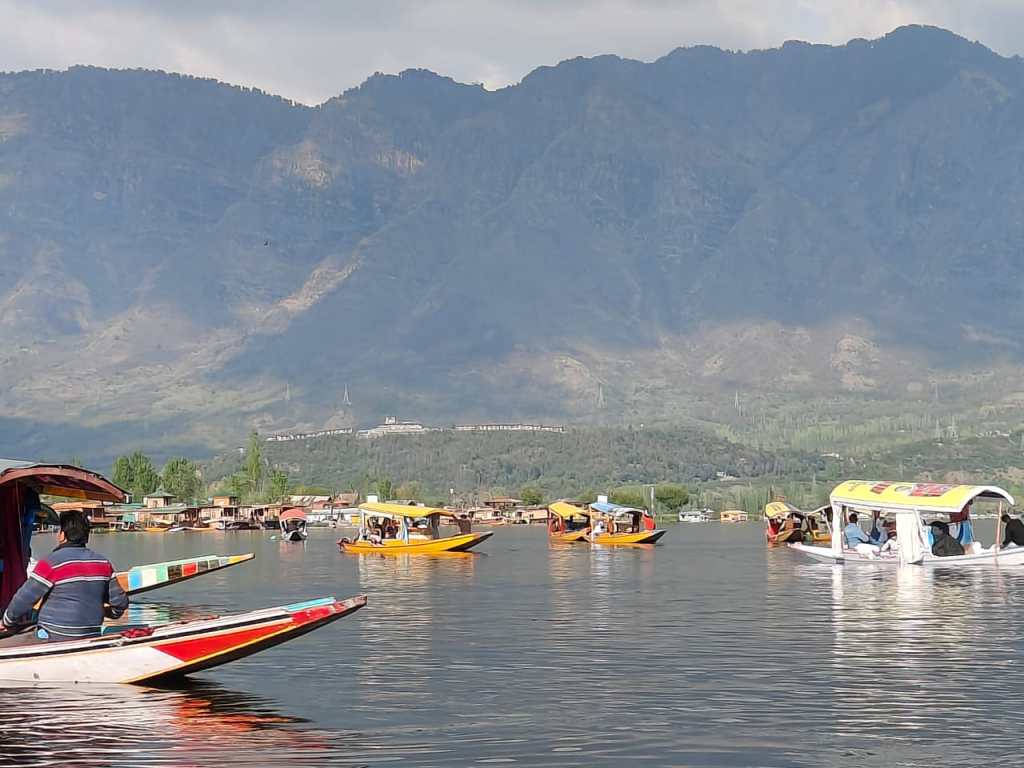
Dal lake with shikaras and the Himalayas in the backdrop
The skirting boulevard with chinar and willow trees
Narrow channels of the lake with shops on either side
The shikaras take you on a pleasure trip on Dal lake when they take you through the narrow channels and floating markets
The floating market
Houseboats and shikaras are integral to Dal lake and are a source of livelihood for the locals through tourism . The houseboats provide accomodation to the tourists and the shikaras ferry them to and fro .
The houseboats and their functioning will be dealt with in detail in another episode. Suffice it to say now that Dal lake, houseboats and shikaras are inseparable!
Houseboats moored along the sides
Colourful shikaras floating around
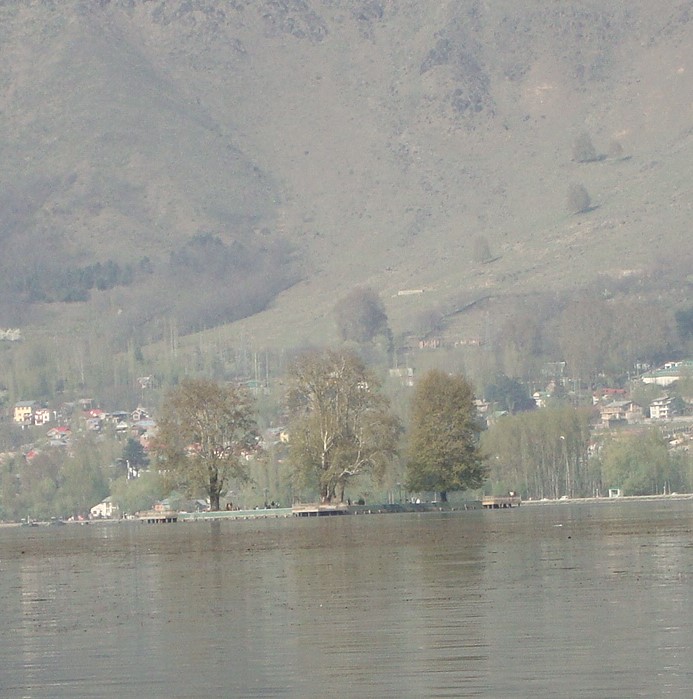
The Char Chinar or 4 chinar trees on an island
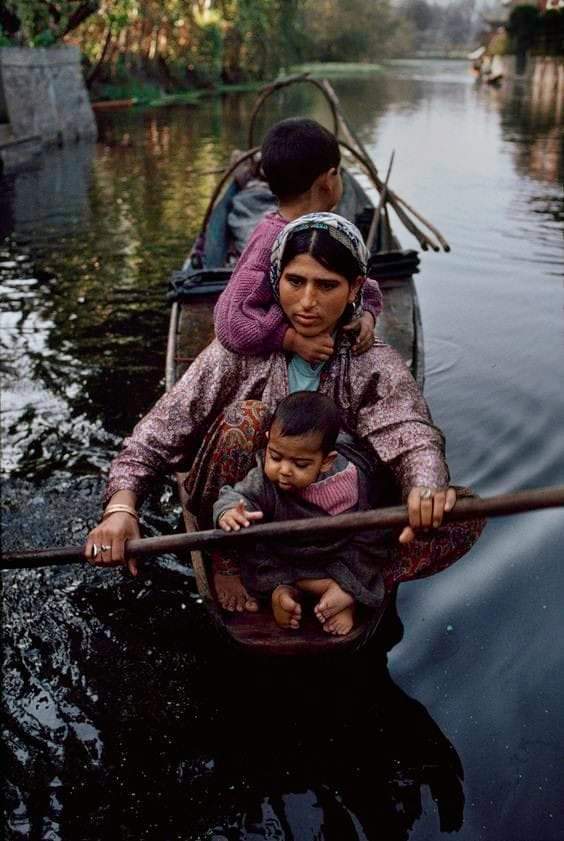
Dal lake is integral to the lives of the locals. The sights of houses built on the lake with activities going on like ashore can be amazing to visitors like us. Women rowing boats across the lake for their daily shopping and children going to school on these boats is a common sight.
Houses that seem to have sprung up from water
Cultivation on Dal Lake
A Kashmiri woman and her kids go about their daily life
There is even a floating post office on the lake!!!
A floating PostOffice!!!
Sunset on Dal lake can be very mesmerising. Apart from that, as the darkness sets in, the lights from the boulevard reflecting on the lake shore and the lights of the houseboats can look beautiful indeed!
Sunset on Dal Lake
And finally,the lit up houseboats
The Floating Gardensor Rad
These unique floating gardens will welcome you with lotus blooms if you visit Srinagar in July /August. These are locally called Rad and consist of matted vegetation and earth that is cut off from the bottom of the lake and pulled away to a convenient location and moored. This is an important wetland in the region . Tomatoes, cucumber and melons are also seen growing here and if you observe the water, they actually float.
The lotus blooms and cultivation in the Floating Gardens
Dal is also an important source of commercial fishing .
A fisherman quietly fishes on dal lake…
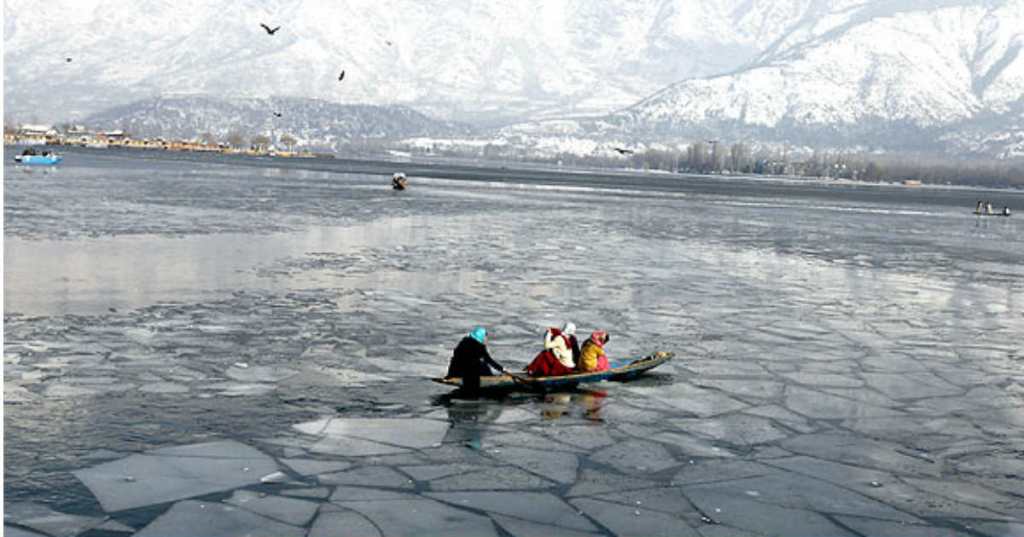
All this is summer on Dal lake. Winters on Dal lake look totally different. With temperatures plummeting to sub zero levels in Srinagar, the lake freezes partially or even completely at times. Dal lake in winter can look totally different like in the pictures below…
Winters on Dal Lake…
With the reversal of insurgency in the Kashmir valley, tourism has seen a continuous upsurge. A large number of hotels, restaurants and other commercial establishments have sprung up along the shores of Dal lake.
Crowds in peak season
As a consequence, Dal lake faces the threat of eutrophication (excessive nutrients leading to overgrowth of plants and algae) with deterioration of water quality due to untreated sewage entering it. The lake has also shrunk in size . At present extensive restoration work is taking place in the Dal lake to address the issue of pollution and eutrophication and restore the waters to its old glory.
I have ended this on a rather sombre note. That’s just to highlight the importance of responsible tourism so that the bounty that nature has blessed us with is sustained.
See you next week with the inseparable part of Dal lake; the houseboats and shikaras. Till then; do subscribe, comment and give your feedback…
Srinagar, the largest city and capital of Jammu and Kashmir lies on the banks of the Jhelum river at an elevation of 5200 ft surrounded by the beautiful Himalayas .Home to lakes, gardens, meadows and hills, its houseboats and shikaras ( gondolas) are its identity. Infact, the Dal lake and its shikaras have given Srinagar the nickname of Venice of the East. A variety of handicrafts and dry fruits are also a speciality here.
Srinagar, a perspective…
Srinagar in Sanskrit stands for city of “Shri” (Goddess Lakshmi).
Starting with Emperor Ashoka, Kashmir has been under many kings and dynasties including the Mughals and they have all left their unique stamps on this “Heaven on Earth”. 8th century temples have been discovered near Srinagar apart from various Hindu shrines worshipped by Kashmiri Hindus. Mosques were built during the period of the Sultans and Mughals. During the Mughal era, Srinagar prospered and various gardens like the Shalimar and Nishat were built in that period. Afghans ,Sikhs and Dogras followed as rulers of Kashmir but the decay of the city started. Indian independence was followed by the accession of Kashmir to India. Insurgency gripped Kashmir in the 1980s and various instances of riots and massacres followed. Administrative crackdown followed and resulted in checkpoints and bunkers at various places in the city seen even today.
Suffice it to say that the “Heaven on Earth” has seen tumultous times ; the consequences of which are visible even today. Srinagar is heavily dependent on tourist inflows and it has seen hard times during the insurgency. The last decade has seen the gradual improvement of the situation and resurgence of tourism. In fact this year has seen record tourist inflows. Let us hope it continues to stay that way so that every one can visit this heaven….!!!!
The city lies on both banks of the Jhelum river as it meanders through the valley. There are nine bridges that connect both sides of the city . A number of lakes and swamps are present here . Dal , Nigeen and Anchar are some of the popular lakes while the wetlands of Hokersar are a great destination for migrating birds from Siberia.
Visiting Srinagar
A visit to Srinagar can be a different experience each time as the city changes its characters with the seasons.
In spring and summer, a houseboat stay, a shikara ride on the Dal lake, a visit to the floating markets and of course the Mughal gardens and the famous Tulip Garden will enthrall you.
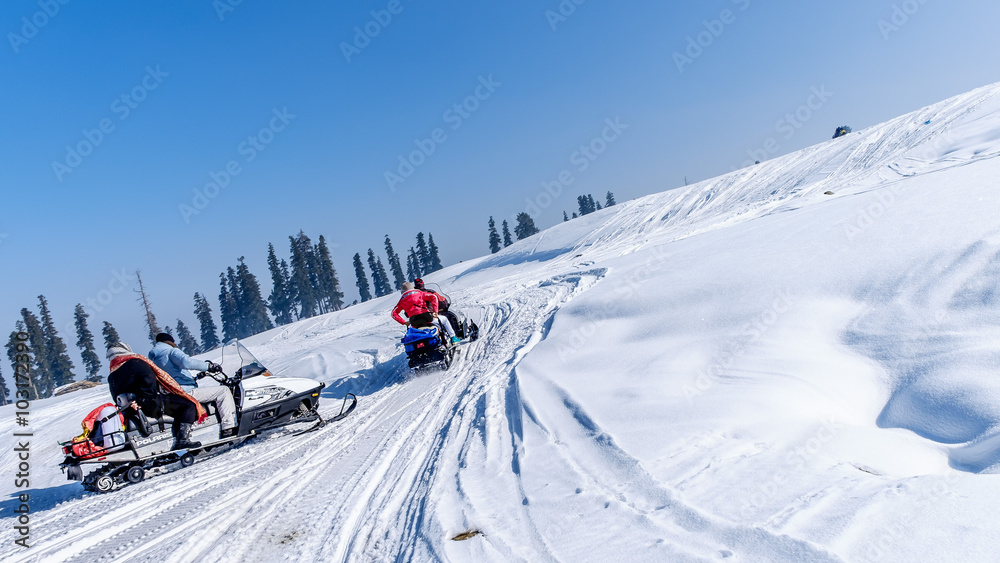
In winter, it becomes a winter sport and adventure sport destination and looks totally different when draped in snow.
Enjoying the special cuisine is yet another experience!
Venice of the East
The multiple lakes with navigation channels all over have given the city this nickname. Dal lake and Nigeen lake have houseboats , while Wular is the one of the largest freshwater lakes in Asia.
Houseboat tourism is one of the biggest revenue generators of Kashmir. These houseboats are stationary and anchored along the banks of the Dal lake. More on Dal Lake and its houseboats and shikaras in future episodes…
Nigeen Lake
Mughal Gardens
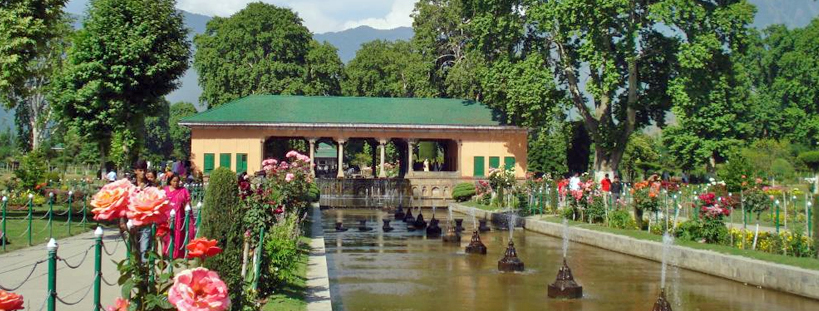
Srinagar has many of the gardens built during the Mughal era all over India. Shalimar, ChashmeShahi and Nishat are some such gardens that are on the way to becoming world heritage sites. More on these in later episodes.
Mughal gardens
Shankaracharya Temple
This 9th century temple , perched atop Shankaracharya Hill, is evidence of Hindu culture and philosophy having left a stamp on Kashmir.
This temple is considered the oldest temple in Kashmir and is dedicated to Lord Shiva. Kashmiri Hindus believe that the temple was visited by Adi Shankara during his spiritual journey across India . He is believed to have meditated in a cave close by , and as a tribute to his visit, the temple came to be known as the Shankaracharya Temple.
The temple is easily accessible by road to the base of Shankaracharya Hill. From there, a flight of approximately 250 steps leads to the temple complex.The last few steps are quiet steep. It is important to get there as early in the morning as possible so that you can get dropped close to the steps .If you reach later than 9.30 then you will have to walk up the road quite a distance as there is no place to park the car near the ascent.
Built with strong stones with a conical roof, the primary deity of the temple complex, Lord Shiva, resides in the sanctum sanctorum in the shape of a lingam. There is also a statue of Adi Shankara in the temple.
Ample resting area with proper shade is available at the top and 360 degree views of Srinagar can be seen from the top.
The temple is used for regular worship and pilgrims visit the temple during the Amarnath Yatra too.
The hill, temple and steps leading to the deity
View of Dal lake from Shankaracharya temple
Hazratbal Shrine
Also called Dargah Sharif, this is a holy shrine of the Muslims. Located on the banks of Dal lake, a hair of Prophet Muhammed is preserved here.
It has a long history. The site where the mosque is today was a garden during the reign of Shah Jahan. The present day mosque has a marble edifice and dome completed in 1979.
Hazratbal shrine
Lal Chowk
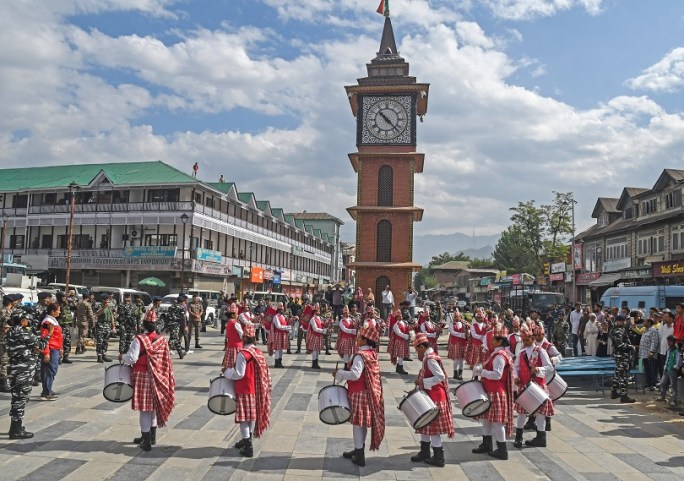
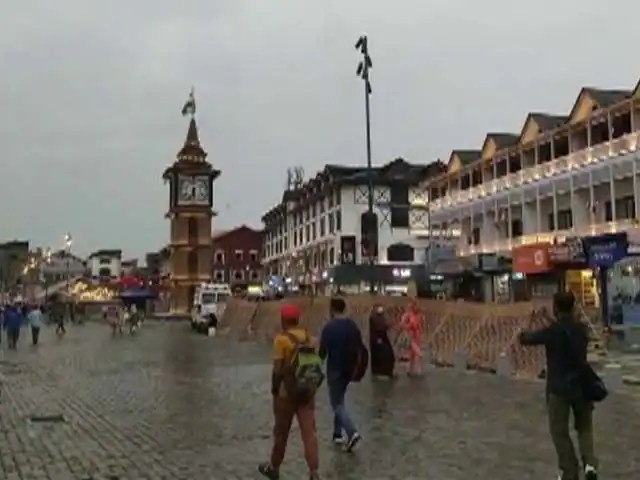
This city square in Srinagar was built similar to the Red square in Moscow and is really the center of all activity here. The iconic clock tower here is called Ghanta Ghar. It has seen many renovations and is a mix of contemporary and classic architectural design.
It has been witness to many unfortunate incidents during the times of insurgency in Kashmir. Today, many political meetings , community functions and festivals are celebrated here.
A lot of shops are located around this and it is one of the main shopping centers in Srinagar.
Lal Chowk
A shopkeeper arranges dry fruits in his shop at Lalchowk
Hari Parbat
This is a hill overlooking Srinagar city and has a fort and multiple shrines.
The fort was built by Emperor Akbar in 1590 but was never completed. The present fort was built in 1808 during the Durrani Empire.
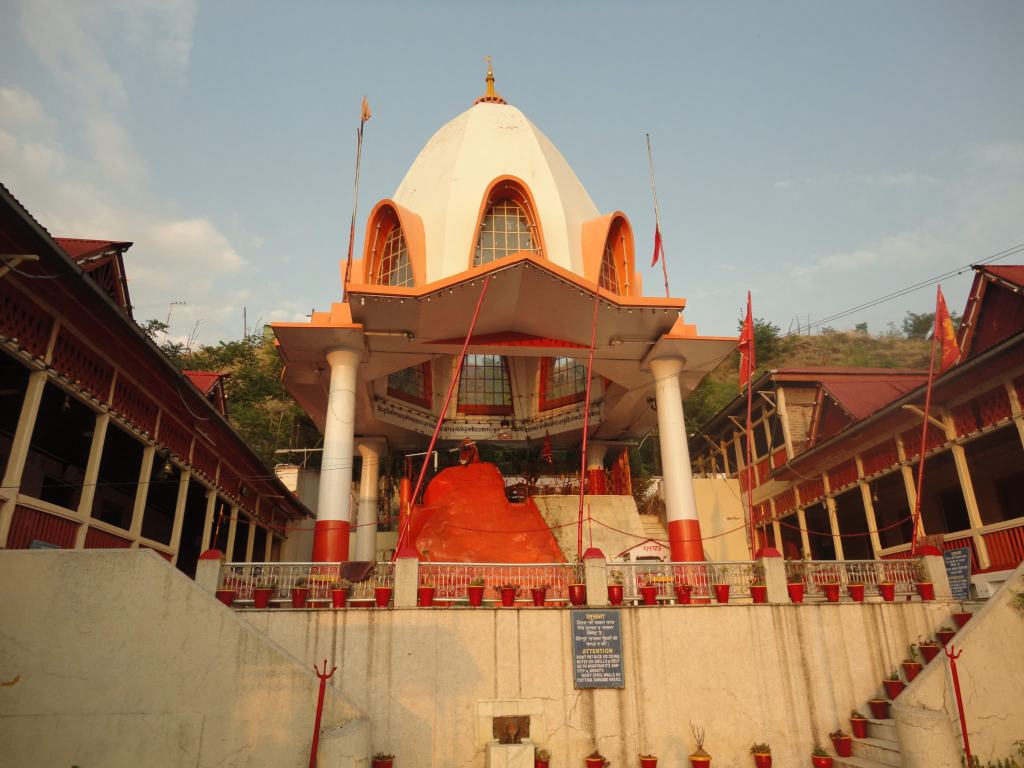
There are multiple shrines at Hari Parbat. Hari Parbat is sacred to Kashmiri Hindus and Goddess Parvati with 18 arms sitting on the Sri chakra is worshipped in a temple here. A mosque called Makhdoom Sahib and Gurudwaras are also present at Hari Parbat.
The Hari Parbat, fort and temple
More Shopping!!
Last week we looked at some unique products to shop in Kashmir. Well, there are a few more.
Kashmiri paper mache products
Paper mache was introduced in India by a Persian saint on his journey through Kashmir. He also brought some skilled craftsmen from Persia. The local artisans then added their own designs and today we have a wide array of typical Kashmiri paper mache products.
Pen stands, jewelry boxes, paper holders and even storage containers are available and look very attractive.
Kashmiri Paper Mache items
Kashmiri Wazwan
This is a multicourse meal of Kashmiris considered the pride of Kashmiri culture. It has mainly nonveg dishes ; usually lamb or chicken with few veg dishes.
Kashmiri Wazwan
That sums up Srinagar for you. Next week we will visit Dal Lake and soak up the ambience there.
“If there is a paradise on earth, it is here, it is here, it is here “…. this is how the great Urdu poet Amir Khusrau described Kashmir . Kashmir is blessed with lush green meadows, snow capped mountains, crystal clear streams, lakes and picturesque landscapes evoking this very same sentiment in the minds of any traveler to Kashmir . Its natural beauty has been described in innumerable works of literature and memoirs apart from it being showcased in multiple films.
Let me start my series on Kashmir with a general roundup and then get into each of the places in detail in following episodes.
How did Kashmir get its name?
Legend says that an ascetic by name Kashyapa reclaimed the land from a lake leading to the place being called Kashyapamar and later Kashmir. The word Kashmira is also believed to denote “got from water”.
Visiting Kashmir
Visiting Kashmir can be an experience like no other.Be it the blooms of varied hues and the green meadows in spring or the snow covered white landscape of winter, Kashmir has a special appeal in every season .
From the houseboat stay and a shikara ride on Dal lake, to the Mughal and Tulip gardens and the bustling streets of Srinagar ; to a pony ride on the calm and peace of the meadows of Pahalgam ; to the gondola ride and snow of Gulmarg, Kashmir offers a variety of tourist opportunities. To do some justice to each of these experiences, I will be dealing with them in separate episodes. For now, I will just leave you with some pictures of the natural beauty of Kashmir….
The Dal lake and shikaras
Meadows of Pahalgam
Snowcapped Himalayas
The Mughal gardens
The ski slopes of Gulmarg
Now that I have given you a visual idea of what to expect in the the upcoming episodes of this series , let me take you through few unique experiences which are common to most parts of Kashmir.
The mustard fields, saffron and apple orchards are a unique draw of this place and let us have a look at them.
Mustard fields
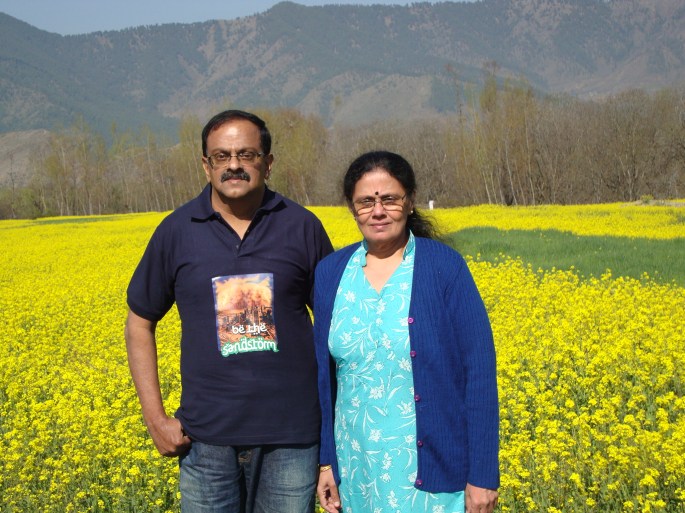
The mustard fields are very special to Kashmir and vast areas of yellow can be seen even from the flight making one wonder what it is?
Yellow fields interspersed with green as seen from the flight
The mustard flowers announce the onset of summer and all along the highways, they provide a beautiful sight against the snow capped mountains. Mustard is of high economic value to the locals too.
The yellow carpet of mustard flowers
In a mustard field along the highway
Saffron
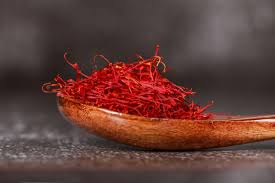
Another specialty of Kashmir is the saffron. Saffron gives a golden color and a distinctive flavor to food.Used widely in Kashmiri cuisine, it isone of the most expensive spices in the world and is called Red Gold. Selling at 3 to 3.5 lakhs per kilo, it is costlier than precious metals.
It comes from the orange red stigma of the purple flowers of the saffron plant. It takes thousands of flowers to make one gram of saffron. Earlier on saffron was widely cultivated in Kashmir but now, it is mainly restricted to the Pampore area.It has to be delicately handled and is mostly handpicked by women.
Saffron
The harvested saffron flowers. Note the orange red stigma…
Dry Fruits and Nuts
Dry fruits and nuts have a special place in several local dishes and are used extensively. Markets in Kashmir are flooded with such dry fruits and nuts. The more popular ones are walnuts, almonds, apricots and figs.
Walnuts
Kashmir’s blush…the apple orchards
Known popularly as Kashmir’s blush, the apple trees droop with the red fruit bringing cheer to the farmers of the valley from August to October . Kashmir accounts for more than 70% of the national apple production . Sopore town is known as the Apple town of Kashmir.
Visiting Kashmir in April, one can see the trees full of white apple blooms. A visit to an apple orchard is an addition to the routine tours. Fresh apple juice is served here. Some pictures…
Apple orchard
Walk through an apple orchard (click on the video)
Kahwa
A local speciality of Kashmir, this is a drink; a tea made by boiling green tea leaves with saffron, cinnamon, cardamom and sometimes roses. It is served with sugar or honey and often garnished with walnuts and almonds. Sometimes the infusion is only of the spices without the green tea.
It is prepared in a special vessel called a samovar.
Kahwa
The Samovar
Shopping in Kashmir
Besides the ethereal beauty that Kashmir posses it also offers excellent shopping opportunities to tourists. Apart from saffron and dry fruits, the region offers exquisite and culturally unique items that make for memorable souvenirs and cherished gifts.
Pashmina Shawls
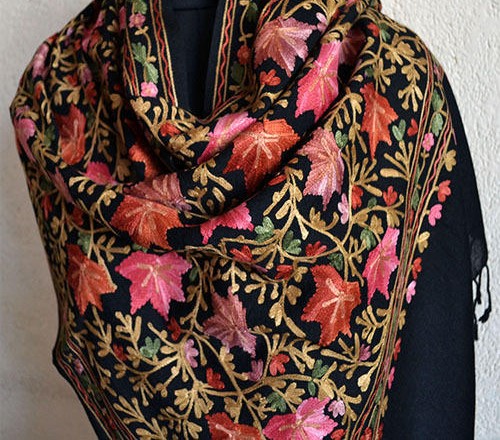
You may be well aware of the famous Kashmiri shawls made of Pashmina wool. This wool is extremely soft and is obtained from the special breed of goats called Chanthangi goats. These goats are reared predominantly by a nomadic Buddhist tribe called Changpa in Ladakh, Nepal and Kashmir.
These shawls are hand crafted in traditional designs and are known for their soft texture, warmth and durability.
A traditional hand embroidered Pashmina shawl
Kashmiri Carpets
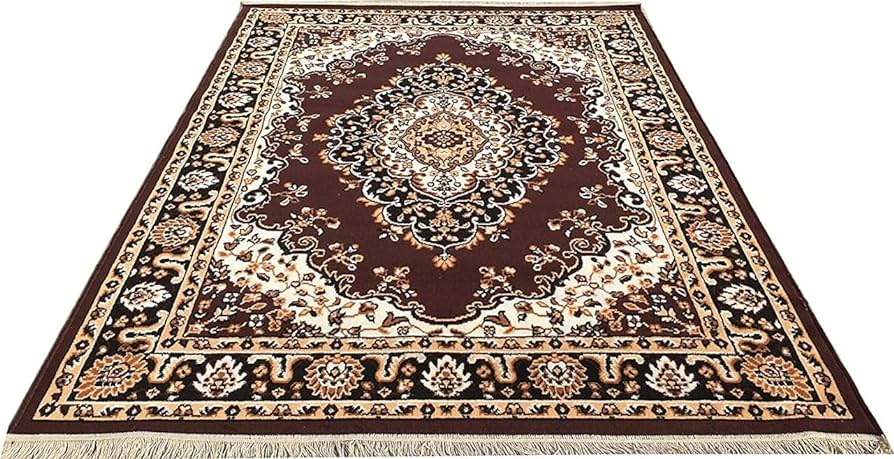
Kashmiri carpets are considered one of the best of the oriental carpets. They are hand knotted , making them durable. The designs are typically Kashmiri and are either very expensive made of pure silk or wool or made more affordable with mix of rayon and wool.
A traditional hand knotted silk carpet
Carved Walnut Wood
Several utility items made of carved walnut wood can be found in Kashmir. Intricate Kashmiri designs are carved on tables, trays, pen stands, toys and even the wall panels of houseboats !
Intricately carved walnut wood decor
Traditional Kashmiri jewelry
Bangles, earrings, anklets and necklaces, all handcrafted and in typical Kashmiri designs is another big draw among the tourists. A traditional jewelry article called Halqaband, is a tight choker made usually in silver and gold and sometimes in brass and is a trail of interlocking sections joined together with thread. It has rubies and other precious stones and sometimes mirrors studded on it. Dejhoor is a dandling ear ornament worn by brides. Women often come in shikaras to houseboats selling these items.
Traditional Kashmiri jewelry
That is Kashmir in a nutshell for you….
From next week we visit each of the unique destinations . Srinagar, the capital will be our first destination. See you next week at Srinagar…
Araku valley is a hill station in the eastern ghats located about 110 kms from Visakhapatnam. Araku valley is famous for its coffee plantations and is home to various tribes. Having heard a lot about this place, we decided to visit Araku valley from Vizag.
Araku Valley
A popular tourist destination in Andhra Pradesh, Araku ia at an elevation of about 3200 ft and is known for its greenery, coffee plantations, spices specially pepper, waterfalls and streams and a rich tribal culture.
Ananthagiri and Sunkrimetta reserve forests are a part of the Araku valley. Galikonda at an elevation of 5000 ft is the highest point and there is a viewpoint there from where you can see the plains below. Trekking is a popular adventure activity here and lot of camping sites are available.
Bee keeping is a popular occupation here among the tribals.
Our Trip
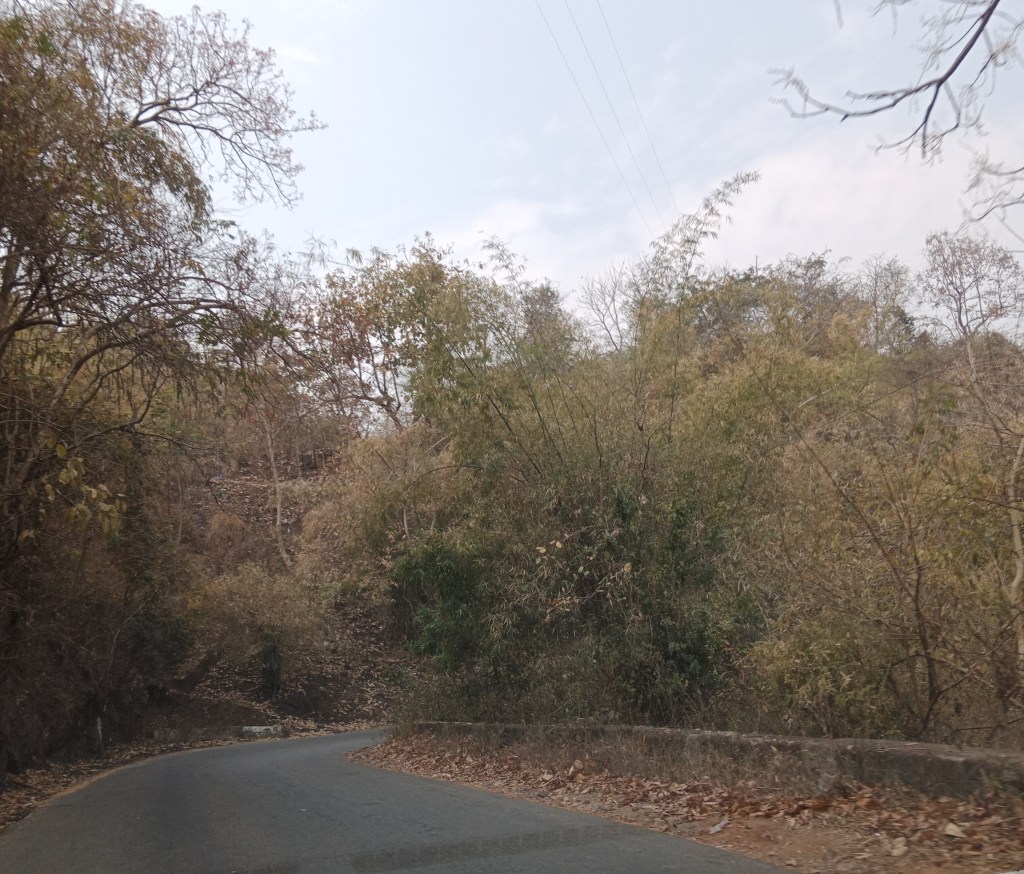
Driving down from Vizag we headed to Araku valley. The road to Araku valley was not particularly good and the drive was not very comfortable. Farmlands with paddy cultivation formed the landscape for a considerable time. After that we hit some winding roads with bamboo forests on either side.
Bamboo forests enroute Araku
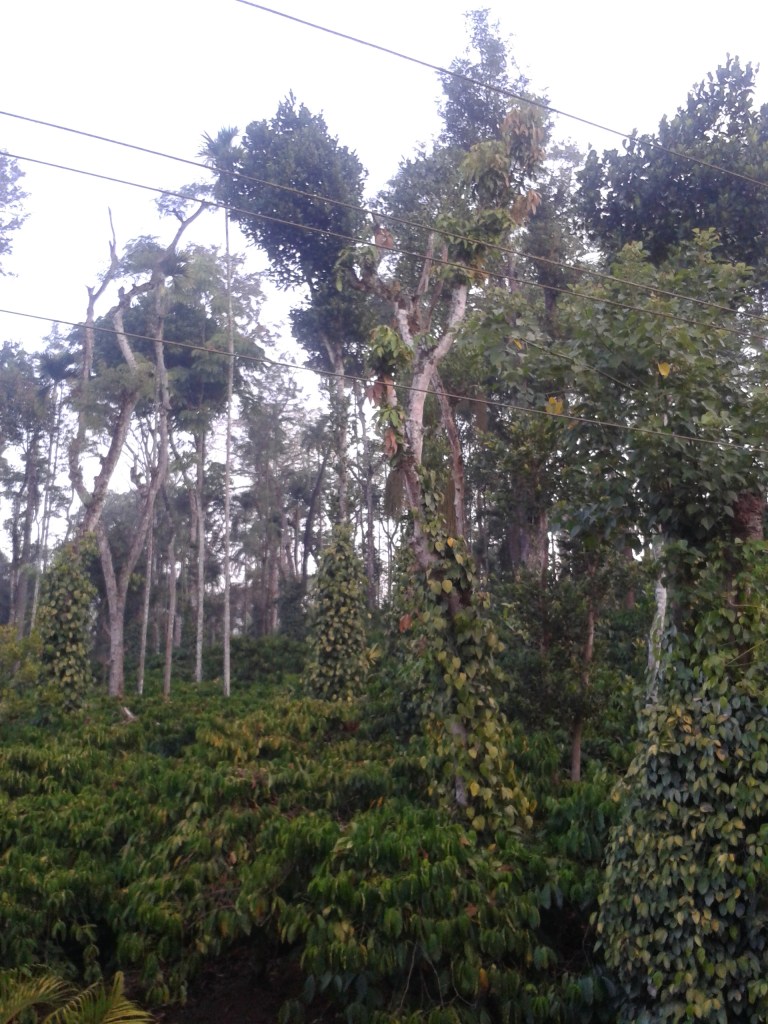
Soon we were among some coffee plantations
Coffee plantations and pepper vines
Pepper and coffee pods
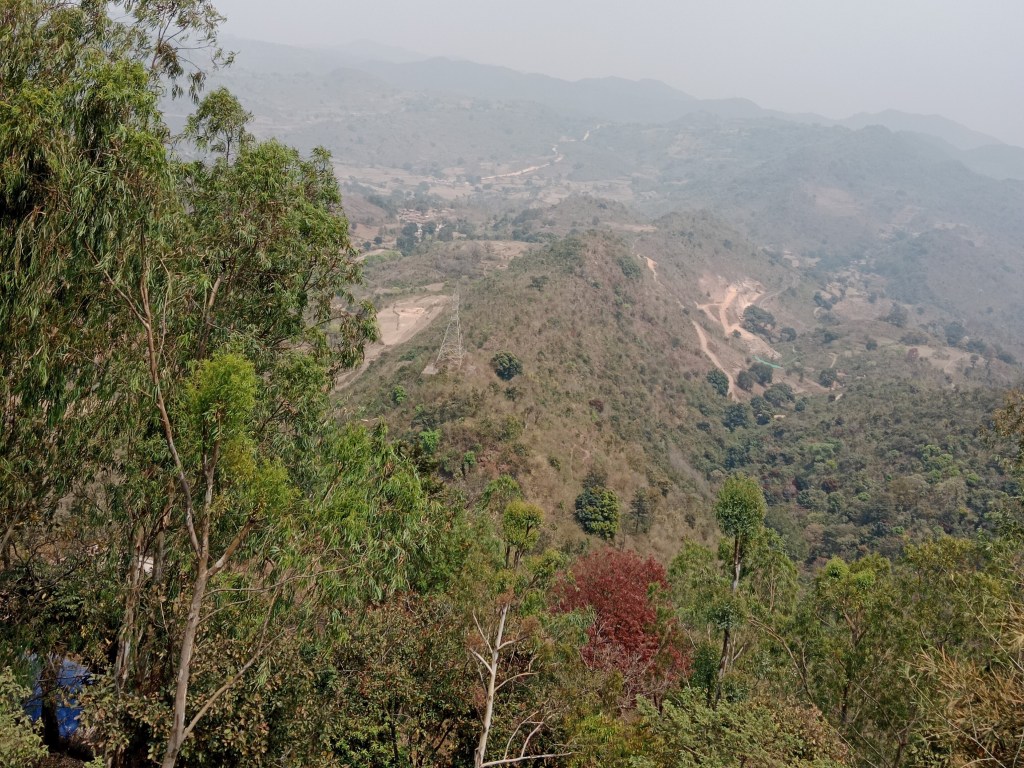
Soon we were at Galikonda view point from where we could see the plains below
View of the plains from Galikonda
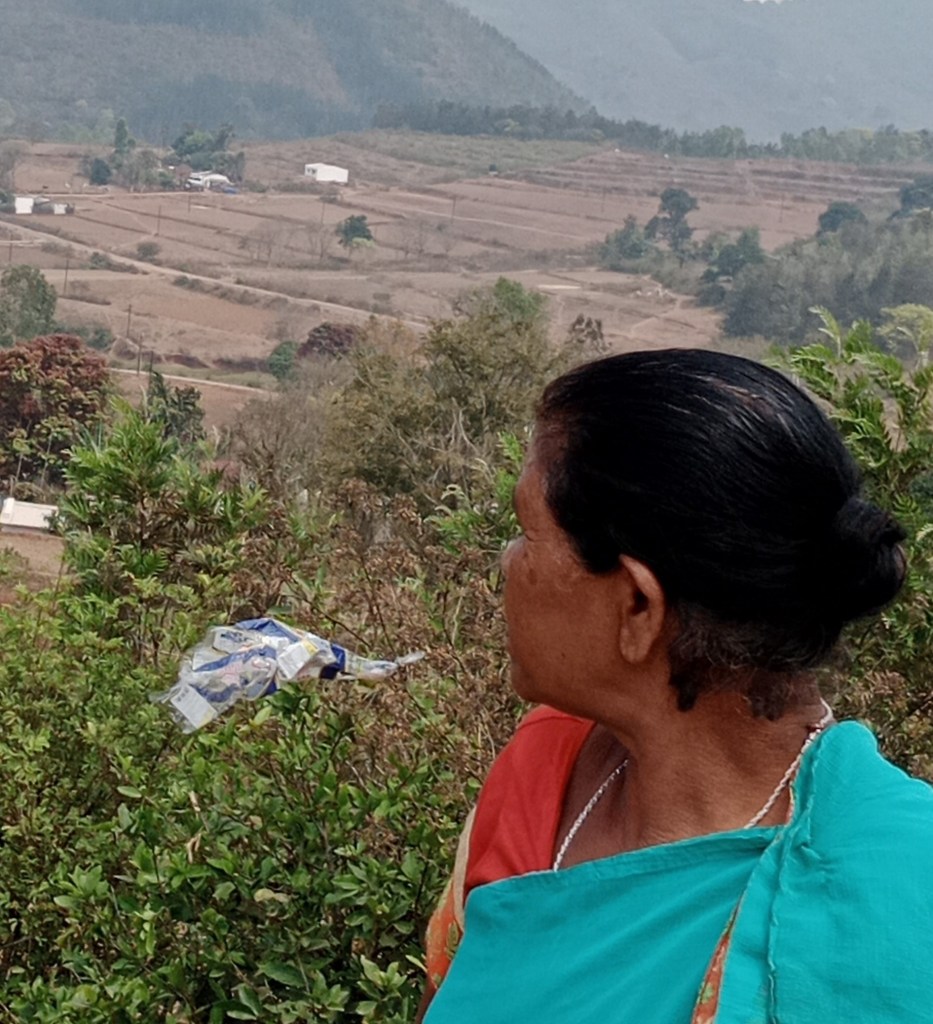
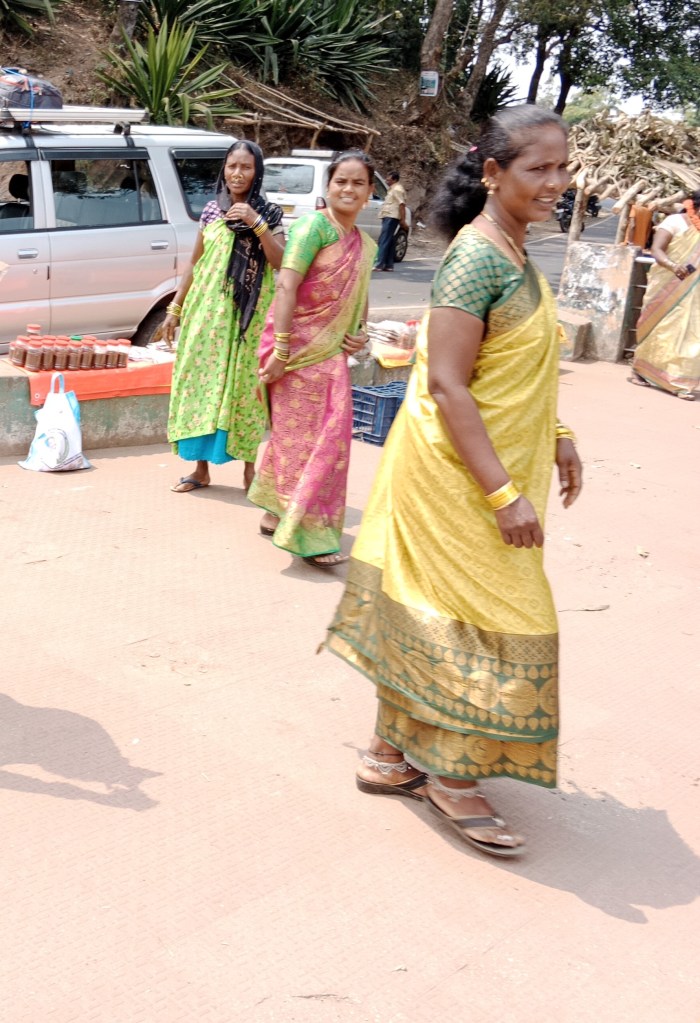
At Galikonda, we happened to see some tribals in their traditional attire.
A shy tribal and others in traditional attire
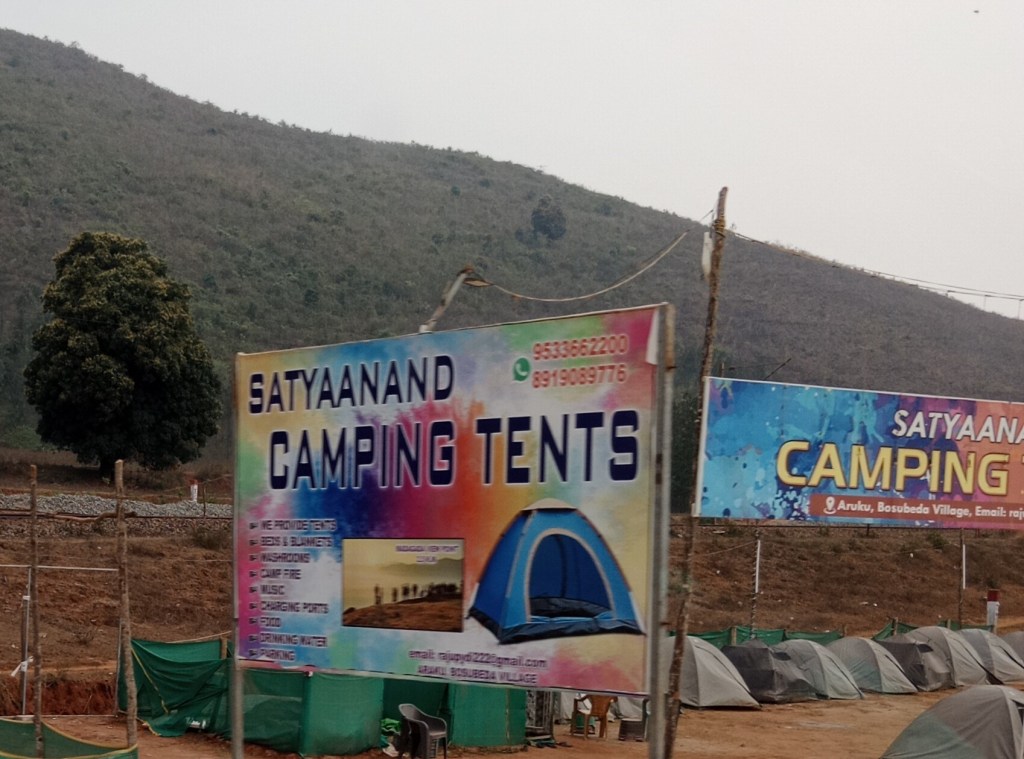
Camping sites with tents were seen at many places as we drove along.
Camping sites
Many of the tribals engage in bee keeping and the honey is sold along the roadside.
Bee farming and local honey for sale
Another interesting place to visit is the tribal museum.
Tribal Museum
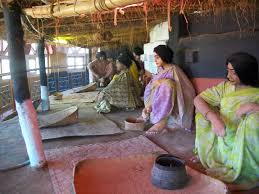
This museum houses various items used by the tribals and showcases their way of life.
Some pictures…
Tribal Museum
Tribal jewellery and art
Some exhibits
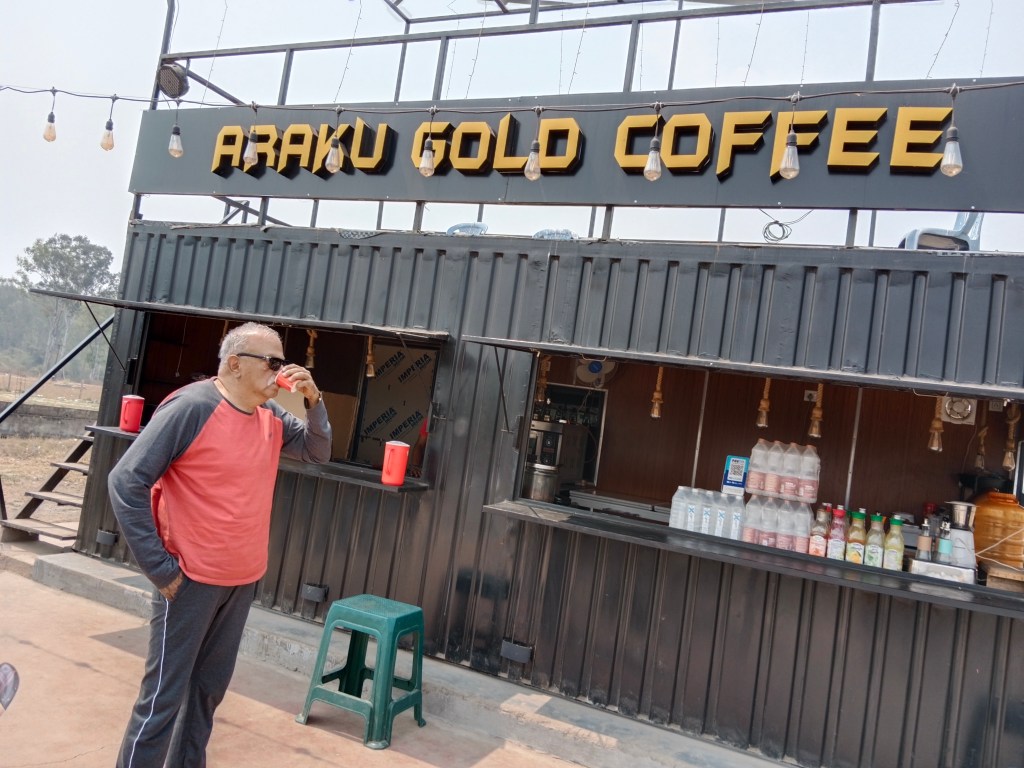
After visiting the museum, we savored some fresh Araku coffee before heading back.
Authentic Araku coffee
Returning back, we visited the famous Borra caves.
Borra Caves
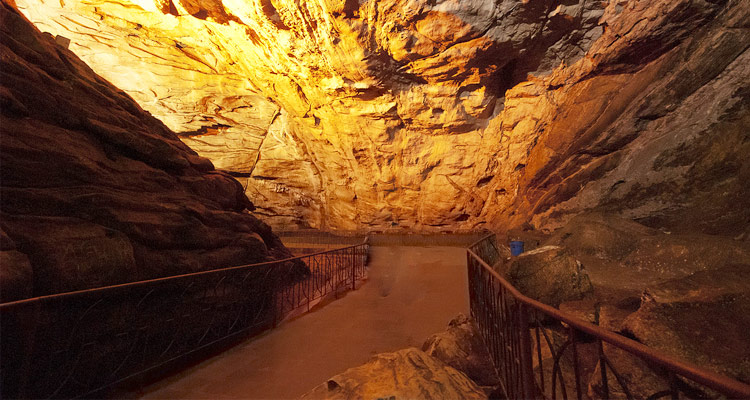
Located in the Ananthagiri hills, these interesting stalactite and stalagmite formations are formed by the flow of the Gosthani river over limestoine deposits. It was discovered during a geological survey by William King and are believed to be over a million years old.
There are several legends attached to these caves. The most popular one is of a cowherd accidentally discovering it when he went looking out for his lost cow. He discovered a Shiva ling in these caves and soon a small temple for Lord Shiva was built here.
These caves are a major tourist attraction today . The constant flow of water has sculpted these rock formations into various shapes like Shiva Parvathi, Rishi’s beard, Brain, Mushroom etc.
Some pictures…
Entrance and the shrine
Inside Borra Caves
After visiting the caves we drove back to Vizag ending our day long trip to Araku Valley.
Honestly, it did not live up to my expectations. Probably I had been influenced by rave reviews on social media which led me to have high expectations !!!
So all in all, do go if you feel like it but you will not miss much if you don’t….
Next week, I start a new series on Kashmir. So meet you there….
All of you would have visited museums some time or the other. But have you visited a museum in a submarine? Well ,may be few of you have….
As was mentioned in the last episode, Visakhapatnam is the headquarters of the Eastern Naval command of the Indian Navy. So the Navy has several establishments here and one of them is the submarine museum.
Let me take you today to this novel museum which is inside an actual submarine!
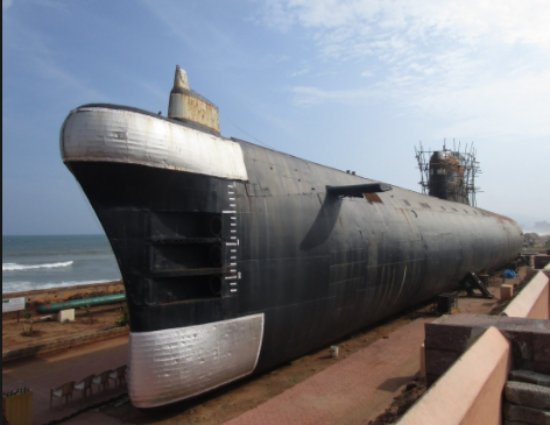
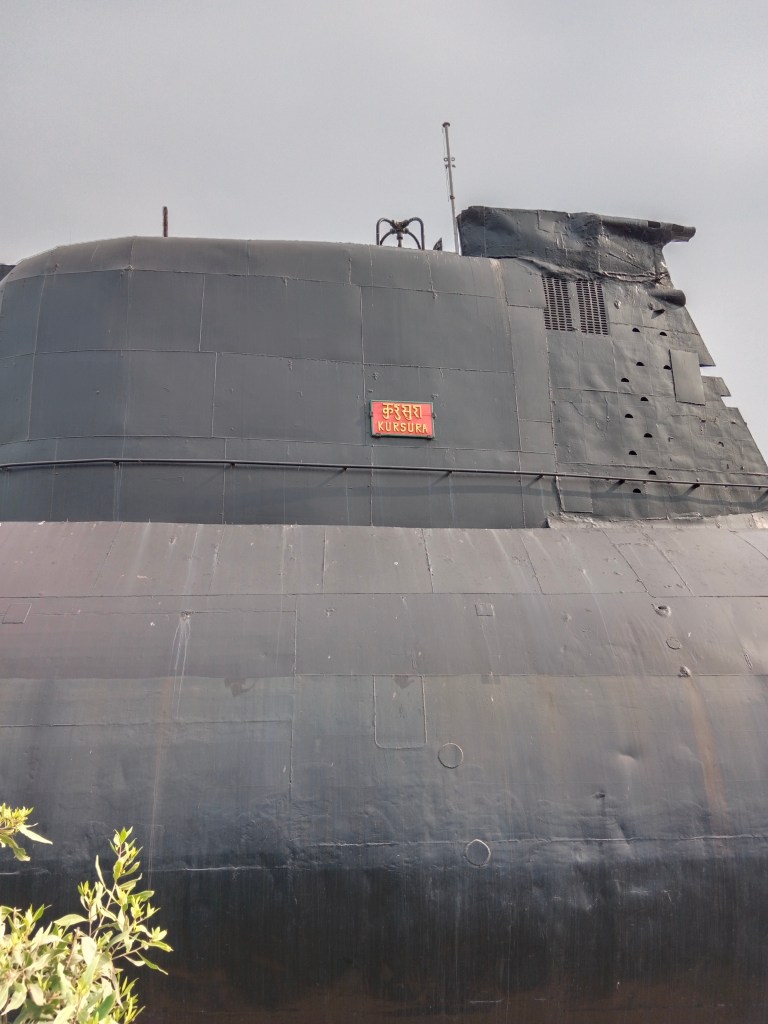
This museum , located at Visakhapatnam is a decommissioned submarine INS Kursura which was in active service for 31 years. After decommission, it was dedicated to the nation and is preserved as a museum for the public.
A brief history of INS Kursura
INS Kursura was India’s fourth submarine built in the Soviet Union and commissioned in 1969. She was attached to the Western Naval Command and operated in the Arabian Sea during the Indo-Pak war of 1971. After participating in several anti submarine warfare exercises and various other operations, she was decommissioned in 2001.
Once decommissioned, the entire submarine with it’s weapon package was hauled up from the sea to a concrete platform at R.K Beach at Visakhapatnam and established as the first submarine Museum in South Asia in 2002. This was a joint operation of the Eastern Naval command and the Naval Ship Design and Research Centre. It is recognized as a War Memorial.
The Museum
The submarine is placed close to the beach and one can see it from the road as one drives past. Surrounded by well manicured lawns, it is a sight to behold.
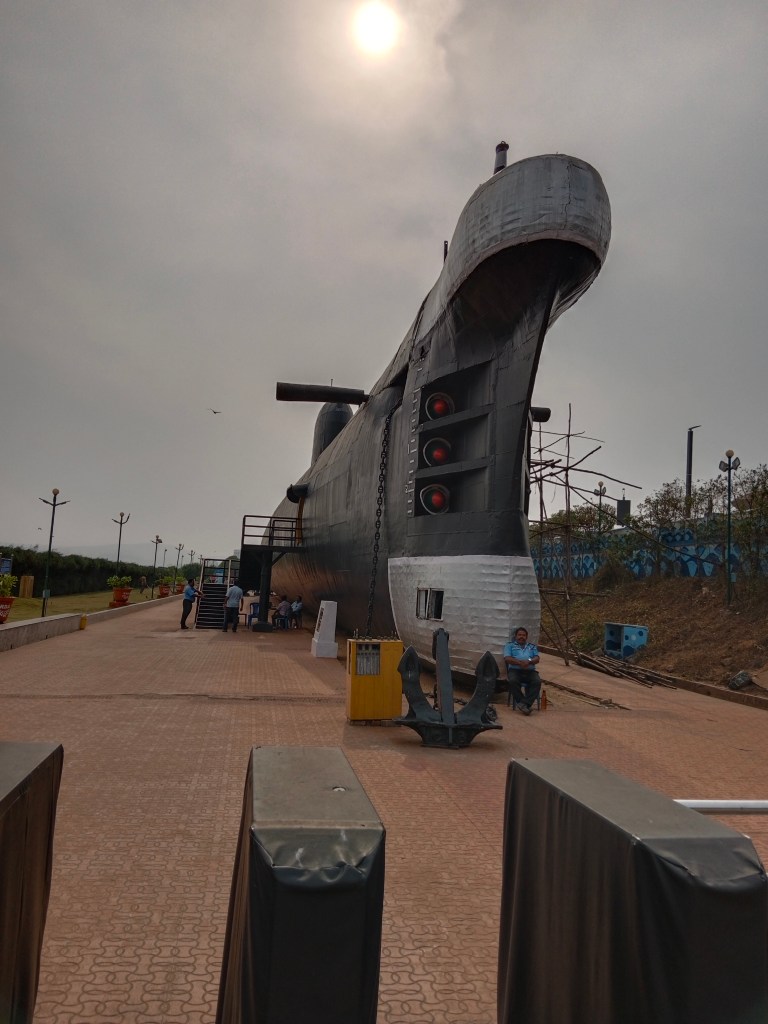
The submarine museum as seen from the road
The Submarine
As one steps foot on the submarine, a sense of pride and patriotism flows in naturally to us. We can climb up a fleet of stairs to enter the museum.
The stairway to the submarine museum
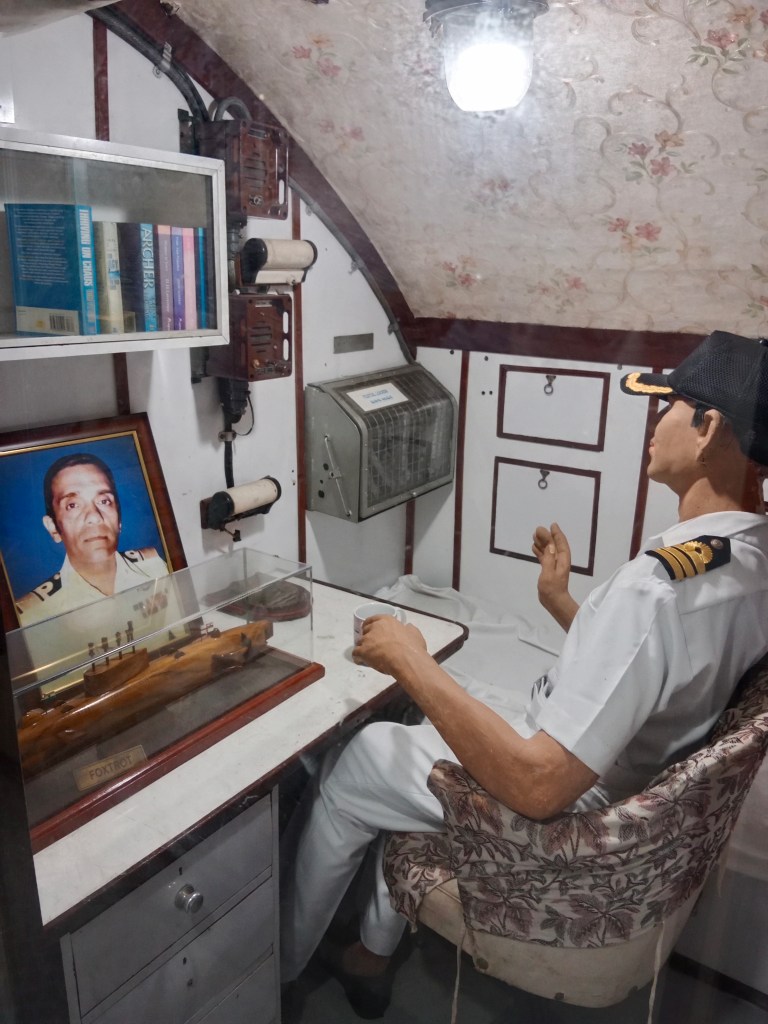
Once inside, we can see a number of artifacts, pictures and articles used during wars. We can also see gadgets and weapons that are on display. This gives an idea of the evolution of submarines, showcases the might of the submarine arm of the Navy, and reveals the hardship and toils of life on a submarine. The interior has been suitably modified for this but at the same time retaining it’s original form.
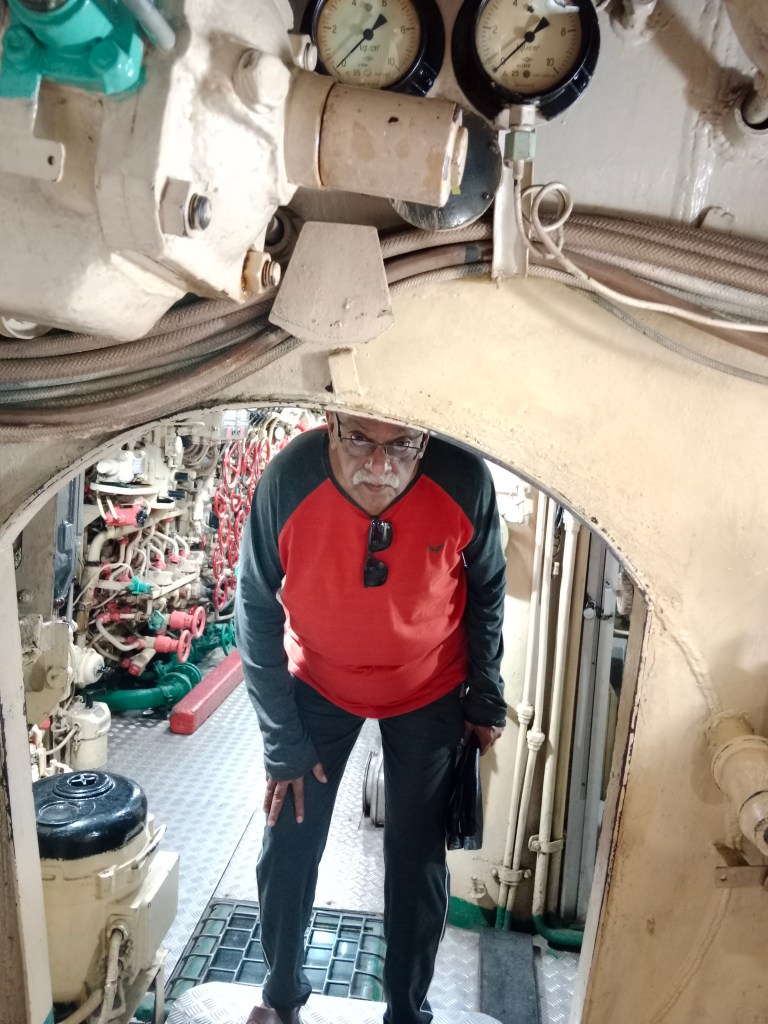
It gives you the feeling of actually being inside a submarine. Once we stay inside for some time, a feeling of claustrophobia engulfs us. It is then that we realize how difficult it is to actually live inside a submarine for days together. That is what our Naval personnel do in times of war, and they have to be continuously on high alert too!!
Have a look at some of the pictures and that may perhaps throw light on their difficult lives….
A room with the model of an officer and the small place they have to operate from
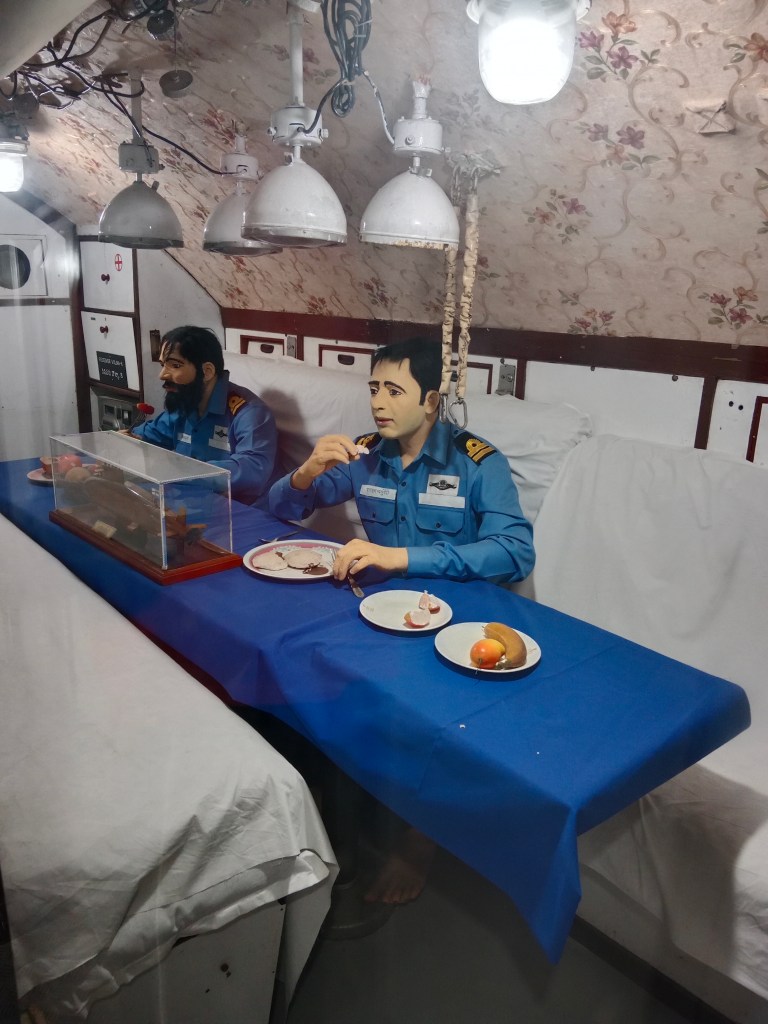
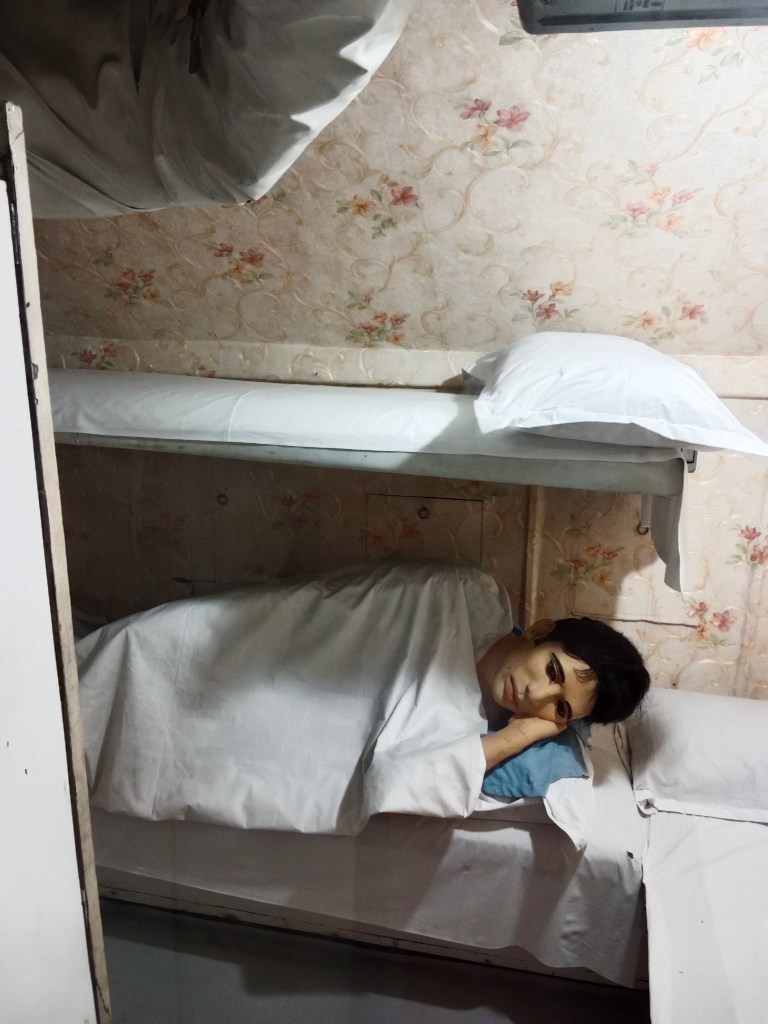
The pantry and bunker beds for sleeping. ( the low roof makes the place claustrophobic)
The narrow passages with equipments and low head clearance forcing us to bend
Various levels inside the submarine
These pictures would have given you a fair idea of the difficulties when the personnel live inside for months together
Immense regard and respect for our armed forces just comes in automatically when we see all this.
There are a couple of Naval personnel there who explain the details to us also. Though there are many technical details which we may not understand but the overall experience of actually entering a submarine is something entirely different.
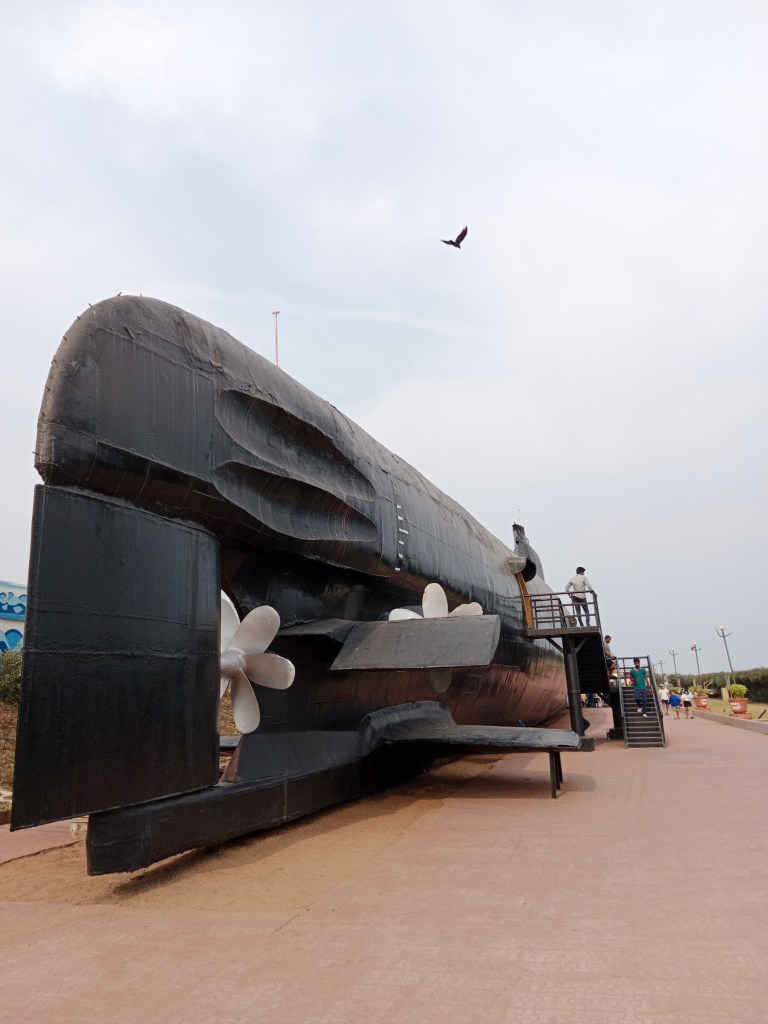
Outside also we can see the parts which are otherwise under water….
The propeller and rudder ( at the back of the submarine)
The front of the submarine with torpedo tubes and the anchor resting on the floor.
Glimpses of life on a submarine: (something I learnt during this visit)
Submarine personnel undergo rigorous training including damage control, drills and emergencies, battle tactics and escape training through a tower.
Space is limited in a submarine and equipments and life saving gadgets get priority over daily comforts.
Sleeping in bunkers to save space is a rule and many times they take turns to use the bunker.
Maintenance of equipment, drills and safety exercises are a daily routine. The kitchen has limited space and hence no elaborate meals can be expected.
Around 70 personnel share two toilets at sea.
We left the museum with mixed feelings. Patriotism, regard and respect for our armed forces and a thought for the families of these personnel who also sacrifice a lot so that we all can live safely in our homes….JAI HIND…
For completion sake, let me attach a file picture of Kursura at sea…
INS Kursura sails by….
After visiting the submarine museum, we continued on to the other interesting sights in Visakhapatnam. Next week, we visit some of Araku valley and Borra caves. Till then, do comment and give your feedback.
Once upon a time, there was a fisherman’s village named Vizagapatnam on the east coast of India abutting the Bay of Bengal. Today, it’s geographical location has made it a busy port city and the headquarters of the Eastern command of the Indian Navy. Vishakapatnam is also a major industrial hub on the Indian coast . Lying between the Eastern ghats and the Bay of Bengal, it is home to some beautiful beaches, and hills.
How did it get it’s name?
You must have noticed the word Visakha within brackets in the title. That is because there are various explanations.
A temple dedicated to Visakeshwara, the Hindu God of valour built by the Chola Kings is belived to be submerged just off the coast of the city giving it it’s name.
Some attribute Visakha to be a Buddhist princess and others to a Buddhist monk named Vaisakhi .
Yet another explanation is that the word “isakha” in Telugu (local language) means sand and the vast sand expanses along it’s beaches contributed to the name.
A brief history
It was part of the Kalinga empire and conquered by Emperor Ashoka. During this period, Buddhism flourished here with construction of significant monuments which can be seen even today.
It has also seen the reigns of the Pallavas, Cholas and Gangas over time. European colonisation started in 1630 with the Dutch, French and British all taking control at various points in time. They have all left their marks on this city.
After Indian Independence, it was under the Madras presidency and finally became a part of the state of Andhra Pradesh.
Our Trip
Landing in Vizag was a beautiful sight though it was a little hazy. The port and Dolphin’s nose were visible from the aircraft inspite of the haziness.
Landing at Vizag..the port and Dolphin’s nose are clearly seen.
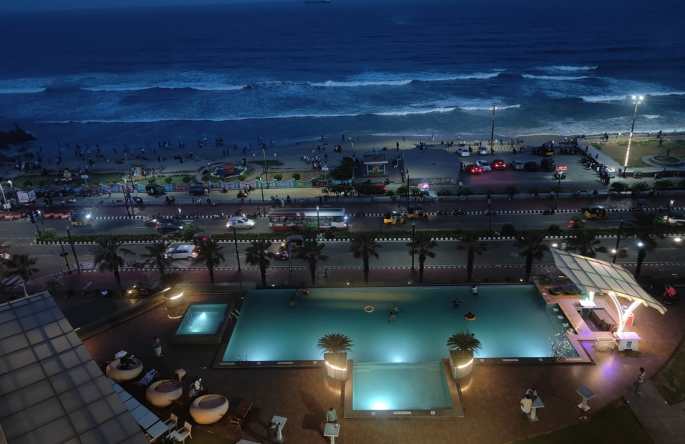
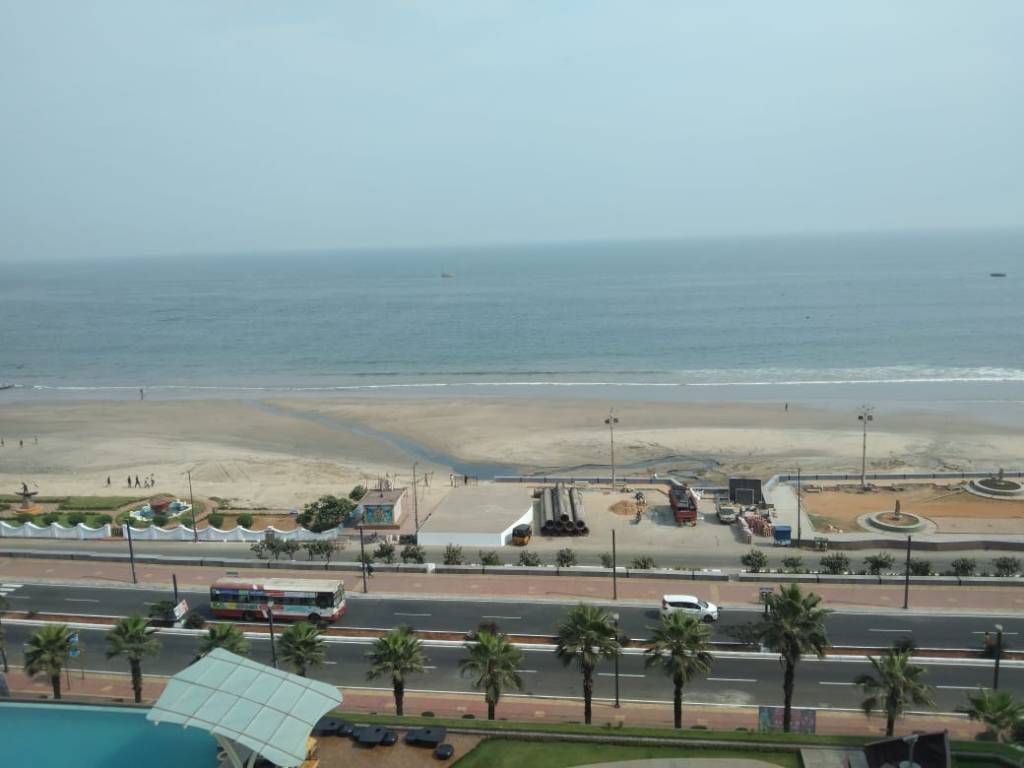
We were put up at Hotel Novotel which overlooks Varun Beach, one of the famous beaches at Vizag . Great views of the ocean were the highlight besides an infinity pool which visually merged with the sea. The port being close by, lot of shipping activity was also visible.
Varun Beach view from hotel
The infinity pool visually merges with the ocean
Ships await berthing at the port.
A ship being guided by tug boats into the harbour
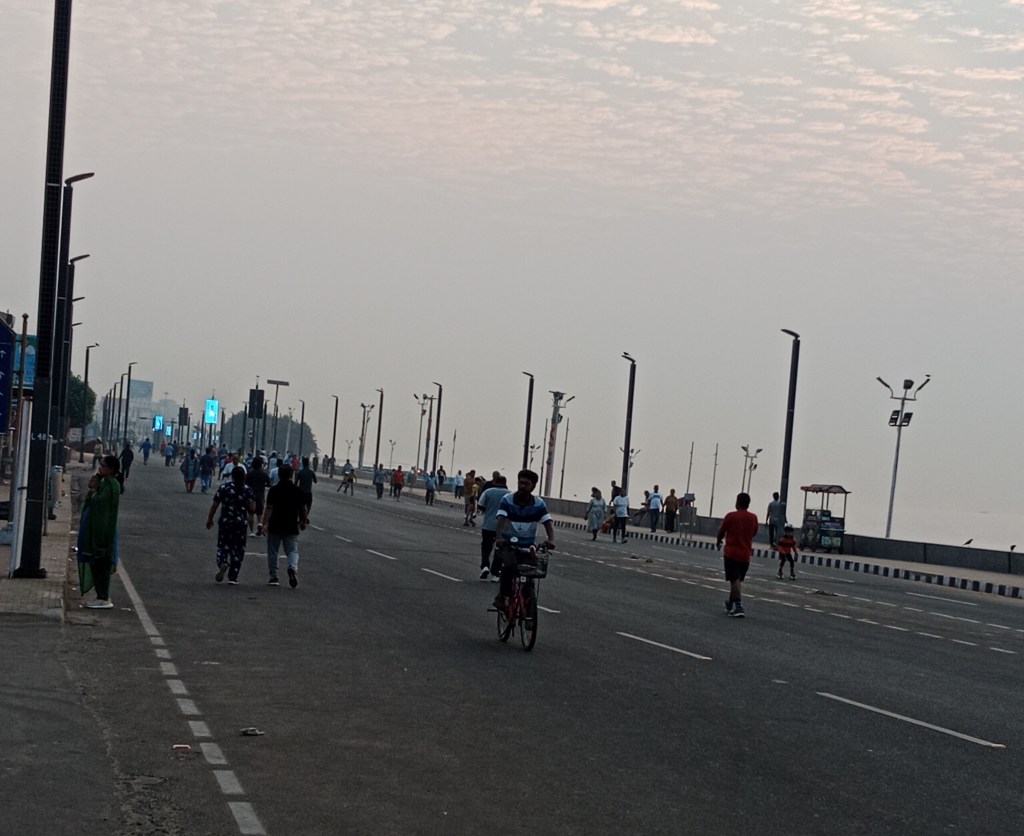
The beach road becomes a pedestrians only road till 7 am in the mornings and the locals use the road for walking and such other activities.
Beach road in the morning
And at night…..
Beaches of Vizag
The Ramakrishna beach, Varun beach, Rushikonda beach , Bheemili beach and the Dolphin’s nose are the popular beaches in Vizag.
Ramakrishna beach is so called due to the Ramakrishna Ashram close by. It is a popular destination for locals and tourists alike.
Enjoying a dip at R K Beach
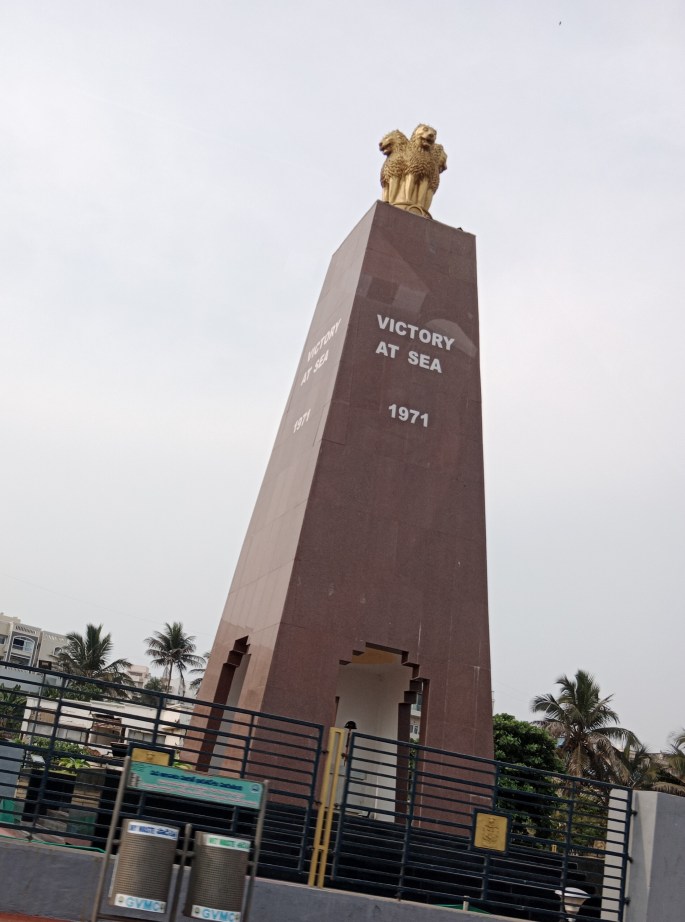
Opposite the beach are several monuments and museums.
The aircraft museum and memorial opposite RK beach
Submarine Museum
INS Kursura, a submarine of the Indian Navy is preserved here and converted into a museum. More on this in another episode.
The submarine museum
Rushikonda Beach
This beach is around 8 km from Vizag but has an interesting name meaning Hill of the sages. Seven learned sages are believed to have meditated on the adjoining hill. Water sports are an added attraction here.
Rushikonda Beach
Bheemili beach
Located around 24 kms from Vizag, this beach lies near the Gosthani river and has British and dutch settlements nearby. It is more of a rocky beach.
The rocky Bheemili beach
Dolphin’s Nose
A rocky head shaped like a dolphin’s nose is a conspicuous landmark in Vizag and can be seen even from the flight and has a light house.
Dolphin’s Nose
Kailasagiri
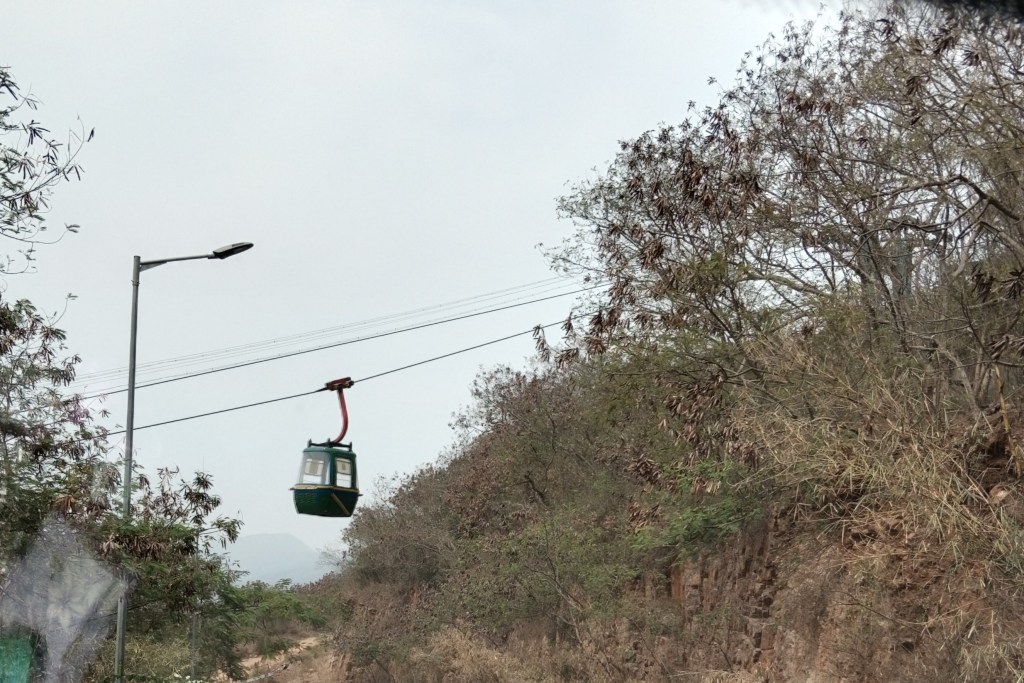
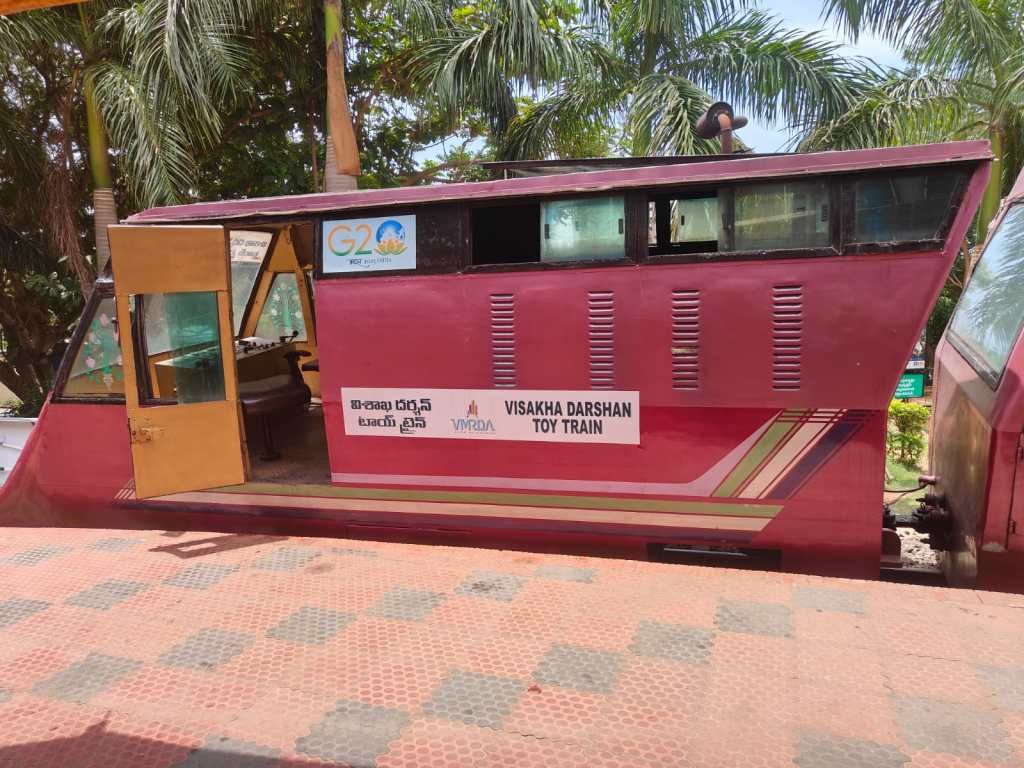
Another interesting location is Kailasagiri, a hill from where you get great views of the city and the ocean. A 40 ft tall statue of Shiva and Parvati in a garden adorn the hilltop and gives it it’s name. A toy train ride on the top takes one around giving 360 degree views. A ropeway service is available here. One can also drive up to the hilltop.
Some pictures
View of Vizag and beaches from Kailasagiri
The ropeway to the top and the toytrain on top
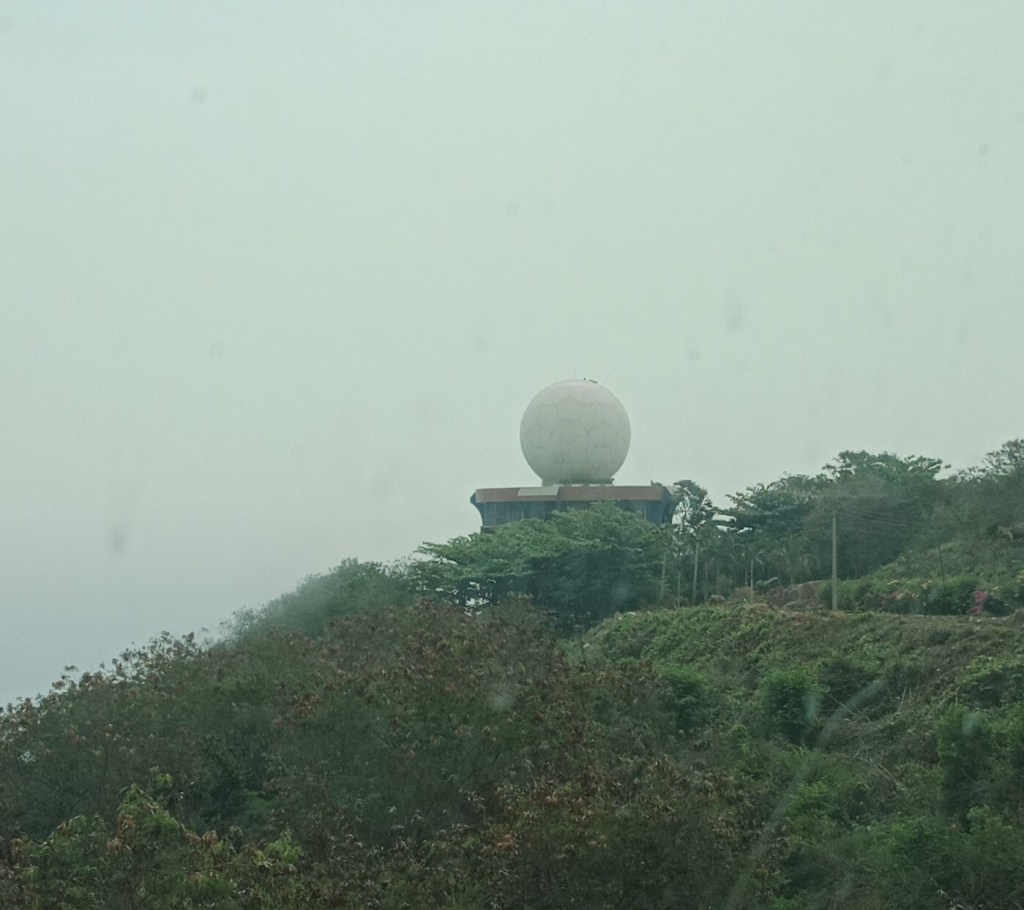
The park and the weather dome
The Shiva Parvati statue
Thotlakonda Buddhist Complex
Situated 15 kms from Visakhapatnam on a hill overlooking the sea is this Buddhist complex. A stupa and various other monuments stand as a reminder of the Buddhist influences in the history of Visakhapatnam. Archaeological excavations at the site have only reinforced it.
Some pictures…
Thotlakonda Buddhist Complex
That sums up the interesting locations in Visakhapatnam. Araku Valley and Borra caves are interesting destinations near Vizag that will covered later.
Next week we visit INS Kursura, the submarine which is now a museum.
Today we do a quick roundup of various attractions in and around Hyderabad. Having covered Golconda and the museums earlier, this episode covers the other destinations.
Qutub Shahi Tombs
These are the tombs of the kings of the Qutub Shahi dynasty of Persia/Iran who ruled this area . The tombs are located just one kilometre from the Golconda fort. One can see the domes of these tombs from the top of Golconda fort.
These tombs are present in a large group and is unique in that the entire dynasty is buried in the same place making it a one-of-a-kind tomb in the world. There are seven such tombs in the complex. These tombs which have intricate stonework on them , lie in beautifully landscaped gardens called Ibrahim Bagh. An amalgam of Persian and Hindu architecture adds to its uniqueness.
Each tomb is quadrangular and rises above a flat raised terrace. Some of the tombs have double stories. The tombs are surrounded by beautifully crafted minarets. The domes were studded with blue and green tiles once upon a time , but now, most of it is damaged.
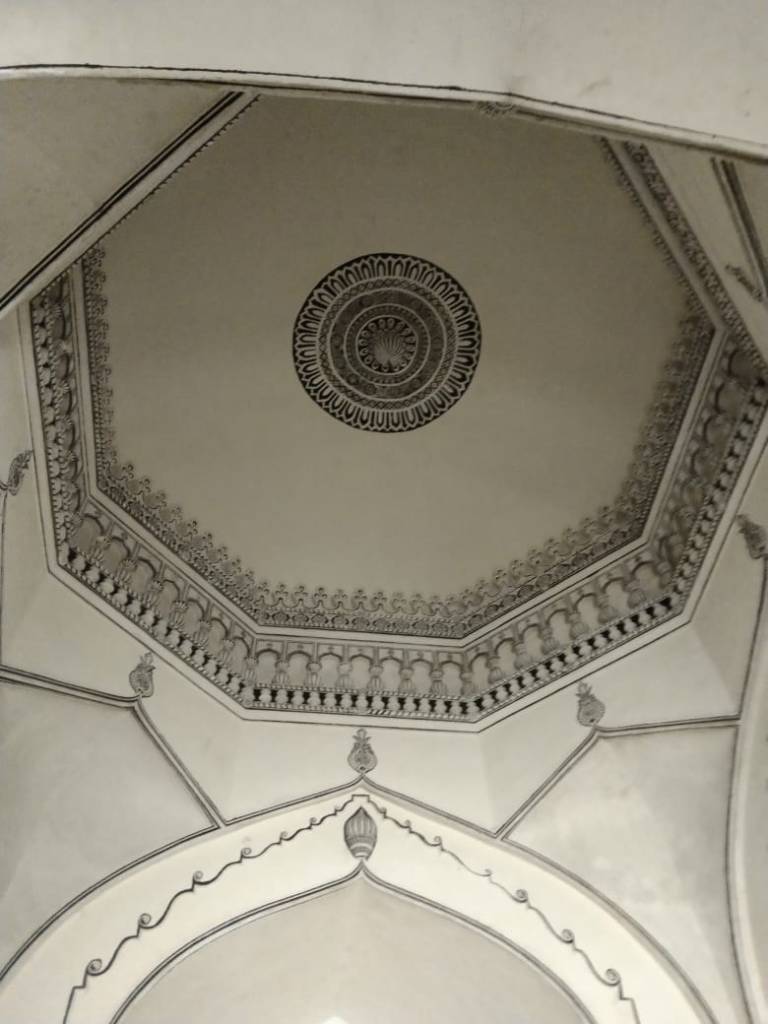
Just like in Golconda fort, these tombs also have unique acoustic features due to the diamond cuts on the undersurface of the domes.
Exterior of one of the tombs
The decorated entrance and undersurface of the dome
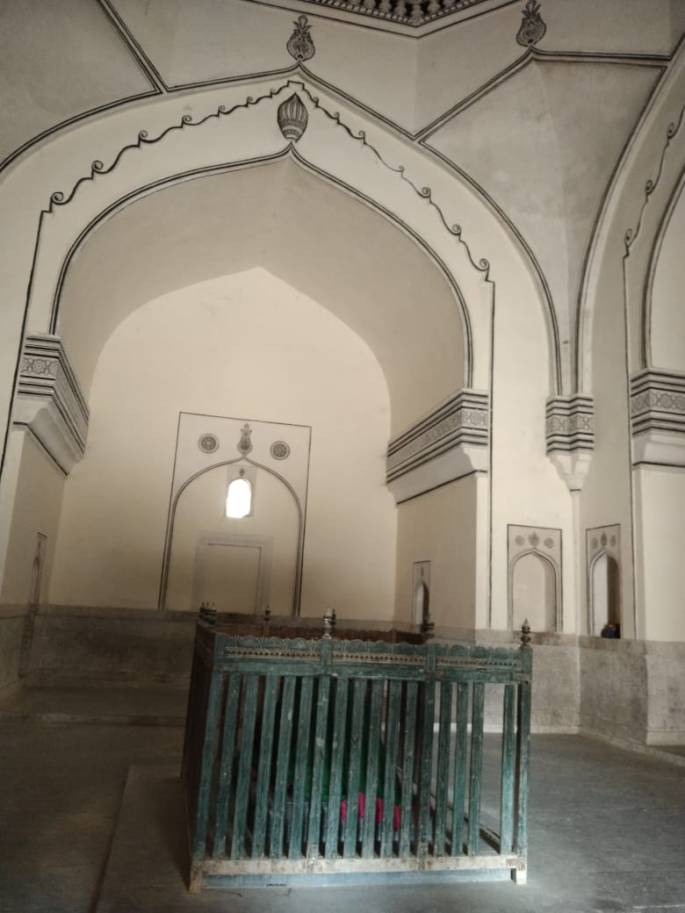
The tomb itself
A QutubShahi heritage centre is coming up in the complex.
After seeing the tombs , we were headed to the iconic image of Hyderabad; The Charminar.
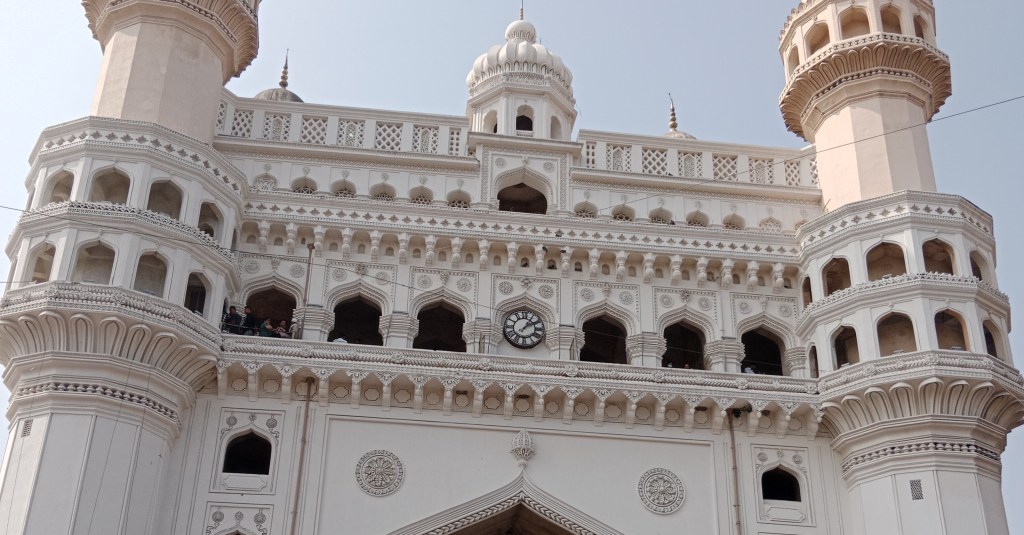
The Charminar
Once again connected to the Qutub Shahi dynasty, the reason to build this monument is still not clear. There are various opinions on this.
Some of the reasons propounded are that the Sultan built it in memory of his wife Bhagmati at the place where he saw her for the first time. Queen Bhagmati later embraced Islam and assumed the name Hyderi Begum after whom Hyderabad is named. An epidemic of plague had wrecked havoc and the king is supposed to have built it as an offering when the epidemic ended. Another version is that it is supposed to commemorate the start of the second Islamic millenium. Let us leave these legends aside and see the structure itself which is real…..
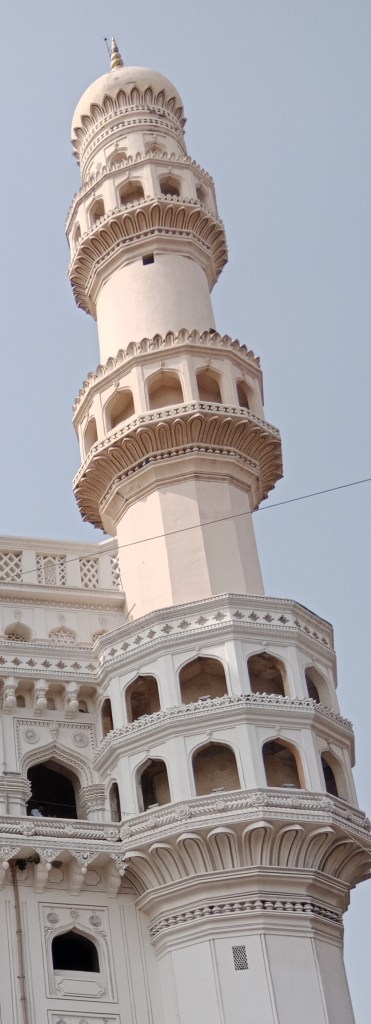
Built with granite and mortar, this square monument measures twenty metres on each side and faces thoroughfares on all four sides. Each corner has a pillar or minar hence thename Charminar which translates to four pillars. Each of these pillars has four stories with each floor divided by artistically carved rings. One can climb around 150 steps to reach the top from where you get a good view of the city. There is a mosque on top of the monument. Each pillar looks like a lotus leaf and each side has a clock too.
The iconic Charminar
The intricate art workon the Charminar
The area around the monument is Ladd bazar and has a lot of roadside stalls selling clothes ,trinkets and other souveniers . Roadside eateries claiming to serve authentic biryani and faloodas abound.
Hyderabadi Biryani is famous for its unique taste due to the right combination of various Indian spices, meat and the aromatic rice that is used. A visit to Hyderabad is incomplete without tasting the local Biryani.
The area is extremely crowded and one can easily get lost in the maze.
C
View ofLadd Bazarand famous Hyderabadi Biryani
Hussainsagar Lake
This artificial heart shaped lake built in 1563 , again by one of the Qutub Shahi kings covers an area of 5.7 sq kms. It separates Hyderabad from Secunderabad. It was built by the King for drinking and irrigation purposes of his subjects
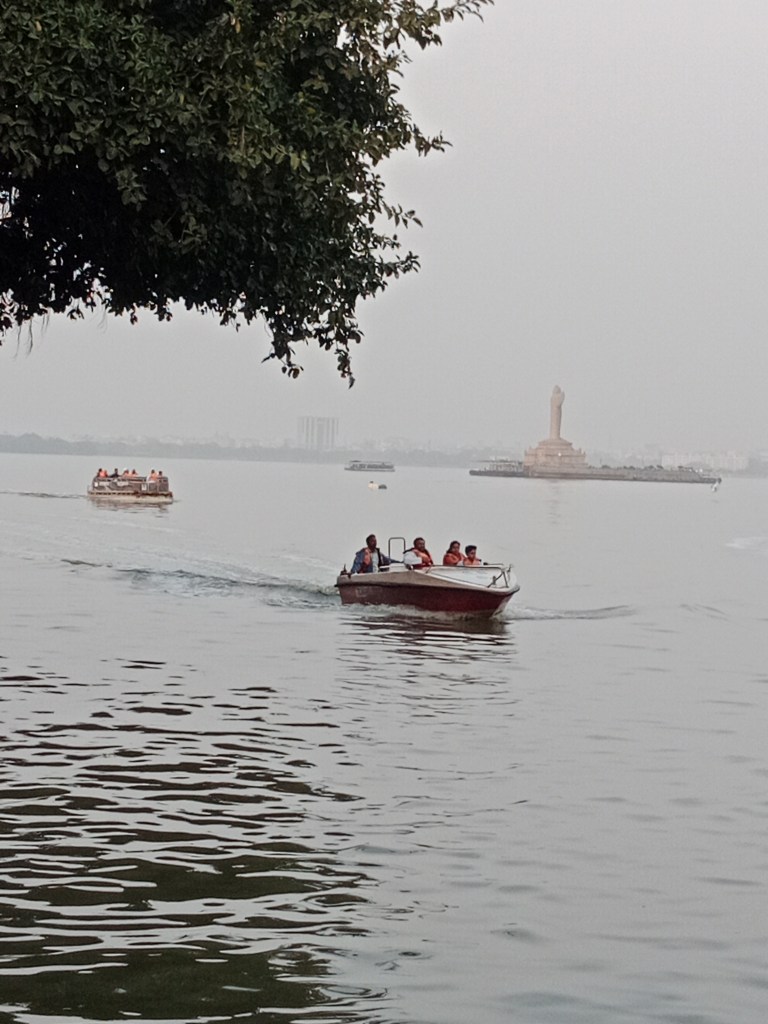
A 18 mt high monolithic Buddha statue chiseled out of white granite was erected in 1992 and stands on a rock in the center of the lake. Regular boat services are available to the statue. It is lit up at night and adds to the beauty of the lake. In addition, the lights along the Tank Bund reflecting on the lake is a beautiful sight.
Husainsagar Lake with Buddha Statue
The lit up Buddha Statue and reflection of row of lights on the lake
Husainsagar lake is a popular sailing destination where regattas are conducted regularly by various sailing associations. Multiple parks surround the lake area and provide entertainment of various kinds to the visitors. Musical fountains, boating facilities, a laser auditorium are some of the attractions in the Lumbini Park, NTR Gardens, Sanjeeviah Park and a few of such parks located around the lake.
The Telengana Secretariat is located right opposite the lake and the imposing building looks attractive specially when lit up at night.
Telengana Secretariat
The Amara Jyothi
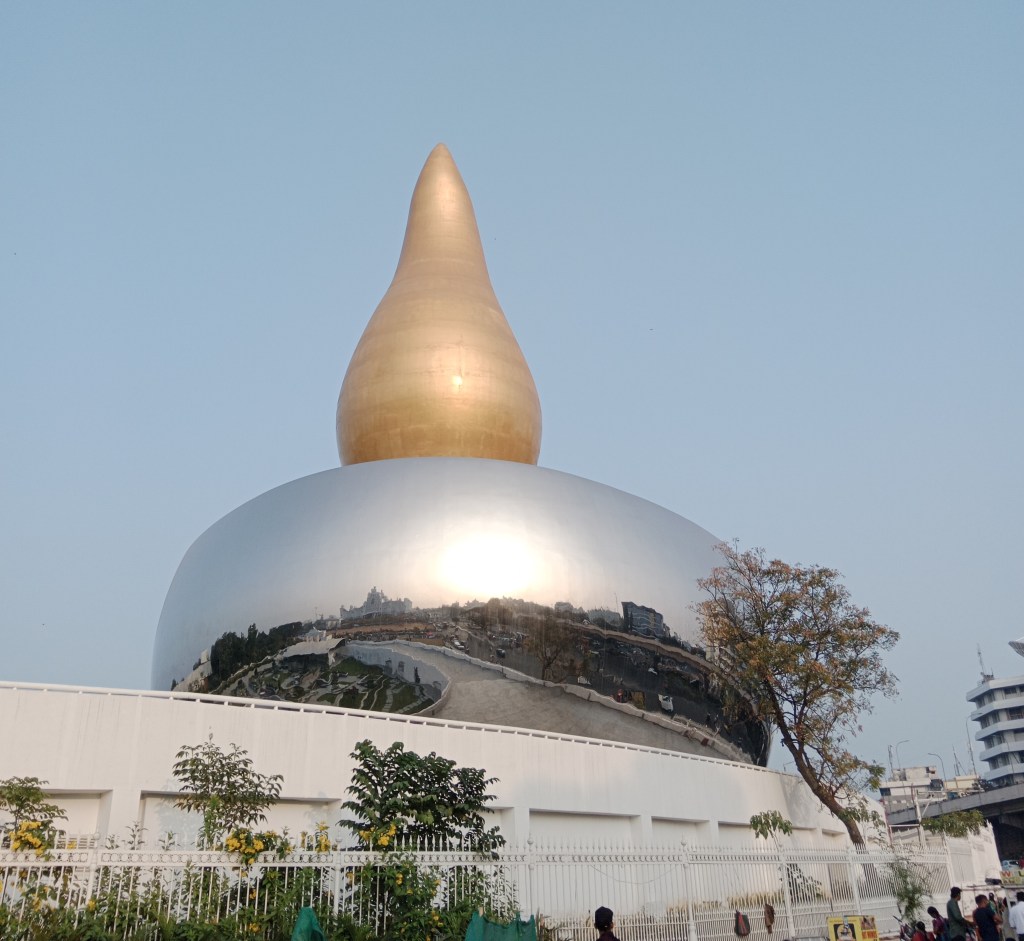
This is a Martyr’s Memorial near the lake . Shaped like a flame, it is the largest seamless stainless steel structure in the world and is five times bigger than the cloud gate at Chicago.At night, the flame is lit up and the base reflects the light from the surroundings giving it a terrific appearance !
The Amara Jyothi or Martyr’s Memorial
The lit up memorial with reflection of the Secretariat on it
The Tank Bund has statues of various eminent personalities too.
The lake has deteriorated today with unplanned urbanisation and sewage dumping. The depth of the lake has reduced due to silt accumulation and many undesirable changes have taken place in its biological communities. A plan to correct this damage is being implemented.
Hyderabad Zoo
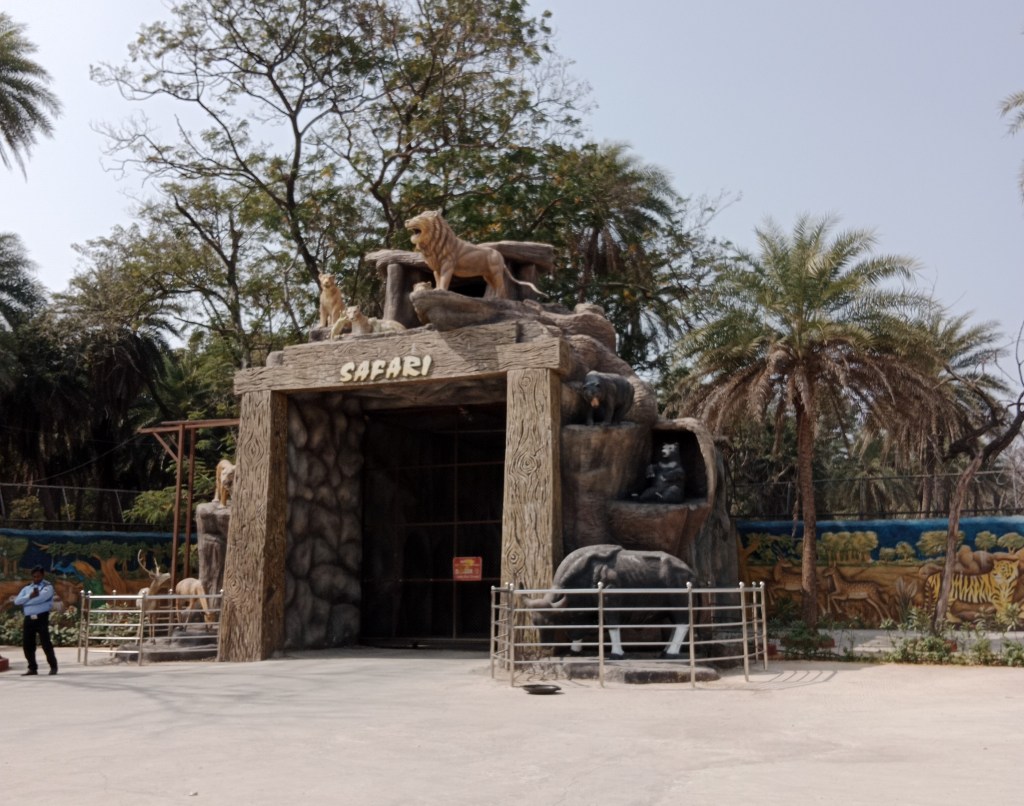
Hyderabad has a relatively well maintained zoological park covering a vast area. Most of the inhabitants roam around freely in their assigned areas and are separated from visitors by moats. They have a buggy system where you can alight at your chosen destination and board the next buggy to go elsewhere. This was really convenient as the area was very huge . There are facilities to book a safari too.
It had been a long long time since we visited a zoo and this one brought back memories of childhood picnics. Some pictures…
The safari area and the buggy
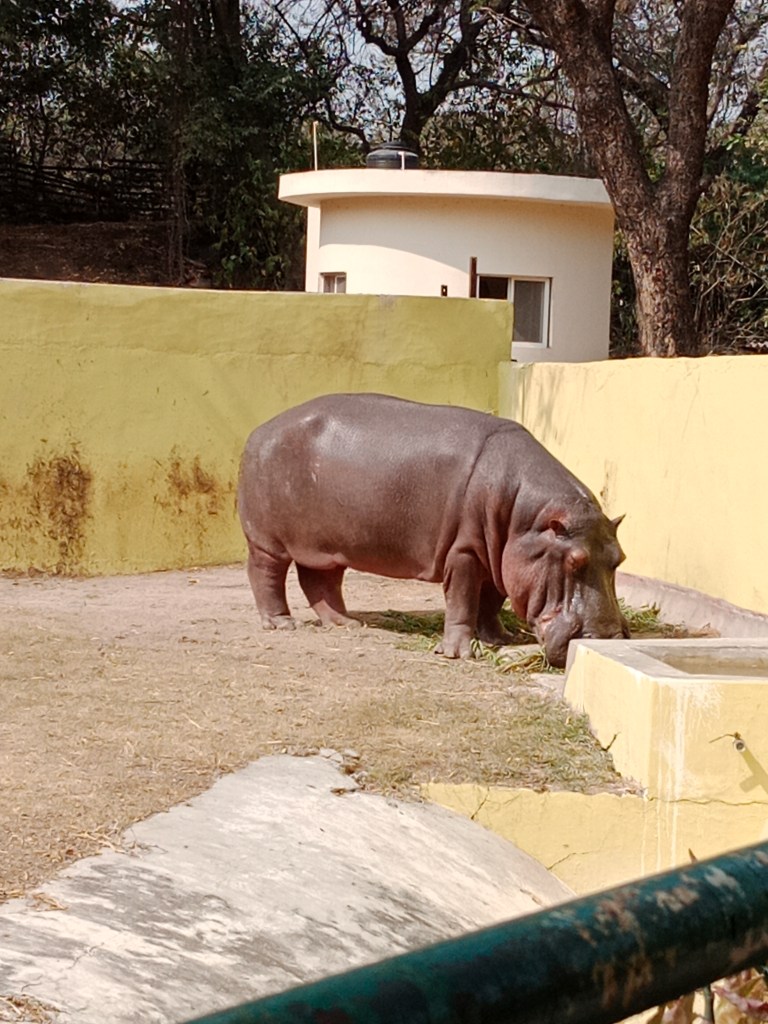
The bear and the hippo
Enjoy the tigers playing around in this video
Pearls
Last but not the least, Hyderabad is known as the city of pearls. This is due to its booming pearl processing and trading industry. The Qutub Shahi kings and the later rulers who ruled the area for over 200 years were very fond of pearls and this attracted craftsmen from all over the world to this area. The pearls formed an integral part of the traditional regalia and crushed pearls were known to have healing and beautifying properties. The persian gulf was a source of pearls for a long time but with the discovery of oil and consequent pollution led to a decline in pearl supplies from there and this also led to Hyderabad slowly becoming a pearl destination.
Pearl Jewellery
This brings us to the end of this episode. Next week we move on to Andhra Pradesh . Till then, do comment and give your feedback.
Two of the most beautiful museums/palaces are in Hyderabad and today we have a look at them. The vast collection of antiques that these museums have will surprise you. And the peculiar part is that most of these are collections of one individual. The interest in art and architecture that was nurtured is really amazing. The palace which is now a museum has such beautiful architecture and decor that it will leave you stunned!!
Come along…let’s see the palace first…
Chowmahalla Palace
Once the residence of the Nizams of Hyderabad, this palace is a museum today though the ownership still lies with the Nizams. The present day palace was built by the Nizam at the location of one of the existing palaces of the Qutub Shahi dynasty. Since he built four palaces, it is called chow mahalla meaning four palaces.
Though the construction started in the 18th century, it went on over a few decades resulting in the integration of many architectural styles. It primarily has two courtyards, a durbar hall,fountains and gardens. What was originally covering an area of 45 acres; is only 12 acres today!
As one enters the palace gates, we are in the Northern Courtyard where there is a long central quadrangle with corridors on either side with a pond and landscaped lawns in the middle. Right opposite the entrance and forming the third side of the quadrangle is Durbar Hall or the Khilwat Mubarak.
Durbar Hall
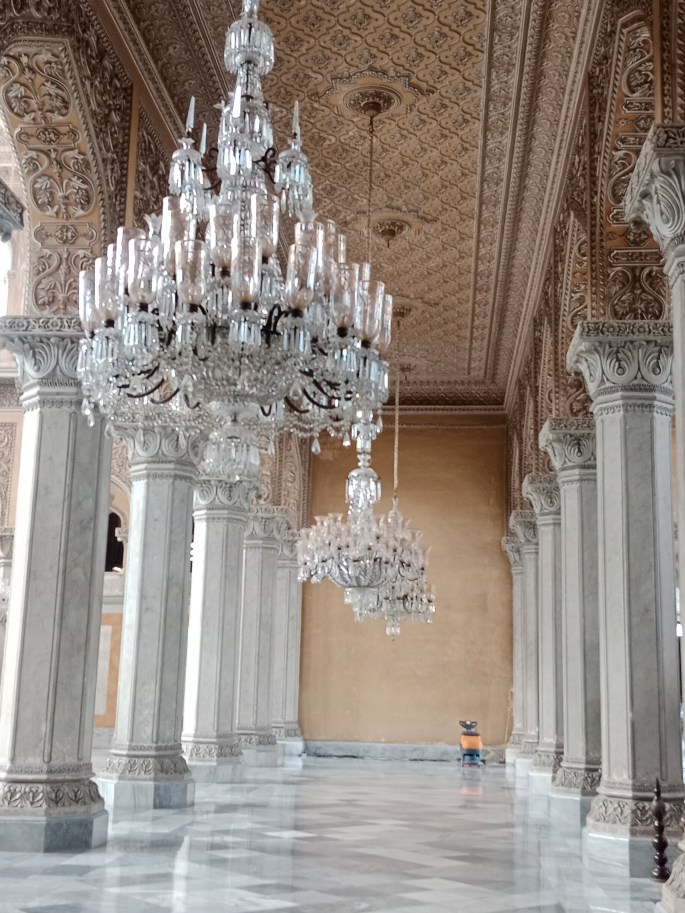
This is considered the heart of the palace as it was the seat of the Nizams. Decorated marble pillars rise from a marble floor. The Royal Seat or throne made of marble adorns the centre of the Durbar Hall. Beautiful chandeliers of various sizes drop down from an elaborately carved ceiling adding to the splendour of the hall.
The Durbar Hall
At the Durbar hall with the chandeliers and the throne
The beautiful ceiling and corridor of the durbar hall
As mentioned earlier, the palace is a museum now and has exhibits under various categories . Most of them are articles used by theNizams and their exhaustive collections of antiques.
The seals used by the Nizam and a collection of porcelain
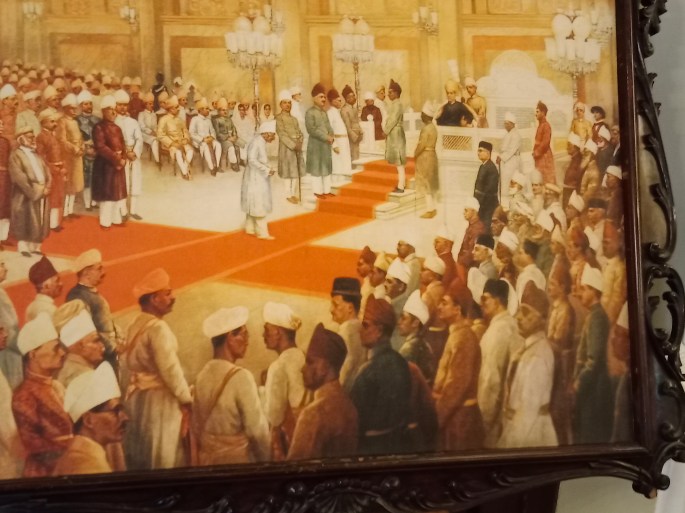
Beautiful paintings reflecting various events in the palace are also displayed.
A painting of all the Nizams
A painting of a durbar in session
The other interesting thing at the palace is the collection of vintage cars and other transport from a bygone era…
One of the vintage cars displayed
The Southern Courtyard is also a quadrangle but the sides of the quadrangle are formed by the four palaces with a central fountain. The palaces are built symmetrically opposite to each other . The palaces have huge columns and the artwork on the exterior of these palaces is outstanding indeed.
Afzal Mahal, one of the palaces
The beautiful artwork on the palace exteriors
Going through the exhaustive collections in the Chowmahalla Palace museum, we were astouned at its sheer volumes. But our next destination Salar Jung Museum surpassed even this.
Salar Jung Museum
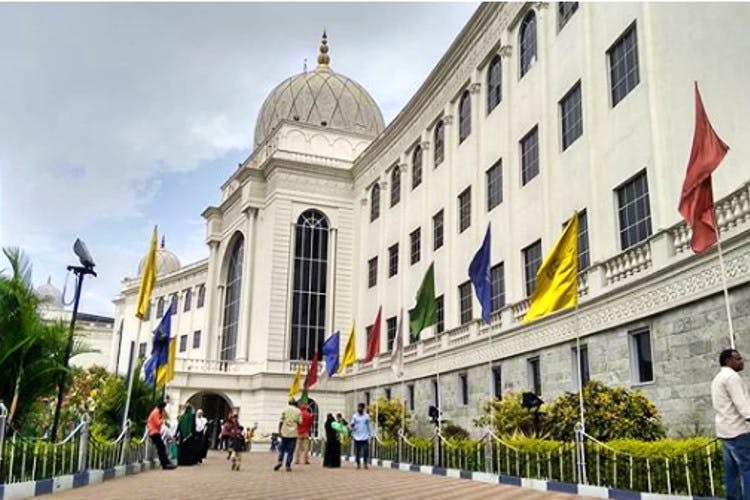
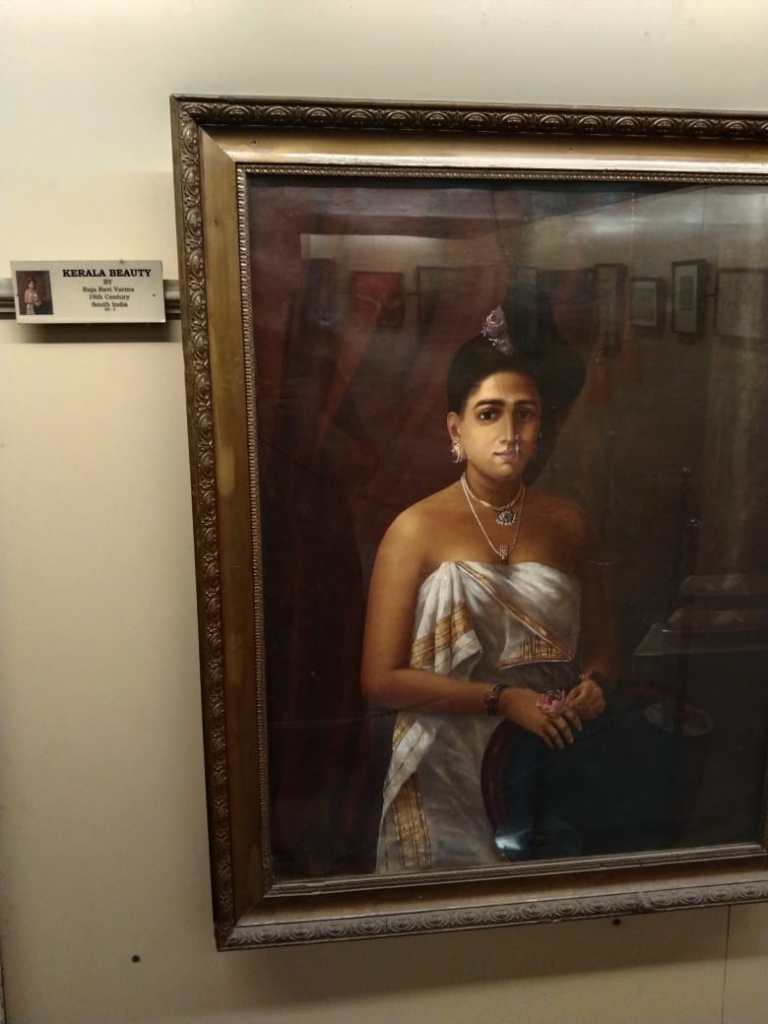
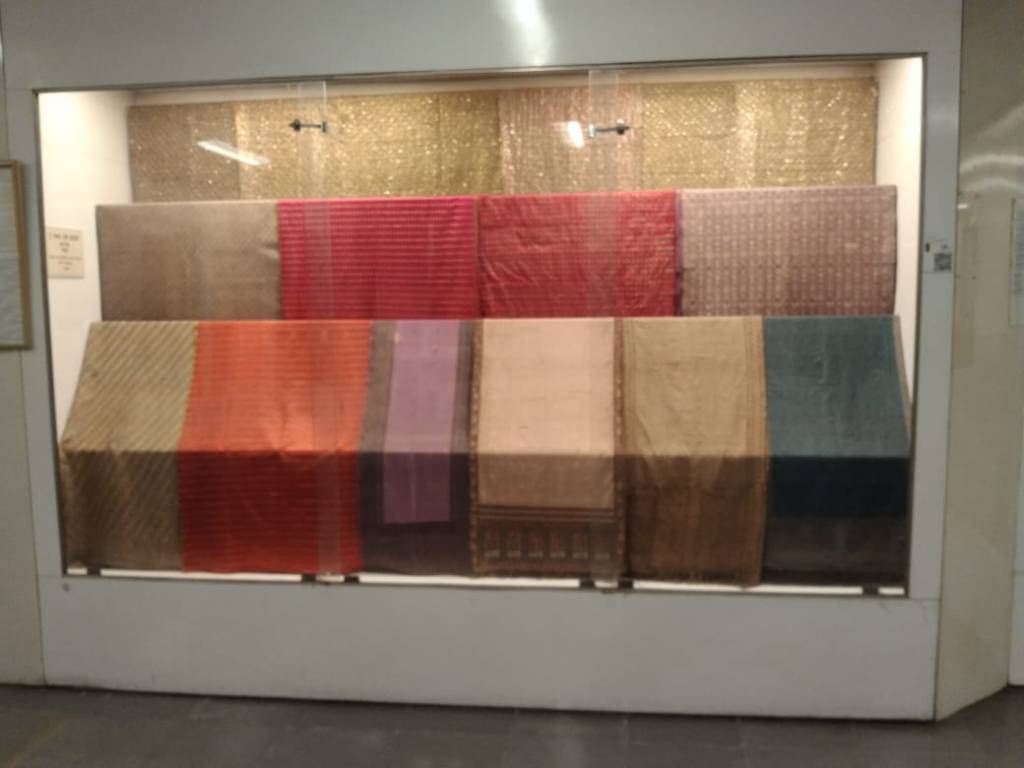
Established in 1951 at the ancestral palace of the Salar Jung family this museum was moved to its present location in 1968. The Jung family served as prime ministers to the Nizams of Hyderabad . This collection is a repository of art objects from Europe, middle East, far East and Indian art and heritage works from the Maurayan times to the Mughal era. Most of it is the collection of Salar Jung III. The museum has a manuscript section and a reference library.
Some pictures…
The Salar Jung Museum
Eastern Porcelain gallery
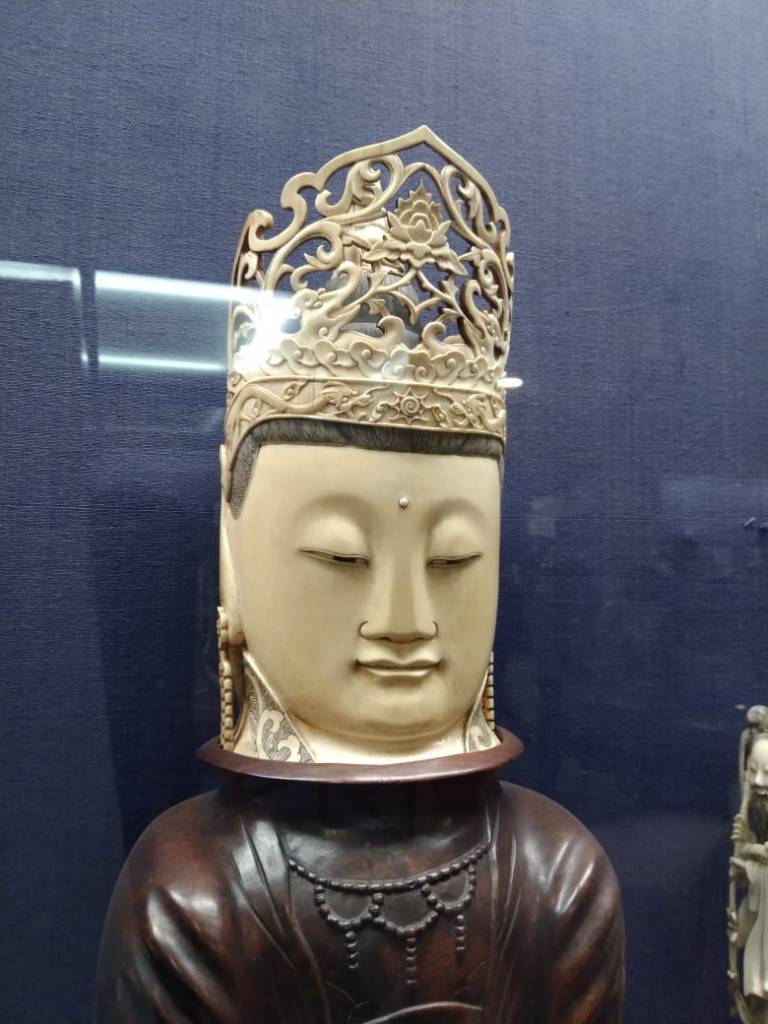
Ivory gallery
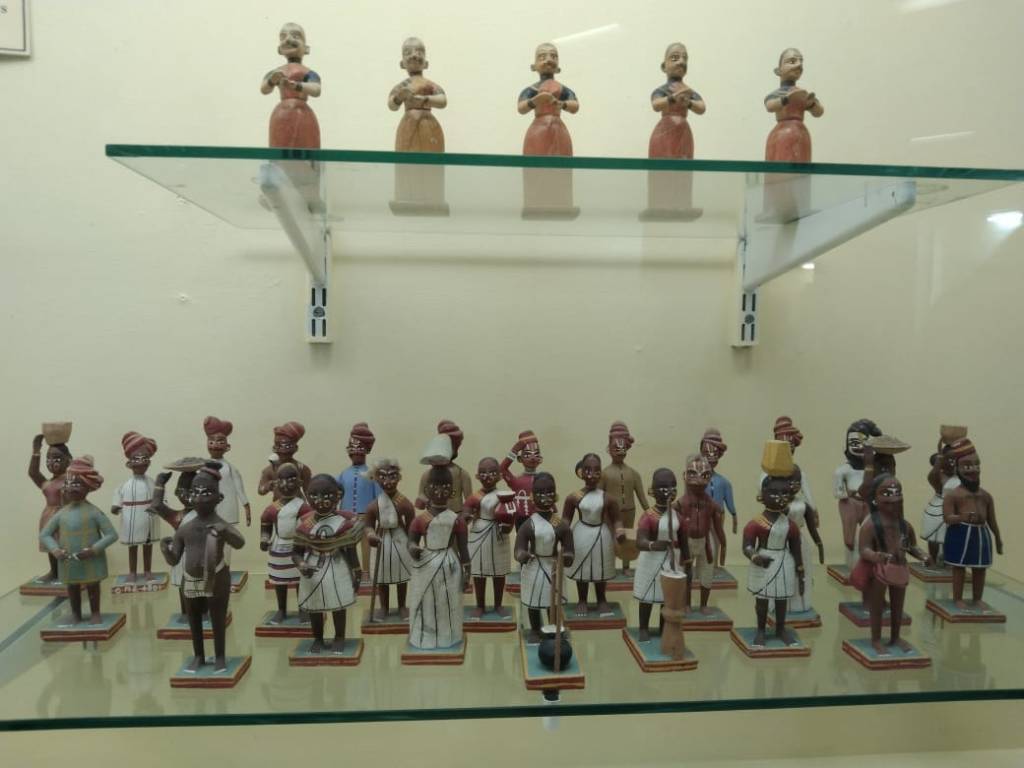
Kondapally toys and Indian Bronze
Indian Art and Textiles
One of the most popular exhibits here is an Italian Marble sculpture of Veiled Rebecca.
Veiled Rebecca
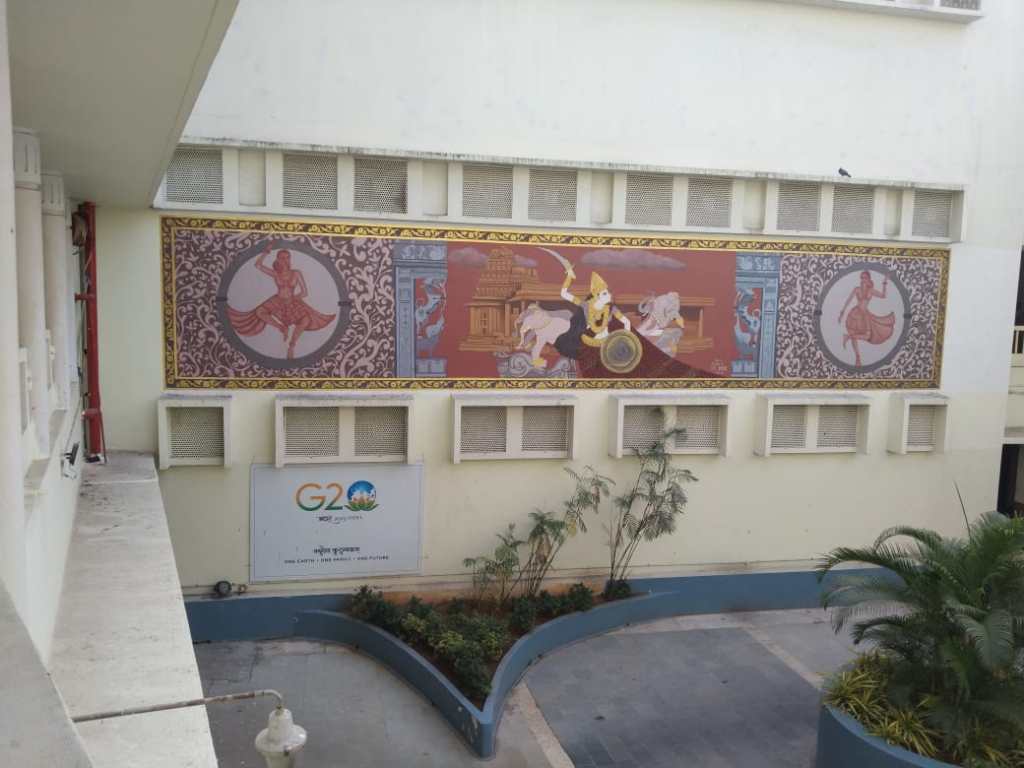
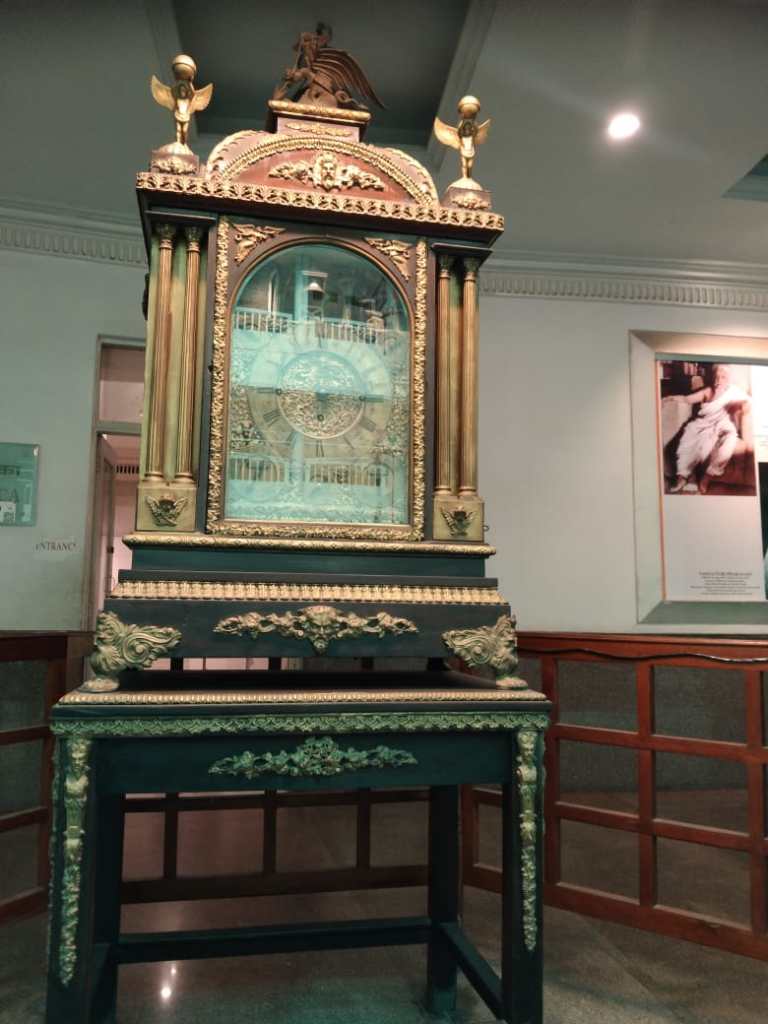
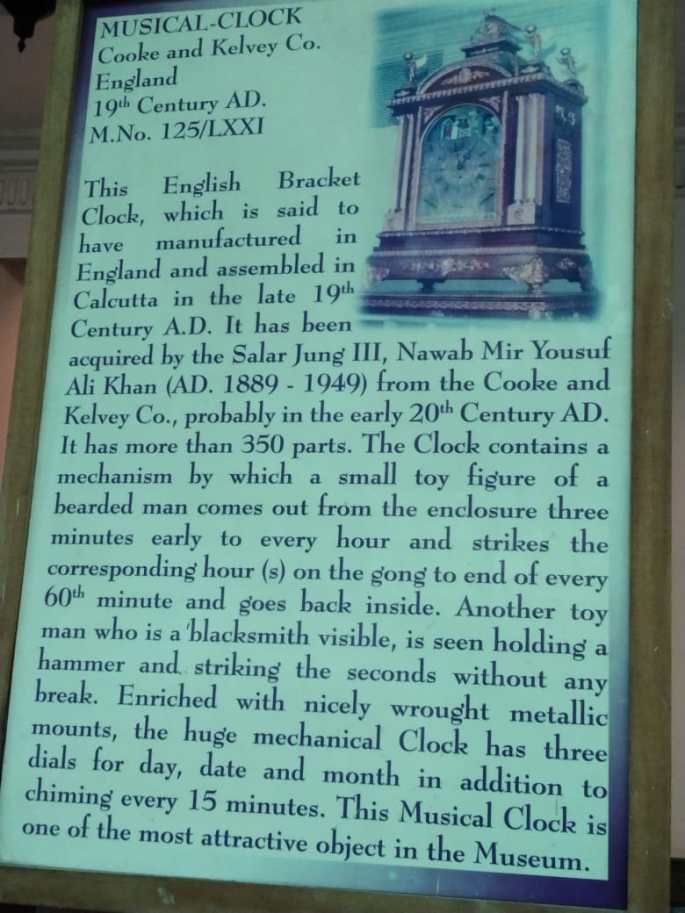
This is but a small example of the vast collections in this museum. Besides this, the walls of the central quadrangles are painted with murals and there is an ancient musical clock which is functional even now.
A mural on the wall of the centre court
The Musical Clockand it’s history
After walking through the various galleries at the museum, we were amazed at the sheer volumes of a personal collection!!
Tad tired after the long walk, we returned back to the cool comfort of the car and back to the hotel.
Next week, we cover some more interesting places in Hyderabad. Till then its goodbye…










































































 Travel-along.in