Biryani and Pearls; Hyderabad

Today we do a quick roundup of various attractions in and around Hyderabad. Having covered Golconda and the museums earlier, this episode covers the other destinations.

Qutub Shahi Tombs

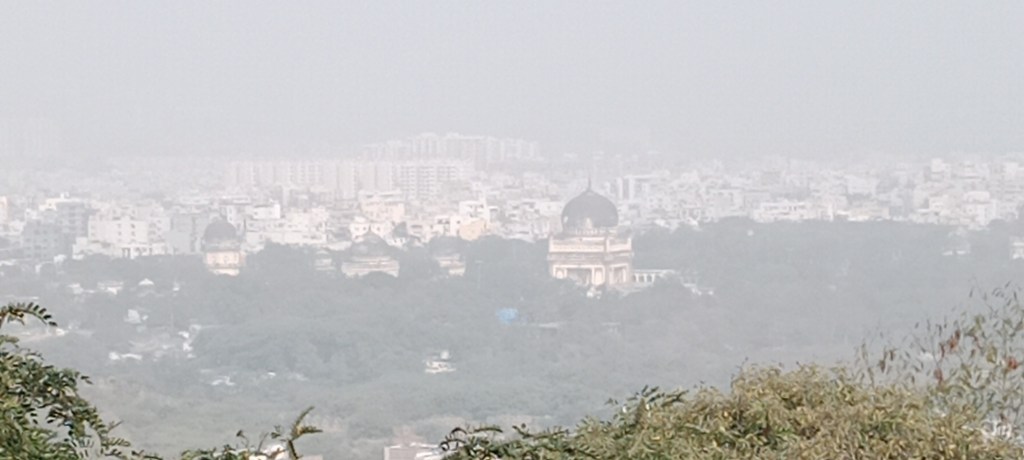
These are the tombs of the kings of the Qutub Shahi dynasty of Persia/Iran who ruled this area . The tombs are located just one kilometre from the Golconda fort. One can see the domes of these tombs from the top of Golconda fort.

These tombs are present in a large group and is unique in that the entire dynasty is buried in the same place making it a one-of-a-kind tomb in the world. There are seven such tombs in the complex. These tombs which have intricate stonework on them , lie in beautifully landscaped gardens called Ibrahim Bagh. An amalgam of Persian and Hindu architecture adds to its uniqueness.

Each tomb is quadrangular and rises above a flat raised terrace. Some of the tombs have double stories. The tombs are surrounded by beautifully crafted minarets. The domes were studded with blue and green tiles once upon a time , but now, most of it is damaged.

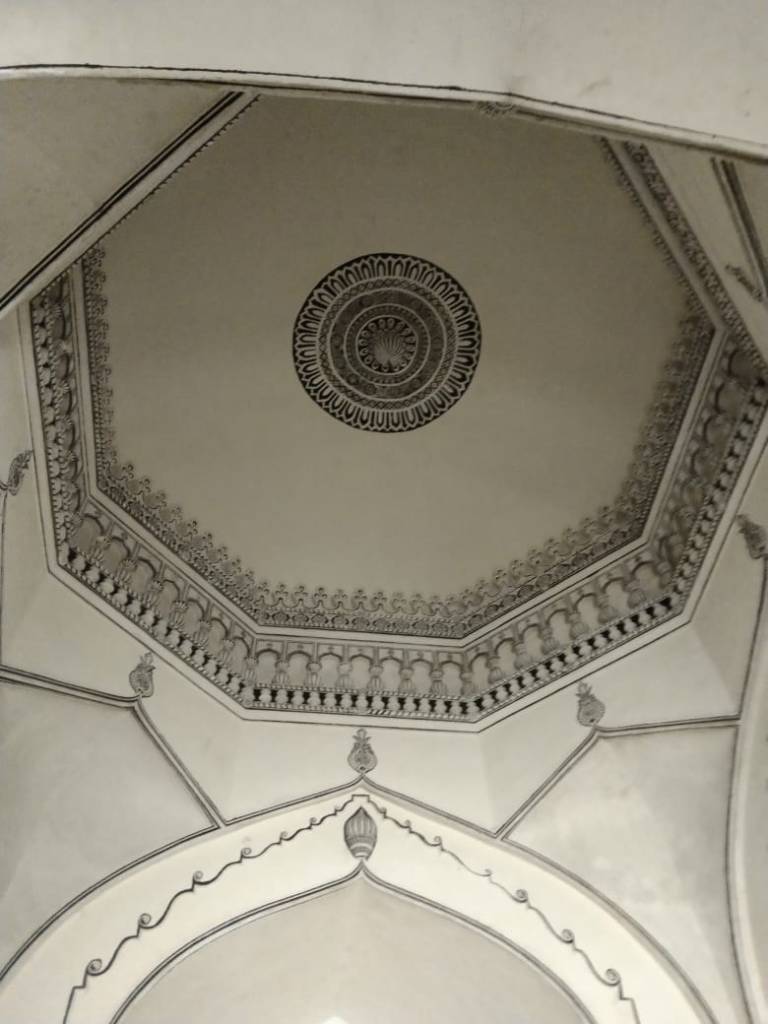
Just like in Golconda fort, these tombs also have unique acoustic features due to the diamond cuts on the undersurface of the domes.

Exterior of one of the tombs

The decorated entrance and undersurface of the dome
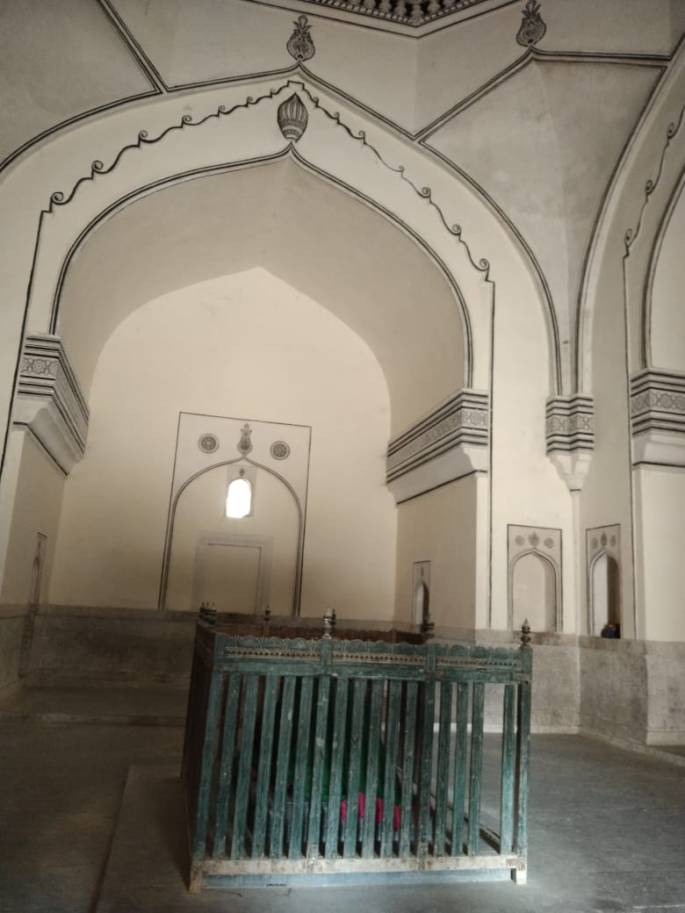
The tomb itself

A QutubShahi heritage centre is coming up in the complex.

After seeing the tombs , we were headed to the iconic image of Hyderabad; The Charminar.

The Charminar

Once again connected to the Qutub Shahi dynasty, the reason to build this monument is still not clear. There are various opinions on this.

Some of the reasons propounded are that the Sultan built it in memory of his wife Bhagmati at the place where he saw her for the first time. Queen Bhagmati later embraced Islam and assumed the name Hyderi Begum after whom Hyderabad is named. An epidemic of plague had wrecked havoc and the king is supposed to have built it as an offering when the epidemic ended. Another version is that it is supposed to commemorate the start of the second Islamic millenium. Let us leave these legends aside and see the structure itself which is real…..

Built with granite and mortar, this square monument measures twenty metres on each side and faces thoroughfares on all four sides. Each corner has a pillar or minar hence the name Charminar which translates to four pillars. Each of these pillars has four stories with each floor divided by artistically carved rings. One can climb around 150 steps to reach the top from where you get a good view of the city. There is a mosque on top of the monument. Each pillar looks like a lotus leaf and each side has a clock too.

The iconic Charminar
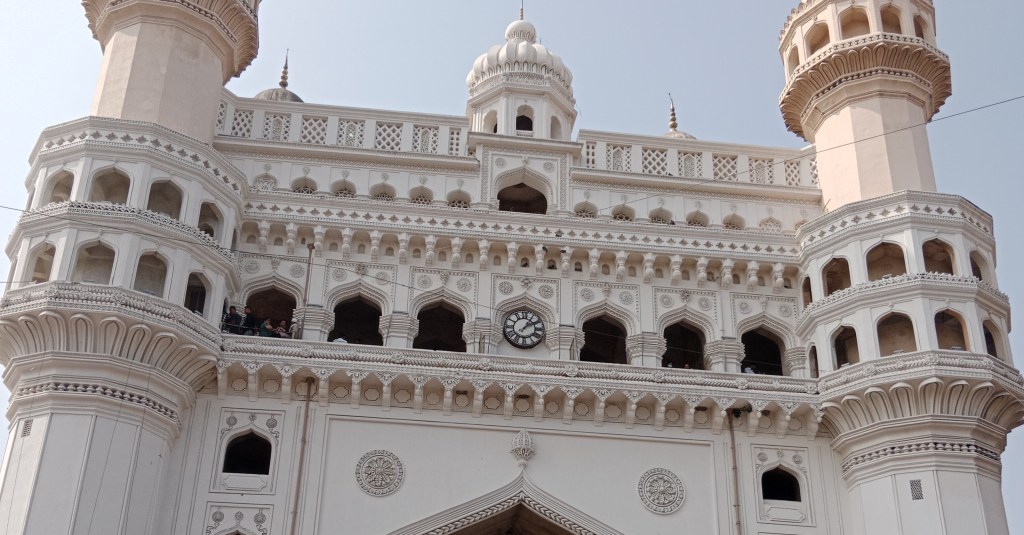
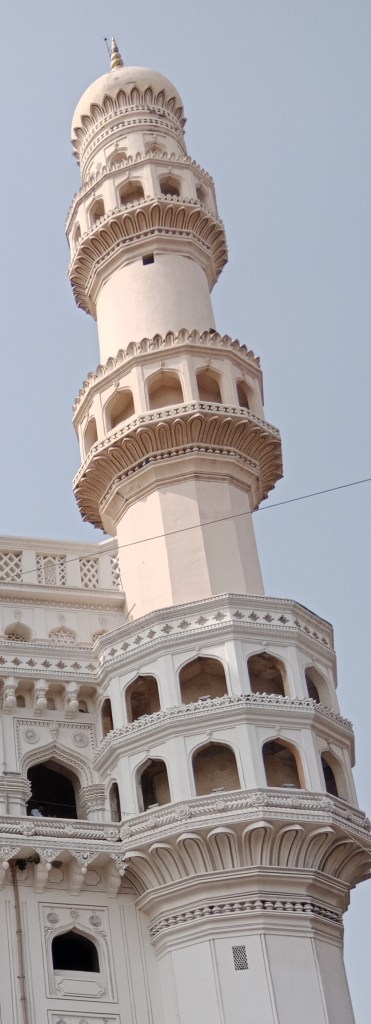
The intricate art work on the Charminar

The area around the monument is Ladd bazar and has a lot of roadside stalls selling clothes ,trinkets and other souveniers . Roadside eateries claiming to serve authentic biryani and faloodas abound.

Hyderabadi Biryani is famous for its unique taste due to the right combination of various Indian spices, meat and the aromatic rice that is used. A visit to Hyderabad is incomplete without tasting the local Biryani.

The area is extremely crowded and one can easily get lost in the maze.

View of Ladd Bazar and famous Hyderabadi Biryani

Hussainsagar Lake

This artificial heart shaped lake built in 1563 , again by one of the Qutub Shahi kings covers an area of 5.7 sq kms. It separates Hyderabad from Secunderabad. It was built by the King for drinking and irrigation purposes of his subjects

A 18 mt high monolithic Buddha statue chiseled out of white granite was erected in 1992 and stands on a rock in the center of the lake. Regular boat services are available to the statue. It is lit up at night and adds to the beauty of the lake. In addition, the lights along the Tank Bund reflecting on the lake is a beautiful sight.
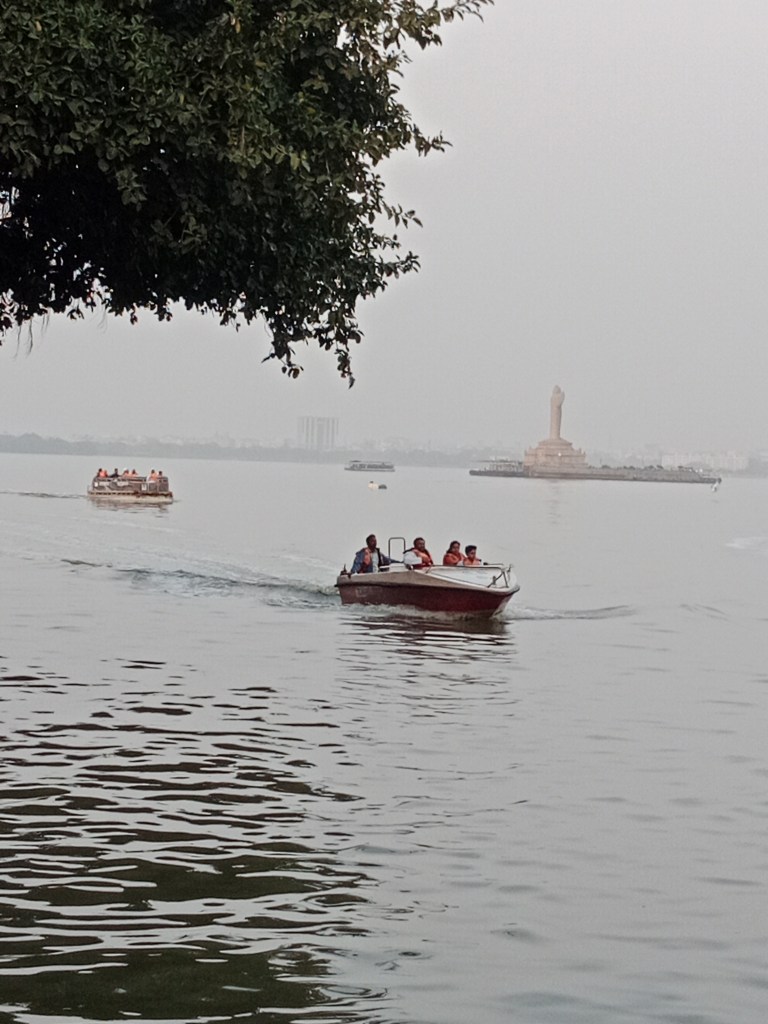
Husainsagar Lake with Buddha Statue

The lit up Buddha Statue and reflection of row of lights on the lake

Husainsagar lake is a popular sailing destination where regattas are conducted regularly by various sailing associations. Multiple parks surround the lake area and provide entertainment of various kinds to the visitors. Musical fountains, boating facilities, a laser auditorium are some of the attractions in the Lumbini Park, NTR Gardens, Sanjeeviah Park and a few of such parks located around the lake.

The Telengana Secretariat is located right opposite the lake and the imposing building looks attractive specially when lit up at night.

Telengana Secretariat

The Amara Jyothi

This is a Martyr’s Memorial near the lake . Shaped like a flame, it is the largest seamless stainless steel structure in the world and is five times bigger than the cloud gate at Chicago. At night, the flame is lit up and the base reflects the light from the surroundings giving it a terrific appearance !
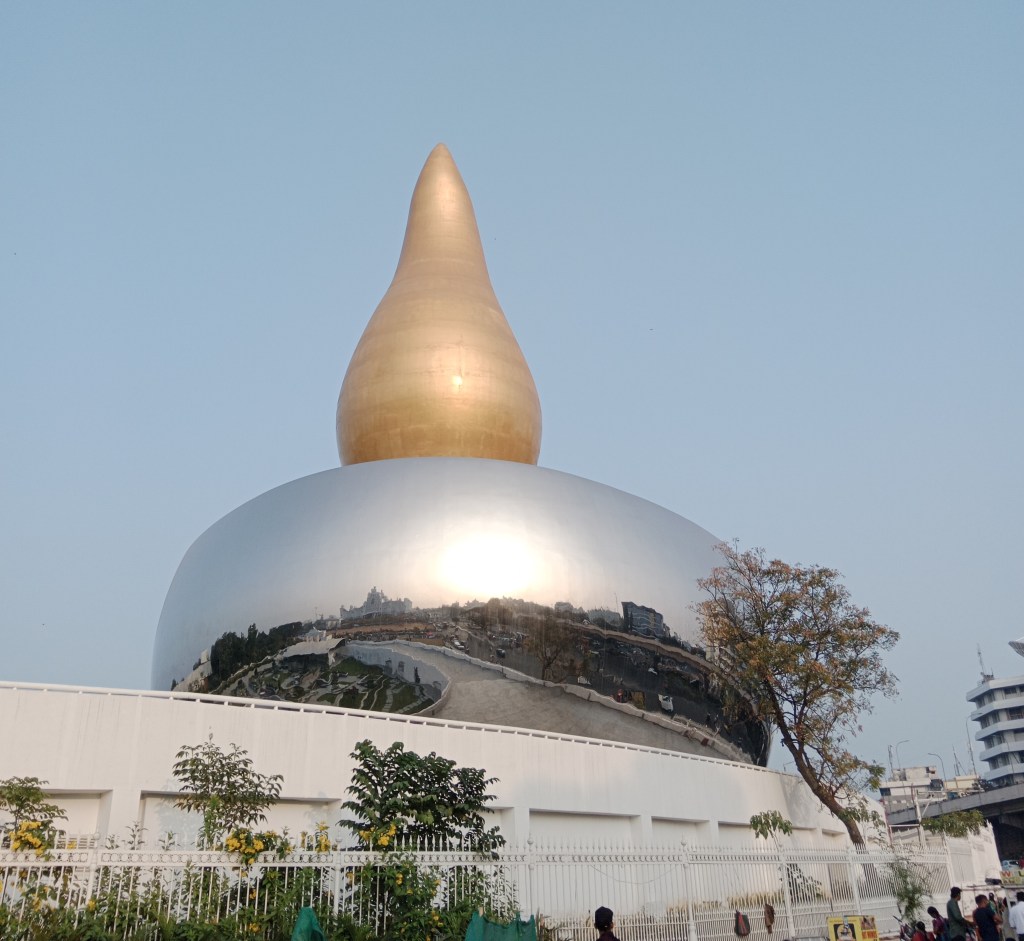
The Amara Jyothi or Martyr’s Memorial

The lit up memorial with reflection of the Secretariat on it

The Tank Bund has statues of various eminent personalities too.

The lake has deteriorated today with unplanned urbanisation and sewage dumping. The depth of the lake has reduced due to silt accumulation and many undesirable changes have taken place in its biological communities. A plan to correct this damage is being implemented.

Hyderabad Zoo

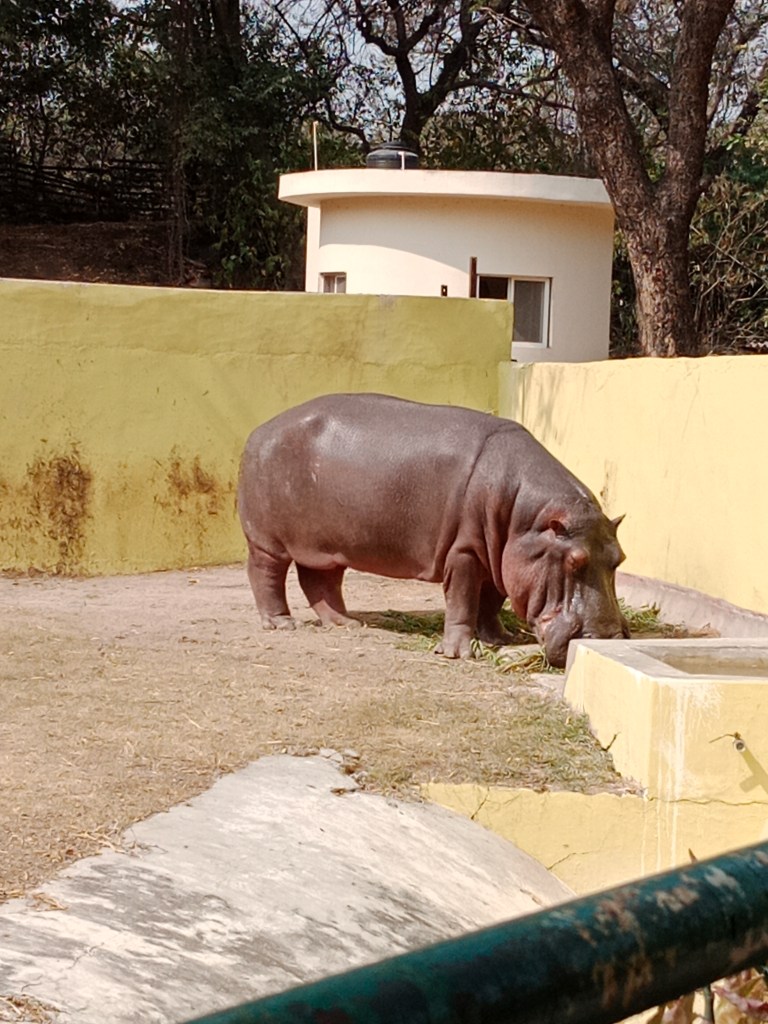
Hyderabad has a relatively well maintained zoological park covering a vast area. Most of the inhabitants roam around freely in their assigned areas and are separated from visitors by moats. They have a buggy system where you can alight at your chosen destination and board the next buggy to go elsewhere. This was really convenient as the area was very huge . There are facilities to book a safari too.

It had been a long long time since we visited a zoo and this one brought back memories of childhood picnics. Some pictures…
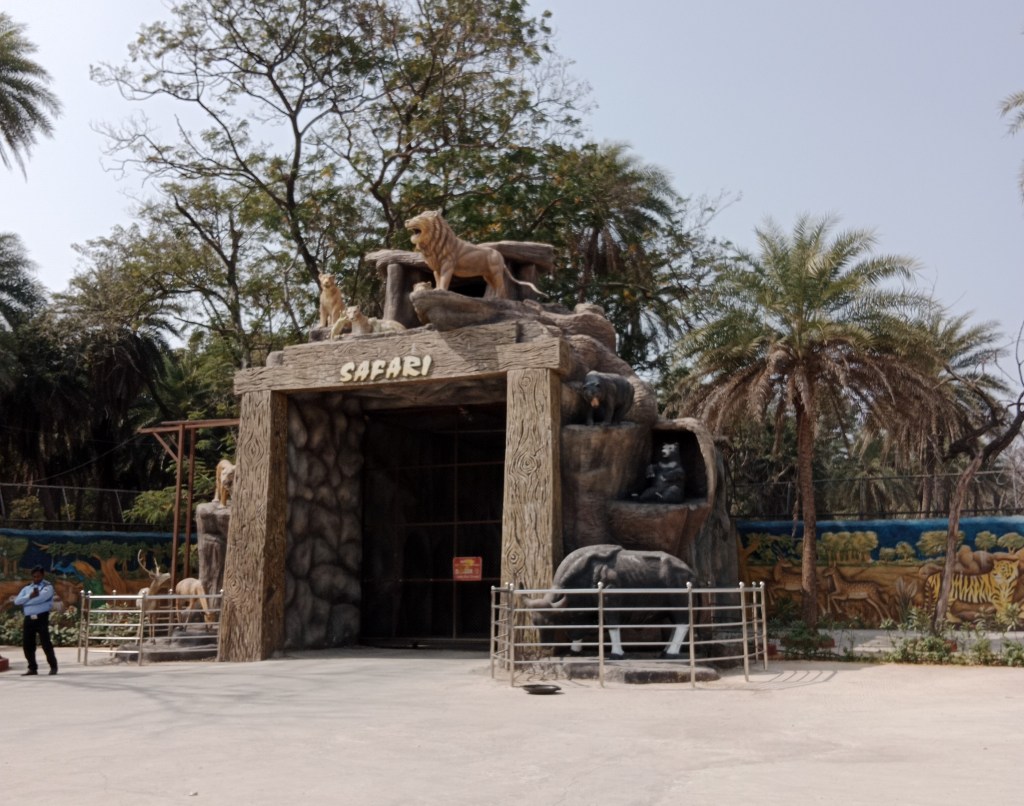
The safari area and the buggy

The bear and the hippo

Enjoy the tigers playing around in this video

Pearls

Last but not the least, Hyderabad is known as the city of pearls. This is due to its booming pearl processing and trading industry. The Qutub Shahi kings and the later rulers who ruled the area for over 200 years were very fond of pearls and this attracted craftsmen from all over the world to this area. The pearls formed an integral part of the traditional regalia and crushed pearls were known to have healing and beautifying properties. The persian gulf was a source of pearls for a long time but with the discovery of oil and consequent pollution led to a decline in pearl supplies from there and this also led to Hyderabad slowly becoming a pearl destination.

Pearl Jewellery

This brings us to the end of this episode. Next week we move on to Andhra Pradesh . Till then, do comment and give your feedback.

The Museums of Hyderabad

Two of the most beautiful museums/palaces are in Hyderabad and today we have a look at them. The vast collection of antiques that these museums have will surprise you. And the peculiar part is that most of these are collections of one individual. The interest in art and architecture that was nurtured is really amazing. The palace which is now a museum has such beautiful architecture and decor that it will leave you stunned!!

Come along…let’s see the palace first…

Chowmahalla Palace

Once the residence of the Nizams of Hyderabad, this palace is a museum today though the ownership still lies with the Nizams. The present day palace was built by the Nizam at the location of one of the existing palaces of the Qutub Shahi dynasty. Since he built four palaces, it is called chow mahalla meaning four palaces.

Though the construction started in the 18th century, it went on over a few decades resulting in the integration of many architectural styles. It primarily has two courtyards, a durbar hall,fountains and gardens. What was originally covering an area of 45 acres; is only 12 acres today!

As one enters the palace gates, we are in the Northern Courtyard where there is a long central quadrangle with corridors on either side with a pond and landscaped lawns in the middle. Right opposite the entrance and forming the third side of the quadrangle is Durbar Hall or the Khilwat Mubarak.

Durbar Hall

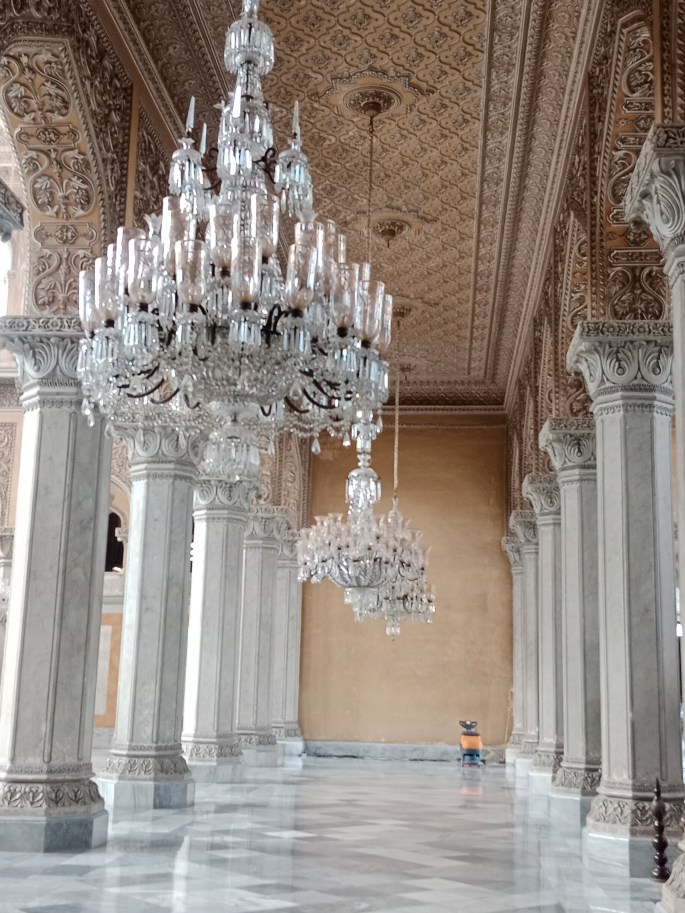
This is considered the heart of the palace as it was the seat of the Nizams. Decorated marble pillars rise from a marble floor. The Royal Seat or throne made of marble adorns the centre of the Durbar Hall. Beautiful chandeliers of various sizes drop down from an elaborately carved ceiling adding to the splendour of the hall.

The Durbar Hall

At the Durbar hall with the chandeliers and the throne

The beautiful ceiling and corridor of the durbar hall

As mentioned earlier, the palace is a museum now and has exhibits under various categories . Most of them are articles used by the Nizams and their exhaustive collections of antiques.

The seals used by the Nizam and a collection of porcelain

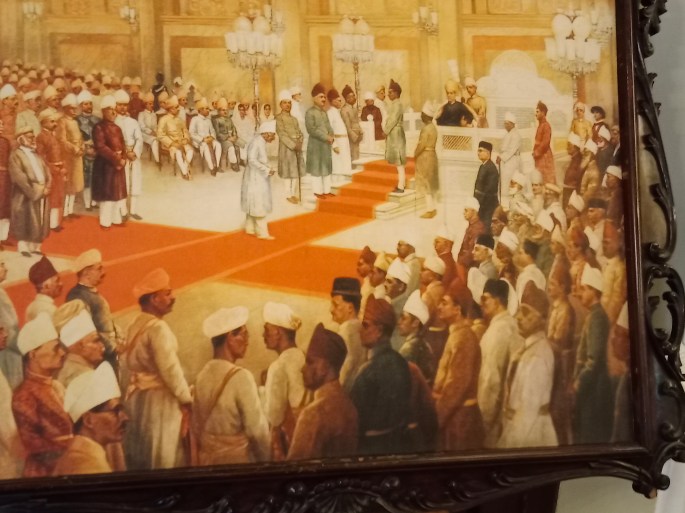
Beautiful paintings reflecting various events in the palace are also displayed.

A painting of all the Nizams

A painting of a durbar in session

The other interesting thing at the palace is the collection of vintage cars and other transport from a bygone era…

One of the vintage cars displayed

The Southern Courtyard is also a quadrangle but the sides of the quadrangle are formed by the four palaces with a central fountain. The palaces are built symmetrically opposite to each other . The palaces have huge columns and the artwork on the exterior of these palaces is outstanding indeed.

Afzal Mahal, one of the palaces

The beautiful artwork on the palace exteriors

Going through the exhaustive collections in the Chowmahalla Palace museum, we were astouned at its sheer volumes. But our next destination Salar Jung Museum surpassed even this.

Salar Jung Museum

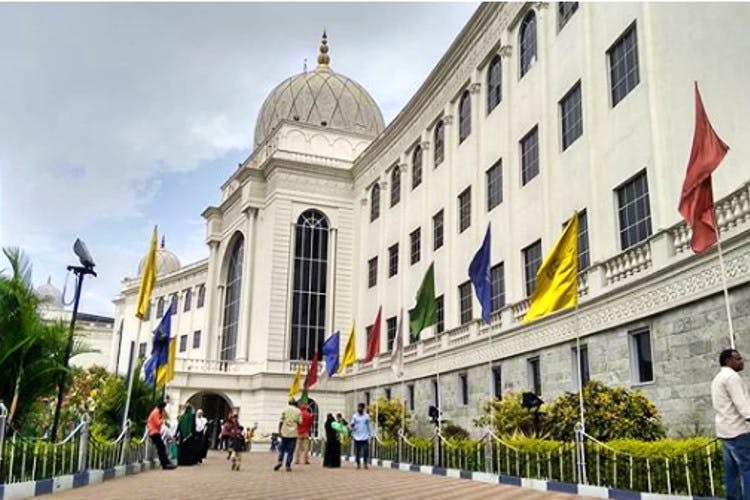
Established in 1951 at the ancestral palace of the Salar Jung family this museum was moved to its present location in 1968. The Jung family served as prime ministers to the Nizams of Hyderabad . This collection is a repository of art objects from Europe, middle East, far East and Indian art and heritage works from the Maurayan times to the Mughal era. Most of it is the collection of Salar Jung III. The museum has a manuscript section and a reference library.

Some pictures…

The Salar Jung Museum

Eastern Porcelain gallery

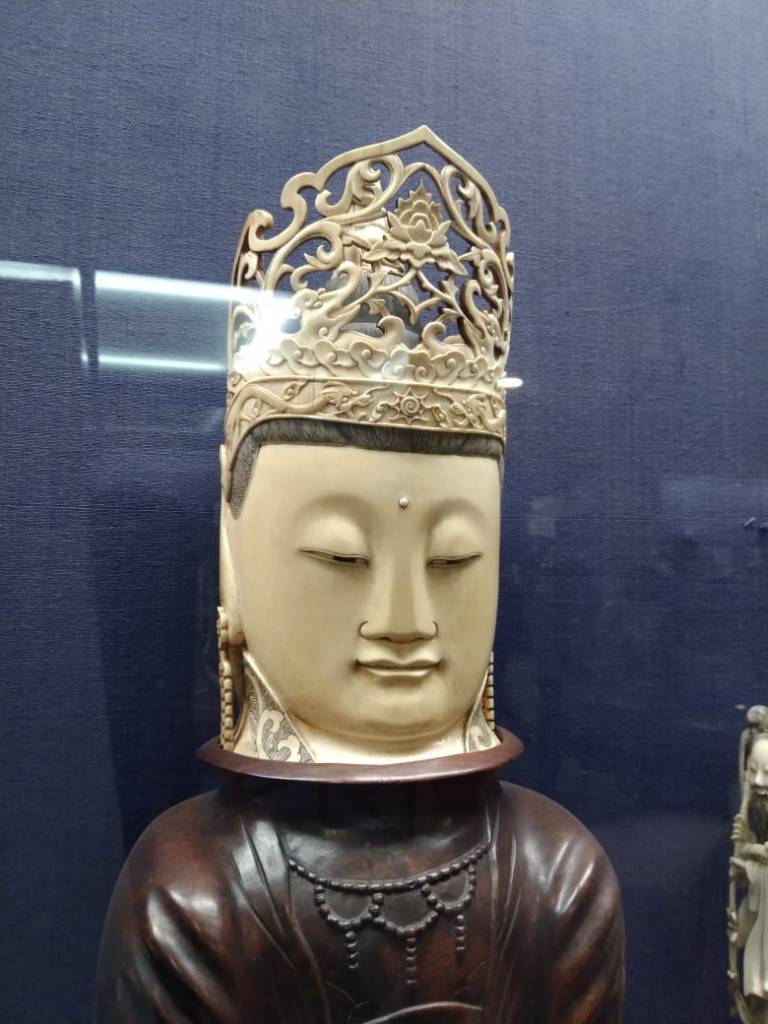
Ivory gallery

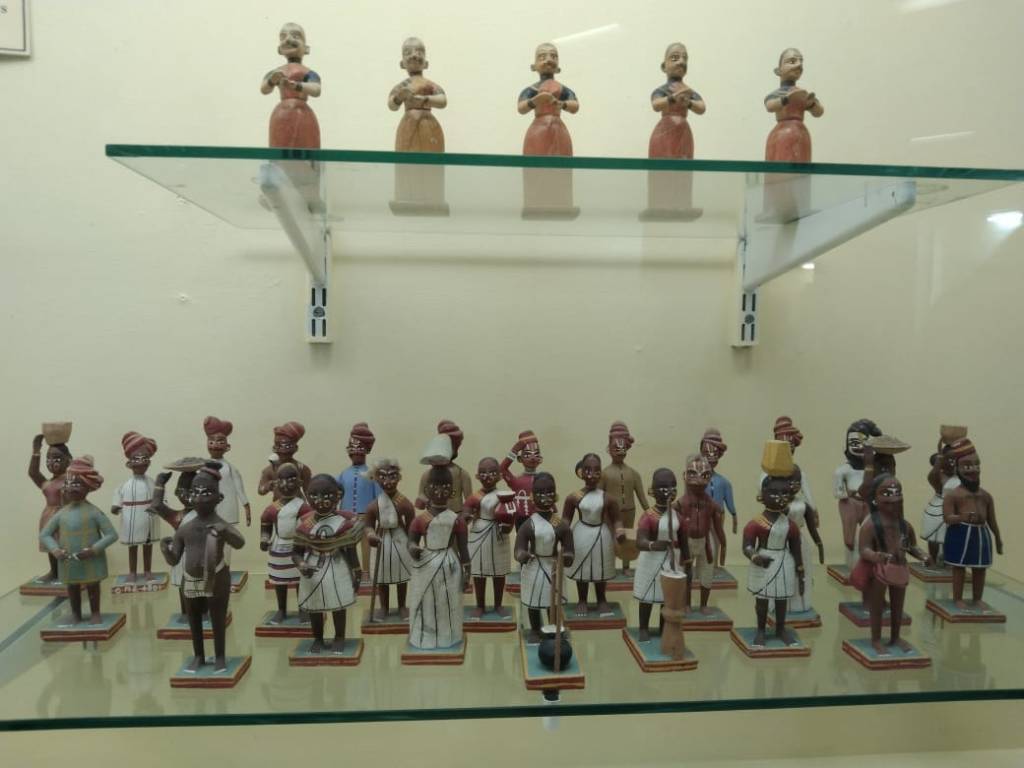
Kondapally toys and Indian Bronze

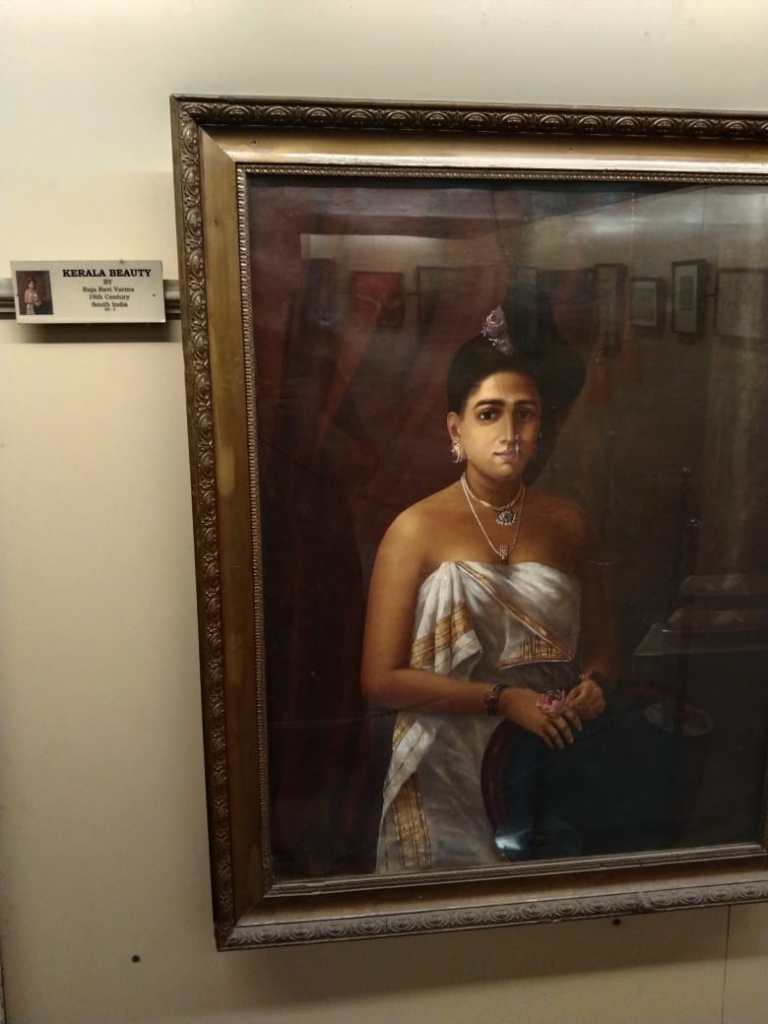
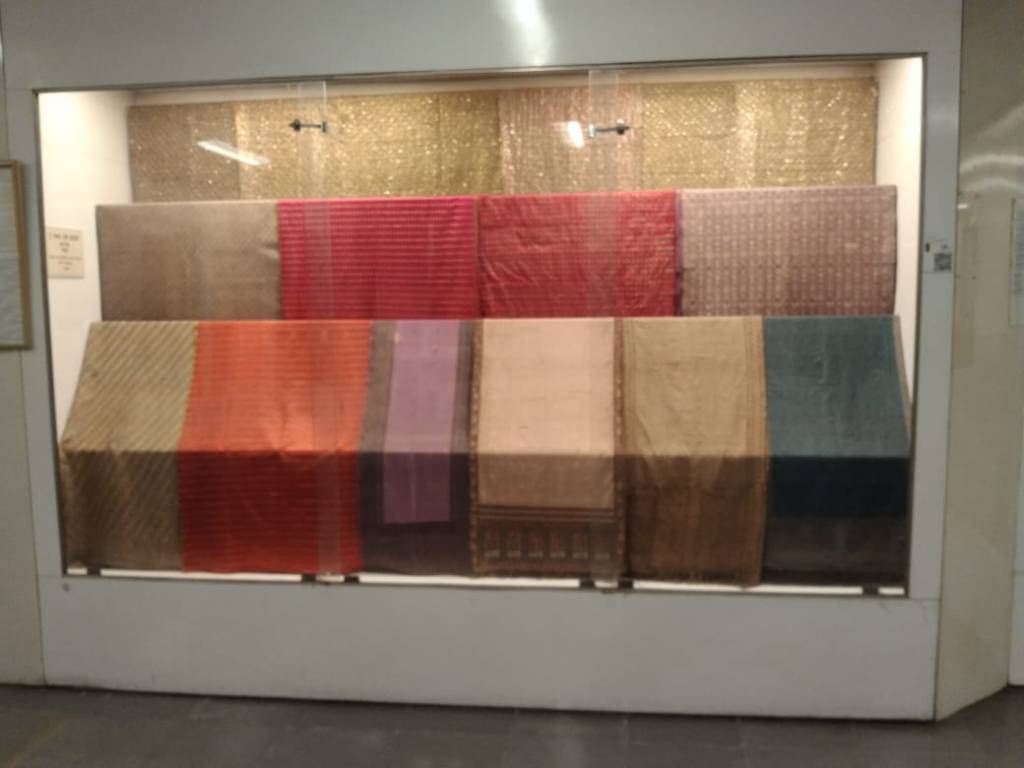
Indian Art and Textiles

One of the most popular exhibits here is an Italian Marble sculpture of Veiled Rebecca.

Veiled Rebecca

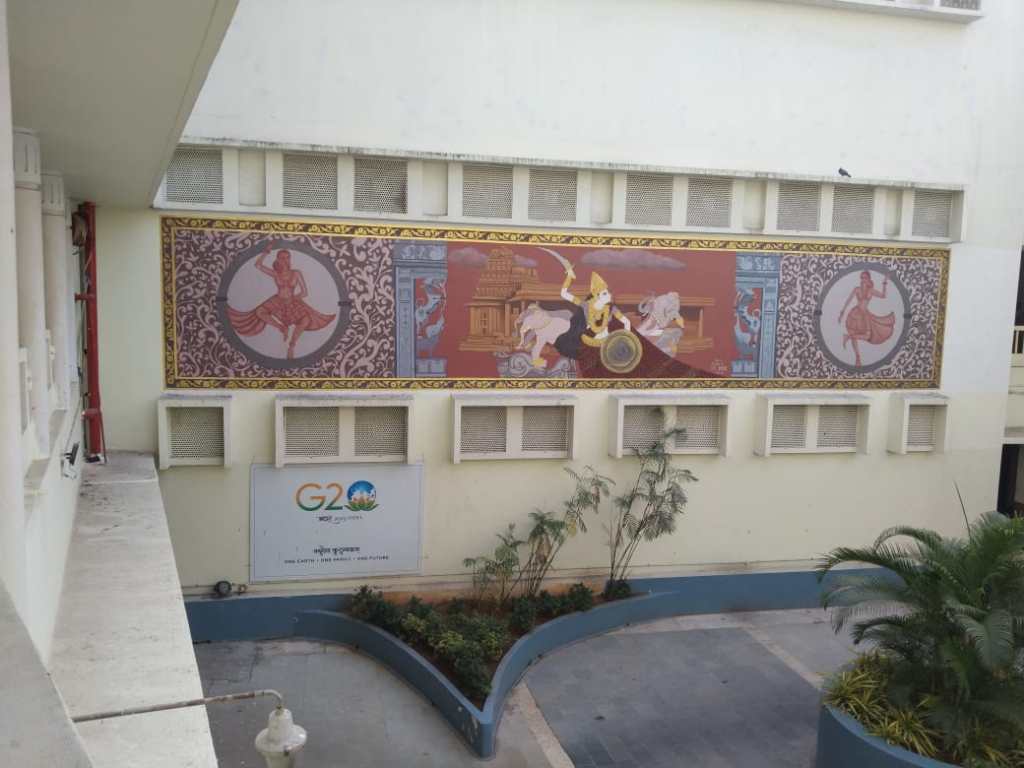
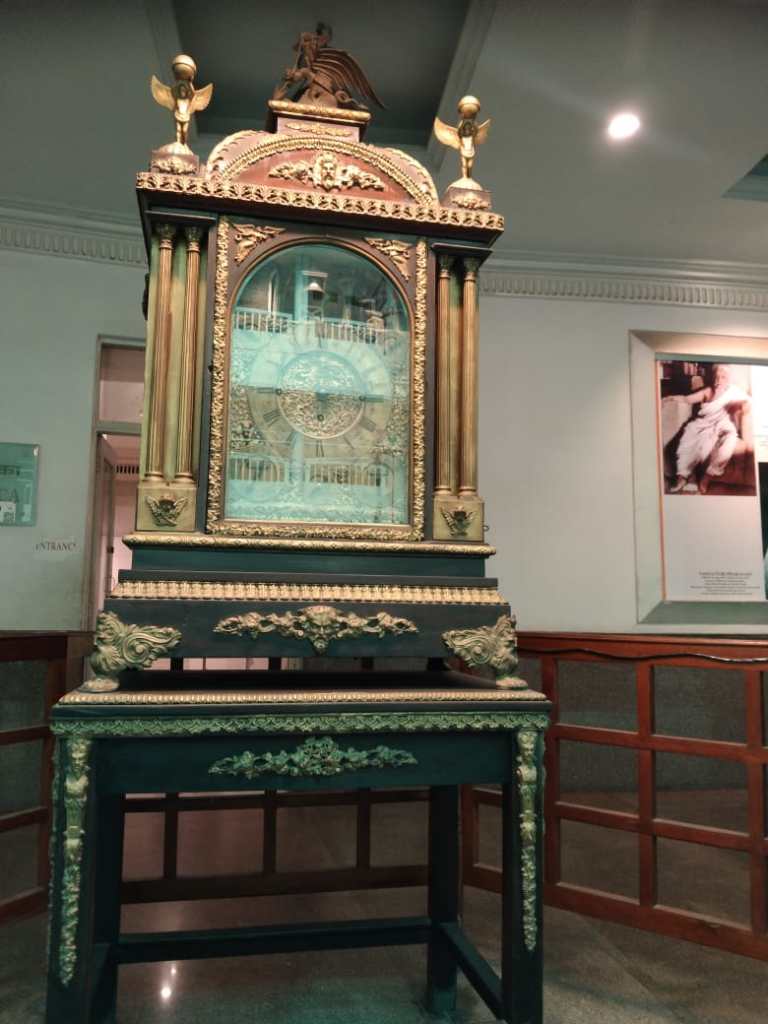
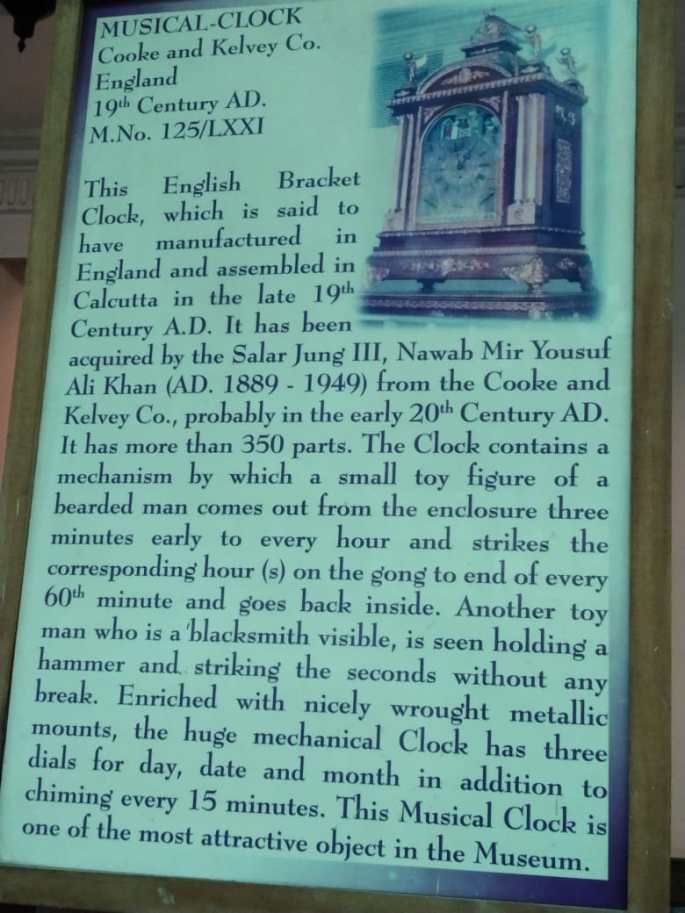
This is but a small example of the vast collections in this museum. Besides this, the walls of the central quadrangles are painted with murals and there is an ancient musical clock which is functional even now.

A mural on the wall of the centre court

The Musical Clock and it’s history

After walking through the various galleries at the museum, we were amazed at the sheer volumes of a personal collection!!

Tad tired after the long walk, we returned back to the cool comfort of the car and back to the hotel.

Next week, we cover some more interesting places in Hyderabad. Till then its goodbye…

Do leave your comments and feedback…..

Golconda ; the fort of diamonds

Once upon a time, in the 1600s, there was a fort in India with a vault storing some of the most precious diamonds of all time. The Kohinoor and Hope diamonds were among these stored here . Do you know which fort I am talking about? The historic Golconda fort located in Hyderabad.

At that time, India had the only known diamond mine in the world. These mines were located in the Guntur and Krishna districts in present day Telangana. These diamonds were cut and sold in the diamond market city of Golconda which lay inside fortressed walls. It was such a booming centre of diamond trade that the word “Golconda” became synonymous with great wealth and held a legendary aura about itself.

Today, if you visit Golconda, all that remains is the ruined walls of a fortress city , a far cry from the legendary aura that it once held. Ofcourse what remains of the walls and rooms does give the feel of pomp and splendour of the bygone era. Today, Golconda fort finds itself on the tentaive list of UNESCO to become a World Heritage site and is under the control of the Archaeological Survey of India.

Before I take you through the fort itself, a short history will help put things in perspective.

Golconda, a historical perspective

The fort itself was built in mud by the Kakatiya ruler, Prataprudra in the 11th century. It went from him to the Bahmani Kings and then on to the Qutub Shahi dynasty. It was under the Qutub Shahi dynasty that Golconda fort saw its expansion from the original mud walls to huge fortified granite walls and it became their capital. It was a great centre of cotton trade and cotton fabrics were even exported from there apart from the booming diamond trade .This brought great wealth to the Qutub Shahi rulers . This attracted the Moghuls and in 1687 , Aurangzeb led his army to the Golconda fort marking the beginning of Moghul rule in the region. After the fall of the Moghul Empire in 1724 , Golconda came under the Nizams of Hyderabad and subsequently after Indian Independence, integration of Hyderabad state occured.

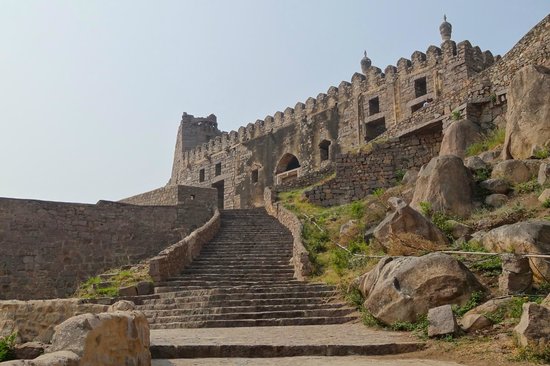
Golconda Fort

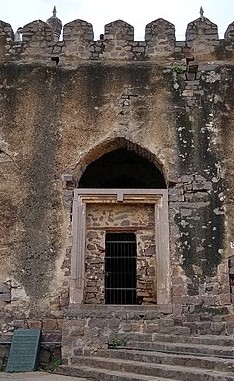
As one drives in to Golconda fort, one passes through narrow crowded streets and suddenly encounters a fortified stone wall with an entrance. This is the Moti Darwaza and this wall is the outer wall of the fort stretching over a distance of 11 kms. We enter through this gate and continue to drive through narrow streets lined with old dilapidated houses and shops. People go about their daily lives in a hurry and I understand that this part of Golconda had the living quarters of the helpers of the rulers at one point of time and it is now home to their descendents. This was all part of the fortified city at one point in time.

The Moti Darwaza and the narrow streets that lie inside…

Continuing to drive along the narrow crowded streets, we reach an open area from where the actual fort can be seen. The inner part of the fort starts from here and this wall extends over a distance of 4 kms . It was within these walls that the royal family resided . After the tickets are purchased at the counter, one has to walk along a paved path with a manicured lawn on one side.

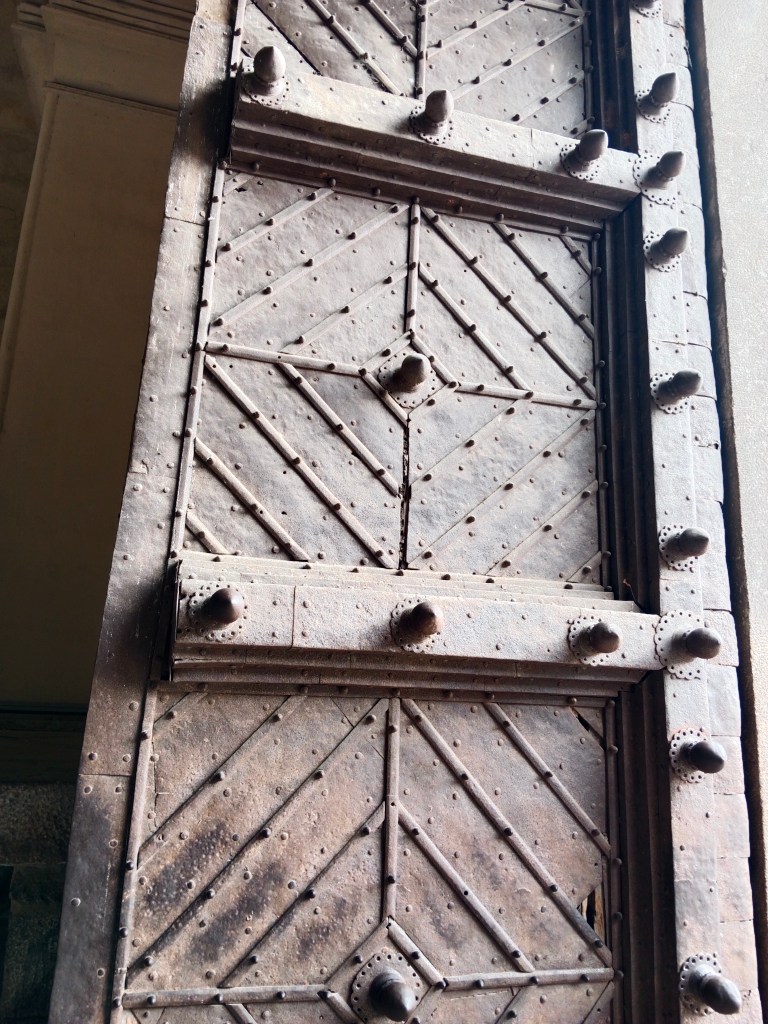
Then we reach an ornate doorway decorated with images of peacocks and lions indicative of the Hindu origins of this fort. The door is solid metal and looks very heavy. This is the BalaHissar gate.

The ornate doorway and the huge metal door at BalaHisar gate.

After you cross the gate and walk ahead , almost the first thing you encounter is the Fateh Darwaza. This gate or darwaza has a cannon mounted on its wall and if one stands beneath the dome and claps one’s hand, the sound is supposed to reach the top. This is supposed to be a safety measure to warn the inhabitants of impending danger. The dome has geometric cuts along the walls which provide this acoustic effect which is one of the specialities of this fort.

Apart from this, there are a couple of places in the palaces of the fort where this unique acoustic system has been put to use.

Fateh Dawaza ……Note the geometric cuts on the ceiling giving the acoustic effect

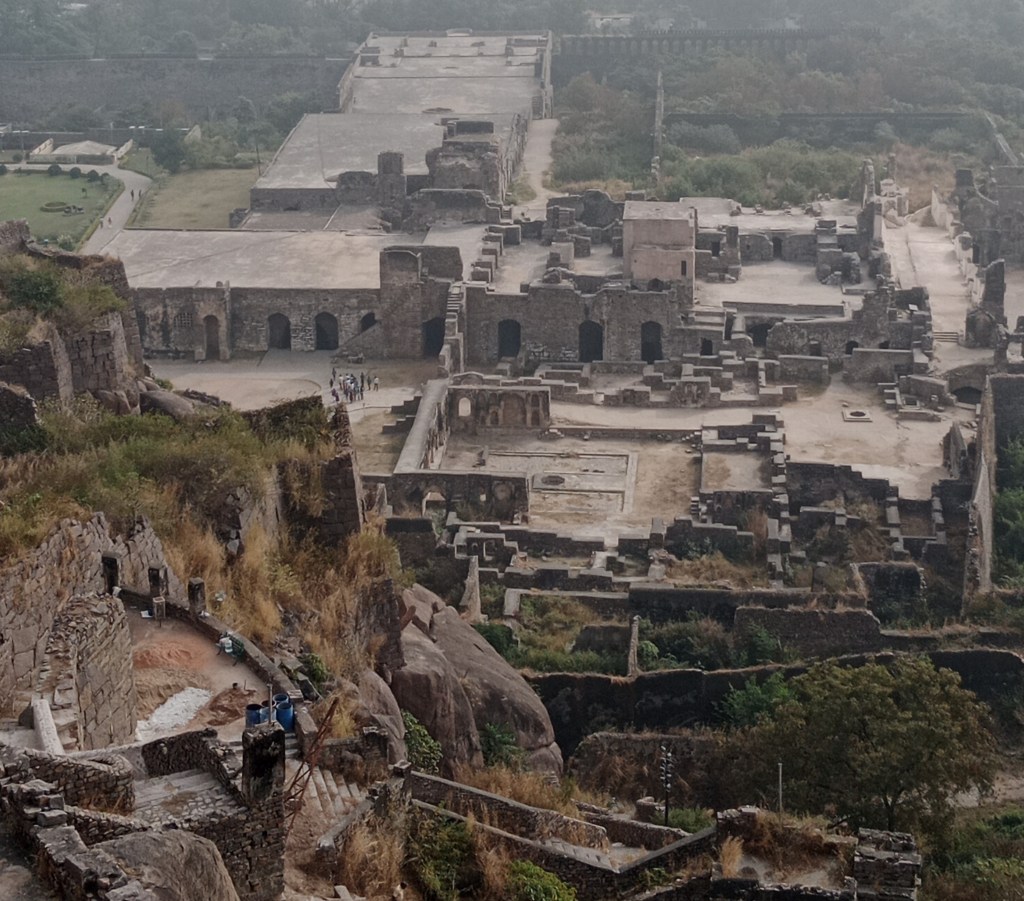
Crossing this door and walking along a paved passage, one gets a view of major parts of the fort…..an overview of the place…

The first views of the entire fort…

The paved pathway and at places a wooden one guides one through the ruins of the fort.

To the left of the pathway is an ornate building with multiple arches called tha Aslah Khana. This was the place where arms and ammunition were stored.

Aslah Khana

Continuing further, we reach the area where the offices of the kingdom were located. This also has elaborate arches with a storage loft above to store documents.

Walking along further, we come across the barracks where the foot soldiers lived. Now, this is strategically located at the outermost part of the fort

Barracks

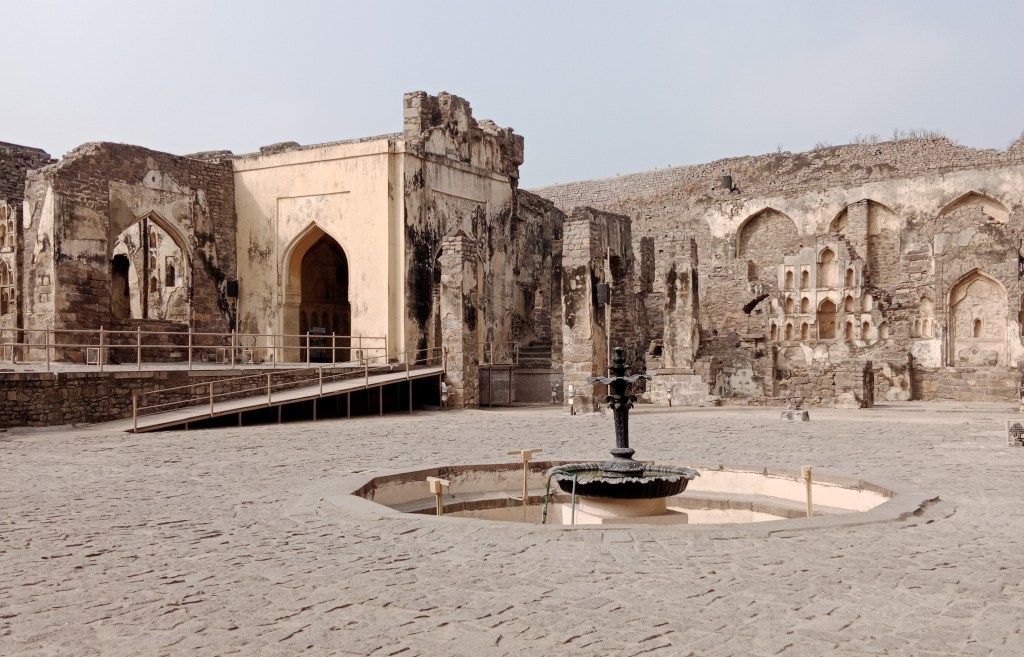
Soon we reach the palace area with the lawns in the centre and the palace on one side called the Rani Mahal .There is a courtyard with a stage on the opposite side where Taramati and Bhagmati , the court dancers used to dance and the royal family enjoyed it. The centre court also has a ruined fountain. The makeup room of the queen lies adjacent to this.

Rani Mahal with the open courtyard

The Queen’s bath and makeup rooms

At many places, one can see the dilapidated and broken pipelines used in those days. The water to Golconda was transported by canals from Banjara hills and pumped using wheels.

There are two mosques within the fort. The first one is the Taramati mosque used by the commoners and the other one is the Ibrahim mosque located at the top and used by the royalty.

The Taramati mosque (left) and Mosque of Ibrahim

Nagina Bagh

This is a landscaped garden which was once the diamond trading centre.

Nagina Bagh

A climb of more than 350 steps takes one to the top of the fort where the Durbar Hall is located. As we climb up, we come across Ramdas Prison where Bhakt Ramdas was imprisoned. He had used money from the kingdom to build a temple for Rama and that led to his imprisonment.

Bhakt Ramdas jail and the steps to the Durbar hall

Climbing up , we first come across the Jagdamba Temple which is more than 500 years old. Legend has it that Prataprudran , the Kaktiya ruler built this temple here and the fort was built from there downwards later on. Even today, worship takes place at this temple.

Jagdamba Temple

Baradari or Darbar Hall

This was where public audiences were held and there are two buildings Diwan I Aam and Diwan I Khas around an elevated central courtyard.

Baradari and steep steps leading to it

From the central courtyard which is the highest point of the fort, one can get a beautiful panoramic view of Hyderabad city. The famous Qutub Shahi tombs where the Qutub Shahi dynasty was laid to rest can also be seen from here. There is a secret underground tunnel from here that leads to the tombs and Charminar. In case of enemy attack, the royalty could escape to charminar and in case of death, the body would be secretly laid to rest at the tombs. Meticulous planning and execution to meet all exingencies indeed!!

Bird’s eye view of Hyderabad and the domes of the Qutub Shahi tombs

A short rest in the darbar hall and a difficult descent down followed. The beautiful views of the fort as one descended compensated for the difficult trek. Some views…

Panoramic views of Golconda Fort

Tired after the climb and descent, I was happy to meet my driver and board the cool comfort of the car .

This marks the end of the episode on the diamond fort but there’s more coming from Hyderabad. So do continue to comment and feedback till I reach you next…