Cruising the Nile: A Memorable Experience

The Nile

The mighty Nile flows through eleven countries in Africa and is the primary source of water for Egypt playing a major part in its economy. Most cities in Egypt lie along the banks of this river for obvious reasons. Most of the ancient Egyptian cultural and historical sites also lie along the banks of the Nile and it was a major source of transportation from time immemorial.

While visiting many of the temples and archaeological sites in Egypt, we find a canal leading to the Nile from the temple and this was used for the sacred journeys that the Gods undertook during their festivals. The barque or sacred boat is an essential part of these festivals and is preserved at the temple sanctuary there highlighting the importance that the Nile played during that period.

The location of many of the tourist spots along the Nile makes a cruise on the Nile an interesting way of exploring these sites. It was precisely for this that we undertook a three day cruise on the Nile during our Egypt trip. Boarding the cruise from Aswan, we cruised up to Luxor halting at various locations on the way to visit the temples there. A summary of that cruise forms the subject of this episode. Come along and join me on an incredible cruise on this mighty river…

Our Cruise

We boarded the cruise at Aswan. There were three decks on the ship and we had comfortable cabins with large windows making the cruise a wonderful experience. The ship had all modern recreational facilities including a swimming pool , a bar, a restaurant and a shop. Some pictures from the ship…

Boarding the cruise at Aswan

On boarding, we reached a lobby where our guide allotted our rooms and we proceeded to our rooms.

The lobby with a bar

From the main lobby, there was a narrow passage with rooms on either side and a stairway leading to the upper rooms.
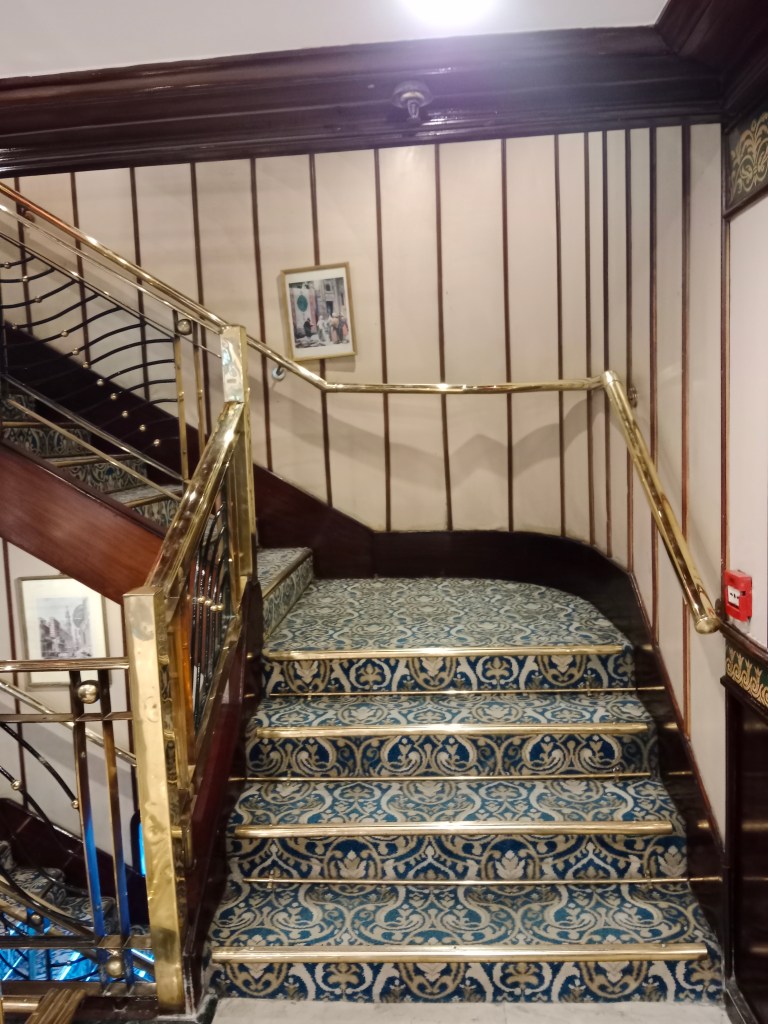
The stairway and the passage with rooms on either side
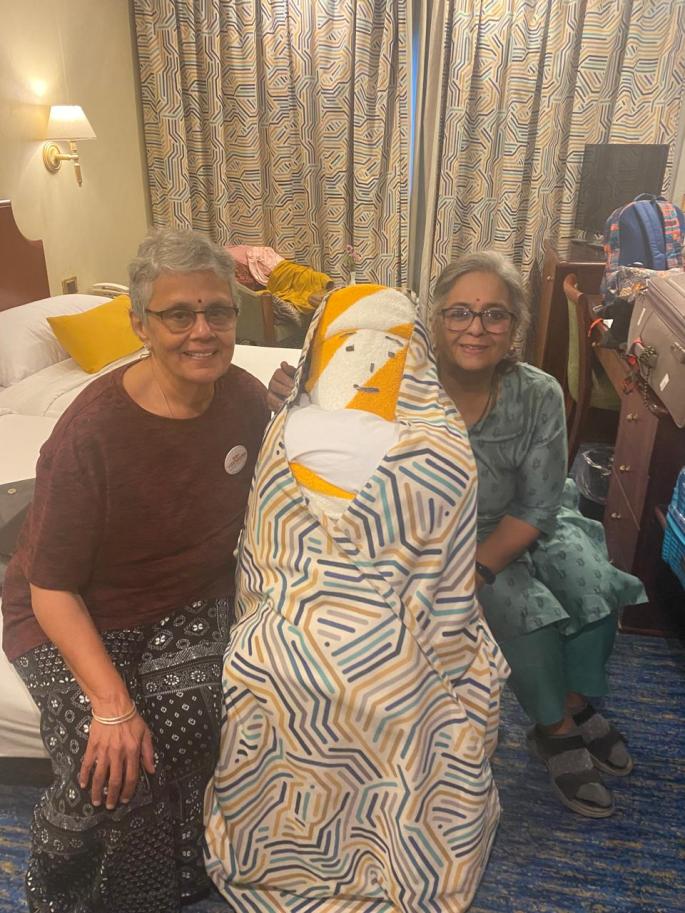
My room mate and me in our room with a creation by the room boy!!

There was a huge dining area and every meal was a buffet with a variety of Egyptian and continental dishes. The upper deck also had a gift shop.

The dining area

The upper most deck was open with a swimming pool and nice relaxing chairs for the guests to enjoy the views.


The swimming pool and the open deck on top for relaxing

As we sailed on the Nile, the landscape on either side was predominantly desert like with few green areas with vegetation. At places we passed small towns and cities.

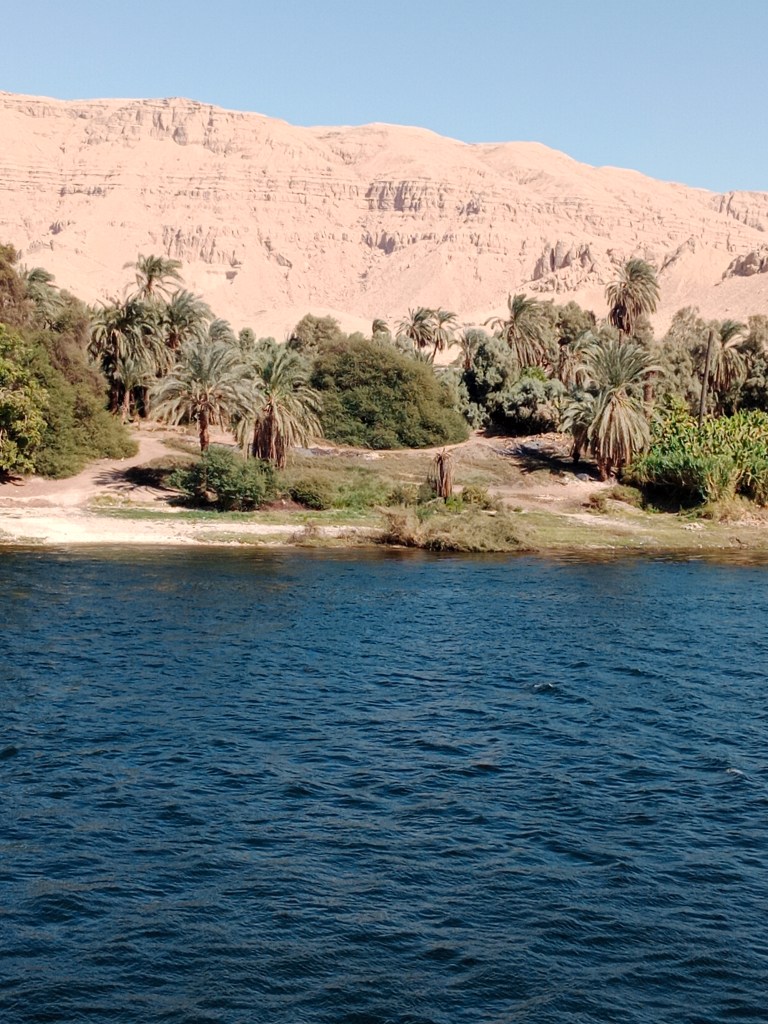
The views from our window as we sailed along.

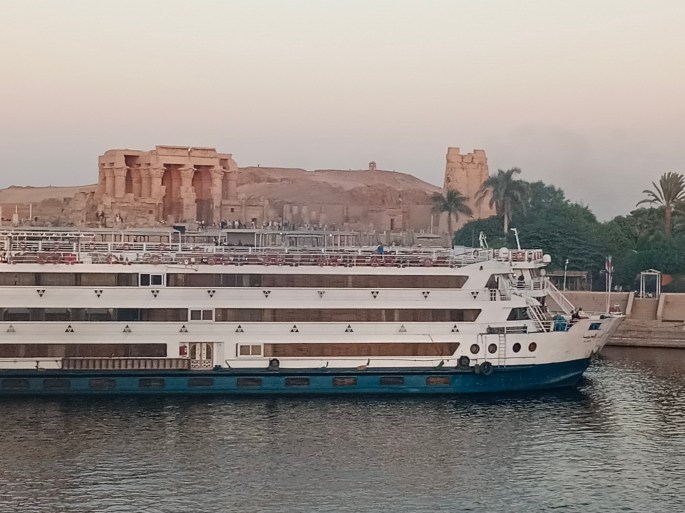
When we docked at Kom Ombo we could see the temple from the ship…

Kom Ombo temple from the ship

The locks…

We had one very interesting and unique experience during the cruise. We crossed the Esna locks. Here the ship enters an enclosed space where the water level is maintained by using mechanical devices and then when the locks are opened, the ship safely sails to the other side . This becomes necessary when water levels are different and the ship has to be safely brought to the corresponding water level.

Acrobatic business!!!

As we approached the locks, locals in small boats came alongside and started selling their wares. The cool thing about it was they would throw the materials in a plastic cover on to the ship and we could put the money back in the cover and throw it back to them. Some acrobatic business deals!!!!

Approaching the locks and a small boat comes along selling local goods

There were lot of other ships and they were all in a queue formation and awaiting their turn to cross the locks.

Two other ships crossing the locks

We could see the lock mechanism opening and letting the ship sail through.


The lock mechanism that controls the water level
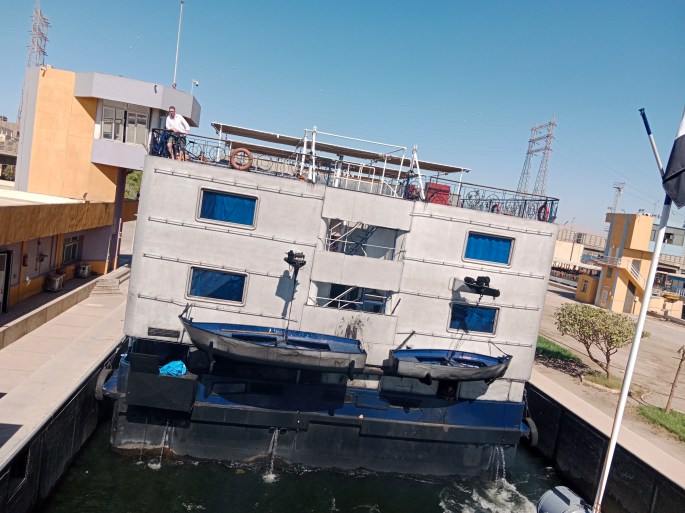
Our ship, clears the locks

This whole process took around half an hour and all of us were on the top deck enjoying this unique experience.

In the evenings after our sightseeing trips and dinner, belly dance and other cultural shows were organized for our entertainment. The staff on the cruise encouraged us to dance to local music which was fun… take a look.

Dancing to Egyptian music

Our final destination on the cruise was Luxor and after the local sight seeing trips we left the ship to the airport for our flight back to Cairo but not before a picture to save our memories of this unique experience…

Our group bids farewell to Radamis II, our ship that was our home for three days.

Hope you all enjoyed this cruise. Next week we meet at a different destination. Till then, do subscribe, like and comment.

Aswan: From pet crocodiles to scenic felucca rides

Aswan; in southern Egypt is a slow paced, historic and picturesque city on the banks of the Nile . The unique island temples like Philae and the ancient villages of the Nubians around have led to its popularity as a tourist destination.

The Aswan High dam was built to control flooding in the Nile, provide irrigation and hydroelectric power and it has changed the economy of this city. The dam helps provide year round irrigation developing agriculture with cotton, sugarcane and lentils forming the major agricultural produce.

However, when the dam was built, large areas of the old Nile valley was flooded and thus was born the Lake Nasser. It inundated many of the temples and archaeological sites along the Nile; Abu Simbel and Philae temples being the more significant ones. Extensive and special engineering techniques have helped relocate many of these sites to higher locations .

The stone quarries of ancient Egypt located at Aswan was the source of granite used to build most of the colossal statues and obelisks and monolithic shrines found all over Egypt including the pyramids. The techniques used by ancient Egyptians to quarry and transport these massive blocks to different locations is still a mystery to the modern world.

We flew in to Aswan from Cairo and were put up at a hotel overlooking the Nile. The elephantine island across and the graceful felucca boats provided splendid views from our room.

The Elephantine island across the Nile and a felucca gracefully sailing along

Philae temple was our first destination at Aswan and we spent the morning at this famous temple dedicated to God Isis. Philae temple was exclusively covered in the last episode. After visiting Philae, we drove past the Aswan High dam which is one of Aswan’s land marks.

Aswan High Dam

Built between 1960 and 1970, across the Nile river, this dam is one of the largest embankment dams in the world. There is an old Aswan dam built much earlier and inspite of that, flooding was a regular hazard along the banks of the Nile causing lot of damage. The new dam helped control that besides providing irrigation support and electricity.

Driving towards the dam we saw a monument to the Soviet Egyptian Cooperation in building this dam.

The monument of Soviet Egyptian partnership

The Aswan High Dam and attached power station

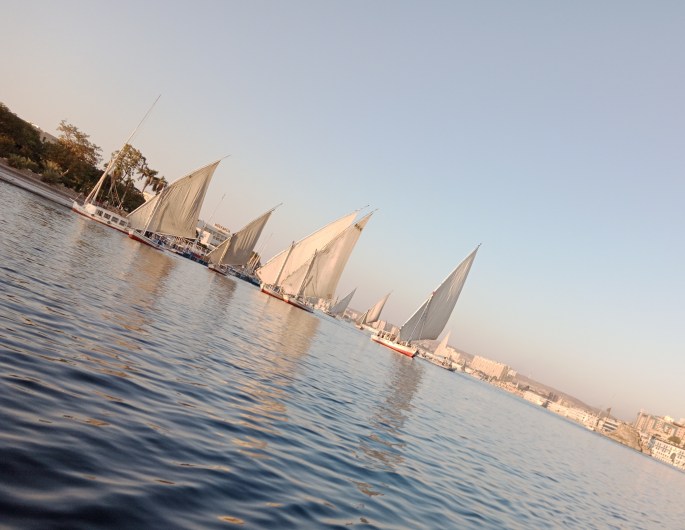
Feluccas

Feluccas are traditional wooden sail boats with single sails seen in many Mediterranean countries and in Egypt. It can typically accommodate around 10 passengers and is used as a mode of transport here. Sailing on a felucca is a unique experience offered to tourists at Aswan and we enjoyed this ride with the boatmen singing traditional songs.

Felucca boats on the Nile

Enjoy an Egyptian song by clicking on this video above.

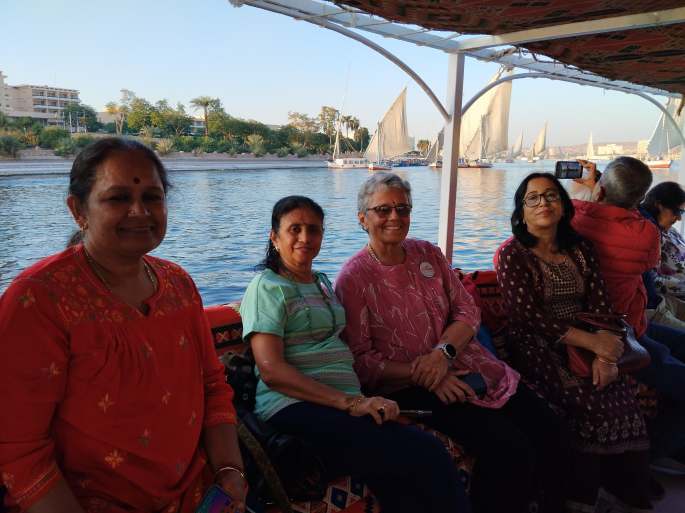
On a felucca

Enjoying these local performances, we spent about an hour on the felucca sailing on the Nile.

After the felucca ride, we had another interesting plan and that was a visit to a Nubian village as suggested by our local guide

Nubians

Nubians are indigenous people of northern Sudan and southern Egypt. They differ ethnically and culturally from other Egyptians. The Nile has several islands and many of these islands in southern Egypt are inhabited by Nubians. Most Nubians practice Islam.

Their houses have unique architectural features with large ornately decorated gates facing the Nile. Geometric patterns, motifs and symbols connected to the family adorn the walls of their houses.

Crocodiles form a significant part of their culture and are often kept as pets in Nubian homes. They are believed to bring good luck

We visited a Nubian village by a motor boat. Some pictures from this visit…

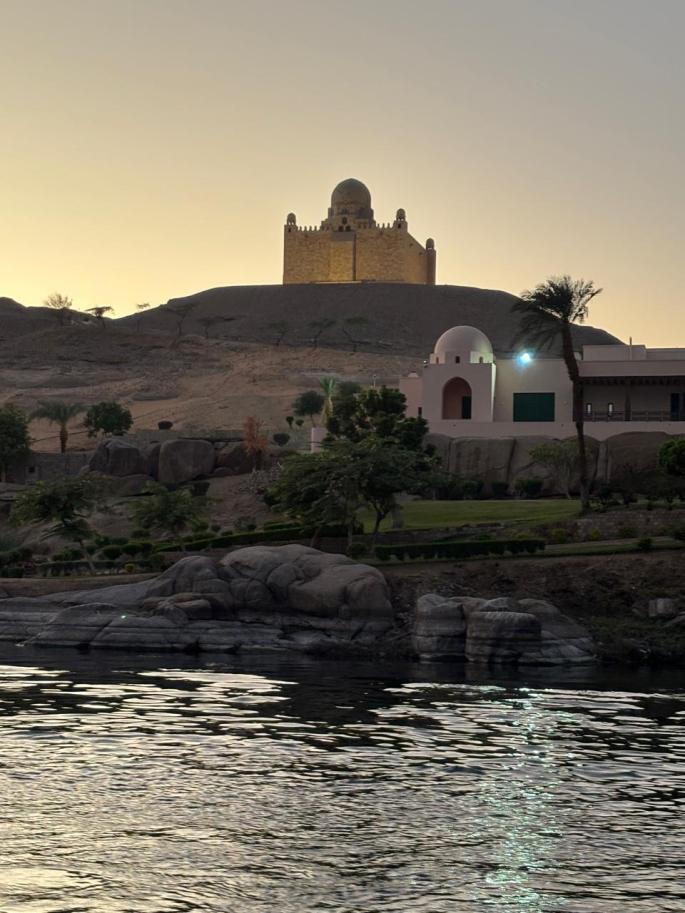
The Aga Khan Mausoleum on one of the islands on the Nile

The Nubian village as we approached it

After we alighted from the boat, our guide helped us clear the steps in partial darkness and we soon stepped into the village. It was live and active with many shops selling local merchandise and villagers going about their daily routines. The most peculiar feature was the brightly painted houses and shops. It was a riot of color everywhere.

The streets of the Nubian village

Soon we were at the entrance to a home.

The colorful entrance

We were welcomed to their home and we reached a central hall where again the walls were painted. We sat down comfortably and soon realized that there was a central shallow tank that housed a live crocodile. It looked very cruel to put an animal in such a small enclosure. But that is supposed to be a part of their custom and is now used to attract tourists and bring in the money.

The hall with painted walls and the shallow tank with the crocodile

The pet crocodile in the tank (looked pathetic)

A young boy then came up with a baby crocodile whose mouth had been tied up. The guests who wanted to hold the baby or have a picture with it were allowed to do so. It felt rather cruel to me and I did not venture in to that.

One of the baby crocodiles

We were served some tea and local snacks and then taken around the house.

Other areas of the house

After the visit to the Nubian village we walked back to our boat and sailed back to our ship with mixed feelings. Though the houses were very colorful and we liked the customs of the locals, the crocodile part felt bizarre. The cruelty meted out to the baby crocodile also was upsetting.

That brings us to the end of this episode. Next week we meet at the Abu Simbel temple.

Do subscribe, like and comment.

Philae Temple: An Engineering Marvel of Ancient Egypt

After our sightseeing at Cairo, we took a domestic flight to Aswan, an Egyptian city on the banks of the Nile. It was from here that we visited many of the temples of ancient Egypt that will be chronicled in forthcoming episodes. We start this , with an episode on the Philae temple dedicated to the Goddess Isis.

Legend of Isis

The legend associated with this temple has all the elements of a crime thriller. Isis, the Mother Goddess, her consort Osiris and their son Horus form the characters of this story . Isis was believed to posses magical powers and knowledge of secretive formulae. Osiris was killed by his brother Seth. His body parts were strewn at many places so that they could not be retrieved. His wife Isis used all her magical powers and managed to get them and put them back together and miraculously brought Osiris back to life. Then, they had a son Horus. He too had a snake bite and Isis used her wisdom to save him. The Isis cult found its way to the Mediterranean too; thus explaining the Greek and Roman connections of this temple.

A painting depicting Osiris (left) and Isis (right) with the sun disk and horns.

History of Philae Temple

Philae is actually a small island in the Nile situated south of Aswan. It was the epicenter of the cult of Isis popularly known as Mother of God. She was worshiped by the Egyptians and Nubians ( Ethiopians ) alike. The Ptolemies built temples to the most beloved Gods and Goddesses of the Egyptians. Ptolemy II (285 – 246 BC) started the construction of the temple and from there starts the history of the Isis temple at Philae. This also explains the Greek and Roman architectural features here in contrast to the other temples. Christianity came to Egypt under Theodosius around 379 AD and after that, there was a systematic attempt at destruction of the temple and conversion to a church . The Philae temple thus stands as the last outpost of ancient Egyptian traditions.

When the old Aswan dam was built , the temple came under threat of inundation and when the height of the dam was increased in 1912, the temple lay inundated for part of the year. Subsequently with raising the dam height further, the temple was inundated for most of the time with only the high pylon being visible above water level.

A monumental Engineering feat

When the new Aswan High Dam was built ; leading to the formation of Lake Nasser , it was clear that the temple would be lost forever and then with the help of UNESCO, the temple was dismantled and relocated to the Agilkai Island where it is today.

A coffer dam was built and water was pumped out exposing the limestone blocks. There were 47000 stones and they were dissected, stone by stone, cleaned, treated, numbered and stored. While this was on, granite from the Agilkai island had to be blasted to maintain the original look of the temple. The stones were then transported to their new home and reassembled exactly like the original. Following this, the temple was thrown open to visitors.

This was indeed a monumental feat of engineering. Even now the numbers on the blocks are visible. The meticulous and precise work that has gone into this gigantic project is awe inspiring indeed!!!

Our Visit

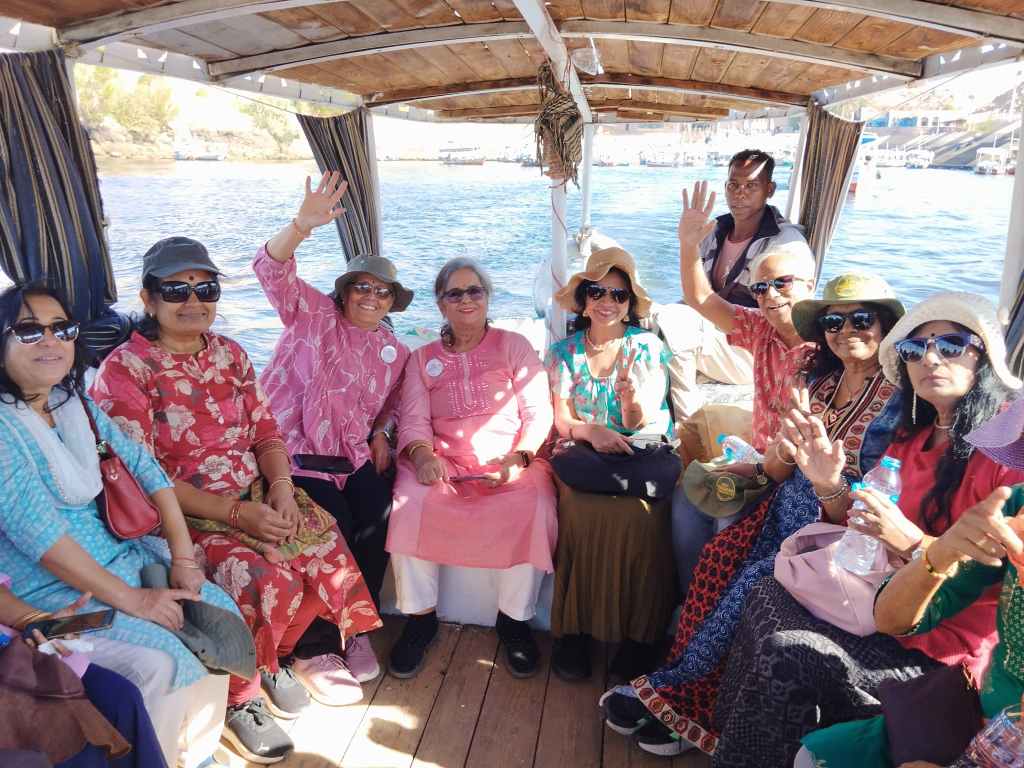
We were dropped off by our bus near a boat jetty from where we boarded a motor boat to the Agilkai island on the Nile.

On the boat to the Philae temple

After alighting from the boat, a short walk took us to the courtyard in front of the main gate. This courtyard was lined by shops selling everything a tourist wants…from trinkets to clothes to souvenirs.

Courtyard with shops on either side and the items on sale

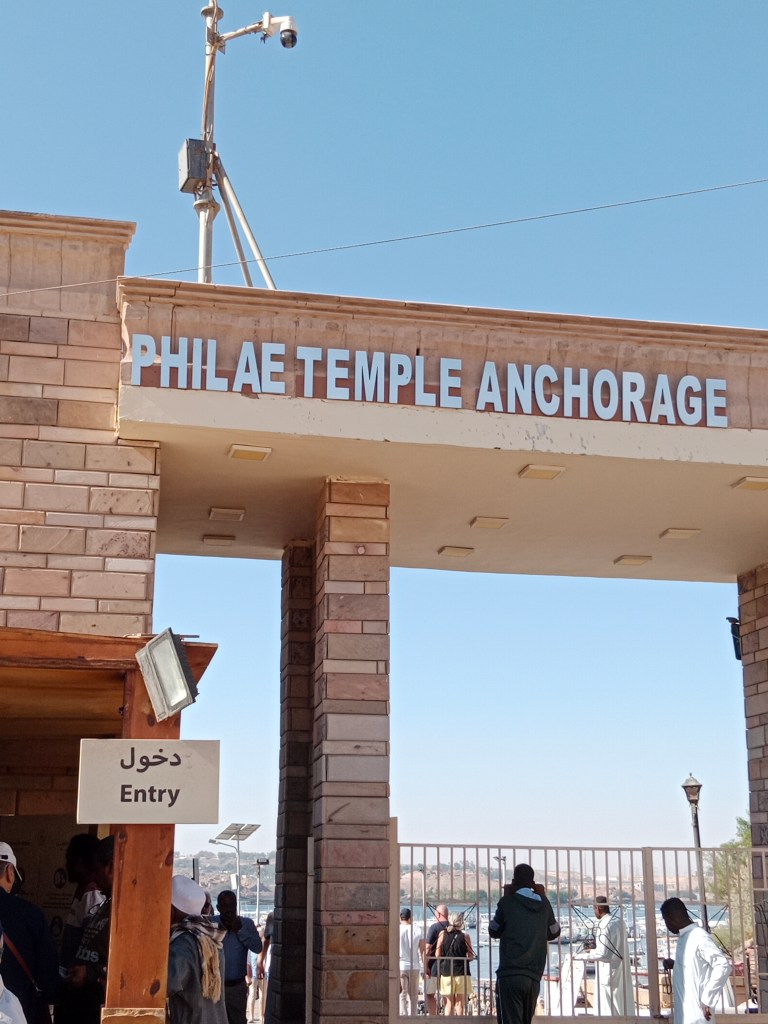
Soon we were at the main gate of the temple.

The main entrance to the temple with Lake Nasser behind.

Walking along the sides of Lake Nasser, we reached the threshold of the main temple. There is an open courtyard with decorated pillars on either side leading to the entrance pylon.

An open courtyard with pillars on either side .

The entrance pylon lies ahead with two towers ,one on either side of the doorway. These towers are decorated with figures of a pharaoh wearing the crown of upper and lower Egypt lifting his club and holding his enemy by the hair and punishing him in the presence of Isis. Thus the Pharaoh takes credit for suppressing the enemies and keeps up the tradition of the land.

Two granite lions( partly mutilated) guard the main doorway.

Entrance pylon with the Pharaoh wearing the crown of upper and lower Egypt and punishing enemies in front of Isis

The other half of the entrance pylon with the damaged lion guarding the entrance.

Passing through the doorway we reach a central courtyard again with columns on either side. The other end of the central courtyard lies the second pylon with entry into the actual temple of Isis

The doorway leading to the central courtyard

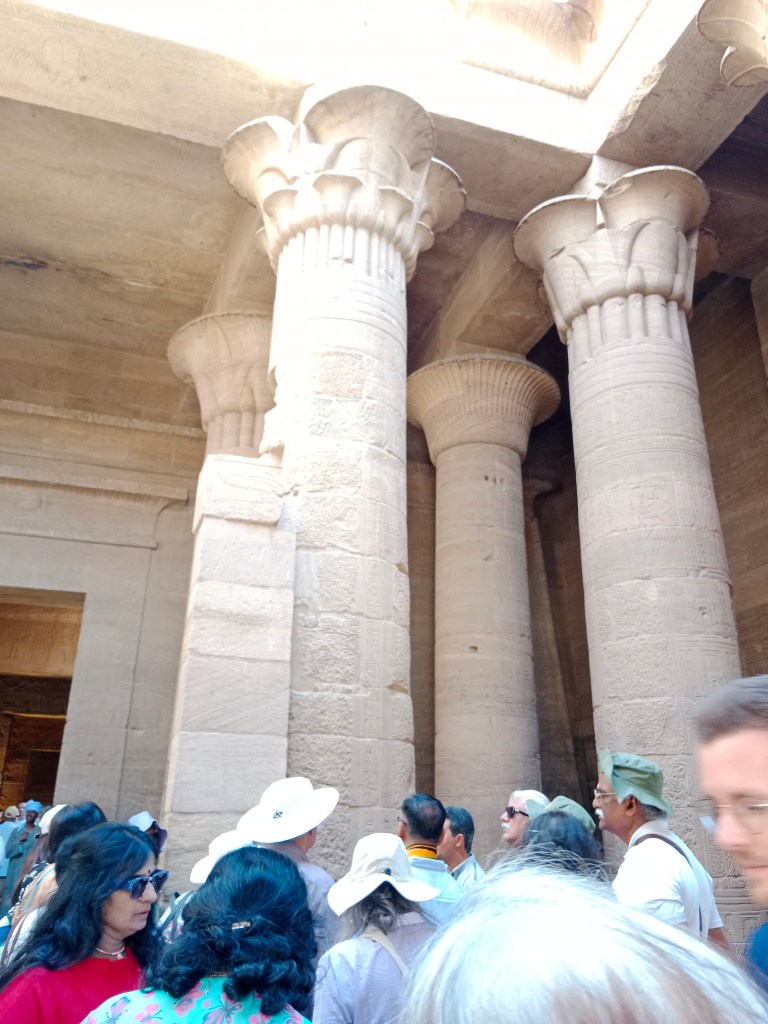
The row of columns surrounding the central courtyard. The Corinthian (Petals on top) pillars are typically Greek and Roman styles.

Corinthian pillars typical of Greek and Roman architecture

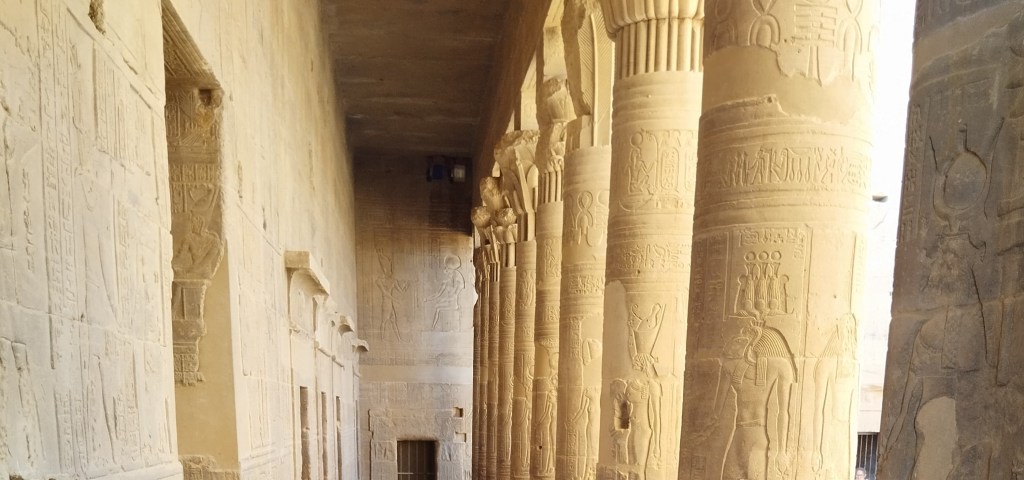
The Reliefs on the columns depicting ancient Egyptian kings and Gods

In front of second pylon where the main temple entry is located.

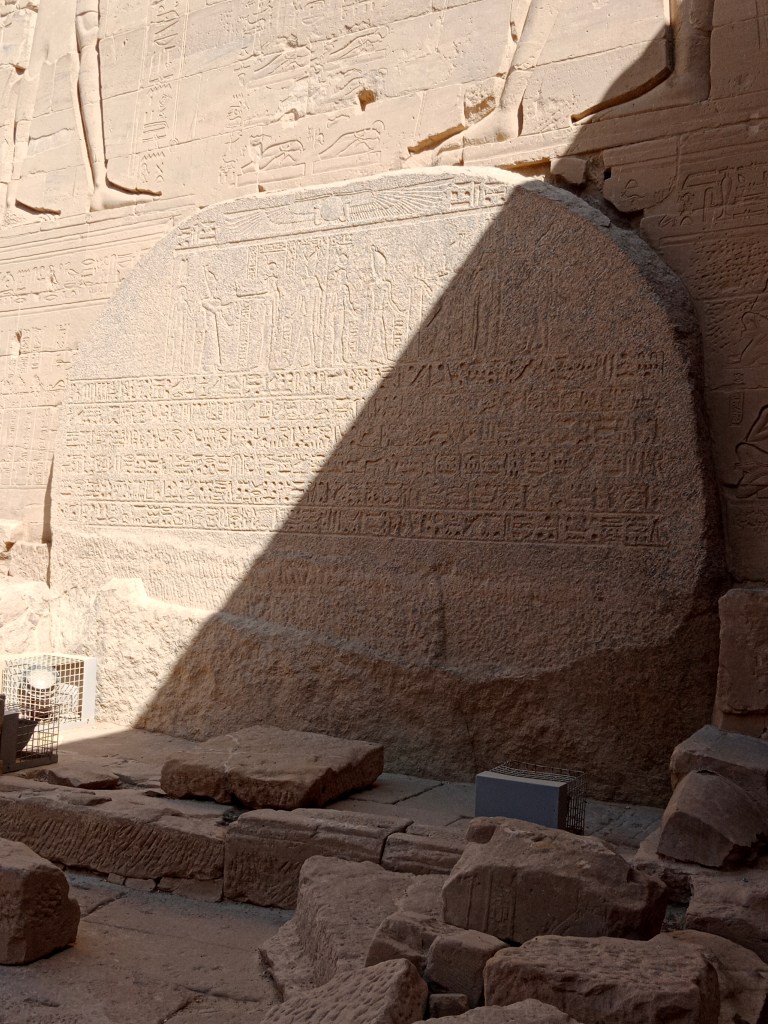
A Stael in front of the second pylon with hieroglyphic inscriptions

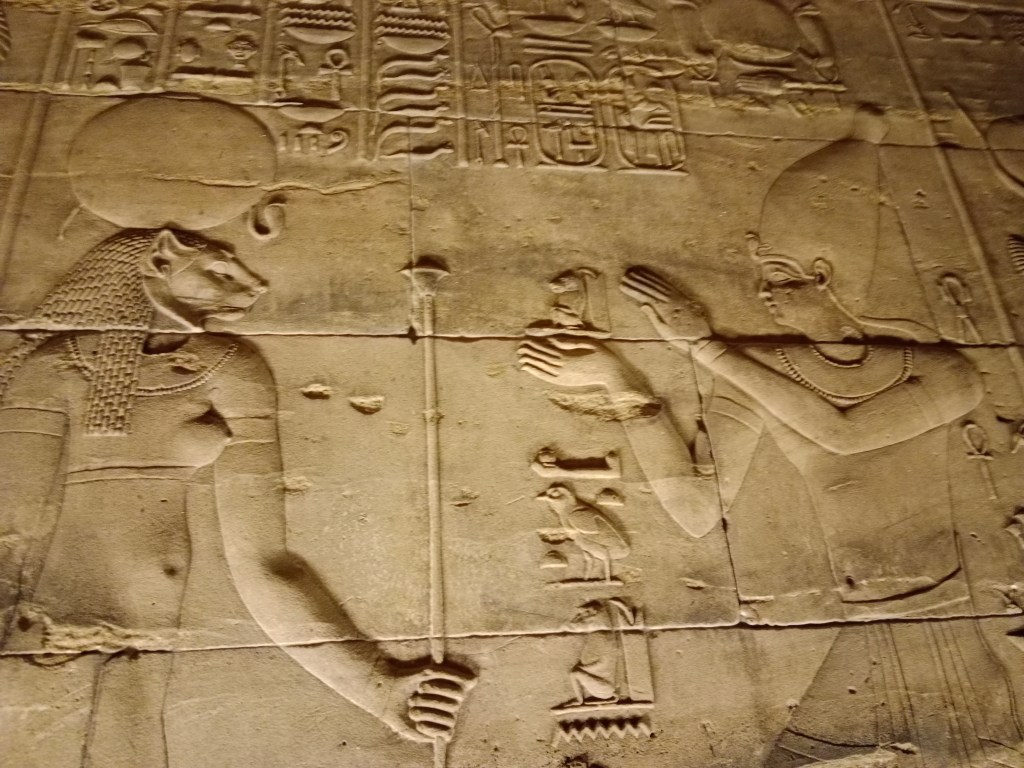
After crossing the second pylon, we enter the main temple. Here, the walls are decorated with fine reliefs of the Ptolemaic kings making offerings to Egyptian Gods. At many places there is evidence of deliberate attempts to damage the reliefs.

Some pictures inside the temple of Isis.

The offering of eyes to the God. Note the deliberate chiseling to damage the relief.

There is also a hall where the walls show reliefs connected to perfumery which had been famous in ancient Egypt. Hieroglyphic inscriptions on perfume preparation are also found here.

The King offers a baboon. Note the hieroglyphic depictions below the king’s hand

Walking further inside, we reach the main sanctuary of the temple. Here there is evidence of it being converted into a church. The main altar has the sign of the cross etched on it.

The altar at the sanctuary with etched crosses

Once we exited from the sanctuary, we reached the beautiful views of Lake Nasser. From here, the original position of the temple is visible as some projecting pillars in the lake.

The pillars in Lake Nasser where the original temple was located.

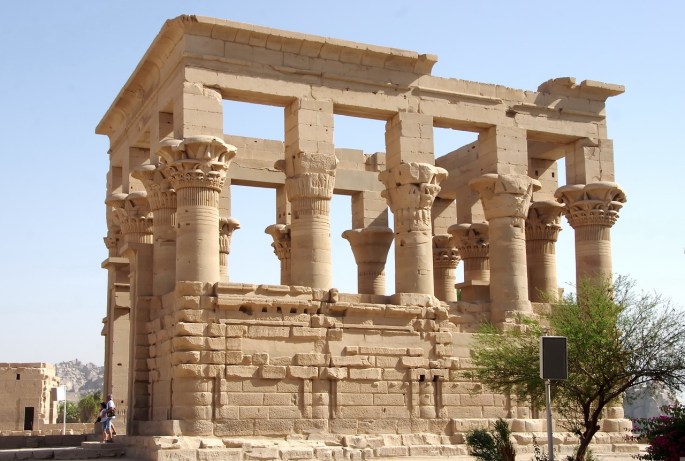
The Kiosk of Trajan

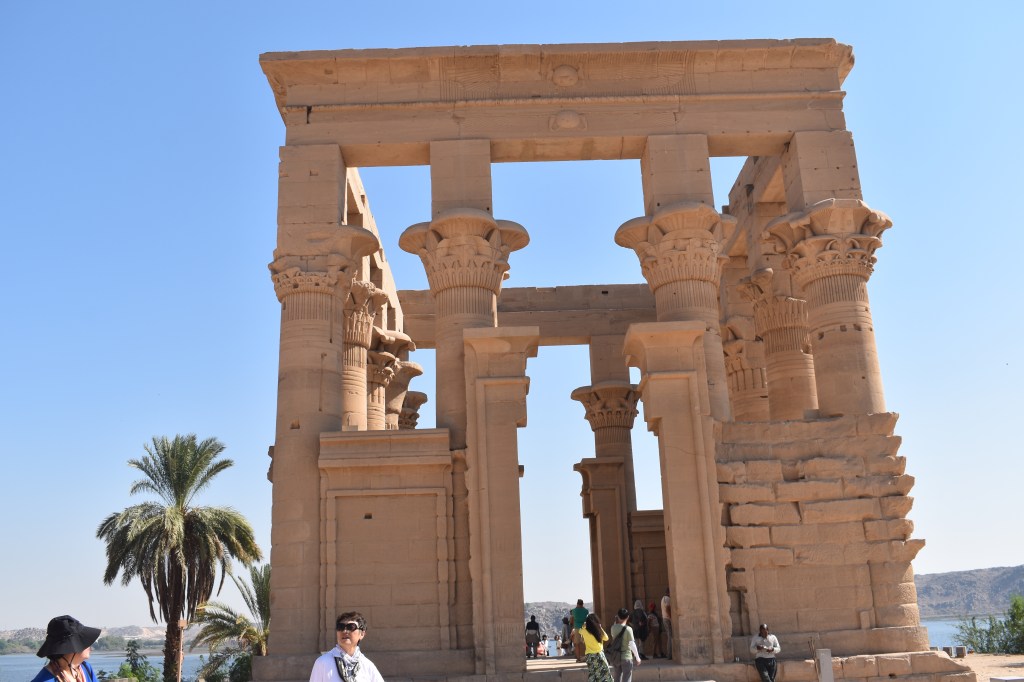
Adjacent to the lake front is another structure, the Kiosk of Trajan which is perhaps the most publicized picture of the Philae temple. A rectangular building with 14 columns with floral capitals, where the Emperor Trajan is shown burning incense as an offering to Isis.

The Kiosk of Trajan

By now we had exhausted our designated time at the temple and we made our way to the bus and on to our lunch halt.

To sum it up, this temple built by Ptolemy II was initially dedicated to Goddess Isis and her family but with the advent of Christianity, gradually it was converted into a church. It shows features of Egyptian, Greek and Roman architectural features. Almost submerged in Lake Nasser after the building of the Aswan High dam, it was miraculously relocated by a marvelous engineering feat.

Hope you enjoyed this visit . Next week we visit Abu Simbel , another great temple of ancient Egypt.

Till then, do subscribe, like and comment.