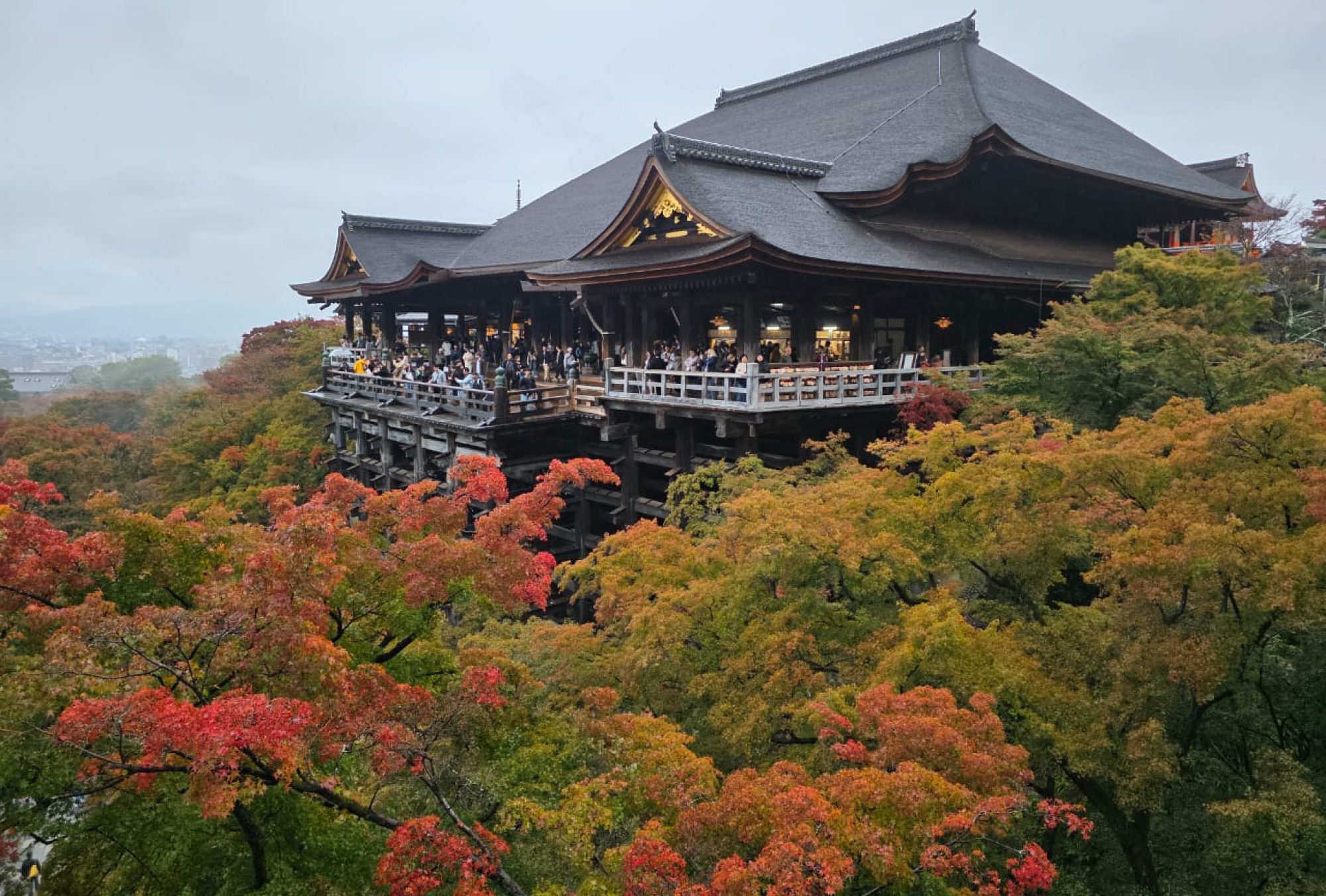

Starting my series on the Nilgiris with a round up….
When you read the title, what was the picture that flashed in your mind?
For most of you, it must have been of misty mountains full of greenery . Well that’s what describes the Nilgiris in a nutshell. But let me tell you, the Nilgiris is much more than that. Let us delve into the surprises that lie hidden in those green valleys.
The word Nilgiris literally means blue mountains and those of you who have observed these mountains particularly at dawn and dusk would agree with this name. The Nilgiri mountains get covered periodically by the violet blossoms of the Neelakurinji (strobilanthus) which has led the locals to give this name. But even during other times, there is a bluish hue related to plenty of eucalyptus trees here similar to the Blue Mountains near Sydney.
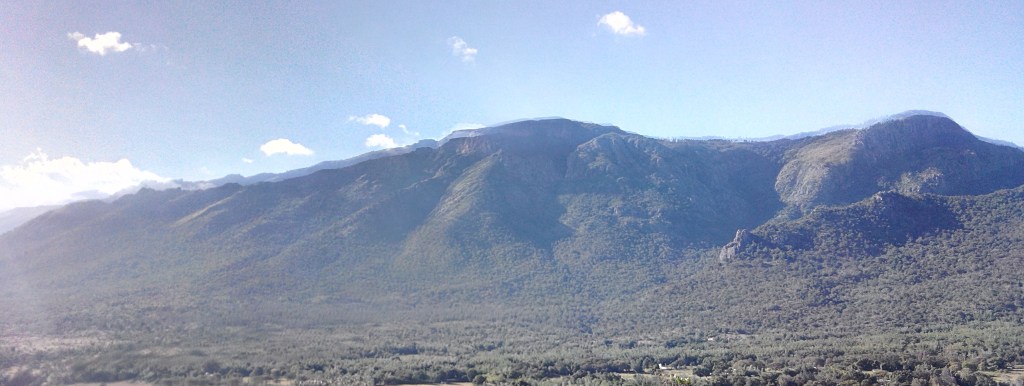
The bluish hue…
These mountains are part of the Western Ghats, the long mountain chain that runs parallel to the west coast of the Indian peninsula. They range in height from 900 to 2650 mts approximately and this altitude leads to the cool climate that this place is blessed with. The Nilgiris form a part of the Nilgiri Biosphere Reserve , which is home to multiple sanctuaries and National Parks about which we shall delve in detail later.
Today, there is a separate district called Nilgiris in TamilNadu which encompasses these mountains and is bordered by Karnataka and Kerala. Ooty, Coonoor, Kotagiri, Kundah, Gudalur and Pandalur are the main areas comprising the Nilgiris district. It also includes Wellington and Aravankadu which are largely cantonment areas under defence control. Ooty, the famous hill station in south India is the headquarters of this district.
A little bit of history….
Peculiarly, unlike most parts of India, The Nilgiris was never part of any empire or kingdom. It was always tribal land. Pockets of tribal hamlets separated by vast areas of verdant forests untouched by humans was what the Nilgiris was , once upon a time. Even today, in most of the Nilgiris you will find clusters of houses forming a hamlet separated from other hamlets by forests and tea gardens. The only difference is that today ; most of these hamlets are self contained and have modern amenities including internet connectivity.

Typical Nilgiri landscape with clusters of houses separated by tea gardens
The Todas, Kurumbas, Irulas and Kotas formed the tribal population here. The Todas are traditionally cattle grazers, Kurumbas are honey hunters, Irulas are hunters and agriculturists and the Kotas are the artisans .
Toda women are also known to do beautiful embroidery using black, white and red coloured threads.

Beautiful Toda embroidery
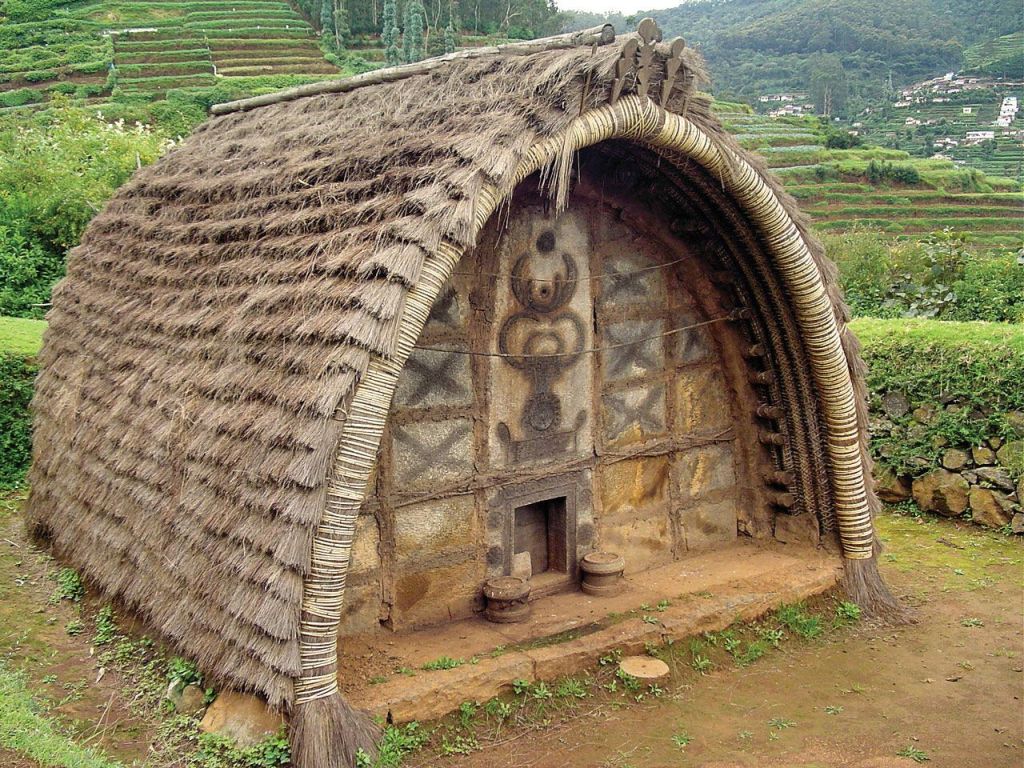
A traditional Toda hut
The Badagas were also the indigenous people here but are not considered a tribal community. In fact, today, the Badagas form the majority of the local population of the Nilgiris.
The Badagas are an ethno linguistic community whose ancestors migrated here from Mysore. They live in settlements called hattis and speak the Badaga language which is essentially a mix of Kannada and Malayalam. Much of the tradition and culture is retained even today and you can find it all over the Nilgiris.

Badagas dance in traditional attire
In the early 1800s, the British developed these areas for tea and coffee plantations and summer retreats. It was John Sullivan, the collector of adjoining Coimbatore who undertook detailed surveys of the place and in a way ” discovered” the place. Several colonial style bunglows and churches were built and they form an indelible part of the local ambience. By the late 1800s, the hills were completely accessible with ghat roads and the railway line. So, in a way the British have contributed a lot to the infrastructure development in the Nilgiris.
Tea Gardens
Tea is grown in elevations between 1000 and 2500 mts above sea level and Nilgiris with its location and its rainfall attributes is ideal tea cultivation area. The British introduced tea to the Nilgiris from China marking the beginning of tea cultivation here.
Nilgiris is tea garden zone and these green neatly cut gardens dominate the Nilgiri landscape. In fact, at no point of time when you are in the Nilgiris are you not surrounded by them. Acres and acres of tea gardens as far as the eyes can see….that’s what describes Nilgiri landscape in a nutshell. And saying that it looks beautiful is an understatement!!!!

A tea garden is a treat to the eyes….(click on video)
Naturally, it follows that the predominant occupation of the locals is connected to tea. Starting from tending to the tea gardens to plucking the tea, transporting it to the factories, working in the tea factories and handling the logistics is the main source of revenue for the locals. Ranging from the small farmers to big corporate estates and even the government , everyone here has a stake in TEA !!
The larger estates have their factories processing their own tea , the middle level acquires tea from the small local farmers and processes them.
The elevation of the place, the soil conditions , the climatic conditions and such others change the flavour and colour of the ultimate cup of tea on your table. A lot of science goes into all this and the value of the tea from a particular place in a particular season is determined by the Tea Board. Tea auctions also regularly take place at Coonoor and Coimbatore.
There is a Tea Museum and Tea Factory visit organised from Ooty where visitors are introduced to the various stages of tea processing. The Nilgiris predominantly produces CTC tea which refers to cutting, twisting and curling. The leaves are subjected to drying, withering and rolling using machines before it is neatly packed and marketed. Black tea, Green tea, Herbal tea, and White tea are common varieties of tea produced here. Each of these use leaves of different maturity and the process used also varies.

Tea plucking in progress

A tea factory in the midst of tea gardens

Leaf sheds are another common sight here. They are used to store the leaves after plucking till transport is arranged.

A leaf shed with collected leaves in bags
Inside the tea factory ( click on the video)
Another familiar sight are the factory outlets of tea where it is cheaper and freshly processed tea is available..

Tea factory outlets
The Nilgiris also grows spices, coffee, carrots, potatoes and cabbage. Roadside vendors selling freshly plucked carrots along with the leaves is another unique sight.

Freshly harvested carrots for sale!
Eucalyptus and SilverOak trees predominate the landscape. Oil extracted from the eucalyptus trees is also sold widely here.
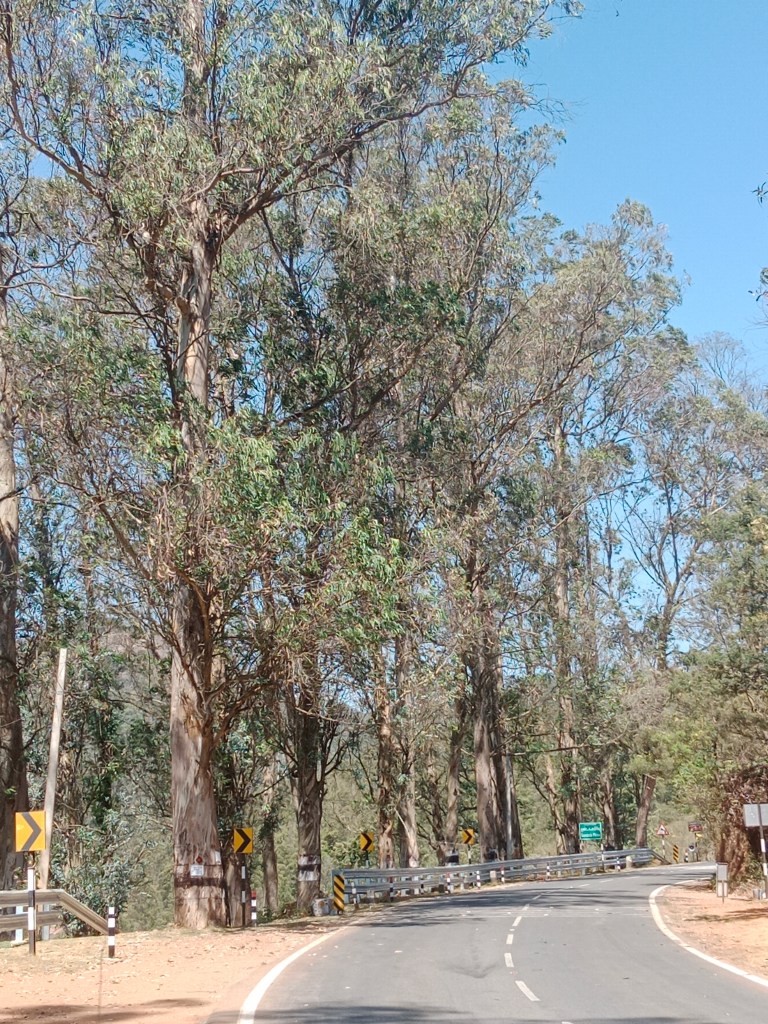
Eucalyptus trees
Wildlife
As with forests, wildlife also varies depending on the elevation. Elephants are found at the lower elevations which are warmer while the colder elevations have bison, bear, leopards and tigers. A separate episode on Nilgiri wildlife will cover these.
Home to various National parks, the Nilgiris has an exclusive Nilgiri Biosphere Reserve zone which includes the Mudumalai and Mukurthi National parks besides other areas.
Lakes
The Nilgiris has some awesome lakes ; some natural and some artificial. Naming a few of the; Ooty lake, Emerald Lake, Avalanche Lake and Pykara Lake are the more popular ones.
Emerald Lake
20 kms from Ooty is this unfrequented and pristine lake with emerald waters. A bird watcher’s paradise, the surrounding areas are an escape to tranquility. Some pictures…


Emerald Lake
Landslides….
Being a hilly area with copious rainfall, Nilgiris has had it’s share of landslides. Usually after incessant rain, these landslides do cause destruction and dislocations to the lives of the common people here. The aftermath….
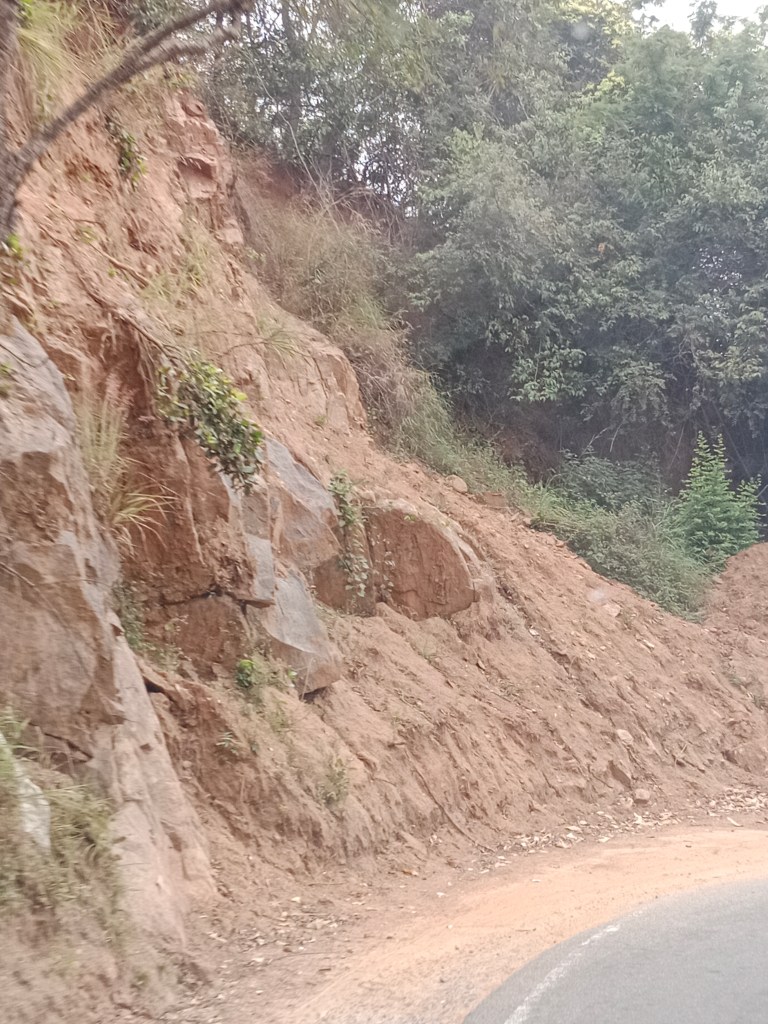
Telltale signs of a landslide…
Living in the Nilgiris
Most of the population in the Nilgiris are engaged in the tea plantations and connected industries. They are friendly people who live simple lives. When I spend my summers here, I have had interactions with locals and found them to be very welcoming of outsiders although they are not very happy with noisy tourists. Many of them smile and wish you and during my evening walks I was particularly drawn by the innocence and simplicity of a brother and sister. They would be waiting for me and as I pass their home they would run up to wish me! Their eagerness to race with each other to reach first and wish just speaks of the innocence of these lovely children…..Dhanalakshmi and Adhiswaran
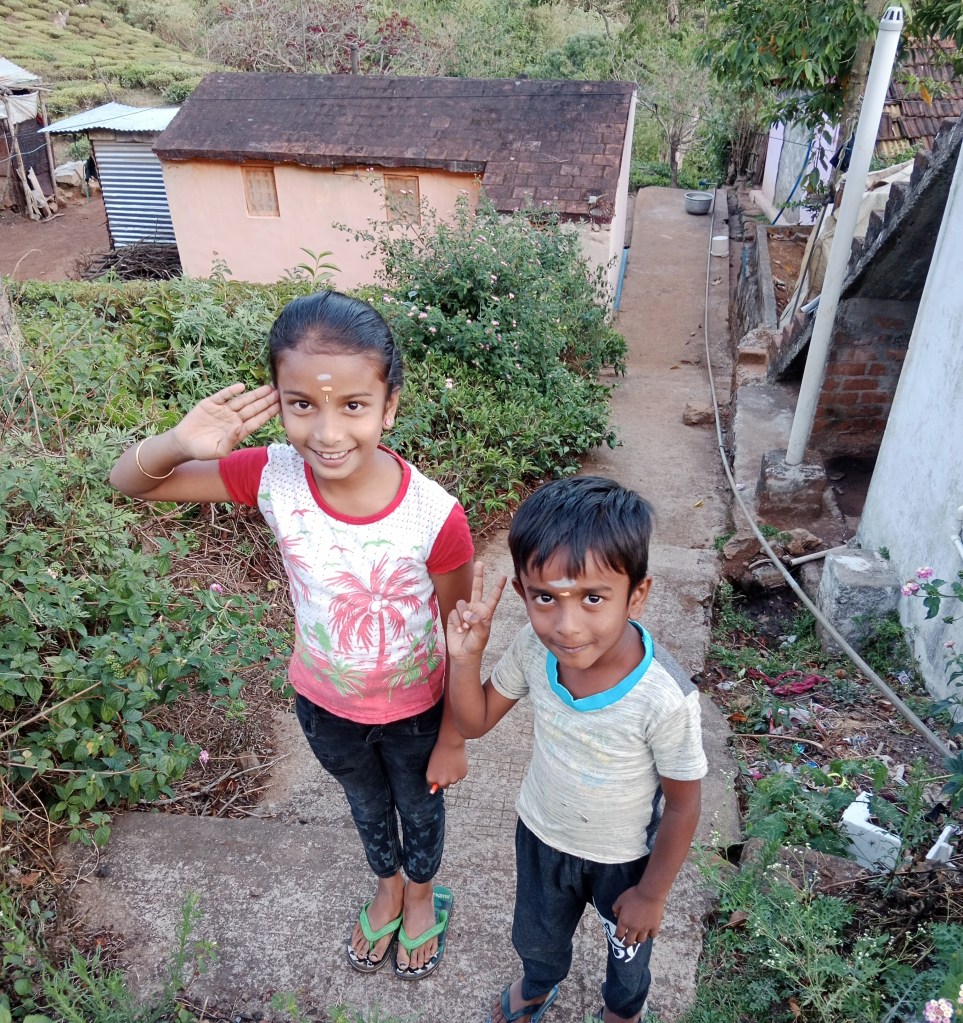
Picture of Innocence…..
Posh colonies and elegant bungalows are usually seen close to Coonoor, Wellington, Ooty and such pockets. Coonoor and Wellington particularly has an upmarket crowd due mainly to the defence establishments around.
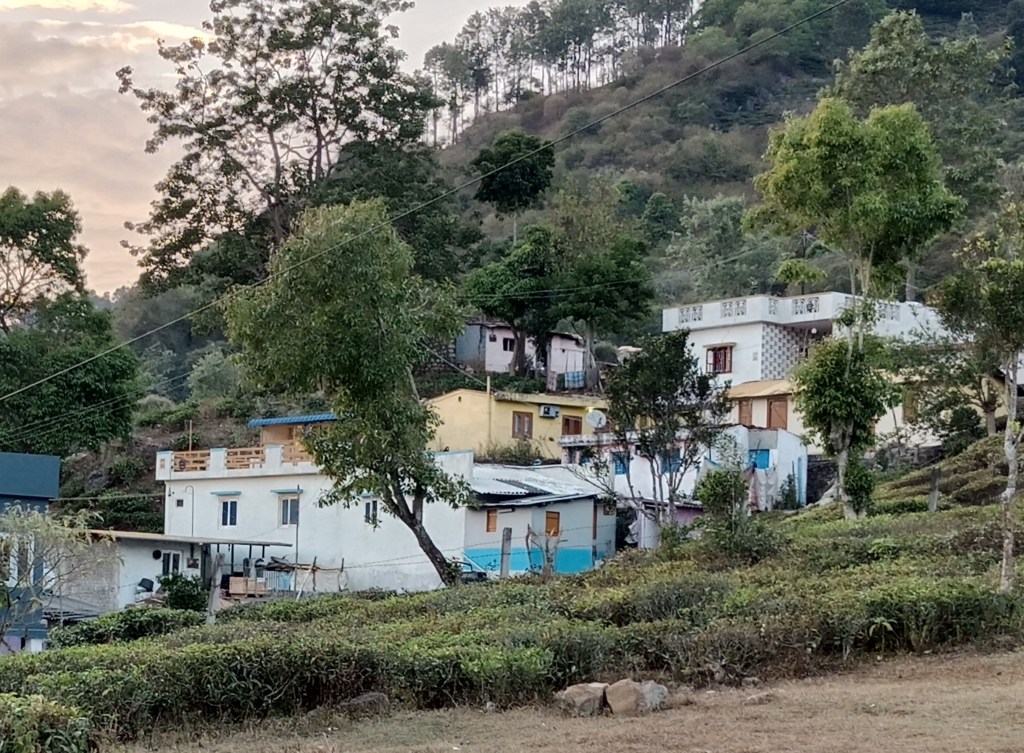
A typical Nilgiri village with houses of the common man
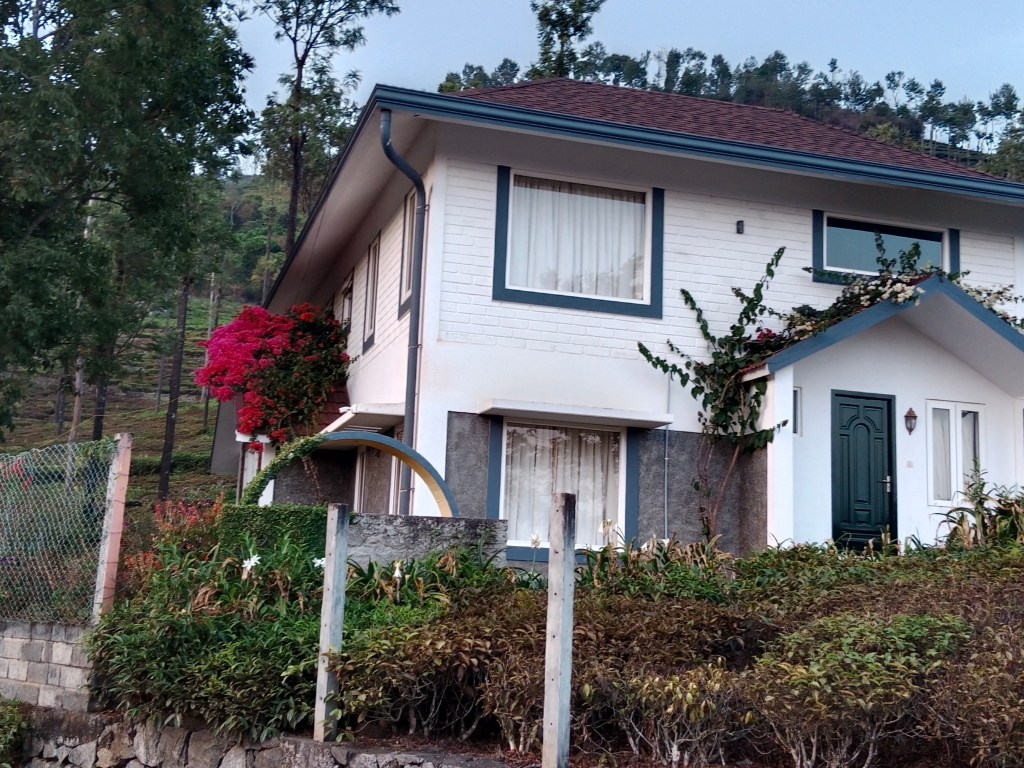
And a posh bungalow
Summer in the Nilgiris
Summer time is Jacaranda time in the Nilgiris. The beautiful purple flowers add beauty to the green hill slopes and many a time the roads are lined by these trees with a purple carpet of flowers on the road…
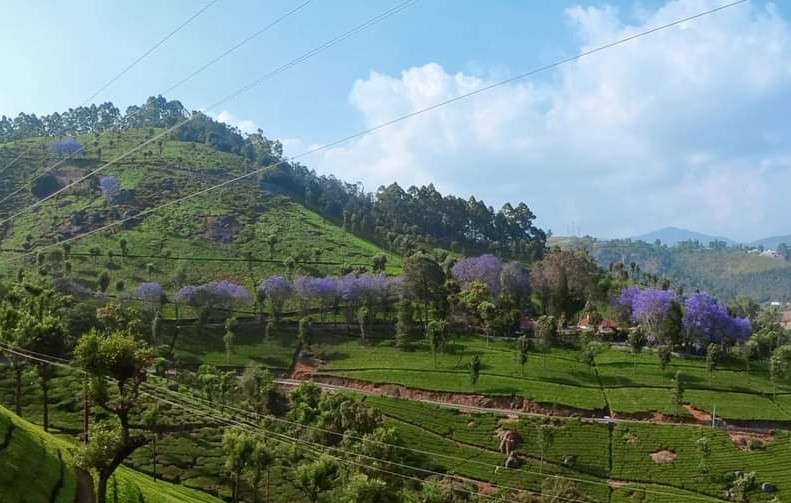
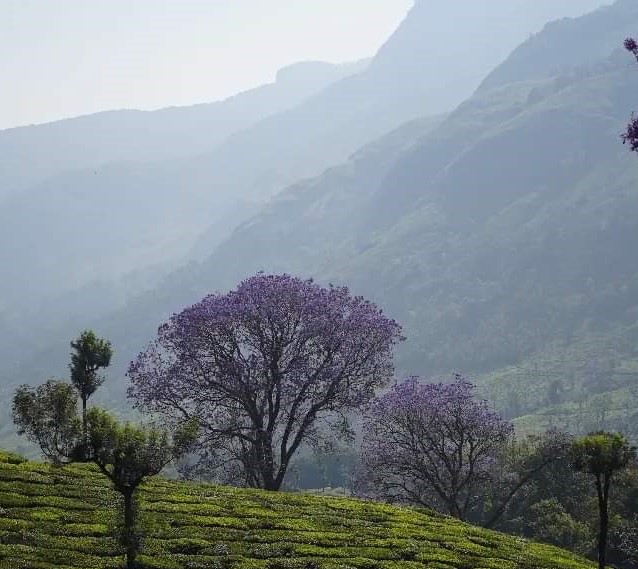

Jacarandas….
Bird songs…
Summer marks the mating season of various birds here. Notable one is the Magpie Robin which sings melodiously at dawn. Living in the Nilgiris, you often wake up to their songs…

The Magpie Robin
Summer time is also tourist time in the Nilgiris. Business is brisk for the innumerable homestays and hotels.


Hotels and Homestays
Tourism provides livelihood to many families in the Nilgiris but it has it’s own drawbacks due to irresponsible tourism. Speeding vehicles belching fumes from their exhausts to blaring music played late into the night from resorts to widespread littering causes heartburn among the locals. Some where, they feel their peaceful life is disturbed and justifiably so!!!
Well, I leave you on this note worth pondering about ……
We now delve deeper into various specialities of these mountains in forthcoming episodes.
Till then do subscribe, comment and give your feedback.. Do give your star rating below…
 Travel-along.in