Leh’s Hall of Fame: A Tribute to Our Heroes

This episode is particularly dear to me as it highlights the Army museum in Leh . Known as the Hall of Fame, it stands as a memorial to the soldiers who laid down their lives for our country. A walk through this museum and its environs makes one’s hair stand on edge.

Take a look…

Exhibits of tanks and heavy artillery adorn the area around the entrance to the museum.
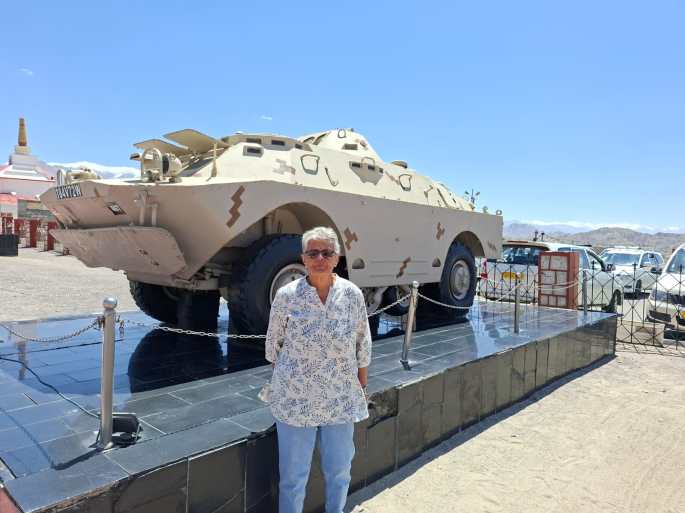
One of the exhibits displayed near the entrance to the museum

Hall of Fame
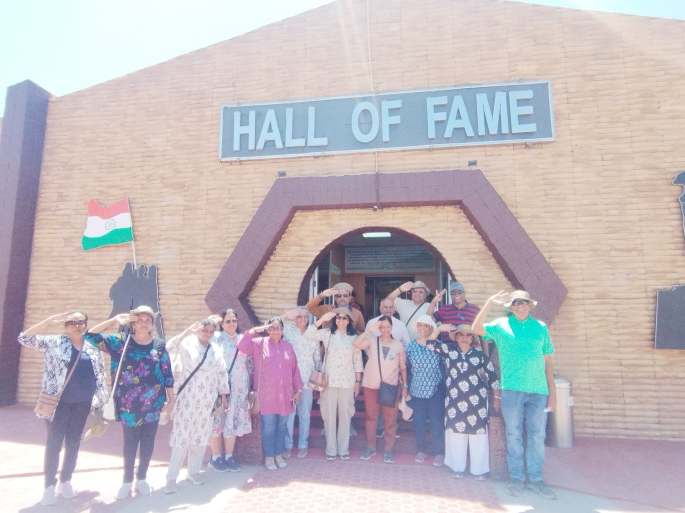
Our group salutes the real heroes of our country

A feeling of patriotism grips one as we enter this divine place with exhibits divided into various sections.
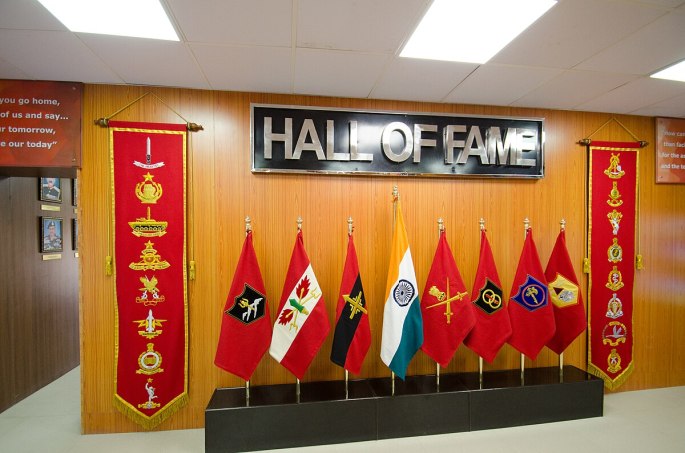
The tricolor with some of the regimental flags

One of the soldiers described his experiences during war and the difficulties of daily life in high altitudes like the Siachen glacier. His power packed narrative left most people teary eyed and made us all feel proud of our soldiers and our country.
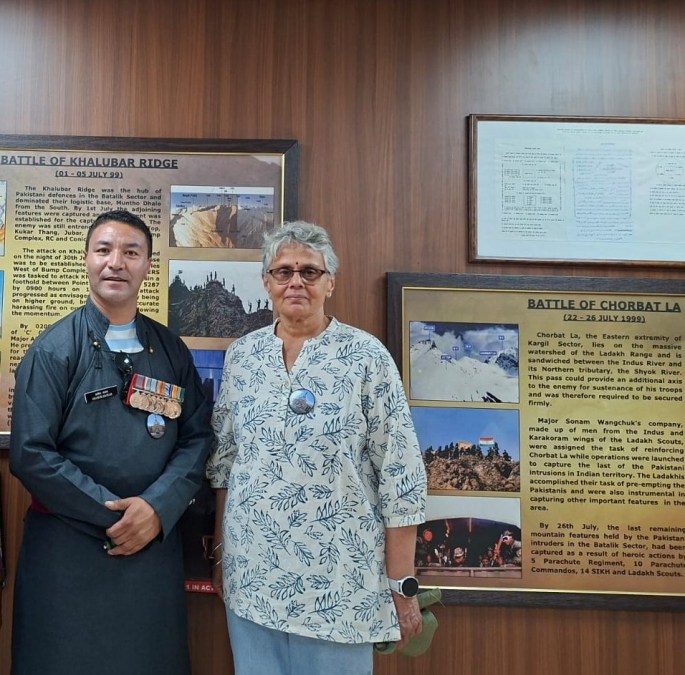
A proud moment with the valiant Siachen hero

Photographic depictions of the Kargil war with particular focus on strategic victories that led to a win are also displayed here.
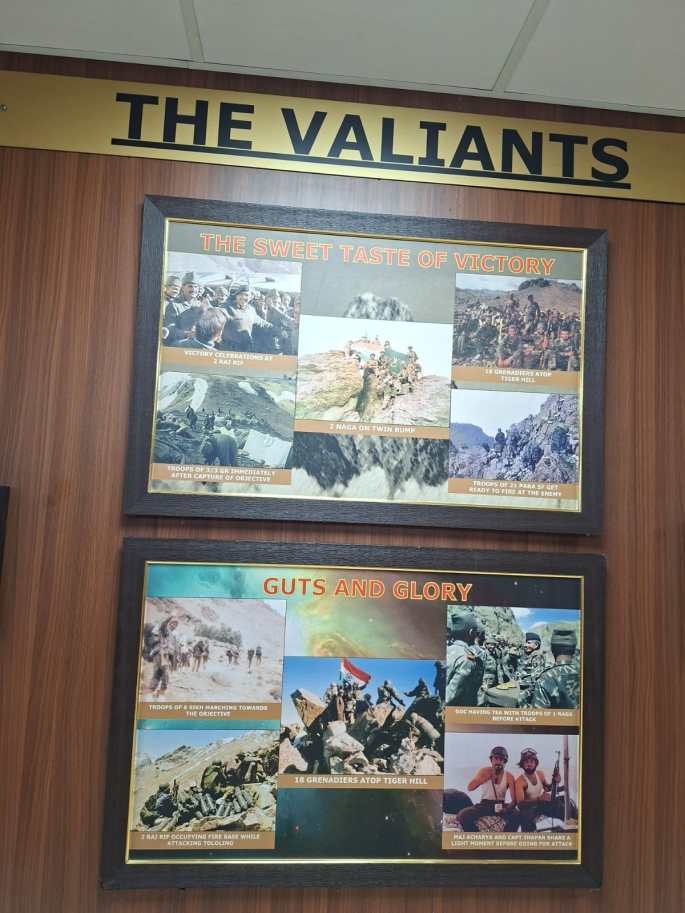
Proud moments from Kargil

One section displaying various kinds of arms, ammunition, artillery, clothing , high altitude combat equipment , life saving devices and various important artefacts, acts as an eye opener to the common man.
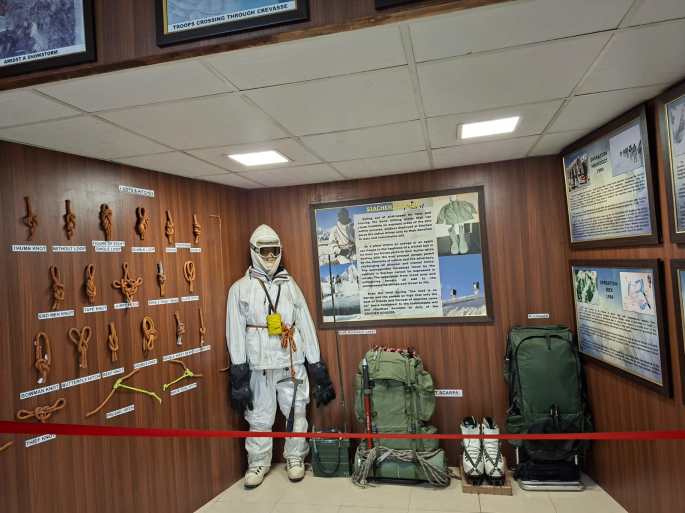
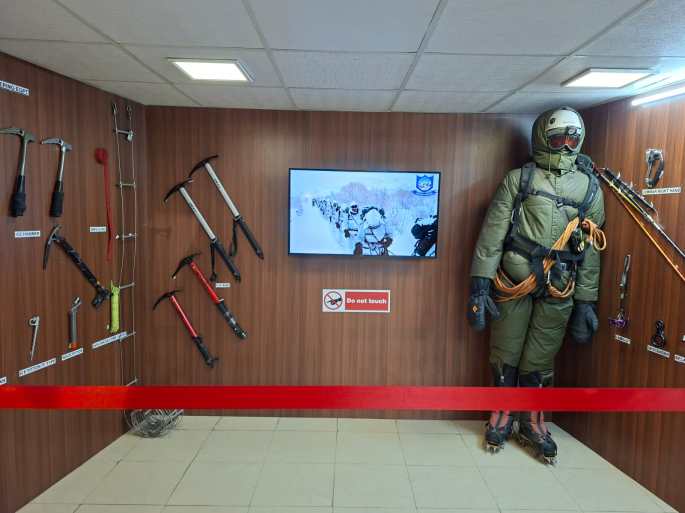
Climbing equipment used in high altitudes like the Siachen glacier

A section aptly names “Lest We Forget” has the pictures of valiant soldiers who laid down their lives fighting the enemy along with a short description of the circumstances of their supreme sacrifice.
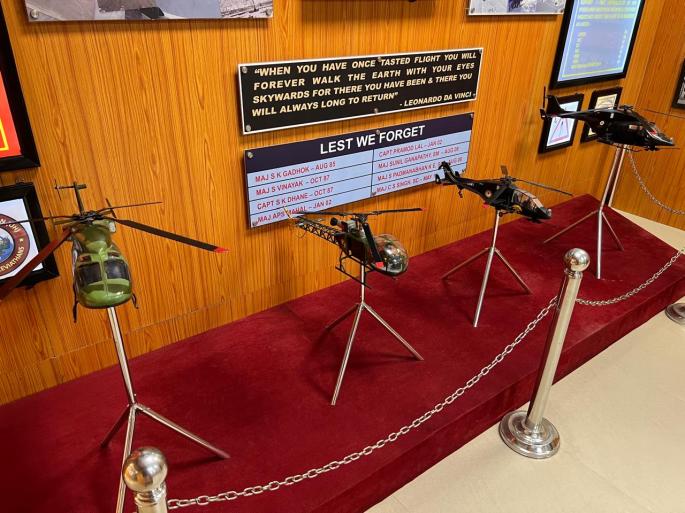
Lest We Forget

A particularly touching exhibit is “The Last Post”; a letter written by Capt Vijayant Thapar to his father a few days before his martyrdom. As we read the letter, tears will well up unknowingly in our eyes. It is so touching that we start feeling so small in front of the brave soldiers.

Ladakh Gallery

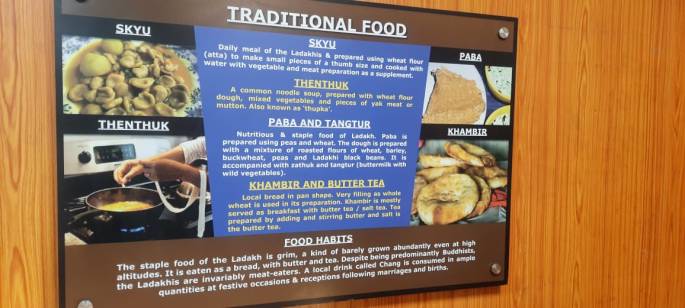
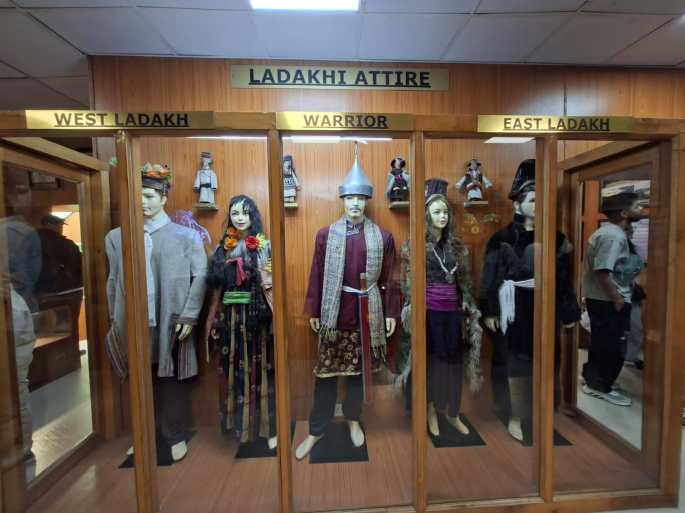
In addition to this is a gallery where traditional Ladakhi life is depicted.
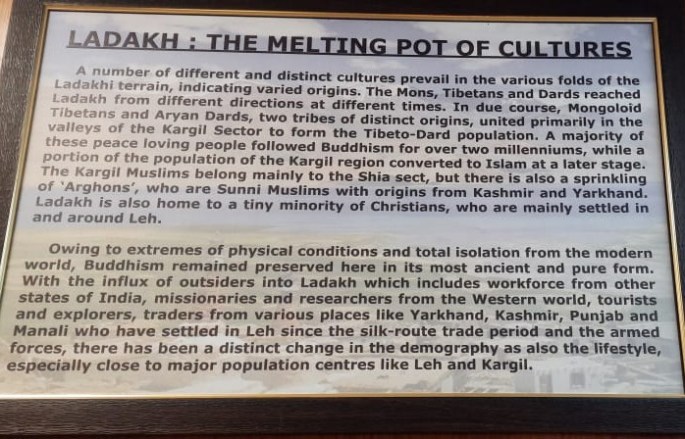
Some exhibits from the Ladakh gallery

After visiting the museum, we had more insight into the difficulties of our defence personnel and we all felt indebted to them for the service they do to keep us all safe.

It was with a feeling of respect and patriotism that we left from the museum.

Throughout our stay at Ladakh, there were innumerable examples of the great, tireless and dedicated work done by our defence services.

Both at Khardungla and Changla passes, the strict and vigilant presence of defence personnel gave us a sense of safety and protection in the border areas.

A satirical comment with a deep meaning

The tagline says it all

Rescue and Disaster management

Though fortunately during our stay we did not have to witness this aspect of their work, we are well aware of the tremendous work they do when natural calamities strike. Ladakh with its unique landscape and ecosystem is particularly prone to these situations.

Other Services

Apart from the three main services, various ancillary services also do a difficult job at these difficult locations.

The BRO (Border Roads Organisation) does untiring work to keep the roads on these mountains in usable condition. Laying of roads connecting various remote locations and maintaining them under difficult climatic conditions is a challenging job indeed. By doing this, they ensure unhindered movement of troops and supply of essential materials besides making tourist access easier. All over Ladakh we find heavy duty equipment constantly working on the difficult terrain.
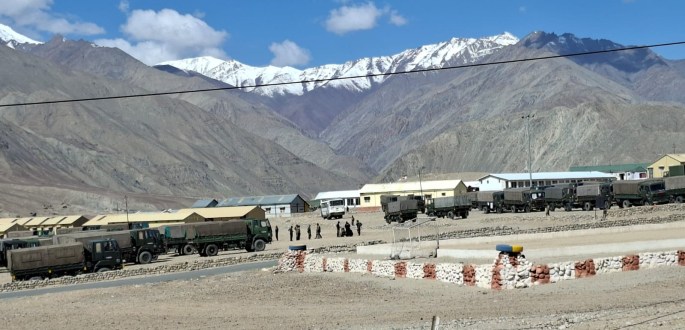
The temporary accommodation for the workers

Heavy equipment at work in difficult terrain

A short video on the difficult terrain that they work on. (click to open video)

A view of the tortuous roads in the area….
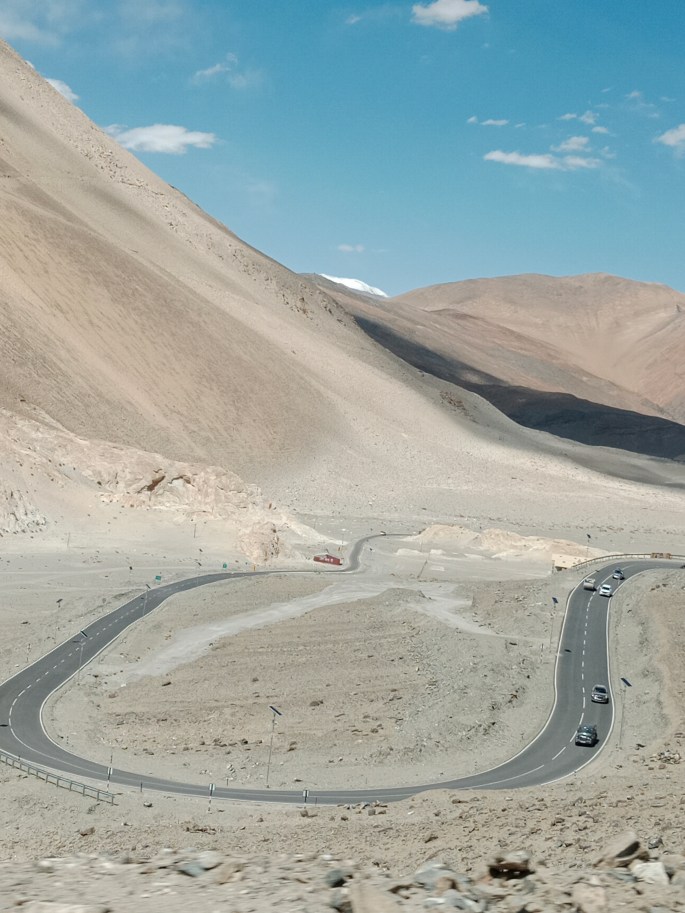
Do we think of the hands behind this difficult work as we ride here??

And all this work is done at high altitudes where we people cannot stand for more than a few minutes due to low oxygen !!!

Sitting in the comfort of our homes miles away from these border areas it does not occur to us that these men in uniform do such challenging jobs. When we visit places like Ladakh, we become aware of this .

It was with a patriotic spirit and tremendous respect for these valiant men that we left Ladakh.

On this high note, the series on Ladakh comes to an end. See you next week at…Japan. The series on Japan starts with an episode on Tokyo….

Till then, do subscribe, like and comment…

Khardung La & Chang La: A Guide to Ladakh’s High Passes

The Himalayas form a continuous mountain chain to the north of India and have several passes spanning the states of Jammu and Kashmir, Ladakh ,Himachal Pradesh, Uttarakhand and several North Eastern states. A pass is a path that passes through or across a mountain range and provides access to areas surrounding the mountain. Typically they are formed by glaciers, rivers and melting snow that erodes the mountain range.

The major mountain passes located in Ladakh are, Khardung La, Chang La, Zoji La ,Umling La, Tanglang La, Imis La and Bara Lacha La. The word La means pass.

We visited Khardung La and Chang La passes during our trip to Ladakh and those will be our focus in this episode.

Khardung La Pass

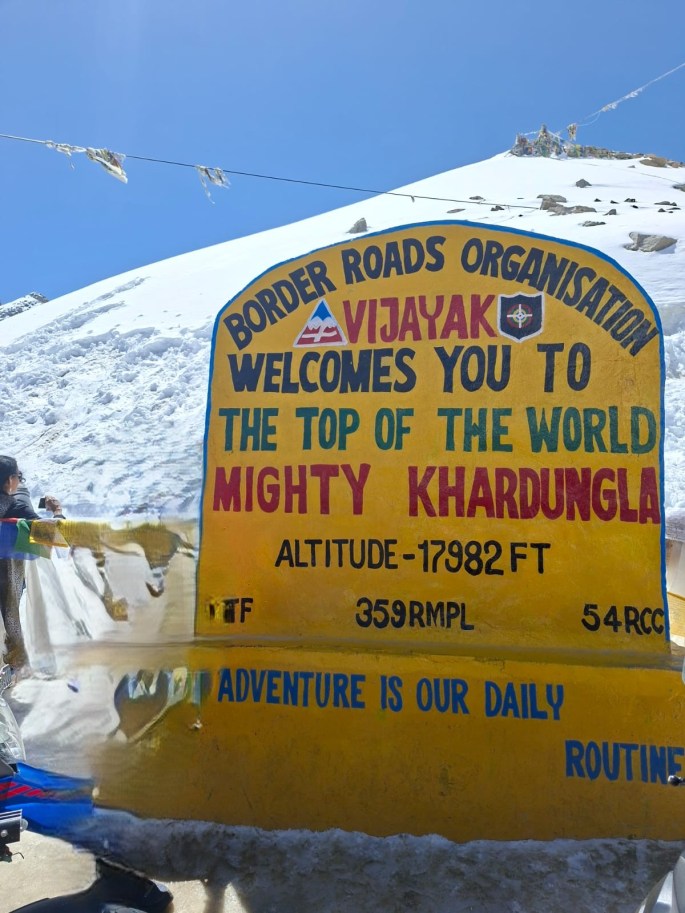
Khardung La lies in the Ladakh range, 39 kms. north of Leh connecting the Indus and Shyok river valleys. At a height of 5359 mts ( 17,982 ft ) Khardung La serves as a gateway to the Nubra Valley and is a crucial point in transporting supplies to Siachen glacier.

Historically, Khardung La lies on the silk route to Central Asia and was used by caravans of horses and camels

Today, there is a road that takes one to this pass. The construction of this road was started in 1972 and completed by 1976. This road was open to the public in 1988. The BRO (Border Roads Organisation) maintains this road today and it is the second highest motorable road in the world. The initial part of the road is paved but there are areas along the road that is mainly loose rock and dirt , partly caused by the extreme weather conditions of the area. All along the route we can see road construction work going on with heavy duty equipment maneuvering the difficult terrain.

Road to Khardung La-the second highest motorable road in the world

The difficult mountain road to Khardung La

As we drive along, we find a lot of adventurous bikers from all over the world on their way to Khardung La . Many of them have the national flag on their bikes giving a lot of patriotic feel.

A group of bikers on their way

One can see snow round the year at Khardung La but during the winter months and after sunset, the drive may be very risky due to frost leading to slippery roads.

Reaching Khardung La

At Khardungla Top , the snow, the summit markers and colored Buddhist flags welcome us. The view from there is simply breathtaking with snow covered mountains all around.

The milestone on the top

At Khardung La top

The amazing views from the top

And not to miss this cryptic message from the BRO…

A cryptic and meaningful message from BRO

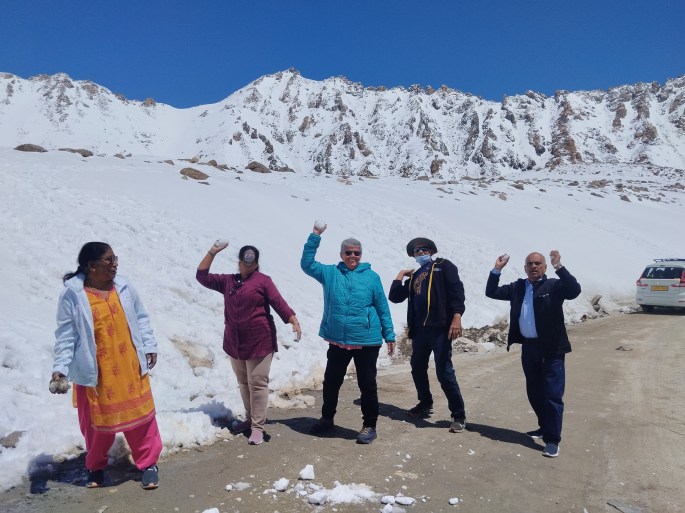
The high altitude is a deterrent to spending more time here and after the photos and enjoying the views for some time, we came down to a less crowded spot to enjoy ourselves by playing in the snow.

Playing with the snow

After some exciting time at Khardung La, we drove down to Nubra valley . More on Nubra valley later.

The other Himalayan pass that we traversed during the Ladakh trip was the Chang La.

Chang La

Located on the route to Pangong lake, Chang La has an elevation of 5391 mts (17,688 ft) and offers beautiful views of the Himalayan ranges. Chang La which means “Pass towards the South” is the third highest motorable pass in the world.

The drive to Chang La is equally challenging with steep , winding roads which have been damaged at places due to landslides and extreme weather conditions. Most of the road is asphalted but at places it is loose soil and stones.

The steep winding roads to Chang La

Interspersed with snow fields and azure lakes in the distance, the drive is heavenly indeed!!

The snow fields and azure lakes enroute

Click on the video for an experience of the drive…

After this breathtaking drive we arrived at Chang La where the prayer flags and summit markers greeted us to wonderful views.

Some pictures from Chang La…

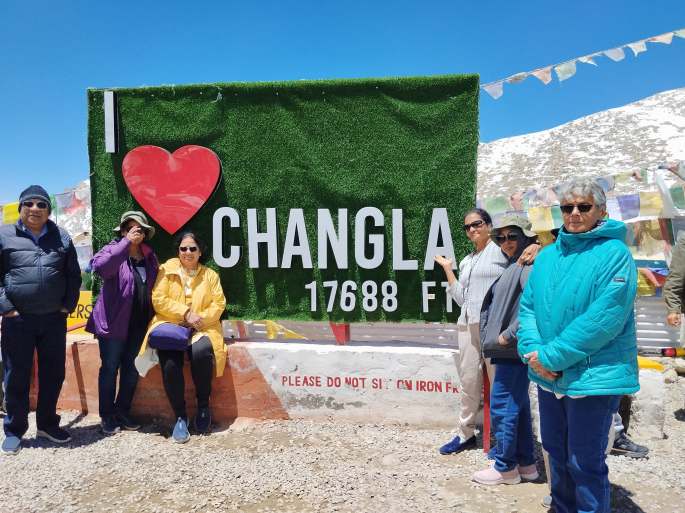
At Chang La

Our group at the Chang La summit marker

Right at the summit is a temple dedicated to a sadhu known as Chang La Baba.

Temple dedicated to Chang La Baba

The Indian Army has significant presence at Khardung La and Chang La. The most obvious reason of course is security. The passes are particularly vulnerable areas close to our borders and the security forces are on constant vigil and they also oversee the safety of the tourists arriving there.

There are many sign boards depicting the work of the Indian Army at the summits.

Another Message from The Indian Army

Problems of altitude

Due to the low oxygen saturation of the air in these high altitudes, breathing difficulties may be encountered and hence, we stayed there only for a few minutes. People with heart conditions and breathing problems must take proper medical advice and carry necessary medical supplies while traveling to these destinations.

Our vehicles were equipped with oxygen cylinders and necessary supplies during this trip.

Take a Bow

When we visit these areas where life can be a challenge at every point, we really feel indebted to the defence personnel manning these places. All along the difficult route small camps of the services can be seen. The personnel who work here stay away from their families and live through the extreme and unpredictable weather conditions with constant danger of the enemy. They do a lot of sacrifices so that we can live a peaceful life.

Apart from the main Defence forces, The Border Roads Organization (BRO) does a great job of building the roads and maintaining them. We are able to travel to these places only because of the great work they constantly do.

There is also a DRDO research station close to Chang La.

I hope the trip through the mountain passes was thrilling. See you next week from other destinations in enchanting Ladakh.

I close this episode with a sense of gratitude to the Indian Army and the allied services and with a sense of pride to be an Indian. Jai Hind.

Till then, do subscribe, like and comment.