All of you would have visited museums some time or the other. But have you visited a museum in a submarine? Well ,may be few of you have….
As was mentioned in the last episode, Visakhapatnam is the headquarters of the Eastern Naval command of the Indian Navy. So the Navy has several establishments here and one of them is the submarine museum.
Let me take you today to this novel museum which is inside an actual submarine!
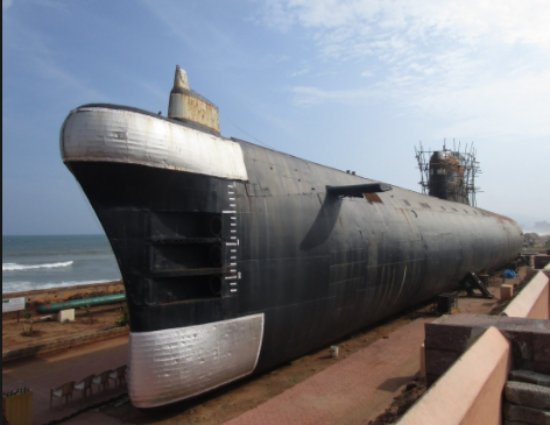
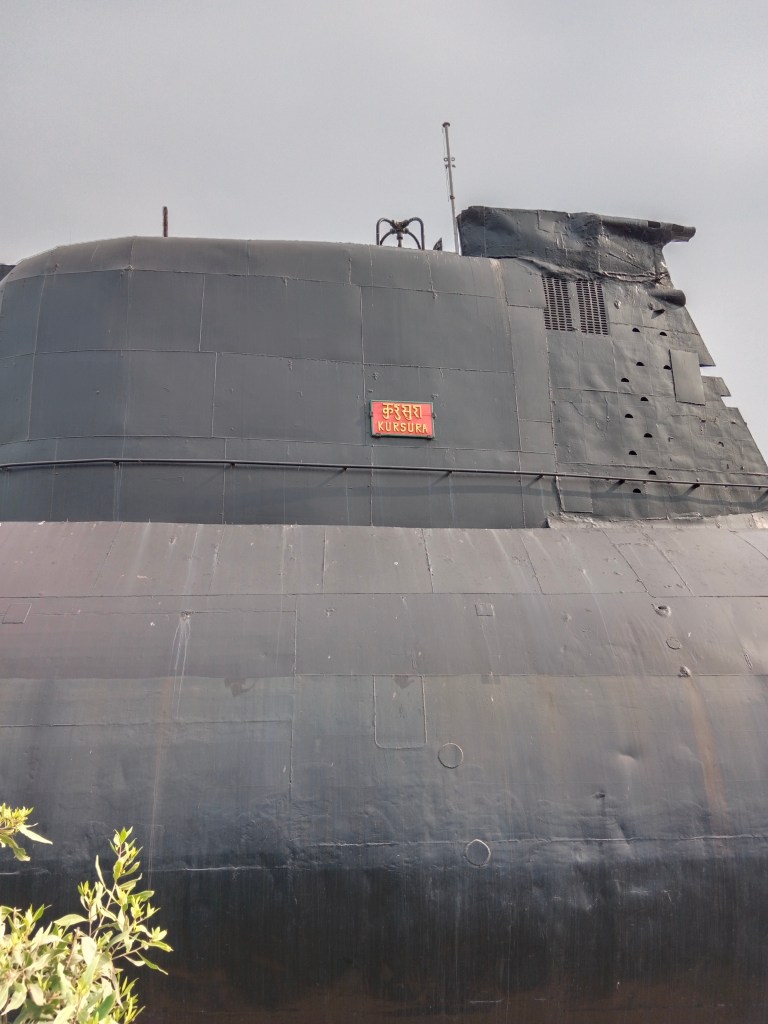
This museum , located at Visakhapatnam is a decommissioned submarine INS Kursura which was in active service for 31 years. After decommission, it was dedicated to the nation and is preserved as a museum for the public.
A brief history of INS Kursura
INS Kursura was India’s fourth submarine built in the Soviet Union and commissioned in 1969. She was attached to the Western Naval Command and operated in the Arabian Sea during the Indo-Pak war of 1971. After participating in several anti submarine warfare exercises and various other operations, she was decommissioned in 2001.
Once decommissioned, the entire submarine with it’s weapon package was hauled up from the sea to a concrete platform at R.K Beach at Visakhapatnam and established as the first submarine Museum in South Asia in 2002. This was a joint operation of the Eastern Naval command and the Naval Ship Design and Research Centre. It is recognized as a War Memorial.
The Museum
The submarine is placed close to the beach and one can see it from the road as one drives past. Surrounded by well manicured lawns, it is a sight to behold.
The submarine museum as seen from the road
The Submarine
As one steps foot on the submarine, a sense of pride and patriotism flows in naturally to us. We can climb up a fleet of stairs to enter the museum.

The stairway to the submarine museum
Once inside, we can see a number of artifacts, pictures and articles used during wars. We can also see gadgets and weapons that are on display. This gives an idea of the evolution of submarines, showcases the might of the submarine arm of the Navy, and reveals the hardship and toils of life on a submarine. The interior has been suitably modified for this but at the same time retaining it’s original form.
It gives you the feeling of actually being inside a submarine. Once we stay inside for some time, a feeling of claustrophobia engulfs us. It is then that we realize how difficult it is to actually live inside a submarine for days together. That is what our Naval personnel do in times of war, and they have to be continuously on high alert too!!
Have a look at some of the pictures and that may perhaps throw light on their difficult lives….
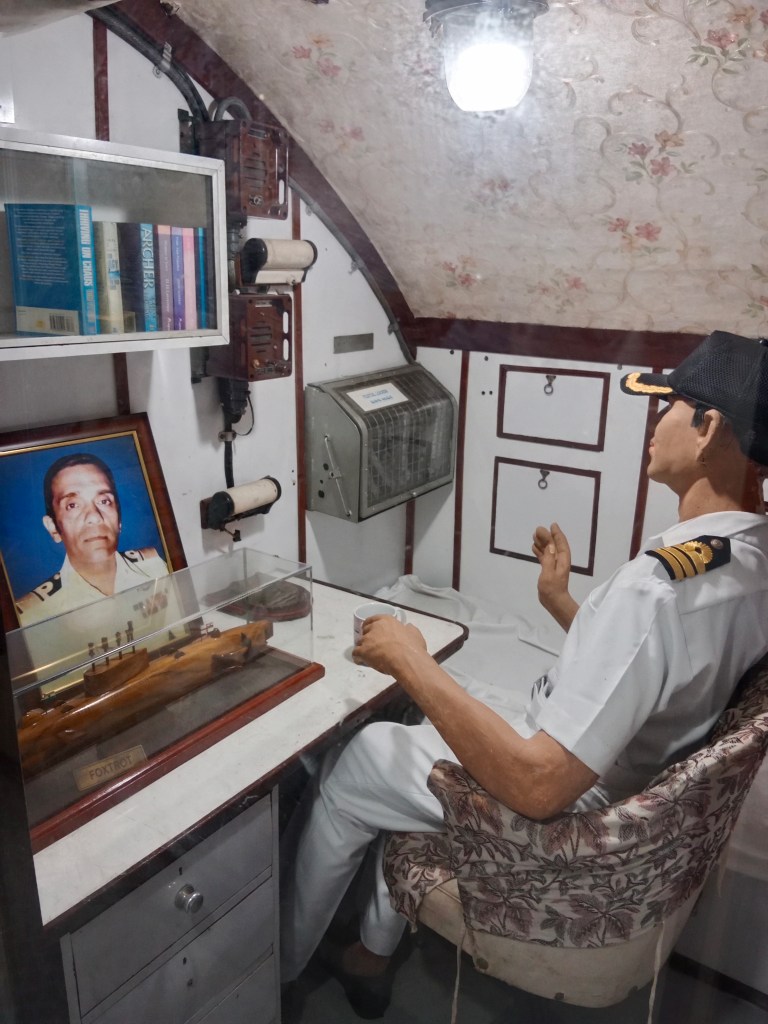
A room with the model of an officer and the small place they have to operate from
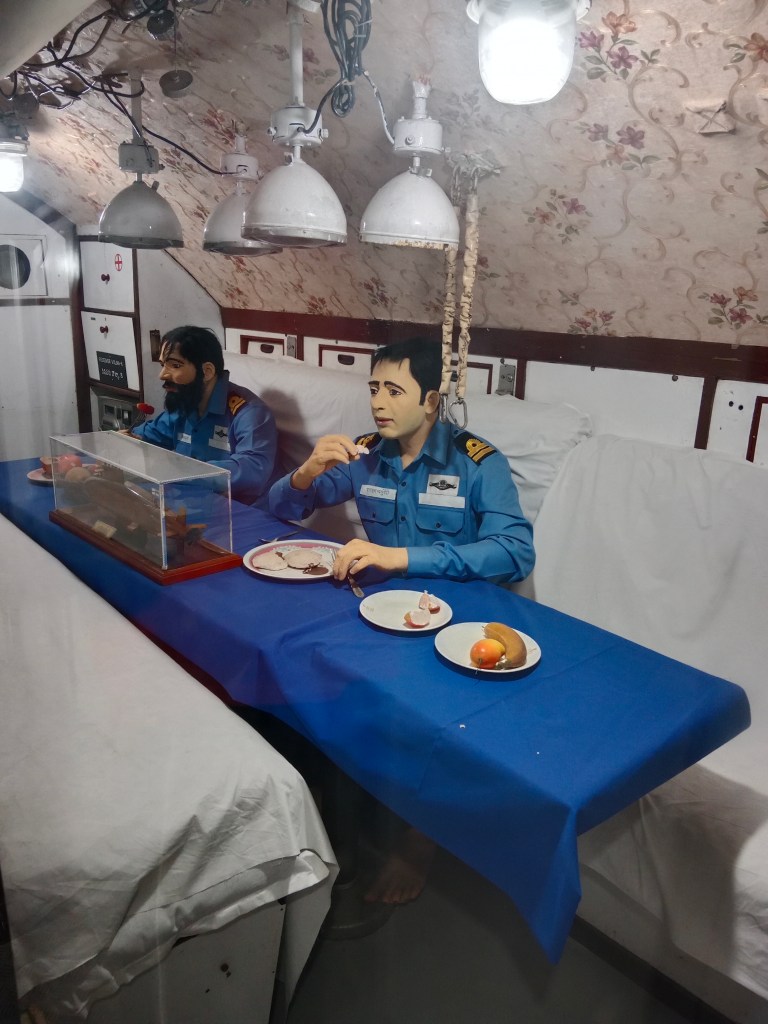
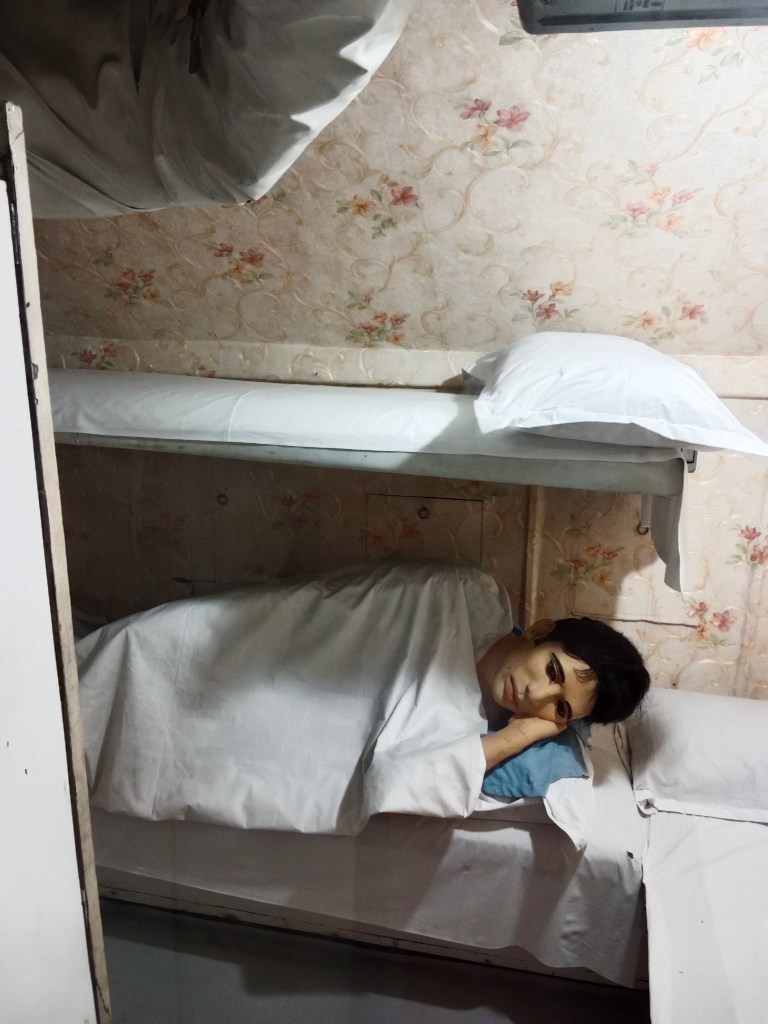
The pantry and bunker beds for sleeping. ( the low roof makes the place claustrophobic)

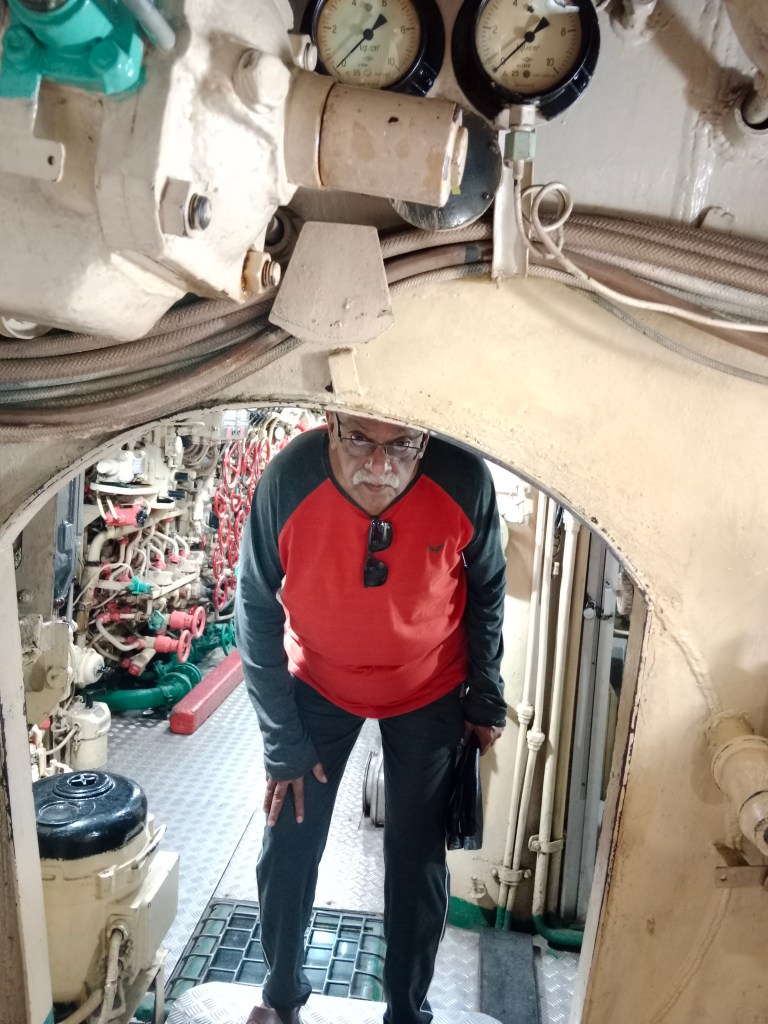
The narrow passages with equipments and low head clearance forcing us to bend


Various levels inside the submarine
These pictures would have given you a fair idea of the difficulties when the personnel live inside for months together
Immense regard and respect for our armed forces just comes in automatically when we see all this.
There are a couple of Naval personnel there who explain the details to us also. Though there are many technical details which we may not understand but the overall experience of actually entering a submarine is something entirely different.
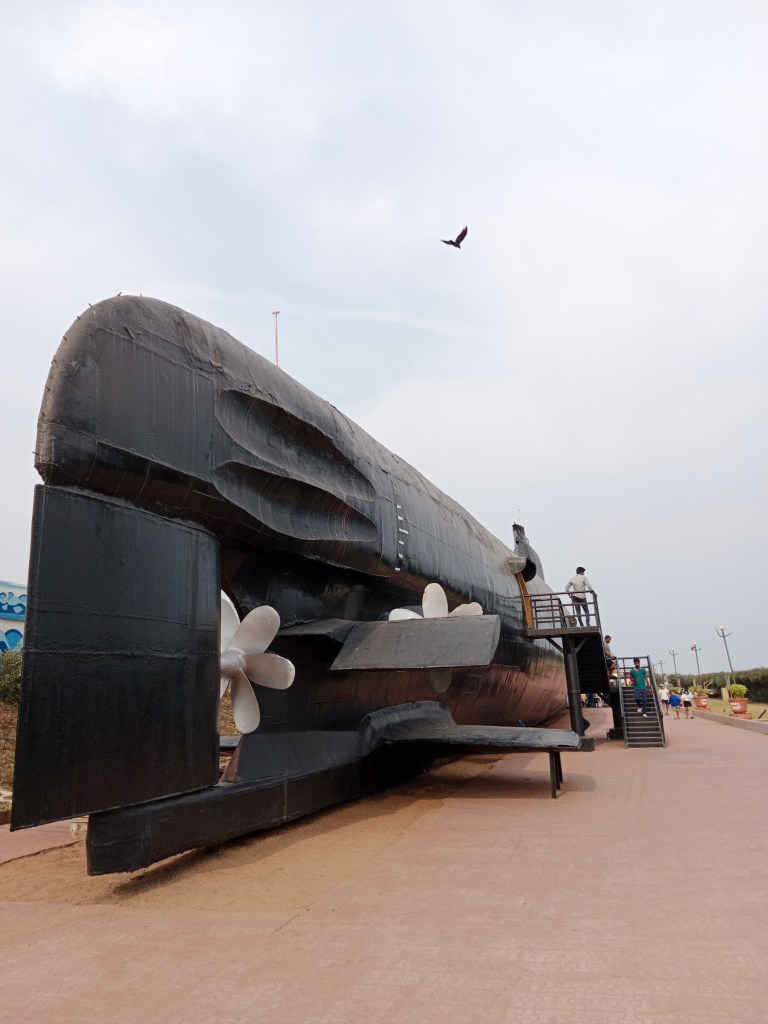
Outside also we can see the parts which are otherwise under water….

The propeller and rudder ( at the back of the submarine)

The front of the submarine with torpedo tubes and the anchor resting on the floor.
Glimpses of life on a submarine: (something I learnt during this visit)
Submarine personnel undergo rigorous training including damage control, drills and emergencies, battle tactics and escape training through a tower.
Space is limited in a submarine and equipments and life saving gadgets get priority over daily comforts.
Sleeping in bunkers to save space is a rule and many times they take turns to use the bunker.
Maintenance of equipment, drills and safety exercises are a daily routine.
The kitchen has limited space and hence no elaborate meals can be expected.
Around 70 personnel share two toilets at sea.
We left the museum with mixed feelings. Patriotism, regard and respect for our armed forces and a thought for the families of these personnel who also sacrifice a lot so that we all can live safely in our homes….JAI HIND…
For completion sake, let me attach a file picture of Kursura at sea…

INS Kursura sails by….
After visiting the submarine museum, we continued on to the other interesting sights in Visakhapatnam. Next week, we visit some of Araku valley and Borra caves. Till then, do comment and give your feedback.








 Travel-along.in