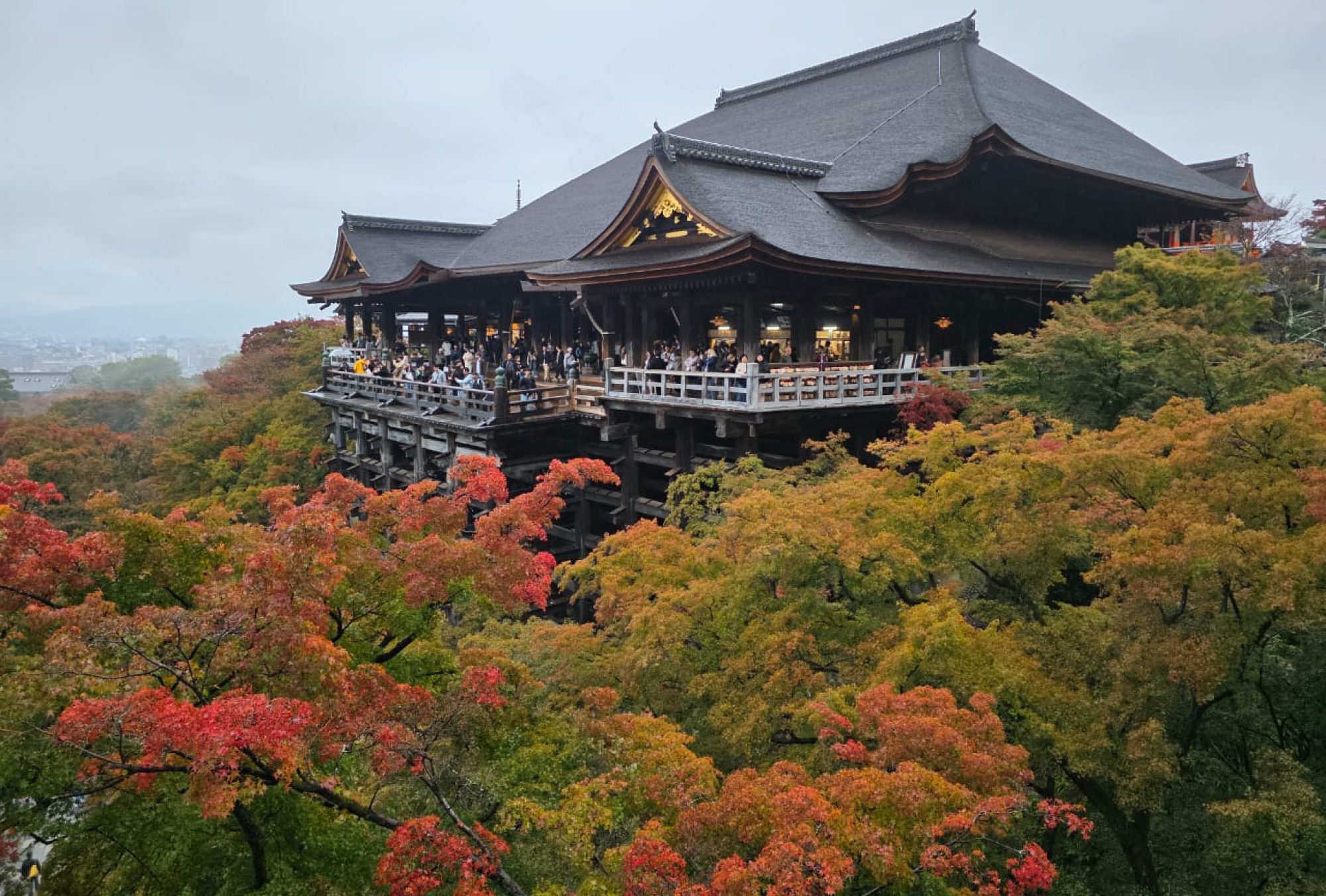

Cairo, the capital of Egypt was our last destination on the tour. Though we first flew in to Cairo, we went to Giza and from there on to Aswan. From there we took the Nile cruise and stopped at various temples and archaeological sites before reaching Luxor . From Luxor we flew back to Cairo and this episode covers this part of our incredible journey through Egypt.
One of the main attractions we visited at Cairo was the Museum of Egyptian Antiquities , commonly known as the Egyptian Museum. Located centrally at Tahrir Square, it is the largest repository of Egyptian antiquities and is housed in a building built in 1901. With over 1,20,000 displays, notable among them being the treasures of Tutankhamun, it literally symbolizes ancient Egypt.
The building itself has undergone restoration work as it is more than a century old. The interiors, lighting and other facilities have also been upgraded over the last decade.

The entrance to the museum
Walking through the museum, one can get lost due to the sheer size and number of antiquities displayed. A guide who takes you around is required here so that at least the most important displays are covered. Join me on a walk through this storehouse of Egyptian history…
The large statues are located on the ground floor.
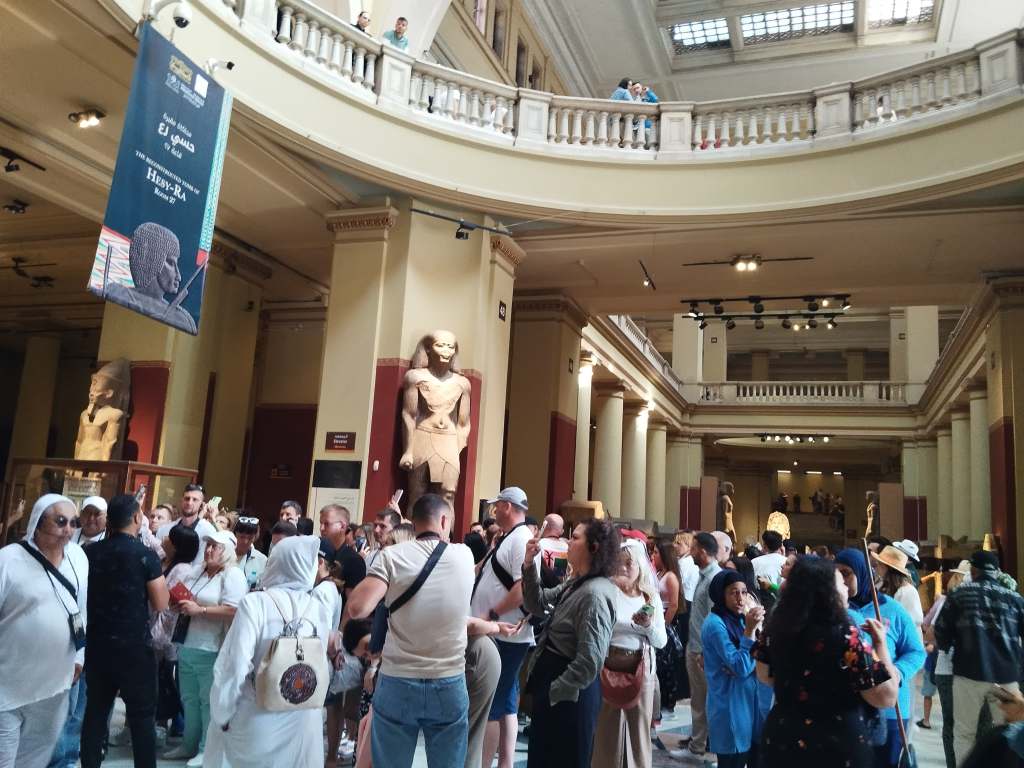
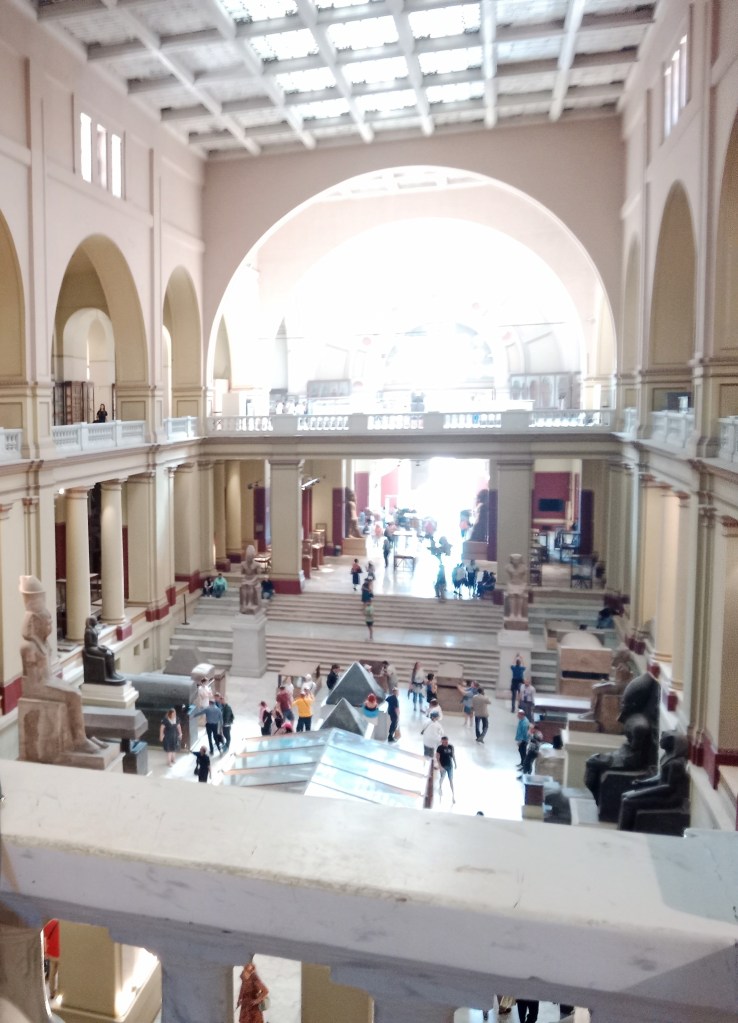
The lower hall and view from upper gallery highlighting the vastness of the place

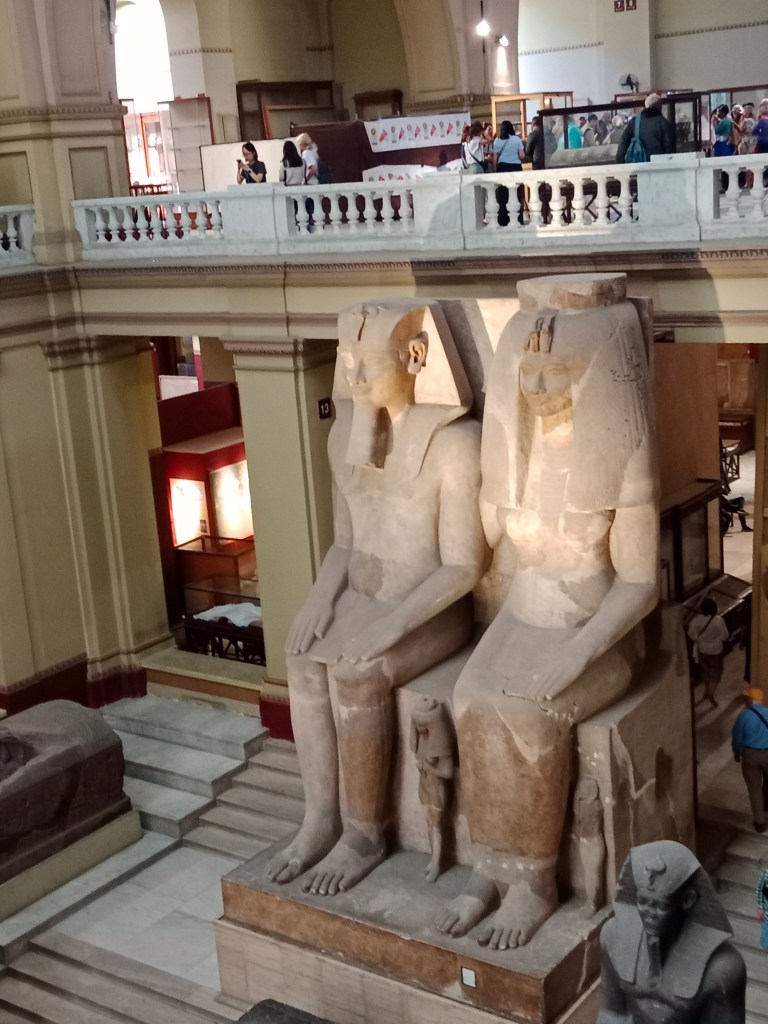
The colossal statues of pharaohs (note the height from floor to next level)
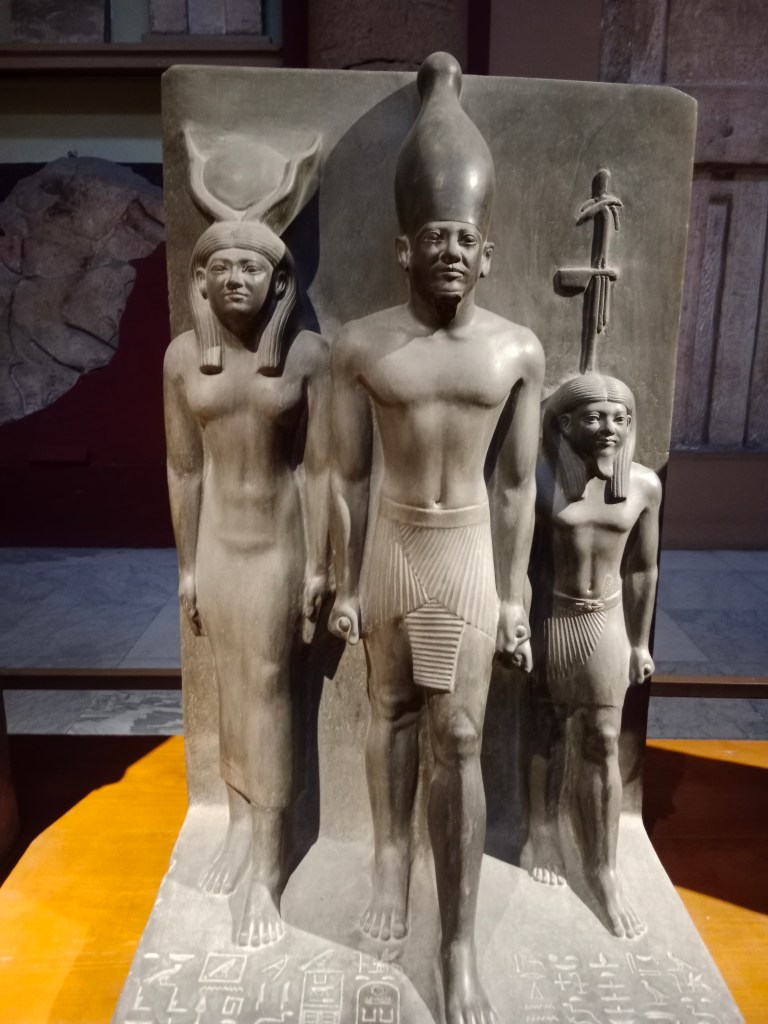
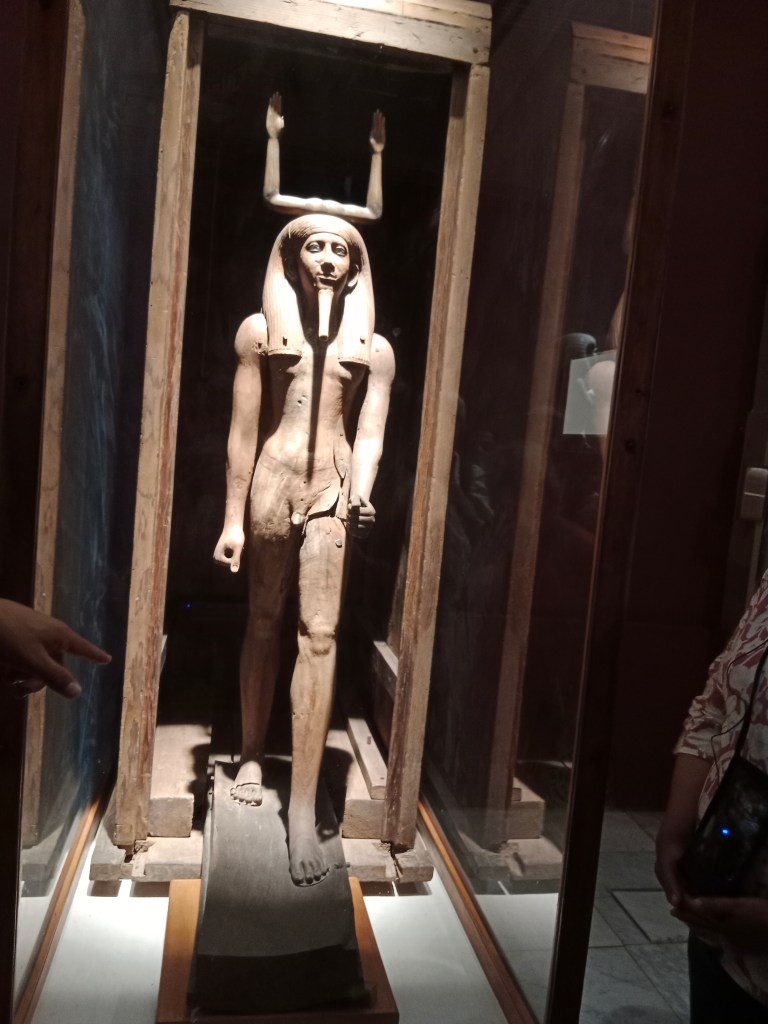
Pharaohs with Gods

The painted head of Pharaoh Hatshepsut’s statue from her temple in the valley of kings
Undoubtedly, Tutankhamun is the most popular of the pharaohs and there is a separate hall where many of his treasures are preserved. The sarcophagus and mummy are still in the tomb in the Valley of Kings. No photography is allowed inside that hall. Some of his treasures are exhibited outside. Have a look…


Entrance to King Tut’s hall with a gilded statue


A chest and a gold chair ….part of King Tut’s treasures
One of the most popular exhibits of the museum are the mummies and the coffin boxes (sarcophagi). We have all probably seen mummies in pictures but seeing a real mummy was a different experience. During the process of mummification, certain visceral organs were taken out and preserved in what is called Canopic jars .
Egyptians strongly believed in after-life and so materials required for that was interred in the tombs. Actually making food mummies ( preserved meat and poultry) and burying it with the mummy was definitely a surprise!!!

Stone sarcophagi

A mummy


Sarcophagi with mummies inside
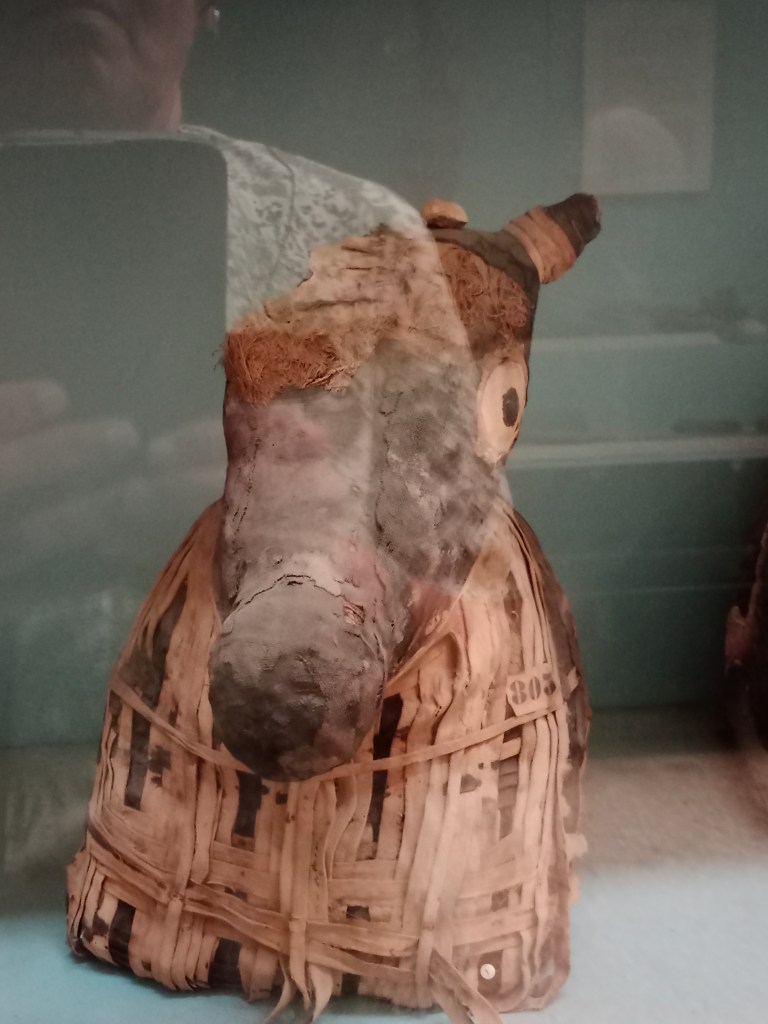
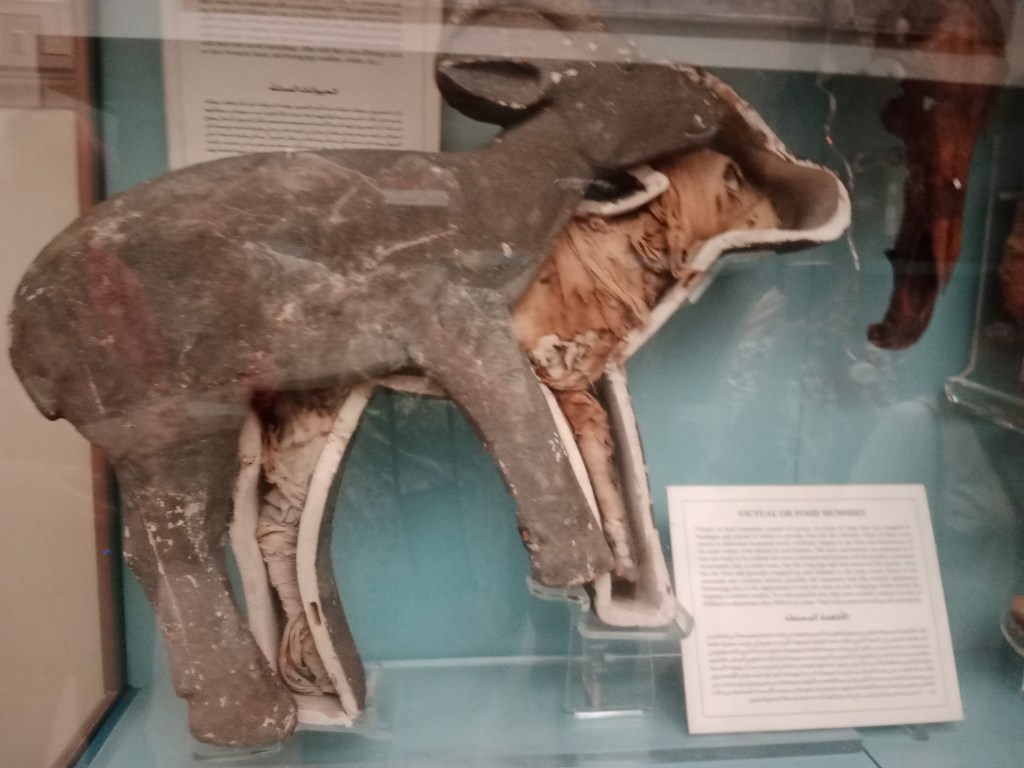
Victual or food mummies (meat wrapped and stored for after life in tombs)


Bird mummies and a Canopic jar used for viscera storage during mummification
Many of the mummies are in multiple coffins one inside the other and wearing mummy masks .

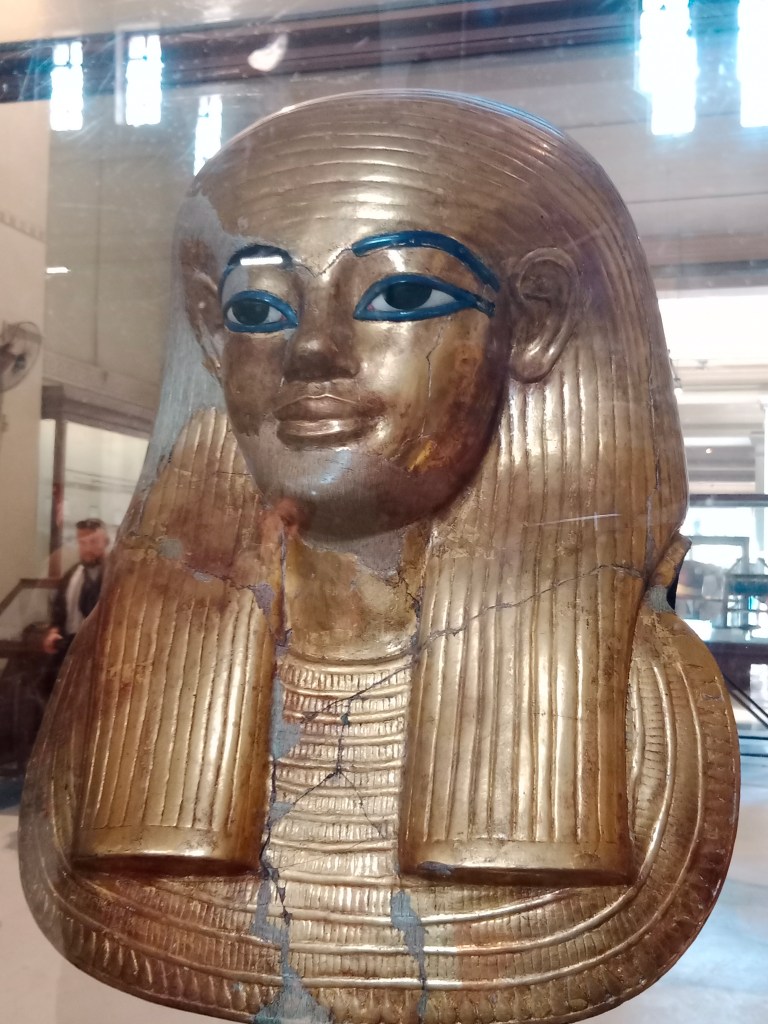
Multiple coffins and a gilded mummy mask
If all this was not enough, entire tomb chambers are also seen apart from hieroglyphics
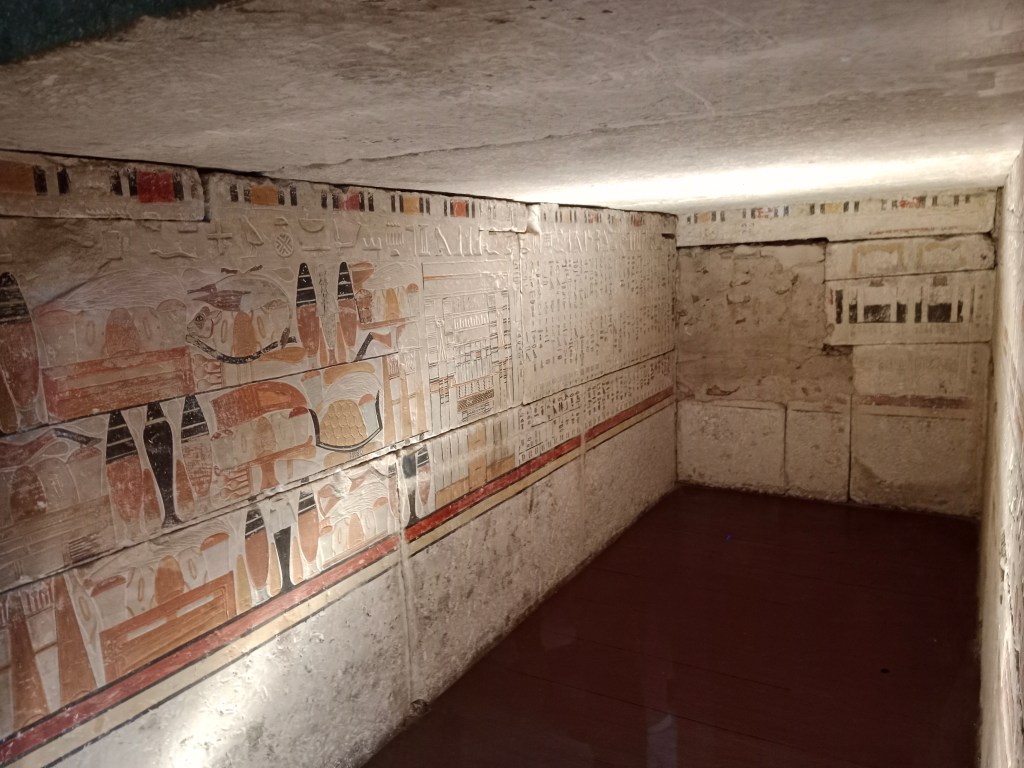
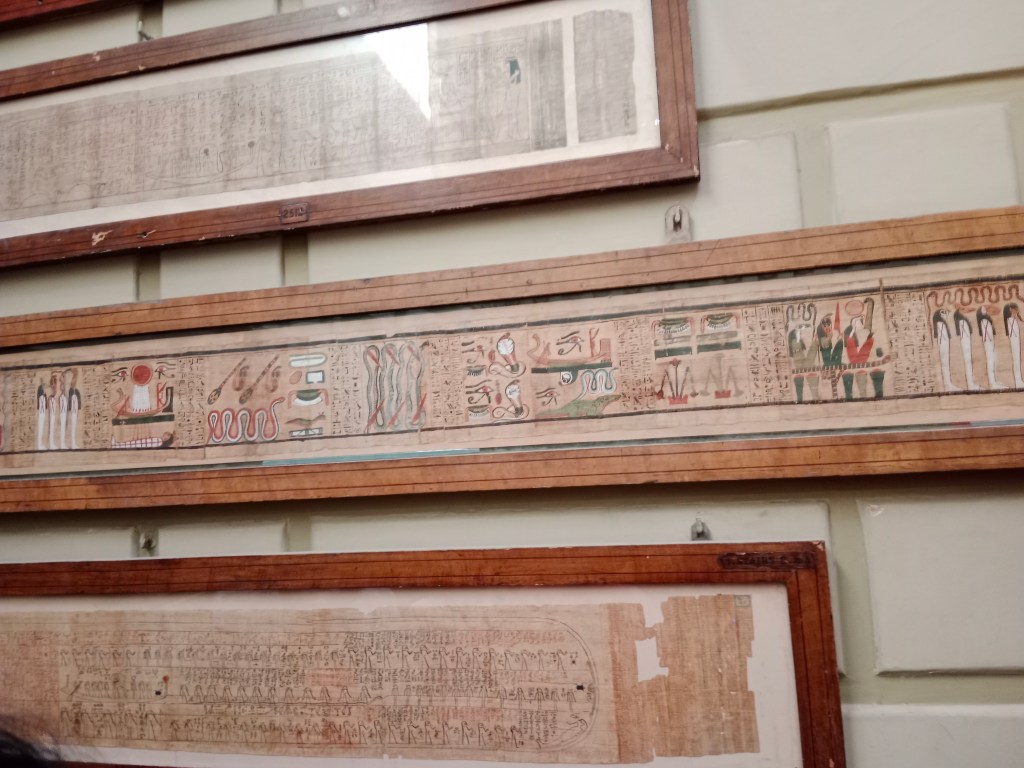
A tomb chamber and hieroglyphics
By this time we were all quite saturated with the wealth of information that we had encountered in this great museum. The richness of their civilization is aptly displayed here. With a very satisfied feeling of having seen most of it, we walked out of the museum and continued our tour of Cairo.
Post lunch, we visited the Cairo Citadel and mosque.
Mohammad Ali Mosque
Located at Cairo citadel, it overlooks the city and is one of its prominent landmarks. What sets it apart from other monuments is the Ottoman style of its building. Muhammad Ali, an Ottoman governor built this mosque within the Cairo citadel after demolishing some of the partially ruined palaces there.
The mosque follows the design of Sultan Ahmed mosque in Istanbul and was initially built with alabaster found in the region but later the alabaster was removed.

In front of the Mosque
The interior of the mosque is ornate with a central dome and four surrounding domes with colored mosaic glass windows on the sides. Huge chandeliers and lights add to the beauty.

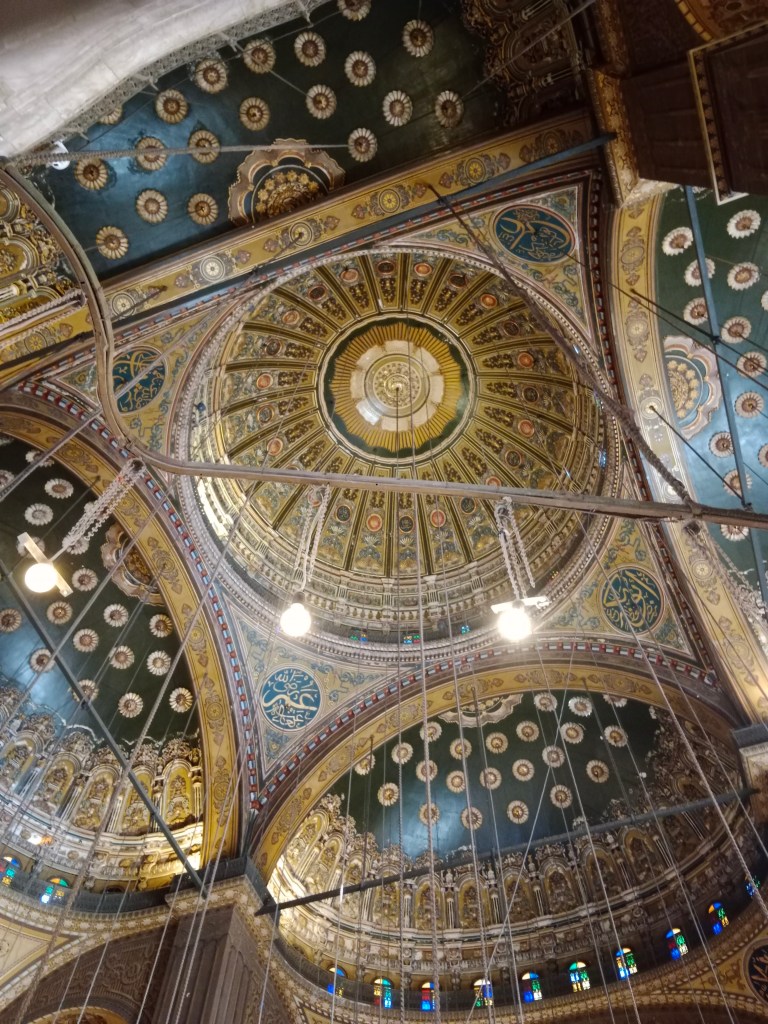
The ornate interiors with chandeliers and decorated domes
The central courtyard is surrounded by arched porticoes and has a fountain in the center.
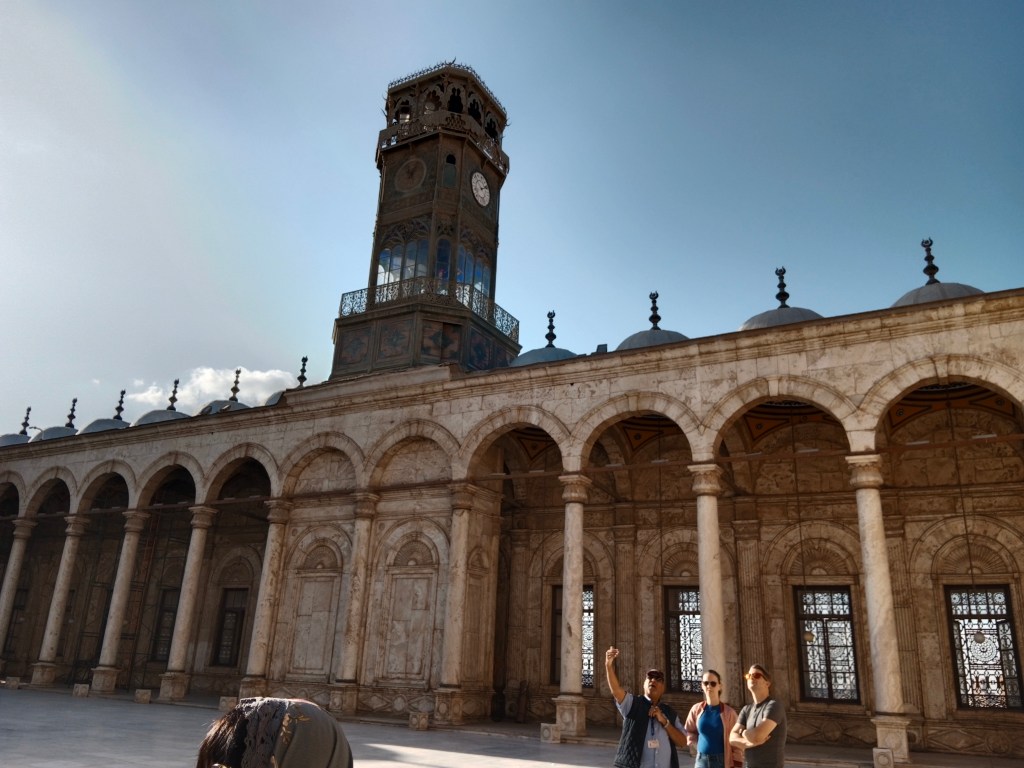

The arched courtyard with clock tower and the central fountain
At one corner of the main hall is the tomb of Muhammad Ali hidden behind bronze metal work. A decorated pulpit for sermons is also present.
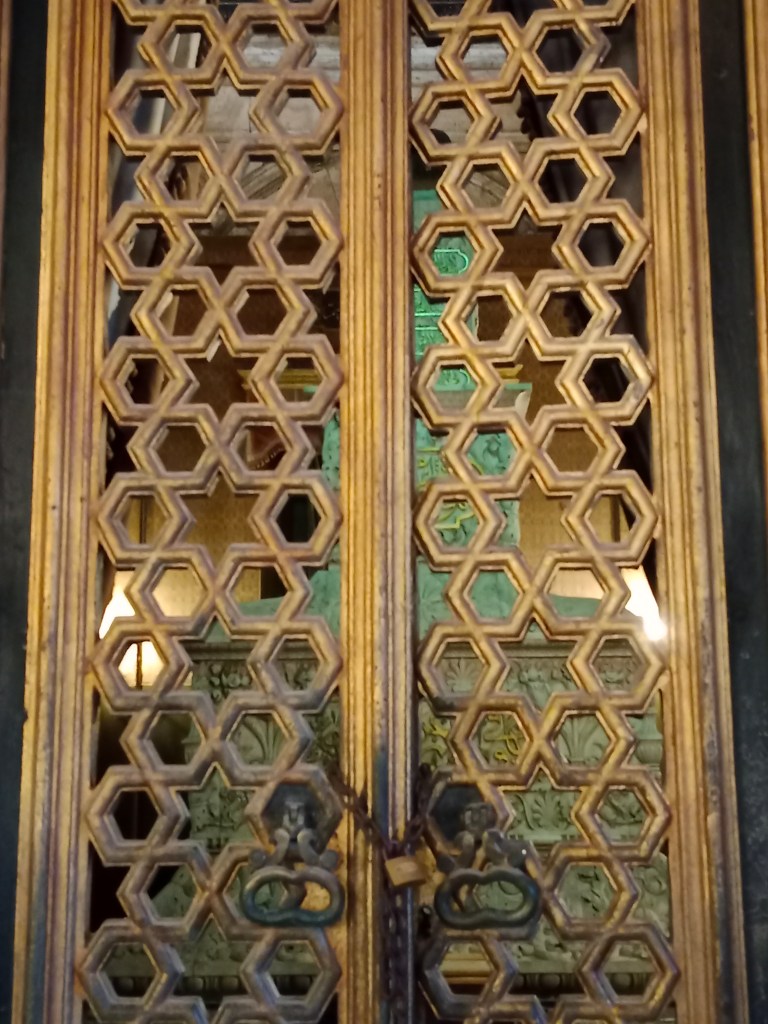

Muhammad Ali’s tomb and the pulpit
Khan el-Khalili market
The last stop on our Cairo sojourn was the famous Khan el-Khalili market. A market set between narrow streets lined by shops selling all kinds of articles from food to souvenirs, hard bargaining is the rule. Some pictures from there.
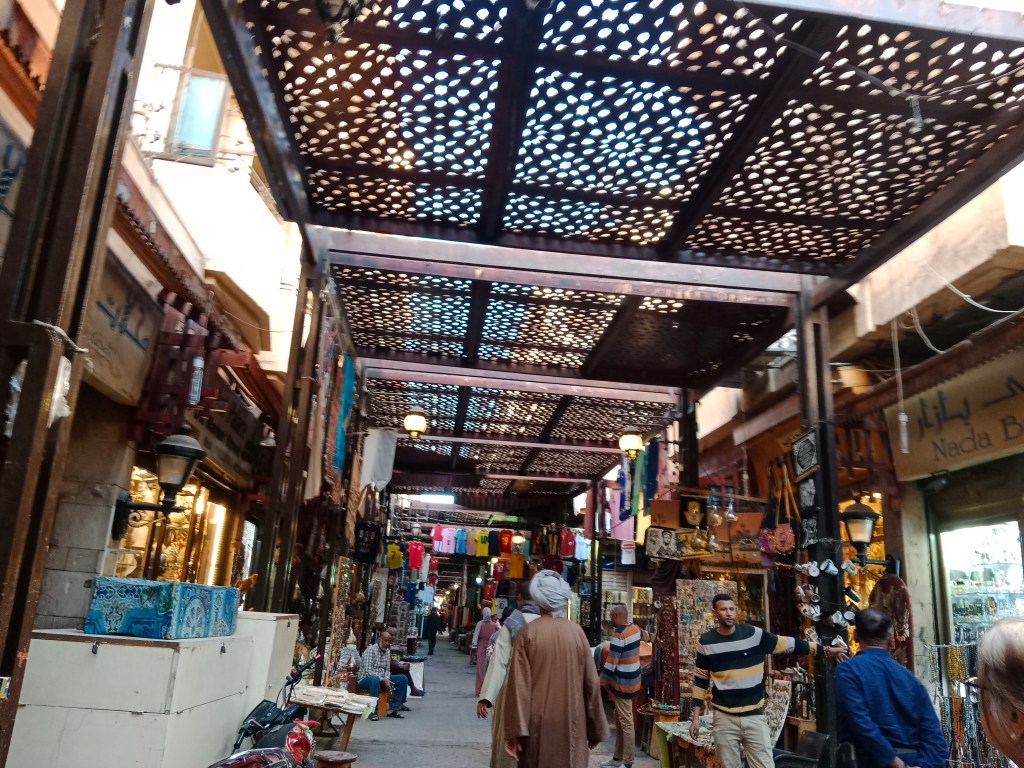

The market and enjoying some tea at a cafe there
With this we come to the end of the journey through Egypt. It had been a very educative trip where I learnt a lot about ancient Egyptians and their rich civilization. I have tried to put it all together and bring it before you. The vast amount of information had to be split in multiple episodes to cover everything. Hope I have been able to convey the feeling of awe that I experienced during this journey.
Next week we start the next series….Meghalaya, abode of the clouds.
Till then, do subscribe, like and comment.







 Travel-along.in