Nubra Valley: Unique Attractions and Scenic Beauty

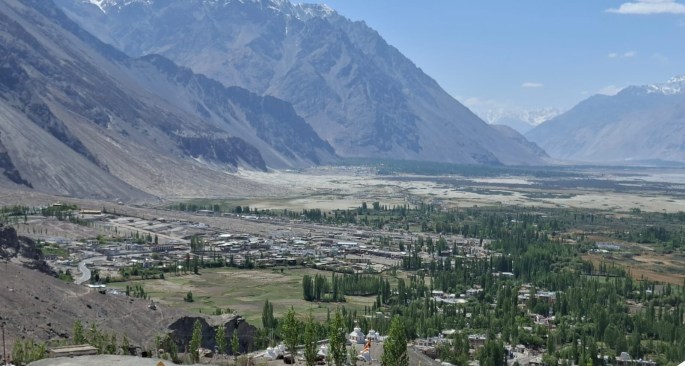
The Nubra valley lies to the north of Leh between the Ladakh and Zanskar ranges of the Himalayas. In contrast to the rest of Ladakh ; it is more green with lots of wild flowers and shrubs .The word Nubra is derived from the Ladakhi word Ldumra meaning an orchard or garden.

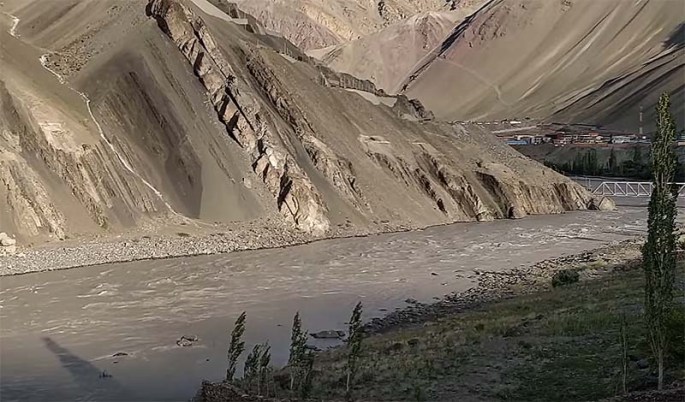
The villages that make up Nubra lie on the banks of the Shyok river that originates in the Karakoram ranges and merges into the Indus. The other important river is the Nubra river (Siachen). These rivers make the valley a fertile region where wheat, barley, peas, mustard, apples, walnuts and apricots are grown. This makes the general ecosystem of Nubra more green unlike the rest of Ladakh which is primarily a cold desert

The Shyok river

Apart from the natural beauty of the lush green valley against the backdrop of the snow clad Himalayas, Nubra has a lot to offer the tourists.

While driving from Leh to Nubra, one crosses the Khardungla Pass at a height of 5359 mts and is the second highest motorable road in the world. Khardungla has already been covered in detail earlier in an episode on the Himalayan passes.

The road to Khardungla Pass
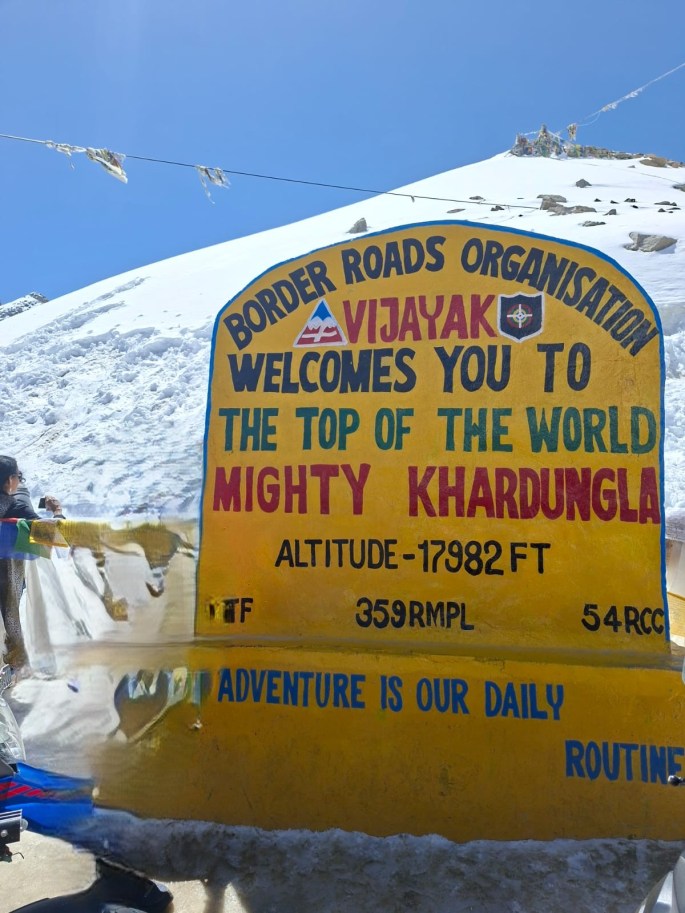
Khardungla Pass

The Diskit Monastery (often called Diksit)

Diskit village is the most important village of the valley and it hosts the Diskit monastery that sits on top of a hill providing magnificent views of the valley and the Shyok river.

A giant Maitreya Buddha ( Buddha of compassion) statue standing 32 mts high looking towards Turtuk, the last village on the Indian side close to Baltistan in Pakistan. This statue was consecrated by the Dalai Lama and it is believed to bring lasting peace to the region which has seen turbulent times.

Diskit Monastery

The giant Maitreya Buddha

The Hunder sand dunes

The sand dunes located at Hunder village stretching over a few kilometers were formed after a historical flood in 1927. They provide a desert landscape with the snow capped mountains in the backdrop and highlights the diverse ecology of Ladakh.

The sand dunes

A small stream was flowing along and we relaxed by soaking our legs in the icy waters…

Relaxing in the icy stream

Double humped Camels( Bactrian Camels)

These camels are a tell tale sign of the trade that took place hundreds of years ago on the Silk Route. The caravans travelling between central Asia and Kashmir used to stay in the villages at Nubra . After the closure of the silk route, these hapless animals found themselves left behind here. Their descendants entertain tourists in the Nubra valley with camel rides which sustain them.
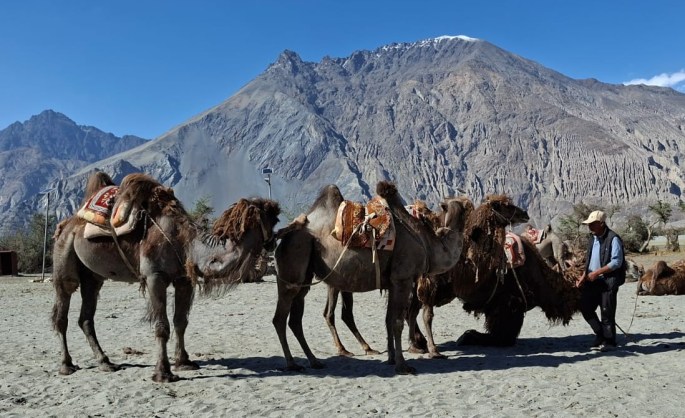
The double humped camels

Camel rides at Nubra

Nubra valley also has ATV rides and zip lining as entertainment activities for tourists.

ATV Rides

Enroute, we had lunch at a local restaurant where we were served the local Seabuckthorn juice. The unique Seabuckthorn berry also called the Leh berry is widely found here all along the way among the shrubs.

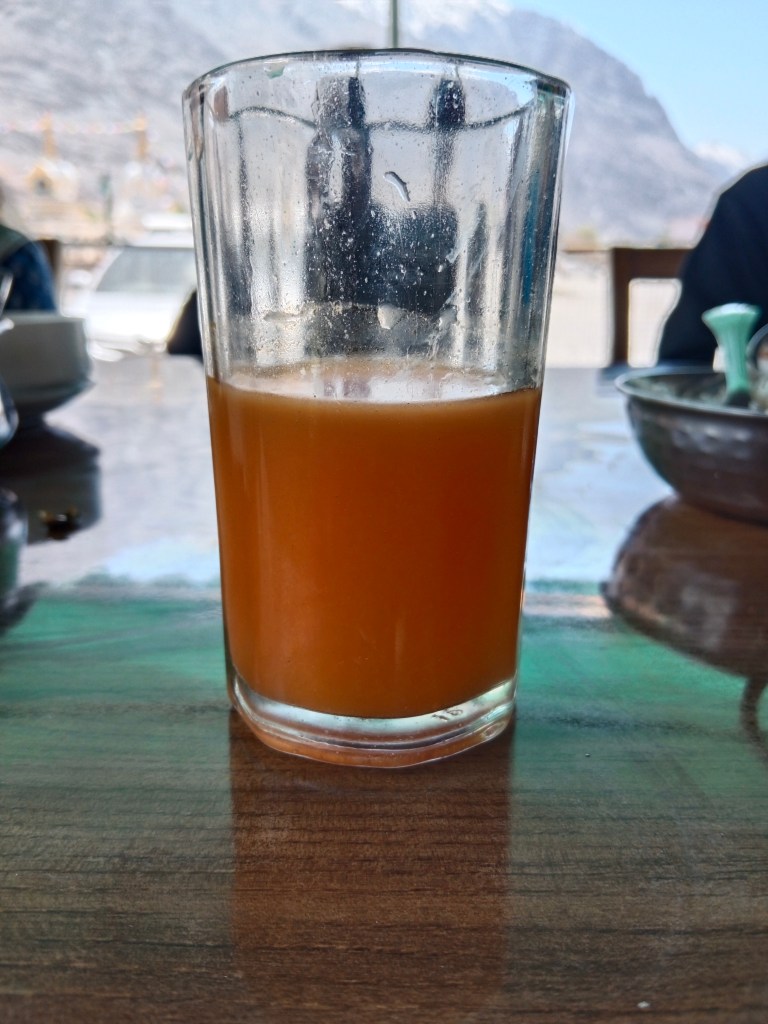
Seabuckthorn berries and the juice.

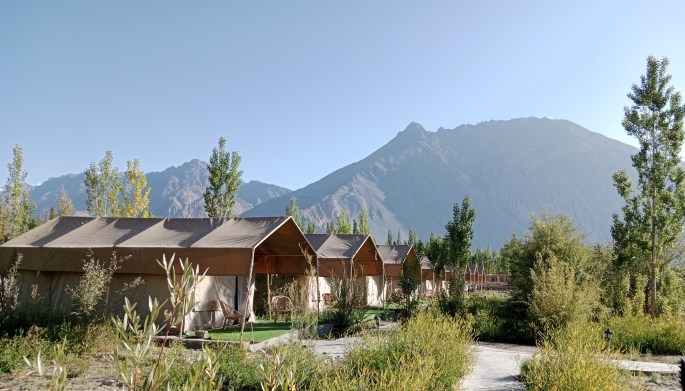
After a long day on the road we reached our resort at Nubra where we were put up in Swiss tents. Some pictures from the resort.
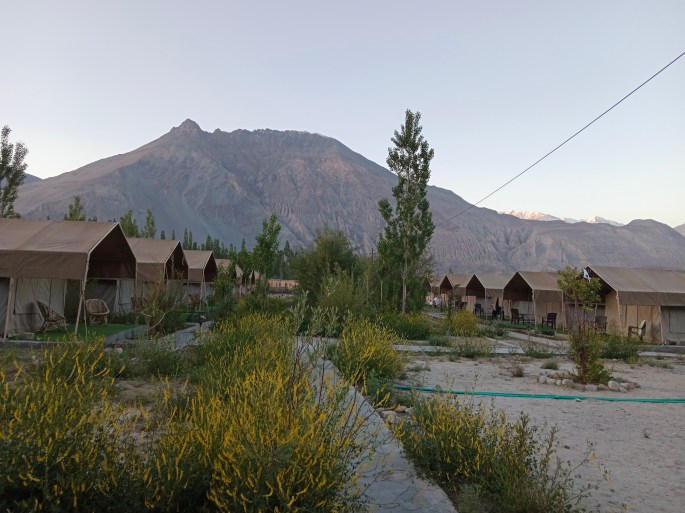
Our resort at Nubra and a typical Swiss tent

That night we had a bonfire and cultural show with local ladies entertaining us with graceful dances. Some pictures and videos..

Bonfire

The dancers in vibrant costumes

Click on the video to enjoy the dance
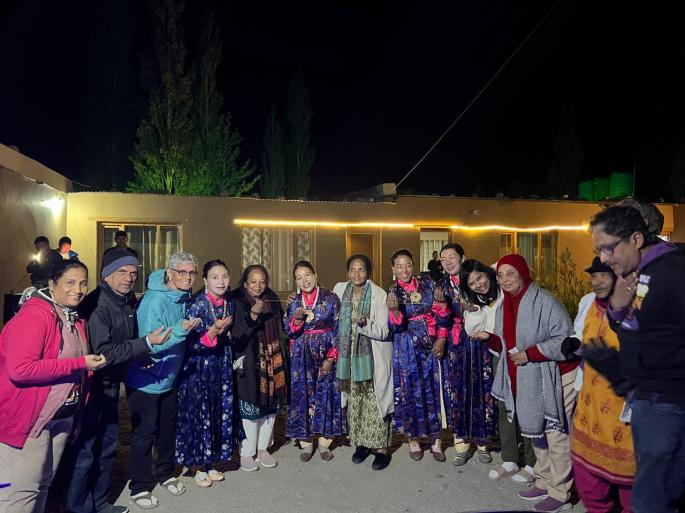
And finally we posed with the dancers…

The night of rejoicing came to an end after sometime as temperatures dropped and we hastily retreated to our tents to catch some sleep.

Next morning we bid goodbye to Nubra and started our journey towards Pangong .

Hope you enjoyed this journey through the Nubra valley. See you next week with more from Ladakh.

Till then, do subscribe, like and comment.
Ladakh’s Stunning Buddhist Monasteries

Think Ladakh and the picture that arises in your mind is of a landscape of snowclad Himalayan peaks dotted by those quaint architectural buildings ; many of them on hills with winding roads and steps leading to them. Well , these are the Buddhist monasteries of Ladakh which add unique charm to the Himalayan landscape.

These monasteries of Ladakh have an old world charm about them and are remnants of Tibetan culture that has been retained here. Most monasteries are complexes that comprise of prayer halls, temples, courtyards, stupas and the living quarters of the monks.

They have typical architectural features with white exteriors , windows lined by delicately carved woodwork and painted in red, black and yellow colours , stupas in the courtyard, and multi colour prayer flags fluttering all over. Prayer wheels of different sizes adorn both the exterior and interior and the soothing chants of Buddhist hymns calms our minds as we explore them. Monasteries are store houses of ancient manuscripts, thangka paintings and house beautiful statues.

In most monasteries , bowls filled with water are seen offered at the altars in addition food, flowers and incense.

Let us walk through some of these monasteries…

Hemis Monastery

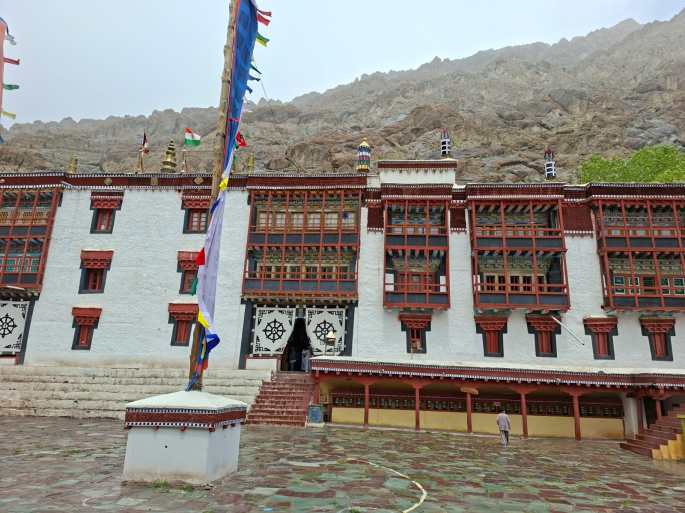
Hemis monastery is one of the largest and wealthiest of the monasteries and is located about 40 kms from Leh. One needs to climb a flight of stairs to reach the monastery and there are beautiful arches and prayer wheels along the passage.

The stairs with decorated arches leading to the monastery.

The stairs lead us to an open courtyard with the monastery building right ahead. The balconies and windows have delicate wooden carvings on them painted in attractive colours.

The courtyard and monastery building

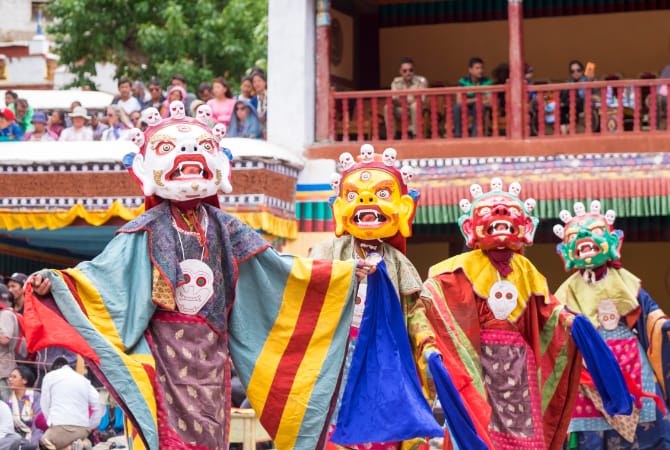
The Hemis monastery is most famous for the Hemis festival held in this courtyard in the month of July. The famous Cham dances are enacted here with the dancers wearing colourful masks.

File picture of Hemis festival

We had a wonderful experience when we reached the monastery. It suddenly started snowing and we enjoyed the experience along with views of the monastery.

This also acquainted us with how fickle the weather in Ladakh can be as it had been bright and sunny earlier on

Snowing at Hemis….click on video to enjoy the experience!!

Thiksey Monastery

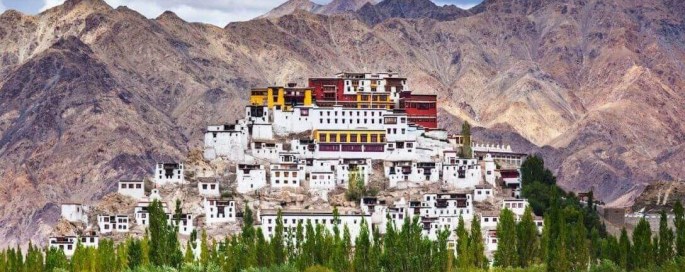
This largest monastery of Ladakh is built identical to the Potala Palace in Lhasa in the 15th century overlooking the Indus Valley and is often called mini Potala.

This monastery has 12 floors and houses 10 temples with precious and rare statues and stupas .

Thiksey Monastery

Thiksey Monastery

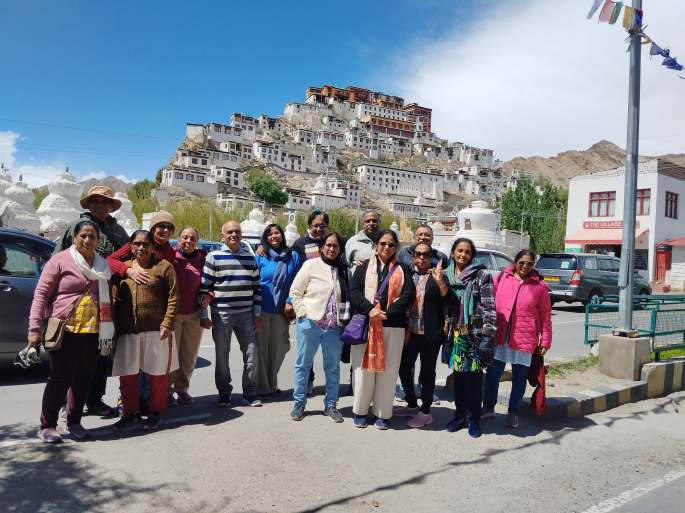
Our group in front of Thiksey monastery

Here too, there stairs adorned with colourful arches that lead to the main monastery building.

A huge prayer wheel

The main monastery building

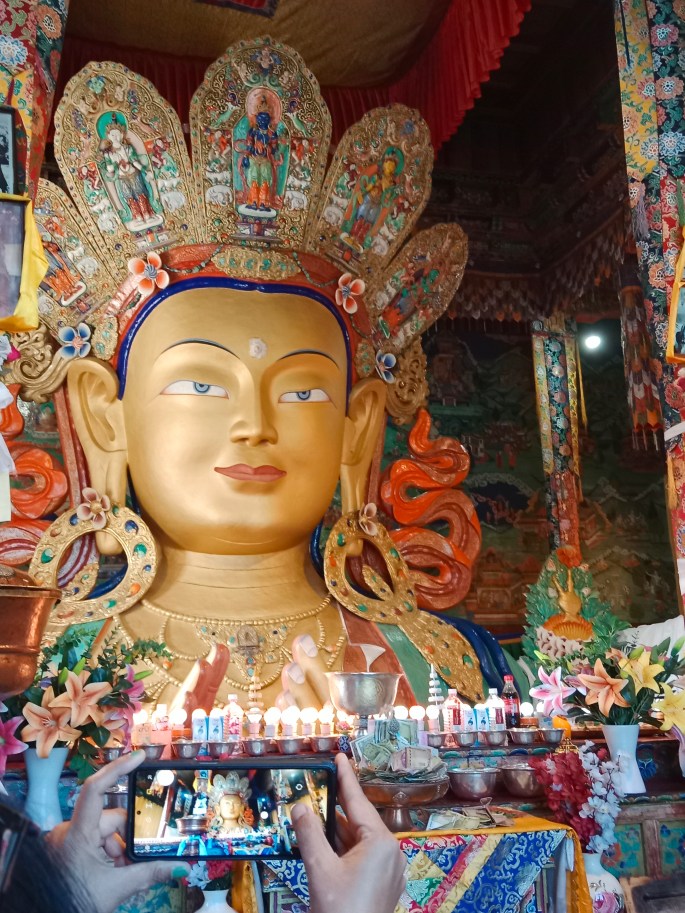
One of the main attractions here is the beautifully decorated and adorned Maithreya Buddha statue that is 40 feet tall. He is known as the future Buddha or Buddha of Compassion and was consecrated by the Dalai Lama.

Maitreya Buddha statue

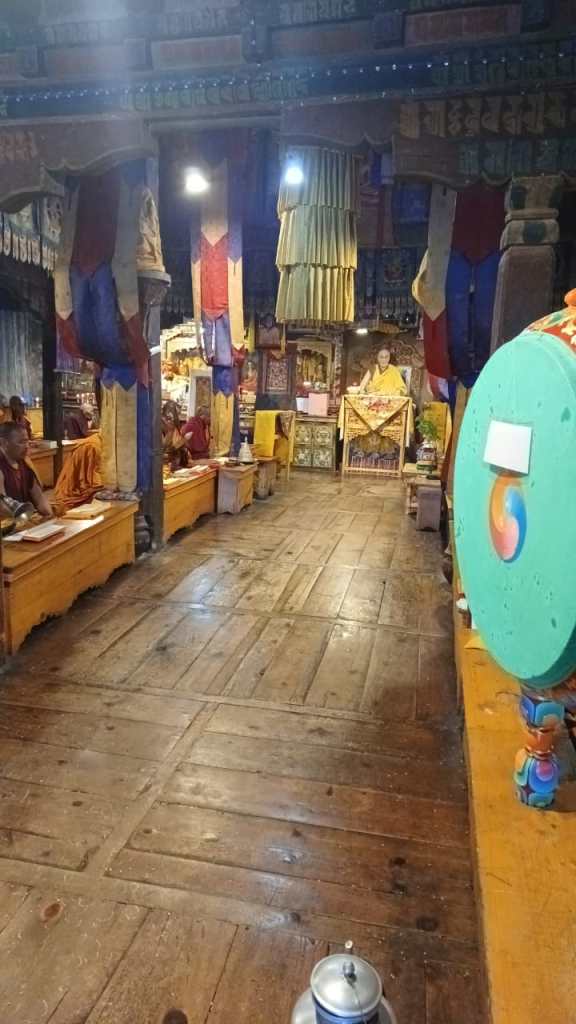
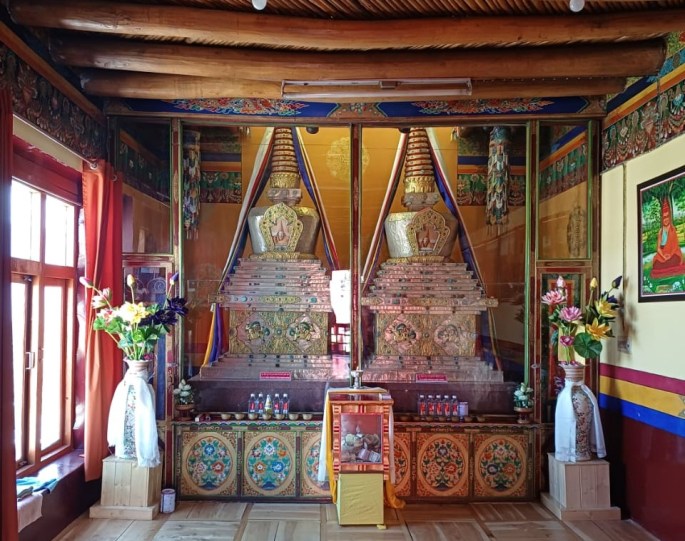
Photography restrictions were minimal here and hence here are some pictures from inside the monastery…..

Some pictures from inside the monastery.

Tara devi who is believed to be the mother of Buddhas has a temple dedicated to her here.

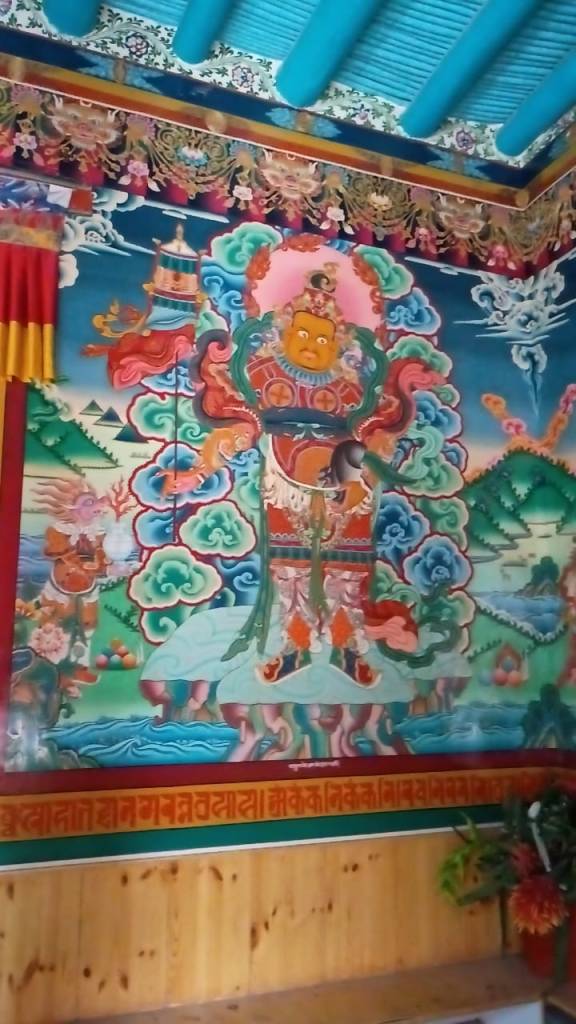
There are beautiful murals on the walls of the monastery

Beautiful murals

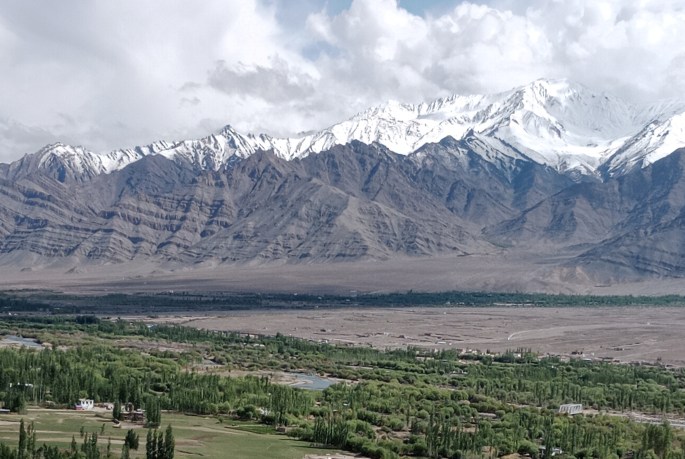
Views of the Indus River and valley and the Himalayan peaks from the top of the monastery are beautiful…

Beautiful view of the Himalayas, Indus river and valley from Thiksey

This monastery is home to about 80 monks.

Some of the monks in traditional attire

Alchi Monastery or Alchi Choskor

Alchi monastery is one of the oldest monasteries in Ladakh built in the 11th century by Lama Rinchen Zangpo on the banks of the Indus river. He is believed to have travelled from Kashmir across the Zojila pass and translated many texts from Sanskrit to the Bodhi language. Due to this, this monastery has a mix of Indian and Tibetan cultures.

Built on level ground and surrounded by brick walls, this simple structure, escaped attention of invaders and survives till date.

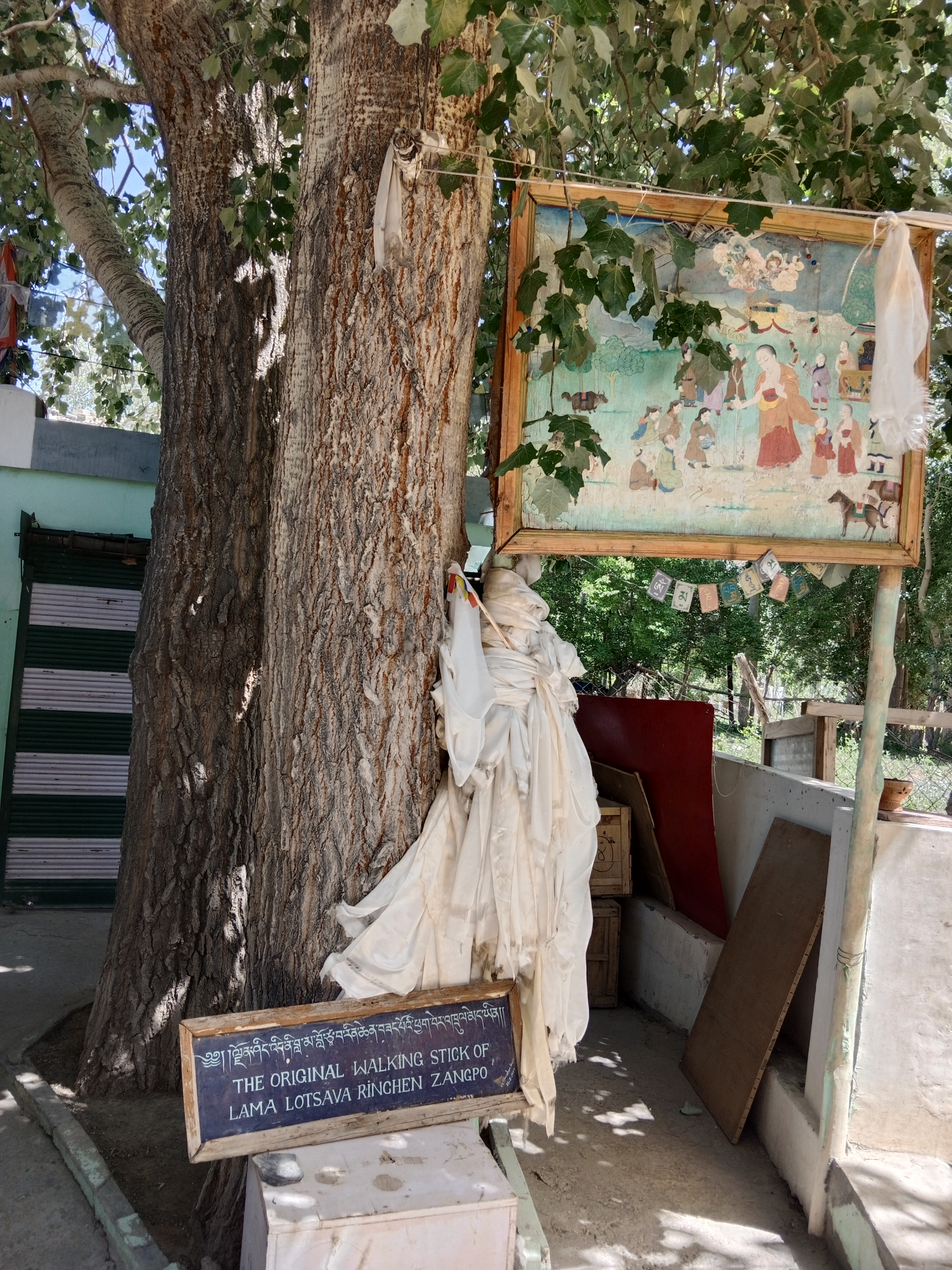
A walking stick belonging to the lama from which a tree has grown is preserved at the complex. It is decorated with the traditional Ladakhi white scarf .

This monastery is unique in that it is a conglomerate of small buildings and wooden structures . There are three main buildings here : the Assembly hall, the Sum-tsek and the Manjushri temple. The Sum-tsek is a three storey structure with the statues of Bodhisattva, Avalokiteshwara and Manjushri.

It is well known for the beautiful paintings and frescoes that adorn its walls. They depict Buddhist teachings, celestial beings and Mandala art in great detail. Many of the murals have faded and restoration work is on at the monastery. The beautiful murals and vivid Mandala art in the monastery cannot be brought to you as photography is prohibited in those areas.

Here are some pictures from the exteriors which will clearly show the difference between Alchi and the pomp and splendor of the other monasteries. Take a look…

The walking stick of Rinchen Zangpo from which a tree has grown

The exterior of the buildings at Alchi monastery

The prayer wheels

The Indus river which flows right behind the monastery

Dikshit Monastery

This monastery is located in the Nubra Valley on a hill and houses the giant Maithreya Buddha statue. The views of Nubra valley from atop the monastery are beautiful.

Dikshit Monastery

The giant Maithreya Buddha statue is placed facing the direction of Baltistan in Pakistan and it is believed that the Buddha will bring peace to the region.

The giant Maithreya Buddha statue

View of Nubra valley from Dikshit monastery

These are some of the monasteries that we visited in Ladakh. There are many more and each one has a legend of it’s own.

I hope you enjoyed the ambience and culture of these monasteries.

See you with more from Ladakh.

Till then, do subscribe, like and comment…