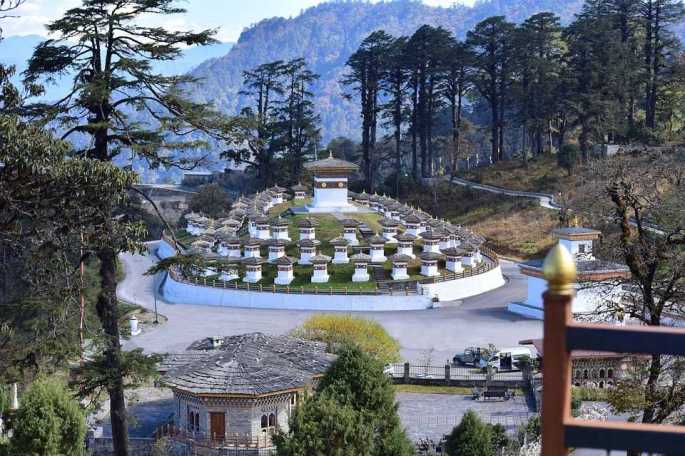
Dochu La is colloquially Dochu pass ( La means pass in Dzongkha language). It is a pass in the snow covered Himalayas that lies in Bhutan on the road from Thimpu to Punakha.
The most iconic image of this pass is the 108 Chortens or Stupas built here. We made a stop here on our drive from Thimpu to Punakha . Come along; let me take you through some interesting facts and images of this Eastern Himalayan pass…
The pass is located at an altitude of 10300 feet above sea level on the Thimpu Punakha highway. Due to this altitude, the temperature here hovers around 10 to 12 degrees Celsius. On a clear day, one can get a full 360 degree view of the snow clad Himalayan peaks from here. But very often the place tends to get foggy and hazy hampering the view. Coniferous trees on the hill slopes adds to the natural beauty of the place. Coloured flags that are important to the Buddhists also dot the area. The area has plenty of Rhododenron trees and when they bloom in March, they provide a colourful spectacle.
The whole atmosphere here is calm and peaceful with pines covered with mist and fog and occasional patches where one can see beyond the fog. Have a look…

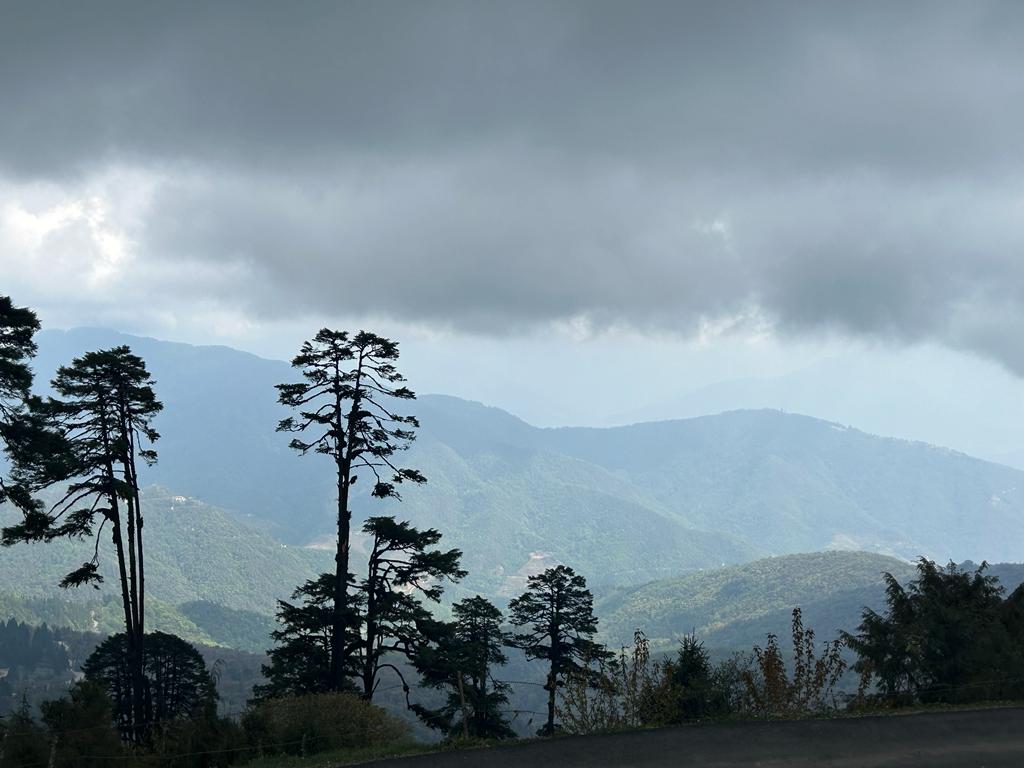
The views of the Himalayas from Dochula Pass

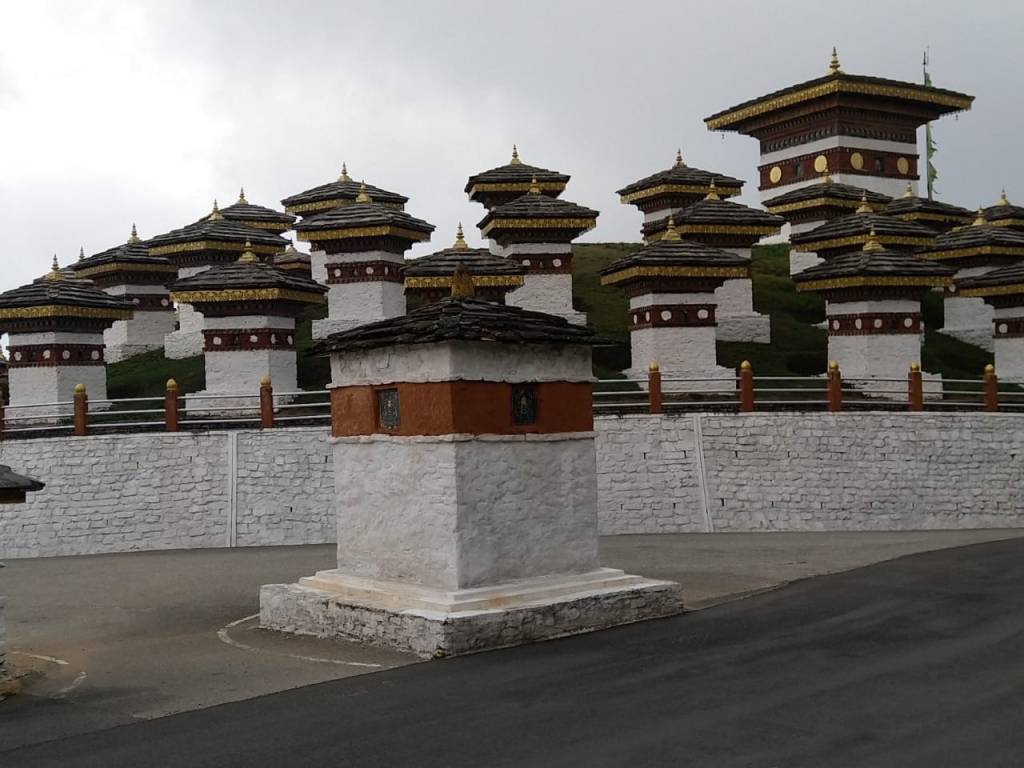
The most striking structure here is the 108 Druk Wangyal Chortens.
The Chortens
Chortens are important monuments or shrines in Bhutanese culture and are also called Stupas. Typically, they are tombs of saints. At Dochula Pass there are 108 such Chortens built in memory of the soldiers who lost their life fighting Assamese insurgents from India in 2003. After the Bhutanese were successful in defeating the insurgents, the Queen mother ordered the building of these Chortens .
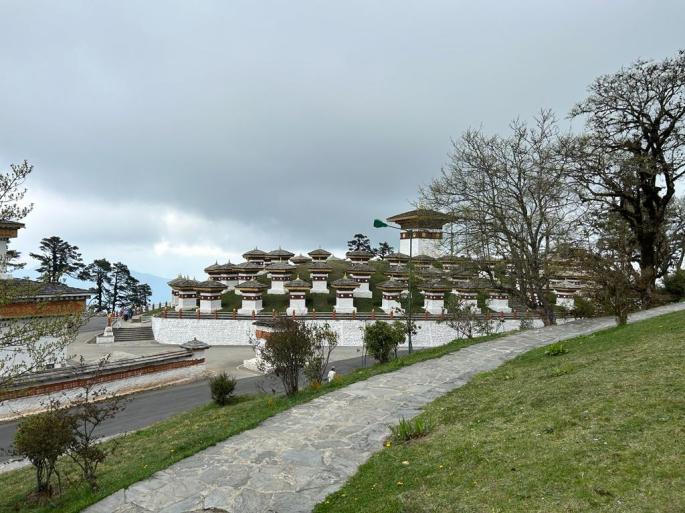
A panoramic view of the chortens at Dochula pass.
Here the Chortens have been built in three layers around a main Chorten. The first layer has 45 chortens, second has 36 and the topmost has 27; all built around the main structure. A glance at the Chortens does not reveal the strict religious processes that have gone into building them. They have been built in accordance with astrological beliefs.
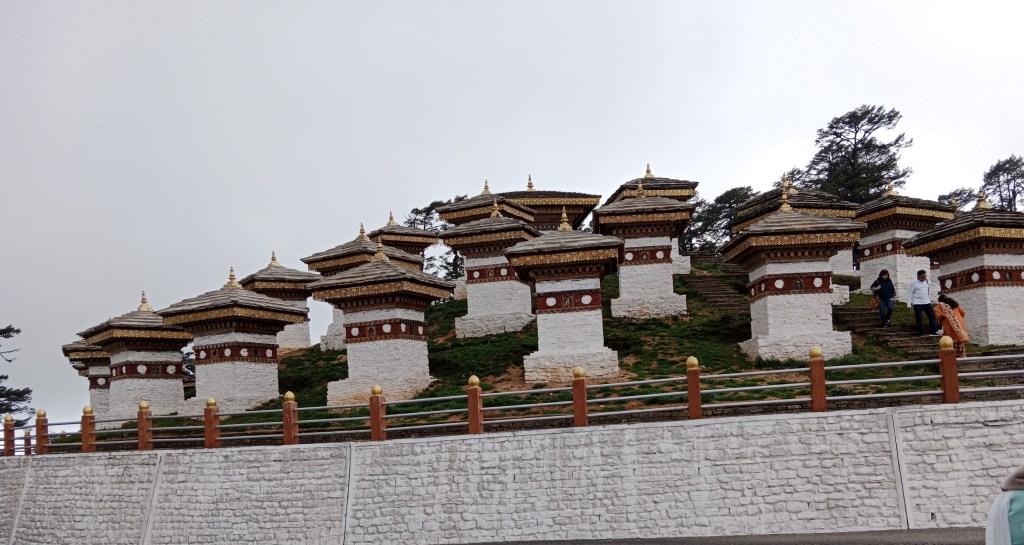
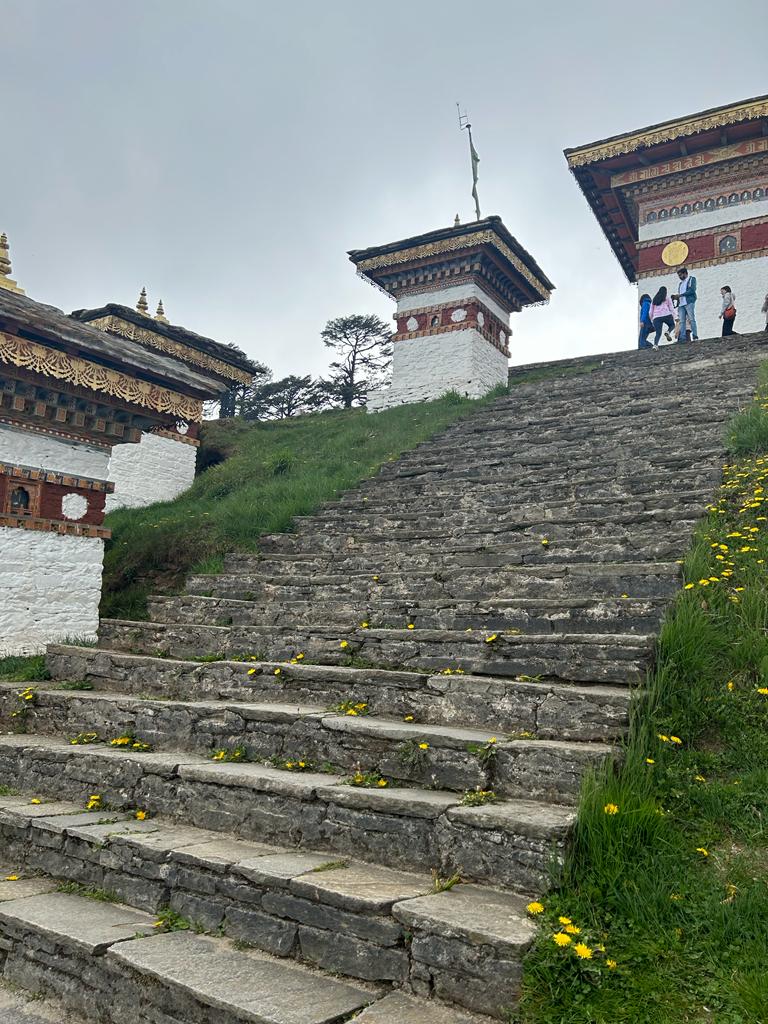
A flight of stairs takes us to the top where the main chorten is located

At the main Chorten
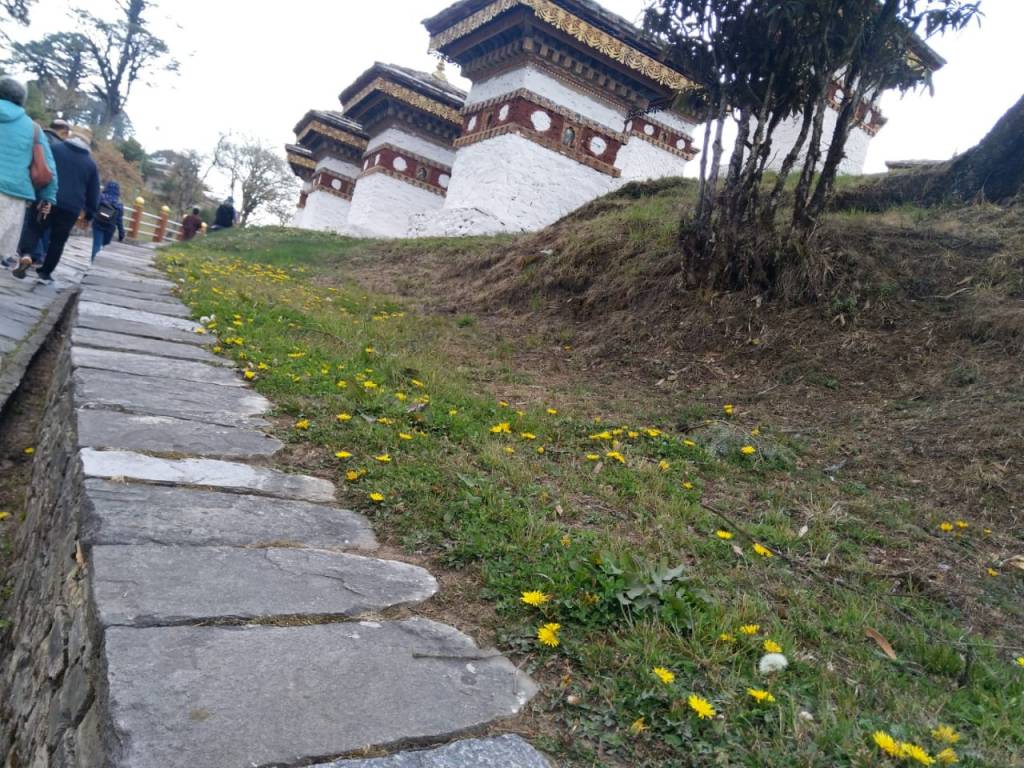
A nice paved walking track takes us around the chortens
Each chorten has a “Sokshing” which is a square wooden pole carved from juniper trees, has been painted bright red and is installed on an auspicious day to the accompaniment of sacred hymns.
In addition to the Chortens, there is a temple here called the Druk Wangyal Lhakhang.
Druk Wangyal Lhakhang
Built in memory of the fourth king of Bhutan, is an important place of worship for the locals. It was completed in time for the commemoration of hundred years of of monarchy in Bhutan. The walls of this temple are adorned with traditional paintings relating to Bhutanese history. The courtyard of the temple is the venue of the famous Bhutanese festival in December performed by the Bhutan Army.


The Druk Wangyal Lhakhang

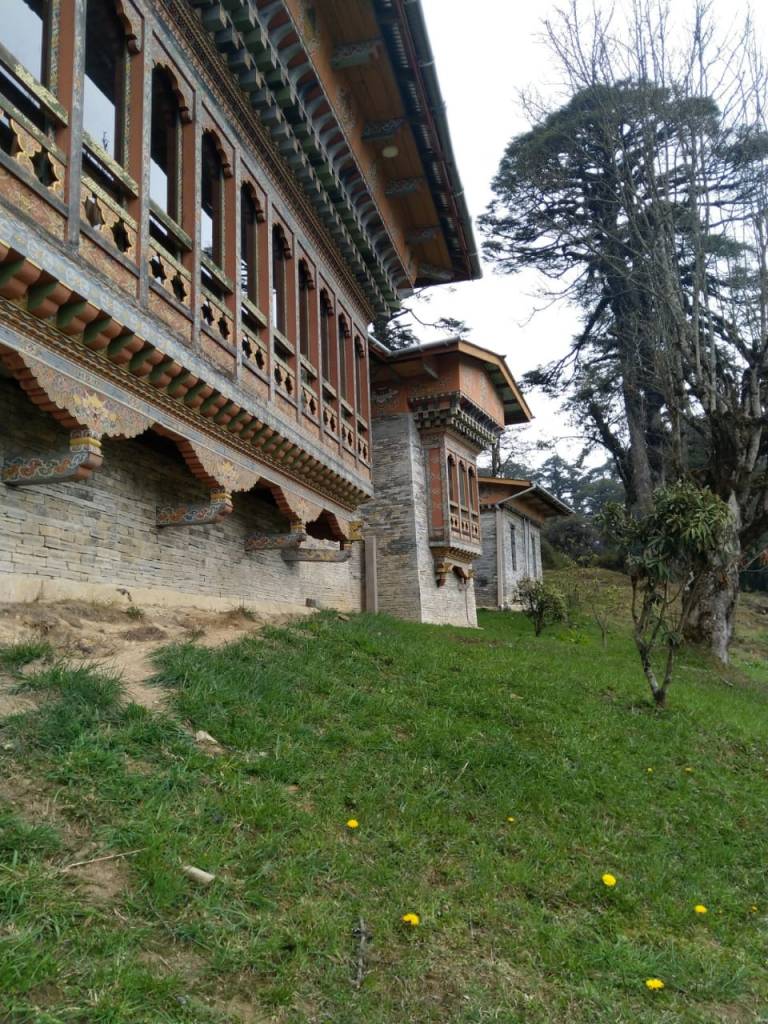

The beautifully decorated walls of the Lhakhang
Royal Botanical Park
Adjacent to the Chortens is a park that is home to many varieties of Rhododendron. In late February and early March, the Rhododendrons bloom and add colour to the place.
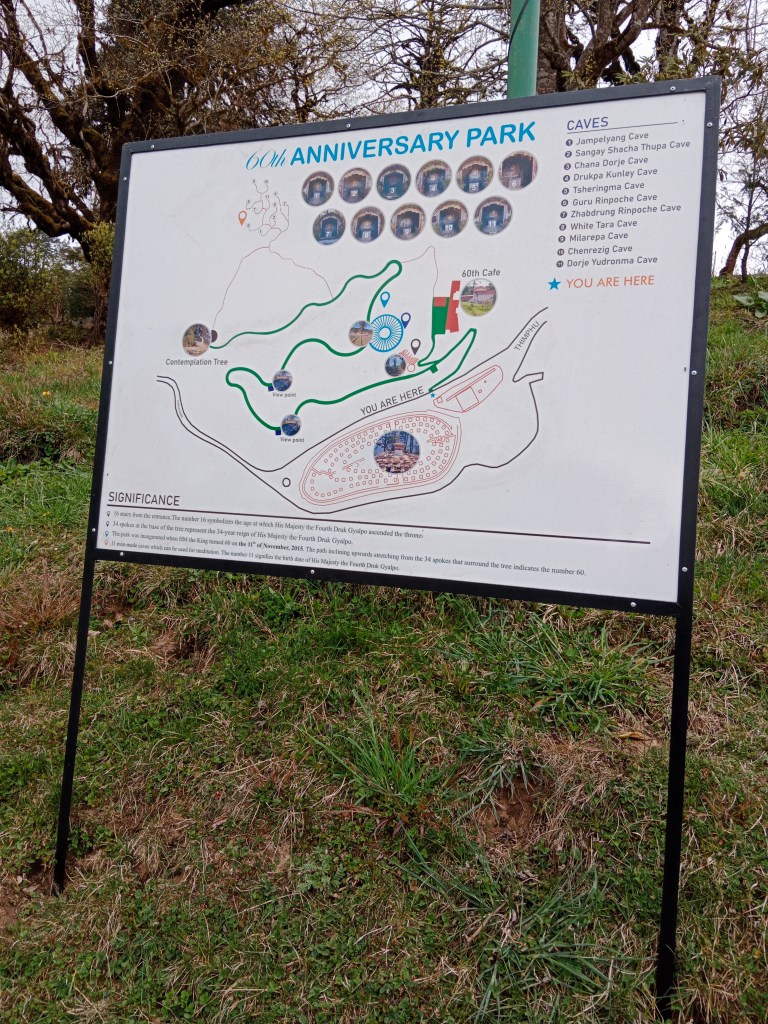
The direction board at the Park
Cafe
There is a cosy café near the Dochula pass and with it’s glass windows provides beautiful views of the Himalayas.
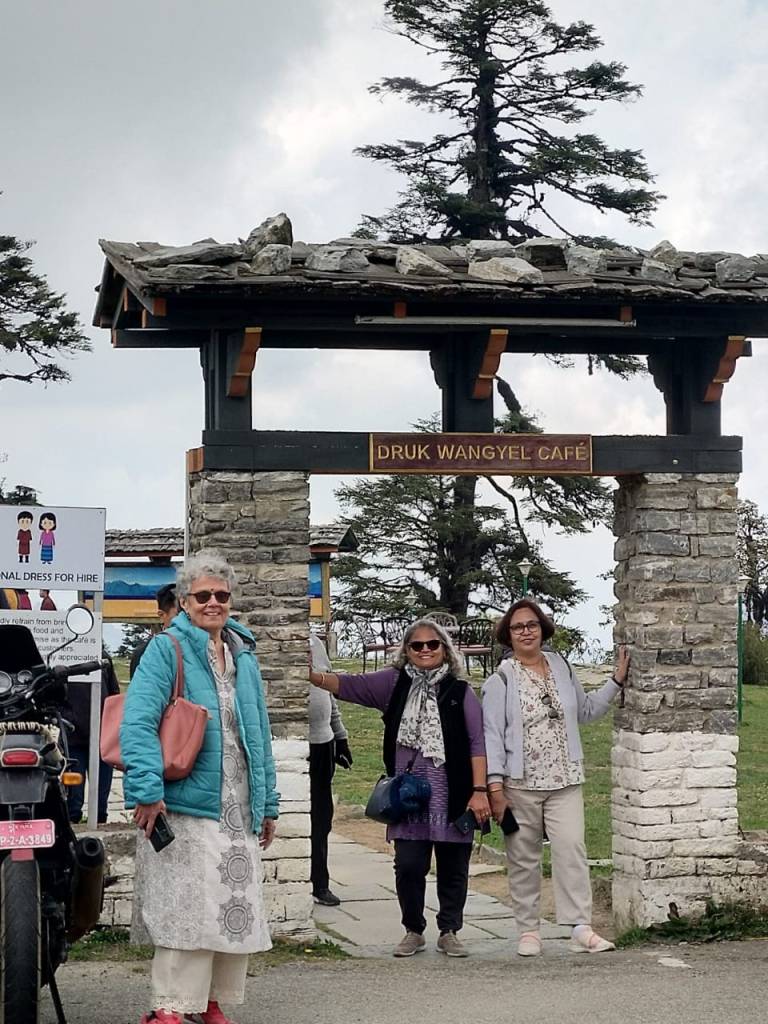
The café entrance

Our group enjoying coffee and hot chocolate at the cafe


Remnants of Rhododendron blooms
We visited Dochula pass two times and the second time it was much more foggy and misty than the first time…

The mist at the pass on our second visit
After the halt at Dochula we proceeded on our way to Punakha. Punakha is yet another interesting place in Bhutan, closely associated with the strange legends of “The Divine Madman”.
See you next week at Punakha. Till then do give your comments and feedback.
 Travel-along.in