After our sightseeing at Cairo, we took a domestic flight to Aswan, an Egyptian city on the banks of the Nile. It was from here that we visited many of the temples of ancient Egypt that will be chronicled in forthcoming episodes. We start this , with an episode on the Philae temple dedicated to the Goddess Isis.
Legend of Isis
The legend associated with this temple has all the elements of a crime thriller. Isis, the Mother Goddess, her consort Osiris and their son Horus form the characters of this story . Isis was believed to posses magical powers and knowledge of secretive formulae. Osiris was killed by his brother Seth. His body parts were strewn at many places so that they could not be retrieved. His wife Isis used all her magical powers and managed to get them and put them back together and miraculously brought Osiris back to life. Then, they had a son Horus. He too had a snake bite and Isis used her wisdom to save him. The Isis cult found its way to the Mediterranean too; thus explaining the Greek and Roman connections of this temple.

A painting depicting Osiris (left) and Isis (right) with the sun disk and horns.
History of Philae Temple
Philae is actually a small island in the Nile situated south of Aswan. It was the epicenter of the cult of Isis popularly known as Mother of God. She was worshiped by the Egyptians and Nubians ( Ethiopians ) alike. The Ptolemies built temples to the most beloved Gods and Goddesses of the Egyptians. Ptolemy II (285 – 246 BC) started the construction of the temple and from there starts the history of the Isis temple at Philae. This also explains the Greek and Roman architectural features here in contrast to the other temples. Christianity came to Egypt under Theodosius around 379 AD and after that, there was a systematic attempt at destruction of the temple and conversion to a church . The Philae temple thus stands as the last outpost of ancient Egyptian traditions.
When the old Aswan dam was built , the temple came under threat of inundation and when the height of the dam was increased in 1912, the temple lay inundated for part of the year. Subsequently with raising the dam height further, the temple was inundated for most of the time with only the high pylon being visible above water level.
A monumental Engineering feat
When the new Aswan High Dam was built ; leading to the formation of Lake Nasser , it was clear that the temple would be lost forever and then with the help of UNESCO, the temple was dismantled and relocated to the Agilkai Island where it is today.
A coffer dam was built and water was pumped out exposing the limestone blocks. There were 47000 stones and they were dissected, stone by stone, cleaned, treated, numbered and stored. While this was on, granite from the Agilkai island had to be blasted to maintain the original look of the temple. The stones were then transported to their new home and reassembled exactly like the original. Following this, the temple was thrown open to visitors.
This was indeed a monumental feat of engineering. Even now the numbers on the blocks are visible. The meticulous and precise work that has gone into this gigantic project is awe inspiring indeed!!!
Our Visit
We were dropped off by our bus near a boat jetty from where we boarded a motor boat to the Agilkai island on the Nile.
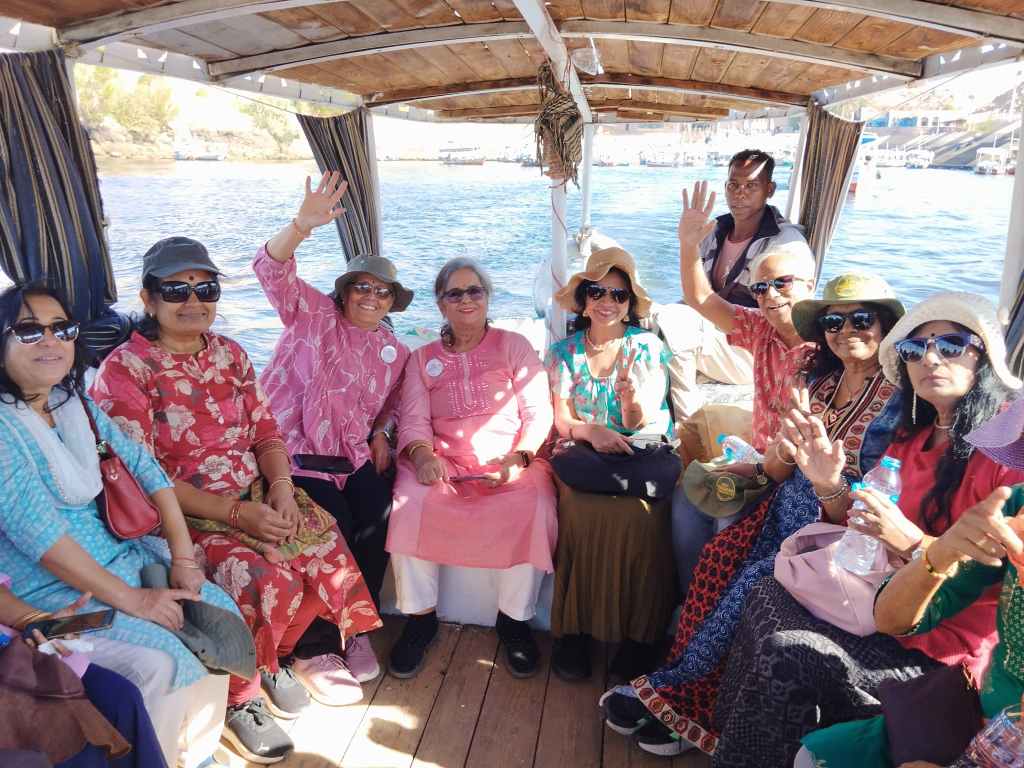
On the boat to the Philae temple
After alighting from the boat, a short walk took us to the courtyard in front of the main gate. This courtyard was lined by shops selling everything a tourist wants…from trinkets to clothes to souvenirs.


Courtyard with shops on either side and the items on sale
Soon we were at the main gate of the temple.
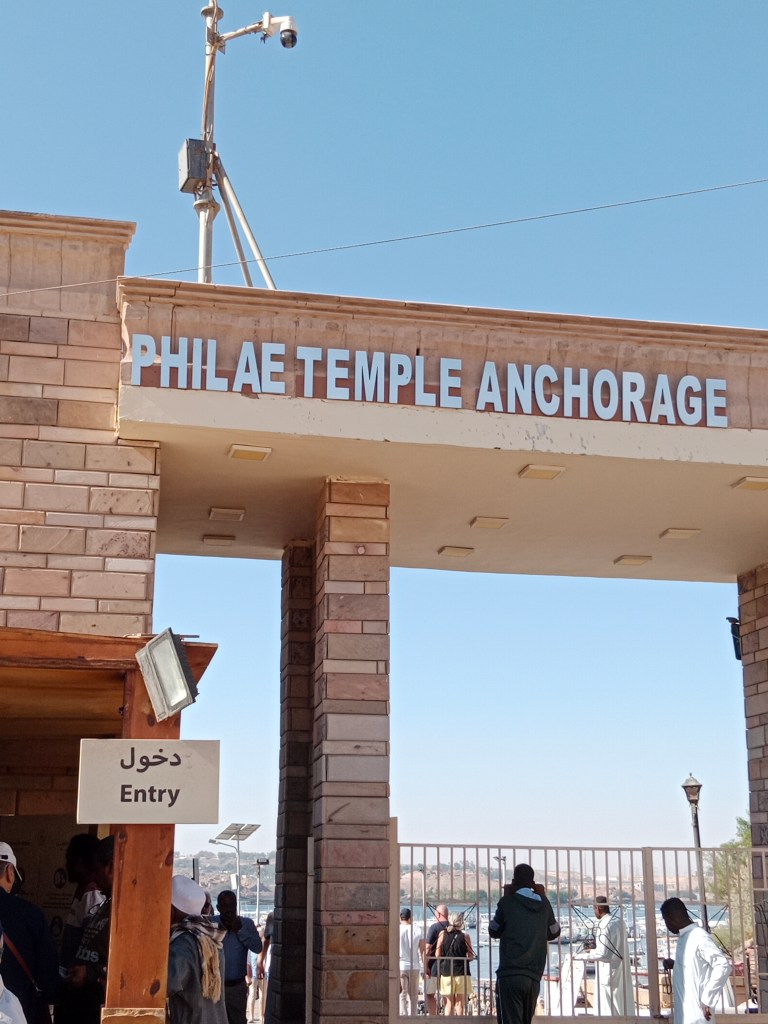
The main entrance to the temple with Lake Nasser behind.
Walking along the sides of Lake Nasser, we reached the threshold of the main temple. There is an open courtyard with decorated pillars on either side leading to the entrance pylon.

An open courtyard with pillars on either side .
The entrance pylon lies ahead with two towers ,one on either side of the doorway. These towers are decorated with figures of a pharaoh wearing the crown of upper and lower Egypt lifting his club and holding his enemy by the hair and punishing him in the presence of Isis. Thus the Pharaoh takes credit for suppressing the enemies and keeps up the tradition of the land.
Two granite lions( partly mutilated) guard the main doorway.

Entrance pylon with the Pharaoh wearing the crown of upper and lower Egypt and punishing enemies in front of Isis

The other half of the entrance pylon with the damaged lion guarding the entrance.
Passing through the doorway we reach a central courtyard again with columns on either side. The other end of the central courtyard lies the second pylon with entry into the actual temple of Isis

The doorway leading to the central courtyard
The row of columns surrounding the central courtyard. The Corinthian (Petals on top) pillars are typically Greek and Roman styles.
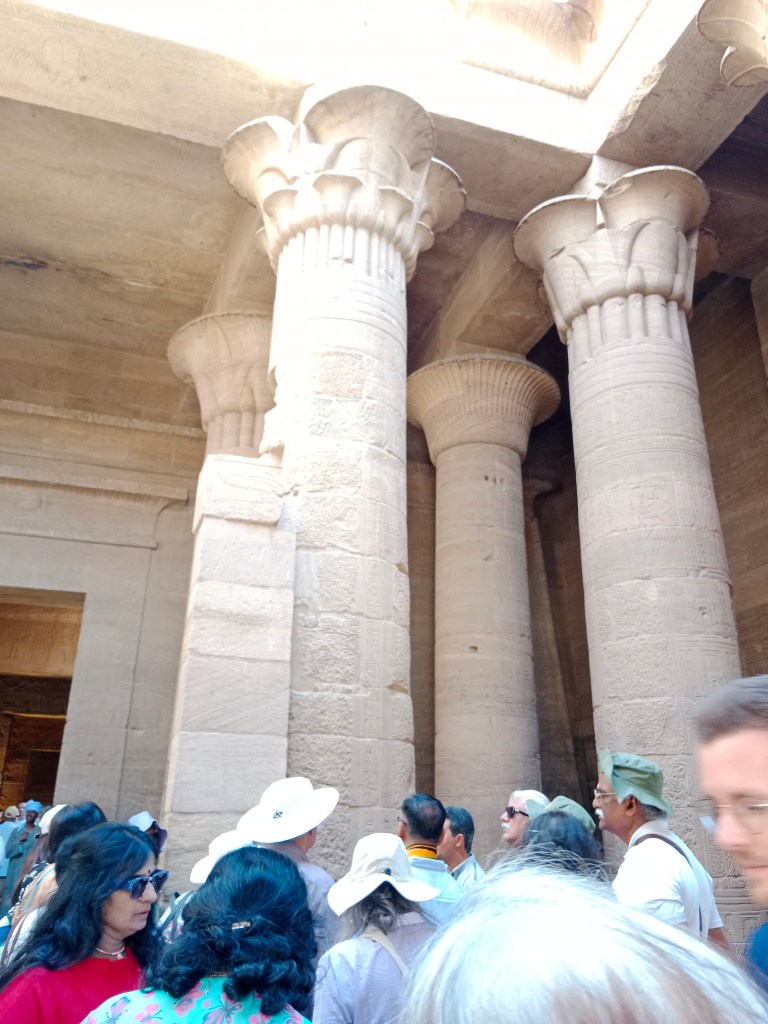
Corinthian pillars typical of Greek and Roman architecture
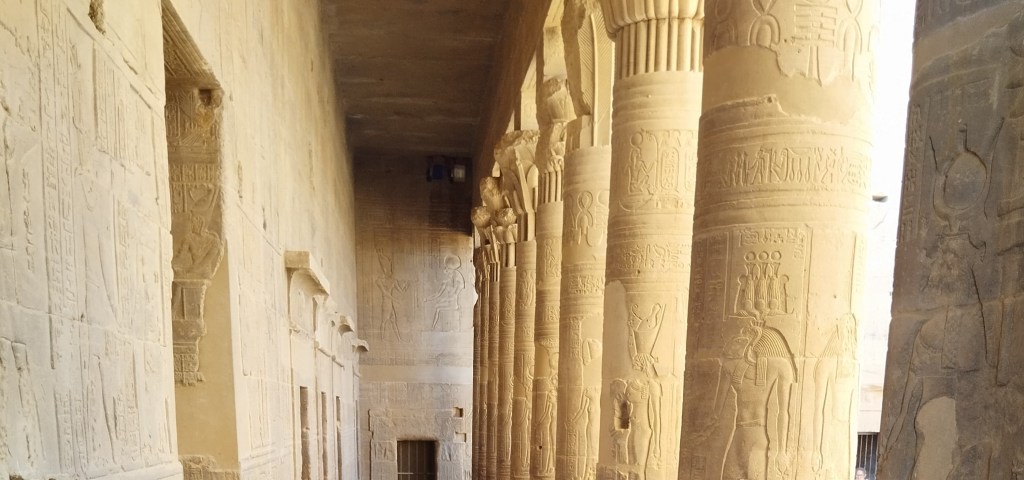
The Reliefs on the columns depicting ancient Egyptian kings and Gods

In front of second pylon where the main temple entry is located.
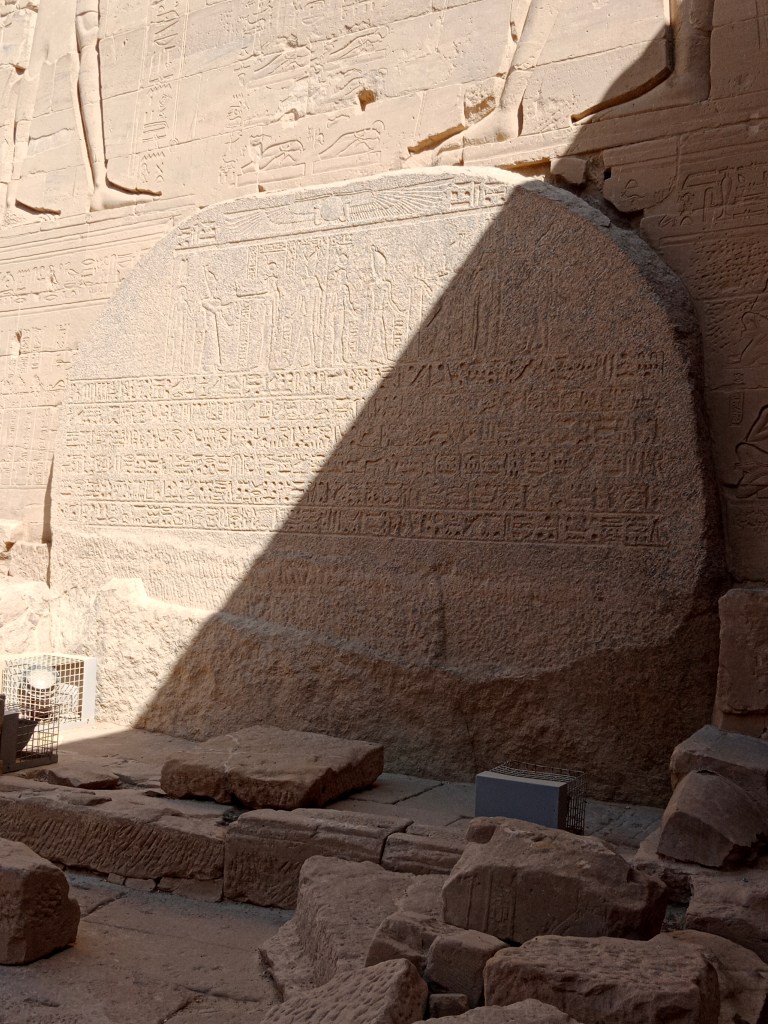
A Stael in front of the second pylon with hieroglyphic inscriptions
After crossing the second pylon, we enter the main temple. Here, the walls are decorated with fine reliefs of the Ptolemaic kings making offerings to Egyptian Gods. At many places there is evidence of deliberate attempts to damage the reliefs.
Some pictures inside the temple of Isis.

The offering of eyes to the God. Note the deliberate chiseling to damage the relief.
There is also a hall where the walls show reliefs connected to perfumery which had been famous in ancient Egypt. Hieroglyphic inscriptions on perfume preparation are also found here.
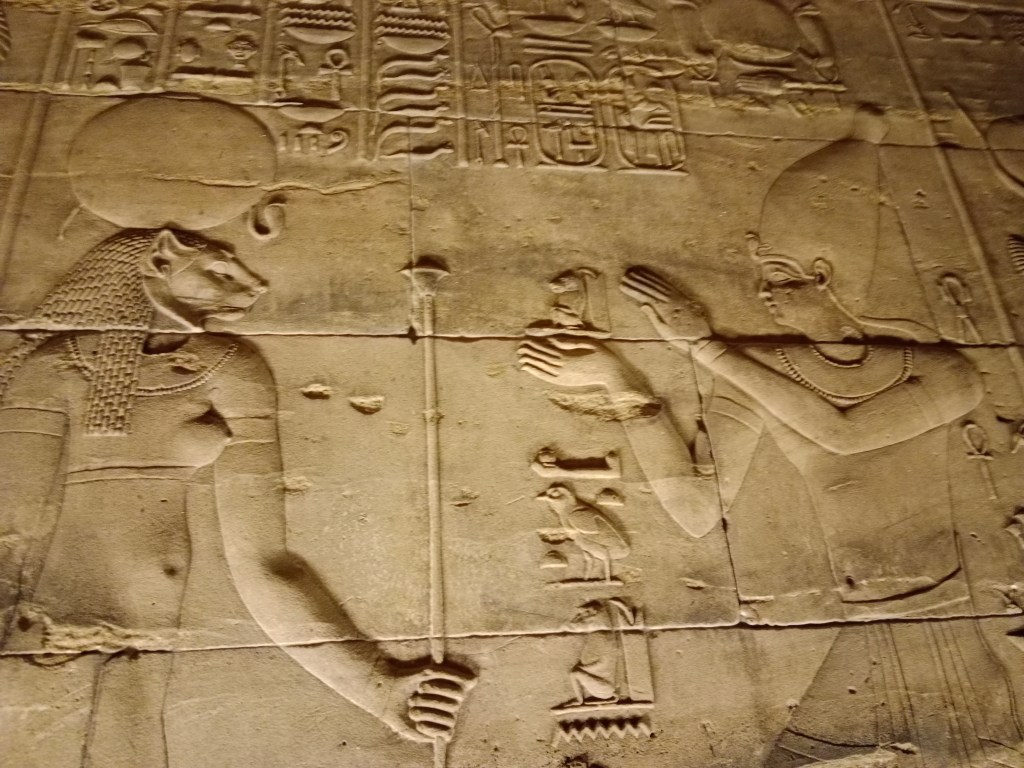
The King offers a baboon. Note the hieroglyphic depictions below the king’s hand
Walking further inside, we reach the main sanctuary of the temple. Here there is evidence of it being converted into a church. The main altar has the sign of the cross etched on it.


The altar at the sanctuary with etched crosses
Once we exited from the sanctuary, we reached the beautiful views of Lake Nasser. From here, the original position of the temple is visible as some projecting pillars in the lake.

The pillars in Lake Nasser where the original temple was located.
The Kiosk of Trajan
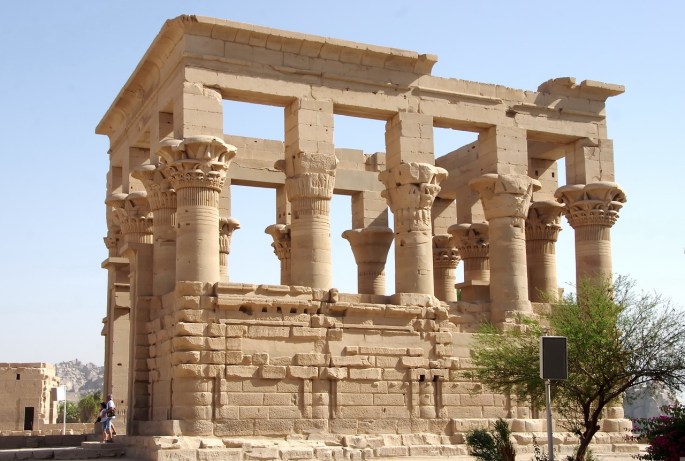
Adjacent to the lake front is another structure, the Kiosk of Trajan which is perhaps the most publicized picture of the Philae temple. A rectangular building with 14 columns with floral capitals, where the Emperor Trajan is shown burning incense as an offering to Isis.
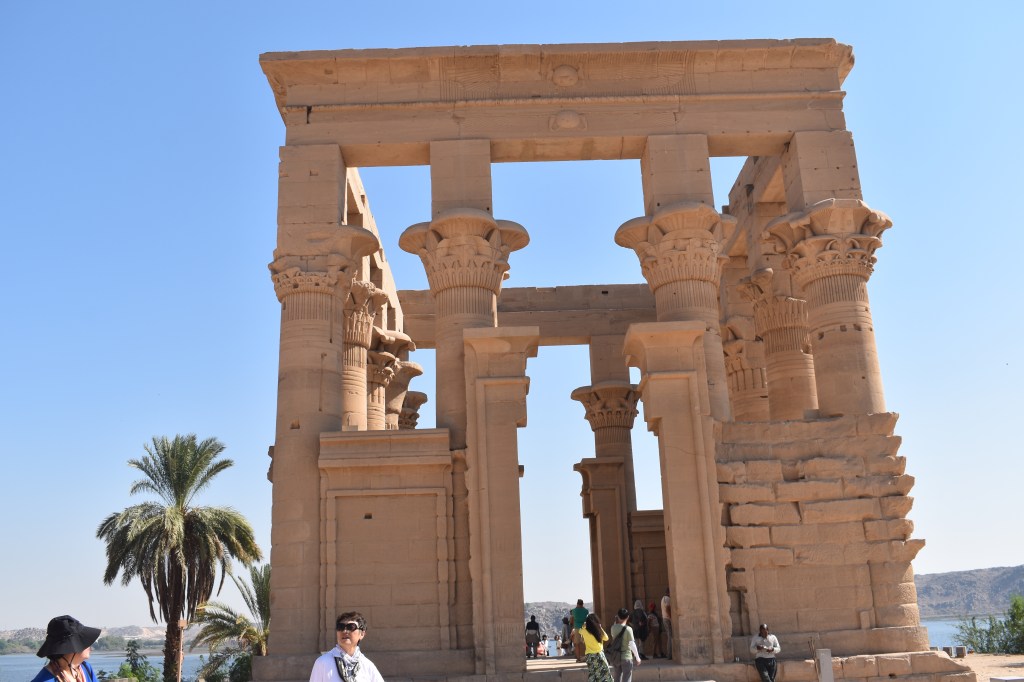
The Kiosk of Trajan
By now we had exhausted our designated time at the temple and we made our way to the bus and on to our lunch halt.
To sum it up, this temple built by Ptolemy II was initially dedicated to Goddess Isis and her family but with the advent of Christianity, gradually it was converted into a church. It shows features of Egyptian, Greek and Roman architectural features. Almost submerged in Lake Nasser after the building of the Aswan High dam, it was miraculously relocated by a marvelous engineering feat.
Hope you enjoyed this visit . Next week we visit Abu Simbel , another great temple of ancient Egypt.
Till then, do subscribe, like and comment.














 Travel-along.in