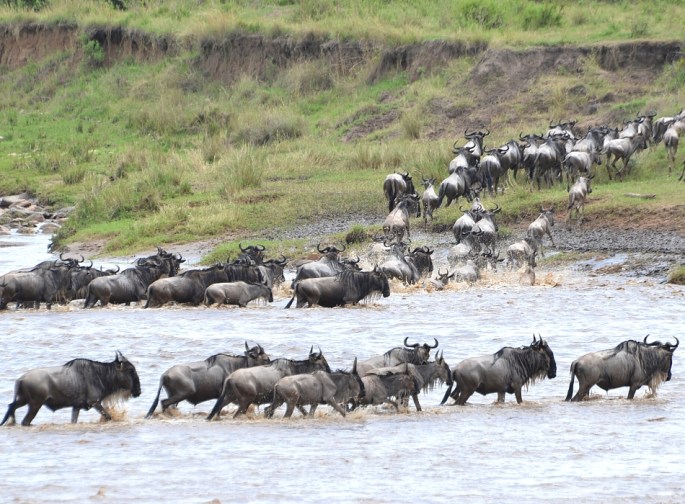
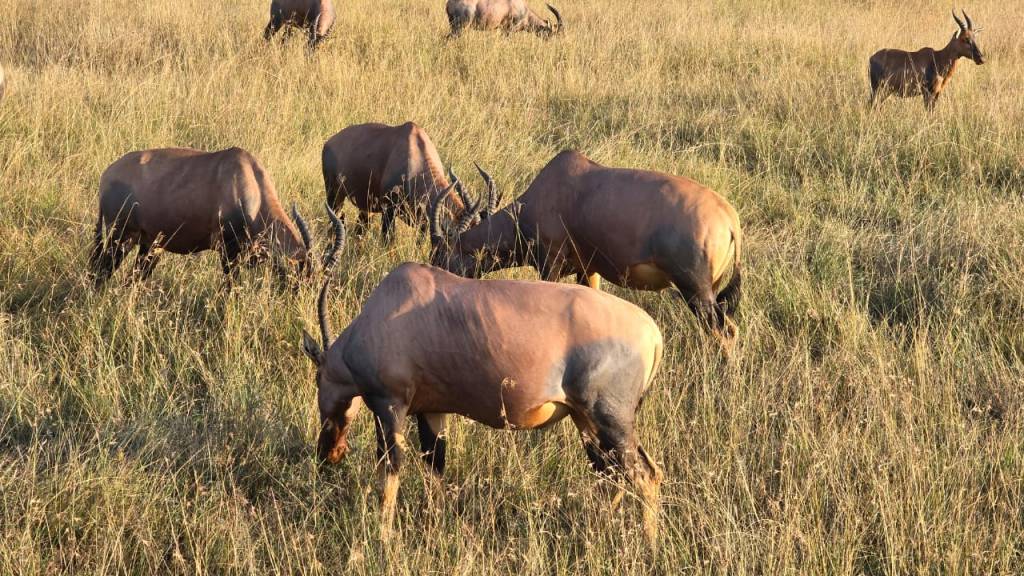
The Great Wildebeest Migration in the plains of East Africa is one of the most thrilling, intriguing and spectacular displays of animal behavior. The annual iconic journey of millions of wildebeest joined by a host of zebras, antelope, gazelles and topis across the Serengeti (Tanzania) Maasai Mara(Kenya) ecosystem is something every nature lover should witness once in a lifetime and something that will be etched in one’s memory forever.
After calving at Serengeti the animals move towards Maasai Mara before returning once again to Serengeti. Along the way, there is high risk as thousands of animals specially the calves and the weaklings are taken by predators . Thousands are again born , replenishing their numbers and sustaining the circle of life. This whole event is considered one of the Wonders of the World.

Millions of animals migrating
How many of them migrate?
An estimated two million wildebeest , thousands of zebras , gazelles and antelope are part of this migration chain .This is the largest herd movement on the planet and is claimed to be visible even from space. The herd splits into multiple groups with thousands of animals in each group.
Why do these animals migrate?
It is believed that it is in search of greener pastures and water bodies. When supplies of vital resources dwindles in one area, they migrate to other areas . But how they know where to find food and water still remains a mystery. Largely connected to rainfall and weather, the unpredictability of these ; make it difficult to predict where the animals will be at any point of time.
Guided by their survival instinct, these animals cover almost 1000 kms along an age old route. Predators like hyenas, lions, cheetahs, leopards , wild dogs and crocodiles find their food and ensure the survival of the fittest in this natural event.
Where does it start?
As it is a circular mass movement, across the Serengeti Maasai Mara eco system, one cannot pinpoint a start or end point. Triggered by rains, the animals follow an age old route across Serengeti and Masai Mara and even reach the Ngorongoro crater before circling up again.
Where does the action lie?
The Mara river banks in Kenya are the coveted spots to view migration because during their movement from Serengeti to Maasai Mara, millions of these animals cross the Mara river where predators lie in wait for them. The river itself is not too big but the crocodiles there pose a challenge to these animals .The chaotic crossing of these animals making it a fight for survival and the unlucky ones falling prey to the predators is almost a bittersweet live action drama.

The risky Mara crossing
Can the migration be predicted?
The answer is NO. Not even the wildebeest know when they are going to cross. They come in large herds and simply keep running along towards the river. It is almost a stampede situation. Suddenly all of them just stop and wait ; or a few just turn around and start running in the opposite direction. Hence seeing the river crossing is most unpredictable and one must have sufficient time to patiently wait for the event to occur. Few of the wildebeest hang around for days by the river without taking the plunge.
The sight of the chaotic thundering of millions of wildebeest and other animals across the plains can be very exciting. But the sheer unpredictable behavior of the wildebeest can leave you waiting in anticipation.
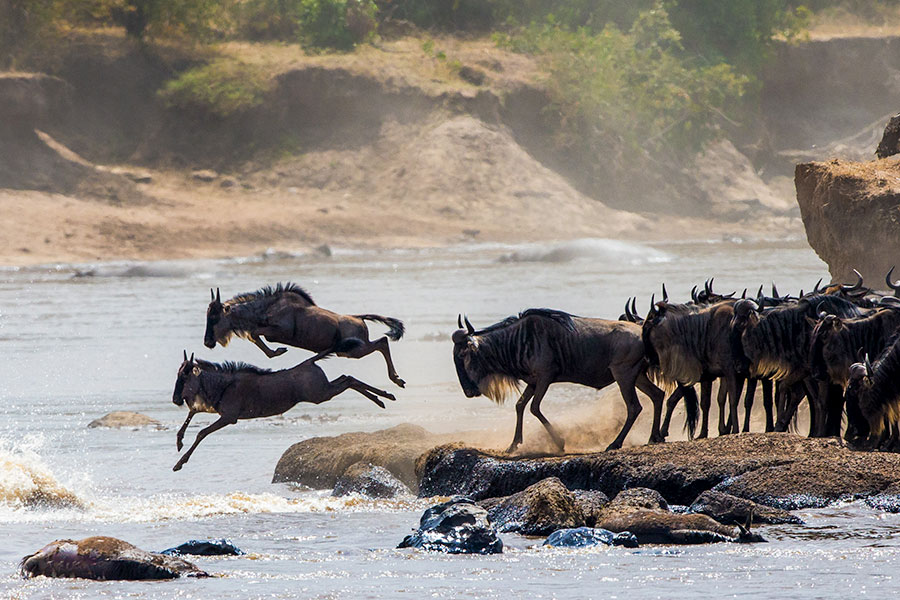
The decisive plunge…
Misunderstandings on migration
The popular perception is that it occurs from July to October but migration happens throughout the year. It is actually an ever moving circular migration with different events at different times of the year. But most tourists visit Kenya and Tanzania between July and October to witness the event.
Our Experience
We had planned our Kenya trip to coincide with the usual migration window in July. After successful extensive wildlife viewing at Amboseli and Naivasha, we were at Maasai Mara for our final lap of the trip.
We were all excited and with anticipation, we headed to the banks of the Mara river hoping to see the crossing. Our guide and driver had warned us about the unpredictability of the event. Our driver was constantly in radio contact with other safari vehicles in the reserve. On receiving positive clues, we proceeded to a vantage position on the banks of the Mara.

Thousands of Wildebeest gather at Maasai Mara awaiting the crossing
We saw the cloud of dust kicked up by the thundering animals from afar.

The wildebeest kicking up the dust
Getting closer, we were enthralled by the sight of the running wildebeest. A video for you…
The wildebeest running towards the river.(click on the video)
Once they reached the river, they abruptly halted and some of them actually started running away. That was when we all sighed…..after all, we may not see the river crossing we thought. But we waited at the river banks for some more time and suddenly it happened. After the initial hesitation, some of them decided to take the plunge and what a sight that was!!!!
See the video below….
The wildebeest cross the Mara
After swimming across, most of them climbed on the rocky ledges on the other side and climbed up.
Lo and behold…We had seen the migration!!! That was a once in a lifetime experience indeed!!!
Suddenly we noticed that they stopped crossing and everyone on our side of the ledge abruptly halted. Looking down we noticed that one unfortunate wildebeest had been caught by a crocodile and was being dragged along. This probably alerted the herd and they halted the crossing.
A little away from the actual site of crossing we saw dead carcasses floating away and vultures and other scavengers waiting by the riverside. There were a lot of hippos too.
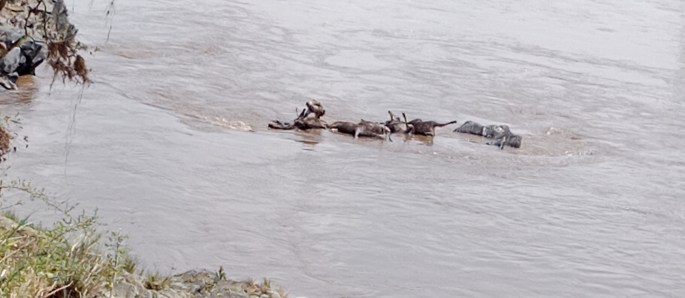
Carcasses floating on the Mara river
Vultures await their feast by the Mara (click on video)
Seeing the Great Migration was definitely the highlight of our Kenya trip and the memories of those visuals will take a long time to fade away.
I have tried to get the Great Migration to you in the comfort of your homes. I am sure you all will enjoy it. But if you can, you must see it yourself sometime.
Nature never fails to leave us in awe….
Till we meet next week, do subscribe, comment and give your feedback.






 Travel-along.in