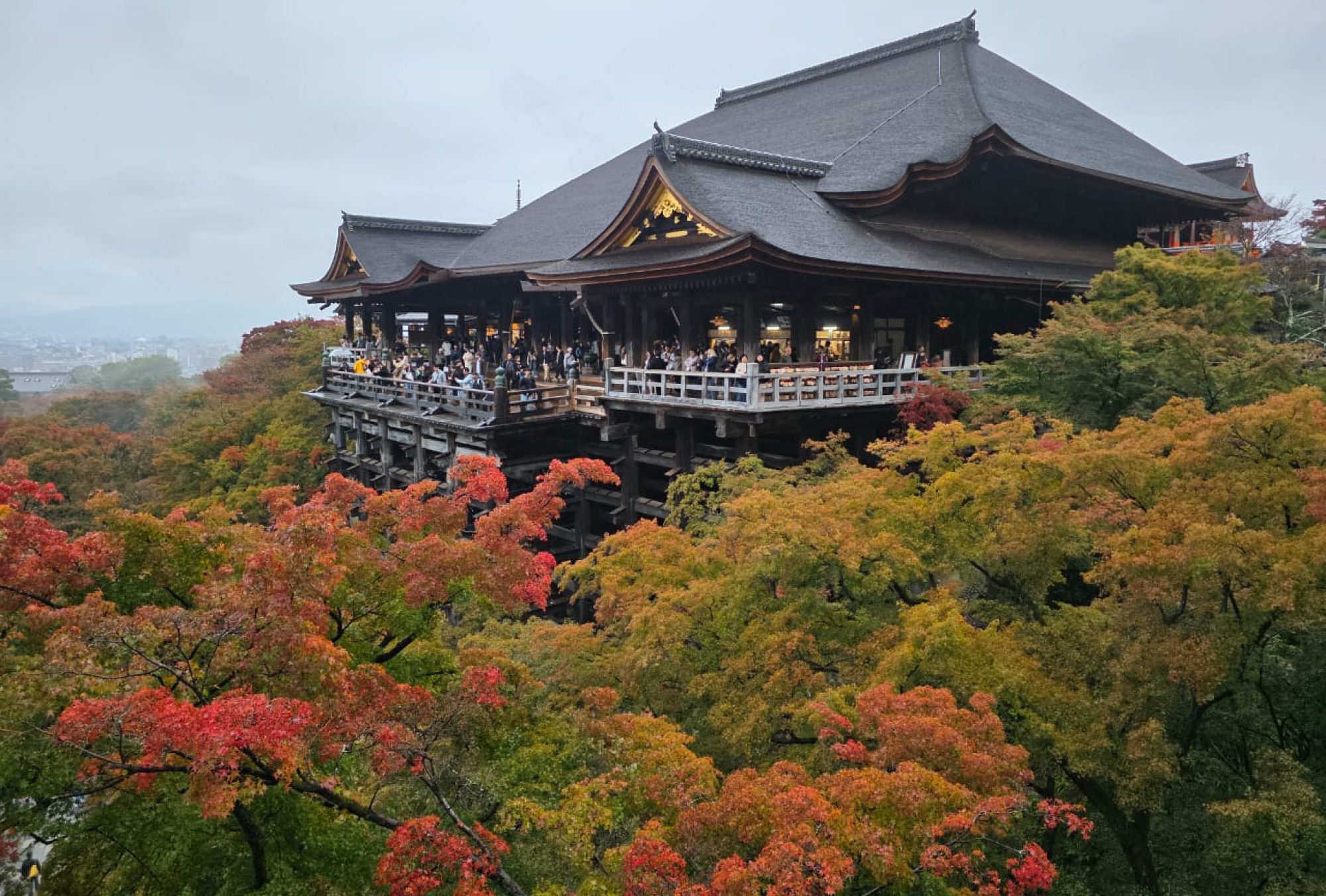
Hatshepsut: The Powerful Female Pharaoh of Egypt

Fancy a female Pharaoh? Well, this episode is about a powerful female pharaoh who ruled ancient Egypt. First let us get to know more about this lady, and then we shall visit the temple she built for herself.

Pharaoh Hatshepsut was the daughter of Thutmose I and during her teenage years was married to her half brother Thutmose II . After his death, the two year old Thutmose III inherited the throne and she ruled as regent for a son who was not her own.

The lady pharaoh went against the traditional patriarchal systems and cleverly established female kingship. In order to establish herself as the pharaoh, she started depicting herself as a male pharaoh. Like most pharaohs, she recorded her accomplishments and assumed all symbols of pharaonic position including the traditional false beard. Her rule was one of the most prosperous times of the Egyptian civilization. She was the second female pharaoh in Egyptian history but more powerful than her female predecessors.

One of the most prolific builders of ancient Egypt, she constructed several temples and the masterpiece was her mortuary temple that we call the temple of Hatshepsut today. Building Osirian statues of themselves was common to most pharaohs and she was no exception.

Towards the end of the reign of Thutmose III, an attempt to remove her from historical records was made and many of her statues were removed or defaced.

Our trip

From the Valley of Kings, located in the Theban hills, we proceeded to this temple located close by. This is a mortuary temple built by Hatshepsut facing the Karnak temple across the Nile. The specialty of this temple are it’s three terraces at different levels with porticoes lined by columns.

Reaching the Temple

The foreground has statues of Hatshepsut as a sphinx. This was part of her attempts to establish her kingship by portraying herself as powerful.
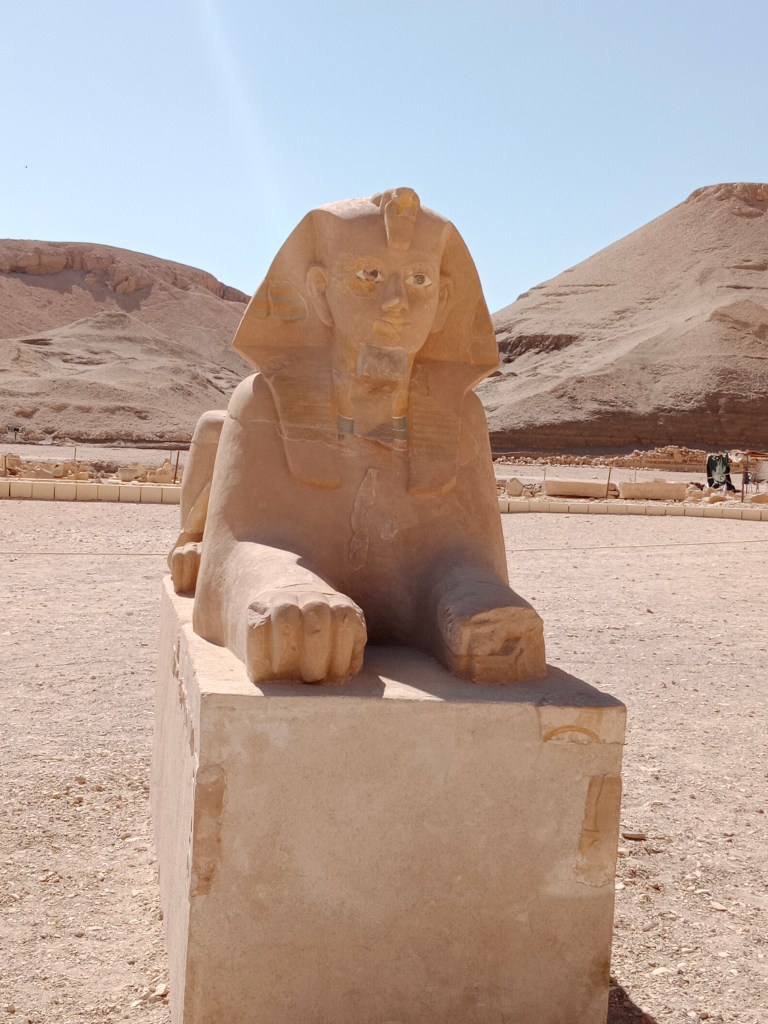
Sphinx of Hatshepsut
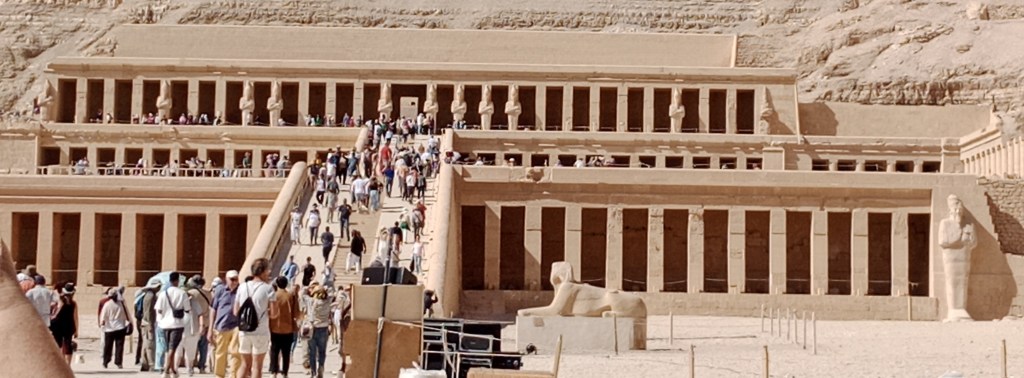
The three levels of terraces with porticoes lined by columns and statues at the ends.

The balustrade along the passage to the main temple has the falcon headed God Horus.

The falcon headed God Horus at the balustrade

The lower terrace has 22 columns and features reliefs on the walls. These reliefs depict the part played by her in putting up obelisks at the Karnak temple, offerings to various Gods and Hatshepsut as a sphinx defeating the enemies .

Reliefs showing offerings to Horus by Hatshepsut

The middle terrace also has porticoes lined by columns and decorated with reliefs mainly relating her to God Amun Ra, thus legitimizing herself as a ruler. A shrine dedicated to the cow headed God Hathor is also located here.

Offerings to the jackal headed God Anubis

The cow headed God Hathor

The upper terrace also has porticoes lined by columns but the highlight are the massive statues of Hatshepsut.
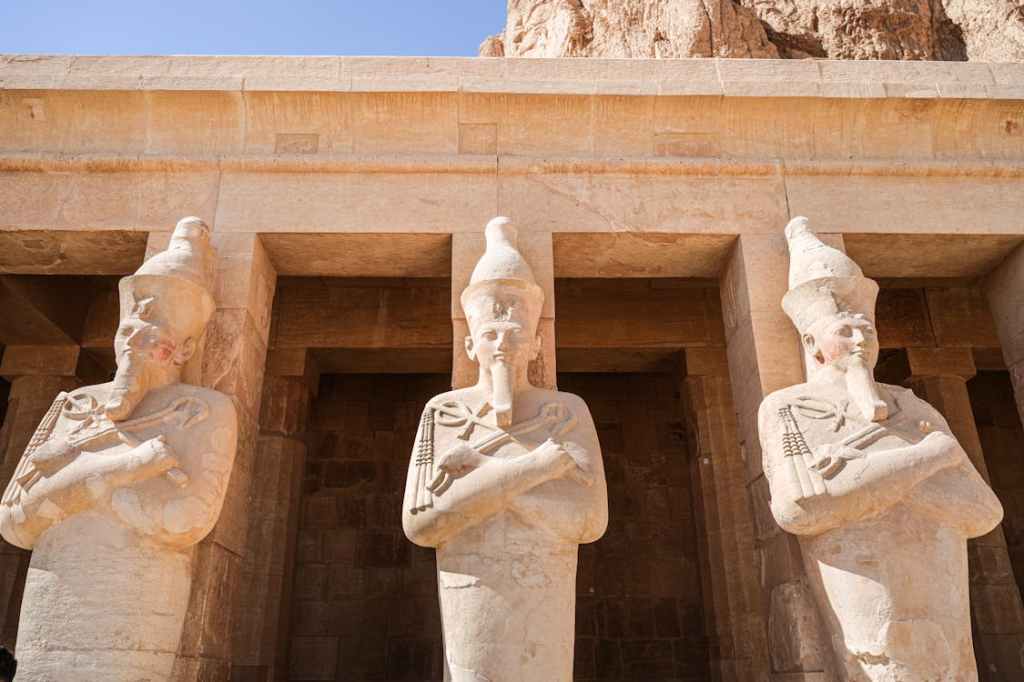
Hatshepsut statues on the upper terrace

Moving down from the terraces, we walked on to the foreground where there are still a lot of ruins and extensive restoration work was going on.

Ruins surrounding the temple

Another monument we visited near the Valley of Kings was the Colossi Of Memnon.

These are two massive stone statues of the Pharaoh Amenhotep III, which stand at the front of the ruined Mortuary Temple of Amenhotep III, the largest temple in the Theban Necropolis. Both statues are quite damaged, with the features above the waist virtually unrecognizable. Earthquake and floods have ensured that with the exception of the Colossi, nothing remains today of Amenhotep’s temple.

Colossi of Memnon with the ruins of Amenhotep’s temple in the backdrop

After the exhausting visit to the Valley of Kings and Hatshepsut’s temple, we were all tired and hungry and so we proceeded to an Indian restaurant in Luxor for lunch.
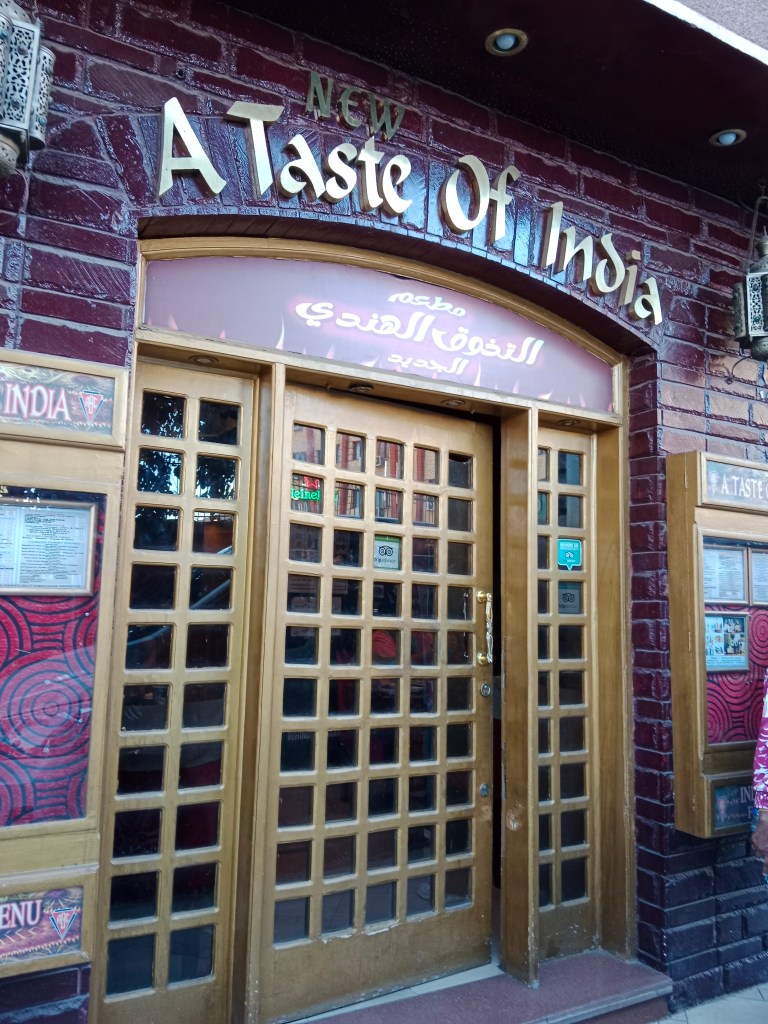
A taste of India at Luxor….

Post lunch we explored Luxor market .

A riot of colors at the Luxor market

Making few quick purchases, we headed to the airport to fly back to Cairo.

Next week, we explore Cairo. Till then, do subscribe, give your comments and feedback.

Crocodile Mummies and History at Kom Ombo Temple

Standing on the banks of the Nile, is this unique TWIN temple in the town of Kom Ombo ,near Aswan in Egypt. One temple is dedicated to Sobek, ( crocodile headed God with a human body) and other to Horus,( falcon-headed God). Dating back to the Ptolemaic and Roman periods ,the temple is perfectly symmetrical along the main axis, has two entrances, two halls with carvings of the two gods on either side and twin sanctuaries. Much of the temple has been destroyed by the Nile, earthquakes and invaders.

The Nile was at one point of time infested with crocodiles who would attack the locals and it was believed that if they made it an object of worship, they would not be attacked. Kom Ombo temple was at one point of time teeming with crocodiles. Captive crocodiles were kept in the temple and even today, mummified crocodiles are seen here.

The temple has a crocodile museum where crocodile mummies have been displayed.

Sobek ( The crocodile headed God)

Sobek or the Crocodile God is depicted as a crocodile headed man wearing a crown with two ram horns and a sun disk and two plumes. The ancient Egyptians prayed to Sobek for protection, strength and fertility. Though initially he was believed to be a protector from crocodiles, later he was known as the “Lord of the Waters” as they believed that the Nile was created with his sweat. Since crocodiles bask in the sun and return to the dark waters at night, Sobek was also regarded as the protector of Ra or the Sun God. This illustrates the importance attached to crocodiles in ancient Egyptian culture.

Sobek…the crocodile headed God

Our trip

We were on a Nile cruise and after sailing from Aswan at noon, we reached Kom Ombo by evening. The temple was visible from the cruise itself as we docked at Kom Ombo.

View of the temple as we docked at Kom Ombo

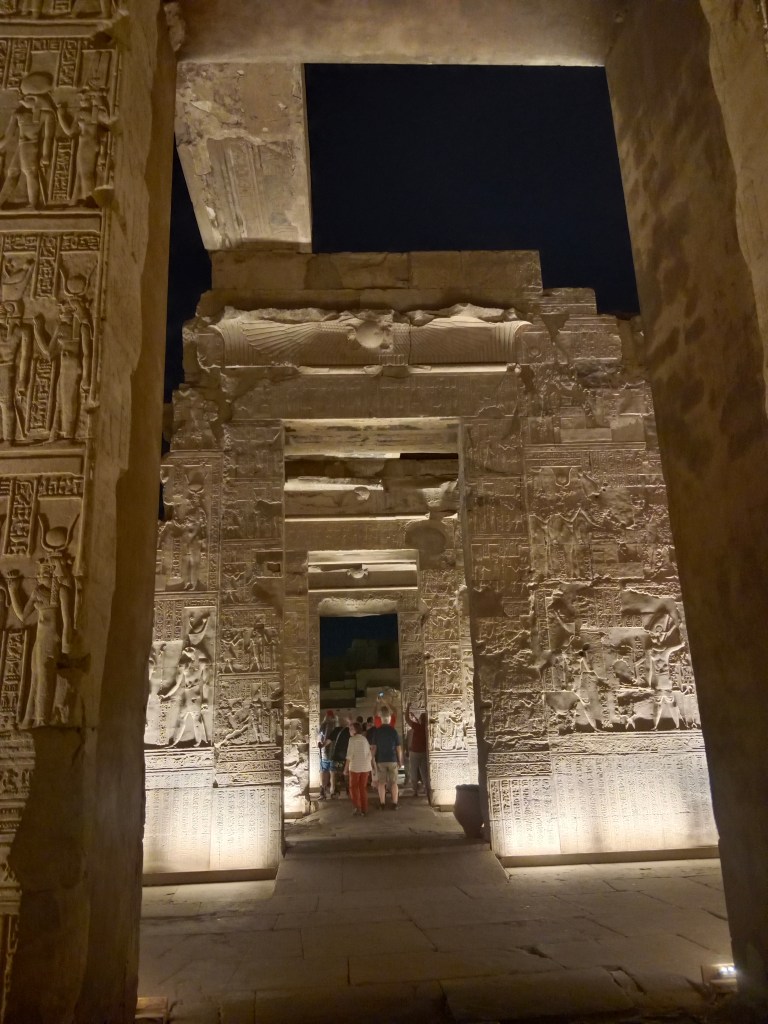
Soon we alighted from the cruise and walked up to the temple. It was getting dark and the lit up temple entrance looked awesome.

The illuminated entrance to the Kom Ombo temple

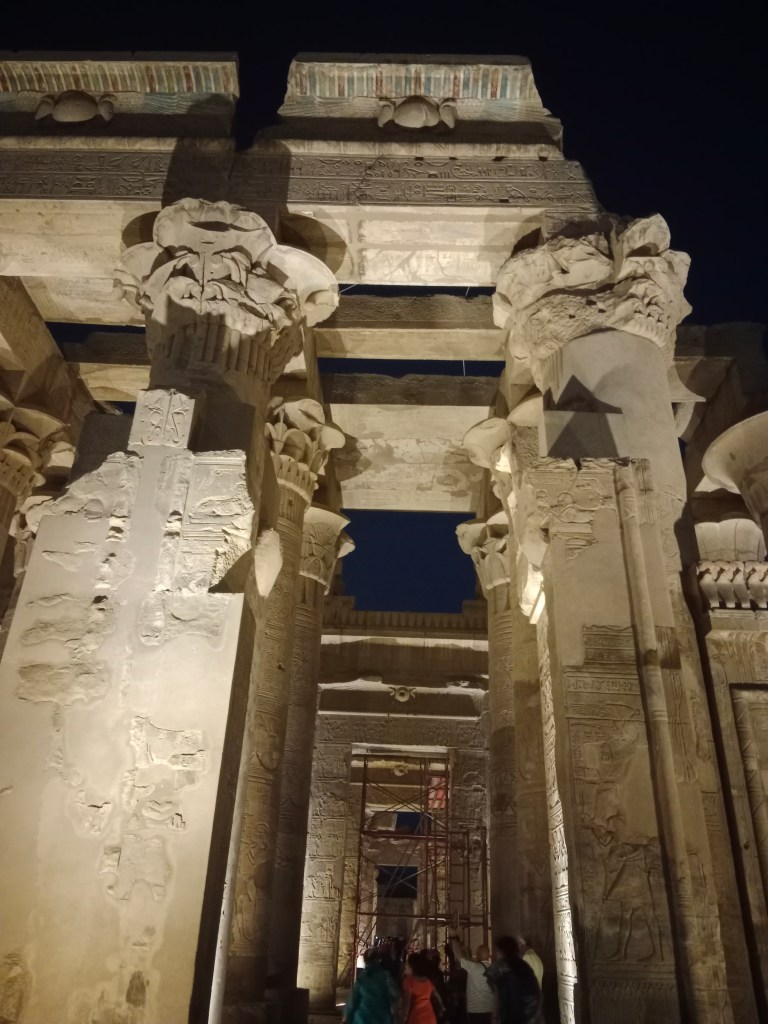
The main feature of the temple was the hall with multiple pillars with reliefs depicting the Gods and the kings.

Entering the hall

The hall with massive columns with reliefs.

Many of the pillars have symbolic representation of upper and lower Egypt by the lotus and lily flowers.

The symbolic floral representation on top of the columns

Images of some of the important reliefs seen on the columns…

The coronation of the King

The other interesting feature is the large number of hieroglyphic displays. Here are two such displays…

Hieroglyphic numbers

Hieroglyphic representation of seasons

The pillared halls lead to a central courtyard and from there on to the inner chambers. Many of the chambers were used to store valuables and papyrus documents but lie in ruins now . However, secret underground passages are seen. It is believed that these chambers were used by priests to answer the petitions of pilgrims as if it is spoken by God adding authenticity and belief among the devout.

The secret underground chambers

As we walk along the outer passage we come across a stone block where pictures of ancient Egyptian medical instruments were depicted.

The display of ancient Egyptian surgical instruments

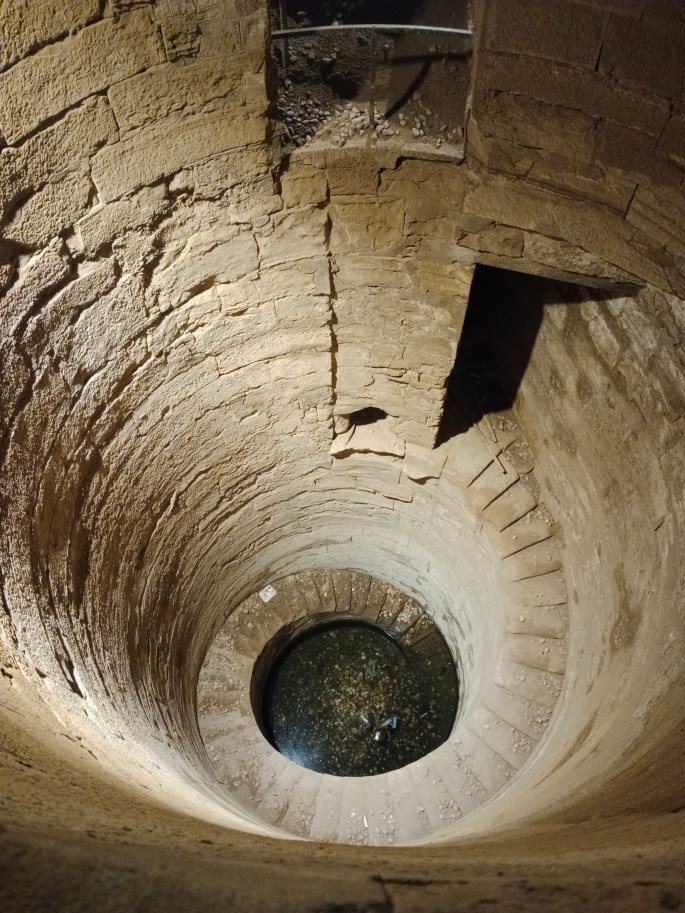
Nilograph

A deep well with height measurements clearly marked on the sides surprised us. Zak, our guide pitched in to explain that this was a Nilograph. This was used in ancient Egypt to measure the water level in the Nile as it was connected to the river lower down. Taxes for the locals were calculated as per the water level in the Nile as drought years were low tax years!! Can you even imagine that the Nile controlled so many aspects of ancient Egyptian life?

Nilograph

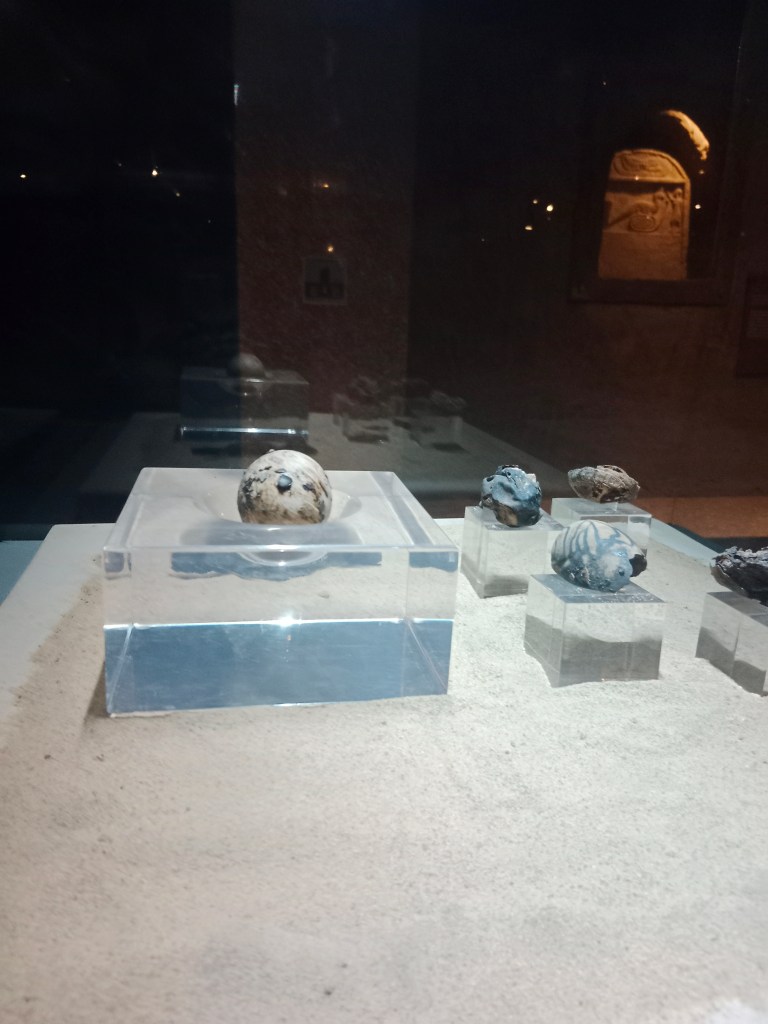
The Crocodile Museum

As we move outside the temple, we reach the crocodile museum. This museum has various exhibits connected to the relationship between ancient Egyptians and crocodiles. Mummified crocodiles and sarcophagus of crocodiles can be seen here.

Some pictures from the Crocodile museum

A crocodile sculpture

Mummified crocodiles

Crocodiles wrapped in linen saturated with oils and resins after desiccation with salts. Palm leaves helped in supporting the mummies and preservation.

Crocodile Mummies wrapped in linen soaked in oils and resins

Crocodile mummies in ceramic coffins with pots and other burial goods

Crocodile Eggs

After finishing the visit to the Kom Ombo temple , I must admit I was left with a strange feeling. I was shaken up with all the crocodile mummies and the strange customs of the ancient people.

I left with the feeling that the world never leaves us with a dearth of things to ponder on!!!

Next week we shall enjoy the cruise on the Nile that actually took us to these destinations and more to come….

Till then, do subscribe, like and comment.