
Maasai Mara or The Mara as it is popularly known is a land of breathtaking vistas, exotic wildlife and endless grasslands extending to the horizon with lone acacia trees that stand tall and add beauty. A game reserve in Kenya contiguous with Serengeti National Park in Tanzania, it is named in honour of the Maasai people who migrated from the Nile basin and settled in here.
The Mara plays host to The Great Migration which is one of the ten Wonders of the World. Originally established as a wildlife sanctuary in 1961, its area was extended and converted into a Game Reserve . Parts of the area were later returned to local communities explaining why we see local community setups very close to the park boundaries and locals herding their cattle close to park environs.
The Mara river and its tributaries, the Sand and the Talek drain the region where the vegetation is primarily open grassland with acacia trees in some areas.
All members of the “Big Five”…lion, leopard, African elephant, African buffalo and rhinos are found all year round here.
But what is so special about Mara is The Great Migration where some estimated 13 lakh Wildebeest, 5 lakh Thomson’s Gazelles ,97000 Topis and over 2 lakh Zebras migrate north from Serengeti plains in search of pastures in July and return in October. This is one of the most impressive natural events worldwide. The Great Migration is such an event that I will be dedicating the next episode to it. For now, let us look at the other wonders of Mara.
Our Mara encounters
From Lake Naivasha, we were headed to Maasai Mara but the riots in Kenya put a spoke in the wheel for our trip. But our local travel partners efficiently overcame this with an early morning departure from Lake Naivasha. Though we all would have loved to spend more time at the resort at Naivasha, we left early to avoid any disruption in our itinerary.
Starting the drive early morning and after a couple of convenience halts we reached Masai Mara around noon. Enroute we passed the town of Narok which is the main town next to Mara and we did see evidence of potential riots.
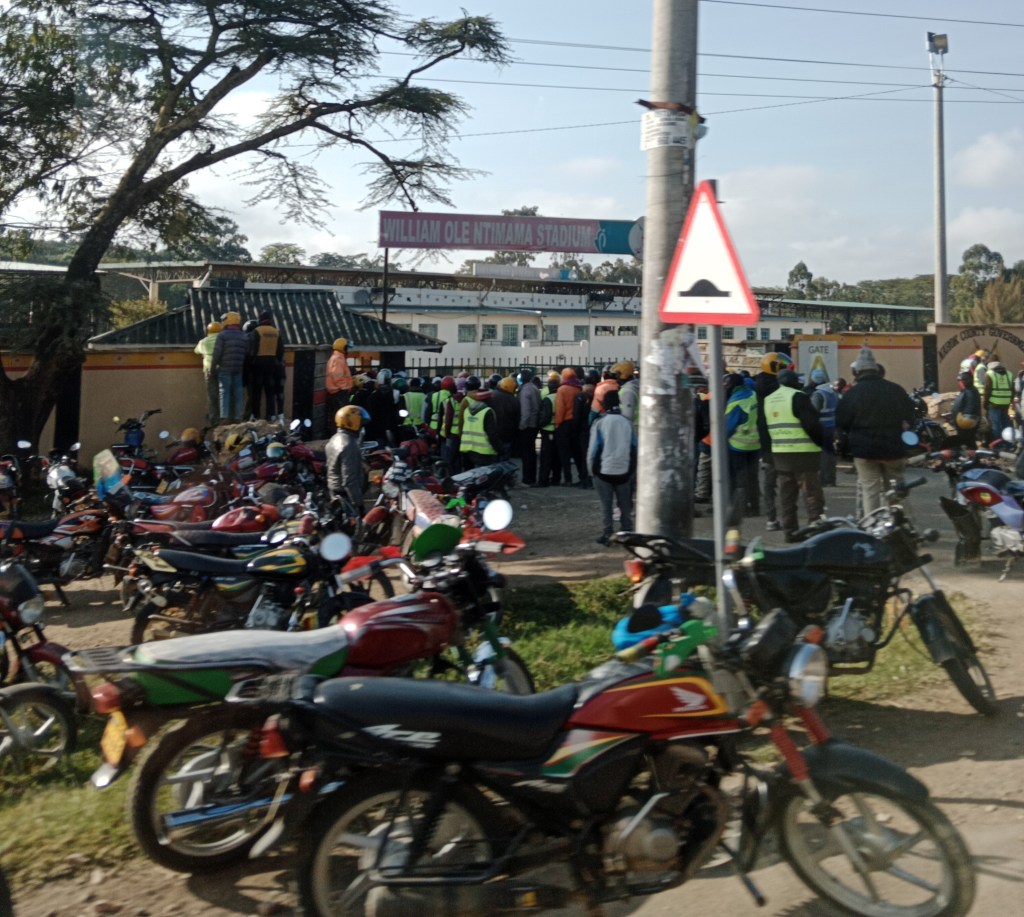
Narok getting ready for some trouble!
Reaching Masai Mara ,the resort checked us in earlier and so we managed to get some rest before our first Mara safari.
Here again the resort was beautiful with views of the Talek river from our rooms.
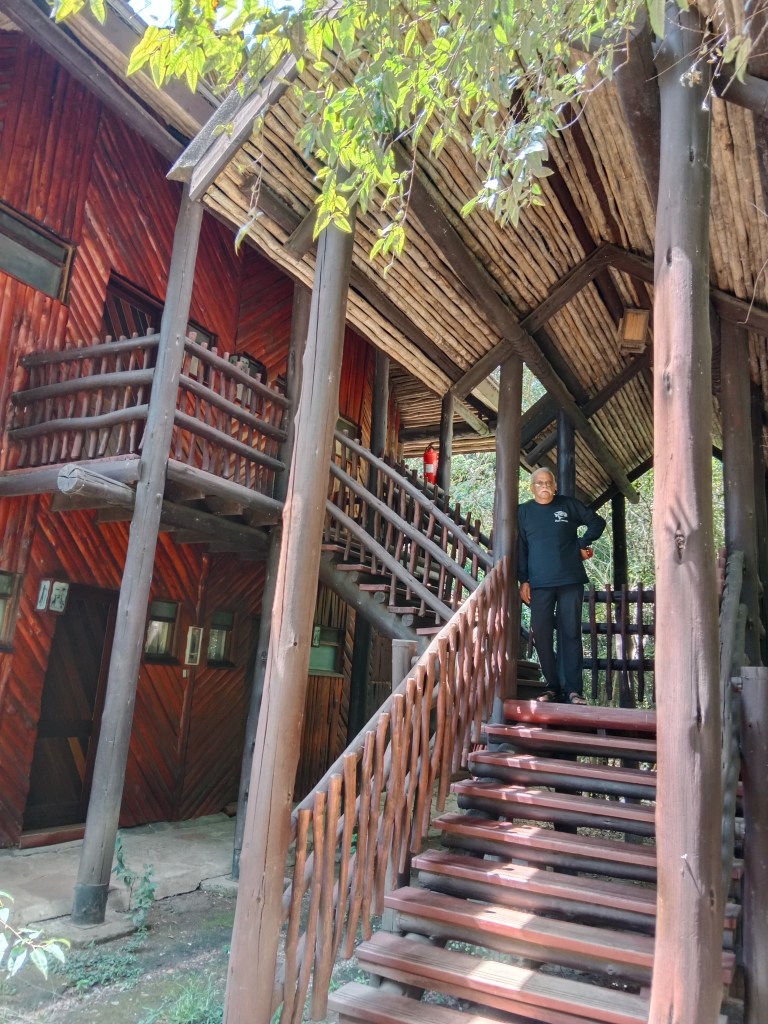
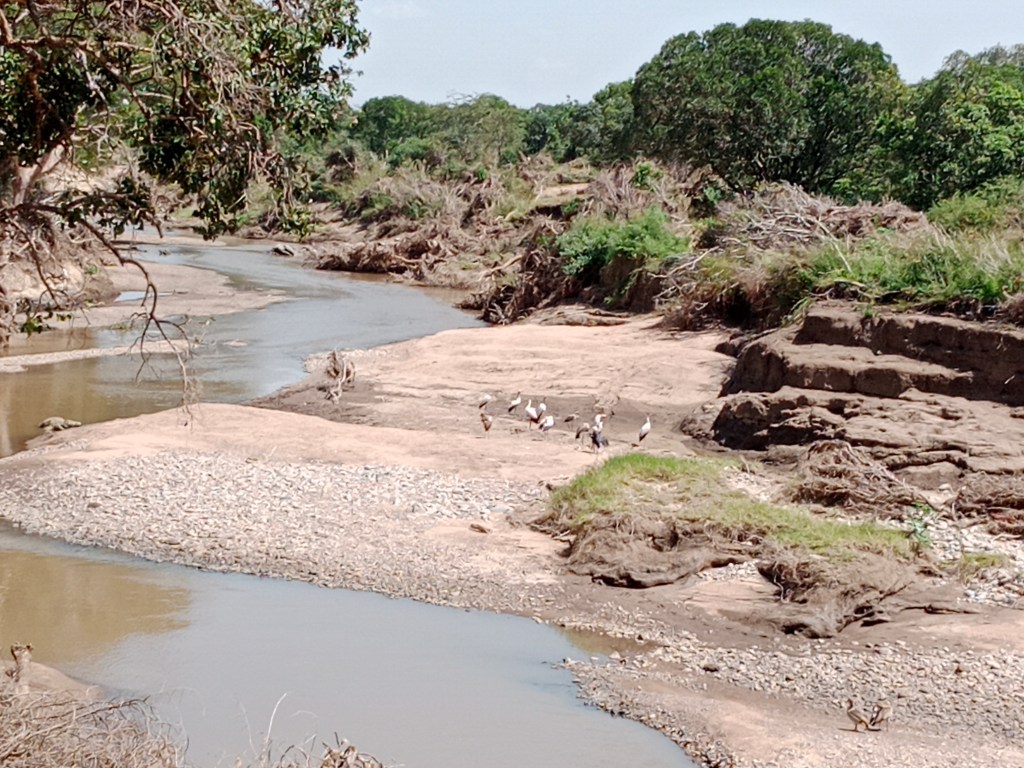
Our cottage and the view of Talek river from our balcony
After some rest, we again got into our safari vehicles and headed to the heart of Mara. We did three safaris over the two days we were there. The sum total of our experiences follows…
Enjoy the virtual safari…..
Thomson’s Gazelles
Gazelles are nimble antelopes, with a variety of stripes and markings that accentuate their tan buff coats and white rumps. They also boast impressive, ringed horns. These attributes make many gazelles attractive as game animals.
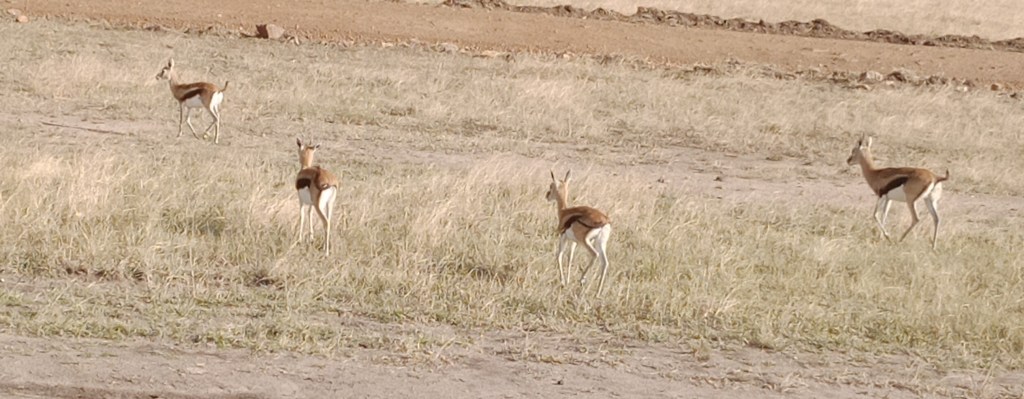
Gazelles shying away from us
Topis
Much larger and less nimble antelopes are the Topis who also were in herds scattered all over Mara.
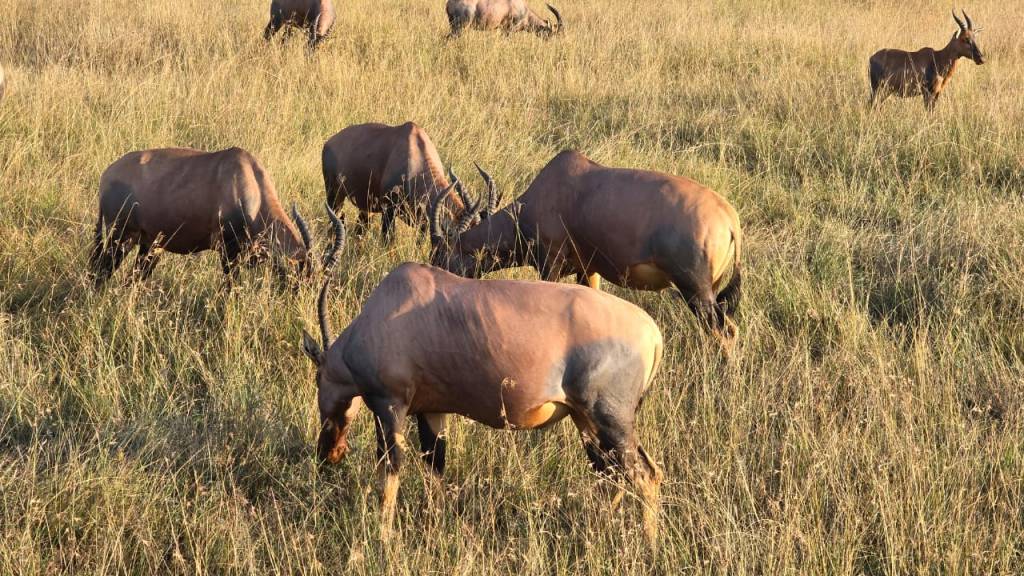
Topis (a variety of antelope)
African Elephants
Elephants crisscrossed our path multiple times. African elephants differ from the Asian elephants in that they are larger and have long tusks and large fan like ears.
Elephants are social creatures and they sometimes show affection by wrapping their trunks together .

An elephant herd with two baby elephants

Whispering sweet nothings?
A herd of elephants trudges along
Giraffes
It is the tallest living terrestrial animal and the largest ruminant on Earth. Found chewing all the time, we saw quite a few of them.

A male and a female giraffe stood still as we passed by
Lions
Getting a tip off from another vehicle about lion sightings Elvis , our driver took us to the designated spot. And we found them…
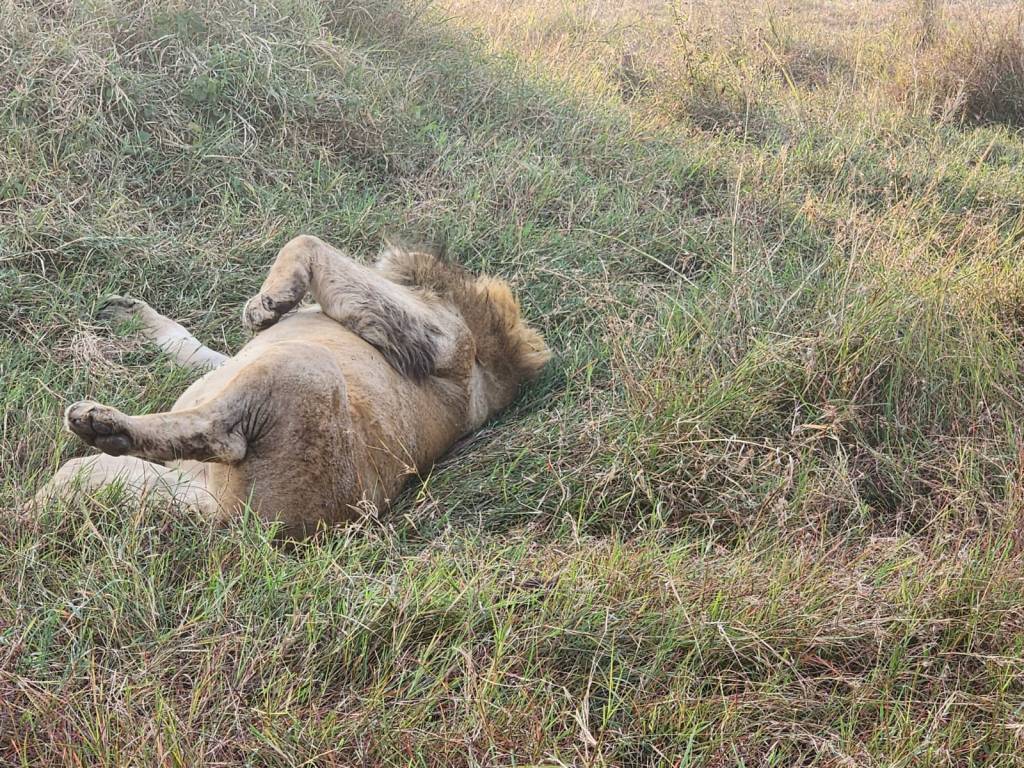
The king was resting after a meal when we disturbed him and….

He decided to get up and walk away…
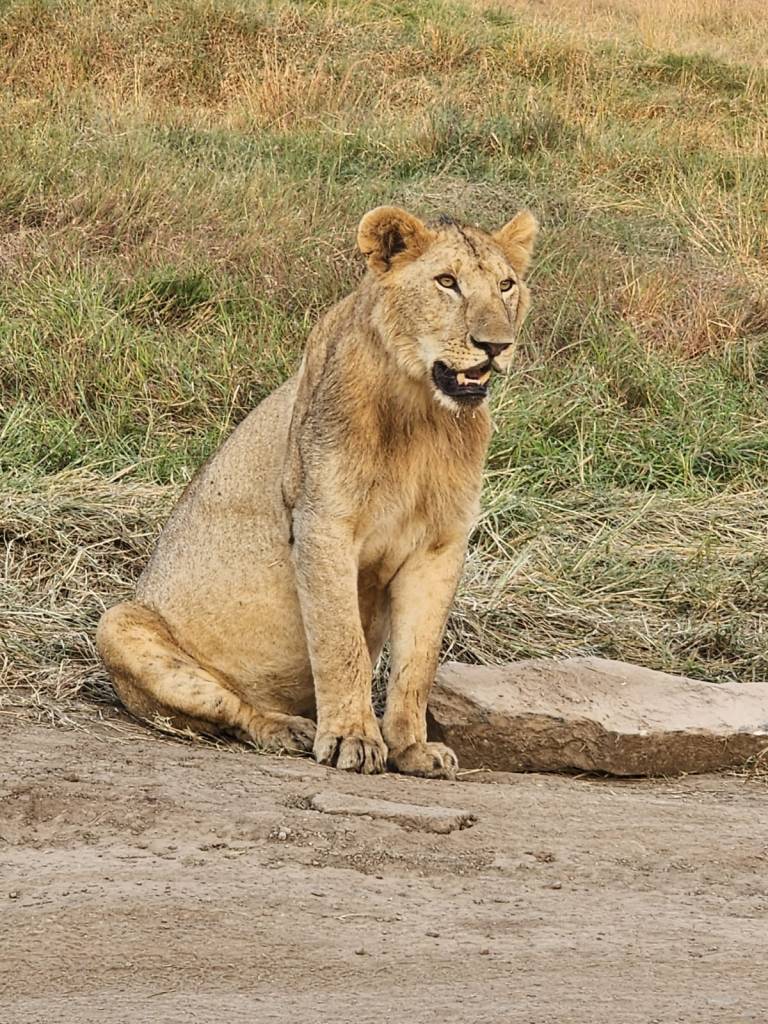
And his consort continued to sit by the roadside…
Warthogs or wild boars
A lone warthog was scampering away ….probably running away from a predator…

A lone warthog
Wildebeest
Wildebeest, also called gnu, are antelopes native to Eastern and Southern Africa. Wildebeests are herd animals and move from place to place, in search of food and water. They feed on grass and due to their large numbers can empty out the grass in vast grasslands very quickly.
They are the heroes of the Great Migration and we saw herds of Wildebeest everywhere , some feeding calmly while others were running and jumping around in panic as our vehicle approached them.

Herds of wildebeest crossing the road

Millions of Wildebeest scattered all over…part of the Great Migration
After a tip off on a leopard sighting, we rushed to the designated location to find a large number of safari vehicles lined up to watch it. A warden was seen regulating the vehicles and finally we got our turn after considerable wait…
Leopard

A leopard rests after a kill

And the carcass of his prey hangs from a tree nearby
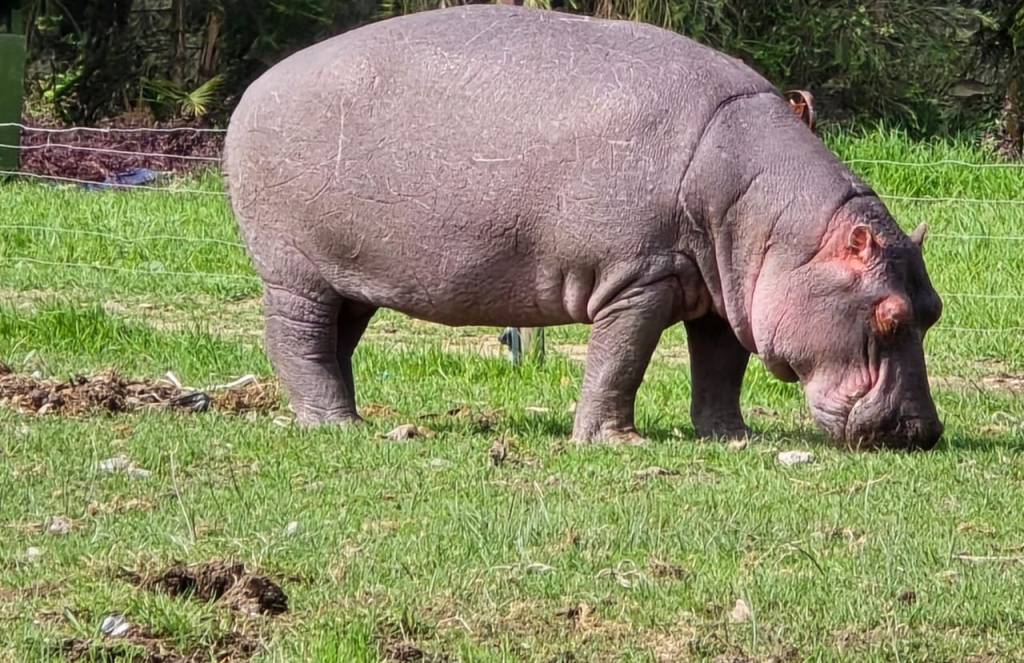
A group of hippos were having their siesta by the Mara river

Hippos resting by the Mara river
Cheetahs
And last but not the least, there was a group of Cheetahs feasting on their kill….

Cheetahs with their kill
Cheetahs feasting…(click on video) (PC Mr Arun Nathan)
And you soon come to realise how the cycle of life and death goes on endlessly in nature as you see scavengers feasting on carcasses…

Vultures feast on a carcass as wildebeest graze in the backdrop
I hope you all had a great virtual safari.
See you all next week with one of the wonders of nature…The Great Migration.
Till then, do subscribe, comment and give your feedback…
{P.S Some of these spectacular pictures and videos are courtesy Mr Arun Nathan, my co traveller on the Kenya trip.}









 Travel-along.in