The Arashiyama bamboo forest is one of the popular destinations in Kyoto . A grove of Sagano bamboos on either side of a walking trail creates a serene and mystic atmosphere.
It was raining when we visited the bamboo forest and it was very crowded too. At a quieter time, the place would be a peaceful and meditative place. The sound of the wind blowing through the grove can be very mystic. It is a symbol of connection between nature and Japanese aesthetics. It is a kind of spiritual escape for the locals particularly with the associated temple.
Bamboo is a symbol of resilience and strength and was a favoured spot of the aristocrats in ancient times.
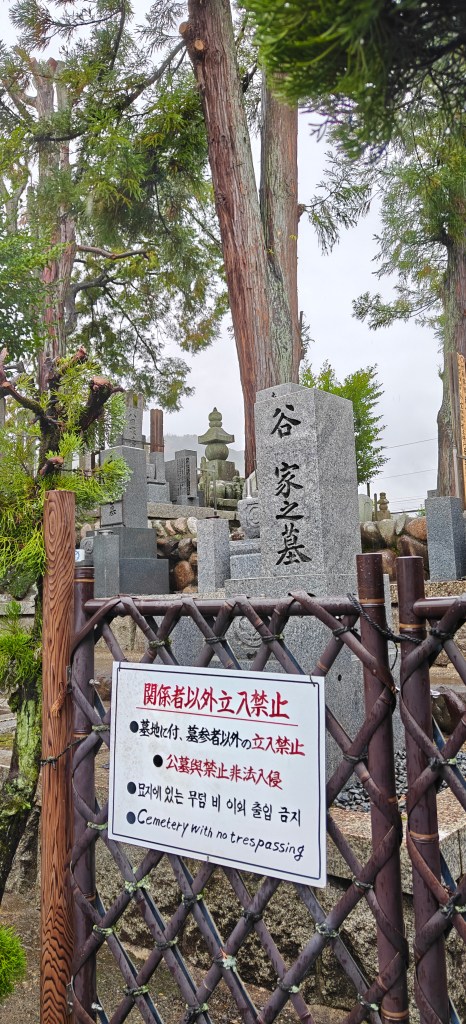
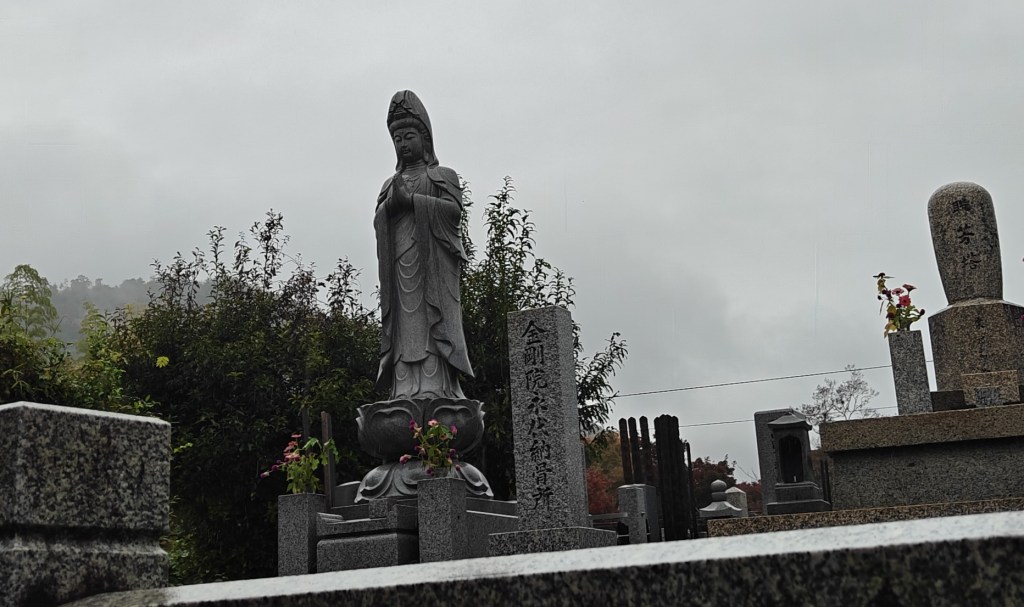
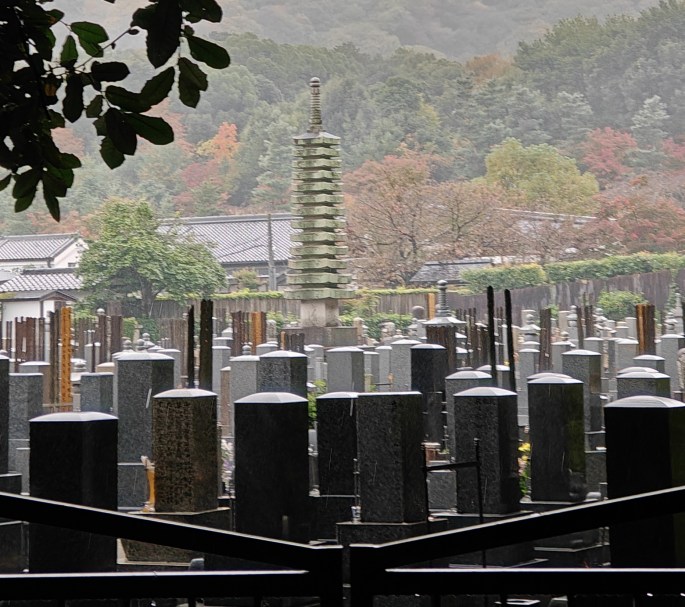
Several private and public grave yards were seen in the vicinity of the bamboo groves.
Some pictures…
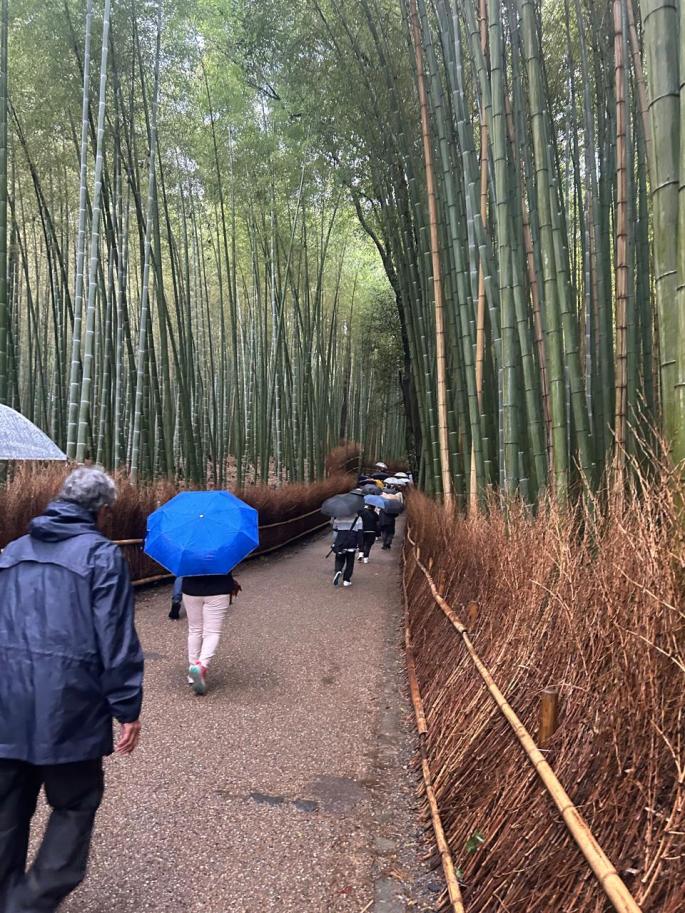
The passage between the bamboo groves
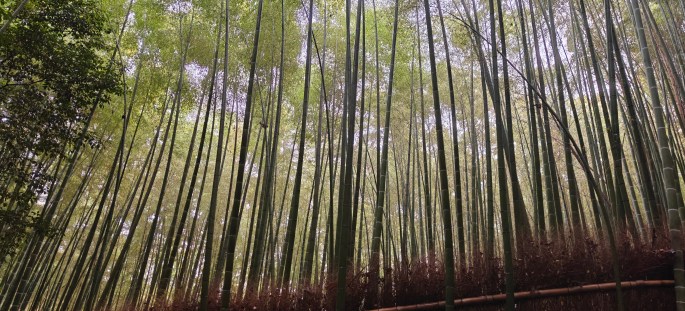
The sun tries to peep through the trees…Public and private family graves were seen in the park and along the walking track
From the bamboo grove, we proceeded to the Kiyomizu-dera temple, another Kyoto landmark…
The Kiyomizu-dera temple
Kiyomizu-dera (Pure Water Temple) is an ancient Japanese temple located in Mount Otowa in Kyoto and is a UNESCO World Heritage site.
Legend
It’s founding is shrouded in legend and says that a monk Kenshin had a dream that led him to the site of the temple where he discovered a golden stream and and tracing its source reached an ascetic Gyoei Koji who was practicing under a waterfall. Kenshin made a wooden statue of Kannon the God and enshrined it there marking the beginning of this temple. The waterfall known as Otowa falls is still part of the complex.
The Temple
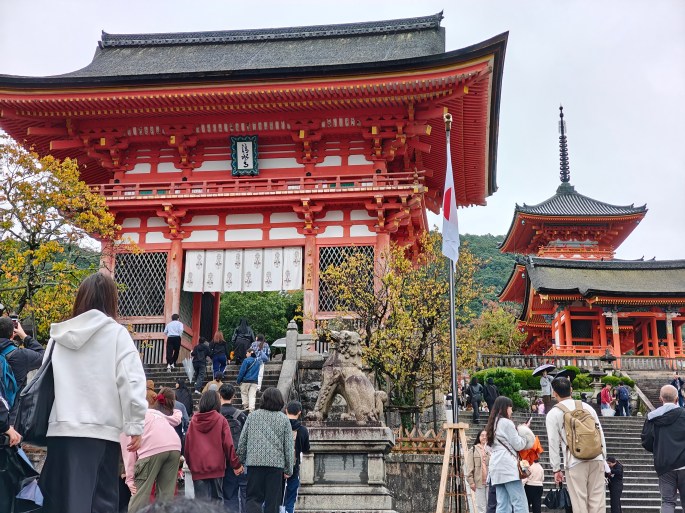
As we entered the temple, a flight of stairs with a decorative gate welcomed us.
The entrance
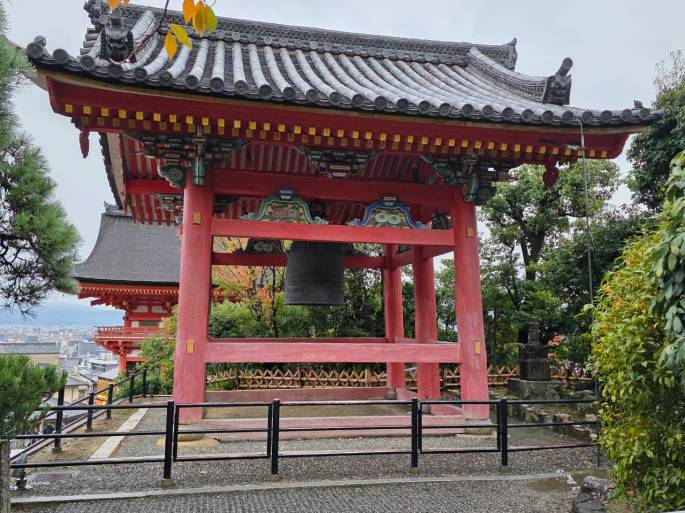
A decorated bell fry adorned the landing
Bell fry
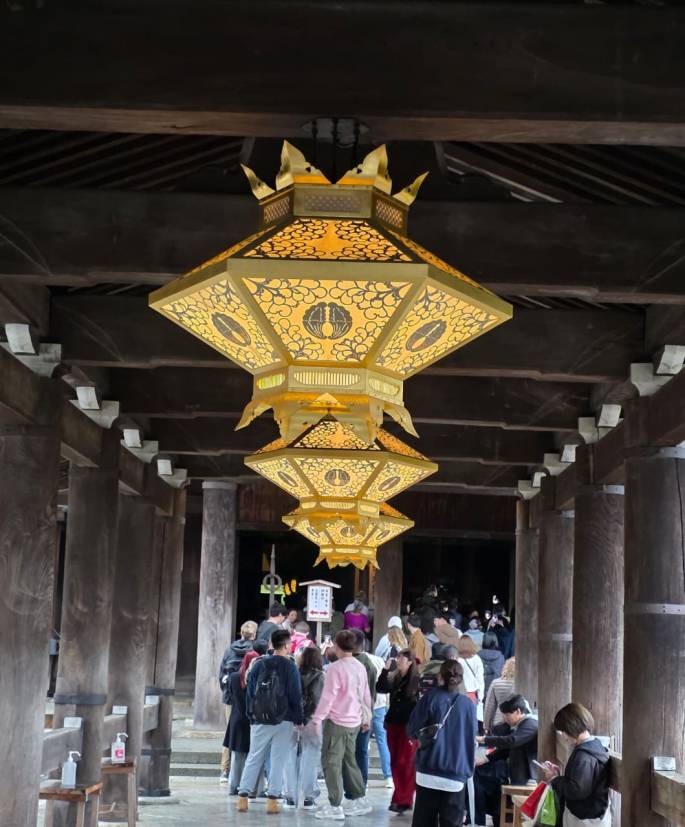
A wooden walkway with beautiful lanterns lead us to the main hall of the temple.
The walkway with beautiful lanterns
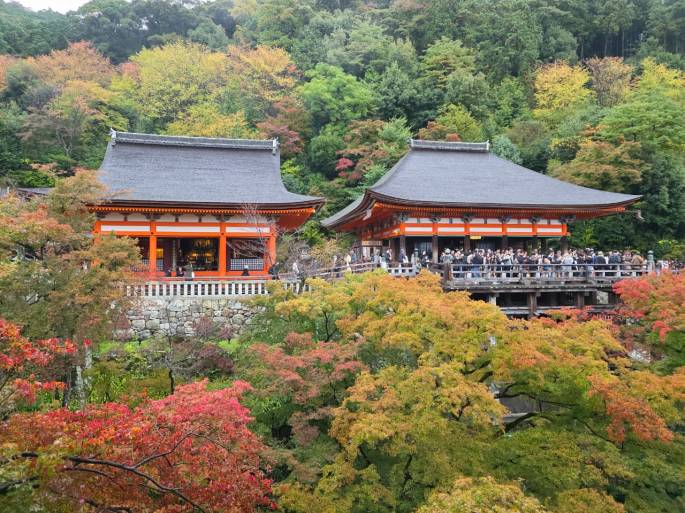
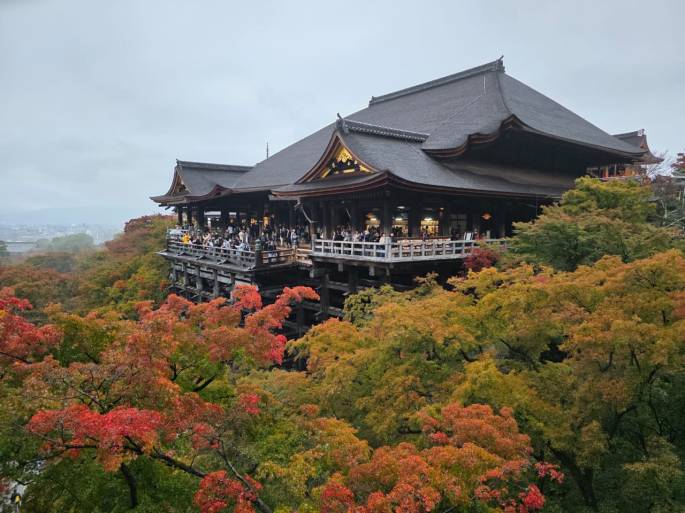
The temple is best known for its main hall which has a large veranda supported by tall pillars that juts out over the hillside offering beautiful views. The cherry and maple trees below on the hillside breaks into colour in autumn offering amazing views . The peculiarity is that no nails have been used in the construction. The pieces are wedged together like in a lego set.
The verandah jutting out over the hillside with the trees bursting with colours in autumn
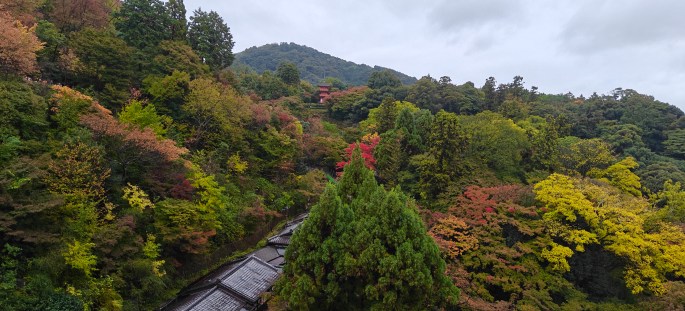
A view of the trees on the hillside from the verandah
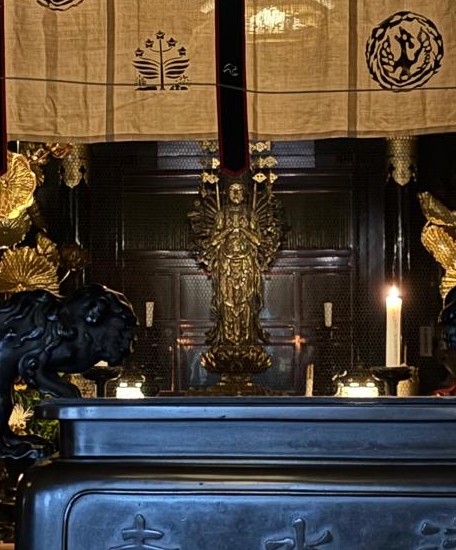
It houses the temple’s primary object of worship, that of Kannon (Avalokiteswara) with eleven faces and a thousand arms.
Avalokiteswara (Kannon) God of compassion
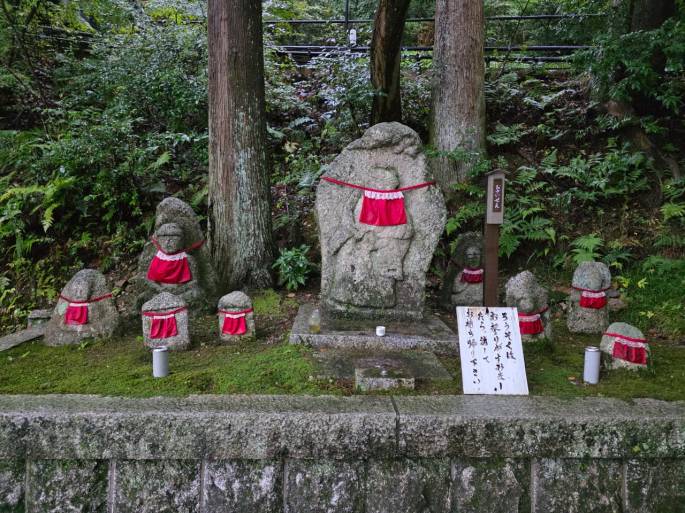
Behind the main hall is the Jizo shrine dedicated to the well being of children
The Jizo shrine
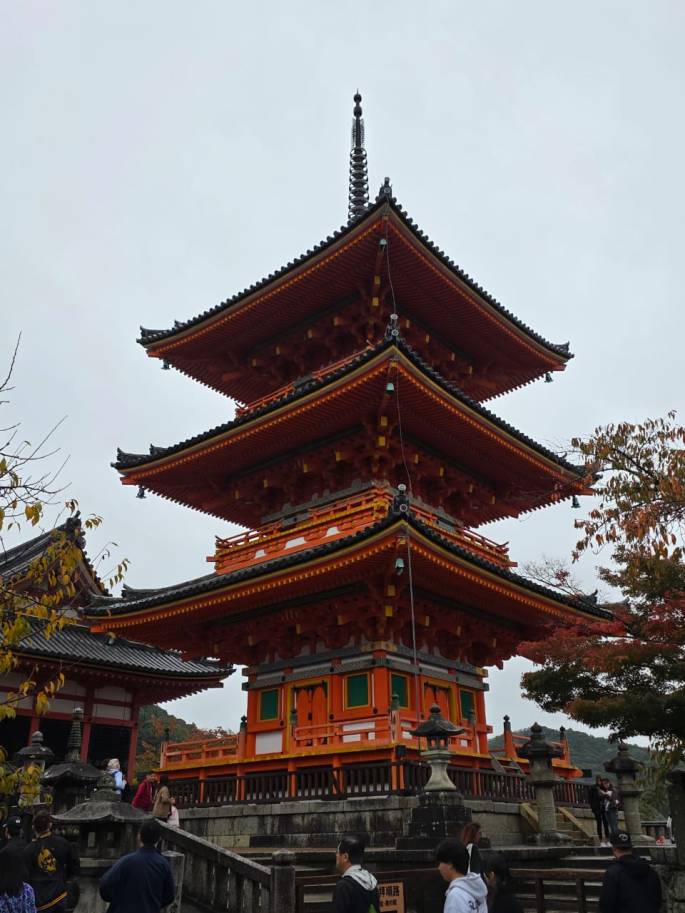
The three storied Koyasu pagoda stands among the trees and is believed to bring easy and safe childbirth.
Koyasu Pagoda
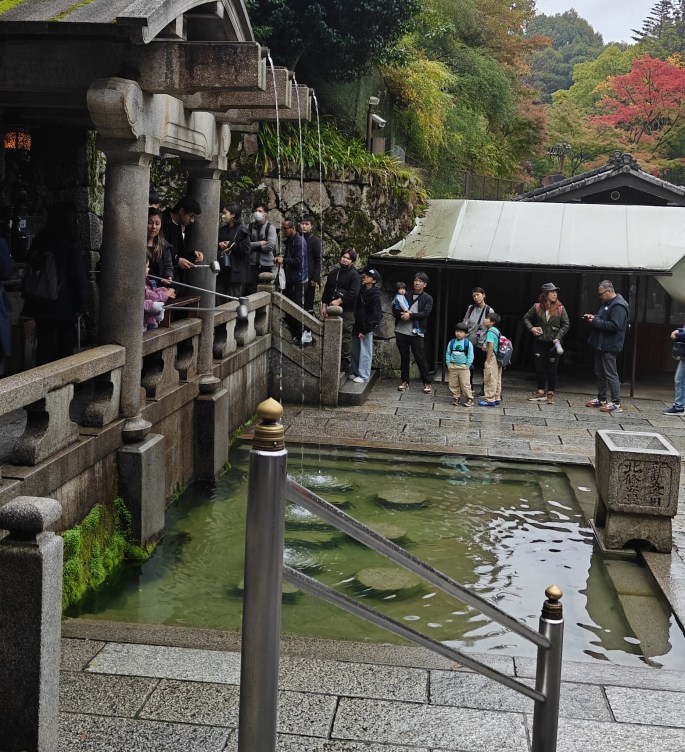
Beneath the main hall is the Otowa falls with three channels of water falling into a pond. visitors can drink this water which has wish granting powers.
The Ottowa falls
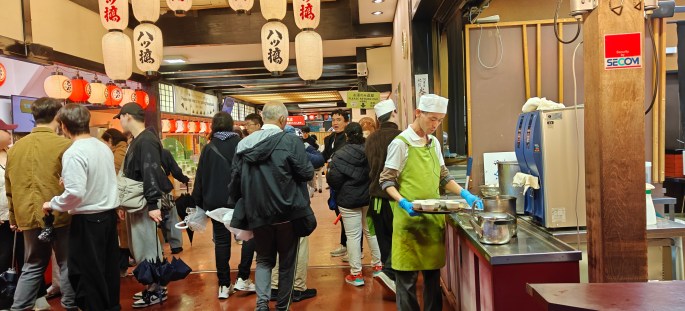
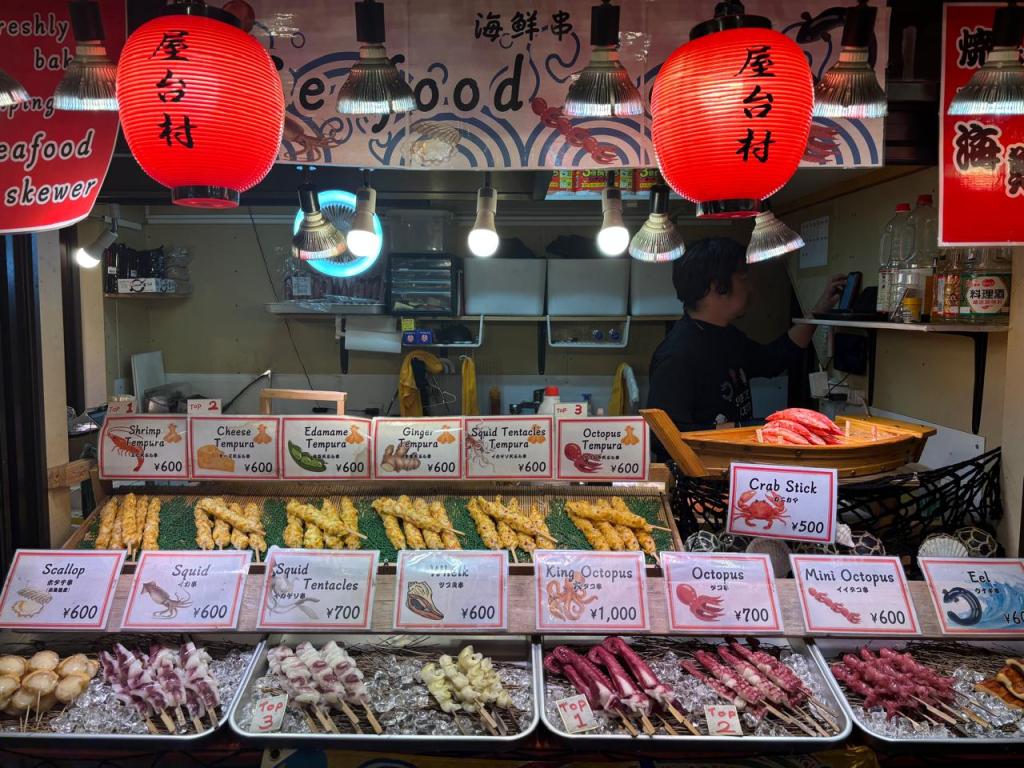
Like in other temples in Japan, a vibrant shopping area awaited us outside. Largely consisting of eateries, the shops looked very attractive and colourful. We spent some time here before proceeding to the bus on our way back to our hotel.
Some pictures…
The vibrant shopping area
Hope you all enjoyed the sightseeing destinations in Kyoto. Kyoto has a lot to offer in terms of cultural experiences which will be a different episode.
See you next week at Owakudani, the volcanic zone we visited enroute Kyoto…
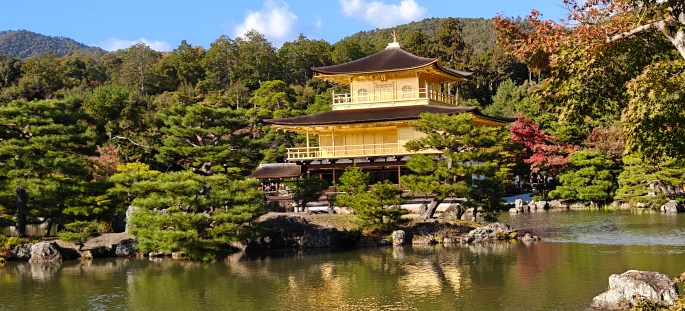
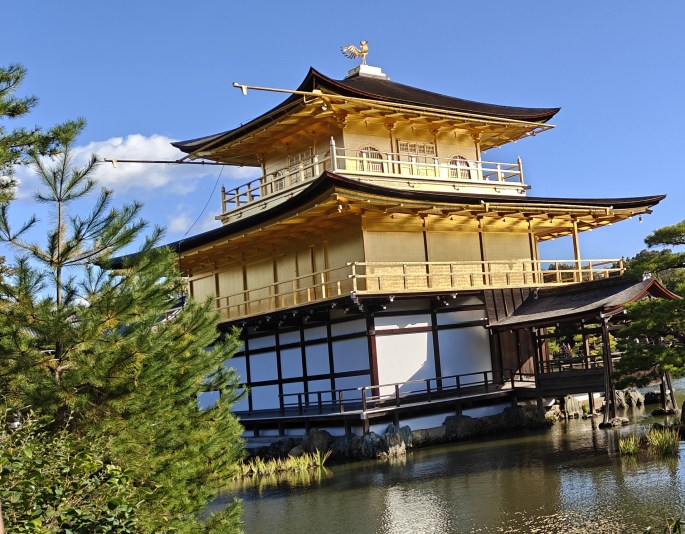
Located in the beautiful city of Kyoto in Japan is this majestic temple called Kinkaku-ji (Temple of the Golden Pavilion in Japanese) also known as the Rukuonji temple. The top two floors of the temple are coated in 0.5 um gold leaf. The gold incorporated into the building is believed to negate any negative thoughts and feelings towards death. The aesthetic construction with the golden building reflecting on the pond below is amazing indeed! It is a World Heritage Site since 1994.
History
The origin of Kinkaku-ji dates back to the 14th century . In 1397, Ashikaga Yoshimitsu took over the retirement villa that stood here. He built the Kitayama palace centering the golden stupa. This was the centre of politics and culture and was used to welcome the Emperors of Japan and trading partners from China. After Yoshimitsu passed away, it was converted into a temple as per his will.
The temple has a rather sad history when a young mentally unstable monk set it on fire before attempting suicide in 1950. The monk survived but passed away in 1955 of tuberculosis. A book “The Temple of the Golden Pavilion “by Yukio Mishima refers to these events.
The statue of Ashikaga Yoshimitsu was destroyed in the fire and later restored. The present pavilion was built in 1955 and is three storeys high. In 1984, it was noticed that the gold leaf was peeling off and then it was restored with thicker gold leaf.
A silver pavilion temple has also been built on its model in Kyoto called Ginkaku-ji by Yoshimitsu’s grandson on the other side of Kyoto city.
Architecture
The three floors are built in distinctly different styles and serves as a shariden housing Buddha’s ashes. It reflects the wealthy aristocratic style prevalent in Kyoto during Yoshimitsu’s time.
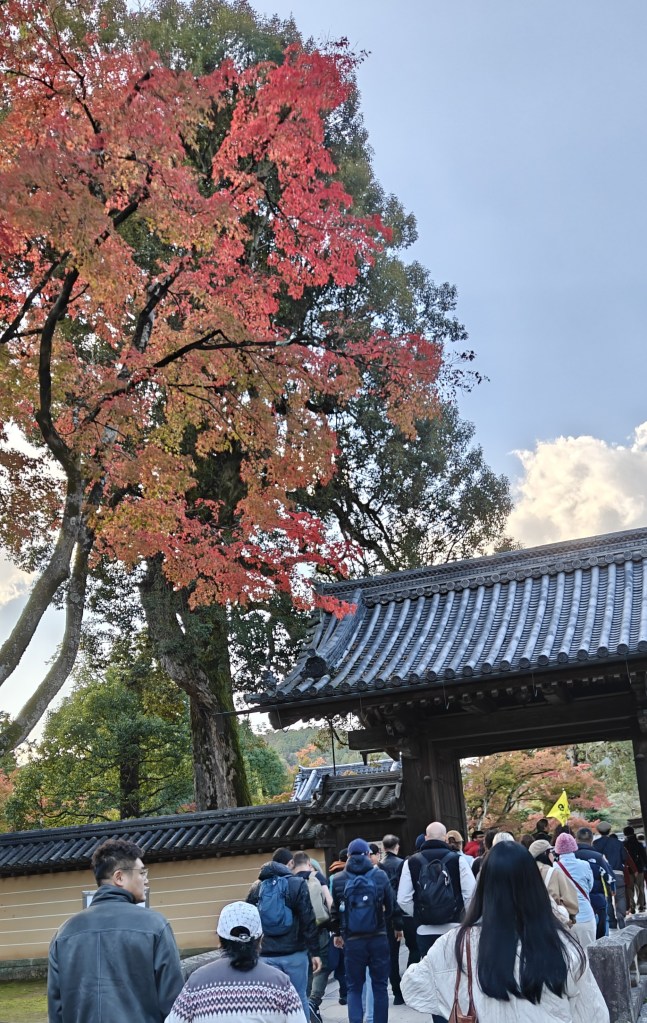
The entrance
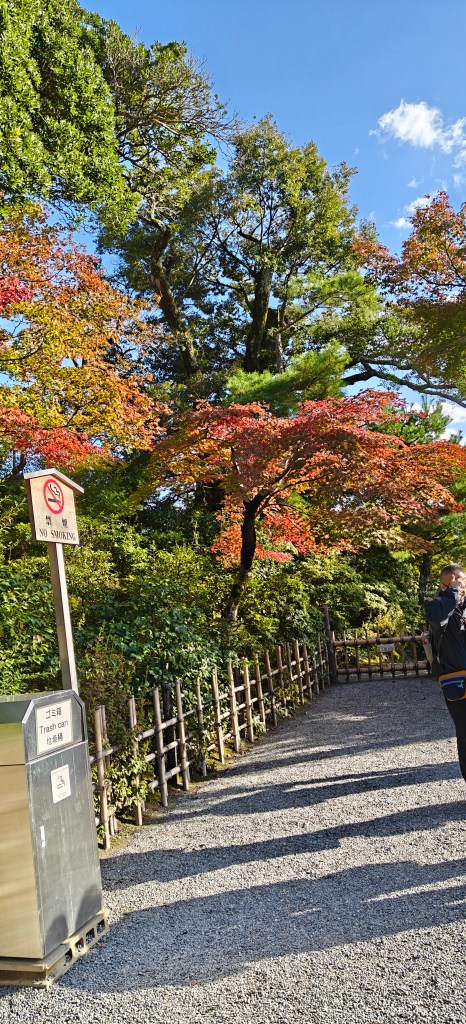
The landscaped garden with walking path
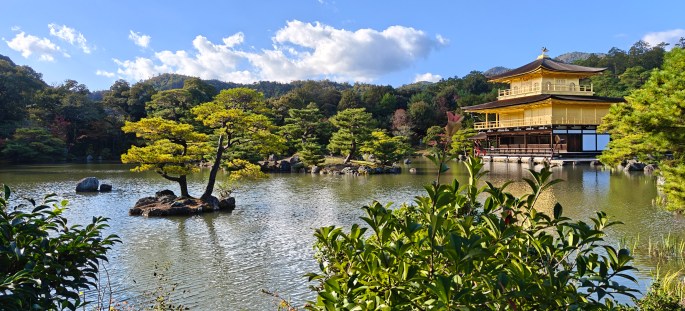
The building itself is located in a garden landscaped in muromachi style, a classical japanese strolling garden style. Located in a pond, the structure provides a stunning reflection of itself in the water. The pond has 10 smaller islands.
The temple and the pond
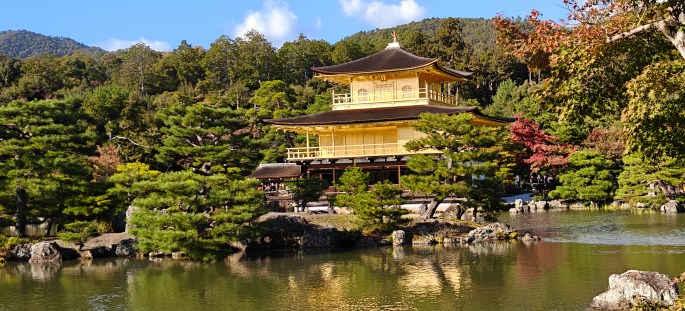
The temple adds to the beauty of the surroundings…
As we look closely we see details of the amazing architecture….
The first floor called Chamber of Dharma is designed as an open space with verandahs and uses natural unpainted wood and plaster. Statues of Shaka Buddha and Yoshimitsu are present here . Though you cannot enter the temple, these can be seen through the sliding doors which are often open.
The second floor is the Tower of Sound Waves built in style of warrior aristocrats and has a hall and Buddha shrine .The statues here are not shown to visitors.
The third floor is built in Chinese style and called Cupola of the Ultimate.
The roof is a thatched pyramid with a bronze phoenix on top.
Close up showing the three floors and phoenix clearly
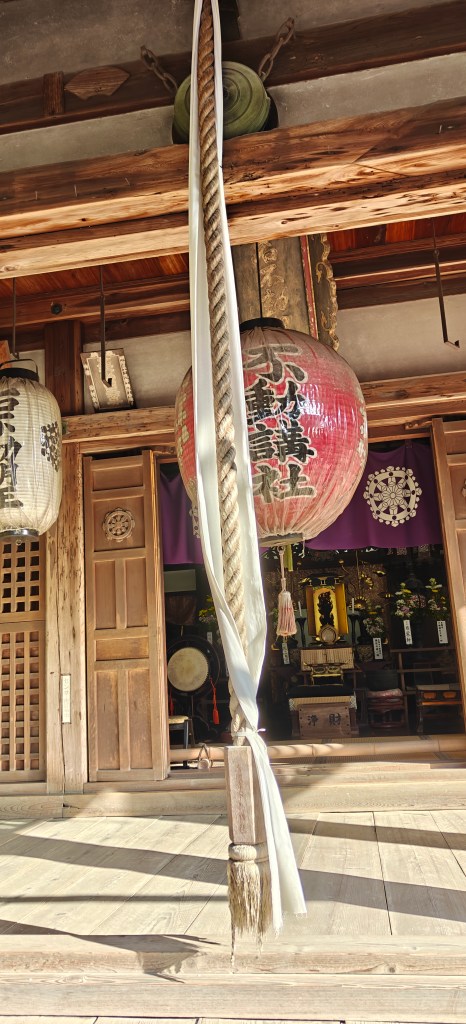
The Fudo Hall with the image of the wise man and protector of Buddhism lies along the path. A thick rope which helps in sounding a gong ( to awaken the Gods to your prayer) is another unique feature.
Fudo Hall with the gong and rope
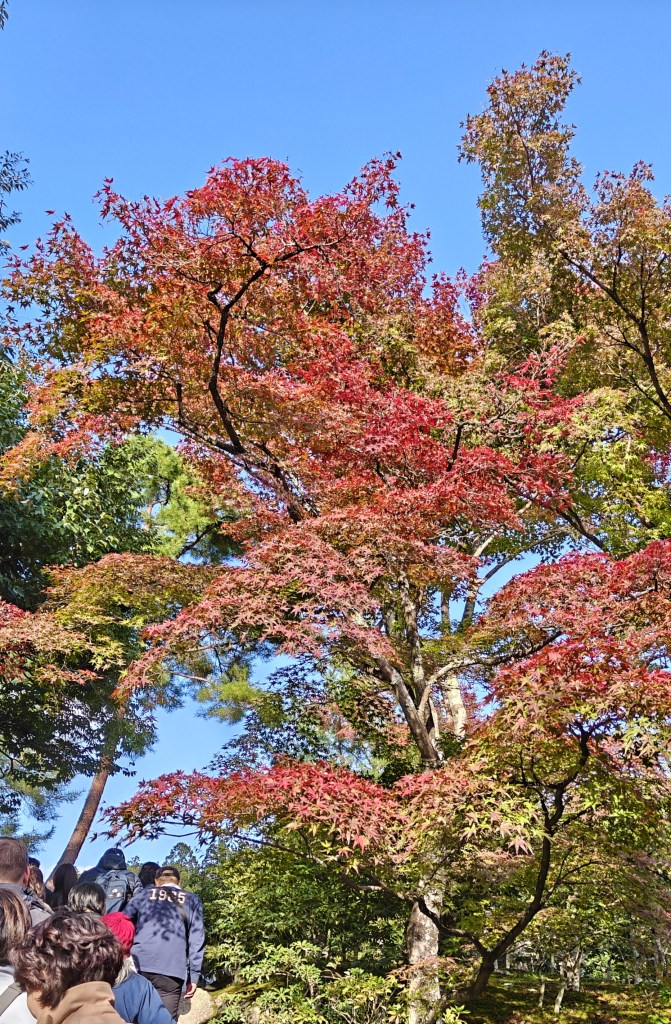
The garden with bonsai trees adds beauty and in fall, the colours add another level of ethereal beauty to the temple.
The beautiful garden
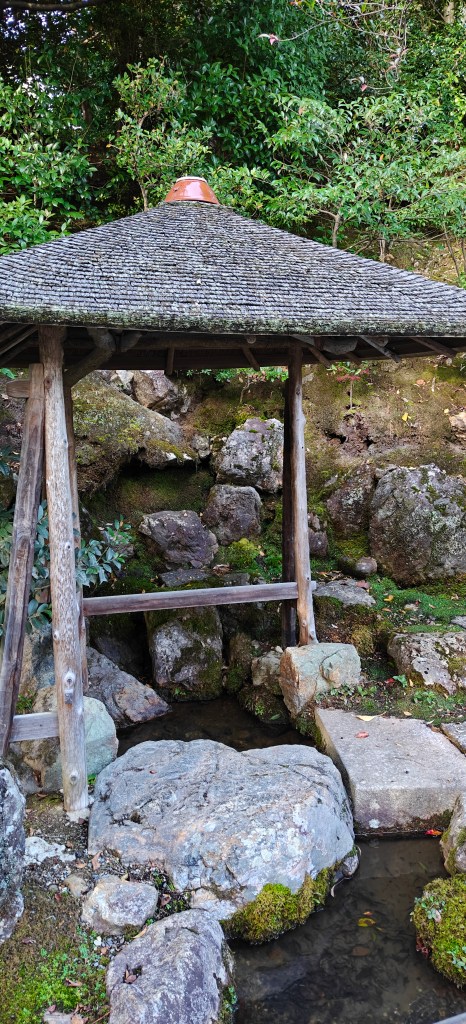
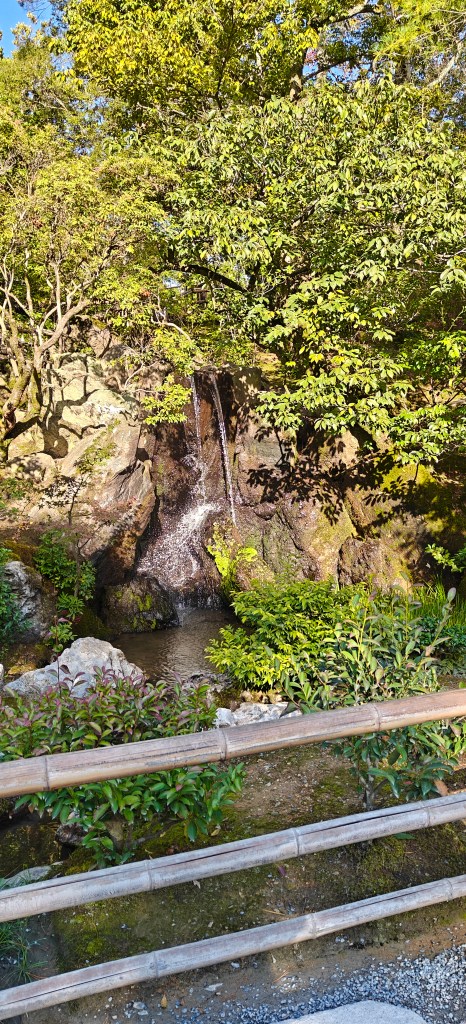
As we walk along the path, there is a spring and a waterfall…
The spring and the waterfall
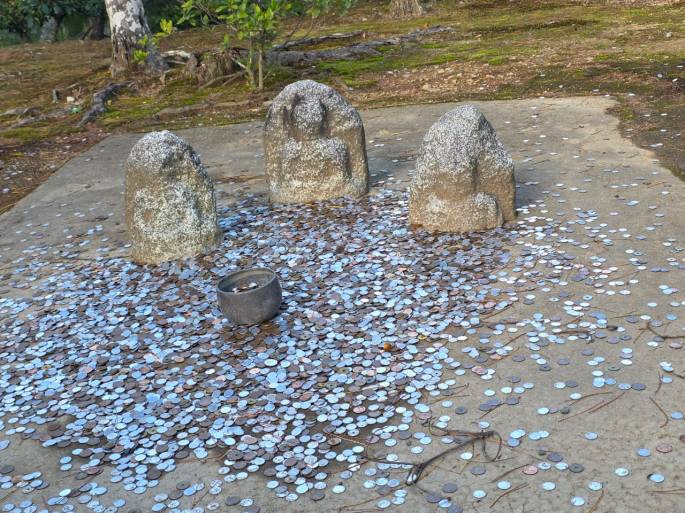
The garden has few other points of interest including a pond that never dries up and statues where people throw coins to fulfill their wishes.
Drop coins for good luck
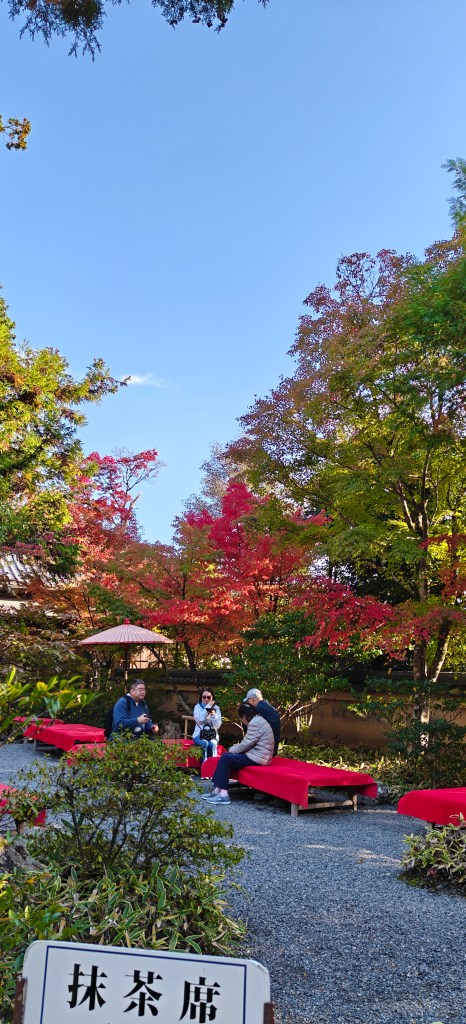
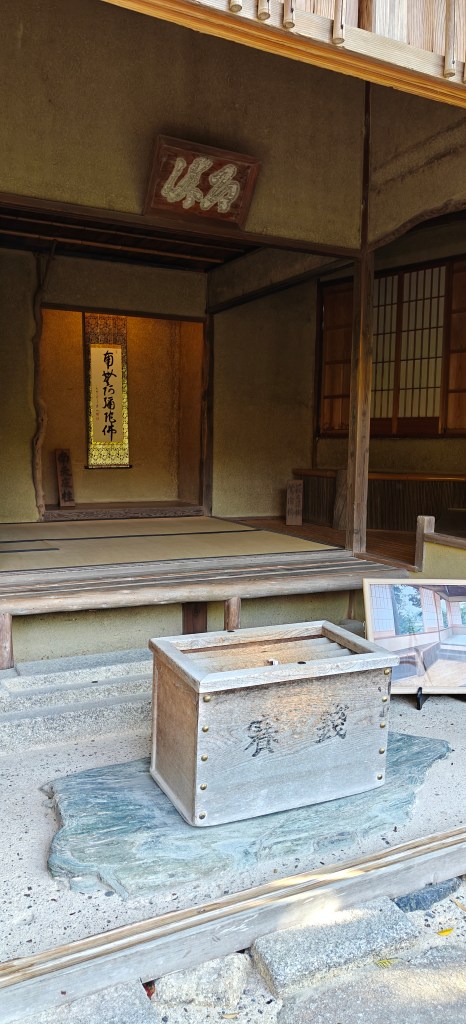
A Sekkatei teahouse …a traditional Japanese tea house can be seen just before one exits the temple.
The Sekkatei Tea House
Leaving Kinkaku-ji, we headed to another of Kyoto’s iconic temples…The temple of tori gates…Fushimi Inari.
Fushimi Inari
Famous for its tori gates, this temple too is very attractive and sacred to the locals.
The shrine rests on the mountain called Inariyama and aims at promoting the harmonious coexistence of deities, humans and nature. Inari Okami, is the presiding deity of the temple founded in 711 AD. People gather here to pray for bountiful harvest, business prosperity , safety of home and family and fulfillment of wishes.
Tori gates are traditional Japanese gates to Shinto shrines. They are composed of two vertical posts topped by two cross beams and painted red. The Japanese believe that passing through a Tori gate is a transition into a holy space.
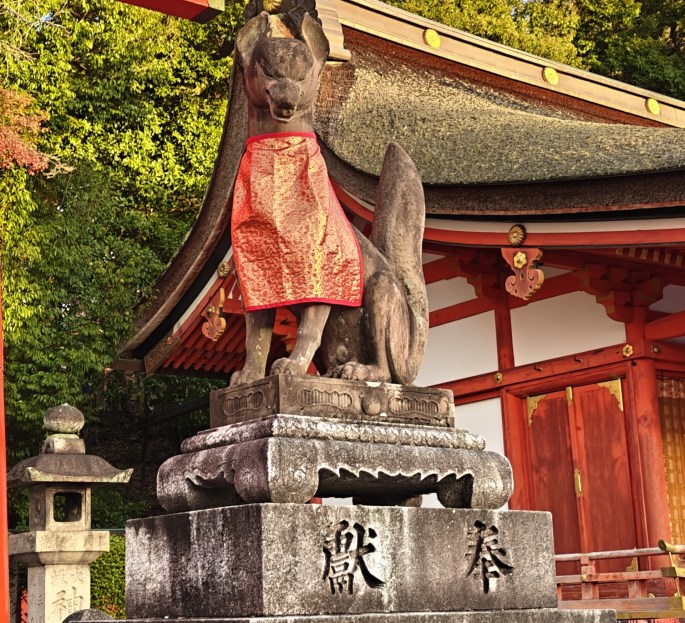
Fushimi Inari has almost ten thousands tori gates which straddle the walking path that leads to the wooded forest of sacred mount Inari. Inari is the short form of “Ine Nari” meaning reaping of rice in Japanese. There are more than thirty thousand Inari shrines from all over Japan that are affiliated to Fushimi reflecting the importance of this temple to the locals. Foxes are believed to be messengers of Inari and many statues of foxes are seen across the shrine.
Our visit
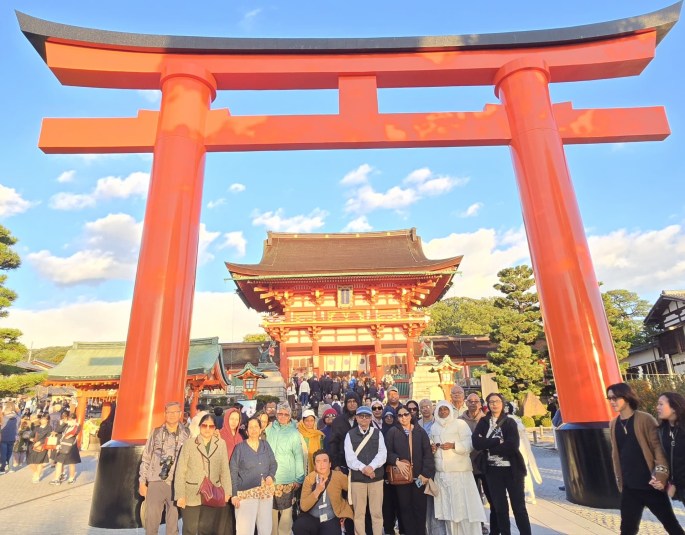
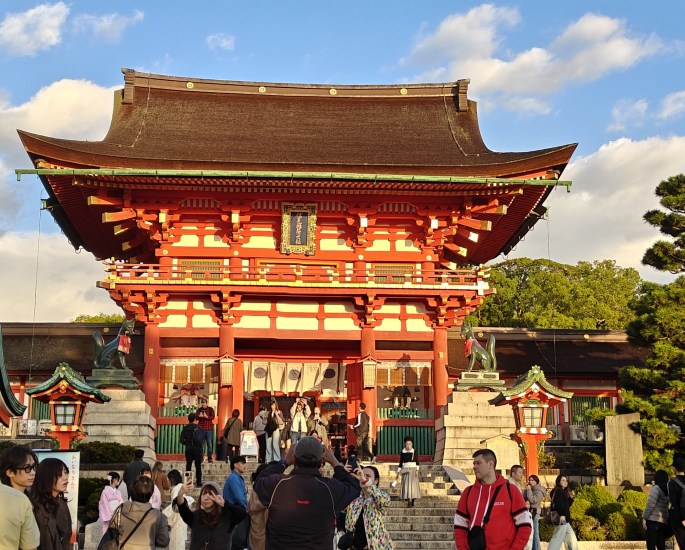
As you enter the complex, the main Tori gate is called the Romon Gate.
Our group below the Romon gate (a tori gate) with the Fushimi Inari shrinebehind
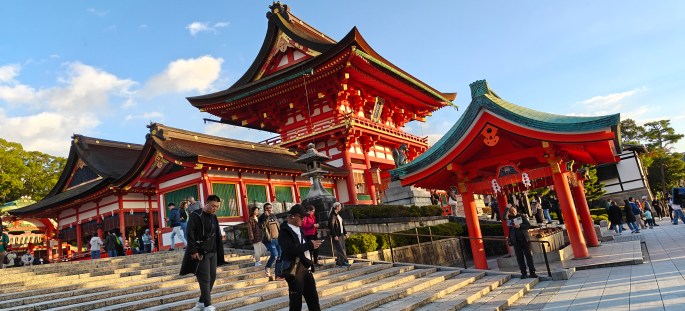
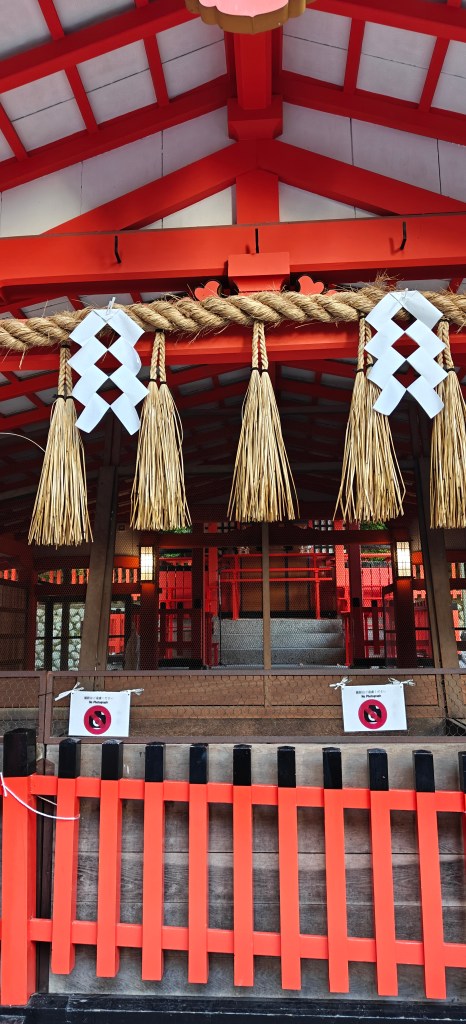
The main shrine with the sacred fox images on either sideThe side view of the main shrine with the steps leading to the Tori gates
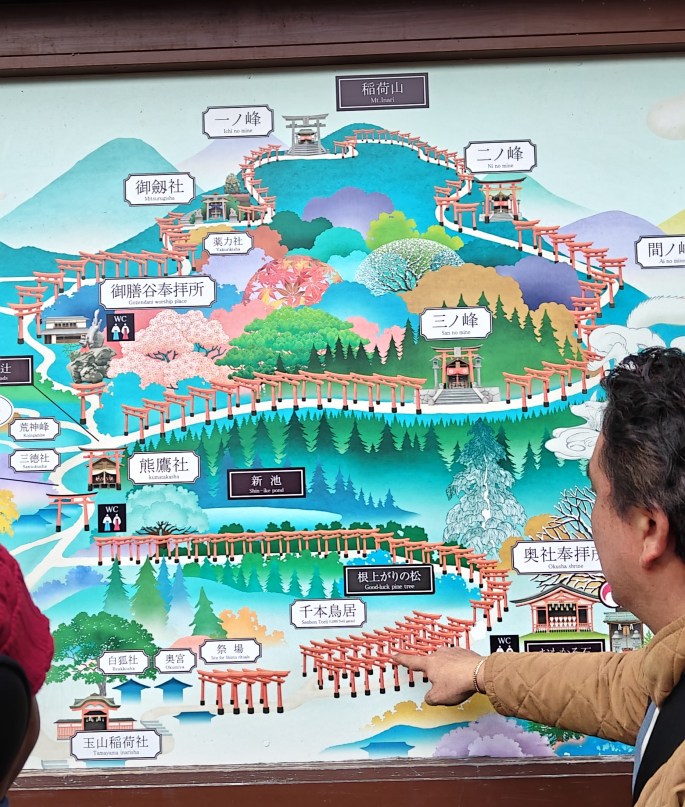
As one walks up the stairs one comes across a board explaining the location of various shrines at the temple.
Our guide shows us the tori gates on a board and explains the location
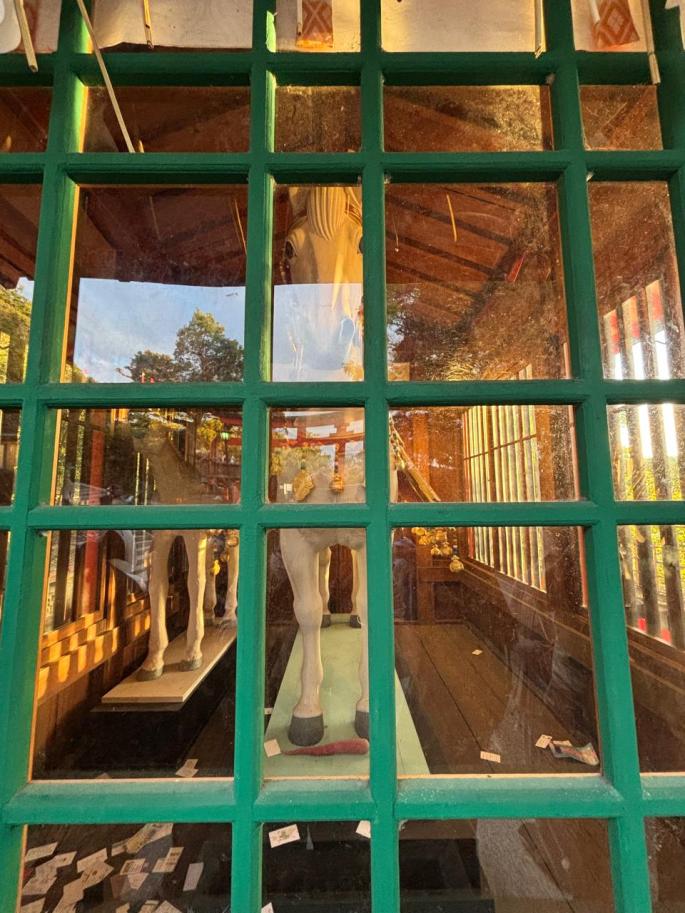
A wishing horse is another speciality here. Though the temple was primarily meant for praying for good harvest, people believe that praying to the horse for progress in business ventures is helpful. Many people put their visiting cards inside.
The wishing horse….note the cards inside the shrine
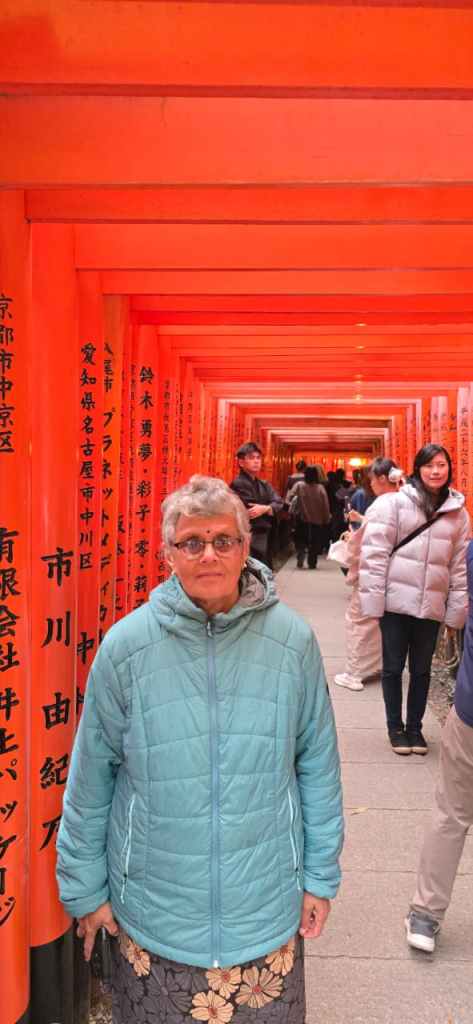
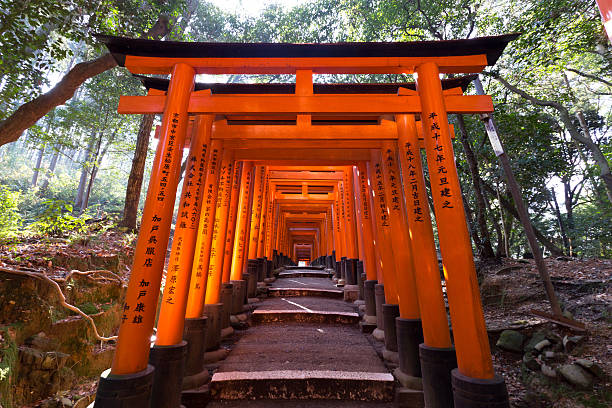
Just behind the main shrine is the entrance to the tori gate covered hiking trail which has parallel rows of gates called Senbon Torii creating an impression of a tunnel. There are believed to be ten thousand such gates that lead to the top. These gates are donations by individuals whose names are inscribed on the back of each gate.
The gates with names of donors and giving a feel of walking through a tunnel
Click on video to walk through the Tori tunnel
After the first set of parallel gates are over, you reach an open area with multiple shrines.
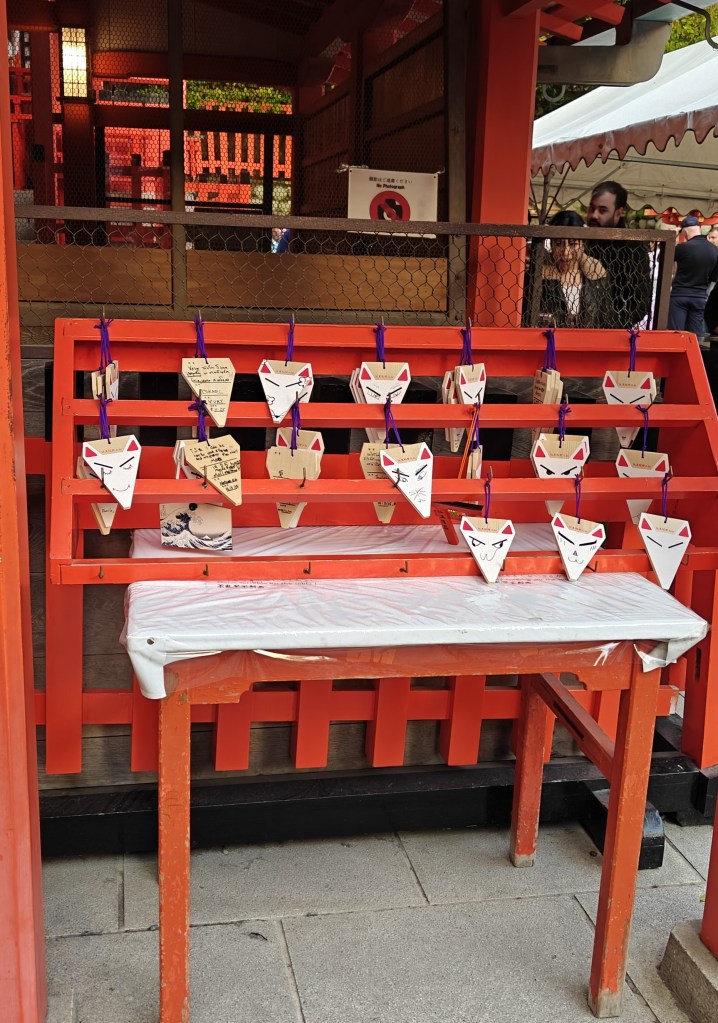
Shinto shrine with a display of fox amulets
The decorated fox statues seen all around this temple
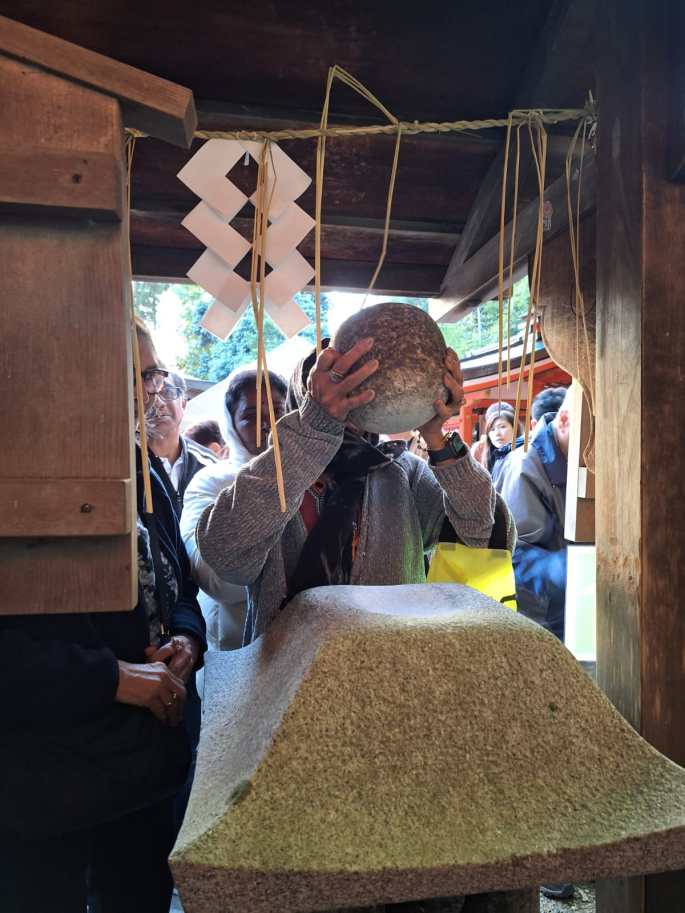
Lot of locals were trying their hand at lifting a heavy stone known as the Omokaru stone. Making a wish and lifting it is believed to grant the wish if the stone feels lighter after you make the wish.
Lifting the Omokaru stone
The gates continue from behind this upwards to the mountain and lead to several smaller shrines covering a distance of four kilometers and takes around two hours to walk.
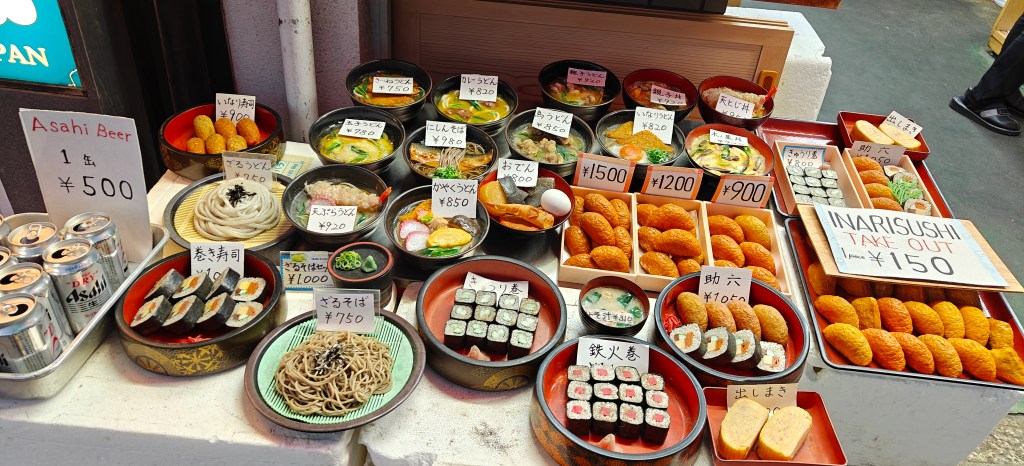
We had limited time and so walked back to our bus after visiting the temple. Like most temples in Japan, the paths leading to the temples are lined with plenty of shops selling food items and souvenirs.
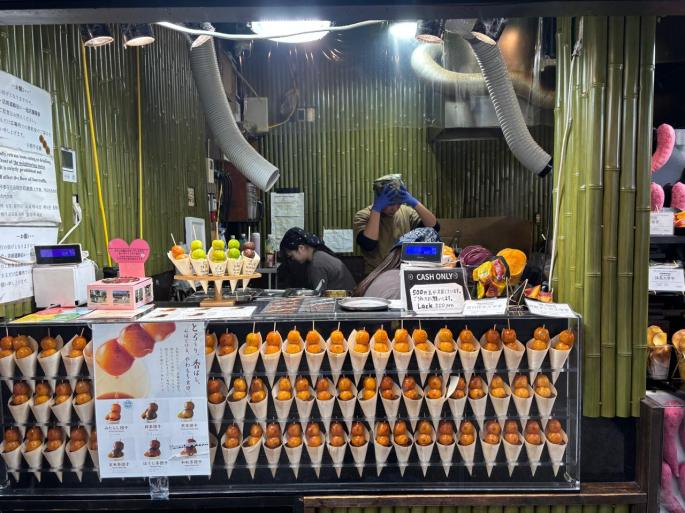
Tempting display of food items along the walking path to the temple
Enjoying some of the treats on offer, we walked to our bus after a great day of sightseeing at Kyoto.
Hope you enjoyed these unique Japanese temples.
See you next week with more from Kyoto, the beautiful Japanese city
Our second day at Tokyo saw us visiting the Rikugien garden also called the Zen Garden.
Rikugien Garden
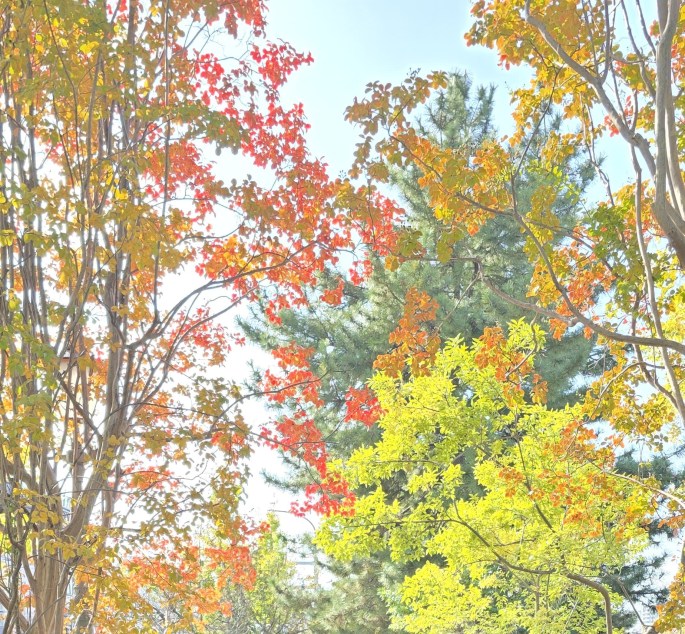
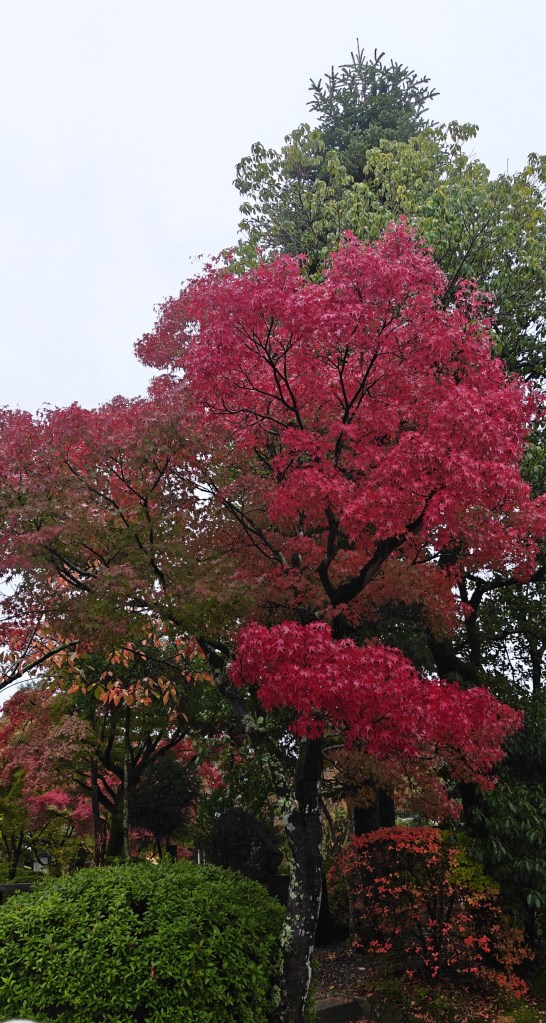
One of Tokyo’s most beautiful strolling gardens, it is a tranquil garden with a central pond, walking paths and iconic bridges representing scenes from Japanese poems. It is an ancient garden created in 1700 and offers visitors a feast of colours in all seasons. During spring, the cherry blossoms are all in bloom giving the entire garden a pinkish hue. In autumn, there is a myriad of colours leaving you mesmerised.
Night views with illumination are also organised during special occasions.
Some pictures…
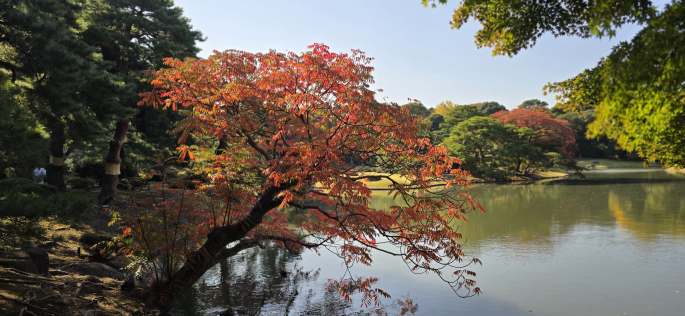
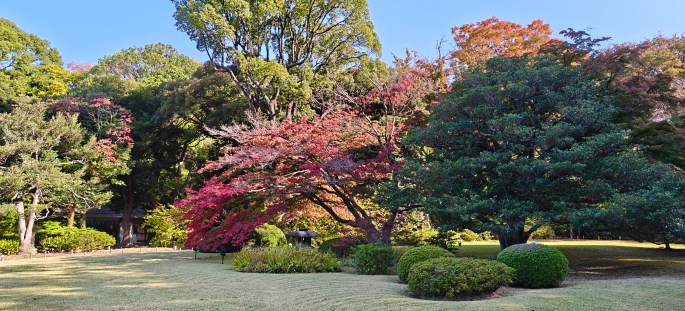
The autumn colours were just starting at…Rikugien
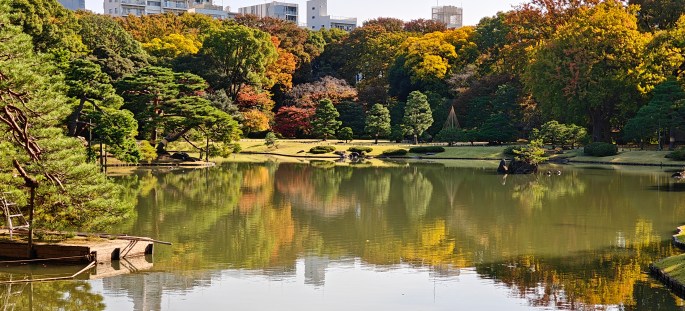
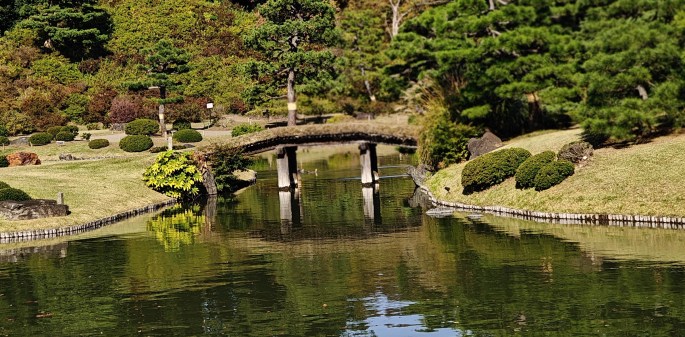
The central pond with the reflection of the trees
The bright colours of autumn
More colours….
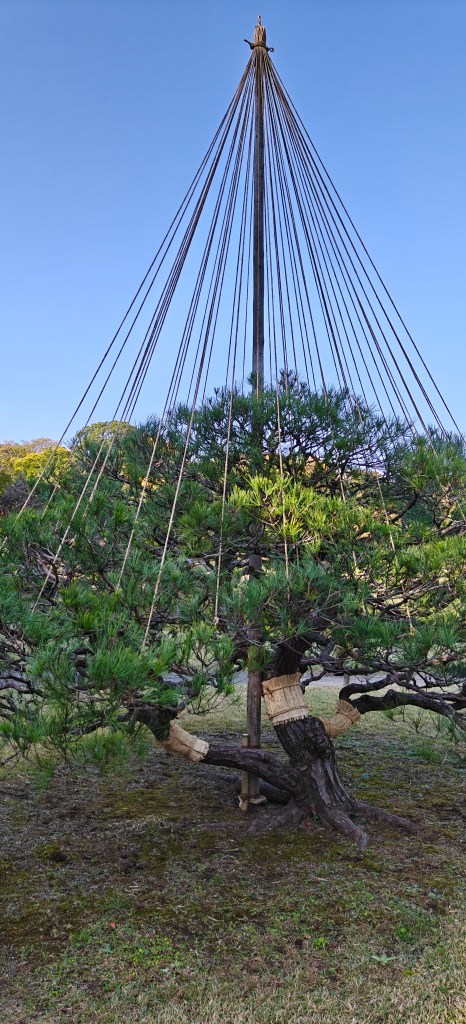
The grooming of a tree
An antique bridge adds to the beauty
After those amazing autumn colours at the garden, we proceeded to the Meiji-jingu shrine
The Meiji Jingu shrine
This shrine is peculiar in that it is dedicated to the deified spirits of Emperor Meiji and Empress Shoken ; the first Emperor and Empress of modern Japan. However, the Emperor’s grave is not located here but in Kyoto. It was built between 1920 and 1926 and lies in a man made tranquil forested area with gardens and long walking tracks in the midst of the Tokyo hustle.
Shinto is the original Japanese religion with no founder, no holy book but values harmony with nature and a true sincere heart. They believe anything divine is Kami (spirit).
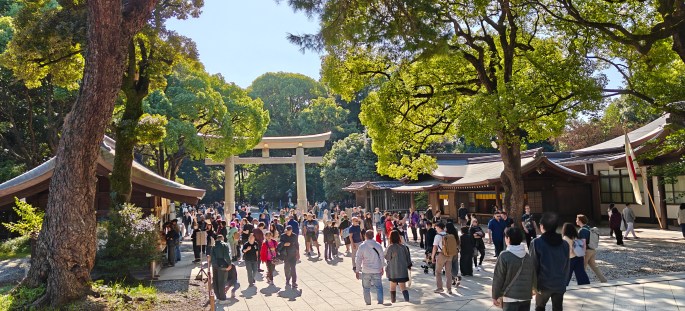
The tranquil surroundings of the forest were really appealing in spite of the crowds.
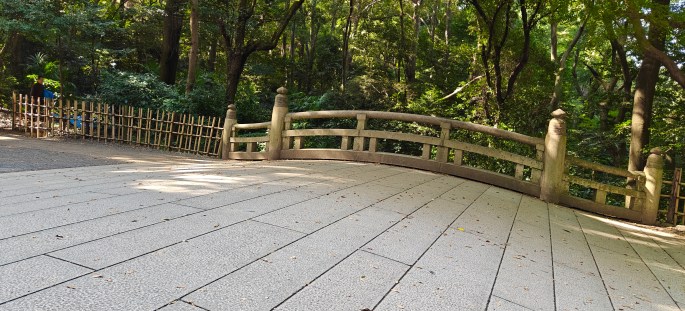
In less crowded times; it would be a very meditative experience…..my thoughts as I walked along…
A traditional bridge in tranquil surroundings
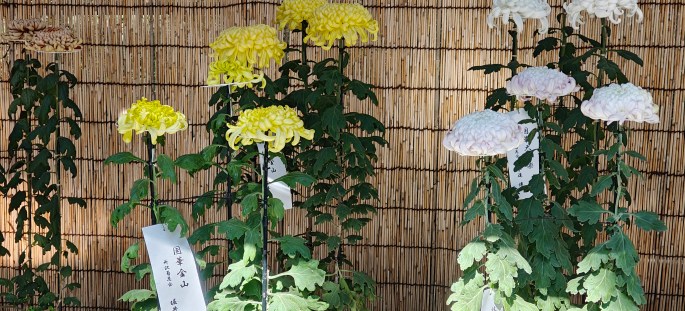
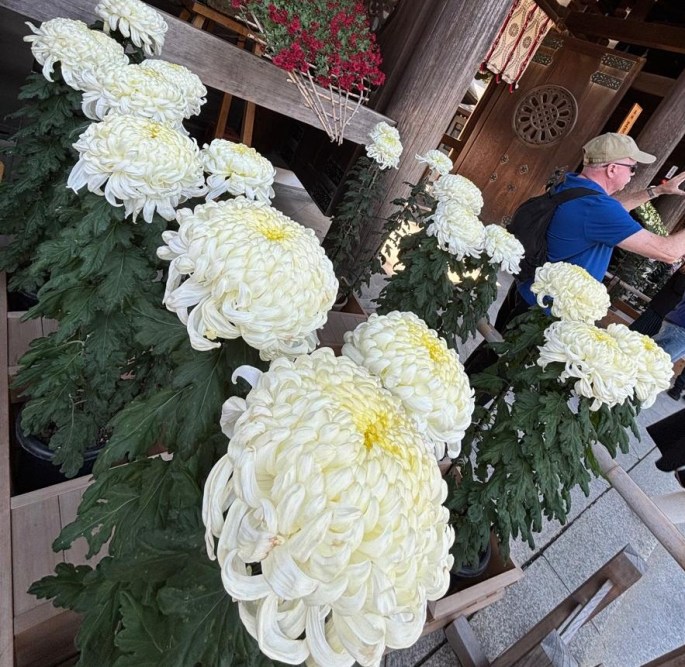
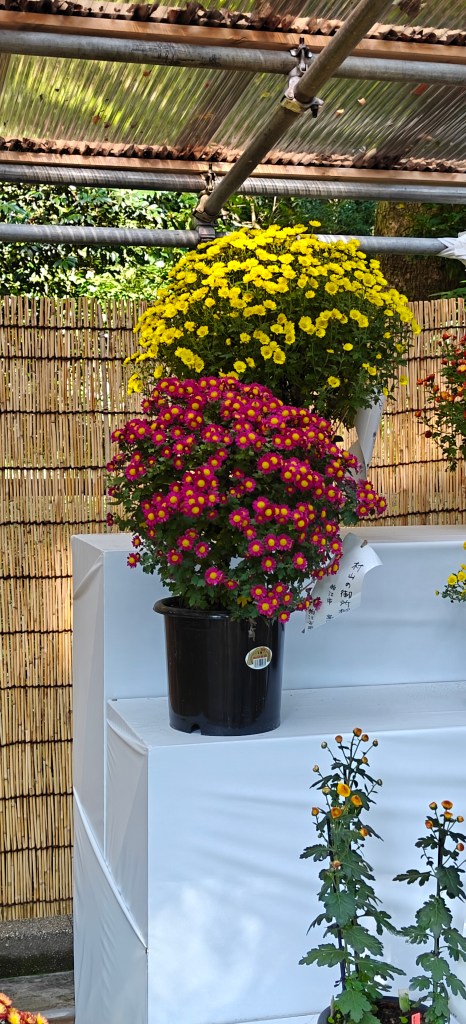
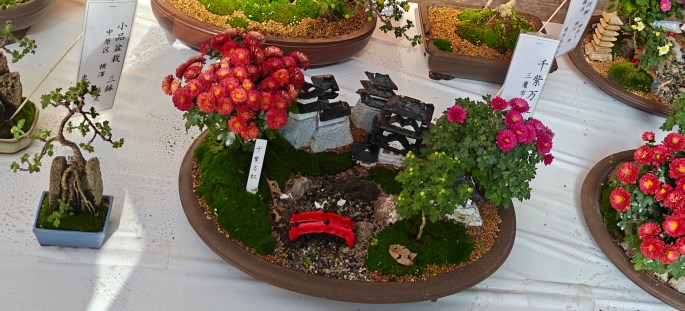
Chrysanthemum is the national flower of the Japan and the symbol of the Imperial family . A beautiful display of Chrysanthemum flowers and bonsai trees greeted us to the shrine.
The Chrysanthemum and bonsai display
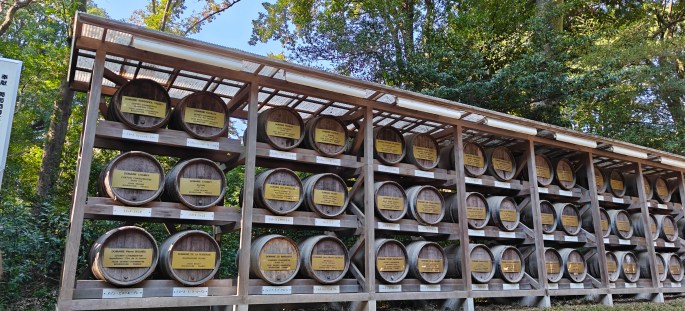
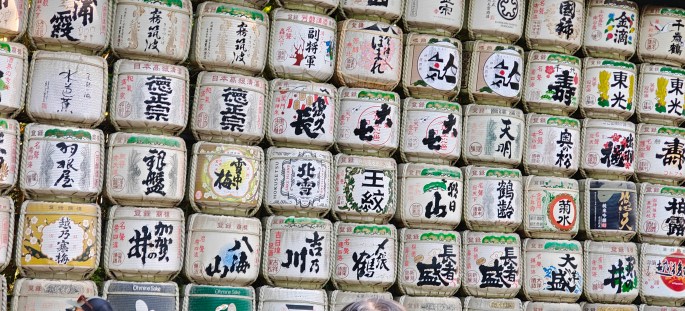
One of the unique features of this shrine are the barrels of wine and Sake displayed decoratively.
Along the pathway on one side are displayed wine barrels. Emperor Meiji loved French wine and encouraged the adoption of western cultures in the Meiji period when Japan started getting modern. Barrels of French wine were donated and is still offered at the temple.
Wine barrels with the donor’s name
On the opposite side , parallel to this are displayed decorated Sake barrels.ake plays a very important role in Shinto . Emperor Meiji encouraged technological advancements in all areas including sake production. The barrels displayed here are empty and are offered along with sake in bottles as a token of gratitude by brewers.
The juxtaposition of traditional Sake with modern Wine is symbolic of the adoption of modern while retaining the traditional; an approach adopted by Japan in the Meiji period
Sake barrels
Walking along the gardens one reaches the Tori gate that mark the entrance to the sacred area of the temple. The Tori gate has Chrysanthemum crests which signify the connection of the royal family with Meiji-Jingu.
Tori gate with chrysanthemum crest
An open courtyard lies ahead of the gate
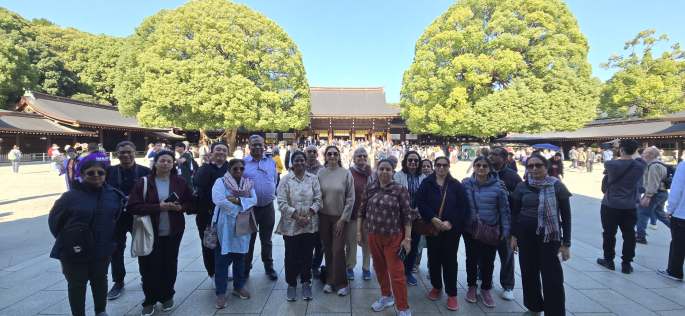
A group picture in at courtyard leading to the main shrine
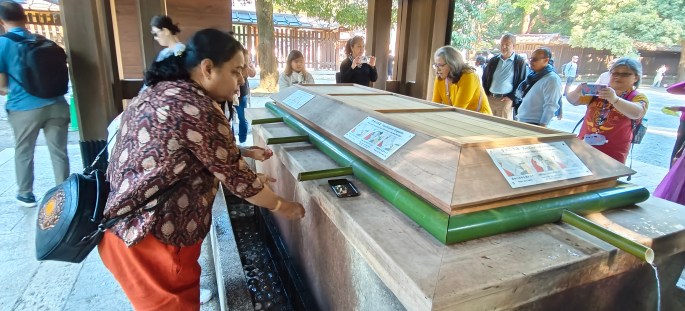
A Temizusha or purification area where one can wash one’s hands and mouth to purify oneself before visiting the shrine greets us here.
The Temizusha
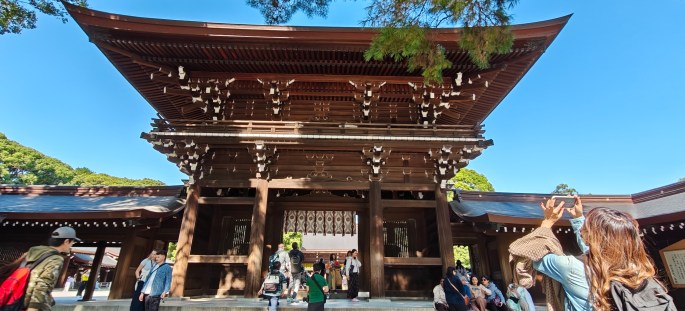
Next is the Minami Shinmon or the main gate which is a grand, traditional wooden gate of impressive size, featuring ornate details, a teal roof, and marking the main entrance to the inner shrine area.
Minami Shinmon
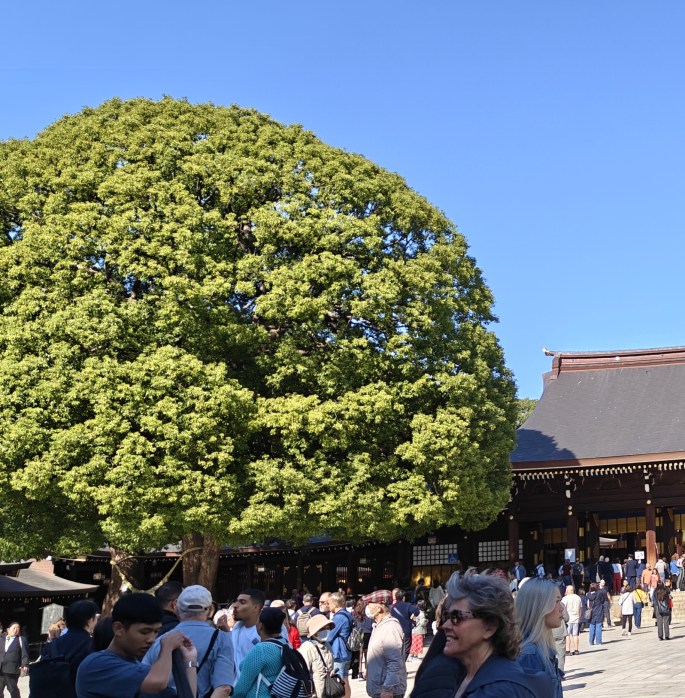
Two large camphor trees…the husband and wife trees stand in the foreground of the main shrine. linked by a rope symbolising happy marriage.
The husband and wife camphor trees bound by a rope
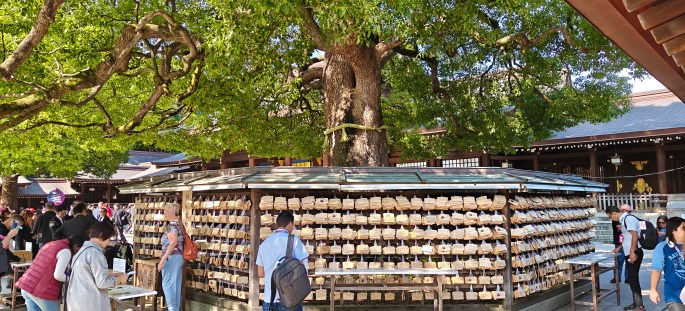
Ema or wooden plaques where one can write one’s wishes or feelings of gratitude are available and many locals tie it around the tree.
Ema or wish amulets
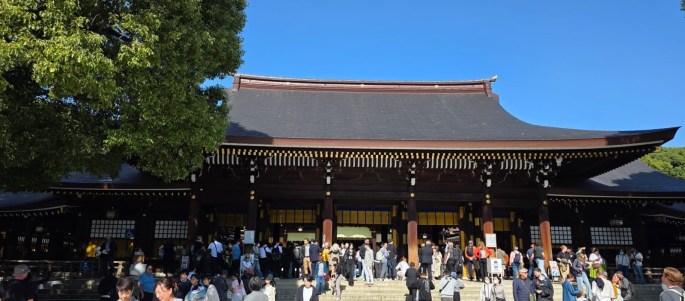
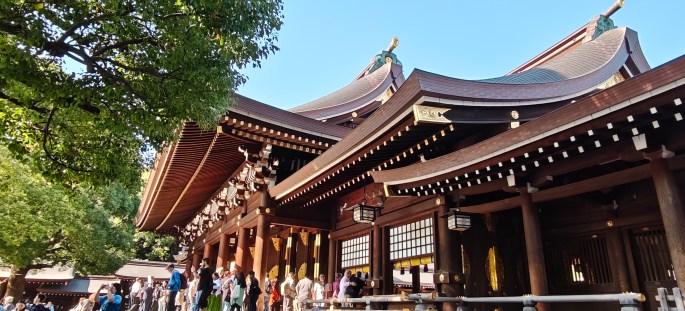
That led us to the ornate main shrine. The intricate designs and architecture of this structure is strikingly similar to many Hindu temples of Kerala.
The main sanctuary with beautiful architecture
After this cultural treat, we headed to a Japanese restaurant for lunch. More on that later….
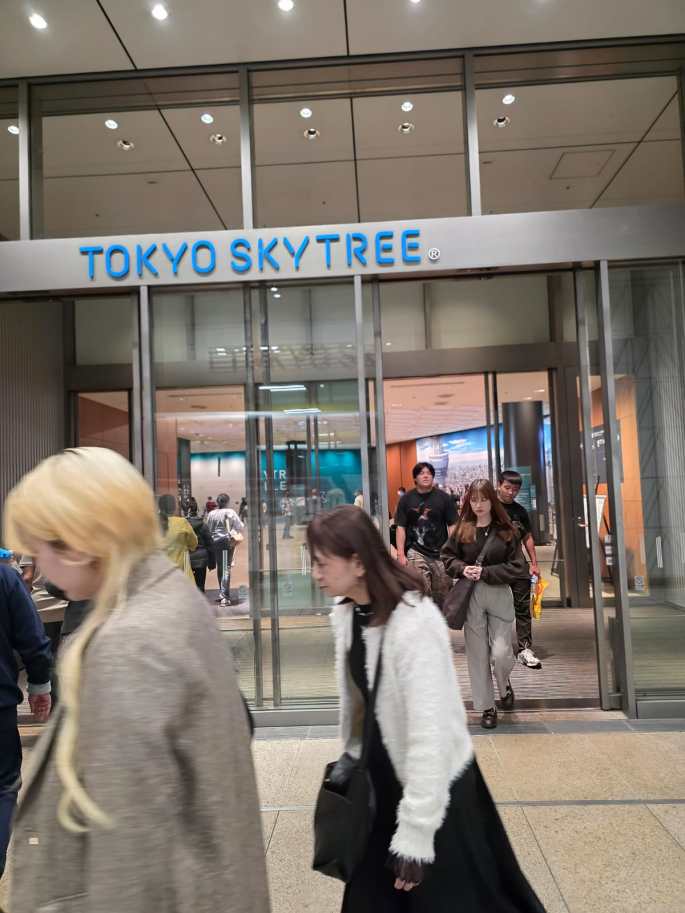
Post lunch we headed to the Skytree, the towering icon of Tokyo
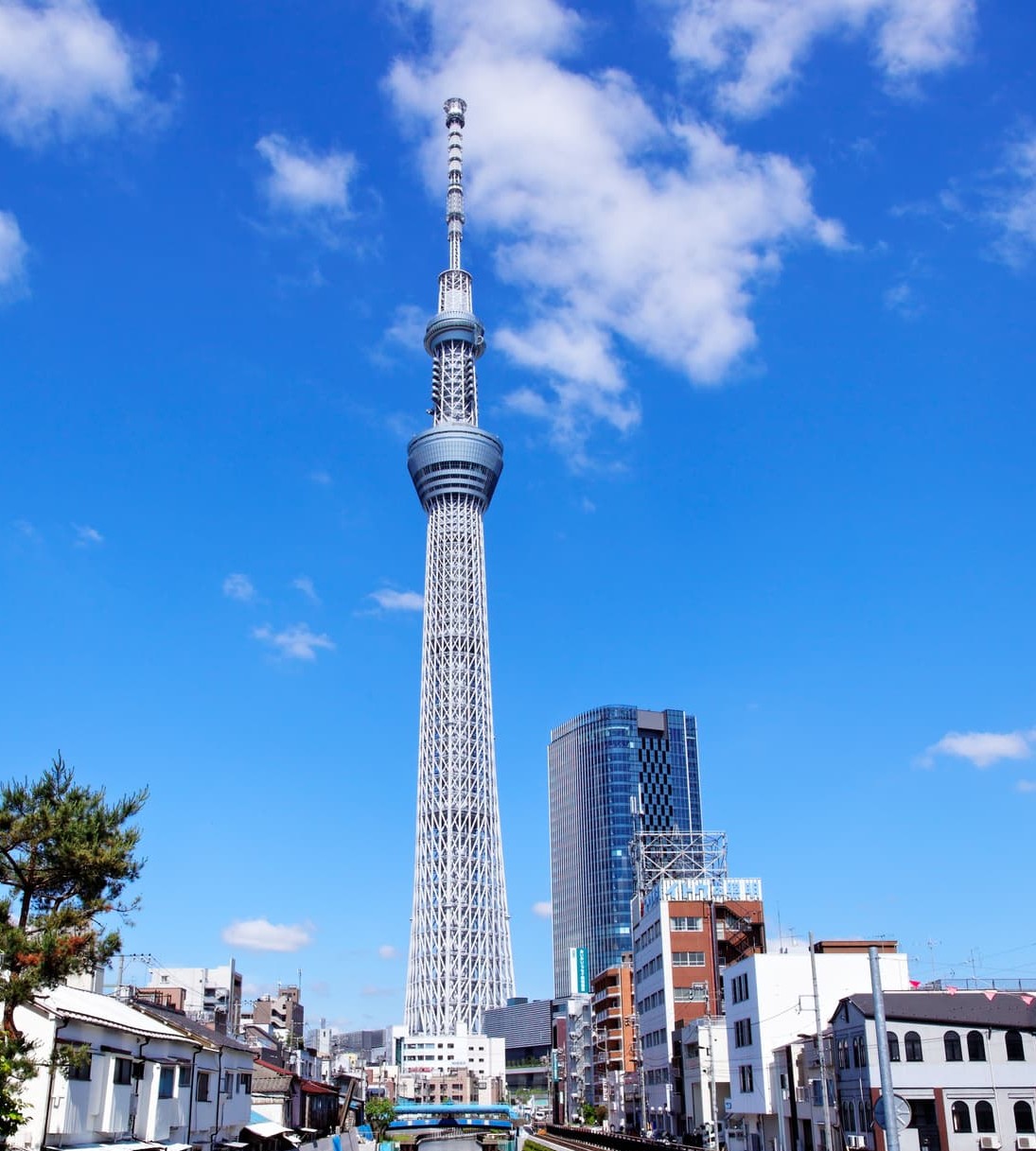
Tokyo Skytree
This is a broadcasting and observation tower located in Tokyo. At 634 mts., it is the tallest tower in the world. The older Tokyo tower no longer gives digital broadcasting coverage as it is surrounded by high rise buildings.
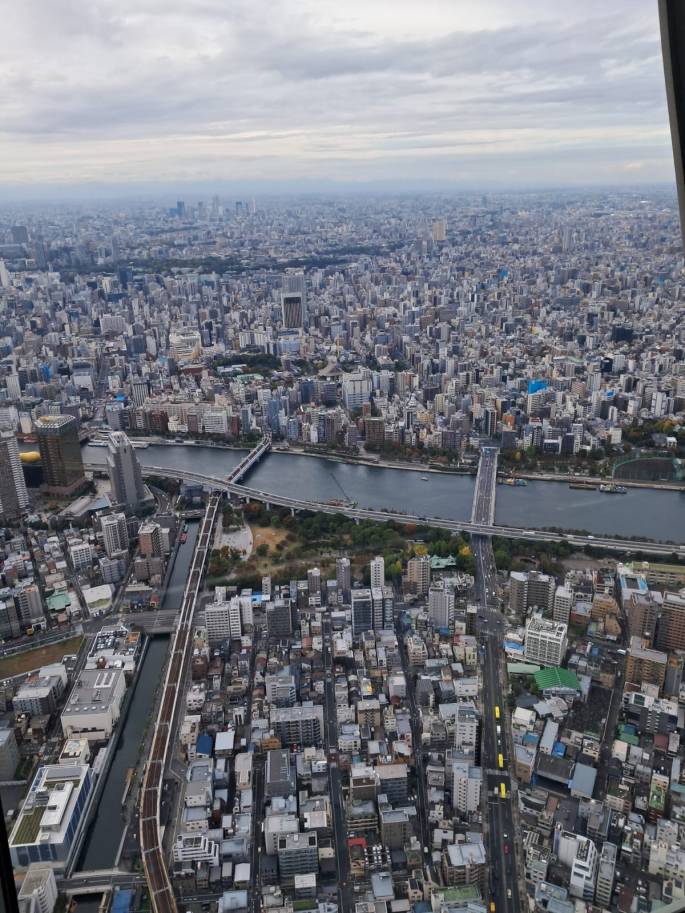
The base of the tower is shaped like a tripod but from a height of 350 mts, the structure is cylindrical and gives panoramic views of the city and the Sumida river. There are two observatories at 350 mts and 450 mts height. There is a glass skywalk that gives a direct view of the streets below.
A view of Mt Fuji from this tower is a coveted sight on clear days.
Some pictures…
The Sky tree
Entrance to the Skytree
Sky tree and the old Tokyo tower as seen from our hotel
Four ultra speed elevators takes us to the Tembo deck which is the observatory . These lift decorations feature the four seasons and operate at 600mt/minute speed. It reaches the deck in about 50 seconds.
The lift reaching the deck as shown on a video inside the elevator.(click on video)
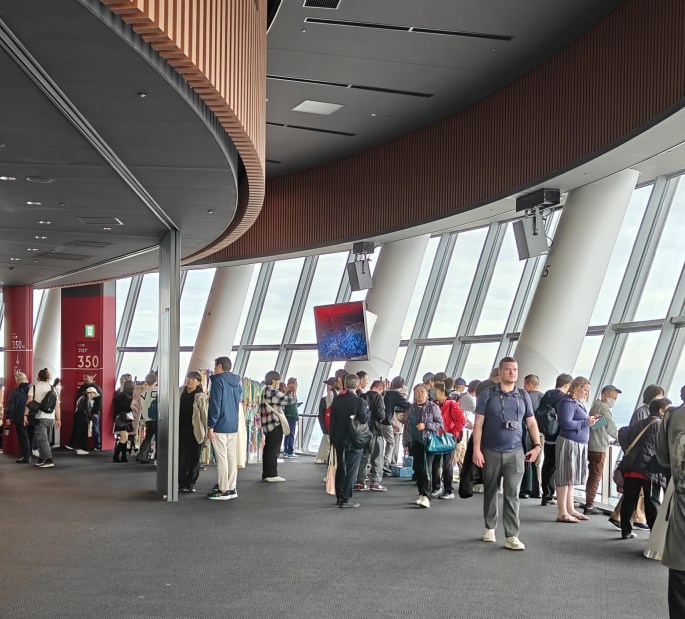
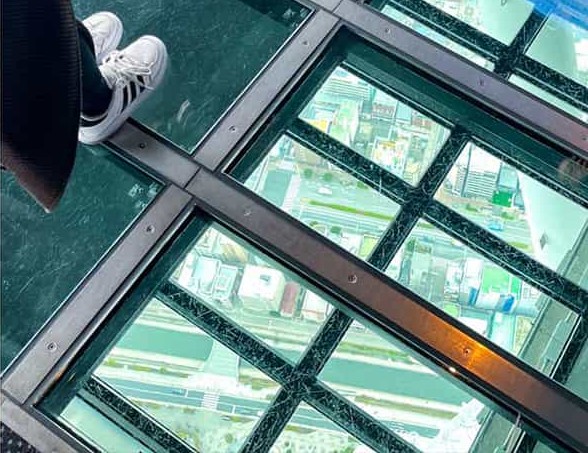
The Tembo deck or observatory is circular and has large glass panes around providing views all round. A part of the deck has glass floor which gives views of the steel framework and the street below. At various points along the circumference are signboards guiding us to the important landmarks visible from that direction.
The Tembo Deck
Glass floor
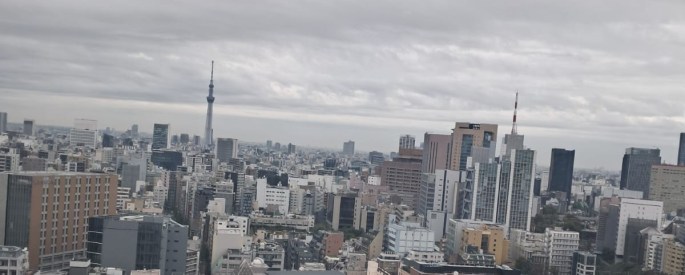
Views of Tokyo city and the Sumida river from the deck
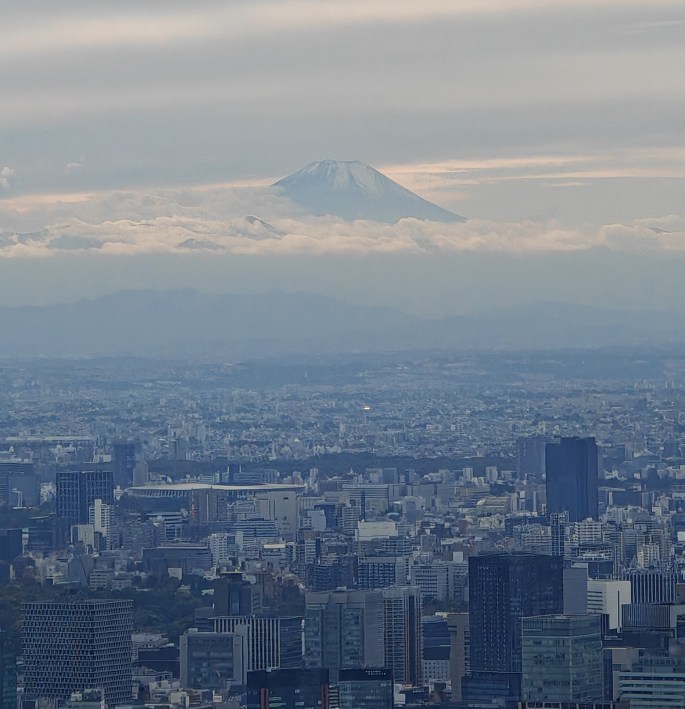
Sky tree provides views of Mt Fuji on clear days. Unfortunately it was hazy when we were at the sky tree. However we got a fleeting sight as the clouds decided to grace us!!
Blessed with a fleeting view of Mt Fuji as the clouds cleared.
A cafe and souvenir shop also function here.
Evenings see the Sky tree illuminated in various hues. …Iki, Miyabi and Nobori themes. The Iki theme is the water theme in tribute to the sumida river and has the central tower in faint blue.
The sky tree illuminated in Iki theme
From here we headed back to our hotel for dinner and rest . Next day we were to head for Yamanashi for Mt Fuji views.
It must be amply clear by now how Tokyo truly amalgamates the ancient and the modern.
See you next week from Mt. Fuji. Till then, do subscribe, like and comment.
Tokyo is Japan’s bustling capital that provides the visitor a taste of diverse experiences ranging from the ultra modern to the traditional. With its towering skyscrapers, neon lights and flyovers crisscrossing the Sumida river on one side and traditional temples like the Senso-ji and Meiji Jinku on the other ; it is truly an amalgam of modern and traditional Japan. It is exceptionally clean and so difficult to find a public dustbin ; that we wonder if it really is the world’s most populous metropolitan area ?
It is the main economic centre of the country and the seat of the government and the Emperor of Japan. Originally known as Edo, it has evolved from a small fishing village to what it is today. And one has to remember that all this has been achieved in spite of numerous earthquakes and the World wars that plundered it.
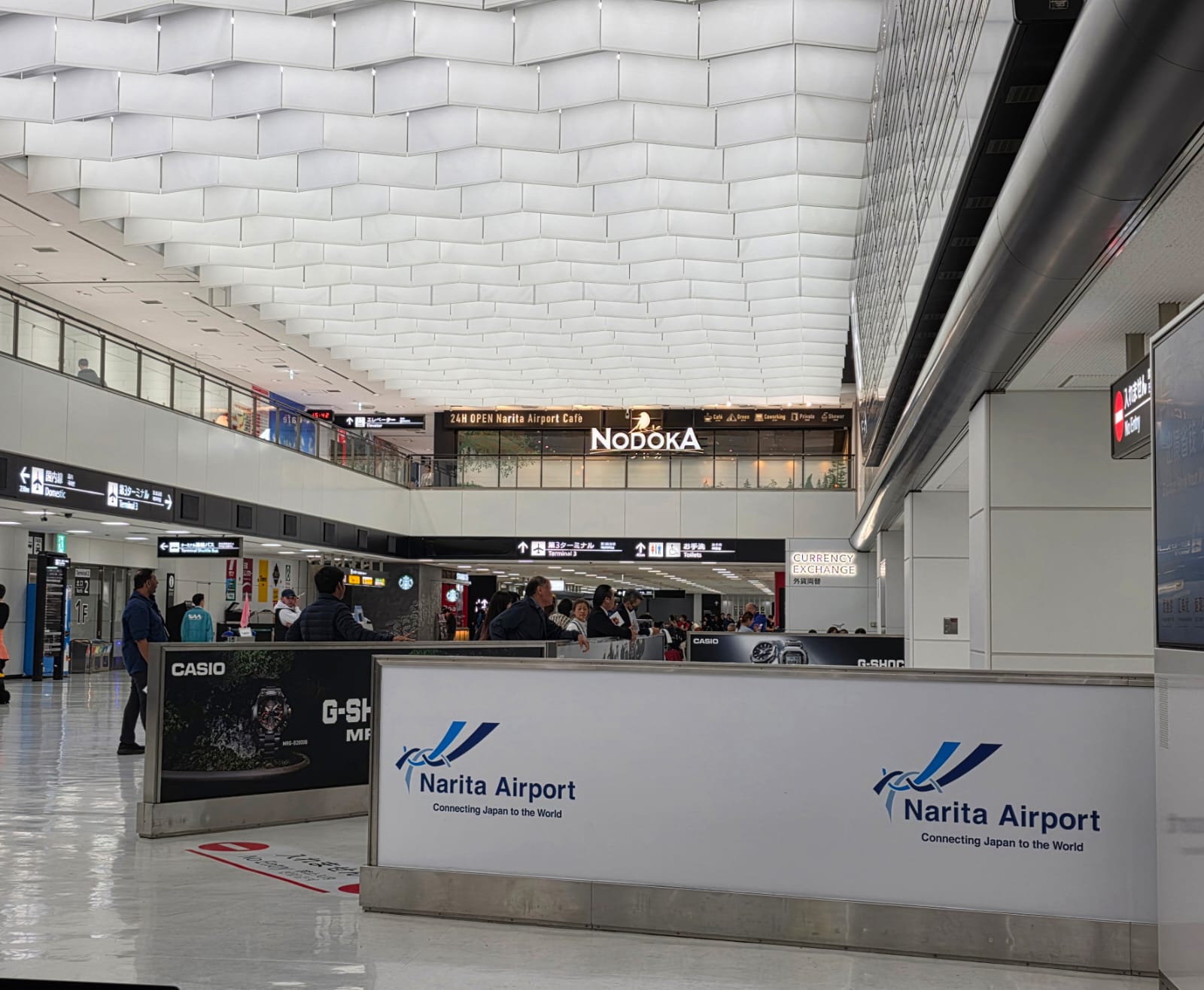
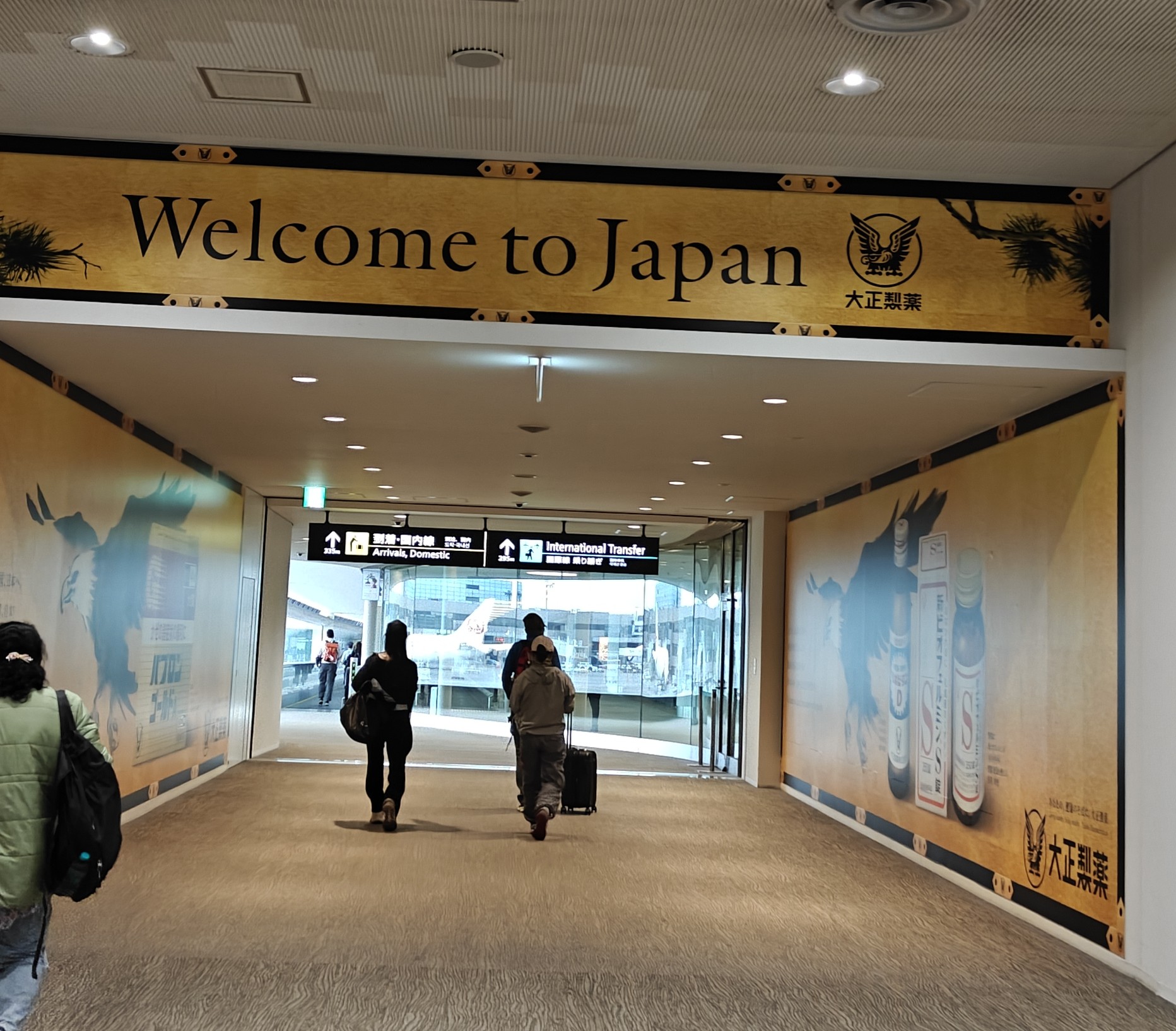
Landing at Narita airport, these were the signs that greeted us…
First glimpses of Japan
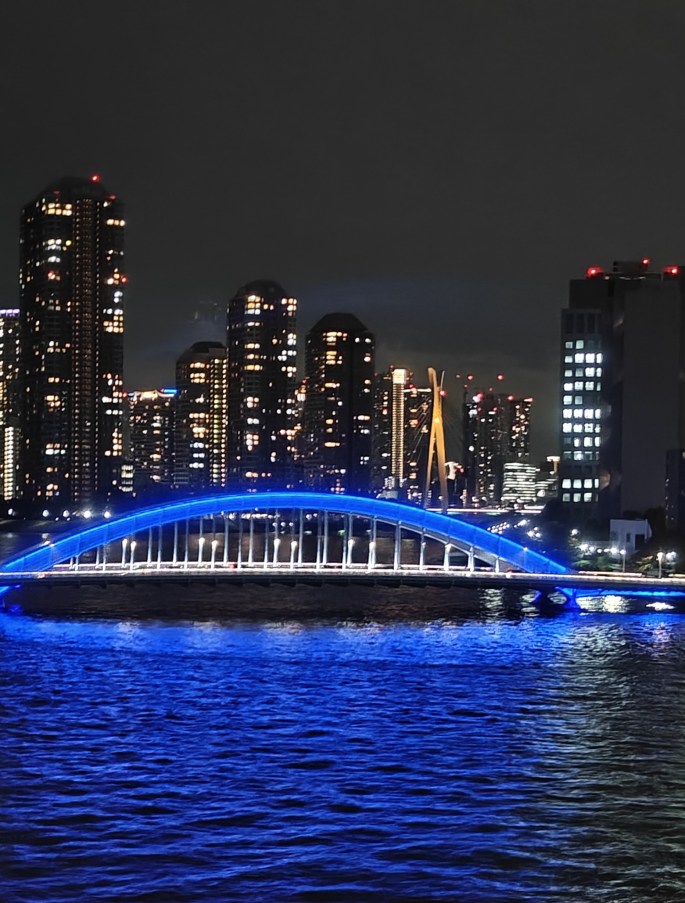
Driving from Narita airport to town, we did see the towering skyscrapers, flyovers and sparkling billboards of modern Tokyo.
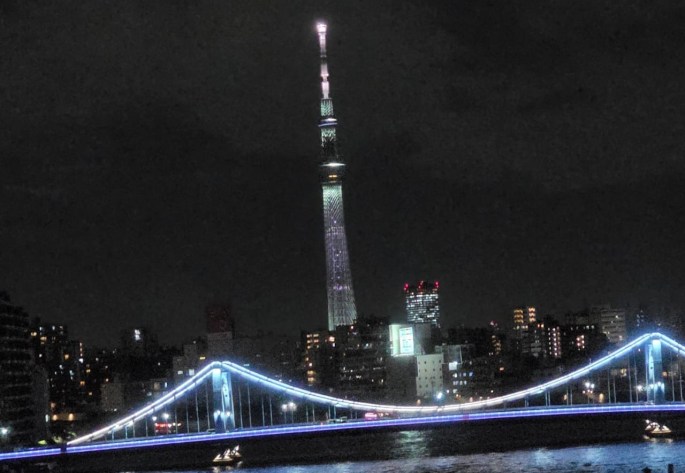
A beautifully lit bridge on the Sumida river with skyscrapers in the background
The busy locals and the colourful billboards
The disciplined movement of traffic is something that is striking!!!! (click on video)
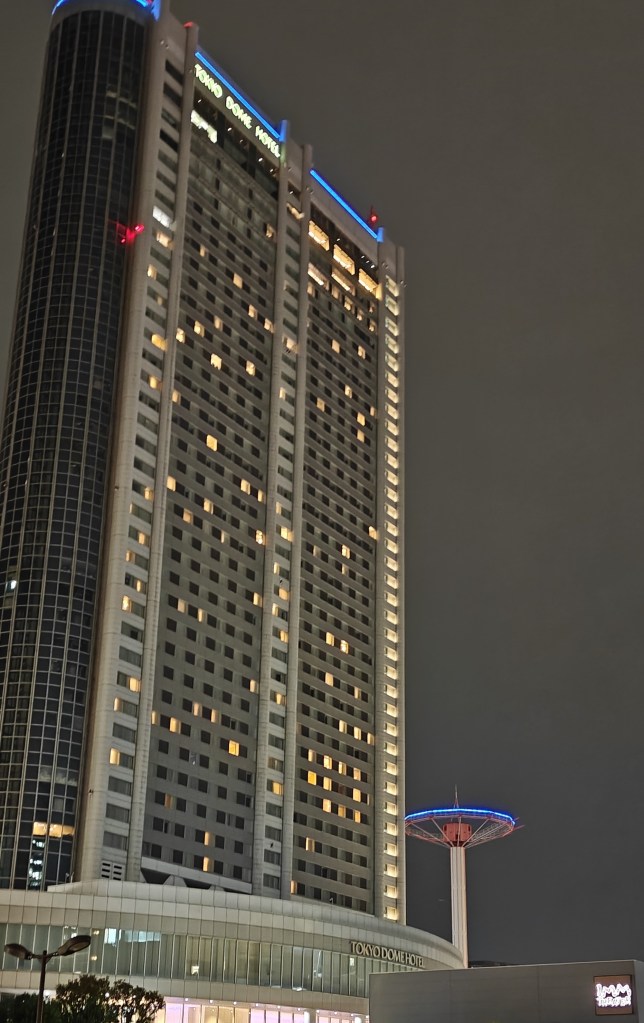
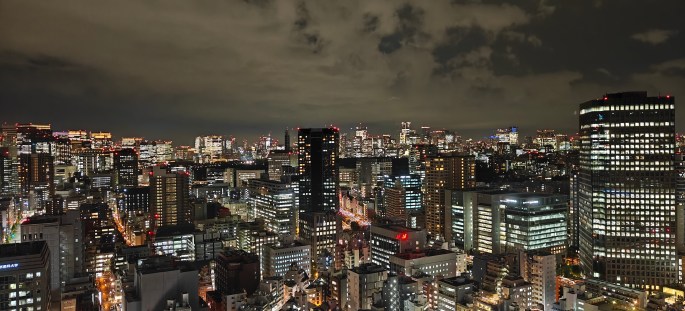
We checked into the beautiful Tokyo Dome Hotel and the views from there were wonderful.
The Hotel and a bird’s eye view of Tokyo city
This Hotel is part of an entertainment arena called Tokyo Dome. It has various fun activities and shopping areas in the complex.
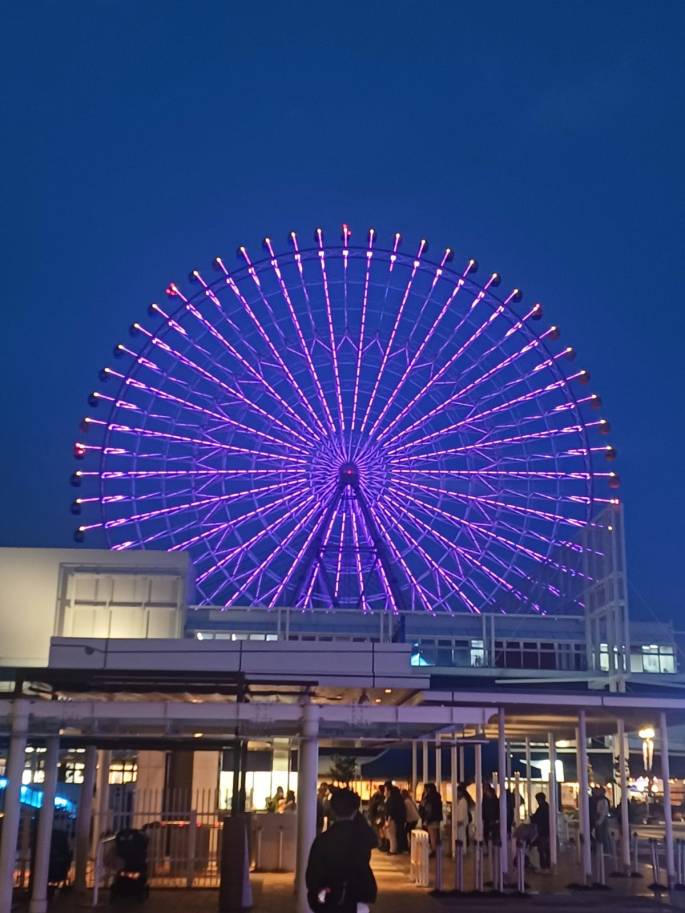
The illuminated Tokyo Dome arena and entertainment area (click on video)
The brightly lit ferris wheel in the shopping area.
Next morning, looking down from our hotel room, the organised movement of people at the signal amused us as they resembled small black ants….click on the video below for some fun…
Bird’s eye view of the start to a day at Tokyo…(click on video)
Soon we were on our way looking around and we first visited the Imperial Palace and garden.
Imperial Palace and Garden
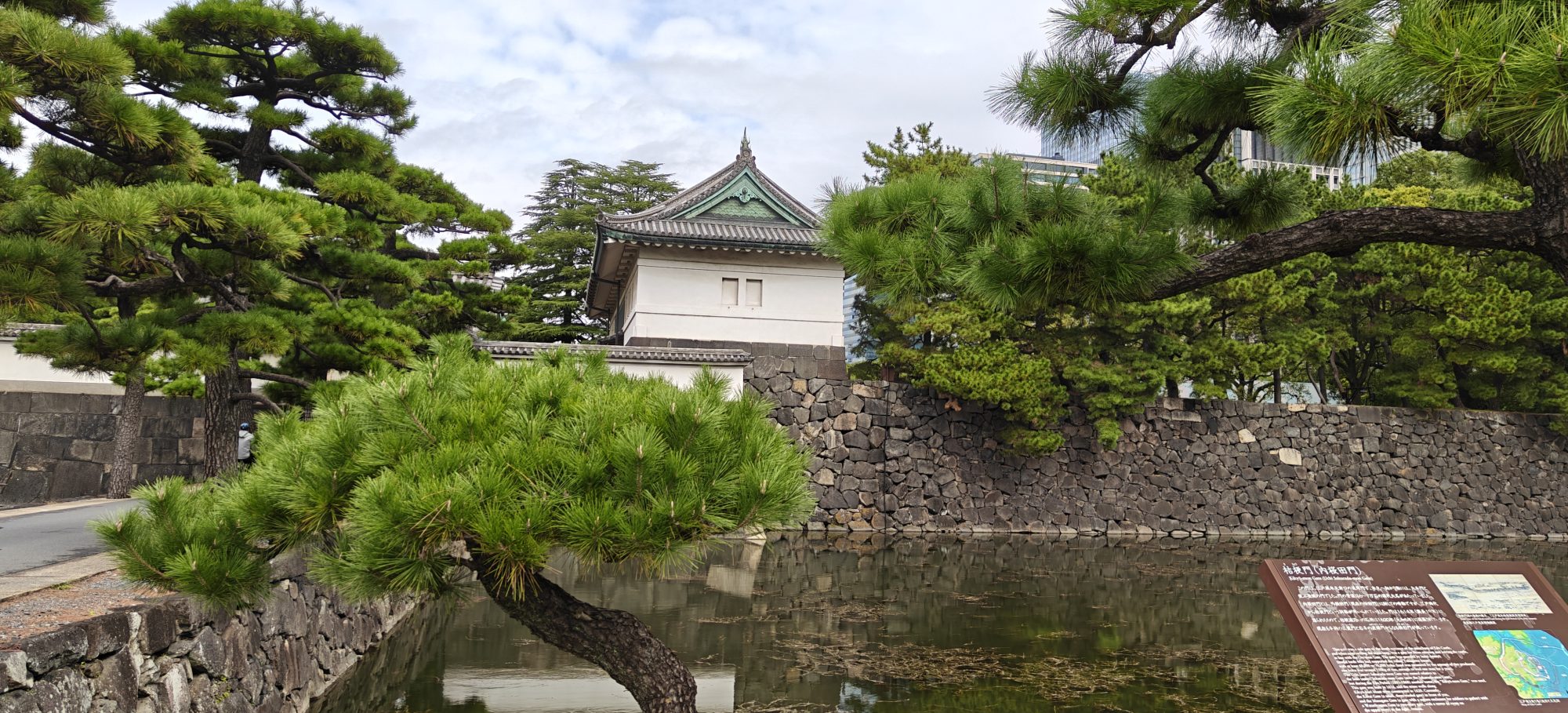
The primary residence of Japan’s Emperor, this palace is located on the grounds of the former Edo Castle. It features Japanese style gardens with historic castle ruins, moats, walls and the Nijubashi Bridge. The outer gardens are accessible to the public but the inner gardens are not.
Some pictures…
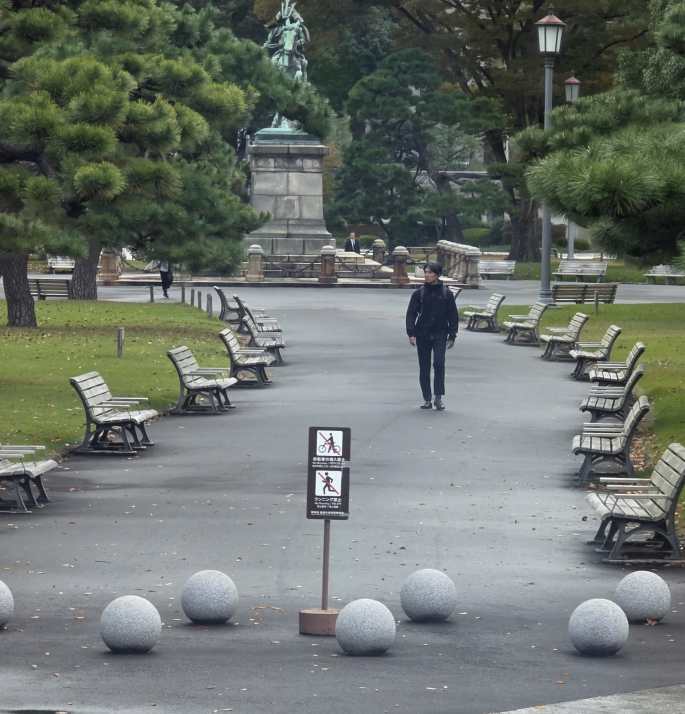
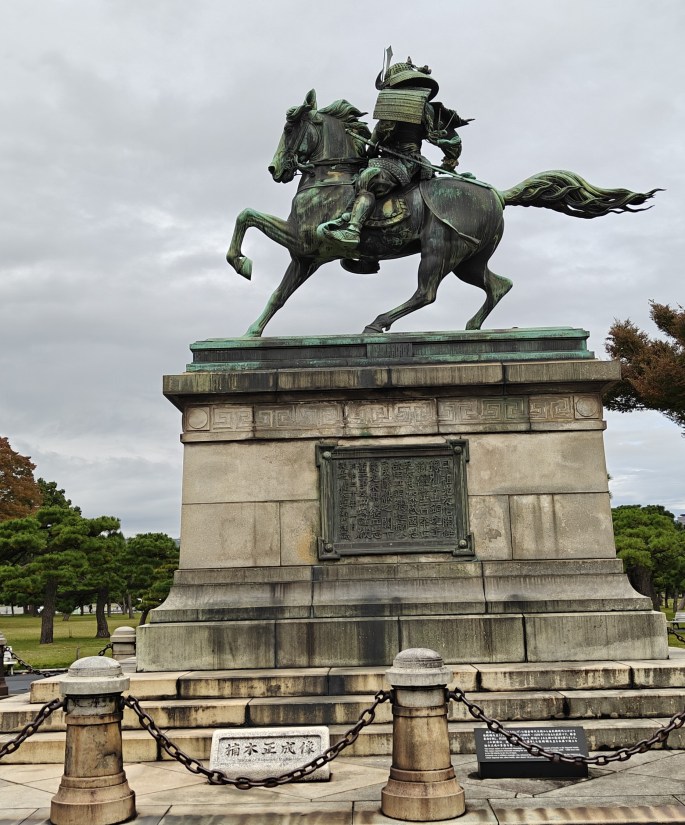
A bronze statue of Kusunoki Masashige a famous 14th century samurai adorns the pathway of the garden near the palace. He was very loyal to the Emperor and is seen here awaiting his return from exile. It is regarded as one of Tokyo’s important bronze statues.
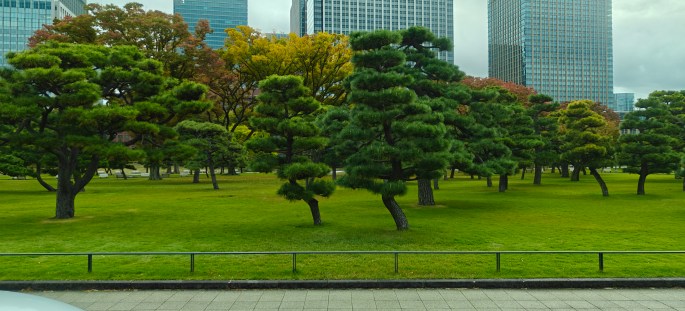
The garden
The bronze samurai
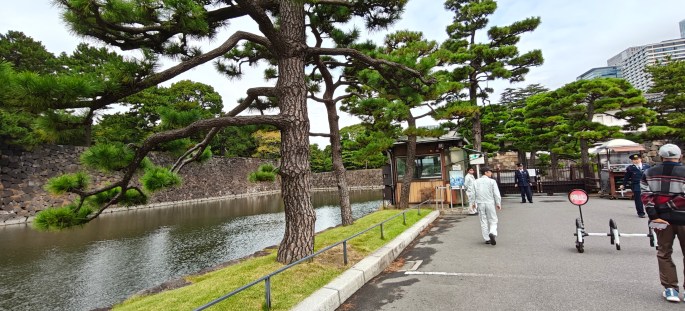
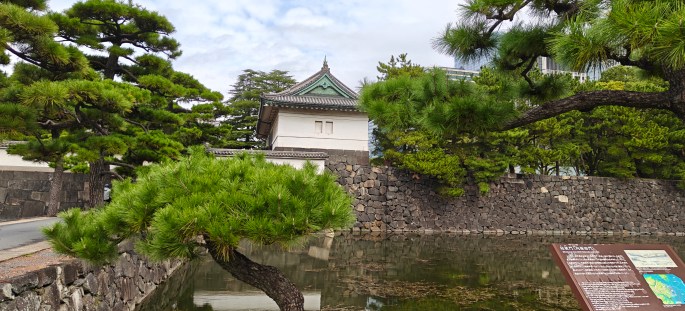
The Japanese style garden with bonsai trees
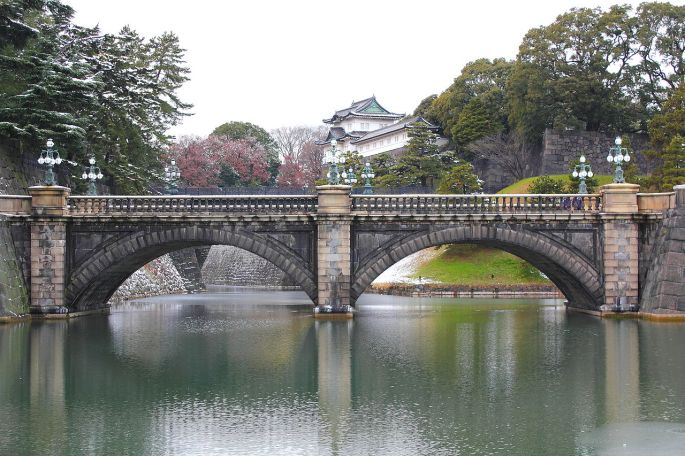
The Nijubashi bridge across the moat is famous for its two arches like two eyes. Behind it is the original bridge and to the left is the main entrance to the palace
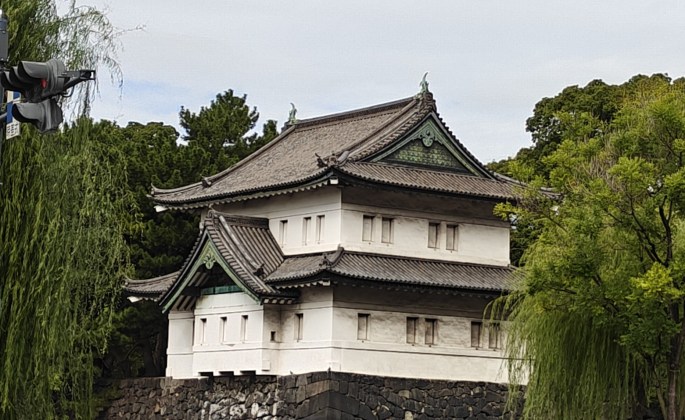
Nijubashi bridge with the palace watchtower behind
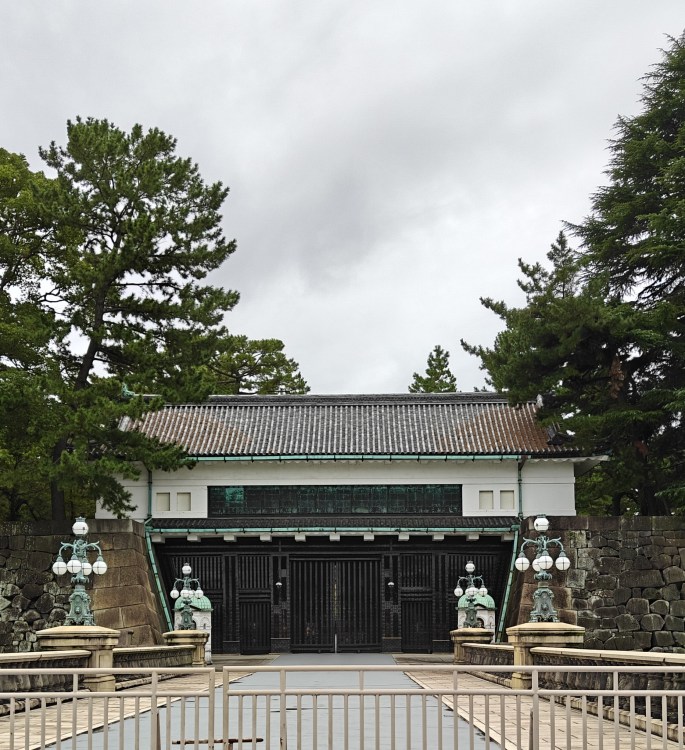
The palace gates
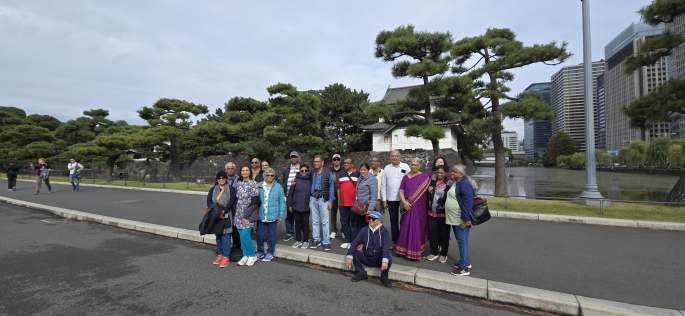
Our group at the outer gardens
The entrance to the inner gardens
Some of the buildings in the palace complex with stone walls and moats around
From here we proceeded to the Asakusa temple also called the Senso-ji temple.
Senso-ji Temple (Asakusa Temple)
Dedicated to Kannon, the Bodhisattva of compassion it is believed to be one of the most widely visited religious sites in the world.
The senso-ji legend
In 628 AD, two brothers discovered the statue of Kannon while fishing in the Sumida river. The statue was 5.5 cms in height and made of pure gold. This idol is housed in this temple which was completed in 650 AD making it Tokyo’s oldest temple.
Asakusa was at that time, a small fishing village in the Tokyo bay. Visitors flocking to worship Kannon increased the popularity of not only the temple but Asakusa too. Gradually the placed developed and by the 18th century, it became a very busy part of the city. Destroyed during an air raid in WW II, it was rebuilt in 1950.
The Temple
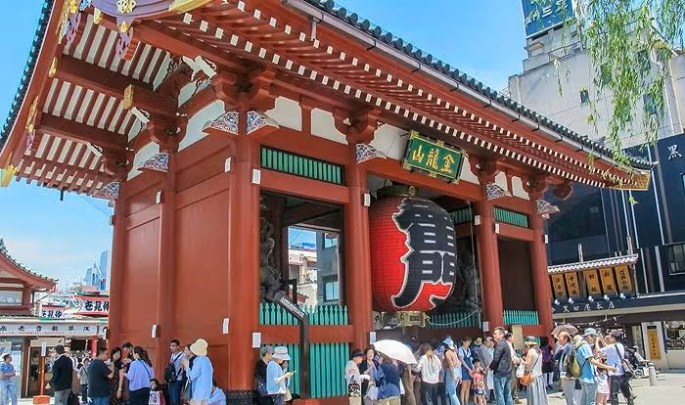
The entrance to the temple is dominated by a Thunder Gate with a massive lantern painted in red and black suggesting thunder clouds and lightning.
The Thunder gate
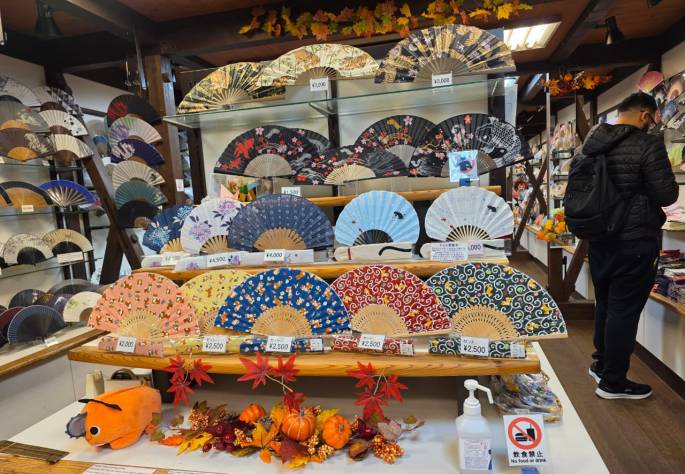
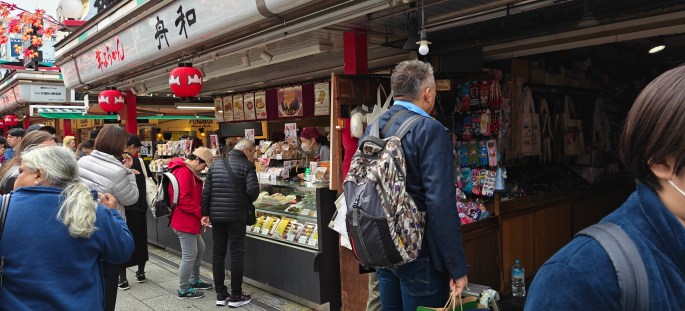
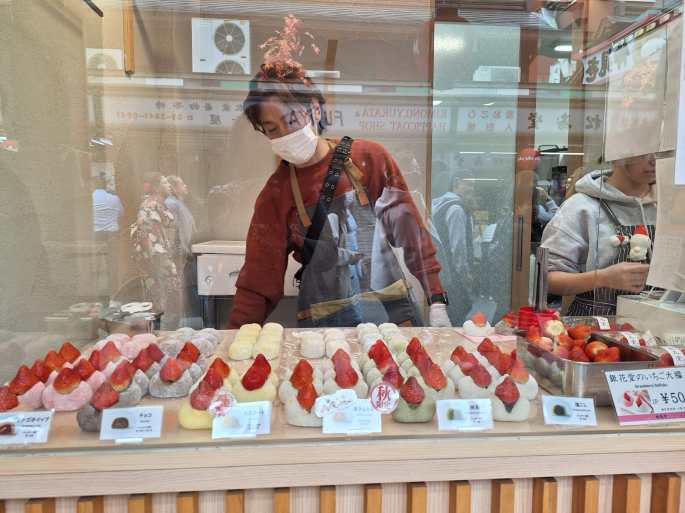
This gate leads to the Nakamise-dori the shopping street that has shops selling food items, souvenirs, Buddhist scrolls, kimonos, traditional fans and curios.This shopping street was established after the locals were given permission to run the businesses in exchange for keeping the street clean.
Nakamise -dori (The shopping street)
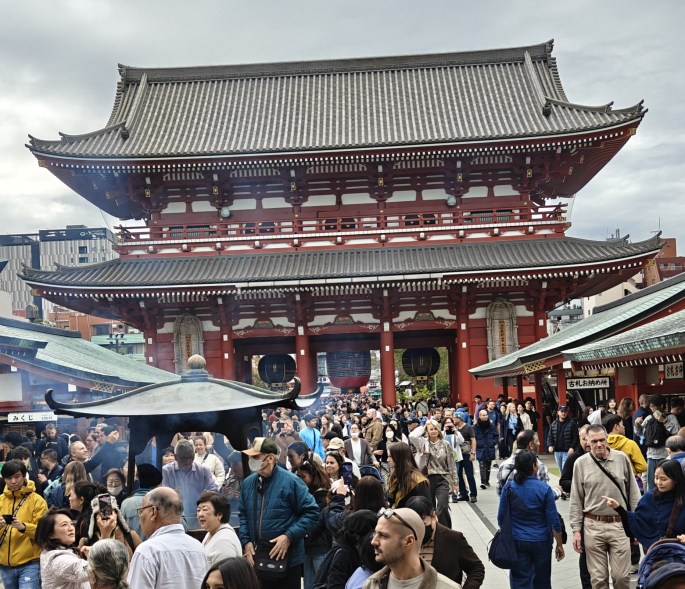
The shopping street ends at the inner gate or the Treasure house gate which is a two storey gate with Senso-ji’s treasures in the upper floor.
Treasure house gate
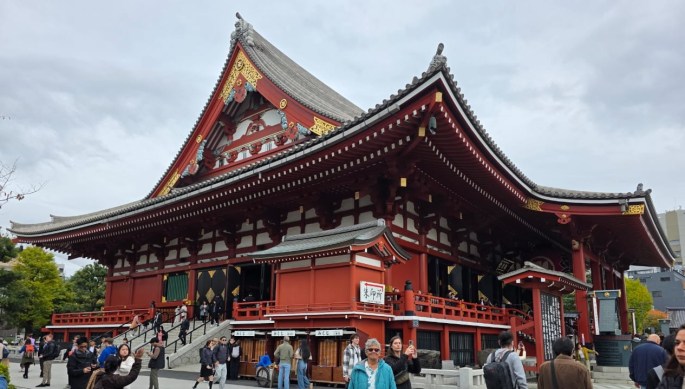
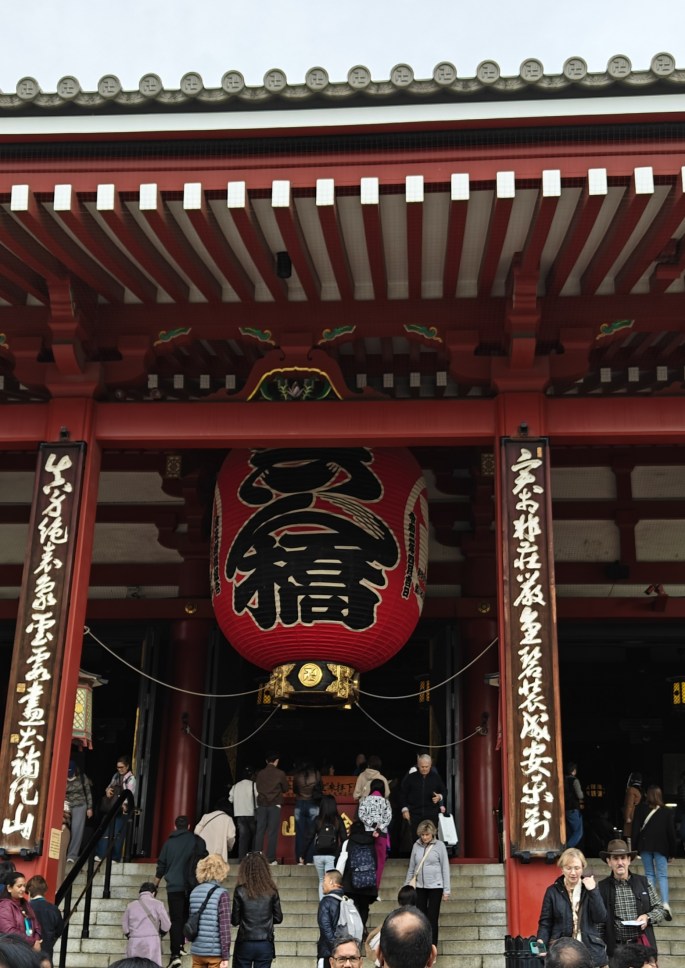
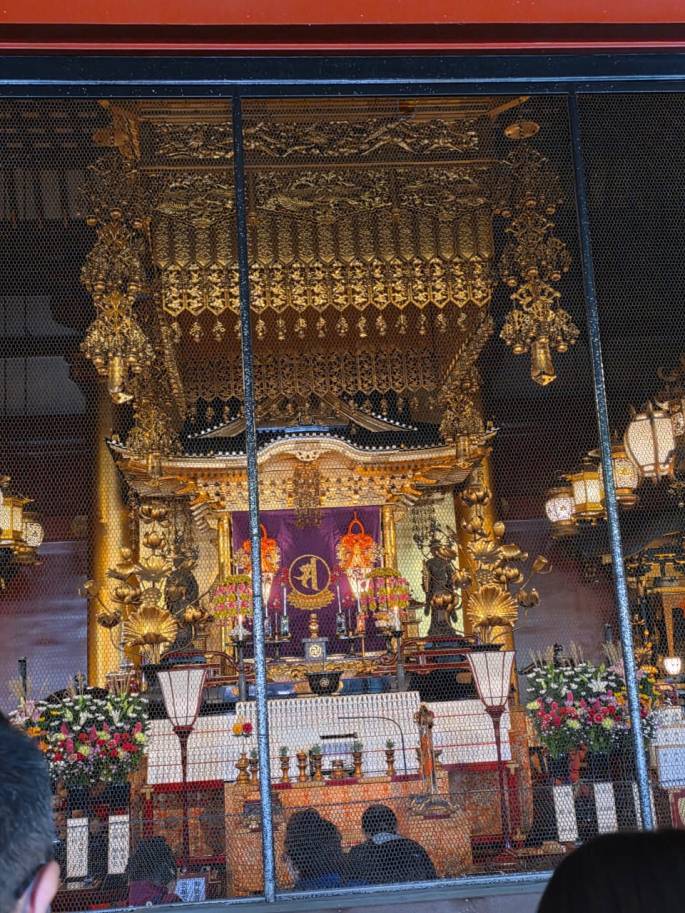
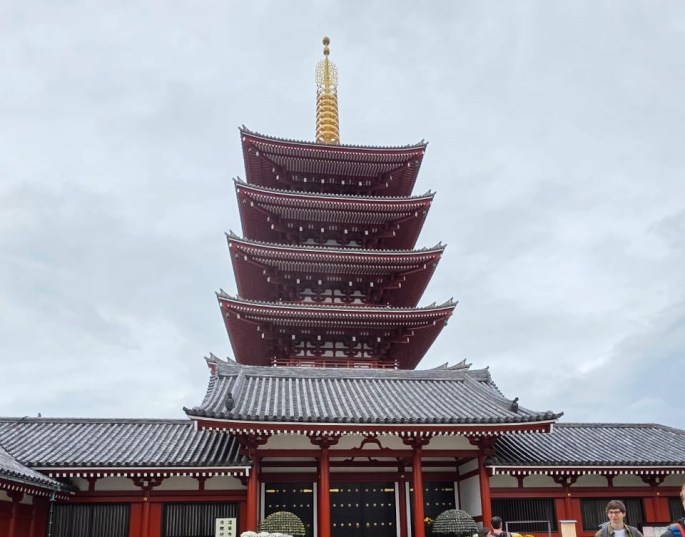
The temple grounds house the main hall, and a five storey pagoda. The main hall houses Kannon. A large beautiful shrine lies inside the main hall but the statue of Kannon is never shown to the public. The entrance to the main hall also has a huge red lantern.
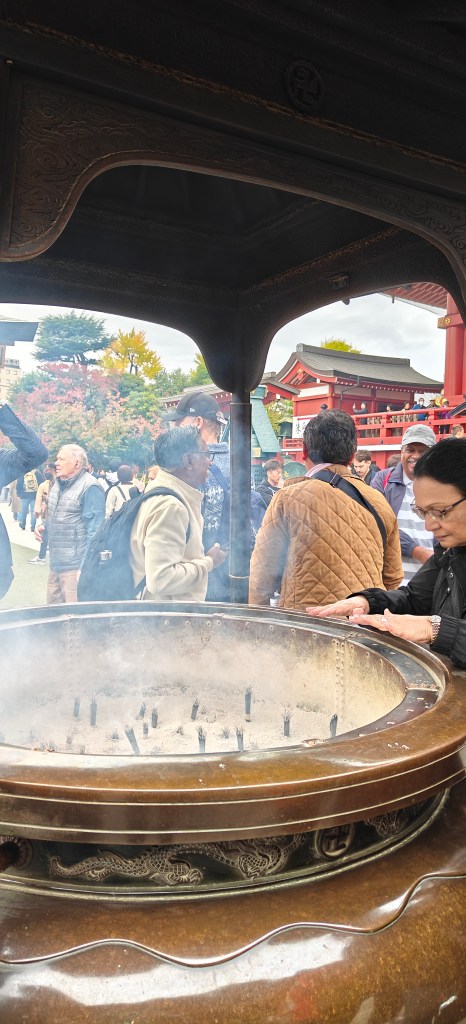
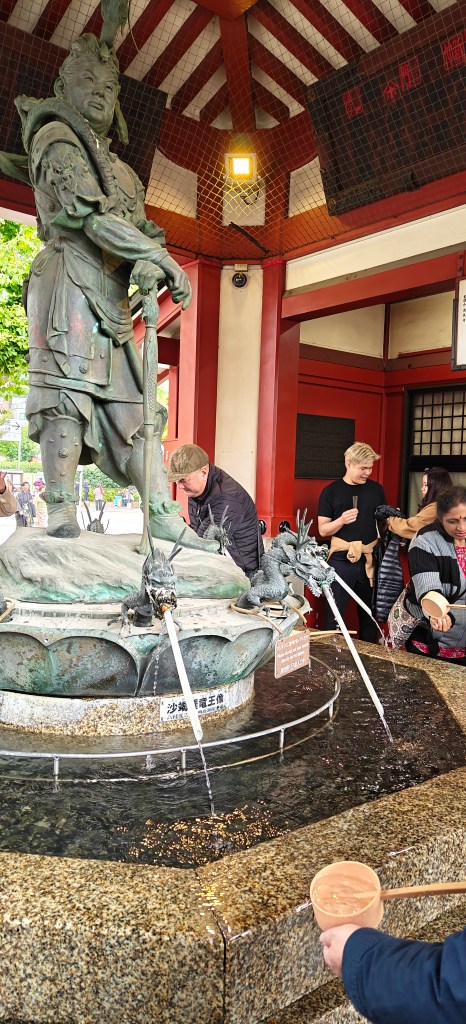
Just outside the main hall is also an incense burner and purification fountain found in most Japanese temples.
The incense burner and purification fountain
The main hall of the temple (side view)
Entrance to the main hallwith the huge red lantern
The main shrine
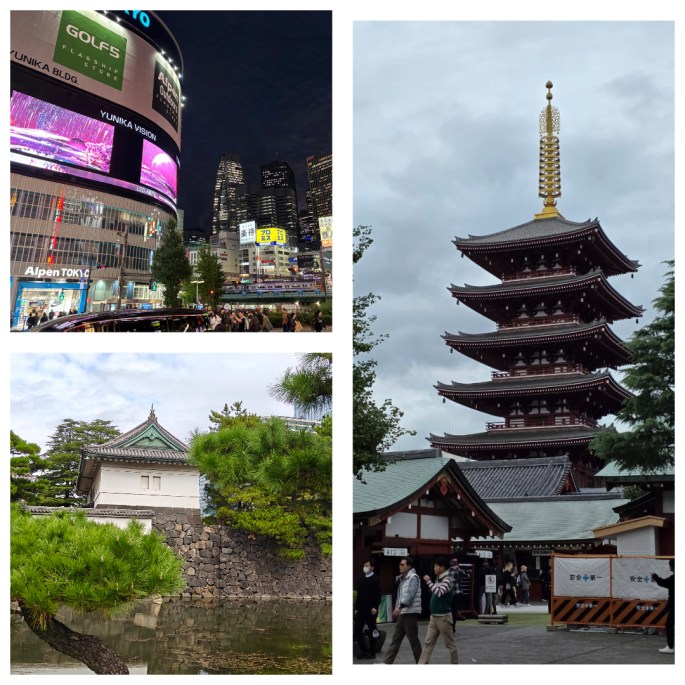
The beautiful five floor pagoda
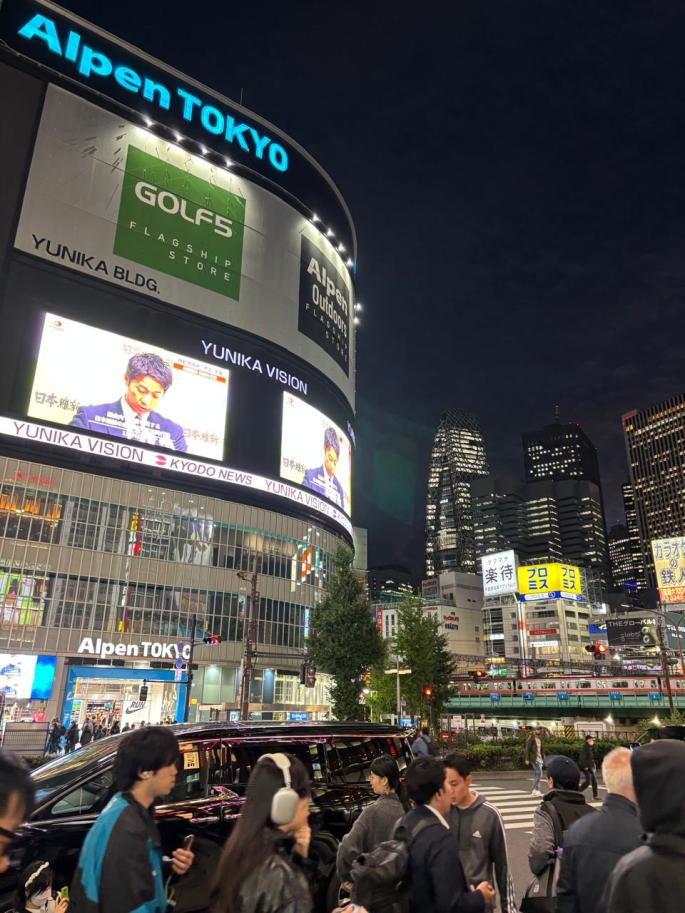
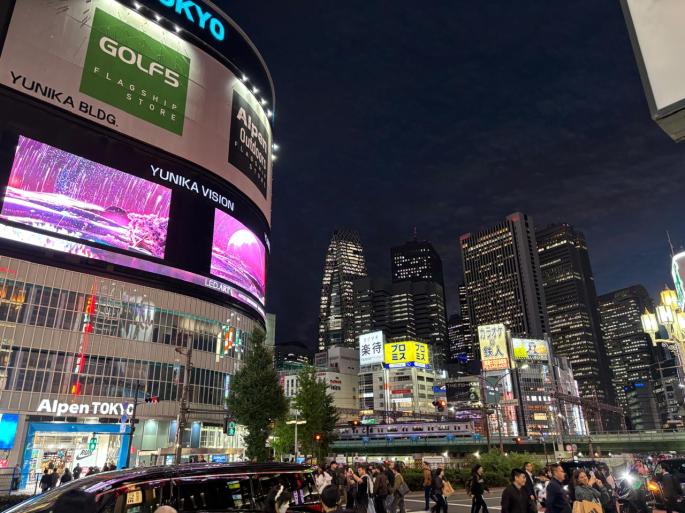
Shinjuku
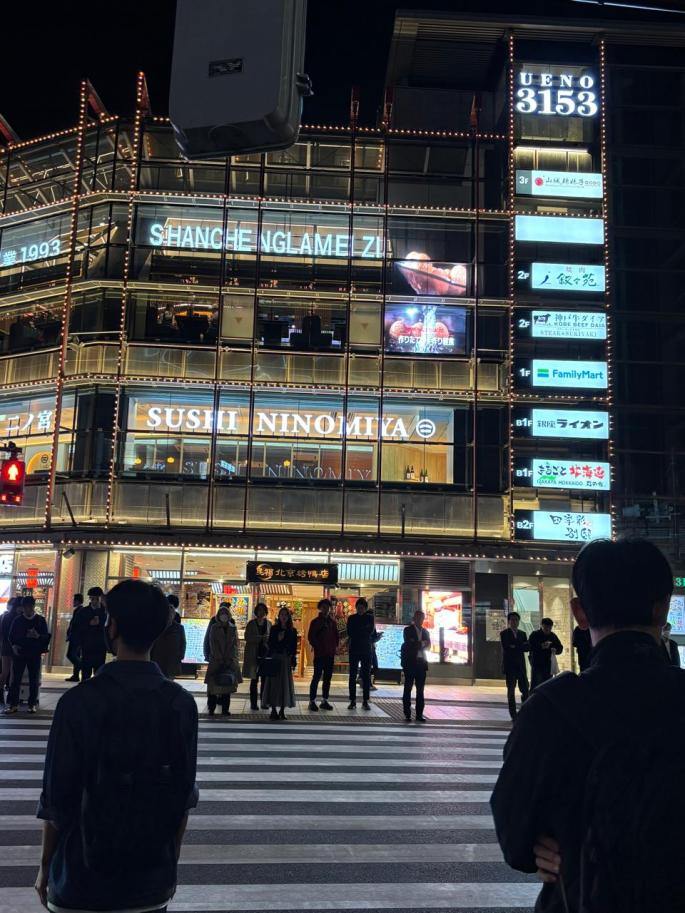
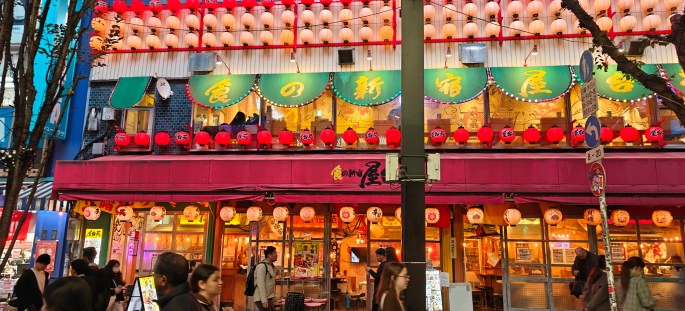
Another interesting destination at Tokyo was the Shinjuku shopping area full of billboards and malls. Some pictures from Shinjuku.
Some pictures from Shinjuku shopping area
That brings us to the end of this episode. Next week we uncover more of Tokyo.
I hope you enjoyed this tour to Tokyo. Await more from this great city…
 Travel-along.in