Cruising the Nile: A Memorable Experience

The Nile

The mighty Nile flows through eleven countries in Africa and is the primary source of water for Egypt playing a major part in its economy. Most cities in Egypt lie along the banks of this river for obvious reasons. Most of the ancient Egyptian cultural and historical sites also lie along the banks of the Nile and it was a major source of transportation from time immemorial.

While visiting many of the temples and archaeological sites in Egypt, we find a canal leading to the Nile from the temple and this was used for the sacred journeys that the Gods undertook during their festivals. The barque or sacred boat is an essential part of these festivals and is preserved at the temple sanctuary there highlighting the importance that the Nile played during that period.

The location of many of the tourist spots along the Nile makes a cruise on the Nile an interesting way of exploring these sites. It was precisely for this that we undertook a three day cruise on the Nile during our Egypt trip. Boarding the cruise from Aswan, we cruised up to Luxor halting at various locations on the way to visit the temples there. A summary of that cruise forms the subject of this episode. Come along and join me on an incredible cruise on this mighty river…

Our Cruise

We boarded the cruise at Aswan. There were three decks on the ship and we had comfortable cabins with large windows making the cruise a wonderful experience. The ship had all modern recreational facilities including a swimming pool , a bar, a restaurant and a shop. Some pictures from the ship…

Boarding the cruise at Aswan

On boarding, we reached a lobby where our guide allotted our rooms and we proceeded to our rooms.

The lobby with a bar

From the main lobby, there was a narrow passage with rooms on either side and a stairway leading to the upper rooms.
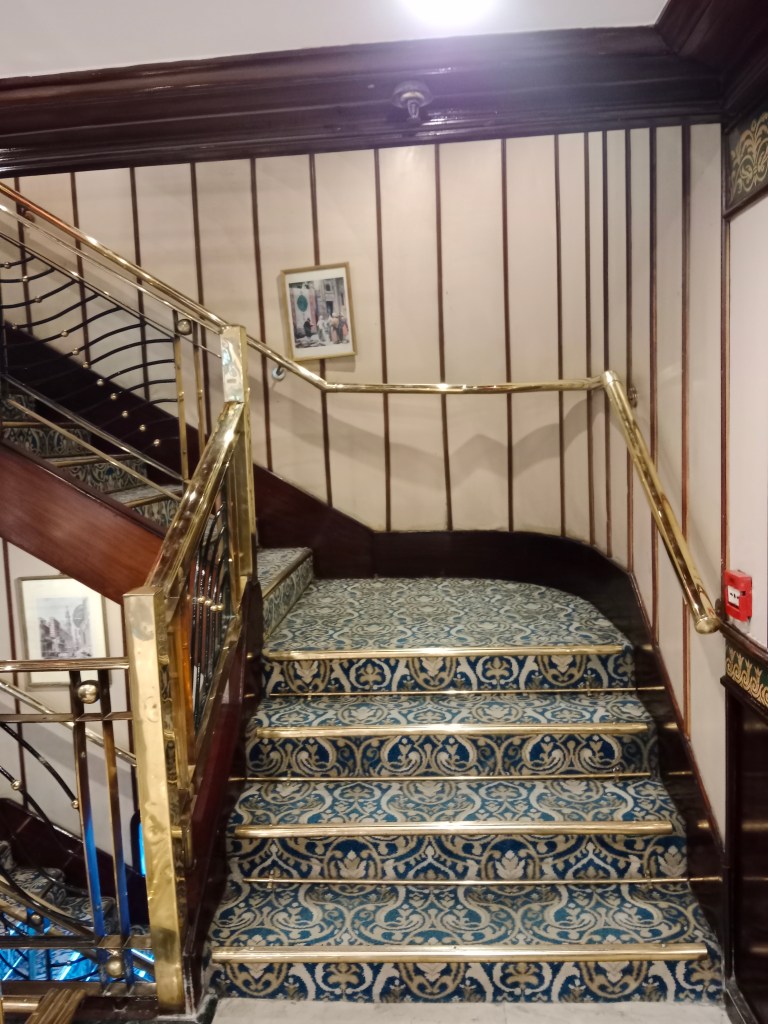
The stairway and the passage with rooms on either side
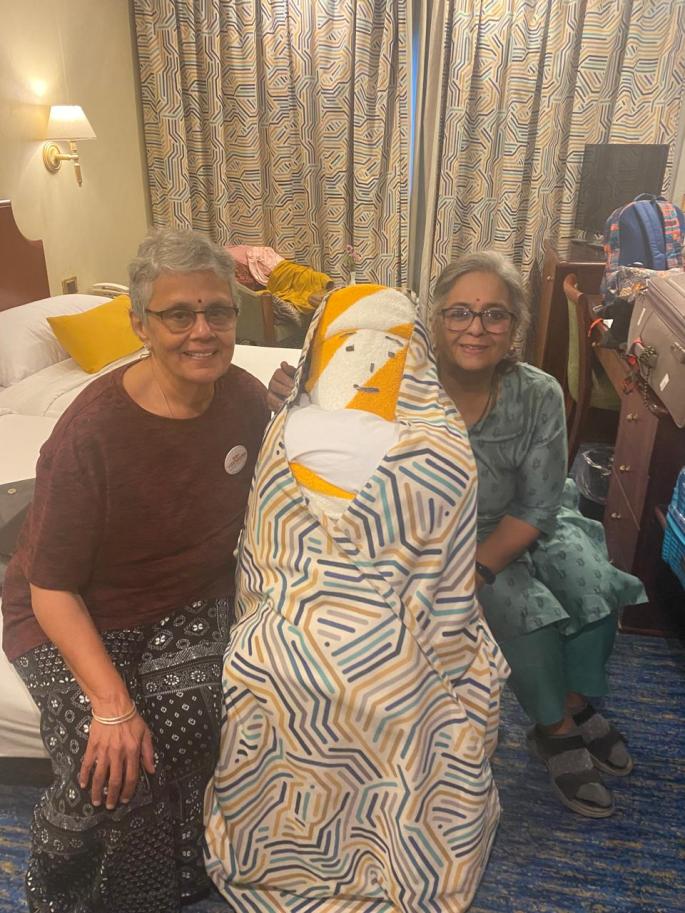
My room mate and me in our room with a creation by the room boy!!

There was a huge dining area and every meal was a buffet with a variety of Egyptian and continental dishes. The upper deck also had a gift shop.

The dining area

The upper most deck was open with a swimming pool and nice relaxing chairs for the guests to enjoy the views.


The swimming pool and the open deck on top for relaxing

As we sailed on the Nile, the landscape on either side was predominantly desert like with few green areas with vegetation. At places we passed small towns and cities.

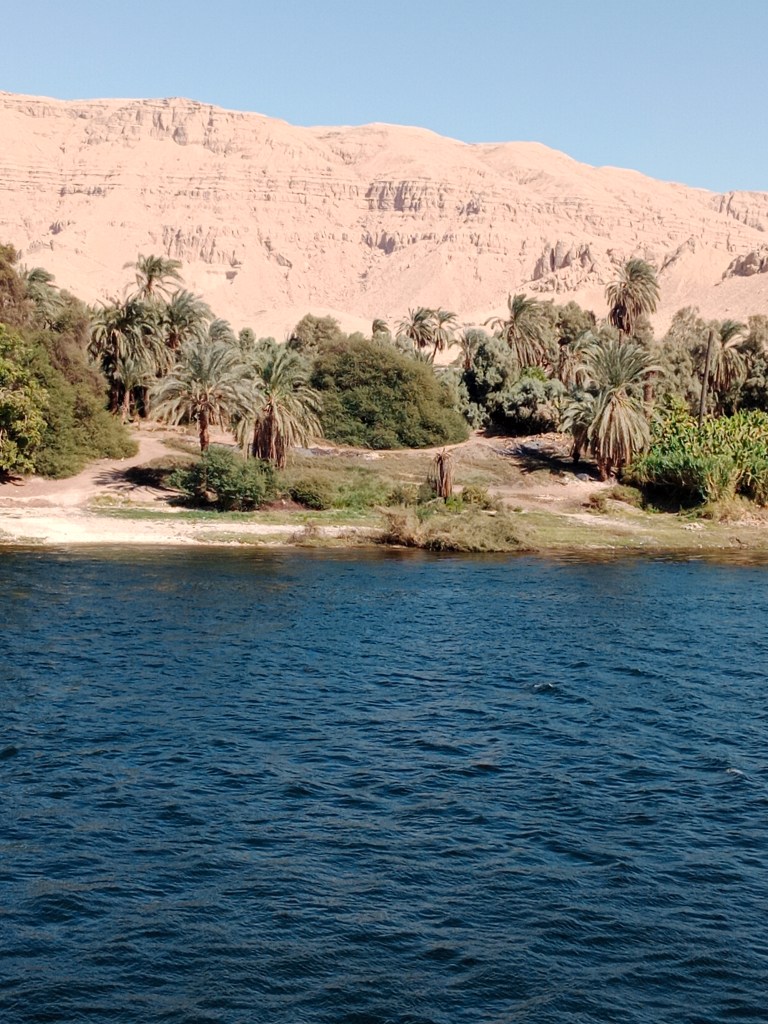
The views from our window as we sailed along.

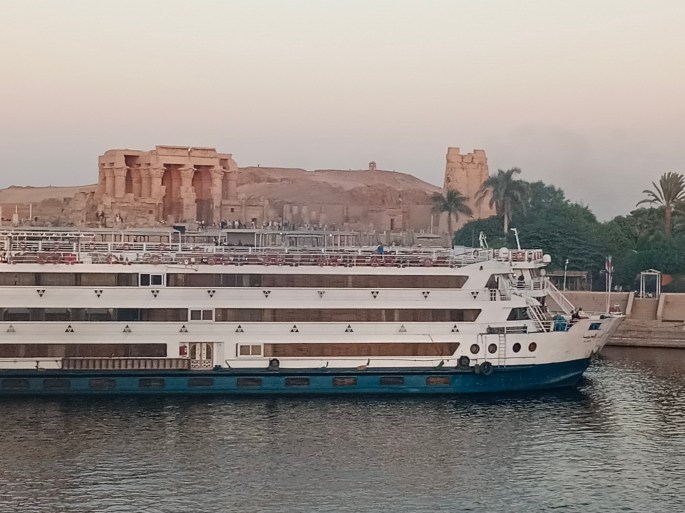
When we docked at Kom Ombo we could see the temple from the ship…

Kom Ombo temple from the ship

The locks…

We had one very interesting and unique experience during the cruise. We crossed the Esna locks. Here the ship enters an enclosed space where the water level is maintained by using mechanical devices and then when the locks are opened, the ship safely sails to the other side . This becomes necessary when water levels are different and the ship has to be safely brought to the corresponding water level.

Acrobatic business!!!

As we approached the locks, locals in small boats came alongside and started selling their wares. The cool thing about it was they would throw the materials in a plastic cover on to the ship and we could put the money back in the cover and throw it back to them. Some acrobatic business deals!!!!

Approaching the locks and a small boat comes along selling local goods

There were lot of other ships and they were all in a queue formation and awaiting their turn to cross the locks.

Two other ships crossing the locks

We could see the lock mechanism opening and letting the ship sail through.


The lock mechanism that controls the water level
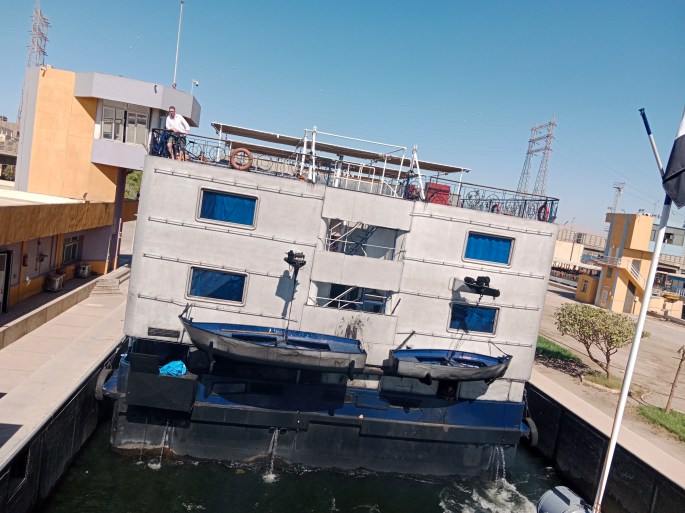
Our ship, clears the locks

This whole process took around half an hour and all of us were on the top deck enjoying this unique experience.

In the evenings after our sightseeing trips and dinner, belly dance and other cultural shows were organized for our entertainment. The staff on the cruise encouraged us to dance to local music which was fun… take a look.

Dancing to Egyptian music

Our final destination on the cruise was Luxor and after the local sight seeing trips we left the ship to the airport for our flight back to Cairo but not before a picture to save our memories of this unique experience…

Our group bids farewell to Radamis II, our ship that was our home for three days.

Hope you all enjoyed this cruise. Next week we meet at a different destination. Till then, do subscribe, like and comment.

Crocodile Mummies and History at Kom Ombo Temple

Standing on the banks of the Nile, is this unique TWIN temple in the town of Kom Ombo ,near Aswan in Egypt. One temple is dedicated to Sobek, ( crocodile headed God with a human body) and other to Horus,( falcon-headed God). Dating back to the Ptolemaic and Roman periods ,the temple is perfectly symmetrical along the main axis, has two entrances, two halls with carvings of the two gods on either side and twin sanctuaries. Much of the temple has been destroyed by the Nile, earthquakes and invaders.

The Nile was at one point of time infested with crocodiles who would attack the locals and it was believed that if they made it an object of worship, they would not be attacked. Kom Ombo temple was at one point of time teeming with crocodiles. Captive crocodiles were kept in the temple and even today, mummified crocodiles are seen here.

The temple has a crocodile museum where crocodile mummies have been displayed.

Sobek ( The crocodile headed God)

Sobek or the Crocodile God is depicted as a crocodile headed man wearing a crown with two ram horns and a sun disk and two plumes. The ancient Egyptians prayed to Sobek for protection, strength and fertility. Though initially he was believed to be a protector from crocodiles, later he was known as the “Lord of the Waters” as they believed that the Nile was created with his sweat. Since crocodiles bask in the sun and return to the dark waters at night, Sobek was also regarded as the protector of Ra or the Sun God. This illustrates the importance attached to crocodiles in ancient Egyptian culture.

Sobek…the crocodile headed God

Our trip

We were on a Nile cruise and after sailing from Aswan at noon, we reached Kom Ombo by evening. The temple was visible from the cruise itself as we docked at Kom Ombo.

View of the temple as we docked at Kom Ombo

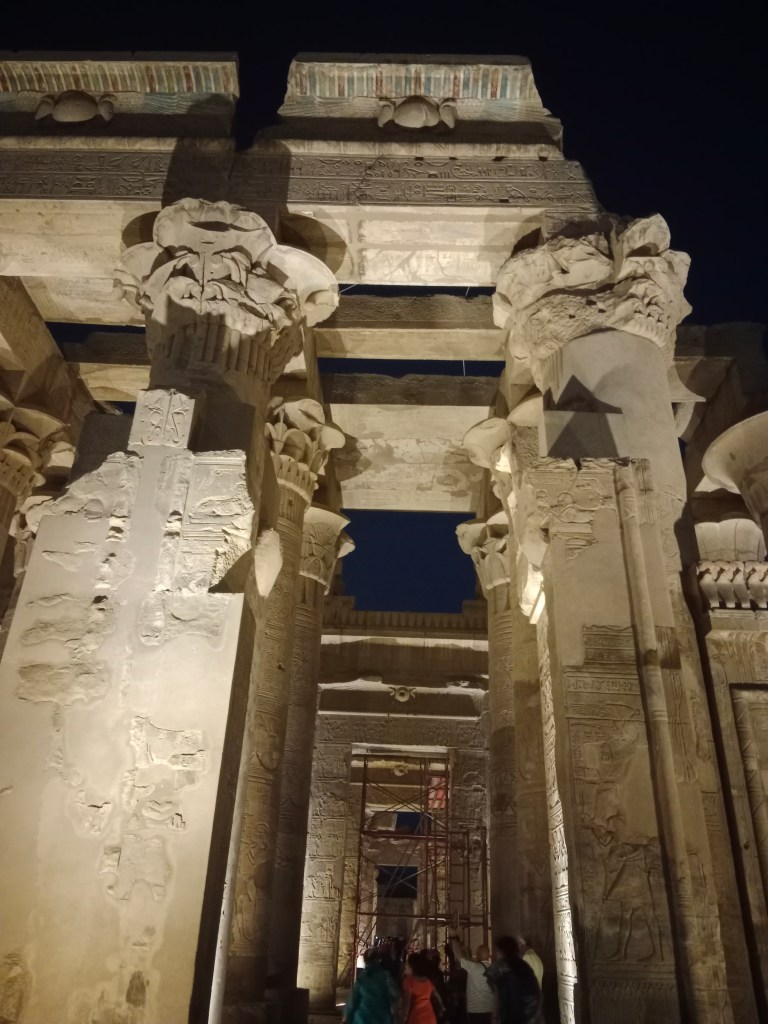
Soon we alighted from the cruise and walked up to the temple. It was getting dark and the lit up temple entrance looked awesome.

The illuminated entrance to the Kom Ombo temple

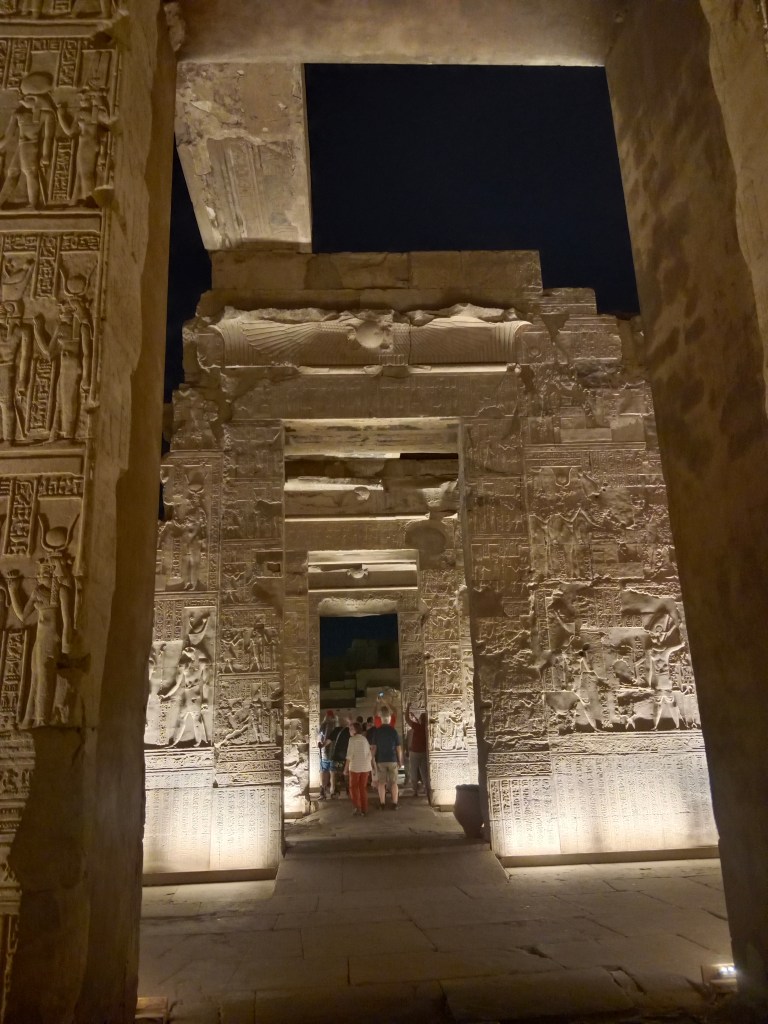
The main feature of the temple was the hall with multiple pillars with reliefs depicting the Gods and the kings.

Entering the hall

The hall with massive columns with reliefs.

Many of the pillars have symbolic representation of upper and lower Egypt by the lotus and lily flowers.

The symbolic floral representation on top of the columns

Images of some of the important reliefs seen on the columns…

The coronation of the King

The other interesting feature is the large number of hieroglyphic displays. Here are two such displays…

Hieroglyphic numbers

Hieroglyphic representation of seasons

The pillared halls lead to a central courtyard and from there on to the inner chambers. Many of the chambers were used to store valuables and papyrus documents but lie in ruins now . However, secret underground passages are seen. It is believed that these chambers were used by priests to answer the petitions of pilgrims as if it is spoken by God adding authenticity and belief among the devout.

The secret underground chambers

As we walk along the outer passage we come across a stone block where pictures of ancient Egyptian medical instruments were depicted.

The display of ancient Egyptian surgical instruments

Nilograph

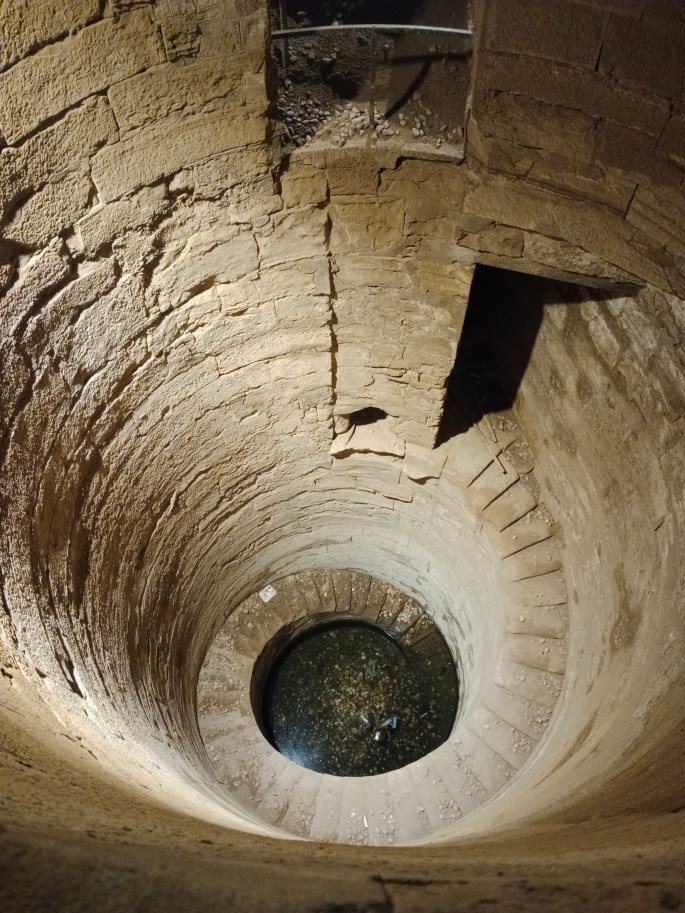
A deep well with height measurements clearly marked on the sides surprised us. Zak, our guide pitched in to explain that this was a Nilograph. This was used in ancient Egypt to measure the water level in the Nile as it was connected to the river lower down. Taxes for the locals were calculated as per the water level in the Nile as drought years were low tax years!! Can you even imagine that the Nile controlled so many aspects of ancient Egyptian life?

Nilograph

The Crocodile Museum

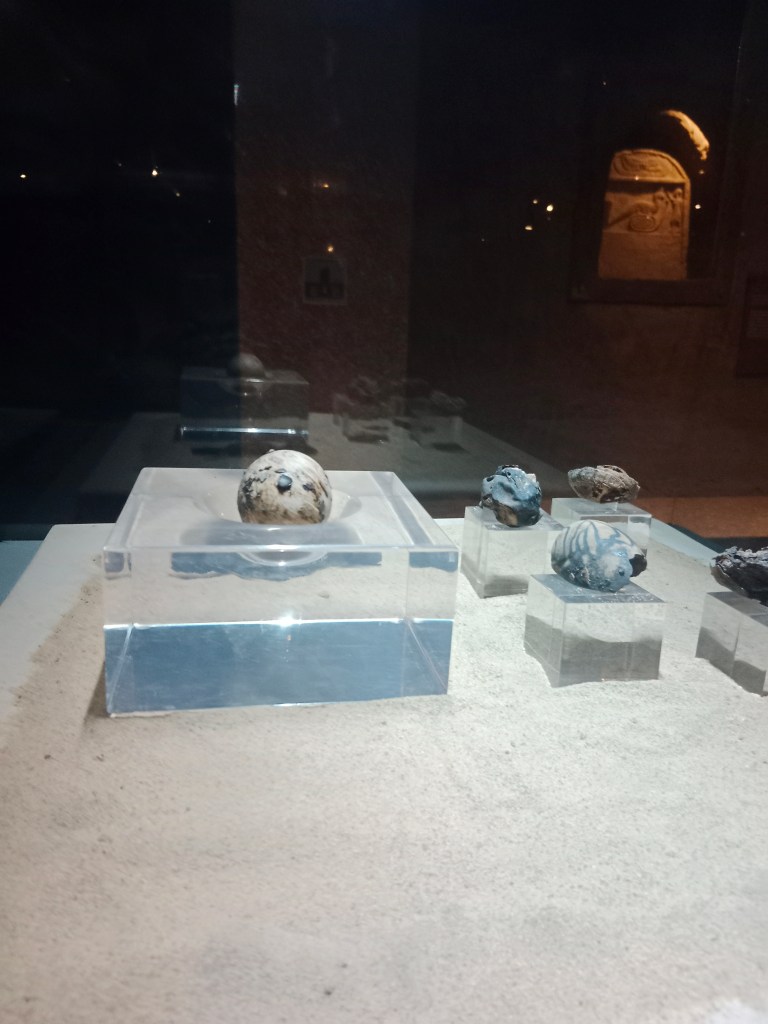
As we move outside the temple, we reach the crocodile museum. This museum has various exhibits connected to the relationship between ancient Egyptians and crocodiles. Mummified crocodiles and sarcophagus of crocodiles can be seen here.

Some pictures from the Crocodile museum

A crocodile sculpture

Mummified crocodiles

Crocodiles wrapped in linen saturated with oils and resins after desiccation with salts. Palm leaves helped in supporting the mummies and preservation.

Crocodile Mummies wrapped in linen soaked in oils and resins

Crocodile mummies in ceramic coffins with pots and other burial goods

Crocodile Eggs

After finishing the visit to the Kom Ombo temple , I must admit I was left with a strange feeling. I was shaken up with all the crocodile mummies and the strange customs of the ancient people.

I left with the feeling that the world never leaves us with a dearth of things to ponder on!!!

Next week we shall enjoy the cruise on the Nile that actually took us to these destinations and more to come….

Till then, do subscribe, like and comment.