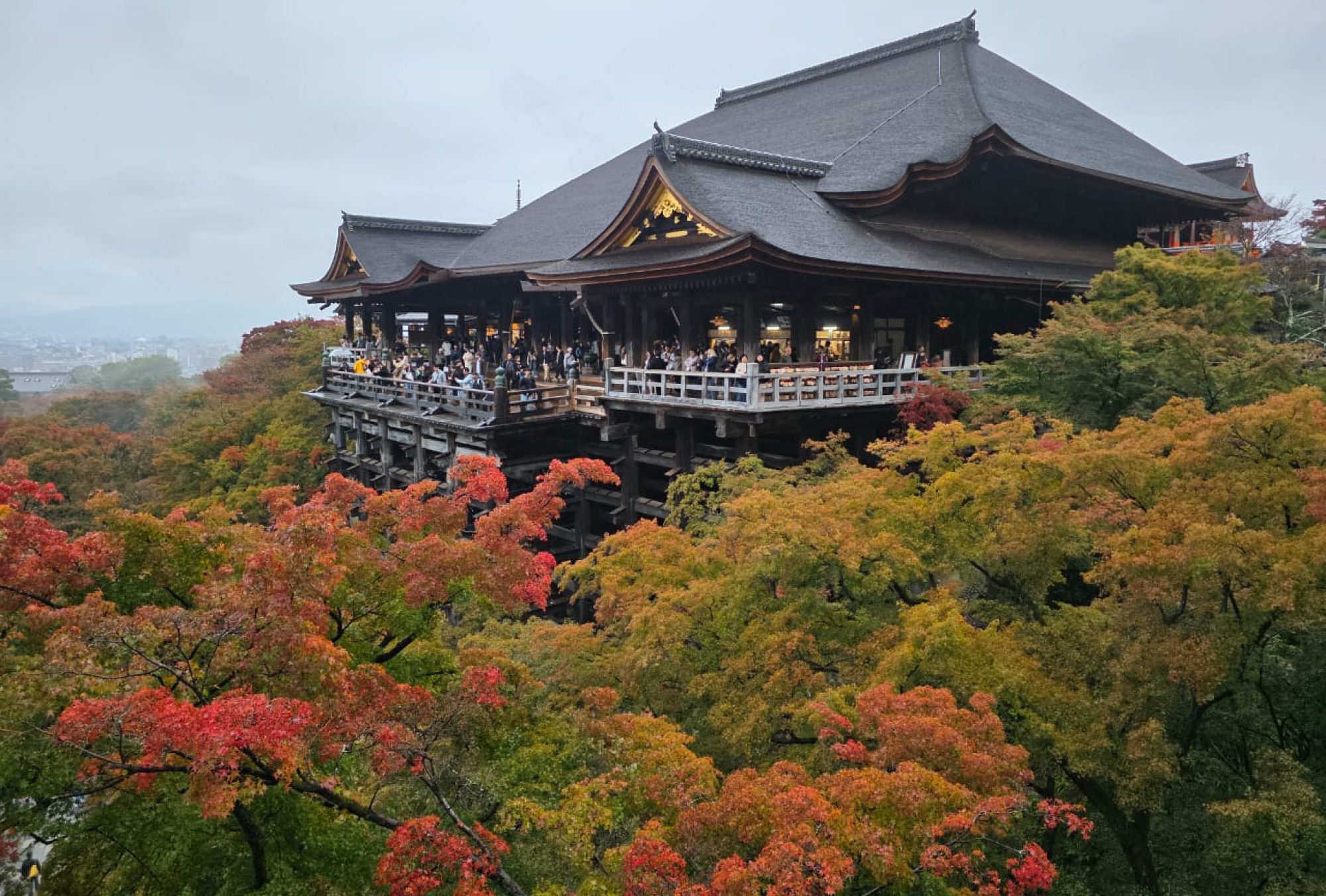

Although the episode on Leh is at the fag end of the series on Ladakh, we actually started our journey through Ladakh from here. After the mandatory acclimatization at Leh, we set out to discover Ladakh by visiting some of the interesting locations near Leh.
Magnetic Hill
This is an enigmatic hill around 25 kms from Leh on the Srinagar Leh highway. It is believed that the magnetic forces in the area can pull a stationary vehicle uphill. However, it is the peculiar topography of the layout that creates an optical illusion of an uphill road and hence stationary vehicles may appear to roll uphill when in fact they are rolling downhill.
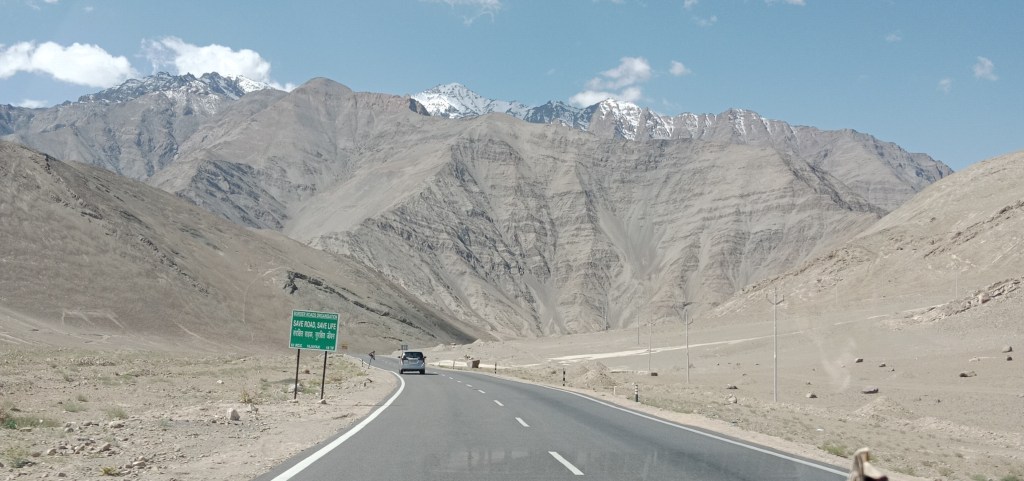
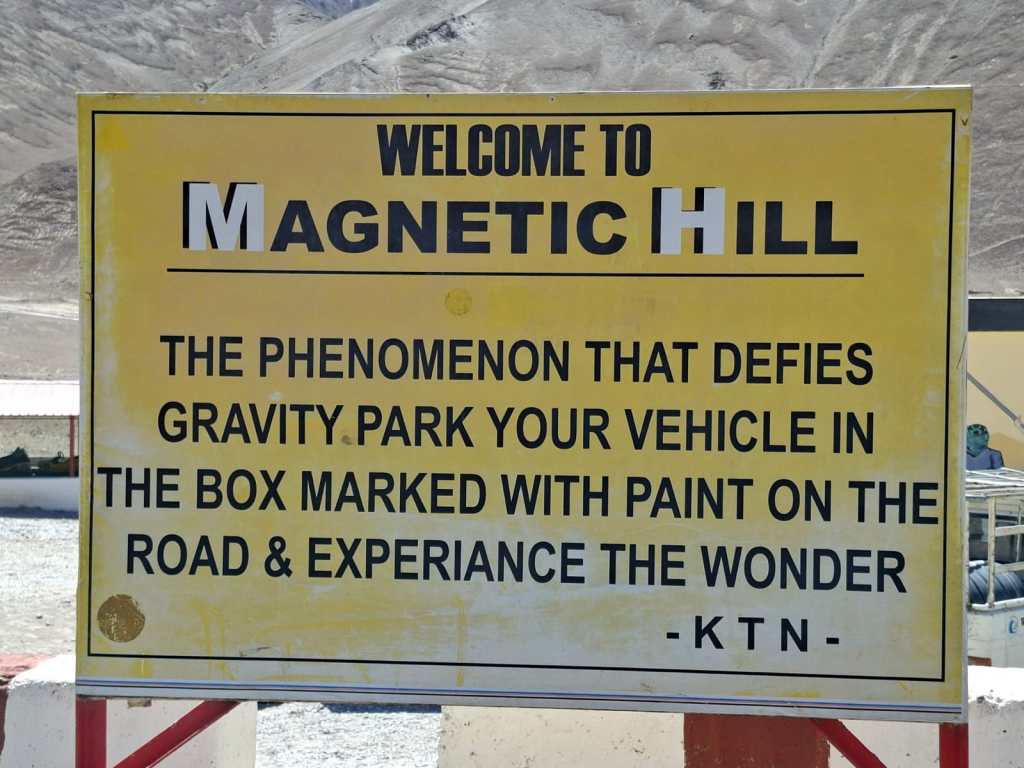
Approaching magnetic hill
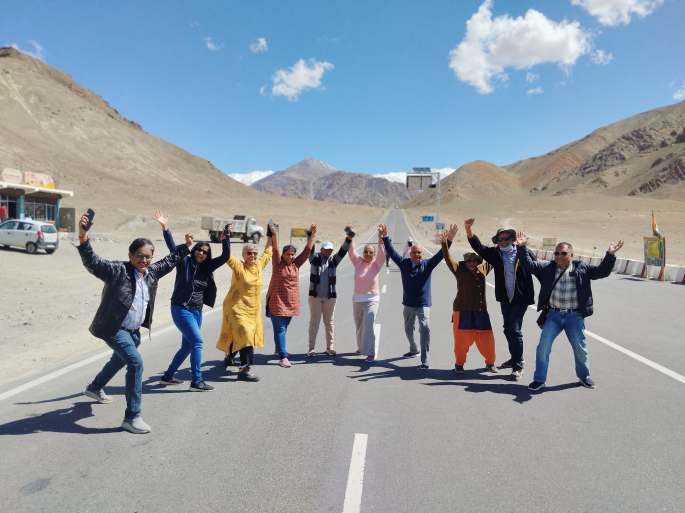
Our group at magnetic hill
Shanti Stupa
Shanti Stupa is a Buddhist Stupa located on a hillock in Leh.
It was built in 1991 by a Japanese monk to promote world peace and to commemorate 2500 years of Buddhism . Signifying the close relationship of the Japanese people ; it is a two level structure.
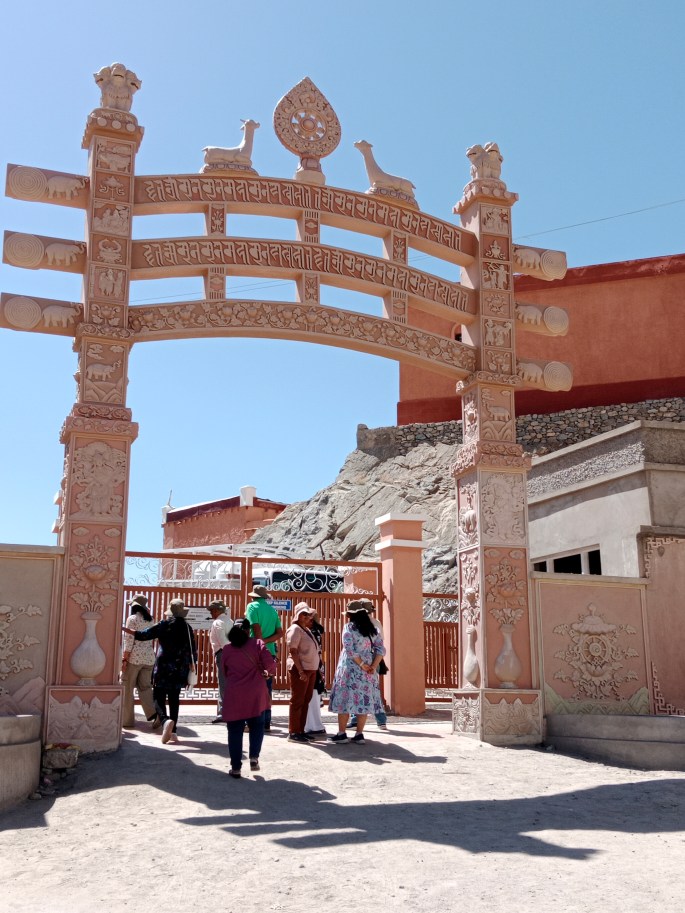
Entrance to the Stupa

Shanthi Stupa
The first level features a golden Buddha image sitting on a wheel or Dharma chakra.

Buddha sitting on the Dharmachakra
The second level has reliefs depicting the birth, nirvana and other landmarks of Buddha’s life enshrined by the Dalai Lama himself.
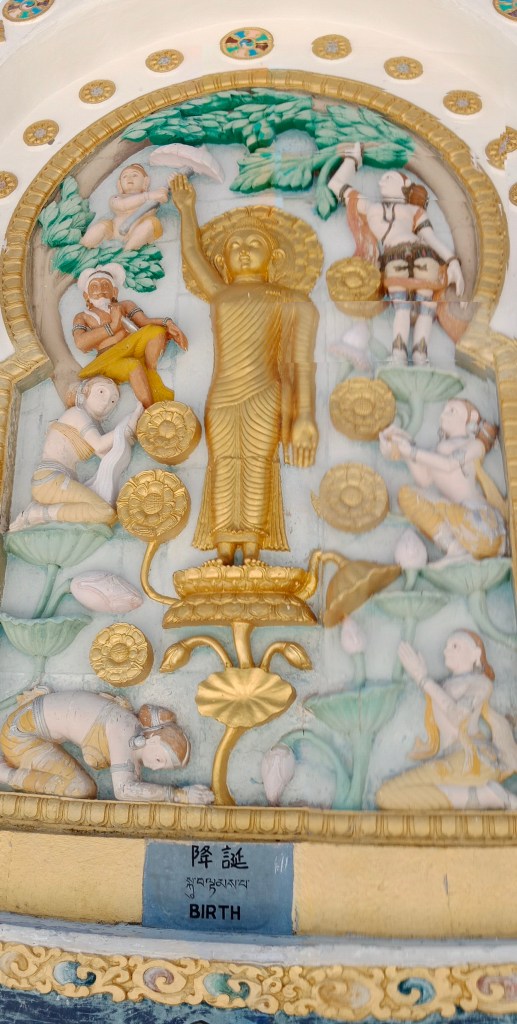

Reliefs showing birth of Buddha and defeat of devils
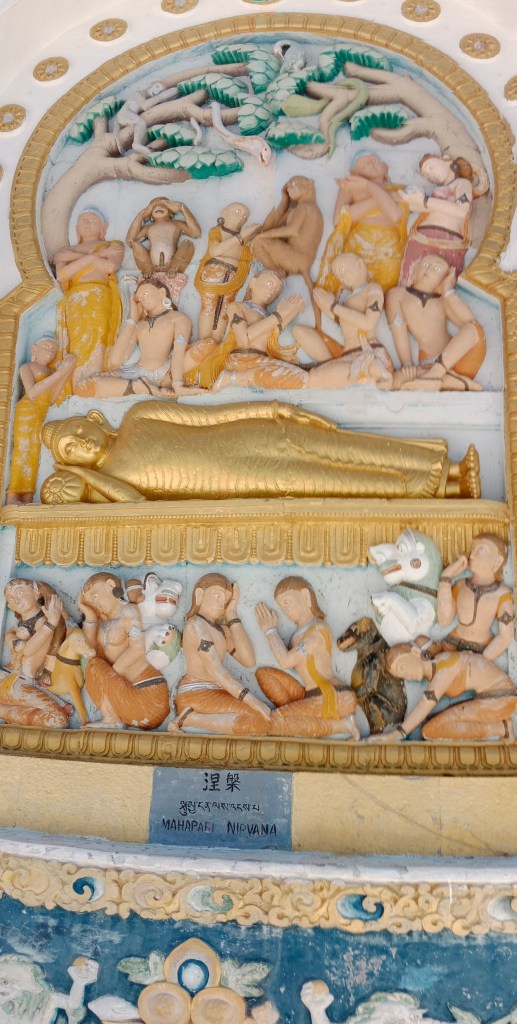
Mahanirvana
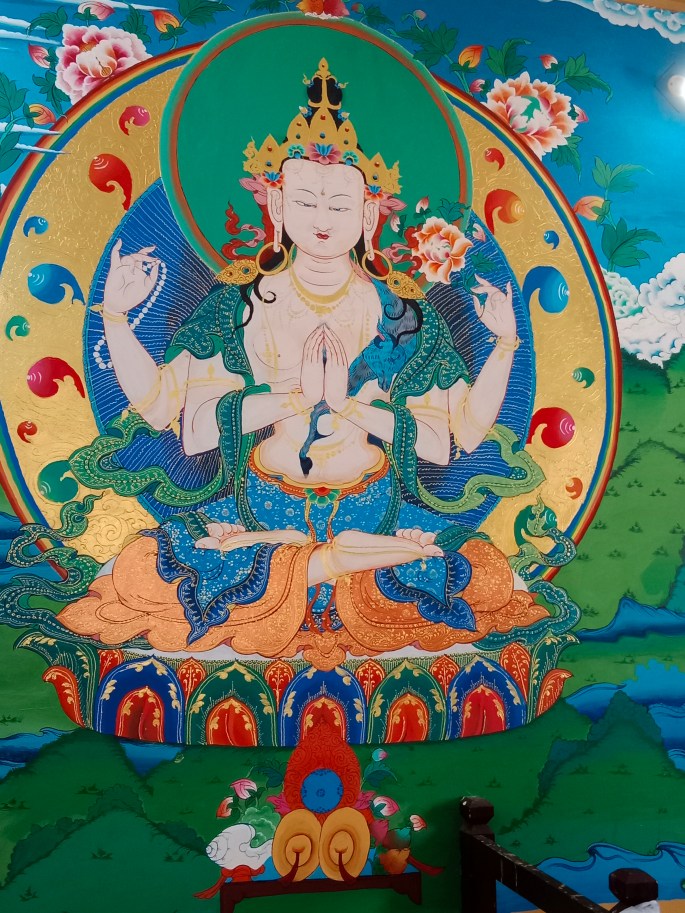
One of the beautiful paintings at the Stupa

View of the Himalayas and Leh city from the hillock
Since our hotel overlooked the Stupa, we had a good view of the lit up stupa from our room..
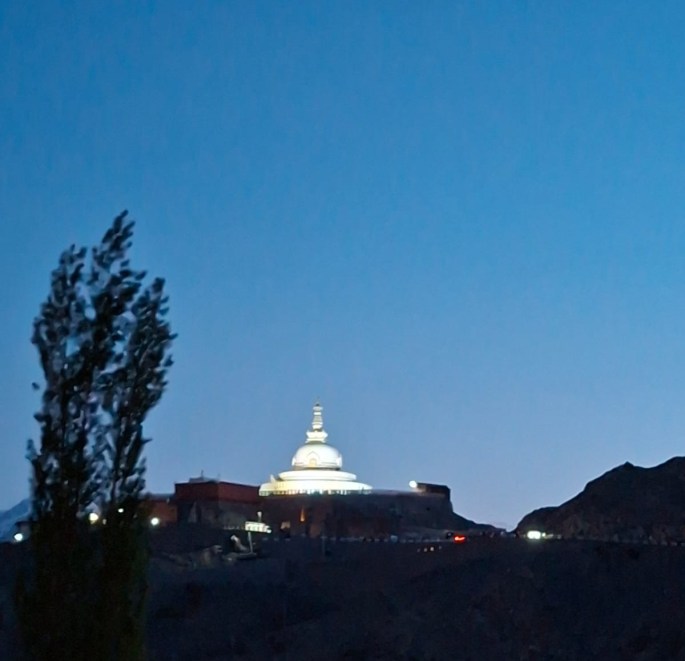
The lit up Stupa
Leh Palace
This palace ; overlooking the city of Leh ; was once the residence of the royal family but is more of a museum and tourist destination now. This partially dilapidated palace under the Archaeological Survey of India, is being restored while retaining some of its ancient architecture.
The palace was built by Sangge Namgyal in 1600 AD and was the royal residence till the Dogras attacked Ladakh in mid 19th century forcing the royal family to relocate to Stok Palace .
The palace is nine storeys high with the upper floors being the royal residences and the lower ones being used as stables and stores. Built of mud, wood, sand and stone in Tibetan style, a visit there gives us an insight of ancient Ladakh.
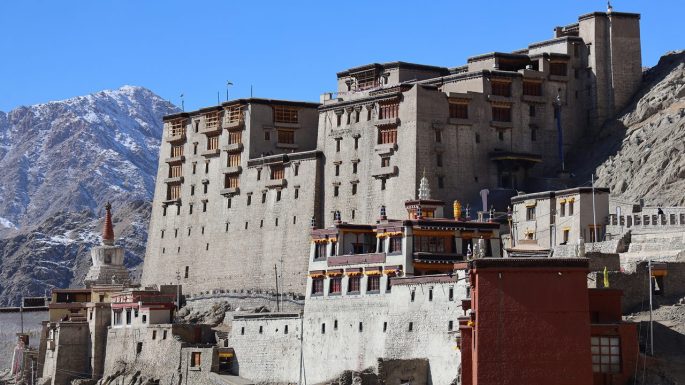
The Leh Palace
A climb up a fairly steep series of steps brings one to the entrance of the palace.
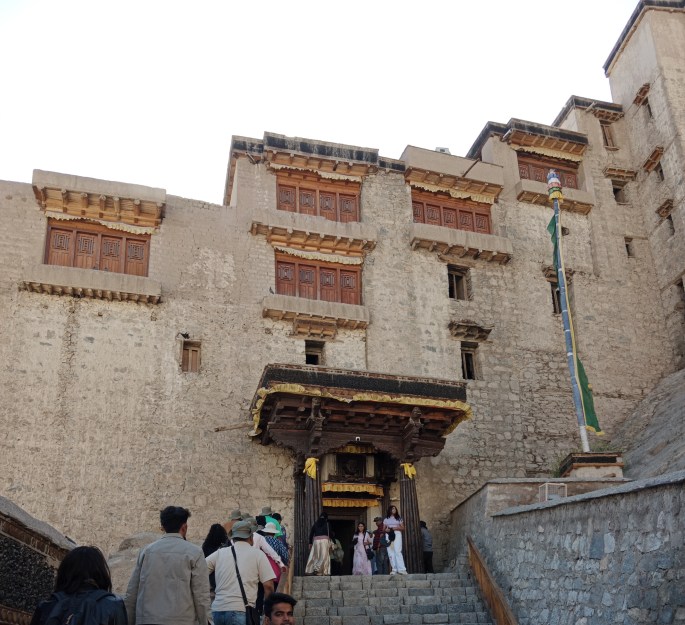
The steps leading to the entrance. Note the elaborately decorated windows
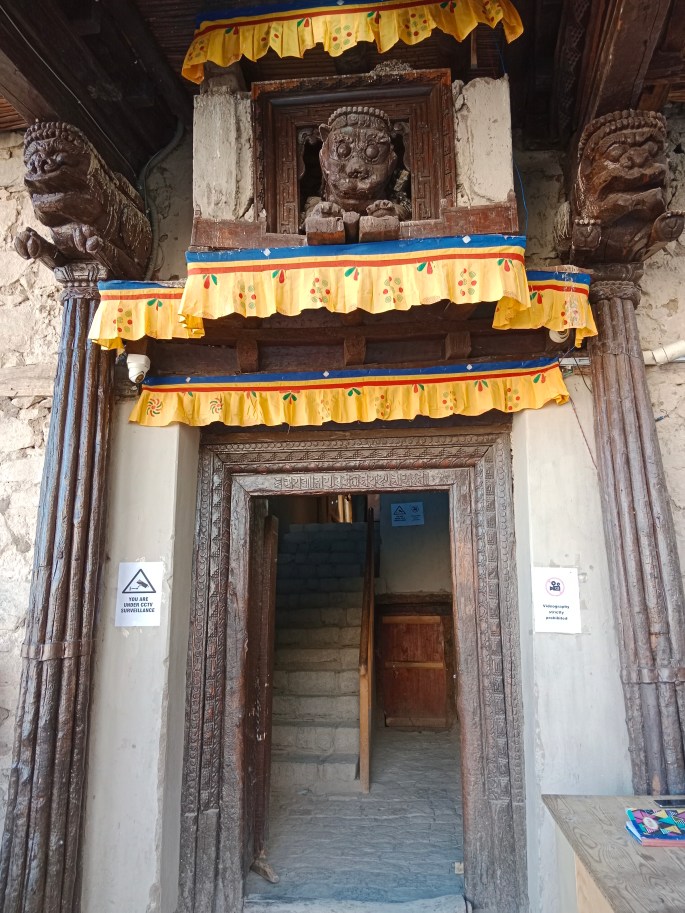
The main entrance with typical local decoration
After a flight of stairs, we reach the hall with exhibits along all four sides. These exhibits describe the various aspects of the palace.

The main hall with exhibits all around
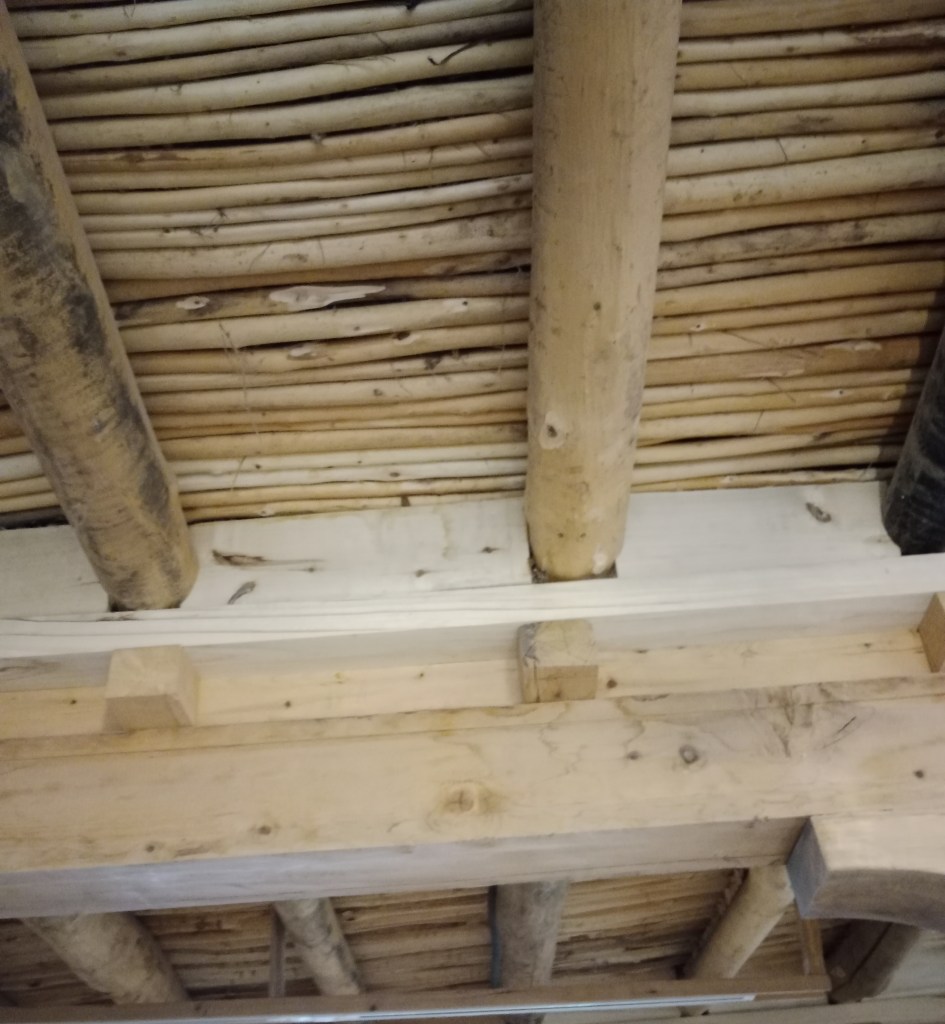
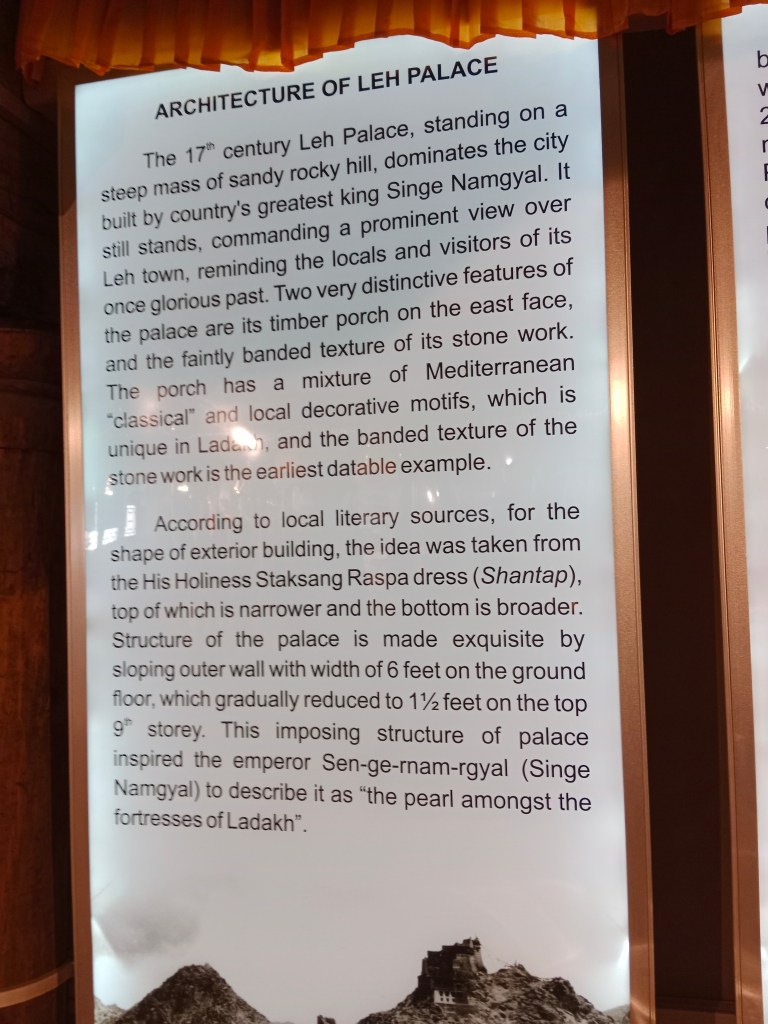
The bamboo and wood ceiling and an exhibit describing the palace
The Palace has open terraces at many levels offering panoramic views of the city and surrounds. These terraces were venues of performances by artists with the royals watching from the balconies above.

One of the terraces

The balconies from where the royals watched the performances on the terraces
Apart from this, the palace has a wide collection of traditional arts and treasures.
The Palace museum is a storehouse of traditional Ladakhi jewellery, ceremonial dresses, crowns and other artistic treasures. Thanka paintings , in as yet preserved vibrant colours adorn the walls of the upper floors.
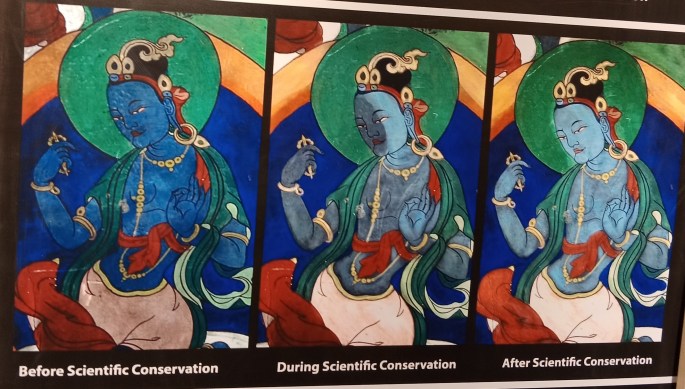

The paintings in various stages of decay and repair
The palace also houses some shrines of Maitreya Buddha and Siddarth Patra with thousand hands.
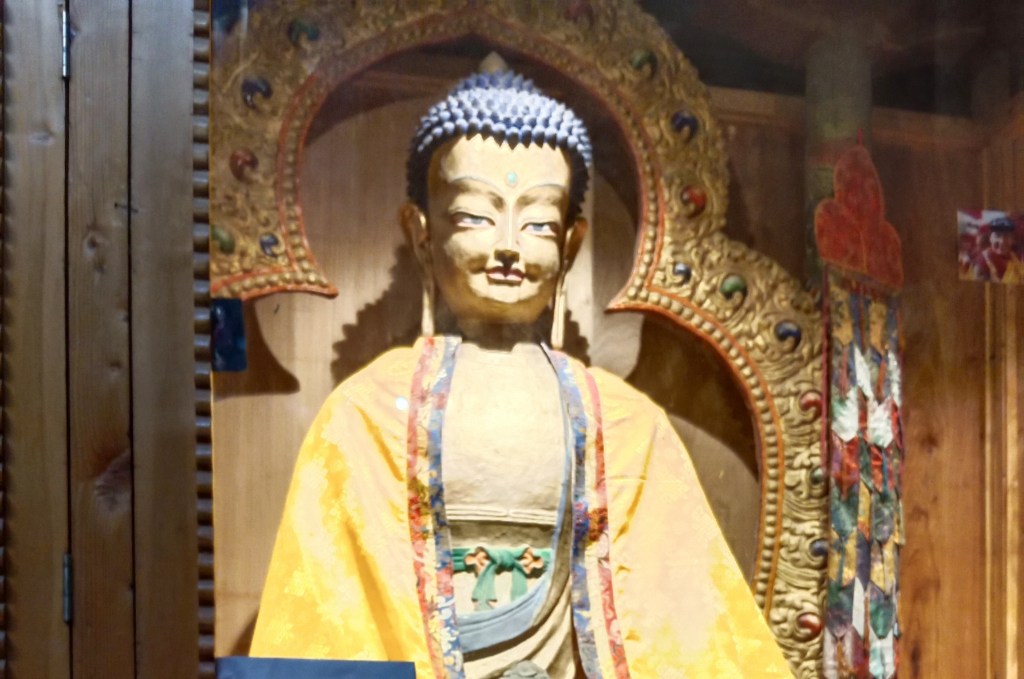
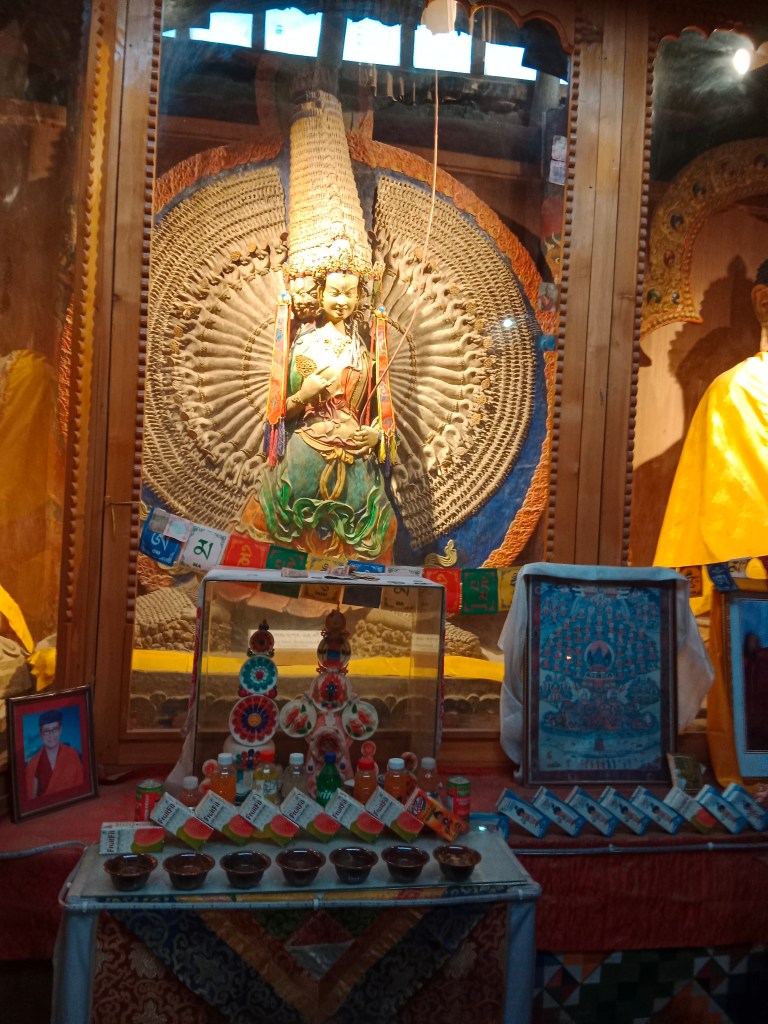
Some of the shrines in the palace
A short film that details the history and passage of the palace through different eras is also continuously screened in one of the upper floors.
The view of the Himalayas and Leh city from the upper floors is amazing indeed!!
Gurudwara Pathar Sahib
Our next destination was the Pathar Sahib Gurudwara on the Srinagar Leh highway about 25 kms from Leh. This Sikh temple was built in 1517 to commemorate the visit of Guru Nanak Dev, the founder guru of the Sikh faith .
A boulder with a hollow impression of the back, head and shoulders of Guru Nanak Dev is worshipped here. Legend has it that a wicked demon who wanted to kill Guru Nanak pushed a boulder down on him but the boulder (pathar in hindi) melted like wax and left the imprint of the sage and hence the name.
The shrine was an abode of peace and tranquility and calmed down our minds after the long day outdoors.
Some pictures…
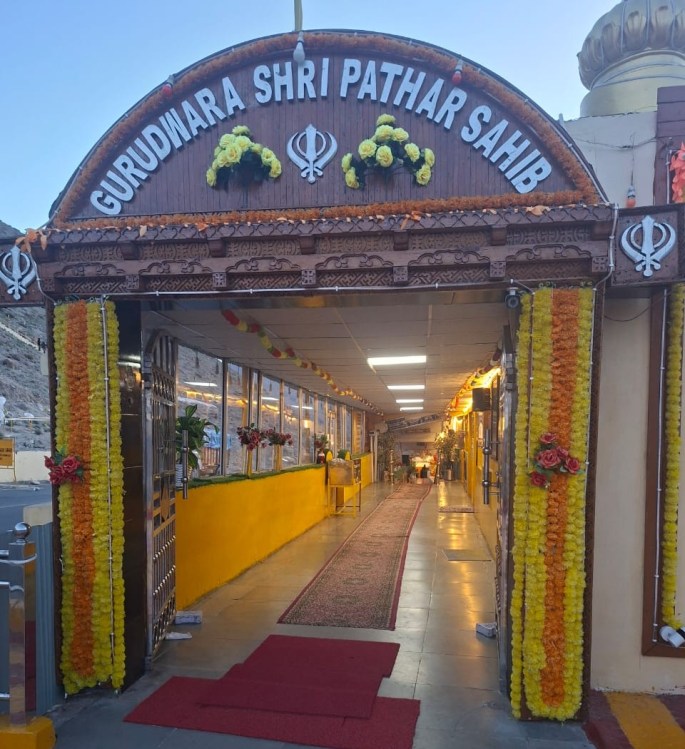
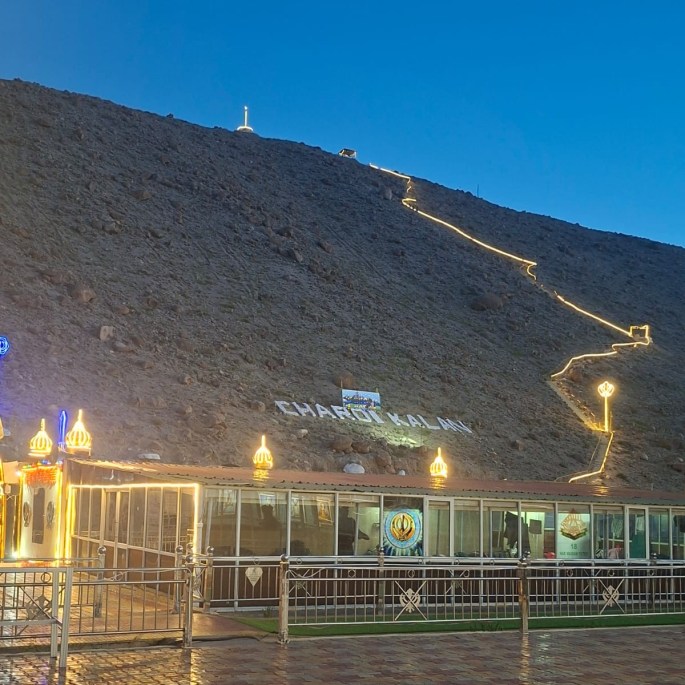
The shrine
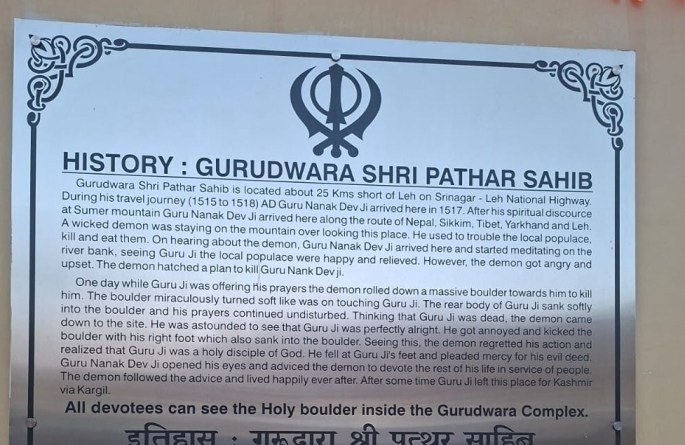
A plaque explaining the legend of the shrine
During the visit we saw lot of Army personnel sitting and reading religious books here. It must surely be a haven of peace for the wonderful souls how stay away from family and friends to protect our country!!
With a feeling of deep gratitude, we returned to our hotel looking forward to another exciting day at Leh..
Next episode will bring more from Leh. Till then, do subscribe, comment and like the posts…








 Travel-along.in