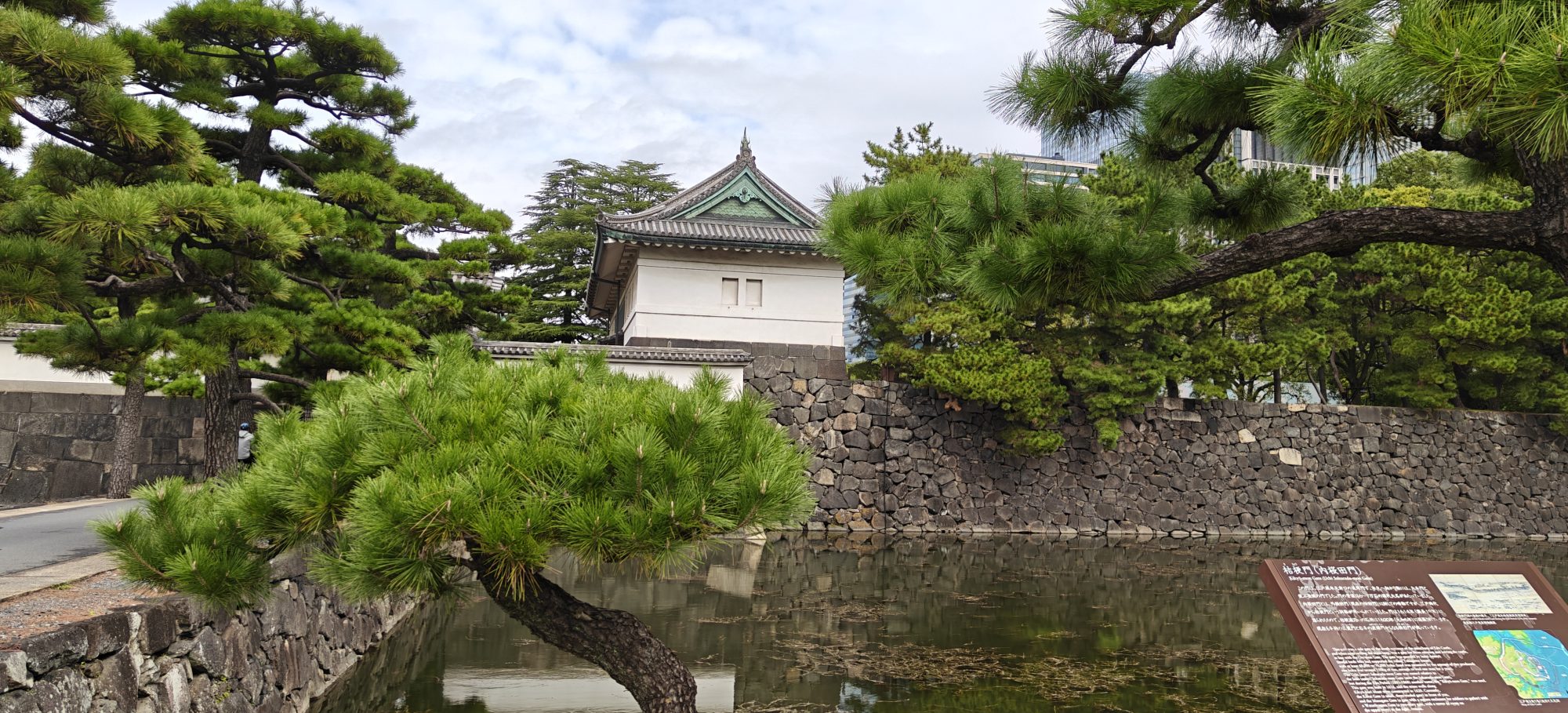
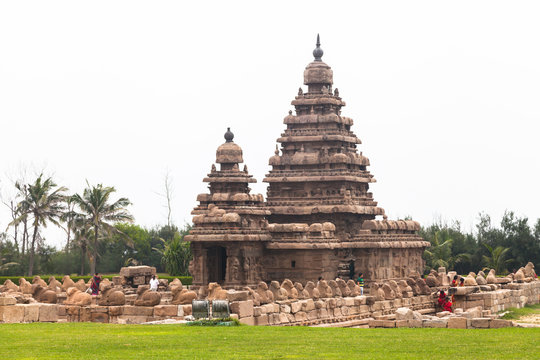
After seeing the grandeur of the Cholas at Thanjavur and Pandyas at Madurai, let us now shift focus to the Pallavas. Mamallapuram (Mahabalipuram) near Chennai in Tamil Nadu has a complex of temples and monuments built by the Pallava King Narasimhavarman II. The complex has cave temples and monolithic chariots or Rathas and a Shore Temple built with granite blocks; all built in the 7th and 8th centuries. The complex has more than 40 ancient monuments and temples including the largest open air bas relief in the world.
Mamalla in Tamil means great wrestler and refers to the King Narasimhavarman I. This explains the name Mamallapuram.
It is now believed that this complex is part of a group of submerged temples along the coastline. The tsunami of 2004 that struck the Bay of Bengal coast exposed another granite temple in ruins and large structures on the sea bed about a kilometer offshore. This has also led to the inference that this temple was part of the Seven Pagodas described by early European travelers. The tsunami however did not do much damage to the shore temple itself.
History
What we know today as Mamallapuram was an ancient port probably referred to as Sopatma. It was a very active trading port and that is what brought the western traders here and the shape of these temples led them to be referred to as the Seven Pagodas. Various references to the area by western traders have been recorded from the 13th century onwards. The area came more into focus in the 19th and 20th centuries. It was after Independence that the preservation and restoration of many of these structures was undertaken. In 1984, the site was declared a UNESCO World heritage site. The monuments here have been broadly classified as Chariot shaped temples or Rathas, Mandapas or cave temples, rock reliefs, Structural temples like the Shore temple and excavations.
They are all under the ASI (Archeological survey of India) and are UNESCO World Heritage sites.
Architecture
Pancha Ratha Complex (Five Chariots)
These are monolithic rock cut temples in the shape of chariots or Rathas; initially attributed to Narasimhavarman I, and subsequently to Narasimhavarman II ; after the discovery of some inscriptions .
Named after the five Pandavas and Draupadi; they date back to the 7th and 8th centuries. Though they are grouped together by these popular names, they are neither true chariots nor are they dedicated to the Pandavas. They are temples dedicated to Shaivism, Vaishnavism and Shaktism; the three main stream Hindu cults.
The first one is named after Draupadi and has a roof like a thatched hut. The sanctum has the sculpture of Durga .The second one called Arjuna’s chariot is shaped like a Buddhist vihara . The sanctum here is empty but the walls have sculptures of Shiva and Vishnu. A large monolithic lion stands in front of this. The Bhima Ratha is the largest structure here. Large sculptures of lion, elephant and bull also adorn the complex.
These were never consecrated as temples as they were not completed.


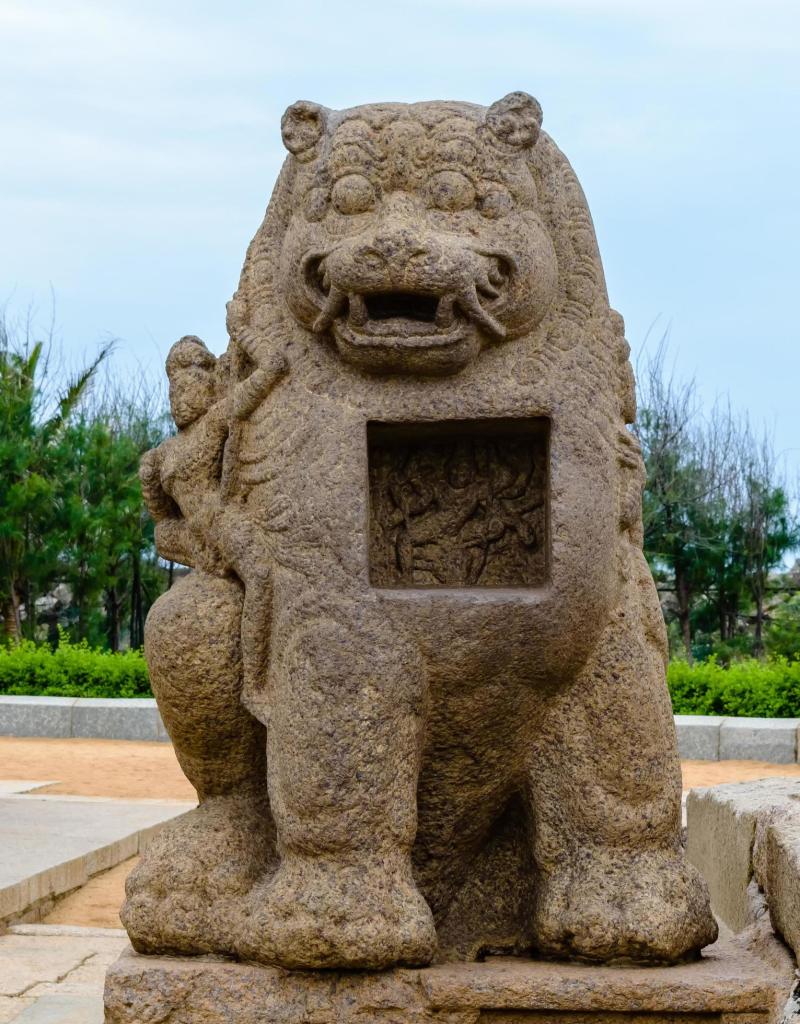
The Pancha Rathas and monolithic lion
The Cave Temples or Mantapas
Mantapas are traditionally pillared halls or pavilions for people to gather socially or for ceremonies.
The cave temples at Mamallapuram were not completed and in depth analysis gives us an idea of how they were cut into the rock faces to create these pavilions and halls.
One of the main temples here is the Varaha Vishnu temple where Lord Vishnu is depicted in Varahavatara (like a boar) saving Bhumi(earth) from under the ocean.

Varaha Vishnu saving Bhumi devi
Gaja Lakshmi is another important depiction here where two elephants (Gaja) are seen sprinkling water on Goddess Durga.

Gajalakshmi with elephants
Mahishasuramardini cave has depictions of Goddess Durga destroying the demons.
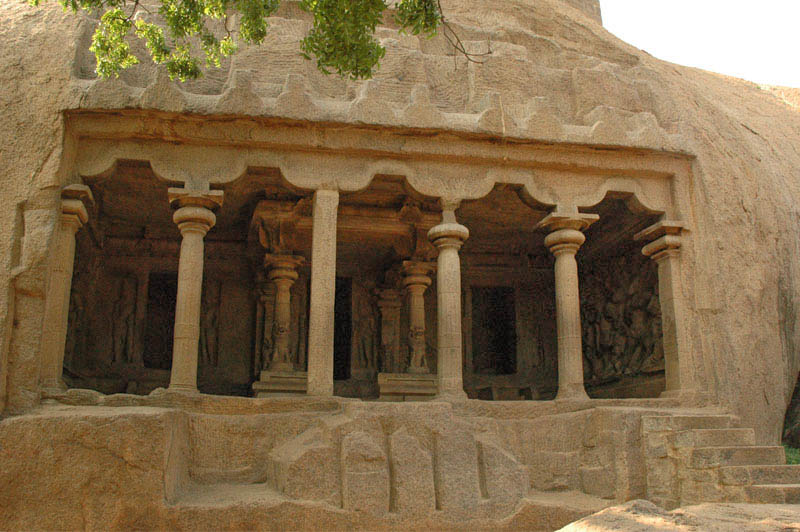
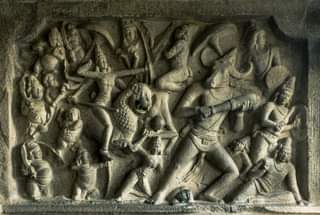
The cave and the sculpture
Krishna Mantapa is another interesting cave temple here. Village life in Vrindavan is depicted here. Krishna holds the mountain Govardhana in his hand and protects the people. Krishna playing the flute, a cowherd milking the cow and such other legends are depicted here.
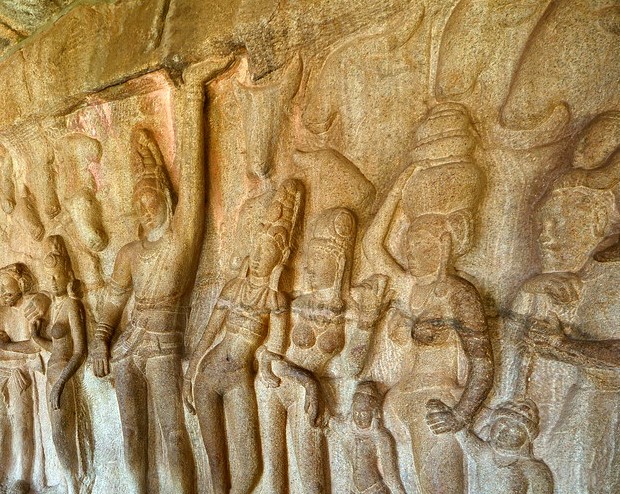

Krishna holding the mountain up and a cowherd milking the cow
There are many more such depictions here which need to be seen and enjoyed. One can enjoy it more if one is well versed in Hindu traditions and epics.
Arjuna’s Penance and Descent of the Ganga
This is the largest bas relief in the world measuring 29 mt X 13 mt and is a relief carved on two open air rock faces. The legendary Arjuna standing in penance and the descent of the river Ganges is depicted here. During special occasions, the river Ganges was shown flowing down from Shiva’s hair. This was achieved with a water tank on top of the relief. There are more than hundred figurines in this relief and many of them are life size.
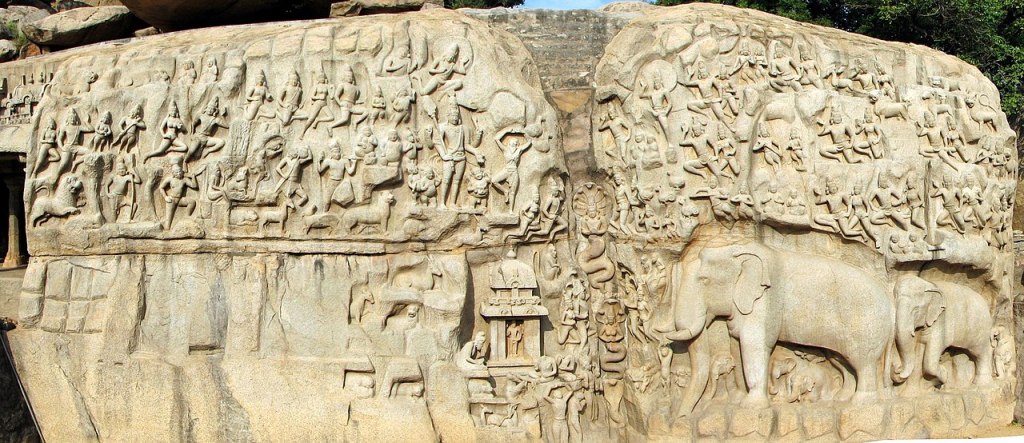
Arjuna’s Penance ..the largest open air bas relief in the world
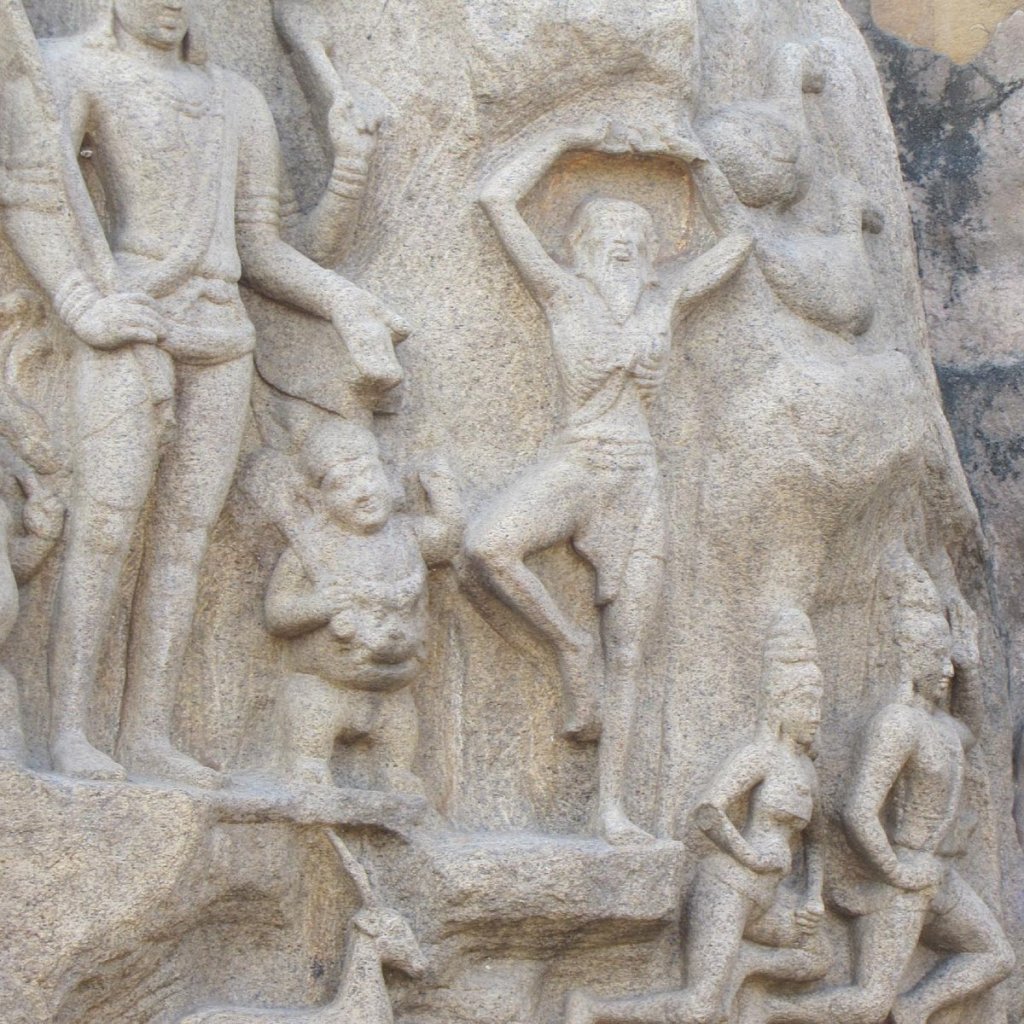
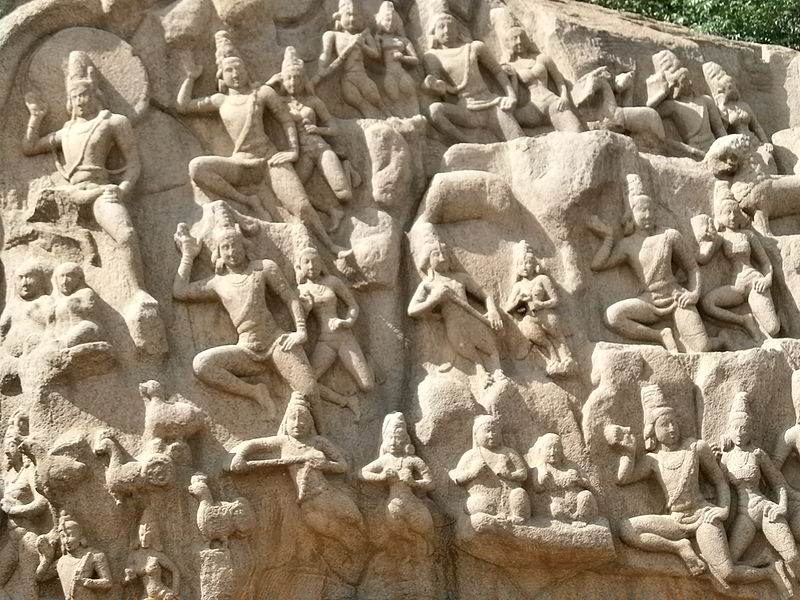
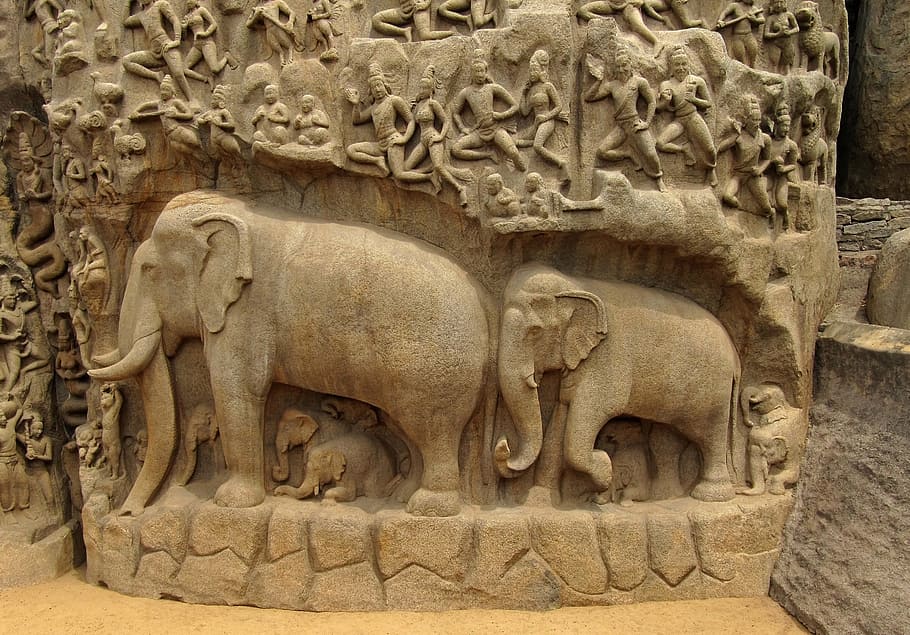
More details of the bas relief
The Shore Temple
This complex is close to the seashore and hence called Shore Temple.
There are three temples in the main Shore temple complex built on a 15 mt platform. Two of these are Shiva shrines where Shiva and Parvati along with their sons Vinayaka and Kartikeya are honored . The main temple has a pyramidal tower 18 mt high and faces the east so that the sun rays fall on the Shiva linga here. A Vishnu shrine lies in between the two Shiva shrines. This is again an example of both Shaivism and Vaishnavism coming together.
The temple and other monuments in the complex are excellent examples of Dravidian architecture. The roaring lions, a typical Pallava icon is seen on the pillars of this temple. Some of the sculptures have been damaged and some are missing. The compound wall of the temple is sculpted with Nandi (bull) and Varahas (boars).
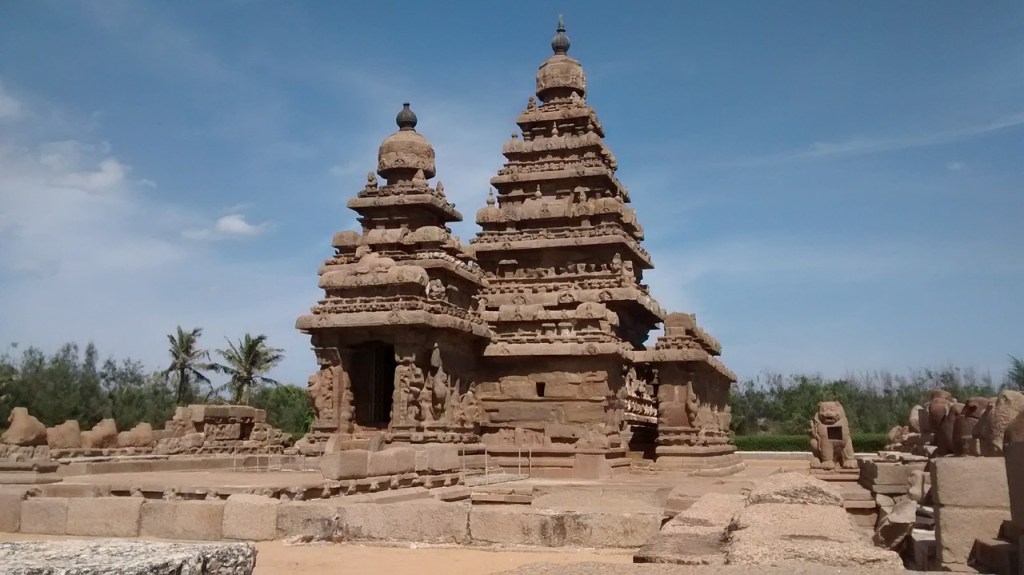
The Shore Temple

Sculptures around the shore temple
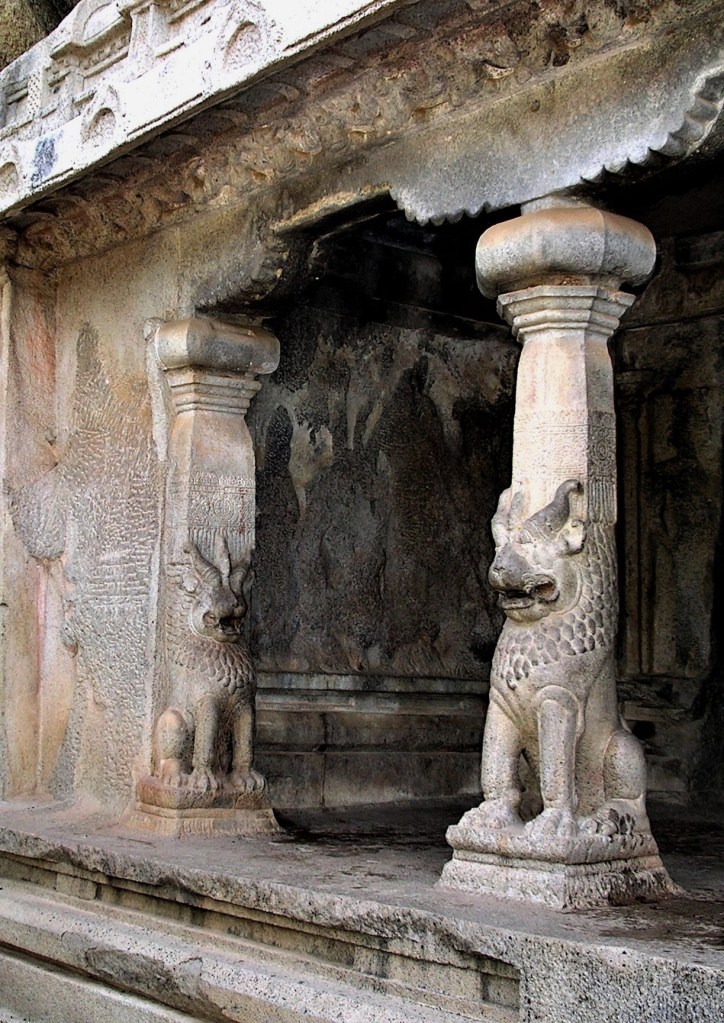
Typical Pallava icon…the roaring lion pillars
Other rock monuments
Krishna’s Butterball
A gigantic rock seems to be resting precariously on a sloping rockface and is popularly called butter ball.

The precariously placed rock!!!
Butter Well
This is a deep excavation into the rocky surface which looks like a well.

The excavated well!!
Well, I have tried to put together the salient parts of the Mamallapuram complex. I hope it has given you a perspective of the architectural proficiency of the Pallava dynasty.
With this, the series on Great Temples of India will stop for some time. Continuous dose of art and architecture can get heady. So I move on to some natural wonders with my series on Alaskan Adventures.
Do give me your feedback and comments.
 Travel-along.in