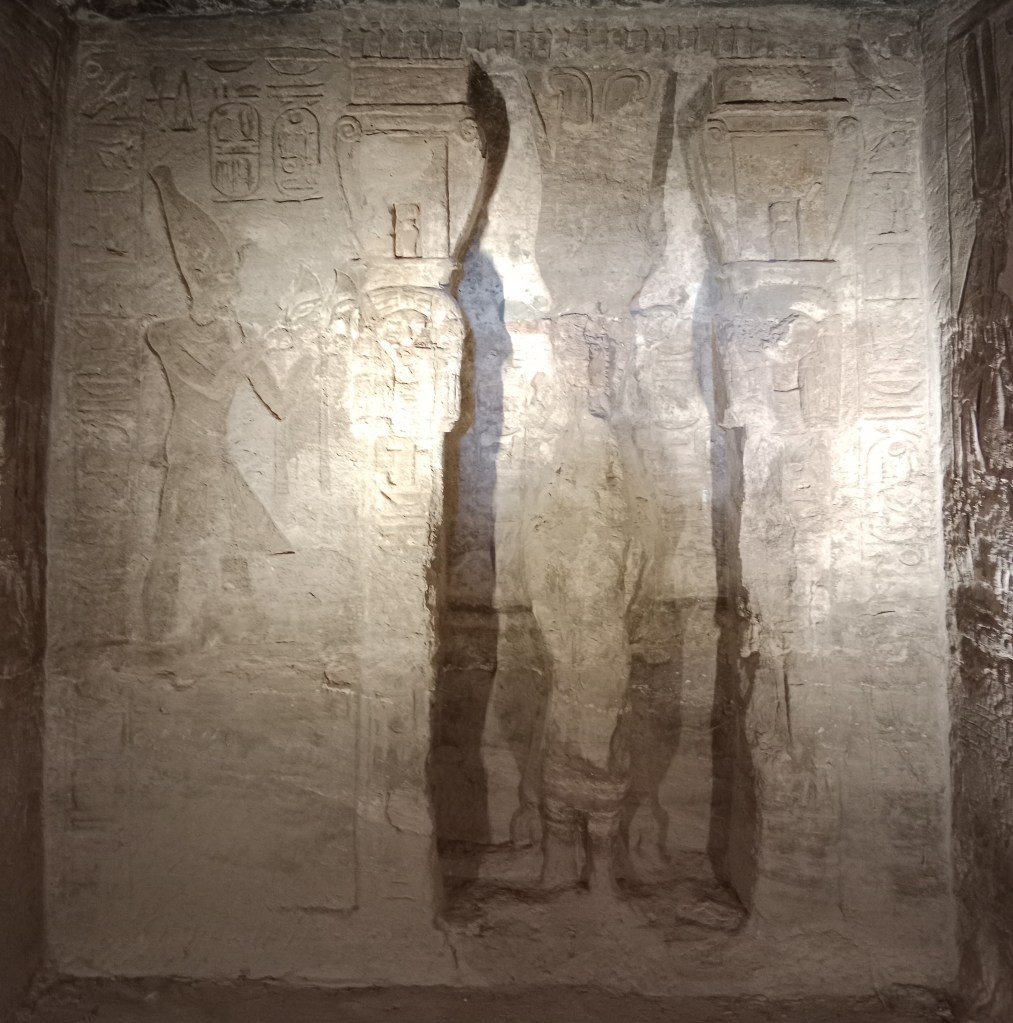
Luxor ; The Temple of Festivals

Located in the town of the same name, the Luxor temple complex is located on the banks of the Nile and built around 1400 BC. Major part of the temple were built by Amenotep III and Ramesses II. During the Roman period, parts of the temple were converted into a church.

Unlike all other temples we visited, this temple is not dedicated to any cult God or any defied Pharaoh making it unique. Instead, it is dedicated to rejuvenation of kingship and most probably was the location of coronation of many pharaohs. It was also the location of the Opet festival , the most important festival in ancient Egypt when the Gods from Karnak temple would come in a procession to Luxor and stay here for a few days. The processional route used is an important part of this temple complex.

Our Trip

From Karnak temple we proceeded to the Luxor temple and it was dark and so the temple was lit up adding to the beauty of the structures. The avenue of sphinxes lead us to the entrance of the temple.

Avenue of Sphinxes

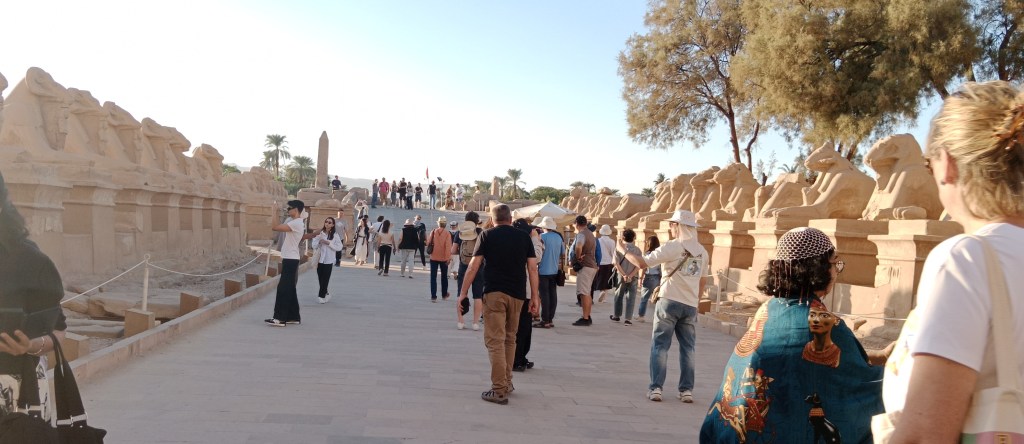
This is a 2.7 km passage between the Luxor temple and Karnak temple lined on either side by sphinxes. There are more than 700 sphinxes with the body of the lion and the head of a pharaoh signifying the strength of the lion and wisdom of the king. At the Karnak end, the head of these statues is of a ram while on the Luxor side, its a human head.

It follows the processional route used by pharaoh Amenhotep III in the 14th century BC . This was also the route used when Amun Ra would leave Karnak and go to Luxor during the festival.

The Avenue of Sphinxes

One of the sphinxes

The Main Temple

We entered the temple through a pylon consisting of two towers on either side of a doorway with niches that originally held flag staffs .Built by Ramesses II in the 13th century BC, the size of the pylon and the adorning statues makes one feel little!!

In front of this pylon are six statues of Ramesses II ; four in standing and two sitting posture ; some of them partly damaged. The standing statues have the left foot forward depicting a very traditional pose. The statues wear the double crown representing union of upper and lower Egypt which he reigned. Built of sandstone blocks, the temple design shows all features of Egyptian architecture.

The pylon itself has inscriptions of the war with the Hittites.

The front pylon of the Luxor temple with the six statues and an obelisk

The Obelisk

An obelisk is a long monolith stone with a pyramid shaped top and decorated with reliefs celebrating the achievements of the pharaoh.

There is an obelisk towards left side of the entrance which is attributed to Ramesses II, weighing over 200 tonnes and is 26 meters high. At the base of the obelisk are statues of baboons . Baboons are symbol of wisdom in ancient Egypt as the baboons were believed to dance before the sunrise welcoming the Sun. The body of the Obelisk has several hieroglyphic depictions mainly of the pharaoh and various deities.

Originally there were two obelisks. The obelisk on the right side was gifted to Louis IX by one of the Ottoman kings Muhammed Ali and now adorns the Concorde square in Paris ! .

The Obelisk with hieroglyphics and the pyramidal top

Baboon statues at the base of the obelisk

Crossing the first pylon, we entered the Court of Ramesses II which is an open courtyard with double row of columns having papyrus capitals on three sides. Many of these columns have colossal Ramesses II statues between them, some wearing the crown and some partially damaged.

Some of the statues in the hall were those of his predecessor Amenotep III which were rechristened as himself by Ramesses II.

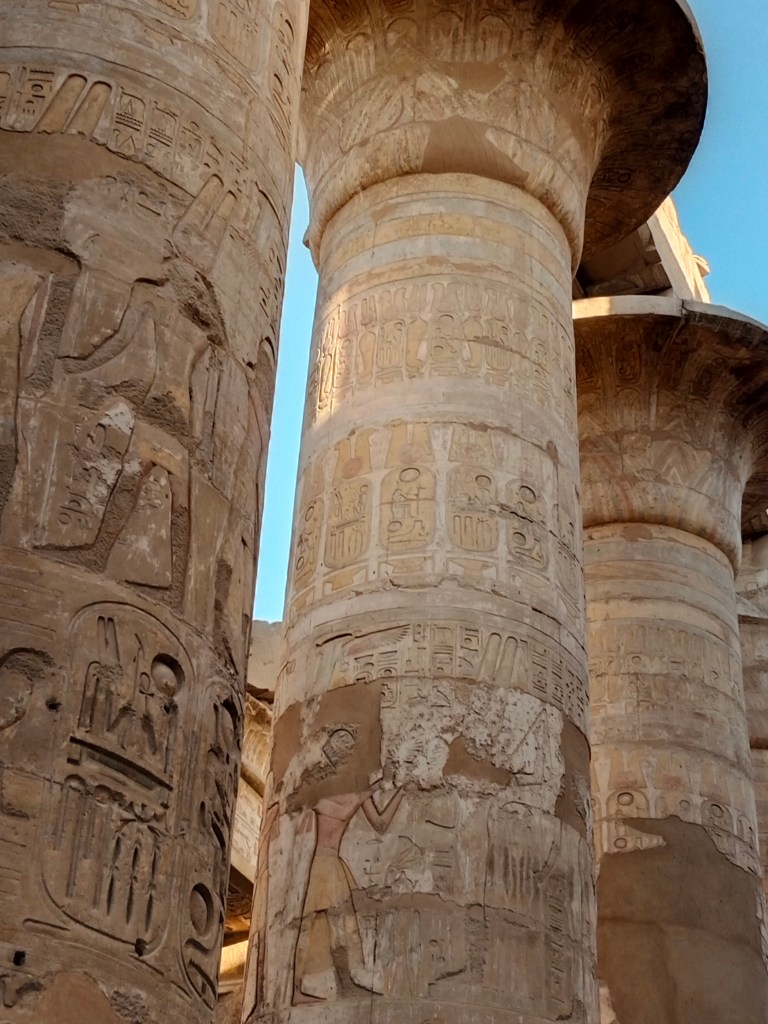
The 74 columns in this hall have inscriptions depicting the pharaoh and his family receiving the blessings of the Gods.

Ramesses II statues in the hall with some damaged columns on the right

Ramesses II statues in between columns, some with crown and some damaged.
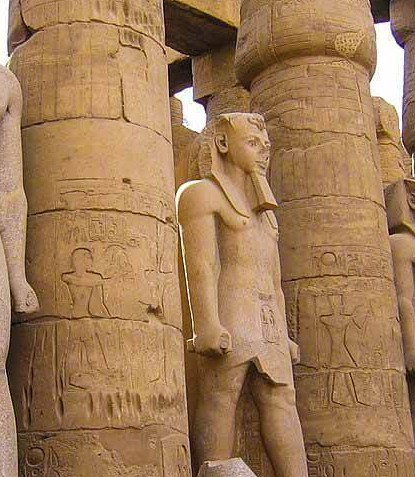
Inscriptions on the columns

One of the important depictions on the reliefs here is that of the unification of Upper and Lower Egypt about which Ramesses II would pride himself.

The inscription showing the unification of upper and lower Egypt.

Abu Haggag Mosque

One corner of this court is taken up by a mosque; the Abu Haggag Mosque. This is a functioning mosque. The peculiarity of this mosque is that it lies on top of a church. The church was built in the Roman period but subsequently got buried in the sand and mud. Subsequently a mosque was built here and the remains of the church were discovered during excavations.

The Abu Haggag Mosque. The black arrow indicates the ground level when the mosque was built. The lower part was discovered to be a church during excavations.

Walking further ahead, we reach the temple built by Amenotep III . The pylon has disappeared but there are two rows of seven columns which originally had a ceiling but does not exist now. The damages are due to both natural causes and deliberate destruction for religious reasons.

The Colonnade

In front of the colonnade are the statues of Amon and Mut who along with their son Khonsu was the triad of Gods worshiped at Thebes.

Amon and Mut at the entrance to the colonnade.

Once we crossed the colonnade, we were at the second courtyard called the Sun court. This is another impressive courtyard lined by 64 papyriform columns with fluted shafts. the blocks have detailed hieroglyphics but some have been deliberately defaced.

The Sun Court

Note the ornate pillars with fluted shafts in the Sun Court

The sacred boats were kept at this square during the festival of Opet when Amun Ra, Mut and Khonsu would come in a ceremonial procession from Karnak to Luxor and spend eleven days here. The Pharaoh would receive them at the sanctuary.

From here we enter an area that was converted into a church during the Roman period. Here as well as in many other parts of the complex, there are visible evidences of defacement. At many places the hieroglyphics have been chiseled out, re-plastered and paintings done on top.

The part converted into a church…note the Roman style tops of the columns
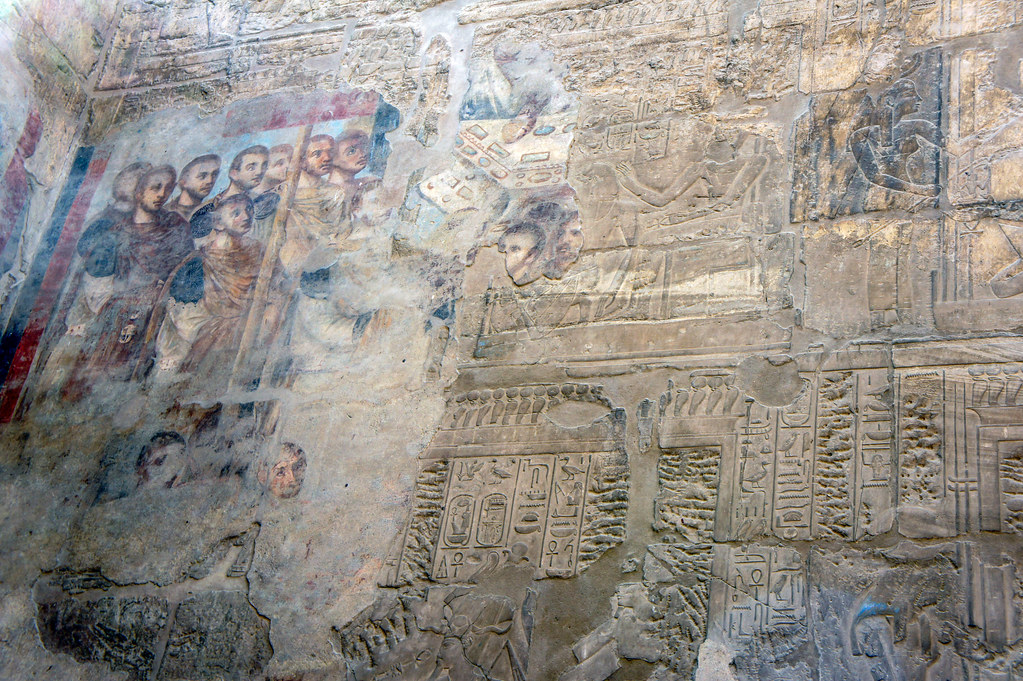
Deliberate removal of hieroglyphics with plastering and Roman painting

From here we enter the sanctuary which represents the original sanctum of the temple. This was where the king received the Gods during the Opet festival. The walls of the sanctuary have reliefs depicting the offerings to the Gods by the pharaoh.

The Sanctuary

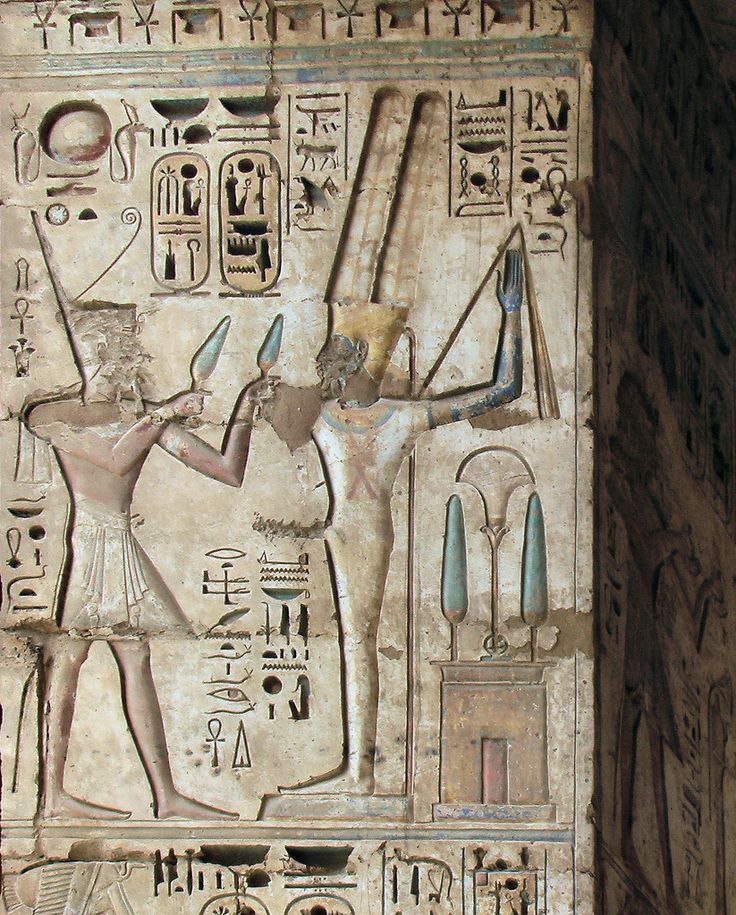
Some of the reliefs on the walls

Alexander the Great is closely connected with Luxor temple. He is seen as a pharaoh giving offerings to the Gods in many reliefs in this temple.

From the sanctuary, we walked out along the central passage and proceeded to our cruise ship after an exhausting but amazing trip to two of the most popular temples of ancient Egypt.

Next week we are at The Valley of the Kings, a vast area where multiple tombs and burial chambers have been discovered. Till then, do subscribe, like and comment.

Karnak Temple: The Largest Ancient Temple Ruins in Egypt

The Karnak temple complex is Egypt’s largest single gathering of temple ruins. It looks more like an open air museum filled with massive pylons, columns , statues , obelisks and a sacred lake. It is so vast that it has often been called a historical document in stone!

One of the peculiarities of the temple is that it was built over 1500 years ; added by generation after generation of pharaohs resulting in a collection of temples, sanctuaries, pylons and other structures. Stretching from the Middle kingdom to the Ptolemaic period and over thirty pharaohs contributing to its building ; it lacks a systematic plan ; but the expanse and complexity of this temple is not seen elsewhere. The ruins are still impressive though nothing remains of the houses, palaces and gardens that surrounded the temple in ancient times. It was also modified by later cultures for their own religious purposes such as Coptic churches . Even today, it is considered to be the largest temple complex ever built.

The history of the Karnak temple is largely the history of the city of Thebes and it’s changing role in Egyptian culture. Karnak and other areas of ancient Thebes including Luxor, the Valley of King and Valley of Queens are designated UNESCO World Heritage sites. We will be visiting all of these in subsequent episodes.

The original name of the temple was Ipet-Isut meaning the “Most Select of Places” while the modern name Karnak comes from the village nearby called el-Karnak meaning “fortified village”.

The complex is a vast open site and has four temples but only the one dedicated to Amun Ra, the Sun God is open to the public and hence is very often interpreted as the temple of the Sun God.

Our Trip

We visited the Karnak temple after the cruise had docked at Luxor.

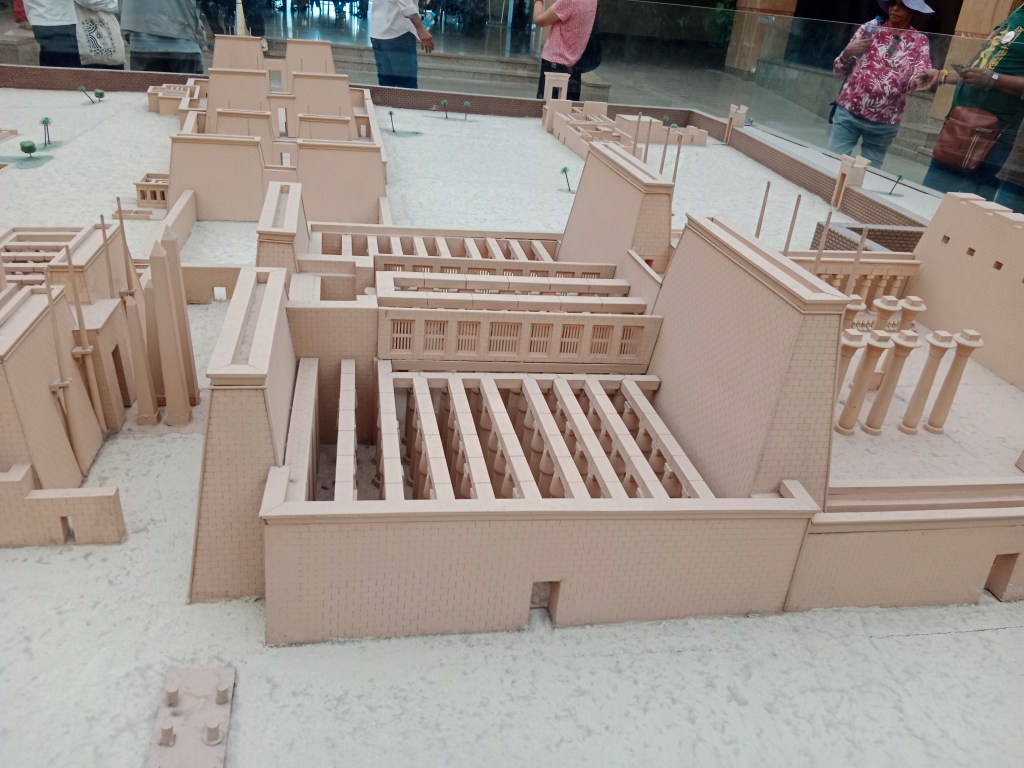
Just as we entered the complex there was a model of the temple which actually gave us an idea of the vastness of the temple we were going to explore.

A model of the temple. The location of hall of pillars and the obelisks are clearly seen

The avenue of rams

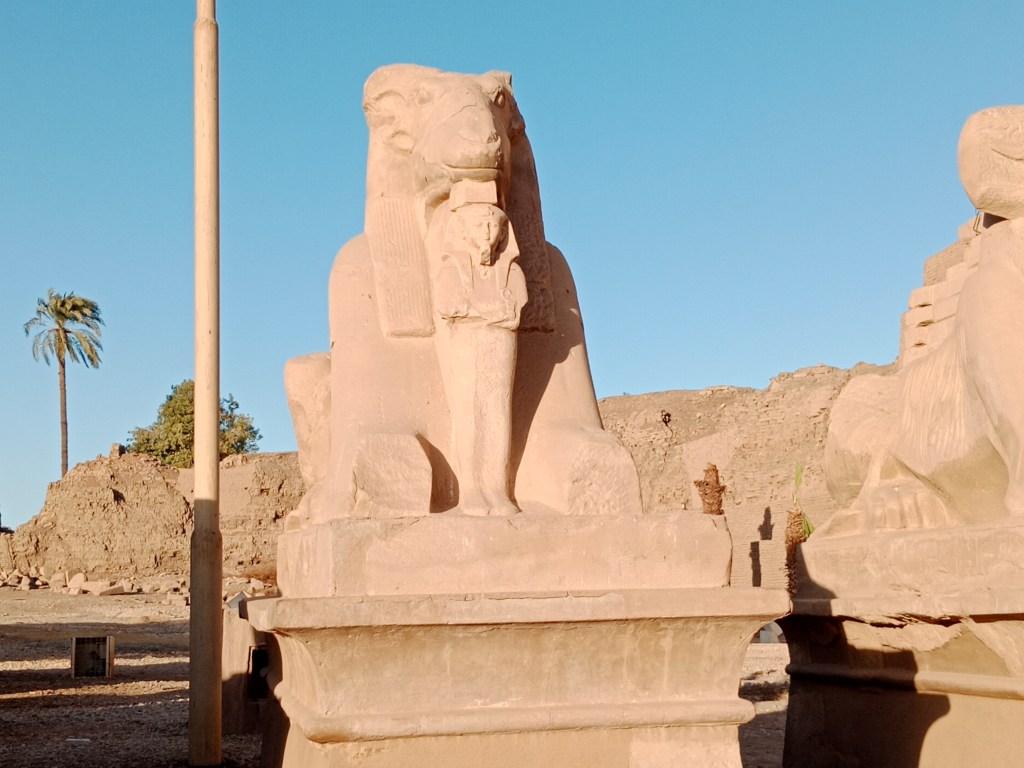
The first thing that greets us as we approach the main temple is the avenue of rams with obelisks in front . This is a wide passage lined on either side with statues of rams .

On close observation, each of the statues has the body of a lion in sitting position with the head of a ram . A statue of the king is held between the legs of the lion as if protecting the king. Some of these statues are partly damaged but most of them are intact. This avenue leads us to the first pylon marking the entrance .

The avenue of rams leading to the main temple

The king’s statue being protected by the ram

The pylons and the halls

There are 10 pylons in the temple separated by halls and courts forming professional gateways, some along the main axis and some at right angles. The reliefs on these pylons reflect the king who built them. The first pylons to be built were the ones inside starting near the sanctuary. The others were added on the outer side of the older one. The first pylon that we see , is in fact the last to be built .

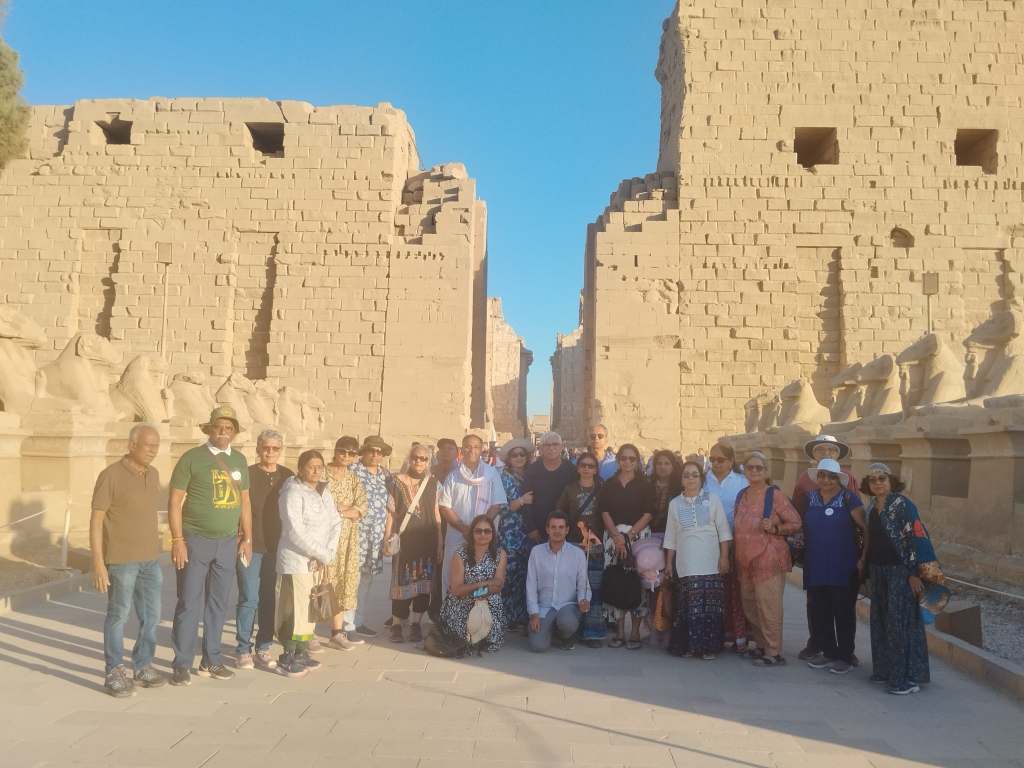
The first set of pylons is incomplete and lacks any kind of decoration or reliefs. It has openings where they used to erect flags. This was the last one to be built and hence the lack of finish….

Our group in front of the temple with the first set of pylons behind us, the avenue of rams on either side and some parts of the serial pylons seen along the passage behind.

Crossing the threshold and the first set of pylons we reached the open courtyard where there are three shrines; the biggest one of Amun-Ra, and the others are one for his wife Mut and one for his son Khonsu. The walls of these shrines have reliefs of offerings to these Gods.

The shrines of Amun-Ra, his wife and son.

Apart from this, the courtyard has partially destroyed columns and a single well preserved column. The columns look as if they have been shaven off but they were destroyed in an earthquake. Ruins of various smaller shrines were also scattered all over the courtyard.

Partially destroyed columns and a single surviving column seen in the midst of ruins.

As we approach the second pylon, there are two massive statues of Ramesses II on either side with a statue of his favorite queen Nefertari between his legs.

The colossal statue of Ramesses II with wife Nefertari ( ruins seen in the backdrop)

Once we crossed the second pylon, we entered the fascinating Great Hypostyle Hall. The pylon itself has colorful reliefs unlike the first incomplete pylon.

The colorful reliefs on the second pylon

The Great Hypostyle Hall (hall of pillars)

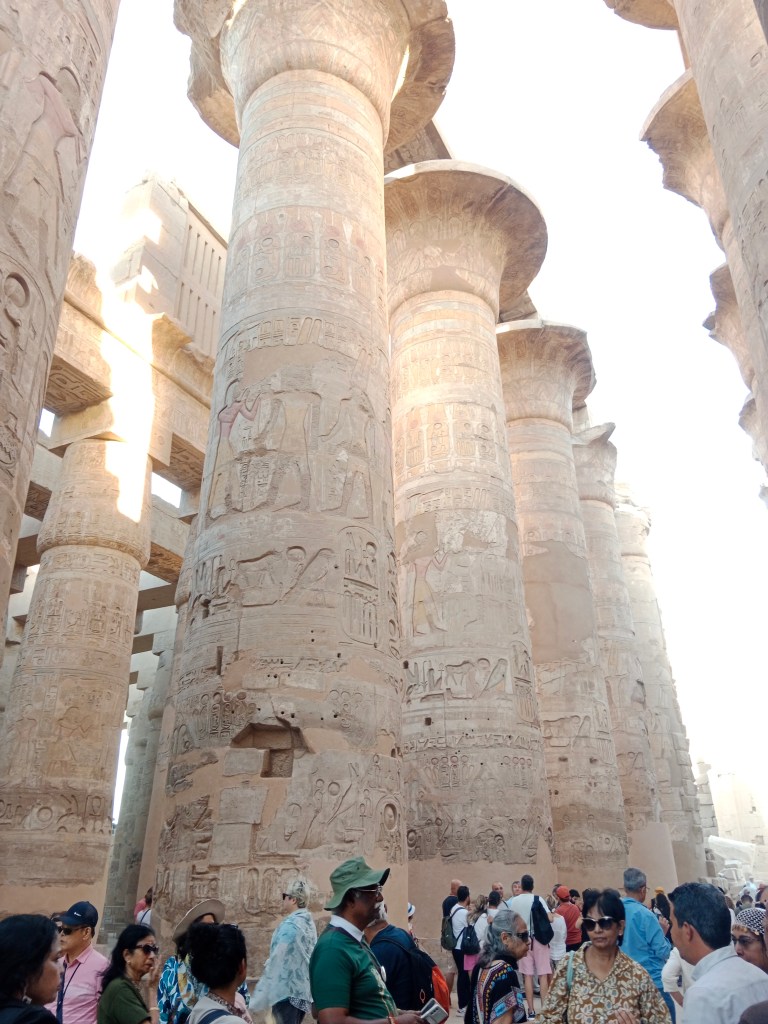
This great hall has 134 massive columns with architraves on top weighing 70 tons each. 12 of these columns are 70 ft high while the remaining are 40 ft tall. As we walked around the hall, the sheer vastness and size of these columns left us in awe. The columns have extensive relief and paintings, some still retaining color after centuries!!

This was in fact an unbelievable piece of Egyptian architecture. Have a look at the pictures below.

The Great Hypostyle Hall with colossal columns

Note the reliefs on the columns

Note the reliefs with preserved colors

The fourth pylon marks the entrance to the sanctuary of Amun and the courtyard in front had three pairs of obelisks built by the kings Thutmoses I,II and III. Many of the obelisks are in ruins, some have toppled down and some are broken at multiple places.

Courtyard with obelisks

The most well preserved obelisk. (note the detailed hieroglyphics)

Another interesting feature here is the statue of Pharaoh Thutmoses III with inscriptions of all the countries he conquered.

Statue of Pharaoh Thutmoses III (partially in ruins)

Hieroglyphics related to the countries conquered by Thutmoses III.

The entrance to the sanctuary lies immediately behind this. The Sun God’s shrine was so built that light focused upon it during the winter solstice.

The entrance to the sanctuary of Amun Ra

The altar where the sacred barque (boat) of Amun Ra was once kept

The Sacred Lake

As we exited the sanctuary and walked towards the side, we came across the sacred lake. The lake is filled by the water table and was used by priests to purify themselves before various sacred rituals. It was also used for navigation of the sacred barque.

The sacred lake

This brought us to the end of the tour of the Karnak temple. I am sure you must be overawed at the sheer vastness of this temple complex and the size of it’s pylons. A wonder in art indeed!!!

Our next destination was Luxor temple and we proceeded there.

See you next week at Luxor Temple.

Till then, do subscribe, like and comment.
Discovering Abu Simbel: A Journey Through History

Abu Simbel is a historic site on the banks of Lake Nasser some 230 kms. from Aswan in Egypt which houses two massive rock cut temples. Egyptian kings often deified themselves and this is one such example where the great temple is dedicated to Ramesses II, the king and the Gods Amon-Ra, Ra-Horakhty and Ptah. The smaller temple at the complex is dedicated to the queen Nefertari and the Goddess Hathor, the cow headed God of love, music and fertility.
History

Built between 1264 -1244 BC, by Ramesses II to commemorate his victory against the Hittites, it is one of the most impressive structures built by him. Nubia was an important region controlled by Egypt and it was very rich in gold and other precious metals. The building of this temple by Ramesses II is also attributed to his wanting to impress the Nubians about his prowess. By 6th century BC, the temples fell into disuse and was covered by sand. It was in 1813 that a Swiss researcher Burckhardt discovered the partly buried temple.

Relocation

When Egypt embarked on a project to build the Aswan High Dam, the temple was in danger of submersion. It was the UNESCO and other partner nations who together embarked on an ambitious project to relocate this temple between 1964 and 1968. Relocation of this temple was one of the greatest challenges of engineering undertaken by a multinational team of archaeologists, engineers and heavy equipment operators. The entire complex was dismantled, lifted and relocated to a higher and farther location from the river bank.

The relocation process and a model of the old (red) and new(green) locations of the temple (archives)

Our Trip

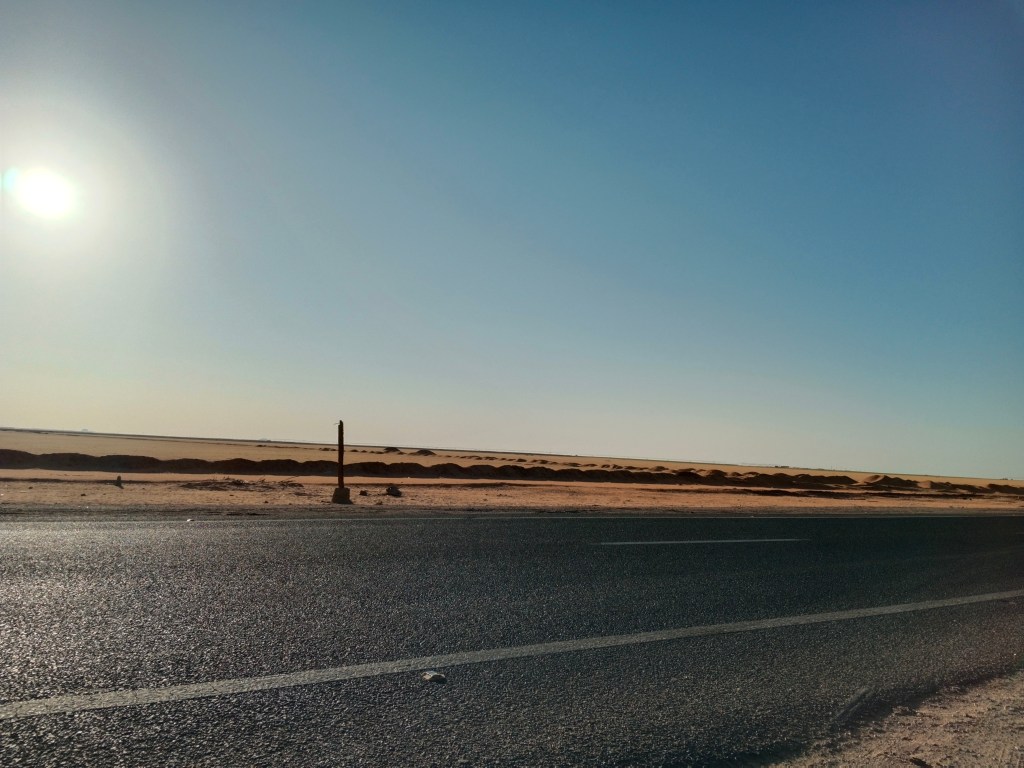
We had checked into our cruise liner at Aswan the previous afternoon and indulged in some activities like a felucca (sail boat) ride and a visit to a Nubian village. From the cruise liner, we started early morning with packed breakfast for a 3 hour drive to Abu Simbel .The drive was through the desert and offered us nice views of the desert …. particularly the sunrise .

The sun rises on the Sahara

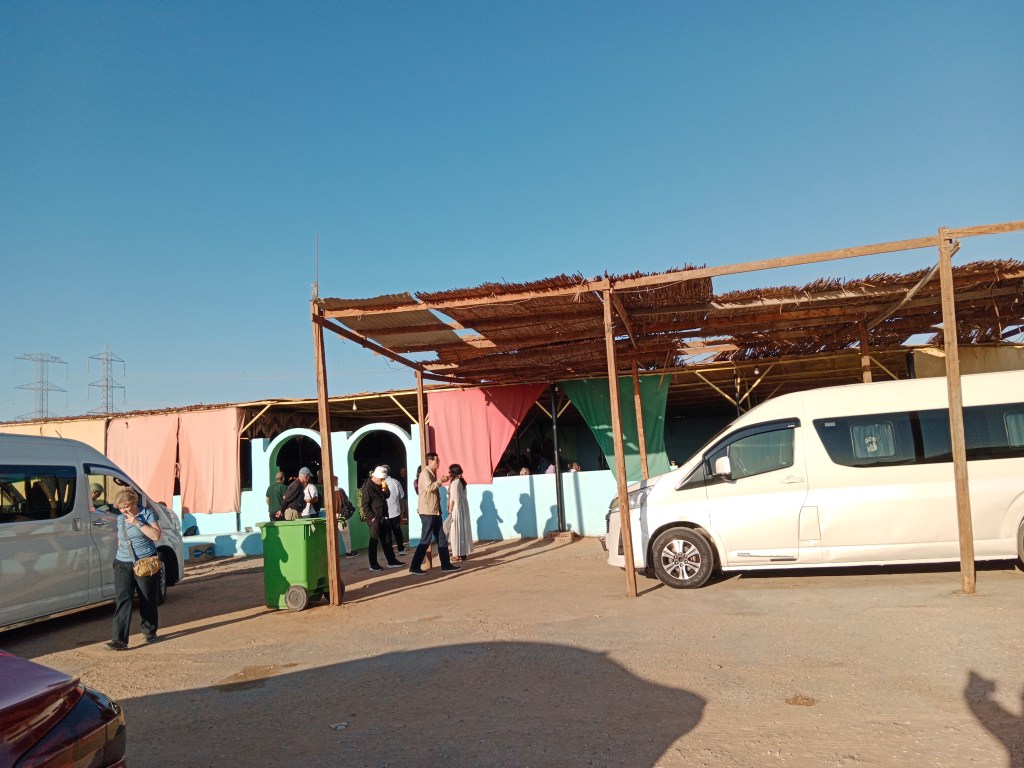
The desert road and a pit stop on the way

As we drove along, we were very close to the Sudan border as this temple is very close to Sudan. Finally, we arrived at our destination and a short walk along the banks of Lake Nasser took us to the temple threshold.

The Pathway to the temple by lake Nasser and the board showing old and new location.

As mentioned earlier there are two temples in the Abu Simbel complex, The Great Temple and The Small Temple.

The Great Temple

This is the first temple that we come across as we approach the complex. The Great temple at Abu Simbel is dedicated to the Gods Amun-Ra, Ra-Horakhty and Ptah.

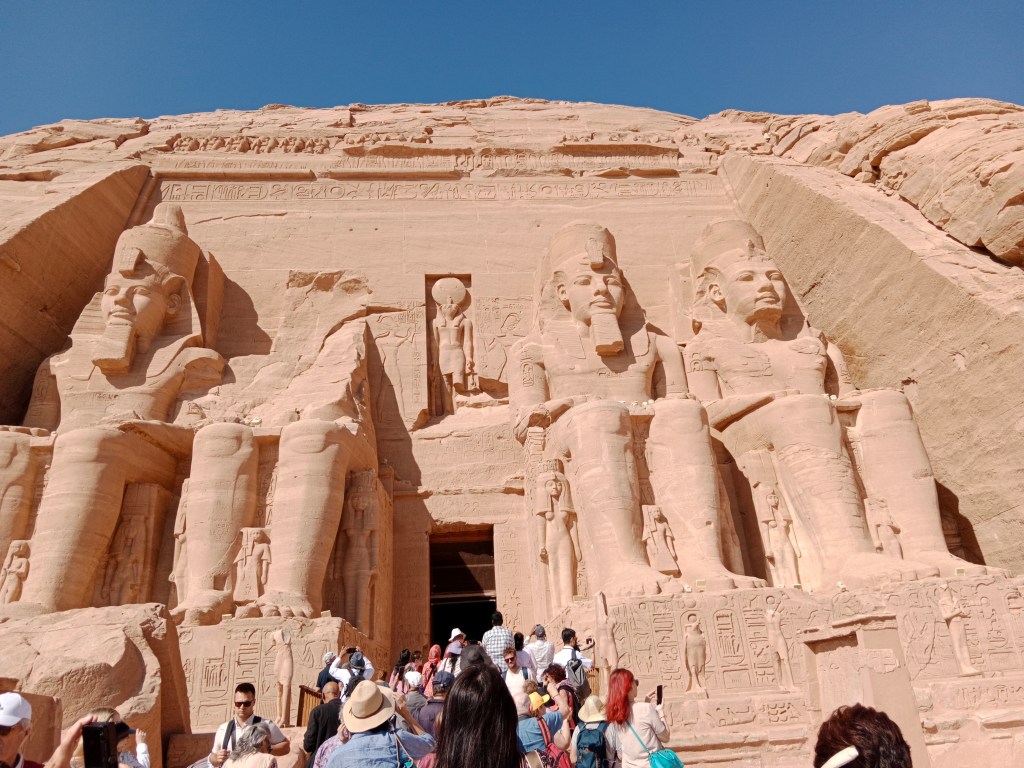
The entrance to the temple is incredible to behold. There are four colossal statues of Ramesses II in a sitting position and wearing the crown of upper and lower Egypt; two on either side of the doorway to the inside. The statue to the immediate left of the entrance was damaged during an earthquake and was not restored but placed at the feet of the statues where they were found. Next to Ramesses’s legs are smaller statues of his wife Nefertari, his mother and his children.

Just above the doorway is a bas-relief of the king worshiping the falcon headed God Ra-Horakhty

Entrance to the Great temple with the four statues and smaller statues near the legs.

Bas-relief above the doorway showing Ramesses II worshiping Ra-Horakhty (falcon headed God)

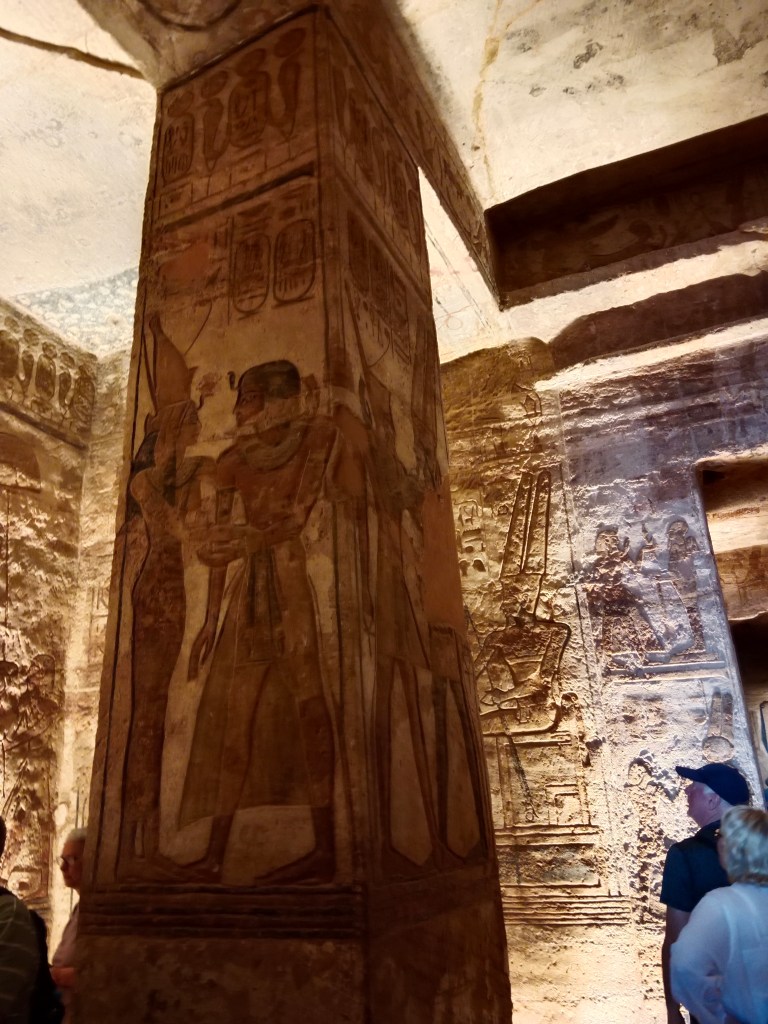
The inner part of the temple has the same layout that most Egyptian temples follow. The hall has 8 huge columns depicting the deified king Ramesses II .

The inner hall with huge carved columns resembling Ramesses II

The interior of this hall is adorned from floor to ceiling with reliefs of Ramesses II making offerings and engaging in war with the Hittites and various hieroglyphic inscriptions.

Ramesses II making offerings to Horus

War scenes where Ramesses II is seen attacking the Hittites

The reliefs on the ceiling

As we enter the second hall, there are gigantic pillars with reliefs and hieroglyphic inscriptions.

The second hall of the Ramesses II temple with pillars having reliefs

Bas-relief showing Ramesses II and Queen Nefertari

From this hall we are led into the sanctuary of the temple which is similar to the sanctum sanctorum.

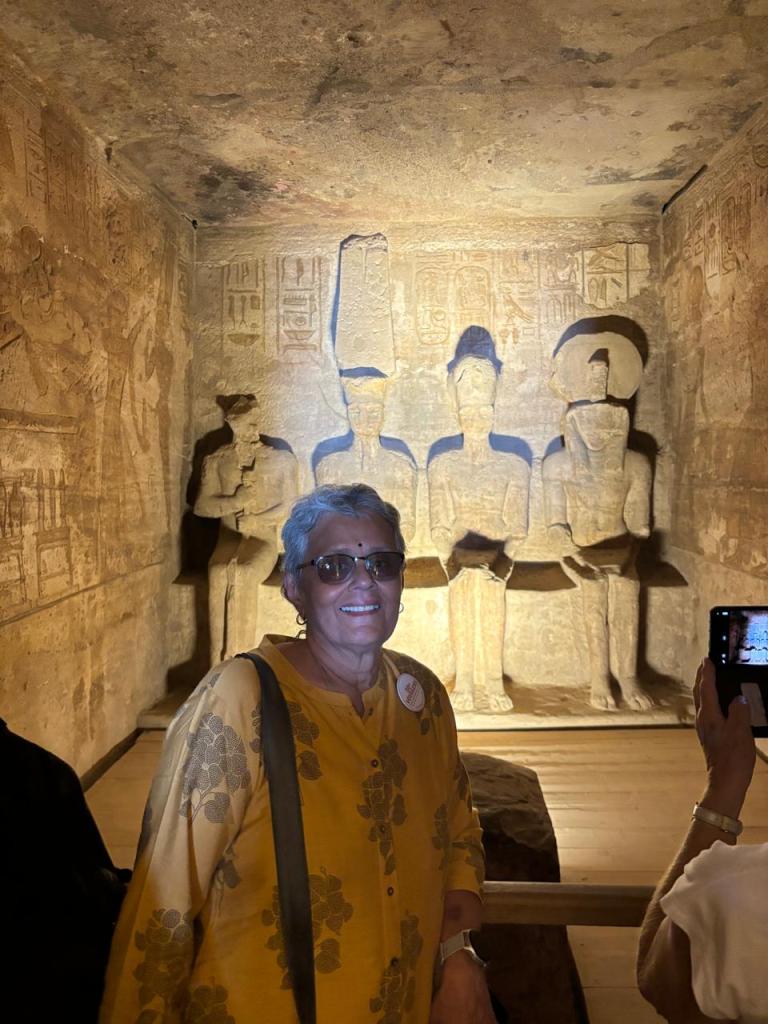
Here on a black wall are four rock cut statues ; Ra Horakhty, Ramesses II, Amun Ra and Ptah. It is believed that the axis of the ancient temple was so designed that on October 22 and February 22, the rays of the Sun would illuminate the three statues except Ptah who is the God of the dead who always remains in dark.

At the sanctuary with four sculptures

After we exited the Great temple, a walk of about hundred meters ahead, lead us to the Small Temple

The Small Temple

The Small Temple is dedicated to Goddess Hathor and Queen Nefertari.

The entrance facade of the Small Temple

The rock cut facade is decorated with six statues of the king and queen ; three on either side of the doorway. This is the second temple in Egyptian history to be dedicated to a queen; the first one being the one dedicated to Queen Nefertiti. Remarkably, this is one of the very few places where the queen’s statue is of the same size as the king! Usually, they are all depicted below the knees of the king.

Entering through the doorway, we reached a hall with pillars but here the focus is on the Queen Nefertari and Goddess Hathor.

First pillar hall of Nefertari temple

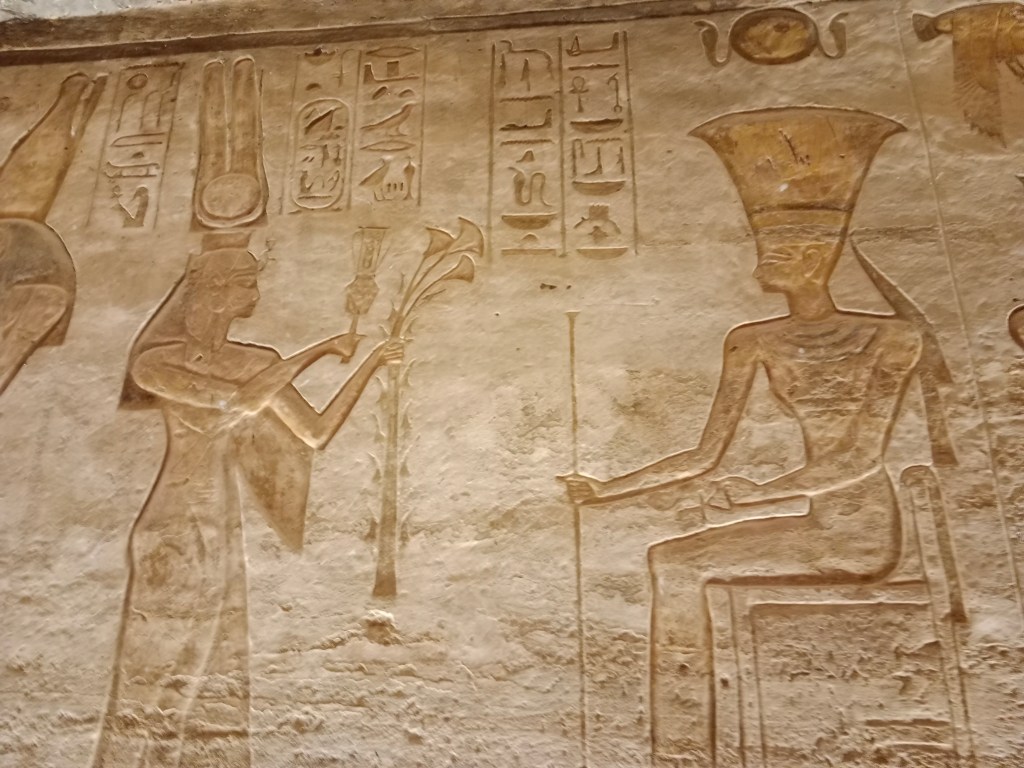
One of the most illustrative reliefs here is of Queen Nefertari making offerings of Papyrus to Hathor, the cow headed Goddess on a boat in a papyrus grove.

Nefertari making papyrus offerings to Hathor

Another bas relief showing the queen making offerings

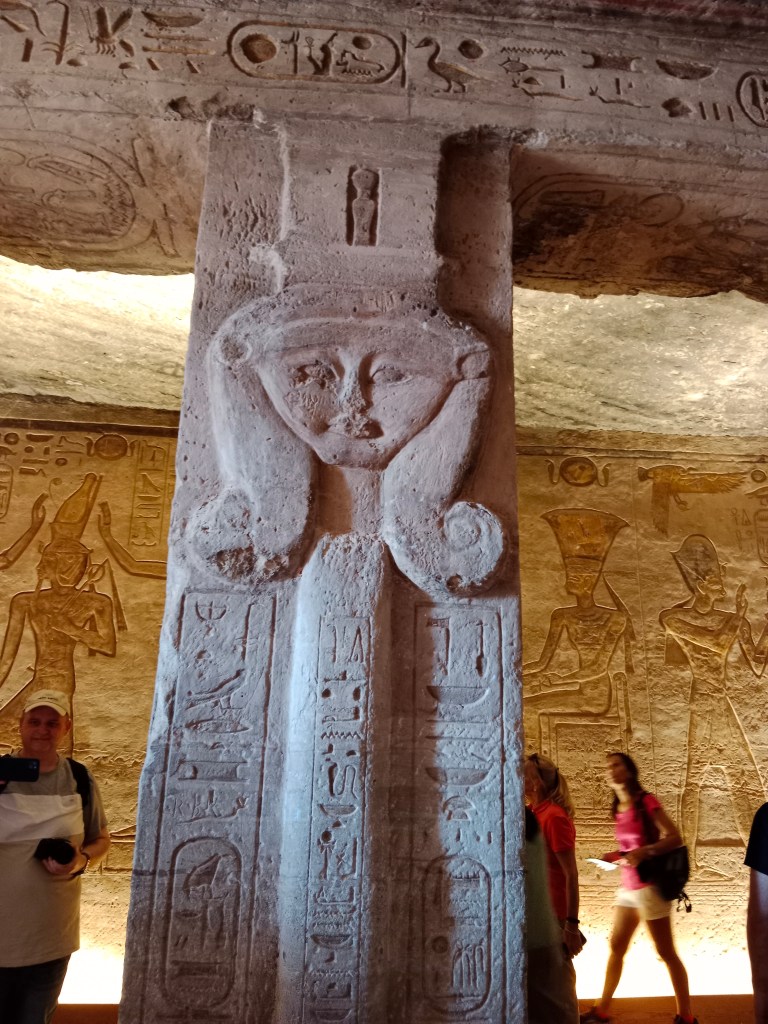
Many of the pillars here have Goddess Hathor with the cow head depicted on the top.

A Hathoric pillar

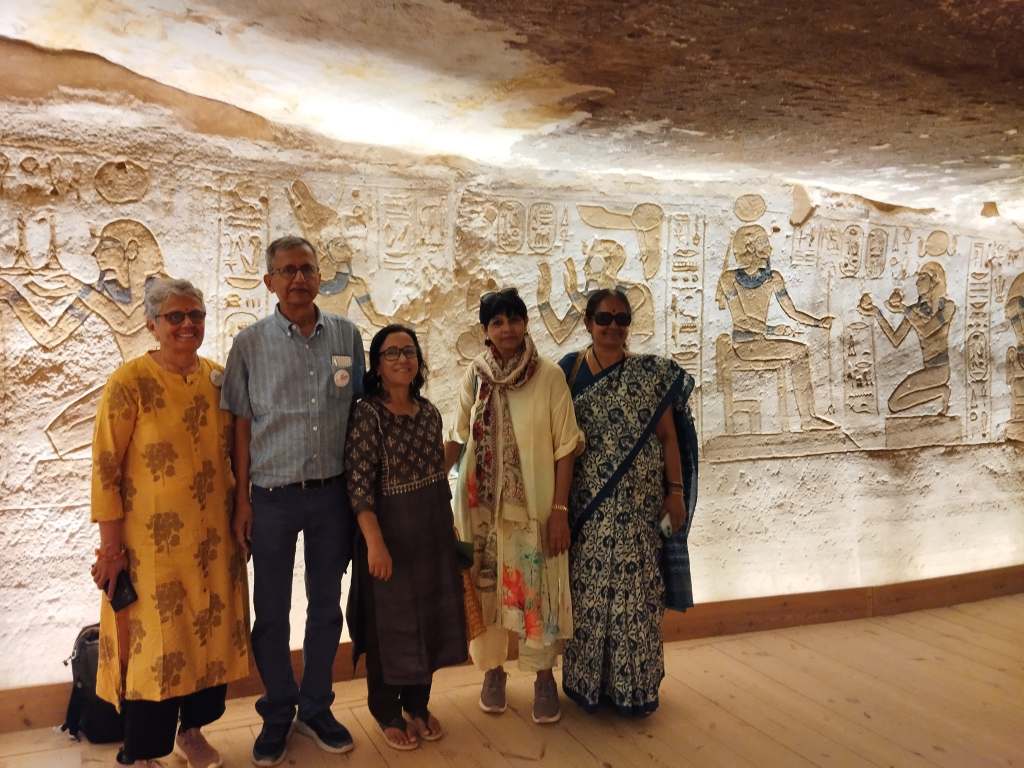
The interior is entirely done up with coloured reliefs

The interior walls with coloured reliefs

Moving into the sanctuary, the main sanctum has a niche in the wall with the cow goddess Hathor coming out of a mountain with the queen making offerings to her.

The main sanctum of the small temple.

As we move out of the temple complex there are beautiful views of Lake Nasser.

Lake Nasser as we see it from the Abu Simbel Temple.

Soon, we all assembled at the appointed location and proceeded to the bus . We had to reach the cruise ship by noon to sail to Kom Ombo . The Kom Ombo temple dedicated to crocodiles was our destination that evening.

See you next week at the crocodile temple. Till then, do subscribe, like and comment.