Adventures in Ladakh ; Rafting, ziplining and more

Ladakh with its unique ecosystem provides ample opportunities for adventure sport which are highlighted here.

The Indus River (Sindhu)

The Indus river literally flowed in and out of our lives during our stay at Ladakh. Our visit to Ladakh was just a month after the deadly terror attacks at Pahalgam. The military, political and diplomatic developments following this had caused the Indus river to come into focus and there was a certain connect that we felt with this mighty river that is the lifeline of Ladakh.

We first saw the river on our way from the Hemis monastery and we did have a photo session .
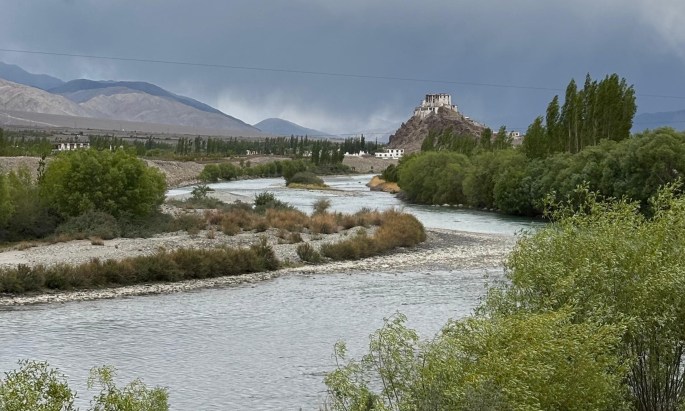
The Indus river with a monastery perched on a hill in the backdrop

Close to this point we had an opportunity to zipline across the Indus river. Some pictures from that wonderful experience…

Geared up to zipline…

Ziplining across the Indus river (click on video)

Sangam Point

This is the point of confluence of the Indus (Sindhu) and Zanskar rivers at Nimmu ; 35 kms from Leh on the Srinagar Leh highway. It is visible from a height from the road and after a short walk down some steps, we can reach the Sangam point.

The confluence looks stunning with the two rivers of different colors merging together. Both these rivers hold religious significance to the locals and a dip here is believed to rid one of his sins!!

The muddy Zanskar meets the clear Indus at the Sangam point (view from top)

At close quarters also, the two colors can be seen

A bridge across the river is seen from Sangam point…
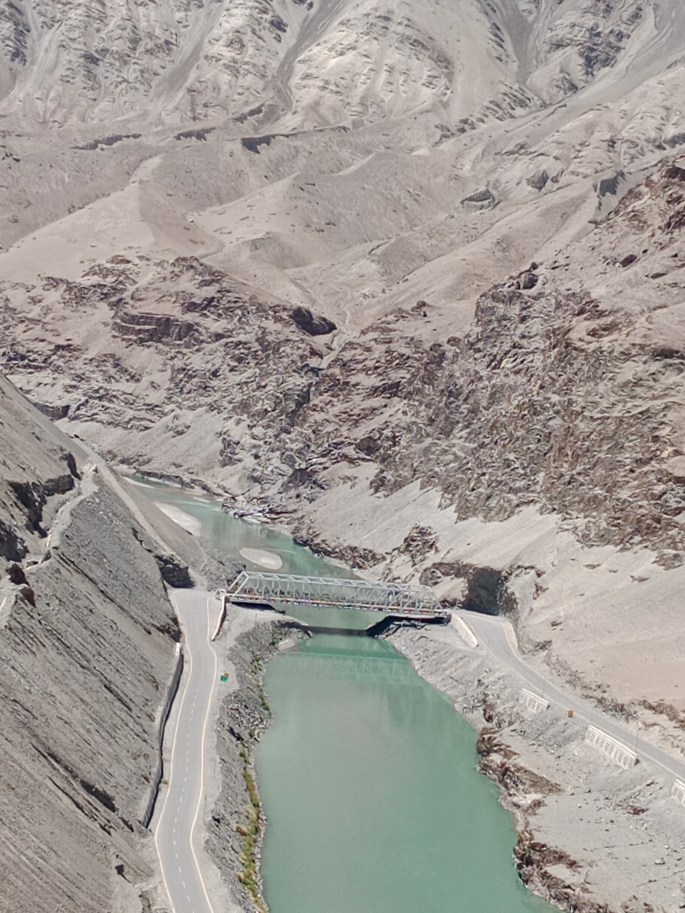

The bridge across the Indus and the roads going parallel to it on either side

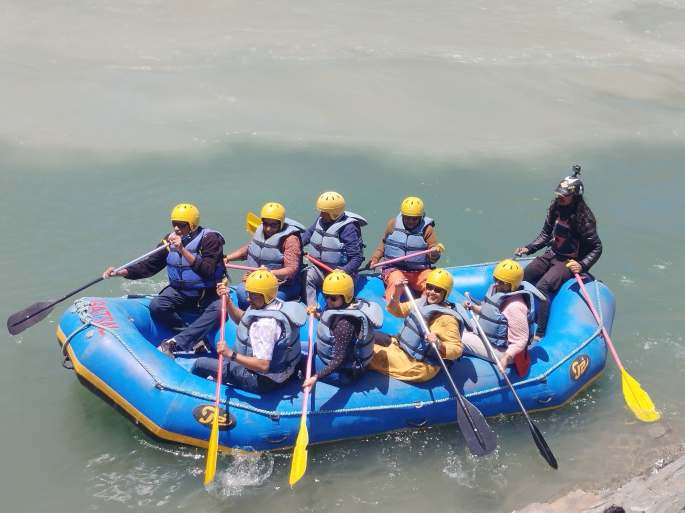
At the Sangam, we did river rafting on the Zanskar river. We were eight people in a raft with a guide . He instructed us initially and then guided us as we tried to manoeuvre the raft.

Few pictures from the rafting experience…

All set to go

The rafting expeience on the Zanskar

After the rafting experience, we had lunch where we got to savour some local Ladakhi dishes.

Ladakhi restaurant and our group at lunch

Thenthuk is a noodle soup where the noodles are flat and made of wheat flour . Mixed with vegetables or meat, it is a thick soup that is often a complete meal for the locals.
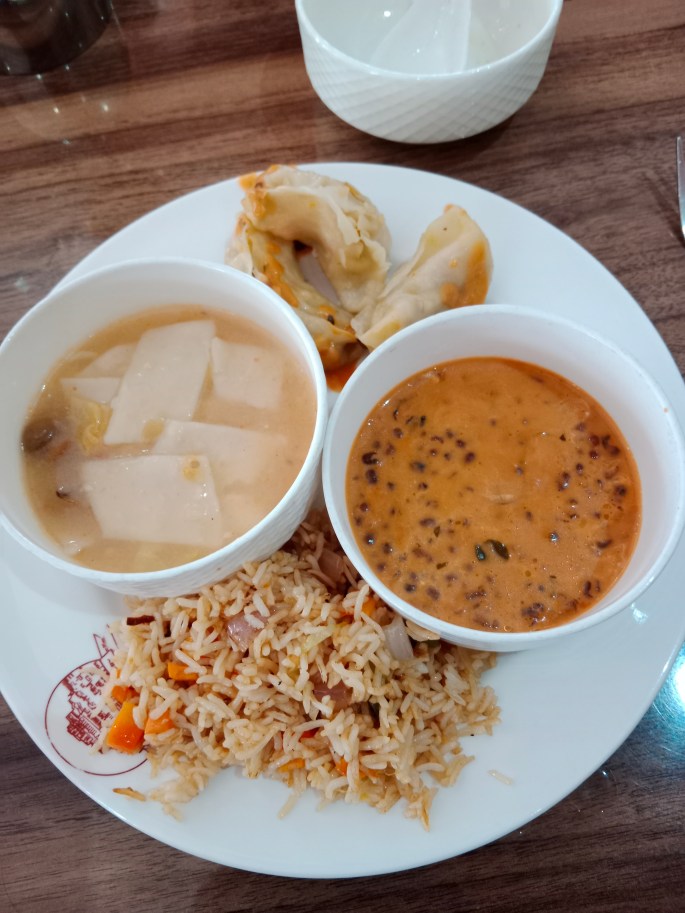
Thenthuk with momos, rice and dal

Post lunch we set off to the moon….yes ; our next destination was Lamayuru, where the landscape resembles the surface of the moon.

Lamayuru and the moonland

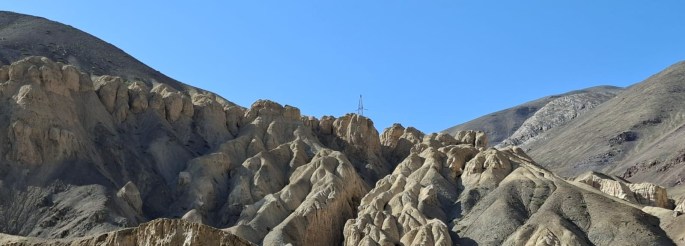
Known as the moonland of Ladakh, the rugged landscape and unique geographical formations make it an interesting spot. The views here reminded me of Bryce Canyon national park in the US but to a much smaller scale . The views during sunrise and sunset must be quiet captivating with changing angles of light.

How moonland was formed

This area was a lake some forty thousand years ago caused by damming of the Lamayuru river by a tectonic shift causing a landslide. Over the years the lake dried up leaving the sedimentary deposits which have been eroded by wind and water resulting in these gullies , ridges and hoodoos. This has given it the appearance of the moon surface.

The drive to Lamayuru itself was beautiful with cliffs overhanging the road on one side and the Indus river flowing down below on the other side.

The drive to Lamayuru ( click on video)

The general landscape at Lamayuru
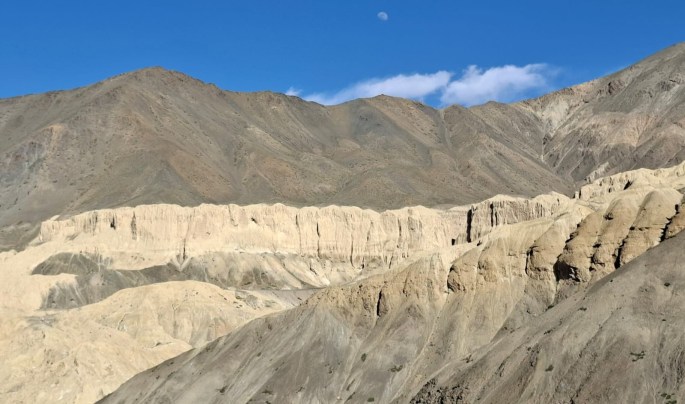
The rugged landscape and unique geographical formations

Lamayuru is also home to a famous monastery.

By now we were quite tired and headed back to our hotel with memories of an adventurous day…

Do subscribe, like and comment till I come back with the next episode.

Punakha

Beautiful Punakha is closely linked with Bhutanese history ; was the old capital of Bhutan and the seat of government till 1955. Located around 72 Kms from Thimpu , it is now the winter capital of Bhutan as it is warmer than Thimpu. Two rivers, Mo Chu and Pho Chu flow through this area making it a very fertile valley suitable for rice farming and Punakha rice is very famous. The Punakha Dzong, one of the most beautiful dzongs in Bhutan is located at the confluence of these two rivers.

A drive from Thimpu to Punakha offers great views of the Himalayas apart from the unique flora and fauna of this region. Dochula pass, which we visited in an earlier episode lies on this route. The area around Punakha is also an excellent birding and wildlife destination as it is home to over 500 species of birds apart from the black bear, panda, leopard and tiger.

The Punakha valley is a fertile region and paddy fields are a common sight here…

Farming activity in Punakha valley

Arriving late evening we checked in to our hotel at Punakha; Hotel Vara. A beautiful hotel located at a slight elevation from the town and overlooking the Mo Chu river, the views of the valley from the hotel were beautiful.

Hotel Vara , Punakha

Next day , after breakfast, we boarded our buses to go around Punakha. Our first halt was at Punakha Dzong about which we have already discussed. After seeing the Dzong, we visited the suspension bridge across the Mo Chu river.

Punakha Suspension Bridge

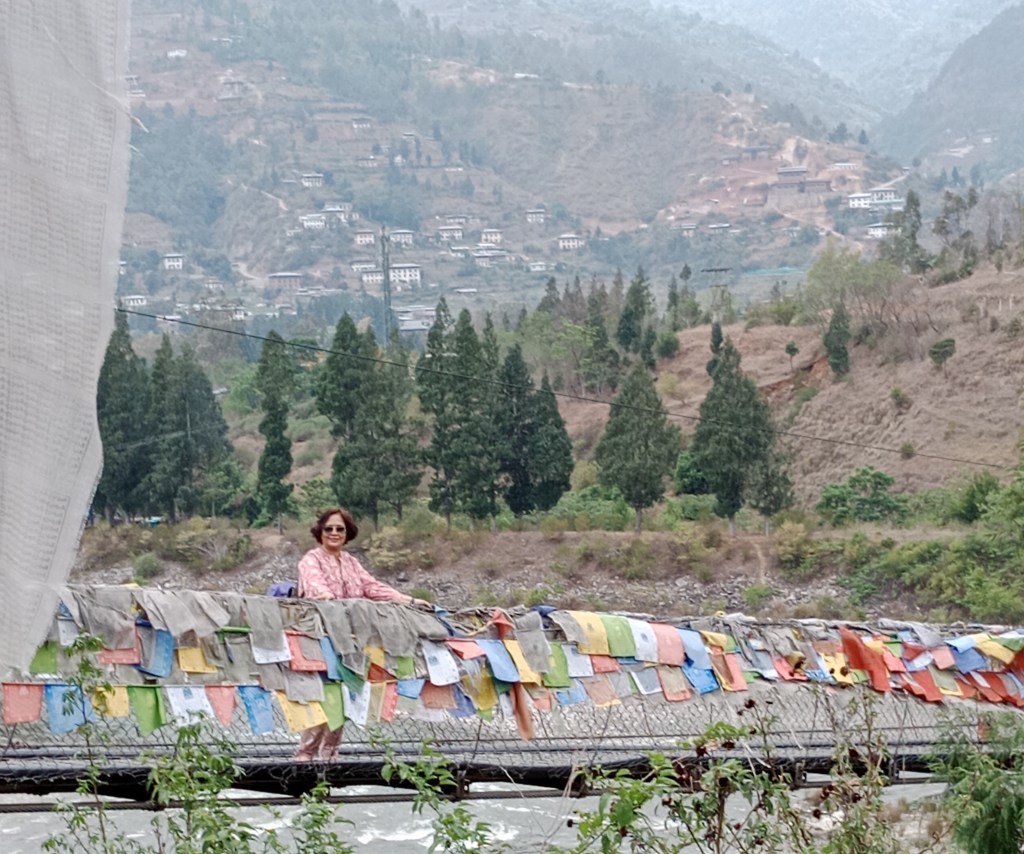
This second longest suspension bridge in Bhutan is about 180 metres in length across the Po Chhu river and connects the two parts of the valley. The bridge is beautifully draped with prayer flags and is a popular photo location. It was built in the 17th century and is anchored by suspension cables which tend to sway in the wind and when we walk on it. The floor is made of wooden planks. Walking across the bridge we reached a small restaurant where we had coffee and rested for a while.

The Suspension bridge from a distance

The coloured flags on the bridge

On the suspension bridge

The restaurant

Riverside Lunch

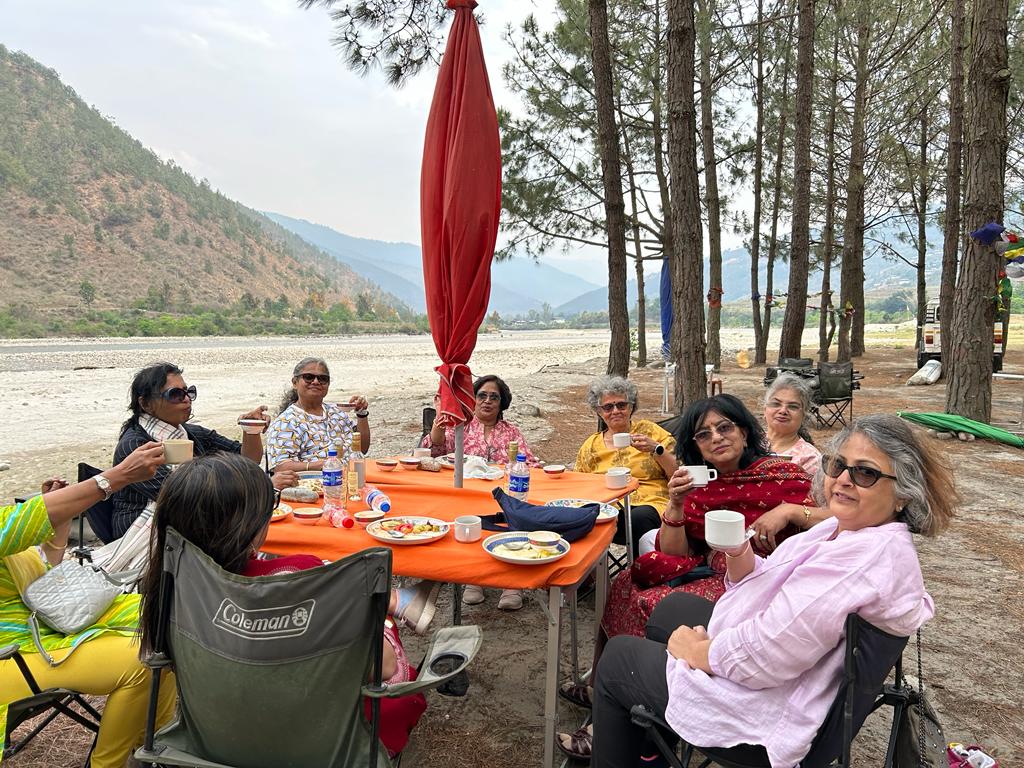
By the time we finished the dzong and the bridge, we were all ready for a nice meal. And what a surprise we had. A riverside lunch was organised . With the sound of the gurgling waters and the gentle breeze blowing in, we really enjoyed the lunch. Some pictures…

An enjoyable riverside lunch…

Post lunch we proceeded to the famous Punakha Nunnery.

Punakha Nunnery

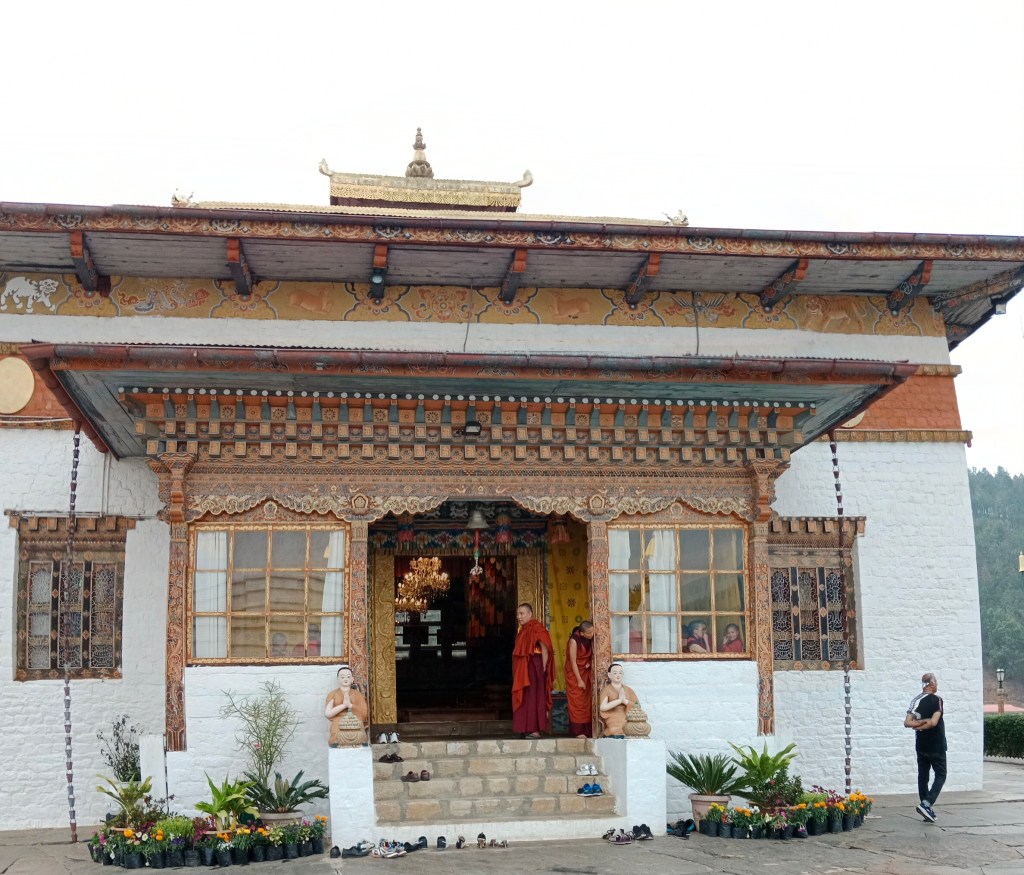
Located on top of a small hillock with beautiful views of the valley, this is a training school for nuns. It also offers life skill training like Thangkha painting ,embroidery and tailoring.

The temple is an example of Bhutanese architecture and design and contains a 14 feet bronze statue of Avalokiteshwara . Statues of Padmasambhava and the Taras are also present apart from the meditation halls. Its unique location makes it visible as one drives into Punakha. Some pictures…

Punakha Nunnery seen from the road as one approaches Punakha

The Stupa

The main temple

The view from the nunnery with the chortens and the road on the hillside.

River Rafting

Let me now take you through some pictures of a River Rafting session on the Mo Chhu river we had earlier on at Punakha. The rafting was enjoyable and we had a great time. The river was not very rough and we encountered grade two rapids as we rowed along…

The rafts and rafters get ready

Starting off with excitement…

Soon we got used to the rapids

We sang and rowed along….

After the rafting session was over, we all wanted to get back as we were wet and shivering…

What better way to get over this than a warm bonfire?

The bonfire…

A video of the bonfire….

On our last night at Punakha, we had a bonfire at the hotel where we all sang and danced in the warmth of the fire. What an ending to our time at Punakha!!!!

Next we week we are at Paro. See you from Paro, till then, do give me your feedback and comments.