
Amboseli National park is one of the most scenic parks in Kenya with Mt. Kilimanjaro , the highest free standing mountain overlooking it. Spreading across the Kenya Tanzania border is a 8000 sq km core area eco system including Tsavo and other national parks. Amboseli occupies a 392 sq km area within this eco system.

A map showing the location of Amboseli in the African continent.
The uniqueness of this park are its views of the snow capped Mt. Kilimanjaro, also called Africa’s watchtower.
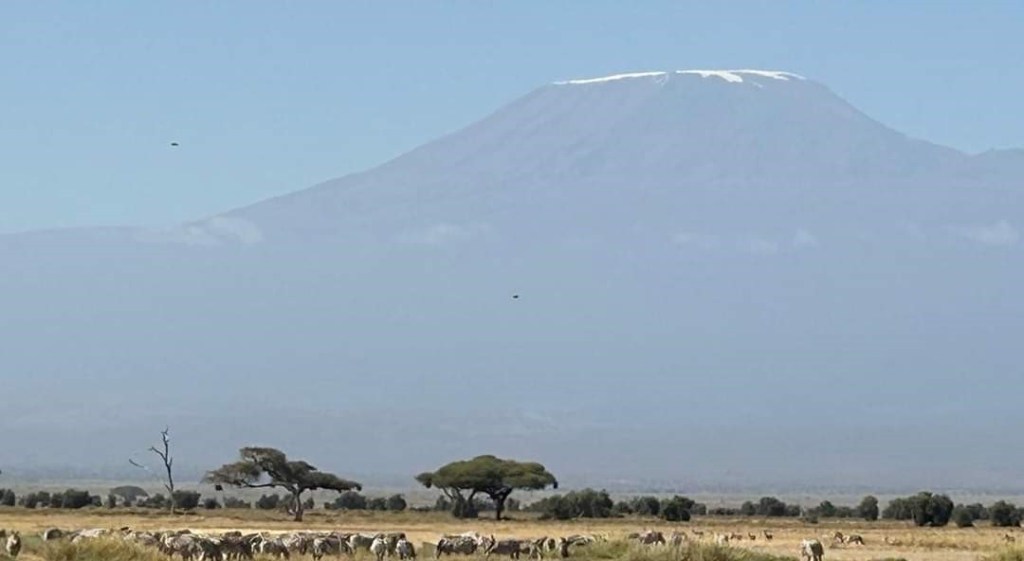
Mt Kilimanjaro with animals grazing below
At the foothills of Mt Kilimanjaro amid the dusty landscape lies an ecological masterpiece at a height of 1150 metres above sea level which the Maasai called “Embosel” meaning salty dusty plain. This is what we refer to now as Amboseli National Park.
And true to its name, Amboseli is very dusty due to the loose volcanic soil that gets kicked up with the march of the animals and the safari vehicles that follow them. Very often you find a vortex of dust spinning around in the horizon like a small local tornado.

The dust swirls like a localised tornado
The Amboseli ecosystem is home to the Maasai people and their cattle whose cultural heritage and pastoral practices have shaped their co existence with wildlife leading to Amboseli being recognised as a “UNESCO Man and Biosphere reserve” . Locals are involved in conservation and the idea is sustainable development with conservation.
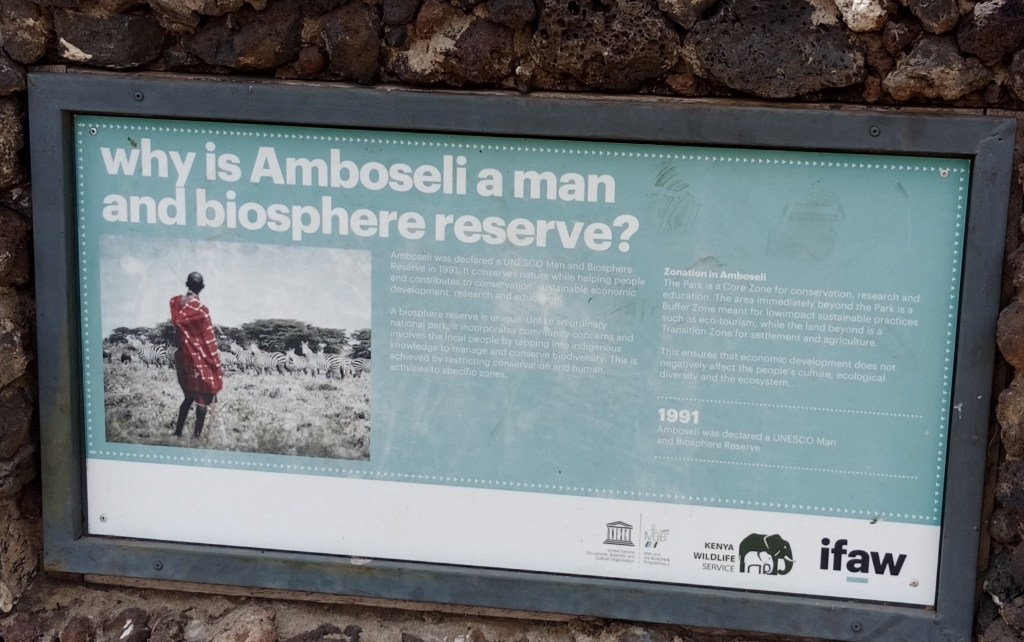
Amboseli…Man and Biosphere Reserve
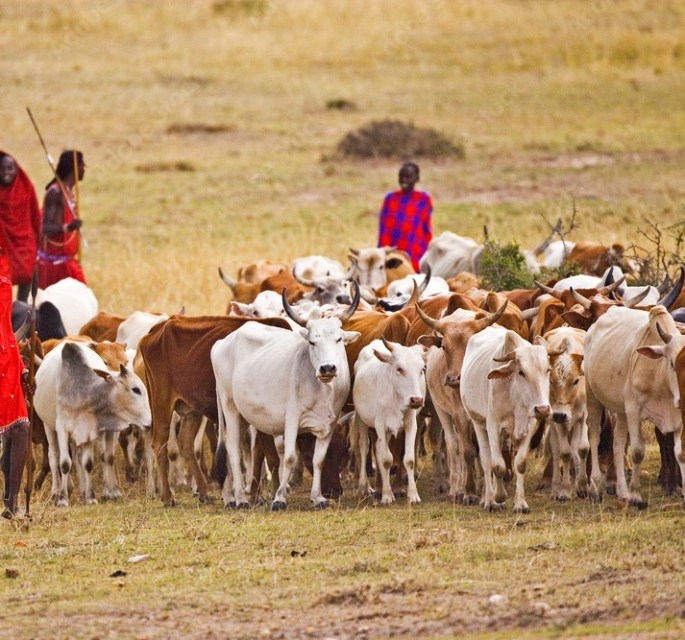
The Maasai with their cattle, a common sight as you drive through Kenya
Uninhibited visibility till the horizon
This is what struck me here. Both in Amboseli and Masai Mara, there is uninhibited visibility all around till the horizon. I have never seen such vast expanses of land with no manmade structure extending for miles on end. This makes it so easy to spot wildlife that even in the horizon if a giraffe raises it’s head, you can see it miles away.
This picture will help illustrate my point.
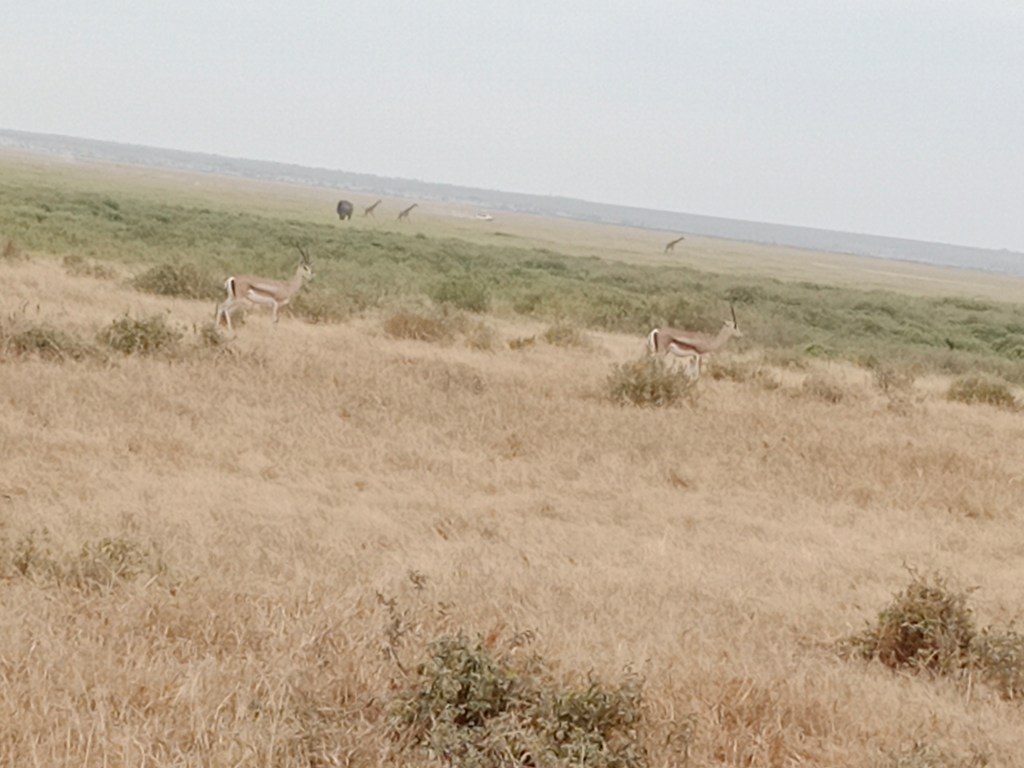
Unfettered visibility…The landscape is so open that you can spot an elephant and three giraffes miles away with a few gazelles close by.
The dry season at Amboseli
It offers one of the best wildlife viewing opportunities in the world with sparse vegetation due to the long dry months between June and October . During this period the grasses are short and scotched making wildlife viewing easy. Besides, the dry season results in drying up of waterbodies resulting in the animals moving in herds over long distances in search of water .
This is the most fascinating time to visit Amboseli which is home to over 80 species including the African elephant, impalas, gazelles, lions, cheetahs, hyenas, giraffes, zebras , wildebeest and over 400 species of birds including the massive ostriches, bustards and various water birds.
The dry season, also results in low insect population particularly mosquitoes making one’s stay more comfortable.
Amboseli is recognised more for its elephant sightings as it has more than 1800 of them ,the largest population of African elephants .You can get close to free ranging elephant herds and enjoy their group interactions at close quarters. In fact , it is referred to as the “Land of Giants” due to it’s huge elephant herds, most of them with large impressive tusks.

An elephant herd at Amboseli
Our Amboseli experience
Landing at Nairobi one evening, and staying overnight we left for Amboseli early morning by a Toyota Land cruiser vehicle used for these safaris. The roof of the vehicle can be opened for free viewing and photography. There were six of us in a vehicle. The drive was comfortable and we reached Amboseli around noon. After lunch and check in at the jungle lodge, we were off on the safari. The next day too, we did a day long drive through Amboseli National park. What follows from now on are those memories relived. This trip will have more pictures and videos for obvious reasons .
Join me on this incredible journey through the heart of Africa….

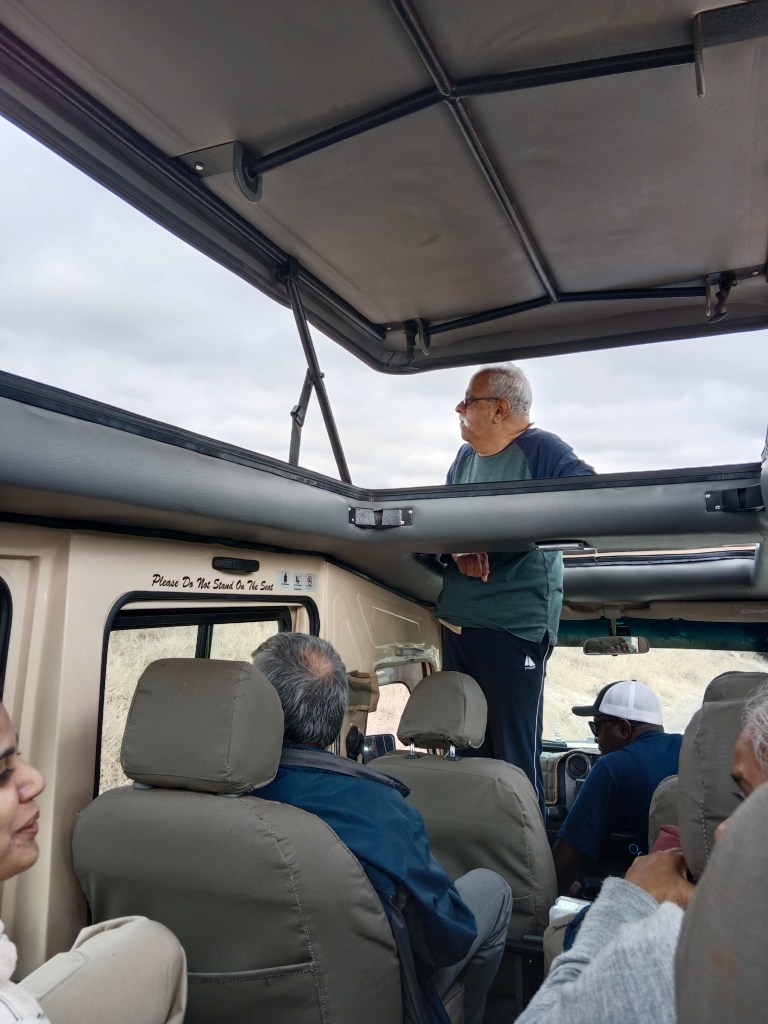
The safari vehicle
We entered Amboseli at the Kimana gate . After a short halt and some formalities, we were in to the park…

Amboseli Kimana gate entrance
The drive through the park was on mud paths between the savannah grasslands. At many places, the road was bad and a good driver …our Elvis and his well maintained vehicle helped us a lot.
The most common species we found were the gazelles. Herds of them grazing along…

A pair of Thomson’s Gazelle
Amboseli is Elephant land and so, we were treated to views of multiple elephant herds engaged in various daily activities like feeding, mud bathing , protecting the young, romancing, fighting and many of them crossed the road in front of our vehicle.
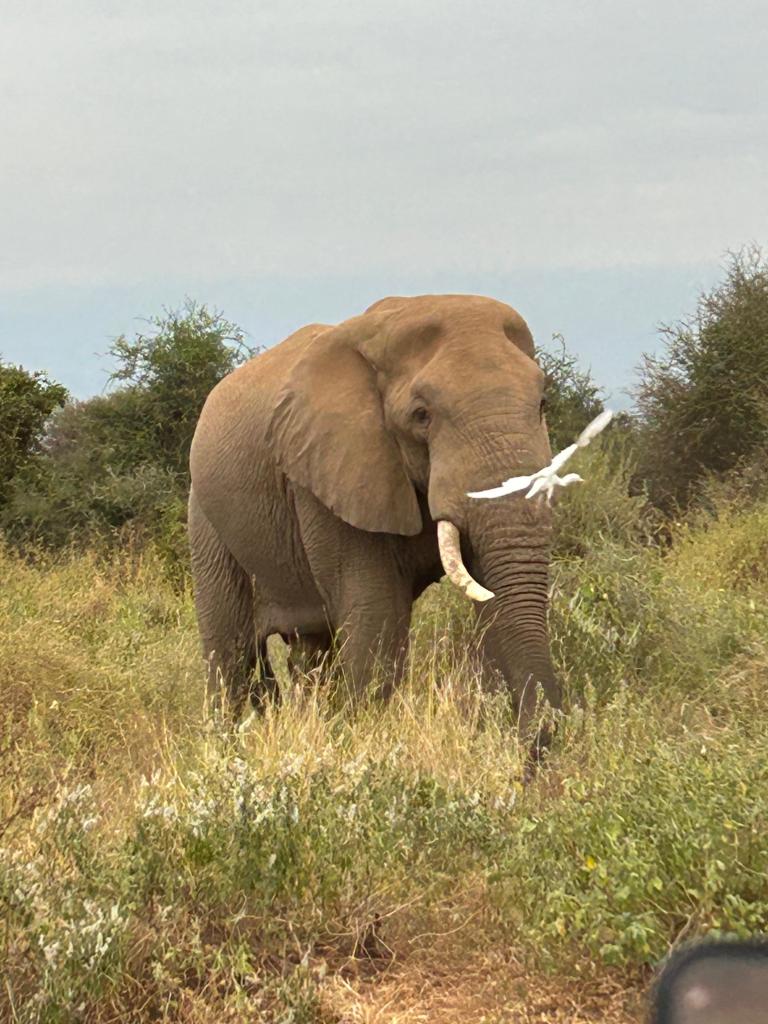
A loner…

A herd of elephants
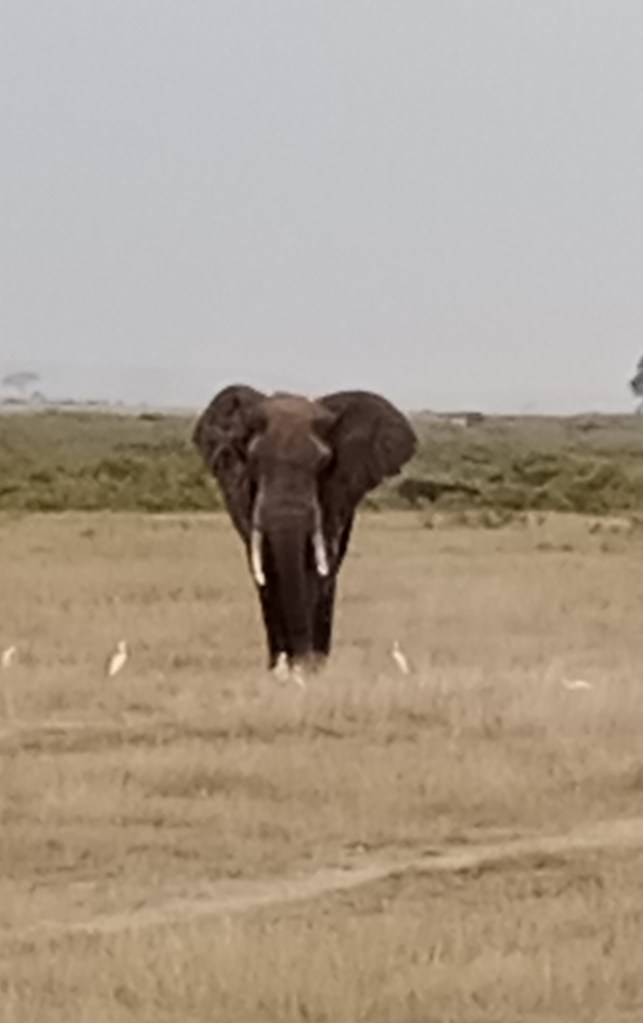
The wide outstretched ears….

A mild altercation
Elephants cross the road in front of our vehicle
Soon we came across some giraffes walking along with graceful strides…

The majestic walk of the giraffe (click on video) PC… Mr Arun Nathan
As we drove along, our driver Elvis was in radio contact with other safari vehicles. Every now and then, he would be alerted on some sightings and we would head there. Lions were our next alert and off we went. A pride of lionesses lay in wait…
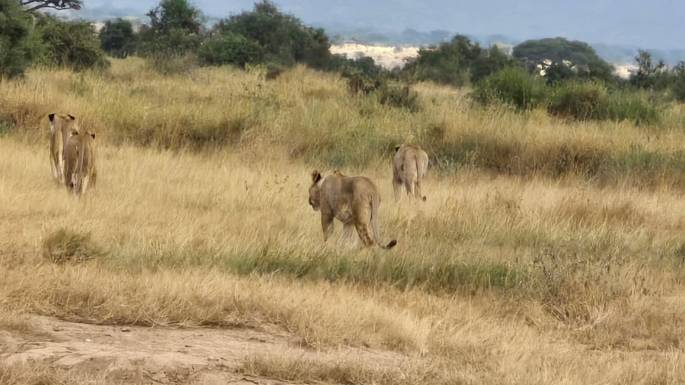
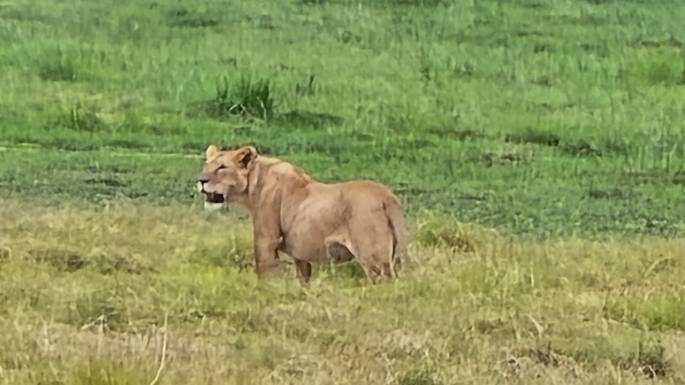
Lionesses on prowl
Some interesting bird sightings….
Grey crested Crane
It is found in nearly all of Africa, especially in eastern and southern Africa, and it is the national bird of Uganda.
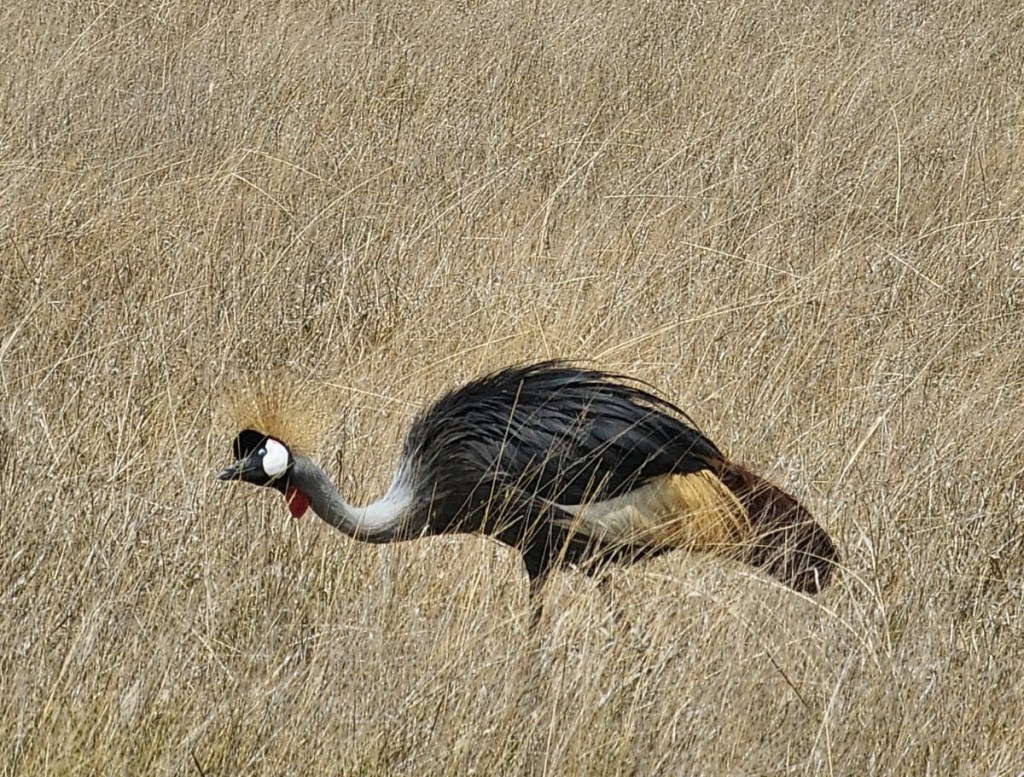
Grey Crested Crane
Kori Bustard
The Kori Bustard is the heaviest flying bird native to Africa.

Great Bustard
Ostrich
The common Ostrich , is a species of flightless bird native to certain large areas of Africa.

An Ostrich trudges along…
As one drives through this national park , what strikes us is the distinctly different vegetation at various places within. What is predominantly savannah grasslands and open plains suddenly gives way to swamps and wetlands and includes a dried Pleistocene lake.

Palm tree clusters

Swamps and a lake
Lake Amboseli , a lake located within the National park is dry in most parts during the dry season but floods up with the rains. Driving close to the lake gives great opportunities to view waterbirds and hippos.
As we drove close to the lake we were pleasantly surprised by a pink haze in the horizon. Little did we know that a flock of flamingoes had decided to give us a surprise. Flamingoes are not normally seen here very commonly. But we were lucky!!
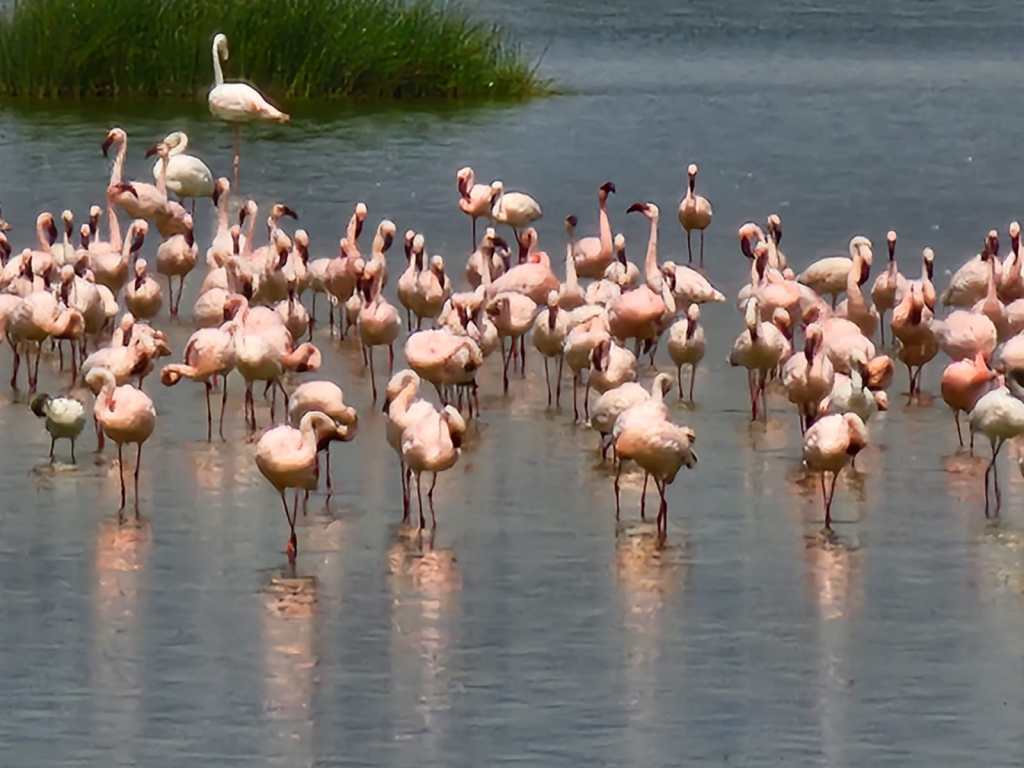
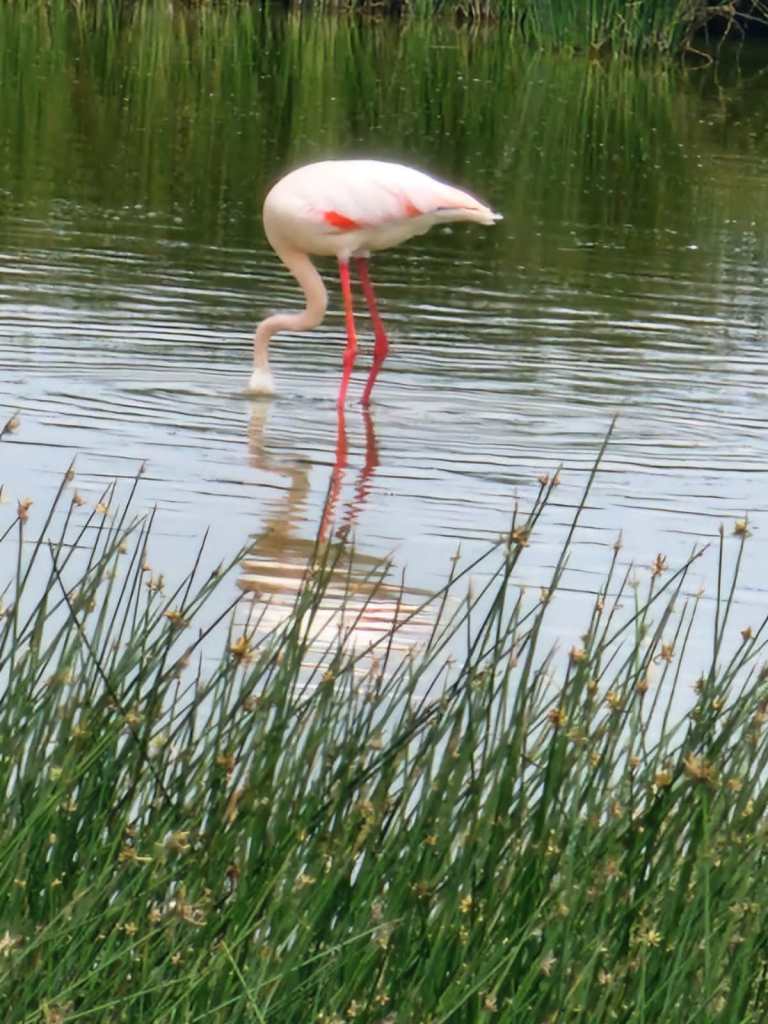
Flamingoes for you….
More Waterbirds….
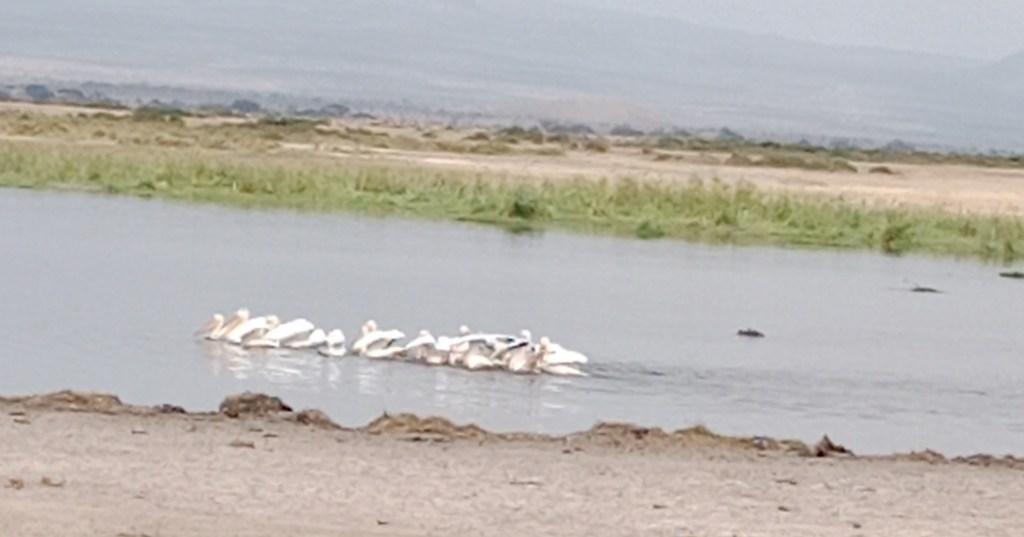
Pelicans
A herd of zebras were seen grazing by the swamp…

Zebras grazing peacefully
An observation hill located close to the lake gives a bird’s eye view of the National park and its environs.
As we arrived there, we were greeted by flocks of Superb starlings with their vibrant blue coloured backs. Making a real cacophony, they hopped around near our vehicle.

Superb starlings
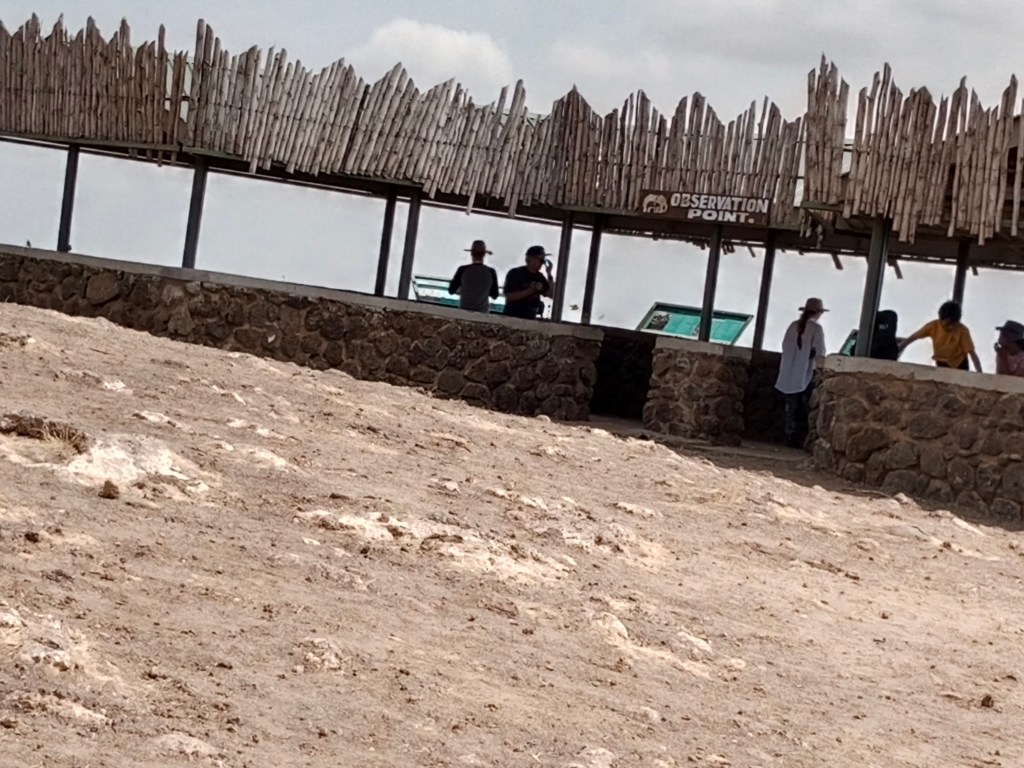
The observation point on the hillock

View of Amboseli lake from observation point with some resting hippos
Apart from this we did see wildebeest grazing around. But the number of wildebeest we saw in Masai Mara was something extraordinary and so I will cover wildebeest under Masai Mara.
This sums up our Amboseli experience. This is how it looks in the dry season.
The wet season between April and June sees the parks roads becoming a challenge to move on. But with new vegetation springing up, the views are totally different with gazelles and zebras trying to hide behind the tall grass to elude predators, the migratory birds moving in from Europe and fresh little wildlife appearing as the old ones give birth.
Hence, a visit in the two seasons can leave one with entirely different perspectives of this natural wonder.
Hope you enjoyed your safari through Amboseli.
Next week, we are at Lake Naivasha where an opportunity to walk with the zebras and giraffes awaited us. So wait for that, but do not forget to subscribe, comment and give your feedback.







 Travel-along.in