This is the concluding episode of the series on Vietnam. But, like they say…last but not the least….these tunnels are symbolic of the tenacity and resourcefulness of the Vietnamese people. It is a standing example of how even a small country like Vietnam could stand up to a super power like the USA simply by people power!!!
History of Cu Chi Tunnels
Situated 70 kms from Ho Chi Minh city, this tunnel complex is a hidden maze which provides visitors a peep into Vietnamese history.
How the tunnels were built….
These tunnels were dug by the Communist guerrilla troops known as Viet Cong (VC) soldiers to combat the better equipped American and South Vietnamese soldiers. Thousands of miles of under ground tunnels were dug by these soldiers to house troops, transport supplies, lay booby traps and mount surprise attacks on the US and South Vietnamese troops. Many of these tunnels were dug by hand , a short distance at a time.
The process of digging these tunnels started in 1940s during their independence struggle from the French colonialists. Gradually US increased it’s presence in Vietnam supporting the non communist regime of South Vietnam. The VC soldiers parallelly expanded these tunnels and their use was at it’s peak during the Vietnam War.
Why the tunnels were built in that location….
The soil at this place was very hard and would not collapse , it was almost like concrete. Besides, they wanted to live intermingled with the locals making it difficult to trace them . The tunnel system extended to the Cambodian border and when the US attacked, they would move closer to the Cambodian side where the US could not bomb. Located at a higher level then Saigon river there was no danger of flooding .
The tunnels extend into three levels..
First level was 3mts deep . Bunkers at 1st level were meant for fighting . The Kitchen and hospital were at this level
Second level at a depth of 6 mts was meant for resting.
Third level was 10mts deep and these were used as bomb shelters.

A display at the tunnel complex explaining the various levels of the tunnels
Air holes connecting the various levels were built. There was no electricity. Lamps were used in 1 , 2 levels. But at 3rd level there was no oxygen to burn lamps. Only the VCs knew the entrances to the lower levels and the US soldiers were confused.
Life in the tunnels…
Needless to say, life in the tunnels was very difficult . Local youngsters and VCs lived inside. Families lived outside. More than 12,000 people lived inside the tunnels. Air, food and water were scarce and the tunnels were infested with ants, centipedes, snakes, scorpions and rodents. It was hot and humid inside the tunnels .
Food was cooked in the early mornings because the smoke from the kitchen bunker would mix with the fog and the tunnels could not be detected. During the daytime, the guerrillas rested within the tunnels and came out at night for food, supplies and other essential activities. Sometimes, they were unable to come out for days together.
The tunnel dimensions were also very small and the heavily built US soldiers would not fit in.
From their side, VC soldiers used guerrilla tactics and laid traps of various types to defeat the US .
The different types of traps were….Sticking trap, Clipping armpit trap, window trap, folding chair trap, fish trap, see saw trap and traps hung from trees were also use to trap the enemies.
It is believed that more than 45,000 Vietnamese men and women were killed defending the tunnels over the course of the war.
War Memorial Park
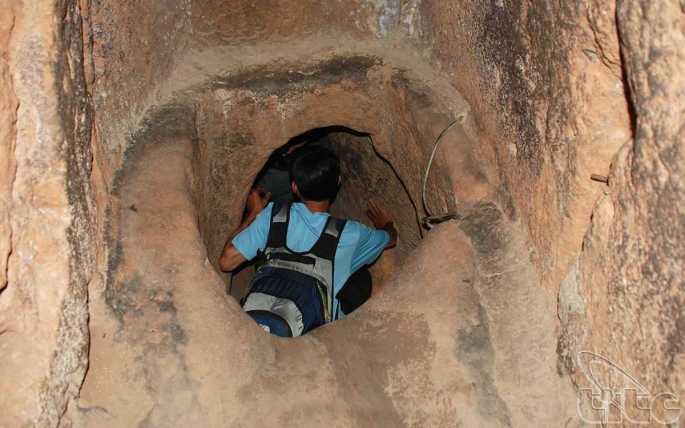
The tunnels are preserved today as part of a War Memorial park and visitors can crawl through some of the safer parts and experience what the VCs underwent at least to some extent. The tunnels have been widened at many places to facilitate tourists from entering but still it is very narrow and one gets claustrophobic inside.
Some pictures from our visit to the Cu Chi Tunnels….
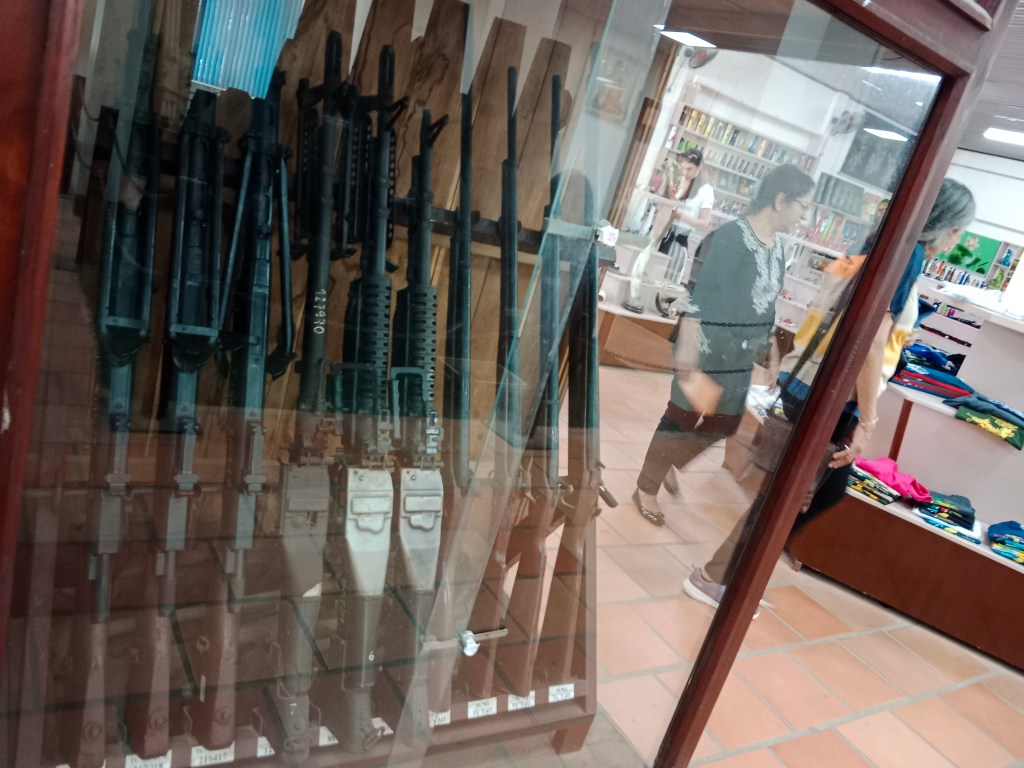
The reception area where arms and ammunition are displayed
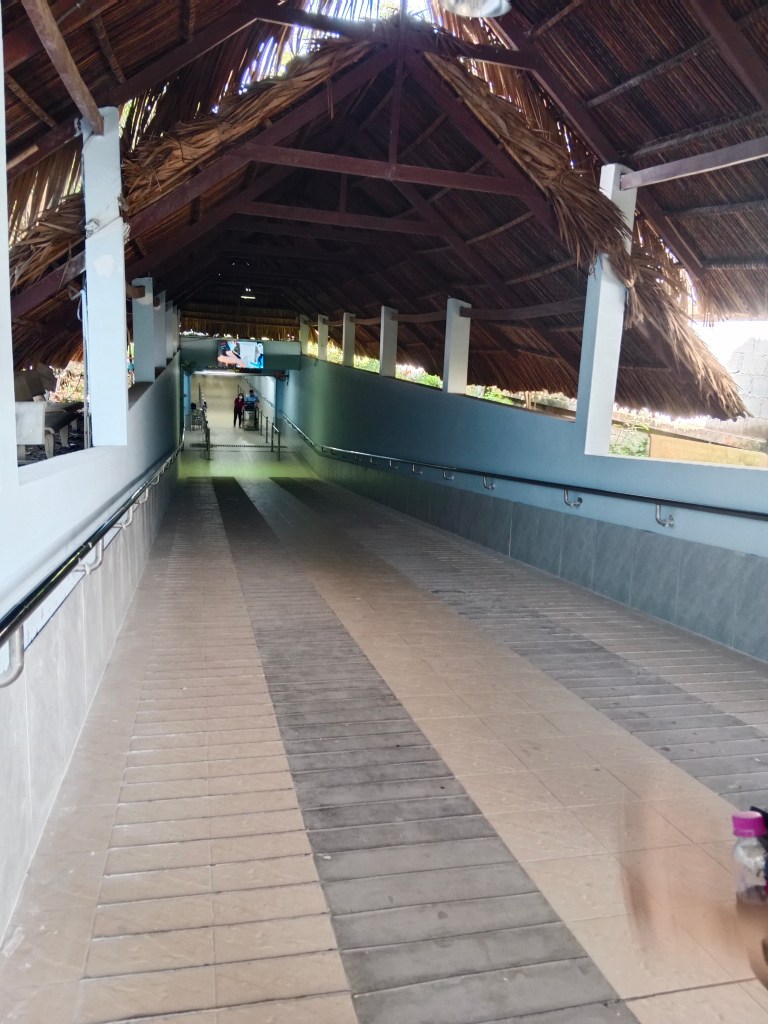
The long passage that leads to the actual tunnels
Once we reach the actual tunnel area, it resembles a mini forest with a walkway in between tall trees.

The walkway at the tunnel complex

Our guide explaining the features of various areas in the tunnel complex
One of the first areas we reach is a camouflaged hatch with a cover (more like a man hole) into which one person can just enter and come out vertically. There is no place to turn and the hatch is covered with a lid like a manhole cover and covered with dried leaves of the forest. Unless someone points out the place, we will not know that a hatch exits there. It is so cleverly camouflaged by the fallen leaves!!

The hatch and the lid camouflaged with leaves
After a short walk we reached the fighting bunker where we are allowed to enter and there is an exit after every 20mts to come out. A local guide accompanied us into this bunker.
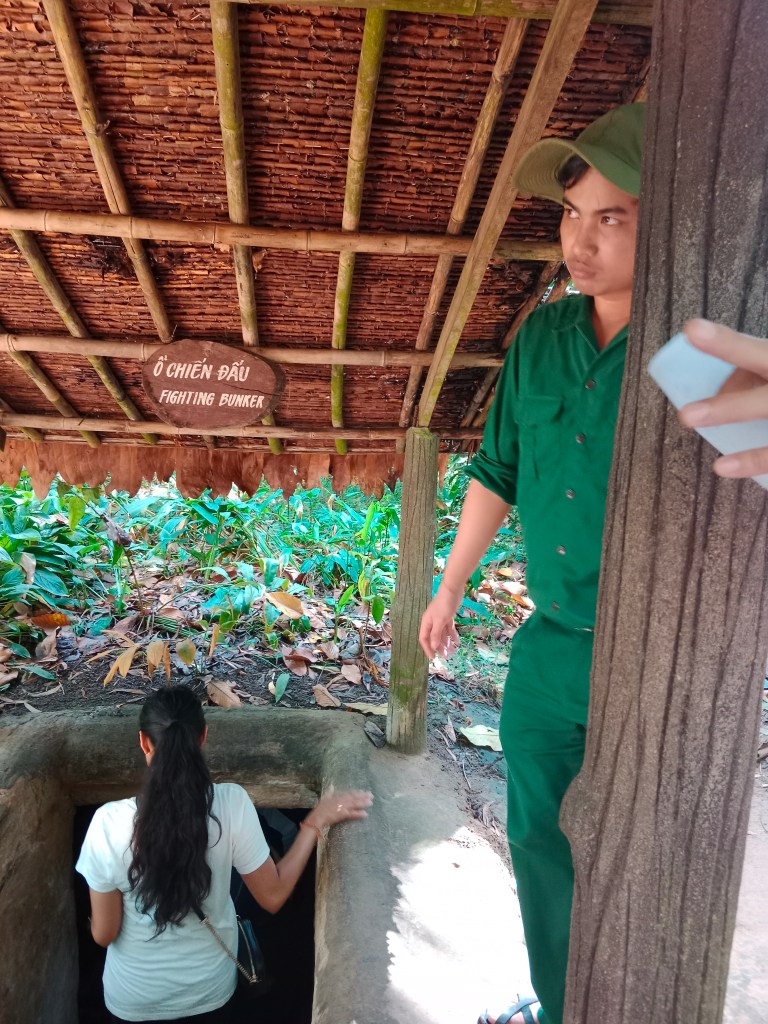
The entrance to the fighting bunker and the local guide.
After some hesitation, around 7 of us decided to enter the bunker. I was part of this brave group and entered the bunker. A few steps inside and I realised it was not my cup of tea. I hastily retreated and climbed up to safety.

This is me coming out of the bunker after giving up the attempt!!!
Sure enough , the remaining six were out in a few minutes after taking the first 20mts exit. It was too claustrophobic and humid inside. Just imagine what the VCs went through!!!
Walking along , we came across the Kitchen bunker ….
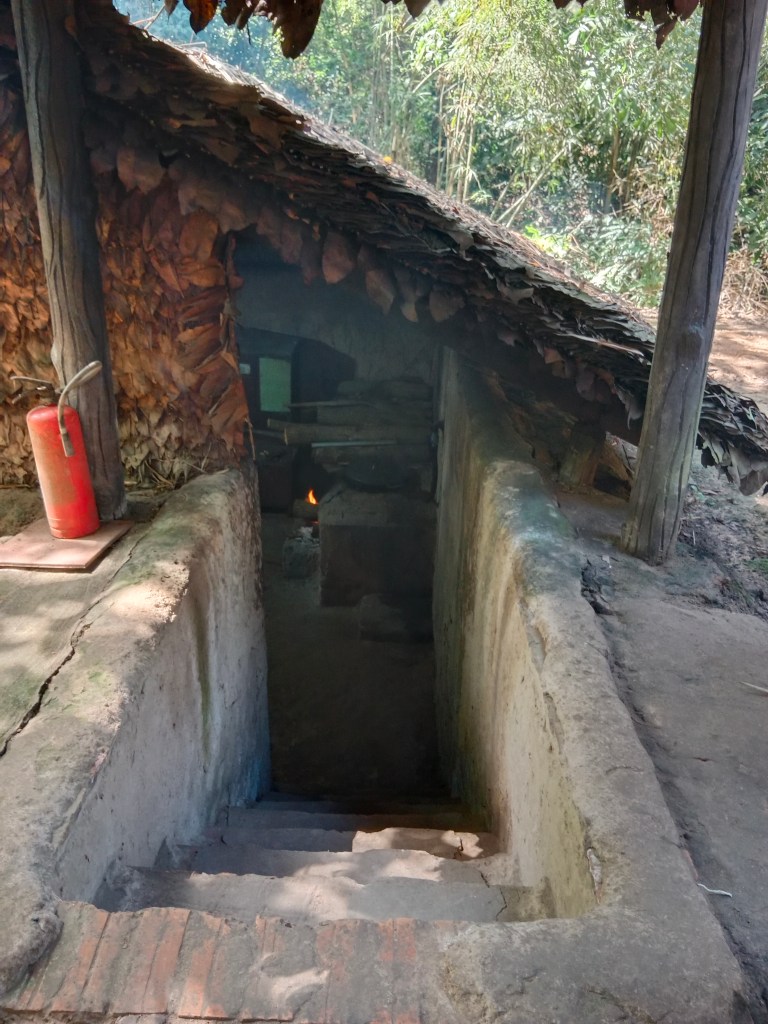

The kitchen bunker and the smoke vents
Our guide gave us a small challenge to identify the air holes….this is how they look….
The VCs were targeted by the US soldiers by pumping water into the tunnels through the air vents and suffocating them.
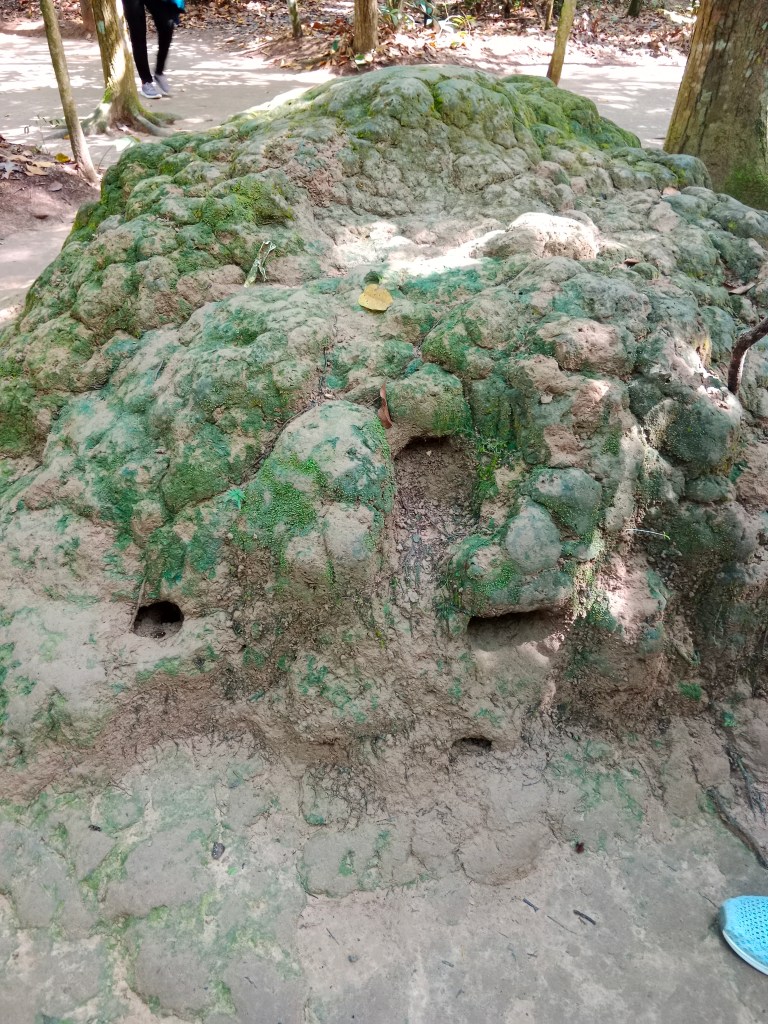
The air holes looked like some openings in ant hills
As we walked along we came across some models of soldiers and artillery displayed. Some pictures…


Models of Soldiers and a tank on display
Then came the various kinds of traps laid for the enemies….
Most of the traps had metal hooks and spikes which would pierce the body of the enemy when they step on the camouflaged traps. Thus they would trap them and kill them or torture them. The details of these traps are very gory indeed!

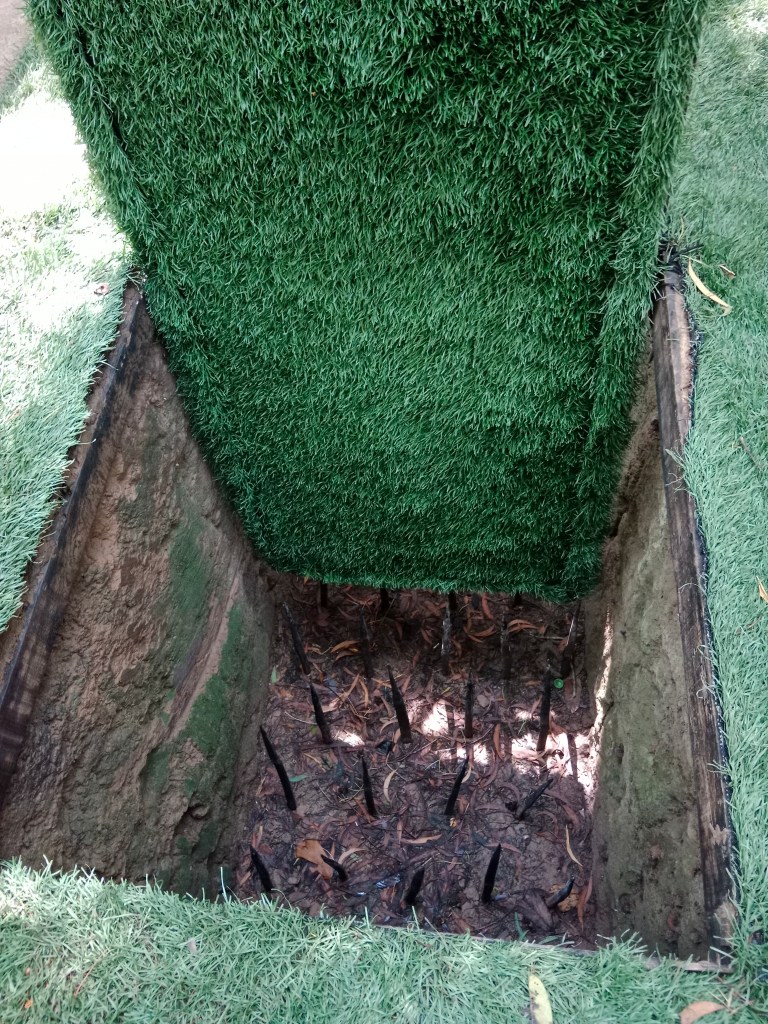
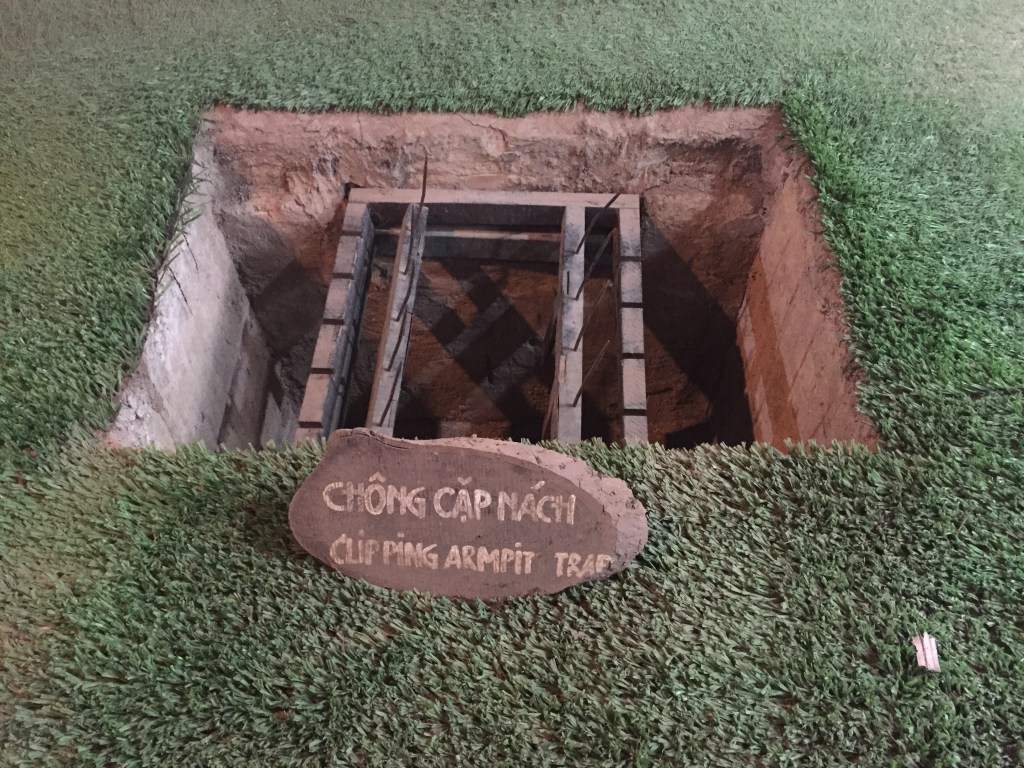

Traps of various kinds
Shooting range
As we walked around, we heard the sounds of gun fire. We were told that at the firing range tourists can buy ammunition and try their hands at firing.
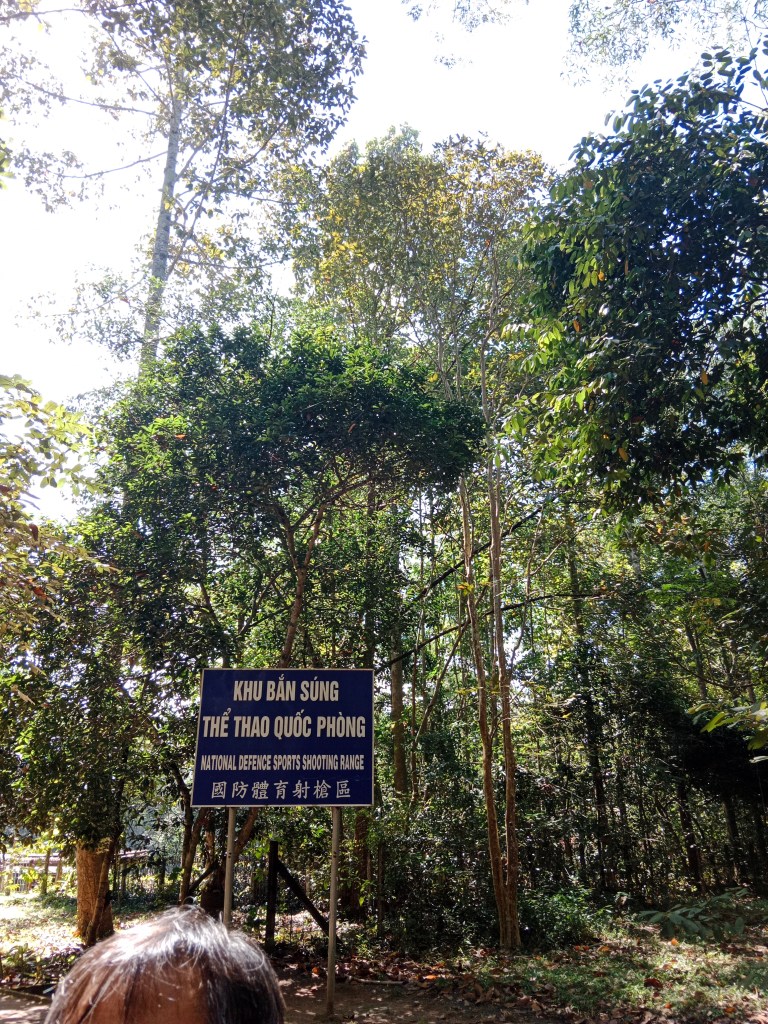
The shooting range
I had mixed feelings after this visit. The stories of violence and gore were quite a put off. But on the other side, it was also a tale of resilience and valour.
With mixed feelings we proceeded for lunch and the surprise we got at lunch helped us recover from the sad thoughts after the tunnel visit. We had ordered for rice; sticky rice as they call it and were surprised by this rather unique hollow ball of rice that was served….
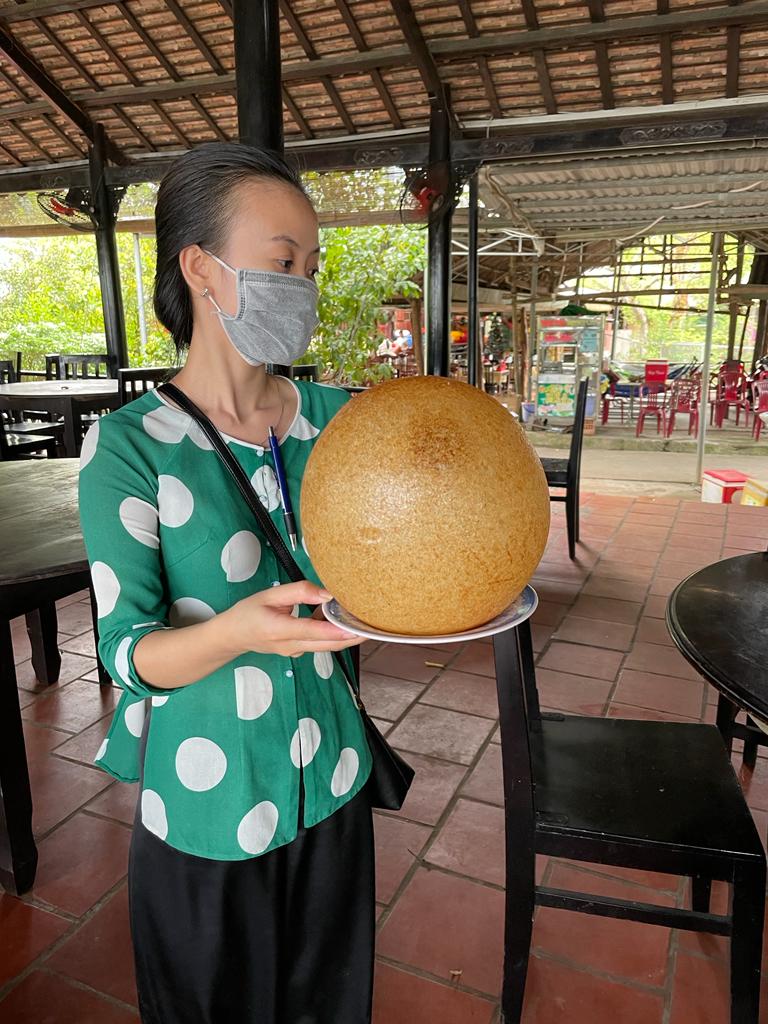
The sticky rice ball…
It was quite tasty and once the ball is pierced, it crumbles and resembles a dosa or pancake. We enjoyed this Vietnamese speciality and was ready to bid goodbye to Vietnam.
With goodbyes and promises to keep in touch, we all proceeded to the airport and from there on to our respective destinations.
The next country I am going to take you to is the Himalayan Kingdom of Bhutan. See you next week at Bhutan. Till then, keep your feedback and comments pouring in.
 Travel-along.in