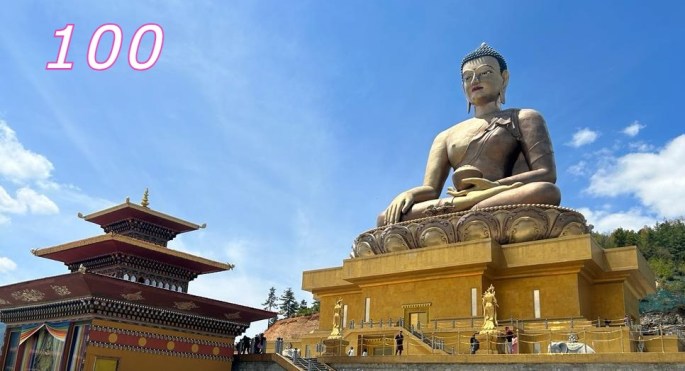
Let me start this blog with a big thankyou to each and every one of you who have accompanied me on this journey to this milestone….my 100th blog…

Celebrating a milestone…..
Starting with Thimpu……
A new day dawned on Thimpu and the visuals from our hotel window were very beautiful….Enjoying a cup of tea sitting by the window, we clicked this picture…

Day dawns on Thimpu
Excited and looking forward to a great day ahead, we had breakfast and met up with our group in the hotel lobby.

Outside our Hotel Osel with typical Bhutanese decor at the entrance
Soon we were on our way to do the sightseeing around Thimpu city.
Our first halt was at Memorial Chorten.
Memorial Chorten
Built in honour of the third king of Bhutan, this Stupa is a prominent landmark in Thimpu with its golden spires and bells. Most Buddhist Stupas contain human remains but this Stupa stands out in that it does not contain any human remains and only has a photo of the third king in ceremonial dress adorning the hall. It had been the wish of the king to build a stupa “like the mind of Buddha” but he passed away before achieving it and so it was built by his mother in his memory in 1974.
As one enters the complex, there are large prayer wheels and a shrine with copper lamps being lit by devotees.


The prayer wheel and the copper lamps at Memorial Chorten complex
As one walks past , the central walkway leads to the main Stupa or Chorten built in Tibetan style. The large white exterior has a golden spire on top and a smaller golden spires on the porches in all directions.

Main Stupa

The intricate decorations and the Buddha statue on the second floor seen from outside
The chorten is decorated with richly carved annexes facing the four directions and contains mandalas, statues and a shrine dedicated to the third king. A staircase from the ground floor leads to two floors each with four shrines. There are multiple statues of wrathful looking protective deities.
Locals come here to offer prayers and everyone has to remove their footwear and caps . Photography is prohibited inside the Stupa.
From Memorial Chorten, we proceeded to another of Thimpu’s landmarks…
Buddha Dordenma
This gigantic statue of Sakhyamuni Buddha on a hill is iconic of Thimpu and can be seen from far away . It is one of the largest sitting Buddha statues in the world at 169 feet height. It was completed in 2015 and took nine years for completion. It is made of bronze and gilded with gold . The statue faces the East and is believed to bring peace and prosperity to the people.
The statue was built with private funding from the Buddhist community in China, Singapore, Thailand and many such countries. It had been prophesied in one of the sacred texts that a statue of Buddha or the Unifier will be built in this place which was the site of the palace of the 13th Desi of Bhutan.

The gigantic statue seen from below the hillock
It was built to commemorate the 60th anniversary of the fourth king of Bhutan.


The decorative gate and the statues in the courtyard of the Buddha Dordenma complex.
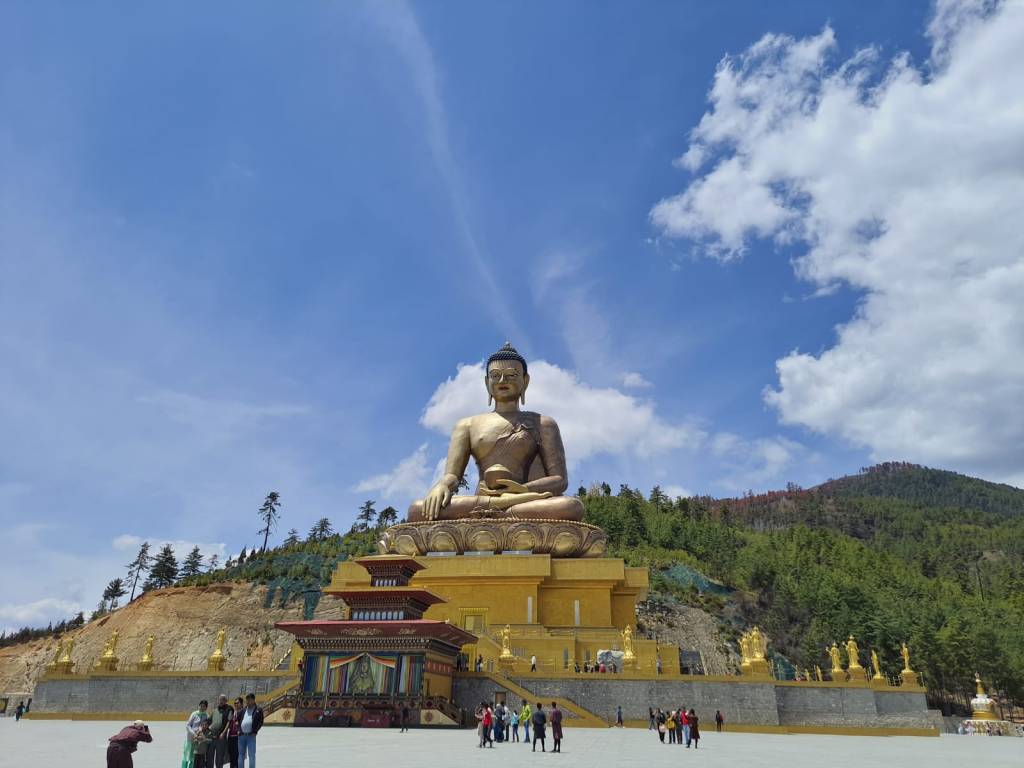
A panoramic view of the Complex
As one enters the complex below where the statue is located, there is a huge hall with multiple golden coloured pillars. All along the walls are replicas of the giant Buddha of various sizes and in golden colour. There are 125000 such Buddha statues which are replicas of the giant statue inside glass showcases along the walls .
The walls have beautiful murals of Buddha, Zabdrung Rinpoche and Padmasambhava…the three most revered images in Bhutan. A crystal pillar and various offerings given by devotees is spread before the altar.

The main statue.


One of the many statues and a Stupa in the courtyard

The snow clad Himalayan peaks as seen from the courtyard

Our group at the Buddha Dordenma Complex
Our next destination was the Royal Takin Preserve.
Royal Takin Preserve
This is a wildlife reserve created to preserve the Takin which is the national animal of Bhutan. Takin is a rare and unique animal and is supposed to be a mosaic of the goat and the antelope.
The reserve is meant for the animals to roam around freely in natural surroundings unlike in the confined areas of a zoo. It is located in a forested area spanning more than 8 acres and has wild boar, sambar, barking deer, musk deer and other animals besides the Takin.
There is an interesting legend on how the Takin was created but it’s correctness is doubtful. A Tibetan monk known popularly as “The Divine Madman”( about whom we will discuss in further episodes) with tantric powers is supposed to have created the Takin by fixing the head of a goat to the body of a cow.
A short hike up a garden path leads to the animal viewing area. Some pictures…
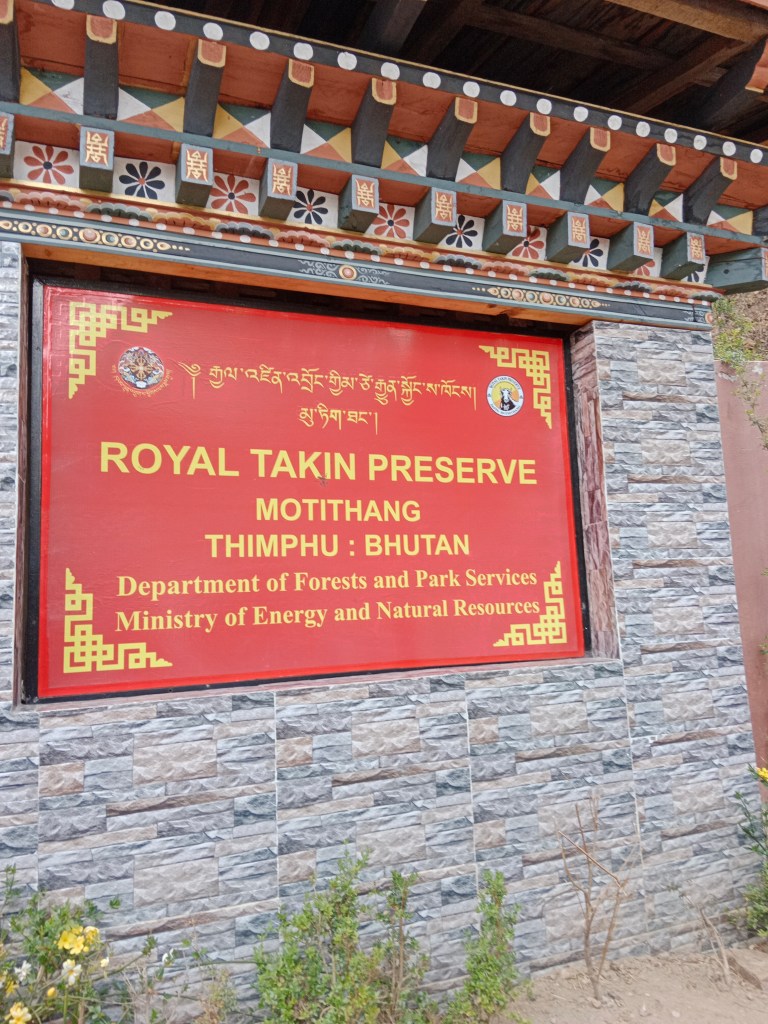
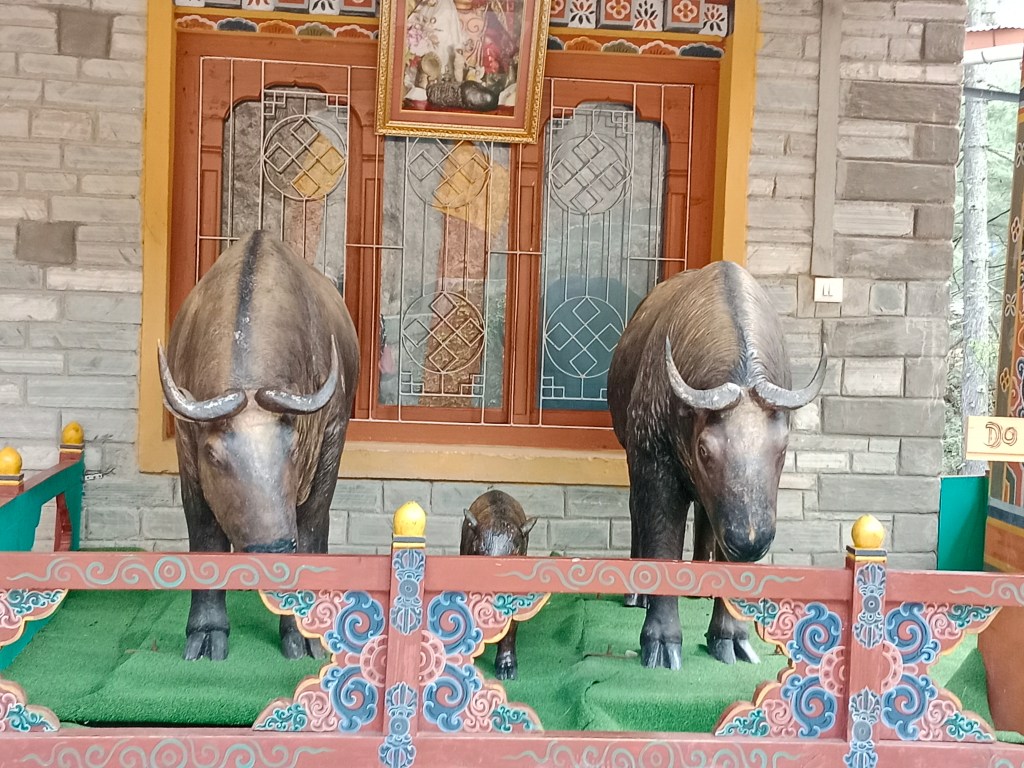
The entrance to the Preserve with models of the Takin


The preserve forest and the trek to the animal viewing area


Animals relax in natural surroundings


The Takin
Bhutan Post Office and Museum
By now we were all famished and so we had lunch at a restaurant at Thimpu and proceeded to the Bhutan Post Office and Museum.
This place functions as a post office and has a museum depicting old stamps and postal articles. A documentary on old postal services is also played out here.
This post office is unique as it allows us to create a stamp with our desired image and use it as a functioning postage stamp for a fee.
Various gift articles and souvenirs are for sale here as are the famous Bhutanese Thanghkha paintings.
Some pictures…

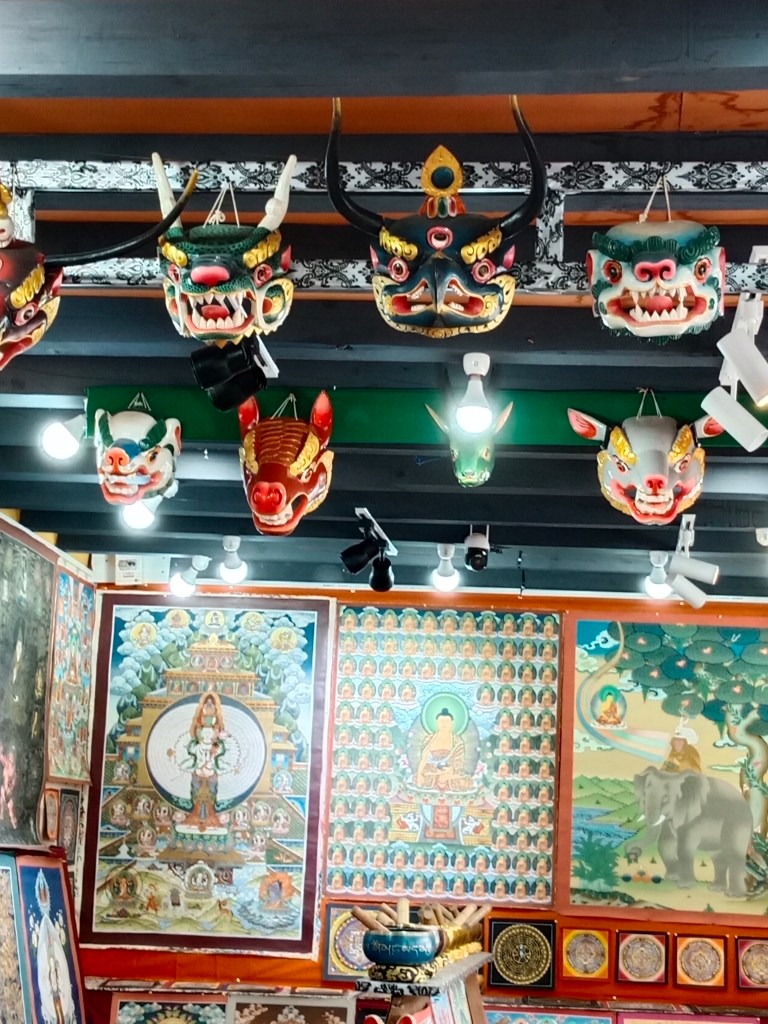
Souvenirs and masks at the postal museum

Typical Bhutanese Thanghkha Paintings
Changangkha Lhakhang
An ancient temple built in the 12th century, located on a ridge in the city, offers great views of Thimpu city from above.
A short trek up to the ridge brings us to the temple courtyard where there are several prayer wheels. Inside the temple is a statue of Avalokiteswara with 11 heads, 1000 hands and eyes. The eyes are located on the palms of the hand. Avalokiteshwara is a lord of compassion and he/she has 11 heads as he has to think of the welfare of all his disciples and thousand hands to help all the people around….so goes the legend. It was built by a Tibetan monk who came to spread Buddhism in the Himalayas.
This temple is frequented by parents with small children who seek the blessings of the lord for health and happiness of the child. Childless couples also visit the temple to be blessed with a child. Children are brought here for naming by the monk too.
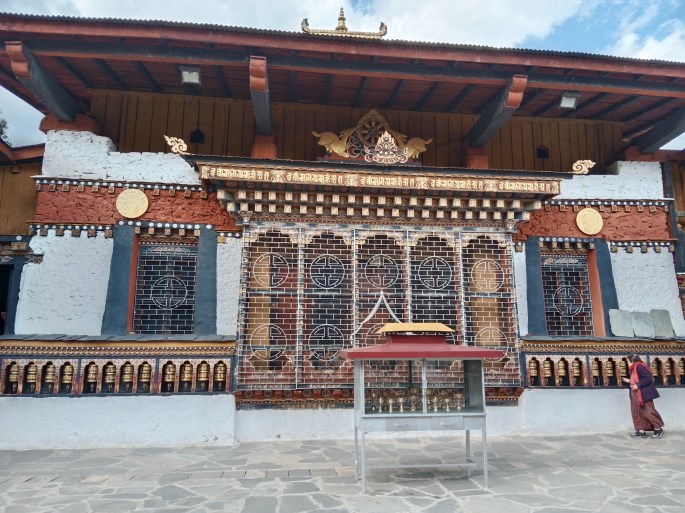
The Changangkha Lhakhang Temple

The flags and views of Thimpu city
Clock tower
A central square with a clock tower forms the main shopping area in Thimpu. The square is surrounded by buildings with a variety of shops. Flower boughs create a nice ambience here. The sides have seating arrangement like in a stadium as important events are often held in the central square
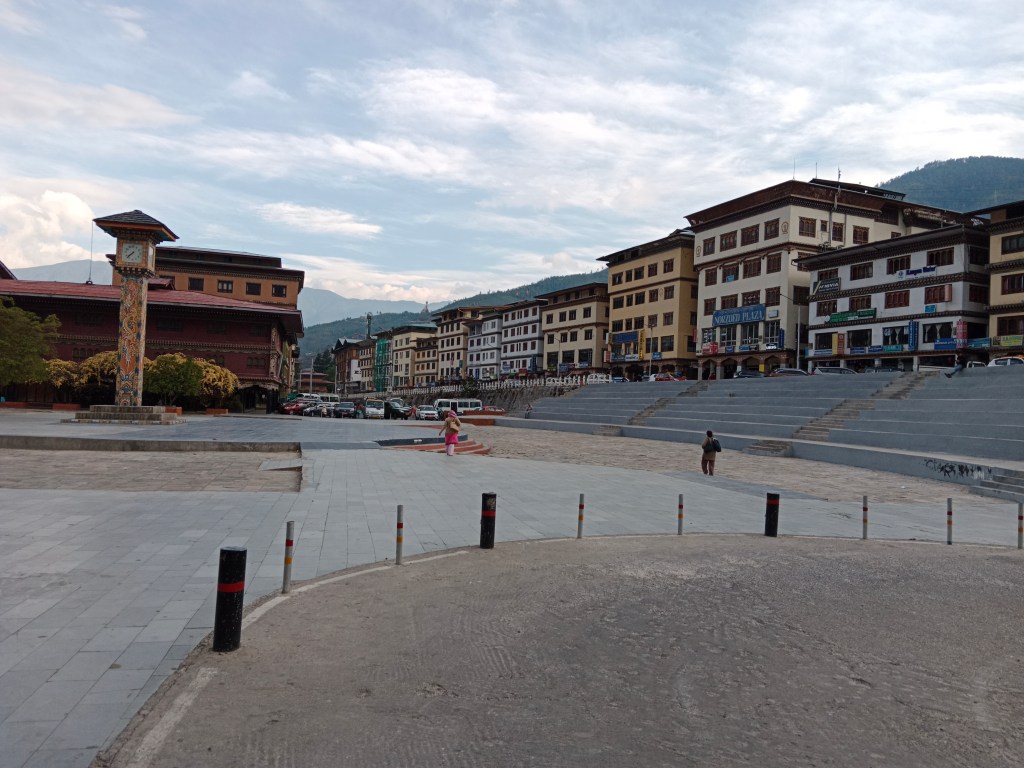

The central Square and Clock Tower(note how clean it is)
After some shopping here, we had tea and Momos at a restaurant near the central square.

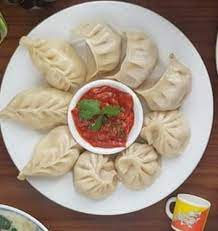
The Flower boughs and the momos
Handmade Paper Factory
Another interesting place we visited at Thimpu was the handmade paper factory. The process of paper making was demonstrated to us. The bark of the tree is processed and made into a pulp. This is further converted into blocks and paper of required size and thickness is cut out and dried. The paper is of good quality and paintings on this paper are on sale too.
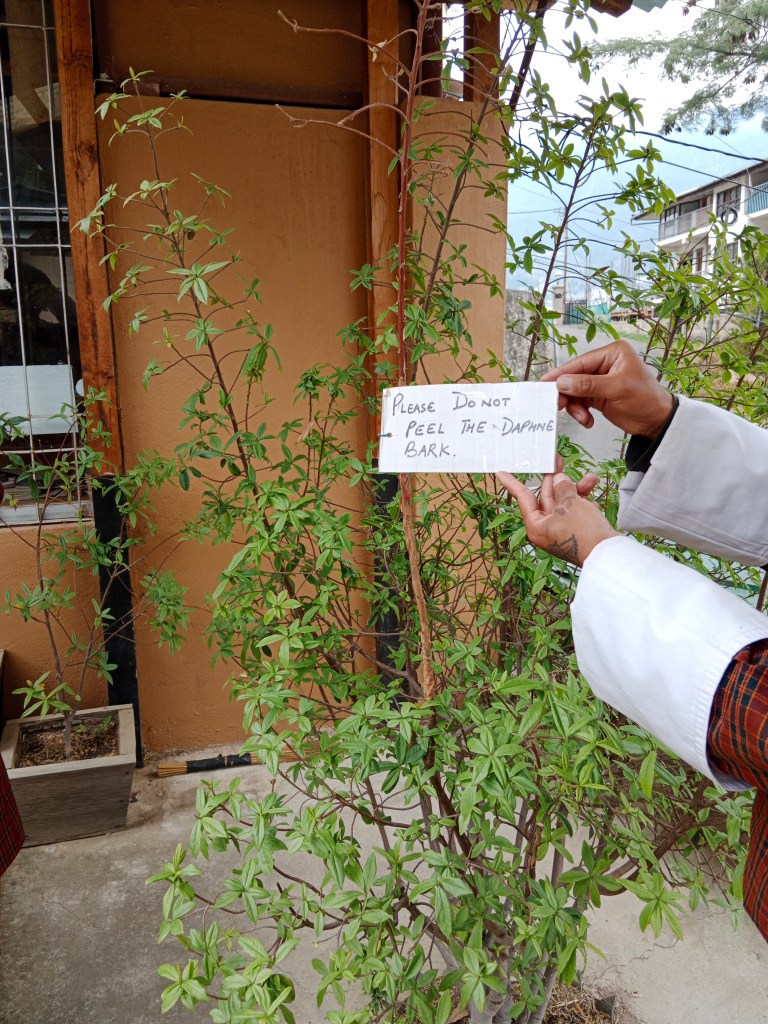
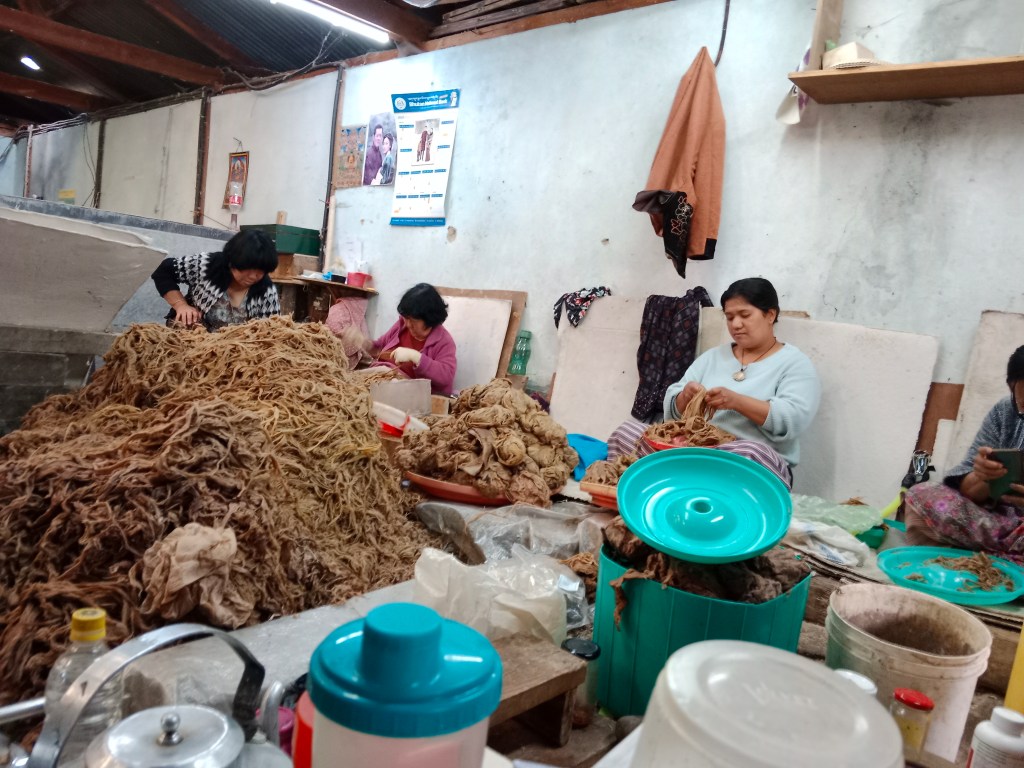
The tree from which paper is made and processing of the bark
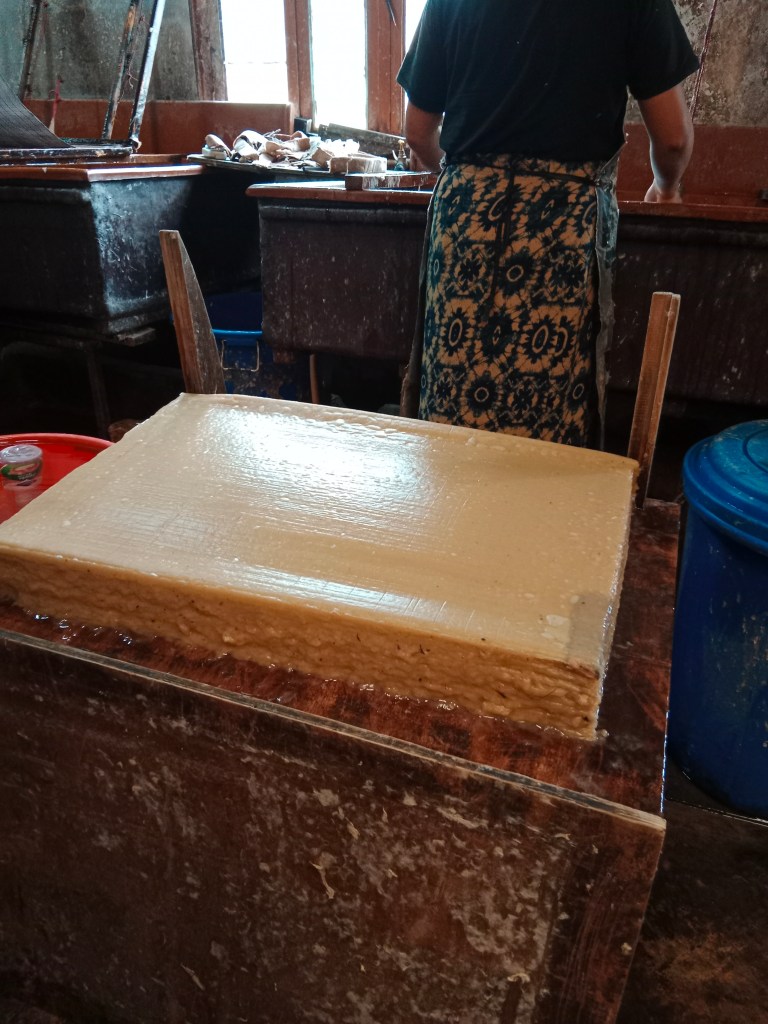

Blocks of paper and paper cut into required size
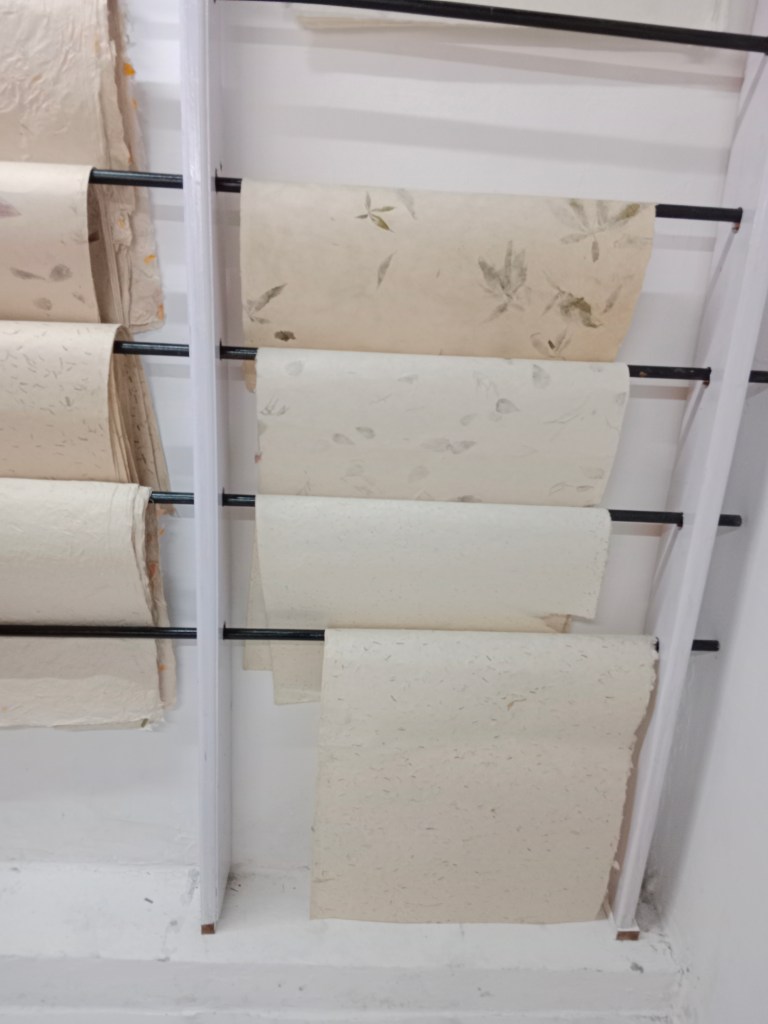

Finished product and a painting on display
Well, that rounds up our visit to Thimpu. Our next destination was Punakha. See you next week at Punakha.
Till then, like, comment, subscribe and give me your feedback…











 Travel-along.in