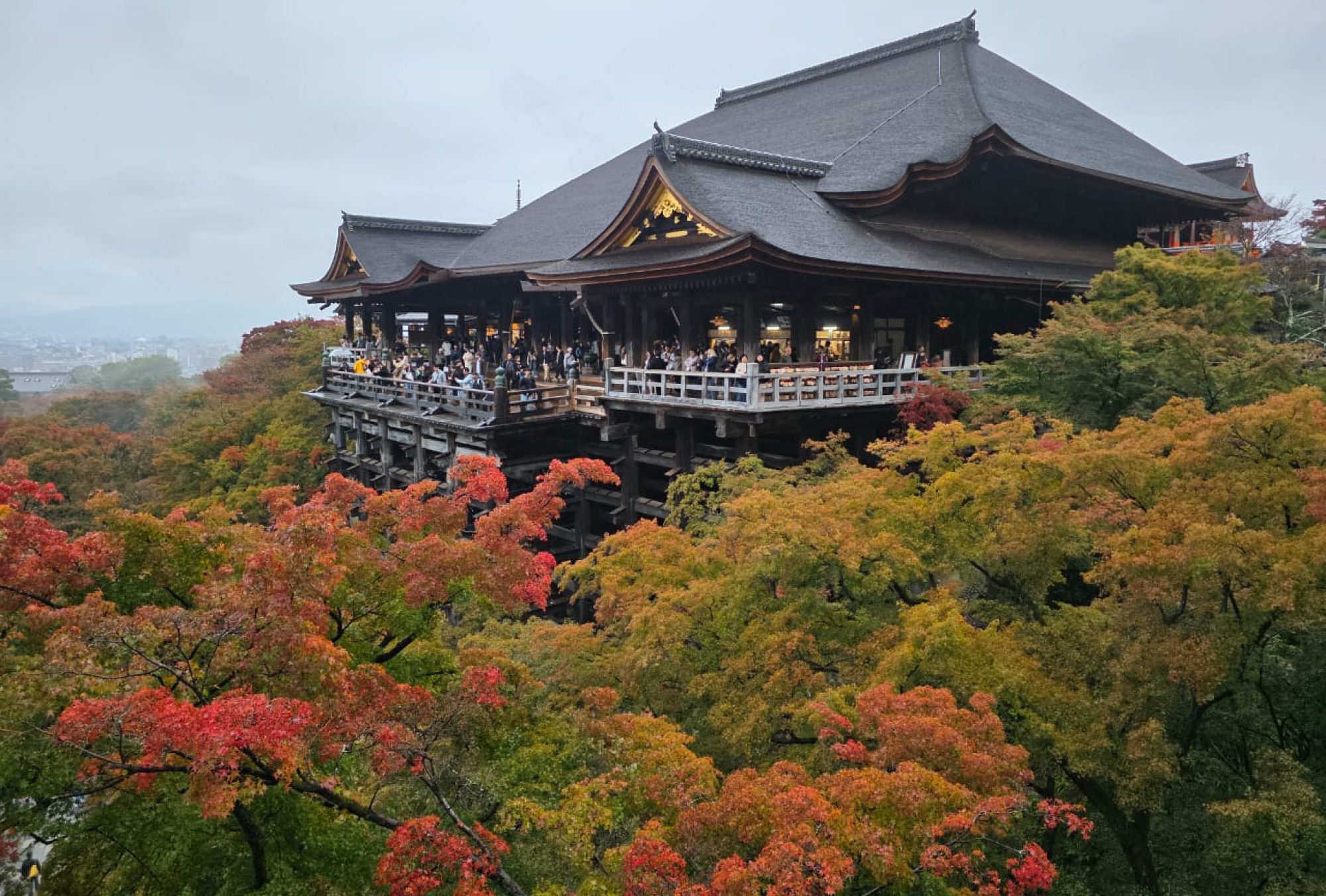
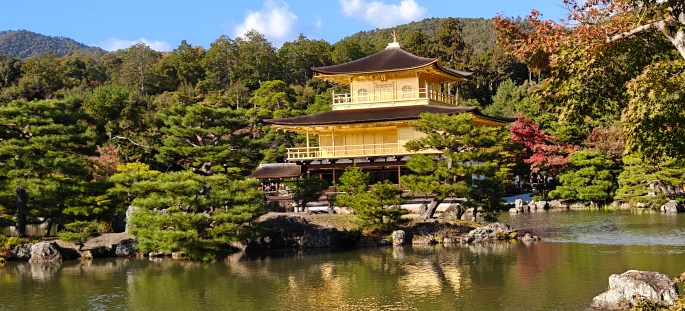
Located in the beautiful city of Kyoto in Japan is this majestic temple called Kinkaku-ji (Temple of the Golden Pavilion in Japanese) also known as the Rukuonji temple. The top two floors of the temple are coated in 0.5 um gold leaf. The gold incorporated into the building is believed to negate any negative thoughts and feelings towards death. The aesthetic construction with the golden building reflecting on the pond below is amazing indeed! It is a World Heritage Site since 1994.
History
The origin of Kinkaku-ji dates back to the 14th century . In 1397, Ashikaga Yoshimitsu took over the retirement villa that stood here. He built the Kitayama palace centering the golden stupa. This was the centre of politics and culture and was used to welcome the Emperors of Japan and trading partners from China. After Yoshimitsu passed away, it was converted into a temple as per his will.
The temple has a rather sad history when a young mentally unstable monk set it on fire before attempting suicide in 1950. The monk survived but passed away in 1955 of tuberculosis. A book “The Temple of the Golden Pavilion “by Yukio Mishima refers to these events.
The statue of Ashikaga Yoshimitsu was destroyed in the fire and later restored. The present pavilion was built in 1955 and is three storeys high. In 1984, it was noticed that the gold leaf was peeling off and then it was restored with thicker gold leaf.
A silver pavilion temple has also been built on its model in Kyoto called Ginkaku-ji by Yoshimitsu’s grandson on the other side of Kyoto city.
Architecture
The three floors are built in distinctly different styles and serves as a shariden housing Buddha’s ashes. It reflects the wealthy aristocratic style prevalent in Kyoto during Yoshimitsu’s time.
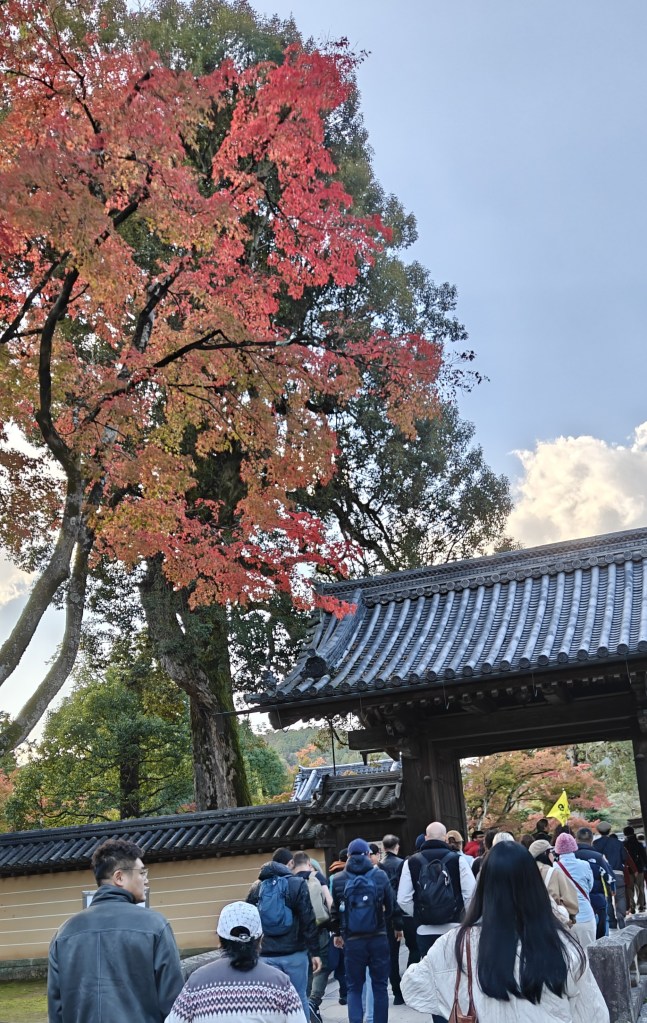
The entrance
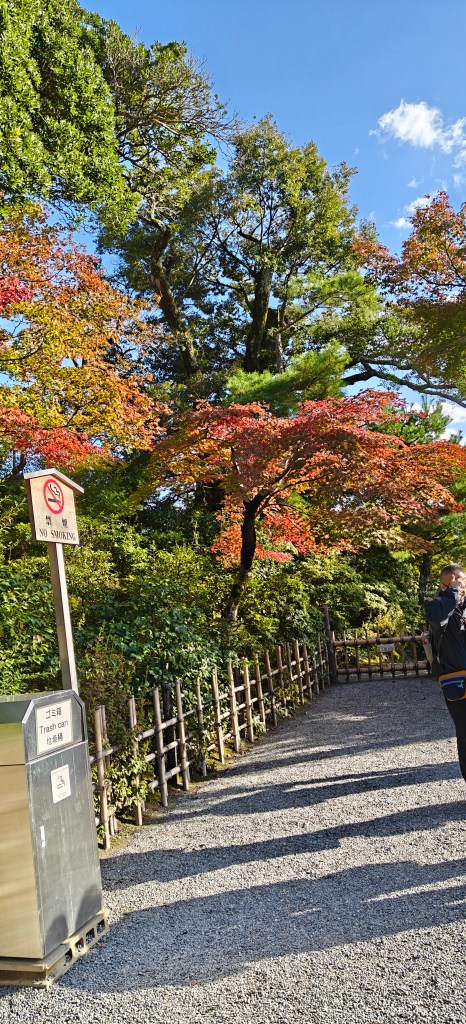
The landscaped garden with walking path
The building itself is located in a garden landscaped in muromachi style, a classical japanese strolling garden style. Located in a pond, the structure provides a stunning reflection of itself in the water. The pond has 10 smaller islands.
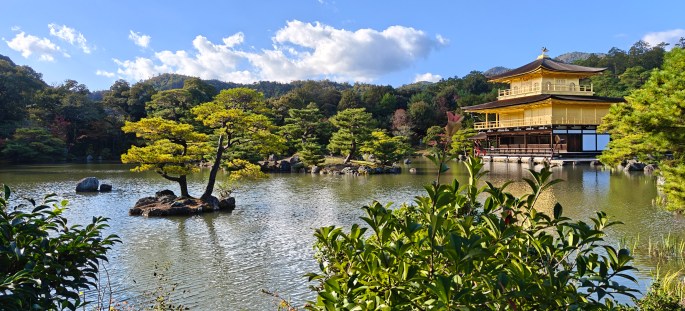
The temple and the pond
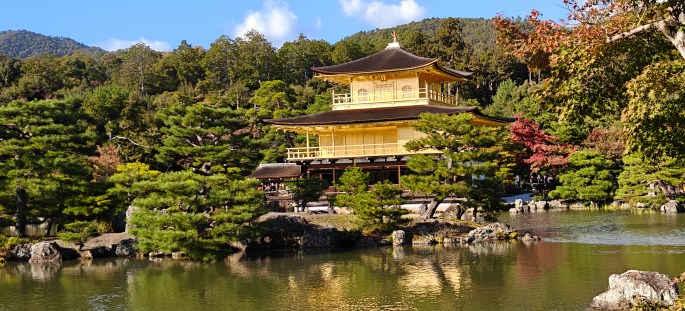
The temple adds to the beauty of the surroundings…
As we look closely we see details of the amazing architecture….
The first floor called Chamber of Dharma is designed as an open space with verandahs and uses natural unpainted wood and plaster. Statues of Shaka Buddha and Yoshimitsu are present here . Though you cannot enter the temple, these can be seen through the sliding doors which are often open.
The second floor is the Tower of Sound Waves built in style of warrior aristocrats and has a hall and Buddha shrine .The statues here are not shown to visitors.
The third floor is built in Chinese style and called Cupola of the Ultimate.
The roof is a thatched pyramid with a bronze phoenix on top.
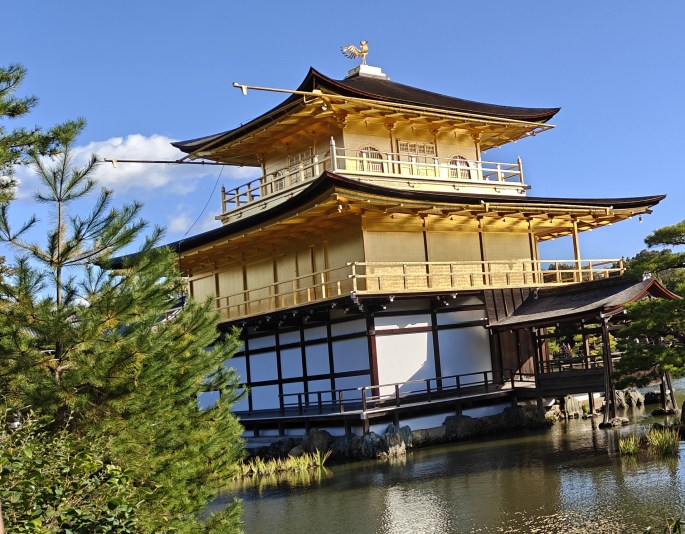
Close up showing the three floors and phoenix clearly
The Fudo Hall with the image of the wise man and protector of Buddhism lies along the path. A thick rope which helps in sounding a gong ( to awaken the Gods to your prayer) is another unique feature.
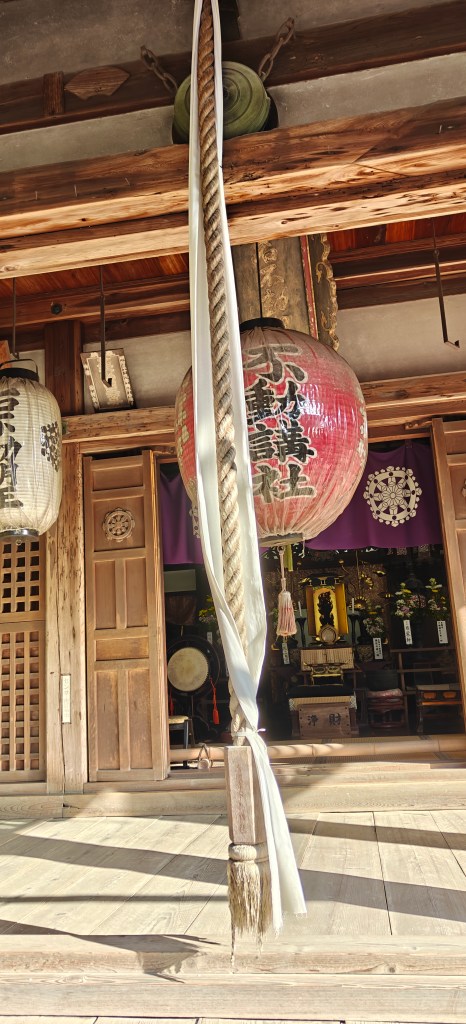
Fudo Hall with the gong and rope
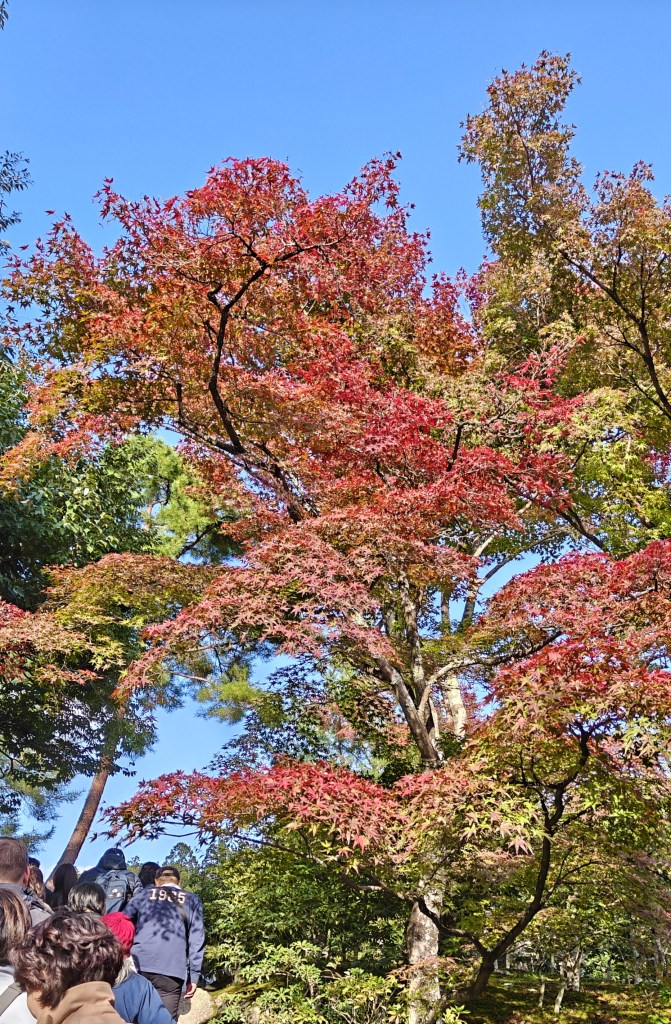
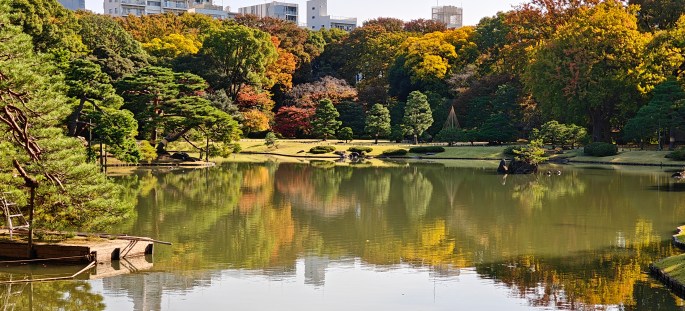
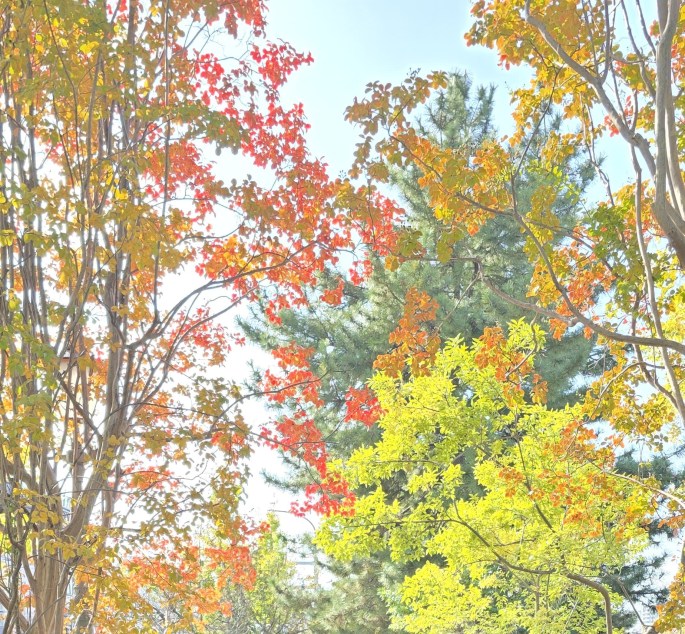
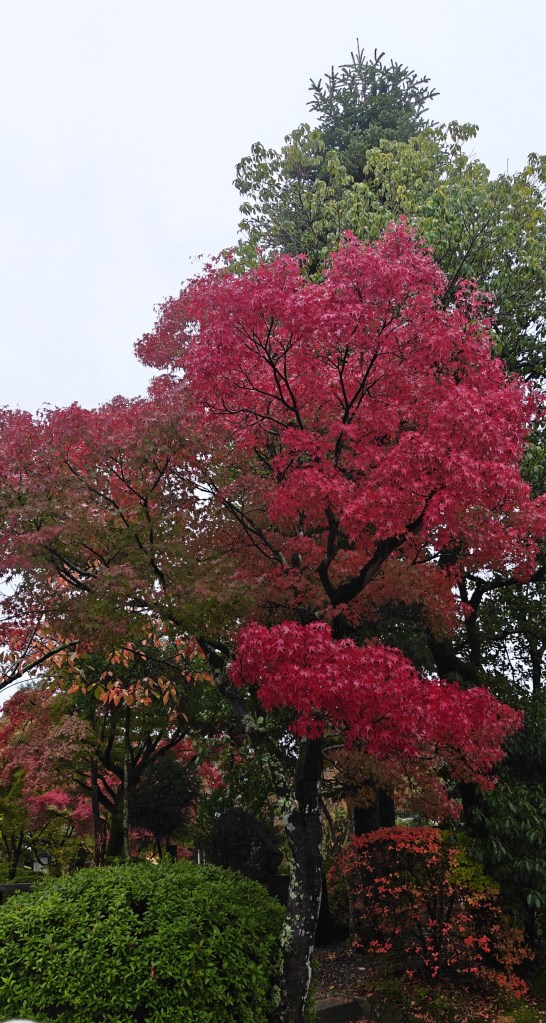
The garden with bonsai trees adds beauty and in fall, the colours add another level of ethereal beauty to the temple.
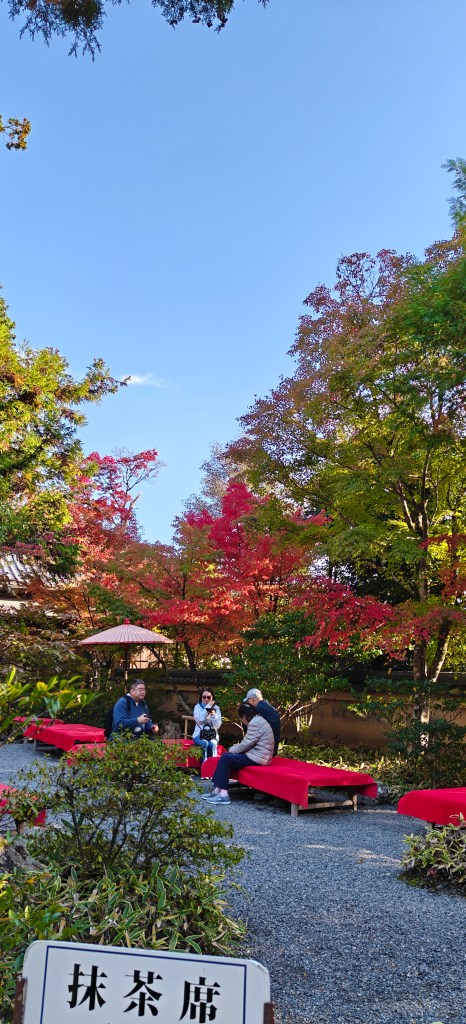
The beautiful garden
As we walk along the path, there is a spring and a waterfall…
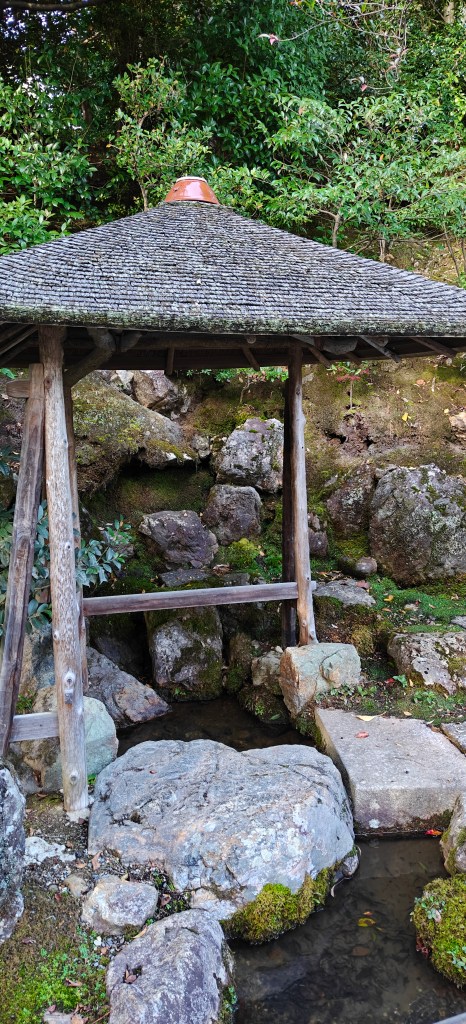
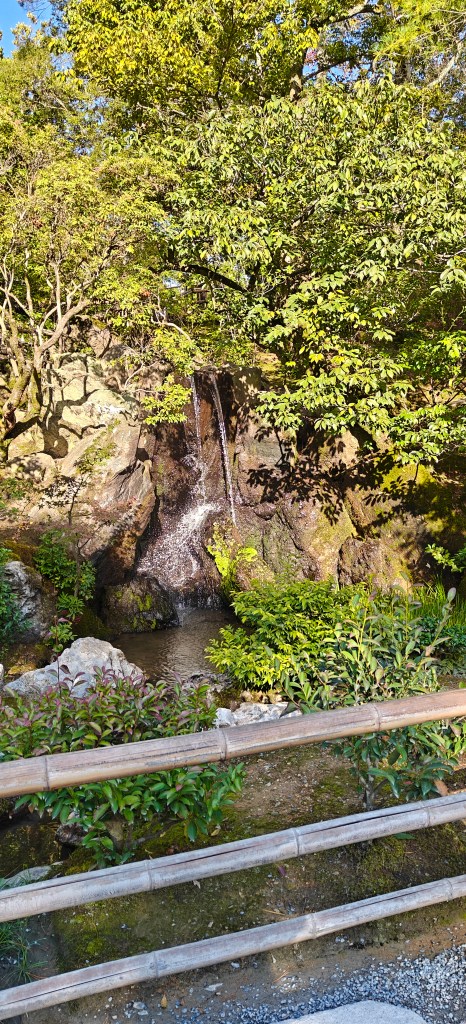
The spring and the waterfall
The garden has few other points of interest including a pond that never dries up and statues where people throw coins to fulfill their wishes.
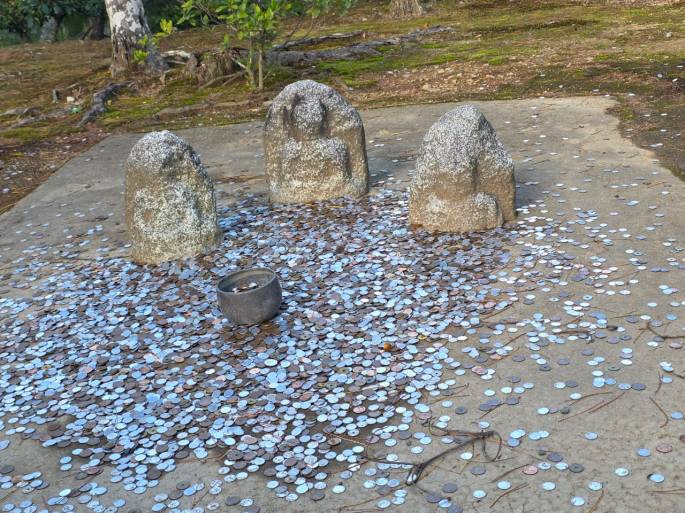
Drop coins for good luck
A Sekkatei teahouse …a traditional Japanese tea house can be seen just before one exits the temple.
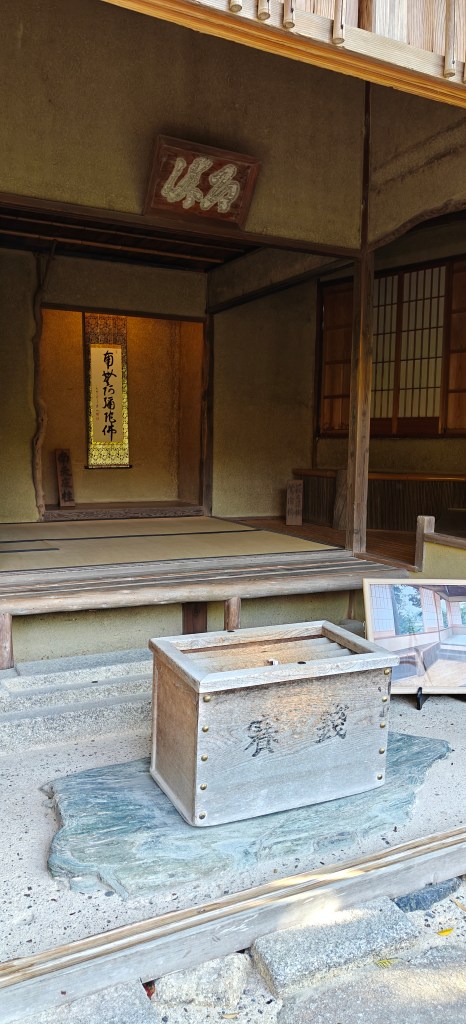
The Sekkatei Tea House
Leaving Kinkaku-ji, we headed to another of Kyoto’s iconic temples…The temple of tori gates…Fushimi Inari.
Fushimi Inari
Famous for its tori gates, this temple too is very attractive and sacred to the locals.
The shrine rests on the mountain called Inariyama and aims at promoting the harmonious coexistence of deities, humans and nature. Inari Okami, is the presiding deity of the temple founded in 711 AD. People gather here to pray for bountiful harvest, business prosperity , safety of home and family and fulfillment of wishes.
Tori gates are traditional Japanese gates to Shinto shrines. They are composed of two vertical posts topped by two cross beams and painted red. The Japanese believe that passing through a Tori gate is a transition into a holy space.
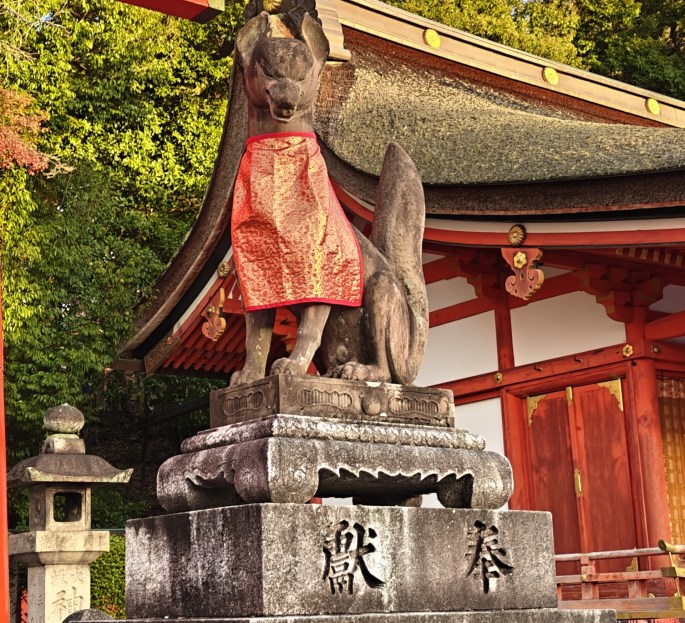
Fushimi Inari has almost ten thousands tori gates which straddle the walking path that leads to the wooded forest of sacred mount Inari. Inari is the short form of “Ine Nari” meaning reaping of rice in Japanese. There are more than thirty thousand Inari shrines from all over Japan that are affiliated to Fushimi reflecting the importance of this temple to the locals. Foxes are believed to be messengers of Inari and many statues of foxes are seen across the shrine.
Our visit
As you enter the complex, the main Tori gate is called the Romon Gate.
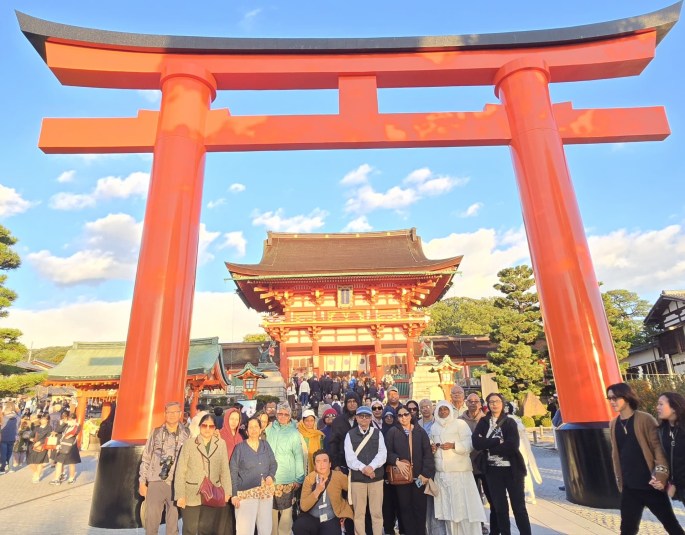
Our group below the Romon gate (a tori gate) with the Fushimi Inari shrine behind
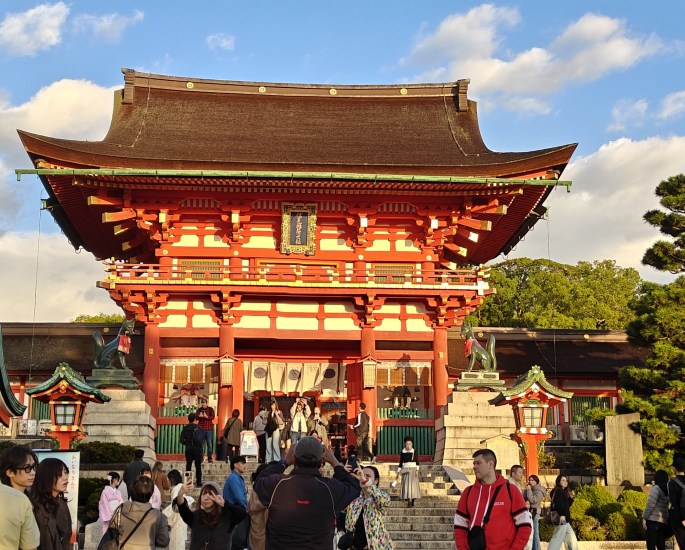
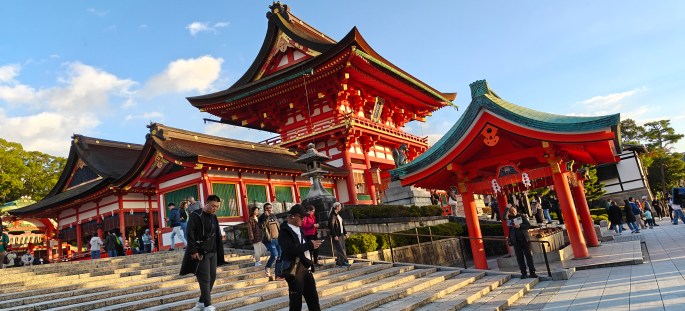
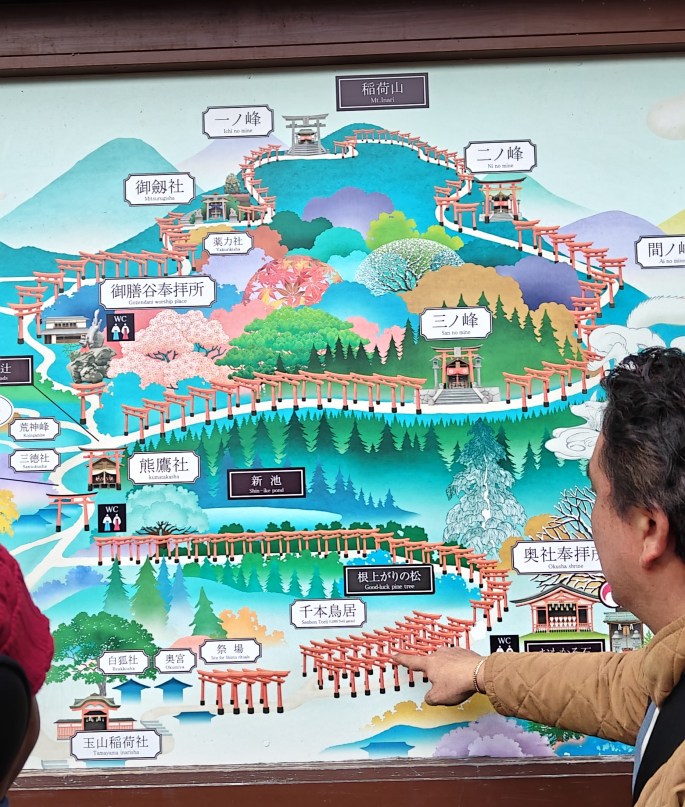
As one walks up the stairs one comes across a board explaining the location of various shrines at the temple.
A wishing horse is another speciality here. Though the temple was primarily meant for praying for good harvest, people believe that praying to the horse for progress in business ventures is helpful. Many people put their visiting cards inside.
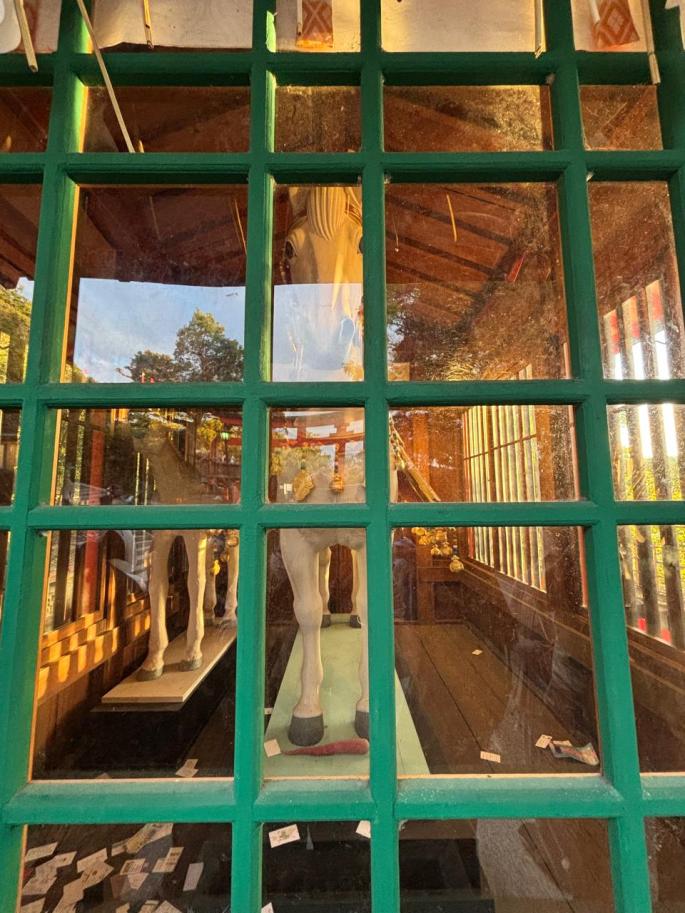
The wishing horse….note the cards inside the shrine
Just behind the main shrine is the entrance to the tori gate covered hiking trail which has parallel rows of gates called Senbon Torii creating an impression of a tunnel. There are believed to be ten thousand such gates that lead to the top. These gates are donations by individuals whose names are inscribed on the back of each gate.
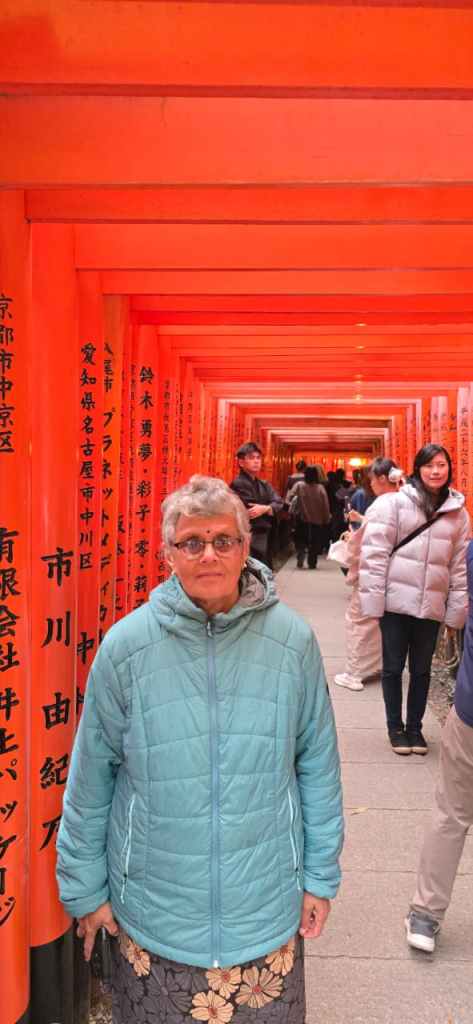
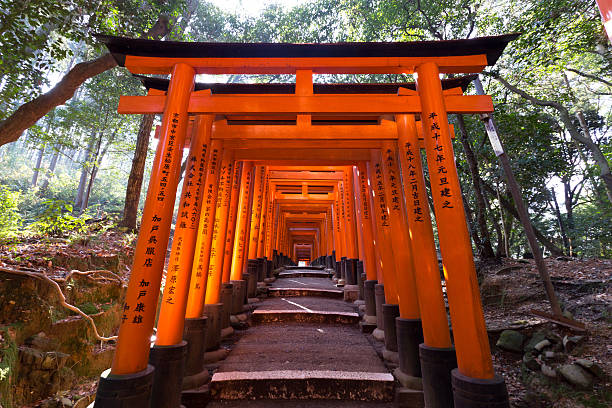
The gates with names of donors and giving a feel of walking through a tunnel
Click on video to walk through the Tori tunnel
After the first set of parallel gates are over, you reach an open area with multiple shrines.
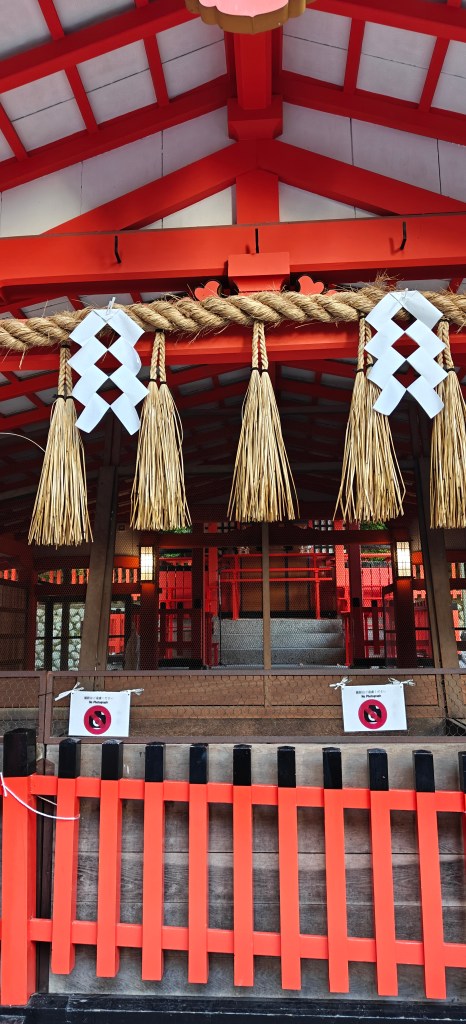
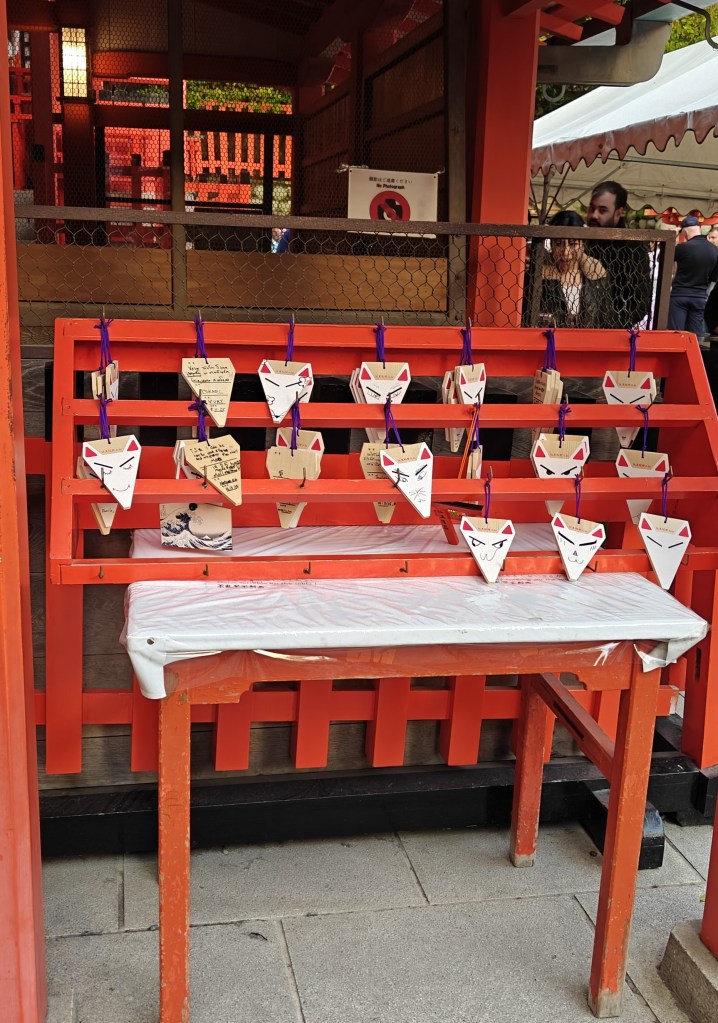
Shinto shrine with a display of fox amulets
Lot of locals were trying their hand at lifting a heavy stone known as the Omokaru stone. Making a wish and lifting it is believed to grant the wish if the stone feels lighter after you make the wish.
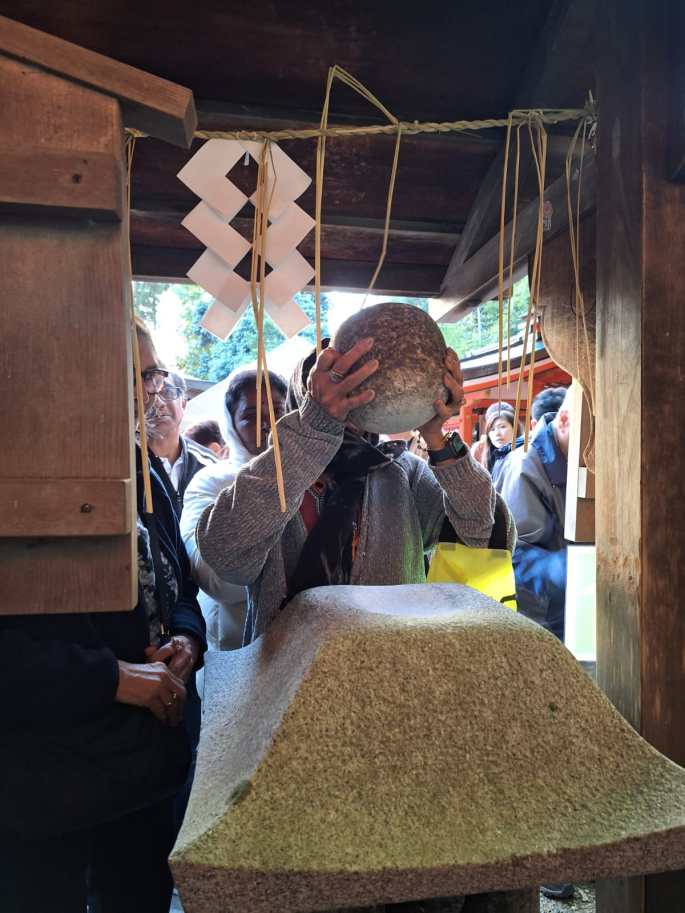
Lifting the Omokaru stone
The gates continue from behind this upwards to the mountain and lead to several smaller shrines covering a distance of four kilometers and takes around two hours to walk.
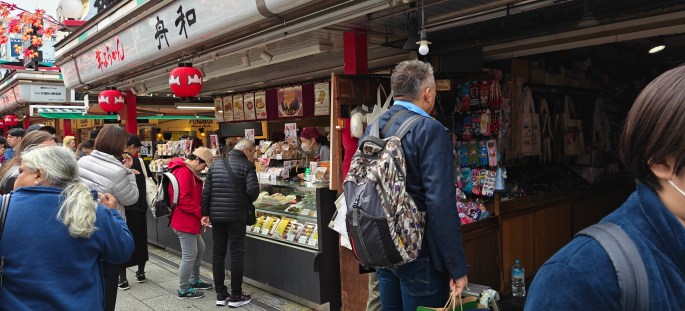
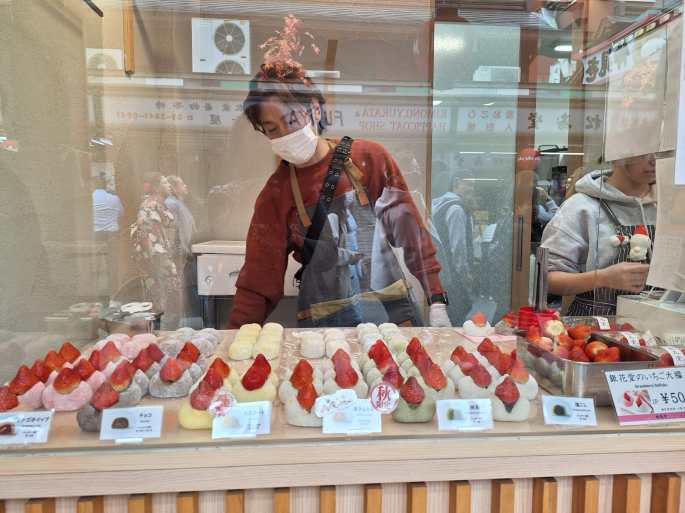
We had limited time and so walked back to our bus after visiting the temple. Like most temples in Japan, the paths leading to the temples are lined with plenty of shops selling food items and souvenirs.
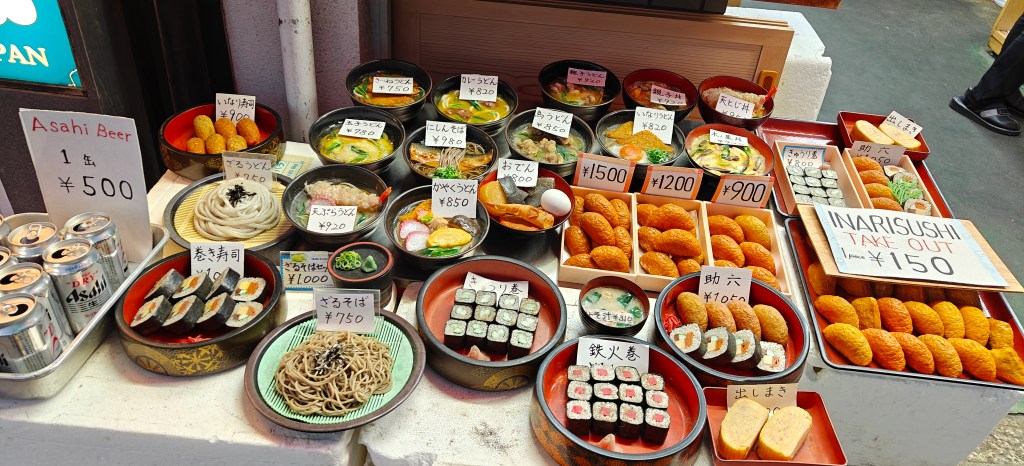
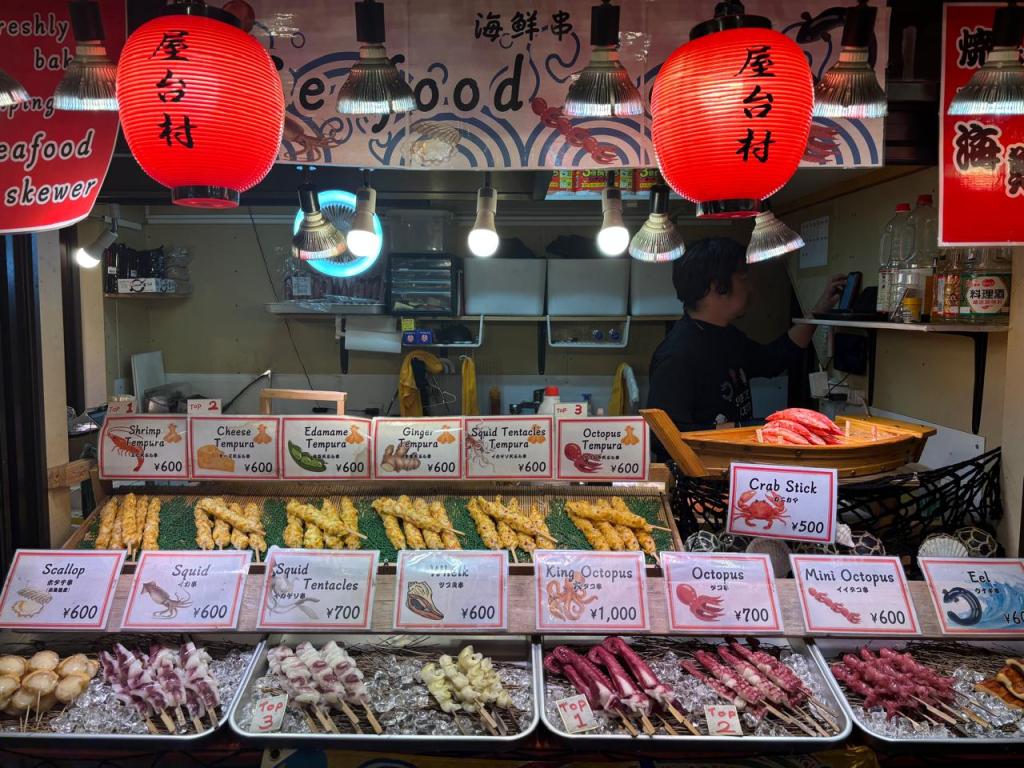
Tempting display of food items along the walking path to the temple
Enjoying some of the treats on offer, we walked to our bus after a great day of sightseeing at Kyoto.
Hope you enjoyed these unique Japanese temples.
See you next week with more from Kyoto, the beautiful Japanese city
Till then, do subscribe, like and comment…



 Travel-along.in