Tonle Sap and the Floating Villages

Most people associate Cambodia with Angkor Wat and the ruins of the Khmer dynasty. Let me take you on an unusual journey today, to the Tonle Sap lake and the floating villages around this lake. This is perhaps not on everyone’s list of places to see near Siem Reap; but let me tell you, it is a rather unique place, with a sad story behind it . A little bit on how these villages came to be ; will answer the natural questions that arise in your mind as you read along and see the pictures. The Tonle Sap is located south of Siem Reap. A short drive of about 40 minutes takes one to the northern tip of the lake where the floating village is situated.

Let me first tell you about my first encounter with Tonle Sap. I had a window seat on my flight from Ho Chi Minh city to Siem Reap. As the captain’s voice over the audio system heralded our landing at Siem Reap, I could see large water bodies and something that looked like marshlands below. It was not one of those clear days and it was nearing 6 pm. Wondering what this could be, I clicked some pictures for what it was worth. It was only two days later that I realised that what I had seen was the Tonle Sap lake and the floating villages. Take a look….

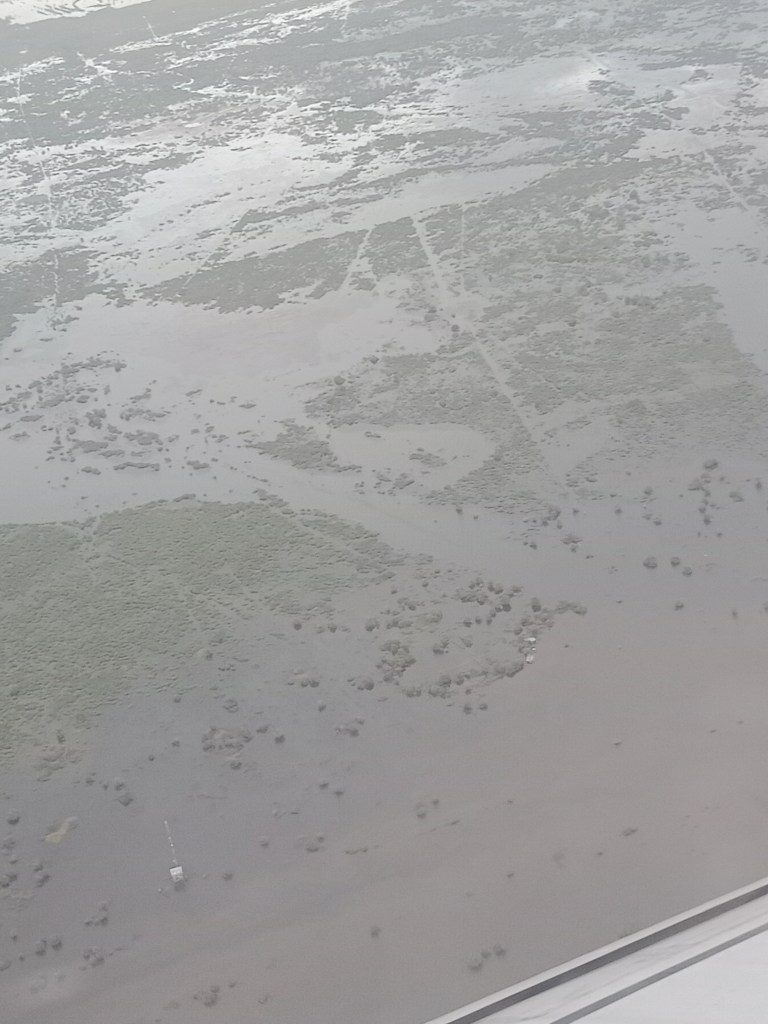
Tonle Sap and the villages ….an aerial View

The Tonle Sap [Sap is lake and Tonle is saltless in Khmer]

Tonle Sap is the largest fresh water lake in South East Asia. It is not only a lake, but a complete eco system and a biosphere reserve. It provides water to half of Cambodia’s crops and almost all the requirements of fish . Apart from that, it is an important transportation link here. The Tonle Sap was a source of abundance to the ancient Khmers. In fact many historians attribute the prosperity of the ancient Khmer empire to the bounty provided by the Tonle Sap.

I have heard of increase and decrease in river water and drying up of lakes in summer but I was not aware of seasonal changes of this magnitude any where else.

During the dry season the Tonle Sap lake covers an area of 2500 sq. kms with a length of 160 kms. During the wet season, the lake grows over 16000 sq. kms with a length of 250 kms. That is a drastic increase in volume by 6 times !!!. A very unusual phenomenon occurs here. The Tonle Sap river takes water from the Tonle Sap lake and merges with the Mekong River. The flow of water towards the sea reverses during the wet months depending on the pressure of water in the Mekong river and the lake swells up enormously. Effectively the Tonle Sap lake is a large bowl which fills with water when the river flows into it and empties out when the river changes direction as it does every year!

The Tonle Sap is the focal point of life for a large section of Cambodians who depend on it directly or indirectly for their livelihood. Fishing , particularly exporting fish products like fish paste is the backbone of their survival. There are at least 300 species of fish living in the Tonle Sap . The floods help growth of large fish and they are easy to catch when the water recedes as they get caught in shallow pools or in the bamboo wires and nets.

The silt deposited during flooding is extremely fertile and local farmers have developed indigenous rice varieties that grow here.

There is a forest, a mangrove forest at the edge of the Tonle Sap that is an important eco system in itself. It is an important spawning and breeding ground for fish. This vital eco system harbours fish, snakes, turtles, otters and even crocodiles. A large number of water birds like storks and pelicans thrive here.

There are environmental concerns around this entire eco system. There has been a notable decrease in the numbers and variety of fish partly due to excessive fishing and partly due to conversion of traditional spawning grounds into agricultural areas. Dams built across the Mekong River are also a threat to the eco system of the Tonle Sap.

Floating Villages

The people who live in these floating villages are mainly immigrant Vietnamese who suffered heavy losses during the Khmer Rouge period. Many of the immigrants were killed in the civil war. The others who decided to stay in Cambodia continued in refugee camps and finally settled in these floating villages. As they do not have certification proving their Cambodian identity, they are considered stateless migrants and cannot own land. They are caught in the cycle of poverty and statelessness.

Life in these floating villages is quite a challenge and 90 percent of the villagers earn a livelihood from fishing and agriculture. Life of the villagers is intertwined with the lake, the fish, and the cycles of rising and falling waters of the lake. Pollution is threatening their health . No public sewage system exists and they use the lake (which is also the source of water supply) as a toilet and garbage dump!!

We took a drive from Siem Reap in our tour bus and reached the ferry boarding point. From there we boarded a Tara boat which took us on this tour of the floating villages.

Kampong Phluk

This is one of the four floating villages near Tonle Sap and the one we visited. The houses are made of bamboo and stand on stilts 6 to 10 meters high which are anchored to the bottom of the lake. It tends to give a feeling of a nomadic settlement but far from it; it has houses, schools, markets, churches, monasteries, hospitals and even a police station! The only mode of transportation is by boat and everyone is familiar with it.

As I said earlier, the muddy waters of the lake are used by these people for their daily requirements. The extreme poverty of the inhabitants of the village can be judged from this!

During the dry season, the water recedes and the stilts are clearly seen. During the wet season, the lake fills in and the villagers use the water for all their needs.

As the boat went past the houses, we saw the villagers going about their routines like fishing, washing and cooking. There are dogs, cats , poultry and pigs living there too!

As we reached the floating village.

A close up of the floating houses

The villagers go about their routine life

Trash and filth surrounding the houses

Man and animal coexisting under trying circumstances!!
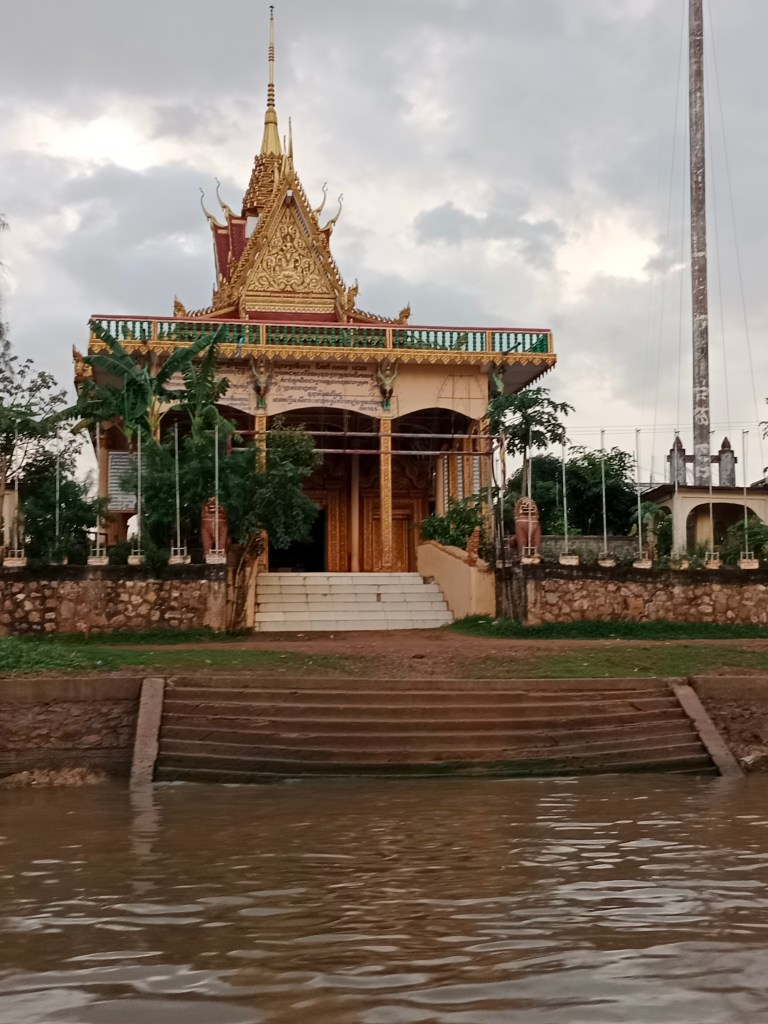
A Floating Shrine

A floating restaurant

As I sat in the boat and looked at the houses and it’s people, something pulled at my heart strings. Am I not indirectly also causing pollution and environmental damage here as a tourist? That was a question I had no answer to. You see, it a chicken and egg situation. The villagers do benefit from the tourism that has started flourishing here. Many of them have left traditional occupations and turned to the tourist industry. All the same, I wouldn’t like tourists continuously looking at my house and surroundings as if it were a zoo! The helplessness of these people really touched me…..

Honestly, when our guide mentioned about floating villages, I only thought of some beautiful elite luxurious floating village. It was only when I reached the boat jetty and took the boat that I realised how wrong I had been!!!

As I was lost in thought, the sun was slowly going down on the Tonle Sap Lake. We just sat there on the boat and witnessed the sun setting on another day of our Viet Cam holiday. Share the feel….
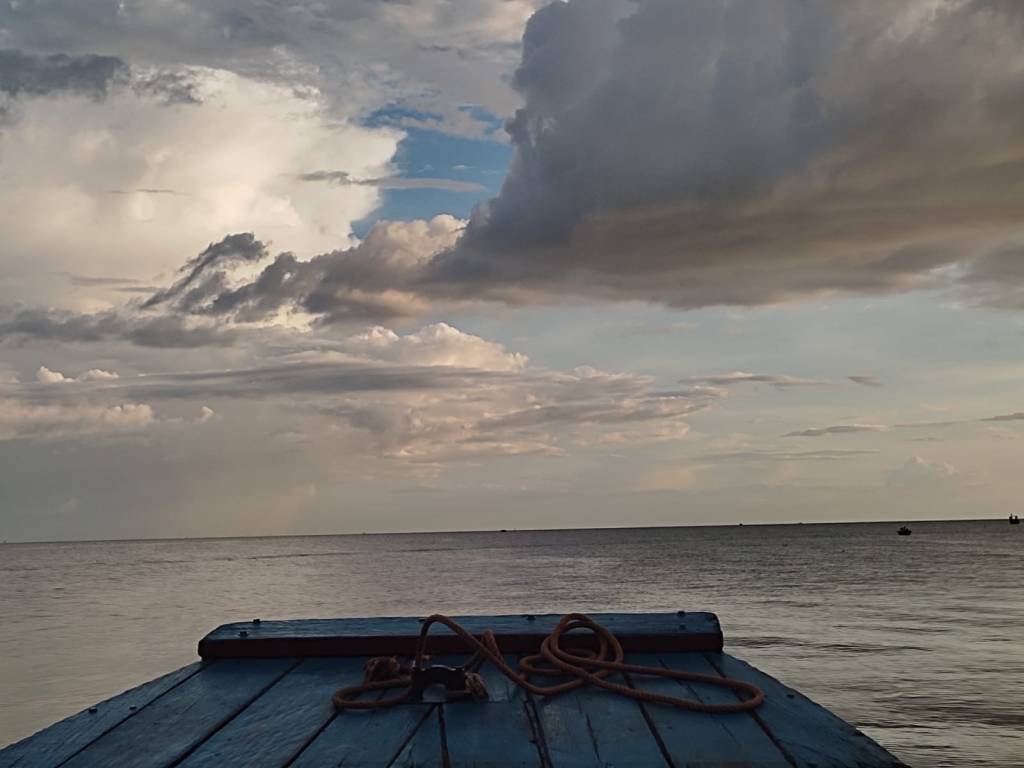
The Sun sets on Tonle Sap….

With mixed feelings, we returned to our hotel for the night. As usual, the exchange of pictures took place and quietly, the sad thoughts took a back seat as we continued on our holiday.

This was my last blog on Cambodia and from next week, we move on to Vietnam. See you next week at Hanoi. Till then, do subscribe, like and comment on my blog. Your feedbacks are welcome too!!

Siem Reap

I had the opportunity to visit Siem Reap in Cambodia as part of a group tour where we covered Vietnam and Cambodia. We did Vietnam first and then moved to Cambodia. The forthcoming blogs are part of this group tour that I undertook in late 2022.

Let me first introduce you to the wonderful group of people with whom I did this amazing trip. We were a group of fun loving seniors, some of them my medical college classmates. The others in the group were also very warm and friendly and you will get to see glimpses of all the fun we had as I take you along. My travel buddy was Dr Margaret, my classmate whom we all fondly call Maggie. Since the word Maggie is associated with a brand of noodles and we were buddies, I got the nickname Pasta. From this itself you will get an idea of the camaraderie in the group. This warmth and friendliness went a long way in making the tour more enjoyable!! Many of them had carried loads of snacks and other items which we all thoroughly enjoyed especially during our long bus rides.

Our Viet Cam tour group.

We arrived Siem Reap from Ho Chi Minh City Vietnam, one beautiful day in December 2022. This was my first visit to Cambodia.

Siem Reap is a resort town in North western Cambodia best known for the Angkor ruins. It is home to the World famous Angkor Wat temple, and various other temples at Angkor Thom. It served as the seat of the Khmer kingdom between the 9th and 15th centuries. Today, it is the capital of Siem Reap province and the second largest city in Cambodia.

Siem Reap literally means Siam (Thailand) defeated. French colonial architecture still dominates the streets . It was a quaint village once upon a time. With the Angkor Wat and other temples gaining popularity as a tourist destination, Siem Reap today sees lot of construction and modern amenities to suit the requirements of the tourists.

As we landed at Siem Reap I could see large waterbodies and probably swamps. More on this in my future episodes. For now, let us look around Siem Reap city.

The airport itself is built in traditional design and looks quite different from any regular airport. It is located 7 kms away from the town centre.

Aesthetically designed Siem Reap airport ( in contrast to most airport buildings)

Our Guide was Sarath and he received us at the airport and escorted us to our Hotel.

Our Guide in Cambodia Sarath

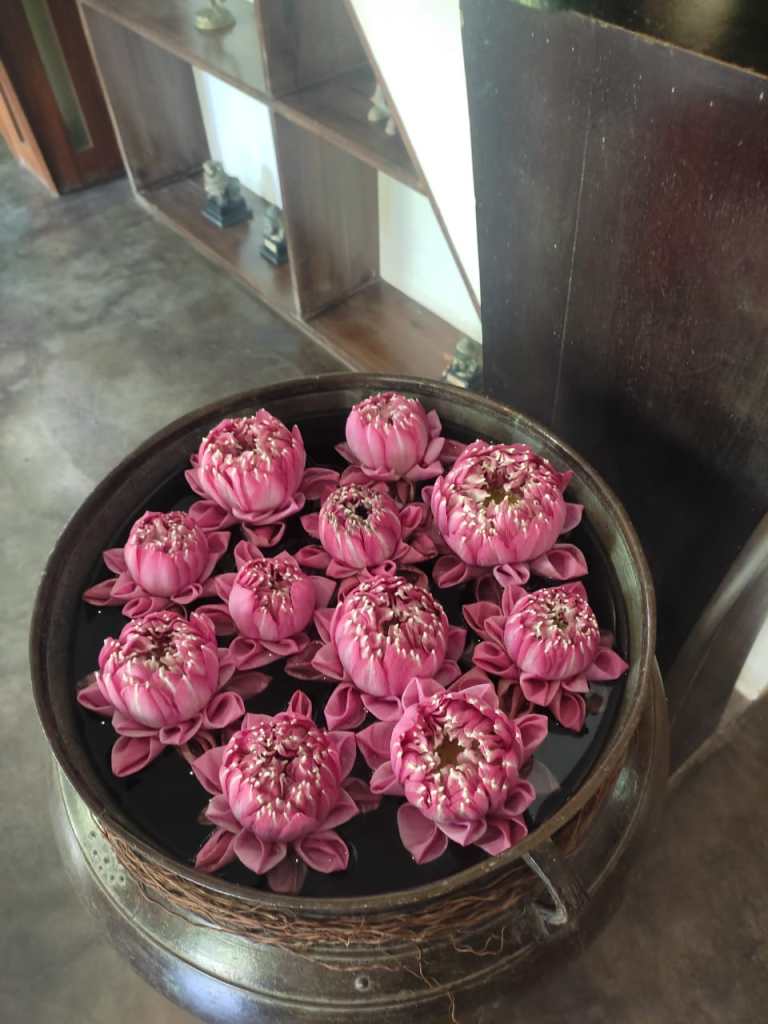
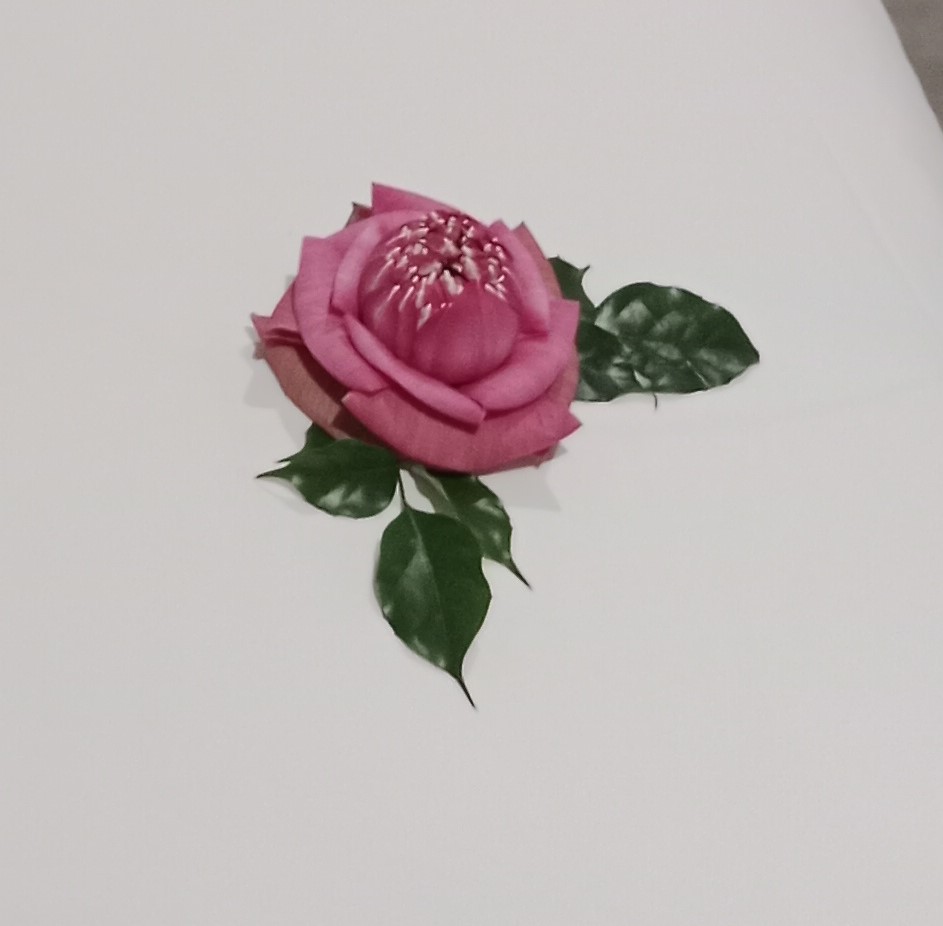
The hotel room at the Lynnaya Resort was done up in typical Cambodian style with lotus flowers taking the centre stage of the decor. The lotus is omnipresent in Cambodia and is used extensively for various purposes. This is typical of Cambodia and even the towers of Angkor Wat temple are shaped like lotus buds!!

Various artistic expressions using a lotus….

Glimpses of Siem Reap….

Angkor Enterprises office

In preparation for our Angkor Wat tour, our guide took us to the Angkor ticket office and purchased our entry tickets which had to have our photos and so we all completed that formality and were given the tickets for our visit. This ticket is very essential to enter any of the temples here. The ticket was checked at multiple entry points.

The Angkor Enterprise office

Angkor Museum

Siem Reap also has an Angkor Museum.

This museum has exhibits covering the history, art, architecture and culture of the Khmer Empire.

The Angkor Museum

Pub Street

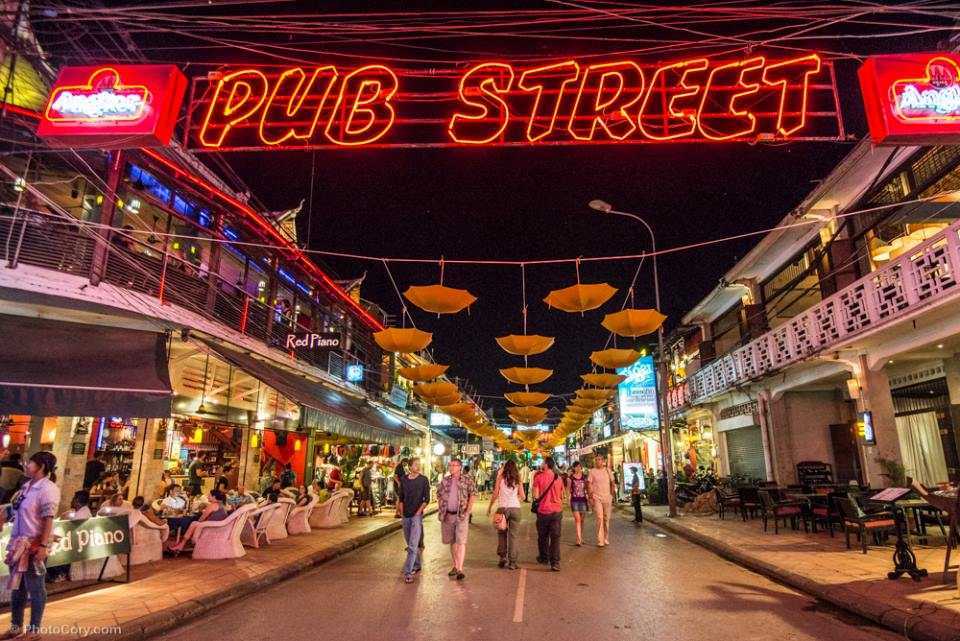
Pub Street ; traditionally known for its bars, is at the heart of tourist activity in Siem Reap. It has a wide selection of restaurants , bars, nightclubs, street food, shops, stalls and just about everything. Initially this area was primarily residential. Walking around Pub street and soaking in the ambience is in itself an experience. Traditional Cambodian street food stalls attract lot of tourists.

Many places here function round the clock but comes alive after 7 pm .As the evening gives way to night, the streets become active with loud music, and the party spills on to the streets.

Pub Street

A Tuk Tuk is the local equivalent of an autorickshaw and is seen everywhere on the streets of Siem Reap.

Tuk Tuk

Local Food

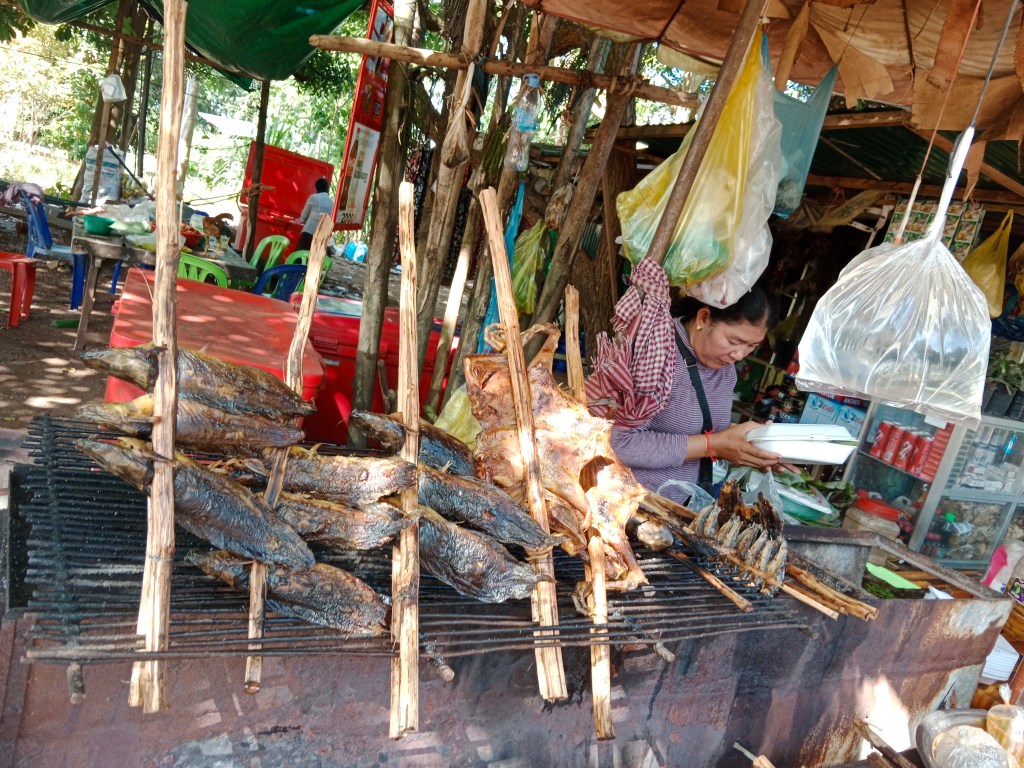
Cambodian street food or local food is similar to that in most South East Asian countries. Predominantly non vegetarian with frogs, insects, snakes and other reptiles forming a part of the menu. Rice of course; sticky rice as they call it, is the staple food. Apart from that, lot of coconut and coconut milk preparations are seen particularly as desserts.

Roast Frogs, fish and beef in that order

A sweet made of rice and bananas, rice dumplings and roast bananas in that order

Cambodian Rice

Cambodians eat rice at every meal. No surprise then, that they grow some of the finest rice varieties in the world. Just out of the city, and you can see plenty of rice fields. The heavy monsoons, the Mekong river and the Tonle Sap lake ensure that the crop gets its share of water.

They grow both fragrant rice and white rice. Jasmine Rice from Cambodia is considered the best quality rice in the world.

A rice field

Exotic Fruits Of Cambodia

I love fruits and this was something I really enjoyed here. Cambodia had a real good variety of exotic fruits.

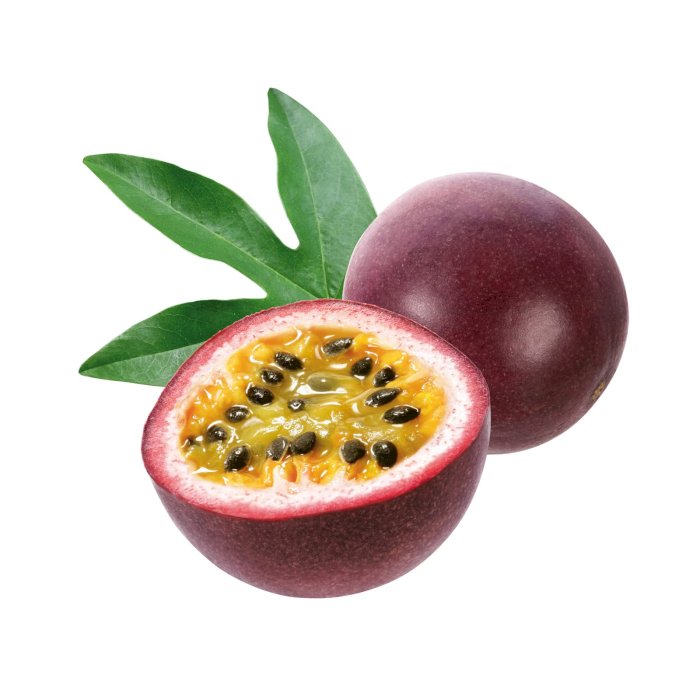
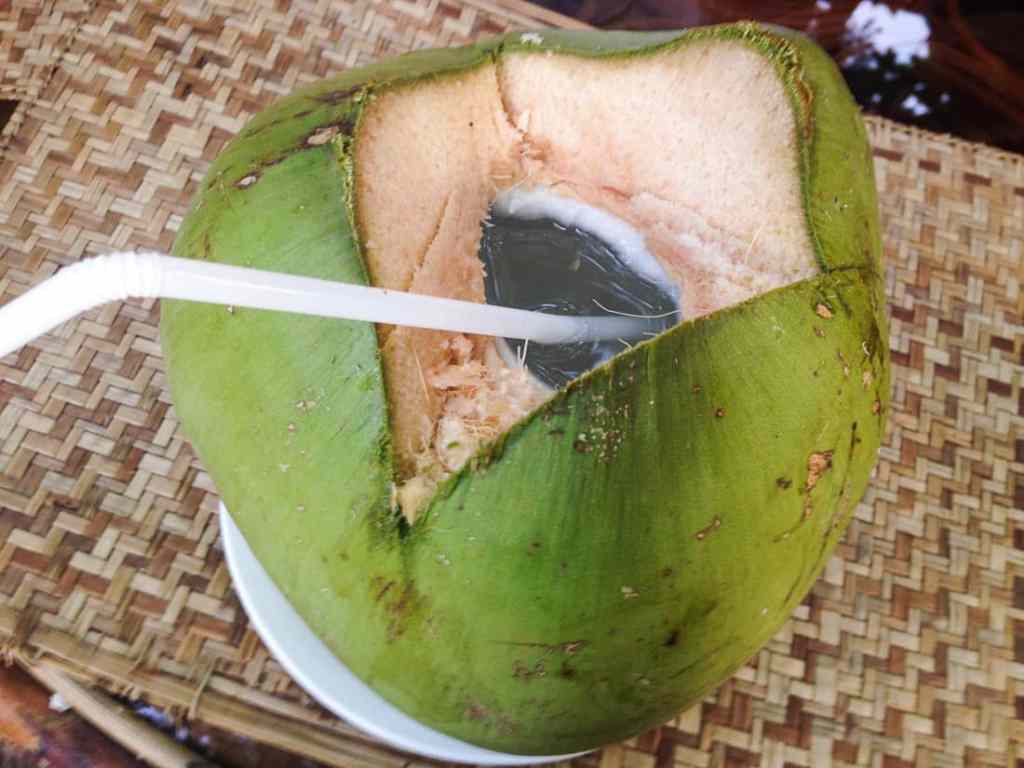
The Durian (similar to jackfruit), passion fruit and the extra large tender coconut

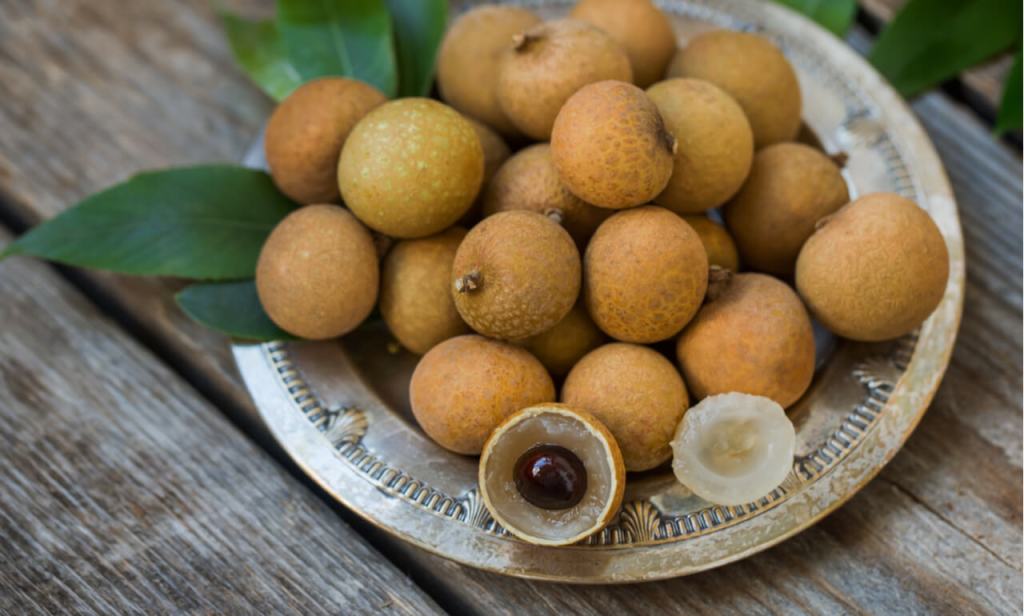
The Longan ( similar to lychi ) and the pink coloured dragon fruit

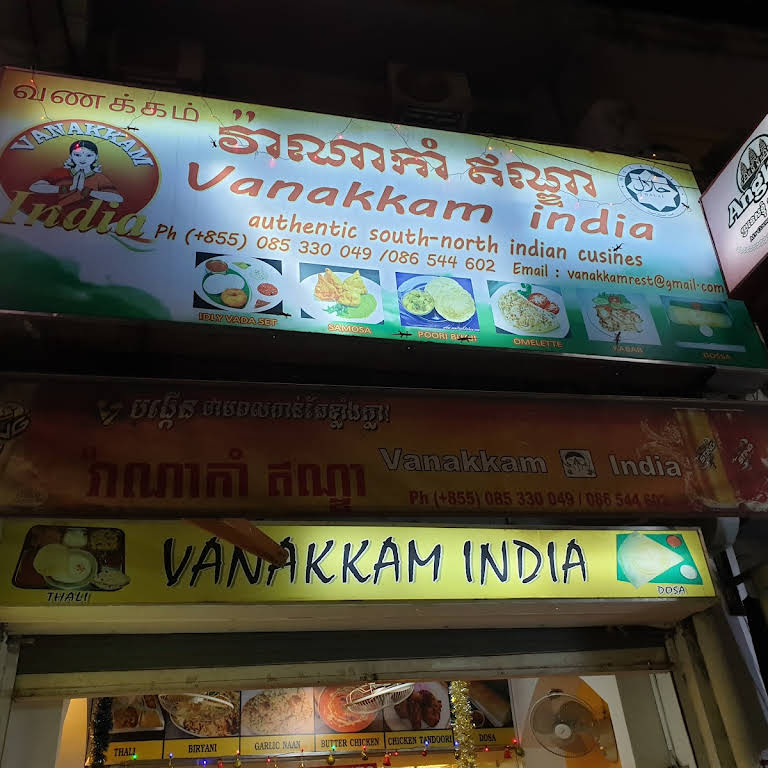
Being a vegetarian, these fruits formed a large part of my daily breakfast in Cambodia. Ours was a vegetarian group and as such we visited a couple of vegetarian Indian restaurants during this tour for lunch and dinner. There are good vegetarian restaurants and Indian restaurants in Cambodia about which I shall mention as I go along.

An authentic Indian Restaurant in Siem Reap which we visited.

The Spirit houses

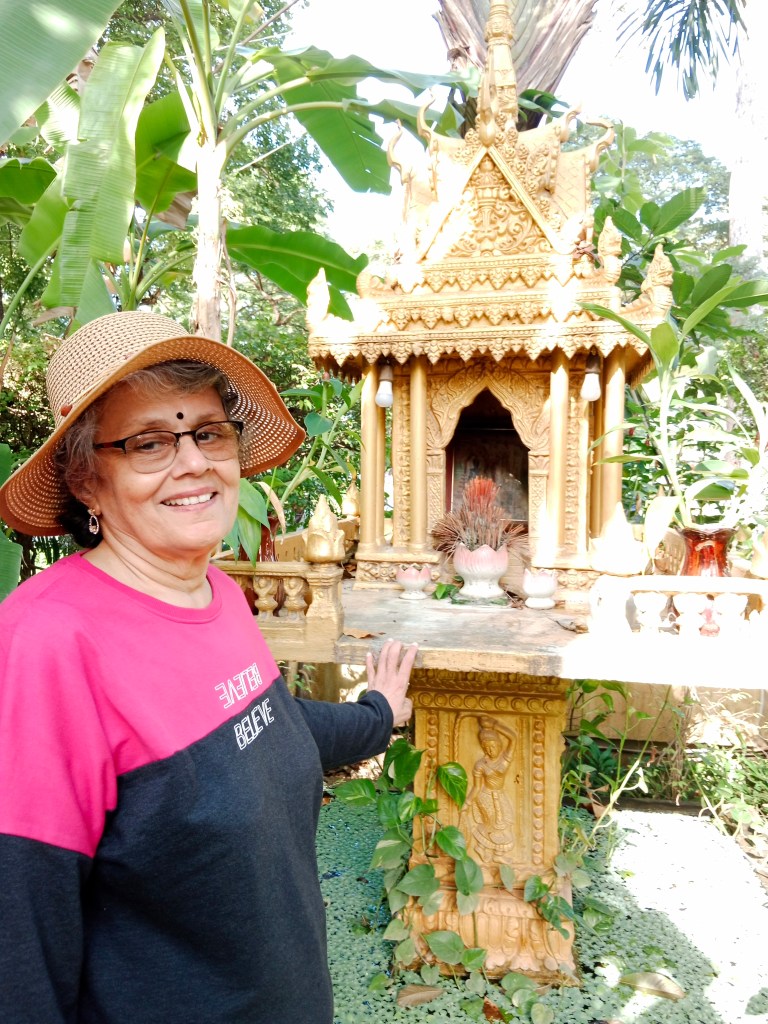
Have you seen a structure like the one in the picture below and wondered what it is?

The Spirit House outside our hotel

They are the spirit houses seen in front of most houses in many South East Asian countries. Cambodia is no exception and you find them all over. Some are very well maintained like the one in front of our hotel . Others are less ornate. It is a shrine dedicated to the protective spirit of a place. The belief is that the spirits have to be appeased to ward off evil and bring good luck. Bunches of burnt incense sticks can be seen in front of these spirit houses.

Apsara Dance show

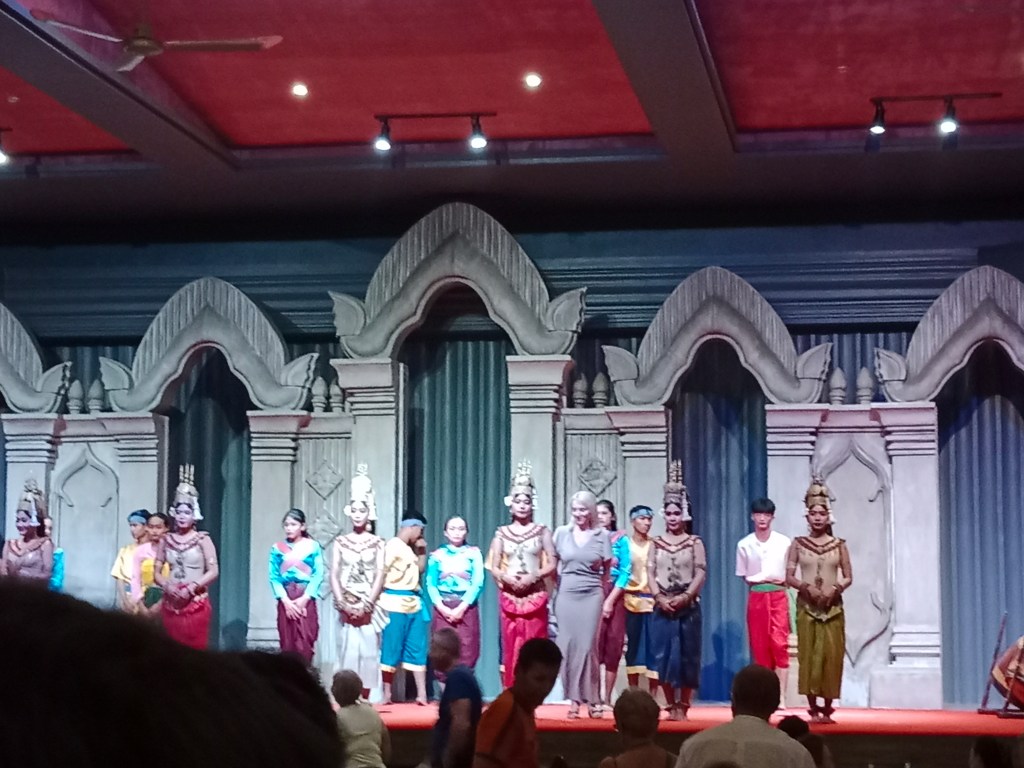
We had the opportunity to see the Apsara Dance show which is a traditional Cambodian dance performance. The singers , instrumentalists and dancers together put up a wonderful show of traditional Khmer culture as we enjoyed dinner at the theatre.

A traditional Cambodian orchestra with as many as twenty musicians with strong emphasis on percussion instruments is called “Pinpeat”. The dance performance was accompanied by a traditional orchestra too.

Apsara dancers displayed remarkable poise , agility and grace with slow and rhythmic movements of the body and the limbs synchronous with the music. The dancers were extremely slim and petite and wore headgear and ornaments similar to those seen on the Apsara statues seen in the Angkor Wat temple walls. These dancers practice for years to stretch and flex their bodies as required in this dance form. These dances are inspired by the traditional apsara dancers who entertained the Gods as per the epics.

The Cambodian version of Ramayana is called Reamker and features in many of the traditional dances of Cambodia. In addition to the Apsara dances, other traditional Cambodian dances were also enacted.

Here are some pictures and videos from the show. Take a look…

A statue of King Suryavarman II at the entrance to the theatre.

The Apsaras…note the headgear and ornaments.

A visual demonstration of an epic with the audience in the foreground

The dancers pose with a member of the audience

A traditional Khmer Dance

A video of the Apsara dance with traditional music

A video of a traditional Khmer dance . Note the beat of the music.

These were just glimpses of our stay at Siem Reap. The main purpose of visiting Siem Reap was to visit the Angkor Archaeological Complex. We visited that and also some other archaeological places of interest like Mahendraparvata, the Thousand Shiva Lingas, Phnom Kulen etc. In addition we also visited Tonle Sap, the largest freshwater lake in S E Asia and a remarkable floating village on its banks.

So you can look forward to some remarkable destinations in the forthcoming episodes starting with the main attraction; Angkor Wat which features in my next episode.

Meanwhile do continue your support with feedback and comments .