Innsbruck 2

Welcome to the World Of Crystals….that’s where we are headed to today. Swarovski is synonymous with crystals and we visit Swarovski Kristallwelten at Wattens.

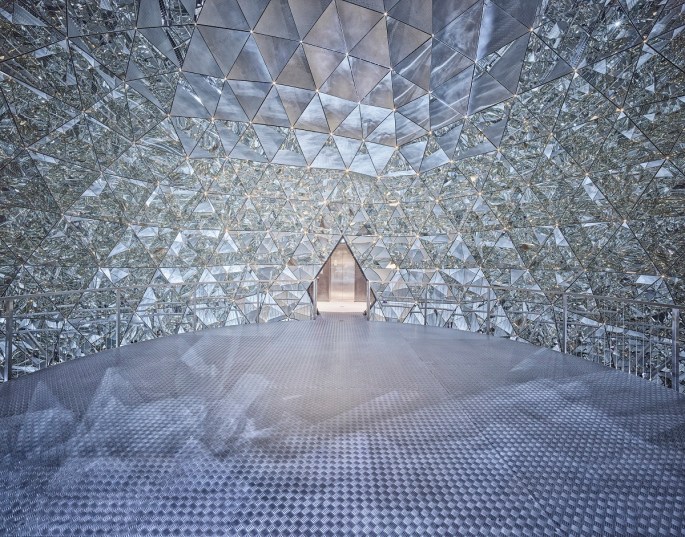
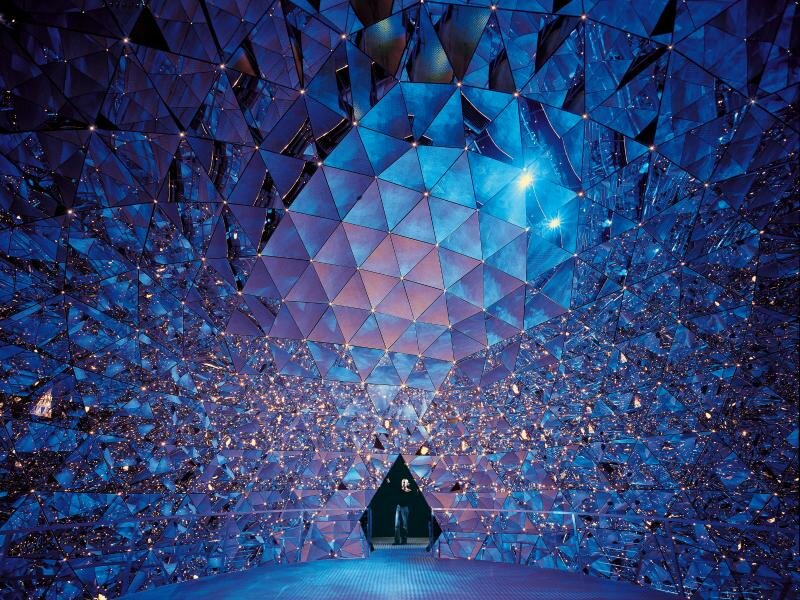
The opening picture features the Giant Crystal Dome at this facility

Swarovski Kristallwelten (Crystal World) is an attraction created by Andre Heller for the famous crystal glass manufacturer Swarovski. It consists of a park, an art museum, retail area and restaurant. It is located at Wattens, a town close to Innsbruck where the company is headquartered. The company was founded in 1895 by Daniel Swarovski. In 1995, to commemorate the 100th anniversary, this attraction was created with a museum with 14 chambers of wonder in the form of a giant. Inside the giant are exhibition spaces based on various themes.

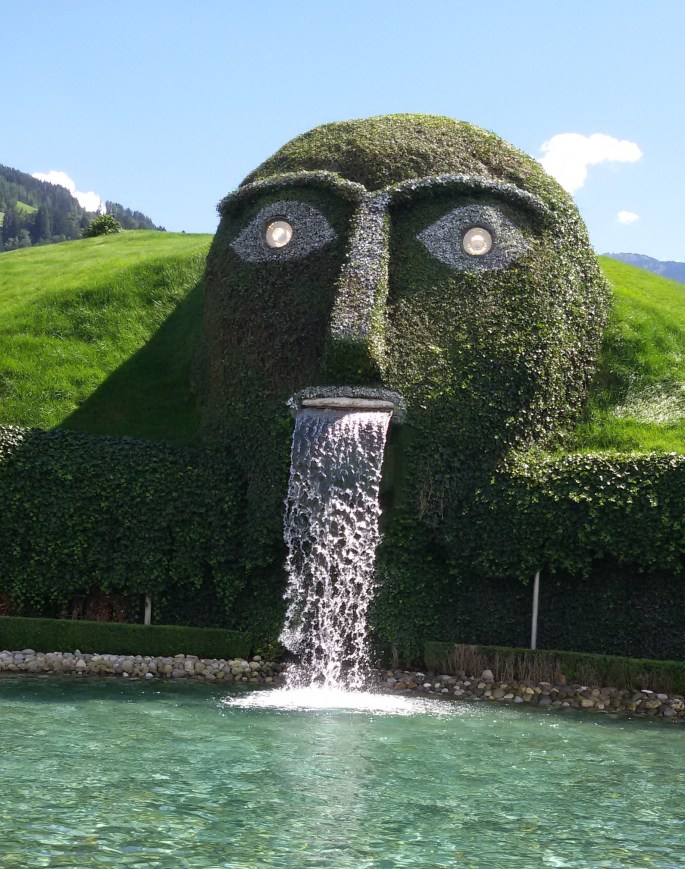
As we enter the attraction, we first enter The Garden which is a well landscaped area of 7.5 hectares with art installations surrounding the iconic Giant symbolic of the Swarovski brand. The Giant has sparking eyes and spews water on to a pool below.

The iconic Giant

One of the main attractions in the garden is The Carousel in black and white made of 15 million Swarovski crystals and illuminated with warm lighting.

The Carousel made of Crystals

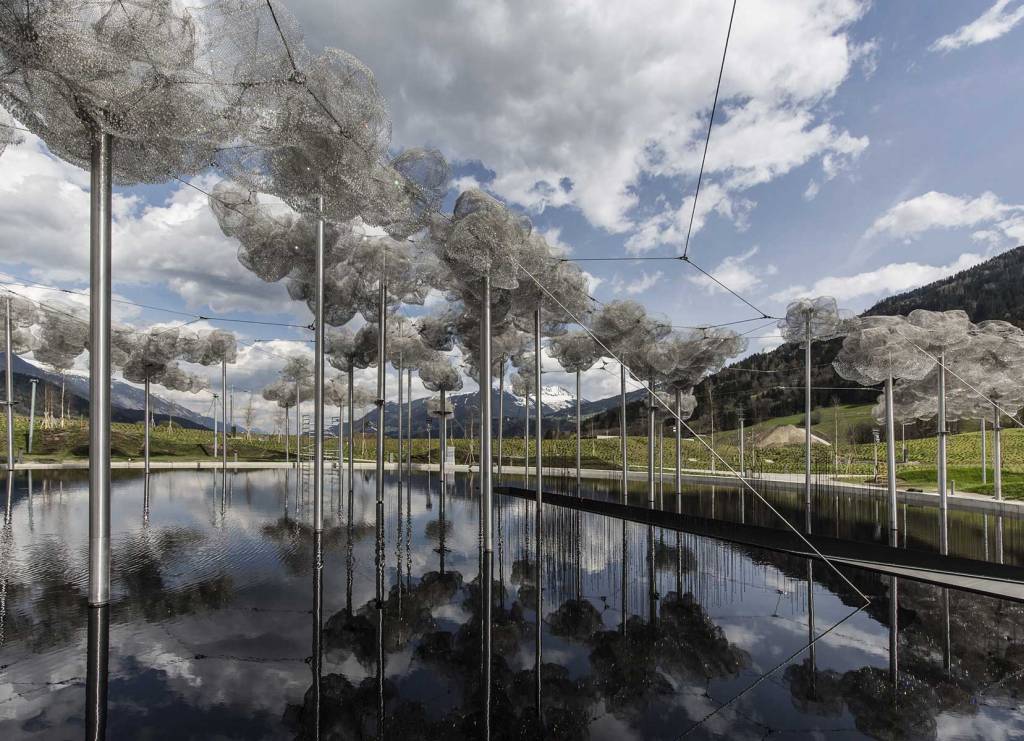
Another attraction is The Crystal Cloud made of 8 lakh Swarovski crystals over The Mirror Pool.

The Crystal Cloud

As you leave the garden and enter the giant, you find yourself in a giant Crystal Dome with around 595 mirrors creating an effect of depth and giving one the feel of being inside a crystal. This is so mesmerising that it is a popular wedding venue.

The Crystal Dome

As one moves through the chambers, one encounters an amazing collection of artistic exhibits made of crystal, some of them by renowned artists.

Some pictures of exhibits at the Crystal World…

Inside the chamber complex with an exhibit

The biggest Crystal

The crystal Chandelier

The birds in crystal

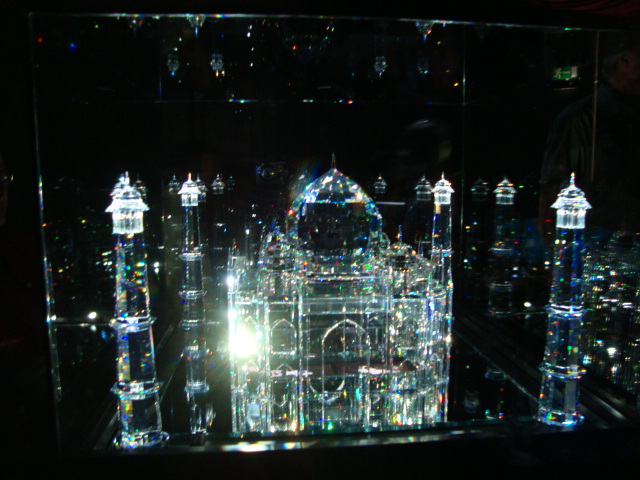
The Taj Mahal

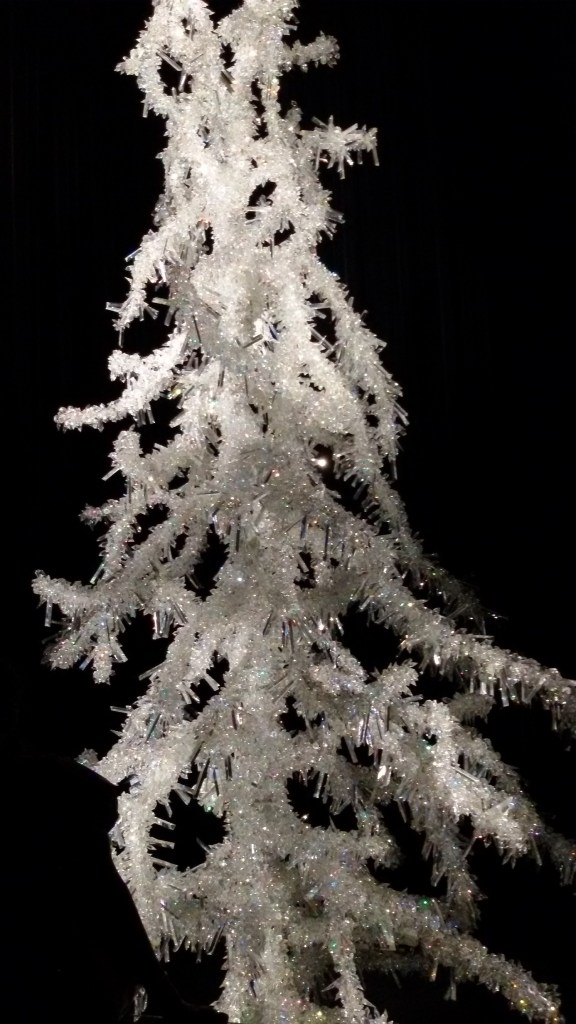
And a Christmas tree!!

The retail area was open for anyone interested in making one or more of the crystal ware their own….which entailed heavy jingling pockets of course!!!

Our next visit was to see the Tyrolean folklore show.

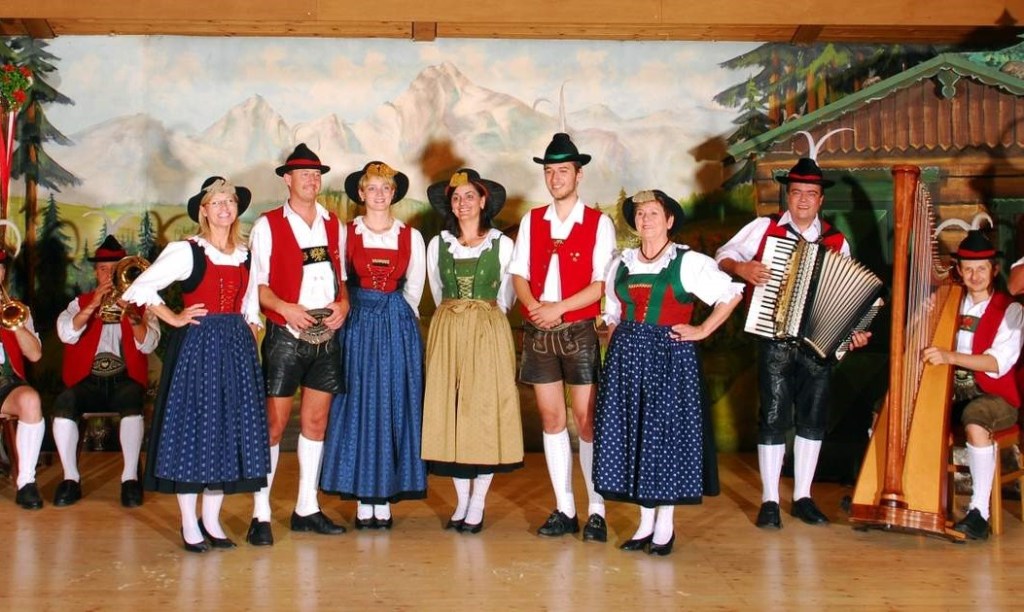
This programme included traditional and authentic folk music played on a variety of musical instruments. It is organised by the Gundolf family considered the ambassadors of Tyrolean culture and tradition and introduces the spectators to Austrian culture through song and dance. The traditional attire worn by the performers adds to the authentic feeling.

The performers presented a variety of dances and the beats were very catchy indeed. One dance had the dancers slap the soles of there shoes synchronously and in perfect tune . The singers enthralled us with their incredible songs and yodelling. They played traditional instruments like the alphorn and the accordion. In fact some of the farm implements were improvised and used as musical instruments.

We were also treated to dinner with the waiters wearing traditional Austrian attire adding to the feel.

The highlight of course was at the end when the singers sang the national anthems of all the spectators. And they sang the Jana Gana Mana with such clarity; left us pleasantly surprised. We joined in during this performance!

After the show we were allowed to pose for pictures with the performers.

Some pictures…

The welcome song

Some real enthusiastic and energetic dancers

A variety of musical instruments

Playing the alphorn

Improvised musical instruments

Some more of the dances

And the dinner

After the dinner, we were pleasantly surprised to find one of the performers hop on to the vehicle to drop us off at our hotel.

From Innsbruck we were headed to Italy…..and where else but to the romantic city of Venice.

As we took to the road from Austria to Italy, there were a couple of things that struck me.

Austria is a country with multiple tunnels. Unlike in India where we have winding roads with hairpin bends, in hilly areas; in Austria the road cuts through the mountains. So the ride to Italy saw us passing through multiple tunnels of varying lengths.

A typical Austrian mountain road

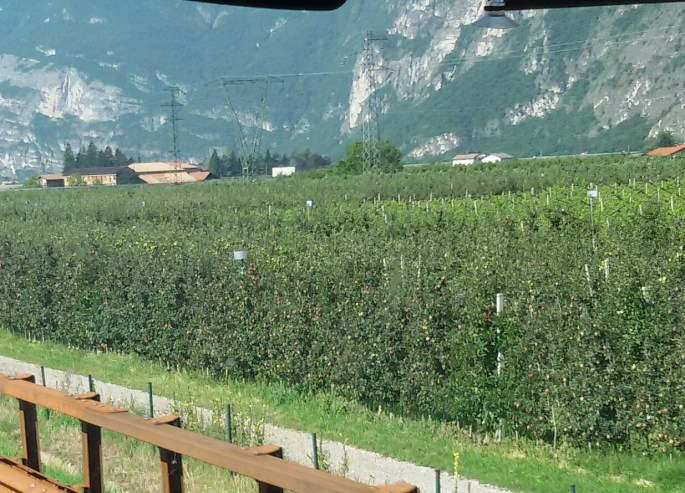
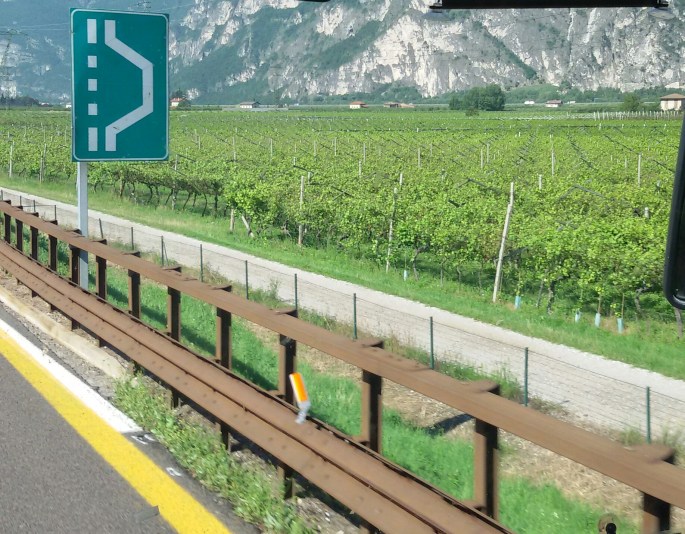
The road side had plenty of vineyards and orchards making the ride quite scenic.

Apple orchards along the highway

Vineyards

As we were enjoying the views, our guide pointed out a bridge called Europabruck also known as the Bridge of Europe. This bridge spans the Sill River and forms one of the main routes from Austria to Italy. It was Europe’s highest bridge till it was overtaken by the Italian Viaduct.

Europabruck

After a highway ride of about 5 hours we reached Venice by noon. See you next week at Venice with great sights, history and art.

Till then , keep your comments and feedback coming…

Innsbruck 1

Starting early morning from Engelberg, saying goodbye to majestic Swiss country, we were headed to Innsbruck in Austria.

Enroute Innsbruck, we visited Vaduz, the capital of a tiny country called Liechtenstein. So let me just give you a short round up of Liechtenstein and Vaduz. With 160 square kms of total area, Liechtenstein is the fourth smallest country in Europe. It was once part of the Roman Empire.

After World War II, Liechtenstein was in dire financial straits . In the 20th century, its low corporate tax rates attracted many companies and soon grew to be one of the richest countries in Europe and is a billionaire tax haven. Liechtenstein today enjoys one of the highest standards of living in the world! Vaduz, its capital is today a major centre of commerce and international banking.

Of some relevance to us Indians is that Liechtenstein celebrates its national day on Aug 15th!

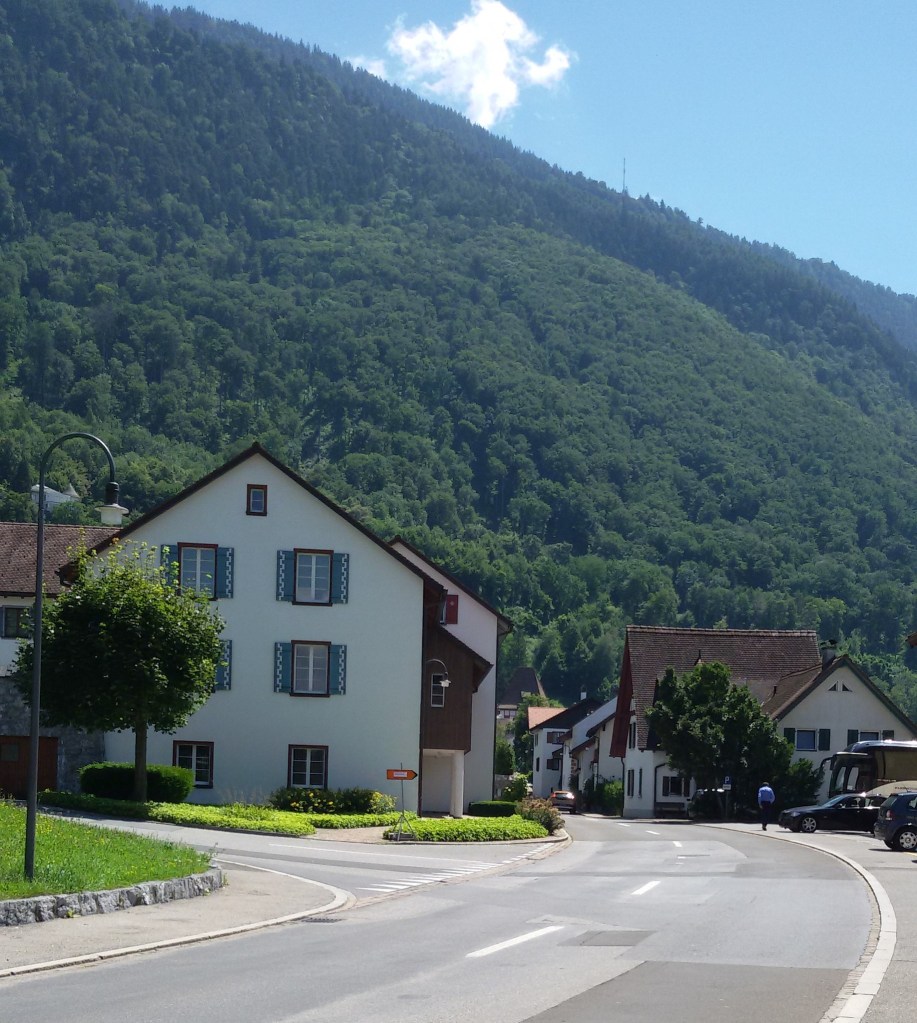
Being an Alpine country, it is a popular winter sports destination. Most parts of the country are mountainous with landscapes very similar to Swiss country.

Let me take you through Vaduz with some pictures and short descriptions…

As we reached Liechtenstein….note the similarity to Swiss countryside

Vaduz has an interesting blend of old and new architecture.

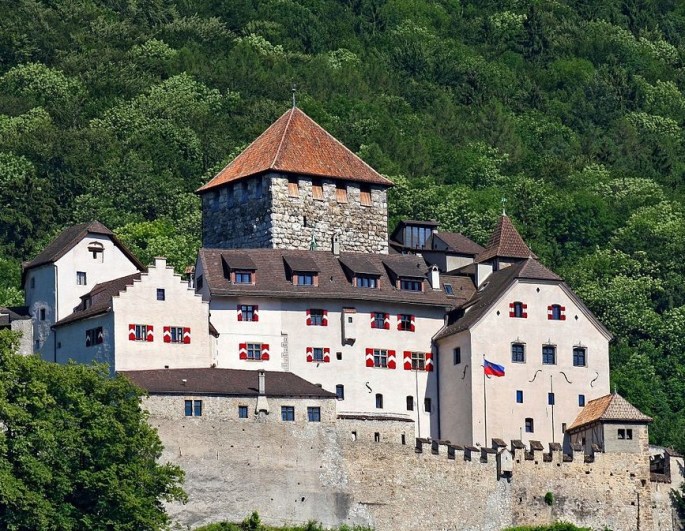
Schloss Vaduz (Castle)

This 700 year old castle, lies at an elevation from the main town, almost overlooking it and is the residence of the Prince of Liechtenstein.

Schloss Vaduz

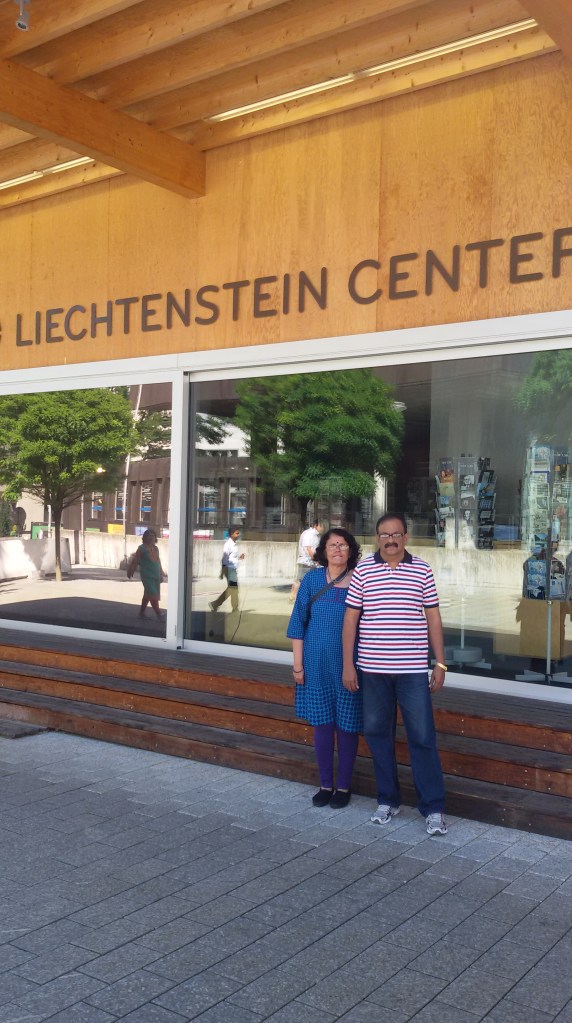
Liechtenstein Centre

This centre provides visitors comprehensive information about Liechtenstein and is very useful to tourists. It is located at the centre of Liechtenstein with all measurements being taken with reference to the zero km stone here.

The Liechtenstein Centre

Stadtle Street

The main street in Vaduz lined by gift shops, cafes, beer parlours, boutiques is Stadtle Street. On this street you also find many statues and sculptures.

Some views from Stadtle Street

Liechtenstein has a host of museums dedicated to various fields. The most popular is the Postal Museum.

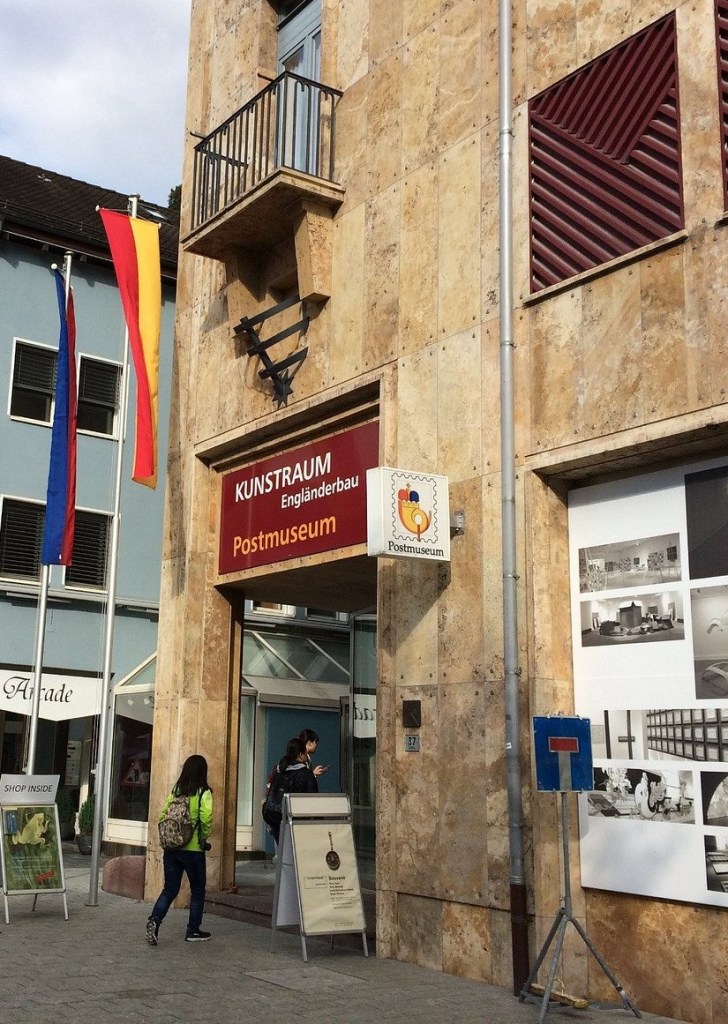
Postal Museum

This museum displays a collection of stamps issued by the Principality. It also provides an insight into the postal services of yester years. One can purchase stamps at the nearby post office . These are considered treasures by philatelists.

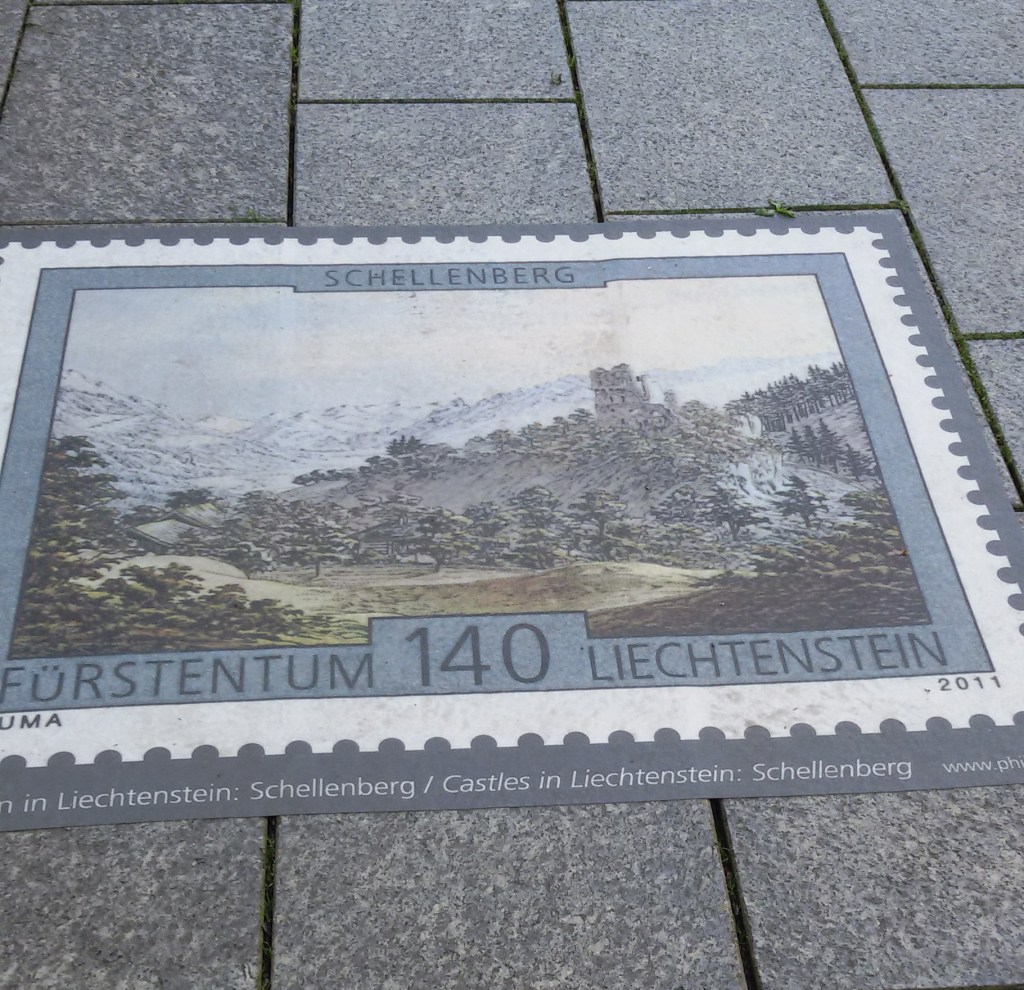
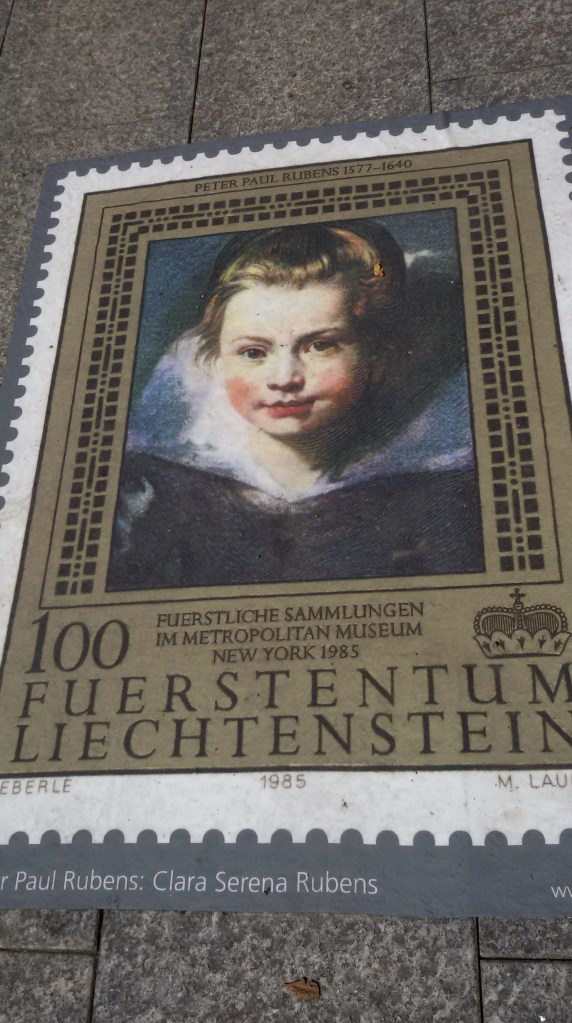
Liechtenstein has an impressive connection with philately. Walk on the streets and you will find this peculiar sight of Stamps on the pavement.

The entrance to the Postal Museum and Street floors with stamp motifs

Liechtenstein National Museum

It houses more than 3000 exhibits highlighting the country’s history, culture and traditions.

The National Museum

The Parliament Building

Situated in the main square is the Parliament Building which houses the parliament, state archives and government offices.

The Parliament Building

After a short and crisp round up of Vaduz we headed to the Indian Restaurant here for lunch

Our group outside the Indian Restaurant at Vaduz.

After lunch, we travelled further on to Austria and reached Innsbruck.

Austria is an equally beautiful country like Switzerland….what with its Alpine ranges and green vineyards and orchards!

Some pictures

The beautiful Austrian landscape as we drove up

Innsbruck

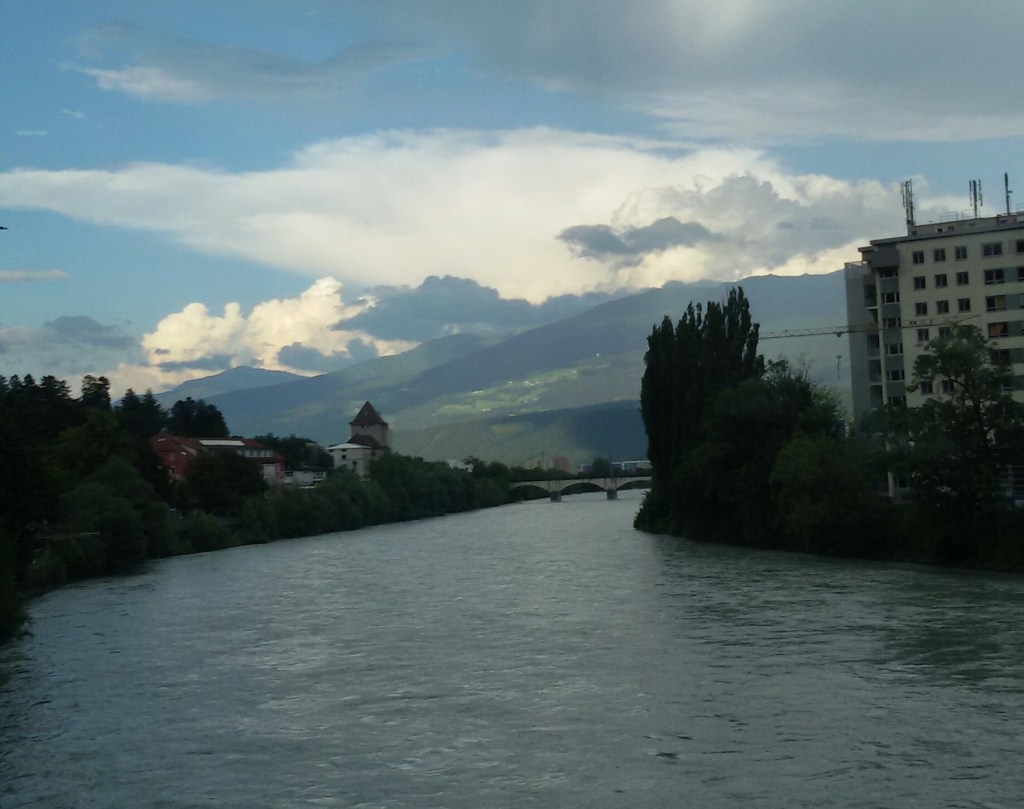
Innsbruck lies in the Tyrol region of Austria. It is located on the River Inn , the word Innsbruck means “bridge over the river Inn” .

River Inn at Innsbruck

Tucked away in the dramatic landscapes of the Alps, it is a renowned winter sports destination and has hosted several winter games like the Winter Olympics, Paralympics and Youth Olympics. It is also known for its imperial and modern architecture.

View of Innsbruck from our hotel

Olympia World

Innsbruck hosted the 1964 and 1976 Winter Olympics and the sports complexes used for that are still in use today.

Some pictures…

Olympic Stadium Innsbruck ( the famous Ski jump can be seen in the background)

Another stadium which is now used to host various events apart from sports

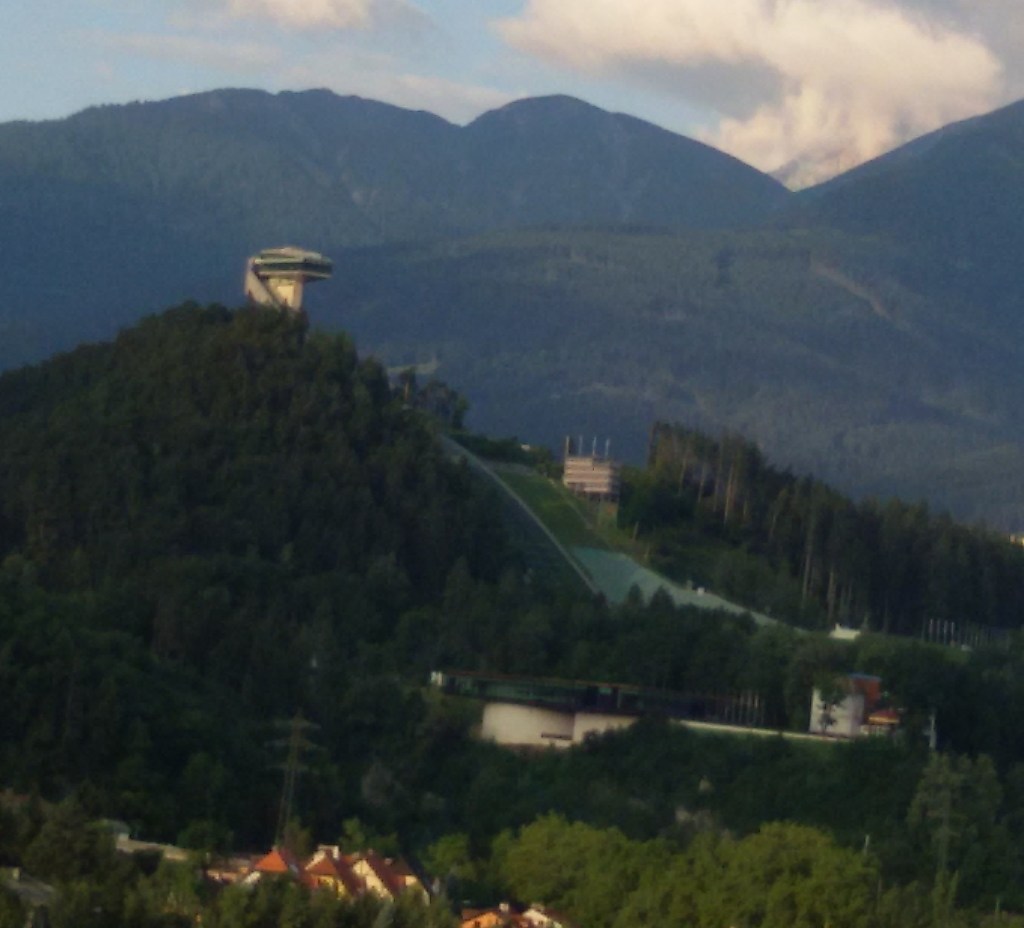
Bergisel Ski Jump

The famous Ski jump used for the Winter Olympics and now being used for training and other competitions.

The Bergisel Ski Jump

Aldstadt Von Innsbruck (Old Town)

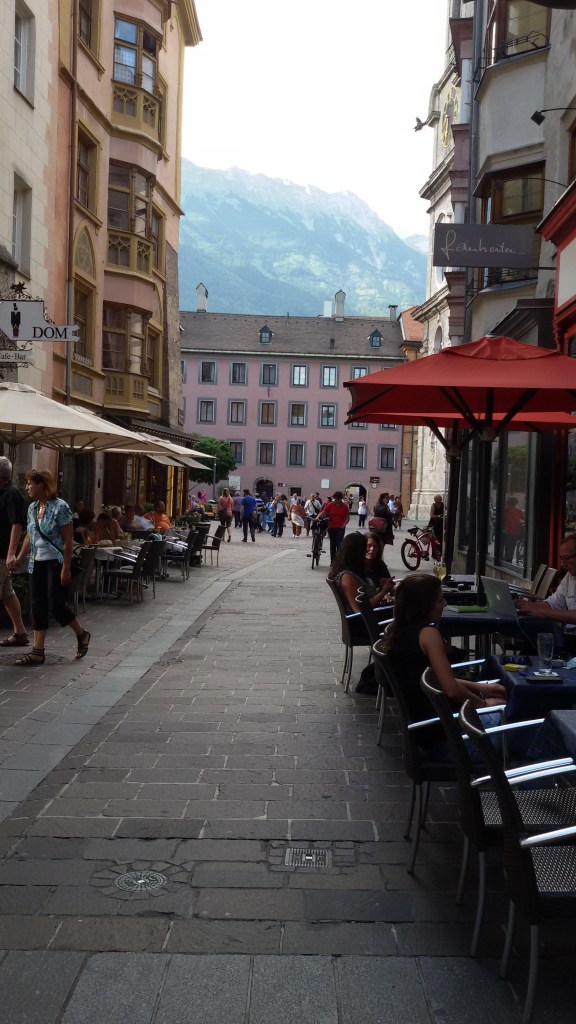
Aldstadt or Old Town is the historic core of Innsbruck. More than 500 years old, this small neighbourhood has brightly painted medieval houses on cobblestone streets and sidewalk cafes .

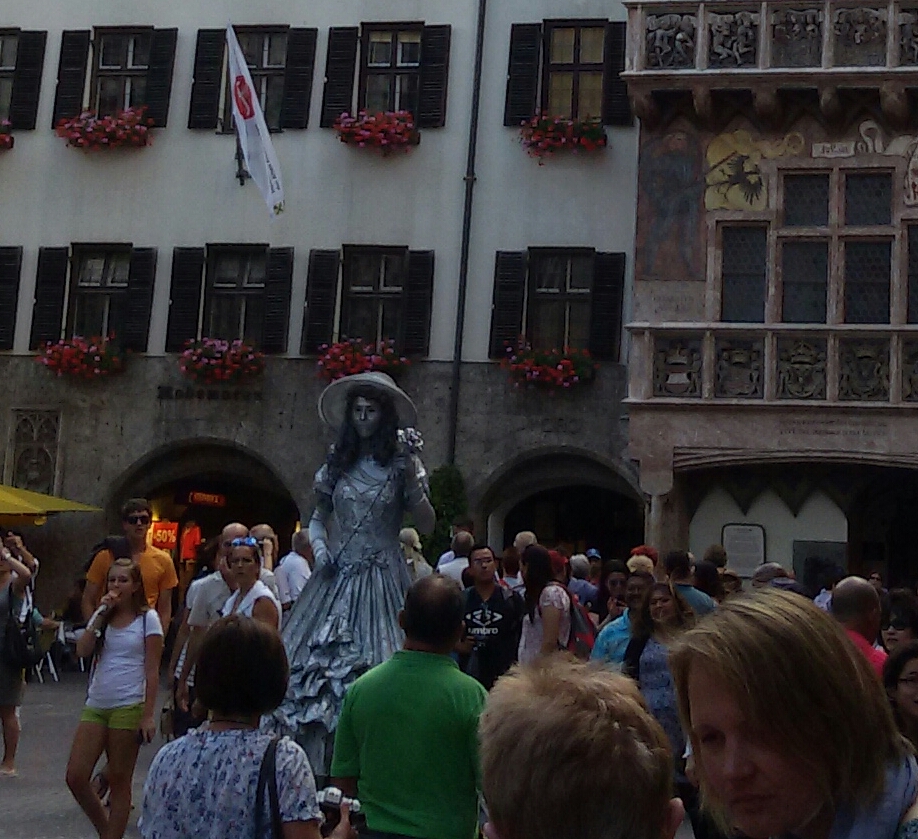
Street performers are a common sight here.

Views from the Old Town with some street performers too!

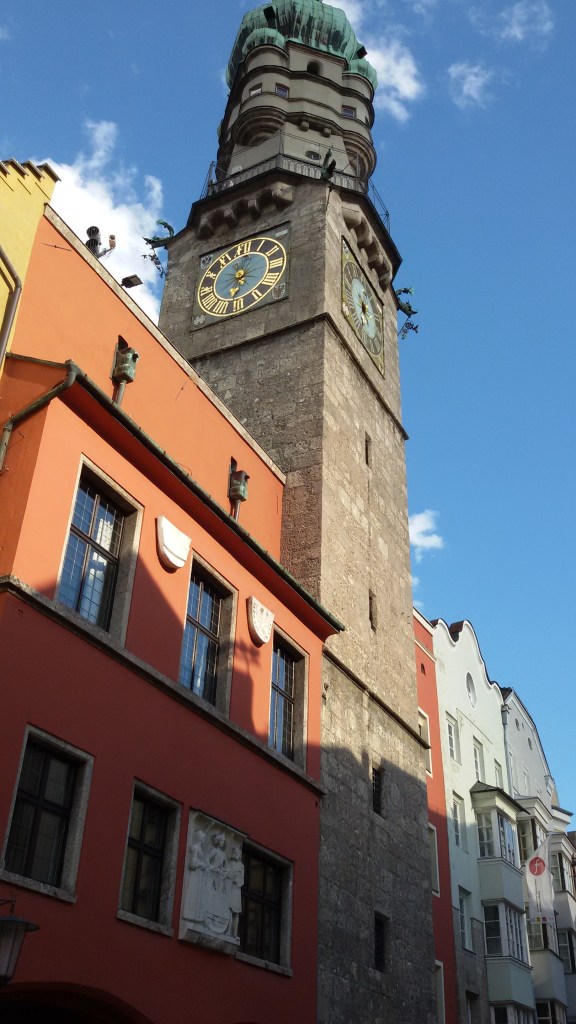
The Town Tower (Stradtturm)….another landmark in Old Town

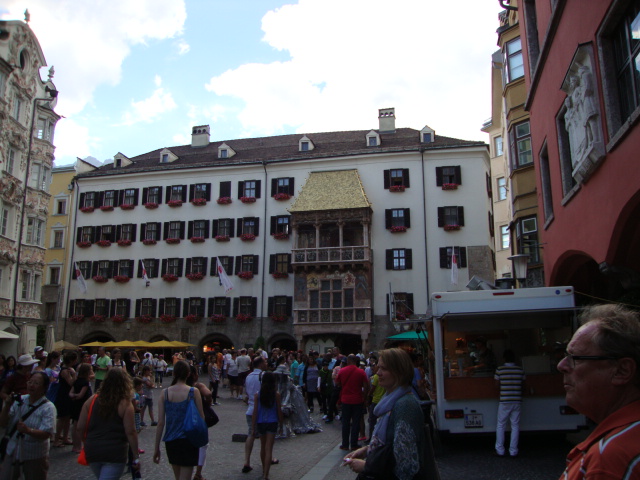
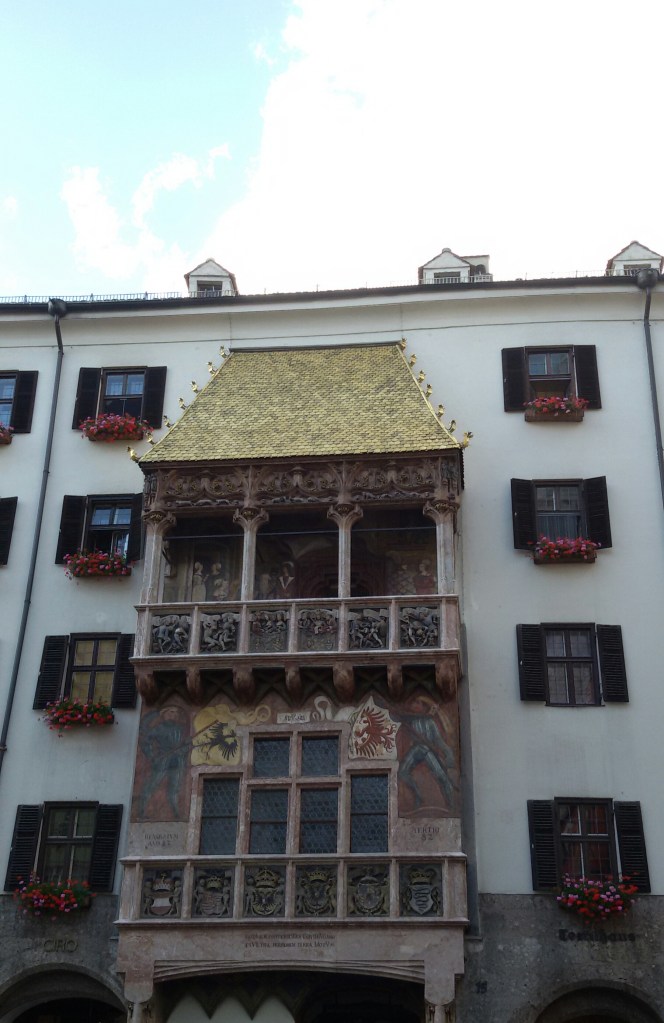
The main thoroughfare of Old Town opens into a central plaza lined by arcades. The Golden Dahl is located here.

The Golden Dahl

This is by far the most famous landmark in the old town. This gold covered balcony was completed in 1500 to commemorate the marriage of Emperor Maximilian I and Bianca Maria Sforza. The royal newly weds would watch festivals and other activities in the square below from this balcony. The roof of this balcony glistens in sunlight. It is not made of gold but has fire-gilded copper tiles which cause the shine. The story ended rather sadly when Bianca could not bear a heir!

The square and Golden Dahl

The Golden Dahl

Helbling House( Wedding Cake Building)

Situated across the Golden Dahl is a peculiar building which has external decorations resembling the icing on a wedding cake. It was originally built as town house but later the icing like decorations were added . The building is uniquely designed so that it captures light.

The Wedding Cake building

Cathedral St James (Innsbruck Cathedral)

Just a minute’s walk from the square is this impressive Baroque cathedral. It was built between 1717 and 1724 dedicated to St James.

With its two bell towers and impressive dome, it it stands dominant in the old town skyline.

The Innsbruck Cathedral

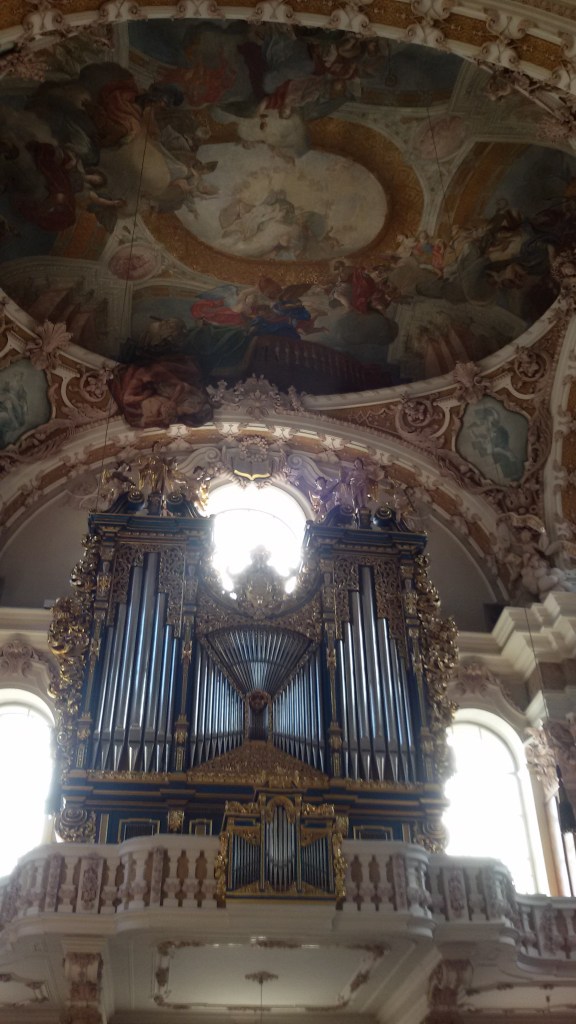
The interior of the cathedral has beautiful frescoes decorating the walls and ceiling.

The main altar

The beautiful frescos on the ceiling and the walls.

After the city tour of Innsbruck, we headed to the Tyrolean folklore show. The beat of the unique wooden instruments used in the show enthralled us. See you next week with more on the folklore show. Till then, keep your comments flowing in and also your feedback. Do subscribe!

Jungfrau

After that exhilarating trip to Mt Titlis, we were headed to Jungfrau.

Our first halt was at Interlaken.

As a vacation destination , Interlaken is an ideal starting point for many Alpine excursions. It lies in a plain between the Lake Brienz and Lake Thun ( hence Interlaken)with the River Aare alongside and surrounded by three mountain ranges…the Eiger, Monch and Jungfrau.

In winter, skiers throng the place as it provides easy access to many alpine ski slopes like Jungfrau, Beatenberg or Axalp-Brienz. Mountain railways, ski lifts and cable cars take these ski enthusiasts to their chosen destination from Interlaken.

In summer, the trains to Jungfrau region depart Interlaken . Just around 10 km from Interlaken is the famous paragliding slopes of Beatenberg-Niedrehorn.

Interlaken and its surrounding areas have excellent conference centres making it an international conference venue of repute.

No wonder then , that Interlaken finds itself in every tourist’s itinerary.

Interlaken itself has lots to offer the tourists. Untouched natural surroundings, snow covered peaks and crystal clear lakes make it a tourist’s dream destination .The beautiful turquoise water of Lake Brienz is very attractive indeed!

Some pictures from Interlaken for you to enjoy :

As we reached Interlaken

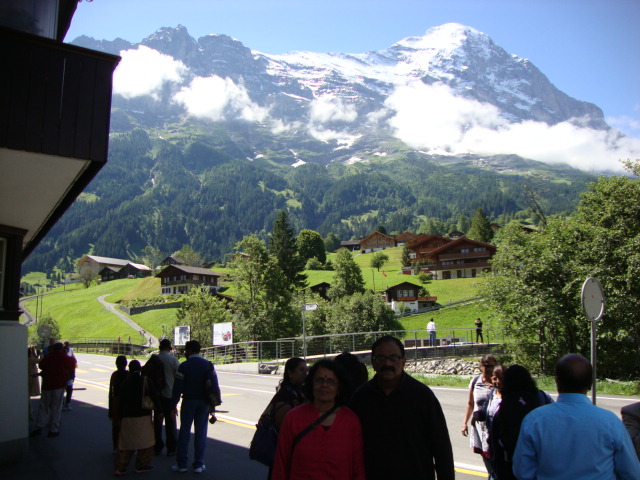
The 3 Alpine ski slopes seen from Interlaken (Eiger, Monch Jungfrau)

Interlaken (don’t miss the paraglider in the shot)

Lake Brienznote the turquoise coloured waters

A typical Swiss Chalet

A paraglider lands at Interlaken

A closer view of the snow covered Alps as we left Interlaken for Jungfrau

Jungfrau

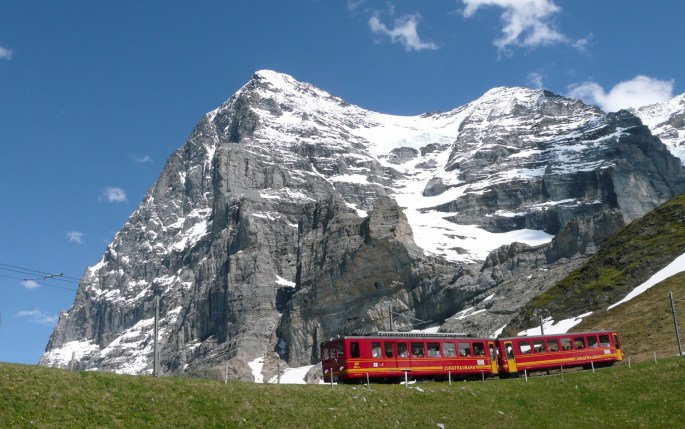
Jungfrau ( meaning virgin) is one of the main summits in the Swiss Alps and together with Eiger and Monch forms a wall of mountains overlooking the Swiss plateau.

Though various expeditions reached the summit in the 19th century, the construction of the Jungfrau Railway in the 20th century has made it more accessible and one of the most visited sites of the Alps. This rail journey takes one to Jungfraujoch (highest train station in Europe) which is referred to as “Top Of Europe”. The 2 hour journey takes one to a height of 3454 m above sea level. We boarded the train from Lauterbrunnen

At Lauterbrunnen station

The train to Jungfrau

The views from the train were simply beautiful ! Large tower like snow covered peaks against the brilliant blue sky ;amazingly beautiful meadows with wild alpine flowers and cattle grazing around.

Snow covered peaks from the train

Alpine wildflowers near the tracks

Cattle grazing near the tracks

As the ascent of the train continued, the snow covered peaks seemed to come closer and the greenery outside was gradually replaced by a sheet of white!

Views as we reached closer to the summit

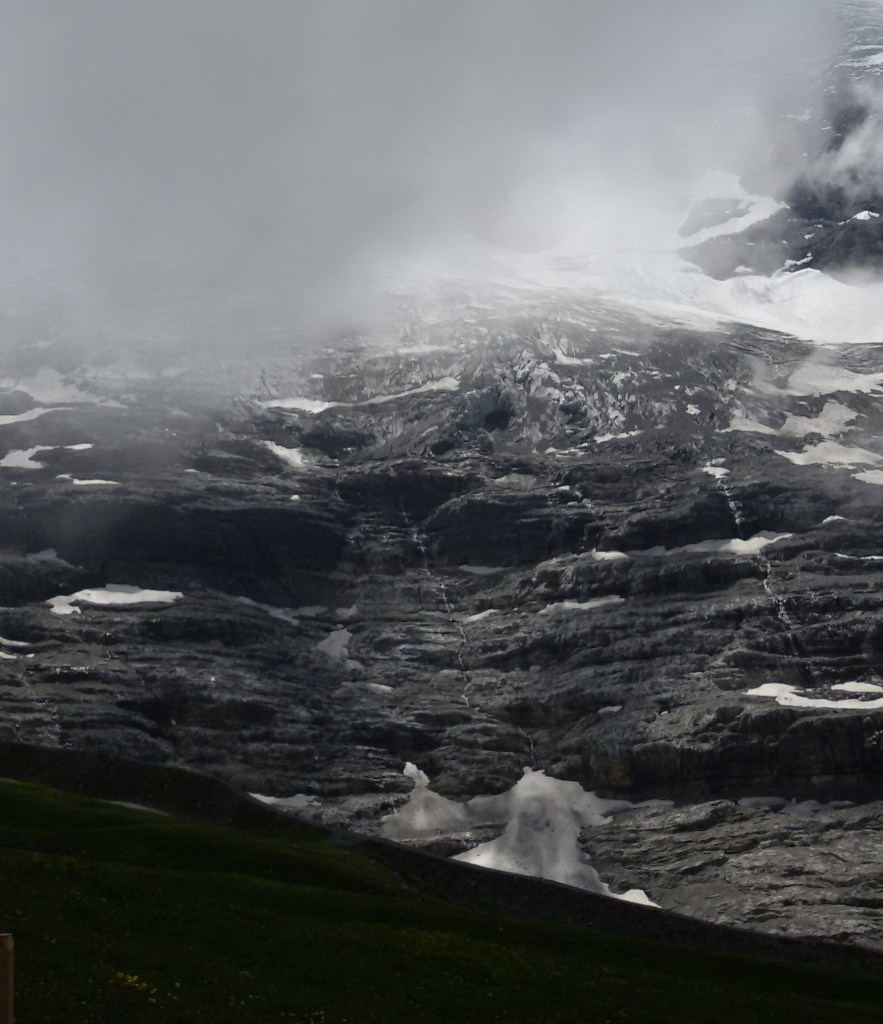
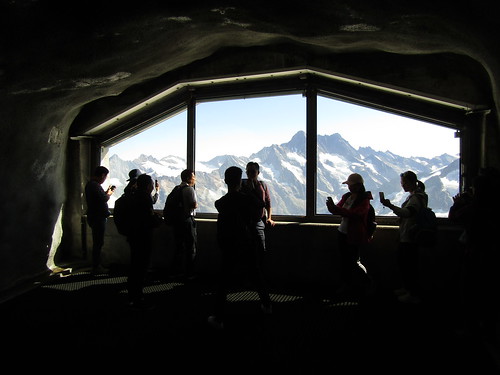
Just before we reached the Jungfraujoch station, there was a 7 km tunnel and the train halted at Eismeer station within the tunnel. We alighted here and enjoyed the amazing views of the glacier through windows in the tunnel. Got some great pictures too!!

View from the tunnel window

The Jungfraujoch station was located within a building complex which housed various restaurants and other amenities.

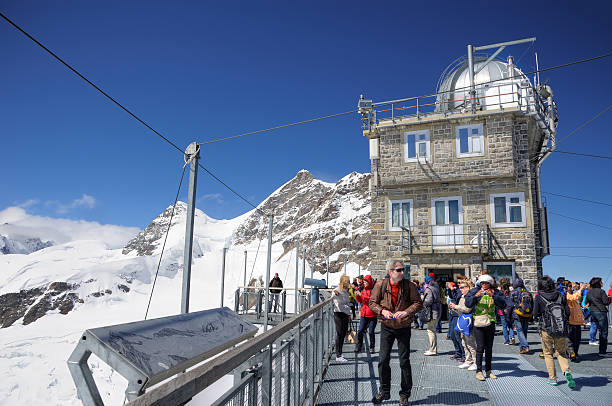
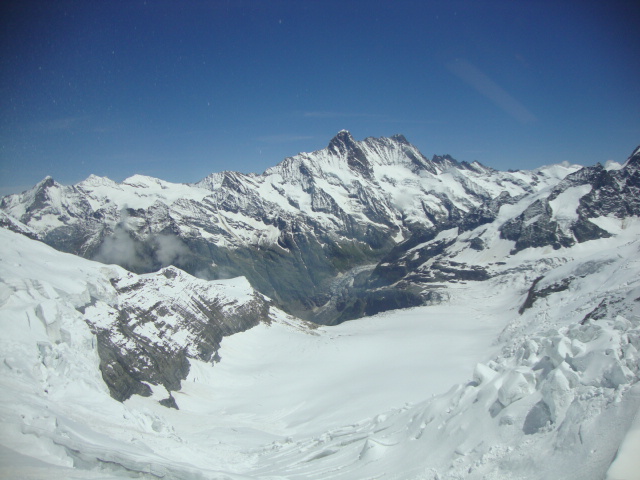
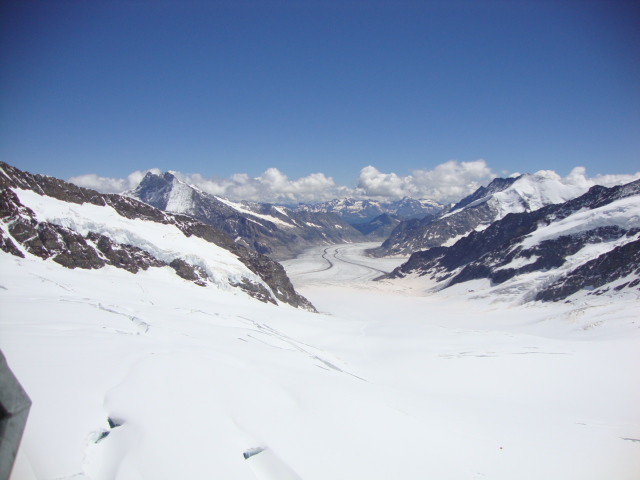
We headed to the Sphinx Terrace (a viewing platform) via an elevator. There we had panoramic views of the Swiss Alps and Aletsch glacier. There is an astronomical observatory located here called the Sphinx Observatory. Adjacent to the observatory is an open viewing deck.

J

The Sphinx Observatory

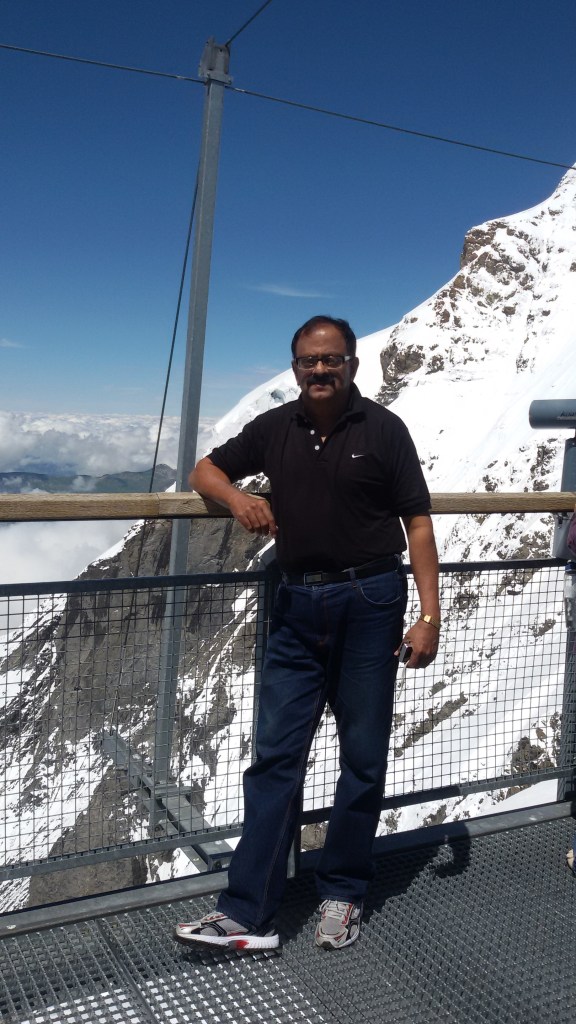
At the viewing platform

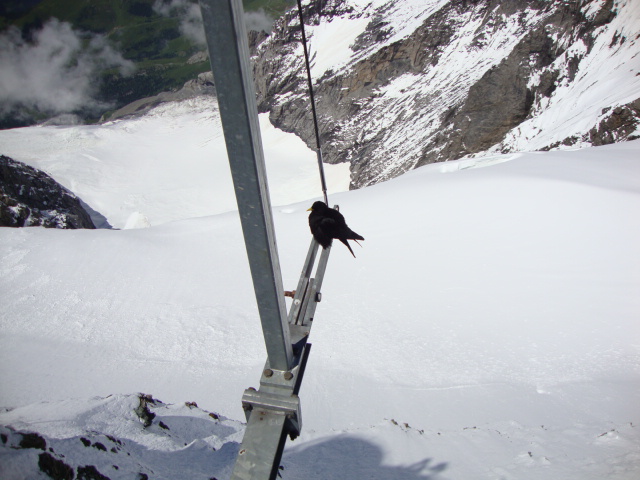
A lone avian visitor

Panoramic view of the Alps from the viewing platform

The Aletsch glacier

We walked on to the Plateau which is an open area where you can walk closer to the glacier.

At the Glacier Plateau

Tourists enjoying the snow at Glacier Plateau

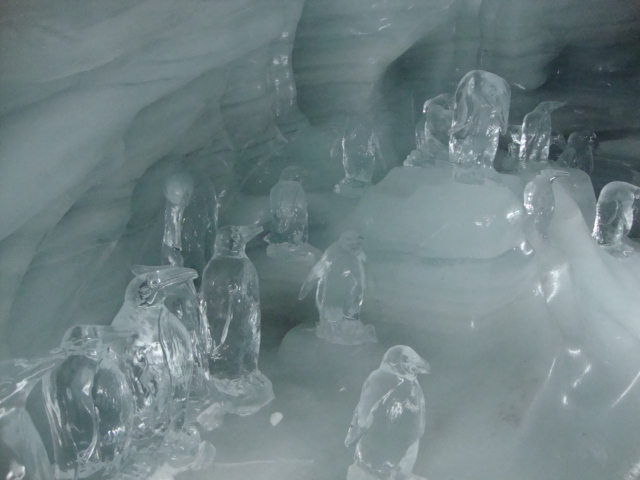
The Ice Palace – another attraction

This unique tunnel carved out of ice and lined with ice sculptures is another attraction here. We walked around the tunnel enjoying the sculptures .Walking on the ice floor can be very slippery and we had to be very careful specially with numb fingers holding on to the railings!

Ice Palace

Ice Sculptures

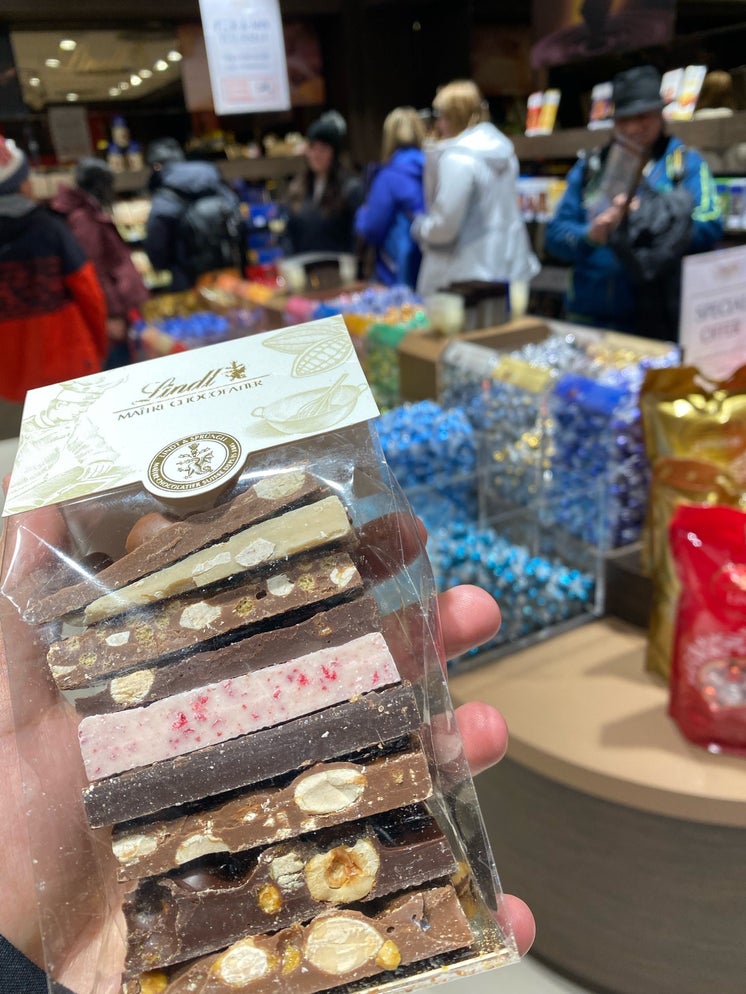
After enjoying the views and snow we headed to the building complex where there is a Lindt Swiss Chocolate shop . Chocolate making demos were on and everyone got busy with tasting and buying Swiss chocolates.

The Lindt Swiss Chocolate shop

After a very exciting and engaging tour of Jungfrau, we headed back to the station on time to board the train back to Lauterbrunnen and then to Engelberg.

This marked the end of the Swiss visit and we were headed to Austria the next day. See you next week in Austria.

Till then, keep commenting and do subscribe below.

Your feedbacks are welcome!

Mt. Titlis

Mt Titlis needs no introduction .Located in the Swiss Alps at 3239 mt above sea level , it is one of the most popular destinations in Switzerland. Switzerland is a traveller’s dream destination and as such, the entire group was looking forward to this.

We were driven down from Lucerne by bus to the Alpine village of Engelberg. This quaint village surrounded by snow capped mountains is like some of the picture postcards we see of Switzerland. Founded in 1120 by a monk who called it “mountain of Angels”; Engelberg is a great base to explore the Swiss Alps.

Some pictures of Engelberg…

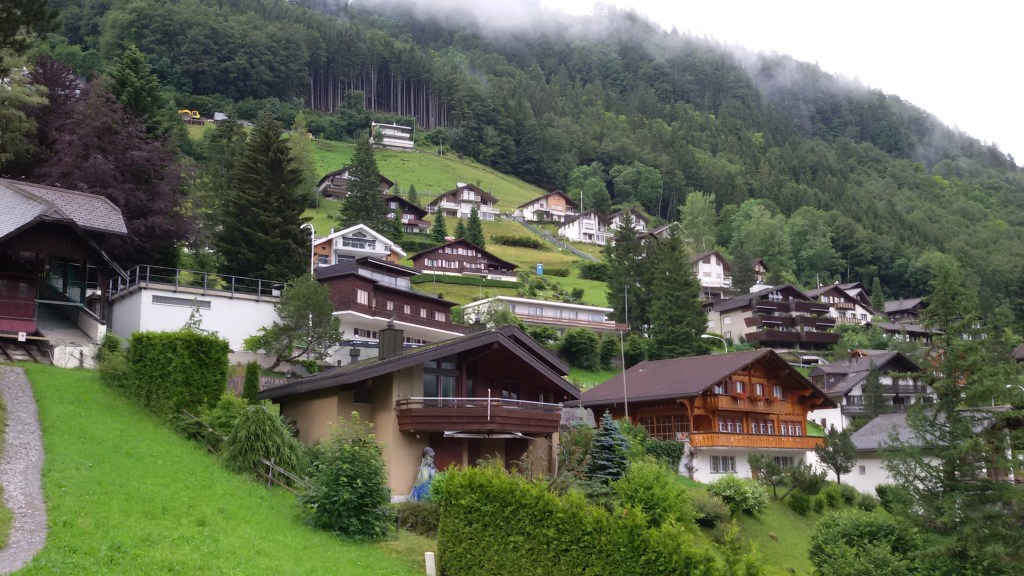
Engelberg…(note the typical swiss wooden homes called chalets )

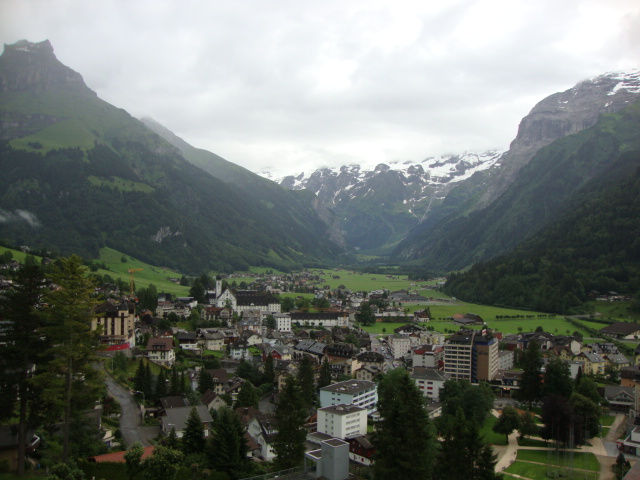
Engerlberg from the hotel balcony…Titlis lies on the snow covered slope behind

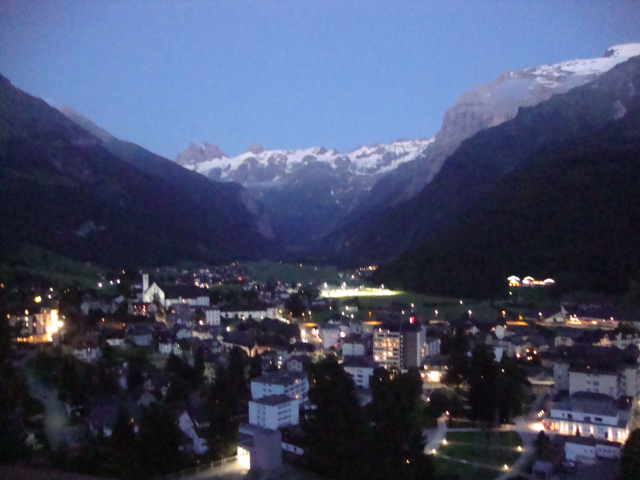
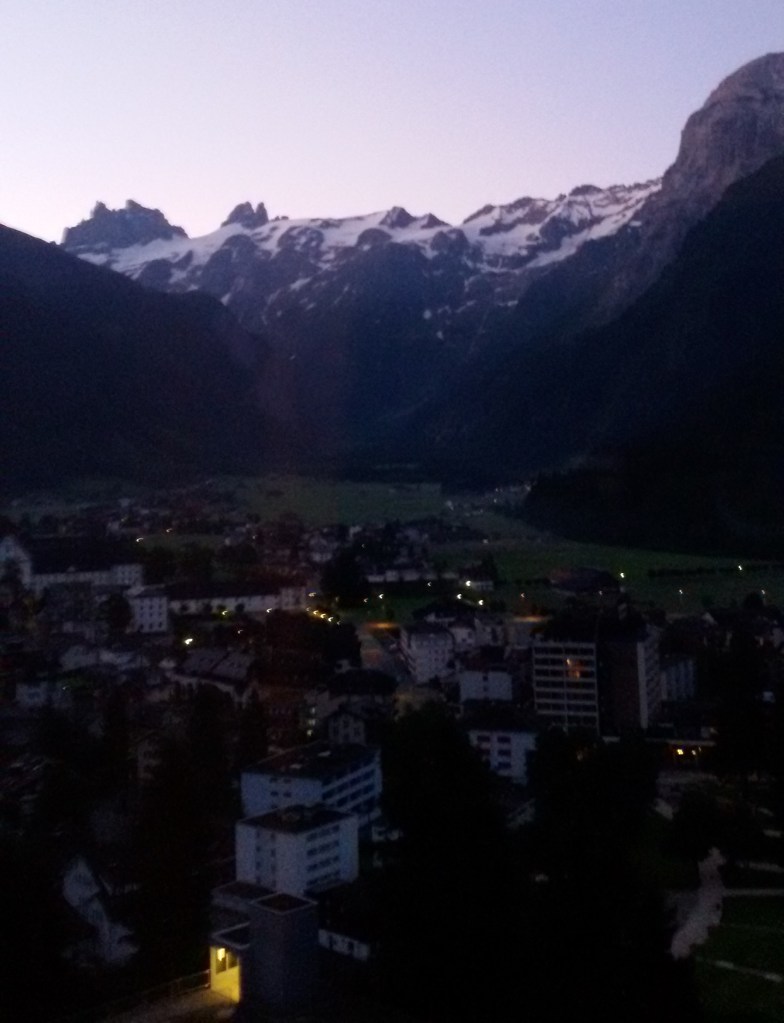
Engelberg at night

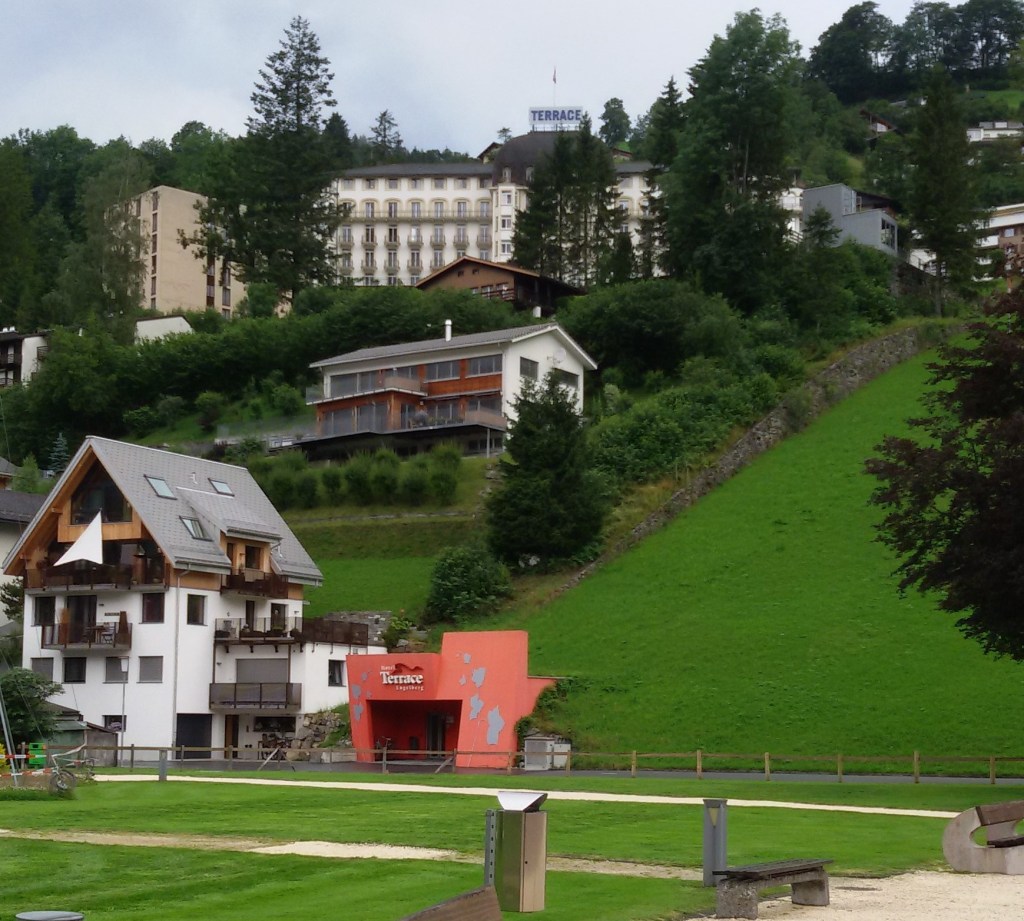
We were put up at the Hotel Terrace which was on a small hill and afforded great views of Engelberg town and Mount Titlis. Another unique feature of this hotel was the entrance which was at the foot of the hillock and guests pass through a small underground tunnel before entering the lift which takes you to the topof the hillock.

The Hotel Terrace on the top of the hill…..the orange block is the entrance to the tunnel!

After an enjoyable evening at the hotel premises, we rested for the night and woke up to this beautiful view of Titlis at dawn….

Titlis at dawn….

The big day had arrived and we were all mighty excited….

We had a real surprise here when we found hot idli sambar on the breakfast menu!!This may seem a rather trivial thing but for many people on the tour group who were from south India, it was a welcome change to have their traditional breakfast after more than a week of continental breakfast!! The idlis were welcomed with some loud oohs and aahs!!

After a sumptuous breakfast, we headed to Mt Titlis.

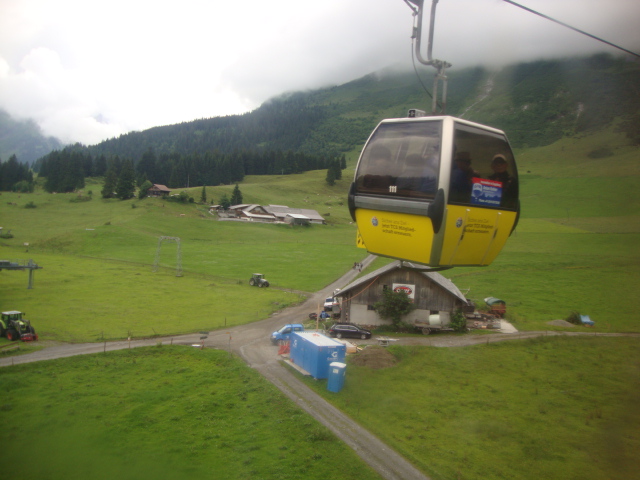
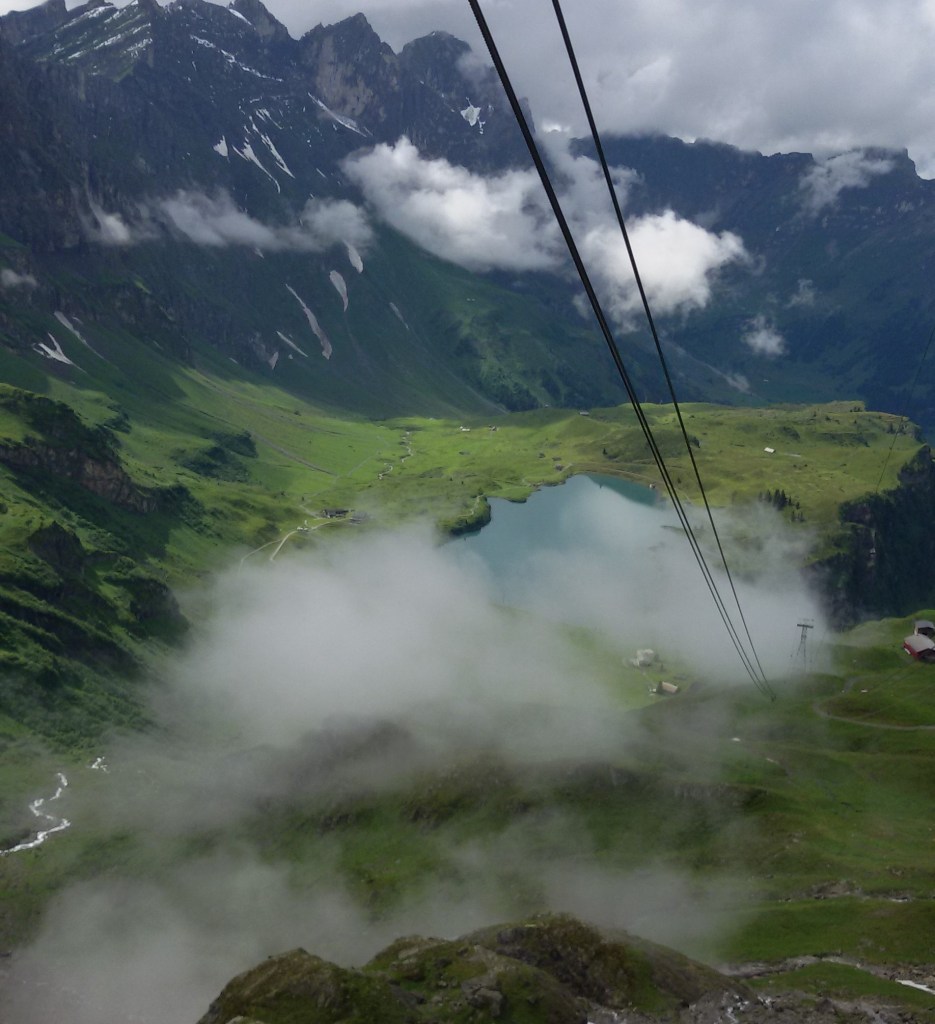
From Engelberg town we boarded the first stage cable car to Mt Titlis. This cable car could take 8 passengers and moved pretty fast. The ride was smooth and afforded some beautiful views of the valley and Engelberg . Being summer, this level did not have much snow and was green. We passed a cable car station where we did not get down as advised by our guide. The ascent continued and the views got better; although we had some low lying clouds. We were asked to alight at the next station called The Stand.

Level 1 Cable Car.

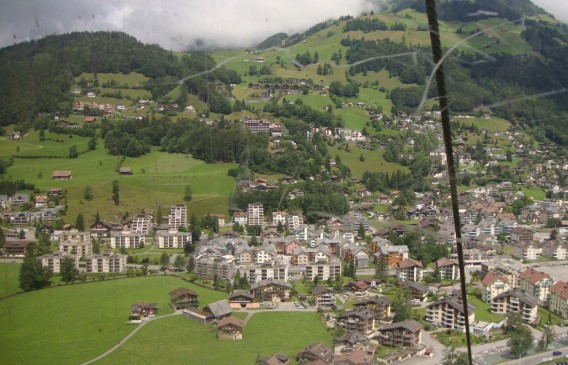
View of Engelberg from the cable car as we ascended

Another beautiful view of the lake and clouds from the cable car

We alighted from this cable car at the station called The Stand and looked around as more members from the group arrived in their cable cars. As we waited here we could see the Rotair gondolas coming down with tourists from Titlis. We patiently waited for our turn to get on to the Rotair.

Waiting at The Stand for the Titlis Rotair

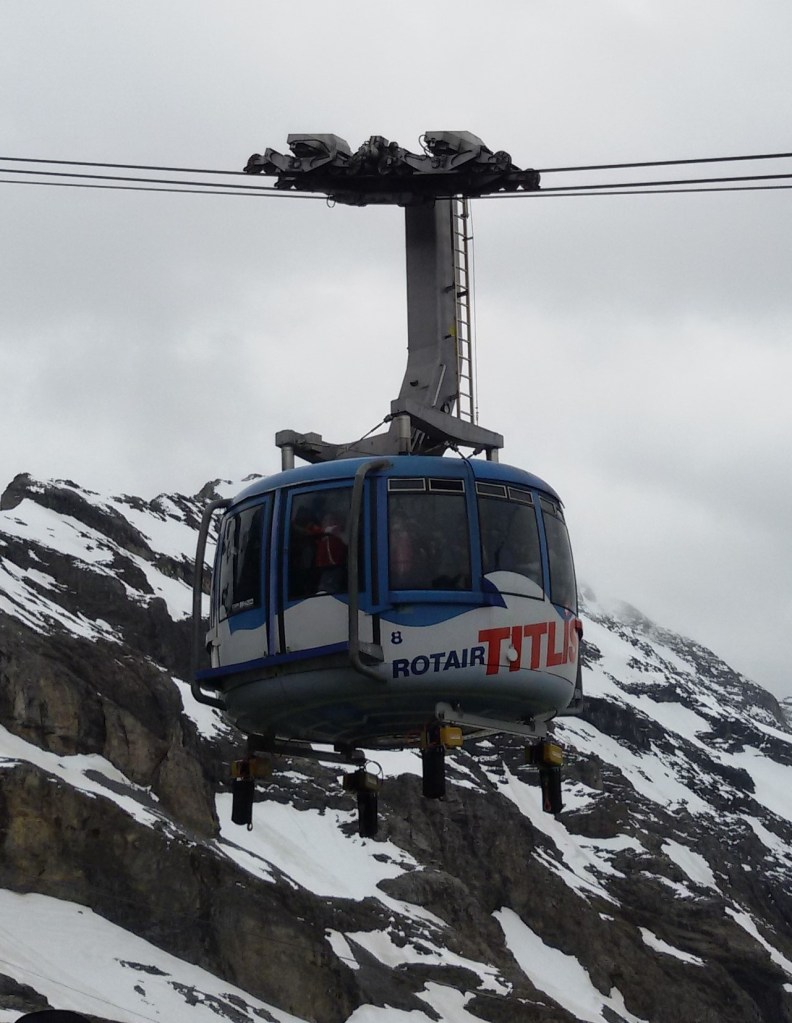
From The Stand station, we boarded the Titlis Rotair or rotating cable car . This cable car took almost 80 people in and moved slowly upwards towards Titlis. The slow rotational movement of the gondola gave us 360 degrees views . I don’t have to tell you…the views were incredible!! Engelberg town and the lake below and the challenging mountain peaks ahead of us. It is important to get as close to sides of this gondola to get the best views. The Rotair finally stopped at the Titlis station in a building that had shops and restaurants.

The Titlis Rotair

View at higher level from the Rotair

Finally we reached the top of Mt Titlis…

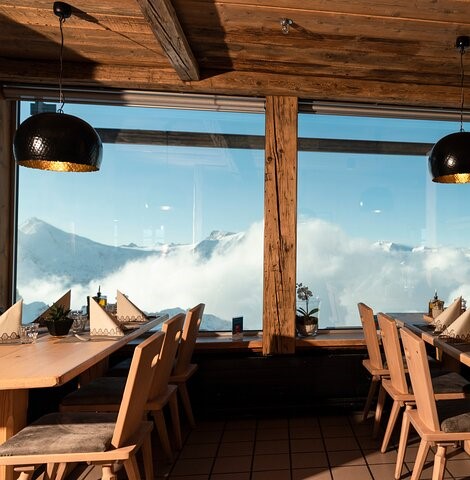
We alighted there and were advised to proceed for lunch to the restaurant. The tour company had arranged Indian lunch at the restaurant. So we all proceeded to have lunch. The restaurant aptly named Panorama provides panoramic views of the Alps .We sat cosily by the window enjoying the mountain views and the food.

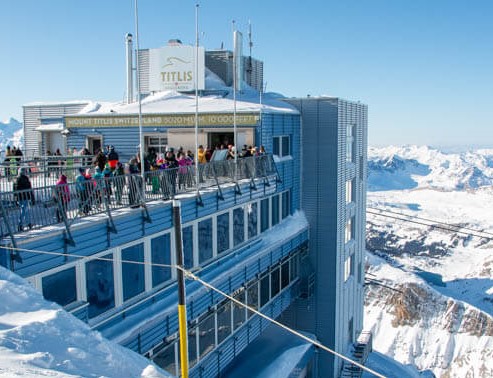
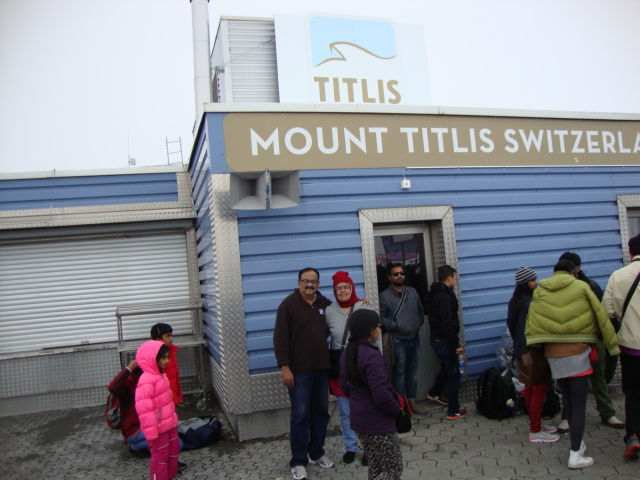
The complex which houses the restaurant, shops and other amenities.

The inside of the restaurant where one can enjoy food looking out at the Alps

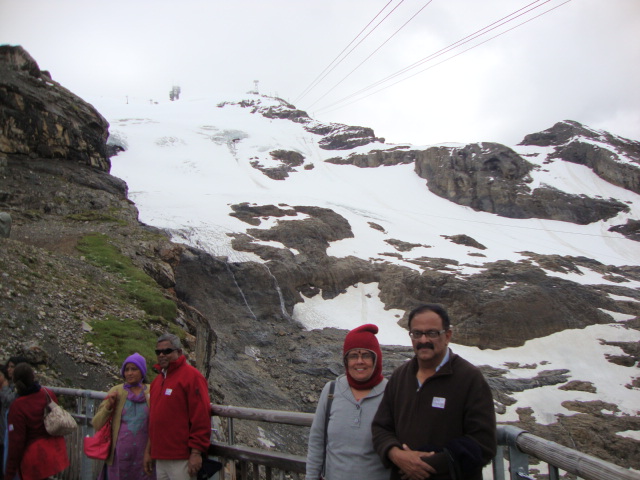
After lunch we stepped out of the enclosure and the scenery around with multiple snow covered peaks was mesmerising! With a few ecstatic shouts from our fellow tour members, we walked around enjoying the scenery. We were above the clouds and it gave us a feeling of being “On Top of the World”…..Carpenter’s style!

Walking around required lot of effort as the feet tend to slip on the ice. Making ice balls was another fun activity. But the fingers got numb after some time. Some of the kids in the group were sliding on the ice and nearly toppled an elderly lady. But it was real fun…

Some pictures….

View of Titlis from the landing platform

At the sheltered area of the platform

Mt Titlis

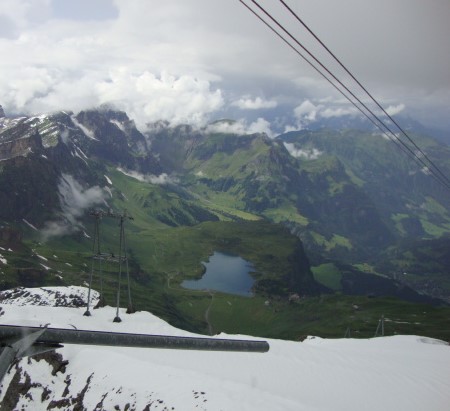
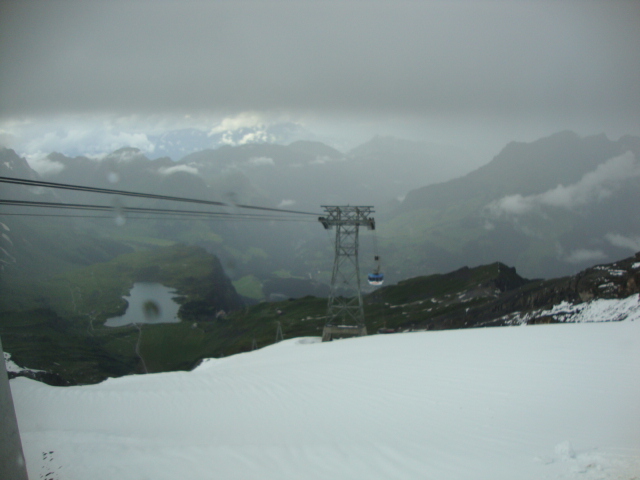
View of the lake from Titlis….note the ascending Rotair in the foreground

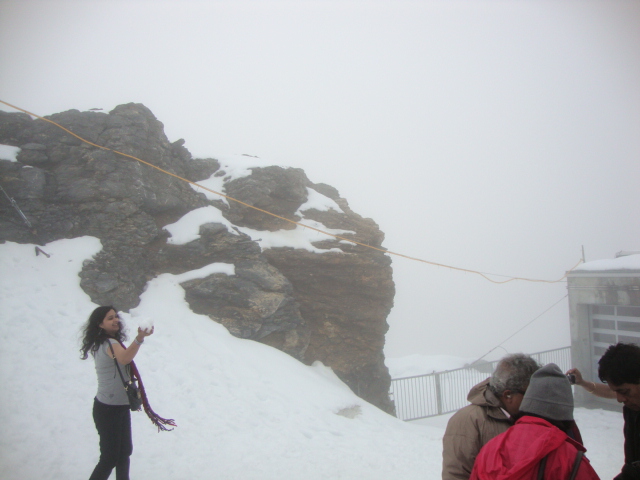
Playing with the snow

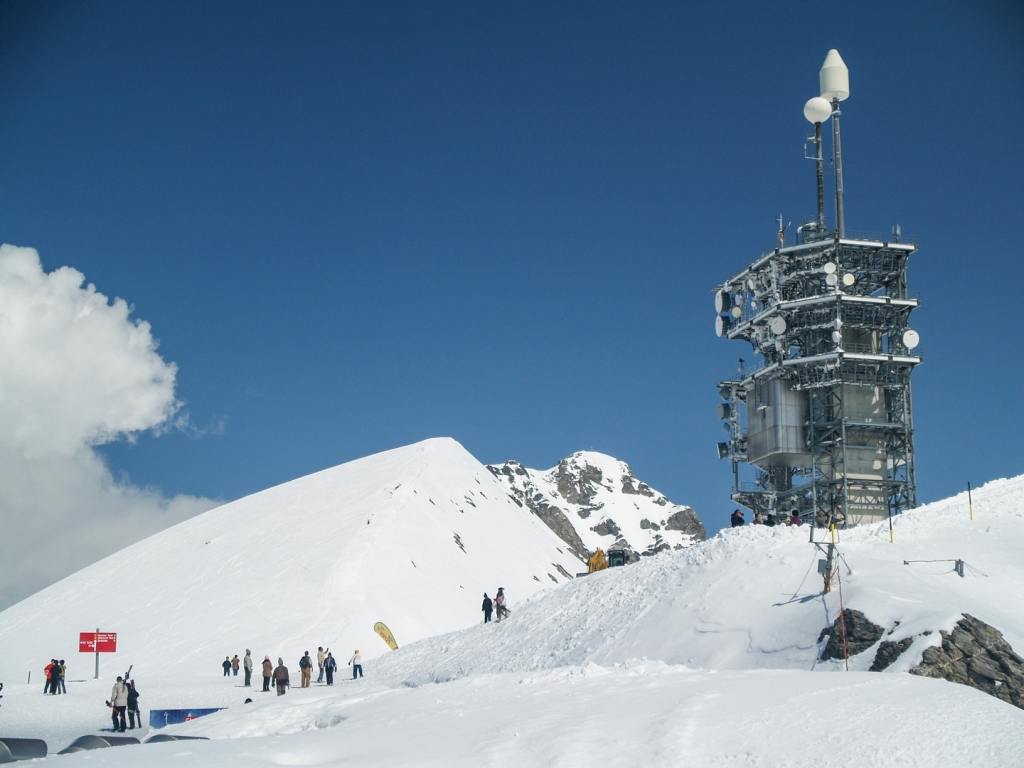
The Telecommunication tower on Mt Titlis

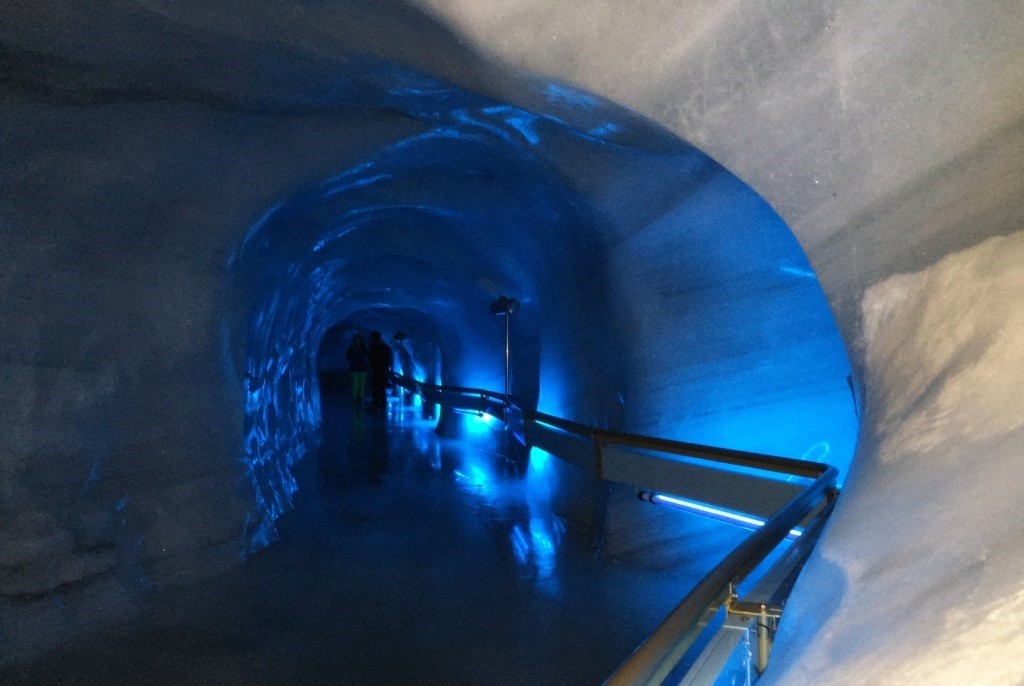
We also visited the Glacier Cave which is 150 mts long ice tunnel and is probably 5000 years old where the ice never melts. It was slippery and felt like walking on a skating rink without skates. The cave is lit with a bluish light ( due to refraction)and has supportive railings to hold and walk.

The walk in the cave was fun….but the numbness of the limbs due to cold was an issue! Tiny sparkling ice crystals added to the charm of the cave.

The Glacier cave

Cliff Walk:

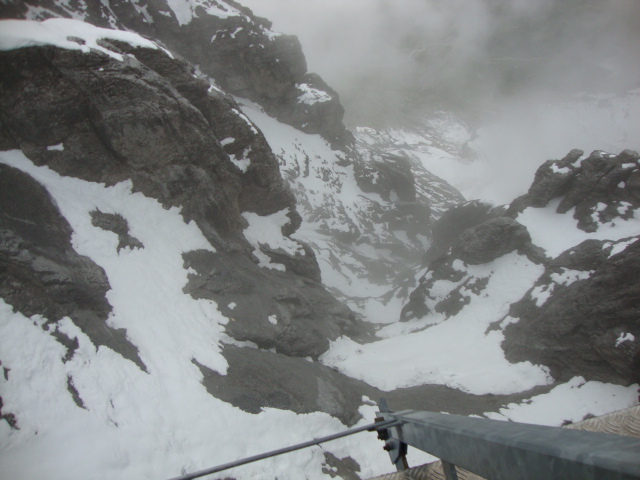
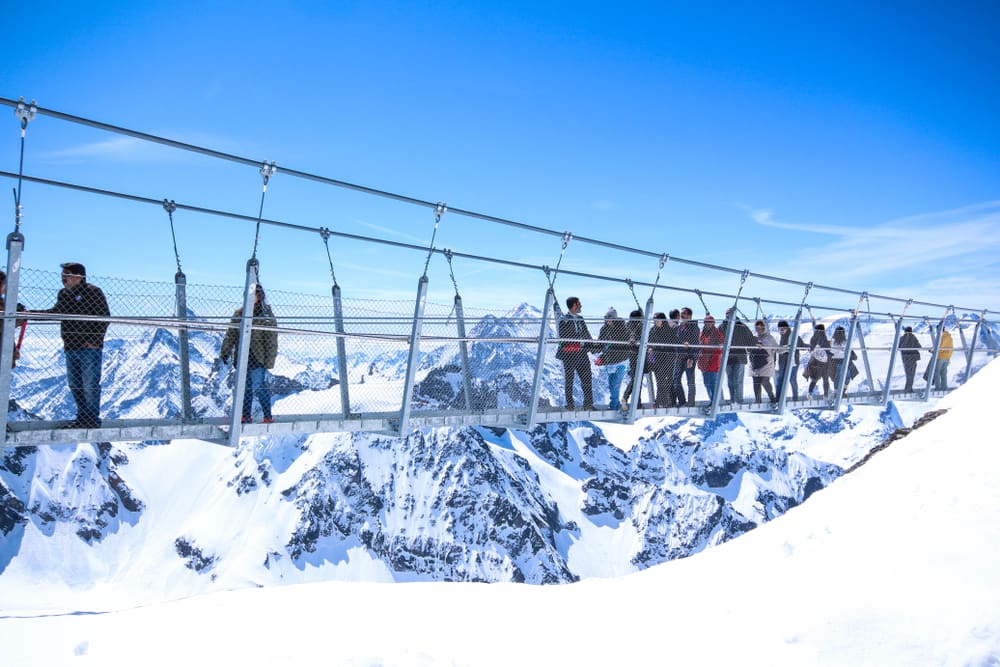
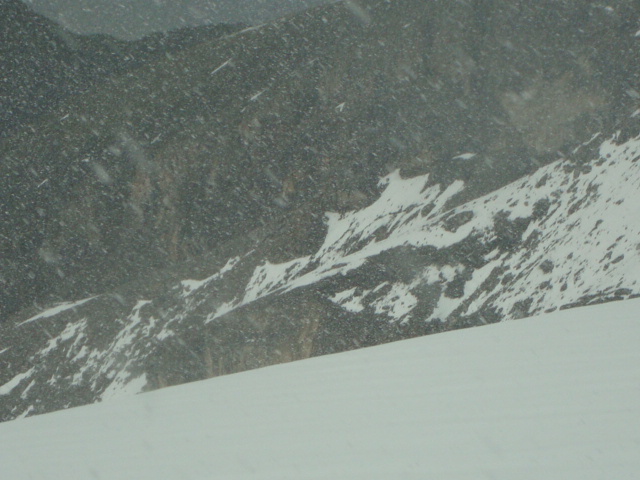
Europe’s highest suspension bridge provides the thrill of walking on a partially wobbling bridge and looking down to no where…..can be daunting for the weak hearted!! We took a short walk on this bridge but unfortunately it started snowing and we had to huddle into the enclosure for protection.

The Cliff Walk

Snowing at Titlis

With a lot of reluctance we all came back into the enclosure .

We walked around inside the enclosure and explored the Chocolate shop and the souvenir shop. We did not realise the time pass by and were soon called by the guide to the Rotair platform to catch the Rotair down.

Descending from Titlis also offered great views and we returned to our hotel with great memories of this awesome destination.

Next day we had planned a trip to Interlaken and Jungfrau . So see you next week at Jungfrau….again on ice!!

Till then, keep your comments coming, subscribe and give me a feedback….

Lucerne

Lucerne is considered the most beautiful city in Switzerland and one of the most visited places in Europe.

Towards the end of the last episode, we were at the Rhine Falls in Switzerland after crossing over from Germany. Our next destination in Swiss country was Zurich from where we would go to Lucerne after an overnight halt.

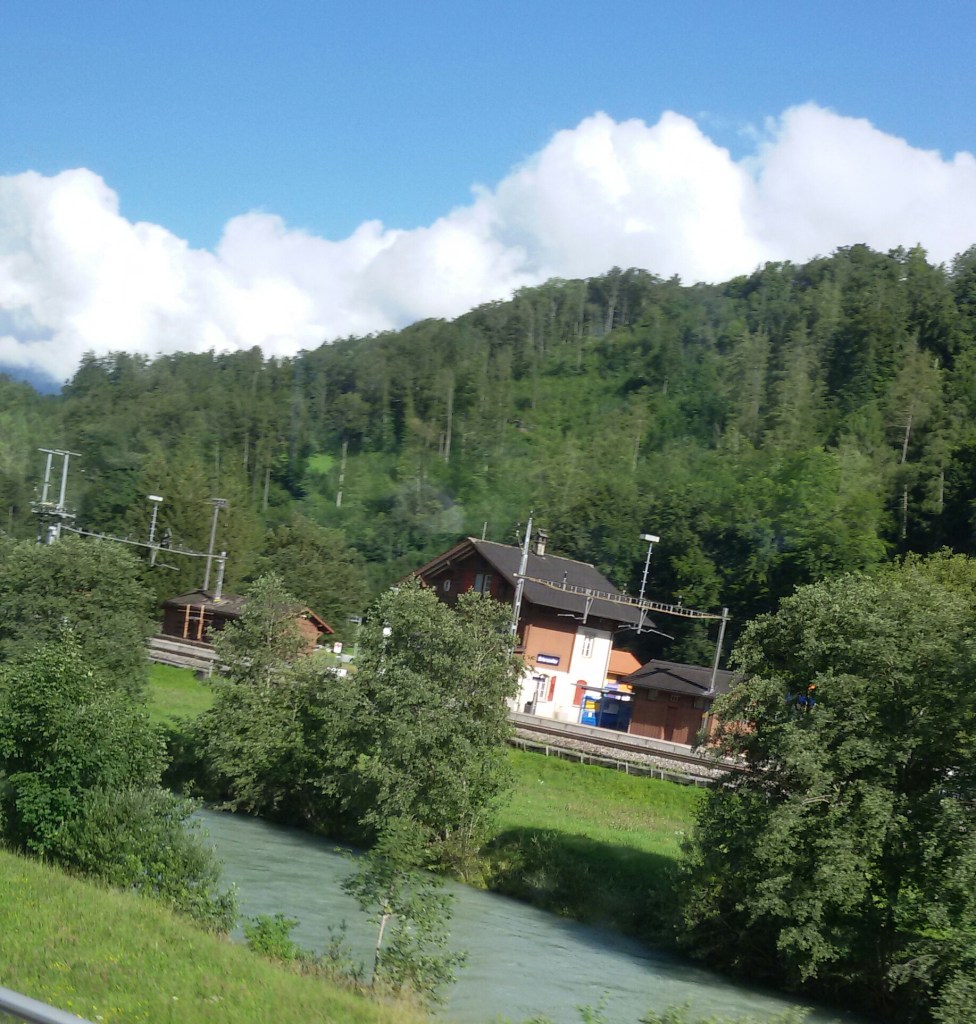
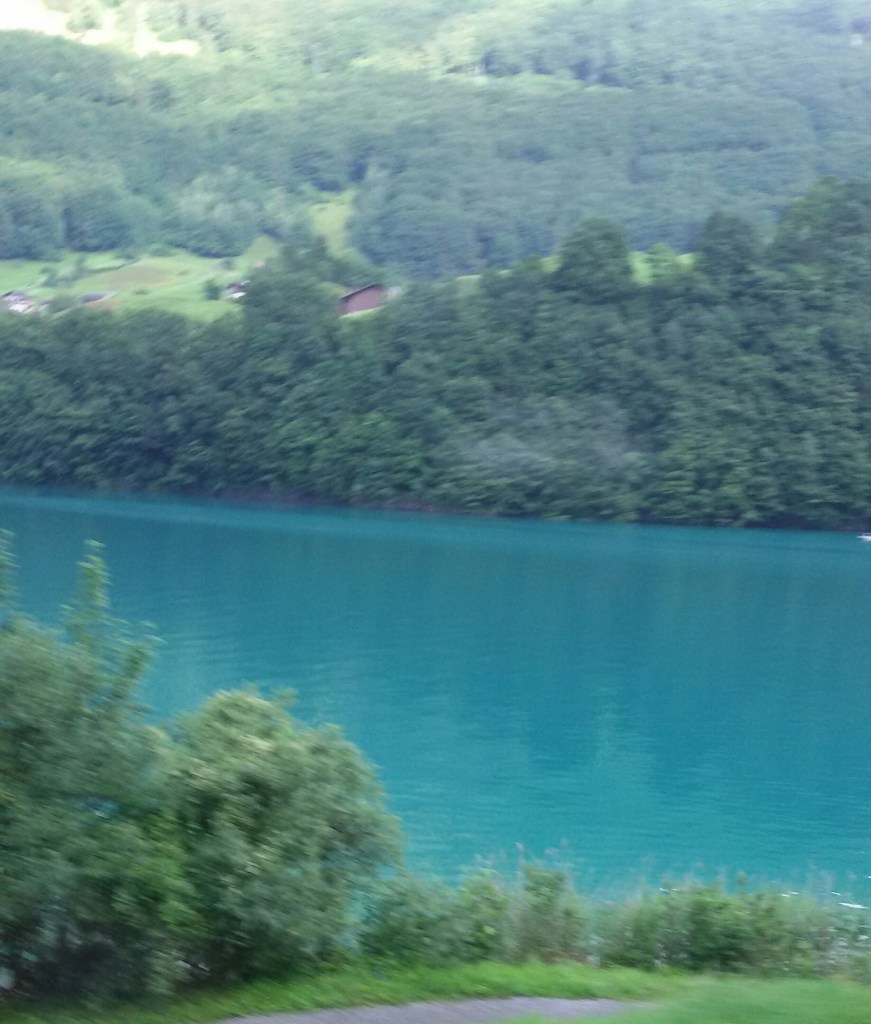
Driving through Switzerland is a wonderful experience with vast areas of green farmland with some grazing cattle and bundles of hay against the backdrop of the snow covered Alps. The Swiss chalets or wooden houses add to the beauty of the place. Now and then, you pass small streams and rivers with pristine clear water and of course some amazing lakes with water in different hues of blue and green.

Let us enjoy some pictures of Swiss countryside….

A typical swiss countryside scene with grazing cattle

A typical Swiss farmhouse

A Swiss Chalet or wooden house

A small stream flows by

And a beautiful lake

We were headed to Zurich.

Zurich is Switzerland’s largest city, located on the banks of Lake Zurich, about 60 km from the foothills of the Alps. It is a financial hub in Switzerland and has many financial institutions and banks located here. It is also a major contemporary art and shopping destination.

The city centre and most of the city’s architectural features extend along the shores of River Limmat which runs through the city centre.

After a short drive through Zurich, we had an overnight halt at a hotel there and proceeded to Lucerne

Some pictures from Zurich…

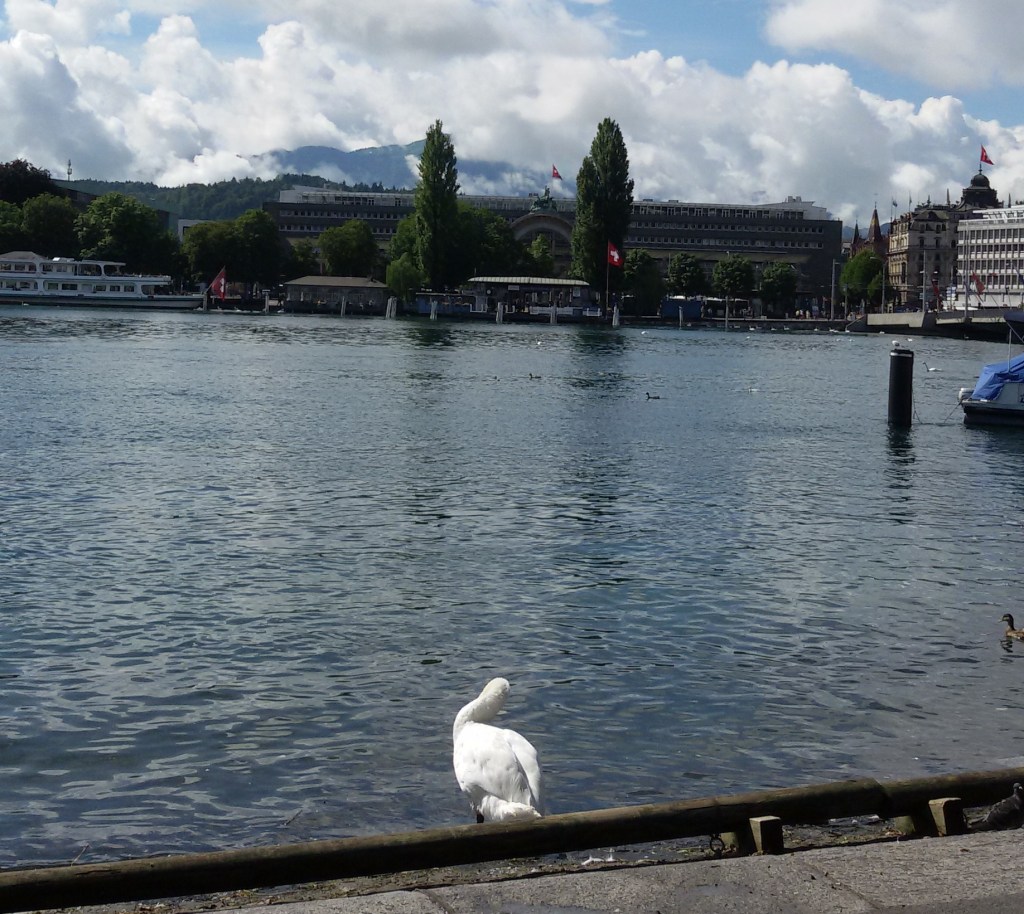
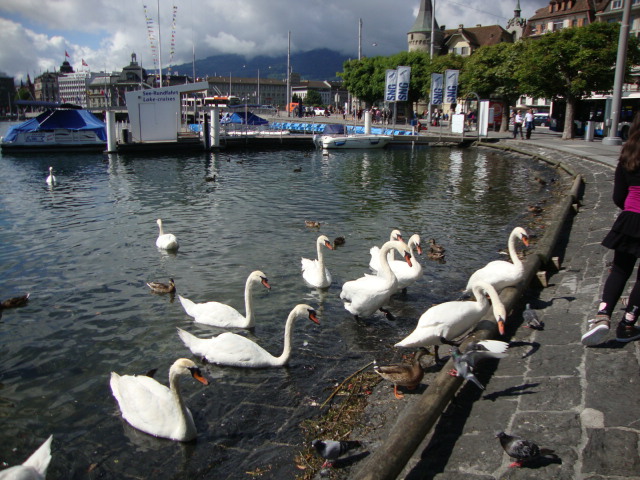
Lake Zurich

Swans at Lake Zurich

The Limmat river in Zurich

A typical street in Zurich

Lucerne:

Lucerne is a predominantly German speaking city in central Switzerland, located on the shores of Lake Lucerne and River Reuss. Its closeness to Mt Pilatus in the Swiss Alps, well preserved medieval core and elegant historic buildings makes it a tourist’s delight.

The Chapel Bridge (Kapellbrucke in German) is iconic of Lucern.

Chapel Bridge :

It is a 204 mt long covered wooden bridge running diagonally across the river Reuss. Originally built in 1333; it is the oldest covered bridge in Europe! Most of the bridge was destroyed in 1993 but it has been rebuilt. The bridge runs close to the Water Tower, a fortification from the 13th century. The bridge and tower are one of the most photographed scenes in Switzerland.

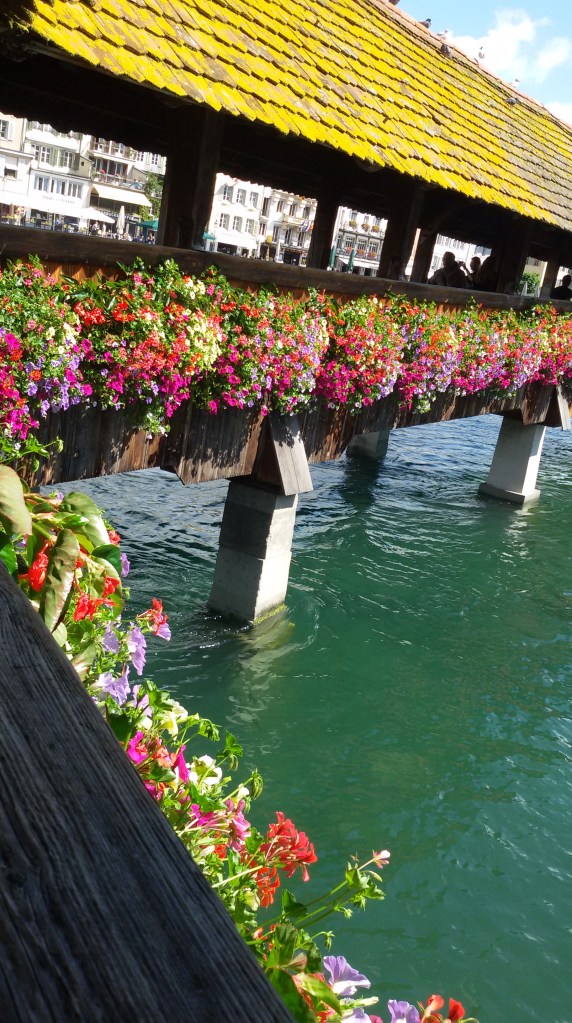
The inside of the Bridge has 17th century paintings depicting the history of Lucerne. The bridge has beautiful flower beds all along its sides and makes it a beautiful sight to behold!

The beautiful flower beds at Chapel Bridge

The bridge and Water Tower

The Bridge, the Water Tower and a palace on the hill!!!

Lake Lucerne

The town of Lucerne sits on the banks of this beautiful lake which has an irregular shape with snow clad mountains forming the backdrop. Just close your eyes and imagine the scenery I just described. I bet you got transported to Lucerne virtually!!!

Well…enjoy some pictures

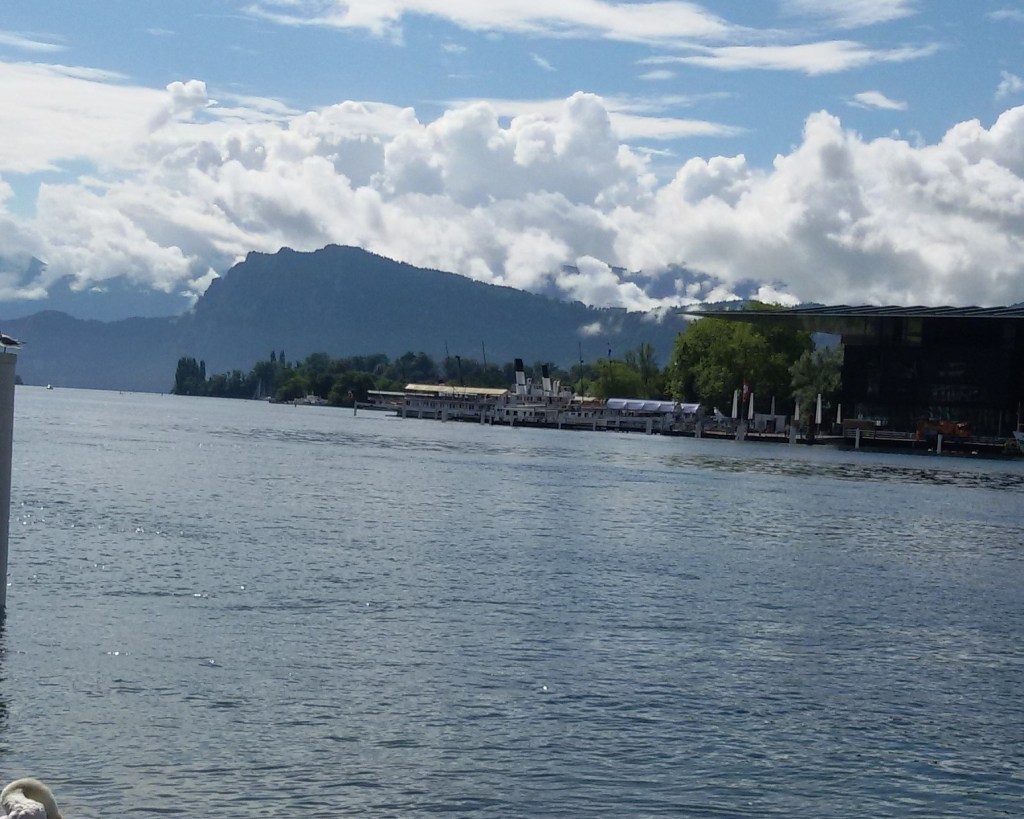
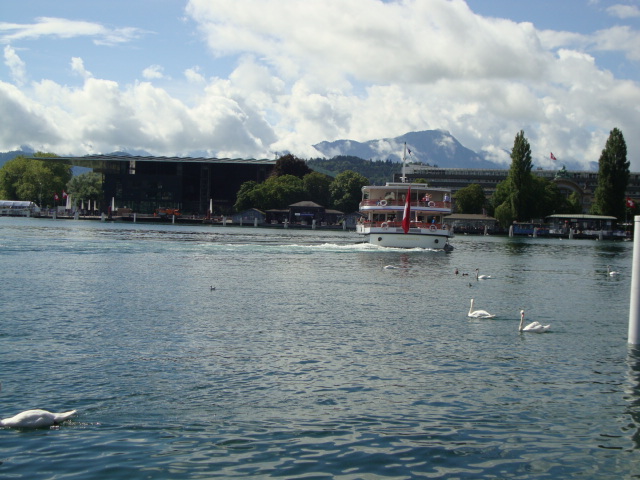
The beautiful Lake Lucerne

One can enjoy a cruise on the Lake on one of the early 20th century steamers here.

Lake Lucerne Cruise

After the lake and the bridge, we took a walk along the town . Some pictures….

Lucerne

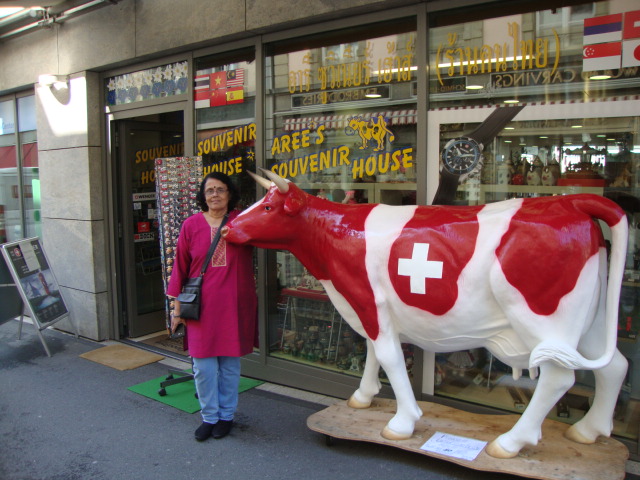
Outside one of the shops at Lucerne

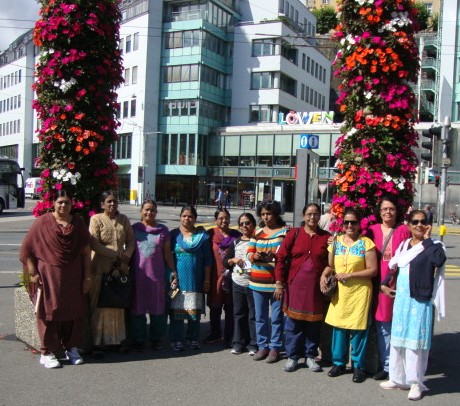
And we ladies posed for a picture….

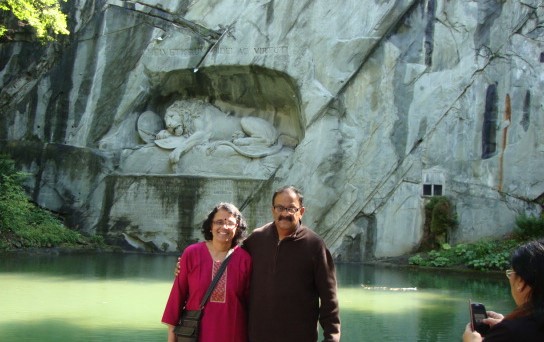
We then visited the Lion Monument.

Lion Monument

This monument is in honour of Swiss soldiers who died in the French Revolution. Built inside an abandoned stone quarry, it features a dying lion.

At The Lion Monument

Old Town

The old town on the right bank of the Reuss, still preserves many old houses and the timber framed buildings bordering the stone streets give it a fairy tale appearance. Not to mention the flower beds hanging beside the windows!

Old World Charm!

With a bag load of memories of this quaint city, we headed to Engelberg for the much awaited visit to Mt. Titlis. See you next week on the Alps…

Till then, do comment and subscribe below

Feedback appreciated!!

Black Forest

No…I am not talking about the cake….

I am talking about the Black Forest which is a large forested mountain range in south western Germany , bounded by the Rhine valley and close to the French and Swiss borders. It covers an area of over 6000 sq kms and is roughly oblong in shape with a length of around 160 km .

Originally the area was a mixed forest of deciduous trees and firs. Due to intensive logging, almost the entire area was deforested but was subsequently replanted mainly with spruce. Spruce grows dense and fast and has a dark green hue. The Romans gave the mountain range the name “Black Forest” because the densely packed trees found here had a very dark green tone. If one looks at the forest from far, it looks very dark.

The Danube and Neckar are the main rivers here.

Historically, the area was known for forestry and mining but now tourism is the main industry. The lushness , lakes, rivers, valleys and wildlife with some great hiking trails make it a great tourist destination.

The Black Forest is mainly rural with scattered villages and few small towns and is known for its typical farmhouses with sweeping roofs, the cuckoo clocks and black forest gateaus.

Wood carving was a traditional cottage industry in this region and cuckoo clocks are an example of such wooden art.

A cuckoo clock is typically a pendulum clock that strikes hourly like the sound of a cuckoo’s call and has an automated cuckoo bird that moves with each note. Some move their wings and open and close their beaks while others lean forward. The mechanism has been in use since the 1700s . It is unknown who invented the cuckoo clock but much of its evolution took place in the Black Forest region of Germany. Today it is a popular souvenir among visitors to this region. The cuckoo clock is today iconic of Germany.

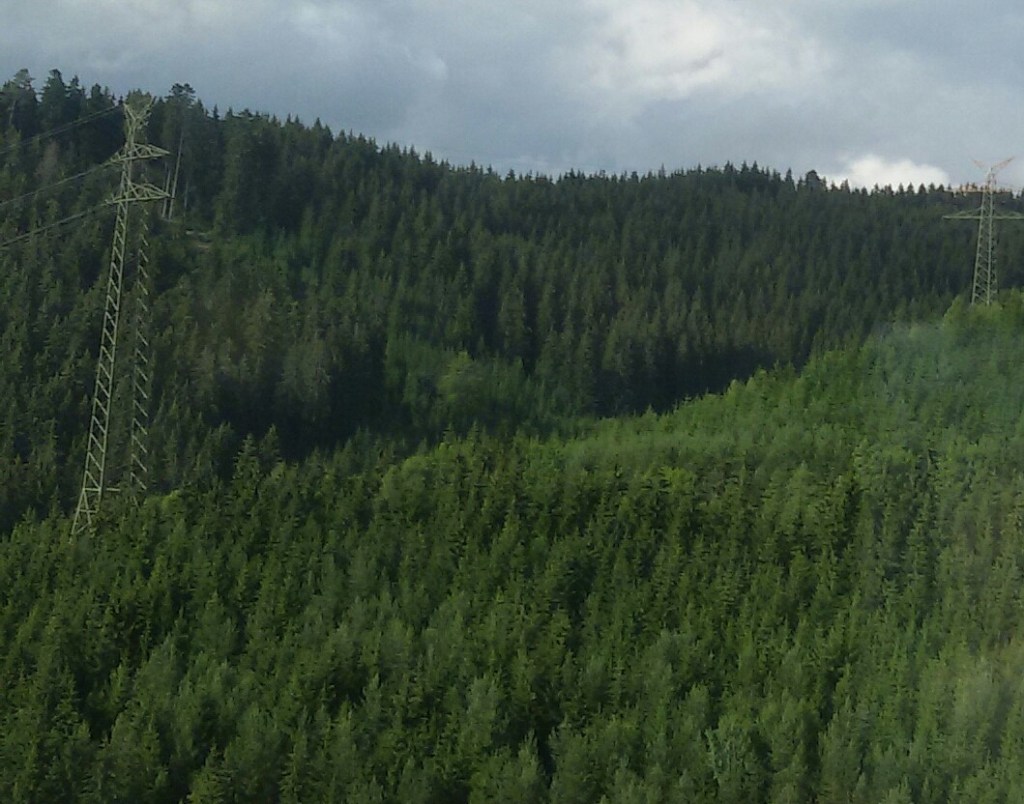
The dark coloured trees of Black forest

The densely packed pine trees

The traditional looking building which is now a cuckoo clock factory

Outside the cuckoo clock factory

Cuckoo clocks in various designs

A large cuckoo clock

The Black forest gateau:

The Black Forest cake as we know it today ; also claims its ancestry to this area. It is essentially a chocolate sponge cake with rich cherry filling. Several layers of soft chocolate sponge cake sandwiched with whipped cream , cherries and chocolate shavings. Traditionally a clear spirit made from sour cherries…….a speciality liquor distilled from tart cherries…. was added to the cake. To be noted is that the Black forest region has lot of cherry trees too!

We tasted the authentic German Black forest cake at the cafe here.

Relishing the authentic Black forest cake

From Black forest, our next destination was Zurich in Switzerland. Enroute, we visited the Rhine falls at Schaffhausen.

Beautiful Swiss countryside scenes welcomed us as we crossed over to Switzerland from Germany.

Beautiful Swiss countryside

Rhine Falls:

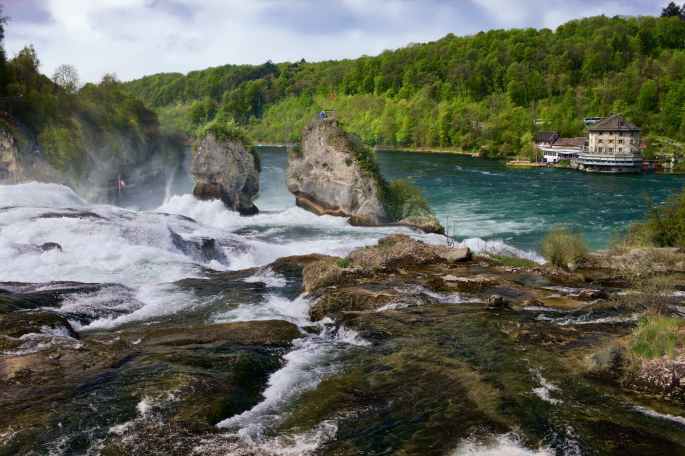
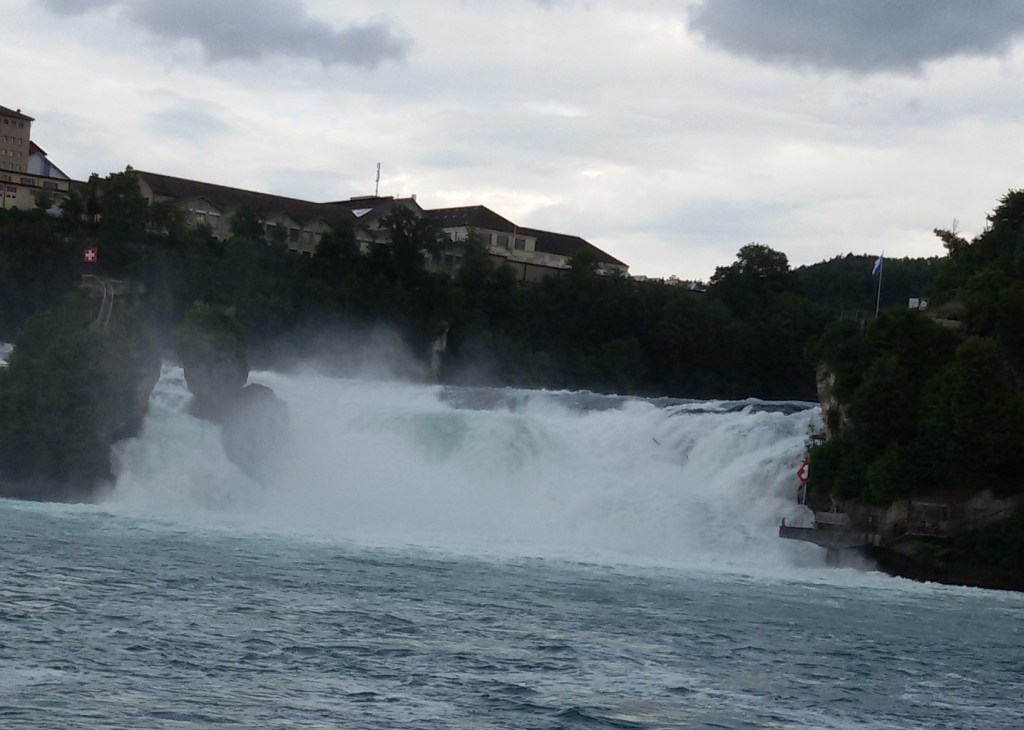
The featured image in this blog is of the Rhine Falls

Rhine falls is located on the river Rhine at the border between Schaffhausen and Zurich. It is Europe’s most powerful waterfall. At 23 mts height and 150 mts width, it cannot compete with many other waterfalls that I have visited, but the beauty of the surrounding region makes it a magnificent spectacle.

Tectonic shifts caused the River Rhine to shift to a new river bed around 15000 years ago. The place where the hard chalk was converted to soft gravel became the site of the Rhine Falls. In the middle of the falls is a large rock that can be reached by boats ; providing a close up view of the falls. Two castles, Worth and Laufen can also be seen from here.

Viewing platforms are available on either sides of the Rhine to view the falls.

Some pictures…

The magnificent Rhine Falls

The beautiful boats that take you close to the falls

Typical swiss building….near the falls

At the falls

After the visit to the beautiful falls, we proceeded to Zurich. See you next week with more views from beautiful Switzerland.

Till then, do give me your feedback and comments below:

Cologne

From Netherlands, our tour bus drove us to Germany. Cologne was our destination this time.

Cologne, a 2000 year old city , located on the banks of the river Rhine in Western Germany; is known for its medieval architectural buildings….particularly its churches. The Cologne Cathedral and the Twelve Romanesque churches of Cologne located here are some of the most visited pilgrimage destinations in Europe. And ofcourse, the city is known for Eau de Cologne which was produced here since 1709.

A little bit into the past….

It was a city in the Holy Roman Empire and one of the major European cities in Medieval and Renaissance period. It was occupied by the French and the British at various periods in history prior to World War II. After getting heavily bombed in World War II, it was rebuilt.. restoring major historic landmarks like city gates and churches. This explains the Romanesque churches seen here.

Some of the important places we visited in Cologne were…

Cologne Cathedral

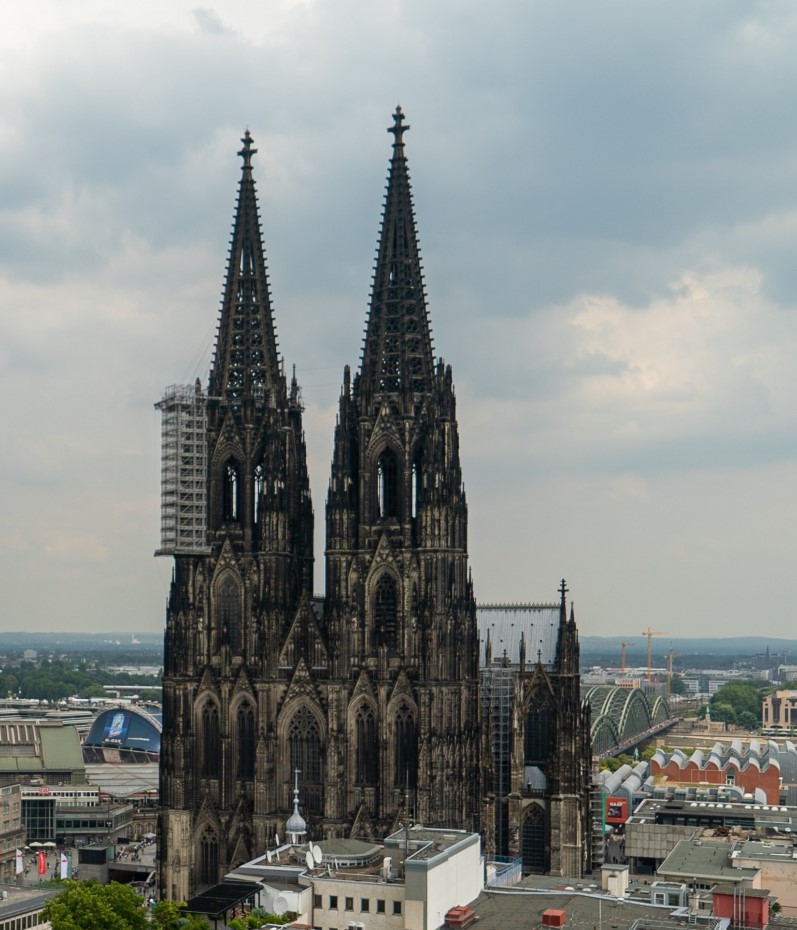
This is the most famous landmark in Cologne. It is a twin spired Gothic church and houses the Shrine of the Three Kings. It is a designated UNESCO World Heritage site.

The black colour is due to the reaction of the sandstone with rain which makes it distinctly black.

Imposing twin spires of Cologne Cathedral

The intricately decorated outsides of the cathedral

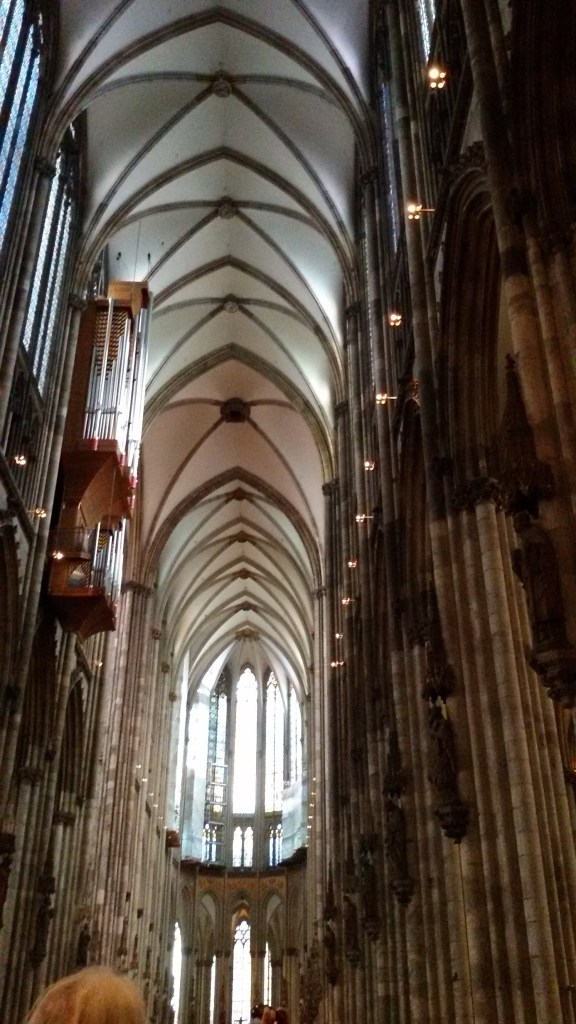
The imposing roof

The beautiful glass murals in the cathedral

The Twelve Romanesque churches:

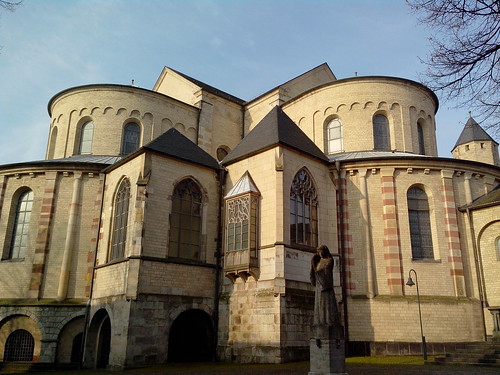
These are the cultural highlights of the city. Built between the 12th and 13th centuries, they are outstanding examples of medieval church architecture and art. Most of them were badly damaged in WW II and were restored later.

The Roman architecture in all these structures is outstanding. Some of the more famous ones are St Maria im Kapitol, Great St Martin and St Gereon. Some pictures….

St Maria im Kapitol

Great St Martin

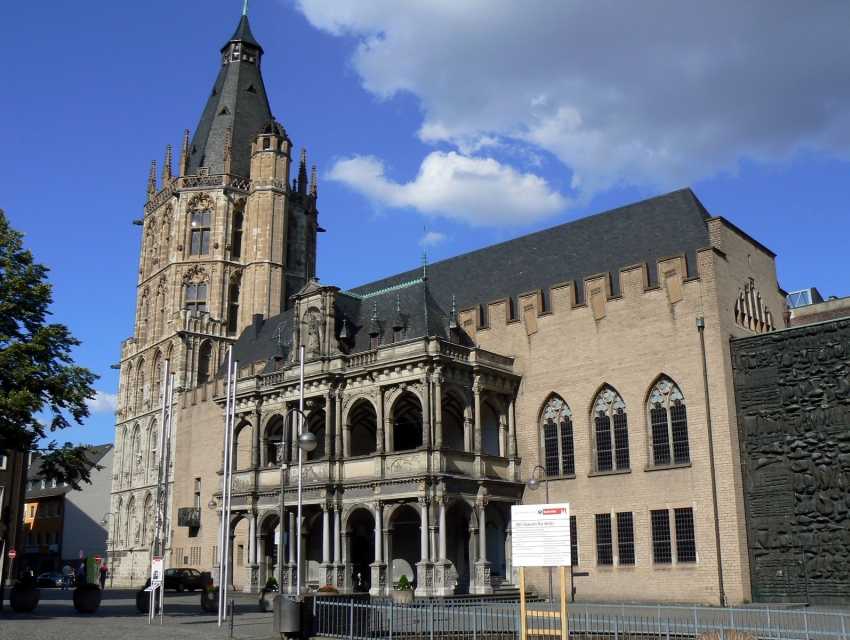
The Cologne city hall

Founded in the 12th century, this is the oldest city hall still in use in Germany. It houses the city council and offices of the Mayor.

City Hall Cologne

Bridges:

Several bridges cross the Rhine in Cologne and the most dominant of these is the Hohenzollern bridge with its iron arches.

Hohenzollern bridge

Cologne Cable car:

Another unique river crossing is provided by the Cologne cable car which runs across the river Rhine!!

The Cologne cable car

Eau de Cologne:

Meaning “Water of Cologne”this perfume has an interesting history about which most of us are unaware as we dab it on and get about our work!!

Produced in the 18th century, it became increasingly popular and was exported all over Europe by the Farina family. After the entry of someone from the Mulhens family into the business, there were court battles over the name and finally he called the perfume by his house number 4711. Eau de Cologne is still produced in Cologne today by both the Farina family (eighth generation) and by Maurer and Wirtz who bought the 4711 brand!

After a short fleeting ride along many landmarks of Cologne, we headed to the hotel for the night but looking forward to a cruise on the Rhine next day…
The Rhine

The Rhine is one of the major rivers in Europe. Originating in the Swiss Alps, it defines the Swiss borders with Liechtenstein, Austria and Germany, and also the French German borders before flowing through Rhineland in Germany and finally through Netherlands into the North Sea. It has been a navigable waterway for men and materials right from Roman times.

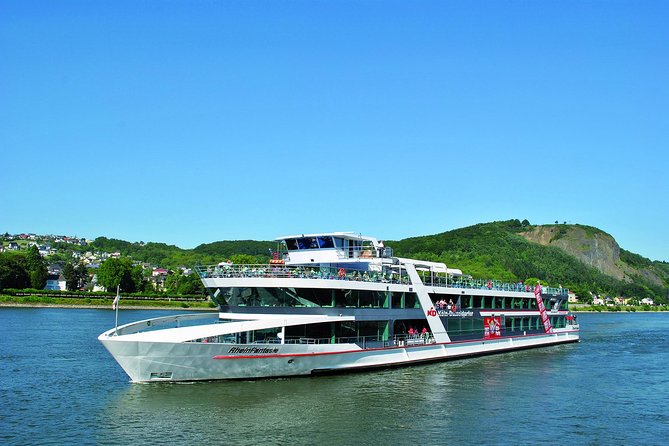
It flows through Rhineland in Germany where we undertook this Cruise…
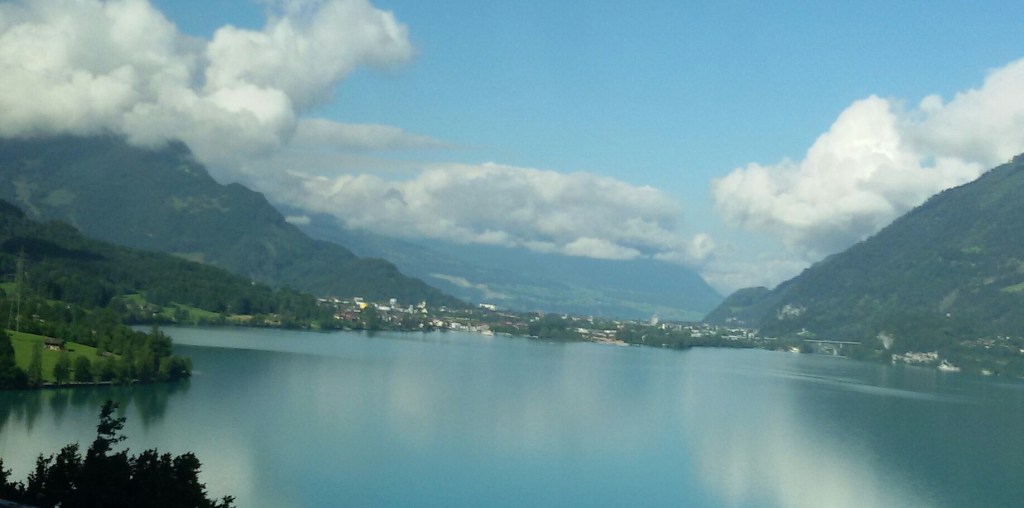
Some pictures from the Cruise for you to enjoy…..

Rhine Cruise:

The ferry

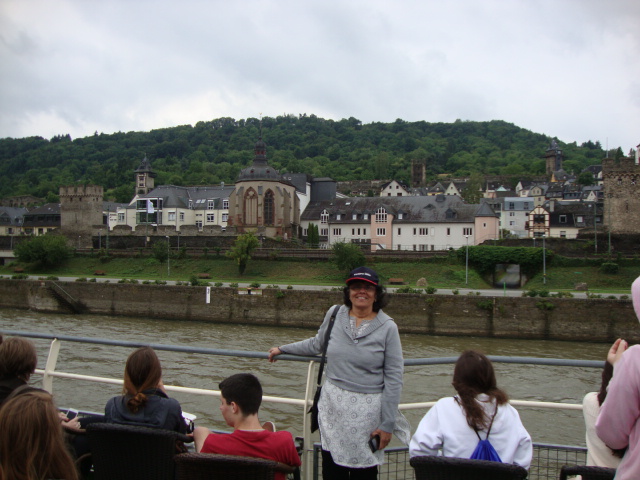
On the deck of the ferry

Interior of the ferry

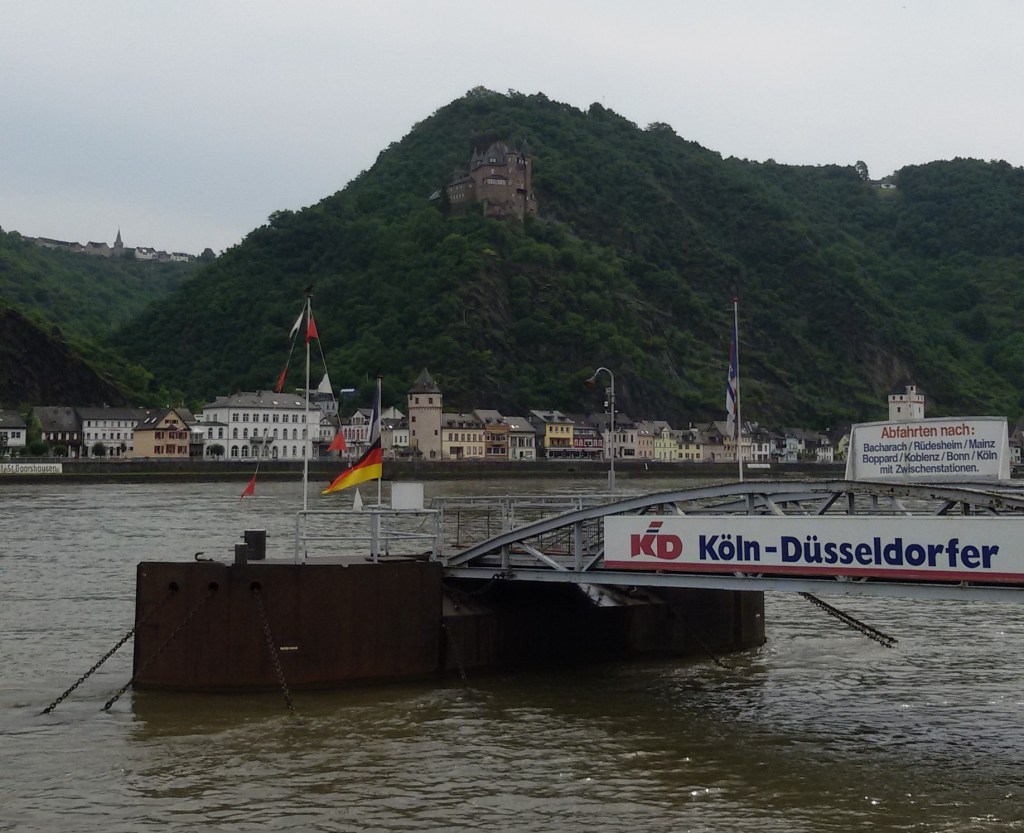
The Boarding station

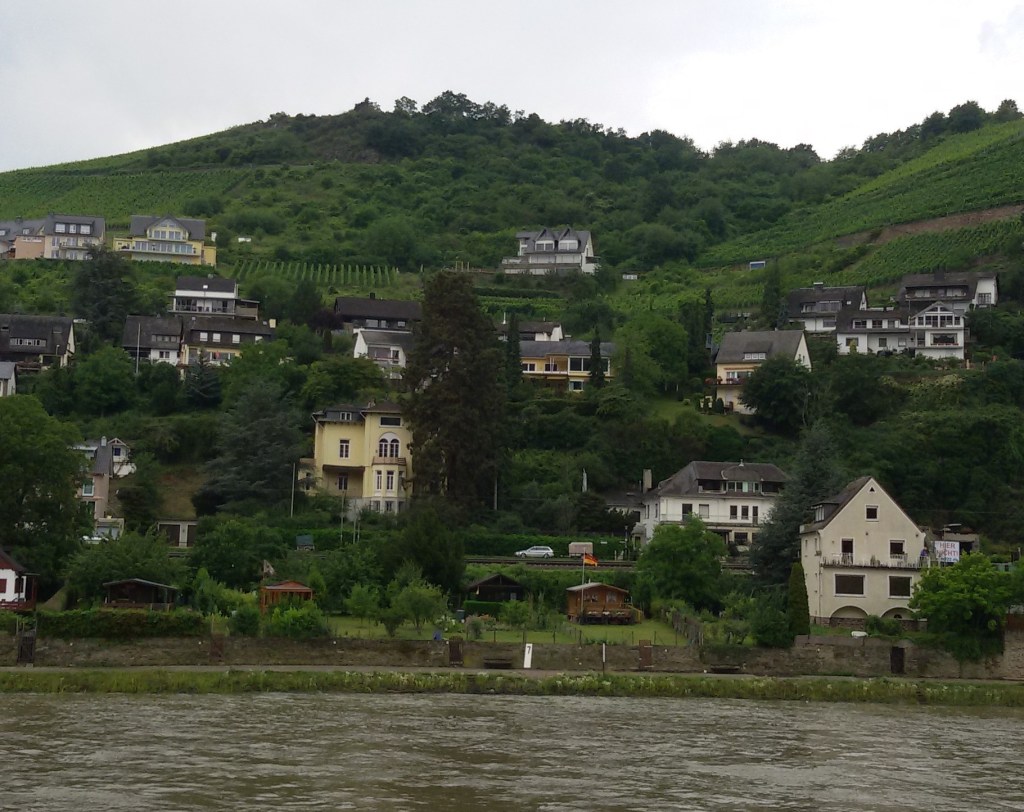
Just off the boarding station, the beautiful houses on the hillside

Some beautiful country side in Germany

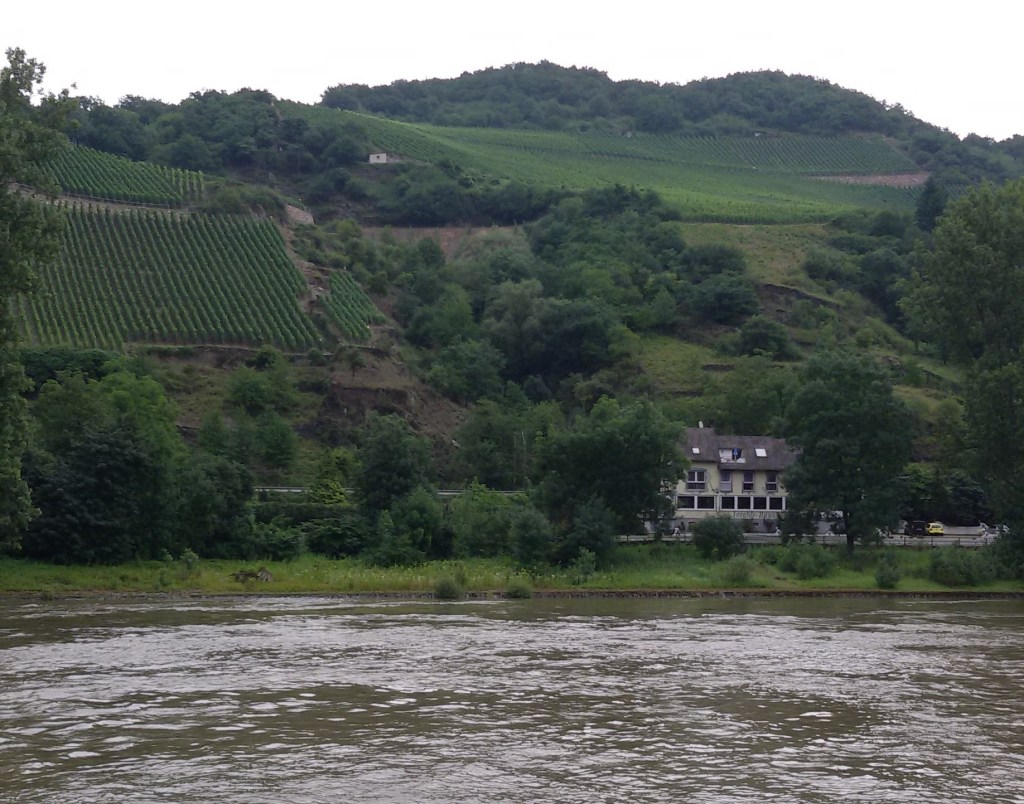
The Vineyards on the slopes

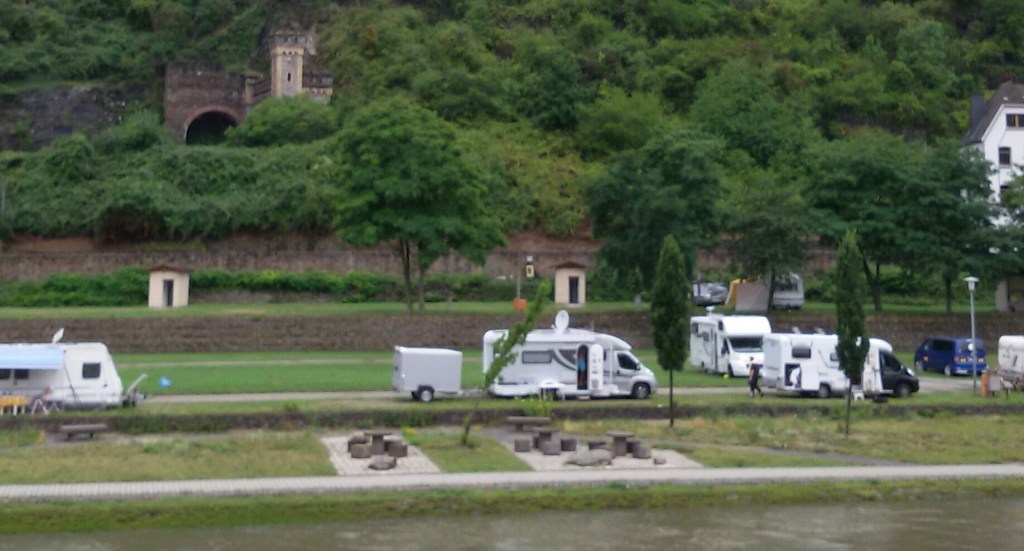
At many places, caravans parked along the Rhine by picnickers

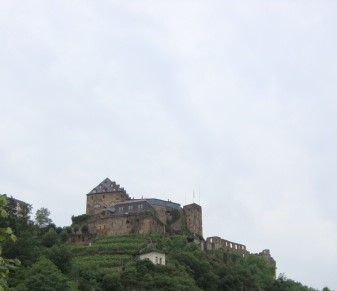
One of the many castles seen on the way

A house partly in the river…supposedly of some wealthy german

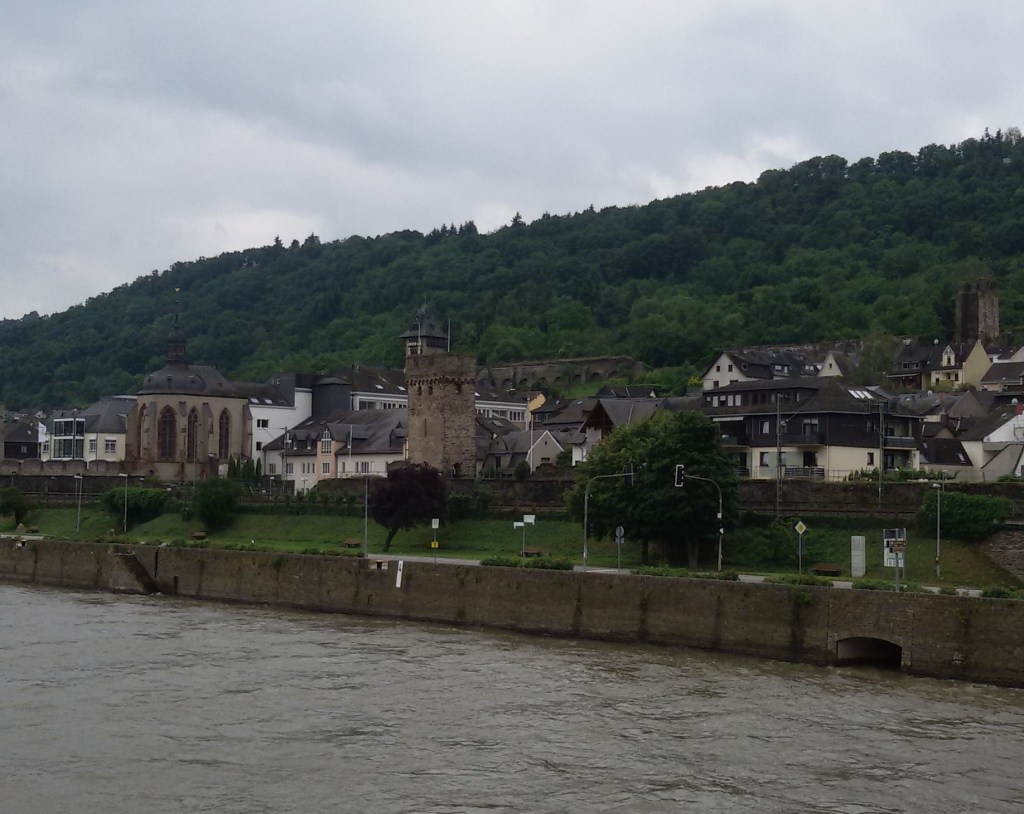
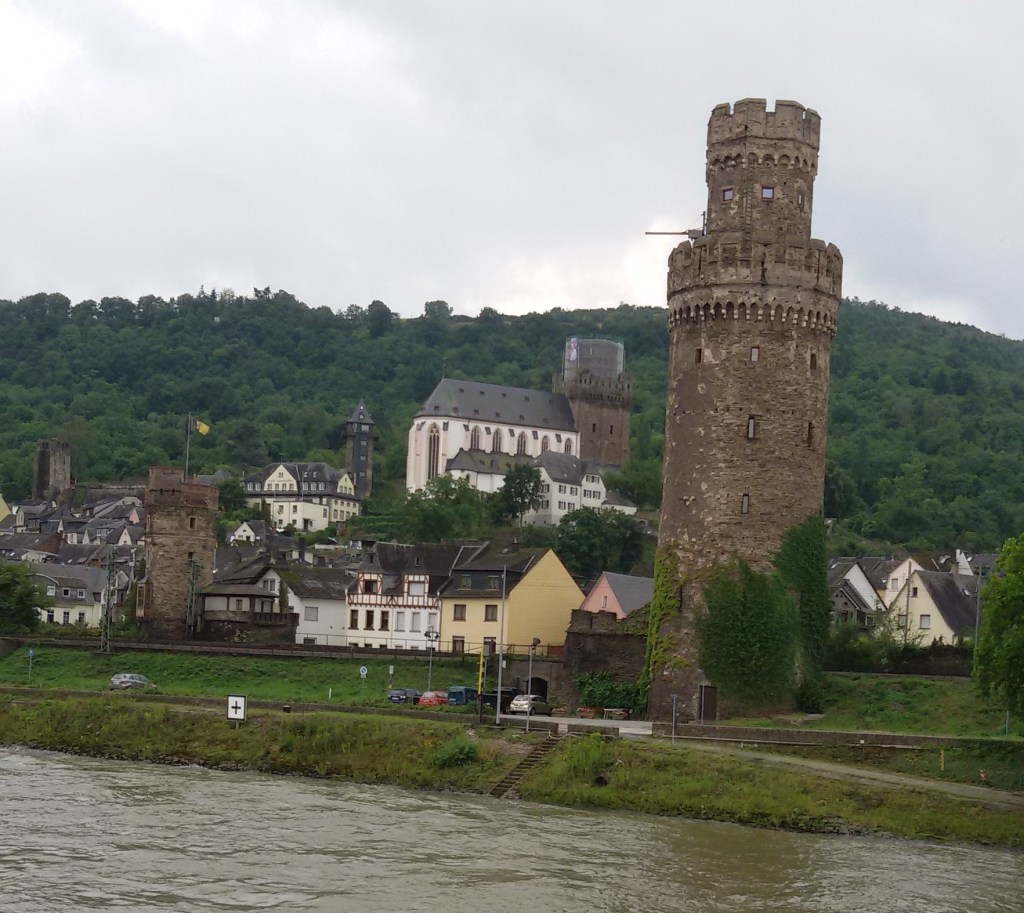
A watchtower

The mighty Rhine as it turns sharply

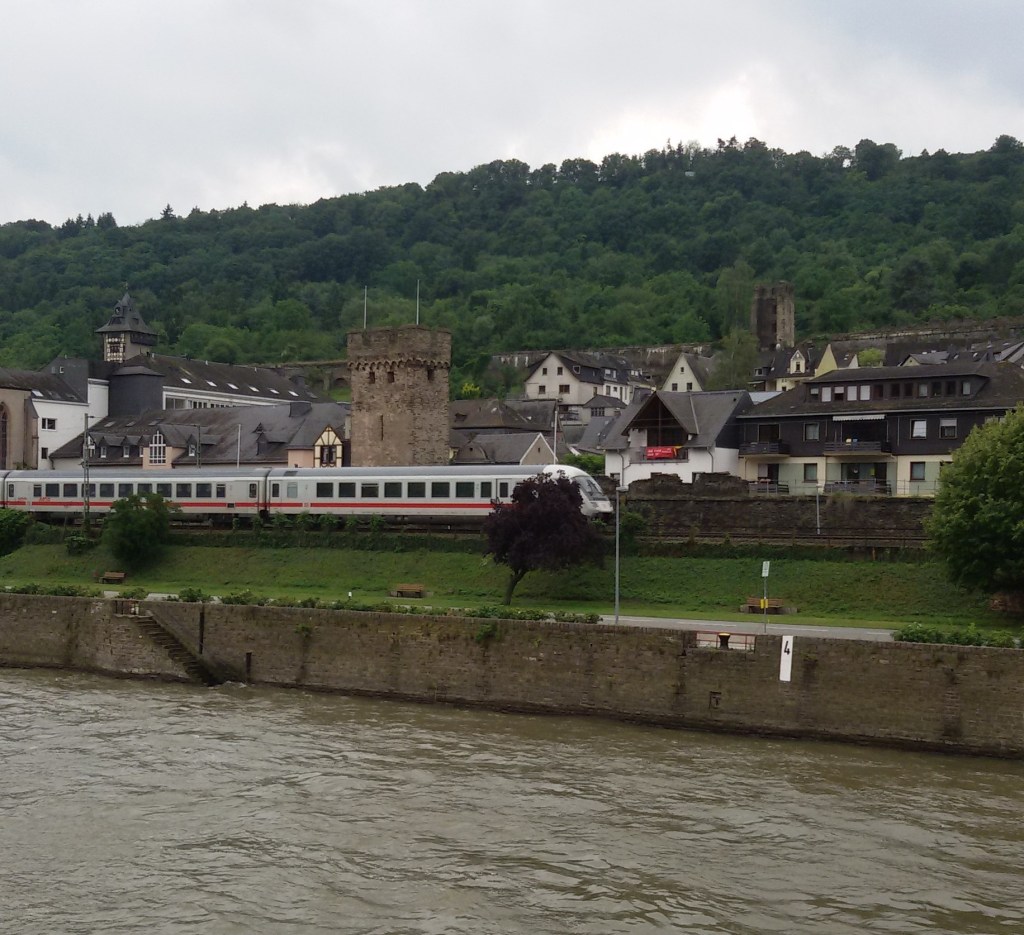
And a train passes a town

After enjoying an hour of this cruise which took us through some beautiful German countryside, we alighted and headed for lunch.

Post lunch we had some interesting things lined up including a visit to The Black Forest region . See you next week among some ancient cuckoo clocks..

Till then, keep your comments flowing like the Rhine….and do subscribe

Volendam

The opening shot of this blog is that of the colourful windmills of Zaanse Schans about which I shall talk later…

Continuing our tour of Netherlands, the next day we headed to Volendam…..

Volendam is a beautiful fishing village about 20 km from Amsterdam on the Markermeer lake. It has a beautiful marina and has now developed into an important tourist destination. It is known for rows of colourful wooden houses and old fishing boats in its harbour. Sea food restaurants and beer parlours add to the charm of the marina.

It once had direct access to the North sea which made it a natural choice for fishermen to settle. The locals are known to still use traditional dutch attire and have a flare for music.

The marina at Volendam with fishing boats

The beautiful houses with flower beds facing the marina

Another view of the Volendam Marina

Traditional Dutch attire is still used by some of the local residents. The high pointed bonnet of the dutch women’s attire is one of the most recognisable part of the traditional dutch clothing . It is often featured in postcards and pictures.

An important activity here is to get photographed in traditional dutch attire.

Traditional Dutch Attire

Cheese Factory

Netherlands is famous for its dairy products particularly cheese. Dairy products contribute a major chunk to their economy. We visited a cheese factory close to Volendam. Demonstrations on cheese making and tasting the various varieties of cheese was interesting indeed!

Cheese on display

Wooden shoes (Clogs):

Wooden shoes were used in Netherlands traditionally . Now it has been preserved as part of their culture. It is a very popular souvenir from Netherlands. We attended a shoe making demonstration where the worker deftly transformed a wooden piece into a shoe in about 10 mins. These shoes are very colourful and have beautiful paintings on them. In fact the coloured wooden shoes are iconic of Netherlands ….much like the windmills.

Wooden shoes

A huge clog model outside the factory

From Volendam, one can take a ferry ride to Marken when the entire extent of the beautiful houses and the marina can be enjoyed.

Our next destination was Zaanse Schans.

Zaanse Schans

As you all know, windmills are synonymous with Netherlands. At least some of you must have wondered how it did not feature in a blog on Netherlands! Well, I kept it for this place called Zaanse Schans where you can see a row of windmills by a stream.

This village of Zaanse Schans is best known for its collection of windmills and wooden houses that have been relocated here . It has developed into an important tourist destination mainly to see the windmills.

Around 600 windmills were constructed here in the 17th century, creating an industrial zone.When the blades of the windmill rotate due to wind,the equipment inside the building starts working and activities like wood sawing, powdering of grain etc take place. Once electricity was discovered and used widely, the windmills became non functional. But they were relocated and preserved. Even today, tourists can see functioning windmills here.

Zaanse schans is located close to a backwater and the windmills were used even for pumping water to and fro to maintain water levels. The actual process of reclaiming land from the backwaters can be seen here. Bunds were built and then the water inside was pumped out with the help of the wind mills. The trapped land dried up and was used for various purposes.

A traditional Windmill

Beautiful houses in Zaanse Schans

And last but not the least…..

Keukenhof Tulip gardens

Keukenhof Tulip gardens are a must see in the Netherlands. Called the Garden of Europe, it is a sight to behold! Many of us may have seen this majestic garden in the Hindi movie “Silsila” where the melody “dekha ek khwab to ye silsile hue” was shot

Unfortunately we were not there during the Tulip season which runs April to mid May. We missed the majestic gardens.

Nearer home ,we have a beautiful Tulip garden at Srinagar in Kashmir which is not so famous and publicised. When I visited that, part of the remorse of not being able to visit Keukenhof was overcome! Though it is not as big and varied like the Dutch one, this garden is charming in its own way…

So let me share a picture of Tulips from our very own Srinagar….partly to motivate a few of you to visit this place…partly to compensate you for not featuring Keukenhof in a blog on Netherlands!!

Tulip garden at Srinagar

Well, with this we bid farewell to the beautiful country of Netherlands and head to Germany. See you next week at Cologne…

Till then, do keep your comments coming and do subscribe below:

Do give your feedback!

Amsterdam

Amsterdam is the capital of Netherlands and its most populous city. It is often called the Venice of the North due to the large number of interconnected canals which form a UNESCO World Heritage site.

A little bit about The Netherlands:

The word Netherlands literally means “lower countries” in refernce to its low elevation. Only about 50% of its land area lies atleast one meter above sea level. More than 26% of its area lies below sea level and nearly 17% of its land area has been reclaimed from the sea or lakes . Since the 16th century , large areas of this country are preserved through an elaborate drainage system comprising dikes, canals and pumping stations. This brief introduction shows the vision , hard work, elaborate planning and execution that has gone into making this land what it is today. In order to understand some of the peculiarities of the places we are going to visit, this background information is essential.

Amsterdam: A short preview:

Amstel, the river in Amsterdam was dammed to control flooding and the city now derives its name from that. Originally a small fishing village in the 12th century, the inhabitants built dikes on both sides of the river to protect themselves from floods and subsequently built a dam between these dikes.

Amsterdam grew to become a port and a leading financial and trade centre in the 17th century called the Golden age. During the 19th and 20th centuries, the city expanded further and grew to what it is today.

Some peculiarities…

The canal system in Amsterdam requires special mention. It is the result of continuous city planning. In the 17th century itself, this canal system was planned in the form of four concentric half circles with radial canals forming a spiderweb pattern and connecting finally to the North Sea. The canals served for defence, water management and transport. Today the city is famous for the hundreds of houseboats that line its canals. Parts of the city lie below sea level and some on land reclaimed from the sea or marshlands.

The city of cycles….Amsterdam is equipped with an elaborate network of cycle paths, so safe and comfortable that anyone can use cycles as the easiest mode of transport. As Amsterdam grew, the traffic increased and roads were laid to accommodate traffic. With increased traffic, there were many accidents. This led the local people to think that they needed safer streets and they held demonstrations and finally got clear cycle paths. This is true not only of Amsterdam , but all over the Netherlands.

Observe the large number of cycles parked on this bridge!

Though Amsterdam is the capital, it is not the seat of the government which is The Hague and the Royal family resides only occasionally at the Royal Palace in Dam square of Amsterdam. The city lacks monumental architecture , wide squares, arches or imposing statues unlike many other European cities.

Coffee shops selling drugs and the famous Red street are some of the other peculiarities of this place.

Our Trip

One sight which attracted me in the Netherlands was the sound barriers along the highway. These are barrier walls set up in residential areas along the highway to prevent noise pollution and disturbance to the residents. It actually reflects the care and concern for the quality of life here.

Sound barriers along the highway

Amsterdam Canal Cruise :

One of the most interesting and popular tourist activity in Amsterdam is the canal cruise.

There are many tour companies that organise these canal cruises. Usually it is a one hour cruise along the canals. In fact due to the interconnecting canal system, it is the best way to get around without missing any of the highlights of the place.

The boat piers from which these cruises start are very beautifully maintained with flower beds. The boats have glass roofs and there is an audio system at every seat from which one can hear the live commentary of the places as we sail along.

The glass ceiling boat used for the canal cruise

The flower beds at the pier and the audio system with live commentary

Once the cruise started, we sailed along the canals which were of varying width. The buildings along the sides of the canal looked very traditional .

Some places had traditional Dutch buildings.

Every now and then we sailed below ancient looking bridges which had people and traffic crossing the canals…

Bridges cutting across the canals.

Many of the canals have house boats anchored along the sides. Some are the residences of the locals while some are available on rent for tourists to stay and enjoy the ambience.

At places boats were anchored along the sides of the canal.

A house boat

Some of these house boats are commercial establishments too….like this one which has a tulip museum!!

A houseboat converted into a museum

Along the canal side, there were beer parlours with seats set outside along the canal for a relaxed evening for the customers.

A canal side beer parlour

As we reached the newer parts of the city, the canals were lined with modern buildings on either side.

Modern buildings along the canals

A wider part of the canal system with modern buildings and a high end yacht

We also reached an area looking like a lake where there was an old ship anchored. This ship is now a museum displaying Dutch history.

The museum ship

How are these canals maintained?

A very well organised system keeps these canals functional during the high and low tides. Each of these canals have locks and is under the control of a lock keeper who plays a very important role by opening and closing the locks as per the tide levels. Next to each of these locks is a lock keeper house too , so that he can continuously monitor it.

The lock system in the canals

Dam Square :

This is a square at the centre of Amsterdam. The main attraction here is the Royal Palace. The palace is used by the monarch for official receptions, award ceremonies etc.

The Royal Palace

Van Gough Museum :

An art museum dedicated to the works of Vincent van Gough, this museum has the largest collection of Van Gough’s paintings in the world. Unfortunately we could not visit the museum but we saw it as we went along.

The Van Gough Museum

Red light district

Den Wallen, Amsterdam’s red light district is internationally known and is a major tourist attraction here. It offers legal prostitution and a lot of coffee shops selling marijuana!

The brothels here have a red light near the door which is the indication that it is a brothel. The practice started initially when the women would use red lanterns as a signal to the sailors who visited the place. This was subsequently replaced by the red bulb.

The red light district

Enroute Amsterdam, we had a halt at The Hague too from where we visited Madurodam.

Madurodam:

This is a miniature park close to the Hague. Every object in Madurodam has been built at a scale of 1:25. It contains working models of many of the Dutch landmarks. The park strives to show a realistic view of Netherlands in a scaled down environment. Everything including the flora and fauna is scaled down and in many places models of the Dutch people can also be seen.

Some pictures….

At the Entrance to Madurodam

A working model of Schipol airport

A working model of the canal system and its locks

A model train

A model windmill

Model Tulip garden

And finally…an over view of Madurodam

After the nice cruise and a city tour of Amsterdam, we returned to our hotel looking forward to more of The Netherlands the next day.

See you next week with more beautiful sights from The Netherlands. Till then, keep your comments coming and do subscribe below.

Your feedback will be appreciated!

Brussels

The capital of Belgium, Brussels is a fascinating place with stunning architecture, history and modernity ,mixed with some fun activities too. Belgian chocolate and Waffles add their bit of sweetness to this city.

A short overview

Brussels has grown over the years from a small rural settlement to an important city in Europe. Since the end of the second World war, it has become a major center for international politics and is home to numerous international organizations, diplomats and civil servants. It being the de facto capital of the European Union, hosts a number of EU organizations. The recent war has put it very much in the news as the headquarters of NATO is located here.

Officially, it is bilingual with Dutch and French being the official languages. English is also widely spoken.

Let me take you to some of the locations that we visited in Brussels .

The Atomium

The Atomium is emblematic of Brussels much like the Eiffel tower is to Paris. Built in 1958 for the World Fair, it symbolizes an iron atom magnified 165 billion times!

It is 100 mt tall. Made of stainless steel , its 9 spheres are connected by tubes. The tubes connecting the spheres enclose stairs and escalators, that allow access to the 6 accessible spheres. The spheres contain exhibition halls and other public places. The central vertical tube has an elevator. The top sphere has a restaurant and offers panoramic views of Brussels.

Some pictures…

The Atomium

One of the spheres

The stairway in the Atomium

At the Atomium

The Grand Place

The Grand Place is the square in the center of the city which is so typical of most European cities. It is a World Heritage Site designated by UNESCO since 1998. It measures 68 mt in length and 110 mt in breadth.

Very often it is called the World’s most beautiful square. It is located in the central part of Brussels. The square started here in the 13th century. Initially 3 markets were functioning here. In the 14th century, it was decided to have buildings around. By the end of the 14th century, the dimensions were defined and it was paved with tiles. Most of it was destroyed in 1695 in the Nine year war by the French troops. The buildings surrounding the place were rebuilt subsequently. The 96 mt high tower of the city hall survived the war.

At the center of the Grand Place is the city hall surrounded by the guild halls along the sides of the square. The Gothic and Baroque architecture of these buildings is very striking. The city hall with its impressive tower and the present Brussels city museum are the more striking of the buildings.

Like in most European cities, the square is the main meeting place and a venue for many performances. Every second year, the Grand Place gets a beautiful flower carpet in August that makes it even more beautiful! Christmas and New Year celebrations here attract a lot of locals and tourists.

Some pictures…

The Grand Place

Preparations for the evening fun!

The impressive city hall tower

The Brussels city Museum

A stage being set up for a performance

A file photo of the famous flower carpet at Grand Place

Mannekin Pis( “pissing little boy ” in dutch)

Another land mark close to the Grand Place is the Mannekin Pis; a fountain where there is a bronze figure of a naked little boy urinating into the fountain bowl.

It is supposed to depict folk humour in Belgium!

The Mannekin Pis

Chocolates

I don’t have to tell any of you how delicious Belgian chocolates are! The streets are lined with Chocolate shops of various sizes and one can taste the chocolates and purchase as per one’s wish. The smell from these gourmet shops wafts in the air!

One of the many chocolate shops that line the streets

Waffles….the other delicacy that Belgium is famous for. There are lots of Waffle shops along the streets and we did try out some delicious waffles.

Mouth watering Waffles

After a rather short and crisp visit to Brussels, our tour was on its way to Netherlands.

Before I go, let me leave you with this sweet image of the colourful Waffle girl and her wares!!

The sweet waffle girl!!

See you next week in the Netherlands where we spent a couple of days. Till then, keep your comments flowing in and do subscribe below..

Feedbacks are welcome!!