THE BLUE MOUNTAINS

The name Blue Mountains always fascinated me. We have the Nilgiris in India which also means blue mountains. After having stayed in the Nilgiris, I wanted to know what is the similarity or the difference between the two. What better way to know it than to go there….

A brief note on the Blue Mountains:

The Blue mountains is a rugged mountainous region in New South Wales bordering the Sydney metropolitan area. Its foothills start approximately 50 km from Sydney. It is part of an extensive mountainous region associated with The Great Dividing Range.

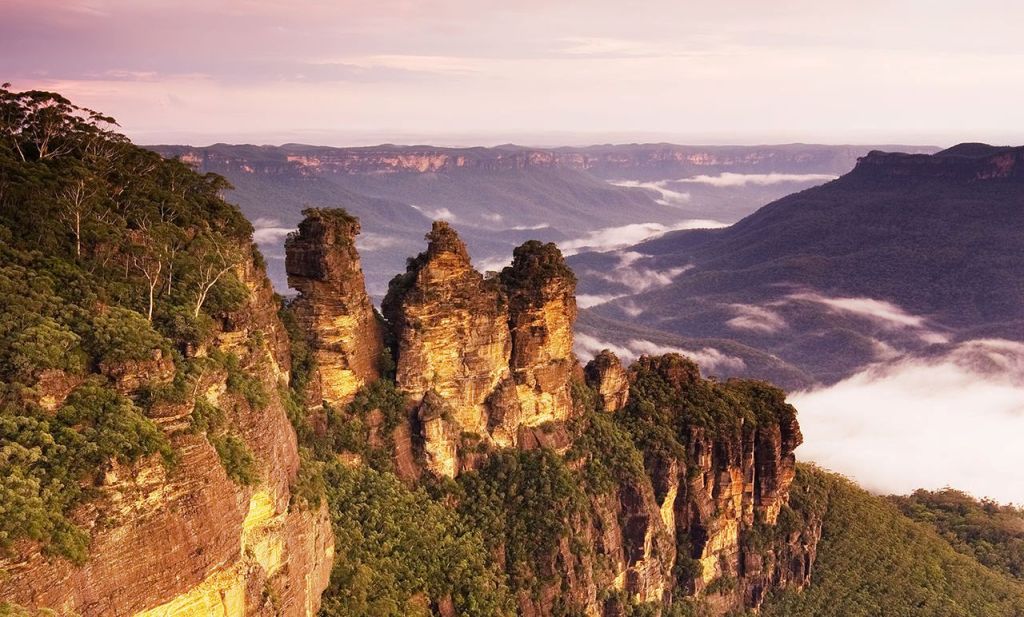
Known for dramatic scenery, it encompasses steep cliffs, eucalyptus forests, waterfalls and villages dotted with guesthouses, galleries and gardens. Katoomba, a major town in the area, borders Blue Mountains National Park . Echo Point offers views of the famous Three Sisters sandstone rock formation. 

The Blue Mountains get their name from the natural blue haze created by vast eucalyptus forests in this World Heritage area. Tiny droplets of oil released from the eucalyptus trees mix with water vapour and sunlight to produce the distinctive colour. To be noted here is the fact that our Nilgiris also have large eucalyptus forests.

Enroute to Blue Mountains,we visited The Featherdale Wildlife Park.

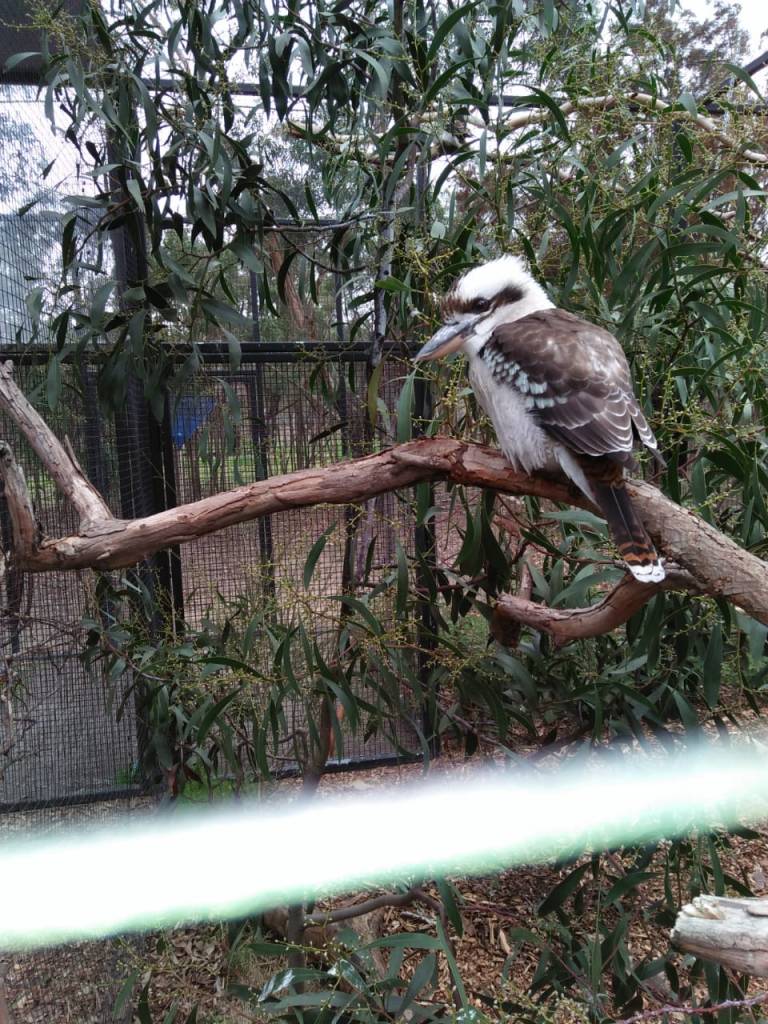
The park is located approximately 40 km from Sydney and contains various species native to Australia, and provides displays, events and interactive experiences. The site covers more than 3 hectares and has animal enclosures and display areas, visitor facilities, picnic spaces, shops and basic amenities. It specialises in Australian native wildlife and birds, as well as reptiles and marsupials

Focusing solely on native animals, here you can see koalas ,kangaroos ,wallabies, dingos and Tasmanian devils.

Kangaroo feeding is an important activity here. The kangaroos are so adapted to humans that they literally force you to feed them and if you don’t, they express their resentment too!

Kangaroo enclosure and feeding a baby kangaroo

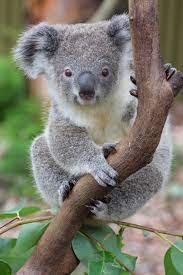
A Koala

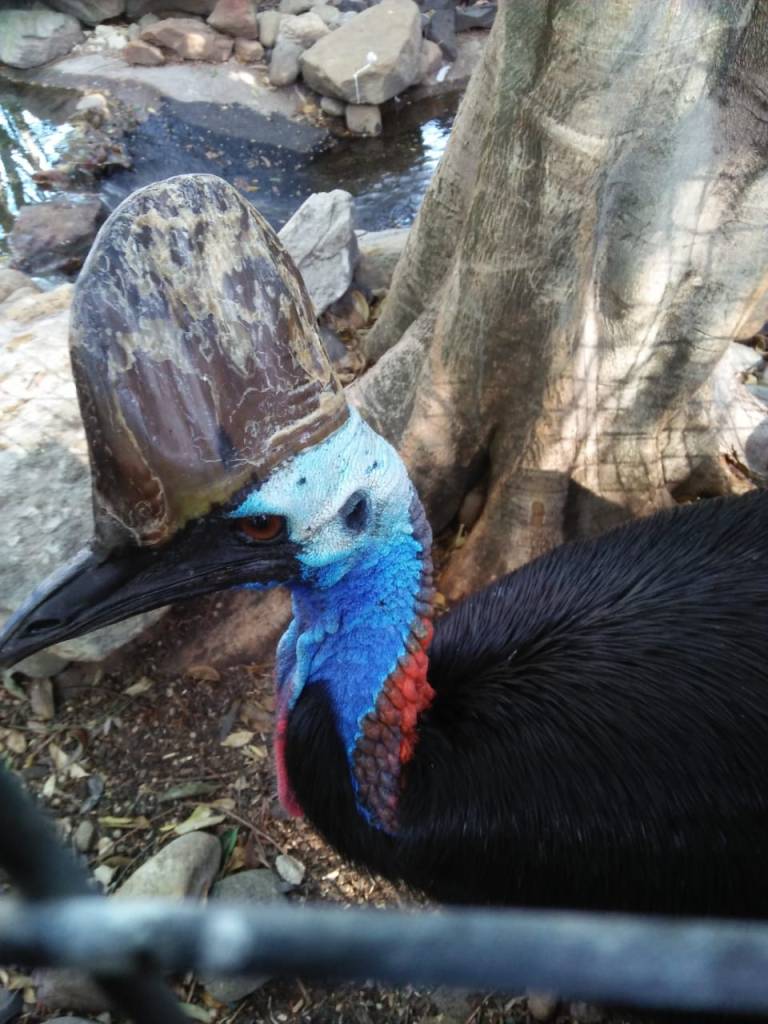
A Blue and yellow Macau and a Cassovary

Penguins and a Cockatoo

I must add here that Cockatoos are a very common sight in Australia…almost like the crows we see here in India. In Sydney you find them on windows and balconies of apartments.They are very noisy and get aggressive at times!!!

After a wonderful time at the park, we continued our drive to the Blue Mountains.

We reached Leura village for our lunch break.This is a picturesque village in the Blue mountain area and has lovely shops and cafes . Since it was autumn time, the place looked beautiful with the coloured leaves.

Some pictures from Leura…

Our next halt was at Echo Point close to Katoomba from where we had a view of the famous Three Sisters rock formation.

The Three Sisters is the most spectacular landmark of the Blue Mountains varying in height between 900 and 925 metres. They are floodlit at night offering spectacular views.

These rock formations were formed by erosion 200 million years ago when the sandstone of the blue mountains was eroded by wind, rain and rivers causing the cliffs around the Jamison valley to be slowly broken up.

As per the legend of the indigenous people; these rocks represent three sisters who were turned to rock .These sisters Meehni, Wimlah and Gunnedoo lived here as part of the Katoomba tribe. These sisters fell in love with men from another tribe and in order that they do not marry away from their tribe, they were converted to stone with the implicit understanding that they would later be reconverted to women. But the witch doctor failed to reconvert them and so we have them as rocks today.

The Giant Stairway:

From Echo point, a bush walking trail leads to the three sisters and down to the valley floor via 800 steps called the Giant Stairway. Walking another 1.5 kms one can reach the base of the Katoomba falls. Needless to say, we did not attempt it!!!

The Three sisters and the clouds descending on the Jamison Valley

The Three Sisters with the tourists at Echo Point

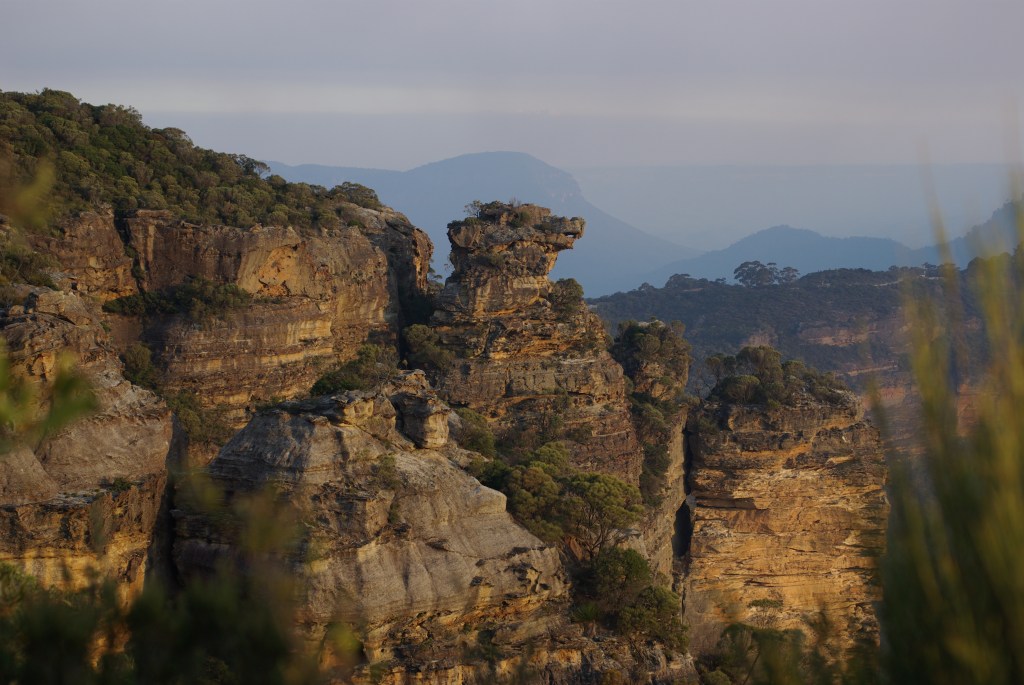
The Boar’s head look out is another famous destination here with a rock formation in the shape of a boar’s head.

The Boar’s Head look out

Scenic World:

Scenic World is a private family owned tourist attraction at Katoomba in the Blue Mountains. Originally a coal mine; dating back to the early 1800s ; it now has four main attractions: Scenic Railway, Scenic Skyway, Scenic Cableway and Scenic Walkway.

Scenic Railway:

This was originally constructed for coal transportation after mining in the Jamison valley in 1800s . It is an inclined railway now used for tourism. It has a sharp incline of 52 degrees and covers almost 400 metres distance. It is claimed to be the steepest passenger railway.

We took a ride on this railway. I must confess that inspite of all the preparation, I could not shoot a picture from inside the train as it slid down the slope…partly due to the speed and partly due to fear….had to hold on to our seats tight!!! You are always feeling that you are slipping off your seat!!

Scenic Railway

Scenic Skyway:

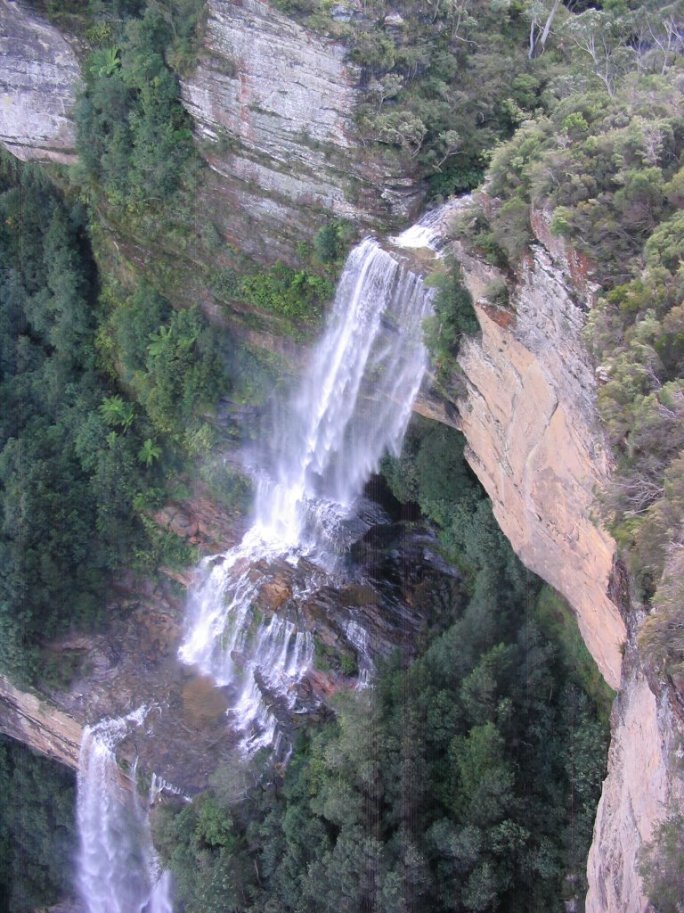
A cable way that traverses the gorge 270 metres above the valley floor. It provides great views of the Three Sisters and the Jamison Valley floor. The Katoomba falls is another breathtaking sight .

The opening image of this blog is of the Katoomba falls.

Scenic Skyway

Scenic Walkway:

This walkway gives one the experience of walking under a rain forest canopy. …an easy 20 minute walk between the railway and the cable way stations on an elevated boardwalk. The flora and fauna seen here belong to the native species and some are claimed to date back to the Jurrassic ages. Also on display along the walkway are old mining equipment.

Along the walkway there are clear directions If you miss the directions, getting back to the correct location to meet your bus mates can be challenging!!!

On the Walkway under the canopy

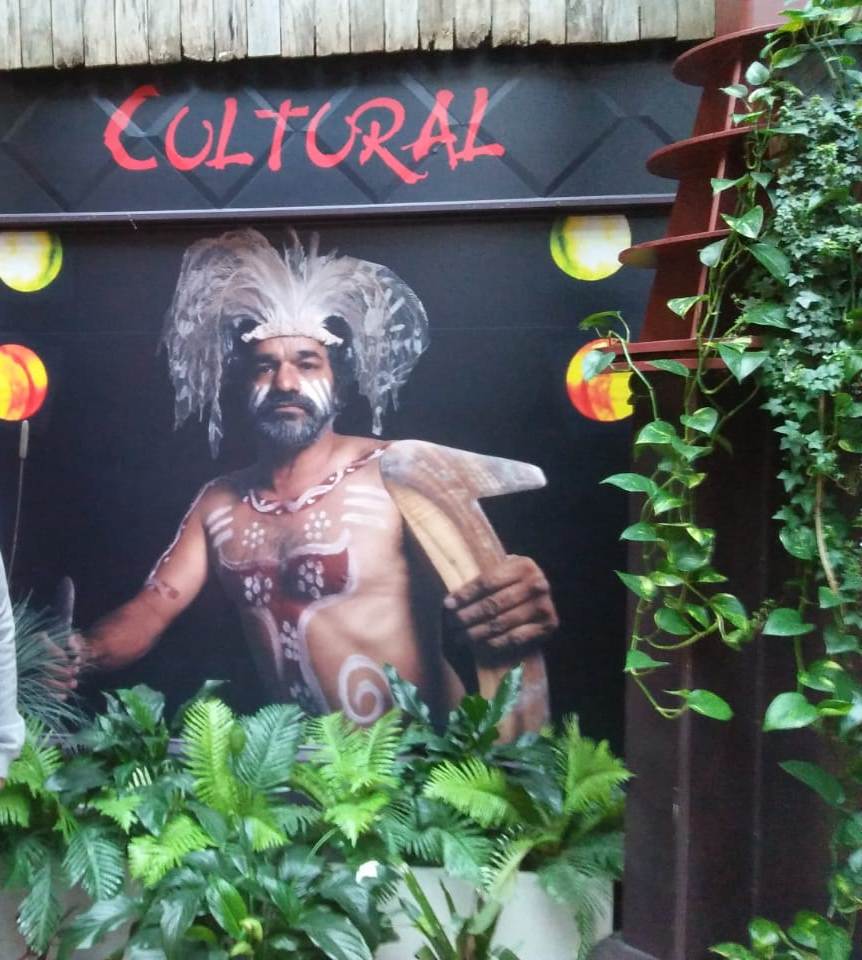
After the wonderful experience of walking in the rain forest, we took the cable car up and reached the cultural center where the traditional performances by the indigenous people is organised.

The cultural center

You cannot talk about Australia and not mention the Boomerang. Widely used by the indigenous people,it forms an integral part of their cultural performances.

Essentially it is a throwing stick  made of wood, but boomerang-like devices have also been made from bones.  A popular memento in the gift shops; they are painted and decorated with traditional art work.

A Boomerang

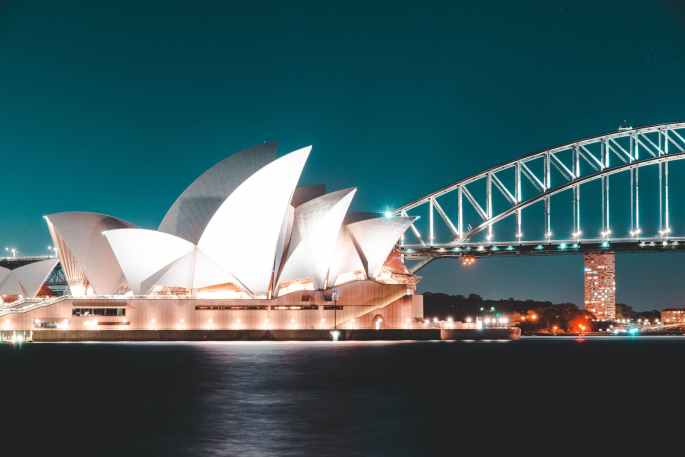
After finishng the Blue mountains trip, our next programme was a cruise on the Paramatta river to Sydney. We were dropped off at the ferry terminal and we boarded the ferry. As we approached Sydney, we had great views of the harbour, the bridge and the iconic Opera House lit up in all glory….

Some pictures from the Paramatta Cruise:

The Cruise Boat

The Harbour Bridge lit up at night

After an exhausting but gratifying day at the Blue Mountains, we returned back to our hotel . Next morning we were to say goodbye to Sydney and head to another amazing destination….Melbourne.

See you folks next week at Melbourne..

Do subscribe below:

SYDNEY

We are now Down Under….let me take you through some of our experiences in Australia…starting with Sydney.

An Overview:

Sydney is the capital of New South Wales and the most populous city in Australia.Located on the east coast,it had been inhabited for almost 30000 years by the indigenous people and remnants of their art work and engravings are seen throughout the region. They called themselves the “Eora people” meaning from this place.

After World War II Sydney experienced mass migration and grew to be one of the most multicultural cities in the world.

Our Trip

Well; unlike most of our trips, the arrival at Sydney entailed some uncertainties contributed to by nature!! Our Singapore airlines flight from Bangalore to Singapore was indefinitely delayed due to incessant rain and squally weather at Bangalore…leaving us waiting at the airport for a few hours. In the bargain, we missed our connecting flight from Singapore to Sydney. Finally we boarded to Singapore and landed there. I must mention here the amazing coordination by the ground staff at Singapore. We were re booked for the next available flight to Sydney and guided through our boarding process very smoothly .

We had an amazing flight from here on. The flight from Singapore to Sydney was exceptionally good. Literally pampered with food and goodies and great onboard entertainment.So after that initial hiccup, we were on course for a trip to OZ.

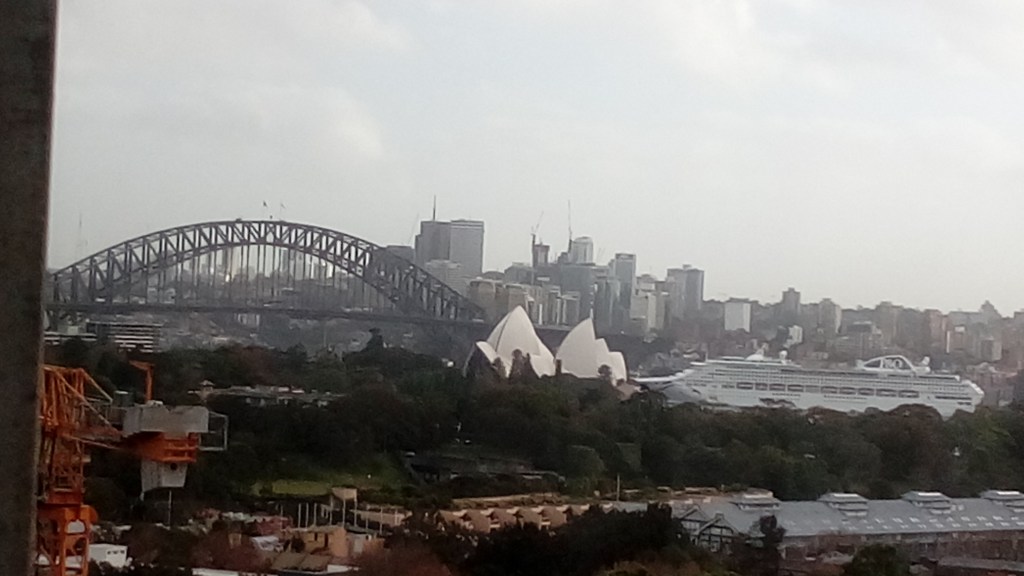
Landed late evening at Sydney and took a coach to our Hotel Holiday Inn at Potts Point. The view from our hotel room was amazing with the Harbour Bridge and the cruising ships.

View from hotel…The Opera House and Harbour Bridge with a cruise liner

Next morning we did a tour of Sydney city….

Our first halt was at The Opera House...the iconic landmark of Sydney which is a UNESCO World Heritage Site. It is a multi venue performing arts centre located alongside the Sydney harbour. This gracefully designed building shaped like shells or billowing sails is widely regarded as one of the most distinctive buildings in the world…..a masterpiece of 20th century architecture. Formally opened in 1973, it is one of the most visited sites in Australia.

Its exterior looks marvelous with the unique design. The interior is equally complex with theaters, studios, exhibition rooms, concert halls and a cinema. In fact there are guided tours to take one through the various sections of this unique structure.

Outside the building , all along the waterfront there are chairs laid out for people to relax and enjoy the views. Restaurants and beer parlors with canopies dot the outside.

Enough avenues for spending a day leisurely sipping your favorite drinks and watching the ships sail by…..

The Sydney Opera House…

Interior of the Opera House

From the Opera House, one can also see another iconic structure of Sydney…the Harbour Bridge across the waters.

The Sydney Harbour Bridge

The Harbour Bridge was built in 1932 and is the world’s largest steel arch bridge. Supported by massive double piers at each end, it has been nicknamed the “Coathanger”.

Bridge Climb is an important activity here. There are guided tours that take you to the 135 meter high summit of this bridge from where there are great views of the harbour and the city. A museum helps one understand the history and details of its construction.

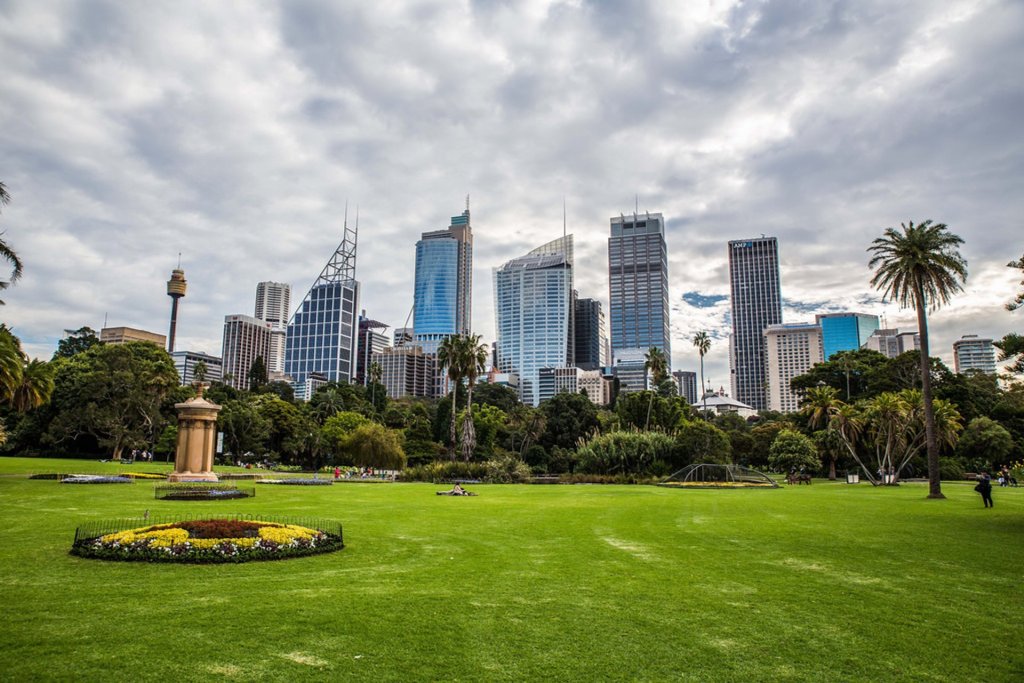
The Royal Botanical Garden was our next destination….it is a small walk from the Opera House. There are 30 hectares of themed gardens with towering trees, palm groves, orchids, ferns, herbs and oriental gardens. A rose garden and a glass house also form part of this garden. Particular attention has been paid to retain the native Australian trees.

This garden is also a popular wedding destination and we happened to see one such event.

The First Encounters garden is unique here. It tells the story of the Gadigal people, the land’s traditional custodians.

Some pictures….

The Glass House at the Garden

General views of the garden

A wedding decoration at the garden

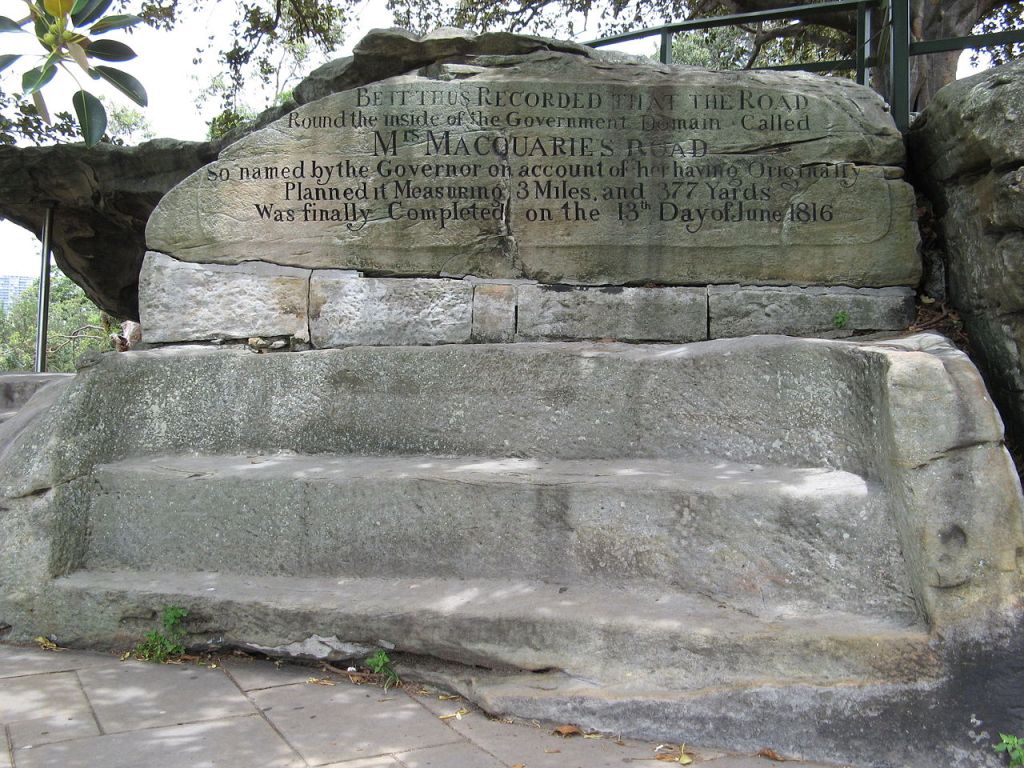
At one end of the garden is the Domain , an area used for public performances and events. Located here is Mrs Macquaire’s chair…an exposed sandstone rock cut in the shape of a bench .This rock was carved by convicts for Elizabeth Macquaire, the wife of the Governor. It is now called Macquiare’s Point.

This point is a popular photo destination as you can get good pictures of the Harbour Bridge and the Opera House.

Mrs Macquiare’s Chair

The Opera House and Bridge from Macquiare’s point

The Finger wharf at Woolloomoolloo

This is a heritage site which was originally a wharf and passenger terminal and now converted into a marina.It is the longest timbered piled wharf in the world. It was used as a wharf primarily for wool export.

Now converted into a marina, there were plenty of high end yachts anchored there. The interior of the old terminal is now converted into a boutique hotel and has restaurants and other public utilities.

The Finger wharf at Woolloomoollo

Kings Cross

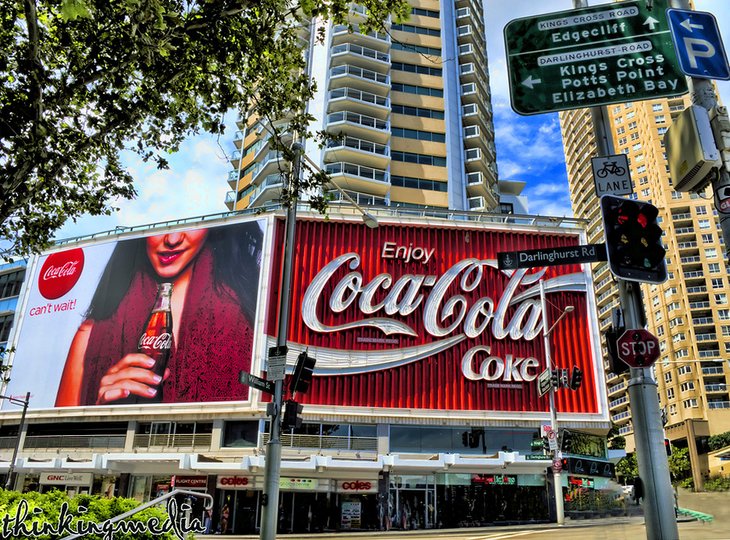
Purported to be the red light district of Sydney, this area is dotted by hep bars, night clubs and restaurants. The famous Coca Cola bill board is a land mark here…claimed to be the largest in the Southern Hemisphere!!

Sydney Tower

The tallest building in Sydney, this tower is 309 metres high. Located in the busy Central Business district, it is a popular destination for tourists. One can zoom up to the top in express lifts to the observation deck and a glass floor sky walk here . A revolving restaurant adds to its popularity.

The Sydney Tower

The Chinese Garden of Friendship

Popularly called Chinese garden, this garden is modeled like the gardens of the Ming Dynasty and offers an insight into Chinese traditions and culture.

Bonsai at the Chinese Garden

The Beaches:

There are multiple beaches in the city, ranging in size from a few metres to several kilometres, located along the city’s Pacific Ocean coastline and its harbours, bays and rivers. The Pacific Ocean delivers non-stop surf and surfing is a famous activity in most of these beaches. Manly, Bondi and Coogee are some of the more popular beaches.

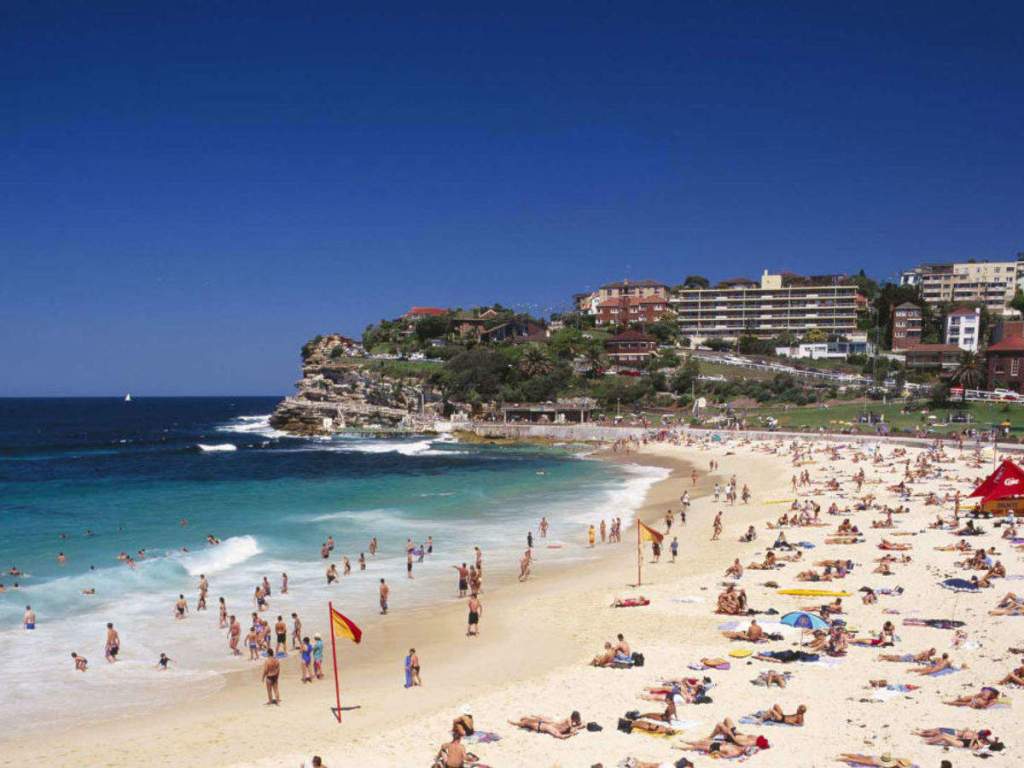
Bondi Beach

The sweeping white-sand crescent of Bondi is one of Australia’s most iconic beaches. . We visited Bondi Beach with our local friends who also took us around some of the other popular beaches. Coogee and Manly were some of the other beaches we visited.

Bondi is a famous destination for surfing

Some pictures from Bondi Beach..

Bondi Beach

Another landmark we visited was The Sydney Cricket Ground. It is a sports stadium used for cricket and other sports. Some pictures….

The Sydney Cricket Ground

After a nice roundup of the city, we had a sumptuous dinner at an Indian Restaurant in Sydney before heading back to our hotel

Nice memories of Sydney….

Next day we had a trip booked to the Blue Mountains near Sydney….

See you next week at the Blue Mountains…

Meanwhile do subscribe below

WHISTLER

The visit to Whistler Blackcomb ski resort was another amazing trip we did from Vancouver.

An Overview…

Getting its name from the whistling marmots who inhabit this area, this mountain was originally called London Mountain. Located in the Pacific Ranges in British Columbia, this is again a “NO MISS” destination….

North America’s largest ski resort by many standards, it has the greatest uphill lift capacity. No wonder it gets more than 2 million visitors per year and logs in as the busiest ski resort.

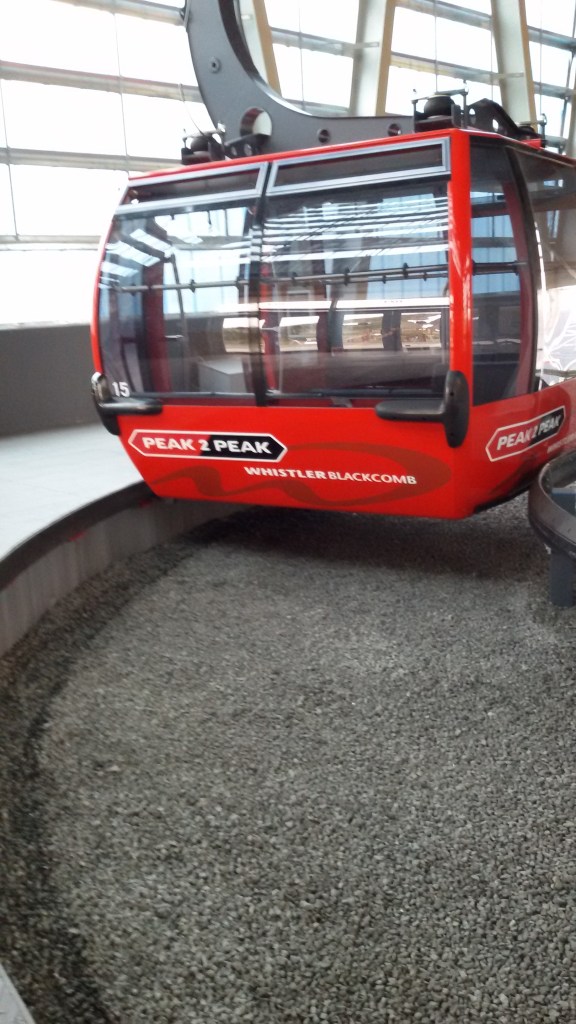
The main attraction for non skiers like us is the Peak to Peak Gondola….something I have never experienced before!! It connects the two peaks of Whistler and Blackcomb.

History

It was originally conceived in an attempt to win the bid for the 1968 Winter Olympics. Unfortunately they failed to win the bid. However, construction continued. Whistler and Blackcomb were initially individual resorts…competing with each other. Subsequently they were merged and we have this beautiful ski resort now.

As if to prove the saying “united we stand”; after the merger, they went on to win the bid for the 2010 Winter Olympics which were hosted here. The Alpine Skiing events were held here.

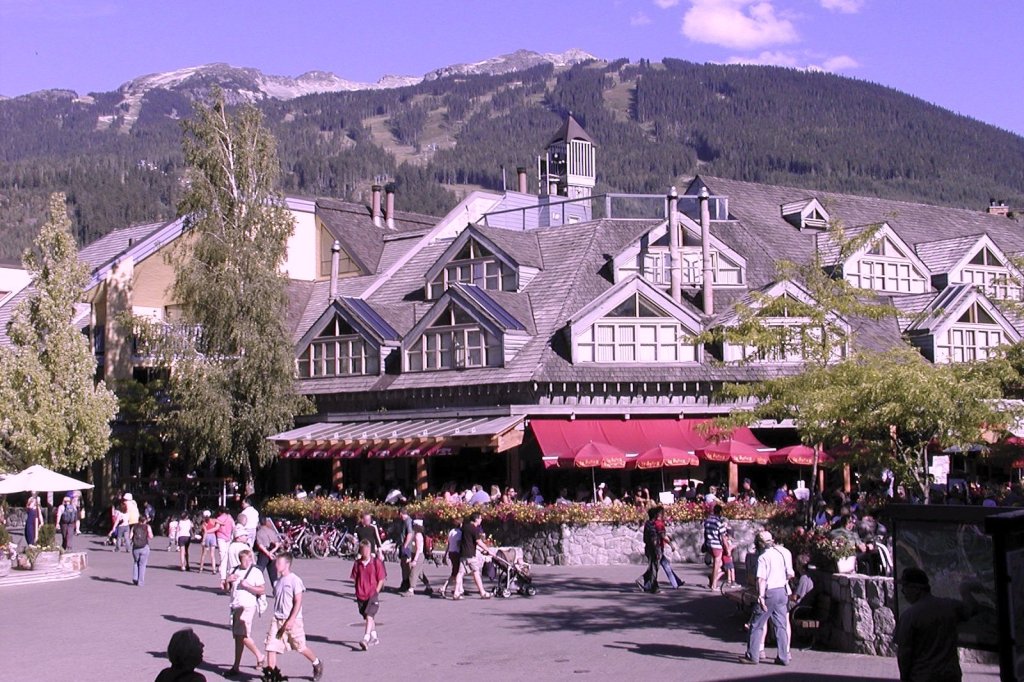
Whistler Village

Located 125 kms from Vancouver, the inhabitants are primarily tourists who come for skiing and snow boarding in winter and mountain biking in summer. It provides all facilities for such tourists like boarding and lodging, restaurants and pubs etc. Actually this was the accommodation for the participants of the Olympics. Subsequently the facilities were modified to cater to the tourists. Famed for its Tyrolean design, it is indeed an impressive starting point for the Gondola and the ski facilities above.

Our Trip

Picked up from our Vancouver hotel, we had a scenic drive through some of British Columbia’s beautiful country side.

We had a small photo halt at a waterfall…the Shannon Falls

Shannon Falls

We reached Whistler by 10 am but were told that the gondola was temporarily shut due to inclement weather conditions.

We were a bit disappointed but our guide told us that it may still be open after noon.

Meanwhile, we visited Whistler Village. This compact, chalet-style pedestrian village at the base of Whistler and Blackcomb mountains; has lot of hotels, restaurants and other facilities. We walked around exploring the village which was once the accommodation for the participants of the Olympics.

Whistler village

During the walk around we had our eyes constantly looking out for announcements on the electronic display board about the resumption of gondola services.

The electronic display informing the status of various activities

By noon, the announcement came that the gondola would resume service. With much excitement, we boarded the gondola.

This was a 30 minute ride to the peak.

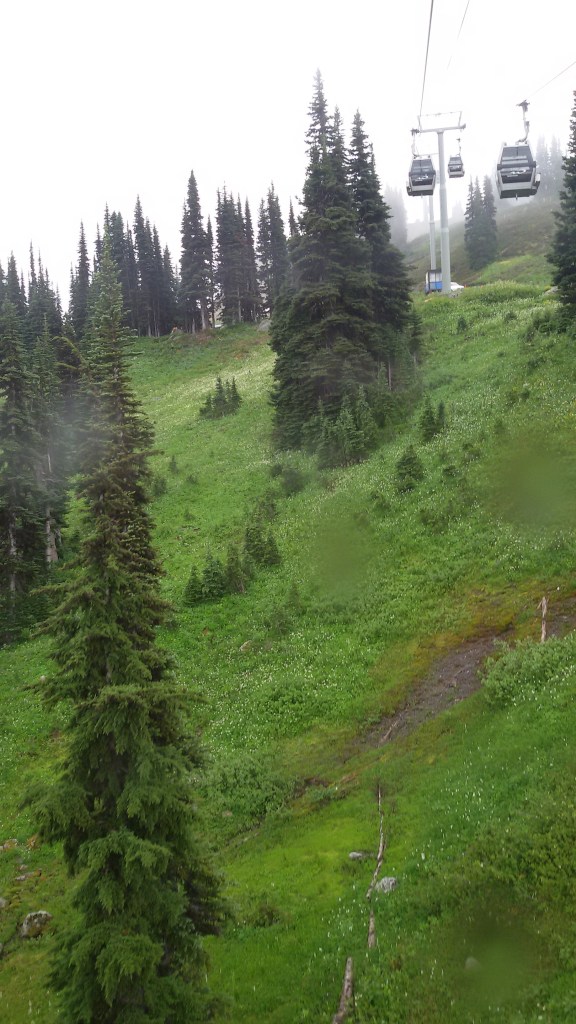
The Gondola to Whistler peak

View of the peaks from the gondola

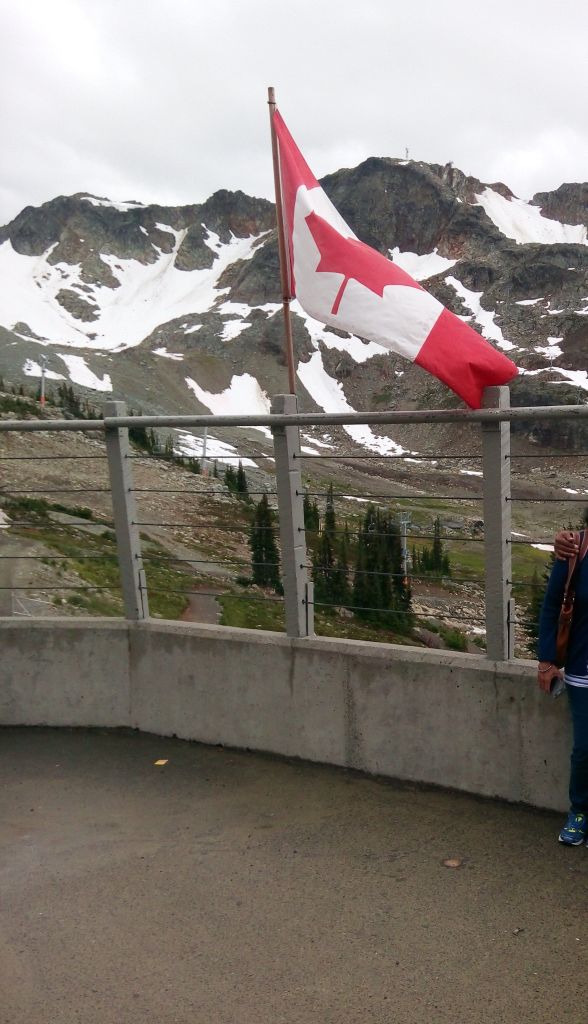
Whistler peak landing

From there, we took the next gondola which is the peak to peak gondola. This runs between the Whistler and Blackcomb peaks. It has a glass bottom to enable greater visibility. It covers a distance of 4.5 km which makes it the longest connected Gondola system in the world. 

Being suspended approximately 400 metres above the valley floor we had unique views of the Valley and the peaks and glaciers in Garibaldi Provincial Park. The glass-bottom cabin was ideal for a bird’s eye view of the creek and forests below. Accessible from the base of Whistler on the Whistler Village Gondola or from the base of Blackcomb on the Blackcomb Gondola; it gives a the 360 degree experience.

The Peak to Peak Gondola between Whistler and Blackcomb

View from gondola

View of Whistler village and the valley from the Peak to Peak gondola

This was really a unique experience. Since it serves a ski resort, the gondolas do round trips and we helped ourselves to two rounds of this exhilarating experience.

On the gondola we met another Indian couple and we had a nice picnic on the gondola munching some goodies which we exchanged.

After two rounds of this trip enjoying the breathtaking views, we returned to Whistler village in the smaller gondola and were driven back to Vancouver.

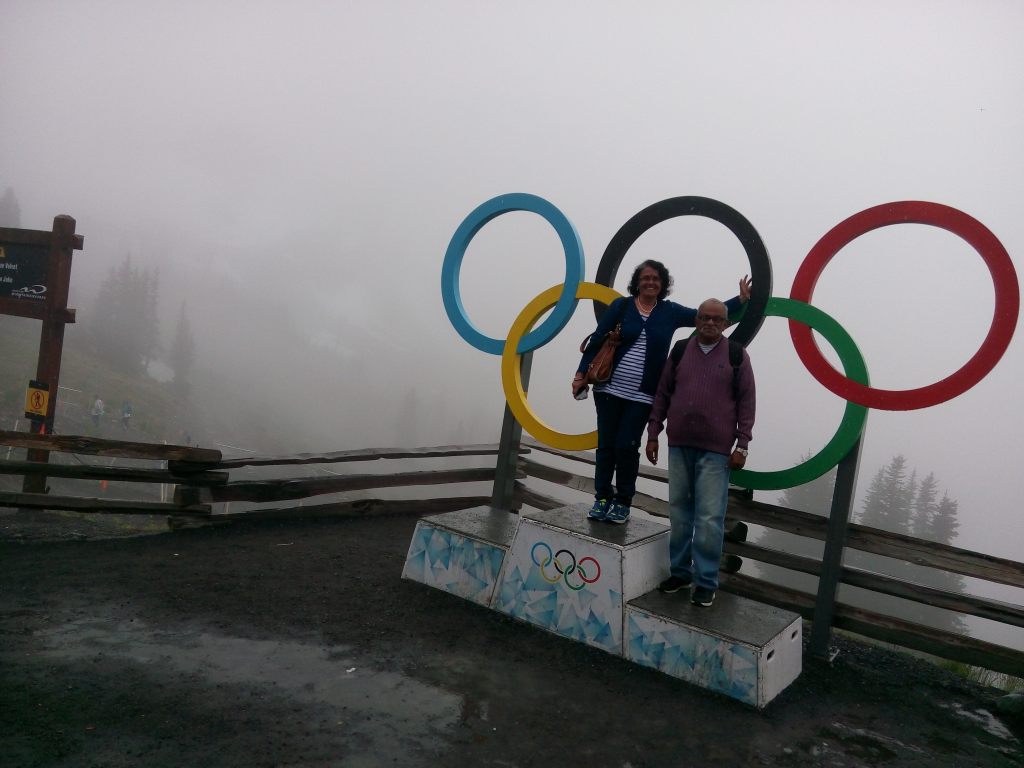
But not before a photo op ….

Our day among the clouds….on the Olympic podium

Well this brings us to the end of my series on Canada.

Now we move to Australia.…let’s meet next week down under…but not to forget…subscribe below

VICTORIA(B.C)

This beautiful place is the capital of British Columbia and is located on the southern tip of Vancouver Island 100 km from Vancouver city on the mainland.

Named after Queen Victoria; it boasts colorful gardens, a lovely harbor, magnificent architecture and a rich British ancestry, reflected in many historic buildings here …notably the Parliament building and Empress Hotel.

Having a temperate climate and being generally snow free; it is called the “garden city”.

A jewel in British Columbia, this place lost its commercial importance to Vancouver after the Canadian Pacific Railway terminus came up at Vancouver.

Our Trip:

We had booked a day tour of Victoria through Super Vacations and they picked us up from our hotel. We were driven to the ferry terminal and the bus boarded the lower deck of the ferry. The vehicles are parked in the lower decks of the ferry and passengers occupy the upper decks. Alighting from the bus in the lower deck , we climbed to the upper deck with a view to the open sea.

The lower deck on the ferry with vehicles and upper deck with passengers

After alighting from the ferry at Victoria we were given some time to explore the area. We walked around enjoying the beauty of this place.

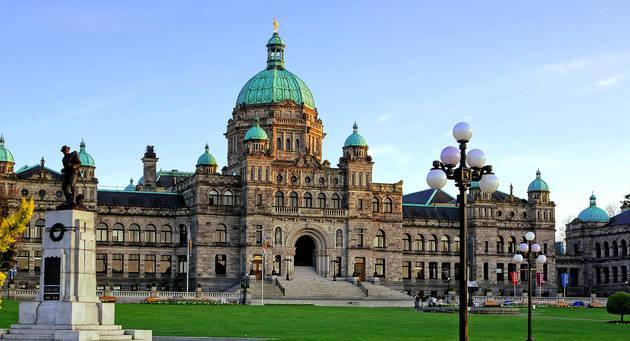
As mentioned earlier, there are a couple of historic buildings here…notably the Parliament building which houses the Legislative assembly of British Columbia and the Empress Hotel

Some pictures…
The Parliament Building

The Empress Hotel

Walking along the harbor front, there were some great views….

A seaplane….a common sight in Vancouver and Victoria

The Marina with yachts…
 From March to October every year, thousands of whales migrate through the waters that surround Vancouver Island, making it one of the best locations for whale watching

A whale watching tour operator invites you with this lovely figurine

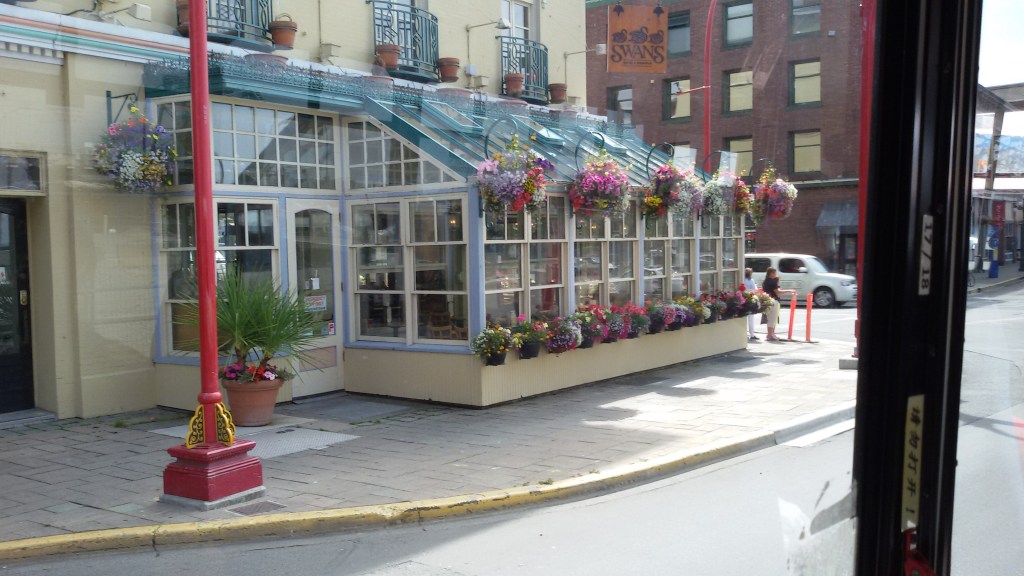
A beautiful street in Victoria

Another major attraction here is the Beacon Hill Park. Set in nearly 200 acres, this park is popular among the tourists and locals. It has woodland trails , tennis courts, ponds and of course is beautifully landscaped . It also houses a large totem pole.

The Butchart Gardens:

After spending time along the water front, we were taken to The Butchart Gardens. It is designated a National Historic Site Of Canada.

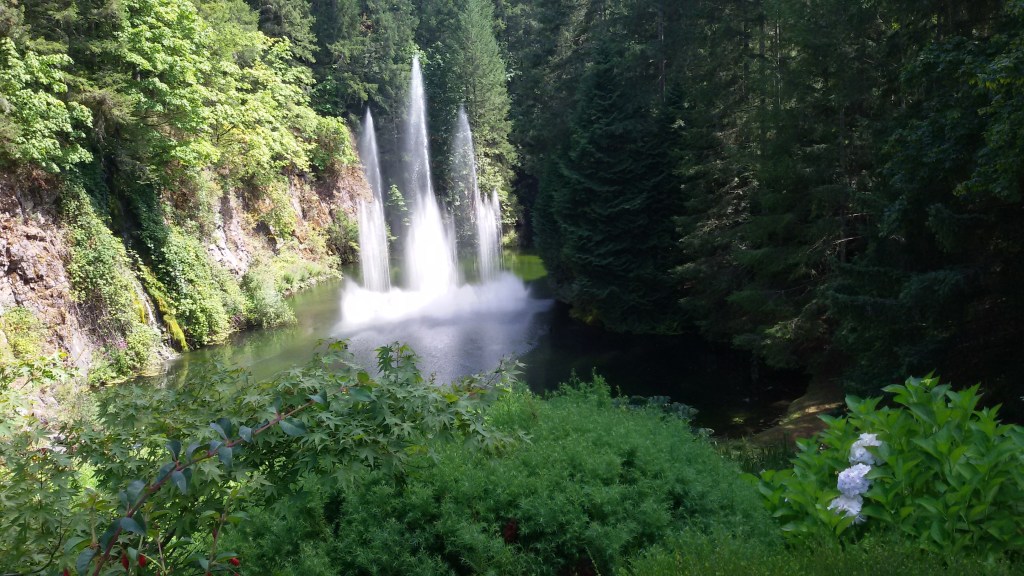
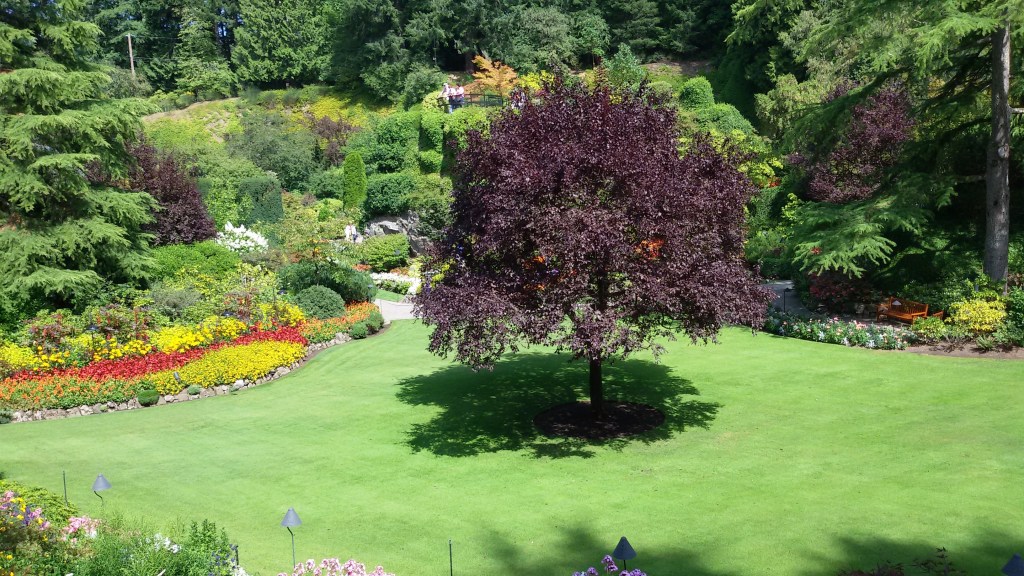
This garden is actually a converted abandoned stone quarry. It is really an example of how proper planning and implementation can convert ordinary places into wonderful tourist destinations. It is actually a group of floral display gardens. There is a Japanese garden,Italian Garden, Rose garden etc.

The featured image in this blog is that of a walkway in Butchart Gardens..

Some pictures…

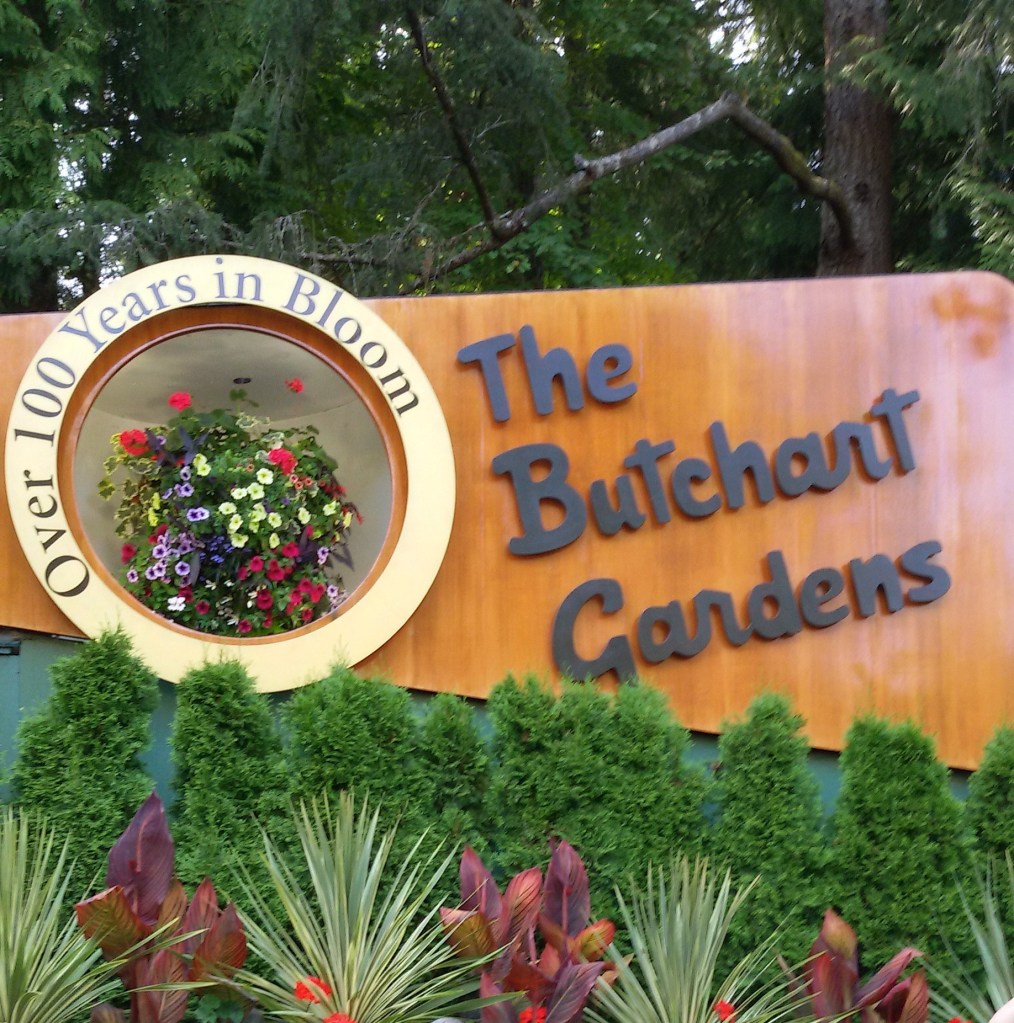
The Beautiful Entrance

After we finished seeing this beautiful garden, we were driven back to the ferry and sailed back to Vancouver…

A tiring but fulfilling day came to an end…but we still had another beautiful day ahead of us….the trip to Whistler…. See you next week at Whistler before we head for the southern hemisphere….

Meanwhile…do subscribe below

VANCOUVER

On a beautiful road trip from Calgary; enjoying the beauty of the Rockies, we arrived Vancouver late evening. After an overnight rest, we set off to sight see this jewel of British Columbia.

A short note on this beautiful city…

It is a major city in Western Canada in the province of British Columbia . It is one of the most ethnically and linguistically diverse cities in Canada. Though this area was inhabited by the indigenous people more than 10000 years ago, beginnings of the modern city started in 1867 around the present Gastown area and was called Gastown. The original site is marked by the Gastown Steam Clock. It was renamed Vancouver in 1886 by an agreement with the Canadian Pacific Railway. The city takes its name from George Vancouver a British Officer of the Royal Navy who explored and charted much of western coast including British Columbia, Washington and Oregon.

While forestry remains its largest industry, Vancouver is well known as an urban centre surrounded by nature making it a tourist destination. It has been nicknamed Hollywood North due to its popularity as a major film production centre in North America

 The Port Of Vancouver is one of the biggest ports in North America making it a vital trade centre.

Vancouver is also home to many immigrant Indians,particularly Sikhs. Just like in Toronto, seeing a Sardarji pass by is a common sight.!! I had a nice experience of how many of them have got totally adapted and settled there. During one of our sightseeing trips, as we were approaching Vancouver, I saw a sardar on a tractor ploughing his field . I was given to understand that many farmers from the north particularly Punjab have taken to farming in Canada in a big way..

The highlights of Vancouver:

The Stanley Park is an iconic urban park in Vancouver spread over more than 1000 acres. Unlike many urban parks, Stanley park is not the creation of a landscape architect. It is an evolution of a forest and an urban place over many years. Much of the park still remains densely forested as it was in the early 1800s. It is estimated that there are close to half a million trees and many of them are hundreds of years old. There have been windstorms which have destroyed many trees too!! The park features forest trails, hiking paths, beaches, lakes, an aquarium and children’s play areas .

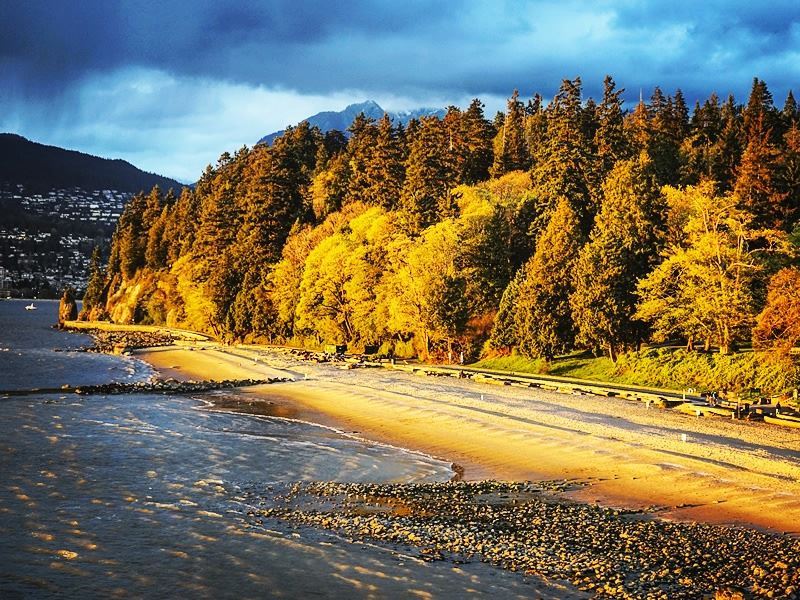
A beach at Stanley park ….note the onset of autumn on the leaves…

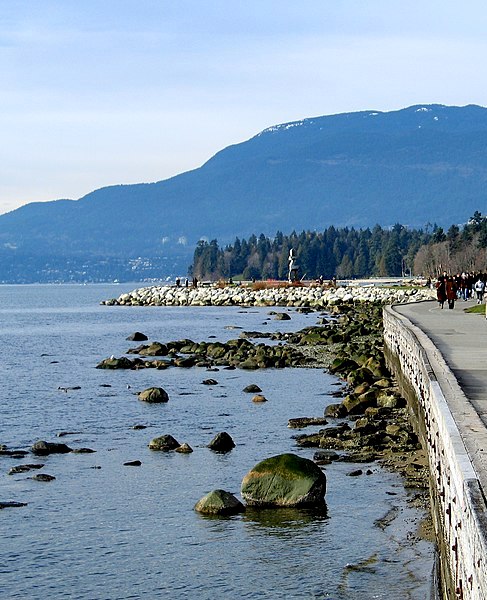
The Seawall is another highlight of Stanley Park.The walkway has been extended several times and is currently 22 kilometres from end to end, making it the world’s longest uninterrupted waterfront walkway. Cycling along this pathway is a popular activity.

The Sea wall

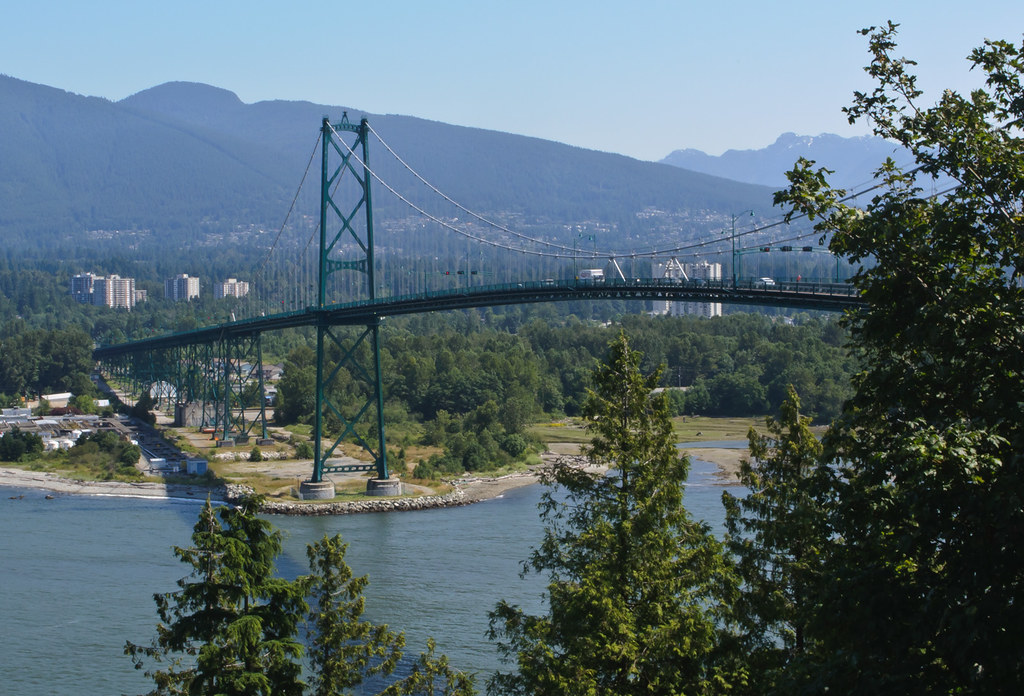
The Lions gate bridge that connects the city with the northern parts is also seen from this park.

Lion’s gate bridge

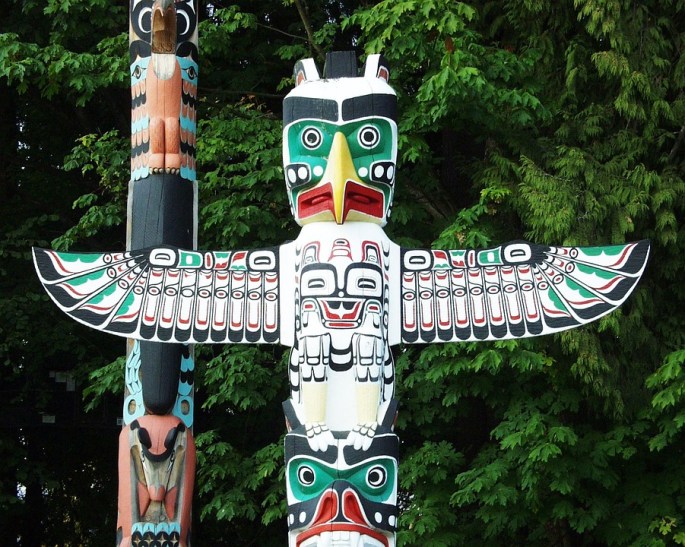
Another attraction here is the Indigenous Art area where there are carved wooden poles called Totem Poles. There are many such poles in the park and they represent the First Nation’s art work.

The featured image of this blog is that of a totem pole….just a tribute to the First Nation People and their artwork!!!!

Totem Poles

There is indeed no dearth of activity to follow at Stanley Park and it is a real urban oasis.No wonder that this park has been designated a National Historic site of Canada

Grouse Mountain:

Grouse Mountain is basically a Ski Resort . Located in North Vancouver, this winter wonderland offers skating, skiing and snowboarding. A gondola takes one from the street level to the summit where one can engage in any of these activities. Since the ski slopes are not particularly difficult, it offers great opportunities to learn skiing.

And for people like us who are not particularly interested in any of these, it offers great views of the city and surrounding areas of British Columbia. Besides, there are numerous shops and restaurants.

We visited in summer and so the ski activities were not there but we enjoyed the Gondola ride up and spent some time enjoying the panoramic views of the city from the top.Soaring to an altitude of 4,100 feet above sea level, the Gondola transports you to the apex of Grouse Mountain in about 15 minutes. Most local people were actually out there on a picnic! Of course there were lot of hikers too. Grouse mountain offers great hiking trails with great views. Zip lining, paragliding and eco tours are the other popular activities offered here.

The Gondola

View of Vancouver from Grouse Mountain

Paragliding at Grouse Mountain on a bright sunny day

Another attraction in North Vancouver is The Capilano Suspension Bridge

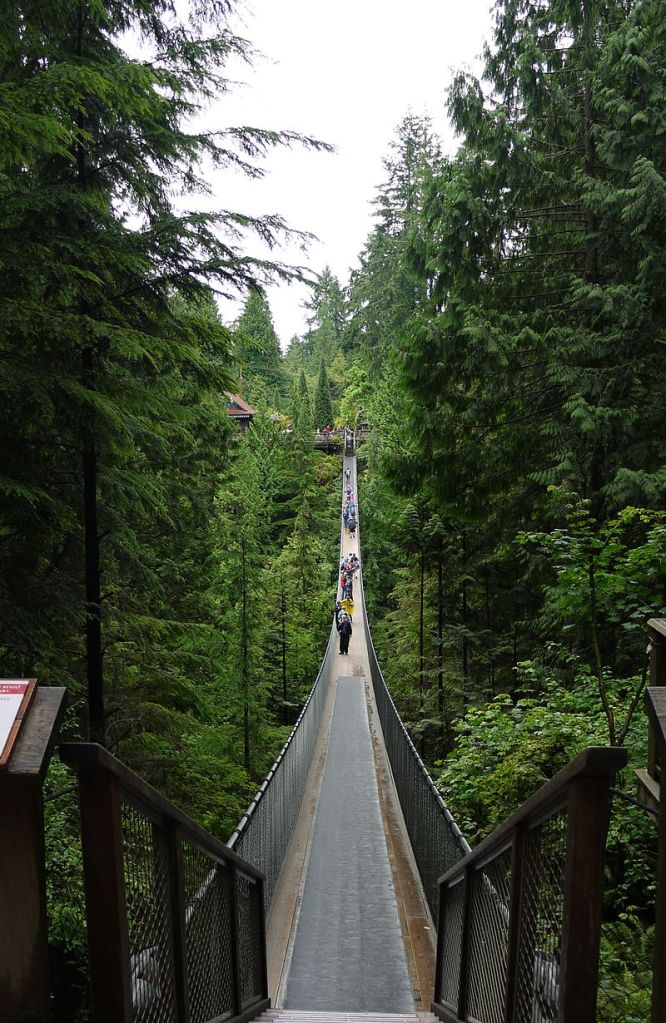
This is a suspension bridge across the Capilano River. Around 70 metres above the river bed and 140 metres in length, this bridge is in private ownership. Originally made with hemp ropes and cedar planks, it was replaced with wire cables

The Capilano Suspension Bridge

Treetop adventures is an adventure activity offered at the Capilano bridge park. Suspension bridges built at a height lets one explore the tree tops and the ravines below.

Tree top adventures

There is also a cliff walk where one can walk along a semicircular bridge over the cliff and enjoy the beauty of the river below

The Cliff Walk

Gastown

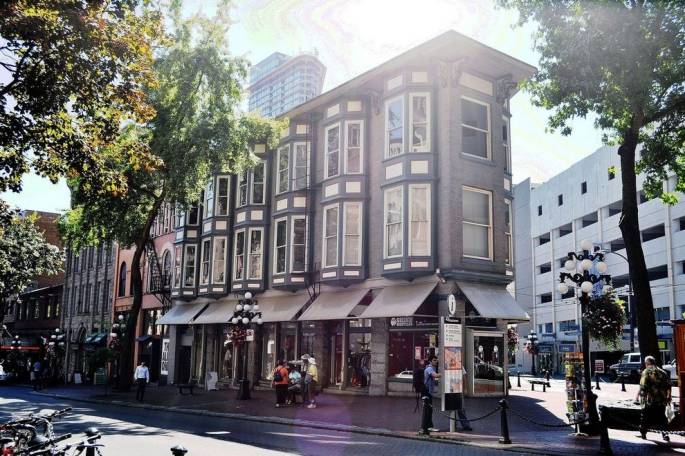
The oldest part of the city, gas town is an area of restaurants, galleries and shops set in Victorian buildings. Heritage structures and cobblestone streets give the district its unique atmosphere. Gas town came into existence in 1867 when it was known as Gassy’s town after a man nicknamed as Gassy Jack. This soon evolved into Gas town.

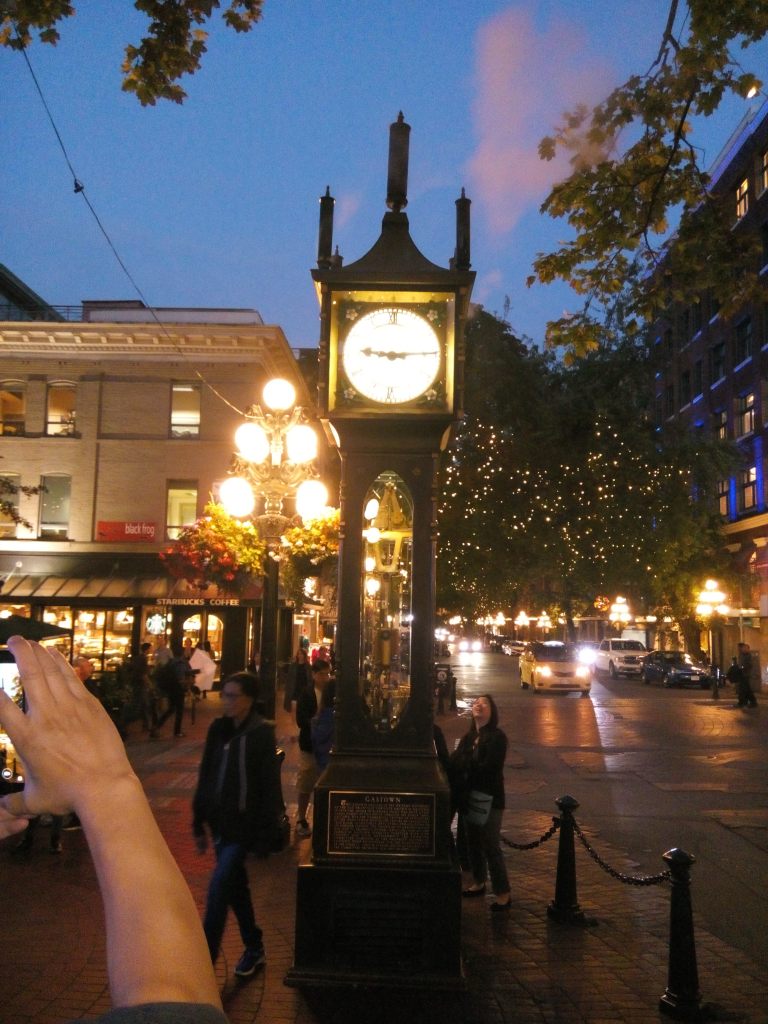
There is a famous Steam clock installed on the street here which gives out colored steam every 15 minutes.This is actually part of the steam heating system , as a way to harness the steam and mask the steam vent on the street.

The Steam Clock spewing pink colored steam

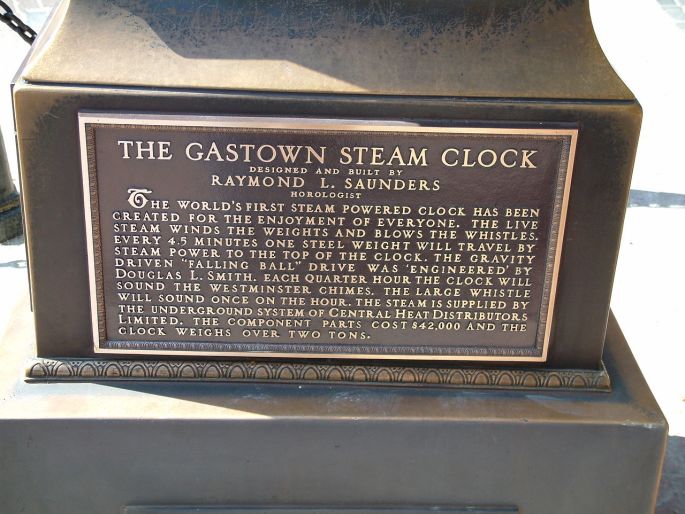
The plaque below the clock

A typical street in Gastown

Canada Place

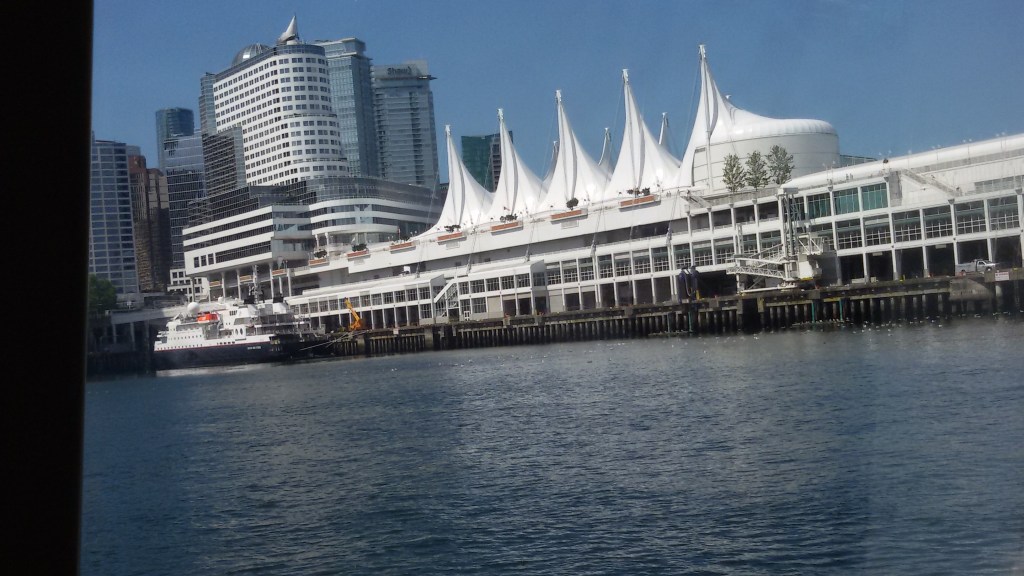
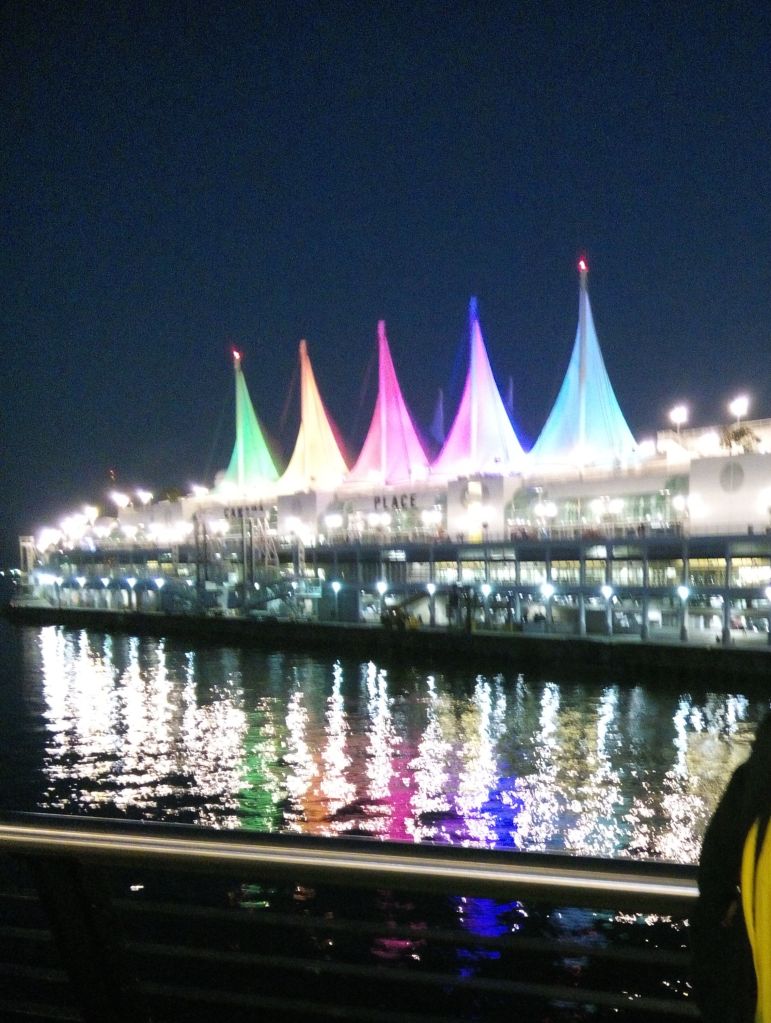
This architecturally designed structure along the shores of Vancouver; is part cruise ship terminal, part convention center and hotel and partly a hub for sightseeing bus tours. The unusual roof design creates the impression of a huge sailing vessel. If you happen to arrive in Vancouver by cruise ship, you will arrive here!!

Canada Place

Canada Place by night

There are regular sea bus services from here and we took a ride on one such sea bus.

The Sea Bus

The Vancouver skyline from the sea bus.

Well ; I hope you have got a sneak peek of this beautiful Canadian city. From Vancouver we also did short trips to Victoria and Whistler.

These two trips will be featured in my next two blogs which will bring us to the end of our Canadian Adventure.

For now, enjoy Vancouver and see you next week at Victoria…

Meanwhile…do subscribe

ATHABASCA GLACIER

The Athabasca Glacier in the Columbia Ice fields…that is our next destination.

The drive was amazing and picturesque…

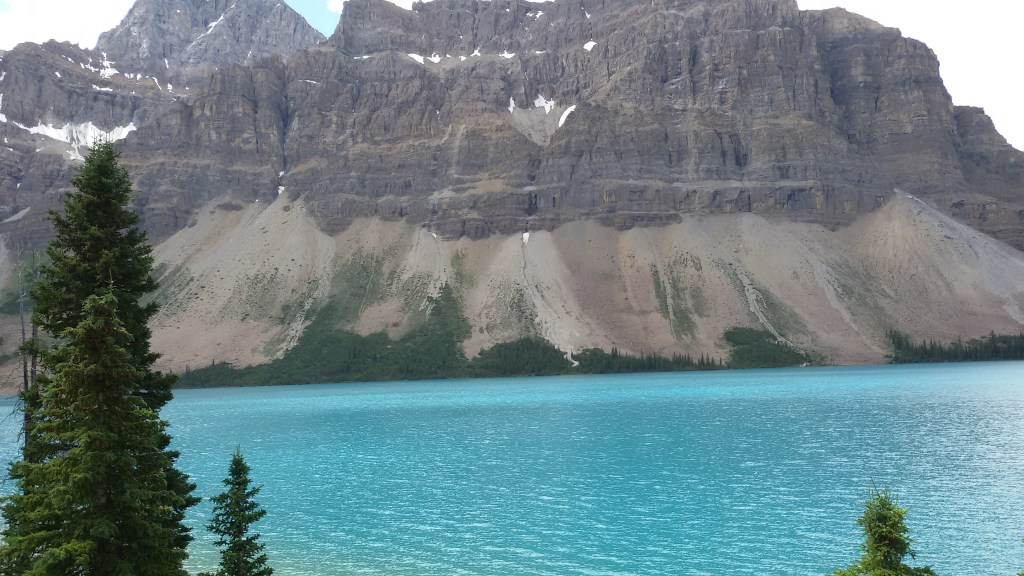
Bow Lake is a  lake on the Trans Canada Highway as you drive from Lake Louise to The Columbia Ice fields. It lies at an altitude of 1920 meters and is formed by the melt water of the Bow Glacier. The beautiful turquoise color of the lake is due to the glacial till. It is one of the largest lakes in Banff National Park. We had a small photo halt by the Bow Lake. Some pictures…

The Beautiful Bow Lake…notice the color of the water…

After this beautiful view, we continued our drive to the ice fields and arrived at the Ice fields discovery center.

A small overview on this mighty ice field and glacier…

The Columbia Ice field is the largest ice field in the Canadian Rockies lying astride the Continental divide  along the border of British Columbia and Alberta in Canada. It lies partly in Banff National park and partly in Jasper National Park . It has six major glaciers…Athabasca being one of them.

The Athabasca Glacier is one of the six principal toes of the Columbia icefield. This glacier has receded 1.5 km and lost over half its volume in the past 125 years at the rate of 5 metres per year of depth loss…..so much for global warming!!!

Being easily accessible from the Trans Canada highway, it is the most visited glacier in  North America.

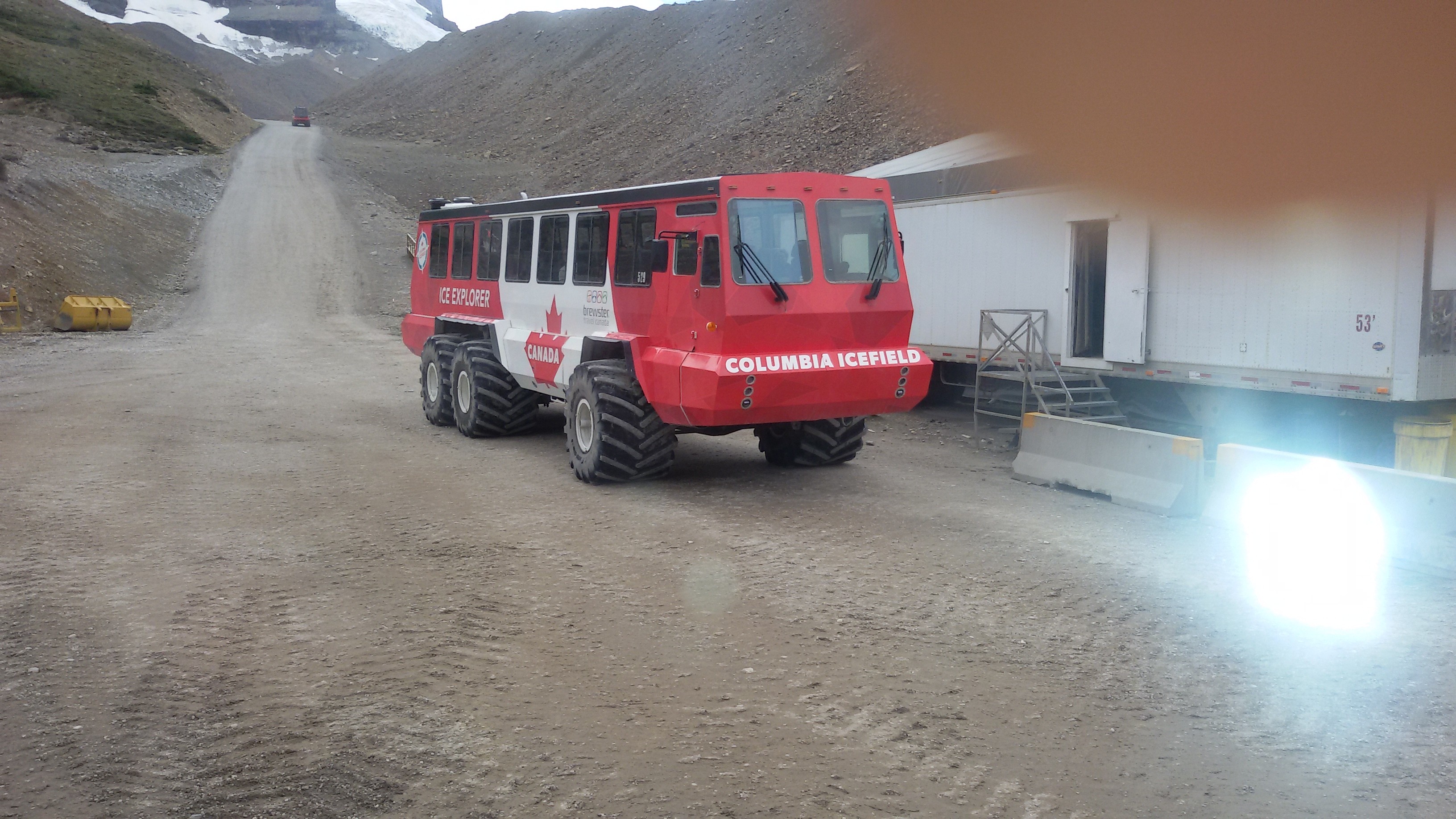
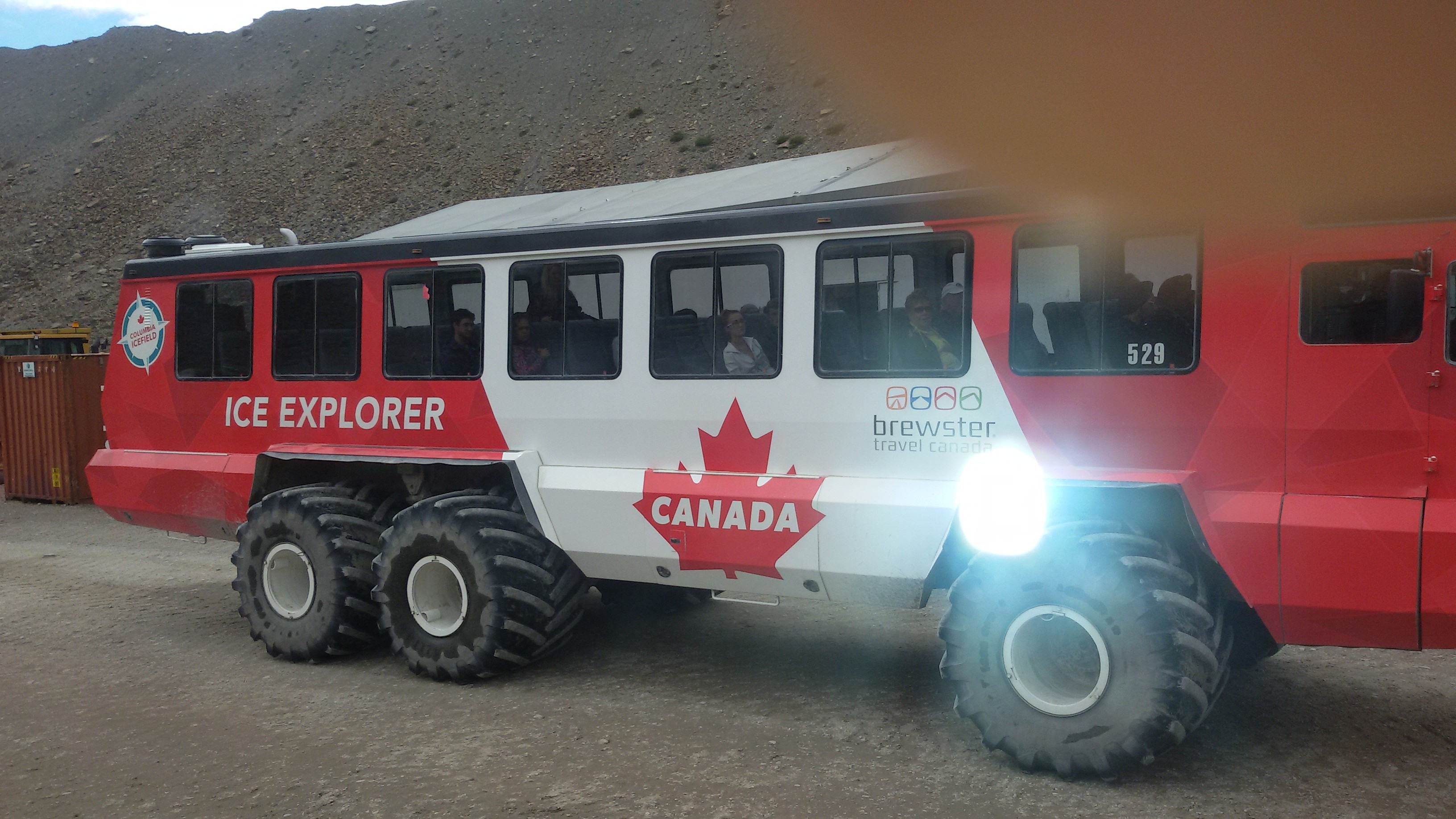
The Columbia ice field discovery center located across the glacier is used as a lodge for sightseeing on the glacier. Standard buses take you to the center . From there you board special snow coaches to reach the steep grades of the glacier

Riding on the glacier….a lifetime experience!!!….feel it as you read along…

After a small break at the discovery center, we were asked to board the snow coaches. These buses have huge ribbed tyres which help them to manouver on the ice and prevents slipping and skidding. However, the driver warned us that it is going to be a bumpy ride and seat belts are compulsory on this coach. It does feel a little scary as this vehicle manouvers on the rocky hard ice making a lot of noise and throwing off a lot of ice as it moves towards the glacier.

Athabasca Glacier

The snow coaches used to reach deep into the glacier….note the strong tyres

The old snowmobile that was used ealier to reach the glacier…. now an exhibit

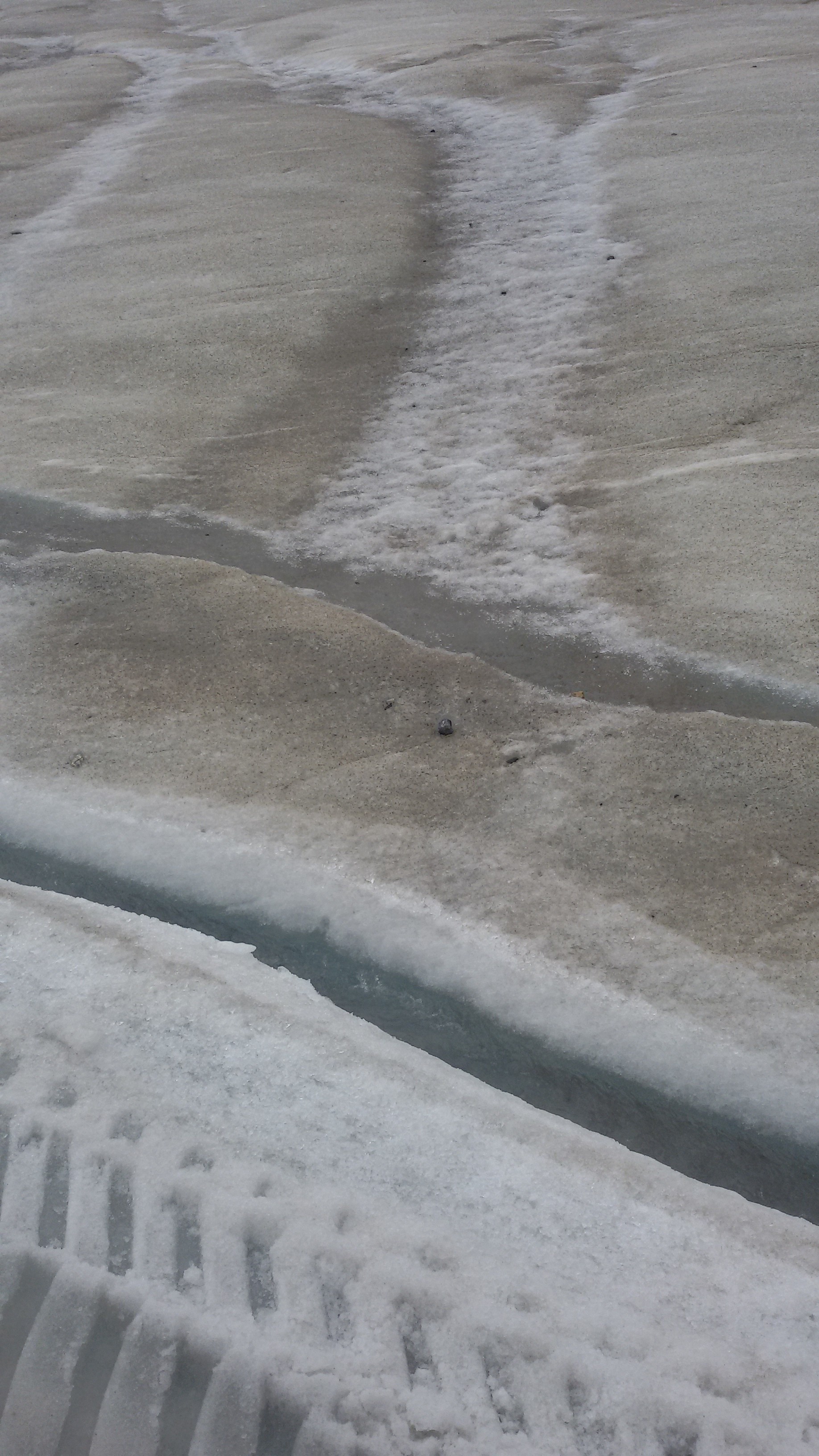
Once we were on the glacier, we played around in the snow . Another unique experience we had was drinking the glacier water. At places on the glacier, there were small pools of water…melted snow. Our guide assured us that it is very pure and it is safe to drink it. The snow surface may look dirty but it is due to the rock deposits and not dirt. So we collected some in a small bottle…it was sweet!!!….some unadulterated water from the melting snow on a mountain top!!!!!

The glacier floor and the potable water stream!!!

Though we managed to get some pictures here, the numbness of our fingers was an issue. You can well imagine how it must be; standing on sheets of ice and surrounded by ice every where!!

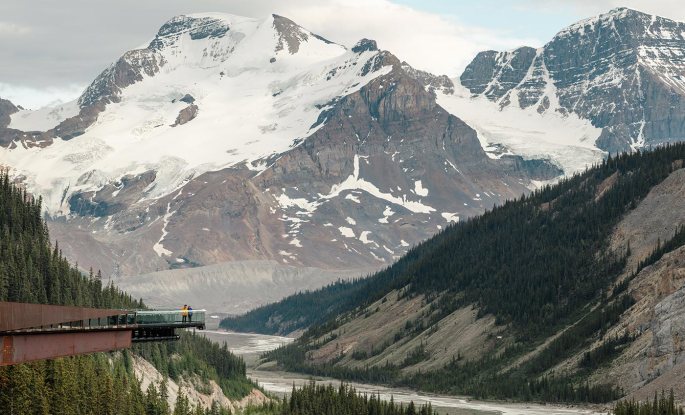
Our next destination was the Jasper Skywalk,...a large semicircular glass bottomed bridge that extends out from a cliff edge at a height of 300 mts from the Sunwapta valley floor. We walked for around a kilometre on the bridge. Wonderful unforgetable experience in life!!!….

The opening image of this blog is a picture of the Skywalk jutting out over the valley below

On the Jasper Skywalk…notice the Sunwapta valley below

The glacier sky walk experience is an audio presentation of the exhibits along the sky walk. As we enter the sky walk we are provided with an audio kit and as we walk along, we can get the description of the exhibits.The exhibits include wildlife, fossils and much more.

After finishing the sky walk experience, we were driven to Golden...a town in British Columbia enroute Vancouver from Calgary. Much of the town’s history is connected to the Canadian Pacific Railway and the logging industry. It is also closely associated with the Kicking horse river. With the development of the Kicking horse resort and associated adventure activities, it has transformed into a tourist destination with facilities for paragliding, hang gliding and mountain biking. The river flows from the glaciers of the Columbia ice fields and creates the Kicking horse canyon. The Kicking horse pass is the route taken by the Canadian Pacific railway to connect the high Rockies to the Bow Valley below

The Kicking Horse river got its name from a funny incident. James Hector ,one of the geologists of an expedition was kicked by his pack horse here. He decided to call the river The Kicking Horse river .

As an ecological, recreational, and historical jewel of the Canadian West, the Kicking Horse River enjoys the distinction of being the first British Columbia river to be recognized as a Canadian Heritage River.

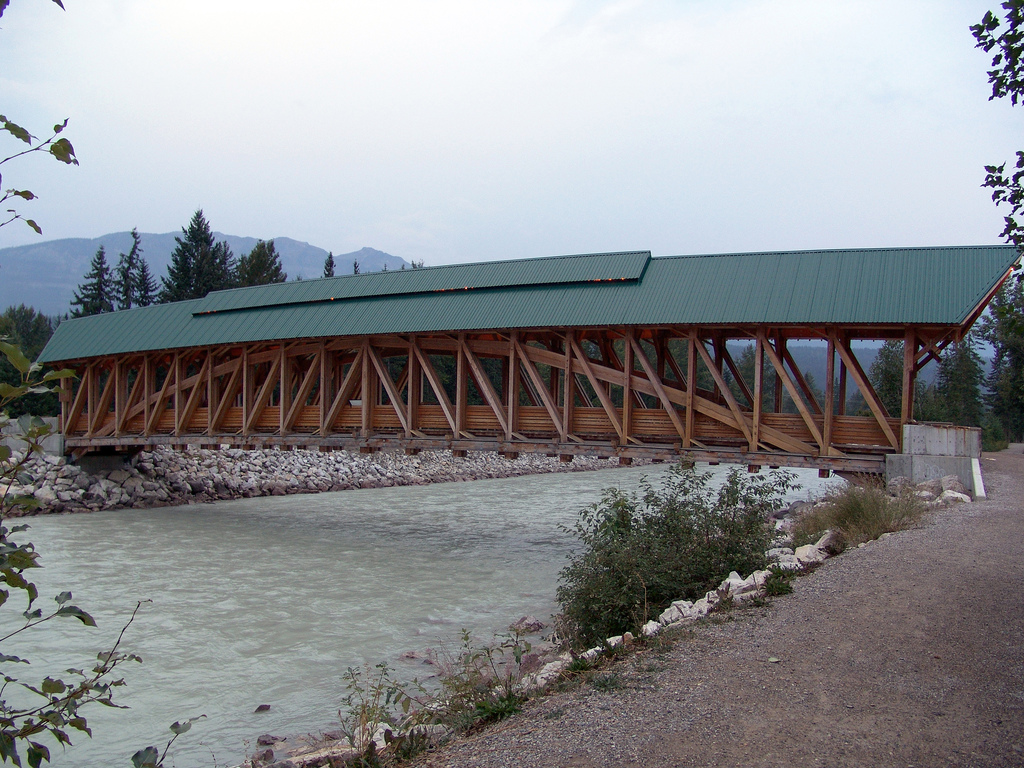
There is a cute timber bridge across the river. Built by the local timber framers, it is a popular photo location.

The Timber bridge across the Kicking Horse River

We were put up at Kicking horse ski resort and that was a bonus…living at a ski resort overlooking the ski slope.That was another unforgettable experience….the ambiance of a ski resort….with the room overlooking the cable cars that go to the ski slope….Being summer, there was no skiing activity but the ambiance was truly exceptional! The rooms are equipped with all kinds of skiing equipment too !!

The Kicking Horse Mountain and Ski Resort

View from our room at the resort

After the overnight stay at this wonderful resort, we proceeded next morning to Vancouver. The drive to Vancouver is also very picturesque.

We passed The Sushwap Lake and the town of Salmon arm

The Sushwap lake is a popular house-boating and water recreation destination. Salmon Arm is the urban centre on the lakeshore with a long curved wooden wharf and sandy beaches,

The Sushwap Lake

Enroute, we also visited the Last Spike…a historic site for the Canadian Pacific Railway.

The Canadian Pacific Railway was built between 1881 and 1885 to connect Eastern Canada with British Columbia in the west.It literally runs across the width of Canada .The Rail tracks were supposedly built from both ends and finally met at this place marking the completion of the track laying.

One can take a picture against a painting giving the appearance of driving the last spike into the track.

Driving the last spike …..

We arrived Vancouver by evening and checked into our hotel. It was indeed a great road trip from Calgary to Vancouver. By doing it as a road trip, we got to see the entire stretch of the beautiful Canadian Rockies. This is probably one of my best trips ever….the sheer beauty of the Rockies and British Columbia is something to be experienced at least once in a lifetime!!!

So plan your Rockies trip AS SOON AS YOU CAN……

Meanwhile do not forget to subscribe below

See you next week at Vancouver….

BANFF NATIONAL PARK

Rocky mountain peaks, turquoise glacial lakes,vast glaciers, a beautiful mountain town, abundant wildlife and scenic drives…this is what summarizes the beautiful Banff National Park. It lies along the Canadian Rockies between the provinces of Alberta and British Columbia in Canada.

Banff is also a designated UNESCO world heritage site.

A perspective on Banff and the Rocky Mountains:

Banff National park is Canada’s first National park and encompasses more than 2500 sq miles of pristine wilderness.The Bow Valley which lies in the park is home to two small communities. The town of Banff at 4500 feet above sea level and Lake Louise which provides the base camp for hiking trails and other activities around the turquoise waters of Lake Louise itself.From here the Ice fields Parkway leads to truly remote destinations and glaciers and borders the Jasper National Park.

The Trans Canada Highway runs through the park and makes it easy to connect with Banff, Lake Louise and the Ice fields.

Wildlife

Banff is an all season destination with summer being most popular when you have ice free lakes and blooming alpine flowers.The park is home to grizzly bears, elk, moose ,coyotes and big horn sheep.The lakes have abundant trout and salmon.

Environmental Concerns

For some time, the park officials have been concerned about the effects of vast human presence in and around this region that could affect the wildlife. Besides the Trans Canada Highway, trains pass through it on the Canadian Pacific tracks which are a major east west link. Concerns on climate change with gradually increasing temperatures with melting and retreating glaciers also exist.

History

Retreating glaciers had left behind vivid blue lakes colored with glacial silt and canyons carved by water.

In 1883 employees of the Canadian Pacific Railway discovered a cluster of natural hot springs near the present Banff National Park. Squabbles over the ownership of these springs led the government to declare the area around the springs as a natural reserve.Subsequently more areas were added and it was declared a National park. That is how the beautiful Banff National Park was born…

Come on now….let’s visit this beauty

Calgary…the gateway to the Rockies was our starting point for this amazing tour of the Canadian Rockies with an online booking with a tour company.

Picked up at Calgary airport along with another family, we were driven by road to Banff.

A little bit about this amazing town…

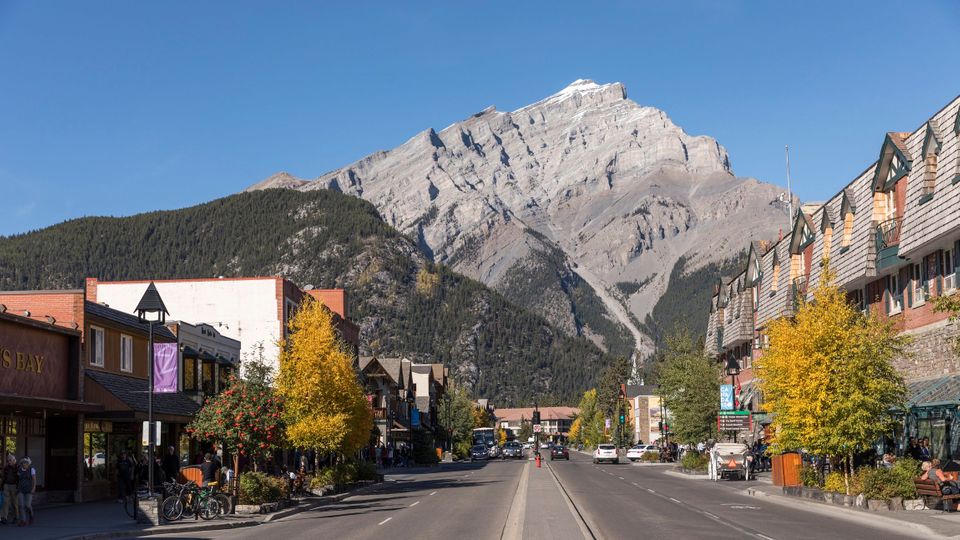
Banff is a resort town in Alberta, located within the Banff national park. Approximately   126 km from Calgary on the Trans Canada Highway,this resort town offers entertainment in summer and winter.The peaks of Mt Rundle and Mt Cascade dominate its skyline. The center of Banff town is Banff Avenue which is a thoroughfare with restaurants, boutiques, chateau style hotels, and souvenir shops.

Banff Avenue….the center of Banff town

A leisurely stay at Banff for two days is recommended to cover Banff town, the Gondola and visit to Lake Louise. Hiking, canoeing snowboarding horse riding and such activities add value to this beautiful town.

We visited in peak season and could not get accommodation at Banff. So we spent a few hours at Banff town walking along the avenue and savoring the beauty of the place.

Our guide took us on The Bow River trail…( remember we had seen Bow River at Calgary).

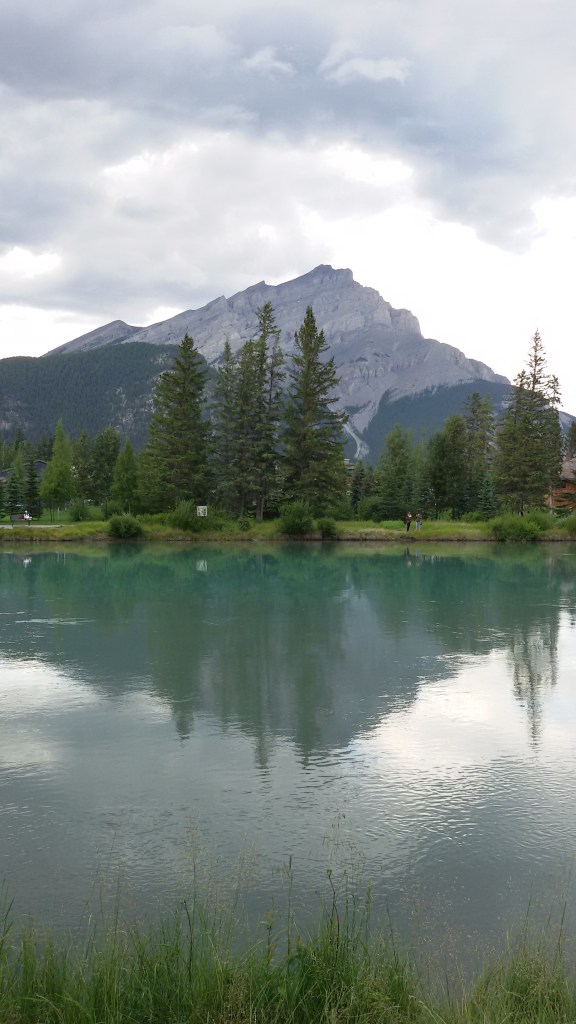
It is a short walk from Banff Avenue ; a nice picnic destination with the Bow river, and benches to rest. Enjoyed the scenery and took some great pictures here.

The Bow River Trail

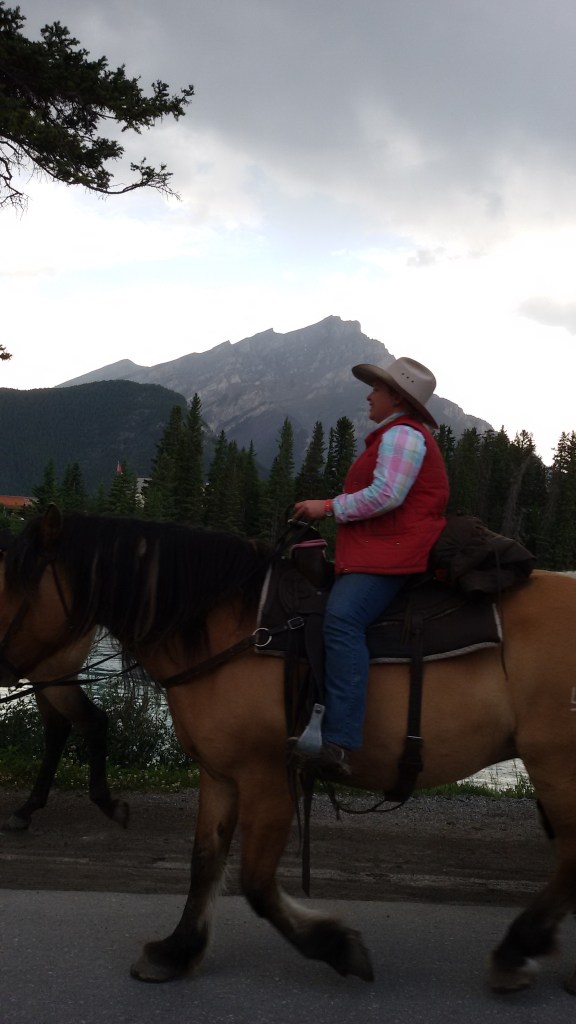
Horse riding along the Bow River Trail

A beautiful log house on the banks of Bow River

The Banff Upper Hot Springs have now been commercially developed and is located 4 kms from Banff Town. One can enjoy the hot pools and have great views of Mt Rundle. The water to the springs comes through cracks and crevices in Sulphur Mountain and hence lot of medicinal value is attributed to it.

Hot Springs at Banff

After the sightseeing at Banff, we were driven to Canmore…a small town close by for our overnight stay.

Canmore is also a beautiful place…some pictures..

Beautiful Canmore…

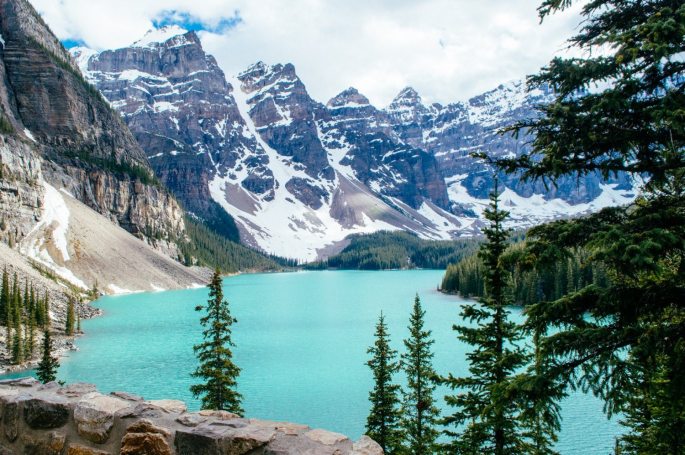
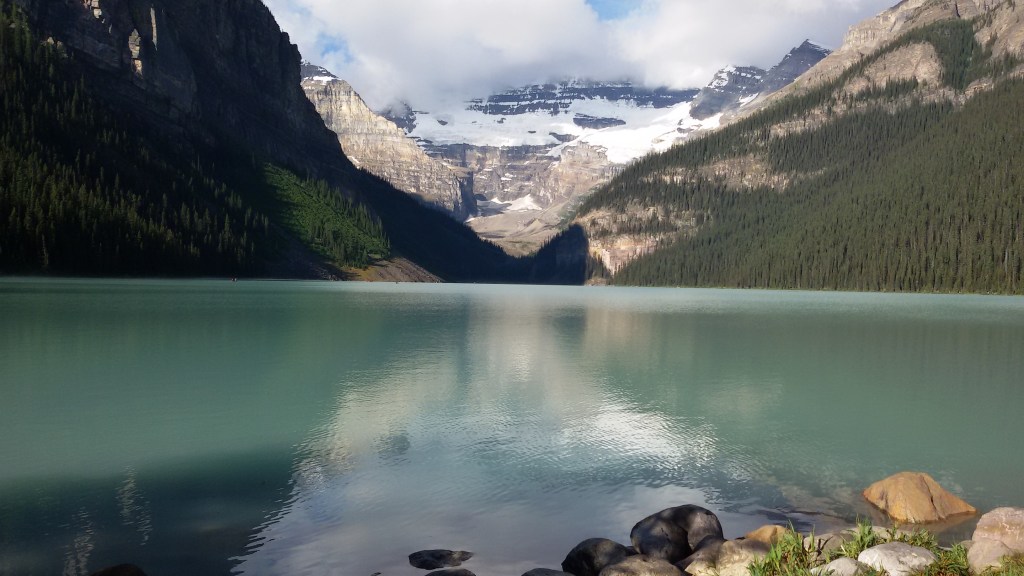
Next morning we left for Lake Louise...a hamlet in Banff national  park, known for its turquoise, glacier-fed lake surrounded by high peaks. The turquoise color of water comes from the rock flour carried into the lake by the melt water from the surrounding glaciers.

This lake is converted into a skating rink in winter and has canoeing options in summer

Hiking trails take you to some of the peaks surrounding the lake

The lake is extremely beautiful and the scenery breathtaking…to say the least…

Have a look…

The beautiful Lake Louise with Victoria Glacier in the backdrop

Canoeing point at Lake Louise

The Fairmont Chateau Lake Louise Hotel

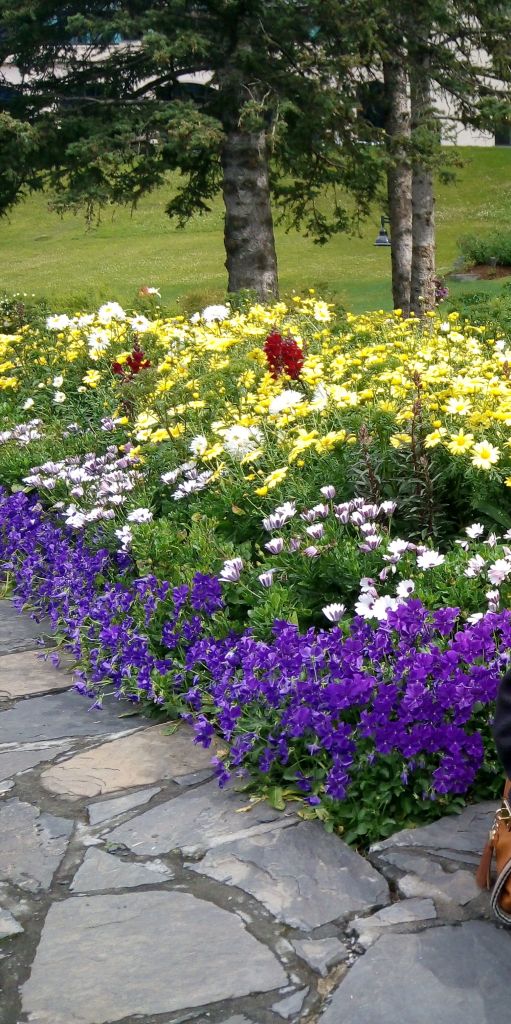
We spent some time by the Lake Louise and visited the Fairmont hotel that overlooks the lake.

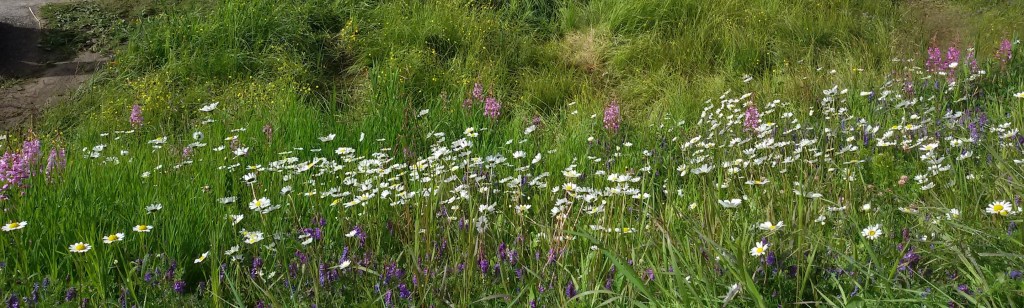
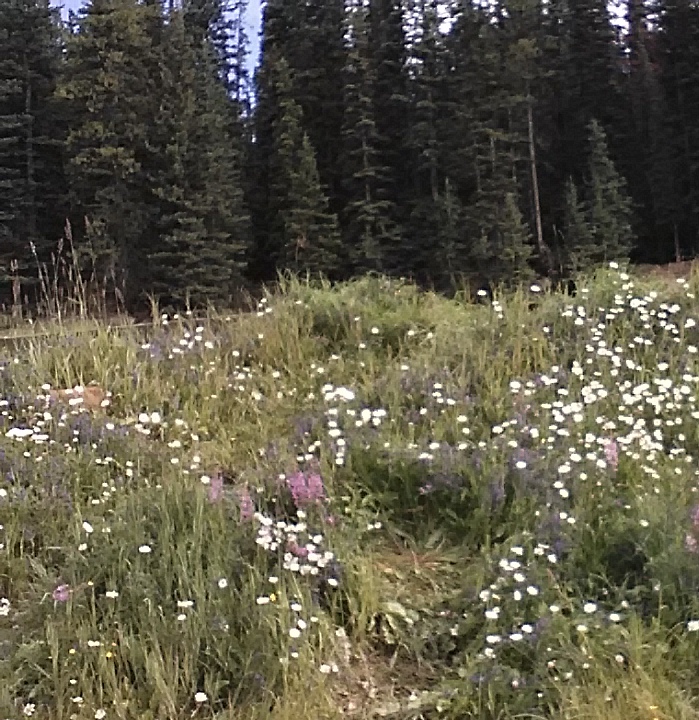
There was a carpet of alpine flowers on the banks of Lake Louise…take a look

The Alpine flowers on the banks of Lake Louise

There are a lot of hiking trails from Lake Louise which one can explore to reach various heights in the Rockies.

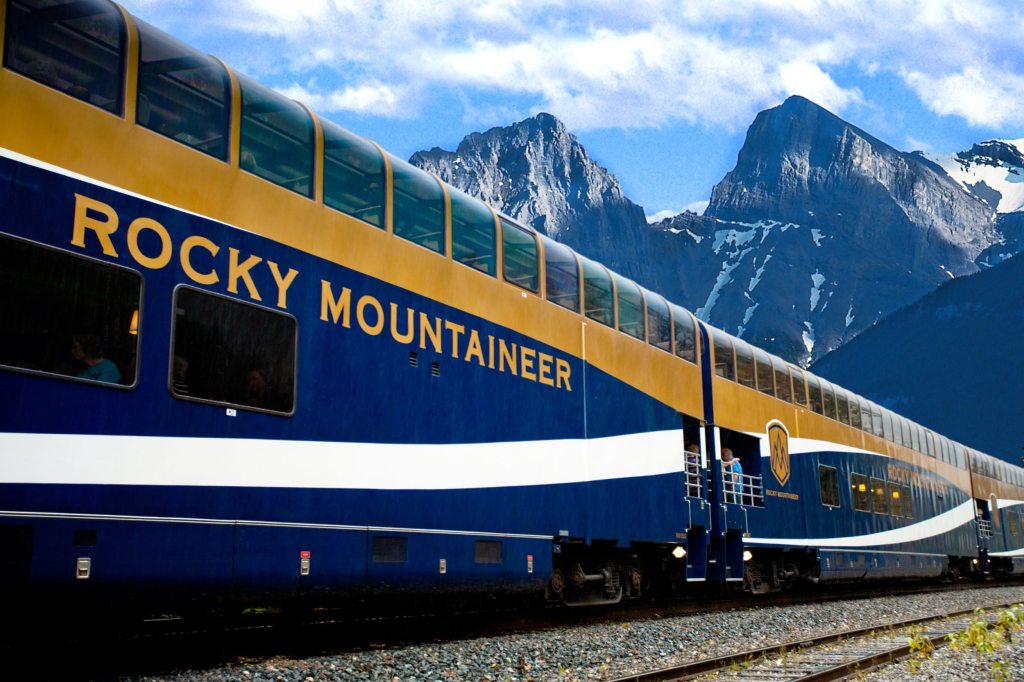
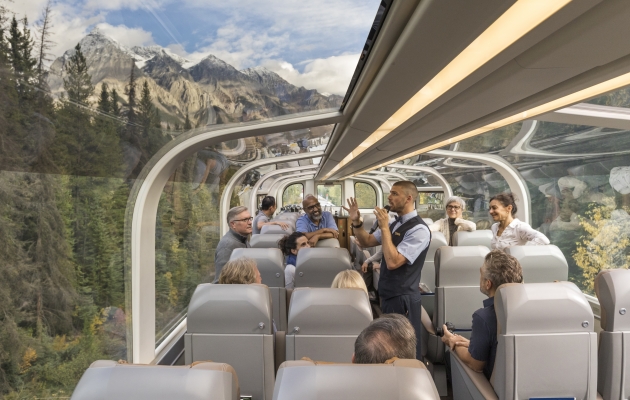
Another great way to explore the Rockies is to take the Rocky Mountaineer…..a luxury train running on the US Canada border . This train started in 1990 covers the provinces of British Columbia and Alberta in Canada and Colorado and Utah in the US and covers a distance of 4800 km. The glass dome of the train is suited for sightseeing and it also has a viewing platform from where one can enjoy the scenery. Meant primarily for sightseeing; this train runs only during the daytime and the passengers are accommodated at hotels along the way for the night. In 2007, Rocky Mountaineer was voted one of the most beautiful train journeys by National Geographic.

I don’t have to tell you the most important part….it costs a fortune to take this ride!!!

Never mind ….doesn’t cost a penny to see these beautiful pictures here…so take a look

Exterior and Interior of this mountain beauty…

Well I hope I have motivated at least a few of you to visit the Canadian Rockies…and if you thought its over…no its not….await some more awesome sights in next week’s episode on the Rockies …..the Athabasca Glacier…

Meanwhile don’t forget to subscribe below…doesn’t cost a penny!!!

Calgary

This week we move on to the Canadian province of Alberta….to the city of Calgary…..consistently finding itself in the list of the neatest cities in the world!

Calgary is the third most populous city in Canada after Toronto and Montreal .One of the important financial centers in Canada; it is the center of the oil industry in Canada. It is located at the confluence of the Bow and Elbow rivers. Being close to the Canadian Rockies; it is a starting point for many tours to the Rocky Mountains and is often called the gateway to the Rockies.

The advent of Europeans in the late 19th and early 20th centuries led to the discovery of oil reserves charting a trajectory of development around Calgary.

Our trip to Calgary

After a late night arrival at our friends house in Calgary due to a delayed flight, we started the day a little late.

Our friends took us on a picnic ….with a nicely packed picnic basket et all….we set off like excited teenagers to downtown Calgary.

Enroute, we saw downtown Calgary across the Bow River

Downtown Calgary…view across the Bow River

The Bow River

Next we headed to Peace Bridge…a unique looking bridge with a double helix structure across the Bow River. It has the nick name “finger trap bridge “for its similarity to the finger trap puzzle.

This bridge connects downtown Calgary with communities across the bow river. It was designed to accommodate the increasing numbers of commuters to and from work and has walking and cycling tracks. It is unique in that no beams or cables are included in the plan and is designed to support its own weight.

The opening shot in this blog is of the lit up Peace bridge.

The Peace Bridge

Peace Bridge.another view

We set up our picnic basket near the bridge and had a nice treat of Indian food.

Picnic by the Peace Bridge…some unforgettable memories….

Next we headed to Prince’s Island Park…a park built on an island in the Bow River. This park is an urban oasis and part of a pathway linking both sides of the river ….with a constructed wetland designed to treat storm water before it enters the Bow River!!!

This is a perfect example of River conservation…and how urban planners can effectively use the existing natural resources and make them sustainable over periods of time…at the same time; providing entertainment avenues to the locals and increasing the tourism potential. A lesson for us indeed!!!!!

Some pictures from Prince’s Island Park

Then we went to downtown Calgary and visited a mall where we had some goodies and coffee.

Devonian Garden is an indoor garden in downtown Calgary. This park is completely enclosed with glass and covers an area of 2.5 acres on the top floor of The Core Shopping Mall. It is an urban oasis and has play areas for children. It is also a popular venue for weddings. Some pictures…

Devonian gardens

Calgary Tower

An iconic structure in Calgary, it was originally called Husky Tower.It is an observation tower in downtown Calgary built in 1967 to celebrate Canada’s centennial.

Calgary Tower and Observation deck

Another important tourist destination here is the Living History Museum or Heritage park historical village.Many of the buildings are historical and were transported to the park to be displayed. Most of the exhibits are genuine artifacts.The exhibits span Canadian history from the 19th and early 20th centuries

After an enjoyable day of sightseeing, we headed back home for some rest before we hit the best part of Alberta…The Canadian Rockies…

See you all next week at this exotic location..

Meanwhile, do subscribe to my blog below

QUEBEC CITY

Quebec city sits on the St. Lawrence River and is in the predominantly French speaking Quebec province. Among its main distinguishing characteristics are its narrow cobblestone streets, stone buildings, fortifications, and rich French Canadian  culture.

Brief history of Quebec and its french connection..

Canada is predominantly an English speaking country with Francophone communities throughout its provinces. French is the native language of 20 % of Canadians.Most native french speakers live in Quebec where it is the official language.

In the 16th century, Cartier ventured across the Atlantic Ocean in search of a route to Asia and landed at Newfoundland and mapped his route along the St Lawrence River. He tried to establish a French colony but was resisted by the aboriginals.

The name Canada originated from Kanata …the indigenous word for village. Cartier used this name for the French colony that developed along the St Lawrence River.

French Colony was established by the early 17th century in eastern Canada by Samuel Champlain and Quebec city was established in 1608. By 1642 a settlement called Ville Marie was established which subsequently became Montreal.

The 18th century saw French Canada fall to the British rule and consequently French lost its importance. Gradually Canada emerged as a federal state and it was divided into two provinces..Upper Canada(now Ontario) and Lower Canada(now Quebec). French was subsequently established as the official language in Quebec and many of the Eastern Maritime Provinces of Canada. Thus many of these places have French as the official language and that makes it a little difficult for non French speakers like us to visit and move around.

Come along to see the city….

Old Quebec city is a UNESCO heritage site and lies within fortified walls…the only city in North America to be so…

Being located in a hilly slope, the city is divided into upper town and lower town connected by funicular railway.

A typical Quebec street…the funicular railway seen in the backdrop..

We reached Quebec by noon and first visited the Quebec Tower ( Observatoire de la Capitale)from where you get a 360 degree view of the city. This is actually on the 31st floor of what looks like an office building!!!

From the tower, the old city can be clearly seen behind walls.

View from tower… St Lawrence River, Chateau Frontenac Hotel and walls of old city

After getting a view of the city from the tower, we went to the banks of the St. Lawrence River.

The Dufferin Terrace, a long wooden promenade located along the banks of the St. Lawrence River is one of the main attractions here. The Château Frontenac, a hotel that was initially built for the railways and is a luxury hotel today, is a landmark of Quebec. In the summer, musicians and street entertainers perform on this wooden promenade

The opening image of this blog features this hotel .

With its breathtaking view of the Château Frontenac, as well as of the St. Lawrence River and surrounding area, the Dufferin Terrace is the perfect spot to take beautiful pictures. 

The Dufferin Terrace with The Chateau Fontenac Hotel in the background

A street singer and the canons along the river side on Dufferin terrace

From the Dufferin terrace area, we walked around the streets of Old Quebec. This place has an old world fairy tale charm about it. The narrow cobble stone streets with stone buildings gives it an ancient look. There are horse drawn carriages here which add to the old world look….and there are sightseeing tours on horse carriages

A family takes a joy ride on a horse drawn carriage..old world charm

A sightseeing bus….modern times

We walked along the cobble stone streets of old Quebec soaking in the old meets new feel….

There were lots of street musicians singing or playing various instruments…lost in their own little worlds….not affected by the passers by ….

There were street artists….some doing general paintings and others making portraits of willing clients….

A street side artistic…portrait maker

All in all it was a heady mix of history, culture, fun, art and tourism!!!!

Talking of art…there were some nice sculptures by Salvador Dali at the Dufferin terrace… take a look

After a long day of sightseeing we retired to the hotel for the night.

Next morning we had yet another interesting trip to do…the Thousand Islands Cruise…

This is a one hour cruise on the St Lawrence river to see this archipelago of islands.

The Thousand Islands are a group of more than 1,800 islands in the St. Lawrence River, straddling the border of the U.S. and Canada.The islands vary in size from over 100 sq kms to smaller ones occupied by a single residence or the uninhabited ones with just a few rocks. The criterion to be included in the island count is that it should have at least one square foot area and support at least two trees!!!

A fashionable retreat for the elite in the late 19th century, today the area is a hub for outdoor activities. It is home to elaborate island mansions such as the German-style Boldt Castle on Heart Island, and Singer Castle on Dark Island, with its Gothic windows and secret passageways.There are a variety of recreational activities available here for the tourists….fishing, diving, hiking, being some of them

Some of these islands are privately owned and have mansions belonging to the elite. There are some extremely small islands and many are connected by small overbridges. There are two islands connected by a bridge here, where one island belongs to US and another to Canada.

The Thousand islands International bridge connects Ontario province in Canada with New York state in US.

Some pictures from the thousand islands….

On board the cruise

The Thousand islands International bridge .

Two tiny islands with a single mansion connected by a cute bridge

Boldt Castle

After the cruise we were picked up by our tour company and driven back to Toronto…after a 3 day roundup of some heritage, historic and cultural places in Canada…

Next week we move on to Calgary…in Alberta Province famous for its Rocky mountains…

See you at Calgary…the gateway to the Rockies

Meanwhile do subscribe below

OTTAWA and MONTREAL,

We wanted to visit some of the important cities in Canada from Toronto. After some scouting around online, we narrowed down on a tour agency called Tours 4 fun. They were offering 3 day trips to these cities and so we booked with them. They cater predominantly to Chinese tourists . They did a good job overall.

We were picked up by the tour bus at Mississauga near the Chinese shops. Our first halt was at Kingston.

Kingston is a city in Ontario in Canada on the banks of lake Ontario at the mouth of the  St Lawrence river. It is known as The Limestone City…due to its 19th century limestone architecture. It was a military post in the 16th century. It is called Kingston in honor of King George III. It was the first Capital of Canada . It prides itself in having a robust healthcare system and is home to a variety of educational institutions. At Kingston we saw the city hall,good lakeside homes like retirement communities, a marina and a locomotive exhibit.

The city hall is an imposing piece of neoclassical architecture with a prominent dome.It is the seat of local government in Kingston. It overlooks Lake Ontario which has a beautiful marina with lots of yachts anchored there.

The City Hall and Lake Ontario

An antique coach and a locomotive exhibit at Kingston

After spending about an hour in Kingston, we headed to Ottawa.

Ottawa city, the capital of Canada is located in Ontario on the banks of the Ottawa river.

We reached Ottawa by noon. After lunch at a restaurant , we proceeded to see the Canadian Parliament.

The Parliament is located on Pariament Hill on the banks of the Ottawa river in downtown Ottawa. In the foreground of the parliament building is the flame and water monument called Centennial Flame. The flame burns continuously and works with natural gas  bubbling through water cascading underneath.  The flame prevents the water from freezing in winter. It commemorates the hundredth anniversary of the Canadian Confederation.

The Canadian Parliament

The Centennial Flame

Next we visited the Museum of civilization  also called Canadian Museum  of History on the banks of the Ottawa River. It houses thousands of artifacts, archival documents, works of art and other ancient material relating to the indigenous people of Canada to the present time. Interactive shows related to Canadian History is another attraction at this huge complex.

Museum of Civilization

The Ottawa River seen from the museum

We next visited the Notre Dame Basilica…the largest and oldest church in Ottawa.

The Notre Dam Basilica

After the visit to the church, we proceeded to Montreal for an overnight stay.

Montreal is located in Quebec province and is predominantly French speaking.

We were put up at a hotel and next morning, we set off sightseeing Montreal.

Approaching Montreal….

We visited St Joseph’s Oratory. It is the biggest church in Canada built in Italian Renaissance style and has a copper dome which is one of the biggest church domes in the world. It is a National Historic Site. It is located on the highest point in Montreal located on Mount Royal.The insides of the Basilica is decorated with intricately carved murals. On display at the Basilica is a wall covered with thousands of crutches from those who were purportedly healed by the divine healing powers of Brother Andre.

Some restoration work was in progress when we visited and that can be seen in the picture

St Joseph’s Oratory

Next we visited the Olympic Tower….now known as Montreal tower, this is part of the Olympic games complex built for the 1976 Olympics in Montreal.…..and is the tallest inclined structure in the world.

This tower is inclined more than the Leaning tower of Pisa and the cables that hold the retractable roof of the Olympic stadium is suspended from the tower. The opening shot of this blog shows this …..

There is an observatory in the tower that can be accessed by an inclined elevator from where one gets a view of the Olympic village.

Montreal Tower and view of Olympic village from Montreal Tower

The Biodome which is located adjacent to the tower was our next destination.

This housed the velodrome for the 1976 Olympics and the  track cycling and judo events were held here. After the Olympics, it was converted into the Biodome which showcases  four miniature echo systems.These are filled with plants and animals found in these eco systems and visitors can walk through the different ecosystems and enjoy nature under a roof. Some of the featured ecosystems are…Tropical forest, Laurentian Maple forest, St Lawrence Marine,Labrador coast and sub antarctic islands.

So one can imagine….the range of plant and animal life residing there…from the parrots and monkeys of tropical forests to the fish of St Lawrence River to the penguins and puffins of subantarctic zone…Its a different world inside the Biodome…

The Biodome from outside and inside

Some inhabitants of the Biodome

After visiting the Biodome, we continued our journey across Canada to yet another iconic city...Quebec…

See you next week at Quebec…the quaint city

Meanwhile do subscribe to my blog below