Araku valley is a hill station in the eastern ghats located about 110 kms from Visakhapatnam. Araku valley is famous for its coffee plantations and is home to various tribes. Having heard a lot about this place, we decided to visit Araku valley from Vizag.
Araku Valley
A popular tourist destination in Andhra Pradesh, Araku ia at an elevation of about 3200 ft and is known for its greenery, coffee plantations, spices specially pepper, waterfalls and streams and a rich tribal culture.
Ananthagiri and Sunkrimetta reserve forests are a part of the Araku valley. Galikonda at an elevation of 5000 ft is the highest point and there is a viewpoint there from where you can see the plains below. Trekking is a popular adventure activity here and lot of camping sites are available.
Bee keeping is a popular occupation here among the tribals.
Our Trip
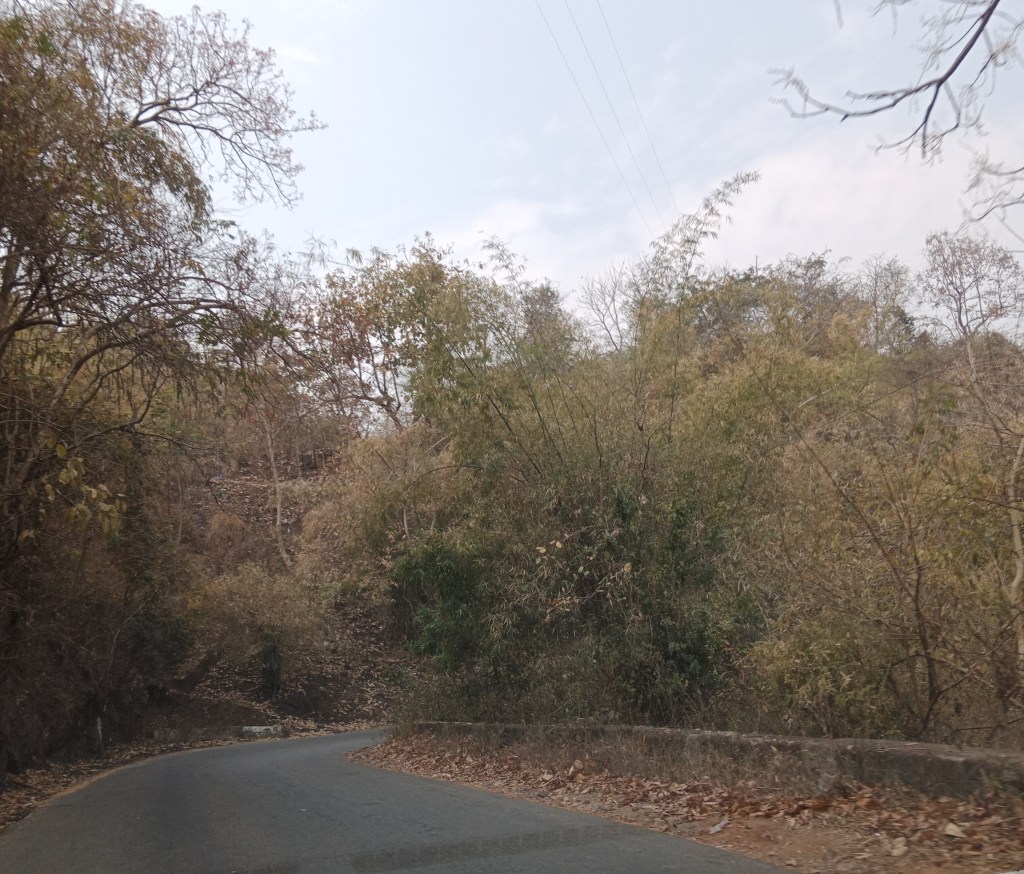
Driving down from Vizag we headed to Araku valley. The road to Araku valley was not particularly good and the drive was not very comfortable. Farmlands with paddy cultivation formed the landscape for a considerable time. After that we hit some winding roads with bamboo forests on either side.
Bamboo forests enroute Araku
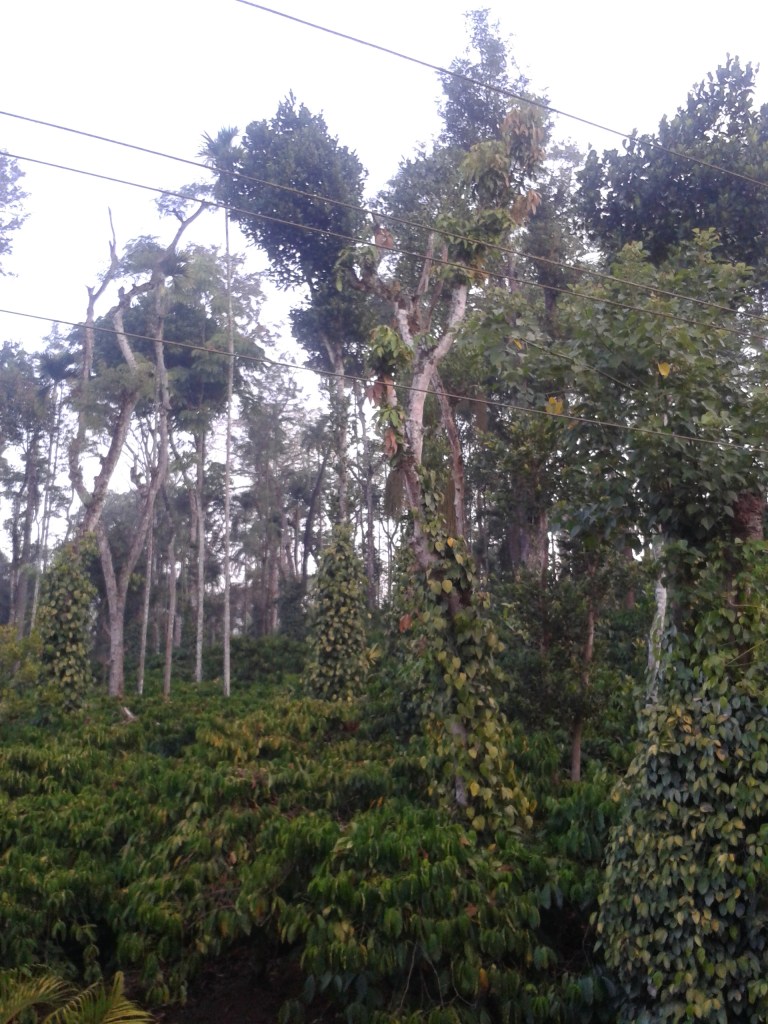
Soon we were among some coffee plantations
Coffee plantations and pepper vines
Pepper and coffee pods
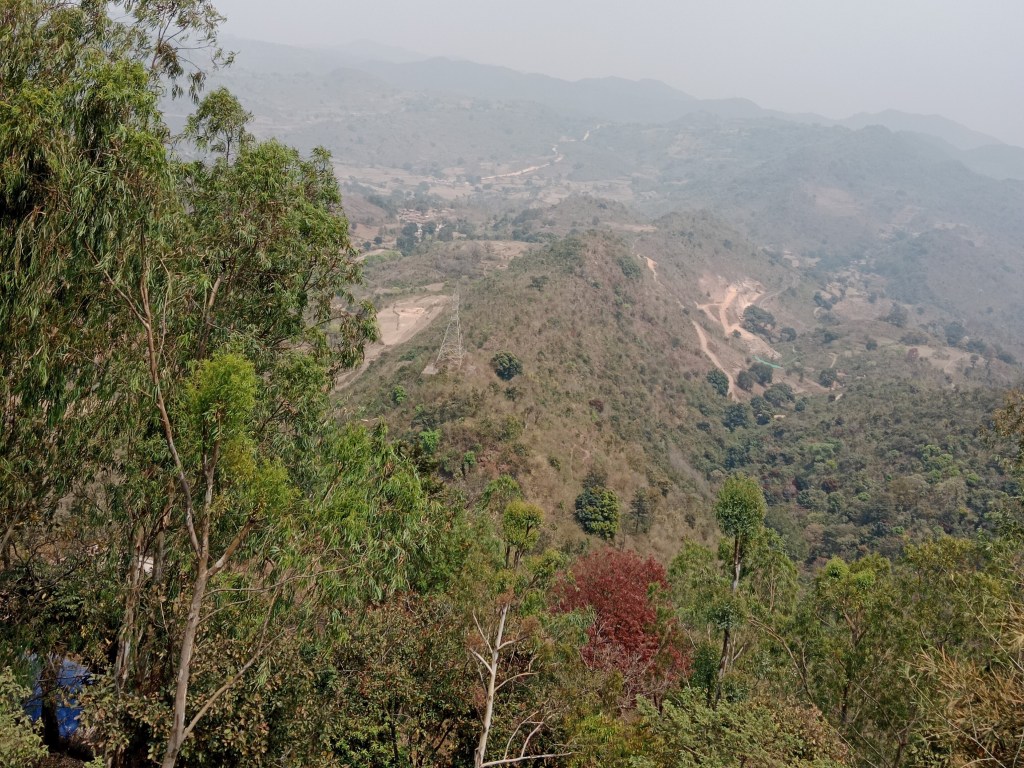
Soon we were at Galikonda view point from where we could see the plains below
View of the plains from Galikonda
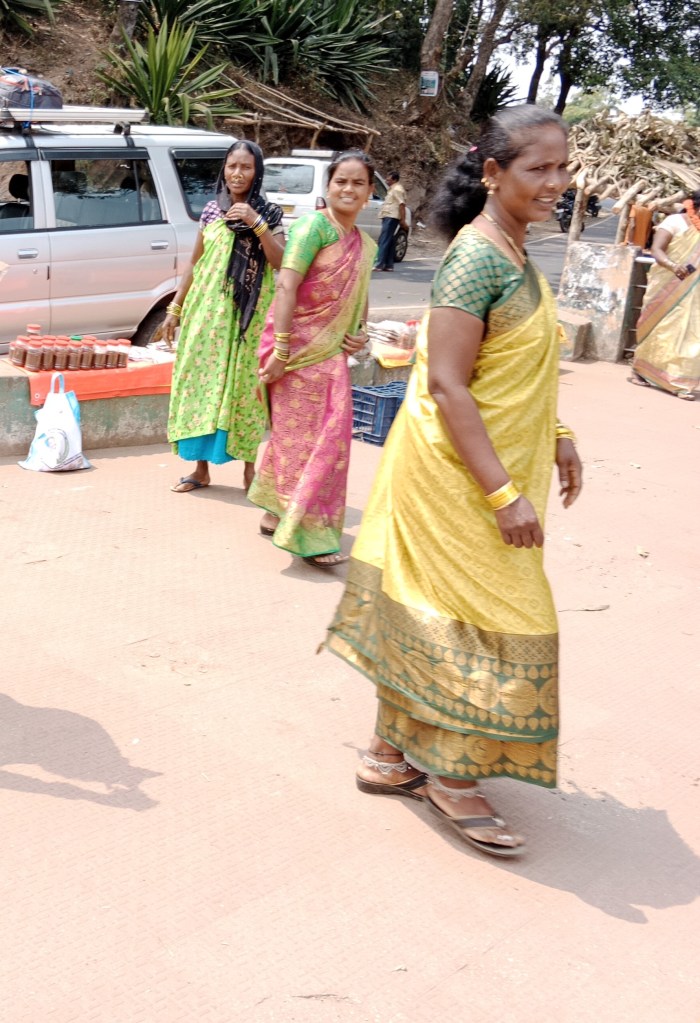
At Galikonda, we happened to see some tribals in their traditional attire.
A shy tribal and others in traditional attire
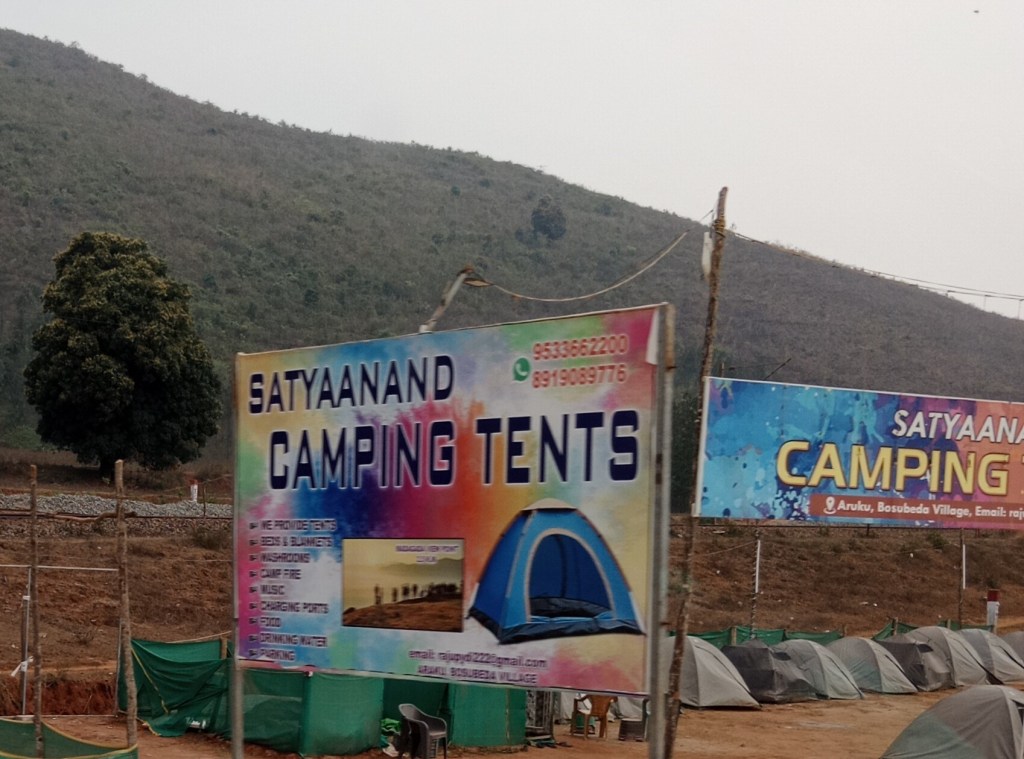
Camping sites with tents were seen at many places as we drove along.
Camping sites
Many of the tribals engage in bee keeping and the honey is sold along the roadside.
Bee farming and local honey for sale
Another interesting place to visit is the tribal museum.
Tribal Museum
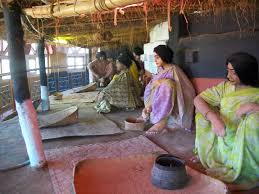
This museum houses various items used by the tribals and showcases their way of life.
Some pictures…
Tribal Museum
Tribal jewellery and art
Some exhibits
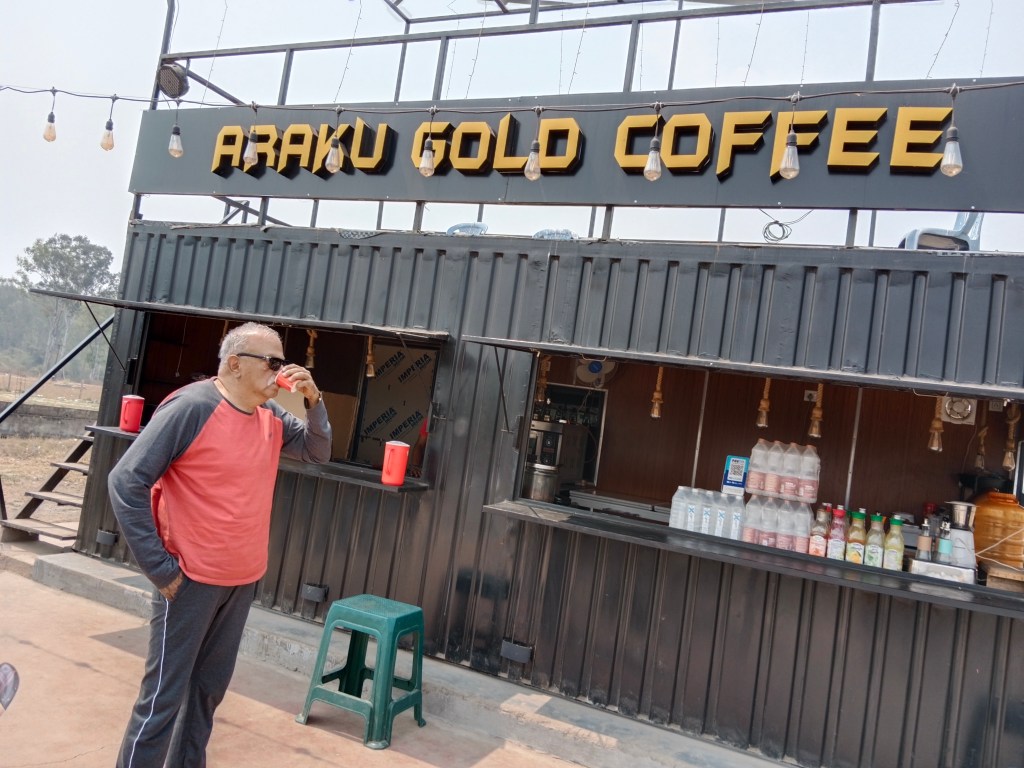
After visiting the museum, we savored some fresh Araku coffee before heading back.
Authentic Araku coffee
Returning back, we visited the famous Borra caves.
Borra Caves
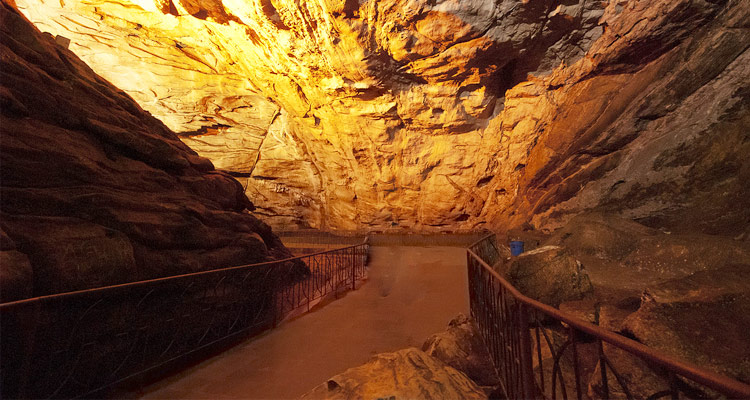
Located in the Ananthagiri hills, these interesting stalactite and stalagmite formations are formed by the flow of the Gosthani river over limestoine deposits. It was discovered during a geological survey by William King and are believed to be over a million years old.
There are several legends attached to these caves. The most popular one is of a cowherd accidentally discovering it when he went looking out for his lost cow. He discovered a Shiva ling in these caves and soon a small temple for Lord Shiva was built here.
These caves are a major tourist attraction today . The constant flow of water has sculpted these rock formations into various shapes like Shiva Parvathi, Rishi’s beard, Brain, Mushroom etc.
Some pictures…
Entrance and the shrine
Inside Borra Caves
After visiting the caves we drove back to Vizag ending our day long trip to Araku Valley.
Honestly, it did not live up to my expectations. Probably I had been influenced by rave reviews on social media which led me to have high expectations !!!
So all in all, do go if you feel like it but you will not miss much if you don’t….
Next week, I start a new series on Kashmir. So meet you there….
All of you would have visited museums some time or the other. But have you visited a museum in a submarine? Well ,may be few of you have….
As was mentioned in the last episode, Visakhapatnam is the headquarters of the Eastern Naval command of the Indian Navy. So the Navy has several establishments here and one of them is the submarine museum.
Let me take you today to this novel museum which is inside an actual submarine!
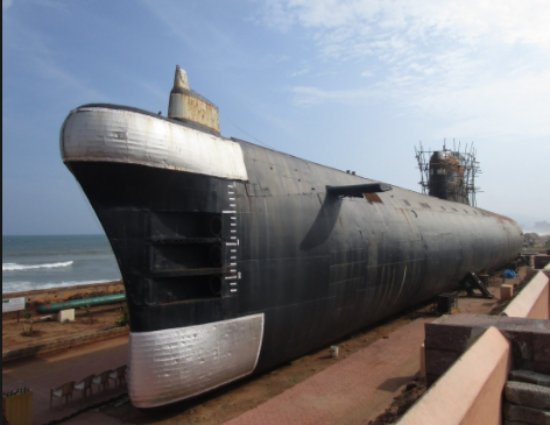
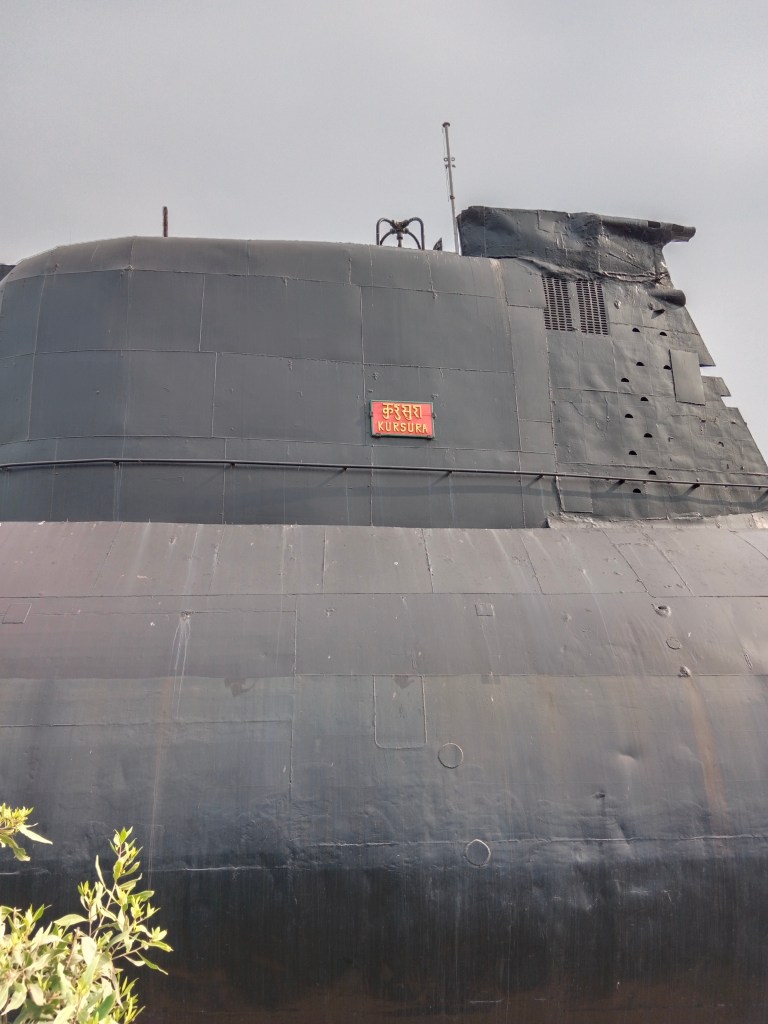
This museum , located at Visakhapatnam is a decommissioned submarine INS Kursura which was in active service for 31 years. After decommission, it was dedicated to the nation and is preserved as a museum for the public.
A brief history of INS Kursura
INS Kursura was India’s fourth submarine built in the Soviet Union and commissioned in 1969. She was attached to the Western Naval Command and operated in the Arabian Sea during the Indo-Pak war of 1971. After participating in several anti submarine warfare exercises and various other operations, she was decommissioned in 2001.
Once decommissioned, the entire submarine with it’s weapon package was hauled up from the sea to a concrete platform at R.K Beach at Visakhapatnam and established as the first submarine Museum in South Asia in 2002. This was a joint operation of the Eastern Naval command and the Naval Ship Design and Research Centre. It is recognized as a War Memorial.
The Museum
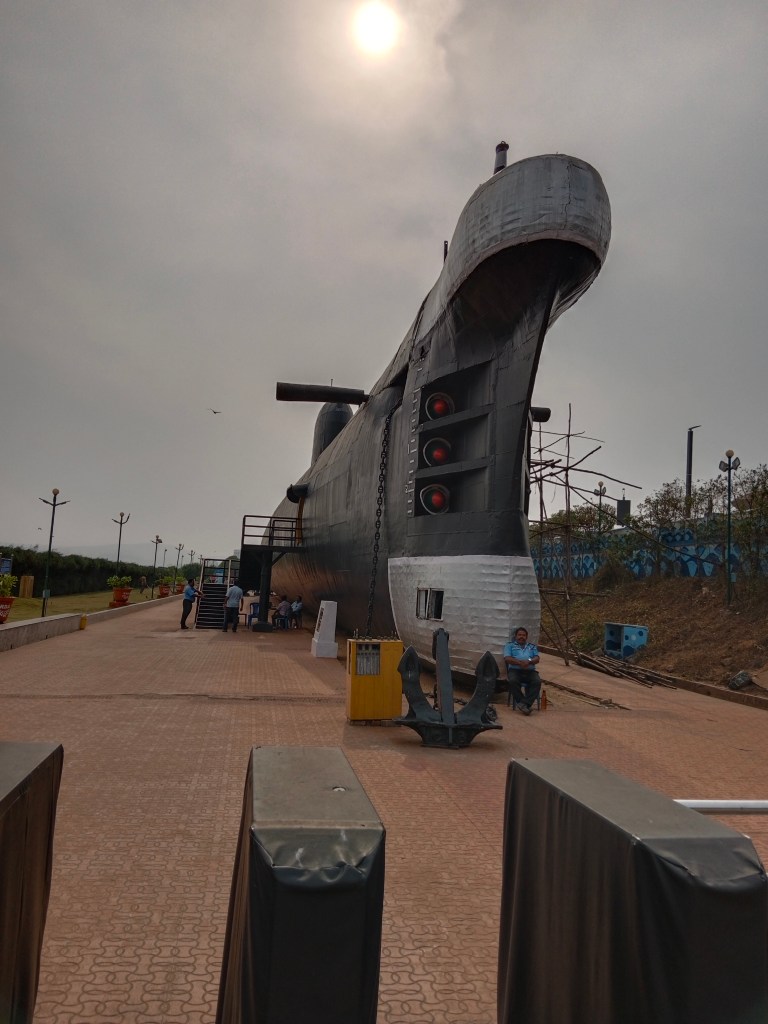
The submarine is placed close to the beach and one can see it from the road as one drives past. Surrounded by well manicured lawns, it is a sight to behold.
The submarine museum as seen from the road
The Submarine
As one steps foot on the submarine, a sense of pride and patriotism flows in naturally to us. We can climb up a fleet of stairs to enter the museum.
The stairway to the submarine museum
Once inside, we can see a number of artifacts, pictures and articles used during wars. We can also see gadgets and weapons that are on display. This gives an idea of the evolution of submarines, showcases the might of the submarine arm of the Navy, and reveals the hardship and toils of life on a submarine. The interior has been suitably modified for this but at the same time retaining it’s original form.
It gives you the feeling of actually being inside a submarine. Once we stay inside for some time, a feeling of claustrophobia engulfs us. It is then that we realize how difficult it is to actually live inside a submarine for days together. That is what our Naval personnel do in times of war, and they have to be continuously on high alert too!!
Have a look at some of the pictures and that may perhaps throw light on their difficult lives….
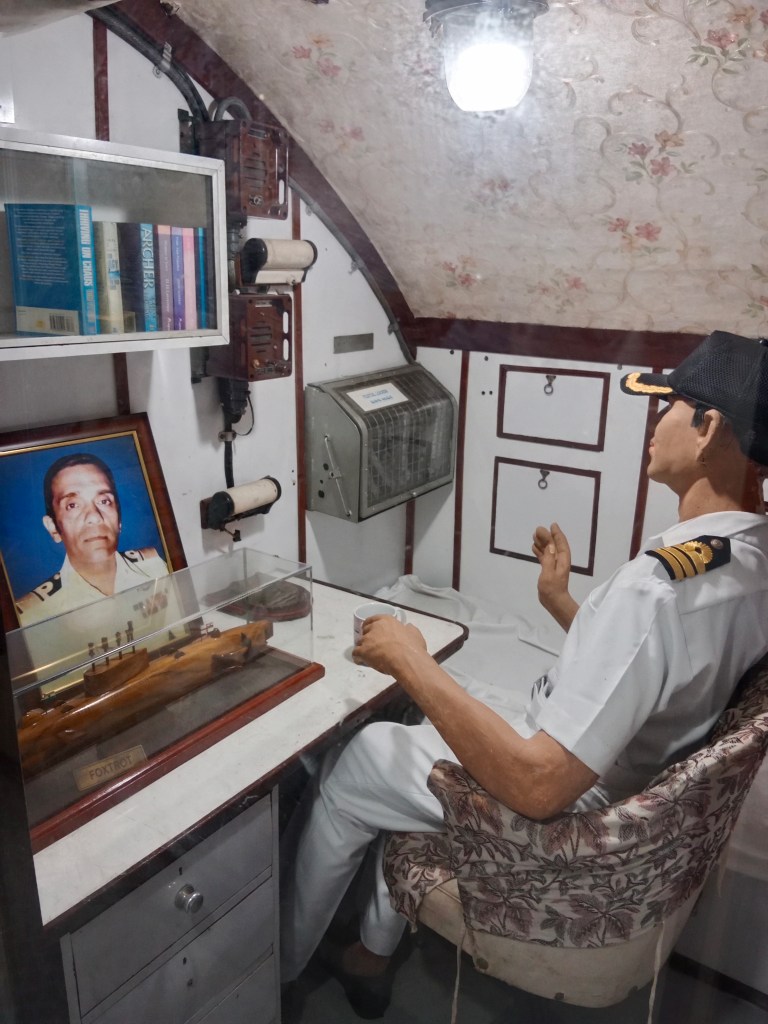
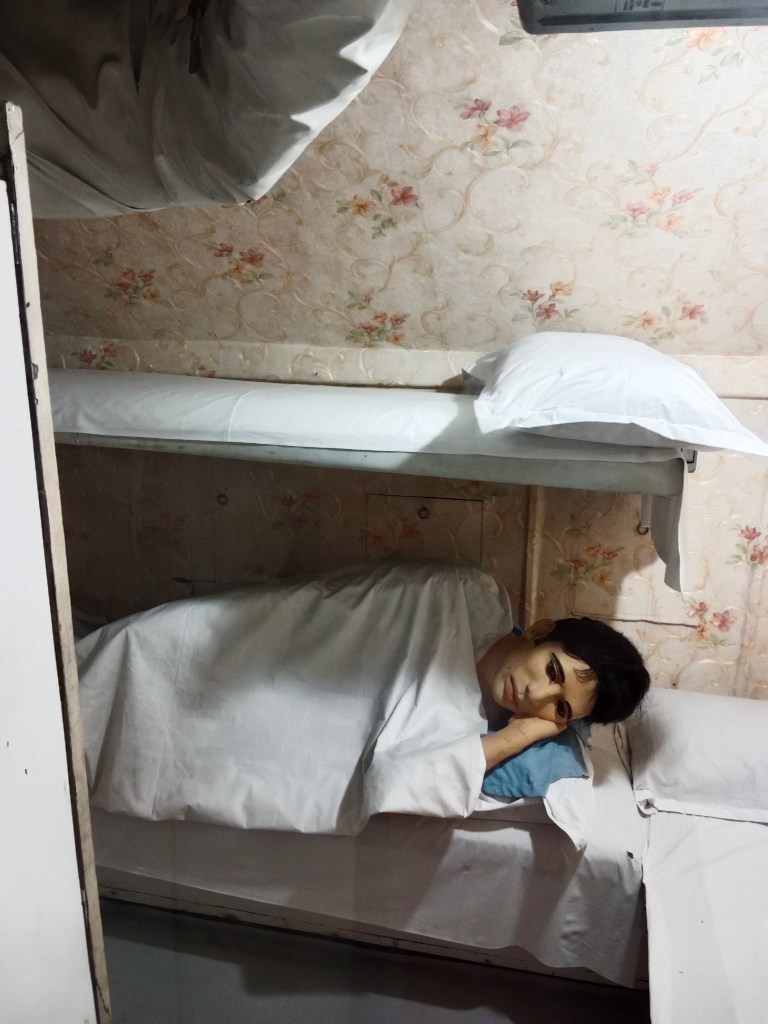
A room with the model of an officer and the small place they have to operate from
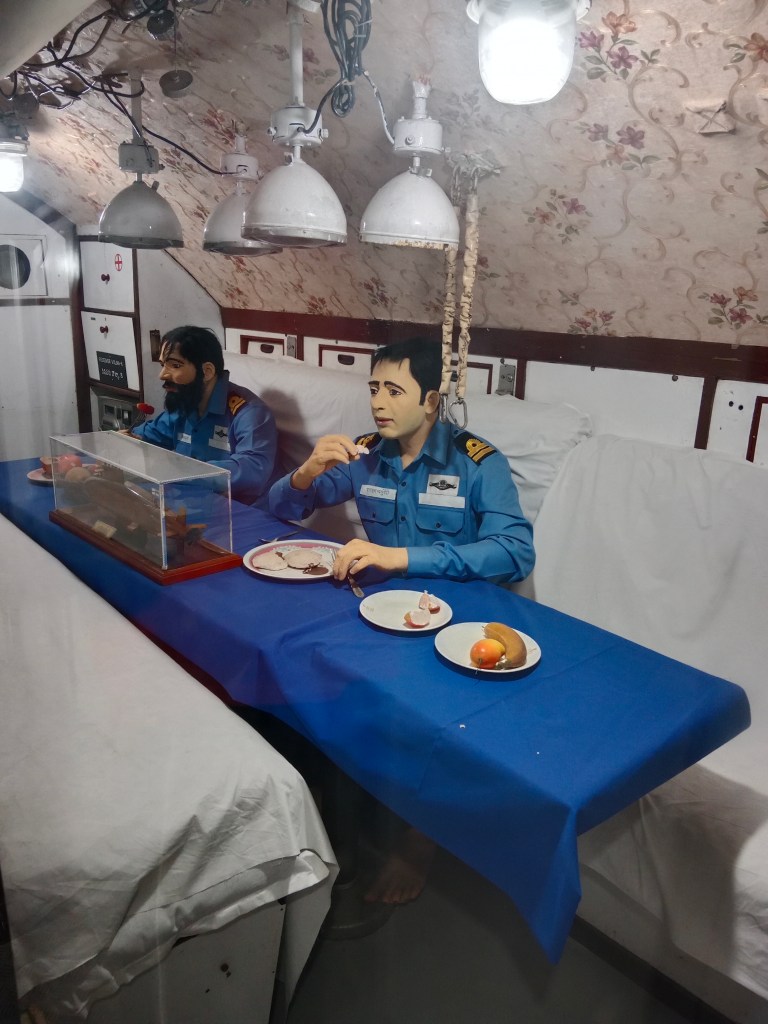
The pantry and bunker beds for sleeping. ( the low roof makes the place claustrophobic)
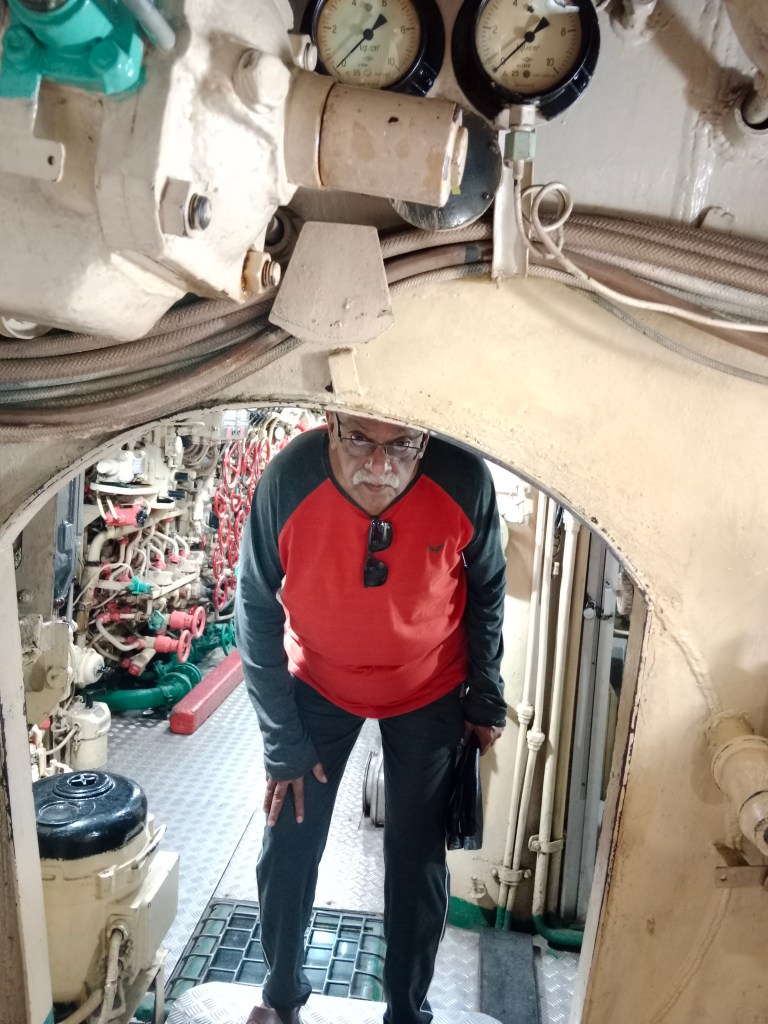
The narrow passages with equipments and low head clearance forcing us to bend
Various levels inside the submarine
These pictures would have given you a fair idea of the difficulties when the personnel live inside for months together
Immense regard and respect for our armed forces just comes in automatically when we see all this.
There are a couple of Naval personnel there who explain the details to us also. Though there are many technical details which we may not understand but the overall experience of actually entering a submarine is something entirely different.
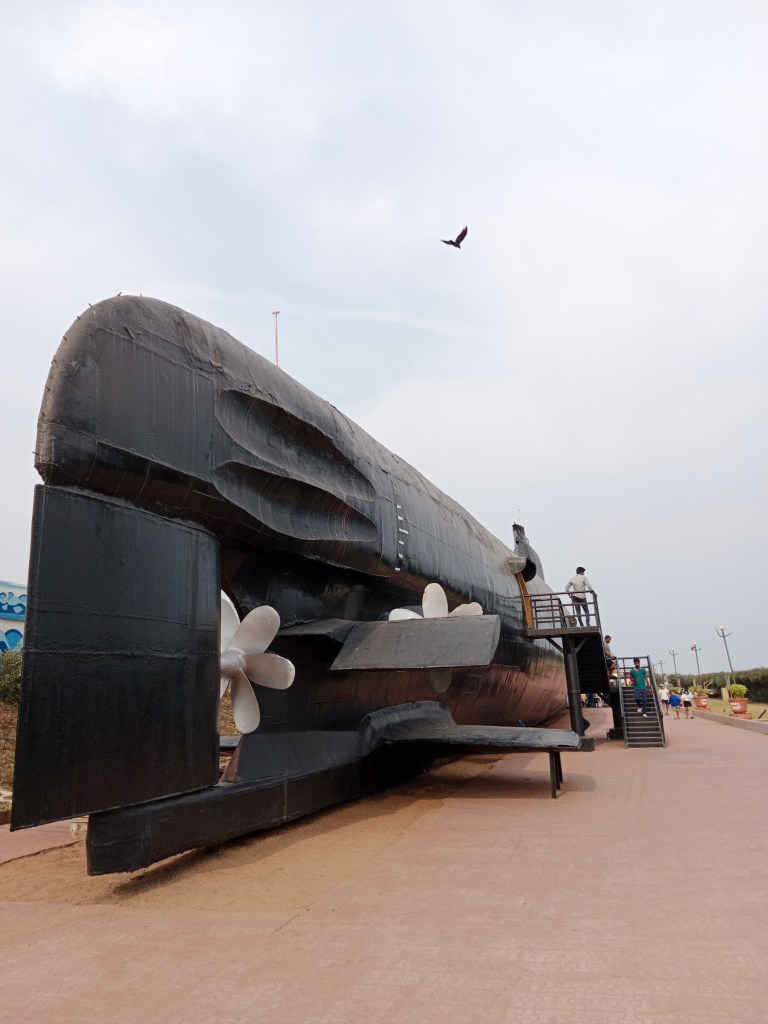
Outside also we can see the parts which are otherwise under water….
The propeller and rudder ( at the back of the submarine)
The front of the submarine with torpedo tubes and the anchor resting on the floor.
Glimpses of life on a submarine: (something I learnt during this visit)
Submarine personnel undergo rigorous training including damage control, drills and emergencies, battle tactics and escape training through a tower.
Space is limited in a submarine and equipments and life saving gadgets get priority over daily comforts.
Sleeping in bunkers to save space is a rule and many times they take turns to use the bunker.
Maintenance of equipment, drills and safety exercises are a daily routine. The kitchen has limited space and hence no elaborate meals can be expected.
Around 70 personnel share two toilets at sea.
We left the museum with mixed feelings. Patriotism, regard and respect for our armed forces and a thought for the families of these personnel who also sacrifice a lot so that we all can live safely in our homes….JAI HIND…
For completion sake, let me attach a file picture of Kursura at sea…
INS Kursura sails by….
After visiting the submarine museum, we continued on to the other interesting sights in Visakhapatnam. Next week, we visit some of Araku valley and Borra caves. Till then, do comment and give your feedback.
Once upon a time, there was a fisherman’s village named Vizagapatnam on the east coast of India abutting the Bay of Bengal. Today, it’s geographical location has made it a busy port city and the headquarters of the Eastern command of the Indian Navy. Vishakapatnam is also a major industrial hub on the Indian coast . Lying between the Eastern ghats and the Bay of Bengal, it is home to some beautiful beaches, and hills.
How did it get it’s name?
You must have noticed the word Visakha within brackets in the title. That is because there are various explanations.
A temple dedicated to Visakeshwara, the Hindu God of valour built by the Chola Kings is belived to be submerged just off the coast of the city giving it it’s name.
Some attribute Visakha to be a Buddhist princess and others to a Buddhist monk named Vaisakhi .
Yet another explanation is that the word “isakha” in Telugu (local language) means sand and the vast sand expanses along it’s beaches contributed to the name.
A brief history
It was part of the Kalinga empire and conquered by Emperor Ashoka. During this period, Buddhism flourished here with construction of significant monuments which can be seen even today.
It has also seen the reigns of the Pallavas, Cholas and Gangas over time. European colonisation started in 1630 with the Dutch, French and British all taking control at various points in time. They have all left their marks on this city.
After Indian Independence, it was under the Madras presidency and finally became a part of the state of Andhra Pradesh.
Our Trip
Landing in Vizag was a beautiful sight though it was a little hazy. The port and Dolphin’s nose were visible from the aircraft inspite of the haziness.
Landing at Vizag..the port and Dolphin’s nose are clearly seen.
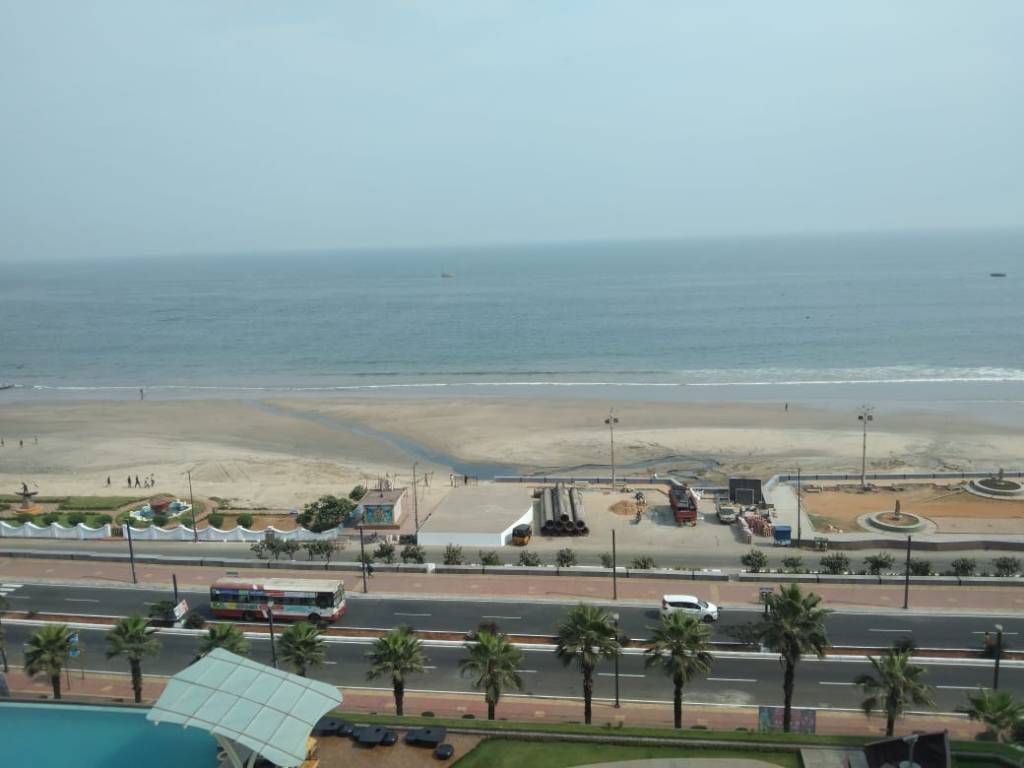
We were put up at Hotel Novotel which overlooks Varun Beach, one of the famous beaches at Vizag . Great views of the ocean were the highlight besides an infinity pool which visually merged with the sea. The port being close by, lot of shipping activity was also visible.
Varun Beach view from hotel
The infinity pool visually merges with the ocean
Ships await berthing at the port.
A ship being guided by tug boats into the harbour
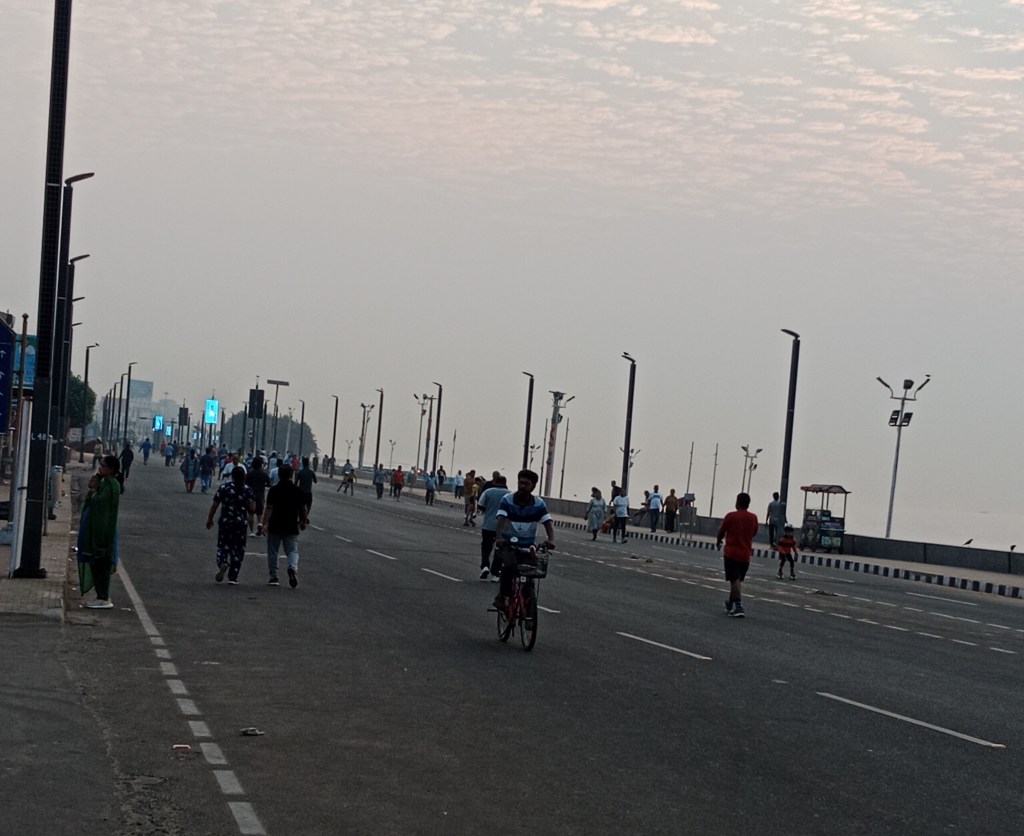
The beach road becomes a pedestrians only road till 7 am in the mornings and the locals use the road for walking and such other activities.
Beach road in the morning
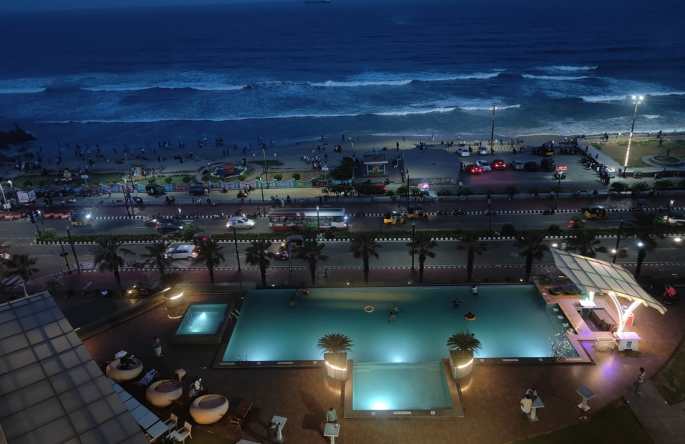
And at night…..
Beaches of Vizag
The Ramakrishna beach, Varun beach, Rushikonda beach , Bheemili beach and the Dolphin’s nose are the popular beaches in Vizag.
Ramakrishna beach is so called due to the Ramakrishna Ashram close by. It is a popular destination for locals and tourists alike.
Enjoying a dip at R K Beach
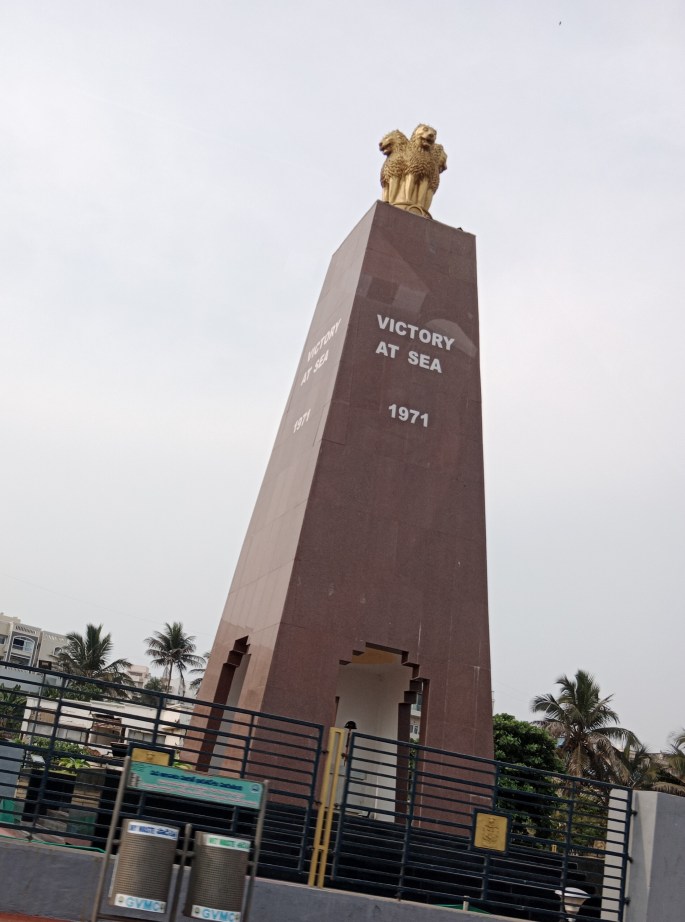
Opposite the beach are several monuments and museums.
The aircraft museum and memorial opposite RK beach
Submarine Museum
INS Kursura, a submarine of the Indian Navy is preserved here and converted into a museum. More on this in another episode.
The submarine museum
Rushikonda Beach
This beach is around 8 km from Vizag but has an interesting name meaning Hill of the sages. Seven learned sages are believed to have meditated on the adjoining hill. Water sports are an added attraction here.
Rushikonda Beach
Bheemili beach
Located around 24 kms from Vizag, this beach lies near the Gosthani river and has British and dutch settlements nearby. It is more of a rocky beach.
The rocky Bheemili beach
Dolphin’s Nose
A rocky head shaped like a dolphin’s nose is a conspicuous landmark in Vizag and can be seen even from the flight and has a light house.
Dolphin’s Nose
Kailasagiri
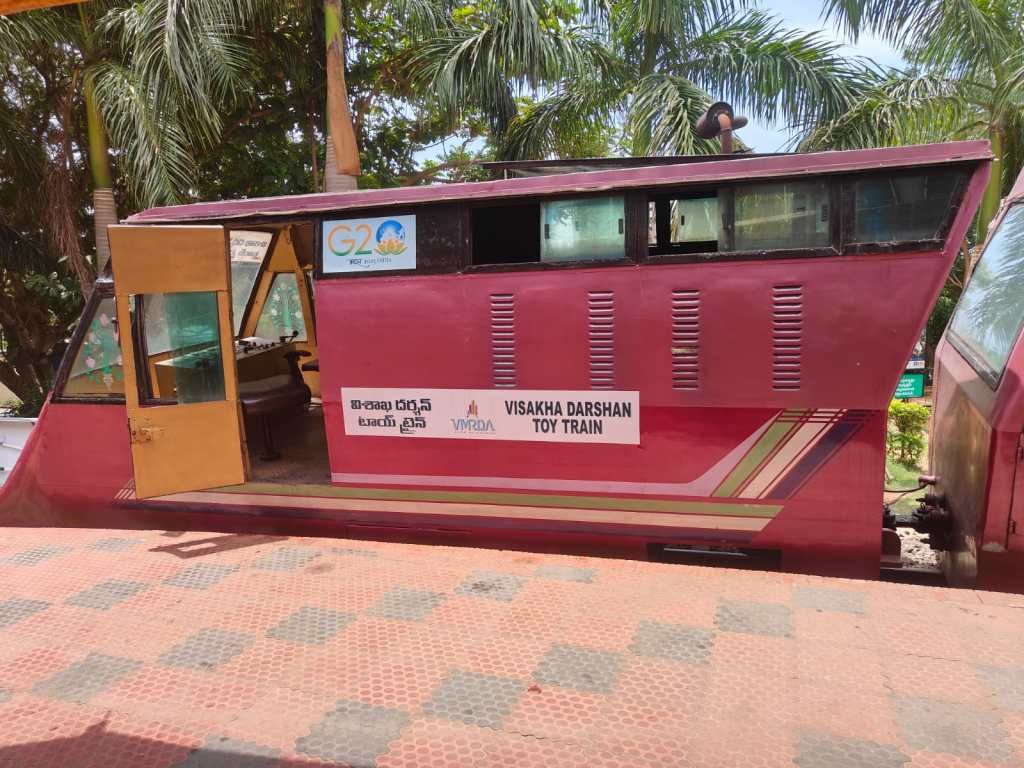
Another interesting location is Kailasagiri, a hill from where you get great views of the city and the ocean. A 40 ft tall statue of Shiva and Parvati in a garden adorn the hilltop and gives it it’s name. A toy train ride on the top takes one around giving 360 degree views. A ropeway service is available here. One can also drive up to the hilltop.
Some pictures
View of Vizag and beaches from Kailasagiri
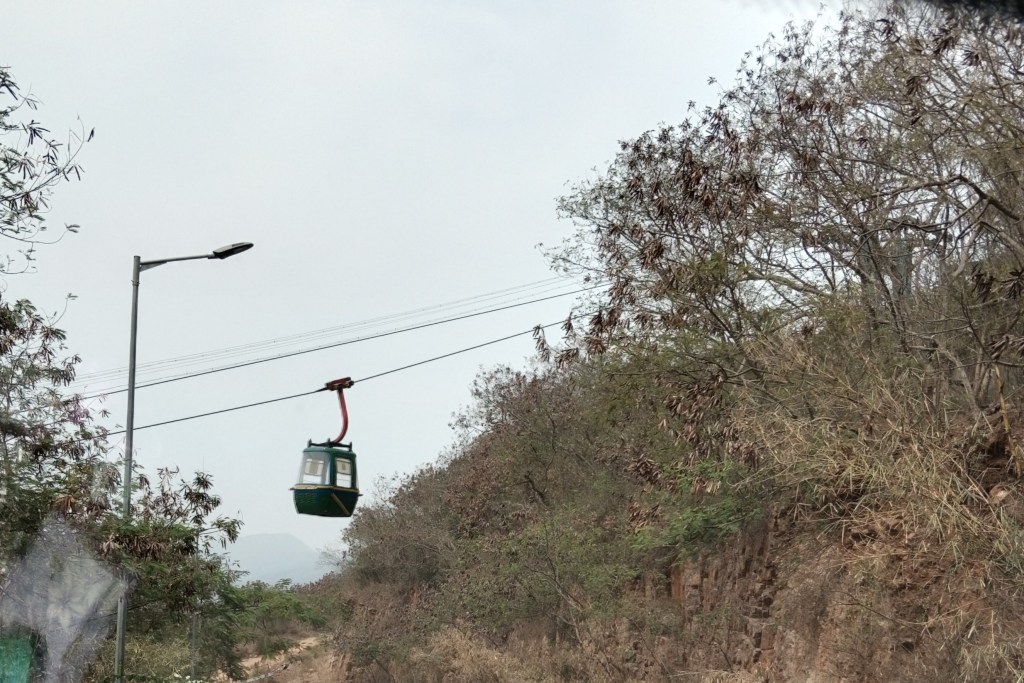
The ropeway to the top and the toytrain on top
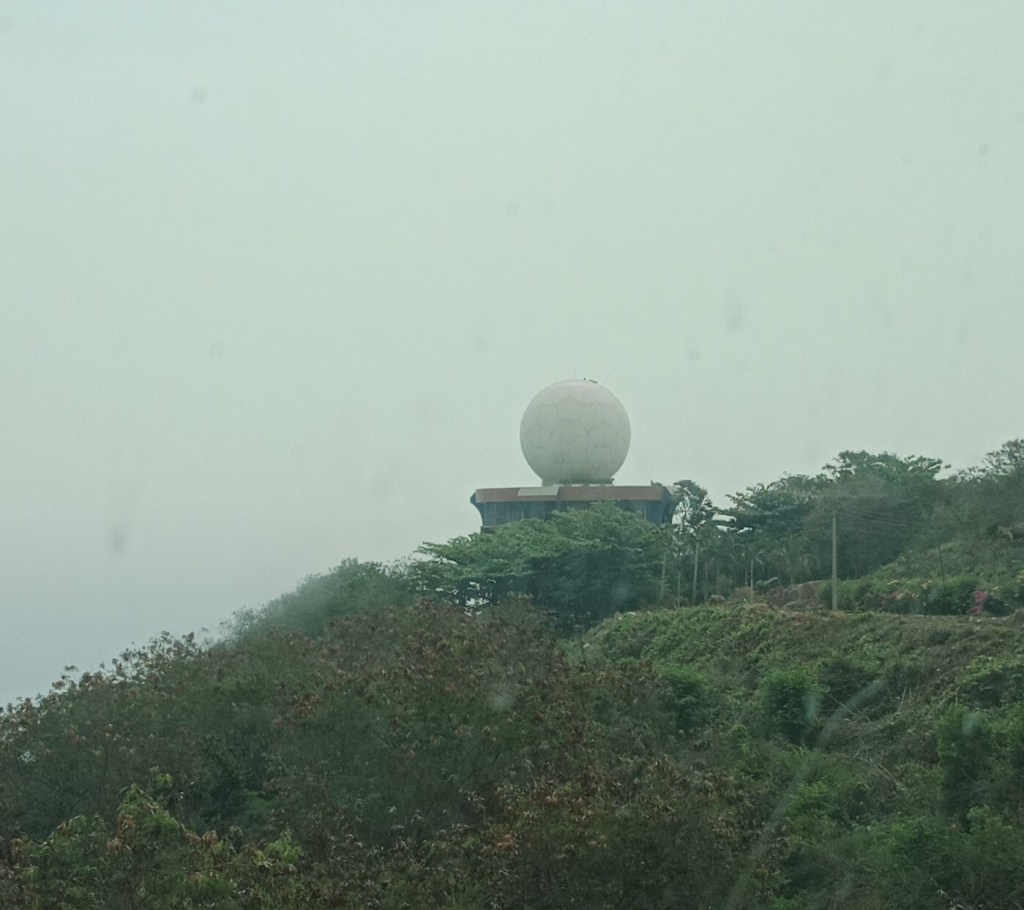
The park and the weather dome
The Shiva Parvati statue
Thotlakonda Buddhist Complex
Situated 15 kms from Visakhapatnam on a hill overlooking the sea is this Buddhist complex. A stupa and various other monuments stand as a reminder of the Buddhist influences in the history of Visakhapatnam. Archaeological excavations at the site have only reinforced it.
Some pictures…
Thotlakonda Buddhist Complex
That sums up the interesting locations in Visakhapatnam. Araku Valley and Borra caves are interesting destinations near Vizag that will covered later.
Next week we visit INS Kursura, the submarine which is now a museum.
Today we do a quick roundup of various attractions in and around Hyderabad. Having covered Golconda and the museums earlier, this episode covers the other destinations.
Qutub Shahi Tombs
These are the tombs of the kings of the Qutub Shahi dynasty of Persia/Iran who ruled this area . The tombs are located just one kilometre from the Golconda fort. One can see the domes of these tombs from the top of Golconda fort.
These tombs are present in a large group and is unique in that the entire dynasty is buried in the same place making it a one-of-a-kind tomb in the world. There are seven such tombs in the complex. These tombs which have intricate stonework on them , lie in beautifully landscaped gardens called Ibrahim Bagh. An amalgam of Persian and Hindu architecture adds to its uniqueness.
Each tomb is quadrangular and rises above a flat raised terrace. Some of the tombs have double stories. The tombs are surrounded by beautifully crafted minarets. The domes were studded with blue and green tiles once upon a time , but now, most of it is damaged.
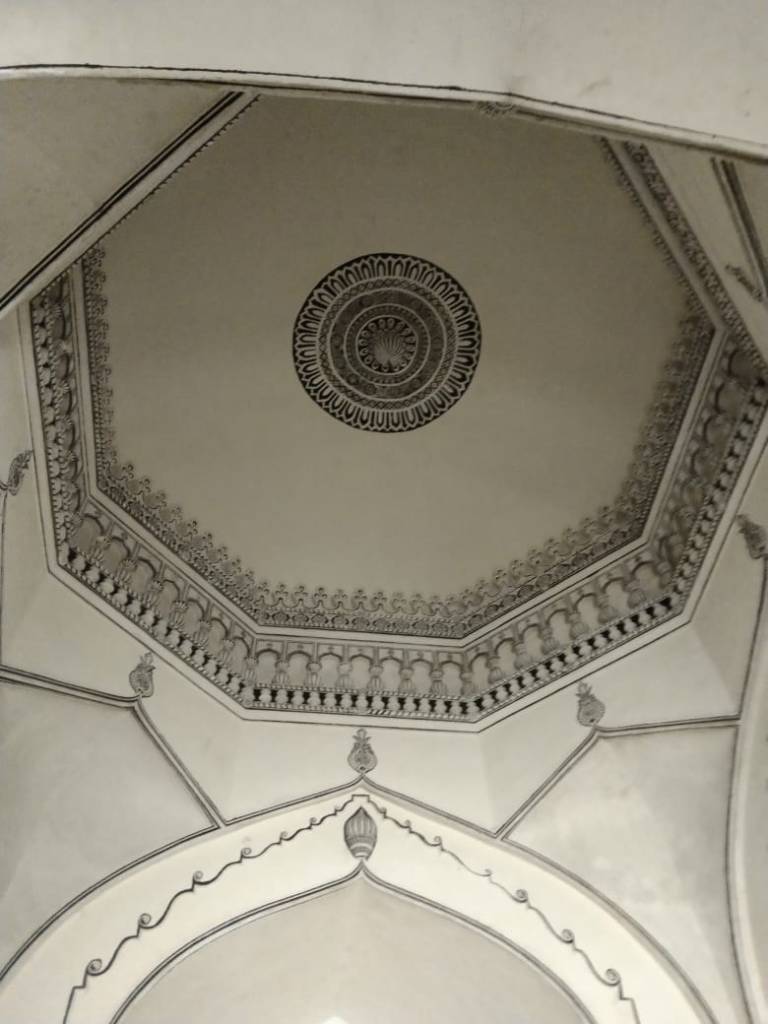
Just like in Golconda fort, these tombs also have unique acoustic features due to the diamond cuts on the undersurface of the domes.
Exterior of one of the tombs
The decorated entrance and undersurface of the dome
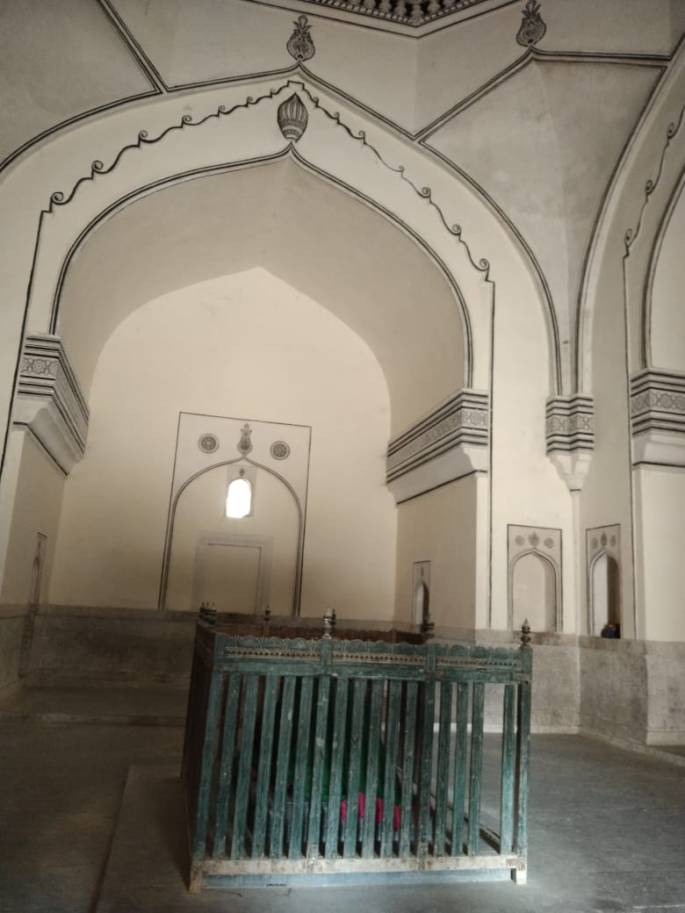
The tomb itself
A QutubShahi heritage centre is coming up in the complex.
After seeing the tombs , we were headed to the iconic image of Hyderabad; The Charminar.
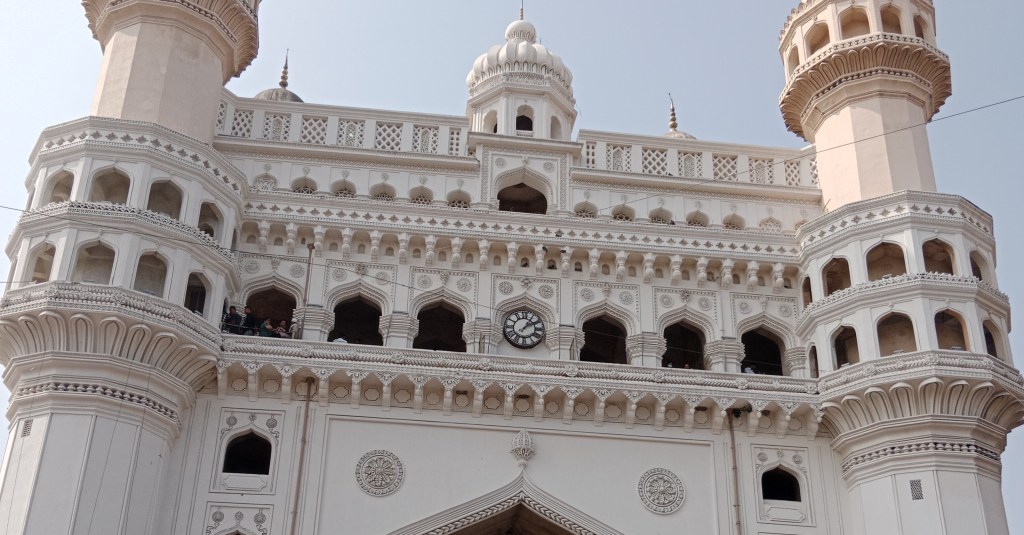
The Charminar
Once again connected to the Qutub Shahi dynasty, the reason to build this monument is still not clear. There are various opinions on this.
Some of the reasons propounded are that the Sultan built it in memory of his wife Bhagmati at the place where he saw her for the first time. Queen Bhagmati later embraced Islam and assumed the name Hyderi Begum after whom Hyderabad is named. An epidemic of plague had wrecked havoc and the king is supposed to have built it as an offering when the epidemic ended. Another version is that it is supposed to commemorate the start of the second Islamic millenium. Let us leave these legends aside and see the structure itself which is real…..
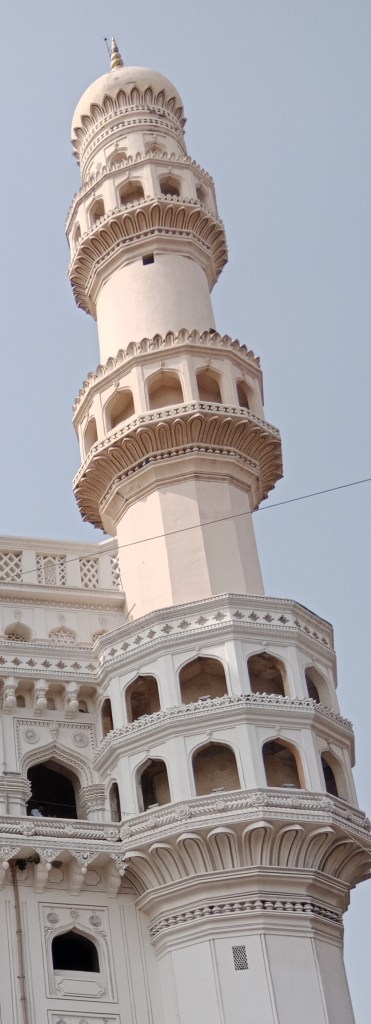
Built with granite and mortar, this square monument measures twenty metres on each side and faces thoroughfares on all four sides. Each corner has a pillar or minar hence thename Charminar which translates to four pillars. Each of these pillars has four stories with each floor divided by artistically carved rings. One can climb around 150 steps to reach the top from where you get a good view of the city. There is a mosque on top of the monument. Each pillar looks like a lotus leaf and each side has a clock too.
The iconic Charminar
The intricate art workon the Charminar
The area around the monument is Ladd bazar and has a lot of roadside stalls selling clothes ,trinkets and other souveniers . Roadside eateries claiming to serve authentic biryani and faloodas abound.
Hyderabadi Biryani is famous for its unique taste due to the right combination of various Indian spices, meat and the aromatic rice that is used. A visit to Hyderabad is incomplete without tasting the local Biryani.
The area is extremely crowded and one can easily get lost in the maze.
C
View ofLadd Bazarand famous Hyderabadi Biryani
Hussainsagar Lake
This artificial heart shaped lake built in 1563 , again by one of the Qutub Shahi kings covers an area of 5.7 sq kms. It separates Hyderabad from Secunderabad. It was built by the King for drinking and irrigation purposes of his subjects
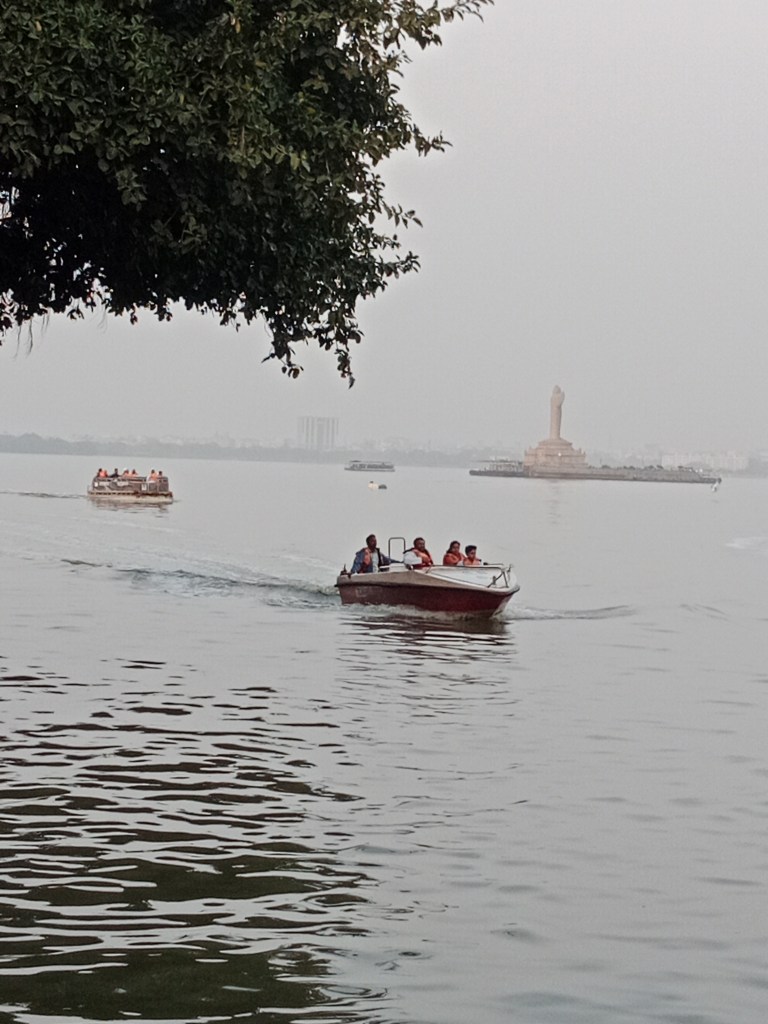
A 18 mt high monolithic Buddha statue chiseled out of white granite was erected in 1992 and stands on a rock in the center of the lake. Regular boat services are available to the statue. It is lit up at night and adds to the beauty of the lake. In addition, the lights along the Tank Bund reflecting on the lake is a beautiful sight.
Husainsagar Lake with Buddha Statue
The lit up Buddha Statue and reflection of row of lights on the lake
Husainsagar lake is a popular sailing destination where regattas are conducted regularly by various sailing associations. Multiple parks surround the lake area and provide entertainment of various kinds to the visitors. Musical fountains, boating facilities, a laser auditorium are some of the attractions in the Lumbini Park, NTR Gardens, Sanjeeviah Park and a few of such parks located around the lake.
The Telengana Secretariat is located right opposite the lake and the imposing building looks attractive specially when lit up at night.
Telengana Secretariat
The Amara Jyothi
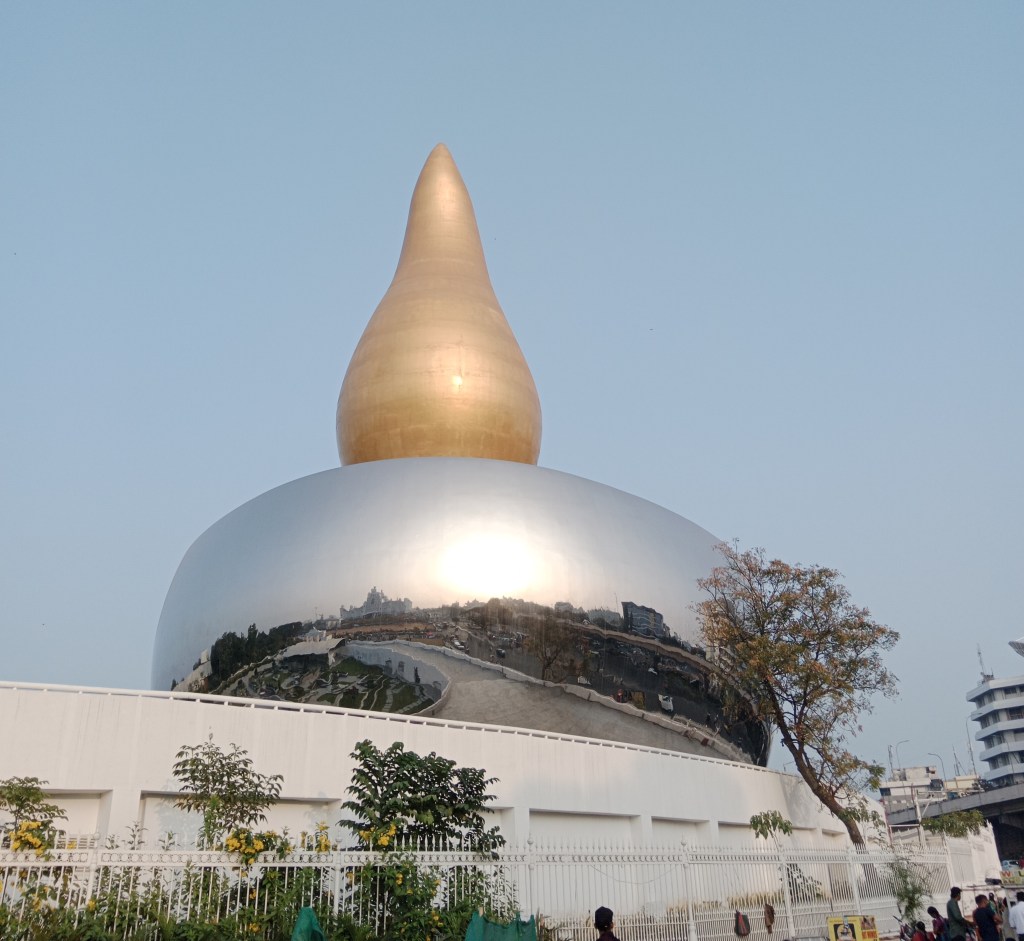
This is a Martyr’s Memorial near the lake . Shaped like a flame, it is the largest seamless stainless steel structure in the world and is five times bigger than the cloud gate at Chicago.At night, the flame is lit up and the base reflects the light from the surroundings giving it a terrific appearance !
The Amara Jyothi or Martyr’s Memorial
The lit up memorial with reflection of the Secretariat on it
The Tank Bund has statues of various eminent personalities too.
The lake has deteriorated today with unplanned urbanisation and sewage dumping. The depth of the lake has reduced due to silt accumulation and many undesirable changes have taken place in its biological communities. A plan to correct this damage is being implemented.
Hyderabad Zoo
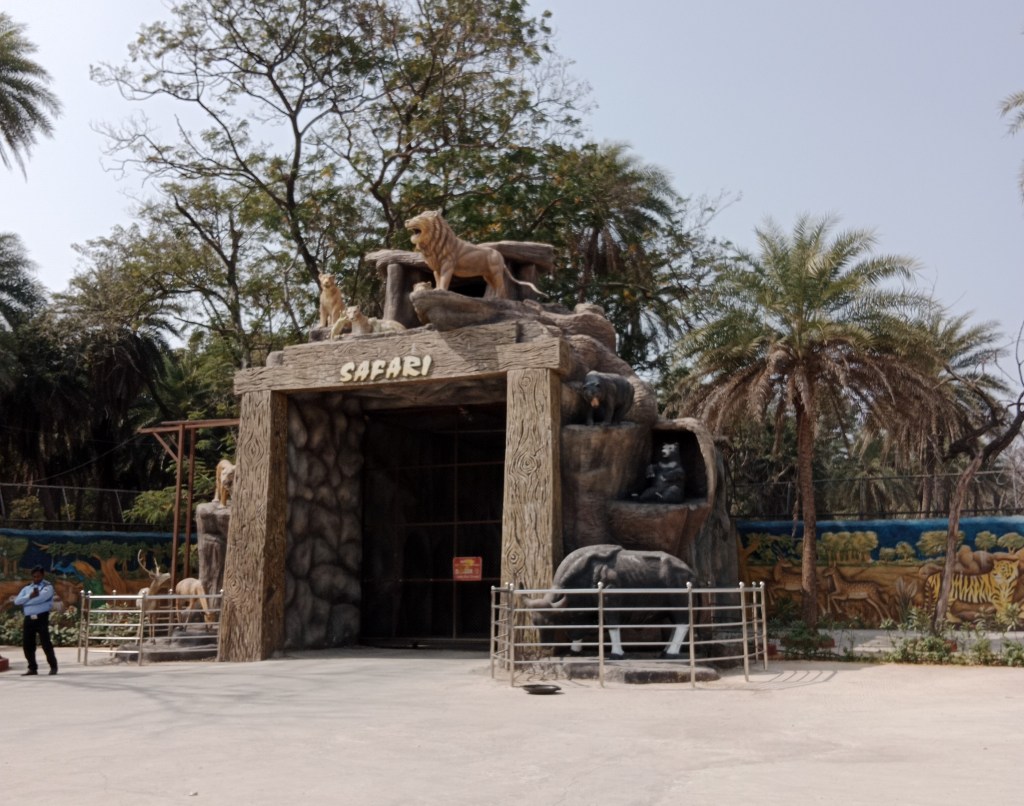
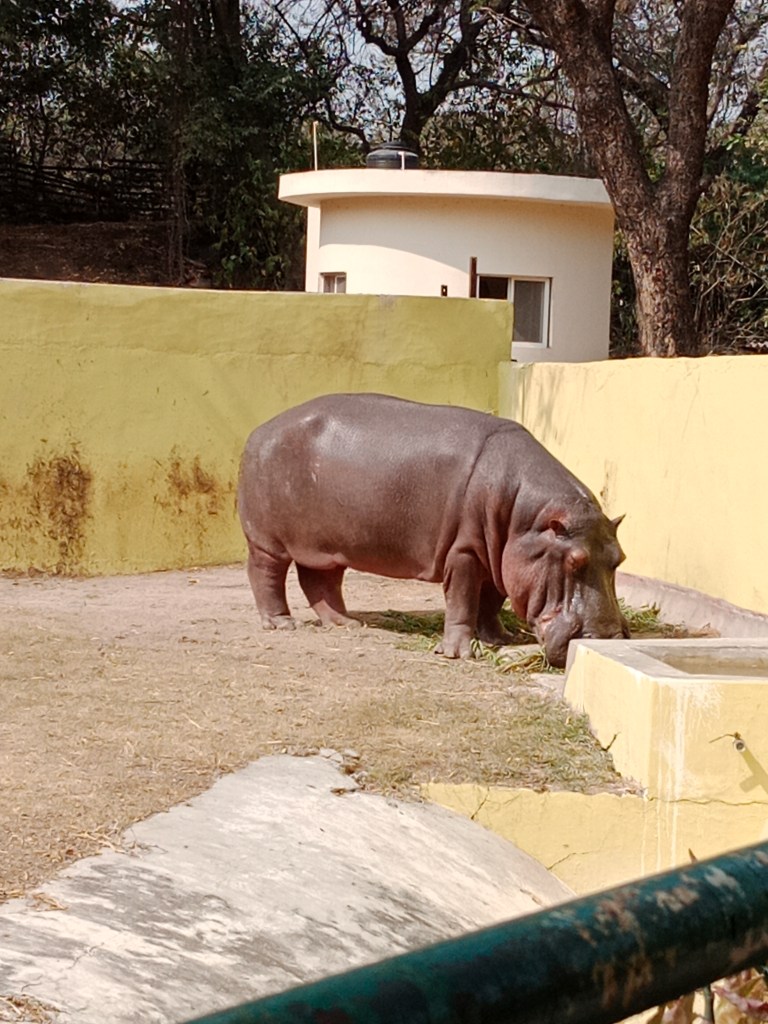
Hyderabad has a relatively well maintained zoological park covering a vast area. Most of the inhabitants roam around freely in their assigned areas and are separated from visitors by moats. They have a buggy system where you can alight at your chosen destination and board the next buggy to go elsewhere. This was really convenient as the area was very huge . There are facilities to book a safari too.
It had been a long long time since we visited a zoo and this one brought back memories of childhood picnics. Some pictures…
The safari area and the buggy
The bear and the hippo
Enjoy the tigers playing around in this video
Pearls
Last but not the least, Hyderabad is known as the city of pearls. This is due to its booming pearl processing and trading industry. The Qutub Shahi kings and the later rulers who ruled the area for over 200 years were very fond of pearls and this attracted craftsmen from all over the world to this area. The pearls formed an integral part of the traditional regalia and crushed pearls were known to have healing and beautifying properties. The persian gulf was a source of pearls for a long time but with the discovery of oil and consequent pollution led to a decline in pearl supplies from there and this also led to Hyderabad slowly becoming a pearl destination.
Pearl Jewellery
This brings us to the end of this episode. Next week we move on to Andhra Pradesh . Till then, do comment and give your feedback.
Two of the most beautiful museums/palaces are in Hyderabad and today we have a look at them. The vast collection of antiques that these museums have will surprise you. And the peculiar part is that most of these are collections of one individual. The interest in art and architecture that was nurtured is really amazing. The palace which is now a museum has such beautiful architecture and decor that it will leave you stunned!!
Come along…let’s see the palace first…
Chowmahalla Palace
Once the residence of the Nizams of Hyderabad, this palace is a museum today though the ownership still lies with the Nizams. The present day palace was built by the Nizam at the location of one of the existing palaces of the Qutub Shahi dynasty. Since he built four palaces, it is called chow mahalla meaning four palaces.
Though the construction started in the 18th century, it went on over a few decades resulting in the integration of many architectural styles. It primarily has two courtyards, a durbar hall,fountains and gardens. What was originally covering an area of 45 acres; is only 12 acres today!
As one enters the palace gates, we are in the Northern Courtyard where there is a long central quadrangle with corridors on either side with a pond and landscaped lawns in the middle. Right opposite the entrance and forming the third side of the quadrangle is Durbar Hall or the Khilwat Mubarak.
Durbar Hall
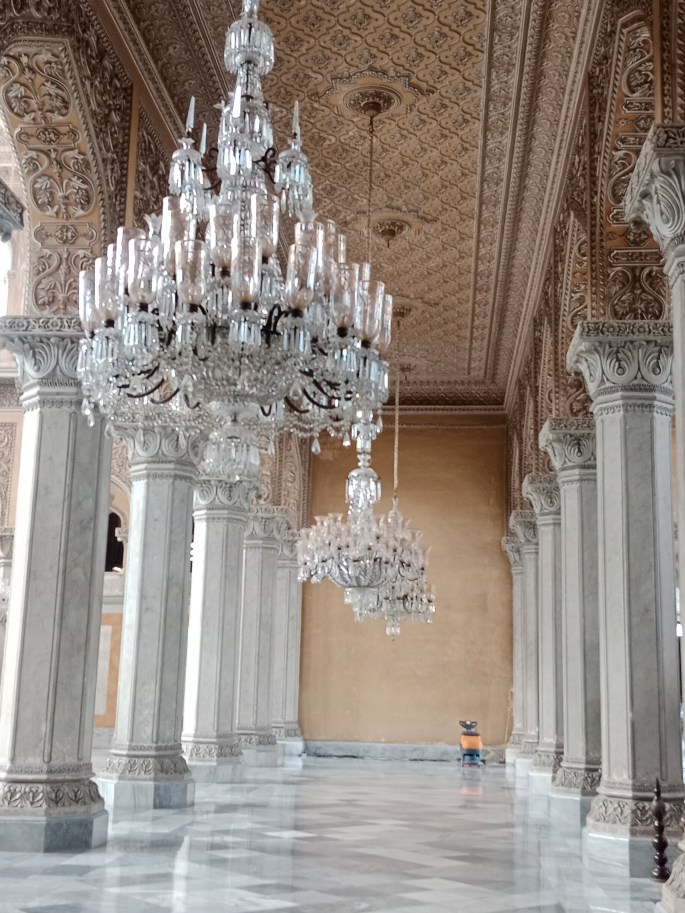
This is considered the heart of the palace as it was the seat of the Nizams. Decorated marble pillars rise from a marble floor. The Royal Seat or throne made of marble adorns the centre of the Durbar Hall. Beautiful chandeliers of various sizes drop down from an elaborately carved ceiling adding to the splendour of the hall.
The Durbar Hall
At the Durbar hall with the chandeliers and the throne
The beautiful ceiling and corridor of the durbar hall
As mentioned earlier, the palace is a museum now and has exhibits under various categories . Most of them are articles used by theNizams and their exhaustive collections of antiques.
The seals used by the Nizam and a collection of porcelain
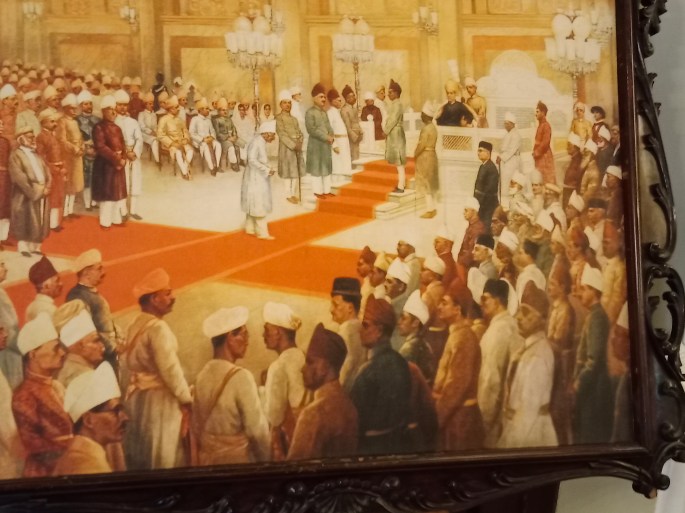
Beautiful paintings reflecting various events in the palace are also displayed.
A painting of all the Nizams
A painting of a durbar in session
The other interesting thing at the palace is the collection of vintage cars and other transport from a bygone era…
One of the vintage cars displayed
The Southern Courtyard is also a quadrangle but the sides of the quadrangle are formed by the four palaces with a central fountain. The palaces are built symmetrically opposite to each other . The palaces have huge columns and the artwork on the exterior of these palaces is outstanding indeed.
Afzal Mahal, one of the palaces
The beautiful artwork on the palace exteriors
Going through the exhaustive collections in the Chowmahalla Palace museum, we were astouned at its sheer volumes. But our next destination Salar Jung Museum surpassed even this.
Salar Jung Museum
Established in 1951 at the ancestral palace of the Salar Jung family this museum was moved to its present location in 1968. The Jung family served as prime ministers to the Nizams of Hyderabad . This collection is a repository of art objects from Europe, middle East, far East and Indian art and heritage works from the Maurayan times to the Mughal era. Most of it is the collection of Salar Jung III. The museum has a manuscript section and a reference library.
Some pictures…
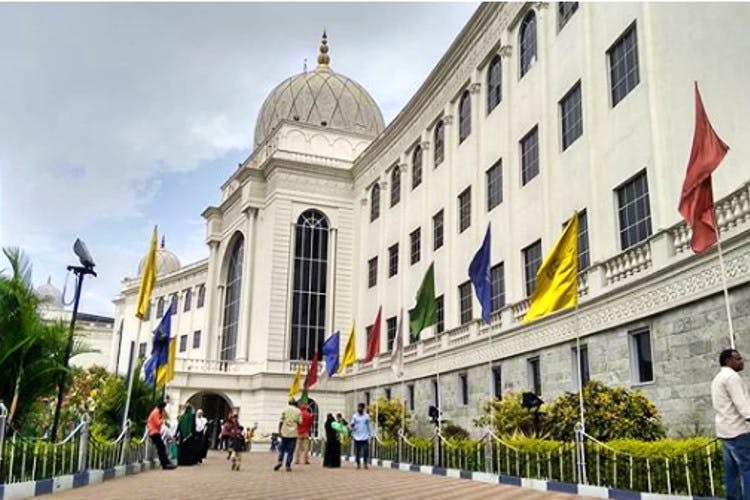
The Salar Jung Museum
Eastern Porcelain gallery
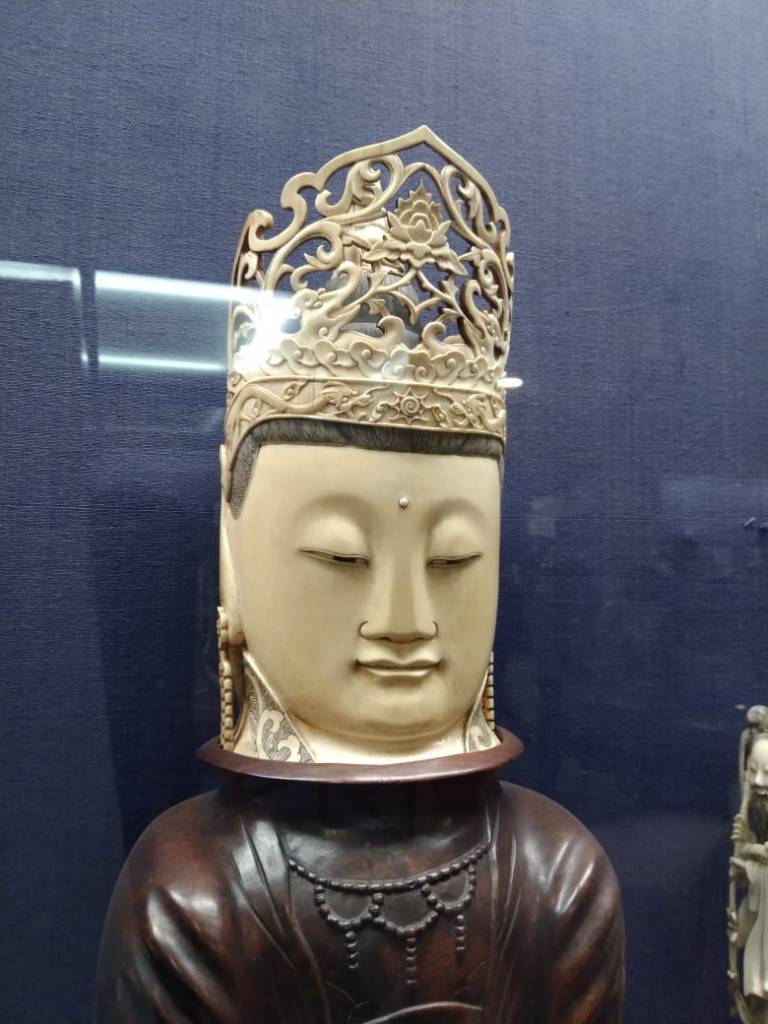
Ivory gallery
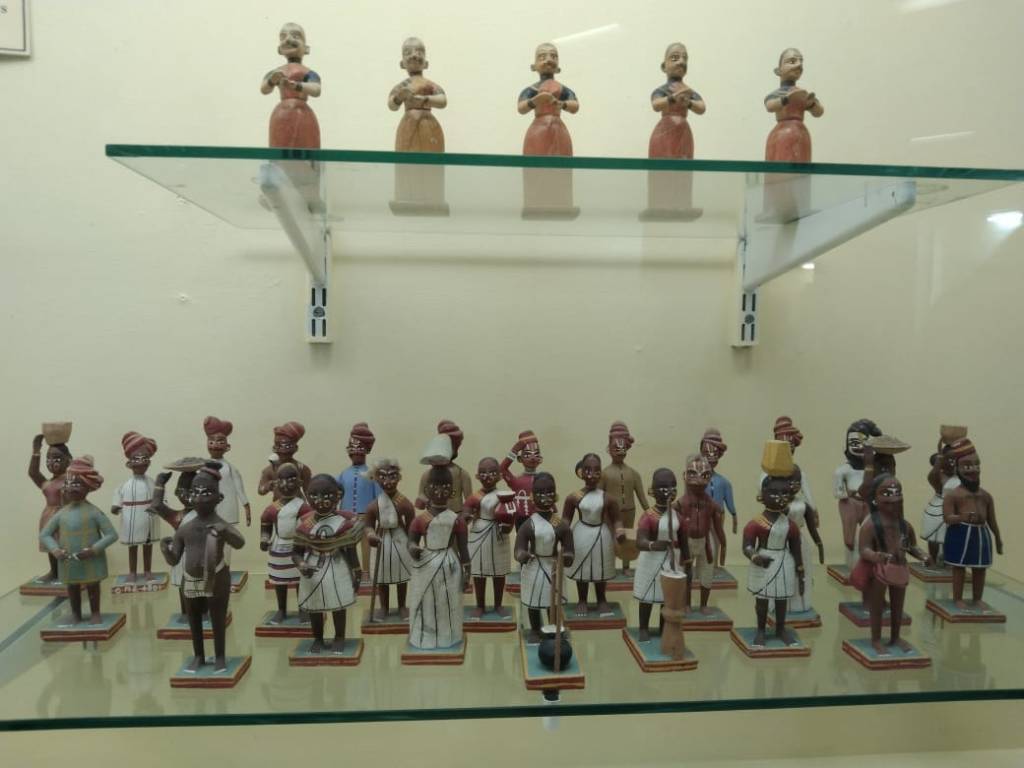
Kondapally toys and Indian Bronze
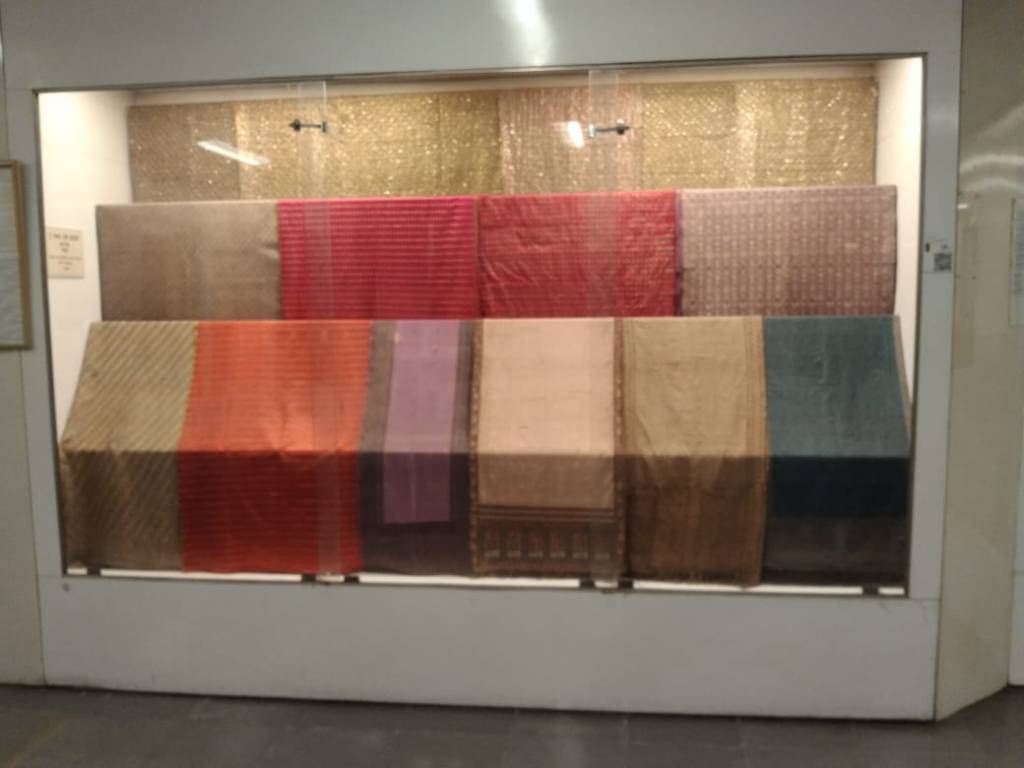
Indian Art and Textiles
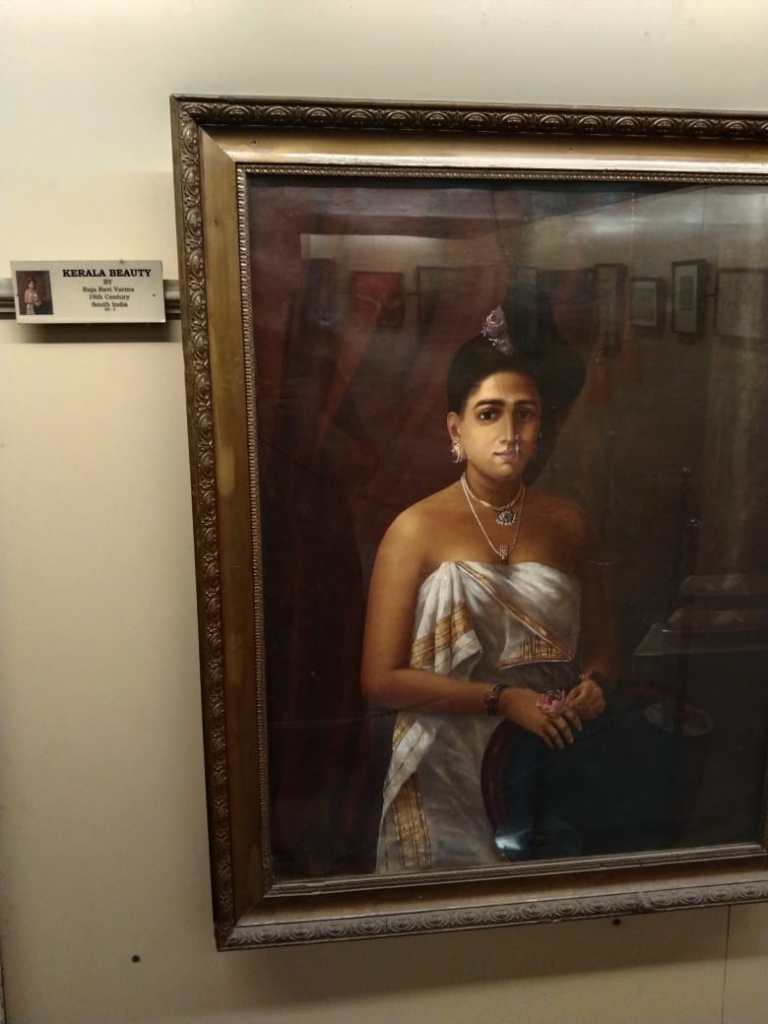
One of the most popular exhibits here is an Italian Marble sculpture of Veiled Rebecca.
Veiled Rebecca
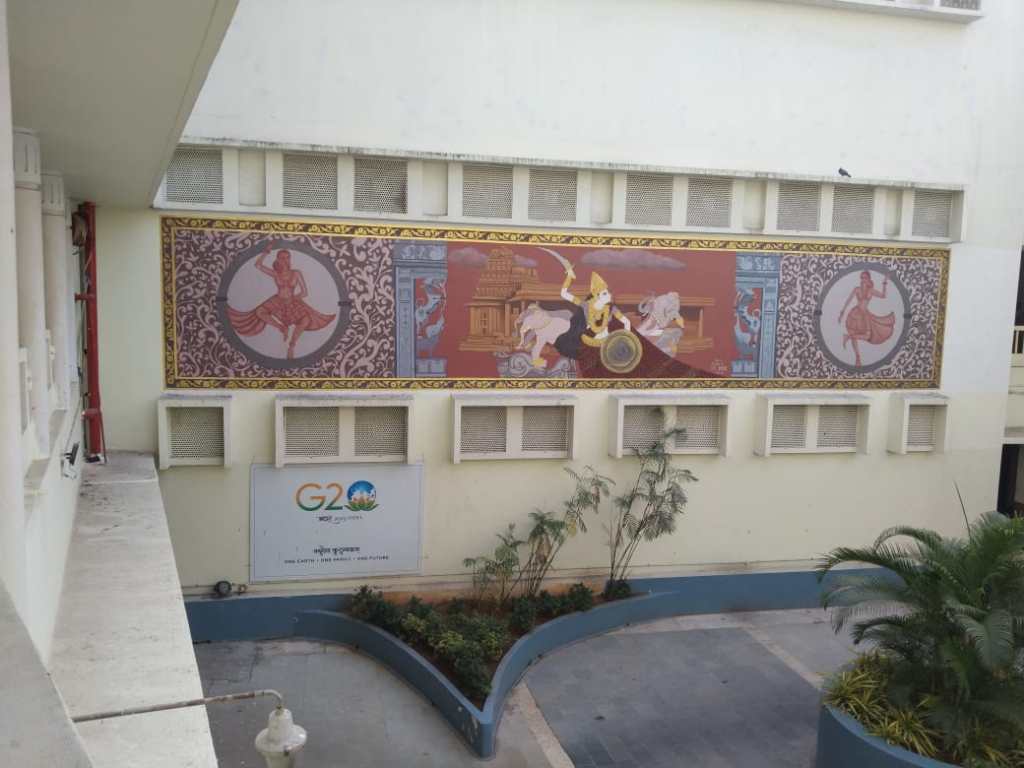
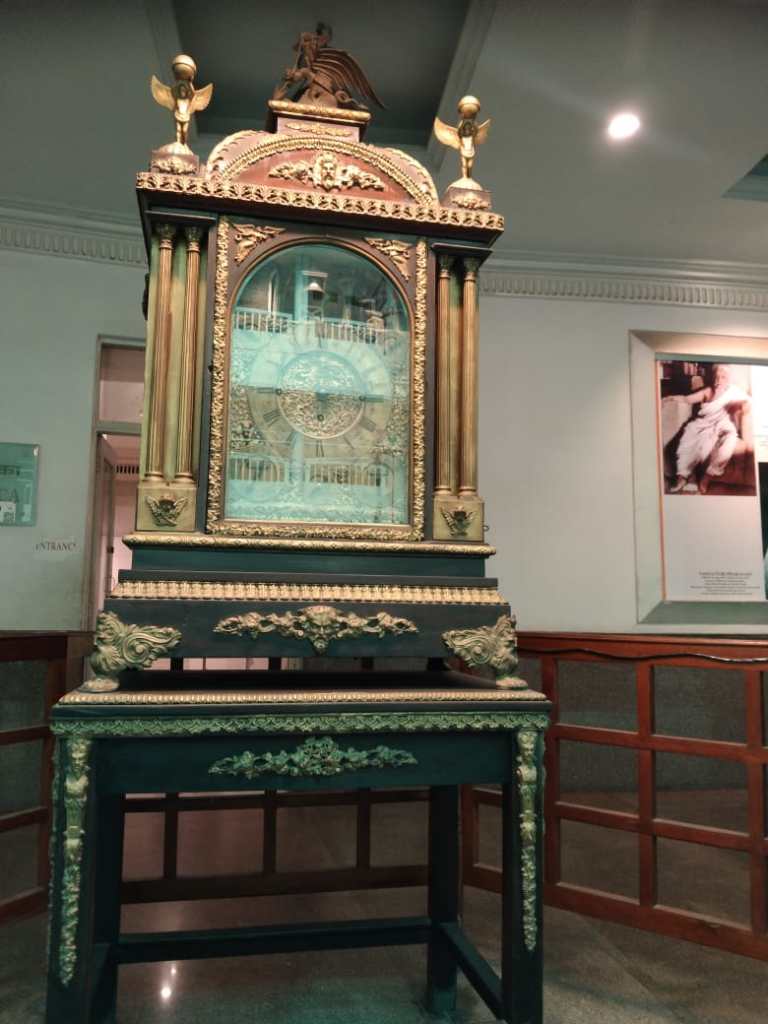
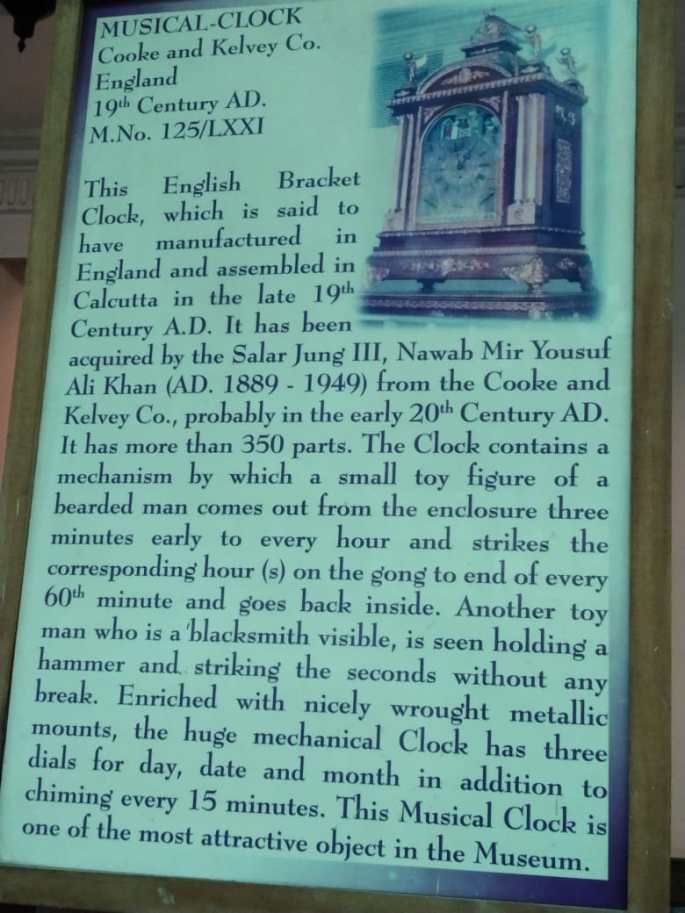
This is but a small example of the vast collections in this museum. Besides this, the walls of the central quadrangles are painted with murals and there is an ancient musical clock which is functional even now.
A mural on the wall of the centre court
The Musical Clockand it’s history
After walking through the various galleries at the museum, we were amazed at the sheer volumes of a personal collection!!
Tad tired after the long walk, we returned back to the cool comfort of the car and back to the hotel.
Next week, we cover some more interesting places in Hyderabad. Till then its goodbye…
Once upon a time, in the 1600s, there was a fort in India with a vault storing some of the most precious diamonds of all time. The Kohinoor and Hope diamonds were among these stored here . Do you know which fort I am talking about? The historic Golconda fort located in Hyderabad.
At that time, India had the only known diamond mine in the world. These mines were located in the Guntur and Krishna districts in present day Telangana. These diamonds were cut and sold in the diamond market city of Golconda which lay inside fortressed walls. It was such a booming centre of diamond trade that the word “Golconda” became synonymous with great wealth and held a legendary aura about itself.
Today, if you visit Golconda, all that remains is the ruined walls of a fortress city , a far cry from the legendary aura that it once held. Ofcourse what remains of the walls and rooms does give the feel of pomp and splendour of the bygone era. Today, Golconda fort finds itself on the tentaive list of UNESCO to become a World Heritage site and is under the control of the Archaeological Survey of India.
Before I take you through the fort itself, a short history will help put things in perspective.
Golconda, a historical perspective
The fort itself was built in mud by the Kakatiya ruler, Prataprudra in the 11th century. It went from him to the Bahmani Kings and then on to the Qutub Shahi dynasty. It was under the Qutub Shahi dynasty that Golconda fort saw its expansion from the original mud walls to huge fortified granite walls and it became their capital. It was a great centre of cotton trade and cotton fabrics were even exported from there apart from the booming diamond trade .This brought great wealth to the Qutub Shahi rulers . This attracted the Moghuls and in 1687 , Aurangzeb led his army to the Golconda fort marking the beginning of Moghul rule in the region. After the fall of the Moghul Empire in 1724 , Golconda came under the Nizams of Hyderabad and subsequently after Indian Independence, integration of Hyderabad state occured.
Golconda Fort
As one drives in to Golconda fort, one passes through narrow crowded streets and suddenly encounters a fortified stone wall with an entrance. This is the Moti Darwaza and this wall is the outer wall of the fort stretching over a distance of 11 kms. We enter through this gate and continue to drive through narrow streets lined with old dilapidated houses and shops. People go about their daily lives in a hurry and I understand that this part of Golconda had the living quarters of the helpers of the rulers at one point of time and it is now home to their descendents. This was all part of the fortified city at one pointin time.
The Moti Darwaza and the narrow streets that lie inside…
Continuing to drive along the narrow crowded streets, we reach an open area from where the actual fort can be seen. The inner part of the fort starts from here and this wall extends over a distance of 4 kms . It was within these walls that the royal family resided . After the tickets are purchased at the counter, one has to walk along a paved path with a manicured lawn on one side.
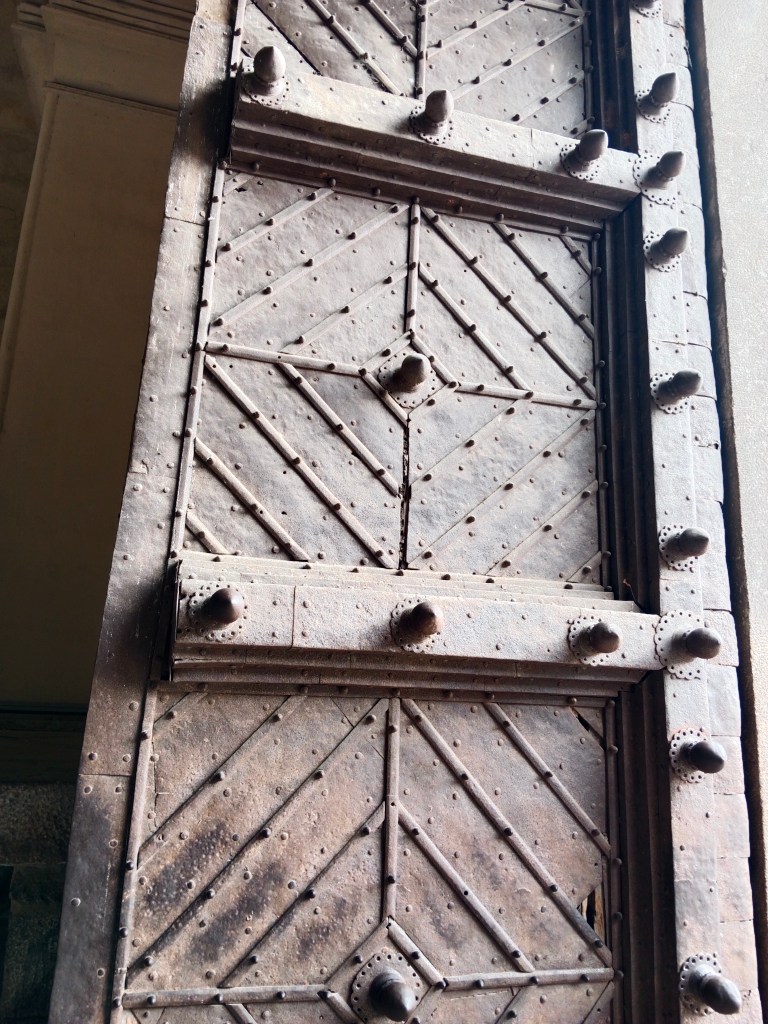
Then we reach an ornate doorway decorated with images of peacocks and lions indicative of the Hindu origins of this fort. The door is solid metal and looks very heavy. This is the BalaHissar gate.
The ornate doorway and the huge metal doorat BalaHisar gate.
After you cross the gate and walk ahead , almost the first thing you encounter is the Fateh Darwaza. This gate or darwaza has a cannon mounted on its wall and if one stands beneath the dome and claps one’s hand, the sound is supposed to reach the top. This is supposed to be a safety measure to warn the inhabitants of impending danger. The dome has geometric cuts along the walls which provide this acoustic effect which is one of the specialities of this fort.
Apart from this, there are a couple of places in the palaces of the fort where this unique acoustic system has been put to use.
Fateh Dawaza ……Note the geometric cuts on the ceiling giving the acoustic effect
Crossing this door and walking along a paved passage, one gets a view of major parts of the fort…..an overview of the place…
The first views of the entire fort…
The paved pathway and at places a wooden one guides one through the ruins of the fort.
To the left of the pathway is an ornate building with multiple arches called tha Aslah Khana. This was the place where arms and ammunition were stored.
Aslah Khana
Continuing further, we reach the area where the offices of the kingdom were located. This also has elaborate arches with a storage loft above to store documents.
Walking along further, we come across the barracks where the foot soldiers lived. Now, this is strategically located at the outermost part of the fort
Barracks
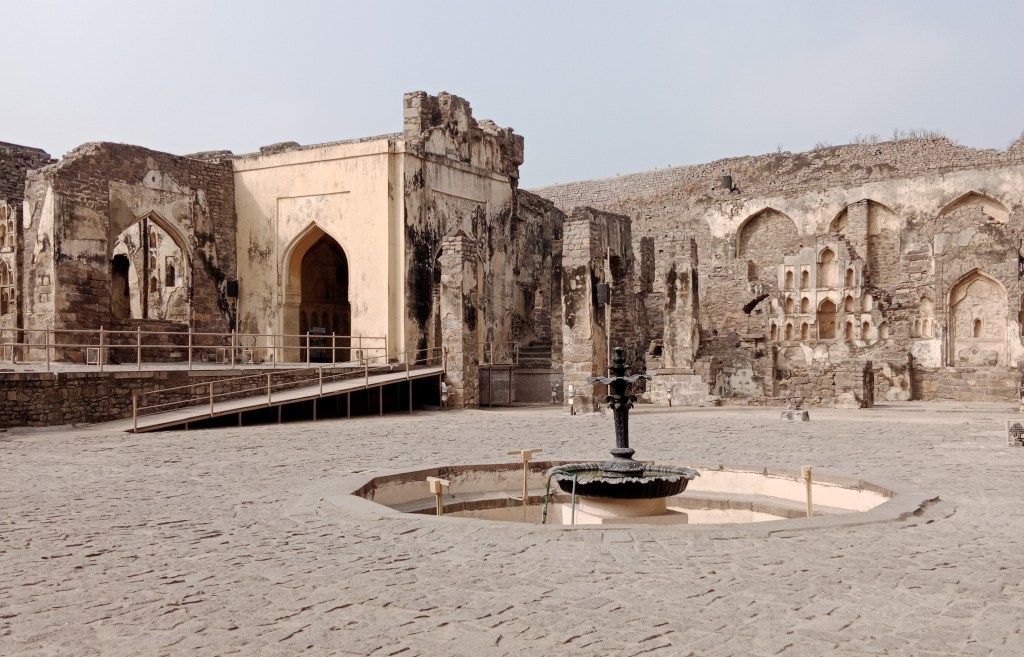
Soon we reach the palace area with the lawns in the centre and the palace on one side called the Rani Mahal .There is a courtyard with a stage on the opposite side where Taramati and Bhagmati , the court dancers used to dance and the royal family enjoyed it. The centre court also has a ruined fountain. The makeup room of the queen lies adjacent to this.
Rani Mahalwith the open courtyard
The Queen’s bath and makeup rooms
At many places, one can see the dilapidated and broken pipelines used in those days. The water to Golconda was transported by canals from Banjara hills and pumped using wheels.
There are two mosques within the fort. The first one is the Taramati mosque used by the commoners and the other one is the Ibrahim mosque located at the top and used by the royalty.
The Taramati mosque (left) and Mosque of Ibrahim
Nagina Bagh
This is a landscaped garden which was once the diamond trading centre.
Nagina Bagh
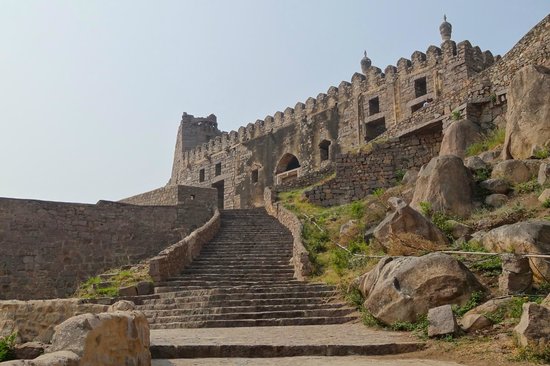
A climb of more than 350 steps takes one to the top of the fort where the Durbar Hall is located. As we climb up, we come across Ramdas Prison where Bhakt Ramdas was imprisoned. He had used money from the kingdom to build a temple for Rama and that led to his imprisonment.
Bhakt Ramdas jailand the steps to the Durbar hall
Climbing up , we first come across the Jagdamba Temple which is more than 500 years old. Legend has it that Prataprudran , the Kaktiya ruler built this temple here and the fort was built from there downwards later on. Even today, worship takes place at this temple.
Jagdamba Temple
Baradari or Darbar Hall
This was where public audiences were held and there are two buildings Diwan I Aam andDiwan I Khas around an elevated central courtyard.
Baradari and steep steps leading to it
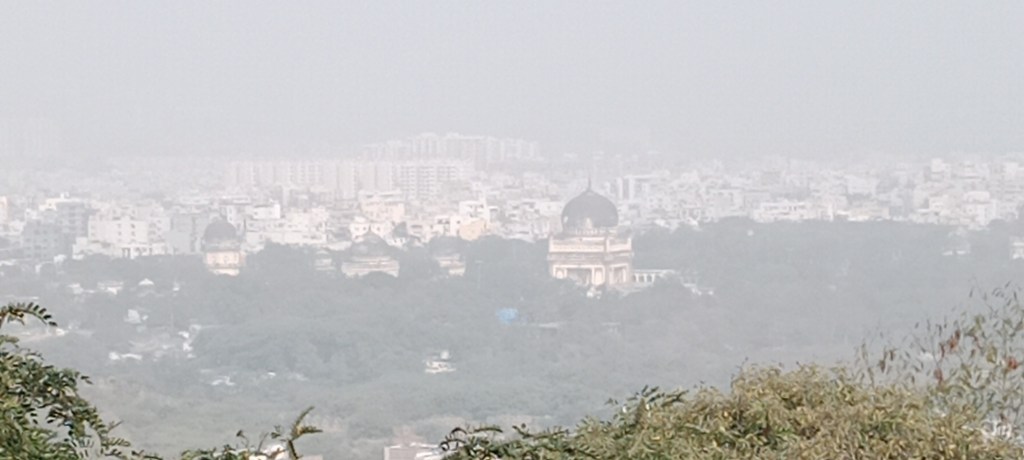
From the central courtyard which is the highest point of the fort, one can get a beautiful panoramic view of Hyderabad city. The famous Qutub Shahi tombs where the Qutub Shahi dynasty was laid to rest can also be seen from here. There is a secret underground tunnel from here that leads to the tombs and Charminar. In case of enemy attack, the royalty could escape to charminar and in case of death, the body would be secretly laid torest at the tombs. Meticulous planning and execution to meet all exingencies indeed!!
Bird’s eye view of Hyderabad and the domes of the Qutub Shahi tombs
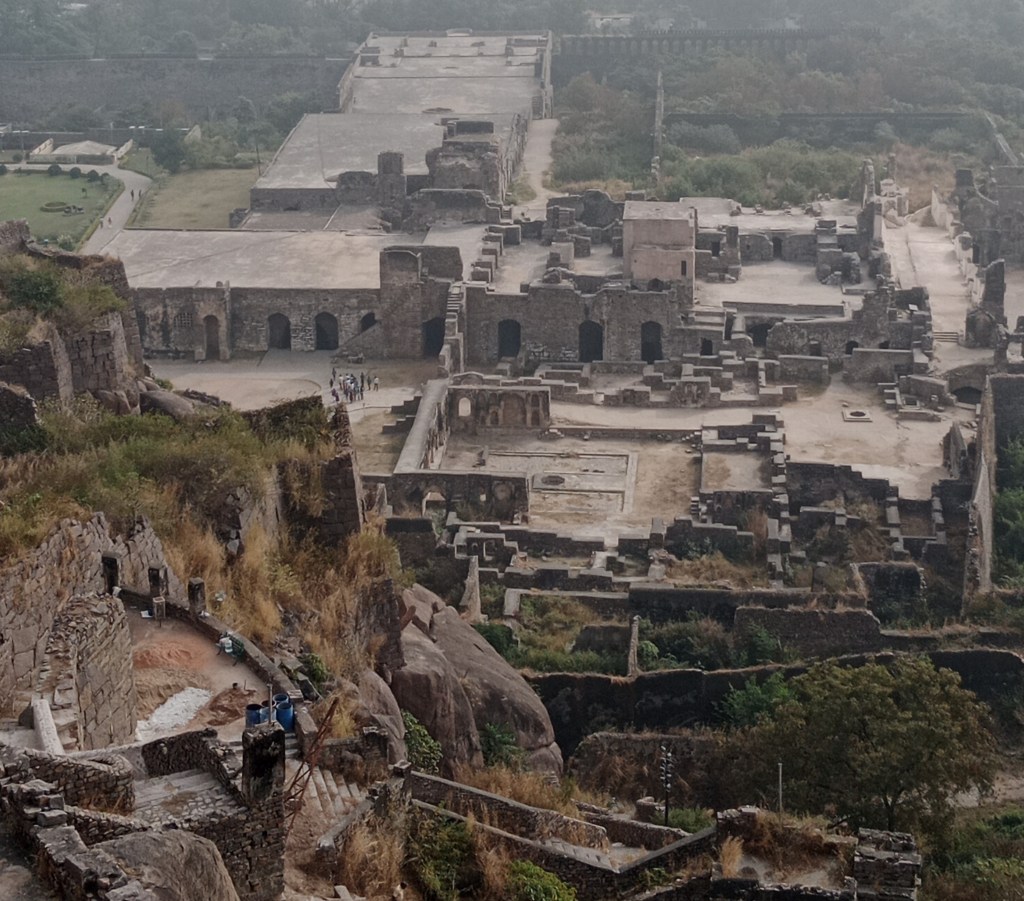
A short rest in the darbar hall and a difficult descent down followed. The beautiful views of the fort as one descended compensated for the difficult trek. Some views…
Panoramic views of Golconda Fort
Tired after the climb and descent, I was happy to meet my driver and board the cool comfort of the car .
This marks the end of the episode on the diamond fort but there’s more coming from Hyderabad. So do continue to comment and feedback till I reach you next…
Continuing our trip to NorthEast India, our next destination was Darjeeling. Starting from Gangtok we were driven down to Darjeeling by our tour operator. And I need not say….the drive was through hilly terrain with some beautiful views of the Himalayas.
A little bit about Darjeeling…
This quaint hillstation at an altitude of 6700 ft in the state of West Bengal in India has a colonial past.Darjeeling was originally in Sikkim and was leased out by the British to develop it into a summer retreatand English style cottages were built . Tea plantations were developed and a lot of labourers were recruited chiefly from Nepal. Widespread deforestation lead to displacement of the indigenous people. After Indian independence when the British left India, these cottages were bought by wealthy Indians and so were the plantations. This explains the colonial look of the buildings in the hillstation , the tea estates and the cosmopolitan population.
The name “Darjeeling” is derived from the Lepcha and Tibetan word dorje-ling meaning land of the thunderbolt. The dorje is a weapon found in most local homes and held by their deities. It is also the weapon of the Hindu God Indra.
The Dorje
Our Trip
The drive to Darjeeling was beautiful with winding roads, tea plantations and views of the mighty Himalayas. The Teesta and Rangeet rivers played hide and seek with us enroute till we reached a point where we could see them merging.
Some pictures from the drive to Darjeeling…
The misty hills, winding roads and the Teesta river
The confluence of the Teesta (muddy) and the Rangeet (clear)rivers
Late afternoon, we were at Darjeeling, checked into our hotel and rested for a while. Our hotel was walking distance from Chowrasta, the main shopping area in Darjeeling. So we walked up there and spent an evening soaking in the Darjeeling vibes.
Chowrasta
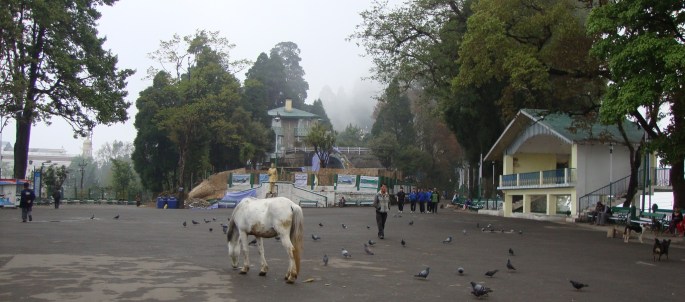
Chowrasta is the public square of Darjeeling lined with coffee shops and restaurants . It is a kind of meeting point for the people with small benches along the side for tourists to soak in the ambience. On a clear day, some of the Himalayan peaks can be seen from here including Mt. Kanchenjunga.
The Hawa Ghar ; a permanent stage where cultural programs are held and a statue of a Nepali poet adorn the square.
Chowrastawith the Hawa Ghar on the right
The fountain , statue and crowds at Chowrasta
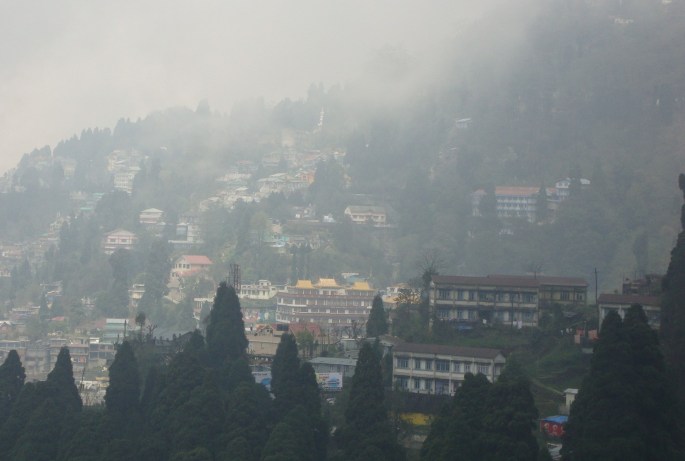
View of Darjeeling town with clouds descending on it…
After soaking in the Darjeeling ambience, we returned for the night to our hotel.
Next morning, we were picked up for a local sightseeing trip of Darjeeling and our first destination was the Ghoom Monastery.
Ghoom Monastery
A monastery of the yellow hat sect of Buddhists, it houses a 15 ft statue of Maitreya Buddha. This statue is painted in gold colour and is embedded with precious stones. The monastery houses various rare Buddhist manuscripts and is a revered place of worship for the Buddhists.
The New Ghoom monastery is a huge building and houses several monks. The old Ghoom monastery lies below it and looks more traditional.
New Ghoom Monastery
Old Ghoom Monastery
Buddha Statue
Darjeeling is home to an important institute, The Himalayan Mountaineering institute.
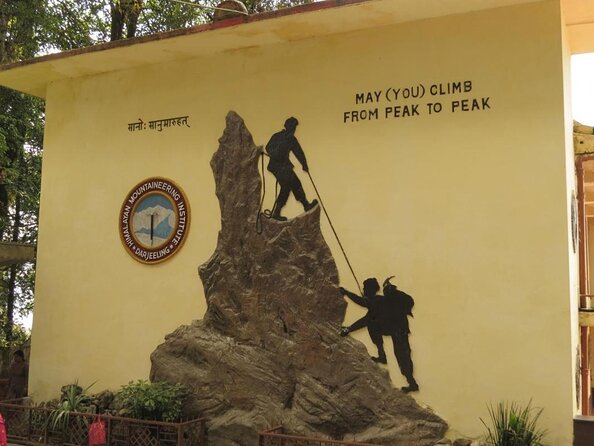
The Himalayan Mountaineering Institute
Founded in 1954 to commemorate the first summit of Mt Everest by Tenzing Norgay and Edmund Hillary,this is one of the premier mountaineering institutes in the world.
This institute trains aspirants in mountaineering and allied adventure activities. Tenzing Norgay served as the first director of this institute. There is a museum here that houses various treasured mountaineering displays.
Entrance to HMI
One of the inspiring exhibits and memorabilia at the museum
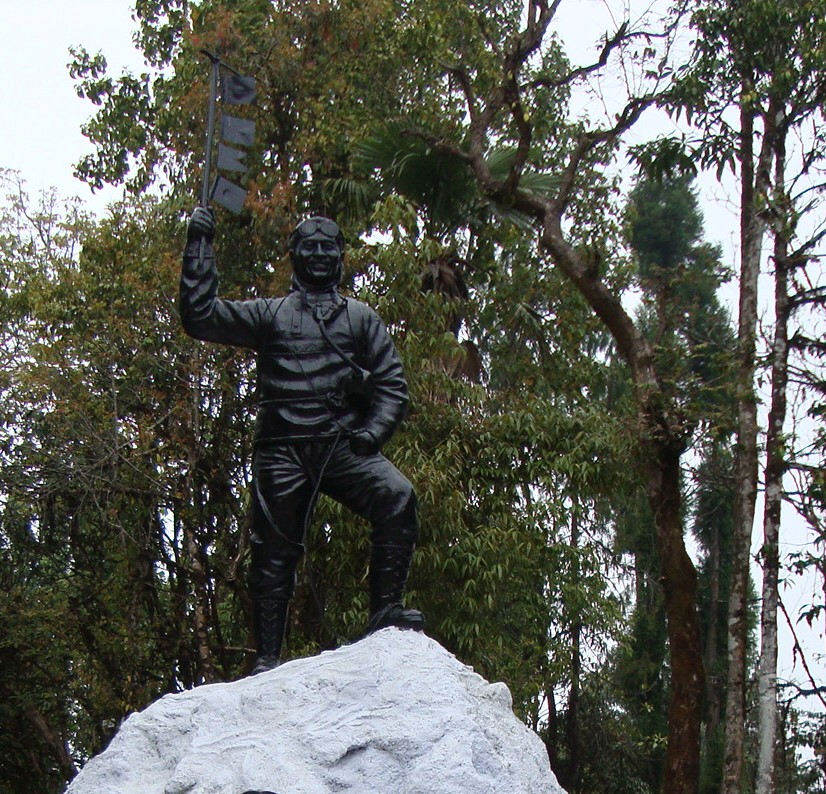
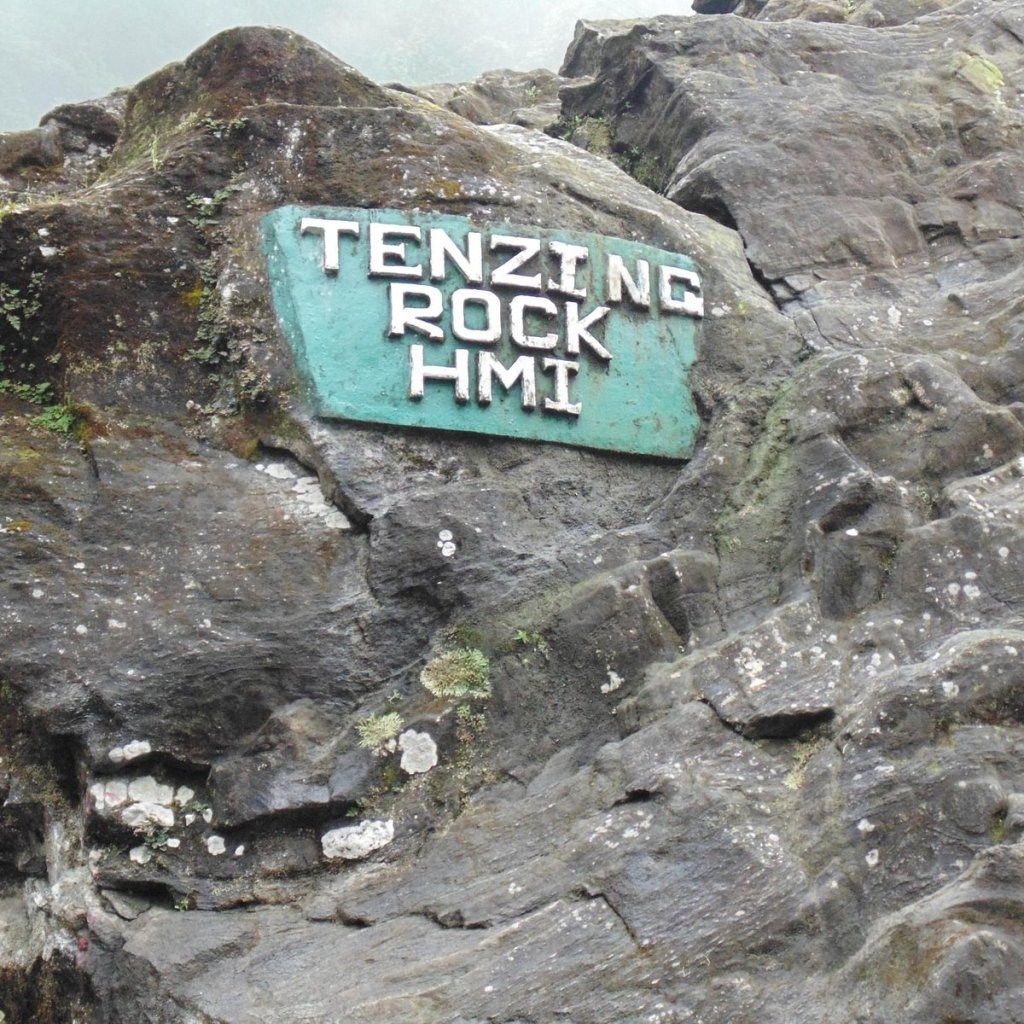
There is a statue of Tenzing Norgay and a rock named after him inside the institute. Interested visitors can attempt climbing this rock.
The statue of Tenzing Norgay and the rock for aspirant climbers.
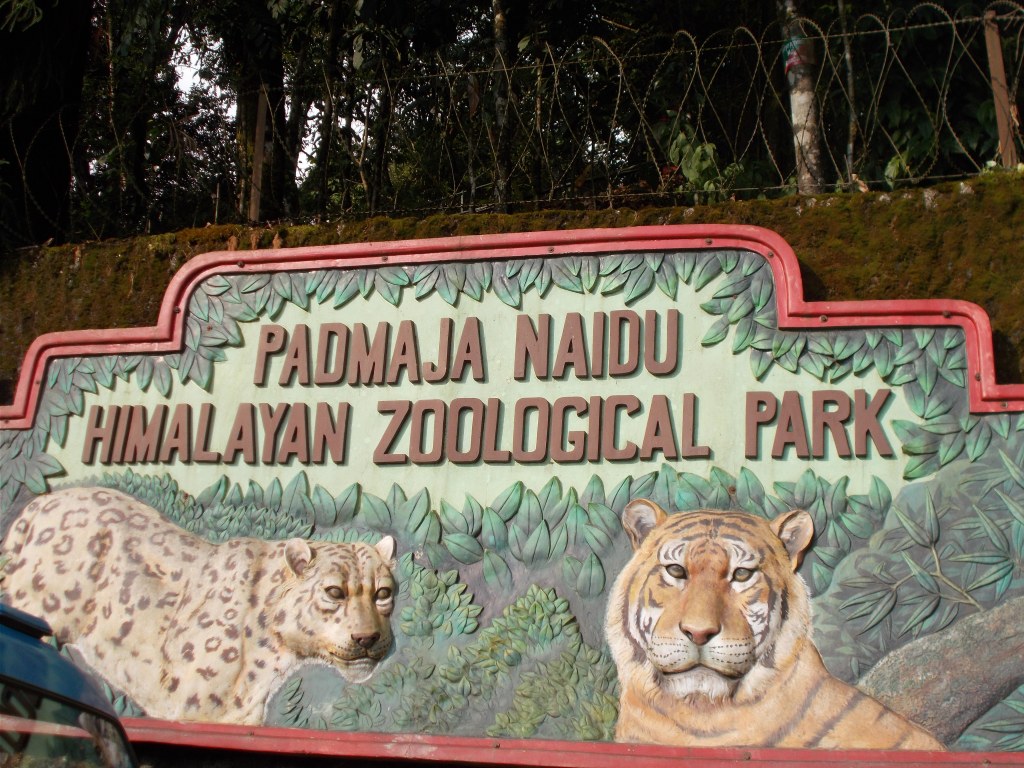
Adjoining the HMI is the Darjeeling Zoo also called Padmaja Naidu Himalayan Zoological Park. Many rare Himalayan species can be seen in this zoo. It is India’s highest altitude zoo.
Some pictures…
The Entrance
A Himalayan Panda…click on the video
A bear
Tiger Hill
This mountain in Darjeeling at a height of 8500 ft offers views of Mt Everest and Mt Kanchenjunga. A visit to Tiger Hill is recommended at dawn. We were picked up before sunrise and we drove up to Tiger Hill.
Spotting a leopard!!!
I can never forget this drive as I spotted a leopard just off the road scampering into the bushes as the lights of our jeep hit it. You will understand that just like the leopard, I was also taken by surprise and was not ready with my camera!!!
It was only subsequently that I realised that the Senchal Wildlife Sanctuary lies close to Tiger Hill and it is home to the Indian leopard.
At Tiger Hill , there is a viewing platform from where the views of sunrise over the Himalayas is awesome on a clear day. As the sun rises, the first rays falling on the snow capped mountains gives it a pretty orange hue which I was hoping for. Mt Kanchenjunga appears higher than Mt Everest as it is closer to Darjeeling.But, we were not so fortunate as we did see a sunrise but the clouds obstructed the Kanchenjunga views.
However, we enjoyed the thrill of waiting among the crowd for the Sun God to appear!
Some pictures…
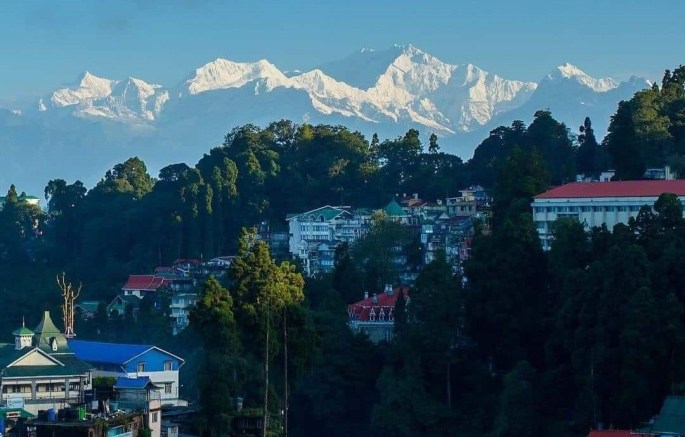
What was expected….(a file photo for reference)
What we saw...if you look carefully, the mountain peaks are seen in faint golden colour…
Sunrise over the Himalayas….
The Peace Pagoda
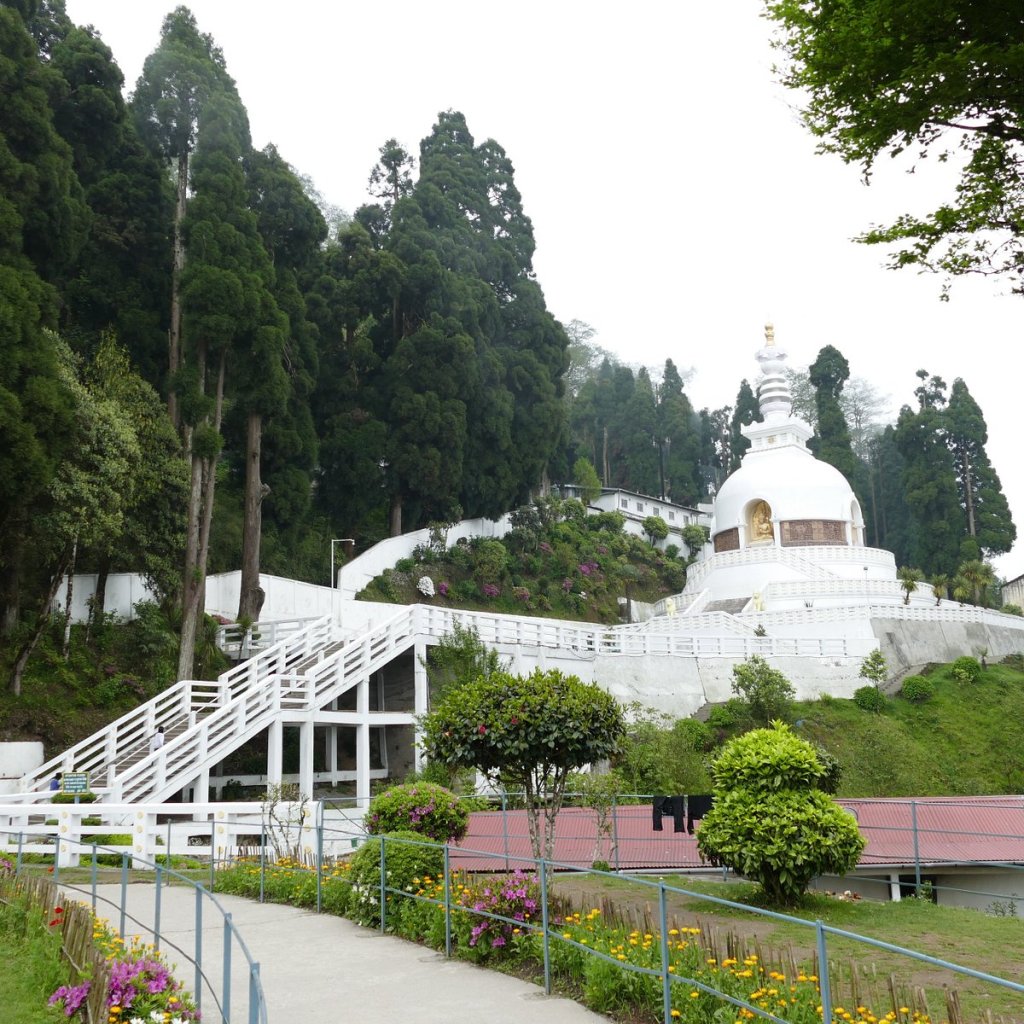
Another shrine in Darjeeling is the Peace Pagoda which is aimed at uniting people of all races and fostering world peace. One can understand its relevance in today’s world!!
Built by a Japanese Buddhist monk, it houses four avatars of Buddha. The ambience there is calm and peaceful and suited for meditation.
Peace Pagoda
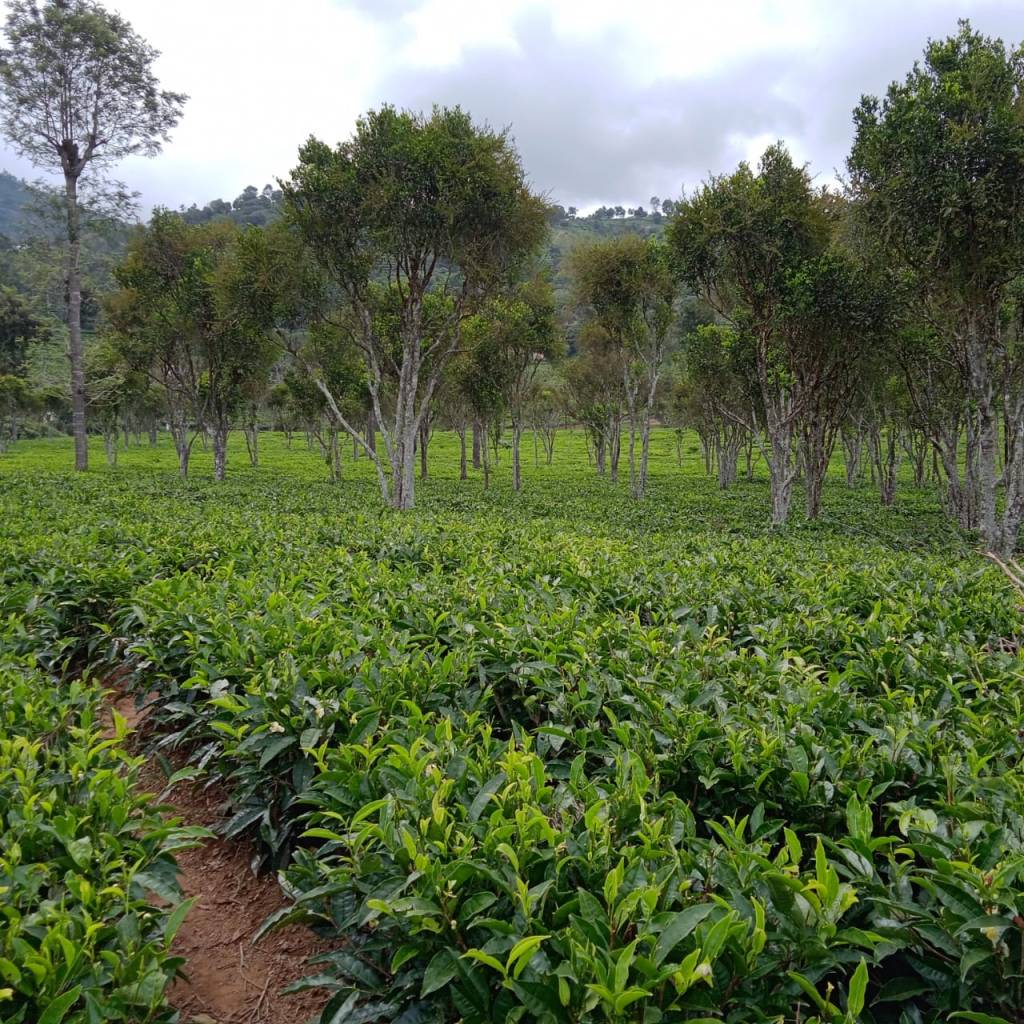
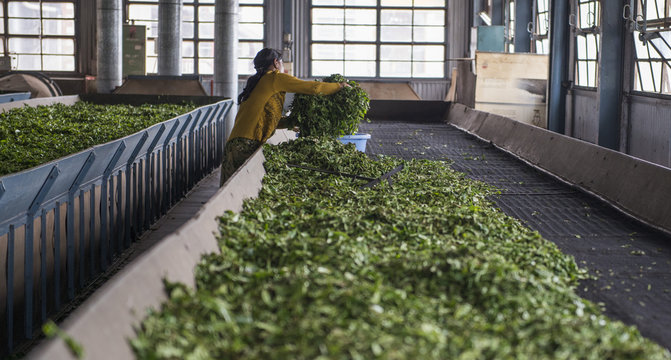
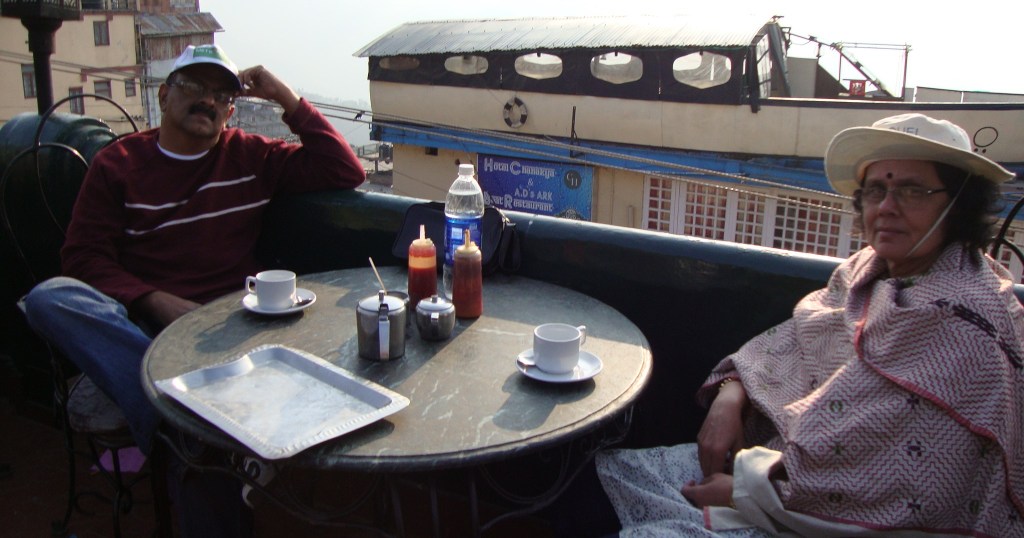
Last but not the least, we did visit some tea gardens nearby and also a tea factory. And of course savoured a lot of the famous Darjeeling chai at Keventer’s the colonial era restaurant that Darjeeling boasts of!!!
A tea estate
At the tea factory and enjoying tea at Keventers
That just about sums up our trip to Darjeeling. With lot more to cover in NorthEast India and hoping to come back for that, we bid goodbye to Darjeeling.
See you next week. Till then do subscribe, comment and give your feedback….
This was essentially our first trip to NorthEast India. A trip to Kalimpong, Gangtok and Darjeeling. Our first halt was Kalimpong, a tiny hillstation in West Bengal. After taking a flight from Chennai, we landed at Bagdogra airport one noon. We were picked up by our tour operator and driven down to Kalimpong.
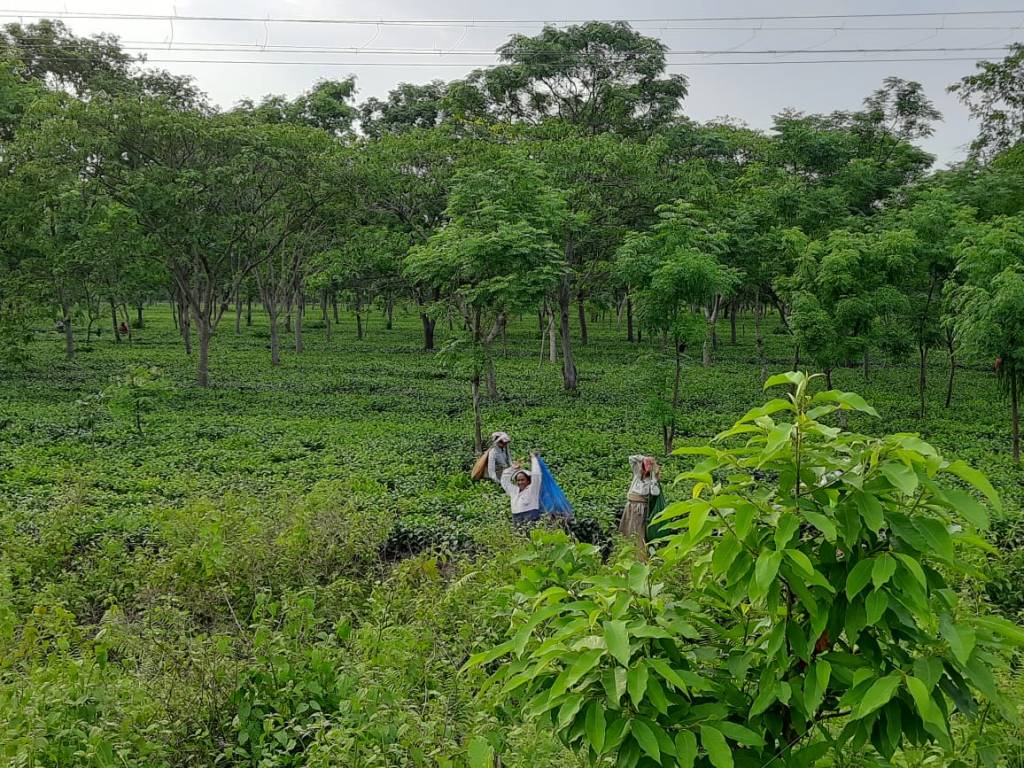
Just after leaving Bagdogra airport, we passed through the town of Siliguri and then on , we were on to some beautiful scenery. The drive was through tea gardens for the major part. The peculiar thing here is the presence of tea gardens on flat land. Down south, all our tea gardens are on hill slopes; not so here.
Tea Gardens
Gradually we were climbing up and we could feel the chillness set in as the altitude increased. Finally, we reached our hotel in Kalimpong by evening and rested for the evening.
Kalimpong
Kalimpong is a tiny hillstation at the foot of the Himalayas in West Bengal with salubrious climate. It is famous for it’s Buddhist monasteries , Tibetan handicrafts and local flowers. It offers great views of the Himalayas and the Teesta Rangit valley of Sikkim.
We woke up to a beautiful sunrise over the Himalayas .
Sunrise over the Himalayas
After breakfast we were picked up on a sightseeing trip of Kalimpong.
Our first halt was at Durpin hill which has the famous Tibetan monastery Zang dok Palri monastery. It is one of the largest and oldest monasteries in Kalimpong and houses beautiful paintings and scriptures.It has nine stupas or chortens in the courtyard.
The Monastery and the nine stupas
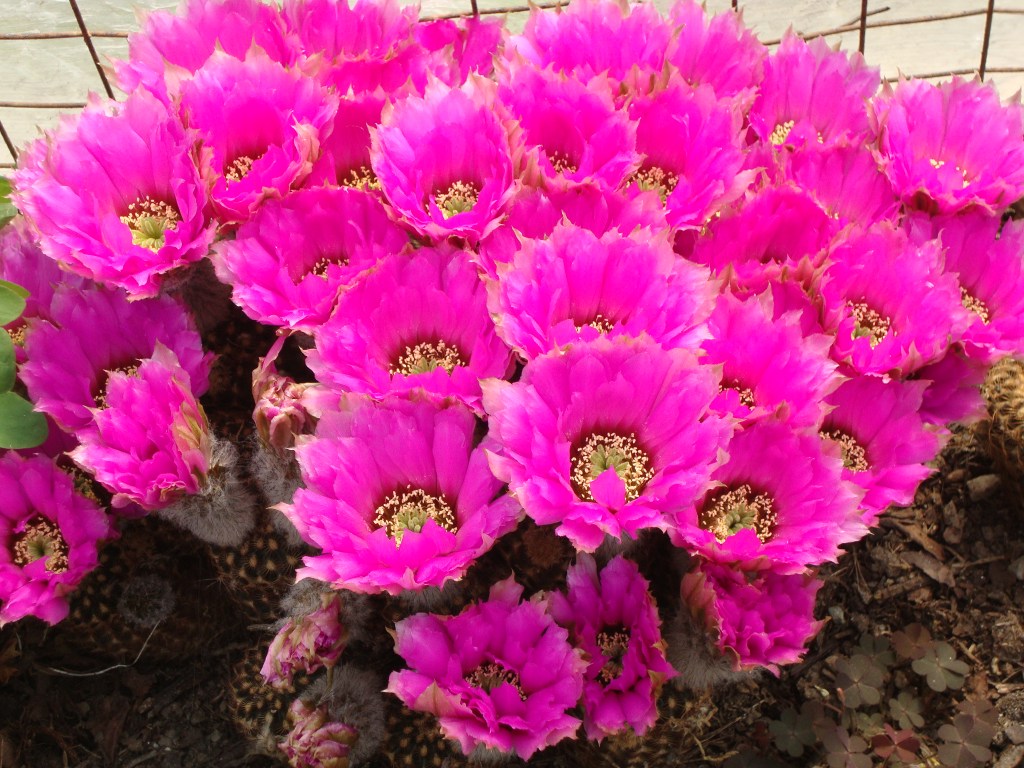
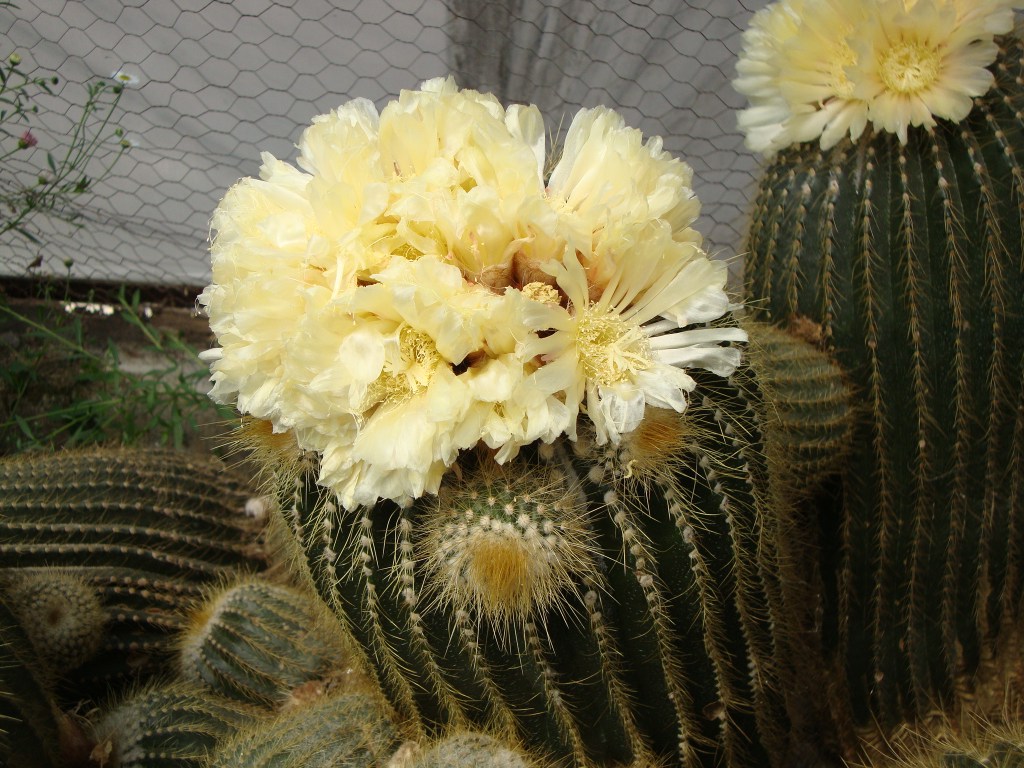
From there we visited one of the beautiful flower nurseries of Kalimpong. The cactus varieties and their unique flowers were truly enchanting. Some pictures…
Beautiful Cactus flowers
Sikkim
After lunch, we drove down from Kalimpong to Gangtok (capital of Sikkim), a distance of little more than 70 kms. Though the distance is less, the road follows a hilly terrain and it was evening by the time we reached Gangtok.
Sikkim is one of the smallest states in India but houses 84 glaciers making it the state with maximum glaciers.
The views enroute were really beautiful , particularly the Teesta river.
The hilly terrain
The Teesta River
Gangtok
This city in the eastern Himalayas ; capital of Sikkim is a prominent Buddhist pilgrim centre. Sikkim was a monarchy when India became independent but subsequently merged with India in 1975. Gangtok was on the trade route with Tibet and flourished through the Nathula and Jelepla passes. However, these passes were sealed after the SinoIndian hostilities leading to the decline of it’s importance. Subsequently the Nathula pass was opened for limited trade in 2006.
The city lies on the lower Himalayan ranges at a height of 1650 mts on a hill side and as such is prone to landslides. Roads are on steep inclines and houses built along the sides making it inevitable to have steep steps for reaching the buildings. It also lies on an earthquake prone zone surrounded by dense forest cover which acts as an impediment to growth of the city.
Gangtok, the city on a hillside
The upper parts of the city have alpine vegetation which gradually changes to temperate as one comes down in altitude. Bamboo is found in plenty. Sikkim is famous for it’s orchid varieties too.
The most happening place in Gangtok is the MG road and Lal Bazar. It is a pedestrian promenade with no vehicular traffic and dotted with shops on either side.
Lal Bazar , the main shopping promenade
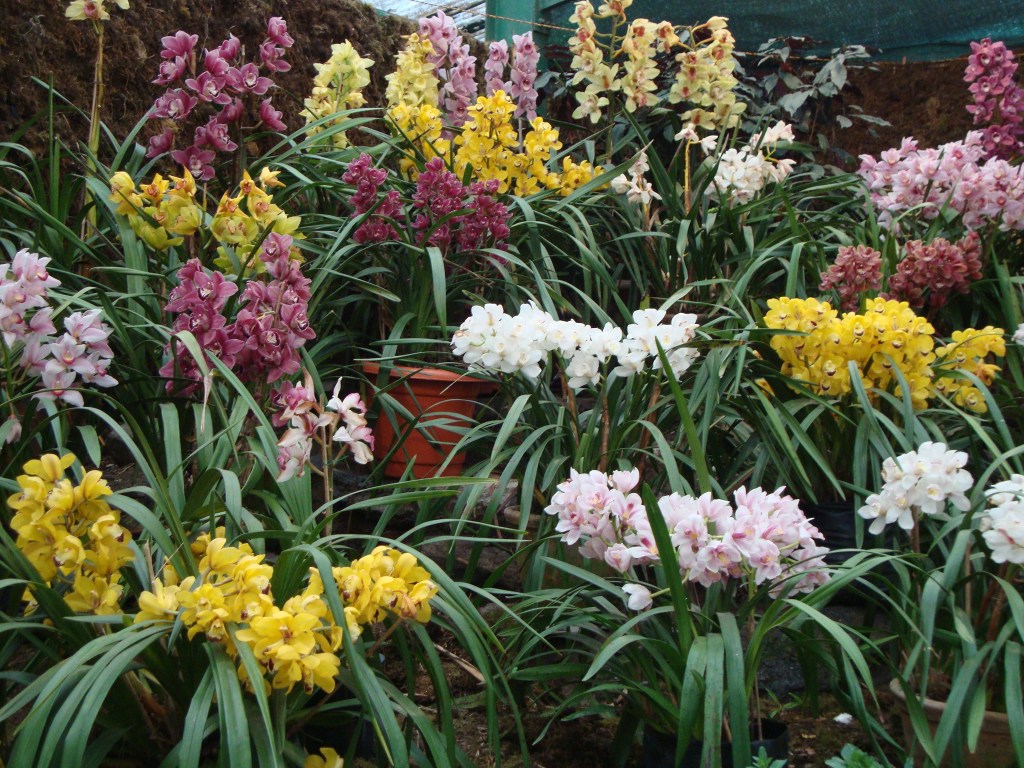
We visited Gangtok in April and that was the time of the flower show there. Orchids dominated the show. Some pictures..
A variety of Orchids
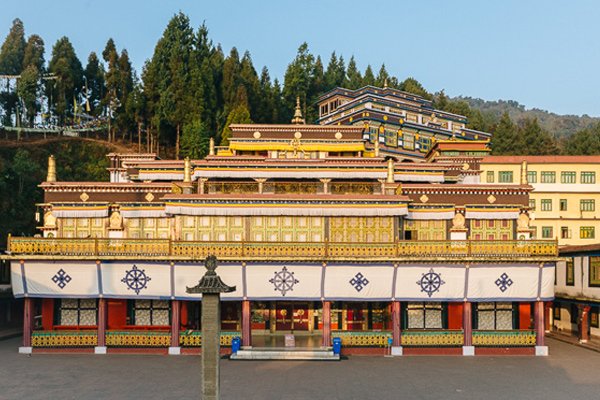
Rumtek Monastery
This is the largest Monastery in Sikkim and is the seat of the Karmapa who fled from Tibet to Sikkim. Also called Dharma Chakra Centre, it has typical Tibetan architecture and houses many monks who perform various ritual practices.
The interiors are colourful and have several relics. Some pictures..
Rumtek Monastery
The colourful interiors of the monastery
Tashi Viewpoint
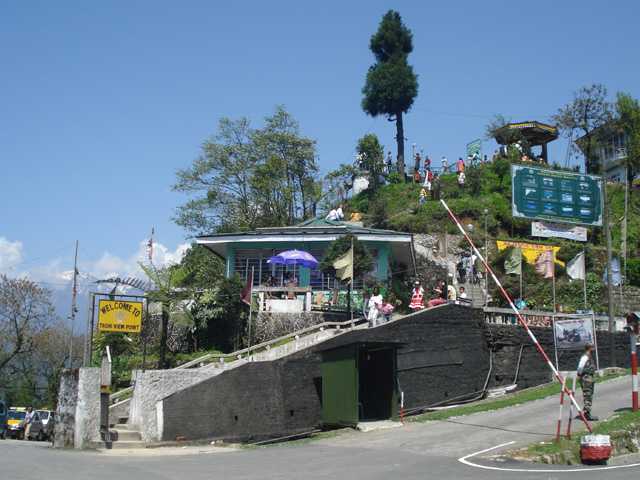
Our next halt was at Tashi View Point. This charming place is a perfect place to witness the brilliant surroundings like mountains, valleys and Gangtok itself.
Great views of Mt. Kanchenjunga can be enjoyed from here. It is ideal to come here for sunrise as the different hues of colour reflect on the peak. Some pictures…
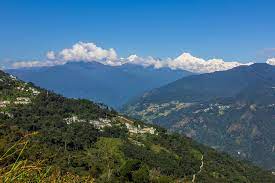
Mt. Kanchenjunga from Tashi
Tashi View point
The next day was the highlight of our tour to Sikkim. The visit to the Tsomgo Lake
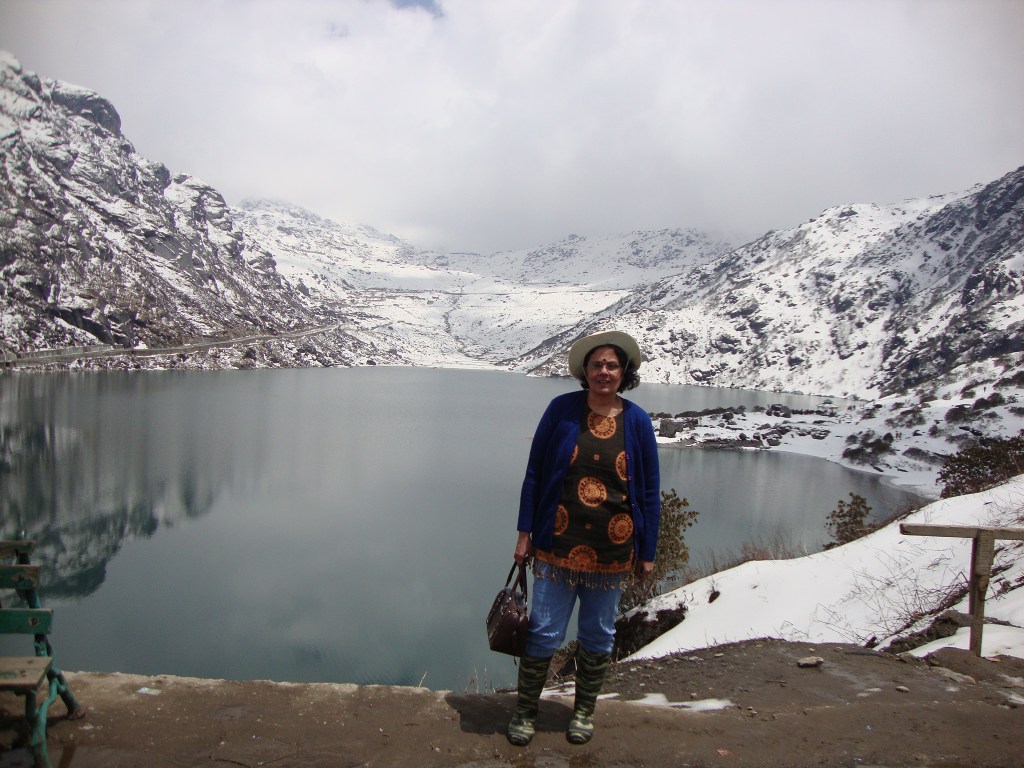
Tsomgo Lake
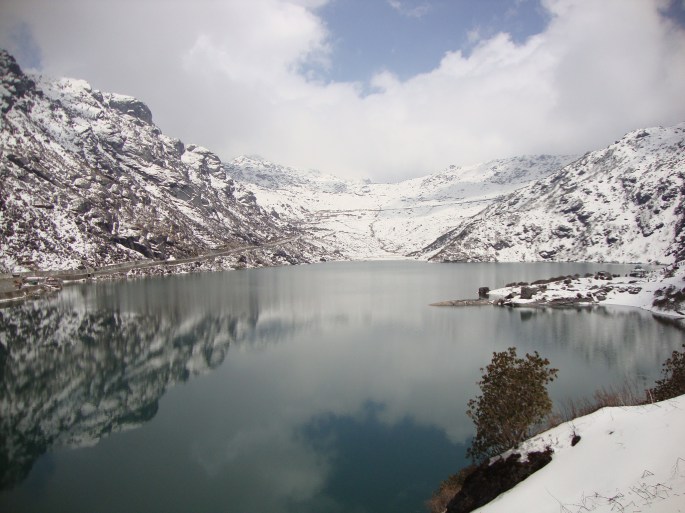
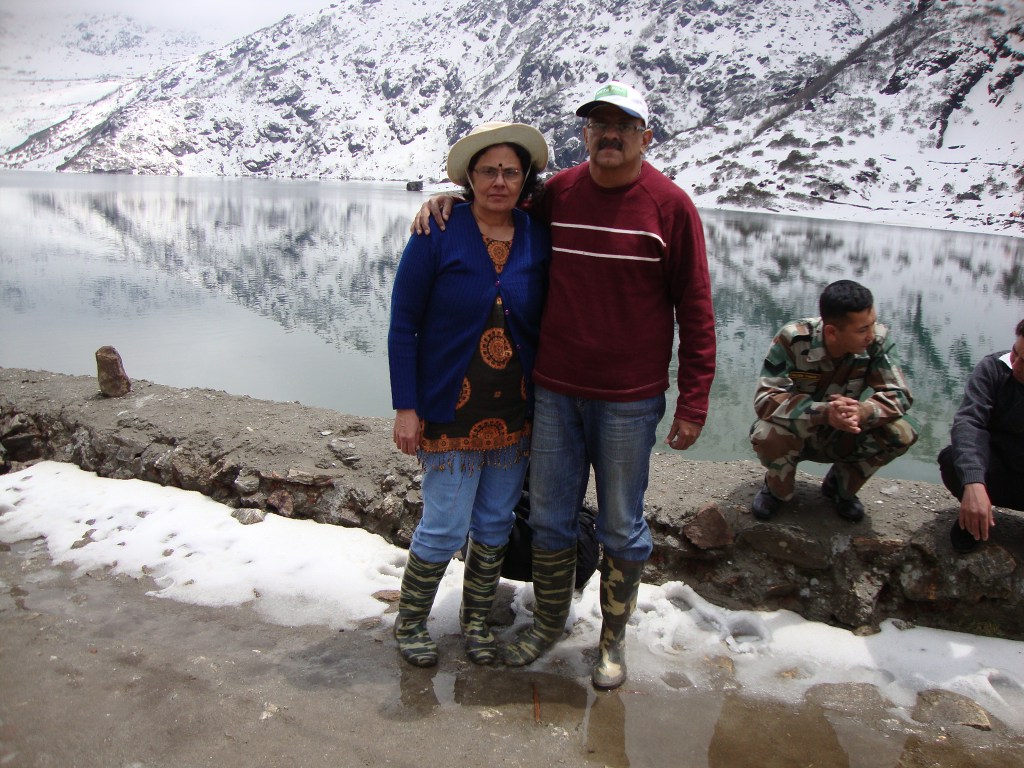
40 Kms from Gangtok on the Gangtok – Nathula highway is this beautiful glacial lake which is also called Changu Lake. The road to Nathula pass literally surrounds some parts of the lake. Since the border with China is just 5 kms away, this area is under army surveillance and we find lot of army personnel here. Due to this, visitors to Tsomgo Lake require to take prior permission by submitting identity proof. This is checked at entry and marked again while leaving.
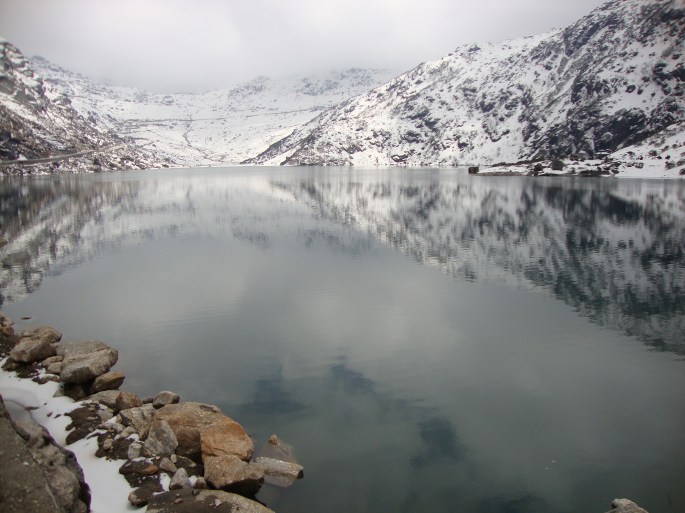
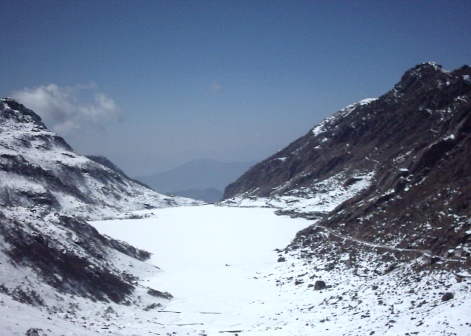
Located at an elevation of 3700 mts, the lake remains completely frozen in winter. The lake is surrounded by snow clad mountains which melts in summer to form the source of the lake. By May when the winter ends and the ice melts, there are beautiful Rhododendron flowers along the edge of the lake. We were a little too early for that!!
Rhododendrons
The Tsomgo lake is host to a number of migratory birds prominent among which are the Brahminy ducks. The migratory birds use the lake as a stopover on their way to the Indian plains from as far as Siberia during the winter months.
Tsomgo is believed to be sacred by Buddhists and Hindus and is shrouded in myths, beliefs and faith. Local legend has it that in ancient times, the Buddhist saints used to predict the future by observing the changing colour of the lake; a dark, gloomy tint told of difficult times and unrest in the region.
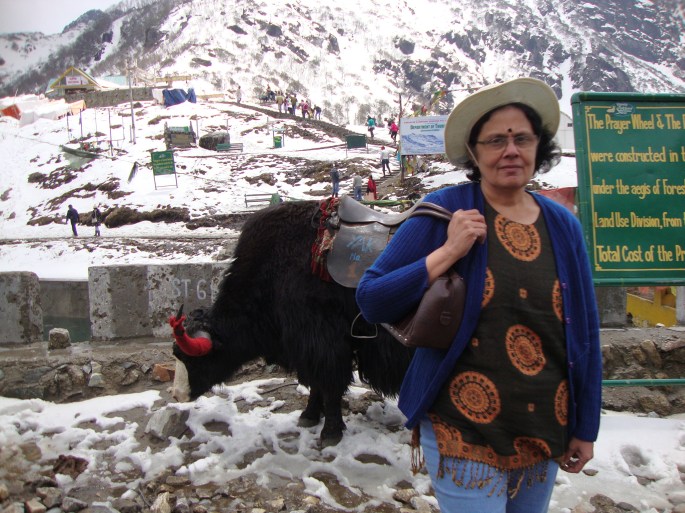
The Jhakris or faith healers of Sikkim attribute healing qualities to the water of this lake. Yak rides are an added attraction here.
The trip to Tsongmo was a rather jerky one, I must admit. Due to the extremely hilly terrain, the roads are winding up hill slopes and it is uneven and many places there were blocks due to rocks and boulders falling on the road. The road climbs 7500 ft within a span of 35 kms making it one of the steepest inclined roads.The drivers here are experts, and they literally take you on the edge of a ledge with a ravine below. All in all, it was a risky ride. That is probably the reason, that the vehicles move in a convoy .
Our convoy to Tsomgo
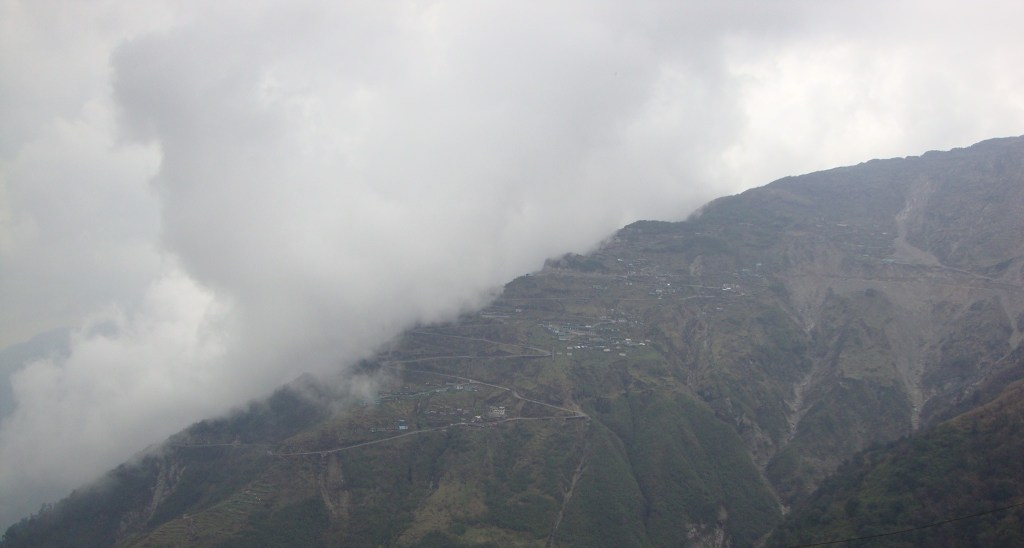
The winding roads…
There were waterfalls along the way…
A waterfall on the way
But at the end of it, the views were awesome!!!
A signboard explaining the sanctity of the lake
Tsomgo lake and the reflection of the Himalayas…
On the banks of the lake with some army personnel in the backdrop
The Yak is ready for a ride….
File photo of the same lake fully frozen in winter
There is a small cafetaria close to the lake where we had a quick bite and started our journey to Nathula Pass. There was lot of uncertainity about this part of the trip as bad weather was predicted but we managed it.
Nathula Pass
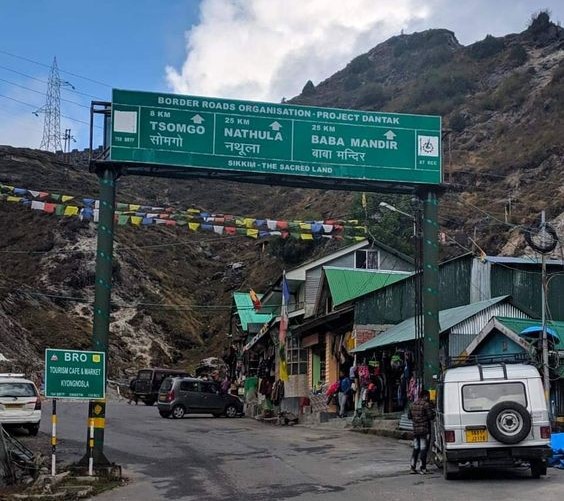
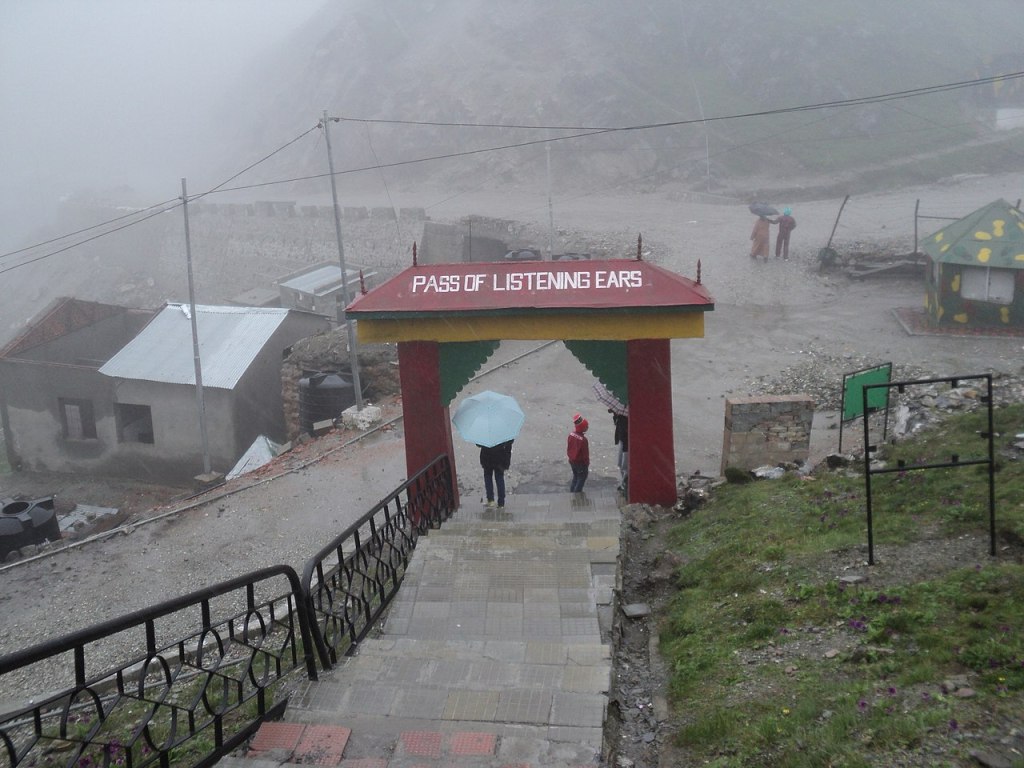
This pass at 14,150 ft connects Gangtok to Tibet and is located in the Himalayan ranges.It was once a trade route but was sealed in 1962 after the India-China war. Squirmishes along the area between the two sides was common. It was reopened in 2006 for trade and as it offered an alternative route for the Kailash Mansarovar Yatra. However, due to bad weather, trade is restricted to only few months in a year. Needless to say, variations in Indo China relations affects tourist accessibility here.
Some pictures..
Map showing location of Nathula and the road leading there
Nathula Pass
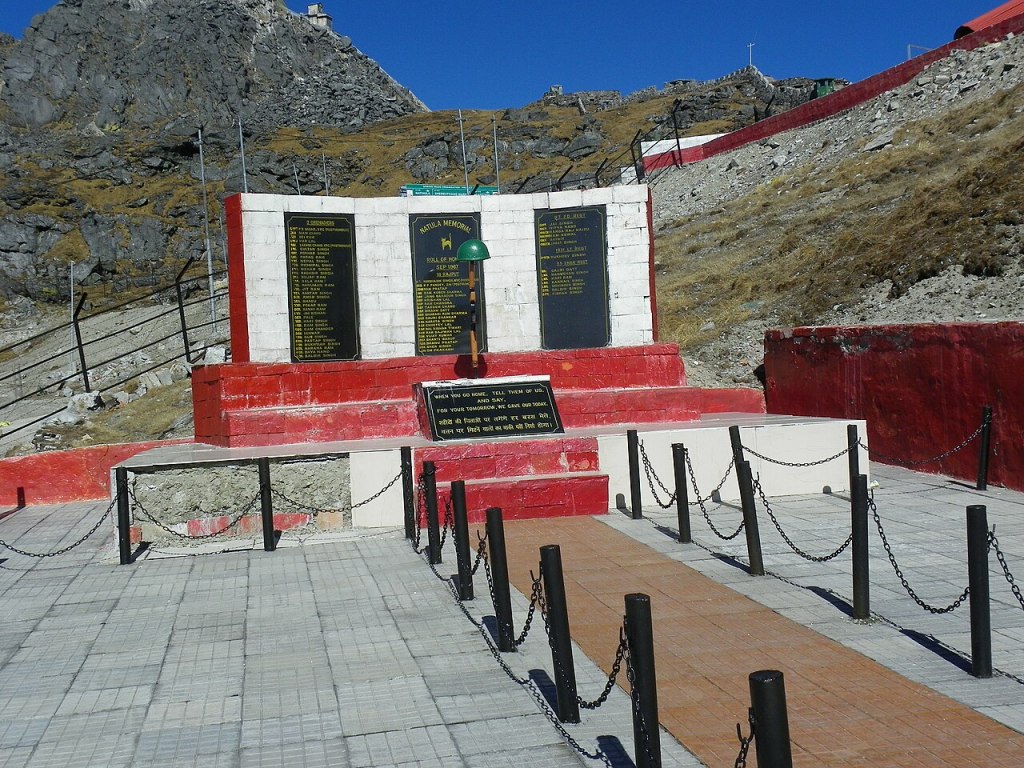
Memorial at Nathula
We just managed to look around and the weather dramatically worsened. We were all asked to leave immediately and we did so. Back in the safety of our vehicles, we waited in the long queue of leaving vehicles. Enroute we encountered some delay due to land slips which were being cleared by the BRO (Border Roads Organisation).
With beautiful memories of an alpine lake, we retired for the night with dreams of an exciting ride to Darjeeling the next day.
See you at Darjeeling next week. Till then, do subscribe, comment and give your feedback.
Tasting Coorg coffee, let us continue our journey through Kodagu visiting some of it’s highlights. The Nagarhole Tiger reserve is perhaps it’s main highlight and let us start from there. Come along….
Nagarhole National Park
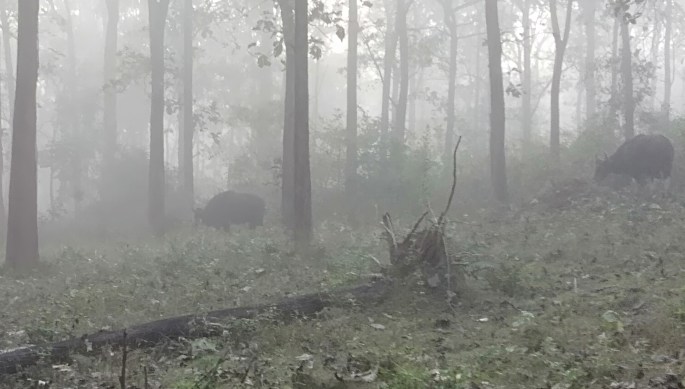
The Nagarhole National Park and Tiger Reserve is part of the Nilgiri Biosphere Reserve and lies along the Brahmagiri hills in Coorg. Sandalwood and teak trees abound in this park which is home to the Bengal Tiger, gaur, Chital, Sambar and elephants and a variety of birds. The Nagarhole River winds through jungle landscapes of this park giving it the name Nagarhole meaning serpent river and joins the Kabini River near Bandipur. This park is contiguous with Wayanad and Bandipur sanctuaries.
A jungle safari through this park can give one an opportunity to see it’s inhabitants. Some pictures….
A misty morning at Nagarhole
On a brighter day…
Elephant walk….
Langur time….
Enroute Nagarhole is a famous waterfall called Iruppu falls.
Iruppu Falls
Located on the highway to Nagarhole, this waterfall is also called Lakshman Tirtha falls. A trek from the falls takes one through the forest to Brahmagiri peak. The Lakshman Tirtha river starts from here and there is a famous Shiva temple on it’s banks.
Iruppu Falls
Moving away from Nagarhole , let us visit some important sights near Madikeri
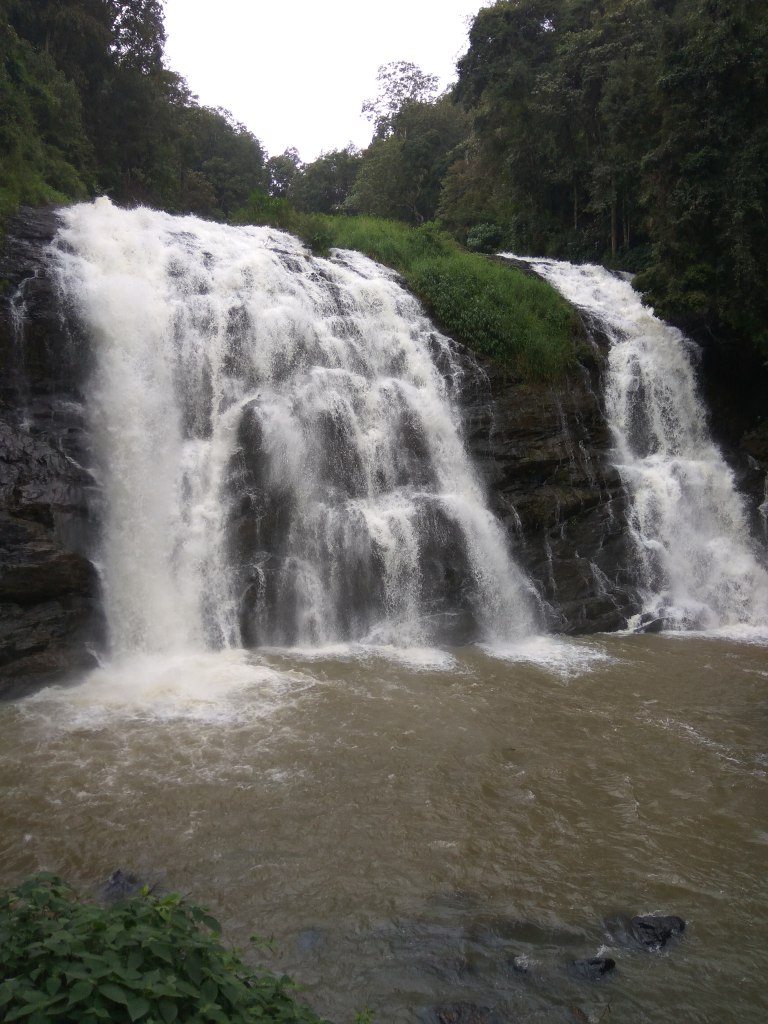
Abbey Falls
One of the most picturesque sights in Coorg is the Abbey falls where the Kaveri river cascades on a rockface in between coffee plantations. It is located about 8 kms from Madikeri and one has to climb down a flight of stairs to reach this waterfall.
Abbey Falls
The steps leading to the falls
Nisargadhama
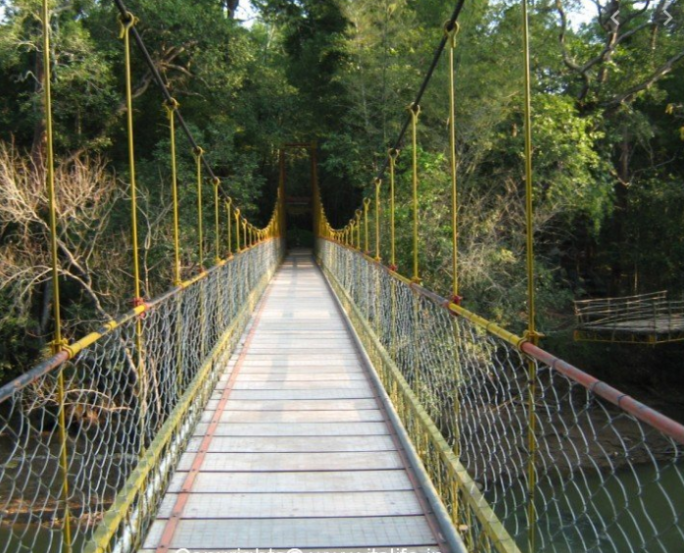
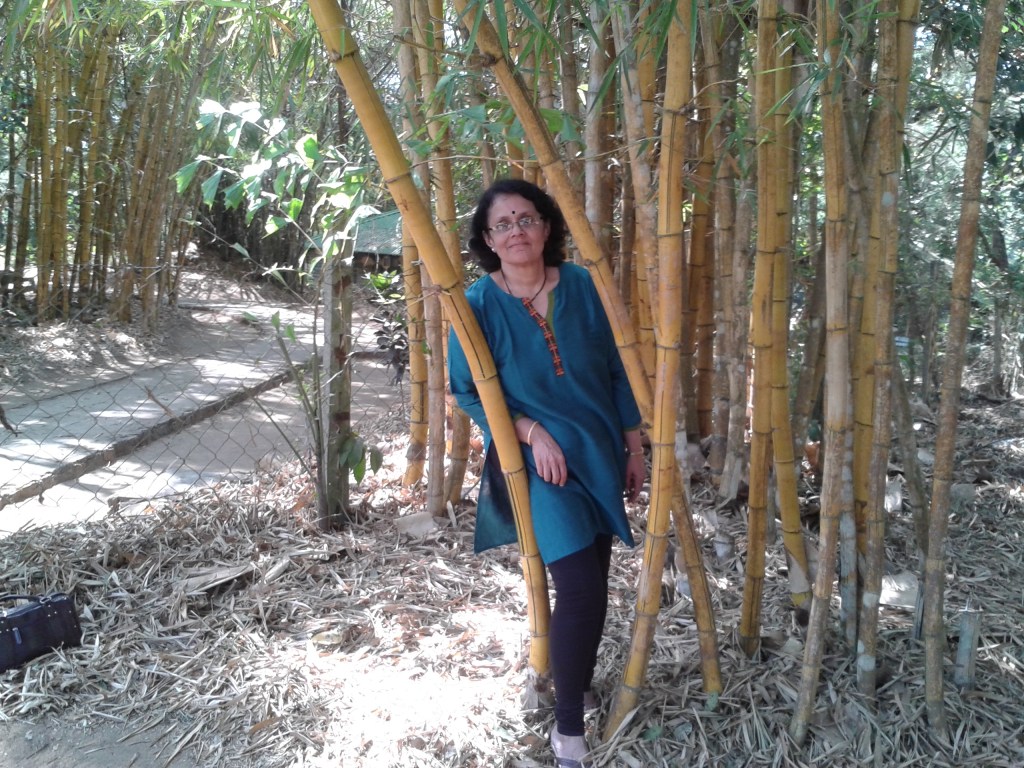
Located about 30 kms from Madikeri and close to Kushalnagar is this bamboo forest and deer park on the banks of the Kaveri. Boating facilities are available here. A hanging bridge over the river is another attraction. Some images..
Kaveri at Nisargadhama
Hanging Bridge
The bamboo forest and deer park
Harangi Dam
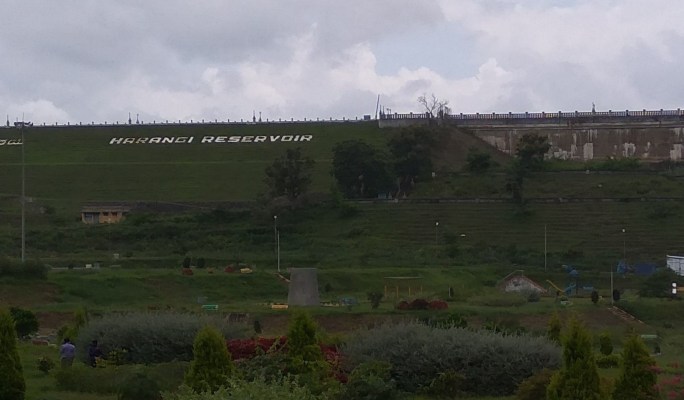
A dam built on the Harangi river, a tributary of the Kaveri also lies close to Kushalnagar town. The dam and the gardens offer a nice picnic spot . A small hydro electric project and an elephant camp also functions here.
The dam and reservoir
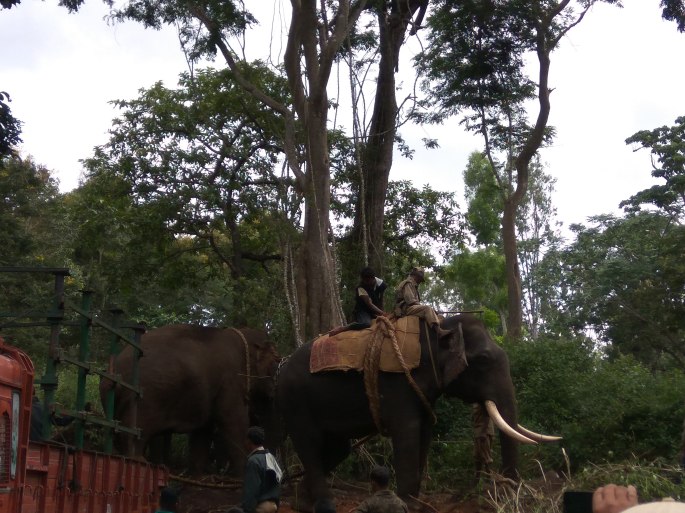
The elephant camp
The Namdroling Monastery
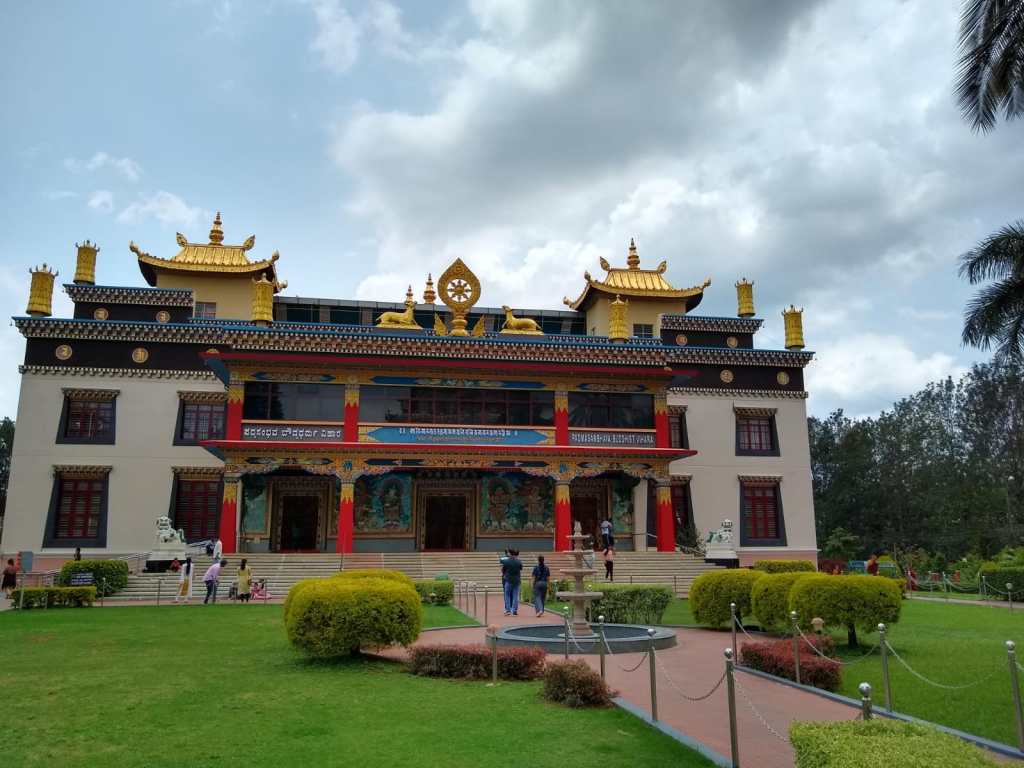
Kushalnagar is a Buddhist hub and there are many Buddhist institutions in the area. The more popular one is called the Golden Temple or Namdroling Monastery.
The Namdroling Monastery
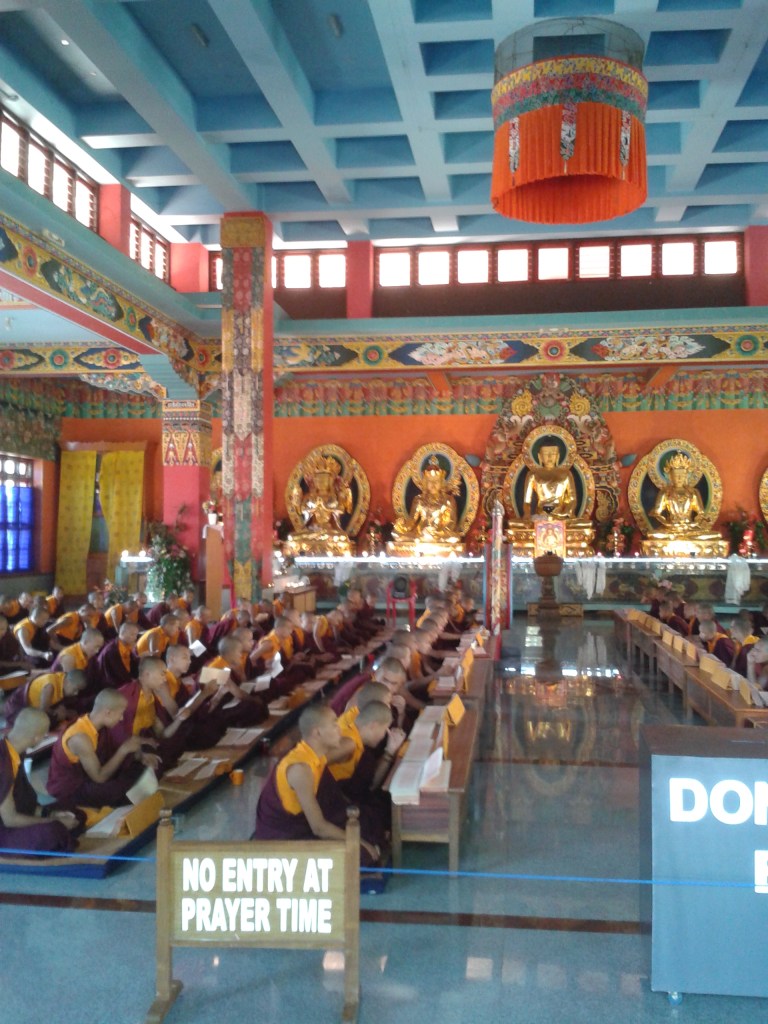
More pictures from inside the monastery…
Inside Namdroling monastery
Dubare Elephant camp
Visitor interaction with elephants is facilitated in this camp located on the banks of the Kaveri river. Bathing and feeding them with sugarcane and jaggery are popular activities offered here. Elephant rides into the forest and information on elephant biology by trained naturalists are added attractions here.
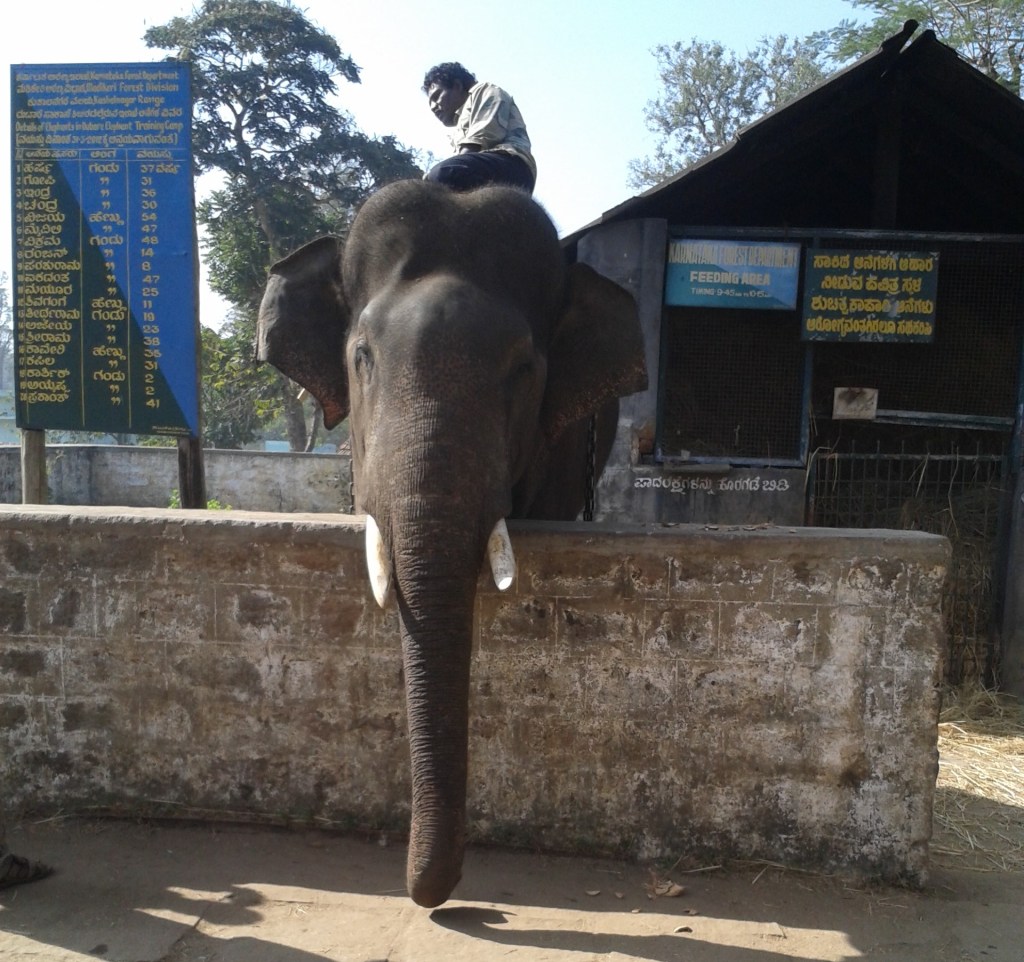
Feeding area at Dubare
Bathing elephants in the Kaveri at Dubare
Talakaveri
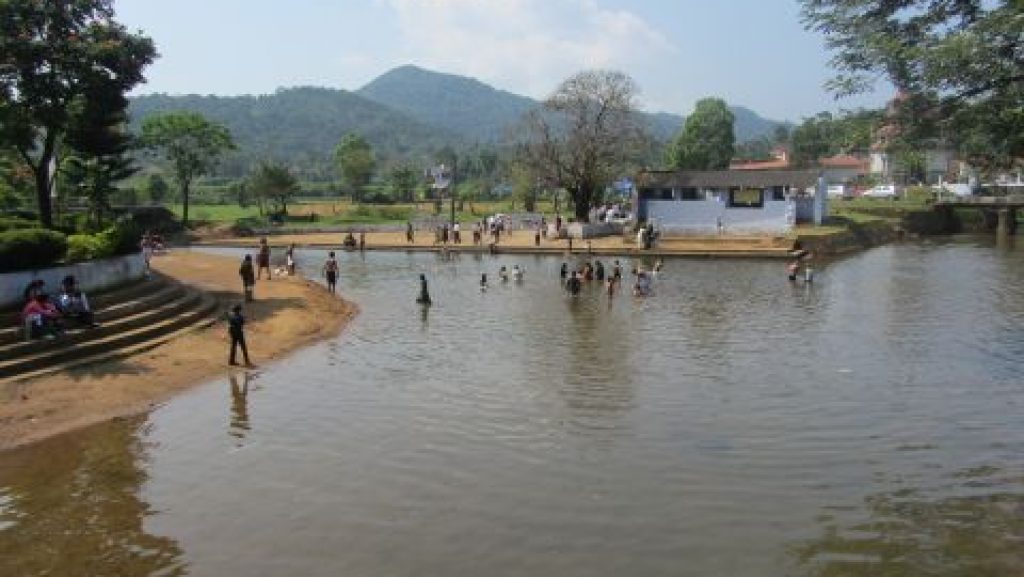
Talakaveri is considered the origin of the river Kaveri and hence a sacred place for the Hindus. There is a tank here which is fed by a spring that is considered to be the source of the river. A temple dedicated to Kaveramma who is worshipped by the Kodavas is located here.
Forests surround Talakaveri
The tank and temple at Talakaveri
Bhagamandala
This is a place of confluence of three rivers and is a sacred place. The Kaveri joins two smaller rivers here; the Kannike and Sujyothi. A Shiva temple next to the confluence also attracts pilgrims. Many devout perform rituals for their departed ancestors here before proceeding to worship at Talakaveri.
The confluence of the three rivers at Bhagamandala
Shiva temple at Bhagamandala
It must be obvious by now that there is no dearth of interesting sights near Kodagu. I have tried to cover most of them. Hope you have enjoyed your visit to Kodagu.
Next week we move away from Karnataka to Sikkim . Till then, do comment and give your feedback.
Who would not fancy a hot cup of freshly brewed coffee?
Whether you like it black , with milk or with cream ; a cup of coffee makes every morning special.
Well, today let us visit Kodagu/Coorg , nicknamed the coffee cup of India.
Kodagu lies on the eastern slopes of the Western ghats and enjoys salubrious climate almost all round the year. Kodagu is actually the name of the district and when we talk loosely about going to Coorg what we mean is go to Madikeri and the surrounding areas.
A brief on Coorg and the local inhabitants before we indulge in more coffee talk….
The original inhabitants of Kodagu were the Kodavas who were a warrior community. The British annexed Coorg and deposed the local Kodava rulers. They did help improve the infrastructure, introduced scientific initiatives in coffee farming and contibuted to the overall development but there was a lot of exploitation of the resources and man power from here. It subsequently became part of Mysore state ( now Karnataka).
The Kodavas, the original inhabitants have largely retained their cultural identity and this can be seen in their attire and customs. The sari, the traditional dress of Indian women is worn in a different style here. The men wear a knee lenth black wrap around coat called Kupya, a silk sash around the waist and typical head gear. A dagger tucked into the sash completes the attire.
The traditional attire of the Kodavas
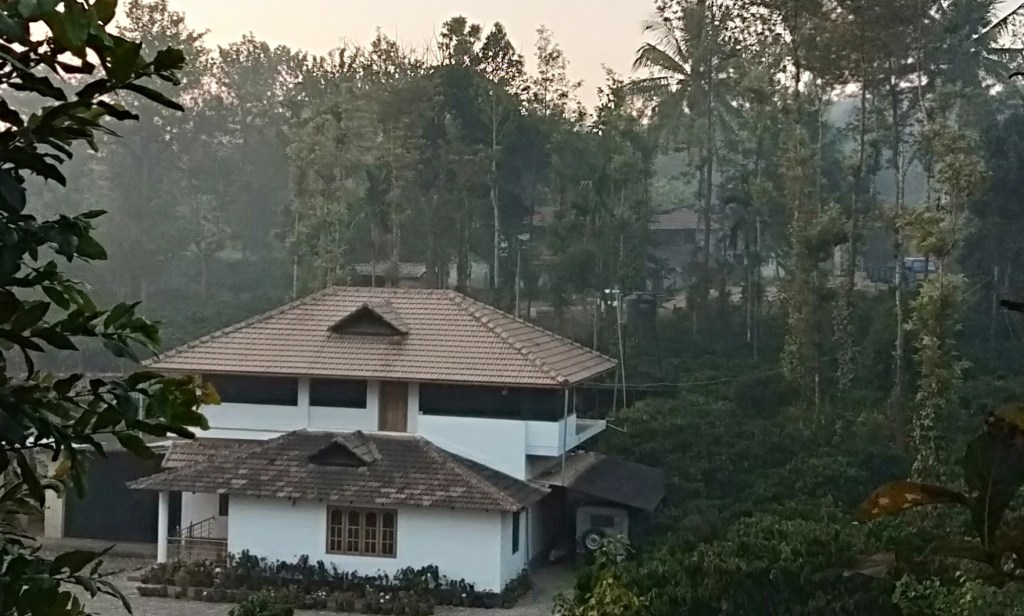
Since most Coorgi households are coffee planters, the house is inside or adjacent to a coffee estate and the harvesting and processing of coffee beans is an integral part of their lives.
A kodava house in a coffee estate
Kodavas are fond of non vegetarian food and meat ; particularly pork (pandi curry) and alcohol are served at weddings and even religious ceremonies and pujas. Traditional Coorgi food is Kadambottu or steamed rice balls served with spicy meat gravies.
Traditional Coorgi food
Coffee Talk…
Coffee was first introduced in India in the 17 th century by a saint Baba Budan who smuggled a few coffee beans during his Mecca trip and planted them at Chikmagalur in Karnataka. Both Chikmagalur and Kodagu produce most of Indian coffee today. Let us talk about Kodagu coffee…
Largely an agricultural district, Kodagu is the largest producer of coffee and pepper in India today . Cardamom, rubber, and oranges are the other important produce.
As one drives in Coorg, coffee plantations on either side of the road welcome you. Misty mornings in a breathtaking landscape of lush green hills ; Kodagu has climatic conditions ideal for coffee cultivation and that explains the vast coffee estates here. Mainly two varieties of coffee are cultivated here, Robusta and Arabica.
The coffee estates
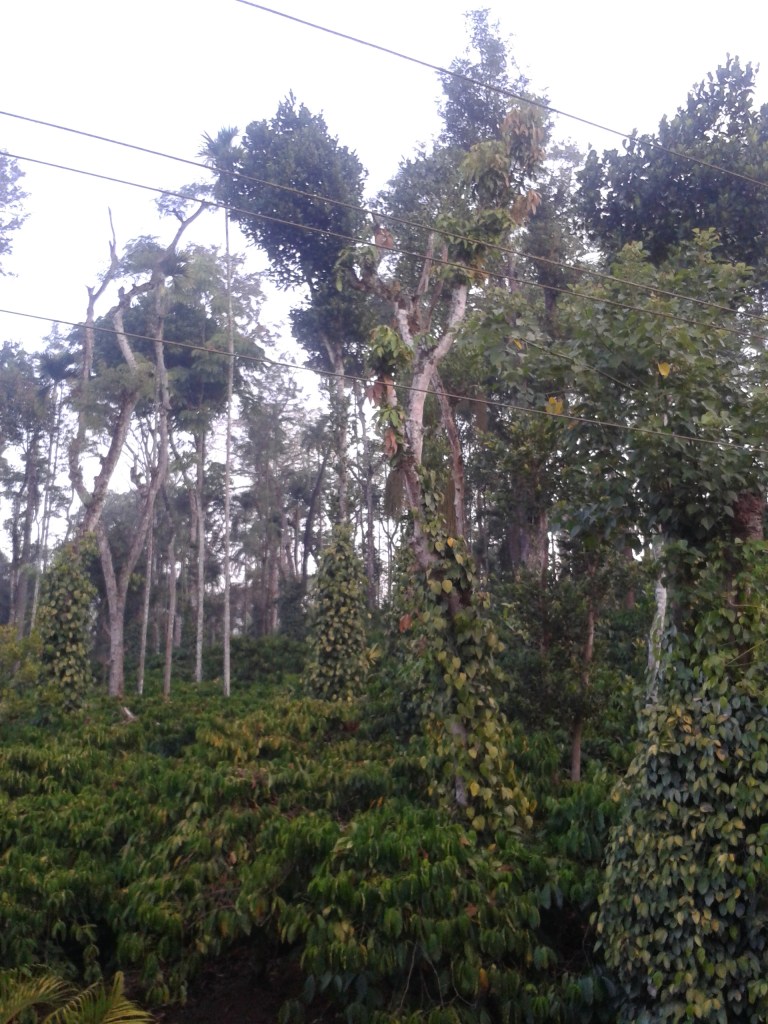
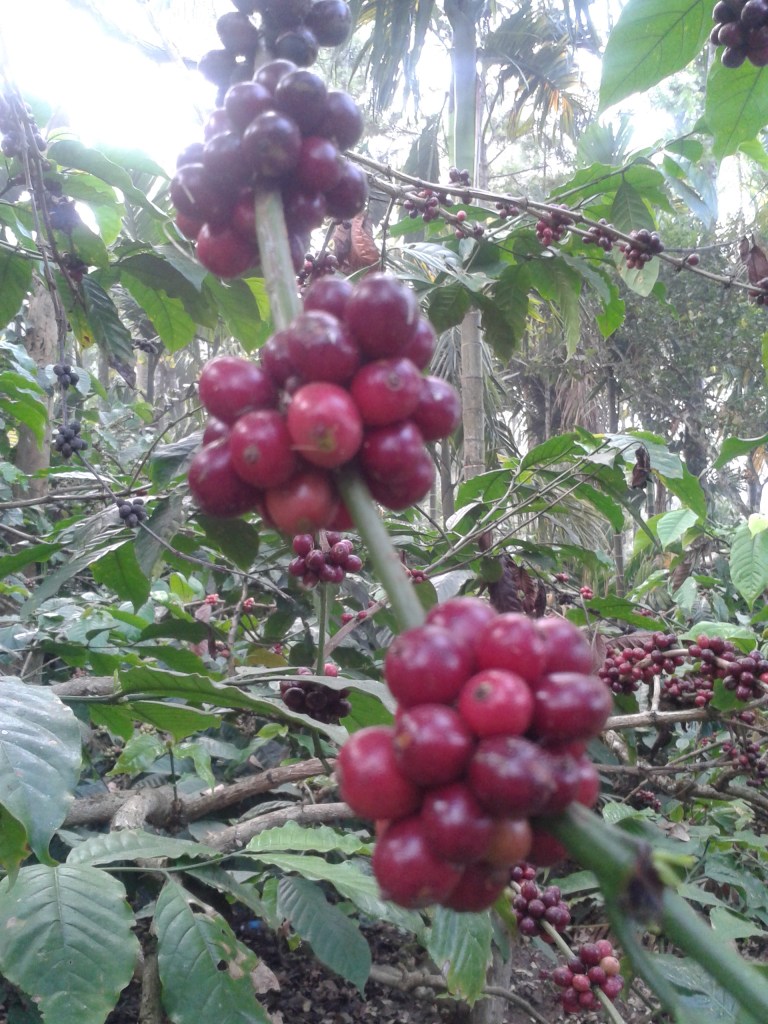
Coffee shrubs and pepper vines
Coffee and Pepper ready to harvest
Spice shops line the road at every few metres…
Most of the homestays and hotels in Kodagu arrange for a plantation visit. That can be a different experience for the urban bred.
A coffee estate walk
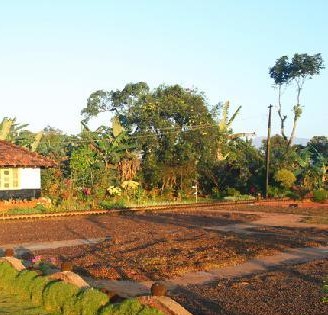
Coffee berries are handpicked as they have to be at the right stage; neither too ripe nor raw. These berries are then dried out in the sun for a couple of weeks. Then the seeds of the berries are separated by removing the skin and dried pulp.
Drying of Coffee berriesand extracted beans
The seeds are then stored after grading. Before use, the seeds are roasted and powdered to get you the filter coffee powder available in the market.
Many of these stages are automated by the large coffee cultivators while the smaller farmers use traditional methods. Fermenting the coffee bean and roasting are the two stages which can alter the aroma and flavour of your next cup. So these are carefully monitored.
Cuppers….
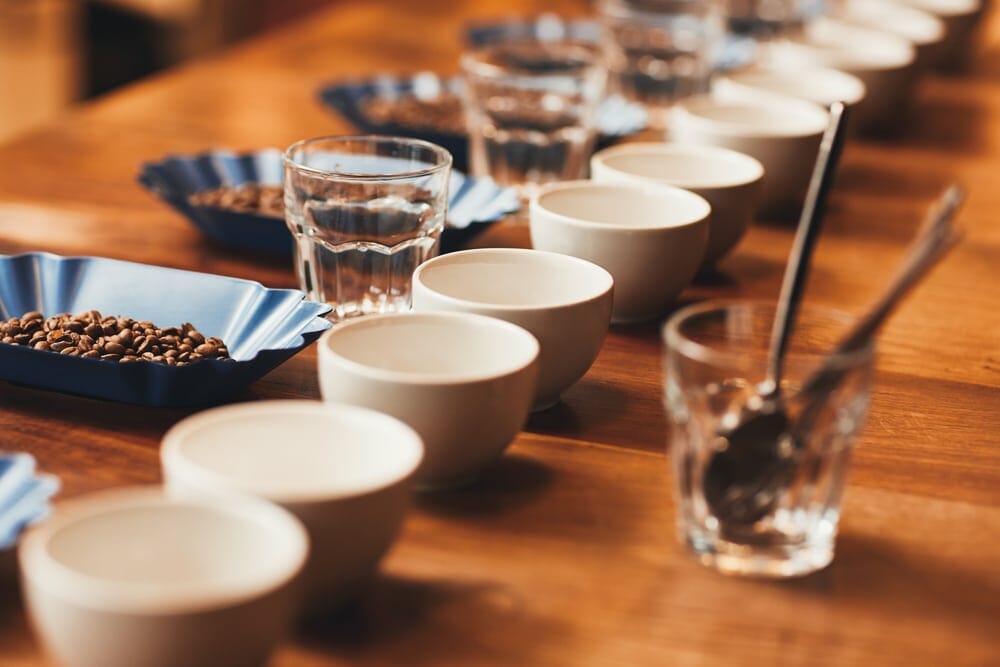
Coffee tasters also called cuppers play a role in determining the taste and flavour of your next cup. The cupper assesses the quality of beans, then “noses” the brew for the aroma. The actual step of tasting begins with the cupper slurping a spoonful of coffee spraying it all over his tastebuds before spitting it out. Difficult to accept , but expert cuppers taste hundreds of coffee varieties a day and still tell the subtle differences!! After all this, I really wonder if the cupper can enjoy his actual cuppa like you and me??
A cupper’s work table
To brew the coffee we buy from the market, in traditional south Indian style, we use a coffee filter. The coffee powder is placed in the filter and hot water is passed through it to extract the flavour. The decoction is then had diluted as black coffee or added to boiled milk to get a cup of freshly brewed filter coffee . Automatic coffee brewing machines are now available of course!
Instant coffee powders are made industrially using various steps.
A traditional coffee filter used at homeand an automated filter
And that explains the journey of the coffee bean from birth till it comes to you in a cup as coffee…
Well, I hope you enjoyed the journey of the coffee bean just as you do your morning cuppa!!!
Delving more deep into Kodagu, next week we visit some of the interesting sights around Madikeri. Till then, enjoy your coffee… but don’t forget to give your comments and feedback…































































































 Travel-along.in