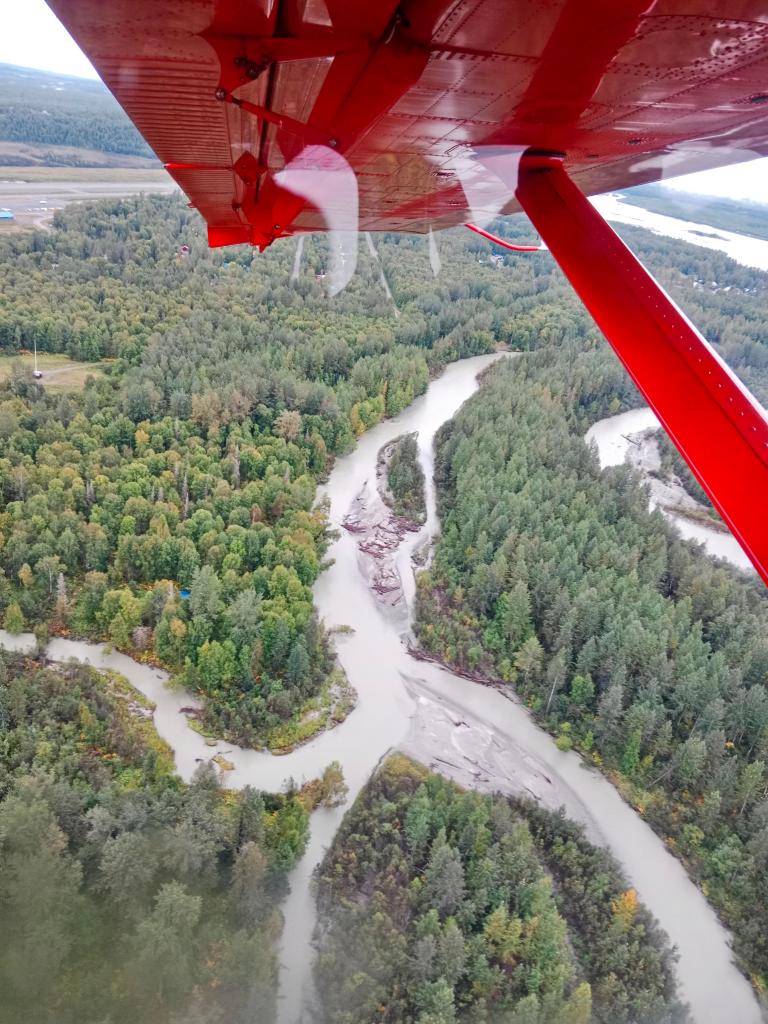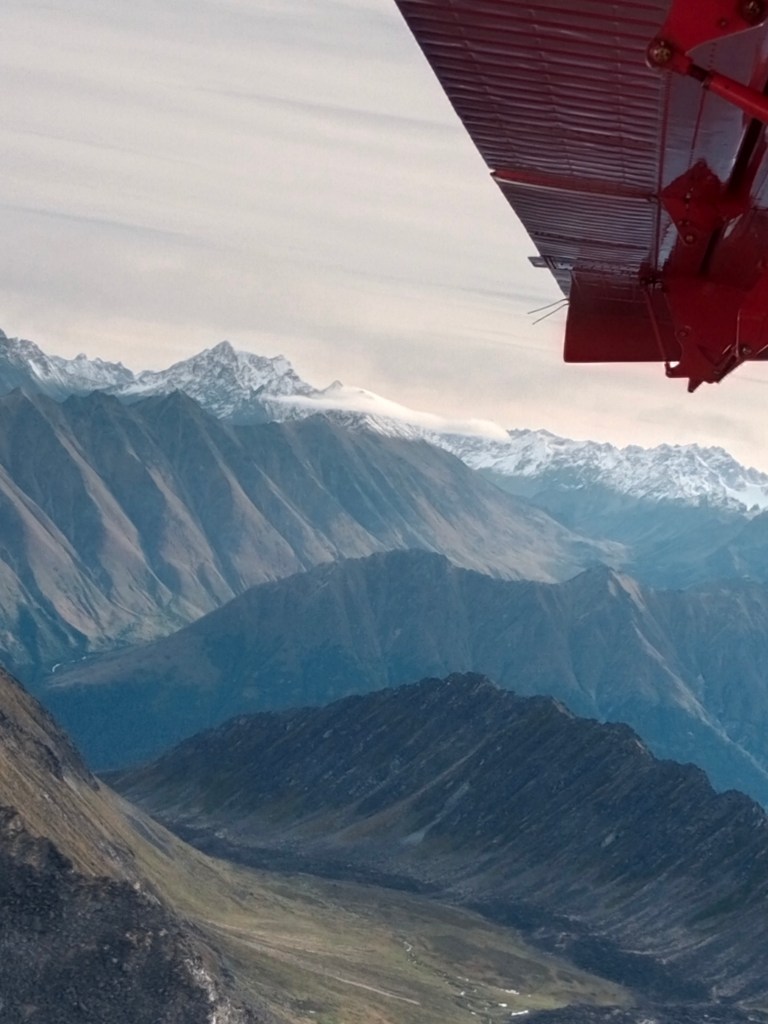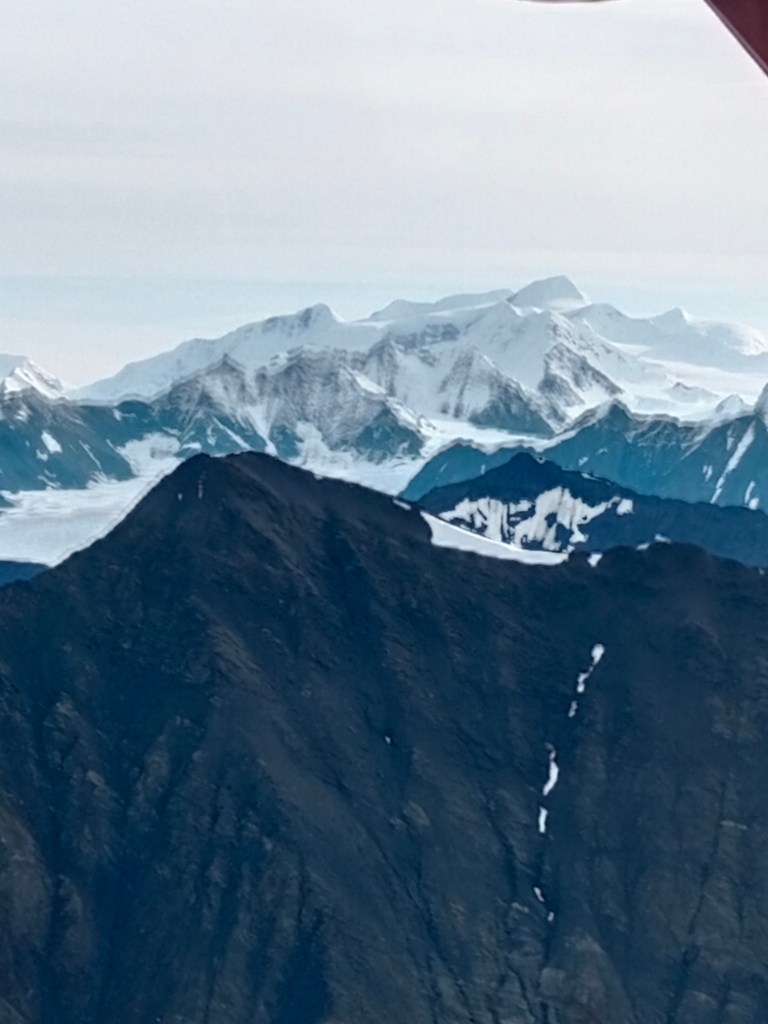
The quaint town of Talkeetna

A base for expeditions to Denali ; the small town of Talkeetna with less than 2000 people is a two and a half hour drive from Anchorage . Its residents are proud of the character of their community and their mountaineering history as the base camp for mountaineering expeditions to Denali and also their characteristic artwork and unique traditions.

Talkeetna started off in 1916 as the district headquarters of the Alaskan Railroad .Today, the locals are proud of their typical architecture and rich wildlife. It is a popular destination for locals and visitors, offering many activities such as flightseeing, rafting, and biking.

Popular activities in Talkeetna are:

  1. Flightseeing tours to Mt. Denali.
  2. Stroll Main Street taking in the history and enjoying the ambience.
  3. Jetboat rides, rafting, kayaking
  4. Fishing.
  5. Hiking
  6. Enjoying the local food and drink.

Located at the confluence of three rivers, Susitna, Chulkitna and Talkeetna, the downtown area is a designated National Historic Site with buildings dating back to the early 1900s.

Talkeetna Historic District

Much of the downtown area looks very ancient and comes alive only in summer when tourists reach Talkeetna for flightseeing tours over Denali, salmon fishing and rafting expeditions. Much of this shuts down in mid September when winter sets in and after that, it’s only the amount of snow that changes year to year.

Winter in Talkeetna

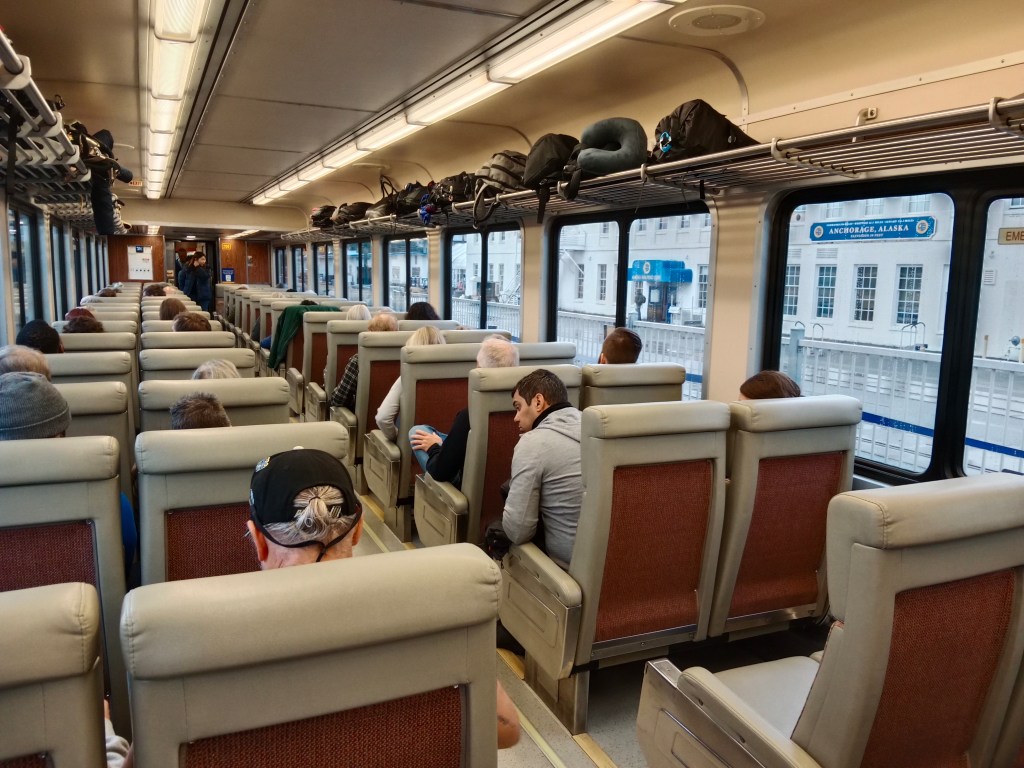
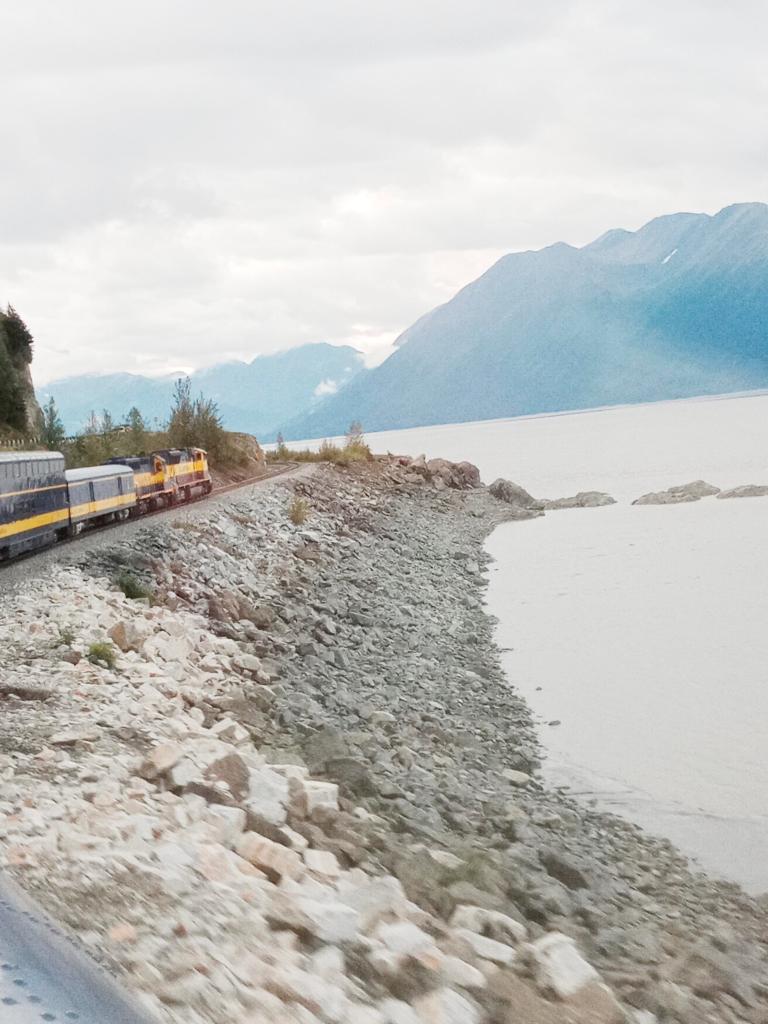
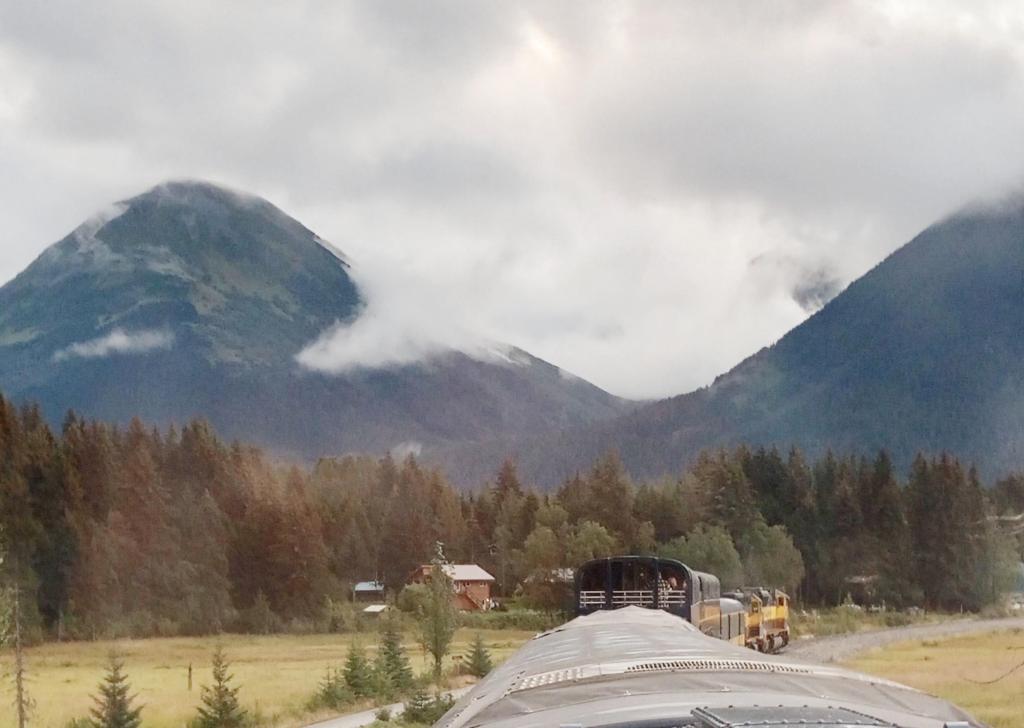
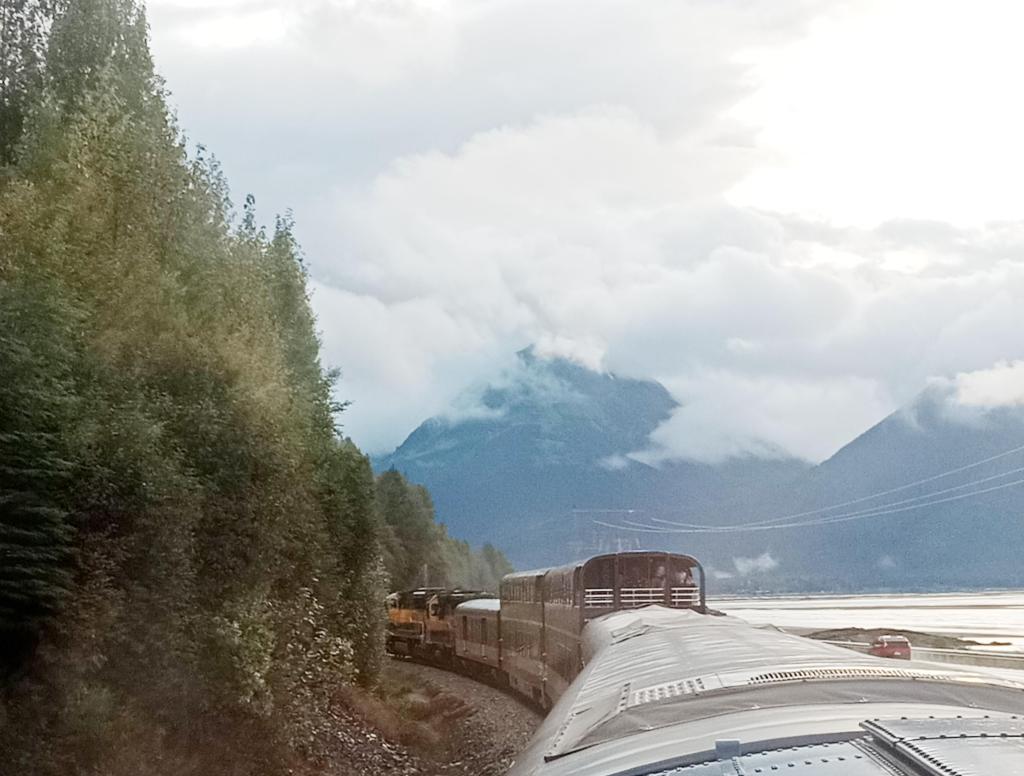
We were in for a flightseeing tour of Denali and that’s what took us to Talkeetna. Taking the Denali Star train from Anchorage early morning, we reached Talkeetna before noon. The weather was less than favourable and we were hoping that we would take off over Denali that evening.

The Denali Star that took us to Talkeetna.

One of the first sights as we left Anchorage was the Knik arm of the Cook inlet and the Eagle River.

Eagle River.

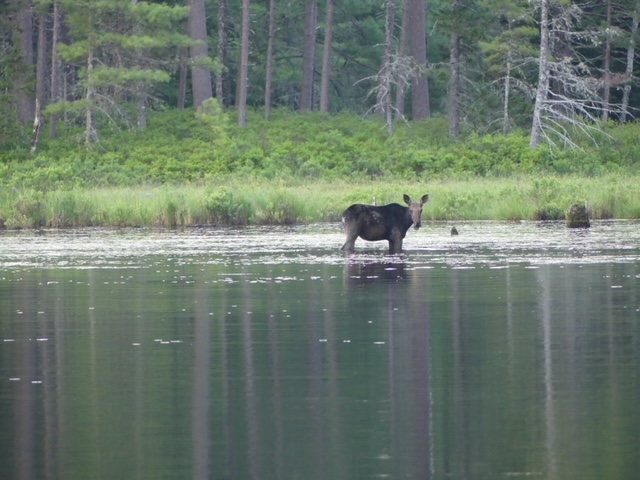
The glacial silt along the Eagle river banks and the Knik arm are favourite places for moose and the train conductor asked us to keep a look out for them. She actually spotted a couple of them.

A moose along the banks of Eagle River

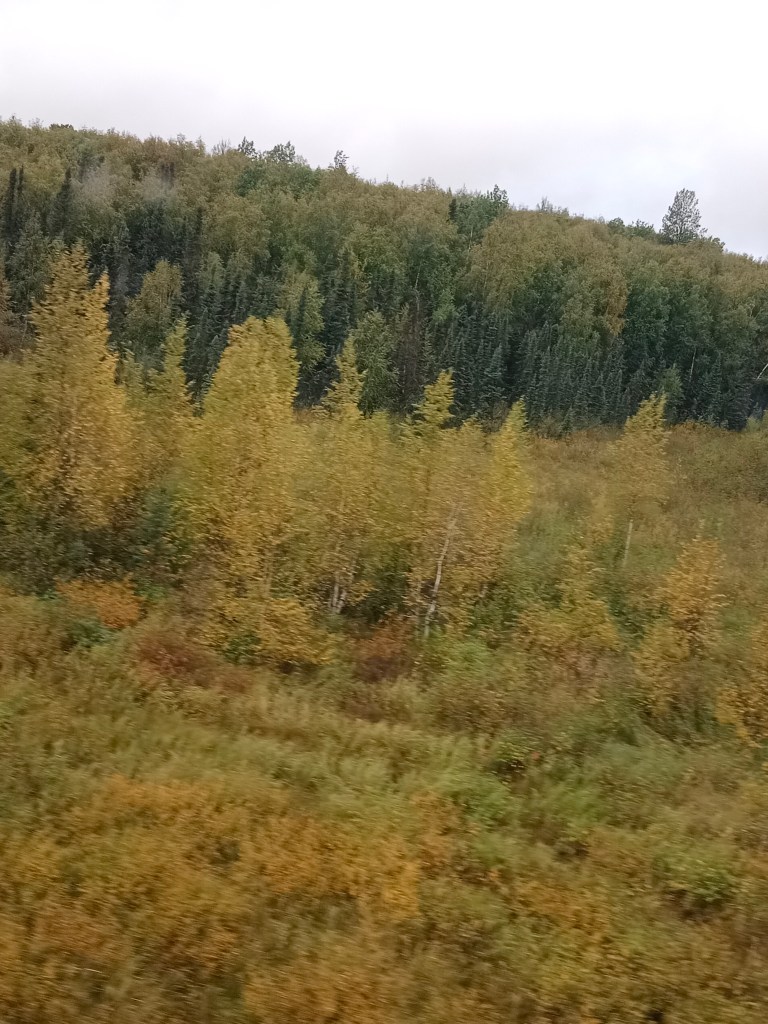
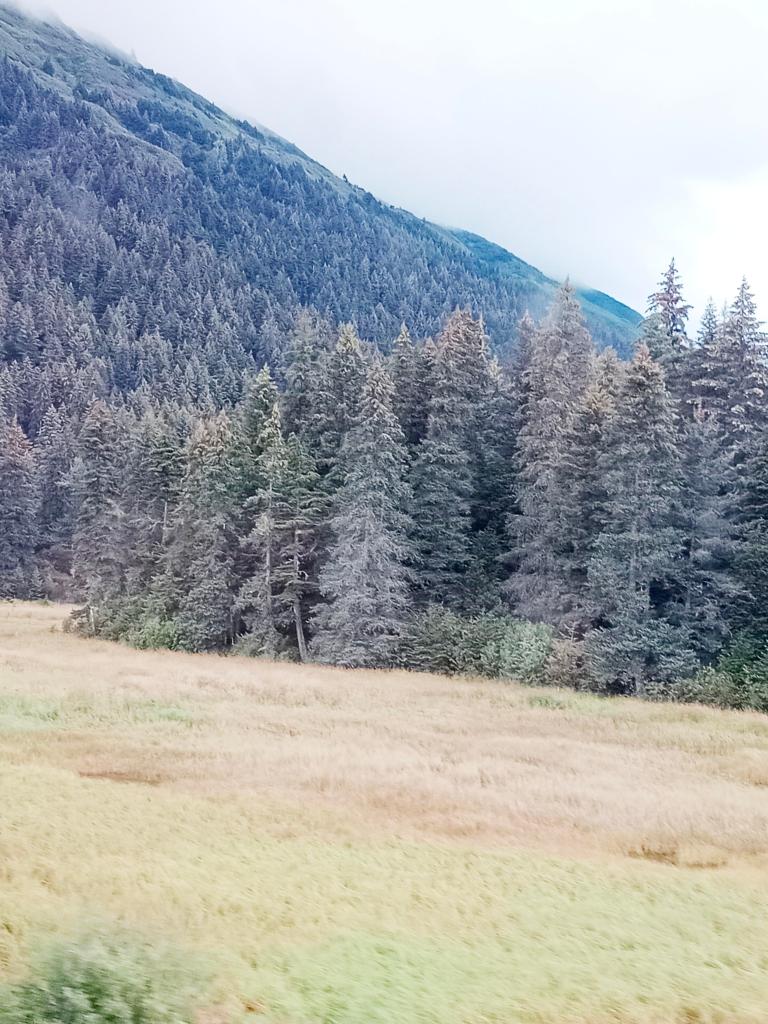
Some beautiful vegetation was also there for us to enjoy …

Typical Alaskan vegetation.

Evidence of forest fires and lightning strikes on vegetation were also seen…

Tree stumps

Soon we were at the town of Wasilla and the train made a short halt there.

Wasilla station.

As the train was getting closer to Talkeetna, it was getting obvious that the chances of our flightseeing getting cancelled was very high. The sky was overcast and it kept raining off and on. So we were a little disappointed but kept our fingers crossed.

Nancy lake was another pretty little lake that was crossed …

Nancy Lake

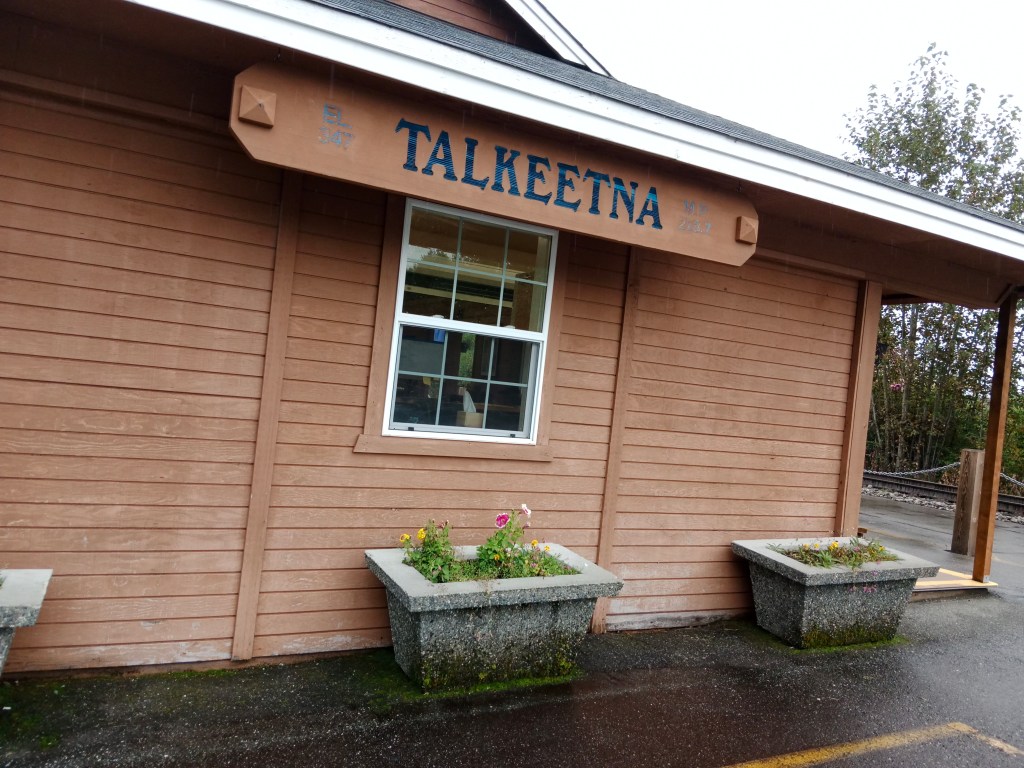
Passing by the Susitna river, we were finally at Talkeetna station . It was raining and cold and we waited for our hotel to pick us up .

Talkeetna station

After being picked up from the station, we reached our hotel, Talkeetna Inn. A real old world kind of place, there was something cute about the place.

Talkeetna Inn

As we waited patiently, we were informed by our tour company that our trip to Denali was cancelled and we can try in the evening if weather improves. That left us totally disappointed . Once the rain stopped, we took a walk around downtown Talkeetna…simply because we had nothing else to do!!!

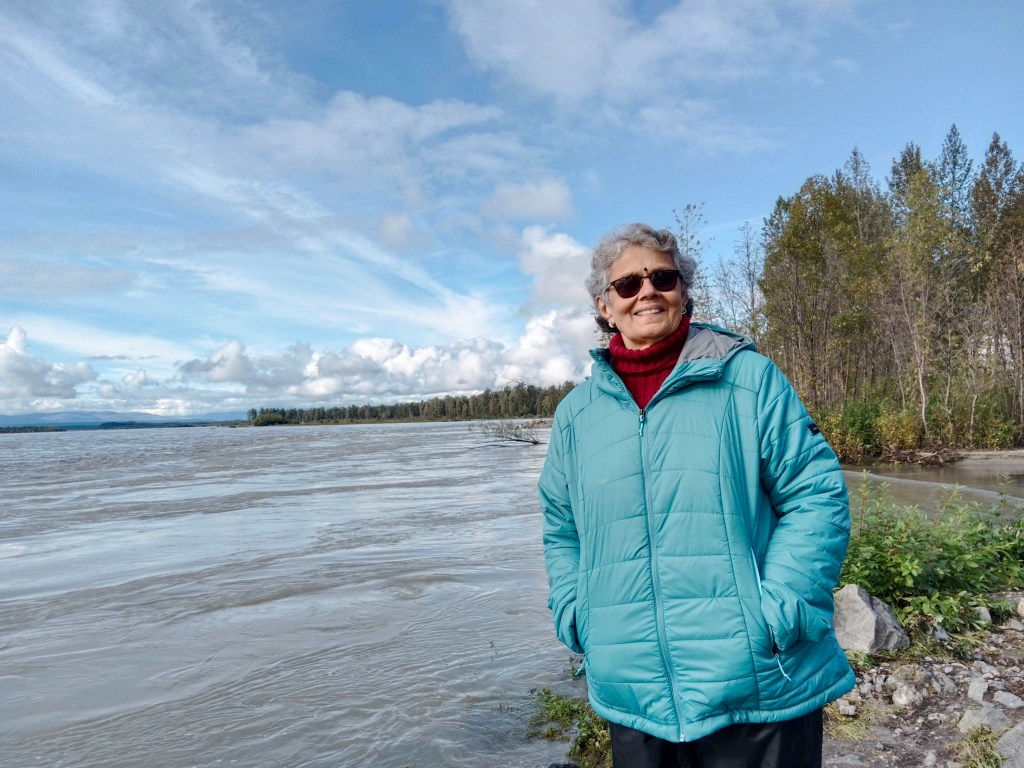
A short walk from the hotel and we were on the banks of the swollen Talkeetna River. It was only then that the real impact of the weather was clear to us. The town had been flooded since the last two days and the water had just started receeding leaving a lot of silt all along the road..

The swollen Talkeetna River

By then, the sun was trying to come out and more people started venturing around. An occassional helicopter was seen hovering over town giving us hope that we may have our flightseeing after all !! But luck didn’t seem to favour us at all that day. The Denali trips scheduled late evening took off but the cancelled afternoon session was not rescheduled.

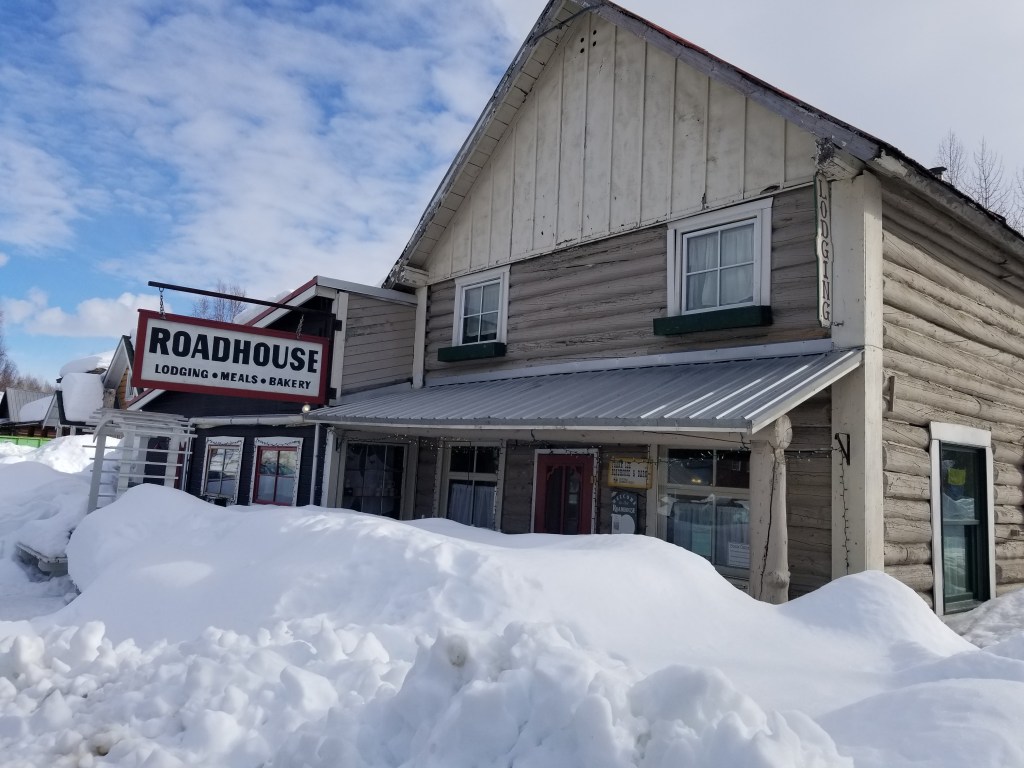
Walking along downtown Talkeetna, we saw some really dated houses and buildings. Some pictures…

Ranger Station

The ranger station at Talkeetna serves as center of mountaineering operations at Denali National Park. Climbing permits are issued here and all climbers are given an orientation before they go on their expedition.

The Ranger Station

Nagley’s Store

This century old general store in downtown Talkeetna is more like an iconic image of the town. Most people visit it for the historic significance and because there is practically no such store anywhere else in downtown…

The century old Nagley’s store

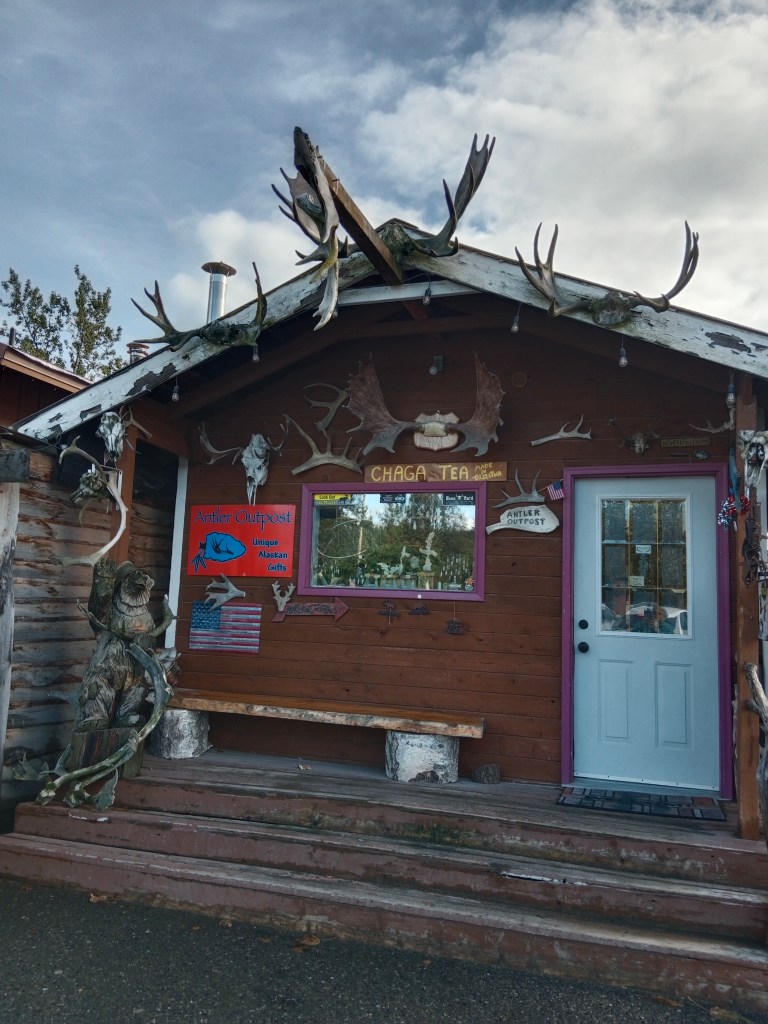
Talkeetna town has old shops on either side of the road selling local art work and the rest are all bars , restaurants and pubs..

Typical display of wildlife exhibits

Typical Talkeetna street scene

Walking around, we spotted this wooden moose that looked like material for a picture….

The wooden moose!!

Few shops selling local Alaskan products attracted us…

Local Alaskan products

By now the rain had almost stopped and we could see the flightseeing aircraft taking off. But the cancelled afternoon trip did not take off!!

Flightseeing tours

So we spent some time at downtown and returned to the hotel hoping and praying for better weather the next day.

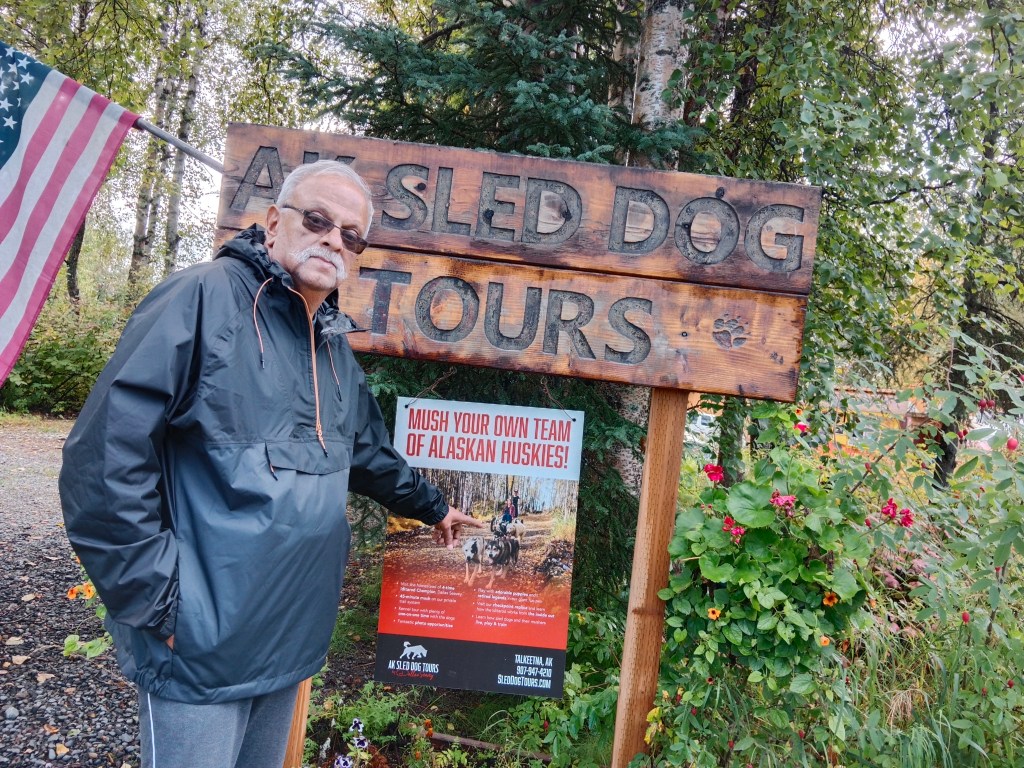
Alaskan husky tours are another popular sport here…you can sit on a sled drawn by huskies…

Sled dog tours

As the night fell, the sounds from the bars and restaurants got louder and we slowly made our way back to the comfort of our hotel room.

Hoping for better luck next day on the flightseeing side, we rested for the night.

A Northern Lights attempt

We made an attempt at around 2 am looking for the Northern lights that night. The aurora predictions were good that night and Talkeetna being a small town, the loom of the city lights would not be there and we were at the Northern most part of our Alaskan journey. So, this was our best chance of seeing the Northern lights. But unfortunately , could not see them.

So this was a roundup of this little town of Talkeetna . Hope you enjoyed the typical native look of the place. I leave you this week with a question…Do you think we did the flightseeing at Denali the next day?

Wait for the answer next week….

Till then, do subscribe, comment and give your feedback.

Rafting the Resurrection River

Resurrection River is a large river on the Kenai Peninsula in Alaska that empties into the Resurrection Bay in Seward. With beautiful wilderness surrounding us , this river rafting was another of those “once in a life time experiences” we had decided to take up.

We had booked online from India with Kenai Backcountry Adventures for this half day rafting expedition.

On the appointed day, Pierce, our guide arrived at our hotel to pick us up. We had been advised to dress in layers for the cold and also have rain protective gear which we were prepared with. He drove us to their office and there, we had to complete some consent forms and other formalities. Travis , the guy at the office helped us with the formalities.

Meanwhile, Pierce was getting his equipment ready and stacking his bag with all essential things. Soon, he asked us to change into gumboots and also got us our life jackets . Then again he drove us down to the starting point of the adventure. Leaving the vehicle behind, we accompanied Pierce and Travis down a slightly slippery slope onto the river where the expedition started.

The starting point of the rafting adventure

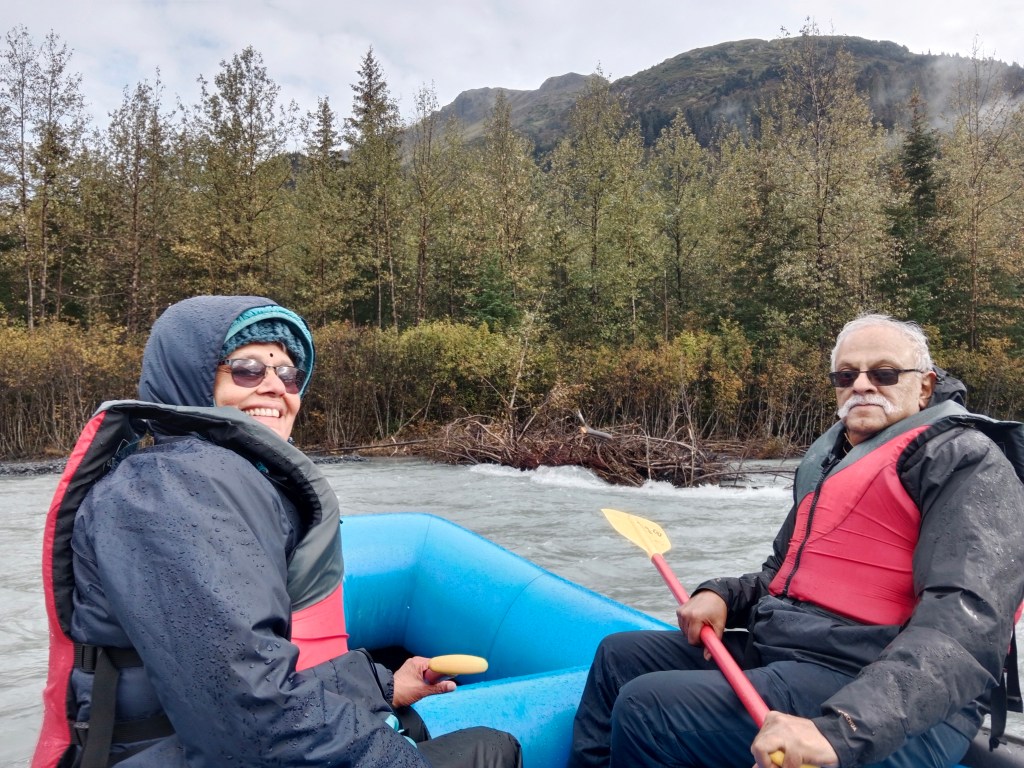
This was an interactive, team adventure that involved everyone paddling the raft with precise direction from the guide. That added to the thrill of the trip as we got to manouvre the raft ourselves.

We were the only two booked for this adventure on that day and so we had a cosy private rafting trip!! Pierce gave us some safety instructions and ensured that our life jackets were properly worn. Soon we were on the raft all charged up to row down the river.

Pierce first instructed us on handling the paddles and how it was important to lock our feet below the seats to prevent being thrown out in case of strong currents. Then he demonstrated the various paddle strokes like “forward”, “back” and commands like “stop”, “rest”, “start” etc. There were ropes on the sides of the raft to which we had to hold on at the rapids where the raft could turn suddenly or violently because of the sudden gush of water.

All set to start the adventure…

We started rowing and initially the strokes were not synchronous and Pierce alerted us about it. Soon we got used to the rhythm and were comfortable.

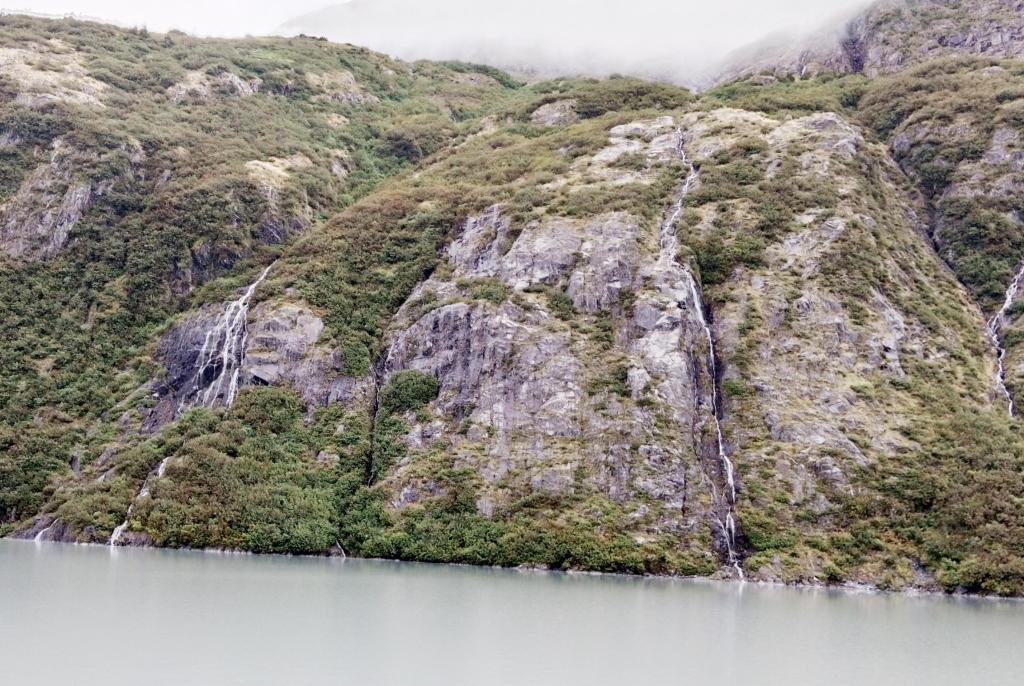
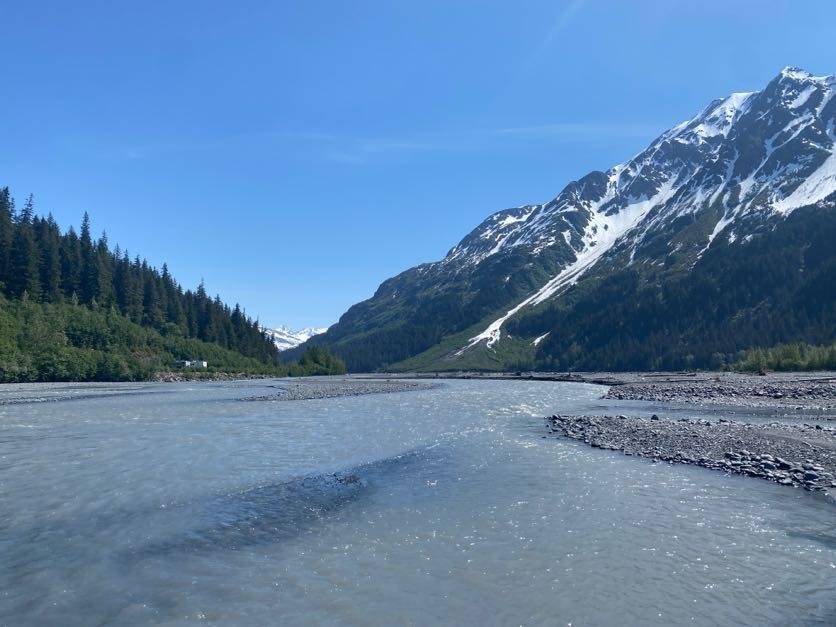
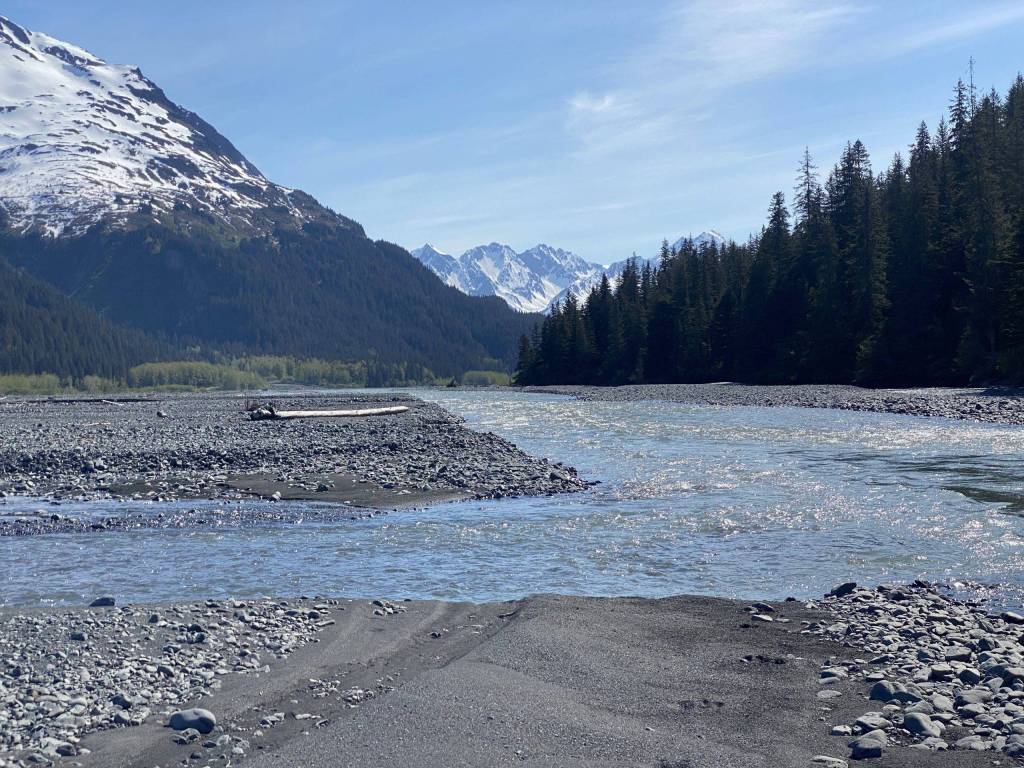
Pierce said that every trip he did was different as the river was constantly changing through the dynamic landscape. The river was surrounded by towering mountains on both sides. The scenery was awesome. Got to see some waterfalls as we rowed along.

Serene nature….

Waterfalls

We called it “Bald Eagle Day” as we saw plenty of them resting on the small shrubs along the sides of the river. We would row close to them and they would sense it and take off before we reached. Had some fun with the eagles as we rowed along.

A Bald Eagle …he was unhappy with us!!

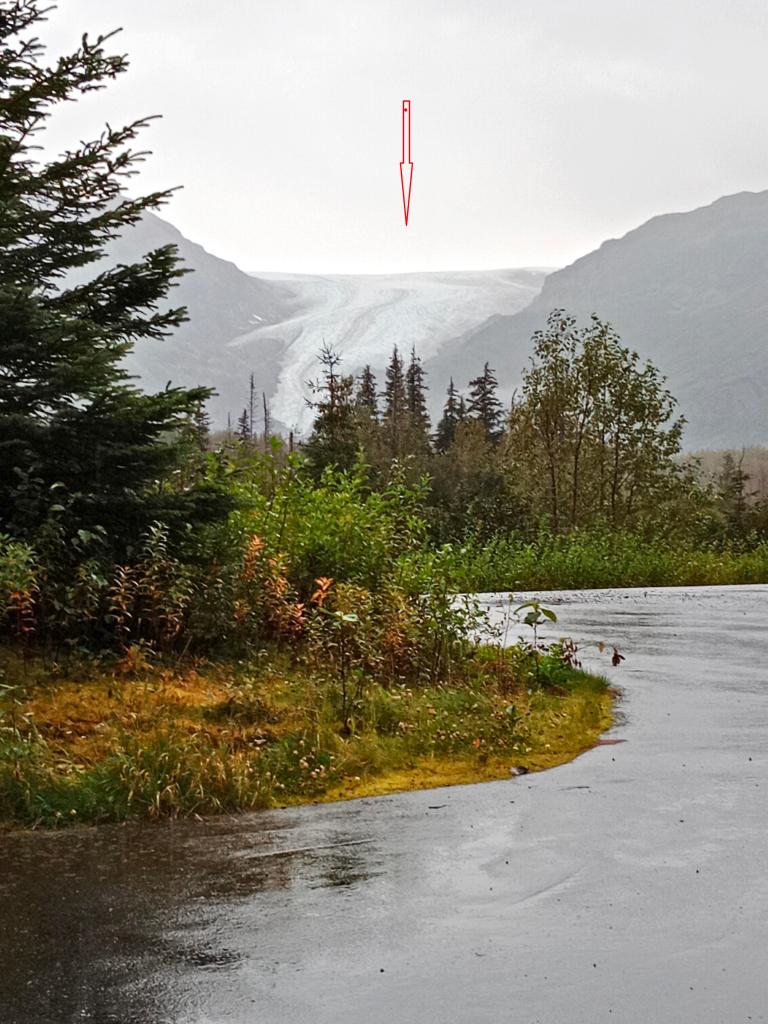
We also got a glimpse of Exit Glacier as we rowed along. A more sunny day would have made the views clearer though!!!

Exit Glacier views

Gradually we reached the deeper parts of the river and faced some stiff currents. Take a look…

The Resurrection river flows swiftly by…

A small photo halt as we neared the rapids (with approval from Pierce)

We also got to see a glimpse of the Resurrection peaks though it was very foggy as we crossed them.

Resurrection peaks covered by fog

Manouvering the rapids and keeping ourselves on board the raft, we continued the adventure. At places, small trees had fallen down and were obstructing the path. At such places, Pierce would get down in knee deep water and walk along the sides to see which way we could best row along. If possible he would move the fallen trunks out of the way.

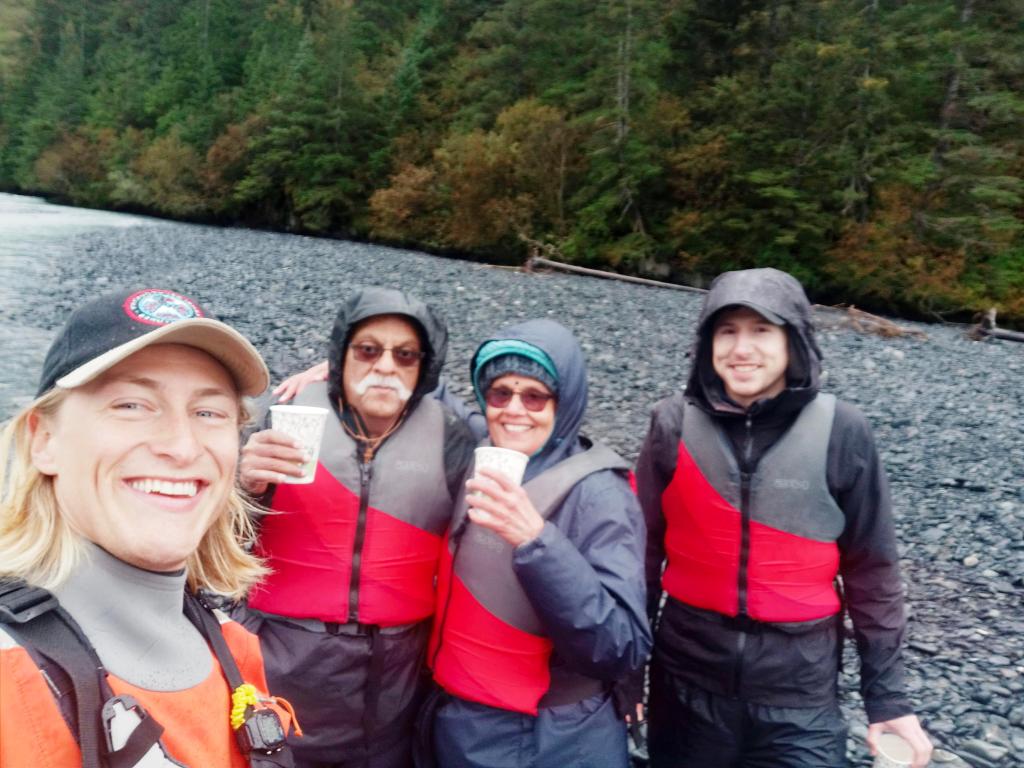
Pierce had a small surprise up his sleeve too. He asked us to get the raft alongside at a shallow spot and get down. He and Travis hauled the raft up on to the shore and set up a mini picnic of sorts. He had some hot chocolate in a flask and some goodies too. We all really enjoyed it in the cold weather and occassional drizzle.

Picnic by the resurrection banks with Pierce (left) and Travis.

As we sipped the drink, we enjoyed the scenery around too. Some pictures for you….

Alaskan wilderness for you!!….

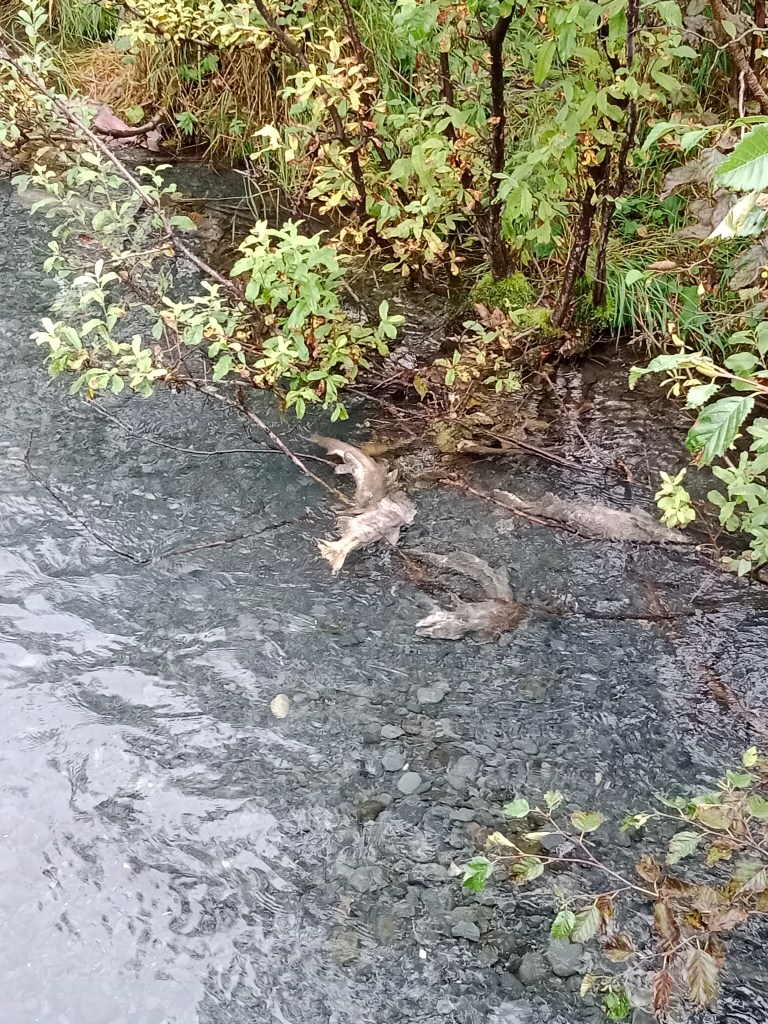
After the much needed break, we boarded the raft again and continued the adventure and reached the end point of the rafting. There again we had a small surprise. There was a small pool of water and there were some salmon there.

Salmon swimming around and dead slamon on the right..they die after spawning

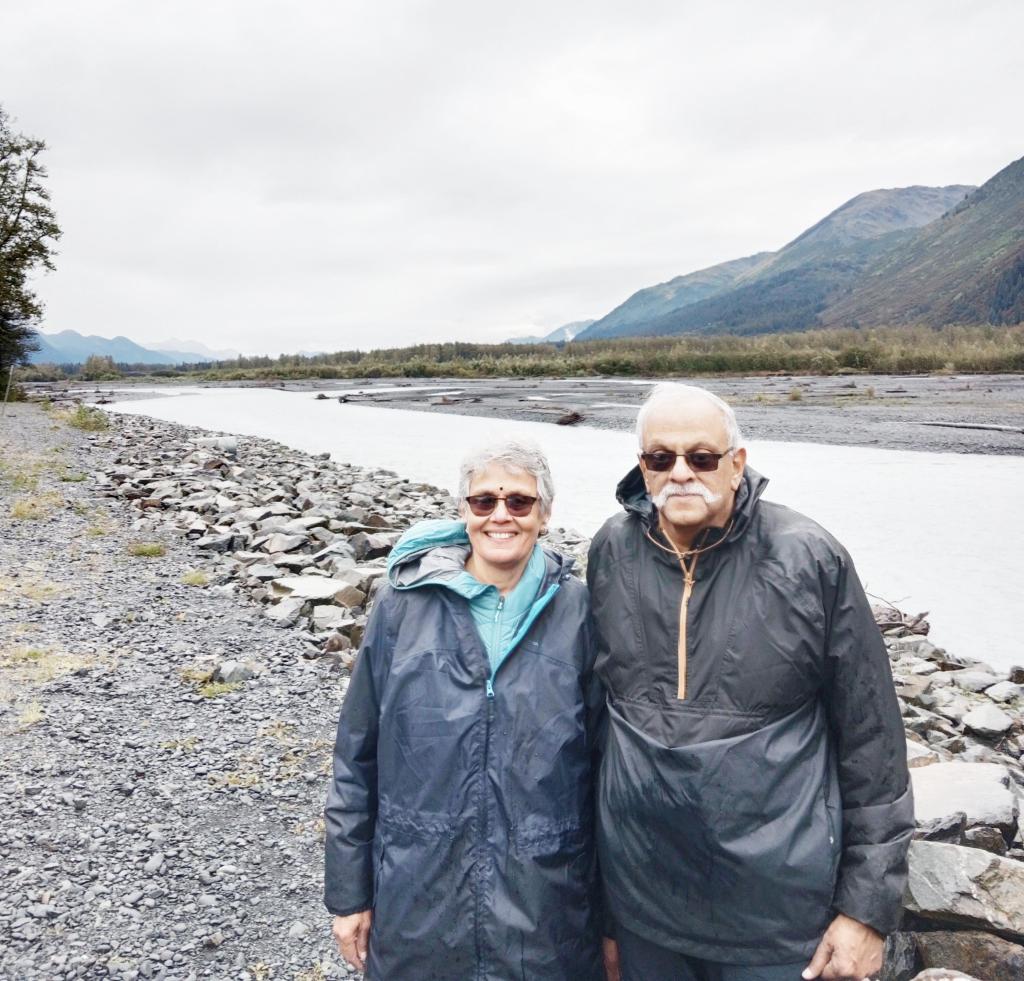
Tad tired, but with a feeling of fullfilment we got off the raft and posed for a picture ….

The smile of having completed the adventure successfully…

Returning back to the office, we collected our things and were dropped back at our hotel.

This was really a novel adventure; escaping into the Alaskan Wilderness on a raft…enjoyed every bit of it. Hope you too got the feel of the rafting experience. See you soon with more unique adventures. Till then, do keep your comments and feedback flowing like the rapids on the Resurrection river…

Cruise to the Alaskan Glaciers

Continuing from where we left off last week, we had reached Seward and spent the evening exploring Seward.

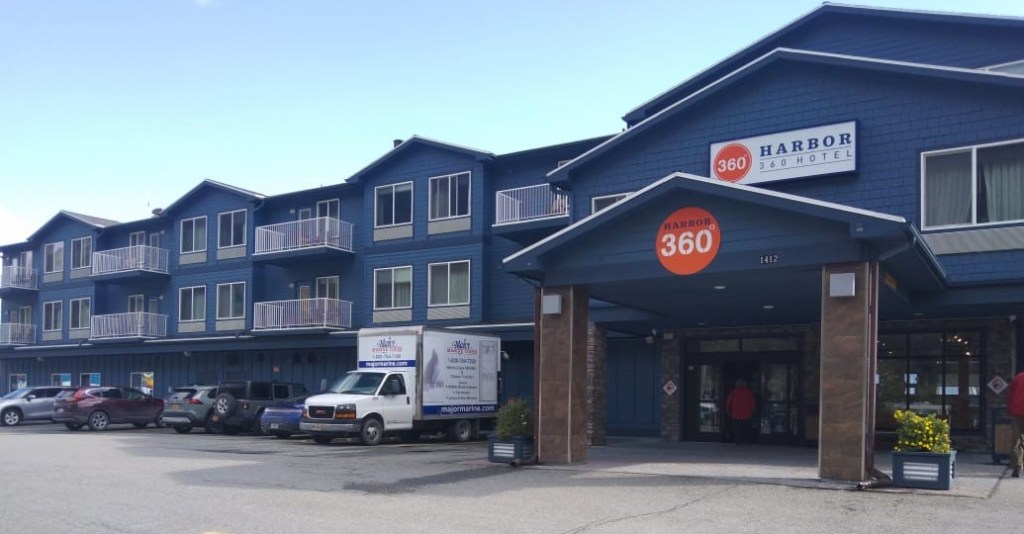
Having read raving reviews of the cruise through the Kenai Fjords off Seward, Alaska, we had booked one and finally the day of the cruise dawned. We were put up at the Harbour 360 hotel which overlooks the wharf and ferry terminal at Seward.

View of the ferry terminal and marina

Armed with binoculars for a wildlife and glacier cruise, we walked up to our cruise boat anchored close by. The cruise was organized by Major Marine Tours.

All set for the cruise ….

After everyone boarded and took their assigned seats, there was a safety briefing and soon we were on the way to the Kenai Fjords. Initially we stood outside to get better views but soon trooped inside the warm cabin due to the cold winds outside which often got our fingers numb making photography a challenge!!

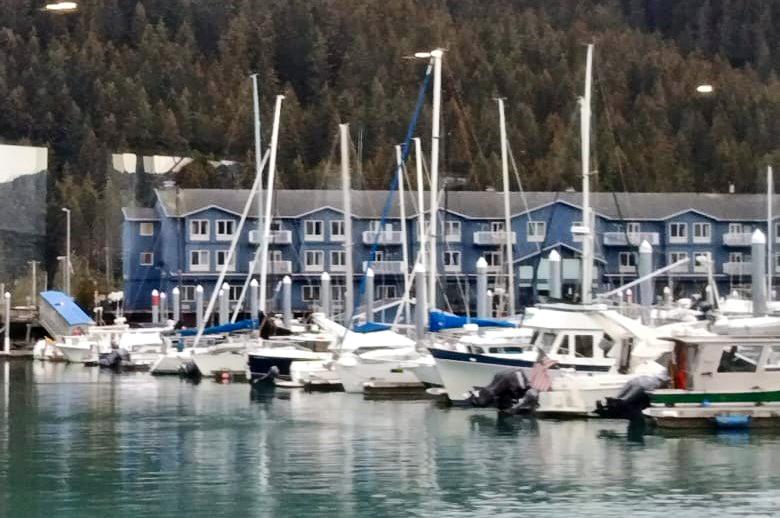
As we left the wharf, our hotel and the marina looked beautiful…

View of our hotel and the marina as we sailed out from the wharf

A little bit on the Kenai Fjords where we are going to cruise…

Kenai Fjords National Park

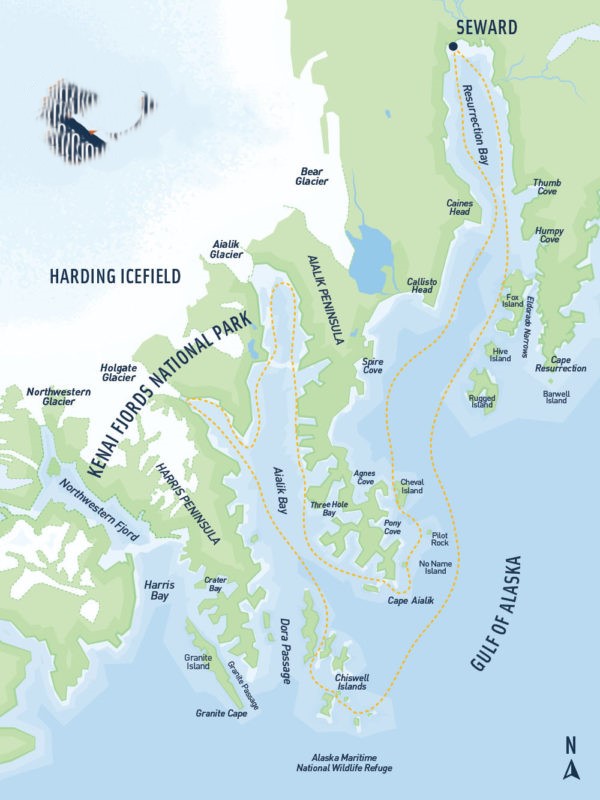
Situated off Seward in south -central Alaska, the Kenai Fjords National park comprises the Harding Icefield, it’s glaciers ,the coastal fjords and islands and covers an area of more than 2500 sq kms.

Harding Icefield ; the crown of the Kenai fjords is the source of 38 glaciers, the largest being the Bear Glacier. This icefield is the vestige of the massive ice sheet that covered much of Alkaska in the Ice age and now has more than a mile thick ice in the form of a sheet. This ice gouged out the fjords that lie along the coast .The glacial valleys were submerged and there is a narrow fringe of forested land between the mountains and the sea . The coastline is deeply indented and is inhabited by brown and black bears, moose, seals, otters, whales and a variety of birds.

Map of Kenai Fjords National Park and the cruise route

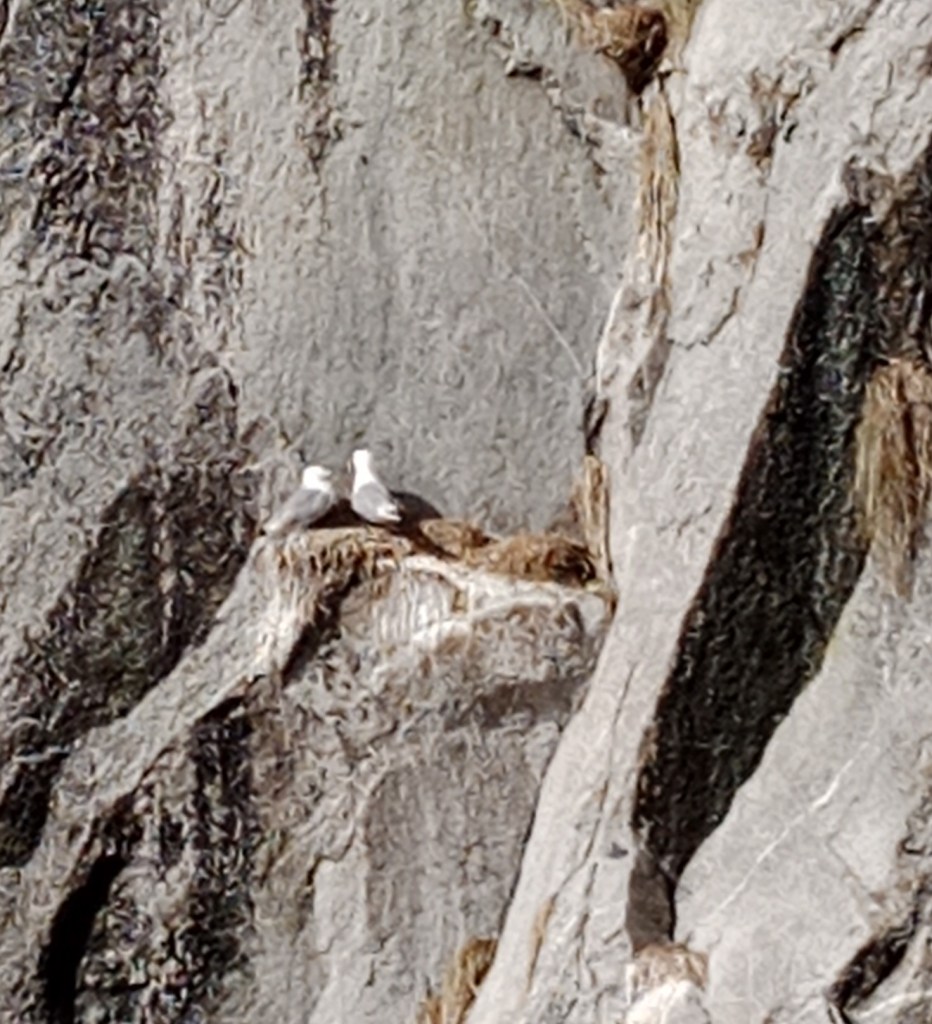
The initial part of the cruise was along the Resurrection Bay and the ship’s captain took us close to the shore whenever any wildlife was noticed. The rough shale cliffs with irregular vertical markings had deep crevices closer to the water at many places and the rocks provided nesting sites for many birds.

Resurrection bay with birds resting on rocky cliffs

The vertical shale cliffs with crevices at the bottom

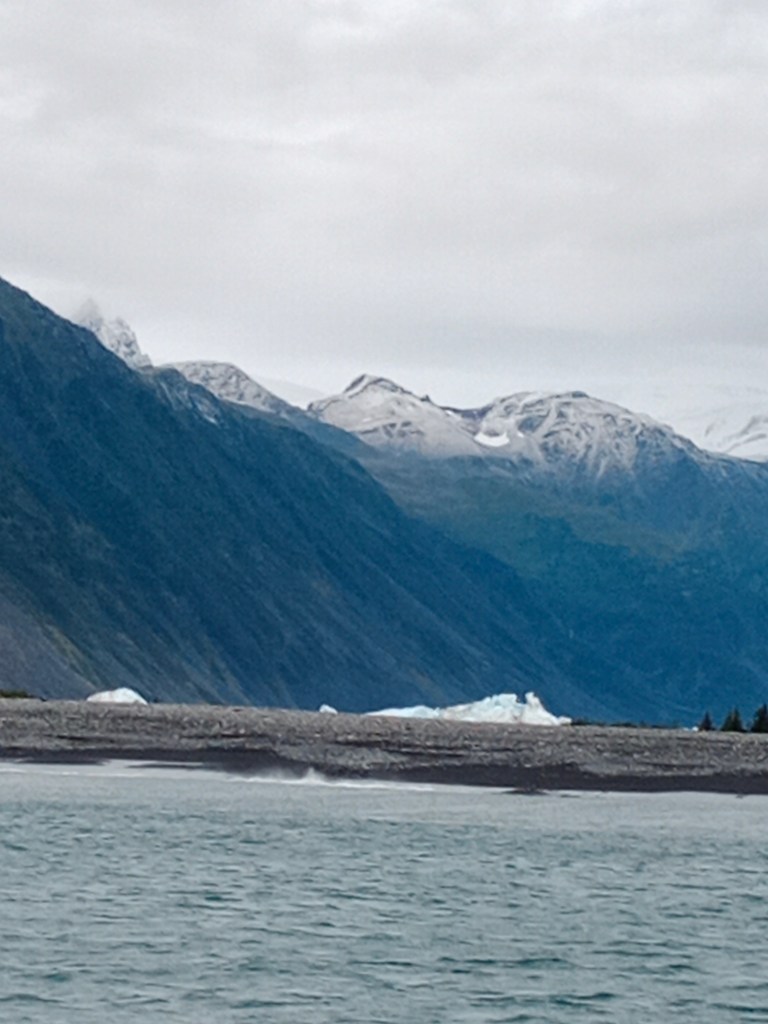
Meanwhile, something dramatic started slowly coming into view…a glacier seen from the sea! The captain announced that the Bear Glacier was slowly coming into view and everyone should focus that way. A glacier and some icebergs floating on the lake in front made everyone head to that side of the vessel and so did we.

Bear Glacier

This 21 mile long tidewater glacier arising from the Harding Icefield, this is a popular kayaking destination but can be also seen from a cruise on the Resurrection Bay.

Some pictures…

The Bear Glacier with ice floes floating around

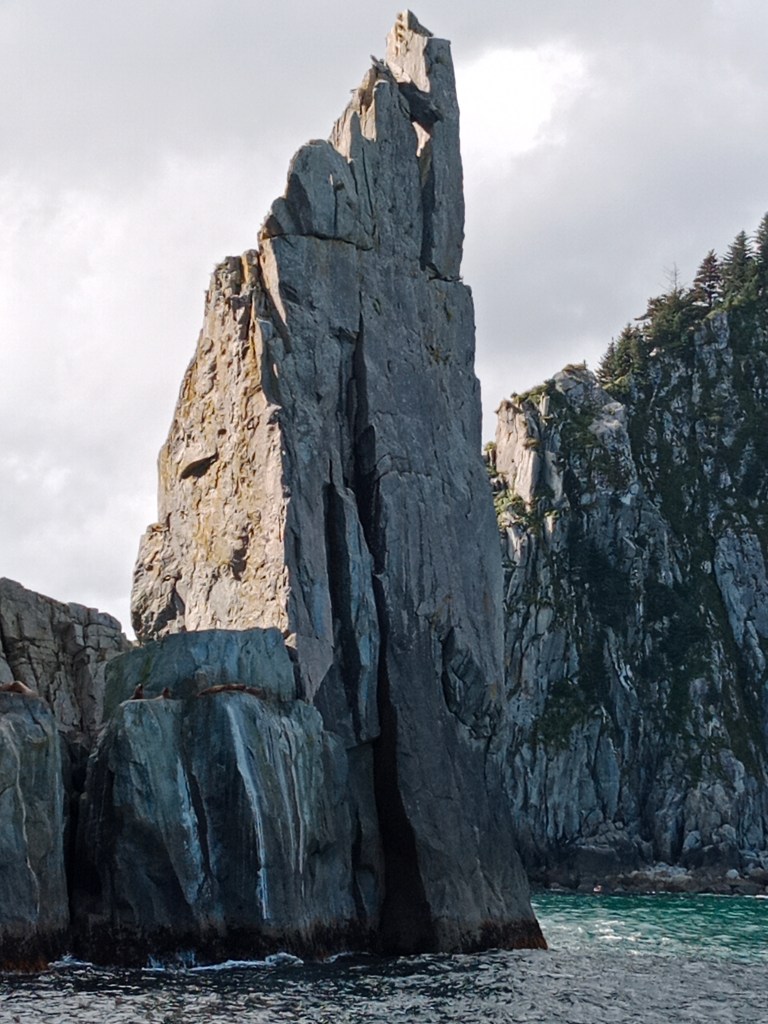
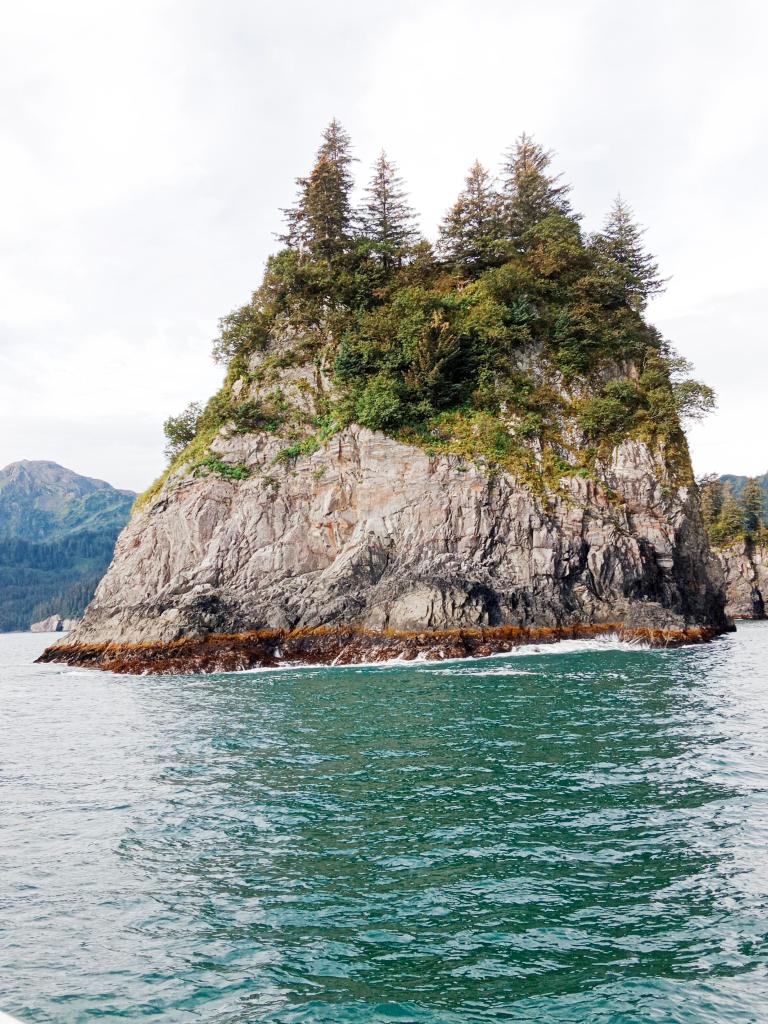
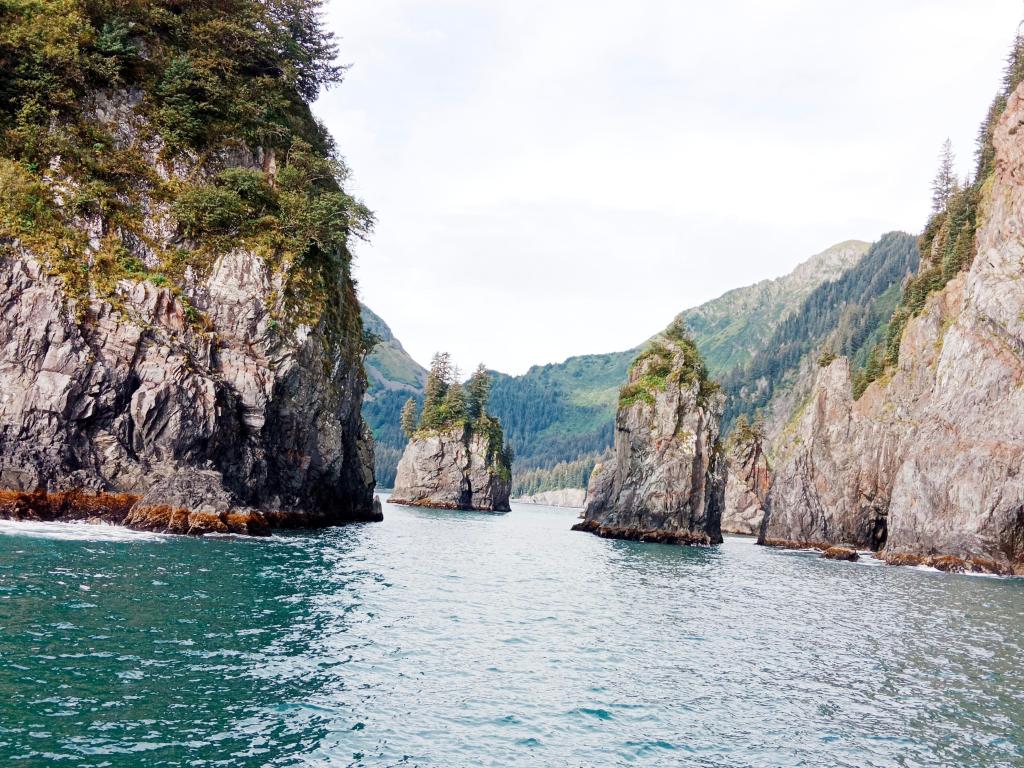
After some more sailing, we reached Spire Cove where there were rocky spires rising abruptly from the ocean.

Spire Cove

A excellent example of the rugged coastline of the Kenai Fjords, these spires are the result of years erosion of the shale rocks by the waters . Some pictures…

The stunning scenery at Spire Cove

An announcement on spotting some puffins sent me rushing out to the deck and I was rewarded with views of the cute birds on the cliffs and some in the water…

Puffins

Gradually we were leaving the protected bay and heading to the open Gulf of Alaska. The captain warned us that the ride may get bumpy once we move out of the bay. And as we left the bay and entered the Gulf of Alaska, some of our copassengers did get seasick but were quickly attended to by the crew.

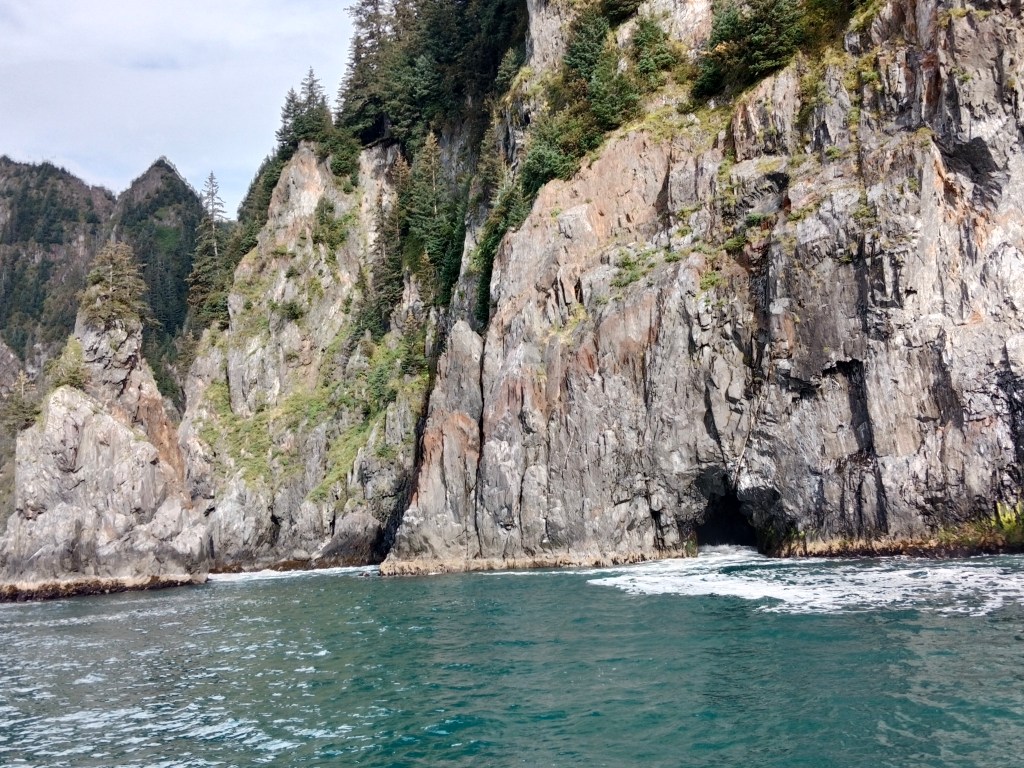
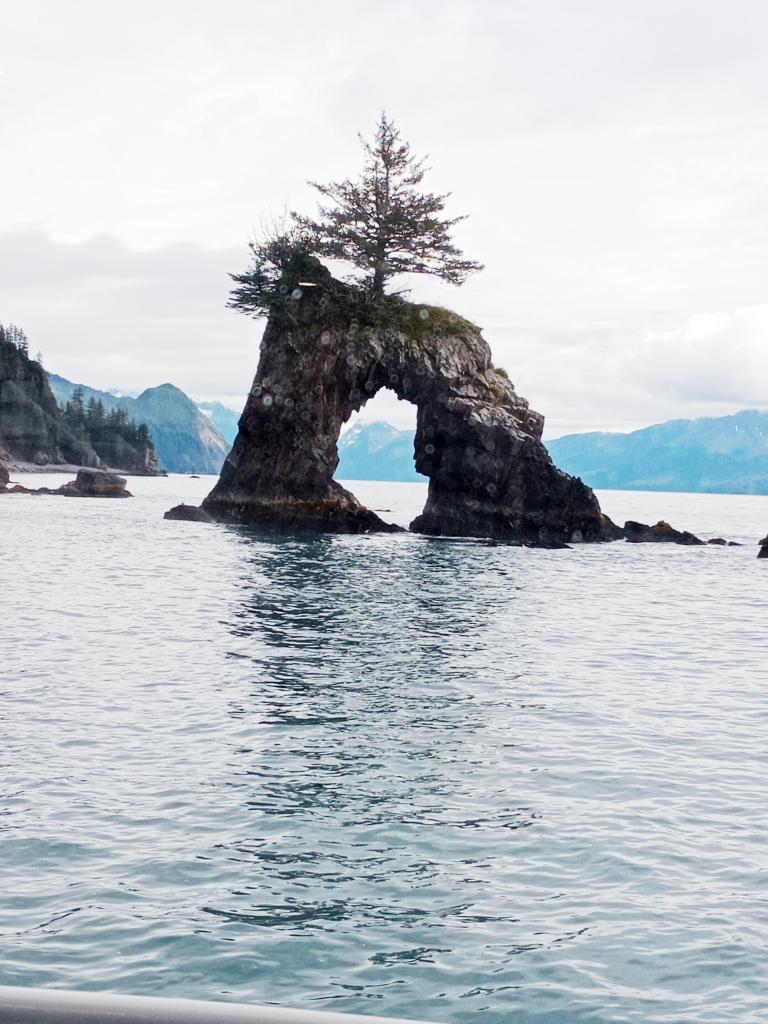
After sailing for some time in the open sea we again entered a bay called the Aialik bay where we encountered some rocky projections from the ocean much like spire cove but here it was like an arch in the sea.

Sea Arch

Chiswell Islands

These islands are part of the Alaska Maritime National Wildlife Refuge ,which comprises of 2400 islands, spires, rocks and reefs in Alaska covering an area of more than 20,000 sq kms and is known for its abundant seabird , mammal and animal populations. The rocky ledges provide abundant nesting facilities for the birds and habitation for the animals.

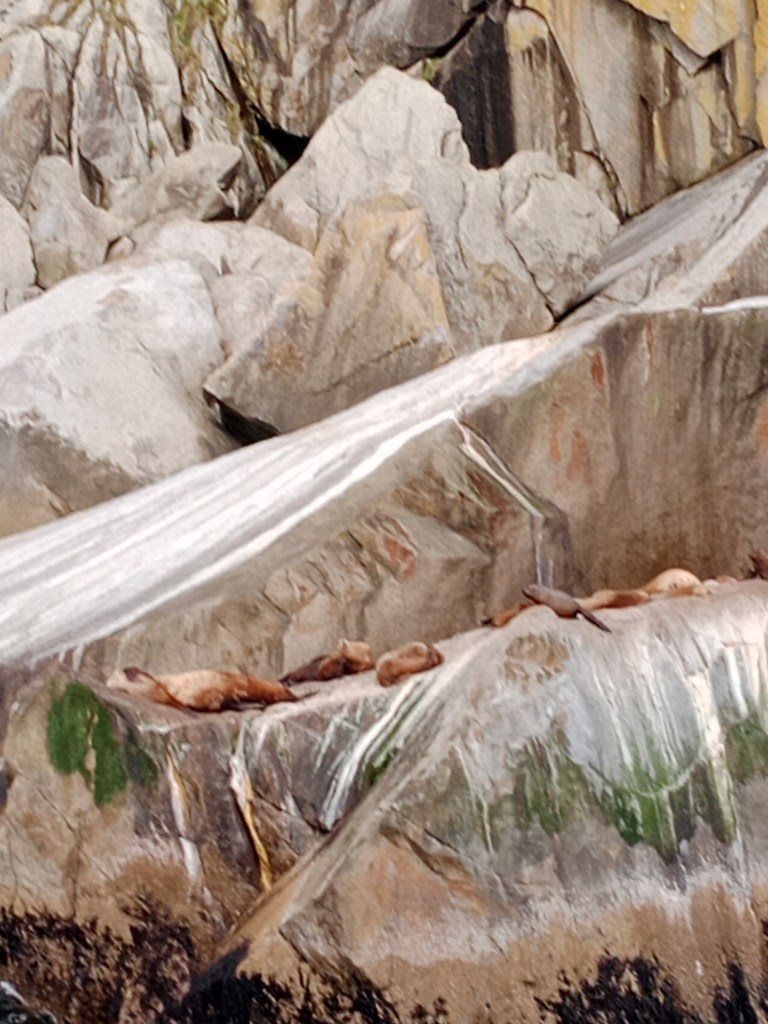
As we crossed the Chiswell islands, we saw stellar sea lion colonies where the sea lions were basking in the sun lazily . Some pictures…

Sea lions resting on the rocks

A short sealion video….listen carefully you can hear their cries !!!

Sailing further inside the Aialik bay, we first entered it’s Holgate arm and headed straight to the Holgate glacier. As we neared the glacier, we stepped out of the heated cabin on to the deck and that is when the real feel of the glacier hit us. It was biting cold and taking pictures was a challenge with numb fingers.

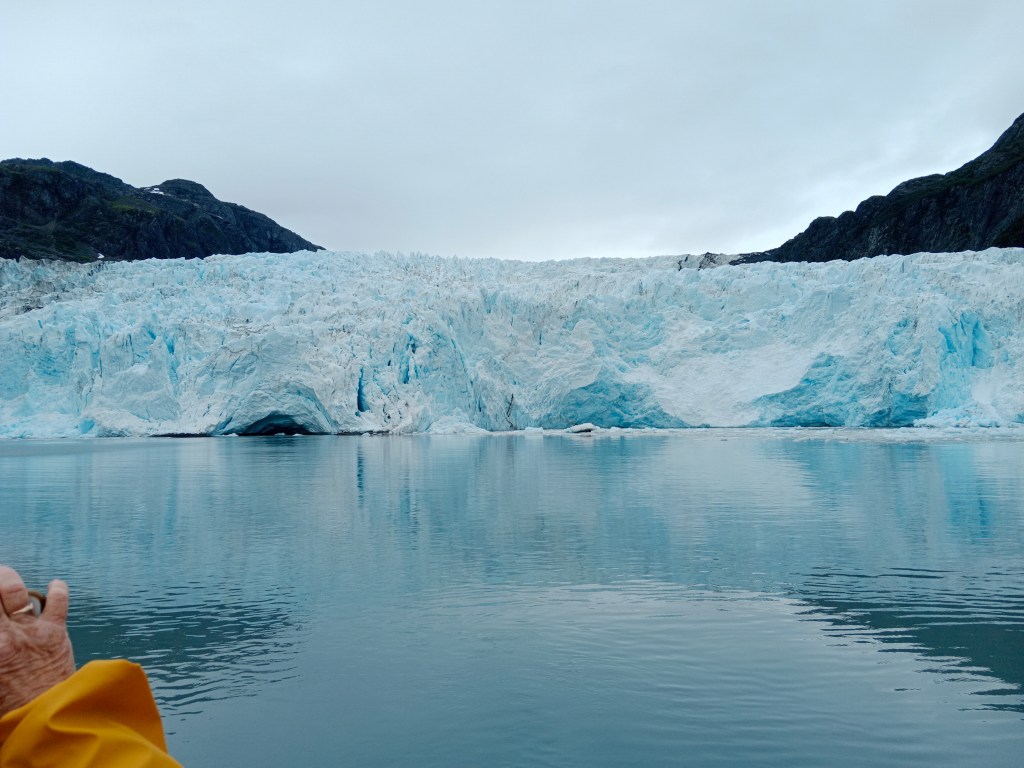
Holgate Glacier

An outflow from the Harding Icefield, Holgate is a tidewater glacier that empties into the Aialik Bay in the Gulf of Alaska. It is a popular destnation to watch glacial calving ( breaking off of ice chunks)

The glacier had various hues of blue and was an amazing sight. The captain turned the vessel around to give us a 360 degree view and we halted there to watch the calving.

Though it is part of global warming and is not an ideal situation, glacier calving is a once in a lifetime kind of view. We were fortunate to see this. Some pictures and a video to see calving. Enjoy…

Approaching Holgate Glacier

Mesmerising blue hues of Holgate glacier

We waited patiently at the glacier, may be few hundred metres away and kept looking and finally it calved with a sound similar to thunder. That is what I have captured for you.

And that special moment…..

Holgate claves…focus on the left hand side of the video and see the glacier calve

That moment was special indeed!!

Coming back along the Aialik bay, we entered the other arm where Aialik glacier is located. Similar to what happened at the Holgate glacier, we reached the glacier and waited . It did calve and we got to see a glacier calving again.

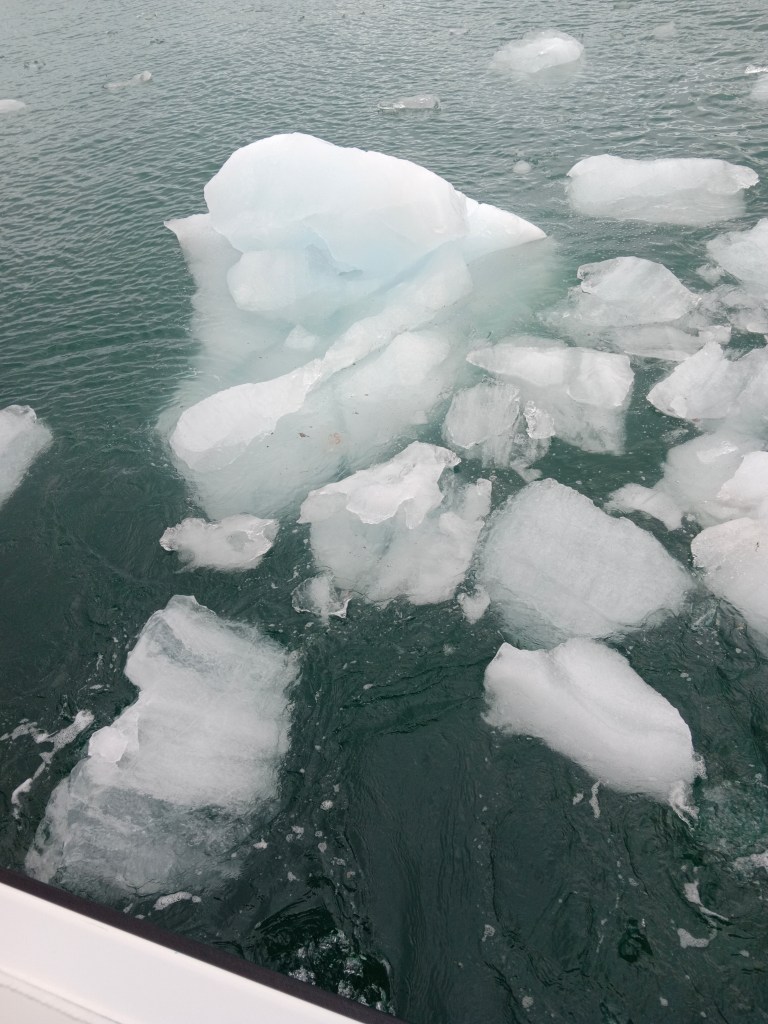
The Aialik glacier had plenty of ice floes (little icebergs) floating around close to it indicating that it had recently calved.

Some pictures…

The blue ice at Aialik glacier

The crew quickly picked up some of the floating ice which we could all carry and later on they used it for glacier ice cocktails on board…

The ice floes at Aialik and holding an ice trophy….a lifetime experience

A whole lot of sea lions had decided to rest at aialik that day and that was something special….

Sea lions visiting Aialik glacier…

There was another very interesting sight at Aialik, we saw some people in a small boat almost at the foot of the glacier…watch this video..

Some adventurous people on a boat….click on the video

After seeing Aialik glacier too, we started our return voyage almost on the same route. Most passengers had settled down in their seats ; tired after all the excitement and ofcourse the numb fingers trying to get pictures of the calving glaciers in the biting cold.

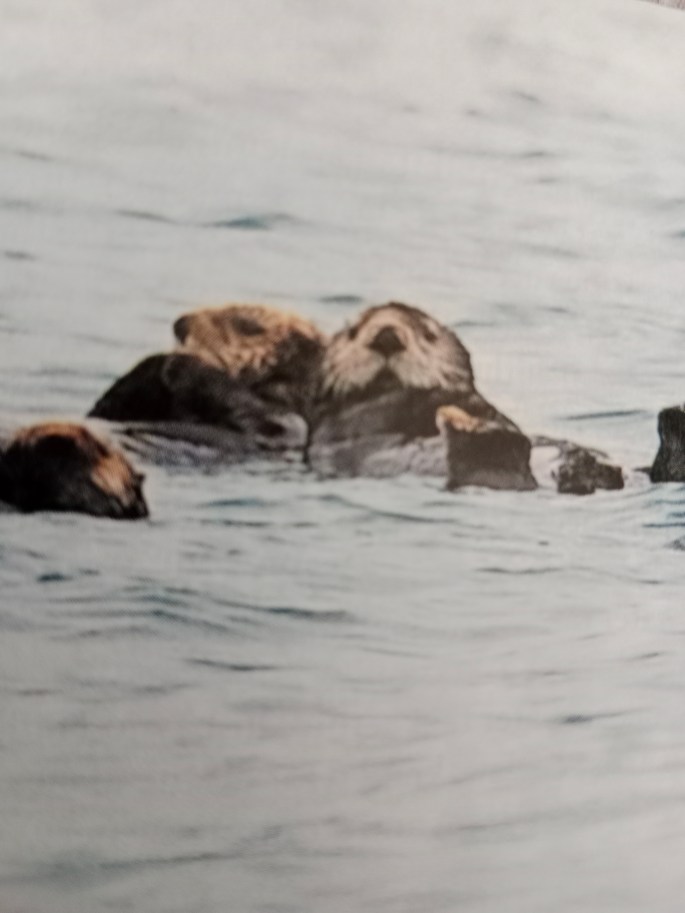
It was a little sunny by then and we noticed something bobbing up and down in the water. They were a group of sea otters, probably a family of them bobbing around in the water. They made a real cute sight indeed!!

The otter family…

The captain did point out some orcas and they came and swam with our vessel but could not get a picture…

Enjoying the mild sunshine that appeared, we stood on the deck as we returned back to Seward at the end of a very gratfying visit to the glaciers.

This was a great trip indeed, and I hope I have been able to transfer that feel on to you…the feel of the glaciers!!!

I do have more glacier views lined up for you in future episodes , but for now, I stop here.

Do continue giving me your feedback and comments…see you next week

Seward

This quaint little city by the Resurrection Bay in southern Alaska , acts as the launching pad for many an Alaskan adventure. With a population of less than 3000 people, and an area of just 56 sq kms, it is small and has a real old world charm about it.

Pronounced “Suvard” by the locals, it took us few interactions before we could get it right!! The epic train journey on the Coastal Classic train from Anchorage along some beautiful landscapes brought us to this city.

The Coastal Classic train near Bartlett glacier enroute Seward

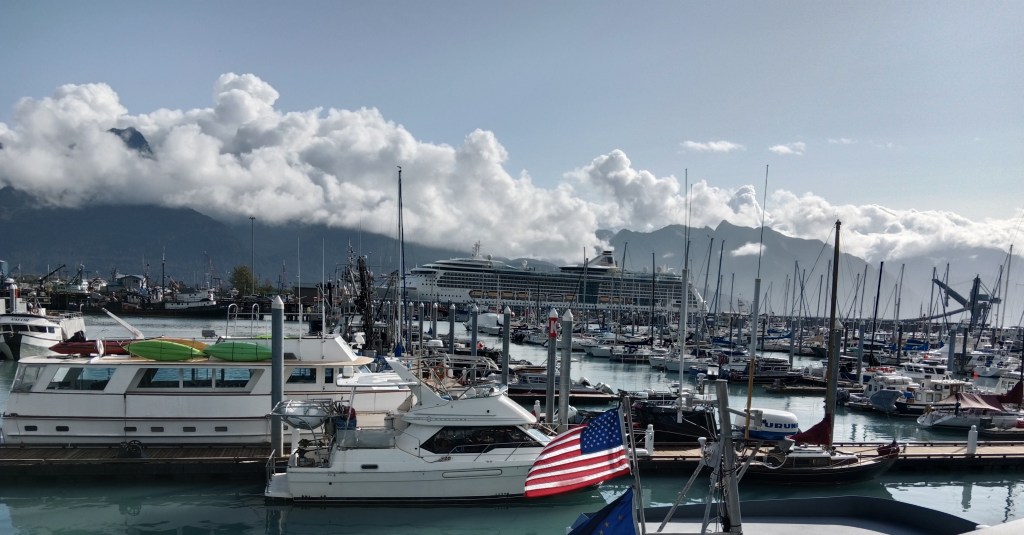
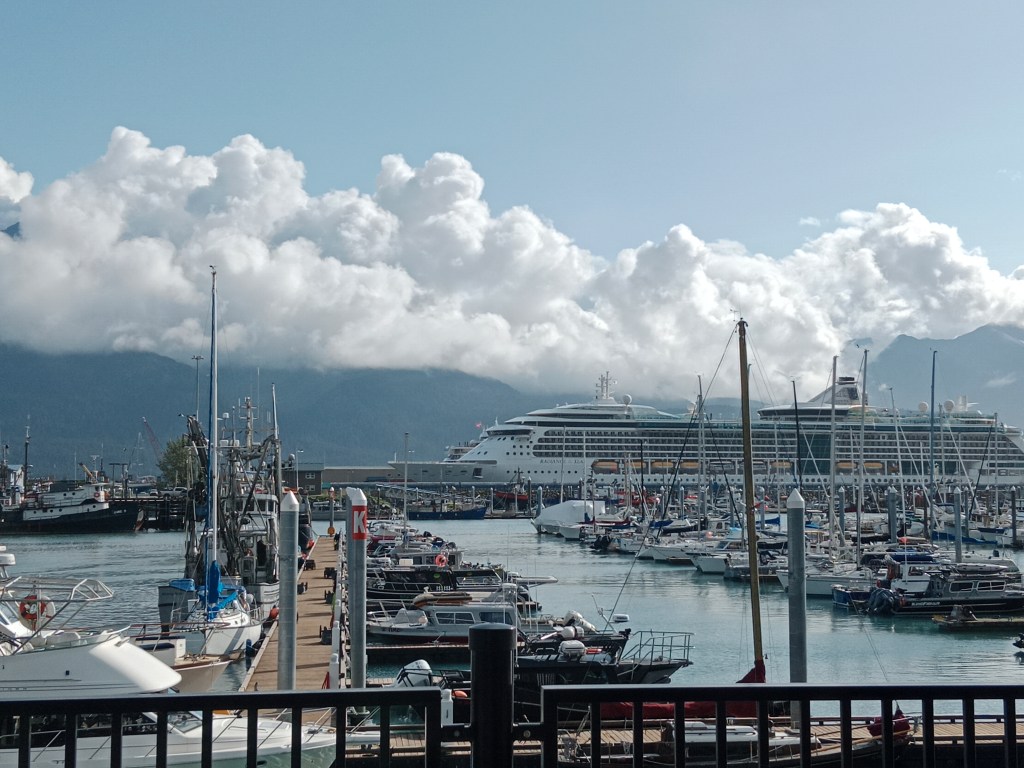
The place is so small that as you arrive at the train station, you can see most of harbour and marina which comprise it’s main landscape. The Resurrection Bay and the Kenai mountains provide the picturesque background.

“Harbor 360” , the main hotel here, located along the marina is just a few metres walk from the train station. We were also put up here as all our activities started from here.

Harbor 360 hotel

Being the Southern terminal of the Alaska Railroad and having good road connectivity with Anchorage and other parts of the Kenai Peninsula, Seward is the major cruise ship port that hosts many cruise lines like Norwegian, Royal Caribbean and Celebrity cruises.

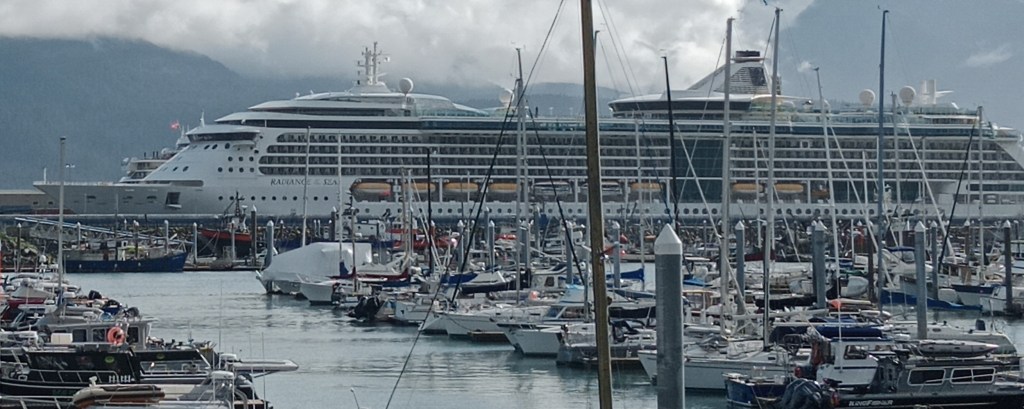
Views of the cruise terminal and marina from the hotel

The economy is largely driven by commercial fishing and seasonal tourism. Most tourist activities take place in summer between mid May and mid September. Many of the hotels , restaurants and such facilities function only during these months. Infact when we were there in early September, some of the small establishments and street food outlets had closed down.

Cruise Tourism

Cruise liners of various companies regularly sail from Seward to various destinations in Alaska and finally to Vancouver.

One such cruise ship” Radiance of the Seas “was stuck at Sewad for a couple of days due to some technical issues and the scheduled sailing was cancelled. This threw the plans of many passengers out of gear and we happened to see them during our trip. In fact the ship seen in the picture below is the stuck cruiseliner. This incident was a hot topic there during our visit with many upset passengers having to reschedule their plans.

The cruise company did compensate the affected people but there were lot of logistic issues to be tackled.

The cruise ship that got stuck

Fishing Charters

Alaska has a long coastline and provides endless opportunities for recreational fishing. Special fishing trips and charters are available. Seward is one of the main fishing destinations in Alaska. Many tourists enjoy the fishing and then carry the catch with them home. Many locations offer facilities for storing fish and shipping them to the required destinations .

Many of the fishermen here are of Scandinavian origin and Seward is one of the largest commercial fishery ports of the United States.

The display board at Seward fishing harbour and the storage containers

Local shops sell regular fishing equipment and we find lot of shops selling specialised fishing equipment too.

Specialised fishing equipment for sale

We also noticed a lot of people fishing at the Resurrection bay with camping vans parked at the camp site.

Campground with recreational fishing

Mural Capital of Alaska

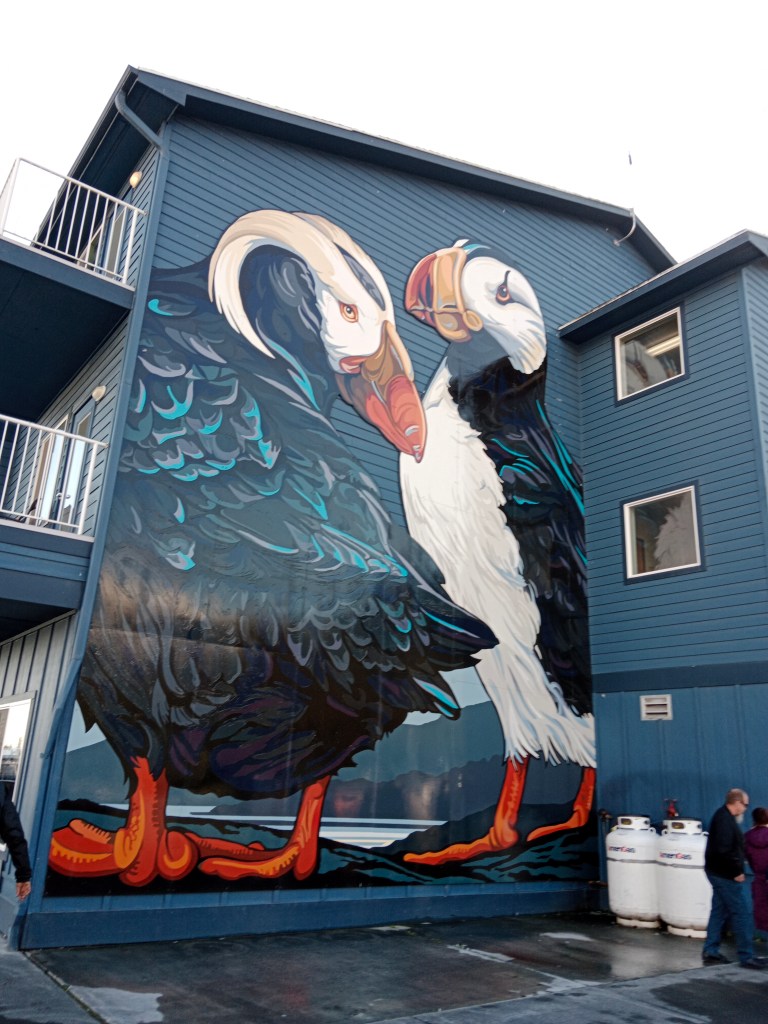
Seward is often called the Mural capital of Alaska . Some of the murals we saw…

The Puffin Mural on one wall of Hotel Harbor 360

Some more murals…

Good Friday 1964

March 27th 1964 saw one of the powerful earthquakes ever recorded in the world. With a 9.2 measure on richter scale it left a trail of destruction and Seward too was affected by this earthquake and the tsunami that it triggered.

An earthquake memorial at the main street in Seward….

The Earthquake memorial

Alaska Sealife Centre

A centre that doubles up as an aquarium, a rehabilitation centre for marine mammals and a reasearch facility, it is one of the main attractions here.

1989 saw a major oil spill along the Alaskan coast from the super tanker Exxon Valdez affecting many miles of the Alaskan coast, killing many birds and marine mammals. This incident triggered the thought of the need for a centre for reasearch on the Alaskan sealife. Settlement funds from this oil spill has partly funded this facility and now this centre rehabilitates injured and orphaned marine mammals of Alaska.

Some pictures…

Alaska Sealife Centre

Puffin and Sea Anemone

Aquarium

Otter pool…

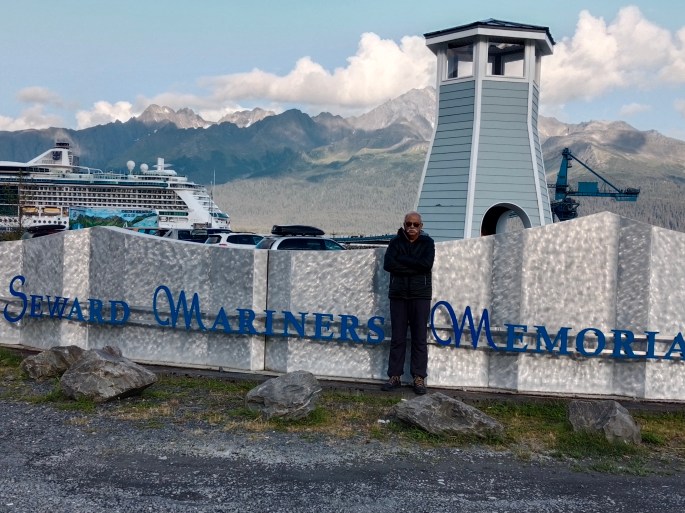
As we walked along the Seward marina, we came across the Mariner’s memorial.

Mariner’s Memorial

Being a marine town, Seward has depended on the sea for survival . This has also resulted in tragedies over time. As a tribute to the mariners who were lost at sea, a memorial was built at the breakwater at Resurrection Bay. The focal point here is a light house surrounded by a small landscaped garden. Names of the mariners lost at sea are also displayed inside on plaques.

View of Resurrection Bay from the Mariner’s memorial

We returned to Anchorage from Seward by road, along the Seward Highway, to get a different perspective; since we had done the up journey by train .The drive along the Turnagain Arm and various view points on the seward highway added to the fun. Since those are covered in a different episode, I am not elaborating here.

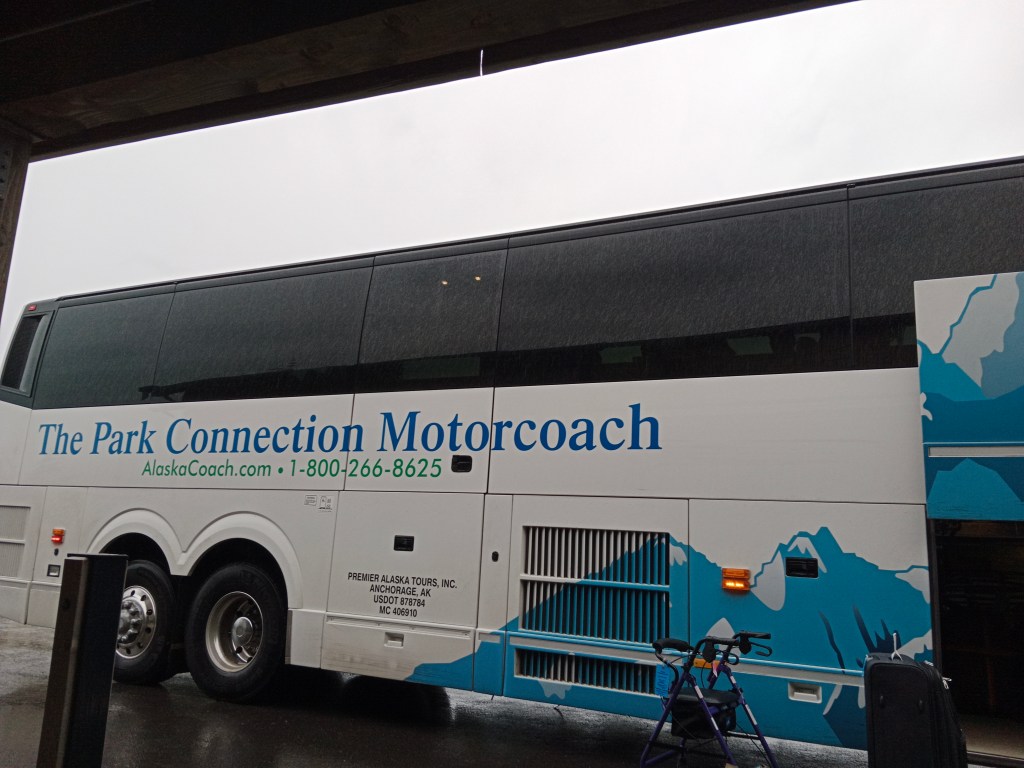
The bookings for this were all done online from India months before the trip.

The Park Connection Motorcoach that runs between Seward and Anchorage

As I mentioned in the beginning , Seward was a small place but the activities that are organised from here are amazing.

We did the Kenai Fjords Cruise from here. That’s where we went up close to two glaciers and actually saw them calving. That was really a lifetime experience.

The other thing we did at Seward was rafting the Resurrection river. That too was a great experience as the guide took us to real wilderness areas on the raft.

Both these will come up in the next epoisodes. Till then, let me say goodbye. Do give your valuable feedback and comments.

An epic train journey

Happy New Year everyone!!!

Starting the my blog journey in 2024 with an epic train journey from Anchorage to Seward . Just sit back and enjoy this journey….

I knew that this was going to be a beautiful train journey from the reviews I had read. But I was not prepared for this!! The natural beauty that awaited us on the journey from Anchorage to Seward on the Coastal Classic train was something that surpassed my expectations. How can I not share that with you all then? So just imagine that you are sitting in a comfortable seat on a train and visualize what you read…I am sure you will enjoy every bit of it…

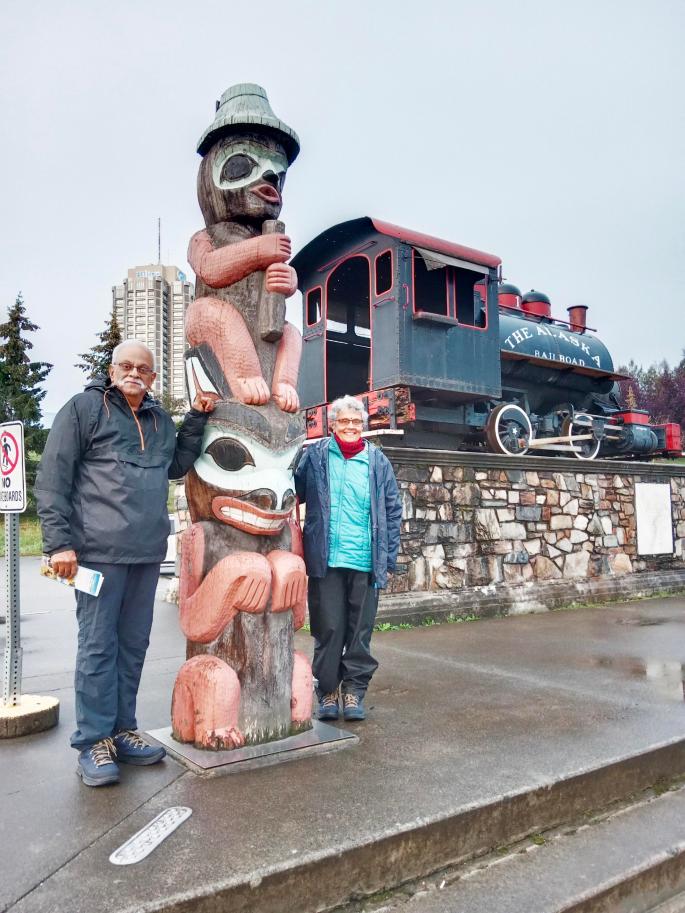
Our journey started from The Alaska Railroad depot in Anchorage. The station has an old world charm about it with a steam locomotive displayed outside along with an antique totem pole…

The Alaska Railroad station and the displays outside

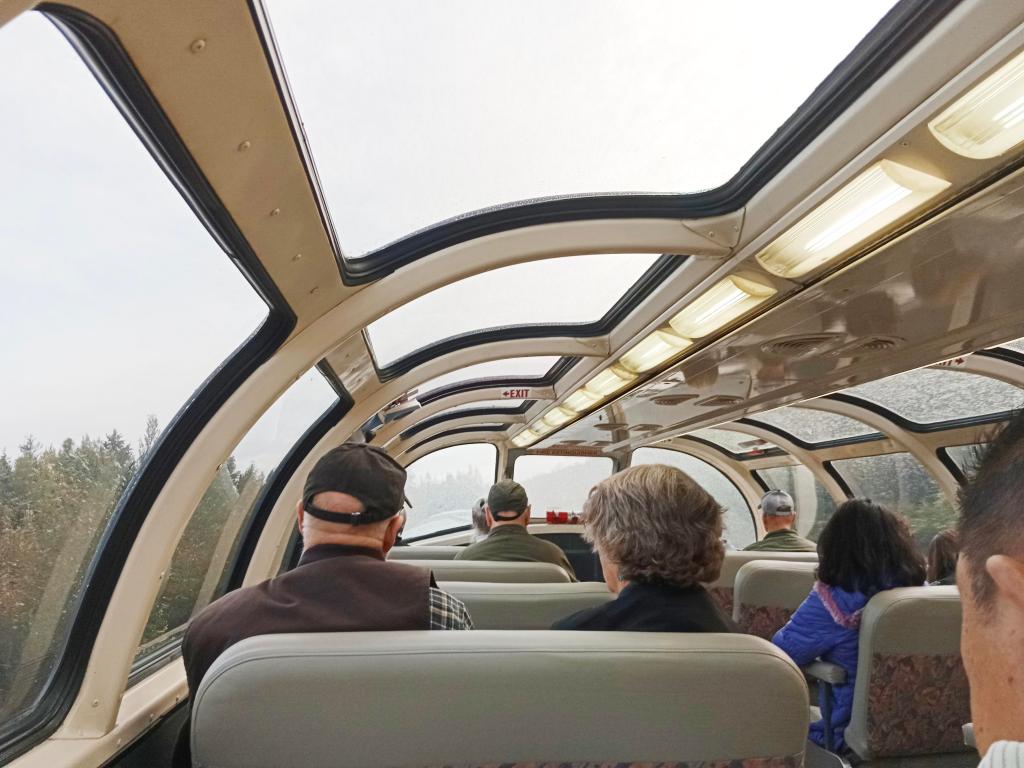
Boarding the train and the glass dome coaches for viewing comfort

Since it is a tourist train, there were regular announcements about the approaching highlights and that was really helpful.

Just after the train left Anchorage station, we were passing the Turnagain arm of the Cook Inlet . Along side was the Seward Highway on which we had travelled to Portage glacier.

The train meanders along the Turnagain arm

We passed the Beluga Point and other lookouts along the highway and the train was winding it’s way along the sides of the Chugach ranges. The train conductor was updating us on the wildlife seen and we did get to see quite a lot of them. Pictures were of course not feasible with the distance and the moving train.

We did see mountain goats on the hillsides of the Chugach Ranges and an occasional moose as we passed the open lands between the mountains. Bald eagles were also plentiful.

Some pictures of the Chugach Ranges..

Crossing the Chugach mountains

Chugach mountains on the left, Seward highway and Turnagain arm on the right

Beautiful meadows and a house near Girdwood

The conductor announced that we were approaching Girdwood, our first halt. The size of the station and the number of people amused me!!!

The cute Girdwood station

Girdwood is a small station enroute and is the point from where one can visit Mt. Alyeska, a part of the Chugach ranges receiving almost 700 inches of snow every year. The Alyeska Resort located here is an all year round adventure destination featuring, saltwater pools, ski slopes, spas and other activities.

As we chugged along, there was a peculiar scene. Plenty of tree stumps jutting out of the marshy land. These are the stumps of the trees that got submerged in the 1964 earthquake .

The submerged tree trunks; the aftermath of the earthquake

Soon in typical Alaskan style, we had rain and that added it’s own beauty to the mountains…

The rain adds beauty to the mountains….

The next announcement created lot of excitement in the train. For the next hour or more, we were going to see wilderness at it’s best. We were told to be ready with our cameras all the time.

It started with the views of the Spencer glacier as we chugged closer to it.

Spencer Glacier

A glacier in the Chugach National Forest, this glacier is just 1 mile away from the rail track!!

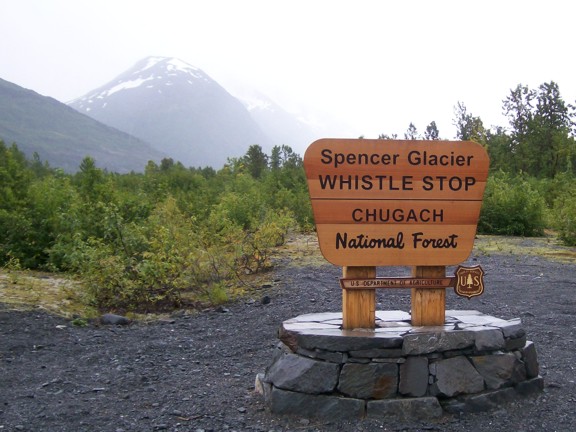
This glacier is right in the middle of wilderness and one can reach it by taking this train and getting down at a station called the Spencer Whistle stop. There is just a sign board there and if one is booked for a hiking or rafting tour at the glacier, the guide meets up at the station and one can proceed for hiking and other adventures.

The views were awesome to say the least. Take a look..

Have a look at this video to get the feel of the glacier slowly coming into view

The glacier as seen from the train.

The Whistle stop and the icebergs broken from the glacier

After we crossed Spencer glacier, we were near the Placer River with a bridge across.

Placer River and bridge

Soon we were passing through a series of tunnels as we climbed the Kenai mountains. The train winding it’s way in and out of the tunnels was also beautiful.

Out of one tunnel and into another

The Placer river continued into Placer gorge in the Valley.

Placer Gorge. Note the glacial water color.

Just after this came the announcements that we were approaching Bartlett glacier.

Bartlett Glacier

Bartlett glacier originates in the Kenai mountains and lies between the Spencer and Trail glaciers . The glacier lies along the railway track and the train slowed down as we passed this glacier. The picture of the train with the Bartlett glacier is one of the iconic images used by Alaska Railroad. Some pictures..

The Coastal Classic crosses the Bartlett Glacier

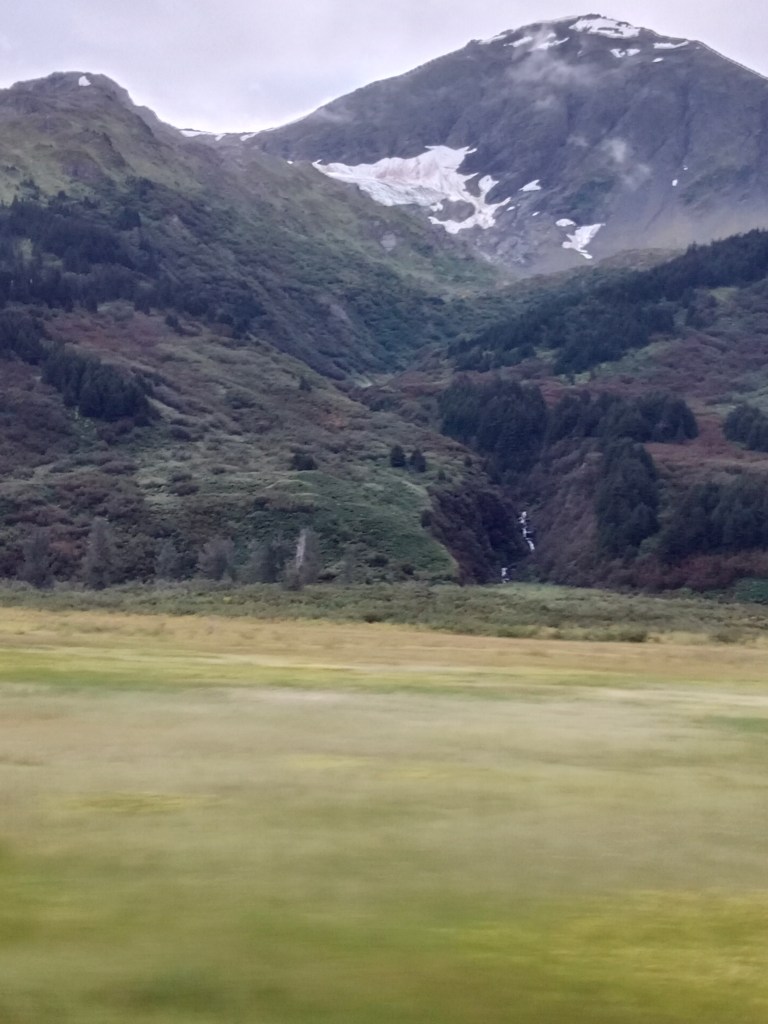
Open meadows and multiple waterfalls along the hillside greeted us. Some images…

The open meadows, waterfalls and glaciers

Soon came the Trail Glacier

Trail Glacier….

Trail Glacier as we passed by…

The Trail Glacier empties into the Trail Creek which forms the Trail Lake and finally empties into the Kenai Lake. This is a popular picnic location with campgrounds nearby.

The Trail Creek and River

Soon we were near the scenic town of Moose Pass which is a campground destination in the area with facilities for hiking, fishing and other activities. There are float planes available there for use.

Moose pass with the float planes

Chugging along further we were near Kenai Lake…

The turquoise waters of the Kenai Lake

Soon after we passed Kenai Lake, we were at Seward, a small town in the Kenai Peninsula with multiple adventure activities. At Seward, the train depot is walking distance from the ferry terminal and the town.

Passenger ferries and the Seward wharf greeted us to this beautiful location.

First views of Seward

Did you enjoy this epic train journey through glacier country? Quite unique to have a glacier so close to the rail tracks…isn’t it? This is considered to be one of the most beautful train journeys in the world.

I hope you enjoyed the virtual journey as much as I did the real one. I had some awesome glacier experiences at Seward. Hope to take you through those in the coming weeks. Till then, do give your valuable comments and feedback.

Alaskan Wildlife

One of the most exciting aspects of a trip to Alaska is the hope of seeing some of its unique wildlife. When I talk of wildlife, I include terrestrial and aquatic animals, birds and mammals.

We had our share of wildlife encounters during our Alaskan holiday. Some of them were in the wild, particularly while travelling by road , train or along the waterways and some were at the famous Alaskan wildlife conservation center.

One of our first exposures to Alaskan Wildlife started at the Anchorage airport itself. Stuffed wildlife exhibits are a common sight at this airport.

Moose

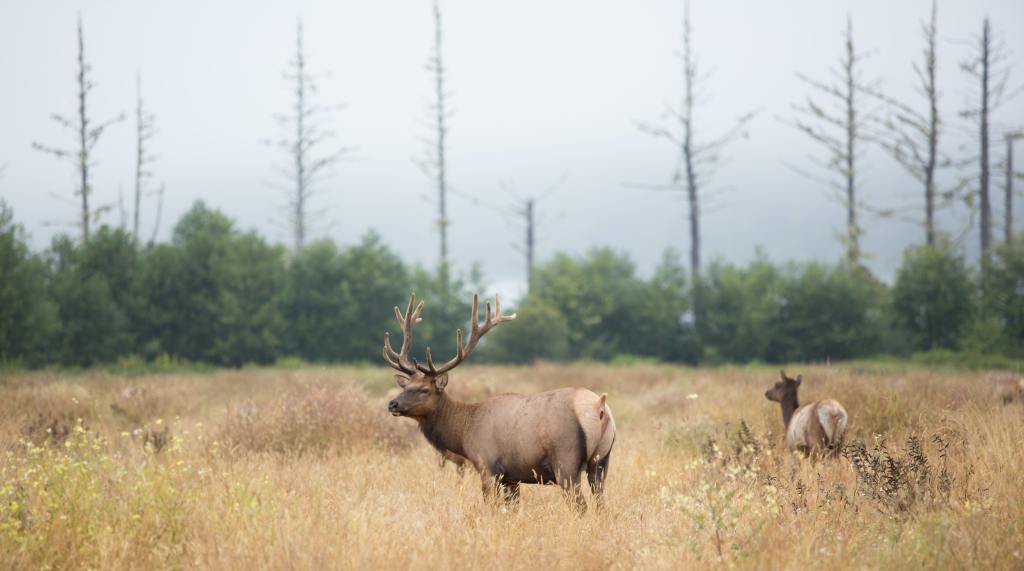
Moose are the largest of the deer species, with males weighing more than 500 kgs. The males have typical palmate antlers and inhabit the forests of the subarctic region. The terms Elk and Moose have been used interchangeably but Elk have a lighter brown color of skin and a whitish rump.

Some pictures

A stuffed moose at the airport

A moose and an elk

Halibut

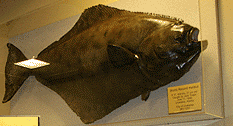
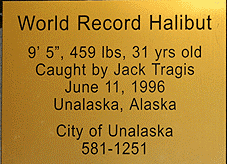
Halibuts are the world’s largest flat fishes and have been widely baited for sport fishing in Alaska. To give you a perspective of the size of these fish, here’s the label put up alongside the halibut exhibit at the airport.

A halibut exhibit at the airport with its dimensions

At Anchorage city too, I noticed a strange sight. A pet Reindeer in a wired cage as we walked around downtown Anchorage attracted our attention. We crossed him several times as we walked along. Most of the time he would be chewing some grass/hay and would come towards us .

Star the Reindeer and a board on his Facebook page!!!

Caribou or Reindeer

Reindeer is the European name for the North American Caribou. A species of deer found in the polar regions, they vary widely in size and color and are popularly associated with SantaClaus and Christmas. They have been a source of meat and hide for the arctic people. Caribou meat is widely served as a delicacy in Alaskan restaurants.

One distinct feature of Caribou is the females having antlers.

Bald Eagle

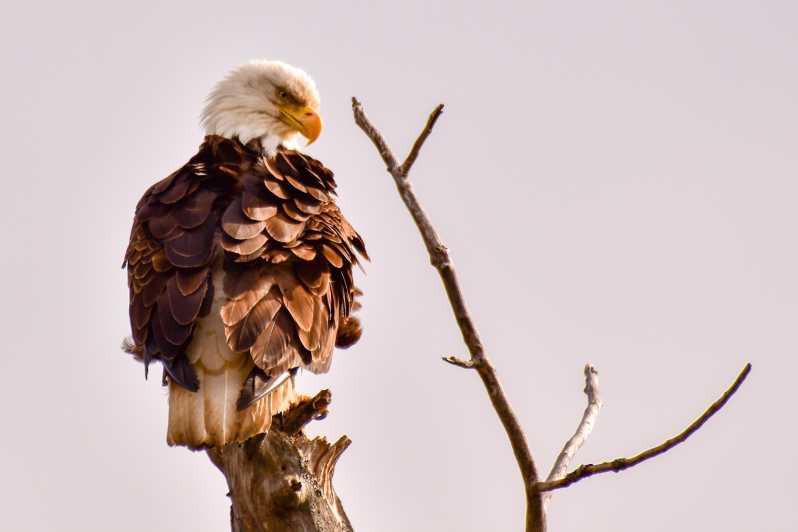
A bird of prey that lives close to water bodies, bald eagles were plentiful in Alaska and we saw lots of them along the Resurrection river as we did a river rafting. They are not actually “bald” but get their name from the white plumage on the head. They are huge with wing spans ranging from 5 to 7 ft.

Nests with eagles resting in them were seen and as we reached close by ; they would fly away. Some pictures..

Bald Eagles

Osprey

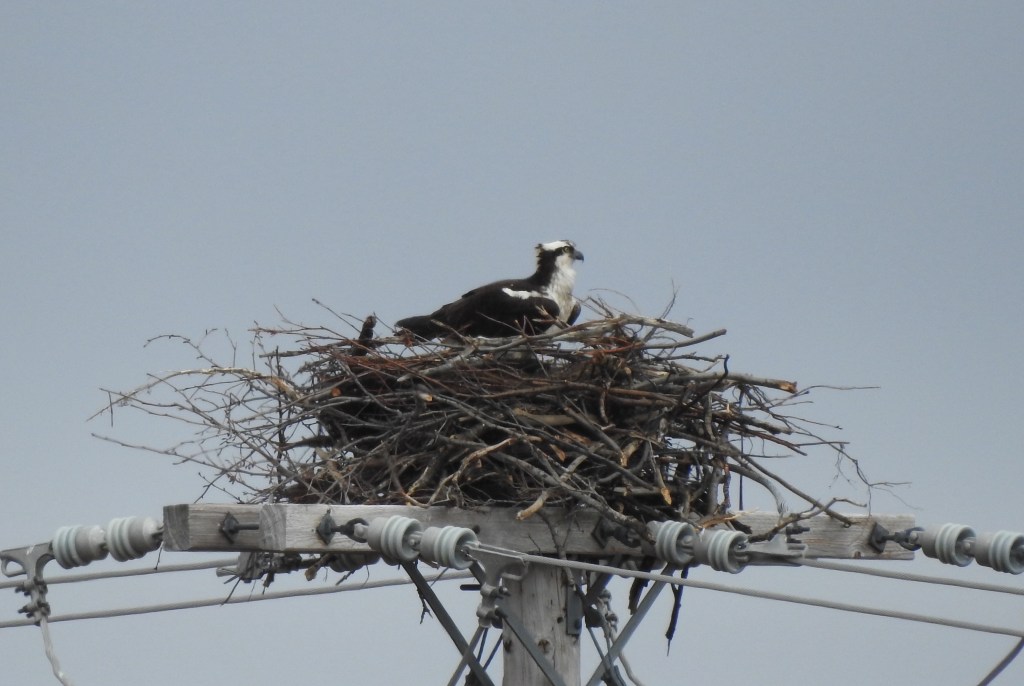
Osprey are also birds of prey and subsist mainly on fish. They are also widely found in Alaska and have wing spans of more than 5 ft.

As we travelled by train; at several places, there were osprey resting on wooden poles near the tracks; most of them would be resting on their twig lined nests.

An interesting anecdote as told by our guide was that these osprey started nesting on the electric poles and it became a problem for the staff. Hence, the wooden poles were erected close to the track to guide the osprey away from the electric poles!!

The osprey nests close to the rail tracks..

Marmots

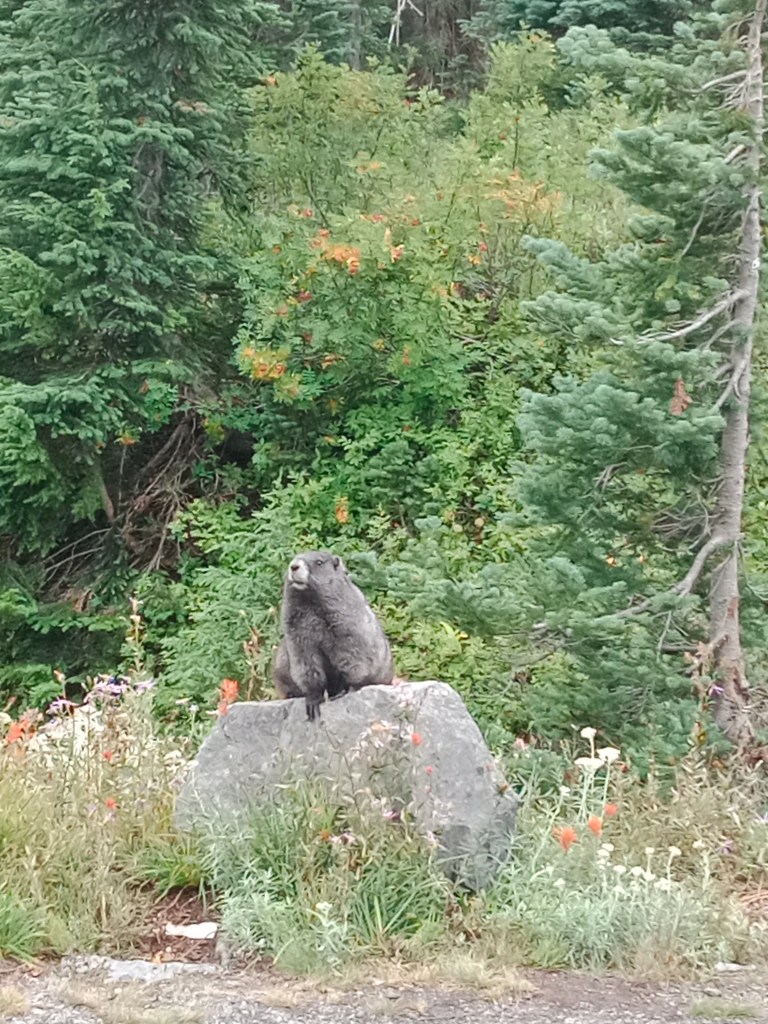
Marmots are large ground squirrels found widely in North America. Found mainly in thickly forested areas, they can often be seen on the road side close to forests. They are the heaviest members of the squirrel family and hibernate during the harsh winter months.

Marmots by the roadside

Sea lions

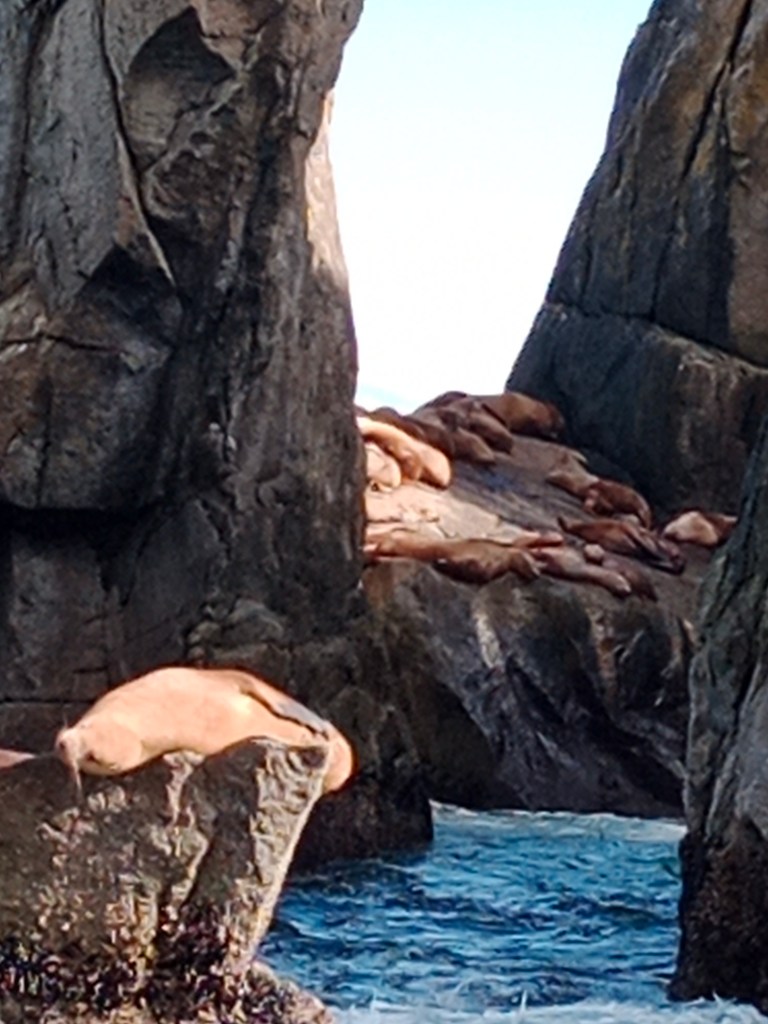
Sealions are related to walruses and seals and are called eared seals. They are bulky and have short fur. They live in colonies on the rocky ledges by the sea. They have been hunted by humans and now sealing has been curtailed. We saw huge colonies of sealions on our cruise on the Kenai peninsula. Some pictures…

A stellar Sea lion colony at Kenai

Listen to the sounds of the sealions in this video…

Orcas

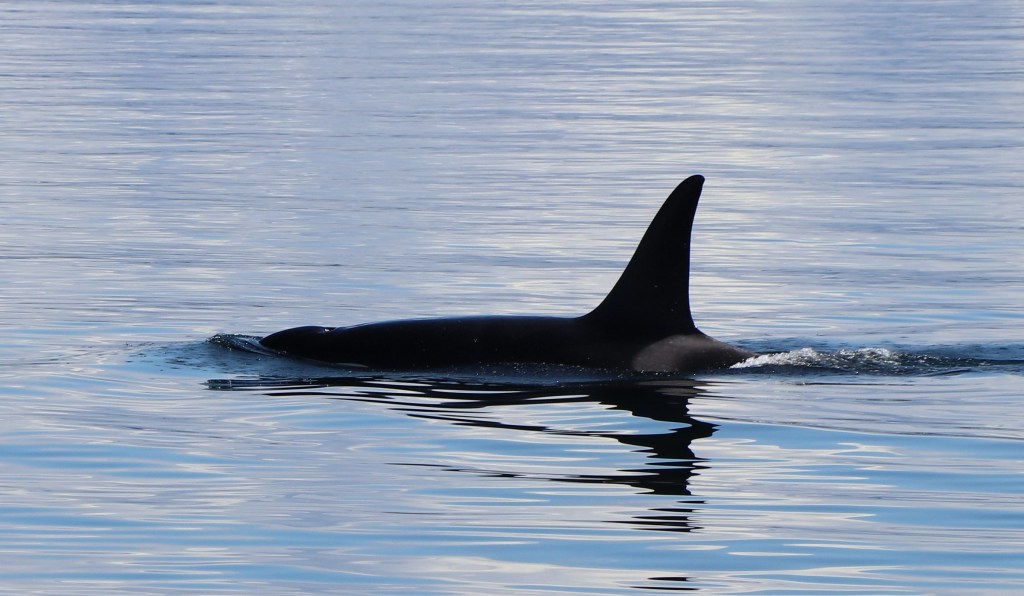
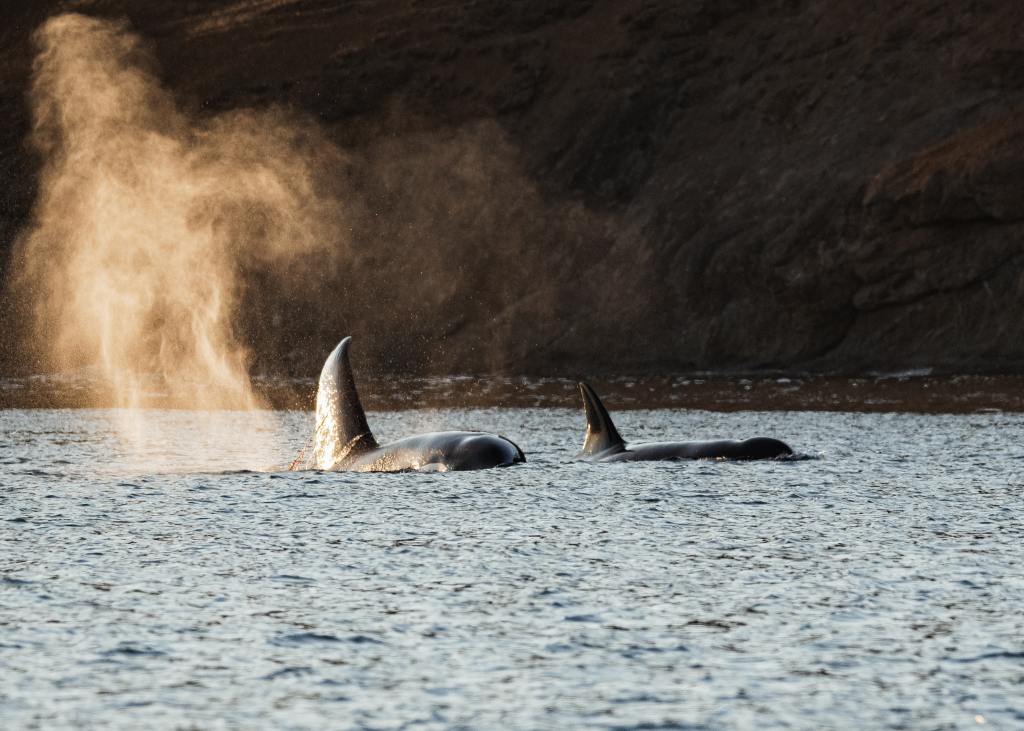
Orcas or killer whales are the largest members of the dolphin family. They are highly social and often approach ships and swim along with it. We too had a small orca encounter during our cruise in the Kenai peninsula. They are not usually harmful to humans but are huge and can weigh more than 5tonnes.

Orcas are so integral to Alaskan life that they even have a chocolate named Orca Poop !!!

The tell tale fin….

Two of them and a chocolate named orca poop!!!

Sea Otters

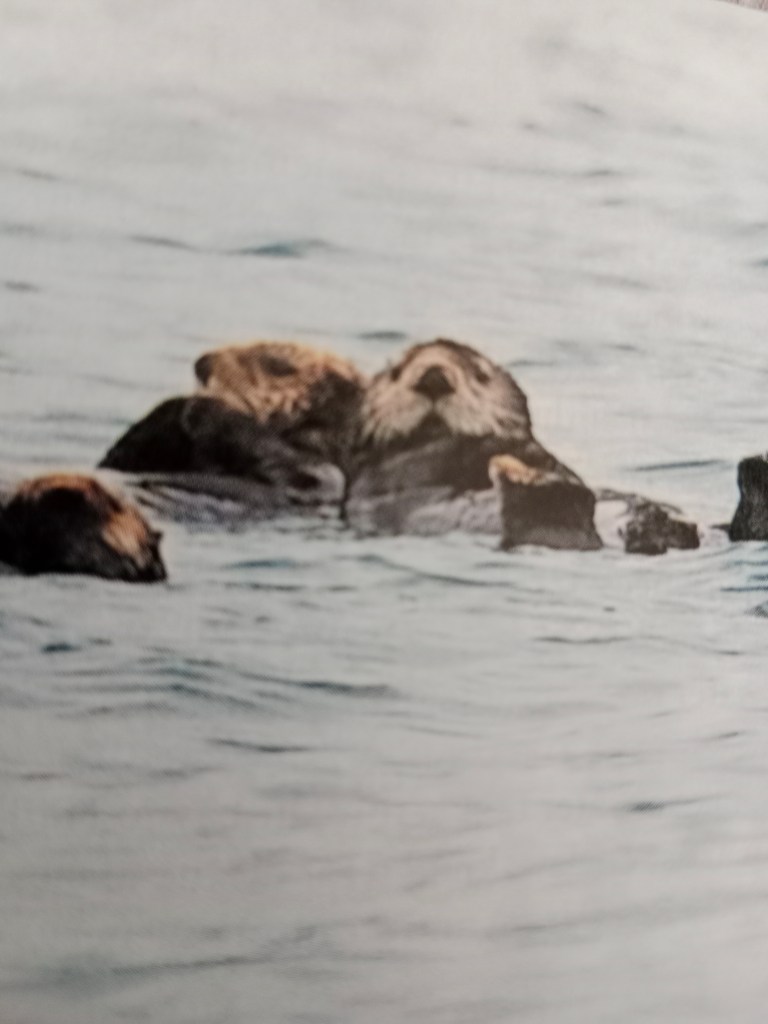
The largest of the weasel family, Sea Otters are extensively found on the North Pacific coastline. They usually swim in groups on their backs bobbing up and down on the waves. We did see such a family enjoying the swim as we cruised at Kenai.

Otters

Salmon

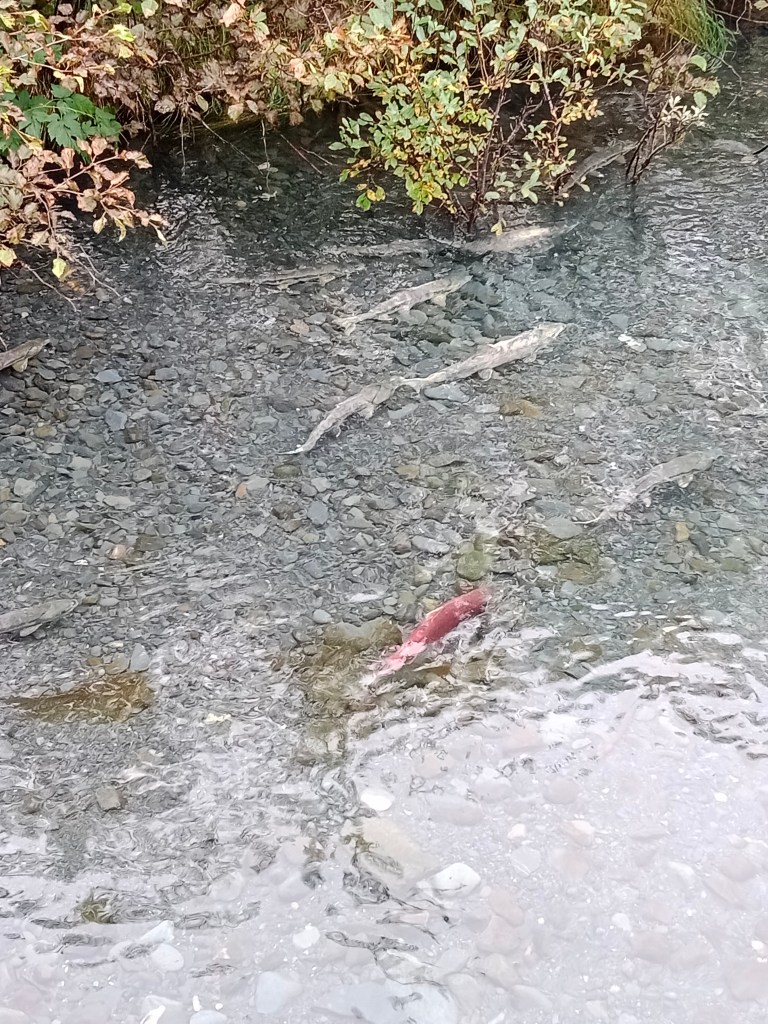
Thousands of salmon migrate each year in late July and early August in the Gulf of Alaska and return to their birth place to spawn. This is an amazing natural phenomenon of the fish swimming upstream and the grizzly bears have a great time feasting on them. Some pictures..

Salmon swimming

Katmai National Park in Alaska has bear viewing flights where one can go and watch the grizzlies waiting and the salmon literally jumping into their mouths. We were a little late in the season for this but we did get to see the videos which were amazing.

Puffins

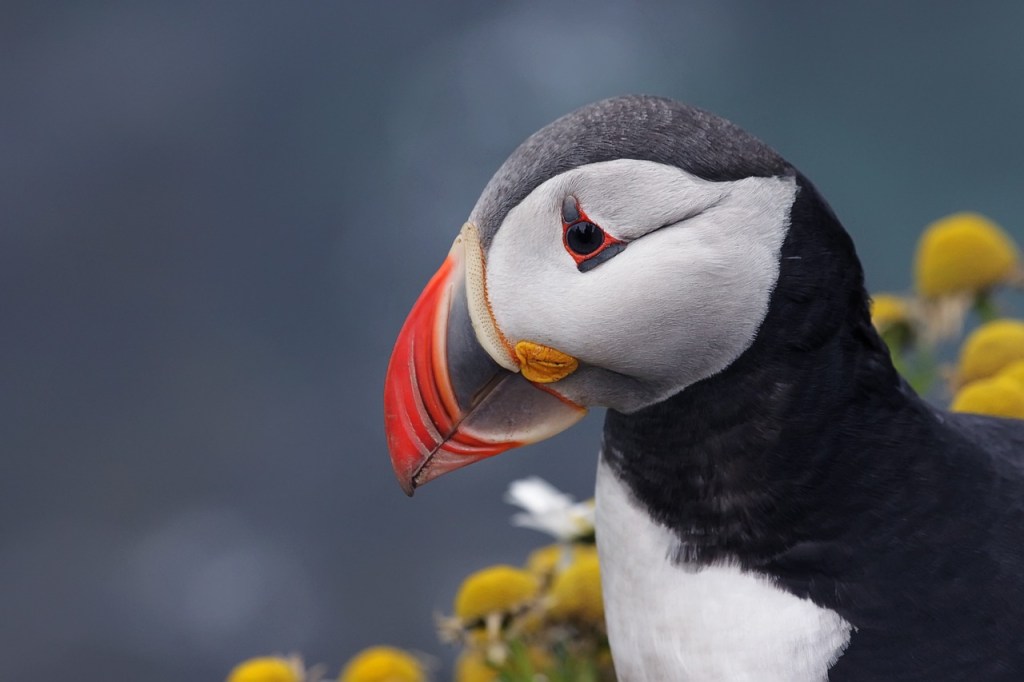
Puffins are cute sea birds that breed on coastal cliffs nesting in crevices among rocks. They are predominantly black in color or a combination of black and white with a big bright orange colored beak. They are often seeing flying low over the ocean surface. They are found in large numbers along the Alaskan coast.

Puffins resting on the rocky ledges

Apart from the natural wildlife encounters we had during our travel in Alaska ; we had the opportunity to visit the Alaska Wildlife Conservation Center near Anchorage.

Alaska Wildlife Conservation Center (AWCC)

The mission of the AWCC is the preservation, conservation and rehabilitation of orphaned and injured native Alaskan wildlife. Set in an area of over 200 acres, on the shores of Turnagain Arm and Cook inlet on the Alaskan coastline, this center also provides permanent shelter to wildlife that cannot be released into the wilderness for various reasons. Some inmates of the AWCC….

Black Bears

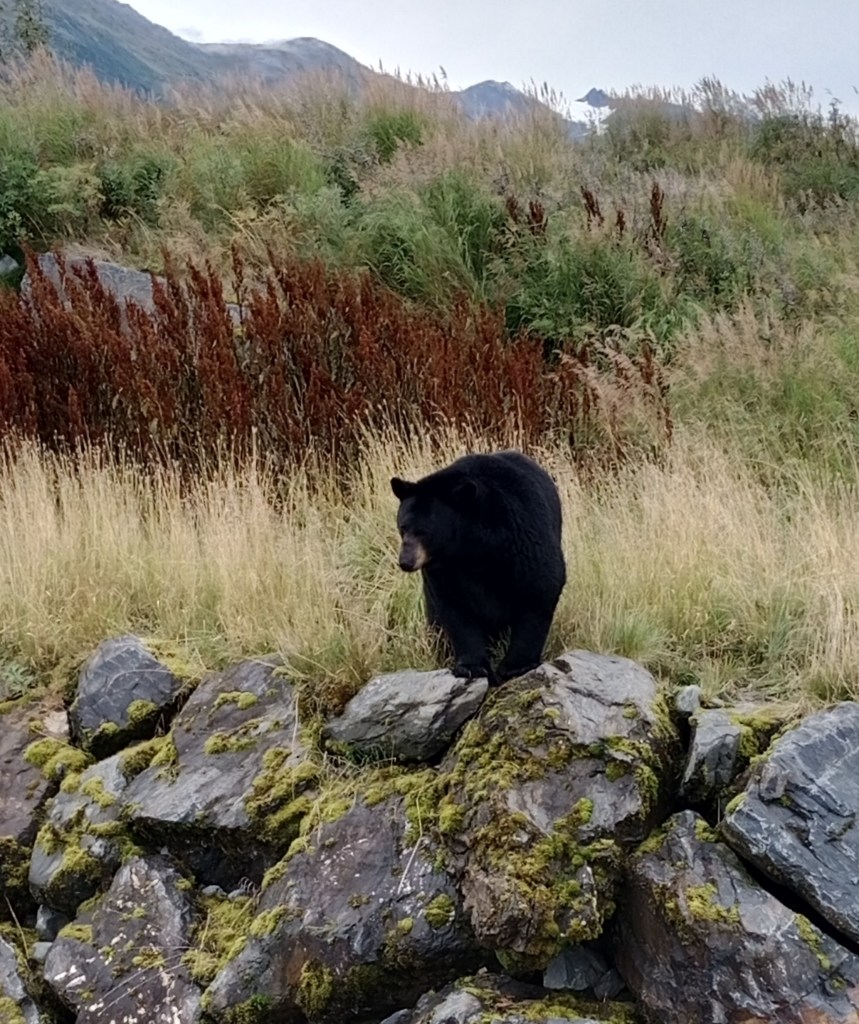
A bear enclosure with a viewing platform was where we saw these bears …4 of them. One seemed restless while the others seemed to be happy in their own world. They can be distinguished from their brown counterparts by their smaller size and absence of shoulder hump. Take a look…

Black bears….

I did see a black bear on a hill slope along the road but too far for a picture!!!

Brown Bears/Grizzlies

Large bear species found extensively in North America, often referred to as grizzly bears due to their color ; with hairs on the back being brownish black at the base and whitish cream in the tips giving a grizzled appearance. They often go into hibernation during the winters.

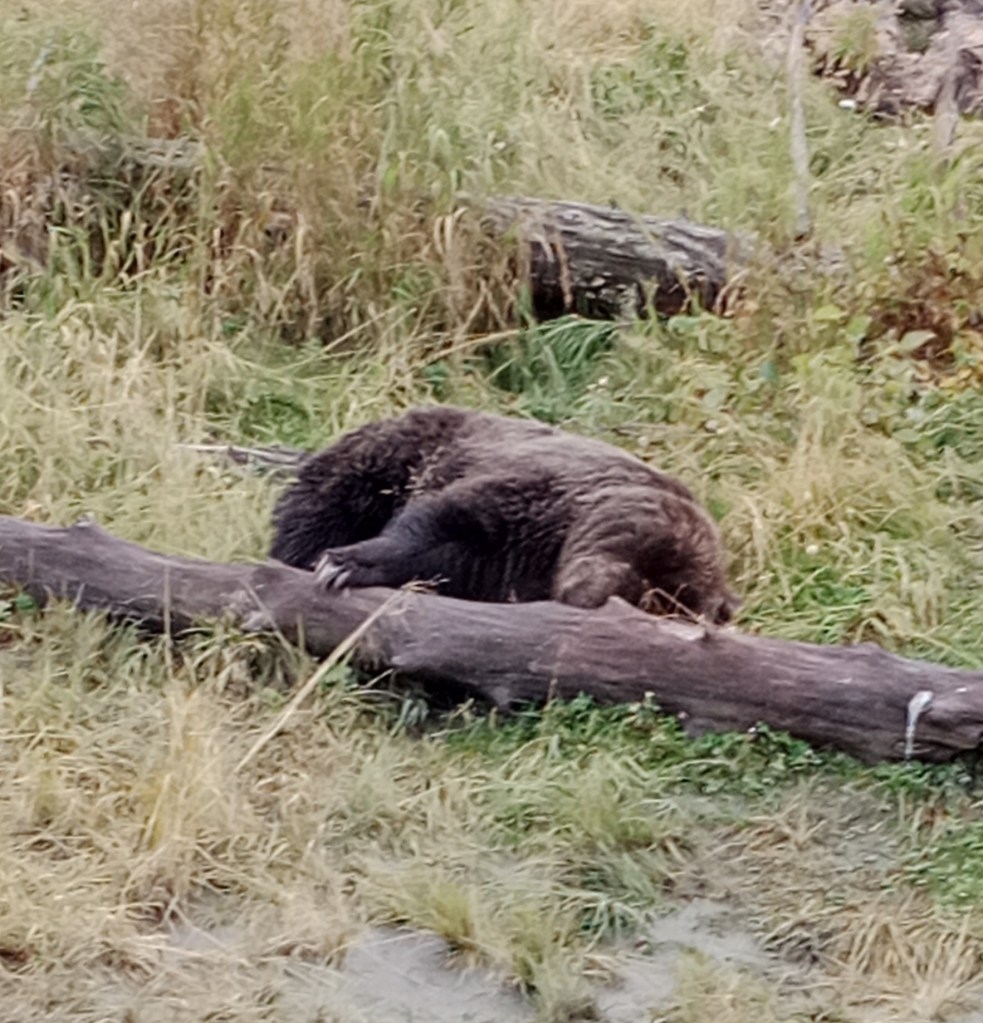
Brown Bears

Musk Ox

These are Artic natives and have been so named due to the odor emanating from the males during the seasonal rut to attract the females. They have a thick coat of fur and both males and females have curved horns.

Musk Ox

American Bison

This particular species is special to this center as they have reintroduced them to Alaska after a long absence. They are the largest land mammals in North America and are herbivores. Widespread hunting and diseases led to dwindling numbers before the center took up this project. There were plenty of bison grazing around at the center.

Bison and a hide exhibit at the center

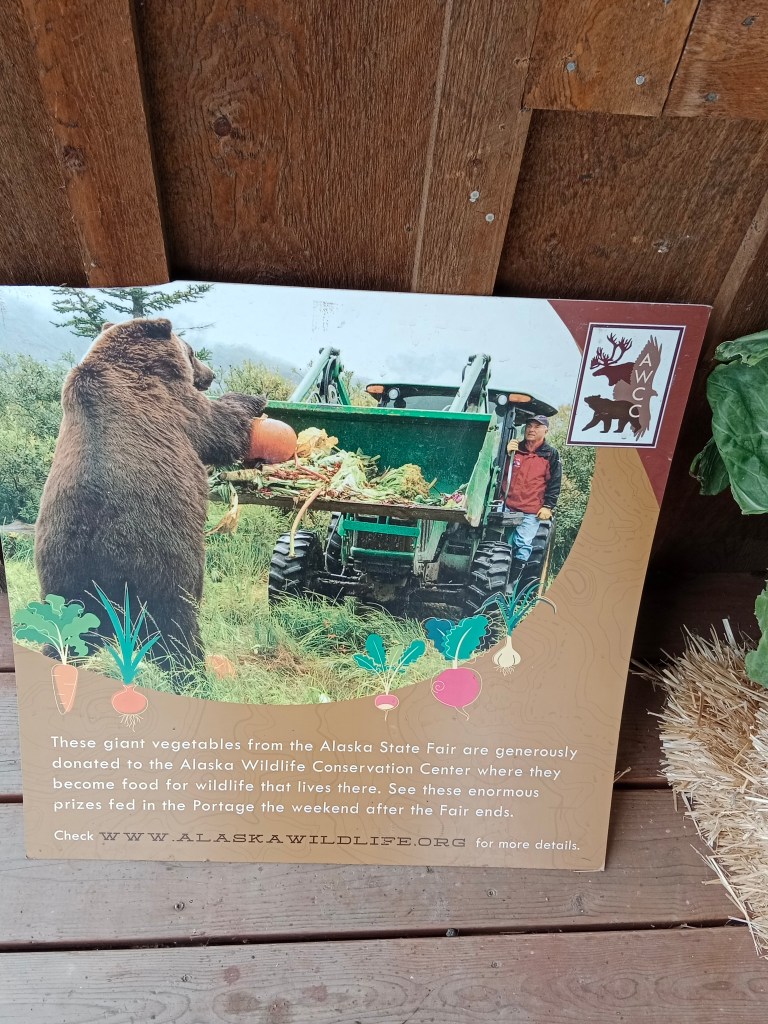
Another interesting sight at the center were giant vegetables contributed to the center after the Alaska Fair. These are the used as food for these animals.

The giant vegetables ….

Last , but not the least; here is a picture of the AWCC where a lot is done to preserve native Alaskan Wildlife…

The Alaska Wildlife Conservation Center

Well friends, I have tried to bring as much of Alaskan wildlife to you as possible through these pictures. But nothing can replace real life encounters with these animals. We had some great experiences and hope at least some of you will be inspired to go for it…

Meanwhile do tell me what you feel about my blog . Continue to comment and give me a feedback…

See you next week with more from Alaska…

Portage Glacier

Portage glacier is located just 75 kms from downtown Anchorage in Alaska and has seen much change over the years. A visit to Portage Glacier on a day tour from Anchorage was the agenda for the day…

Our Trip

Starting off with a small group of people, one beautiful morning in early September from Anchorage with our guide Jamie , we had some awesome experiences.

Leaving Anchorage city behind, we were soon on the Seward Highway. This highway runs parallel to the rail tracks over a long distance . I am mentioning this here as there is a lot of overlap of pictures and information between this trip and a beautiful ride on the Coastal Classic train from Anchorage to Seward.

Turnagain Arm

This is one place we are going to talk about off and on. It is a waterway that is an inland extension of the Gulf of Alaska . This is peculiar in that the variation in tide levels is highest here; around 40 ft.

This Seward highway runs along the banks of the Turnagain Arm for a considerable distance.

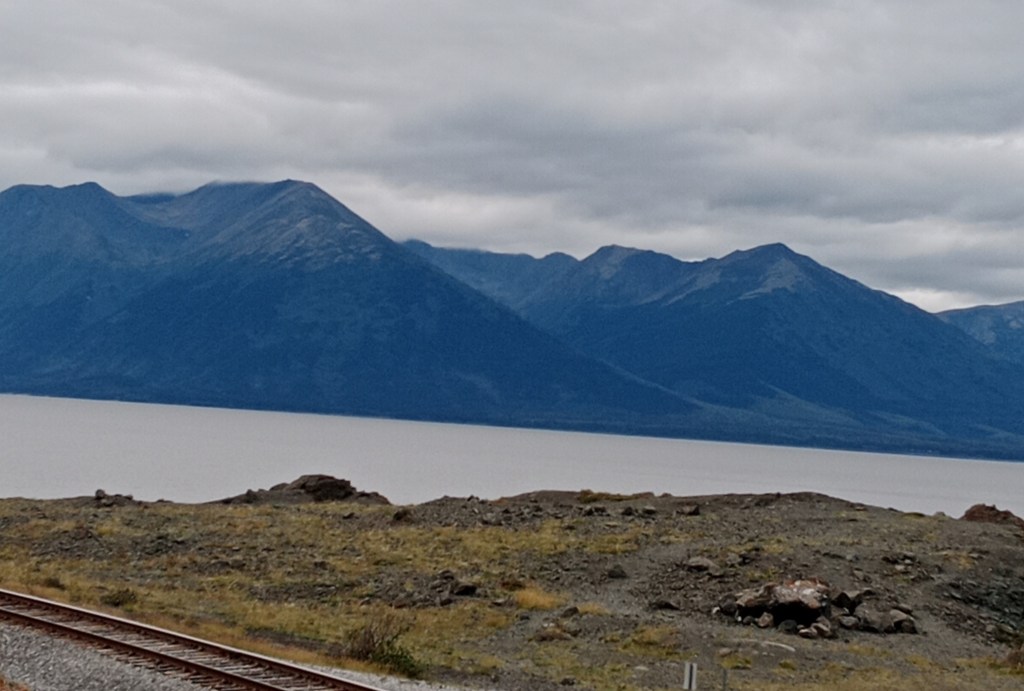
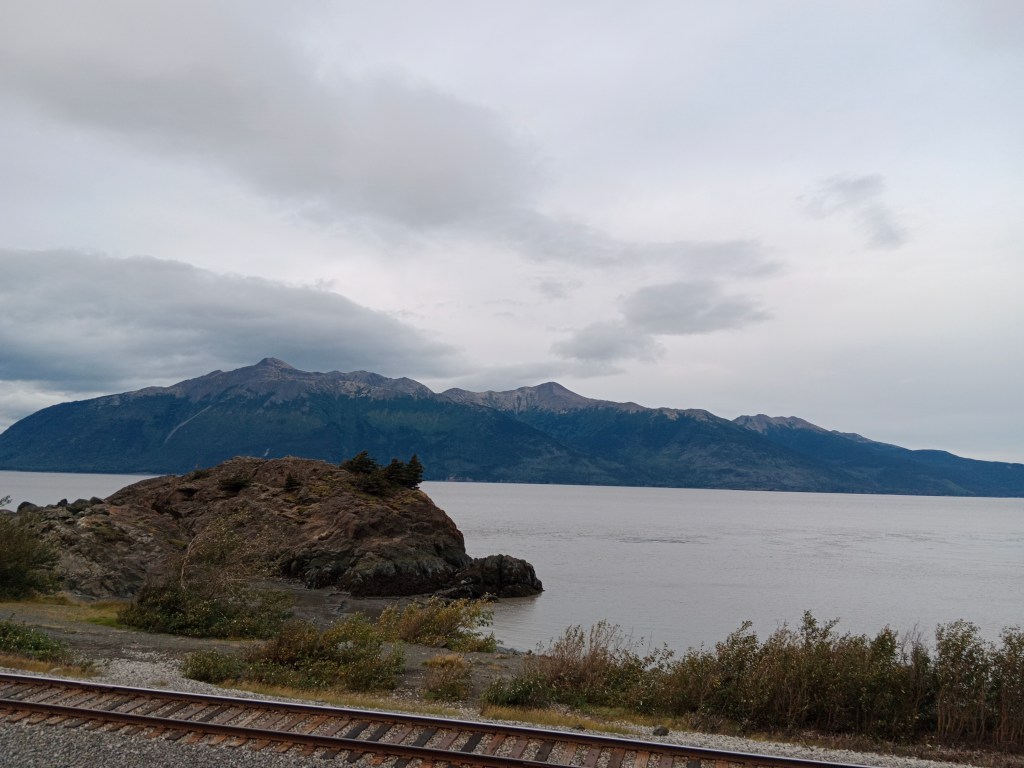
The Turnagain Arm ( rail tracks can be seen running along its banks)

As we travel on the highway, we have the Chugach Mountains on the left and the Kenai mountains on the right with the Turnagain Arm in between. Portage Valley is the place where these two mountain ranges meet and the Portage glacier is located in this Valley. More on this as we reach Portage Valley.

Beluga Point

A view point along the Turnagain Arm, it is a rocky projection into the sea. It is a popular whale watching destination as the Beluga Whales enter the area to feed on the Pacific salmon. These Whales are relatively smaller than the other whales and have a white head which is often seen in the water looking like a white cap moving in the water. We did wait here on two occasions but did not see them. We did see the tide moving into the inlet in the evening.

At Beluga point

The dangerous mud flats

Another peculiar sight along the Turnagain arm are the Mud flats. These are glacial silt which has accumulated over the years and are very sticky and messy like quicksand. If one steps on them, the feet sink into it and one gets stuck in it. Our guide told us that in spite of warning signs put up, some over enthusiastic person often gets stuck and they have to be rescued.

Dangerous Mud Flats

Bird Point

This is another interesting halt along the highway where there is a small park and a wooden walkway which takes you to great views of the ocean and the mountains,

Besides this the area is also a lookout point for mountain goats and black bears along the mountain slopes. We did spot a couple of mountain goats!

The Bird point lookout and the view of the Kenai mountains with snow

Driving along, we were approaching the area where the Chugach and Kenai ranges meet. That formed a valley and it was there that our destination; Portage glacier was.

The two mountain ranges with the Portage valley and glacier seen from a distance.

The Portage Glacier has seen much change over the years ….read on….

A brief history

In the Ice Age (1300 to 1850 A.D), most glaciers in the world were advancing. Portage glacier is no exception. During the period 1500 to 1800 A.D. Portage was adding more ice to its mass than it was retreating. It covered the entire Portage valley; a distance of 23 kms.

This glacier got its name because it was used as “portage” between Prince William Sound and the Turnagain arm.Till 1914, the present day Portage lake was non existent and people could trek the glacier across Portage Pass to the town of Whittier. It was only in the 1900s that glacier retreat became a reality.

Today, we have a lake there; Portage Lake ; over 600 ft deep and the glacier terminal is not visible directly. It lies behind the mountains on the left and we need to cruise the lake to see it!!!

Portage was very badly affected by the great Alaskan earthquake of 1964 which led to the flooding of the town of Portage which was then vacated. Thousands of trees were submerged in water and what we see today are tree stumps preserved by the salt water. More on this as we tour the place…

The tree stumps, remnants of the trees submerged by the earthquake

Continuing our trip

We turned off the main highway to the glacier. The scenery was even more beautiful with waterfalls in between the cliffs and glimpses of the glacier in between the trees and rocks.

Glaciers and waterfalls all along the way

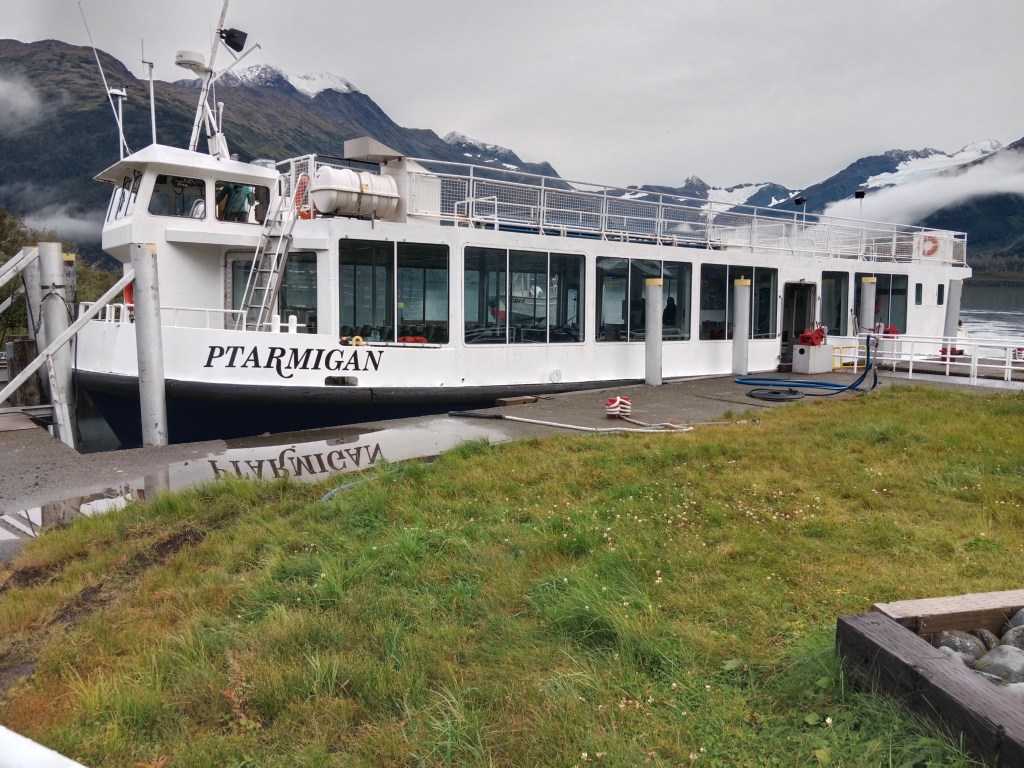
Finally, we arrived at the parking area with the beautiful Portage lake and its surroundings. Enjoying the scenery and taking some pictures, we boarded our cruise boat “Ptarmigan” that was waiting for us. After the customary safety instructions, we set off on Portage lake to see the glacier.

The Portage lake

The Ptarmigan and a waterfall on the cruise

Multiple waterfalls draining into the Portage lake

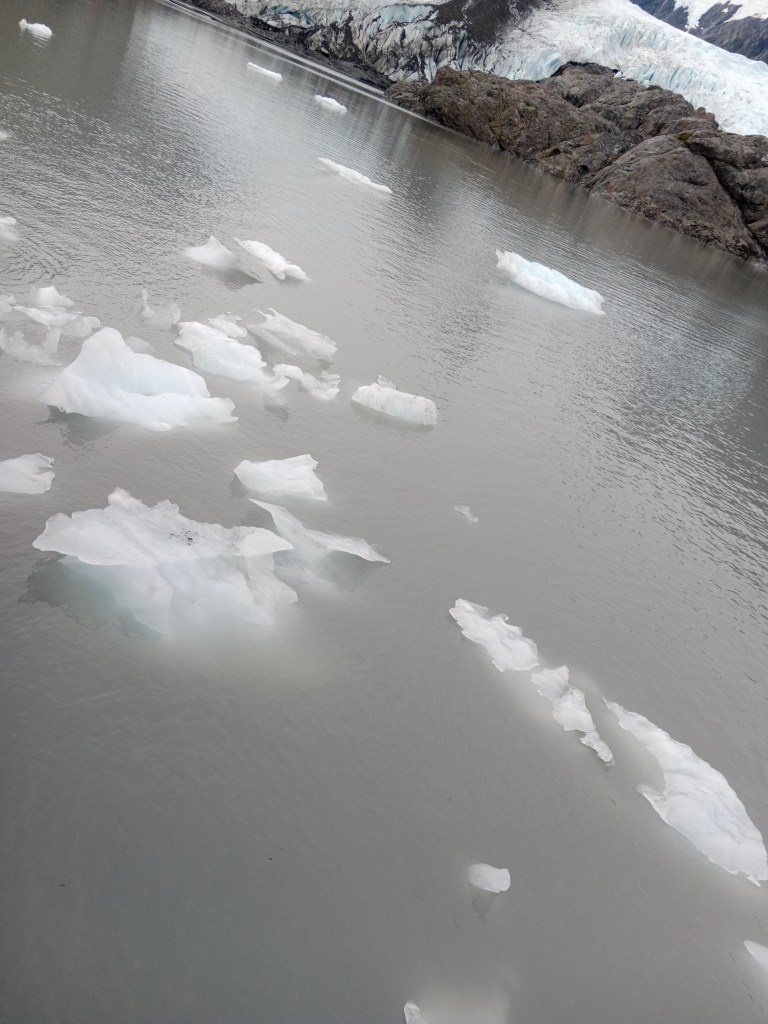
Cruising along the Portage lake, gradually the Portage glacier came into view. There were small icebergs floating around as we reached the glacier. Some pictures…

Small icebergs floating around the lake close to the glacier

Portage Glacier

Portage glacier, it’s reflection and the little icebergs form an amazing sight!

The cruise boat halted close to the glacier for some time. We did not see any calving at that time but the floating icebergs were evidence of recent calving.

The cruise boat had an exhibit that displayed the location of the terminal part of the glacier at various times in history. That was truly an eyeopener on how much this glacier had receded.

A diagrammatic representation of recession of Portage glacier

Returning back to the starting point, we disembarked from the boat and headed for lunch to the only available restaurant in that remote location.

The only restaurant

After lunch, our guide took us to another beautiful view point; the reflection lake. Here there is a lake which is surrounded by lush green forests and from one corner is visible the Explorer glacier. This glacier casts a reflection on the lake making it an adorable location. A trail starts from here and goes back to Portage lake.

Some pictures..

The beautiful Reflection lake

At reflection lake with the glacier behind and the trail sign board

The Explorer glacier casting its reflection on the lake below….

After this wonderful view, we were on our way back to Anchorage . We were again on the Seward Highway and tried to look for the Belugas but they evaded us…

On the return journey we halted at the Alaska Wildlife Conservation Center that lies close to the highway. This center is unique in many ways and is a shelter and refuge for many of the animals. I have to go into that in more detail to do justice to it. So that will form part of the next episode that features Alaskan Wildlife.

See you next week with unique Alaskan Wildlife that will surely enthrall you….

Till then, do give your comments and feedback.

Anchorage

Our first destination at Alaska was Anchorage and true to its name, we used it as a base to go to various destinations. So we were in and out of Anchorage a couple of times, and here, I am putting together our experiences during these visits.

We flew in to Anchorage from Seattle. The views from the flight were amazing to say the least . Let me share some of the pictures to make you get the feel of flying into Anchorage.

Alaska Airlines with the logo of an indigenous Alaskan

Taking off from Seattle, soon we were over British Columbia in Canada, flying over the incredible Rockies…

The Rockies as we flew over them. Note the turquoise lake so typical of the lakes here.

Some more flying and then we were on top of some of the largest sheets of ice….

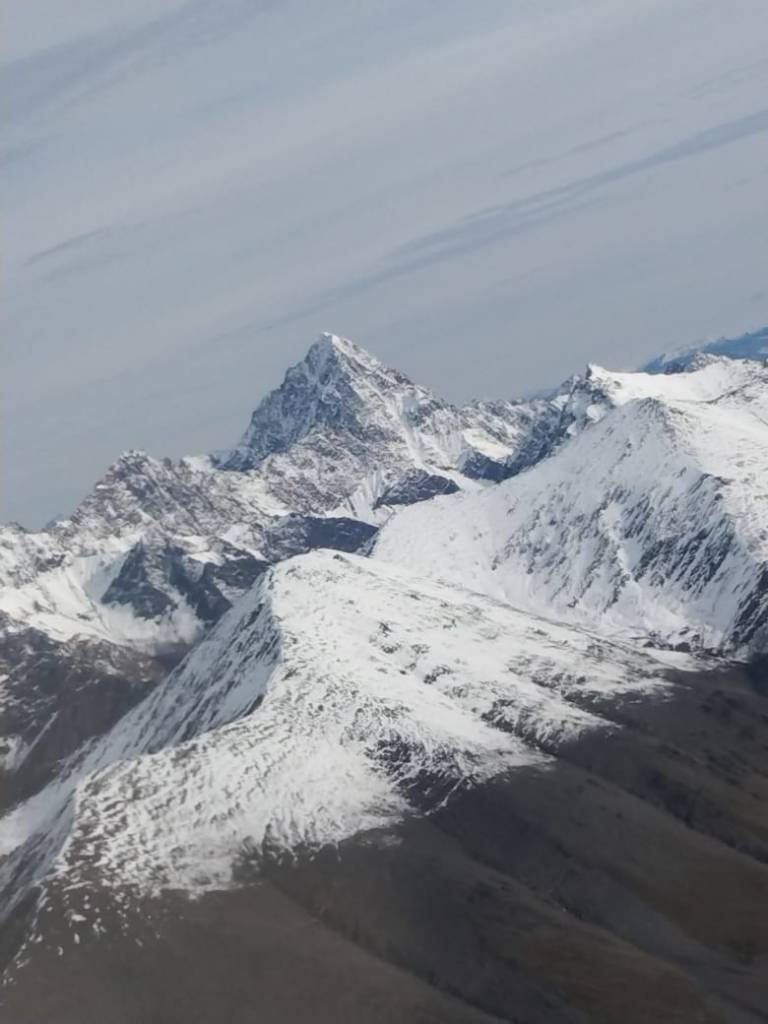
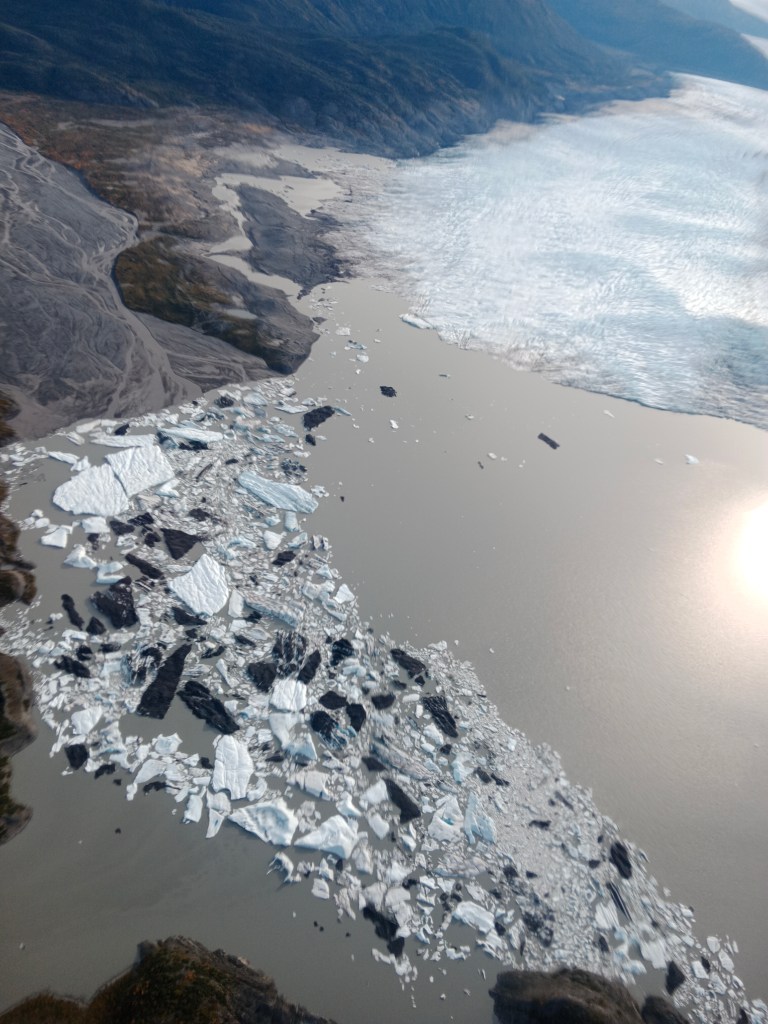
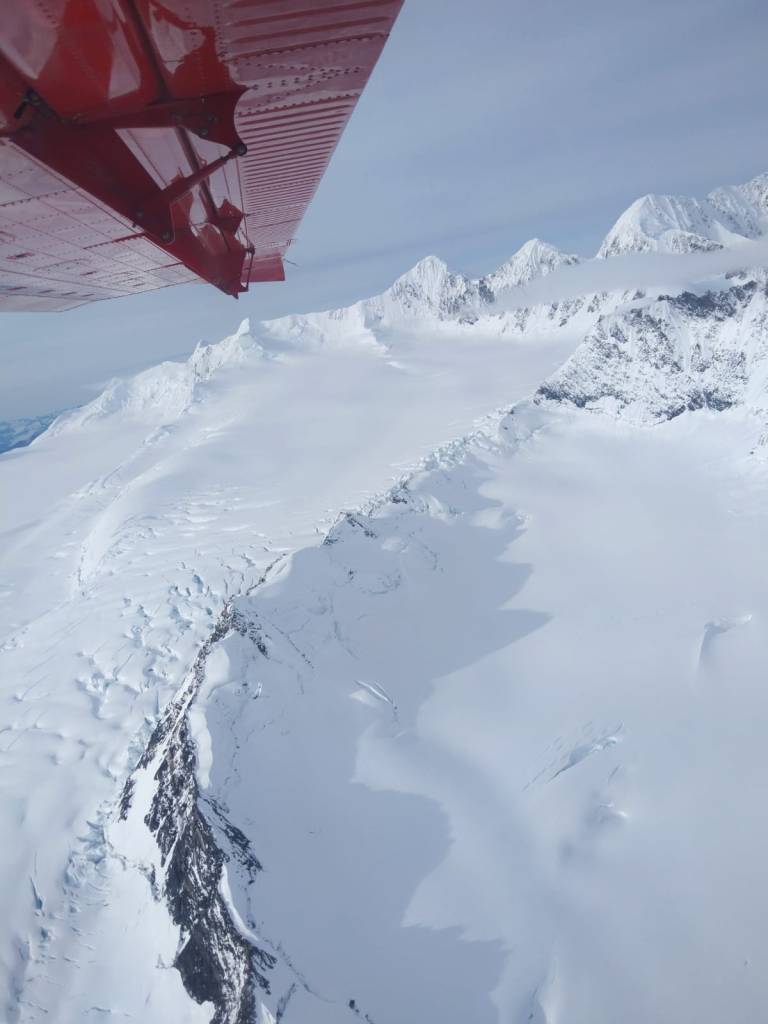
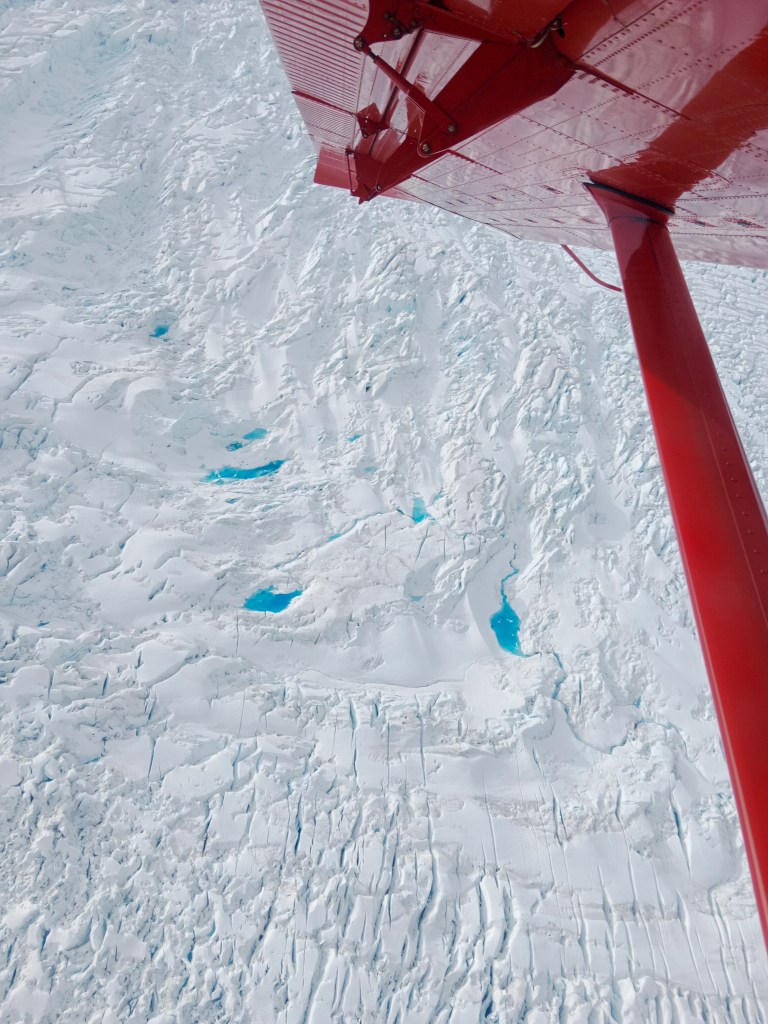
Some amazing views of Alaskan glaciers ( difficult to separate the ice and clouds!)

Leaving the icesheets behind we were flying on more liveable terrain and the farmlands were visible.

Finally we were cruising over Anchorage and the Cook Inlet and Turnagain Arm ( will be referring to this very often in the forthcoming episodes when it will be clear to you) of the Gulf Of Alaska were just below us….

The Cook Inlet and Turnagain Arm of the Gulf Of Alaska

Since this was our first destination in Alaska, This episode will have a general roundup of things unique to Alaska too.

When we talk about Alaska, there emerges a mental picture full of mountains, glaciers, unending wilderness, bears, salmon, long daylight hours in summer, short gloomy winter days and the northern lights . Most of this is true but you cannot have all these in one trip. What we see in summer and what we see in winter are totally different and if one wants to cover every bit of Alaska, one has to be there at different times of the year. Many parts of Alaska shut down totally in winter and the local people go elsewhere. These kind of things are unimagineable for people like us who live in the tropics. And it is precisely this that attracts everyone to this natural wonderland…

The weather can be so fickle even in summer that one has to give extra days at each place for sudden and last minute changes in plans.

Tourism is an important industry in Alaska and the emphasis to attract tourists starts right from the airport. Major part of the tourism industry here is linked to Alaskan cruises, and unlike us, most people reach Alaska on a cruise. So there is an entire section in the airport dedicated to the various cruise lines that operate from here. They receive and facilitate the passengers flying in to Anchorage to join cruises elsewhere.

An Alaskan Cruiseliner

Apart from that ,there is a train station of Alaska Railroad at the airport which is at present being used for trains chartered by cruise lines only. Most passengers take the train to Seward or Whittier and board the cruises from there.

Wildlife

Alaska has unique wildlife and any trip to Alaska will include visits to see these animals. The airport itself showcases their wildlife in the form of stuffed animals. Besides, there are monitors displaying various wildlife encounters available to tourists in Alaska. One of my future episodes will be dedicated entirely to Alaskan wildlife….

Stuck at the airport…..Stuffed and preserved….Black bear and Musk Ox

Private chartered flights

Small private chartered flights take passengers from Anchorage to various destinations. This is required because there are many places in Alaska where the access is only by air for most part of the year. People visiting Alaska for specific purposes at a particular destination, take these flights.

Chartered flights

Fishing

Alaska has a long coastline and provides endless opportunities for recreational fishing. Special fishing trips and charters are available. Many tourists enjoy the fishing and then carry the catch with them home. Towards this end, we find lot of travellers with fishing equipment and storage containers at the airport. Many locations offer facilities for storing fish and shipping them to the required destinations .

Fishing charters

Moving on to Anchorage city…..

Anchorage city

Overall, Anchorage was a small sleepy laidback city when we visited it in summer. Most activities revolved around tourists taking cruises from other places and just using the city as a halt. The streets were empty most of the time even in the downtown area. Evenings saw more activity related to bars and pubs. Mind you, this is in summer…the time of peak activity. In winters, when temperatures dip to sub zero, most establishments close down and many locals head to warmer places. This is true all over Alaska. Most of the tourism centric jobs are very seasonal and the locals need to find alternative occupations. The flowers and the grass would then be just a white carpet of snow. Life will be difficult for anyone who stays back in the winter. Winter tourism also takes place but in selected places mostly related to ski resorts and such activities.

The streets in the city are by and large square or rectangular and named by alphabets and numbers. That makes it a little easy to find one’s way around.

A typical street in downtown Anchorage (note the street name in alphabets)

Buildings have small flower beds outside and there are flowerbeds along most roads . Being summer, they were in full bloom and added beauty to the place.

Outside a building and at the bus stop

Beautiful flower beds by the roadside

Denali Views

Mt. Denali as viewed on a sunny day from Anchorage…that’s my featured image.

On bright sunny days, one can see Mt. Denali from Anchorage but we were not so lucky. As our visit was towards the fag end of summer, we hardly had bright sunny days.

What we saw…..

Views of Alaskan ranges from Anchorage city

Wall Murals

Wall murals are very popular in Alaska and we saw a lot of them both at Anchorage and Seward.

Hope Wall Mural

This was painted during the pandemic by a group of volunteers . It is in the form of squares which have been painted and then attached to the wall . This signifies hope that things can only get better and coming during the pandemic, it surely meant a lot!!!

Hopewall Mural

Indigenous people

Another interesting mural was one which depicted the close relationship between the indigenous people, the land, animals and their way of life…

Mural honouring the indigenous people

Whaling wall mural

Called Alaska’s Marinelife, it depicts whales and seals native to Alaska and adorns a huge wall in downtown Anchorage

Whaling wall mural

Downtown Anchorage is home to a variety of restaurants and bars. Difficult to recognise as a bar or pub; it seems very quiet from outside. Once the doors open, it is music and dance inside.

Restaurants and bars

Alaska Centre for Performing Arts

One of the buildings that looks different in downtown Anchorage is the Alaska Centre of Performing Arts which was lit up for some performance. Some pictures..

Alaska Centre of Performing Arts

Anchorage Museum

The Anchorage Museum has exhibits of art , history, the Discovery Centre, Science galleries and the Smithsonian Arctic studies centre.

Anchorage Museum and some exhibits

Just off downtown are residential communities which usually have a nice park for recreation…

Typical residences in Anchorage

War Veterans Memorial

Located at Delaney Park, this memorial has a soldier in combat mode and is dedicated to Alaskans who have died in combat during various wars.

Some pictures…

War Veterans Memorial

Resolution Park and Cook Memorial

A small park towards one end of downtown, has a bronze statue of Captain Cook. This is in commemoration of his exploration of the Cook Inlet on board HMS Resolution in 1776. Captain Cook did not actually reach Anchorage as part of his explorations though he paved the way for it.

Cook Memorial

Some disturbing truths….

Homeless and Drug Abuse

Downtown Anchorage did leave me a little disappointed. Large number of homeless people foraging dustbins was not what I had expected here. Half naked men and women lying on the roadside in different states of intoxication is a common sight. Many are quiet but others are constantly hurling abuses or standing in various acrobatic poses.

A homeless man forages a dustbin and a woman sleeps on the roadside

Simultaneously there are people trying to help and rehabilitate such people as you can see in the picture below where a drug rehabilitation camp of sorts was held at the local park.

Drug warning board in the park where rehabilitation camp was held

This is not exactly a very pleasant thing to talk about but I have to show the negative parts of a place too!!

Small tips for future travellers to Alaska

Weather can change any moment and so, be prepared with gear to face it at all times. Always dress in layers and thermal innerwear is preferable. Rain gear is essential whenever you step out. Good shoes , preferably hiking shoes will keep your feet warm and prevent you from slipping on wet surfaces.

When you plan an itinerary, always leave time for a last minute change due to weather conditions. So keep extra time at all destinations if you dont want to miss out on anything.

Most tour operators offer hotel drop and pickup.

Never interact with the homeless .

With this I wind up my episode on Anchorage city. Hope you have got a virtual picture of this city. We move on to more adventures in the coming episodes. Till then, do keep your comments and feedback coming.

Seattle

Situated on the Puget Sound in the Pacific Northwest, this northernmost major city of the United States was our first halt on our way to Alaska. Initially a logging port, this city gained importance in the late 19th century as a gateway to Alaska during the Gold Rush.

The city derived it’s name from the chief of Duwamish and Suquamish tribes that inhabited this area. It is heavily defined by its musical history with jazz clubs , origins of rock music etc. Today, it is a major technology hub with many technology companies having their offices there. Apart from that, Boeing also operates out of Seattle.

The city itself is very hilly , though not so uniform and lying on the Pacific Ring Of Fire, is prone to earthquakes.

Some views of the city as we spent a couple of days here.

The Link Rail

We used local transport most of the time and found it very convenient and user friendly. The tickets can be purchased at the vending machines at the station and are reasonable.

Display boards inside guide you about approaching stations

The link rail and it’s interior

Some of the stations are underground . The train itself was plush but the stations definitely looked run down . Homeless people and drug addicts are all over the place and even WestLake station which leads to posh shopping complexes was dirty and gave out a bad stench!!

The run down WestLake station with filth all around!!

Monorail

This train takes one right into Seattle centre. After taking the light rail to Westlake, one can change to the monorail to reach Seattle Centre.

This monorail runs in between skyscrapers almost scraping them and gives views of downtown Seattle.

The Monorail station next to the buildings and interior of the monorail

Views of Seattle downtown from the Monorail

Seattle Center

Seattle center is an art, entertainment,and tourism centre in Seattle covering several acres and built in 1962 for the World Fair. One of the iconic images of Seattle, the Space needle is located here. Besides that, it is home to various attractions like the International Fountain, Totem Pole, Monorail terminus, Kobe Bell, outdoor mural amphitheatre, Mueum of Pop culture,Pacific Science Center , Chihuly garden and glass, various theatres, the armoury and many more. It hosts several performances and festivals too.

Space Needle

Considered an iconic landmark of Seattle it is an observation tower at Seattle Centre , built for the World fair in 1962. It offers great views of the city besides the Cascade mountains, Mount Rainier , Olympic mountains and the islands of the Puget Sound. The hovering disk of the space needle houses Skycity, a Pacific northwest restaurant. Some pictures..

The iconic Space Needle

The Observation deck views

City Views from Space Needle

Musicians are a common sight at Seattle center. Here is one guy enjoying himself…

Here’s another band for you…

Enjoy this…

Even here there are plenty of homeless and drug addicts and the lonelier parts are stinky .

International Fountain

A large fountain at Seattle centre, it is lit up at night and has music too!!

International Fountain

John Williams Totem Pole

Besides being a work of art, this totem pole has a sad story behind it. John was shot and killed by a police officer as he was walking along with a carving knife and a piece of wood. To highlight this issue peacefully, his brother decided to make a totem pole in honor of John. Soon it gained popularity and it was bought from him by a group of family and friends who arranged to have it installed at a public place.

John Williams totem pole

Museum of Pop Culture (MoPOP)

The history of Seattle has always been intertwined with various forms of music like jazz, pop, rock etc. The Museum of Pop culture showcases this. The architecture of the building itself is unique and very jazzy. The light rail almost enters this building as it reaches Seattle Centre.

It houses some of the legendary pop culture artifacts, exhibitions featuring pop luminaries, film and television personalities and various yester year bands. One can have various interactive experiences here too.

MoPOP

Arrow showing the monorail tracks almost entering the building

Grass blades art work that acts as a screen for the car park at MoPOP

Outdoor Mural Amphitheatre

Mural Amphitheatre is an outdoor gathering space built on a natural hillside located in the heart of Seattle Center just minutes from downtown Seattle.

The Amphitheatre serves as a primary venue for concerts during the major summer festivals 

Outdoor Mural Amphitheatre

A children’s play area is also part of the complex ….

Play Area

Kobe Bell

Kobe in Japan and Seattle are sister cities and this huge metal bell under a pagoda in a meditation garden looks beautiful.

Kobe Bell

Chihuly Garden and Glass

I found this to be the most colourful and attractive part of Seattle center. This is actually the glass studio of Dale Chihuly ,the glass sculptor and features a garden, a glass house and interior exhibits.

The creations were outstanding and the reflectivity of the glass made the works pop even more.

Some pictures…

Attached to it is a shop where some of the art can be purchased.

Some pictures…

Artwork for sale

Pike Place Market

A very popular tourist destination in Seattle is the Pike Market. It is a public farmer’s market in Seattle where many small farmers, craftsmen , merchants and fishermen sell their wares. This market which started in 1907, has some great restaurants selling seafood with views of the Puget Sound. Many of the merchants live in the buildings surrounding the market. The market operates at various levels.

Pike Place Market

Inside the Pike Market

One of the major attractions here is the fish market where fish are displayed and once a customer orders one, the employee picks it up and throws it to the counter where it is prepared for sale.

Famous fish throwing

Exotic seafood

The flower section looks very beautiful with fresh blooms all ready to be sold!

Blooms …..

Vegetables and fruits

Restaurants and bars

Street food

Ferris Wheel

Another attraction on Elliott bay near Pike Market is the 53 metre tall Ferris wheel . The illuminated ferris wheel adds colour to Elliott bay in the evenings. On special days, it gets lit up in various themes .

The Ferris Wheel

Well, with this I finish the roundup of Seattle. From Seattle we headed to Anchorage starting the real Alaskan adventure. See you next week from Anchorage. Till then, do give me your feedback and comments.

Paradise and Mt Rainier

In the last episode, I had promised to take you to a special place called Paradise. That’s where we are today. We reached Paradise around noon during our drive through Mt Rainier National Park.

Paradise

This is an area on the south slope of Mt Rainier at a height of approximately 5400 ft. It is the most popular destination for visitors to the Mt. Rainier National park. It lies in the Paradise river valley.

Paradise features subalpine meadows, the Jackson Visitor Centre, the historic Paradise Inn and offers epic views of Mt Rainier.

Paradise is also the primary winter-use area in the park receiving 643 inches of snow on an average every year making it ideal for winter activities like snowshoeing, cross country skiing and sledding . It is often called the snowiest place on earth where snowfall is measured.

Why is it called Paradise?

For those of you who have not seen the previous episode, James Longmire was an American explorer who ran a homestead in the Rainier area .The mineral springs near the homestead were claimed to have medicinal powers. Subsequently the homestead was convereted into a museum at the place called Longmire inside the Rainier National park.

The sub-alpine wild flower meadows and the breathtaking views from here made James Longmire’s daughter in law to exclaim “Oh,! What a Paradise”. The word Paradise stuck to the place and hence the name.

Some pictures….

Now you know why it’s called PARADISE…..

Visitor Center

The Visitor center at Paradise offers general information on the park and its features. A documentary film on the park keeps running and one can join in and get a glimpse of the changing faces of the park as the seasons come and go. There are exhibits here of the unique flora and fauna of the place and also the indigenous people.

The visitor center

There are various trails that start from near the Visitor Center which takes one through the alpine meadows of Paradise with great views. Some of the trails are…Nisqually vista trail, Skyline trail to myrtle falls, Alta Vista trail etc.

As per Mark’s (our guide) advice, the trail to Myrtle falls seemed more doable and we followed that trail. Some views from this trail.

Some pictures from the Myrtle falls trail with the sun playing hide and seek

The other architectural beauty at Paradise is the Paradise Inn.

Built in 1916, this is a National Historic Landmark in the Paradise area. It is basically an inn and provides accommodation with great views of Mt Rainier. It also has a restaurant for visitors from outside. The interiors are done up with an old age charm that adds to the beauty. Some pictures…

The exterior of Paradise Inn and the outdoor restaurant

The interiors with old world charm

The day had been cloudy and drizzly and Mark had prepared us to have no views of Mt Rainier. He said, you can be on the mountain and still not see it. But there is much more to be seen and done along the route and we should make the most of the situation.

But the sun did not disappoint us. He did come out for a few minutes to give us fleeting views of Mt. Rainier.

A fleeting view of Mt. Rainier from in between the clouds….

What it would look like on a more favourable day…(courtesy pexels)

The clouds soon overwhelmed the sun and we were thankful that we got that fleeting glance!!!

I must tell you here that I had been lucky to see Mt Rainier earlier on from a flight in 2019 heading to Portland.

That brings us to Mt Rainier and its specialties

Mt. Rainier

This mountain range is located just southeast of Tacoma – Seattle area and can be seen from there on clear days. Locals call it Mt Tahoma or some even refer to it as “The Mountain”

Mt Rainier from Seattle on a clear day

This tallest volcano in the Cascade Mountain ranges in the state of Washington in the United States is a paradox in itself.

What is this paradox?

Well, what we see from down below is a snow covered peak which makes its appearance from behind the clouds every now and then as if playing hide and seek with us. But far above, at 14,410 ft. , at the summit, steam escapes from deep inside the mountain’s core reminding us that it is still an active volcano. The mountain rises abruptly from the surrounding land which comprises of valleys, waterfalls, meadows and vast expanses of old growth forest.

Though the mountain may convey a sense of permanence; it is anything but that! More than 25 glaciers descend the mountain flanks . These are constantly in a state of flux and rivers flow down its rocky slopes transporting water and debris down the mountain and often wreck havoc with roads and facilities in the wilderness area surrounding it.

Subalpine meadows remain covered under several feet of snow in winter and yet spring up blooms when spring arrives. Mt Rainier region has been often described as one of the best places to view wild flowers. The long period of snow covered soil, leaves a very short period in summer for these dramatic blooms in and around Paradise. The rivers, lakes, falls and snow can be found elsewhere but not those wild blooms.

Wild flowers…a riot of color

One of the most dangerous volcanoes

Amidst all this beauty lies a constant threat to the residents of nearby areas. It is listed as a Decade Volcano and is constantly being monitored for safety. Seismic monitors have been set up at the park and on the mountain itself. Typically around 5 earthquakes are recorded near the summit on a monthly basis .Mt Rainier lies on the Pacific Ring of Fire which includes many volcanoes in California, Oregon, Washington and British Columbia.

In addition to that, the glaciers of Mt Rainier can generate mudflows ( lahars) that can cause damage to places lying on its path. These flows can occur anytime independent of a volcanic eruption.

Mt Rainier once stood at about 16000 ft before a major mudflow around 5000 years ago. This massive avalanche of rock and ice shed off 1,600 ft of Mt Rainier bringing its height down to 14,400 ft. This mudflow is said to have reached all the way to Tacoma and south Seattle. In fact Tacoma and some parts of Seattle are now located on the mud flow deposits from that massive lahar.

Summiting Mt Rainier.

An estimated 10,000 climbers attempt this summit every year on an average. It is one of the most difficult climbs as it requires traversing glaciers and weather can often play spoil sport. No wonder then that the success rate stands at 50%.

Well, they say difficult roads lead to beautiful destinations….
This is true of this entire area of Mt Rainier National park which I have covered over two episodes. Reaching there is difficult and the climate can be very fickle with sudden changes that require change of plans. To avoid disappointment , an alternative plan B should always be ready when you plan to visit this area .
With these thoughts, I end for the week. Do give your feedback and comments.